

Trudy: This whole question really matters more in leadership than almost any other context because leaders, you already have positional power. The people below you are less likely to challenge your thinking. And if your AI tool is just nodding along, you've built an entire feedback loop with nobody in it willing to say. Have you considered you might be wrong here? Righto, let's do an FAQ episode. Ellen, my podcast producer, suggested this one. So today I'm answering three questions that I've been asked more than any others over the last three years. And I'm digging into all three of them today. What's the best AI for educators? That's the question I get asked more than almost anything else. The second most common, is it actually worth paying for? And then there's a third question that comes from people who've been playing with AI and are becoming more discerning. And it's a question that more people need to consider. Today I'm going to answer all three. The first two pretty quickly because honestly, they're not that complicated once you strip away all the noise out there. And the third one, though, that's where we're going to spend a little bit more time because I think it's the question that determines whether AI makes you a better decision maker or a worse one. So, why do these three questions keep coming up? Well, The first two I think are really about educators with time poverty. Leaders are busy, teachers are busy, and busy people want a shortcut. Tell me the right tool and I'll stop worrying about it, right? They know this technology has huge potential to improve their productivity. And they just want to get going with it, not waste time and money, and honestly, who could blame them? But the third question, it's about something much bigger and more serious. It's how do you get answers that are balanced, not just ones that agree with you? And this question is different because it's not about productivity. It's about whether the tool you're leaning on for decisions is actually giving you truth. Or is it just affirming what you already think and making you feel good? Most leaders haven't thought to ask and it's the one they probably should. Okay, question one. What's the best AI for teachers and school leaders? And I'm going to give you an answer that's probably not what you're expecting. and maybe you were hoping that I'd just name a winner. it isn't a single best AI model. And I now believe it depends on what you want to do with it. I've used ChatGPT, Perplexity, Copilot. I played with Gemini a little and more recently Claude. All of them since I first started playing with the large language models in early 2023. And how I think about this is actually thinking through criteria, not just picking one tool. So first criteria is what can you actually access inside your organization's network? It could be the case that you're working within an education system that has now built its own AI solution. And the system provided tool could be your best choice, especially if you are planning curriculum or if you're working with policy and procedures. I would go to the system provided tool for those use cases. every time and definitely run experiments and even if you wanted to compare across tools I think it'd be worth your time not every time just as an initial test run now outside of that chat GBT Copilot and Gemini are common in education spaces but again it depends on what you can actually access in your organization There's no point falling in love with a tool that's blocked at work, right? the second criteria here in making a decision, and this is the one that people don't think about or expect, the best AI is the one that you're already using. Every conversation you've had with it, it's been learning about you, your context, your tone, your recurring problems. When you switch tools, you're starting typically from zero although the models now allow you to transfer relatively easily. I actually did this earlier this year. I switched from ChatGPT to Claude and I just followed the guides that are provided by Anthropic who built Claude. But again there's no point doing that if you can't get Claude in your work environment. And with this criteria, Ethan Mollock made a great point a couple of years back that the worst AI is the one you're using today because they continue to get better in two ways. Firstly, the models the developers continue to improve the models. And secondly, as I just talked about, your interaction, your training the model to respond, to meet your preferences. So that's worth considering when you ask what's the best tool. Now finally, and this one links to the next frequently asked question. if you are using one of the bigger free models, the paid version of whatever that is is better, of course, than the free version. The free versions block you or you know, cap you right at the moment when you need the most typically. It's so frustrating, right? So just to wrap up this question, in time you'll find the strengths and limitations across the platforms and you'll work out which one will execute the task best. I recently heard the term app smashing, where you use a platform for its strengths. And I'm gonna say, okay, so you use the system-built tool for curriculum planning, and then you would use other models for resources like images of modeled responses, or generating a podcast as a student resource, or conducting deep research to support the material in the unit that you're teaching. So the best AI for teachers isn't a single answer, it really does depend on what you're using it for. The one that you can access in your work environment, the one that you've already been training, and whatever that is, upgrade it to paid. So let's get into that next. Question two: Is it worth paying for one of the models? And I'm gonna say yes, and let me tell you why I don't even hesitate on this anymore. A couple of ways to think about this. firstly. I am going to bet that you have been outlaying your hard-earned money for classroom resources, education resources for years. textbooks, commercial products, printables, stationery. we all do it. None of us blink at that. And this is no different, except the return on your investment is arguably higher. If you're on the free version, And constantly hitting those limits, you're not saving money, you are wasting time working around that paywall that a subscription would remove. Now the pricing is often quoted in US dollars, so factor that into the conversion. But even then, for most school leaders and teachers. it's genuinely a small outlay for a tool doing hours of work. And in Australia, if you're using it for your role, it's worth talking to your accountant about claiming it as a tax deduction. If we come at this question from a different angle, how much would you pay for a virtual assistant? And how much is it worth to get your Sundays back? Sometimes we make a decision based on a dollar value when there are other significant costs like time. And how much do you value that and what would you pay for it? So here's my advice. Just trial the paid version for a month or two. The beauty of it is you're just paying month by month. So at any time you can cancel. And if you're not getting your money's worth, easy, right? but I say trial it first. Now here's the question that has a bit more weight. How do you make sure you're getting a balanced answer from your AI model, not just an echo of what you already believe? How do you get the AI to challenge you, not just agree with you? So firstly, understand that the models are trained to be helpful and helpful often gets confused with agreeable. If you ask it am I right with this behavior decision, it will very often find you reasons you're right. because of the way you asked it. So the fix is in the prompt. Instead of asking it to confirm your read on a situation, ask it to argue the opposite case. For example, give me the strongest argument against my view. That one shift changes everything you get back in the response. If you're a principal drafting a tough message to a parent and you ask the AI, does this response seem fair? You'll get affirmation because you framed it in the way that you've asked. If you ask instead what would the parents' strongest objection to this be, you'll catch your blind spots before you hit send on that email. So let me share a few other prompt. stems that I use. For example, you could try what assumptions have I made? Or what perspectives have I overlooked? This one's a favourite. Give me five counterintuitive ideas. Ask it what would critics point out? Or something like generate three alternative options or points of view. This whole question really matters more in leadership than almost any other context because leaders, you already have positional power. The people below you are less likely to challenge your thinking. And if your AI tool is just nodding along, you've built an entire feedback loop with nobody in it willing to say. Have you considered you might be wrong here? Balance isn't something that the AI will deliver to you by default, but it is something you have to deliberately ask for every time. The same way a good leader deliberately seeks out alternative voice in the room rather than waiting for it to be offered up. But if you really wanted to step this up, you could also go beyond what you ask in the prompts and you could adjust the settings in your profile. So find the profile menu, it's usually where your name or initials are, and in there customize the settings for the bass style and tone. The other thing you could think about as well is developing a preferred response style in a conversation with your model and then prompt it, ask it to save that to the memory. And that will then shift how it responds in every interaction with you. So as I wrap up this episode, here's my question for you. Next time you ask AI for its take on a decision you've already half made, Whose voice is missing from that answer? And did you even give it permission to bring that voice into the conversation? And of course, I've got a next step for you for the next week. Before your next big decision, a staffing call, a parent response, potentially a policy change. Ask the AI to argue against your position before you ask it to confirm it. One sentence could make the difference. What's the strongest case against what I'm about to do? Do that one this week and noticed the shift. So there you go. Three frequently asked questions over the last three years. Which AI is it worth it? And how do I keep it honest? The first two have simple answers. The third one is worth building a habit around. Until next time, take care.
درباره این اپیزود
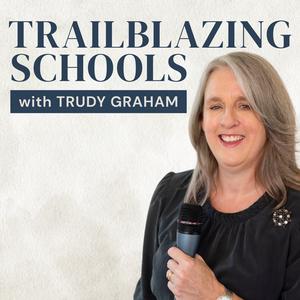
In this episode of Trailblazing Schools, Trudy Graham explores the nuances of choosing and using AI tools in education, emphasising the importance of context, cost, and critical questioning to maximise benefits and avoid pitfalls. She explores some criteria for choosing AI tools in education, the importance of existing AI familiarity and cost-benefit analysis of paid AI models. Trudy gives some examples of ways to prompt for more balanced and honest answers, and explains why regularly asking the AI to offer counter-arguments and uncover blind spots makes for better decision making.
Resources:
Find out more about the Trailblazing Schools Partnership here: https://www.trudygraham.com.au/trailblazing-schools/
Find out more about the Leaders Learning Circle here https://www.trudygraham.com.au/leaders-learning-circle/
Get your copy of AI in Action: Field Notes from School Leaders. It's free, practical, and designed to prompt your own next step. Download today at trailblazingschools.com/fieldnotes
If this conversation resonated and you're exploring how to strengthen leadership in your school network or system, visit trudygraham.com.au/connect to explore working together.
Credits
The Trailblazing Schools Podcast is hosted by Trudy Graham - https://www.trudygraham.com.au/
This podcast is edited and produced by Ellen Ronalds Keene from PERK Digital - https://perkdigital.com.au/
The theme music is Dusty Road by Indiebox
Trudy Graham acknowledges the traditional custodians of the land on which she lives and is recording today, the Darumbal people, and pay my respect to elders past and present, for they hold a deep and continuing connection to the land, sea, and sky.
Chapters
00:00 Introduction: Why AI choices matter in education
01:24 Common questions about AI for educators
02:35 The importance of context and access in choosing AI tools
04:18 Why your current AI tool is your best asset
07:31 Is paying for AI worth it? The value of subscriptions
11:23 How to prompt AI for balanced, honest answers
14:36 Customizing AI responses and settings for better outcomes
15:51 Practical next steps: Challenging AI before decision-making
AI in education, AI tools, decision-making, productivity, critical thinking, AI investment, prompt engineering, leadership, technology in teaching
انگلیسی
استرالیا
رونوشت 🔗
جستجوی اپیزودهای گذشته
اپیزودهای قبلی Trailblazing Schools with Trudy Graham را جستجو کن.
سلب مسئولیت: پادکست و آثار هنری تعبیه شده در این صفحه متعلق به Trudy Graham است که متعلق به صاحب آن است و به Listen Notes، Inc وابسته یا تایید نشده است.
ویرایش
از کمک شما برای بروز نگهداشتن پایگاهدادههای پادکست سپاسگزاریم
