
درباره این اپیزود
Why does everything feel increasingly unreal?
The people most trapped in abstraction are often the people consuming the most information.
Tocqueville saw this danger almost 200 years ago.
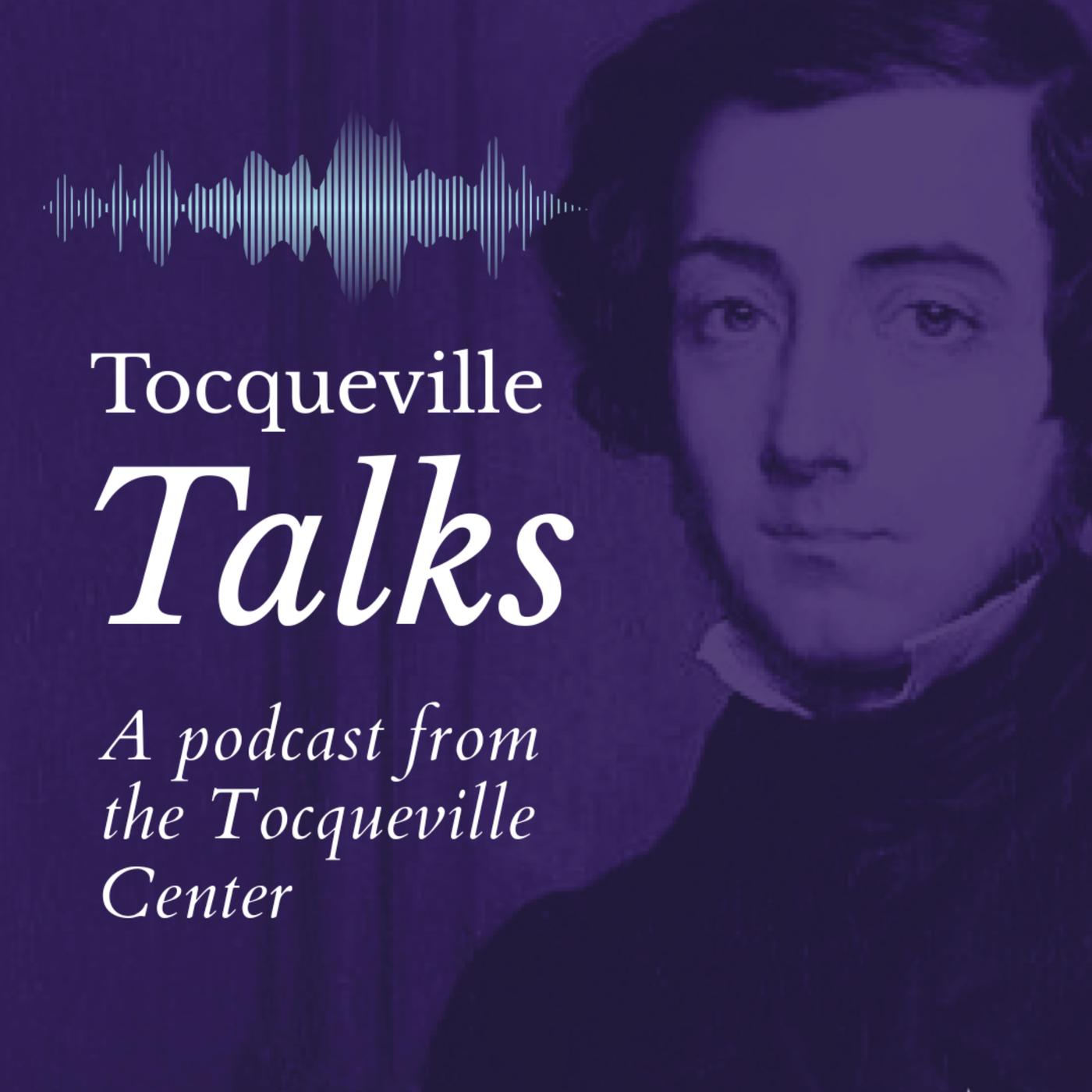
In this episode of Tocqueville Talks, Beth L'Arrivée and Rob L'Arrivée explore one of Alexis de Tocqueville's most penetrating insights: democratic societies encourage citizens to think in general ideas, abstractions, and public opinion rather than in the concrete realities immediately around them.
The result is a strange paradox. We know more. We discuss more. We consume more information. Yet we often struggle to see what is right in front of us.
Tocqueville believed this tendency could be resisted—but only through habits that cultivate judgment.
One of those habits appears in the writings of thinkers such as Plato, Montesquieu, Al-Farabi, Nietzsche, and Tocqueville himself. Rather than supplying ready-made conclusions, they leave premises unstated, compress arguments, create tensions, and force readers to complete the argument for themselves. Their goal is not simply to communicate ideas, but to train the mind.
The other habit is self-government.
Townships. Juries. Associations. Local institutions.
Places where citizens must confront real people, real problems, and real consequences rather than distant abstractions and fashionable opinions.
What do Tocqueville's New England townships and the greatest works of political philosophy have in common?
Both demand judgment.
Both resist abstraction.
Both force us back into reality.
Topics include:
Why democratic citizens tend toward abstraction
Tocqueville on public opinion and freedom of thought
Why information does not necessarily produce understanding
Plato, Montesquieu, Al-Farabi, Nietzsche, and Tocqueville as teachers
Reading as an education in judgment
Great Books and liberal education
Self-government and civic character
The difference between America and France
How free societies cultivate citizens capable of seeing reality clearly
At its heart, this episode asks a question that feels increasingly urgent:
How do we learn to see what is right in front of us?