
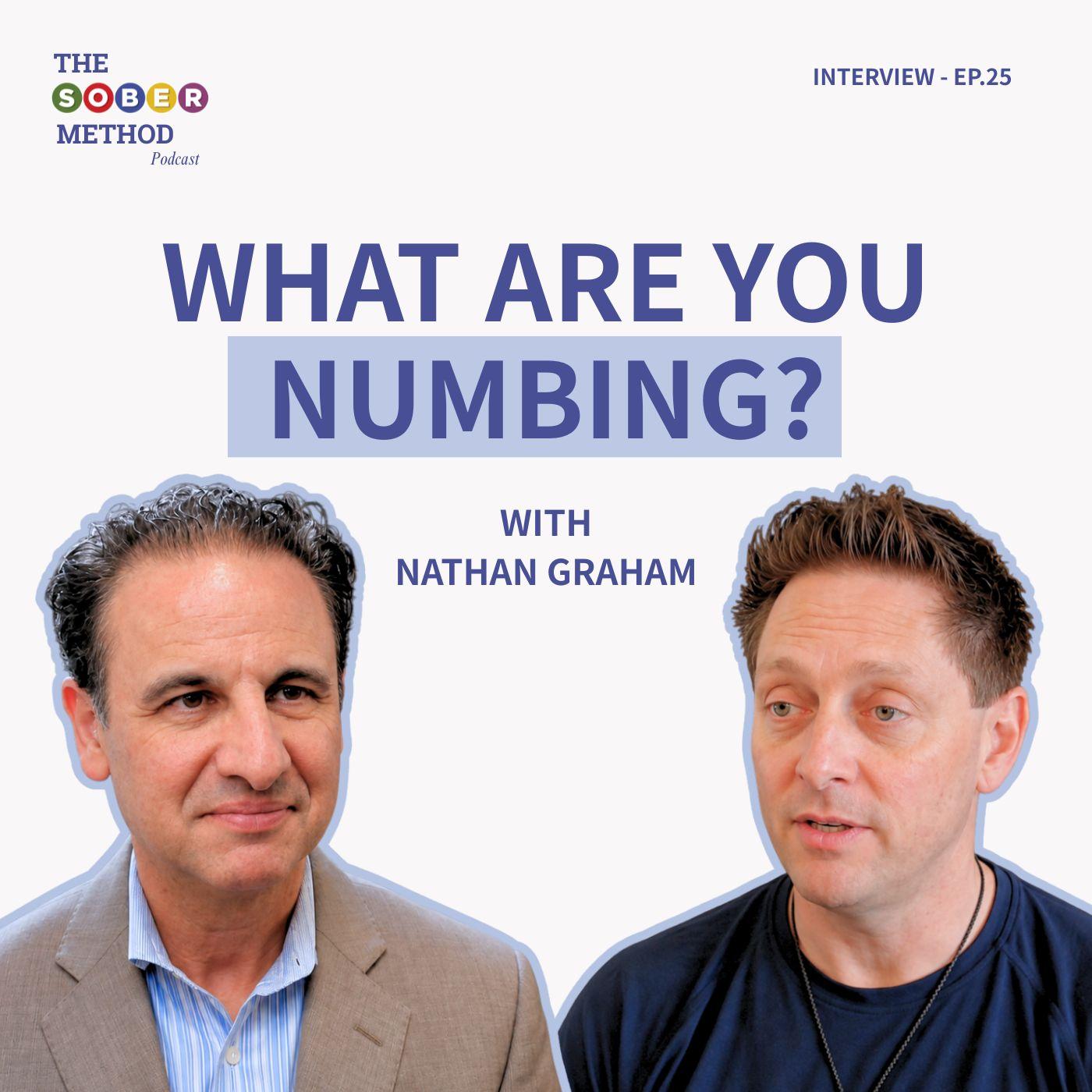
Massimo Rigotti: If you built the life, the career, the title, the family, who counts on you, you know how to perform. Today you'll learn what you're actually reaching for when you're numb, the real need under the habit, and why willpower keeps failing. Please welcome Nathan Graham.
Nathan Graham: Thank you so much for having me today. I'm pumped for this conversation.
Massimo Rigotti: Fantastic. Nathan, let's give it to him right out of the gate. When a man who already has the career and the title and the family still feels that pull to be numb what's he actually reaching for? Because I think guys out there, they're not treating the real problem.
Nathan Graham: No, absolutely. Unfortunately, though that's not a super quick one-liner answer. but I'll do my best to to consolidate it. The the there's four human needs that seems to drive all of our decision making out the gate. It's why we it's why we're doing this today, right? It's why we do podcasts, everything's why I'm married. All my decisions boil down to this. The first one is the need for for certainty. this is like that need to have food on the table, a house to go home to. The next one's a need for a sense of adventure. And this is our our need just to kind of it's the spice of life. It allows us to do different things. I'm skipping over these because I want to get this third one where it's really important because it this one affects men usually on a larger scale than than women, although it is important to women too. The need to feel significant, right? So other things that we do to drive our behaviors that need to feel important, to feel listened to, to feel accepted in our environments. And then the last one is the need for love and connection. And that need love and connection is to be a part of a group, a part of a people, whatever case may be, be married, love and connection, right? Why why do we still need to feel numb? Because there are very healthy and unhealthy ways to fulfill these needs. And if you take the need for significance as an example, I can go bully someone, put them down, and that's gonna make me feel real good because I feel like I have power, I feel like I have control, and it's an unhealthy way of needing it. In business, I could go. beat the snot out of everybody in sales or in my business plan and go stand in front of people and tell them how good I am. that would make me feel significant. Yet at the end of the day, it's not necessarily a healthy form of of significance. And so at the end of the day, it's almost like junk food for the soul. I I still feel leaving like I need more. Right. And and then what makes even worse, I feel a misalignment with who I am. because what I'm feeling out inside to what I'm portraying outside are not having equal results. And and so yeah, why do I feel numb? Why do I need to go have that drink, that screen time just to shut it off? It's because I'm not fulfilled right now.
Massimo Rigotti: Yeah, that's absolutely right. And you have a line that I really love, which is the behavior is the symptom, not the disease. And most high achievers attack the symptom, they quit the thing, they white knuckle it, they swap one numbing habit for another. Why does that almost always fail? And what changes the moment we address the need rather than the behavior?
Nathan Graham: So this is going back to that fulfillment of needs. if I go back how personal, let's just get personal right out the gate. If I go back to my life and I look at my need for gaming addictions, which is what initially started this conversation, if I look back for a need for I'm now four years sober, a need for when I drank, it was never what why did alcohol make me feel good? Why did gaming make me feel good? Because it built so much of my identity. When when I was on that patio, I was known as the the beer and wings guy. That that was my thing. If you wanted to go for lunch and have beer and wings, you call Nathan, right? And that became my loving connection with people. That became my sense of adventure of different conversations. And that became my sense of significance. It's what made me important in people's eyes. And even though when I thought, like if I take a look at drinking, if I knew it created problems in my past, and I knew if I kept going, it was going to create a lot of problems in my future. So the question that I eventually got confronted with is what is it giving me right now that outweighs the pain of my past and the pain I know I'll experience in the future? And because it hit three out of four of those core needs at such a high level, it built such of my identity. And I honestly didn't want to let that go. Like I was significant. I was somebody. I had to, I had these great, what I thought were great relationships. I thought that would be a bigger void in my life than what alcohol would cause or create. Right. And and going back to what you're talking about with high performers, I see this all the time on stages, the people bragging about their accolades. And I'm not saying don't praise achievement. I love to praise achievement. Yet when you're up there talking about how much money you make or the car you drive or the vacation you just took, and yet you go home feeling unfulfilled, it you're still missing that need.
Massimo Rigotti: Yeah, absolutely. And then I would think that we're really at the end of the day talking about the mask. So let's talk about it specifically. And for a lot of successful men out there, that achievement becomes the drug itself. You know, you're on stage, you're talking about that next big deal and that next title and all that validation that you're getting out of what you're doing. what's the difference between the healthy ambition and ambition to be numb? And are both identical from the outside, but they're very different internally.
Nathan Graham: Mm-hmm. So I think it's it's how we're gonna value them. this but by the way, that's a great question. I've never been asked that question before and it just sparked things in my brain. It's I love
Massimo Rigotti: Great.
Nathan Graham: it. it it's how we value them because achievement in itself isn't right or wrong. Yet am I defined by my achievement or am I defined by my journey to get there? Right. And and this is something I've I've been pondering a lot. If if I'm doing an achievement for the accolades at the end, well, then I just have to keep chasing the next achievement and the next achievement, Yet if I'm doing something for growth, if if my goal tomorrow is just to be a bit better than I am today, then the achievement almost doesn't matter what I get there. And the achievement keeps growing. this desire for growth, like I look at my life now and I have this desire for growth and contribution. That that's what drives a lot of what I do. I have I come from curiosity. I love to figure out how things fit in the world. If you're asking me a guiding principle, it's curiosity. I've made good money before and I don't care. Like when I look at my sales career as a realtor, it wasn't about how many houses I sold for profit. It was how many families could I help that year. Because if I went out to help families, I felt great and I was financially successful. Yet if I went out to be financially successful, I felt incomplete. I wasn't giving back to the world. I wasn't contributing. I wasn't growing as an individual. so when we look at people just chasing achievement, I I think that's that's a big difference. Is the question is why are you chasing that achievement? are you chasing the achievement so people can look upon you and praise the things that you've done? Or are you chasing the achievement because It just feels amazing to kick more ass today than it did yesterday.
Massimo Rigotti: Well put. At the end of this, I really feel like saying the old adage of do what you love and the money follows because this is truly looking within yourself and finding that inner fulfillment. And then amazingly you look at the scoreboard and go, I'm winning. Yeah.
Nathan Graham: Absolutely. Like I can tell you when I gave up drinking and all of a sudden I came home and I was able to engage with my little girl and at the time she's two or three and I can see an actual difference in how she engages with me. Man, I felt more loving connection. I felt more significance through that than I ever did through how many of our patio meetings. Right. It
Massimo Rigotti: Yeah. Yeah.
Nathan Graham: it wasn't about losing the need for loving connection or for significance. It was about fulfilling it in a much more healthy way.
Massimo Rigotti: Exactly. And so now we get that mask off, but a lot of us are sitting around going, Well, well then what? What actually rebuilds the confidence so it's not dependent on that status and the achievement and for everyone else's approval, which we could chase forever. I mean, could you give a listener like this is your first move to take that step?
Nathan Graham: there's a phrase that I think a lot of people think they know, but they don't really know. It's that Socrates phrase, know thyself. A lot of people believe, I've come to believe, do believe that that has to do with almost a selfish intent. Like, I know I'm great, I know I'm confident, I know I can face the world, I know whatever, you can put whatever you want in there. the the term was actually a term of humility. It's you don't know what you don't know. And and I used to have this analogy that if this circle was everything that I knew, the outer rim was everything I don't know. And so as my knowledge grew and my circle got bigger, so did my outer rim. And when I started approaching life from a position, when I say curiosity, a part of that curiosity was, I think I'm right. I'm pretty confident I'm right. What if I'm not right? And and how do I test and measure? whether this is right or wrong and what am I going to use at that test and measure. I if we're not starting from a place of of humility. It's you you're not gonna I I don't see how you can change. what's the phrase from Huckleberry Finn? It's not what you don't know that gets you into trouble, it's what you think you know for sure.
Massimo Rigotti: Yes, exactly. And it it
Nathan Graham: Right.
Massimo Rigotti: also plays into the same thought process of when you start out in life, you think you know everything, and the
Nathan Graham: Mm-hmm.
Massimo Rigotti: the older you get, the more you realize you don't know anything at all. And that that's the same kind of principle.
Nathan Graham: It's astonishing how much smarter I was when I was 17 around life when I moved out of my house. So where I I was a far I'll tell you this, my daughter's seven, eight years ago, I was a far better parent than I am today. Far better. Made almost no mistakes. Well, and Marvel. Yeah.
Massimo Rigotti: Absolutely. Yeah. And that's exactly what you told yourself, but now you realize that that's completely false.
Nathan Graham: And and what I love about this is I I just had this conversation earlier, so it's fresh in my brain. This is the difference between textbook knowledge and participatory knowledge, right? Going and getting the accolade is the textbook knowledge. Getting the achievement is the textbook knowledge. It's like you're just there to show off the trophy, the diploma at the end. You and I both know how a chair is made. I can tell you it's four legs, a couple of supports, a back, and whatever. Yet participatory knowledge is so different. If you go talk to a chairmaker, they're gonna tell you this beautiful story about the soul of a chair and how it's integrated. Well, this is kind of the difference. Our Are we just here textbook learning about life and then talking about and regurgitating the textbook learning that we did because we saw some success through it? Or are we actually participating in it day to day? Are we engaging in it? Or is this participatory knowledge that we're now passing on? Because there is something very fulfilling about like we talk about sales and high achievement. I am more fulfilled through the art of the sale than I am the sale itself because of the way I participate in it.
Massimo Rigotti: Yeah, that is so true. It is definitely true. And and then what you just said about chair making, that's the same exact story there as well, because you're talking about the art of making the chair and recognizing that the chair itself and its form has each chair has its own unique way in which it holds you and the differences between them. But for most people who just went to school, it's just four legs and a platform you can sit on, right? Yeah, that's very different. before we started talking here in for everybody else, we had a brief conversation about the uniqueness in sobriety and both of our stories kind of coming in reverse crossover in digital and substance. So if you would, could you take us back to your initial drive to become sober and tell us how it had nothing to do with substance what at all?
Nathan Graham: So, well, what a great way to frame that too. I grew up with a very big, large scarcity mindset. Like who you see before you today is not who you would have seen 16 years ago when I first got my real estate license. I remember getting my license, walking into the office, and trying to tell veterans how to do scripting because I sold cell phones with a script. I was very ego-driven and I was very As I said, I blamed a lot of other people for my problems. one day, it was about a year and a half, two years into my real estate career, and I sat down with a mentor of mine who unfortunately passed away. It was a Christmas Eve, 40 years old of a heart attack. Anyways, I went to was my first year in real estate, actually, because it was about eight months in. And I went to him, and I'm like, Todd, I don't think I'm getting my support at home. Remember, no self-accountability. I'm freshly married. I've been married now 19 years. But no, I was like freshly married, three, four years in. My wife and I just took out a eighteen thousand dollar line of credit, moved to a new city, and I started a real estate career. So like we was like risk taking through the nines. And I said, Todd, I've been here eight months. My wife doesn't even have a job yet. I don't feel like she's supporting me. Now I thought I was a good guy and I thought I was a servant. Like I I grew up in a church. I thought I served people. I thought I cared about people. And Todd did something interesting. I I went and complained about how horrible my wife is, who is the Biggest blessing on my life. And Todd looked at and he said, You know, Nathan, you're completely valid. And it was one of the first times someone actually validated my BS excuses, right? But then he turned around knowing me and said, Let me ask you though, by holding on to this belief, how are you serving your family? And I don't know what broke in my head that day, but a personal journey started to change. I guess kind of going back to that, a journey of humiliation. Hum humility started to change where I realized I actually don't know as much as I do. Now I never changed overnight. It took a long process. It took a lot of mistakes and a lot of issues. But that journey led me to I wanted to understand why I wasn't complete. Why did I need this need to show off or to break? I was horrible. You didn't tell me secrets. I would let your secrets go because it was a verbal currency. It it made me look good to other people, right? Fast forward to about four, yeah, four years ago. I I was at a conference and we dealt with I had no idea what to work on. I went to this conference, it was a self-growth, it was a Tony Robbins conference. So I just went there for business connections. I had no idea what the heck was going to go on. And we got confronted with the question of whose love in our family did we fight for more? Our mothers or our fathers? And remember, my father was a problem. I blamed him for everything, just like I blame my wife. Parents are the problem. and I never realized it before that all my decision making was there to impress my father, like my my knowledge, my research, it was there to be significant in my father's eyes. And that's where I learned about the four needs of what we do everything to strive for. And that's when I realized that everything I'm doing is boiling down to significance. And when I looked at, and that that was my bag. So usually out of the four, there's two top ones in mine, and usually it's like either certainty and adventure. Like you're usually one of those, and usually you're either significance or love and connection. And mine was adventure and significance. And and then for some reason something snapped in my head. I I think I told you I was a daily drinker. I drank more than a fair share. I realized I was doing this just to be significant. I was doing this just for adventure, that this was the real reason why I was drinking. And I don't understand why I needed to keep doing because I really didn't like it. I didn't like how I felt. It's something I wanted to change. And ever since that conference, I just haven't had a drink. There was I never went there to quit drinking. And the same thing with video game addiction. I I was very heavily video game addicted. I lost jobs. I nearly my wife and I nearly did not get married because of my video game addiction. And I realized, especially in my early years, that I'm sitting here looking for significance. It's why I gave away this verbal currency. And I'm looking for all these things in my life. my job at the time sucked. It was a horrible job. I felt good in this video game. When I was in this video game, I felt a sense of accomplishment. I felt a sense of community. I felt a sense of significance, of adventure. And it was fulfilling all these needs. So as I learned about these needs, it was just like building blocks started to fall in my brain about the way my life was heading and going. And this is what made me so passionate about this change is that I like control, I like predictability. And when you realize that your entire life is out of your control because you don't even know what the heck's happening to you, it's a scary thought. So I coined the phrase, I'm nothing but the captain of my leaf flowing down the Amazon River. That that's about as much control as I have. I understand I'm on a river. I understand I have a boat. I might be a captain, but good luck guiding it.
Massimo Rigotti: Yeah. I guess that's a that's a really good analogy. I 'cause I can completely picture trying to steer a leaf down the Amazon, especially in the rougher parts of it. You yeah you just touched on the cost to your marriage, and a lot of guys struggle with this because the way that you framed it though I really like and recognizing the fact that you can put things off on someone else, but you can only do that so long as you're unwilling to turn that mirror back and look at what's really going on with you. You
Nathan Graham: Mm-hmm.
Massimo Rigotti: already sort of answered this, but I'm gonna ask it again. What did gaming give you that real life was not?
Nathan Graham: Well, it it was exactly that. So at the time, and kudos to people who do factory work. If you love your job at a factory, then do it. If you hate it, quit it. don't let it trap you forever. but I was I was in a water bottling plant, man. I had the most boring, stupid job ever. And our our company was so bad that they one time figured that even though we worked 12 hours, so it was seven to seven for two weeks, and then it rotated seven to seven for two weeks. So it was two week days, two week nights. It was a horrible job. And they were trying to figure out how they could use our one-hour lunch break to make us work 13 hours but pay us for 12. Like that's how horrible this company was. I had no fulfillment in my life. I my relationships, I didn't think I would ever get married. Because you I'm 21, my life was nearly over. I never thought I'd end up getting married. I never had good relationships. and so when I got into this gaming world, it just changed everything. I was good at it. people look to me for advice. I would log on and they would ask me to join their groups because I was good at the role I played. Right. And the other thing with gaming is on a neurological side, there's a science behind it similar to other addictive. So I'm gonna back up. Alcohol, I learned that there's some people, and I'm pretty sure that I was one of these people, that after three or four beers, they get a euphoric feeling that's similar to that of cocaine. Now I've never done cocaine, but it, but it it's it's it's a genetic part because I felt I can tell man, I shoot pool, I felt great after three or four beers. That was my time to shine. in a casino, I I don't necessarily love losing money, but I love winning. And I love how slot machines, which are the stupidest, most pointless things in the world, with no control whatsoever, celebrate every win that I have. So it's like dopamine hits and everything. Well gaming was providing the same thing. Gaming does two things very, very well, does a lot of things very well, but two things very well is number one, It creates a dopamine hit into the the brain that is really hard to replicate anywhere else. The other thing it creates in you is what we call the flow state. So for a competitor out there will know what what a flow state is. I shoot pool. A flow state is when a task isn't so hard that I get anxiety, yet hard enough that I do not get bored. And when I when I'm shooting pool, when I'm playing eight ball or nine ball, sometimes it's like this layer of energy is over the table. And it's like I can feel and sense where every single ball is. It's like I can pre-see the hit before I do it. That is the flow state. I'm sure you get it in podcasting as well. Like you just know the way a conversation will go. You just know you're on fire that day, right? Video games forcefully put you into that flow state. It's actually one of the reasons why when you disrupt somebody from a mid-video game session, they get so angry right out the gate, even though it's uncharacteristic. Is they're in the middle of this flow state while playing the game, so it has this neurological impact on you. Then on the same hand, it's fulfilling all these needs. It's not only making me feel great, it's making me feel wanted, it's making me feel accepted, it's making me feel important, it's making me feel adventure, it's giving me rules of certainty in life. I know if I do A, B will happen and I can master that. And once anything in life hits three or four of those needs, it can become highly addictive. It's just as simple as that. Right. And so why I got addicted is it just it's it was like the perfect blend of everything that I desired and craved in life, along with the feelings of significance.
Massimo Rigotti: Yeah. No, that that completely makes sense. And I was just sitting here thinking about how I used to play a lot of pool back when I used to drink way too much and how how I would get in that exact state. And I'm sure a lot of people listening can reflect on playing pool or maybe it's golf or or whatever it is. You can get into those states where you just don't interrupt me. I'm I'm really in the zone, as some people also say as well.
Nathan Graham: Absolutely, yeah, same thing.
Massimo Rigotti: Yeah. So you're you're about four years sober. You've rebuilt your relationship with yourself and you've got this great purpose now. What is the framework that you're using actually look like as you apply it into your day-to-day life? I mean, what is working for you?
Nathan Graham: That's good question. Because one thing I found is what when it came to alcohol specifically, once I reorganized where my needs were coming from, it actually created a domino effect where I didn't need a framework to stay sober. Right now, I this is very rare and r weird. And I'm not saying, please, if you have a serious problem drinking, go get help. Like, get help. Don't don't do what I'm just saying, just because it worked for me. I don't want to put that anyone the path, but for me, like now when I think about having a drink, I just don't see a point in it. Because the way my priorities realigned, it's just I don't even fear that I would drink again. I I was in Cuba a few years back. and I went on a a rum cigar and sugar tour, and I will fully admit I did have a little bit of alcohol. It was like little itty bits of rum, because I wanted to taste the flavors the first time in like two and a half years, right? Didn't even think I wouldn't have even accounted to what would have been a shot. And it didn't bug me. I didn't feel like drinking again afterwards. Just because I don't find significance anymore. I actually find it pointless. It's the same reason why I won't eat turnip. Like I I don't understand people who like turnips. They're gross. Or onions. Like they're designed to literally make you cry. Who wants to eat an onion? so the same sort of look that came there. When it came to gaming though, it's a different because I'm still a gamer to this day. And one thing I love In life, and one thing that brings me significance is I love mastery. I don't really like doing anything that doesn't I can't really master and drives my wife nuts, but I get this obsessive thing. I'm like, if I'm gonna do it, I'm gonna do it really well. Right.
Massimo Rigotti: Yes.
Nathan Graham: And I look at my gaming world and it it's so different than it was. I understand I need time limits. I understand that I need sleep. I understand that I need to fulfill my other responsibilities, otherwise I'm not gonna feel good. I understand that I need to work out. I recently lost 65 pounds since last October. I need to be in shape. I need I need to hit the gym. and by the way, professional gamers would all agree with this. I need to eat nutritiously. I can't just eat junk food and expect to be sharp-minded, even to the point that with the the team I'm on in my game, we achieve something that the 0.1% top people achieve. And I do it. I research. I actually hired a gaming coach. We took video, we reviewed everything I did. These are all practical tools that I use in my AI career, that I use in my real estate career. I'm when I'm creating a new product or I'm consulting a company, we're looking at the competition. I'm researching. I am strategizing with my coach on the best way to position stuff. I understand that in the business world, I need to sleep. I need to get healthy. I I heard this great thing with Elon Musk the other day that he tried the little sleep and it just killed his productivity. Working more isn't always the answer, Taking breaks is quite good, all these skill sets. That I've learned how to analyze data. Like I analyze fights in my head. Like we we have a new challenge in the game, and my analytical brain goes to work dissecting it of what I need to do and what my responsibility is. And also I have a team and I I can't, I'm not responsible for them. Like there's a skill set in life that you learn that if you want to be great at this game, I can't be responsible for other people. And so now what I've done in this gaming world, which is something I'm I'm hoping to share with people, is that you can actually turn it into a skill set. That you use for life. And and you can apply it, it wasn't like drinking. It was like, I can apply this here into here. It's like nothing in life was like, hey, if I chug a beer, I can definitely use that in business. that wasn't a good comparison, but I can be like, well, if I if I have to plan a fight or if I have to study something, I can use that in business. So when I look at the framework we're dealing with, it it's it's not always getting rid of it completely. It's managing it in such a way that I would something to master. The same way I would manage pool when I played football, the same way I would learn the plays in football is what I take in the video game world now.
Massimo Rigotti: That's a great way of also finding it's like creating multiple side quests with your life and so to speak.
Nathan Graham: Mm-hmm.
Massimo Rigotti: Being the being the term of the day these days is talking about your side quest. Mastery is something that is so overlooked and yet so rewarding in the end. I would think And I I haven't read enough studies to actually comment with any authority on this, but I would think just my own feelings when I master something, it almost has the same euphoric feeling that I used to get out of drinking.
Nathan Graham: Mm-hmm. yeah. Actually, if not far better, like the interesting thing is I I've been having this new phrase called junk food for the soul. And it's it's what I love about it is like you think drinking, it does it accomplish what you set out to do? Absolutely. It gave you the euphoric feeling, it gave me my significance. It just did it like junk food though. Does junk food fill me up? Absolutely. But am I hungry an hour later? I am and I'm gonna eat more. And it's different to mastery. I I love what you just said there about mastery because Mastery isn't necessarily I think that's also important too. This kind of goes back to but mastery isn't necessarily being the absolute best. Mastery is getting to the point where you're really proud of yourself for doing it, right?
Massimo Rigotti: Exactly.
Nathan Graham: And and that journey. And then once you get to that point, I always like just push yourself that bit farther. Like I don't like the complacency. Like we as human beings, it's crazy the amount of internal potential we have and the things that we can do. It's either A, we don't believe we can do it, or B, we don't give ourselves enough time to do it, But with enough time and the right belief, we do amazing things. So when you master something, come from curiosity. ask a what the heck question. what the heck? Why why don't I why why don't I try to be better? what the heck? Why not? Right? Why not? And just see what happens. So what? no, you failed after you mastered something. Like that's the worst thing in the world, right?
Massimo Rigotti: You you would be surprised what you're capable of, you know, if
Nathan Graham: Mm.
Massimo Rigotti: you just put yourself to it. And Nathan, the sober method is a master framework that people use to build lasting sobriety and confidence. And its first step is stoic. getting and being honest about what actually ails you at your core before you change a single behavior. So from your needs lens, and you touched on this a little bit, but I want to revisit it one more time. Why is naming that underlying need the part that almost everybody skips? They just wanna they just wanna be fixed, but they skip understanding that underlying need. Why?
Nathan Graham: I get a chance to tell a story that I haven't told yet, so bear with me. What I think this will be really relevant. I I was listening to a thing on anxiety, and and one of the things is it said is when your internal view mismatches your external view, and the example they use apparently is a true story that there's an earthquake somewhere in South America. And the people right at the center of the earthquake who had their homes destroyed, lot loved ones lost, when they were interviewed afterwards, it was kind of like What's going on? And they're like, you know what? This sucks. We don't have time to think about it. There's people who still need to be saved, though. We need to rebuild, right? And then they interviewed people a few kilometers out or a few miles out for my American friends. they they interviewed a few people a few kilometers out. Now, these people felt the effect of the earthquake. Like things fell off their shelves, things fell over, but there were no real immediate danger. It's not like their life was falling apart. And when they interviewed those people, They said things like, my goodness, it was one of the most horrible experiences of my life. I I'm surprised we all survived it. And they catastrophized it in such a big way in their head. Well, the belief is because if you think the average person thinks themselves to be a brave person, and then something like this happens where they feel fear, they're in no real danger, yet. They feel fear in such a high level. Now they have one of two options. Either A, they have to admit they're not actually that brave, or B, they have to exaggerate what the problem truly was to be able to match their internal and external view. Does that does that make sense? Right. Okay.
Massimo Rigotti: That makes complete sense, yeah.
Nathan Graham: So so the same thing happens here with naming what these issues are. You have a choice. You can either admit that. The problem resides with you and you can go ahead and make the change. Or you can tell yourself stories about the world around you to justify the way you eternally look at. So when I look at myself, I I would have hated. I actually got very offended when people called me an alcoholic when I drank, or people even challenged the idea that I was drinking because that did not suit my internal to external view. But instead of admitting that I'm an alcoholic. I changed the way I told people about it. So then that would shift my view, right? I did what those
Massimo Rigotti: Yes.
Nathan Graham: guys a few climbers out did. The reason why it's so hard to face it is because you talk about that for I love that first part being admitted admittance. Like you have to be stoic about it, man. Like if you're not willing to turn around and say, I'm the problem here, which is a hard thing to do because now I have to tell myself I've been lying to myself. I'm telling myself I'm no longer an honest person. I now have to tell myself the truth about myself. And then unfortunately, I have to go apologize to the world because they're now going to see that I've been acting like a fraud this whole time. That's why we don't want to do it. we would much prefer to tell you why the world is the problem for the way we are. But then you're stuck with the issue of you can't control that, That you, I can't control you. I can't control this world. What I can control is me though. This is this is the captain of the Amazon Leaf. I can't control the Amazon River, but I do have a little bit of control on my leaf going down it.
Massimo Rigotti: Ooh, perfectly perfect way to tie that back up together. Yeah, I really like that. That was really well put. So everyone listening
Nathan Graham: Thank you.
Massimo Rigotti: before we go, here's your step this week and it comes straight out of my digital sober method. Because for most of us, numbing now lives right in our own pockets. So start with stoic and observe work. For the next three days, every time your hand reaches for the phone or the drink, without a real reason, do not fight it yet. Just pause, and I want you to name the need underneath. Relief, connection, significance, escape, control, and I want you to write it down in your journal. You're not changing the behavior yet. You're finding the disease under the symptom, exactly like Nathan said. Then add one non-negotiable thing from the method. I want you to pick one of the three. No phone for the first hour of your day, none for the last hour of the day, or none at the table. That's where you're going to start taking that mask off and you're going to start meeting people where they are. So, Nathan, we have a tradition on this podcast where each guest answers a question left by my last guest. Gaylen Wilson left you this question: What is the greatest gift this life has to offer?
Nathan Graham: our brains. human beings have this exceptional ability to constantly live in the future, past, and present at all times. One cool thing that makes us different is when we face a decision, we have the ability to play out multiple scenarios as if they're real and prepare for them. And this is a skill when honed becomes just an absolute amazing, beautiful thing. When we come from curiosity, even within our brains, it it operates and views the world very differently. So I I would challenge and hopefully people embrace the gift of don't always try and control your brain. Let it do what it does best. Let it operate, let it figure out, let it put pieces together and curiosity observe your brain versus controlling it all the time. I would say that.
Massimo Rigotti: that's great. Really like it. Well, to everyone listening, I want you to keep observing and journaling your own behaviors daily. My new book, Digital Sober Method, is available now anywhere books are sold. And if putting down your phone is the fight you're in, this is definitely your solution. I'm Massimo Rigotti and this is the Sober Method Podcast. Please follow, like, subscribe, leave a review, and share this episode with anyone who needs to hear it. Remember, your future is sober.
Nathan Graham: Thank you so much for having me today. I'm pumped for this conversation.
Massimo Rigotti: Fantastic. Nathan, let's give it to him right out of the gate. When a man who already has the career and the title and the family still feels that pull to be numb what's he actually reaching for? Because I think guys out there, they're not treating the real problem.
Nathan Graham: No, absolutely. Unfortunately, though that's not a super quick one-liner answer. but I'll do my best to to consolidate it. The the there's four human needs that seems to drive all of our decision making out the gate. It's why we it's why we're doing this today, right? It's why we do podcasts, everything's why I'm married. All my decisions boil down to this. The first one is the need for for certainty. this is like that need to have food on the table, a house to go home to. The next one's a need for a sense of adventure. And this is our our need just to kind of it's the spice of life. It allows us to do different things. I'm skipping over these because I want to get this third one where it's really important because it this one affects men usually on a larger scale than than women, although it is important to women too. The need to feel significant, right? So other things that we do to drive our behaviors that need to feel important, to feel listened to, to feel accepted in our environments. And then the last one is the need for love and connection. And that need love and connection is to be a part of a group, a part of a people, whatever case may be, be married, love and connection, right? Why why do we still need to feel numb? Because there are very healthy and unhealthy ways to fulfill these needs. And if you take the need for significance as an example, I can go bully someone, put them down, and that's gonna make me feel real good because I feel like I have power, I feel like I have control, and it's an unhealthy way of needing it. In business, I could go. beat the snot out of everybody in sales or in my business plan and go stand in front of people and tell them how good I am. that would make me feel significant. Yet at the end of the day, it's not necessarily a healthy form of of significance. And so at the end of the day, it's almost like junk food for the soul. I I still feel leaving like I need more. Right. And and then what makes even worse, I feel a misalignment with who I am. because what I'm feeling out inside to what I'm portraying outside are not having equal results. And and so yeah, why do I feel numb? Why do I need to go have that drink, that screen time just to shut it off? It's because I'm not fulfilled right now.
Massimo Rigotti: Yeah, that's absolutely right. And you have a line that I really love, which is the behavior is the symptom, not the disease. And most high achievers attack the symptom, they quit the thing, they white knuckle it, they swap one numbing habit for another. Why does that almost always fail? And what changes the moment we address the need rather than the behavior?
Nathan Graham: So this is going back to that fulfillment of needs. if I go back how personal, let's just get personal right out the gate. If I go back to my life and I look at my need for gaming addictions, which is what initially started this conversation, if I look back for a need for I'm now four years sober, a need for when I drank, it was never what why did alcohol make me feel good? Why did gaming make me feel good? Because it built so much of my identity. When when I was on that patio, I was known as the the beer and wings guy. That that was my thing. If you wanted to go for lunch and have beer and wings, you call Nathan, right? And that became my loving connection with people. That became my sense of adventure of different conversations. And that became my sense of significance. It's what made me important in people's eyes. And even though when I thought, like if I take a look at drinking, if I knew it created problems in my past, and I knew if I kept going, it was going to create a lot of problems in my future. So the question that I eventually got confronted with is what is it giving me right now that outweighs the pain of my past and the pain I know I'll experience in the future? And because it hit three out of four of those core needs at such a high level, it built such of my identity. And I honestly didn't want to let that go. Like I was significant. I was somebody. I had to, I had these great, what I thought were great relationships. I thought that would be a bigger void in my life than what alcohol would cause or create. Right. And and going back to what you're talking about with high performers, I see this all the time on stages, the people bragging about their accolades. And I'm not saying don't praise achievement. I love to praise achievement. Yet when you're up there talking about how much money you make or the car you drive or the vacation you just took, and yet you go home feeling unfulfilled, it you're still missing that need.
Massimo Rigotti: Yeah, absolutely. And then I would think that we're really at the end of the day talking about the mask. So let's talk about it specifically. And for a lot of successful men out there, that achievement becomes the drug itself. You know, you're on stage, you're talking about that next big deal and that next title and all that validation that you're getting out of what you're doing. what's the difference between the healthy ambition and ambition to be numb? And are both identical from the outside, but they're very different internally.
Nathan Graham: Mm-hmm. So I think it's it's how we're gonna value them. this but by the way, that's a great question. I've never been asked that question before and it just sparked things in my brain. It's I love
Massimo Rigotti: Great.
Nathan Graham: it. it it's how we value them because achievement in itself isn't right or wrong. Yet am I defined by my achievement or am I defined by my journey to get there? Right. And and this is something I've I've been pondering a lot. If if I'm doing an achievement for the accolades at the end, well, then I just have to keep chasing the next achievement and the next achievement, Yet if I'm doing something for growth, if if my goal tomorrow is just to be a bit better than I am today, then the achievement almost doesn't matter what I get there. And the achievement keeps growing. this desire for growth, like I look at my life now and I have this desire for growth and contribution. That that's what drives a lot of what I do. I have I come from curiosity. I love to figure out how things fit in the world. If you're asking me a guiding principle, it's curiosity. I've made good money before and I don't care. Like when I look at my sales career as a realtor, it wasn't about how many houses I sold for profit. It was how many families could I help that year. Because if I went out to help families, I felt great and I was financially successful. Yet if I went out to be financially successful, I felt incomplete. I wasn't giving back to the world. I wasn't contributing. I wasn't growing as an individual. so when we look at people just chasing achievement, I I think that's that's a big difference. Is the question is why are you chasing that achievement? are you chasing the achievement so people can look upon you and praise the things that you've done? Or are you chasing the achievement because It just feels amazing to kick more ass today than it did yesterday.
Massimo Rigotti: Well put. At the end of this, I really feel like saying the old adage of do what you love and the money follows because this is truly looking within yourself and finding that inner fulfillment. And then amazingly you look at the scoreboard and go, I'm winning. Yeah.
Nathan Graham: Absolutely. Like I can tell you when I gave up drinking and all of a sudden I came home and I was able to engage with my little girl and at the time she's two or three and I can see an actual difference in how she engages with me. Man, I felt more loving connection. I felt more significance through that than I ever did through how many of our patio meetings. Right. It
Massimo Rigotti: Yeah. Yeah.
Nathan Graham: it wasn't about losing the need for loving connection or for significance. It was about fulfilling it in a much more healthy way.
Massimo Rigotti: Exactly. And so now we get that mask off, but a lot of us are sitting around going, Well, well then what? What actually rebuilds the confidence so it's not dependent on that status and the achievement and for everyone else's approval, which we could chase forever. I mean, could you give a listener like this is your first move to take that step?
Nathan Graham: there's a phrase that I think a lot of people think they know, but they don't really know. It's that Socrates phrase, know thyself. A lot of people believe, I've come to believe, do believe that that has to do with almost a selfish intent. Like, I know I'm great, I know I'm confident, I know I can face the world, I know whatever, you can put whatever you want in there. the the term was actually a term of humility. It's you don't know what you don't know. And and I used to have this analogy that if this circle was everything that I knew, the outer rim was everything I don't know. And so as my knowledge grew and my circle got bigger, so did my outer rim. And when I started approaching life from a position, when I say curiosity, a part of that curiosity was, I think I'm right. I'm pretty confident I'm right. What if I'm not right? And and how do I test and measure? whether this is right or wrong and what am I going to use at that test and measure. I if we're not starting from a place of of humility. It's you you're not gonna I I don't see how you can change. what's the phrase from Huckleberry Finn? It's not what you don't know that gets you into trouble, it's what you think you know for sure.
Massimo Rigotti: Yes, exactly. And it it
Nathan Graham: Right.
Massimo Rigotti: also plays into the same thought process of when you start out in life, you think you know everything, and the
Nathan Graham: Mm-hmm.
Massimo Rigotti: the older you get, the more you realize you don't know anything at all. And that that's the same kind of principle.
Nathan Graham: It's astonishing how much smarter I was when I was 17 around life when I moved out of my house. So where I I was a far I'll tell you this, my daughter's seven, eight years ago, I was a far better parent than I am today. Far better. Made almost no mistakes. Well, and Marvel. Yeah.
Massimo Rigotti: Absolutely. Yeah. And that's exactly what you told yourself, but now you realize that that's completely false.
Nathan Graham: And and what I love about this is I I just had this conversation earlier, so it's fresh in my brain. This is the difference between textbook knowledge and participatory knowledge, right? Going and getting the accolade is the textbook knowledge. Getting the achievement is the textbook knowledge. It's like you're just there to show off the trophy, the diploma at the end. You and I both know how a chair is made. I can tell you it's four legs, a couple of supports, a back, and whatever. Yet participatory knowledge is so different. If you go talk to a chairmaker, they're gonna tell you this beautiful story about the soul of a chair and how it's integrated. Well, this is kind of the difference. Our Are we just here textbook learning about life and then talking about and regurgitating the textbook learning that we did because we saw some success through it? Or are we actually participating in it day to day? Are we engaging in it? Or is this participatory knowledge that we're now passing on? Because there is something very fulfilling about like we talk about sales and high achievement. I am more fulfilled through the art of the sale than I am the sale itself because of the way I participate in it.
Massimo Rigotti: Yeah, that is so true. It is definitely true. And and then what you just said about chair making, that's the same exact story there as well, because you're talking about the art of making the chair and recognizing that the chair itself and its form has each chair has its own unique way in which it holds you and the differences between them. But for most people who just went to school, it's just four legs and a platform you can sit on, right? Yeah, that's very different. before we started talking here in for everybody else, we had a brief conversation about the uniqueness in sobriety and both of our stories kind of coming in reverse crossover in digital and substance. So if you would, could you take us back to your initial drive to become sober and tell us how it had nothing to do with substance what at all?
Nathan Graham: So, well, what a great way to frame that too. I grew up with a very big, large scarcity mindset. Like who you see before you today is not who you would have seen 16 years ago when I first got my real estate license. I remember getting my license, walking into the office, and trying to tell veterans how to do scripting because I sold cell phones with a script. I was very ego-driven and I was very As I said, I blamed a lot of other people for my problems. one day, it was about a year and a half, two years into my real estate career, and I sat down with a mentor of mine who unfortunately passed away. It was a Christmas Eve, 40 years old of a heart attack. Anyways, I went to was my first year in real estate, actually, because it was about eight months in. And I went to him, and I'm like, Todd, I don't think I'm getting my support at home. Remember, no self-accountability. I'm freshly married. I've been married now 19 years. But no, I was like freshly married, three, four years in. My wife and I just took out a eighteen thousand dollar line of credit, moved to a new city, and I started a real estate career. So like we was like risk taking through the nines. And I said, Todd, I've been here eight months. My wife doesn't even have a job yet. I don't feel like she's supporting me. Now I thought I was a good guy and I thought I was a servant. Like I I grew up in a church. I thought I served people. I thought I cared about people. And Todd did something interesting. I I went and complained about how horrible my wife is, who is the Biggest blessing on my life. And Todd looked at and he said, You know, Nathan, you're completely valid. And it was one of the first times someone actually validated my BS excuses, right? But then he turned around knowing me and said, Let me ask you though, by holding on to this belief, how are you serving your family? And I don't know what broke in my head that day, but a personal journey started to change. I guess kind of going back to that, a journey of humiliation. Hum humility started to change where I realized I actually don't know as much as I do. Now I never changed overnight. It took a long process. It took a lot of mistakes and a lot of issues. But that journey led me to I wanted to understand why I wasn't complete. Why did I need this need to show off or to break? I was horrible. You didn't tell me secrets. I would let your secrets go because it was a verbal currency. It it made me look good to other people, right? Fast forward to about four, yeah, four years ago. I I was at a conference and we dealt with I had no idea what to work on. I went to this conference, it was a self-growth, it was a Tony Robbins conference. So I just went there for business connections. I had no idea what the heck was going to go on. And we got confronted with the question of whose love in our family did we fight for more? Our mothers or our fathers? And remember, my father was a problem. I blamed him for everything, just like I blame my wife. Parents are the problem. and I never realized it before that all my decision making was there to impress my father, like my my knowledge, my research, it was there to be significant in my father's eyes. And that's where I learned about the four needs of what we do everything to strive for. And that's when I realized that everything I'm doing is boiling down to significance. And when I looked at, and that that was my bag. So usually out of the four, there's two top ones in mine, and usually it's like either certainty and adventure. Like you're usually one of those, and usually you're either significance or love and connection. And mine was adventure and significance. And and then for some reason something snapped in my head. I I think I told you I was a daily drinker. I drank more than a fair share. I realized I was doing this just to be significant. I was doing this just for adventure, that this was the real reason why I was drinking. And I don't understand why I needed to keep doing because I really didn't like it. I didn't like how I felt. It's something I wanted to change. And ever since that conference, I just haven't had a drink. There was I never went there to quit drinking. And the same thing with video game addiction. I I was very heavily video game addicted. I lost jobs. I nearly my wife and I nearly did not get married because of my video game addiction. And I realized, especially in my early years, that I'm sitting here looking for significance. It's why I gave away this verbal currency. And I'm looking for all these things in my life. my job at the time sucked. It was a horrible job. I felt good in this video game. When I was in this video game, I felt a sense of accomplishment. I felt a sense of community. I felt a sense of significance, of adventure. And it was fulfilling all these needs. So as I learned about these needs, it was just like building blocks started to fall in my brain about the way my life was heading and going. And this is what made me so passionate about this change is that I like control, I like predictability. And when you realize that your entire life is out of your control because you don't even know what the heck's happening to you, it's a scary thought. So I coined the phrase, I'm nothing but the captain of my leaf flowing down the Amazon River. That that's about as much control as I have. I understand I'm on a river. I understand I have a boat. I might be a captain, but good luck guiding it.
Massimo Rigotti: Yeah. I guess that's a that's a really good analogy. I 'cause I can completely picture trying to steer a leaf down the Amazon, especially in the rougher parts of it. You yeah you just touched on the cost to your marriage, and a lot of guys struggle with this because the way that you framed it though I really like and recognizing the fact that you can put things off on someone else, but you can only do that so long as you're unwilling to turn that mirror back and look at what's really going on with you. You
Nathan Graham: Mm-hmm.
Massimo Rigotti: already sort of answered this, but I'm gonna ask it again. What did gaming give you that real life was not?
Nathan Graham: Well, it it was exactly that. So at the time, and kudos to people who do factory work. If you love your job at a factory, then do it. If you hate it, quit it. don't let it trap you forever. but I was I was in a water bottling plant, man. I had the most boring, stupid job ever. And our our company was so bad that they one time figured that even though we worked 12 hours, so it was seven to seven for two weeks, and then it rotated seven to seven for two weeks. So it was two week days, two week nights. It was a horrible job. And they were trying to figure out how they could use our one-hour lunch break to make us work 13 hours but pay us for 12. Like that's how horrible this company was. I had no fulfillment in my life. I my relationships, I didn't think I would ever get married. Because you I'm 21, my life was nearly over. I never thought I'd end up getting married. I never had good relationships. and so when I got into this gaming world, it just changed everything. I was good at it. people look to me for advice. I would log on and they would ask me to join their groups because I was good at the role I played. Right. And the other thing with gaming is on a neurological side, there's a science behind it similar to other addictive. So I'm gonna back up. Alcohol, I learned that there's some people, and I'm pretty sure that I was one of these people, that after three or four beers, they get a euphoric feeling that's similar to that of cocaine. Now I've never done cocaine, but it, but it it's it's it's a genetic part because I felt I can tell man, I shoot pool, I felt great after three or four beers. That was my time to shine. in a casino, I I don't necessarily love losing money, but I love winning. And I love how slot machines, which are the stupidest, most pointless things in the world, with no control whatsoever, celebrate every win that I have. So it's like dopamine hits and everything. Well gaming was providing the same thing. Gaming does two things very, very well, does a lot of things very well, but two things very well is number one, It creates a dopamine hit into the the brain that is really hard to replicate anywhere else. The other thing it creates in you is what we call the flow state. So for a competitor out there will know what what a flow state is. I shoot pool. A flow state is when a task isn't so hard that I get anxiety, yet hard enough that I do not get bored. And when I when I'm shooting pool, when I'm playing eight ball or nine ball, sometimes it's like this layer of energy is over the table. And it's like I can feel and sense where every single ball is. It's like I can pre-see the hit before I do it. That is the flow state. I'm sure you get it in podcasting as well. Like you just know the way a conversation will go. You just know you're on fire that day, right? Video games forcefully put you into that flow state. It's actually one of the reasons why when you disrupt somebody from a mid-video game session, they get so angry right out the gate, even though it's uncharacteristic. Is they're in the middle of this flow state while playing the game, so it has this neurological impact on you. Then on the same hand, it's fulfilling all these needs. It's not only making me feel great, it's making me feel wanted, it's making me feel accepted, it's making me feel important, it's making me feel adventure, it's giving me rules of certainty in life. I know if I do A, B will happen and I can master that. And once anything in life hits three or four of those needs, it can become highly addictive. It's just as simple as that. Right. And so why I got addicted is it just it's it was like the perfect blend of everything that I desired and craved in life, along with the feelings of significance.
Massimo Rigotti: Yeah. No, that that completely makes sense. And I was just sitting here thinking about how I used to play a lot of pool back when I used to drink way too much and how how I would get in that exact state. And I'm sure a lot of people listening can reflect on playing pool or maybe it's golf or or whatever it is. You can get into those states where you just don't interrupt me. I'm I'm really in the zone, as some people also say as well.
Nathan Graham: Absolutely, yeah, same thing.
Massimo Rigotti: Yeah. So you're you're about four years sober. You've rebuilt your relationship with yourself and you've got this great purpose now. What is the framework that you're using actually look like as you apply it into your day-to-day life? I mean, what is working for you?
Nathan Graham: That's good question. Because one thing I found is what when it came to alcohol specifically, once I reorganized where my needs were coming from, it actually created a domino effect where I didn't need a framework to stay sober. Right now, I this is very rare and r weird. And I'm not saying, please, if you have a serious problem drinking, go get help. Like, get help. Don't don't do what I'm just saying, just because it worked for me. I don't want to put that anyone the path, but for me, like now when I think about having a drink, I just don't see a point in it. Because the way my priorities realigned, it's just I don't even fear that I would drink again. I I was in Cuba a few years back. and I went on a a rum cigar and sugar tour, and I will fully admit I did have a little bit of alcohol. It was like little itty bits of rum, because I wanted to taste the flavors the first time in like two and a half years, right? Didn't even think I wouldn't have even accounted to what would have been a shot. And it didn't bug me. I didn't feel like drinking again afterwards. Just because I don't find significance anymore. I actually find it pointless. It's the same reason why I won't eat turnip. Like I I don't understand people who like turnips. They're gross. Or onions. Like they're designed to literally make you cry. Who wants to eat an onion? so the same sort of look that came there. When it came to gaming though, it's a different because I'm still a gamer to this day. And one thing I love In life, and one thing that brings me significance is I love mastery. I don't really like doing anything that doesn't I can't really master and drives my wife nuts, but I get this obsessive thing. I'm like, if I'm gonna do it, I'm gonna do it really well. Right.
Massimo Rigotti: Yes.
Nathan Graham: And I look at my gaming world and it it's so different than it was. I understand I need time limits. I understand that I need sleep. I understand that I need to fulfill my other responsibilities, otherwise I'm not gonna feel good. I understand that I need to work out. I recently lost 65 pounds since last October. I need to be in shape. I need I need to hit the gym. and by the way, professional gamers would all agree with this. I need to eat nutritiously. I can't just eat junk food and expect to be sharp-minded, even to the point that with the the team I'm on in my game, we achieve something that the 0.1% top people achieve. And I do it. I research. I actually hired a gaming coach. We took video, we reviewed everything I did. These are all practical tools that I use in my AI career, that I use in my real estate career. I'm when I'm creating a new product or I'm consulting a company, we're looking at the competition. I'm researching. I am strategizing with my coach on the best way to position stuff. I understand that in the business world, I need to sleep. I need to get healthy. I I heard this great thing with Elon Musk the other day that he tried the little sleep and it just killed his productivity. Working more isn't always the answer, Taking breaks is quite good, all these skill sets. That I've learned how to analyze data. Like I analyze fights in my head. Like we we have a new challenge in the game, and my analytical brain goes to work dissecting it of what I need to do and what my responsibility is. And also I have a team and I I can't, I'm not responsible for them. Like there's a skill set in life that you learn that if you want to be great at this game, I can't be responsible for other people. And so now what I've done in this gaming world, which is something I'm I'm hoping to share with people, is that you can actually turn it into a skill set. That you use for life. And and you can apply it, it wasn't like drinking. It was like, I can apply this here into here. It's like nothing in life was like, hey, if I chug a beer, I can definitely use that in business. that wasn't a good comparison, but I can be like, well, if I if I have to plan a fight or if I have to study something, I can use that in business. So when I look at the framework we're dealing with, it it's it's not always getting rid of it completely. It's managing it in such a way that I would something to master. The same way I would manage pool when I played football, the same way I would learn the plays in football is what I take in the video game world now.
Massimo Rigotti: That's a great way of also finding it's like creating multiple side quests with your life and so to speak.
Nathan Graham: Mm-hmm.
Massimo Rigotti: Being the being the term of the day these days is talking about your side quest. Mastery is something that is so overlooked and yet so rewarding in the end. I would think And I I haven't read enough studies to actually comment with any authority on this, but I would think just my own feelings when I master something, it almost has the same euphoric feeling that I used to get out of drinking.
Nathan Graham: Mm-hmm. yeah. Actually, if not far better, like the interesting thing is I I've been having this new phrase called junk food for the soul. And it's it's what I love about it is like you think drinking, it does it accomplish what you set out to do? Absolutely. It gave you the euphoric feeling, it gave me my significance. It just did it like junk food though. Does junk food fill me up? Absolutely. But am I hungry an hour later? I am and I'm gonna eat more. And it's different to mastery. I I love what you just said there about mastery because Mastery isn't necessarily I think that's also important too. This kind of goes back to but mastery isn't necessarily being the absolute best. Mastery is getting to the point where you're really proud of yourself for doing it, right?
Massimo Rigotti: Exactly.
Nathan Graham: And and that journey. And then once you get to that point, I always like just push yourself that bit farther. Like I don't like the complacency. Like we as human beings, it's crazy the amount of internal potential we have and the things that we can do. It's either A, we don't believe we can do it, or B, we don't give ourselves enough time to do it, But with enough time and the right belief, we do amazing things. So when you master something, come from curiosity. ask a what the heck question. what the heck? Why why don't I why why don't I try to be better? what the heck? Why not? Right? Why not? And just see what happens. So what? no, you failed after you mastered something. Like that's the worst thing in the world, right?
Massimo Rigotti: You you would be surprised what you're capable of, you know, if
Nathan Graham: Mm.
Massimo Rigotti: you just put yourself to it. And Nathan, the sober method is a master framework that people use to build lasting sobriety and confidence. And its first step is stoic. getting and being honest about what actually ails you at your core before you change a single behavior. So from your needs lens, and you touched on this a little bit, but I want to revisit it one more time. Why is naming that underlying need the part that almost everybody skips? They just wanna they just wanna be fixed, but they skip understanding that underlying need. Why?
Nathan Graham: I get a chance to tell a story that I haven't told yet, so bear with me. What I think this will be really relevant. I I was listening to a thing on anxiety, and and one of the things is it said is when your internal view mismatches your external view, and the example they use apparently is a true story that there's an earthquake somewhere in South America. And the people right at the center of the earthquake who had their homes destroyed, lot loved ones lost, when they were interviewed afterwards, it was kind of like What's going on? And they're like, you know what? This sucks. We don't have time to think about it. There's people who still need to be saved, though. We need to rebuild, right? And then they interviewed people a few kilometers out or a few miles out for my American friends. they they interviewed a few people a few kilometers out. Now, these people felt the effect of the earthquake. Like things fell off their shelves, things fell over, but there were no real immediate danger. It's not like their life was falling apart. And when they interviewed those people, They said things like, my goodness, it was one of the most horrible experiences of my life. I I'm surprised we all survived it. And they catastrophized it in such a big way in their head. Well, the belief is because if you think the average person thinks themselves to be a brave person, and then something like this happens where they feel fear, they're in no real danger, yet. They feel fear in such a high level. Now they have one of two options. Either A, they have to admit they're not actually that brave, or B, they have to exaggerate what the problem truly was to be able to match their internal and external view. Does that does that make sense? Right. Okay.
Massimo Rigotti: That makes complete sense, yeah.
Nathan Graham: So so the same thing happens here with naming what these issues are. You have a choice. You can either admit that. The problem resides with you and you can go ahead and make the change. Or you can tell yourself stories about the world around you to justify the way you eternally look at. So when I look at myself, I I would have hated. I actually got very offended when people called me an alcoholic when I drank, or people even challenged the idea that I was drinking because that did not suit my internal to external view. But instead of admitting that I'm an alcoholic. I changed the way I told people about it. So then that would shift my view, right? I did what those
Massimo Rigotti: Yes.
Nathan Graham: guys a few climbers out did. The reason why it's so hard to face it is because you talk about that for I love that first part being admitted admittance. Like you have to be stoic about it, man. Like if you're not willing to turn around and say, I'm the problem here, which is a hard thing to do because now I have to tell myself I've been lying to myself. I'm telling myself I'm no longer an honest person. I now have to tell myself the truth about myself. And then unfortunately, I have to go apologize to the world because they're now going to see that I've been acting like a fraud this whole time. That's why we don't want to do it. we would much prefer to tell you why the world is the problem for the way we are. But then you're stuck with the issue of you can't control that, That you, I can't control you. I can't control this world. What I can control is me though. This is this is the captain of the Amazon Leaf. I can't control the Amazon River, but I do have a little bit of control on my leaf going down it.
Massimo Rigotti: Ooh, perfectly perfect way to tie that back up together. Yeah, I really like that. That was really well put. So everyone listening
Nathan Graham: Thank you.
Massimo Rigotti: before we go, here's your step this week and it comes straight out of my digital sober method. Because for most of us, numbing now lives right in our own pockets. So start with stoic and observe work. For the next three days, every time your hand reaches for the phone or the drink, without a real reason, do not fight it yet. Just pause, and I want you to name the need underneath. Relief, connection, significance, escape, control, and I want you to write it down in your journal. You're not changing the behavior yet. You're finding the disease under the symptom, exactly like Nathan said. Then add one non-negotiable thing from the method. I want you to pick one of the three. No phone for the first hour of your day, none for the last hour of the day, or none at the table. That's where you're going to start taking that mask off and you're going to start meeting people where they are. So, Nathan, we have a tradition on this podcast where each guest answers a question left by my last guest. Gaylen Wilson left you this question: What is the greatest gift this life has to offer?
Nathan Graham: our brains. human beings have this exceptional ability to constantly live in the future, past, and present at all times. One cool thing that makes us different is when we face a decision, we have the ability to play out multiple scenarios as if they're real and prepare for them. And this is a skill when honed becomes just an absolute amazing, beautiful thing. When we come from curiosity, even within our brains, it it operates and views the world very differently. So I I would challenge and hopefully people embrace the gift of don't always try and control your brain. Let it do what it does best. Let it operate, let it figure out, let it put pieces together and curiosity observe your brain versus controlling it all the time. I would say that.
Massimo Rigotti: that's great. Really like it. Well, to everyone listening, I want you to keep observing and journaling your own behaviors daily. My new book, Digital Sober Method, is available now anywhere books are sold. And if putting down your phone is the fight you're in, this is definitely your solution. I'm Massimo Rigotti and this is the Sober Method Podcast. Please follow, like, subscribe, leave a review, and share this episode with anyone who needs to hear it. Remember, your future is sober.