
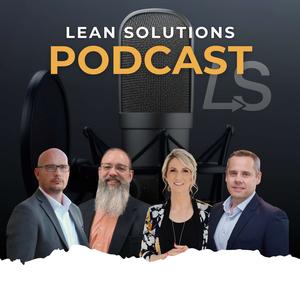


Edwin Proper 0:00
Building safety, sharing vulnerability, and establishing purpose-all three of those aren't really tangible things. You can't measure building safety. How do you measure safety? We're not talking about physical safety in that. We're talking about psychological safety, but you don't-you don't do psychological safety. Psychological safety is a result because of what you're actually putting in place. The input is actually reassuring people. When something goes wrong, it's like, don't worry. Let's. What do we learn from this? It's just small things like that.
Andy Olrich 0:47
G'day everyone, and welcome to this episode of the Lean Solutions podcast. I'm Andy Ulrich, and I'm joined today by my amazing co-host, Catherine McDonald. Catherine, how are you?
Catherine McDonald 0:55
I am very well, Andy. It is good to see you. Has been a while. It
Andy Olrich 1:00
has. I've been with Shane Patrick the last few times, but super excited to to see your smiling face on the screen again. So, and really great topic to jump into today. I'm really excited. This is a guy that I had the pleasure of meeting a couple of years ago, and yeah, love the work he's doing around the world, and is you know hangs out down in my part of the world again, like we had James the other episode, so really excited, and you know, talking about what I yeah am passionate about as well. Is but anyway, won't steal too much thunder. I am super excited to invite my mate Edwin Proper onto the podcast. So, Catherine, can you tell us a bit more about him as we bring him onto the stage, please?
Catherine McDonald 1:39
Yes, I can indeed. So, our guest is Edwin Proper, and he is a lean culture coach from Sydney in Australia who helps small teams energize their meetings, build engagement, and grow their people. With over 15 years of leadership experience in the agricultural sector, he's led continuous improvement, staff upskilling, and culture change firsthand. Edwin, that's a very impressive bio. You're very welcome to the show. How are you doing?
Edwin Proper 2:06
Yeah, I'm amazing. Thank you for having me, Andy and Catherine.
Catherine McDonald 2:09
Yeah, good. It's good to meet you. So, listen. First question. I don't hear of a lean culture coach very often. Where did you come up with that term?
Edwin Proper 2:19
That's a good question. So, where did I come up with it? Well, you know, a lot of people use consultants in that, and there's there's positive and negative connotations to that word. You know, some people have had some really bad experiences with consultants, and I don't think of myself as a consultant. And another person would say a resultant, but I think more of a coach because you need a coach to guide you. Because the coach guides you to where you you don't even know you can be that kind of person, or how are you going to be better? And so it's it's more about being side by side with the people, coaching them along the journey to to getting to. I know where they want to be, but they don't just know how to get there and what skills they need to to learn along the way. So, yeah,
Andy Olrich 3:05
I love it. I love that term. And first time I saw you put it on your moniker, Edwin. I was well, the word culture for starters and coach. So it makes it very clear upfront that you know it's about culture, and you're there to coach. You're not there to do. And I think that yeah, as you said, with a consultant, I even people ask me if I've got to keep it succinct. Sometimes I say that c word, and you know, all power. But I just feel it just feels weird because being on the other end of it.
Catherine McDonald 3:29
So we're going to talk a little bit about obviously about growing people. That's the topic we have for today. And lean isn't always synonymous with growing people, when people hear the term, we've talked about this a lot on the show. There's big misunderstandings about what lean is and what lean isn't, and so I like the fact that when we are talking about lean and what lean really is, we're going in that direction in terms of the the people part as well, and and the culture because obviously culture is is all about people. So, just can you talk to us a little bit, Edwin, about the work that you do when it comes to continuous improvement and lean, and how growing people comes into all of that?
Edwin Proper 4:15
Yeah. So it's a a really good question. So the first thing I do is I will vet who am I working with? So I will only communicate first with the top management, the owner, the CEO of the business. You know, and I try and focus on small SMEs, right? So small medium enterprises, and that's that's because my background is also working with my dad, who was a self-employed owner of a business. So, first of all, just work with the the owners, with the leaders, and then make sure they have the right values in place. Right? Are they actually struggling with the business, and they just need help? With developing a culture, or are they so set? This is their their culture, and they don't really want to change it. They just want to get tools in place and things like that. So, 70% culture, 30% tools, but you have to start with the culture. So, a question for you, Andy: How do you how do you start a fire. If you're in the woods and you only have some matches, how would you start a fire?
Andy Olrich 5:26
Well, you need some kindling, you know, some dry kindling, the right kindling, you know, a good spot to do it. You need you need oxygen, fuel source, and if I've got the matches, ignition, that'll do. But yeah, you've got to have the right. You've got to try and slide it in the right place. Not too much wind, you know, it's got to be in that right place with the right products to get it going, and then you know once it gets up and away, so I can I can feel where this is going. But yeah, that's how I do it. Or yeah, petrol.
Edwin Proper 5:54
That that's exactly right, right. And and there's there's a process to that because that early stage it's so fragile, you know, and like you say, you want to start small, small kindling, small things that you're doing daily. The leaders are doing daily to to say, okay, this is the big goal. Is we want to have a lean culture, right? It's not just a a once-off thing. We're going to do a couple of kaizens and then we're going to be okay. No, no. This is continuous. This is this is forever going. Like the the the person, the leader who's going to replace me needs to continue with this. This has got to be part of the DNA. But you have to to get there. You have to start small. So it's the small little things that you do in in your organization that helps getting that fire to a place where you really have this momentum and this burning. You've got this, you know, a bonfire. But too often leaders will just throw big logs on the on the fire and just kill it, right? Or or the the wind and they just suck suck the wind out by changing leadership, and and the leadership's not on board with what what it wants. So yeah, that so growing people is basically like, how do you start a fire? That's how I think of it.
Andy Olrich 7:05
Yeah, you do see it. They get they get some really quick wins and then dump right. We're going to go across the whole business right now because this team is is up and away, and I'm excited. You know that sort of thing. You do. It's such a great analogy, Edwin. And I, again, the people need to come along for the journey. I I actually have someone who said to me a few weeks ago. They said, "Oh, the match has been lit, and I said, "Yeah, well, let's not. I joked about petrol there before. It's like, okay, well, let's not
Andy Olrich 7:31
pile too much on, or let's not throw a heap of petrol on, and it just gets out of control either. So, yeah, that's that that tension. But I love how you you start at the top. Yeah, they've got to be on board and really understand what they're in for and what they're committing to. Otherwise, I've seen it. It looks like I can do
Edwin Proper 7:47
it. Yeah, it's and it's so hard, right? And that's why a lot of leaders just give up and say, "Okay, we'll give it up to the consultants. We'll get them up and they'll solve our problems for us. But then it's short term, you know. And this is the thing: it's the long term thinking, and this is why it worked so well in Toyota is because like they said these are our values and these are the the principles that we want to follow no matter who is in leadership and that's powerful. Too many are just like nowadays it's just instant gratification, quick things, and it doesn't last. So yeah,
Catherine McDonald 8:18
yeah, definitely I definitely agree with that. That I think bringing in consultants, coaches, whoever it is, can absolutely help. But as long as senior leaders have the understanding that you know the change piece, the the long term behavior piece starts with them, and so they have a piece of work to do and and a piece of learning to go through with their coach or their consultant that they've brought in, so that brings me to my next question. You talked about all the the little things that leaders can do, and I I'm listening to you and the and the work that you do, Edwin. I'm assuming that that's part of what you teach and coach leaders to do is all these little things, the little tweaks they can make to their own behaviors to really change the way they interact and the way that that things are done internally would shape the culture. Talk to us a little bit about what those little things might look like.
Edwin Proper 9:07
Okay, so start with the values, right? So I look at leaders that have and want to build in their people courage, curiosity, and caring. Those are three values that I focus on right, and then you got to get the leaders to say, okay, we got to set the expectation. Like lean is now a part of what we do. We're going to do this. You know, we're not turning around. We're not going to try something else. It's not a flavor of the month. Then you got to set the. So you got to set the expectation. You got to inspect the expectation. Okay, now daily. What are we doing daily that we're putting into place that this becomes part of the DNA, and then you've got to celebrate this expectation. So, what this is one of the biggest flaws I see in leaders-they're not celebrating. They're not. They they only celebrate when it's a really big achievement. It's the small things again, the kindling, the small things of celebrating. And clapping hands and releasing those oxytocins to build that team and that bonding, you know, and then reflecting on that, and then so once you got you understand your values, you got your daily leadership habits. Then it's okay. What is the four? So I focus on four structures that you need to do in daily. Okay, daily morning meaning all hands, right? So we're talking about SMEs with 50 to 100 people. So it's it's easy to bring everybody together, stop, and let's meet for 15 minutes, right? And we have a certain agenda that we're going to cover there. But and you know it's it's weird things that we do. We do we do stretches and we say what we're grateful for, and we have shoutouts. You know, we do some learning, and all these things build the culture together. And it's not perfect; it's messy in the beginning, but as you get this going, it's it's just amazing this this fire that you get going. Third thing is what we call in the two second lean community is is 3s instead of 5s, right? So this is the the time that we give people improvement time, so that people can organize their work environment, so that work can flow, right? And you can spend time, so people can start developing themselves to see problems and fix them. So that's the second key thing, and then then it's actually creating the culture of stopping and fixing. Right? There's an issue. Don't just go around it or do a band-aid solution. Capture that problem, put it into a system that can analyze, problem solve, and put countermeasures into place. Right? So that that that's key, and it's really hard, and that takes time to do. And then we're also also really important. The fourth thing is before and after videos. The the power of taking a before and saying, look at this mess, look at this chaos that we're living in, and look what this team has done to to to change that chaos, and sharing that again back into the morning meeting, and then we learn from that. We say, "Oh, wow! Actually, you know, we in this area we can also we have the same chaos. We can use that countermeasure, and we can change it, and just empowers each other. So that that that flywheel keeps turning.
Andy Olrich 12:16
You know, talk about leaders need to do things that can't be measured, you know, it's hard to. What have you found when it comes to leadership behaviors that that you have found that make the biggest difference? And it's not always apparent at face value, or it's hard to to really quantify. What are some of those things that you've seen, and and and obviously you you believe are valuable, and you try to instill in the leaders that you work with.
Edwin Proper 12:45
Yeah. So there, I did a the Suland Lean Consortium invited me out for to talk, be a keynote speaker there in April this year, and that was one of my talks. If you want to hear more about this, you can go on my YouTube channel and I've got a video there, but in in essence, there's three things that I got from a book called The Culture Code by Daniel Coyle, and he talks about building safety, sharing vulnerability, and establishing purpose. And all three of those aren't really tangible things. You can't measure building safety. How do you measure safety, right? And we're not talking about physical safety in that. You're talking about psychological safety, but you don't you don't do psychological safety. Psychological safety is a result because of what you're actually putting in place, the the input is actually reassuring people. You know, again, like I said before, celebrating, saying well done, or when something goes wrong, it's like don't worry. Let's what what do we learn from this instead of saying idiot, you should have done it like this. You know, I know a better way, and like it's it's it's just small things like that that can really help. And with when you're doing the the three yes time, and that you're you're you're with your people, and you're watching, and you're asking them questions and you you're engaging and seeing how are they responding to their environment when you you put them into a challenge, and that's that's really tricky to do and it's not it's it's real it's a gift but it's it's a skill that you can develop over time. It's really powerful in giving people the confidence and again it comes back to the the courage part, right? What what are we doing to develop people to become more courageous, to take that little step, leap of of faith, to hold the morning meeting, right? Or to to be vulnerable and take a video of your stupid little improvement. And then and then share it with everybody, but creating that courage for people. Then they say, okay, well, that's okay now. I feel safe. Now it gives me enough room to go. Hey, let me ask some more questions about being curious. Like, why why do we do it this way? What else can we do in here? What can we use that we have here? So we're not spending that much money, but we can utilize the resources that we actually have at hand, and then leaving it better than you found it. You know, there's such a great term that I got from Paul Akers, who got it from the Boy Scouts. Right? Essentially, it's everything is about leaving it better than you found it. If you think about it, like the customer, you want to leave the customer better than you found it, but you got internal, you got external customers, and it's it's you have that ability. If you feel empowered, you've courageous and curious, you're automatically going to go. Okay, well, what am I going to do to make somebody else's life a little bit easier, a little better? The the next guy down in the line, if I can just set it up and get the right information there, so that once once it gets to his section, he's already set up and he can go. There's no no searching for information. Small things like that. That's that's really powerful. So I don't know if that answers your question. It's it's tricky to to say all the all the things that are immeasurable, but there's so many small, small things. Like I mentioned before, in when we meet, we we we stretch, and it was like, why why are you stretching? That's a waste of we've got three minutes of people stretching. You know, come on, productivity. But when you're stretching, you're you're actually mirroring, and by mirroring, you're releasing oxytocin, which is the bonding hormone, and so you're building people, you're building that safety, and most people go, but stretch is it's it's about releasing your muscles. No, no, that's a byproduct. The actual reason for it is to to to develop safety, break break those barriers between people. So that's one that I really love. I really encourage people
Catherine McDonald 17:08
to do. Okay, and listening to you, it's it is probably about finding what works for you in your organization. So stretching works in some places, especially when people are all together and you're in an environment that supports that. But I do think that if not stretching, there must be something to start your day well. And some, and I do agree thoroughly with the idea of get coming together in the morning to have your meeting, but then and then to really make that time precious and valuable and to bond people. So I do fully, fully agree with that. So where where do you start with? Because sometimes a lot of the time people are not ready for this. They're not. They they might nod and smile and go, "Wow, that's great that you do that and that sounds awesome. But in their mind and in other people's minds, they're really not ready to do it. So do you start with working on the mindset, or do you start with "Let's try this. Let's just try it and see what the impact is. So mindset or behavior, which comes
Edwin Proper 18:06
first? Yeah, absolutely. Like I would, it already depends on the client. So some clients, I'll talk to them, and then I gage they already got the mindset, and and then the values are there. Maybe the mindset not. Then I work on the mindset. But if you got the mindset. It's like we we can do this. Then it's like okay. Well, first thing we need to do is okay. First thing we need to do is what is it actually that you want? What's the end goal? Like what are we trying to achieve here? Right? Are we just trying to do a Kaizan event and trying to make more profit or get more efficiency out of the thing, or do we actually want to create develop that that culture where everybody is continuously improving every single day? So that's gaging me. Okay, that they they do that. They're really serious about that. They they want to do this, and then I will start with okay, let's let's do a a five minute meeting. Let's get pull everybody together, and let's get. Why are we here? We're here because we're committed to learning together as a team. That's that's it. It's as simple as that. We want to learn. We want to become better. And I guarantee there'll be a portion, a large portion of people going. You're wasting my time. Why am I here? You know, I've got I've got stuff to do. I've got stuff piling up. I got to get to work, but if you never stop to sharpen the saw, you'll just spend more time cutting the tree, right, and not actually adding the value. So it's I'd start with a morning meeting, but here's the thing that I found because I've worked with over 70 people, 70 different companies with their their morning meetings, and most of them are terrible, like really really bad. All they've done is they've thrown that big log from Toyota saying this is how you do your morning meeting: safety, quality, delivery, cost, delivery. You know, it's like, yeah, they. Took years to get to that kind of that agenda, that format. Don't just copy paste that. That's not going to work for you. Start small. Like start with why are you doing this? Why are you bringing people together? Yeah, you want you want to develop them. You want to develop a team. You want to develop people that are are learning. And then, like I said, those four behaviors: the morning meeting three years time, stopping fixing culture, and then and then before and after videos. And I'm working really closely with a team here in Sydney who are just doing an amazing job. And they've been now eight months. I've been eight months with them, and their morning meetings are on fire. That in fact that we're starting inviting other companies to come and have a look at our morning meeting, to to look at what are they doing, how they get so so much engagement. They have people. So you're talking about office people, Catherine. So we have people in the Philippines, like eight people that dial online. So we have a crew on site, and we have some people online. They're all there. They're all doing the stretches, and they're all contributing. They they each get a turn, so they all host the meeting. So we do a roster. We we change it over, and it's just incredible what these people come up with and and the the learnings that they share that you would never know if we didn't give that opportunity for them. So yeah, I'm
Andy Olrich 21:21
curious, right? For those who don't know, Edwin is trying to get to 100 lean businesses and showcase them across the place. Trying to get to 100 of them in 12 months. So, how's that going? Where are we up to? Tell me. Tell me. I'd like to know a what the number is. B or B and C. What is what has completely blown you away that you didn't expect, and what's don't name them, but what's left you a bit bloody disappointed?
Edwin Proper 21:50
Yeah. So what you're talking about is the ANZ. So it's Australia, New Zealand. We've got a we've got a shack group together of other lean companies, just small SMEs, and so a year ago, I was on a podcast with, or had a podcast with Paul Wakers and Ryan Tierney, and that we were covering Ryan's book, Lean Made Simple: The Last Step, which is connecting with the community, and so they put a challenge out to get 100 tours in the NZ community. I said, "Okay, let's do it, guys. So every time somebody went to another facility, they'd take a photo and they'd share it on the chat group, and I would start counting those up. And now, after what are we now? Most 10 months. We've got 92 visits that we've had, so we're we're so close. You're eight away from the the finish line, and and what's what's so great about that is it brings people together, because the hardest thing for me was in the beginning, doing this on my own and making all the mistakes. Never, not having somebody else to to soundboard and hey, say, what do you do in this? What would you do in this situation? You know, and so I found it very powerful to have this community, and I was very grateful for Paul Akers to actually open this world up to me, where I have access to amazing people in Ireland and Norm in China and and Brian Myers in in America and all the other people. You know, so and in fact, I'm going over to Ireland in in October to go and visit 10 different companies there because my intention is to take a group of people here from ANZ and go tour there, because there's just like this explosion happening in in Ireland and Northern Ireland of all the lean companies, and so I want the same here for Australia, New Zealand, and so one of my my Hoshin Connerys is by I want to get 100 tour ready companies in Australia, New Zealand by 2035. So again, massive 10 year goal, and yeah, I'm starting small, right? And and and deliberate, like starting with the Kindle, and we're already bringing people just to have a look at what are we doing in the morning meetings because the morning meetings are so great, and then later on we by 30th of November they've set a goal that they're going to be tour ready, so they're going to open up their doors, and other companies from around Australia, New Zealand, and eventually hopefully the world will come into the doors and say, "What are you guys doing? What the hell's in the water here that that's making you guys so amped to improve things around the place? So yeah, that's it's very exciting, and one of I guess the one of the disappointing things is that people come and go, right? So they get this massive excitement, and they're on the group, and they're contributing, and then you don't hear anything, and everybody's it goes through these ups and downs, and. And it's just I wish that people would, when they're really down, just reach out and say, "Hey, I'm really struggling. What you know? What would you guys do? Can you can you help me up? The whole point of this group is to support each other, just to celebrate, share, and support. And so, yeah, I just encourage others to to find that community, and it's not about you. It's about how can you help others, how can you share, share, celebrate, and support, and and trying to build this community here, similar to what's happening in Ireland, and Northern Ireland, and and yeah, hopefully enliven and awaken this this this continuous improvement, you know, movement because I'm so passionate. I love it. I the whole my whole world is now changed around because of the way I see things. I can never go back to what I was. You know, I've taken the the blue pull, the red pull, and the Matrix, but I've taken that pull, and I just can't get back into it. Right? Yeah, yeah. I'm just so passionate about it. So,
Andy Olrich 26:08
and we feel that, and I see that all the time. That's why I'm I'm just so thankful that you've come on, Ed. When you're doing great work, and there's only one thing I like personally reflecting, there's only one thing I find that can be more damaging to me being successful than imposter syndrome, and that's professional loneliness. You know, you are you can be on an island doing this stuff, even within an organization. There's usually only one or two in in you know, and 500 of everyone else, right?
Edwin Proper 26:34
Yeah.
Andy Olrich 26:34
Just having this place, as you said, it's it's a chat. Just just jump on. We have we are here to support each other. That's what I love about Lean Solutions, and and what Patrick's yeah got going with. And now Catherine and I and Shane have the the privilege. It's just there's no yeah me versus you type thing. It's let's get us all together. Not only can we help help keep each other in the game, but also people go, hey, I listened to that thing the other day. That sounds really interesting. I actually I'm facing that challenge, but I don't know what this lean thing is, for example. So, mate, we we really appreciate you for what you're doing for the community here and around the world, and you'll you'll hit that 100, mate. I've got no doubt at all. We appreciate you and Culture Strategy for breakfast any day of the week. So, thanks everybody for tuning in. I really look forward to seeing or having you listen to us next time. You got any questions? You want to catch up with Edwin? We'll have all these details in the show notes, and I'll see you all a bit later. Thanks everyone for being on the show, and have a great day.
Building safety, sharing vulnerability, and establishing purpose-all three of those aren't really tangible things. You can't measure building safety. How do you measure safety? We're not talking about physical safety in that. We're talking about psychological safety, but you don't-you don't do psychological safety. Psychological safety is a result because of what you're actually putting in place. The input is actually reassuring people. When something goes wrong, it's like, don't worry. Let's. What do we learn from this? It's just small things like that.
Andy Olrich 0:47
G'day everyone, and welcome to this episode of the Lean Solutions podcast. I'm Andy Ulrich, and I'm joined today by my amazing co-host, Catherine McDonald. Catherine, how are you?
Catherine McDonald 0:55
I am very well, Andy. It is good to see you. Has been a while. It
Andy Olrich 1:00
has. I've been with Shane Patrick the last few times, but super excited to to see your smiling face on the screen again. So, and really great topic to jump into today. I'm really excited. This is a guy that I had the pleasure of meeting a couple of years ago, and yeah, love the work he's doing around the world, and is you know hangs out down in my part of the world again, like we had James the other episode, so really excited, and you know, talking about what I yeah am passionate about as well. Is but anyway, won't steal too much thunder. I am super excited to invite my mate Edwin Proper onto the podcast. So, Catherine, can you tell us a bit more about him as we bring him onto the stage, please?
Catherine McDonald 1:39
Yes, I can indeed. So, our guest is Edwin Proper, and he is a lean culture coach from Sydney in Australia who helps small teams energize their meetings, build engagement, and grow their people. With over 15 years of leadership experience in the agricultural sector, he's led continuous improvement, staff upskilling, and culture change firsthand. Edwin, that's a very impressive bio. You're very welcome to the show. How are you doing?
Edwin Proper 2:06
Yeah, I'm amazing. Thank you for having me, Andy and Catherine.
Catherine McDonald 2:09
Yeah, good. It's good to meet you. So, listen. First question. I don't hear of a lean culture coach very often. Where did you come up with that term?
Edwin Proper 2:19
That's a good question. So, where did I come up with it? Well, you know, a lot of people use consultants in that, and there's there's positive and negative connotations to that word. You know, some people have had some really bad experiences with consultants, and I don't think of myself as a consultant. And another person would say a resultant, but I think more of a coach because you need a coach to guide you. Because the coach guides you to where you you don't even know you can be that kind of person, or how are you going to be better? And so it's it's more about being side by side with the people, coaching them along the journey to to getting to. I know where they want to be, but they don't just know how to get there and what skills they need to to learn along the way. So, yeah,
Andy Olrich 3:05
I love it. I love that term. And first time I saw you put it on your moniker, Edwin. I was well, the word culture for starters and coach. So it makes it very clear upfront that you know it's about culture, and you're there to coach. You're not there to do. And I think that yeah, as you said, with a consultant, I even people ask me if I've got to keep it succinct. Sometimes I say that c word, and you know, all power. But I just feel it just feels weird because being on the other end of it.
Catherine McDonald 3:29
So we're going to talk a little bit about obviously about growing people. That's the topic we have for today. And lean isn't always synonymous with growing people, when people hear the term, we've talked about this a lot on the show. There's big misunderstandings about what lean is and what lean isn't, and so I like the fact that when we are talking about lean and what lean really is, we're going in that direction in terms of the the people part as well, and and the culture because obviously culture is is all about people. So, just can you talk to us a little bit, Edwin, about the work that you do when it comes to continuous improvement and lean, and how growing people comes into all of that?
Edwin Proper 4:15
Yeah. So it's a a really good question. So the first thing I do is I will vet who am I working with? So I will only communicate first with the top management, the owner, the CEO of the business. You know, and I try and focus on small SMEs, right? So small medium enterprises, and that's that's because my background is also working with my dad, who was a self-employed owner of a business. So, first of all, just work with the the owners, with the leaders, and then make sure they have the right values in place. Right? Are they actually struggling with the business, and they just need help? With developing a culture, or are they so set? This is their their culture, and they don't really want to change it. They just want to get tools in place and things like that. So, 70% culture, 30% tools, but you have to start with the culture. So, a question for you, Andy: How do you how do you start a fire. If you're in the woods and you only have some matches, how would you start a fire?
Andy Olrich 5:26
Well, you need some kindling, you know, some dry kindling, the right kindling, you know, a good spot to do it. You need you need oxygen, fuel source, and if I've got the matches, ignition, that'll do. But yeah, you've got to have the right. You've got to try and slide it in the right place. Not too much wind, you know, it's got to be in that right place with the right products to get it going, and then you know once it gets up and away, so I can I can feel where this is going. But yeah, that's how I do it. Or yeah, petrol.
Edwin Proper 5:54
That that's exactly right, right. And and there's there's a process to that because that early stage it's so fragile, you know, and like you say, you want to start small, small kindling, small things that you're doing daily. The leaders are doing daily to to say, okay, this is the big goal. Is we want to have a lean culture, right? It's not just a a once-off thing. We're going to do a couple of kaizens and then we're going to be okay. No, no. This is continuous. This is this is forever going. Like the the the person, the leader who's going to replace me needs to continue with this. This has got to be part of the DNA. But you have to to get there. You have to start small. So it's the small little things that you do in in your organization that helps getting that fire to a place where you really have this momentum and this burning. You've got this, you know, a bonfire. But too often leaders will just throw big logs on the on the fire and just kill it, right? Or or the the wind and they just suck suck the wind out by changing leadership, and and the leadership's not on board with what what it wants. So yeah, that so growing people is basically like, how do you start a fire? That's how I think of it.
Andy Olrich 7:05
Yeah, you do see it. They get they get some really quick wins and then dump right. We're going to go across the whole business right now because this team is is up and away, and I'm excited. You know that sort of thing. You do. It's such a great analogy, Edwin. And I, again, the people need to come along for the journey. I I actually have someone who said to me a few weeks ago. They said, "Oh, the match has been lit, and I said, "Yeah, well, let's not. I joked about petrol there before. It's like, okay, well, let's not
Andy Olrich 7:31
pile too much on, or let's not throw a heap of petrol on, and it just gets out of control either. So, yeah, that's that that tension. But I love how you you start at the top. Yeah, they've got to be on board and really understand what they're in for and what they're committing to. Otherwise, I've seen it. It looks like I can do
Edwin Proper 7:47
it. Yeah, it's and it's so hard, right? And that's why a lot of leaders just give up and say, "Okay, we'll give it up to the consultants. We'll get them up and they'll solve our problems for us. But then it's short term, you know. And this is the thing: it's the long term thinking, and this is why it worked so well in Toyota is because like they said these are our values and these are the the principles that we want to follow no matter who is in leadership and that's powerful. Too many are just like nowadays it's just instant gratification, quick things, and it doesn't last. So yeah,
Catherine McDonald 8:18
yeah, definitely I definitely agree with that. That I think bringing in consultants, coaches, whoever it is, can absolutely help. But as long as senior leaders have the understanding that you know the change piece, the the long term behavior piece starts with them, and so they have a piece of work to do and and a piece of learning to go through with their coach or their consultant that they've brought in, so that brings me to my next question. You talked about all the the little things that leaders can do, and I I'm listening to you and the and the work that you do, Edwin. I'm assuming that that's part of what you teach and coach leaders to do is all these little things, the little tweaks they can make to their own behaviors to really change the way they interact and the way that that things are done internally would shape the culture. Talk to us a little bit about what those little things might look like.
Edwin Proper 9:07
Okay, so start with the values, right? So I look at leaders that have and want to build in their people courage, curiosity, and caring. Those are three values that I focus on right, and then you got to get the leaders to say, okay, we got to set the expectation. Like lean is now a part of what we do. We're going to do this. You know, we're not turning around. We're not going to try something else. It's not a flavor of the month. Then you got to set the. So you got to set the expectation. You got to inspect the expectation. Okay, now daily. What are we doing daily that we're putting into place that this becomes part of the DNA, and then you've got to celebrate this expectation. So, what this is one of the biggest flaws I see in leaders-they're not celebrating. They're not. They they only celebrate when it's a really big achievement. It's the small things again, the kindling, the small things of celebrating. And clapping hands and releasing those oxytocins to build that team and that bonding, you know, and then reflecting on that, and then so once you got you understand your values, you got your daily leadership habits. Then it's okay. What is the four? So I focus on four structures that you need to do in daily. Okay, daily morning meaning all hands, right? So we're talking about SMEs with 50 to 100 people. So it's it's easy to bring everybody together, stop, and let's meet for 15 minutes, right? And we have a certain agenda that we're going to cover there. But and you know it's it's weird things that we do. We do we do stretches and we say what we're grateful for, and we have shoutouts. You know, we do some learning, and all these things build the culture together. And it's not perfect; it's messy in the beginning, but as you get this going, it's it's just amazing this this fire that you get going. Third thing is what we call in the two second lean community is is 3s instead of 5s, right? So this is the the time that we give people improvement time, so that people can organize their work environment, so that work can flow, right? And you can spend time, so people can start developing themselves to see problems and fix them. So that's the second key thing, and then then it's actually creating the culture of stopping and fixing. Right? There's an issue. Don't just go around it or do a band-aid solution. Capture that problem, put it into a system that can analyze, problem solve, and put countermeasures into place. Right? So that that that's key, and it's really hard, and that takes time to do. And then we're also also really important. The fourth thing is before and after videos. The the power of taking a before and saying, look at this mess, look at this chaos that we're living in, and look what this team has done to to to change that chaos, and sharing that again back into the morning meeting, and then we learn from that. We say, "Oh, wow! Actually, you know, we in this area we can also we have the same chaos. We can use that countermeasure, and we can change it, and just empowers each other. So that that that flywheel keeps turning.
Andy Olrich 12:16
You know, talk about leaders need to do things that can't be measured, you know, it's hard to. What have you found when it comes to leadership behaviors that that you have found that make the biggest difference? And it's not always apparent at face value, or it's hard to to really quantify. What are some of those things that you've seen, and and and obviously you you believe are valuable, and you try to instill in the leaders that you work with.
Edwin Proper 12:45
Yeah. So there, I did a the Suland Lean Consortium invited me out for to talk, be a keynote speaker there in April this year, and that was one of my talks. If you want to hear more about this, you can go on my YouTube channel and I've got a video there, but in in essence, there's three things that I got from a book called The Culture Code by Daniel Coyle, and he talks about building safety, sharing vulnerability, and establishing purpose. And all three of those aren't really tangible things. You can't measure building safety. How do you measure safety, right? And we're not talking about physical safety in that. You're talking about psychological safety, but you don't you don't do psychological safety. Psychological safety is a result because of what you're actually putting in place, the the input is actually reassuring people. You know, again, like I said before, celebrating, saying well done, or when something goes wrong, it's like don't worry. Let's what what do we learn from this instead of saying idiot, you should have done it like this. You know, I know a better way, and like it's it's it's just small things like that that can really help. And with when you're doing the the three yes time, and that you're you're you're with your people, and you're watching, and you're asking them questions and you you're engaging and seeing how are they responding to their environment when you you put them into a challenge, and that's that's really tricky to do and it's not it's it's real it's a gift but it's it's a skill that you can develop over time. It's really powerful in giving people the confidence and again it comes back to the the courage part, right? What what are we doing to develop people to become more courageous, to take that little step, leap of of faith, to hold the morning meeting, right? Or to to be vulnerable and take a video of your stupid little improvement. And then and then share it with everybody, but creating that courage for people. Then they say, okay, well, that's okay now. I feel safe. Now it gives me enough room to go. Hey, let me ask some more questions about being curious. Like, why why do we do it this way? What else can we do in here? What can we use that we have here? So we're not spending that much money, but we can utilize the resources that we actually have at hand, and then leaving it better than you found it. You know, there's such a great term that I got from Paul Akers, who got it from the Boy Scouts. Right? Essentially, it's everything is about leaving it better than you found it. If you think about it, like the customer, you want to leave the customer better than you found it, but you got internal, you got external customers, and it's it's you have that ability. If you feel empowered, you've courageous and curious, you're automatically going to go. Okay, well, what am I going to do to make somebody else's life a little bit easier, a little better? The the next guy down in the line, if I can just set it up and get the right information there, so that once once it gets to his section, he's already set up and he can go. There's no no searching for information. Small things like that. That's that's really powerful. So I don't know if that answers your question. It's it's tricky to to say all the all the things that are immeasurable, but there's so many small, small things. Like I mentioned before, in when we meet, we we we stretch, and it was like, why why are you stretching? That's a waste of we've got three minutes of people stretching. You know, come on, productivity. But when you're stretching, you're you're actually mirroring, and by mirroring, you're releasing oxytocin, which is the bonding hormone, and so you're building people, you're building that safety, and most people go, but stretch is it's it's about releasing your muscles. No, no, that's a byproduct. The actual reason for it is to to to develop safety, break break those barriers between people. So that's one that I really love. I really encourage people
Catherine McDonald 17:08
to do. Okay, and listening to you, it's it is probably about finding what works for you in your organization. So stretching works in some places, especially when people are all together and you're in an environment that supports that. But I do think that if not stretching, there must be something to start your day well. And some, and I do agree thoroughly with the idea of get coming together in the morning to have your meeting, but then and then to really make that time precious and valuable and to bond people. So I do fully, fully agree with that. So where where do you start with? Because sometimes a lot of the time people are not ready for this. They're not. They they might nod and smile and go, "Wow, that's great that you do that and that sounds awesome. But in their mind and in other people's minds, they're really not ready to do it. So do you start with working on the mindset, or do you start with "Let's try this. Let's just try it and see what the impact is. So mindset or behavior, which comes
Edwin Proper 18:06
first? Yeah, absolutely. Like I would, it already depends on the client. So some clients, I'll talk to them, and then I gage they already got the mindset, and and then the values are there. Maybe the mindset not. Then I work on the mindset. But if you got the mindset. It's like we we can do this. Then it's like okay. Well, first thing we need to do is okay. First thing we need to do is what is it actually that you want? What's the end goal? Like what are we trying to achieve here? Right? Are we just trying to do a Kaizan event and trying to make more profit or get more efficiency out of the thing, or do we actually want to create develop that that culture where everybody is continuously improving every single day? So that's gaging me. Okay, that they they do that. They're really serious about that. They they want to do this, and then I will start with okay, let's let's do a a five minute meeting. Let's get pull everybody together, and let's get. Why are we here? We're here because we're committed to learning together as a team. That's that's it. It's as simple as that. We want to learn. We want to become better. And I guarantee there'll be a portion, a large portion of people going. You're wasting my time. Why am I here? You know, I've got I've got stuff to do. I've got stuff piling up. I got to get to work, but if you never stop to sharpen the saw, you'll just spend more time cutting the tree, right, and not actually adding the value. So it's I'd start with a morning meeting, but here's the thing that I found because I've worked with over 70 people, 70 different companies with their their morning meetings, and most of them are terrible, like really really bad. All they've done is they've thrown that big log from Toyota saying this is how you do your morning meeting: safety, quality, delivery, cost, delivery. You know, it's like, yeah, they. Took years to get to that kind of that agenda, that format. Don't just copy paste that. That's not going to work for you. Start small. Like start with why are you doing this? Why are you bringing people together? Yeah, you want you want to develop them. You want to develop a team. You want to develop people that are are learning. And then, like I said, those four behaviors: the morning meeting three years time, stopping fixing culture, and then and then before and after videos. And I'm working really closely with a team here in Sydney who are just doing an amazing job. And they've been now eight months. I've been eight months with them, and their morning meetings are on fire. That in fact that we're starting inviting other companies to come and have a look at our morning meeting, to to look at what are they doing, how they get so so much engagement. They have people. So you're talking about office people, Catherine. So we have people in the Philippines, like eight people that dial online. So we have a crew on site, and we have some people online. They're all there. They're all doing the stretches, and they're all contributing. They they each get a turn, so they all host the meeting. So we do a roster. We we change it over, and it's just incredible what these people come up with and and the the learnings that they share that you would never know if we didn't give that opportunity for them. So yeah, I'm
Andy Olrich 21:21
curious, right? For those who don't know, Edwin is trying to get to 100 lean businesses and showcase them across the place. Trying to get to 100 of them in 12 months. So, how's that going? Where are we up to? Tell me. Tell me. I'd like to know a what the number is. B or B and C. What is what has completely blown you away that you didn't expect, and what's don't name them, but what's left you a bit bloody disappointed?
Edwin Proper 21:50
Yeah. So what you're talking about is the ANZ. So it's Australia, New Zealand. We've got a we've got a shack group together of other lean companies, just small SMEs, and so a year ago, I was on a podcast with, or had a podcast with Paul Wakers and Ryan Tierney, and that we were covering Ryan's book, Lean Made Simple: The Last Step, which is connecting with the community, and so they put a challenge out to get 100 tours in the NZ community. I said, "Okay, let's do it, guys. So every time somebody went to another facility, they'd take a photo and they'd share it on the chat group, and I would start counting those up. And now, after what are we now? Most 10 months. We've got 92 visits that we've had, so we're we're so close. You're eight away from the the finish line, and and what's what's so great about that is it brings people together, because the hardest thing for me was in the beginning, doing this on my own and making all the mistakes. Never, not having somebody else to to soundboard and hey, say, what do you do in this? What would you do in this situation? You know, and so I found it very powerful to have this community, and I was very grateful for Paul Akers to actually open this world up to me, where I have access to amazing people in Ireland and Norm in China and and Brian Myers in in America and all the other people. You know, so and in fact, I'm going over to Ireland in in October to go and visit 10 different companies there because my intention is to take a group of people here from ANZ and go tour there, because there's just like this explosion happening in in Ireland and Northern Ireland of all the lean companies, and so I want the same here for Australia, New Zealand, and so one of my my Hoshin Connerys is by I want to get 100 tour ready companies in Australia, New Zealand by 2035. So again, massive 10 year goal, and yeah, I'm starting small, right? And and and deliberate, like starting with the Kindle, and we're already bringing people just to have a look at what are we doing in the morning meetings because the morning meetings are so great, and then later on we by 30th of November they've set a goal that they're going to be tour ready, so they're going to open up their doors, and other companies from around Australia, New Zealand, and eventually hopefully the world will come into the doors and say, "What are you guys doing? What the hell's in the water here that that's making you guys so amped to improve things around the place? So yeah, that's it's very exciting, and one of I guess the one of the disappointing things is that people come and go, right? So they get this massive excitement, and they're on the group, and they're contributing, and then you don't hear anything, and everybody's it goes through these ups and downs, and. And it's just I wish that people would, when they're really down, just reach out and say, "Hey, I'm really struggling. What you know? What would you guys do? Can you can you help me up? The whole point of this group is to support each other, just to celebrate, share, and support. And so, yeah, I just encourage others to to find that community, and it's not about you. It's about how can you help others, how can you share, share, celebrate, and support, and and trying to build this community here, similar to what's happening in Ireland, and Northern Ireland, and and yeah, hopefully enliven and awaken this this this continuous improvement, you know, movement because I'm so passionate. I love it. I the whole my whole world is now changed around because of the way I see things. I can never go back to what I was. You know, I've taken the the blue pull, the red pull, and the Matrix, but I've taken that pull, and I just can't get back into it. Right? Yeah, yeah. I'm just so passionate about it. So,
Andy Olrich 26:08
and we feel that, and I see that all the time. That's why I'm I'm just so thankful that you've come on, Ed. When you're doing great work, and there's only one thing I like personally reflecting, there's only one thing I find that can be more damaging to me being successful than imposter syndrome, and that's professional loneliness. You know, you are you can be on an island doing this stuff, even within an organization. There's usually only one or two in in you know, and 500 of everyone else, right?
Edwin Proper 26:34
Yeah.
Andy Olrich 26:34
Just having this place, as you said, it's it's a chat. Just just jump on. We have we are here to support each other. That's what I love about Lean Solutions, and and what Patrick's yeah got going with. And now Catherine and I and Shane have the the privilege. It's just there's no yeah me versus you type thing. It's let's get us all together. Not only can we help help keep each other in the game, but also people go, hey, I listened to that thing the other day. That sounds really interesting. I actually I'm facing that challenge, but I don't know what this lean thing is, for example. So, mate, we we really appreciate you for what you're doing for the community here and around the world, and you'll you'll hit that 100, mate. I've got no doubt at all. We appreciate you and Culture Strategy for breakfast any day of the week. So, thanks everybody for tuning in. I really look forward to seeing or having you listen to us next time. You got any questions? You want to catch up with Edwin? We'll have all these details in the show notes, and I'll see you all a bit later. Thanks everyone for being on the show, and have a great day.
