


WEBVTT
00:00:00.160 --> 00:00:02.240
Welcome to the Engineering Passion Express.
00:00:02.399 --> 00:00:19.920
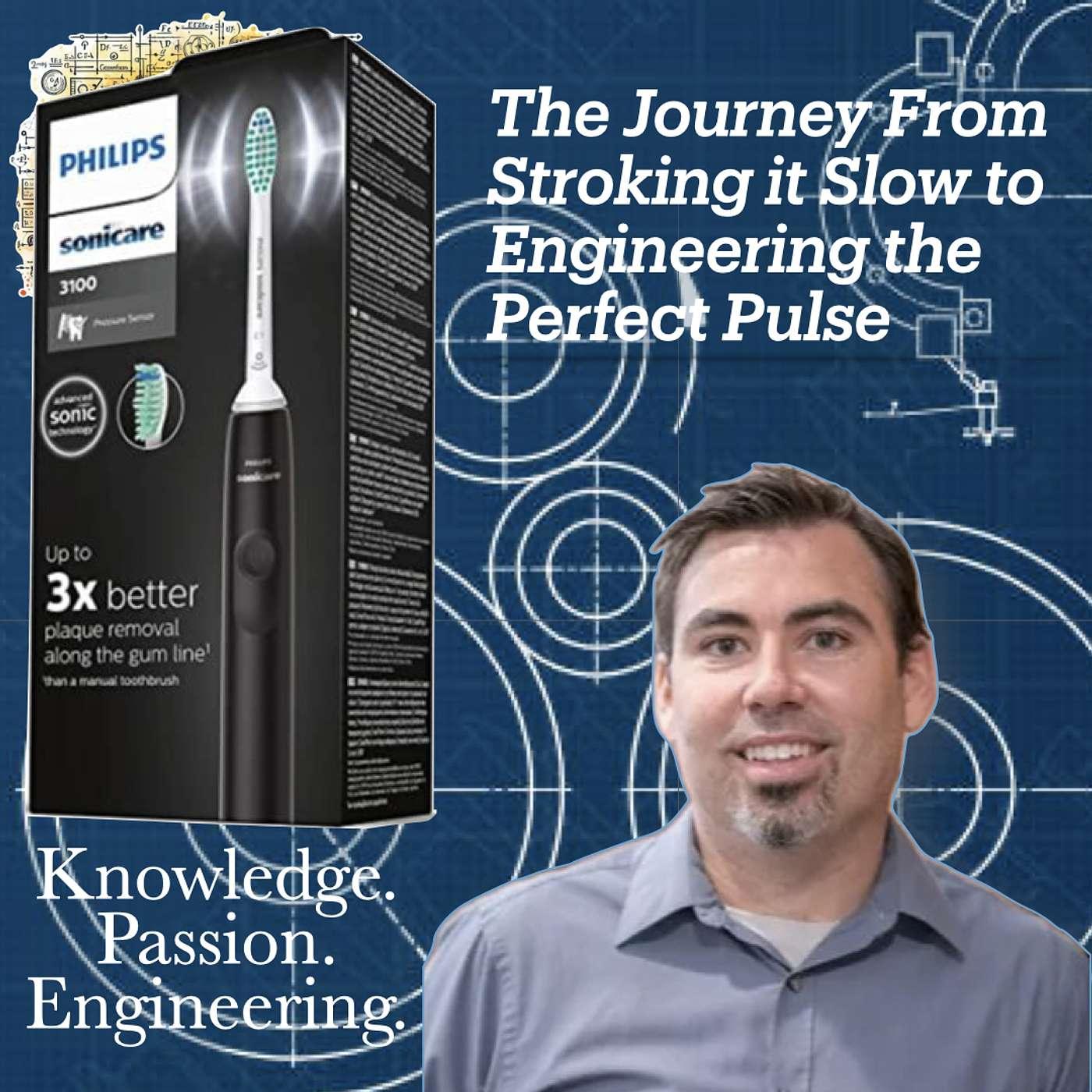
I'm your host, Brandon Donnelly, and today we're going to talk about the story of a toothbrush, but not just any toothbrush, a very special toothbrush, one that I've used for years and that you likely have overlooked and have never thought about the invention of.
00:00:20.480 --> 00:00:26.399
The story begins in a periodontist's office in Seattle, sometime in the mid-1980s.
00:00:26.640 --> 00:00:32.640
There's rain on the windows, soft gray light, the kind that never quite decides if it's morning or afternoon.
00:00:32.880 --> 00:00:46.159
Inside the decor is beige carpet, laminated wood trim, plastic plants that haven't moved in years, and a faint antiseptic smell mingles with the sweet bite of fluoride varnish.
00:00:46.560 --> 00:00:54.240
The equipment hums with an analog whirr, motor suction drills, machines built before the microchip.
00:00:54.719 --> 00:01:03.920
And sitting in the chair is a man in a light blue Oxford shirt with a pattern that resembles something like graph paper.
00:01:04.079 --> 00:01:14.239
His elbows on the armrest, obvious that the shirt is thinner around the elbows due to being worn so much, likely because it's his favorite.
00:01:15.040 --> 00:01:23.120
And while he's sitting there waiting for the periodontus to come in, he's wondering why he has to be there at all.
00:01:23.359 --> 00:01:27.599
But then the periodontist does come in and gives him the bad news.
00:01:27.920 --> 00:01:29.760
He's got gum disease.
00:01:30.159 --> 00:01:41.840
The bleeding on his gums comes from bacteria that turns to plaque, which turns to a harder version called tartar, which then infects your gums and causes the bleeding.
00:01:42.159 --> 00:01:45.519
This isn't the kind of news that anybody ever wants to hear.
00:01:45.840 --> 00:01:50.879
And out in the world, there are two kinds of professionals.
00:01:51.359 --> 00:01:59.040
There's one like the periodontist that just delivered the bad news that says, you've really got to take care of yourself.
00:01:59.200 --> 00:02:01.120
You have to do a better job.
00:02:01.359 --> 00:02:07.599
The methods that you're using aren't enough, and you need to put in larger personal efforts.
00:02:07.920 --> 00:02:15.280
And there's a second type of professional out there, one that says, maybe the existing methods aren't working.
00:02:15.520 --> 00:02:27.120
Maybe it's not all on personal responsibility, but instead it's on creating a better system that people can use and get far better results.
00:02:27.439 --> 00:02:35.840
And over at the University of Washington, there's a professor just like the latter of those two professionals.
00:02:36.400 --> 00:02:37.520
His name is Dr.
00:02:37.680 --> 00:02:46.479
David Engel, and he knew, like most persistent problems, there is a root cause to everything.
00:02:46.879 --> 00:02:54.319
Letting them persist by continuing to use existing methods often does no one any good.
00:02:54.800 --> 00:03:00.159
He spent his time as an academic researcher trying to improve oral hygiene.
00:03:00.719 --> 00:03:16.960
Until then, oral hygiene was built on three principles people having access to the tools, in this case, toothbrushes, which at the time in the United States, there's really nobody that couldn't get a toothbrush.
00:03:17.439 --> 00:03:24.000
Number two, people needed to have access to knowledge of good brushing habits.
00:03:24.560 --> 00:03:35.120
This usually came from your dentist, or maybe your school did some sort of hygiene class, and that gave you the idea of the sort of habits you needed to have.
00:03:35.520 --> 00:03:47.199
But maybe if you went to a poorer school or one with a less rigorous curriculum, or you didn't have access to a dentist, you may not know these topics.
00:03:47.439 --> 00:03:51.840
And since we didn't have the internet, it wasn't as widespread.
00:03:51.919 --> 00:03:54.479
It wasn't something you could find on your own.
00:03:54.719 --> 00:04:03.599
The final piece of the puzzle was that people have to have the time and the will to apply these tools and best practices to get the desired result.
00:04:04.879 --> 00:04:11.520
The problem is, what if having all of that, the problem still persists?
00:04:11.840 --> 00:04:14.159
That's when better methods need to be found.
00:04:14.400 --> 00:04:17.120
And those better methods are what Dr.
00:04:17.279 --> 00:04:18.879
Engel was chasing.
00:04:19.120 --> 00:04:24.639
It's what researchers do, and more importantly, it's what innovators do.
00:04:24.959 --> 00:04:26.319
Remember, Dr.
00:04:26.480 --> 00:04:31.600
Engel, sitting in his office, was thinking about root causes.
00:04:32.000 --> 00:04:33.759
That's a dental joke.
00:04:34.000 --> 00:04:45.439
And he was thinking the same as the periodontist: that bacteria becomes plaque, plaque becomes tartar, tartar becomes infection and bleeding.
00:04:46.000 --> 00:04:49.279
Stopping the bacteria stops the chain.
00:04:49.600 --> 00:04:51.920
And what about stopping the bacteria?
00:04:52.240 --> 00:04:59.279
They are so tiny, they can slip between the bristles of your toothbrush.
00:04:59.680 --> 00:05:05.360
At that microscopic scale, they can hold on tight.
00:05:05.600 --> 00:05:18.879
People can harbor from 32,000 in a healthy mouth up to 20 billion in an unhygienic mouth with over a thousand different species of bacteria.
00:05:19.120 --> 00:05:25.040
It's estimated that each milligram of plaque contains 100 million of them.
00:05:25.600 --> 00:05:31.680
And most are between 50 to 200 times thinner than a human hair.
00:05:32.800 --> 00:05:34.639
Think about that scale.
00:05:35.120 --> 00:05:44.000
Toothpaste is made of tiny abrasive particles, often of silica, calcium carbonate, or hydrated alumina.
00:05:44.319 --> 00:05:52.560
If you rub it between your fingers, the toothpaste will just feel like a fine sand.
00:05:53.279 --> 00:06:03.199
And while this is small to us, to the oral bacteria, they are massive rocks, boulders really.
00:06:03.600 --> 00:06:12.319
And many bacteria can still hide between these and remain after the flood of the mouth rinse washes the boulders away.
00:06:12.639 --> 00:06:13.120
And Dr.
00:06:13.279 --> 00:06:26.959
Engel was thinking about this while also knowing at the same time of some recent electric toothbrushes that increase brush strokes and were proving more effective than traditional brushing.
00:06:27.199 --> 00:06:34.800
Those electric toothbrushes made sense because traditional brushing is around 150 strokes per minute.
00:06:35.040 --> 00:06:50.240
An electric toothbrush of the time could increase that up to maybe 2,000 strokes per minute, which is a significant increase in the amount of tooth surface that's being brushed for two minutes of brushing.
00:06:50.639 --> 00:07:04.959
All else being equal between traditional brush between traditional brushing and an electric toothbrush with increased brush strokes, it makes sense that the effectiveness would be increased.
00:07:05.279 --> 00:07:13.600
But thinking about scale, what if you had a brush that brushed 20,000 strokes per minute?
00:07:13.920 --> 00:07:15.279
What would that do?
00:07:15.680 --> 00:07:17.680
And how would that even be done?
00:07:18.000 --> 00:07:20.160
At some point that sounds absurd.
00:07:20.399 --> 00:07:27.439
Because if you had big strokes happening at 20,000 strokes per minute, you would disintegrate your mouth.
00:07:27.680 --> 00:07:34.720
But what if you had smaller strokes happening much faster to the point that you're vibrating your teeth?
00:07:34.959 --> 00:07:39.279
And the vibrations cause the stuff to move and shake and release.
00:07:39.839 --> 00:07:41.920
That's what had Dr.
00:07:42.079 --> 00:07:43.360
Engel thinking.
00:07:43.600 --> 00:07:44.560
And luckily, Dr.
00:07:44.720 --> 00:07:46.480
Engel had a colleague, Dr.
00:07:46.639 --> 00:07:49.519
Roy Martin, in the bioengineering faculty.
00:07:49.759 --> 00:07:50.079
Dr.
00:07:50.160 --> 00:07:56.079
Martin had been working with crystals, particular piezoelectric transducers.
00:07:56.399 --> 00:07:59.040
A naturally occurring version of this is quartz.
00:07:59.519 --> 00:08:06.959
These piezzos or PETs take mechanical vibrations and convert them to electricity.
00:08:07.120 --> 00:08:11.279
But they can also work in reverse, electricity to vibration.
00:08:11.759 --> 00:08:12.959
Working together, Dr.
00:08:13.120 --> 00:08:14.000
Engel and Dr.
00:08:14.160 --> 00:08:23.839
Martin found their prototype toothbrush drastically increasing effectiveness beyond anything in the market.
00:08:24.879 --> 00:08:29.120
But everything about that was impractical commercially.
00:08:29.360 --> 00:08:31.600
We're talking about the 1980s.
00:08:31.839 --> 00:08:35.600
The internet didn't exist, at least not how we know it today.
00:08:35.840 --> 00:08:39.840
Instead, it was the heyday of trade shows and conferences.
00:08:40.159 --> 00:08:45.759
To find what you were looking for, you would go and present and meet with people.
00:08:46.480 --> 00:08:58.000
Academics presented at conferences hoping other academics would add opinions or build on their work or that a company would pick up on their research with a commercial application.
00:08:58.240 --> 00:08:59.440
In this environment, Dr.
00:08:59.519 --> 00:09:00.320
Engel and Dr.
00:09:00.399 --> 00:09:08.320
Martin are presenting their work on gum disease prevention through better teeth cleaning via ultrasonic brushing.
00:09:08.559 --> 00:09:16.559
They present their works on using piezos to create the highest strokes per minute toothbrush in existence.
00:09:16.960 --> 00:09:28.559
However, they illustrate problems with the size of current piezos, with safety from being electrocuted, and other commercialization issues.
00:09:28.960 --> 00:09:43.919
All of that didn't matter at all to a man in the audience wearing a light blue Oxford shirt that looked a little like graph paper with the elbows slightly worn out, likely from being his favorite.
00:09:44.320 --> 00:09:45.840
This man was in awe.
00:09:46.080 --> 00:09:51.039
He understood the challenges they mentioned because he dealt with them every day.
00:09:51.360 --> 00:09:54.399
Bringing products to market was his job.
00:09:54.720 --> 00:10:00.159
He was David Giuliani, a Hewlett-Packard engineer.
00:10:00.639 --> 00:10:06.879
David himself was the target audience, and he was the solution to the doctor's commercialization problems.
00:10:07.120 --> 00:10:11.360
However, Hewlett-Packard didn't make toothbrushes.
00:10:11.600 --> 00:10:15.840
They would need a company of their own and capital resources.
00:10:16.480 --> 00:10:24.320
And that would mean taking a leap of faith, becoming an entrepreneur, and foregoing the safety and stability of a job.
00:10:24.559 --> 00:10:26.320
But what else could he do?
00:10:26.720 --> 00:10:30.320
Did he want to keep seeing his periodontus for the rest of his life?
00:10:30.639 --> 00:10:30.960
No.
00:10:32.000 --> 00:10:35.279
And he bet that other patients didn't either.
00:10:35.600 --> 00:10:40.159
And that began the five-year journey.
00:10:40.639 --> 00:10:48.000
A journey made up of manufacturing challenges, regulatory approvals, and dentist skepticism.
00:10:48.320 --> 00:10:52.080
Most inventors imagine this will sell itself.
00:10:52.639 --> 00:10:57.840
But Giuliani had been around the block and knew that wasn't true.
00:10:58.159 --> 00:11:03.120
Existing manufacturers controlled cells controlled shelf space.
00:11:03.519 --> 00:11:09.759
Early investors wanted to know who will buy a$50 toothbrush.
00:11:10.080 --> 00:11:12.879
That's like$150 today.
00:11:13.200 --> 00:11:19.120
And while this category exists in the modern era, it didn't back then.
00:11:19.360 --> 00:11:28.080
So Giuliani had to overcome these objections with a combination of optimism, resilience, and a large dose of intellect.
00:11:28.559 --> 00:11:40.159
The toothbrush over time, so Giuliani had to overcome these objections with a combination of optimism, resilience, and a large dose of intellect.
00:11:40.559 --> 00:11:46.559
The toothbrush over time became a health device in his stories.
00:11:47.120 --> 00:11:54.080
The idea of vibrations in your mouth morphed into sonic cleaning.
00:11:54.399 --> 00:12:03.360
And over time he realized he had to make it clear that this was not an incremental change to the toothbrush.
00:12:03.759 --> 00:12:06.159
This was a fundamental leap.
00:12:06.639 --> 00:12:11.440
Over time the story came together in the form of a name.
00:12:12.000 --> 00:12:14.399
The Sonic Hair Toothbrush.
00:12:14.720 --> 00:12:17.919
Something that told the story in a single word.
00:12:18.639 --> 00:12:28.080
This was a health device about caring for yourself that used sonic cleaning technology to make your mouth the cleanest it had ever been.
00:12:28.879 --> 00:12:35.279
It was about gum health, not whiter teeth like every other brush and toothpaste on the market.
00:12:35.759 --> 00:12:41.200
It wasn't about 20,000 Hertz, but about bacterial destruction.
00:12:41.600 --> 00:12:46.159
This is where Giuliani transformed the invention.
00:12:46.399 --> 00:12:49.360
Rather than equations, he spoke in metaphors.
00:12:49.759 --> 00:12:54.799
But these choices took years to stumble upon.
00:12:55.279 --> 00:13:02.320
And after that, he still had to find his early advocates, turning skeptical dentists into full believers.
00:13:02.799 --> 00:13:13.120
After all, they would go into dentist's office and show them the academic studies about how clean it made teeth and about the number of bacteria.
00:13:13.840 --> 00:13:18.879
But there's something about experience that a study just can't match.
00:13:19.200 --> 00:13:27.279
If you've ever tried a sonic hair toothbrush, you'll understand how clean it makes your mouth feel.
00:13:27.759 --> 00:13:34.879
For a dentist to go brush his teeth and realize his teeth have never felt so clean.
00:13:35.200 --> 00:13:51.039
And this is a person who knows the best brushing habits, who knows to replace his toothbrush regularly, whose career probably stems on having a nice, bright smile and fresh, minty breath.
00:13:51.519 --> 00:13:56.799
After trying it on themselves, they can't believe how clean their teeth feel.
00:13:57.120 --> 00:13:59.759
What a sigh of relief for the business.
00:14:00.080 --> 00:14:09.440
Giuliani began to get orders from dentists' office and their patients who are being told how great this toothbrush is.
00:14:09.759 --> 00:14:13.759
And in that success is when the real challenges began.
00:14:14.159 --> 00:14:16.639
Demand outpaced manufacturing capacity.
00:14:16.799 --> 00:14:20.480
We need more space, more production space.
00:14:20.879 --> 00:14:26.720
Materials and vendors and supply chain resilience become factors in the business.
00:14:27.200 --> 00:14:31.200
Then with the realization that they are onto something begins.
00:14:31.679 --> 00:14:33.919
The fight for shelf space.
00:14:34.240 --> 00:14:44.240
Procter and Gamble and Colgate control this at almost every national chain in the country.
00:14:44.639 --> 00:14:49.200
How do you stop those deep pockets from shutting you out?
00:14:49.759 --> 00:14:59.600
As he sat there in his office in his light blue Oxford shirt that looked a little like graph paper, he thought, maybe you don't shut out those pockets.
00:14:59.919 --> 00:15:14.480
Maybe we keep doing what we're doing, we keep improving the product, we keep telling the dentists, we keep letting people tell their friends about how clean it makes their mouths feel.
00:15:14.720 --> 00:15:18.159
Maybe then the shelf will fight for us.
00:15:18.559 --> 00:15:27.919
And that's why the Sonic Air Toothbrush sits there today selling tens of millions of units annually around the world.
00:15:28.240 --> 00:15:30.639
Hello to everybody listening to this podcast.
00:15:30.720 --> 00:15:38.159
I'm your host, Brandon Downley, and I would like to take a second to just say I'm grateful that you're listening to the Engineering Passion Express.
00:15:38.320 --> 00:15:43.519
It's growing and becoming more successful, and I would like to make it even better than it is today.
00:15:43.759 --> 00:15:48.240
I have a number of ideas for new episodes that I'm working on creating.
00:15:48.399 --> 00:15:57.120
However, these episodes do cost money to create, to host, to edit, and this podcast needs support.
00:15:57.279 --> 00:15:59.600
There's a few ways you can support this podcast.
00:15:59.840 --> 00:16:08.799
Listening is a good start, but we'd also like you to ensure that you're following us on Apple Podcasts or Spotify or YouTube or your favorite podcast platform.
00:16:09.039 --> 00:16:14.080
If you really enjoy some of the episodes, please share them with other engineers.
00:16:14.240 --> 00:16:19.039
I encourage them to also follow this podcast so that you can start some discussions.
00:16:19.360 --> 00:16:24.240
As I said, I'm truly grateful to you all that are listening to the Engineering Passion Express.
00:16:24.639 --> 00:16:28.799
I look forward to a future where we start putting out even more episodes.
00:16:29.919 --> 00:16:31.679
And I hope you do too.
00:16:32.080 --> 00:16:36.240
I'll see you on future episodes of the Engineering Passion Express.
