


درباره این اپیزود
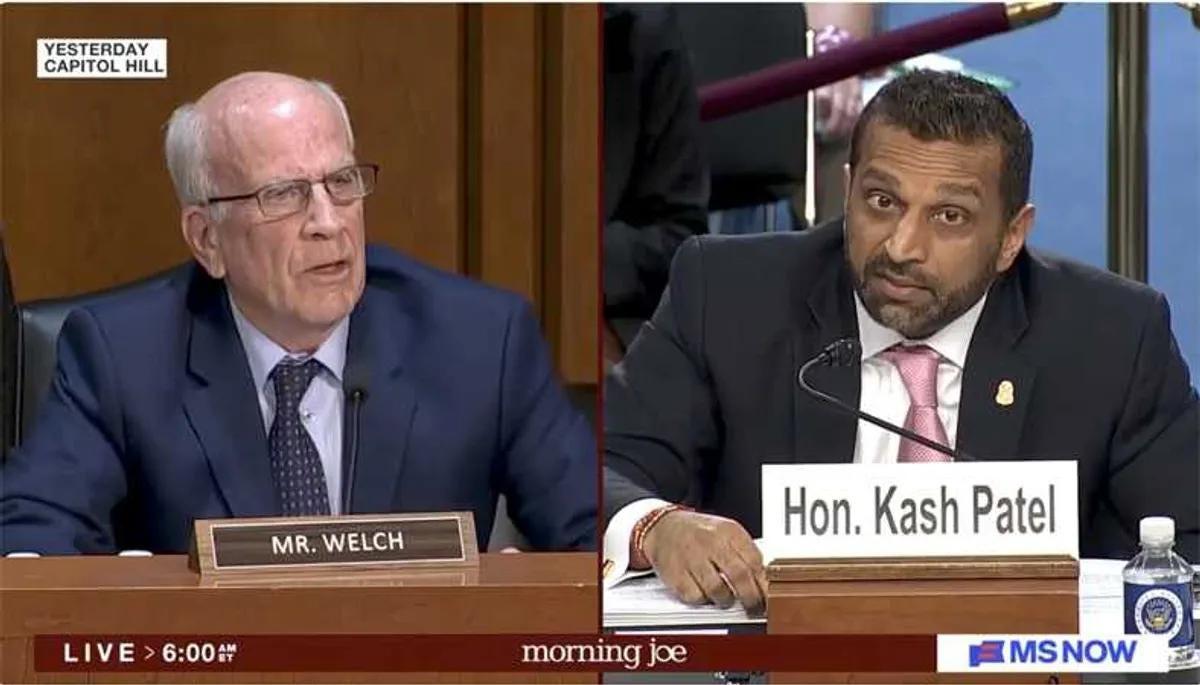
Sen. Peter Welch, Kash Patel (MS NOW screenshot)
The FBI Director’s Evasion Is the Story
Power Behind the Performance
Kash Patel was not appearing before the Senate Judiciary Committee as a pundit, campaign surrogate, or aggrieved television guest. He was appearing as director of the FBI—an official entrusted with extraordinary investigative authority and obligated to answer congressional oversight questions.
When Senator Peter Welch asked whether the FBI would go to polling places, Patel did not provide the requested yes-or-no answer. He attacked the premise as a “charade of lies.” That substitution matters more than the insult: an official with coercive power treated scrutiny of that power as illegitimate.
Help fuel the work. Independent analysis doesn’t fund itself:☕ Buy us a coffee
Evasion Is a Decision
The exchange was not complicated. Patel was asked about potential FBI activity at polling places. He chose not to clarify the bureau’s intentions.
Calling that conduct “confusion” would conceal agency. Patel decided to evade. He decided to turn a question about federal law-enforcement power into a confrontation with the senator asking it. Whatever his unstated reason, the immediate consequence was clear: the public received no usable answer about how the FBI might operate around elections.
The Attack Replaces the Answer
“Charade of lies” performs a familiar political function. It does not rebut a claim, define a policy, or establish a fact. It recasts oversight itself as dishonesty.
That maneuver shifts attention from the institution holding power to the person attempting to examine it. Welch becomes the supposed offender; Patel’s refusal becomes secondary. This is not substantive accountability. It is propaganda technique at miniature scale: discredit the questioner so the unanswered question disappears beneath the accusation.
Mockery Can Also Misdirect
Joe Scarborough’s cereal routine exposed how absurd Patel’s response sounded when detached from partisan combat. But comedy risks shrinking an institutional failure into a problem of bad acting.
Patel’s performance was not consequential because it was clumsy. It was consequential because the FBI director withheld a direct answer about possible federal presence at polling places. Ridicule may puncture the posture, but it should not replace analysis of the authority behind it.
Oversight Without Consequence
A Senate hearing can display evasion without defeating it. Senators may ask questions, television hosts may mock the answers, and the official may still leave his policy undisclosed.
That is the larger weakness revealed here: oversight becomes theater when institutional actors can answer requests for accountability with aggression and suffer no immediate obligation to supply the missing information. The spectacle documents contempt but does not necessarily constrain power.
Authoritarian Habits Begin With Unanswerable Questions
The broader pattern is not merely that a government official behaved defensively. It is that an official wielding federal investigative power treated a basic question about election-related conduct as an attack unworthy of an answer.
That posture is consistent with an authoritarian political habit: power claims the right to scrutinize others while rejecting scrutiny of itself. The danger lies in the asymmetry. The FBI can investigate, surveil, and intervene. A senator asks what it plans to do, and its director responds by accusing the questioner. When accountability is recast as persecution, secrecy stops looking like a failure of governance and starts functioning as its method.
Thanks to Raw Story
Source: ‘What does that even mean?’ Kash Patel’s ‘charade of lies’ shredded with MS NOW parody
Systemic Error is a reader-supported publication. To receive new posts and support my work, consider becoming a free or paid subscriber.
This is a public episode. If you'd like to discuss this with other subscribers or get access to bonus episodes, visit paulstsmith.substack.com/subscribe


