


درباره این اپیزود
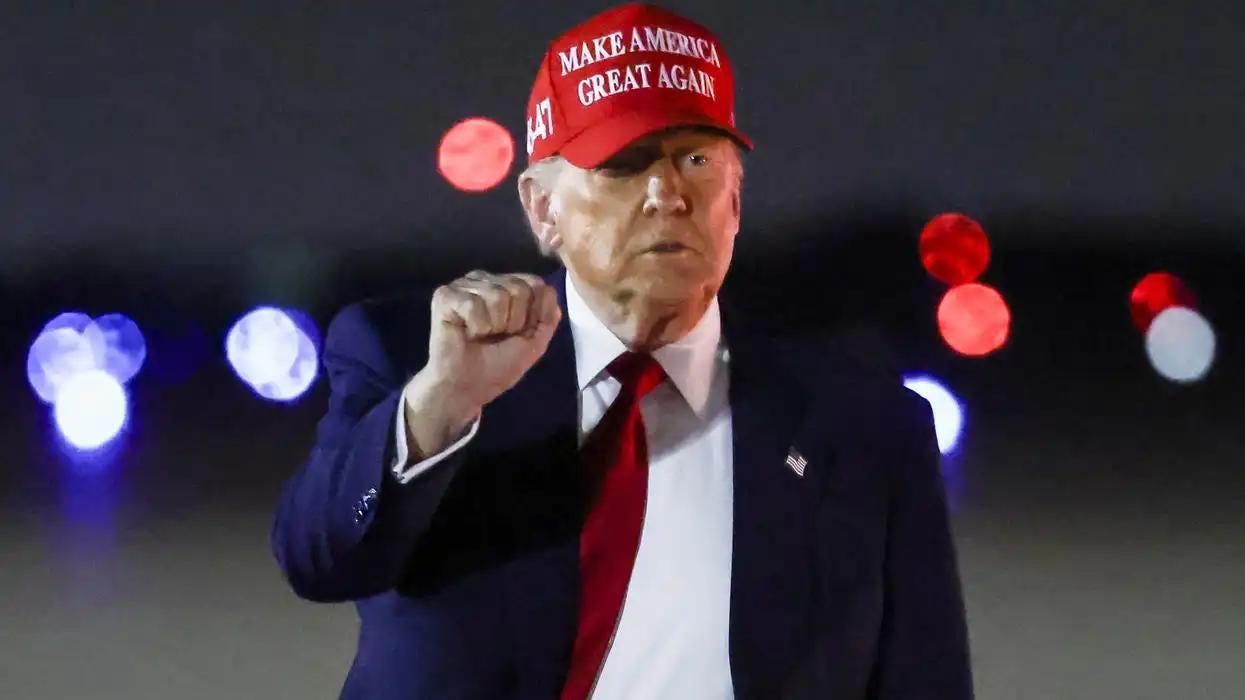
REUTERS/Evelyn Hockstein
What happened
AlterNet reports that Republican pollster Frank Luntz called Donald Trump’s effort to make congressional elections a referendum on himself a “very dangerous strategy.” Luntz told CNN that Trump could energize loyal supporters who otherwise might stay home, but weaker support for Trump could instead reinforce the turnout advantage Luntz currently sees for Democrats.
Luntz pointed to Republican vulnerabilities in Texas, Iowa, Alaska and Ohio, arguing that low participation among Trump voters could produce Democratic upsets. He identified Latino voters, male union voters and voters under 30 as important blocs after their movement toward Republicans in 2024, while contending that anger over affordability and the war in Iran could complicate GOP efforts to retain the House and Senate.
Help fuel the work. Independent analysis doesn’t fund itself:☕ Buy us a coffee
The power belongs to Trump
The central fact is not that Republican voters are difficult to motivate. It is that Republican candidates remain dependent on one politician’s ability to lend them purpose.
Trump is attempting to substitute personal allegiance for the normal incentives of a congressional election. When he appears on the ballot, Luntz says, his voters participate. When he does not, some disappear. The party’s response is therefore to simulate his presence—to make every Republican contest another test of loyalty to Trump.
That gives Trump enormous power over candidates without guaranteeing that he can transfer his coalition to them. They inherit his demands, liabilities and policy record while hoping to borrow his turnout operation.
Mobilization cannot erase consequences
Luntz’s warning is framed as campaign strategy, but the voter shifts described by AlterNet concern governing outcomes. Latino voters are said to have moved away from Trump as his deportation program became different from what they believed he had promised. Other voters want tangible results on prices and the war in Iran.
Those are not messaging glitches. They are judgments about the exercise of power.
Treating the problem primarily as whether Trump can “excite” his base turns accountability into a technical question of turnout. It invites Republicans to solve dissatisfaction through intensified partisan identification instead of addressing the decisions producing it.
The article’s muddled forecast
AlterNet’s framing is needlessly confusing. It says Democrats are expected to regain control of Congress “if” Trump persuades loyalists to support Republicans, even though that persuasion is presented as the GOP’s route to avoiding defeat. The article also moves between a Democratic advantage, possible Democratic upsets and an unspecified expected blowout without clearly defining the forecast behind any of them.
Luntz’s narrower argument is more coherent: Democrats currently appear to hold a turnout advantage of a couple of points; Trump may narrow it by mobilizing his supporters; and making the election about a weakened Trump could also repel or fail to recover voters Republicans need.
The uncertainty matters. A pollster’s turnout assessment is not an election result, and the reporting supplies no figures showing the size of the alleged movement among the demographic groups it names.
A party trapped inside one man’s coalition
The larger pattern is institutional surrender disguised as electoral realism. Republican candidates have helped build a party whose voters may respond more reliably to Trump than to the party, Congress or the candidates themselves. Now those candidates must invoke him even where his support may be eroding.
If Republicans retain both chambers, Luntz says Trump will demonstrate his political power. If they lose because his voters stay home or defect, the same dependence will have exposed the party’s weakness. Either outcome reveals the structure: congressional Republicans have tied their fortunes to Trump’s personal coalition, then called the resulting vulnerability a turnout problem.
Thanks to Alter Net
Source: ‘Dangerous strategy’: GOP pollster says Trump’s latest move could backfire
Systemic Error is a reader-supported publication. To receive new posts and support my work, consider becoming a free or paid subscriber.
We warned them.We told them.We shouted from the rooftops.We plead.We begged.They didn’t listen.Now, we all will suffer.Y’all know what to do, right?VOTE BLUE! 💙Vote as if your life — nay, our country — depend on it.Because, this time, and every time, it does.
This is a public episode. If you'd like to discuss this with other subscribers or get access to bonus episodes, visit paulstsmith.substack.com/subscribe


