

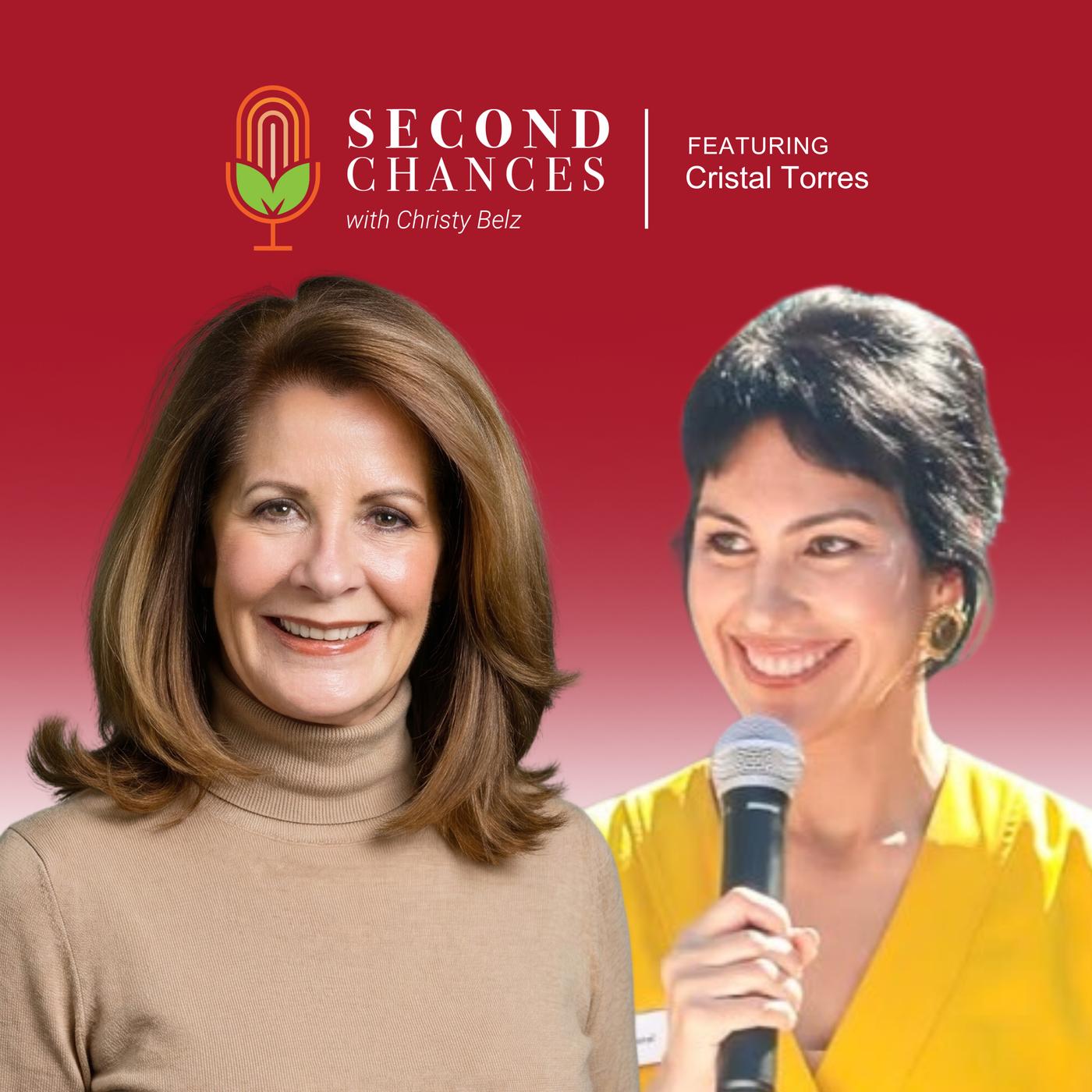
speaker-1: And welcome to Second Chances with Christy Bells Podcast. I'm your host, Christy Bells. Enjoy our array of talented, open-hearted guests and their thoughtfully curated stories of second chances, life-changing choices, and new perspectives. We are here to empower you on second chances in your life. Hi everybody, welcome to the show, Second Chances with Christy Bells. I am so excited to have yet another powerful woman on the show today. Crystal Torres de Herrera is a nationally recognized civic leader, attorney, and executive dedicated to building stronger communities through collaboration, equity, and economic opportunity. She currently serves as the Chief Operating Officer of the Denver Zoo Conservation Alliance. Where she helps lead strategy and operations for one of the region's most beloved cultural institutions. Prior to that, Krista served as the executive vice president and chief of staff at the Denver International Airport, where she helped guide the airport through major strategic initiatives and the challenges of the global pandemic while advancing its long-term Vision 100 plan. Early in her career, Krista was the deputy city attorney for the city and county of Denver. advising the mayor and city leadership on major legal and policy matters and helping lead initiatives including the governance structure for the National Western Center and programs supporting immigrant legal defense. Crystal began her legal career as a partner at the law firm Brownstein High Farberschreck, focusing on mergers and acquisitions, securities law, and complex transactions. The daughter of parents who instilled a deep sense of civic responsibility and community engagement. Bristol has built her career around the belief that leadership should expand opportunity and strengthen communities. Her work has earned her numerous honors, including Denver Business Journal Outstanding Women in Business, and the Christopher A. Miranda Outstanding Hispanic Lawyer Award, and the Denver Business Journal 40 under 40 recognition. Bristol is widely respected for her ability to bridge sectors, law and government, and nonprofit leadership while remaining. Grounded in service and community impact. Hi, Crystal. ⁓ my gosh, welcome to the show. I'm so excited to have you here today. ⁓ we're gonna talk about so much and catch we have so much to catch up on. But before we start, I start everything I do, including this show, with something I call permission to pause. It's just a moment for us just to take a deep breath. Try and find our center. Close your eyes if you're comfortable. The audience always follows along just to pause.
speaker-0: Amazing.
speaker-1: Yeah, beautiful, right? We need permission to pause. I call it P2P, right? We have to have and women, you know, we women need permission to pause because we don't do it very often and we don't do it well. So absolutely permission to pause. Okay, Crystal. I read your bio already, so we don't have to take our time together to do that, but you just are forever and ever and ever. So I always start the show with how do I know my guests? So this is a
speaker-0: Know me for forever.
speaker-1: Fun story, and I was trying to do the math in my head because Charlie, my son is 25, and Crystal, I met when I was running a non-for-profit called Project Wise. I was working on the west side of Denver. We were working with women with low incomes who were transitioning out of supportive services and into work. And Crystal came into my world, she was an attorney at the time and wanted to be supportive in our mission and what we were doing at Project Wise. And so one of my favorite stories about Crystal was that she'd bring her baby to the meetings and I would hold the baby during our board meetings 'cause I was just like unbelievable. And I Charlie was crawling around underneath the table sometimes.
speaker-0: percent Andras is gonna be 20. So yeah that was about 20 years ago and it was my eldest.
speaker-1: That's so crazy and fun. And what a journey. I mean, I have followed you kind of from afar for many, many years. I've known of your transition, but rereading your bio, I'm just like, You're badass. I mean, that's all I'm gonna say. You're just a badass woman leader, extraordinary.
speaker-0: I stand on your shoulder. So let's be honest. I mean, you've lifted up so many women and that's what I loved about Project Wise is it was women supporting women because we know it's not easy and yet we still want to help each other and open up doors.
speaker-1: Yeah. Yeah, absolutely. So let's talk about your journey. You know, I really want to start in your youth because your parents were so significant in your development and some of your values and what you hold dear. And then we're just going to move through. So this is the story of Crystal. Like tell tell us about you and what what brings you to this point in time in life and in your business and, you know, in all the contributions that you're making to our world.
speaker-0: Well, I love that your podcast is called Second Chances because I feel that my life has been full circle moments over and over again, but always coming back to the values and the people that made me who I am. And so my parents are my heroes, just plain and simple. They grew up so humbly. My mom was not born in this country. She was actually born in Mexico. My dad was born in East LA, both very, very humble, but grew up with such a sense of. honor and integrity and so proud to be in this country because both on my dad's side, my grandfather became a citizen while he was serving in the Army Air Corps, which was the Air Force way back in the day. But he signed up after World War Two and Pearl Harbor got bombed. And so that's how he bec my dad's side of the gallon became citizens. And my mom later I remember going to my grandparents' citizenship ceremony in downtown LA when I was in elementary school. And I helped them study for their citizenship test. But just Being so proud to be here and the opportunity this country provided. And the common thread through all of this was community. My parents really believed and took us out every weekend. So there were three things we did every weekend growing up. We were with family. We went to our grandparents' house, whether it was in the Coachella Valley. This was before the music festival. This is when it was the world in agriculture or East LA with my cousins. And so we were always with family. We went to church. And the third thing we did is we were always at some sort of community rally or gathering. And so we would load up on buses in LA and we'd go to all parts of LA and we would go and come together with people from all across the city. And it was people from all walks of life, all different backgrounds. And we would go, and my parents were really involved in social justice movements. And so that's how I grew up. I literally grew up in that environment every weekend, every Growing up as a kid. And so it taught me a lot of things, but it taught me the power that one person standing up for another can make. And also to never be afraid to do the right thing if it would help someone else. And that was so important. And it really left a mark on me ⁓ growing up because it wasn't about title. It wasn't about, you know, having money. It was about influence and lifting up others. And it was taught that success. is about lifting up others. It was never individual, it was community. If you were only successful if you could truly make a difference in the lives of others, that was what I was taught success looked like. And so throughout my career, and as as different as mergers and acquisitions at a major law firm can be from public service and then now being at the zoo, that thread is something that's just woven through my entire career. It really was about Getting the skills and helping people uplift others. And so that is the common thread. But it started with my parents. And, you know, they are my heroes. And they are just, I think about, I'm so grateful for the love and support that they gave me. and just they grounded me in in the best of ways. And also just not taking things for granted and being very proud of those humble roots. And, you know, it makes me really appreciate. particularly in the roles that I have been in in leadership, where I I really appreciate every level of the organization, whether it's the janitorial staff and going and talking with them and understanding what they need, all the way up to investors or the board or somebody else. ⁓ it doesn't matter. We all contribute to the benefit of what we do. And so that's just something that I'm really proud of that my family taught me.
speaker-1: I love that. I love that. And it just emanates through you. I mean, it's just, it just is you. I mean, you know, yeah, it's just you, right? That's called authenticity when you are so aligned with your values and you espouse them, you live them, you demonstrate them. And we all know. We all know what they are for you. It's just beautiful. Gosh, I love that. All right. So let's move through. Like you grew up with this great, amazing foundation of community and culture and You know, and and then you decided to go to college and you became an attorney. And ended up in a acquisitions and like, come on, tell me about that. Like what happened?
speaker-0: Well. Well, I'm the only lawyer in my family. Everyone because everybody else went into teaching or or nursing or something different. And so I was a bit of the, what is she doing? But all of it was because in many respects, you know, I grew up translating a lot for my grandparents and at a really interesting time in LA where there was a lot of just social movements going on. And I actually originally wanted to be a journalist. And I thought that if I wrote about the facts and brought things to life, like that was enough. And I realized at a young age that no, that wasn't. And so I wanted to have something with a little more oomph to it. And so that's why I ended up to get I went and got my law degree. And but when I was at Berkeley, I fell in love with my mergers and acquisitions classes and my securities law classes. And it just intellectually excited me. And there's so much history that people don't realize that are caught up like the history of our nation is the bedrock. For a lot of those foundational principles of law. And so for me, I just loved it, like intellectually loved that side of it. And so went to Brownstein and I love my Brownstein family. I still call them my Brownstein family. And started mergers and acquisitions with a newborn, which was a bit crazy. And I don't necessarily advise to anyone. But you know, when you're young and you are the first in your family, I was the first in my family to go to law school. I was the first in my family to work at a job like that. I didn't know better. I didn't know that that was potentially, I don't know, crazy. And I just was like, okay, I'll just do it. And my husband was also is also a lawyer, and he was working on a major trial out of state. And so I literally started mergers and acquisitions with a newborn and no husband in the state for about a year. And he'd come back for weekends. But that was hard. That was really hard. And I always like to tell people that I mentor that I was not always a safe bet. Because I was not always a safe bet. And I certainly did not fit the profile of the typical first year associate with baby, you know, newborn and you know, first in her family and all these things. But what I loved about Brownstein and why I chose Brownstein was because of Norm and Steve. And it was at a time in the firm when you still knew Norm and Steve. And they were they are self-made men. And they meant so much to me because they grew up like I did. And they built something to make people's lives better. I know you'll lawyers get a bad rap, but at the end of the day, lawyers are really there to make people's lives better. And nobody embodies that more than Norm Brownsey and Steve Barber. And I had the benefit of getting to know both of them very personally while I was at the firm. And they inspired me. And I was like, if I'm gonna go.
speaker-1: Mm-hmm.
speaker-0: spend so much time and give to something I wanted to be people that I believed in and I believed in them. And so I had the real privilege of getting to know both of them and really them mentoring me in different ways. And one of the Brownstein partners that I just absolutely idolized, because I like I said in the beginning it was it was messy for me because of the newborn and you know not having the husband in town. I wasn't accelerating and excelling in the way that I was used to. I had been successful my whole life and it was like, whoa, this was different. And I took her out to lunch one day, Christy, and I said, okay, give it to me straight. What am I doing wrong? Just I want to be good. I want to be good like you one day. What am I doing? And she she took me at my word and she let me have it. And I just I sat there, I was composed, I took it all in, I didn't cry, I wasn't defensive. I asked a lot of questions. And at the end, and I think it was probably at least an hour of her telling me all the things that I probably was not doing the right way. She looked at me and I think she kind of was like, wow, like she just took it all in. And I said, Thank you. That feedback is a gift. I really want to be good like you one day, and I want to act on this. And she said, I'll tell you what, I'm gonna send you home. And it was like three o'clock at this point in the day. And you've never got to go home at three o'clock in the afternoon in MA or just an episode, just like unheard of. And she's like, if you still want to do this, show up in my office tomorrow and I will help you. So I went home. I got some more resources. I got a nanny that could help me in a different way because my parents weren't here. They're all in LA. Like I was literally by myself in Colorado. And got some resources, took a deep breath, realigned with my purpose and my values, and said, This is really, I want to be here. Showed up the next day, and she became one of the most important mentors in my career. And my whole career turned around, but it took me taking that first step of taking that risk and asking for how I could be better and then leaning into it and then taking actionable steps and being a good mentee to make it happen. At the same time, doing it in a way that was still true to me and my values. And so I always tell people that's why I love your that your podcast is second chances, is like I was not always a safe bat. And I share that example a lot because
speaker-1: Hello.
speaker-0: I could be living a completely different life if I wouldn't have done that one thing in my career. That was a really defining moment in the career of Crystal. Yeah.
speaker-1: I love that story too. And I agree with you, Norm and Steve. Steve Fire particularly for me just has a very, very love like he they were they're incredible. They were incredible. And like they created them. Yeah. Incredible.
speaker-0: Human beings, I still keep in touch with Norm to this day, and I learn from him every time I speak with him. Yeah. And I was as as you say, so blessed because I have both of them in my life and I learned a lot from both of them. And whenever I see their families, I mean I tell everybody who will listen how much they meant to me because I feel very lucky that I grew up there at a time where that was possible, but that is why I chose Browstein.
speaker-1: I love that. So third, my husband is a real estate developer and Brownstein was their attorney throughout the throughout the years. So that's how I got to know the Brownstein firm and and ⁓ Norm and Steve Harbour as well. Who was your mintia ⁓ mentor? I'm dying to know if I know or not. ⁓ my gosh.
speaker-0: It was Elizabeth Paulson. Yeah. Yeah, she changed my life.
speaker-1: Yeah. You know, and that's what men tees mentors can do. I don't know if you remember this, but in Project Wise, one of the ways the reason I ended up at Project Wise out of graduate school was to start a mentoring program. And it was such a justopost because I was at the Junior League of Denver working in public policy and I was at Project Wise working I actually went and implemented a mentoring program and I put those two things together. So I had the junior leagues volunteering with the women, right? And and that mentorship, and now we call it sponsorship. Right. And the leaders I work with today we call it sponsorship. It's not just about advice giving, but it's about this idea of you open doors for people. That's right. You introduce them to people. You create opportunities, right? For for people that are in your field to grow and develop alongside of you. Right. So it's not a hand up, it's a come on.
speaker-0: Absolutely. ⁓ absolutely. I mean, it's so funny. Whenever I talk to women that I mentor, I tell them you need three things. You need a mentor who can review your work and coach you and help you professionally develop. You need a sponsor who can talk about you when you're not in the room to get you that reach project or to get you that visibility with a client or to just get help you tackle something that you never would have otherwise gotten the opportunity. And I also say, and you need a board of directors because, and this is the corporate. lawyer in me, but I have a board of directors where I have women I have people in my life that I have asked to almost informally advise me as if they are on my board because they are going to push me in a different way, professionally develop, think about things, strategic thought partners, like my kitchen cabinet. ⁓ and it's so valuable. And there are three different layers that just are helping you grow and be the best version of yourself.
speaker-1: Awesome, I've not heard of board of directors, but I'm gonna get one.
speaker-0: Yes, I I've had a board of directors for a long time and it evolves over time. And on all of my board of directors, I also have one person who is there going back to the values and kind of the family component who is there to be sort of that person to anchor me and to make sure that I am still being the mom, the wife, the crystal. that's taking care of me. So like I have that balance in the board of directors. It's not just career oriented. It's also like having that person who I talk to about, okay, in the midst of all of this, I still have to be me. And I, you know, we all make mistakes, we all screw up, but the one thing I cannot screw up is my children.
speaker-1: Yeah.
speaker-0: And you know, like I'm just like, I cannot, I have to, you know. And so just making sure that I'm being really thoughtful through that lens. And so I feel really blessed. You laugh because it's it is the most challenging job. They will tell it to you straight. And ⁓ nobody grows you like your child. Nobody grows you like your children.
speaker-1: That's right. Yeah. And they just mirror back for you exactly what you don't want to see about yourself, don't they? Like, ⁓ my god.
speaker-0: Hundred percent. Yes. You're like, Okay, that was very humbling, got it.
speaker-1: Yeah, thank you. Yeah, thank you very much for sharing.
speaker-0: Taking me down three pegs, duly noted.
speaker-1: Sorry, I just feel you in that one. ⁓ no.
speaker-0: ⁓ well I you know, our kids are probably you know, I've got three and you know, they ⁓ it's humbling all the time. All the time. Every moment.
speaker-1: All the time. ⁓ Lord. All right. So from Brownstein, he went to work for the city and county of Denver. And that was a really interesting time and had open. You were working with the mayor at the time. And let's touch in on that real quick.
speaker-0: Yeah. So all my time at Brownstone, I was also really active in the community because of the way I grew up. And so I was that crazy MA lawyer who would go be it late out late trying to get a deal done, go out to events with Steve and Norm, come back, do more due diligence, close the deal in the morning. And I had I was like at events all the time. And and really active in the community. And that's actually how I got to know Mayor Michael Hancock, who was a city council person at the time. And so When he came into office, as he was kind of settling into his first term, he had reached out to me to be, he and Scott Martinez had reached out to me to be the deputy city attorney. And I had actually originally said no, because I had just made partner at Brownstein. I loved being at Brownstein. I mean, I actually thought I was gonna be at Brownstein for my entire career. I used to joke with Norm about that all the time. And I just wasn't at a point where I was ready to give up everything I had worked so hard to do. It was really hard to make partner. Like you I had to put in a lot of time and investment. But that the way I grew up and that call to service really resonated with me. So it was, you know, I I kind of circled back after a few months with the mayor and was like, okay, like I'm ready to do this. And so they brought me in and I became Deputy City Attorney and I was leading, co-leading with the city attorney, the largest public law office west of the Mississippi. So you're talking, you know, over 220 legal professionals. And because Denver is a city and a county, you're touching everything from, you know, all the county functions and human services to the airport to being the legal counsel for all the elected in the city, and everything you can imagine between public safety. real estate, land use, infrastructure, debt financing, bonds, public issuances, everything. And it was such a fun time. I love Team Hancock. I it was I love that team. I was with ⁓ Mayor Hancock three terms and I learned so much from his leadership. He is one of the most inspiring leaders that I have have ever worked for. And what I loved about Mayor Hancock is he could do so many things Simultaneously, well, that I have seen in very few leaders, and that he could connect with anyone. He could connect with a frontline employee. He could, he could connect with somebody in the community who is downtrodden all the way up to the highest levels of investors and sophisticated third parties. And I always saw him do the right thing. And courage, political courage is very hard. And I think it's an attribute that we all wish we saw more. And I saw him make the toughest decisions. And in all of those, the question that he asked was, What is the right decision for the city? I saw him every single time. And I love that about him. And politicians get a lot of grief, but I'm here to say that there are good politicians and who do the right things for the right reason. And I was proud to serve for three terms under
speaker-1: Wow. You guys did incredible work. I remember those first couple of terms were really powerful and really significant in Timbers and you know.
speaker-0: absolutely. And you know, the new legacy building that just opened up at the National Western, I'm that's very personal to me because I worked on the National Western deal. That was one of my favorite projects, if I'm allowed to have favorite projects during my time at the city. And it was such an important combination of bringing the community together and really thinking about what was gonna be helpful for the future of Globeville Illyria Swansea. keeping the stock show in Denver and then bringing it to life with great partners like Colorado State University, the Stock Show, the City, DMS, and really trying to build something. And now when you go down to the CSU Spur and you see the legacy building and that whole development, I'm so proud of that because it is about honoring our traditions of the West. And my husband and I have a ranch and you know, I grew up on a ranch. I spent every summer on a ranch growing up. And so For me it was so deeply personal because the West is part of who we are. Yeah. And so to honor that tradition and weave it into the fabric of the city while uplifting a you know, a community that had for so long not received any investment. Right ⁓ was really powerful. So I am so proud of what is happening there.
speaker-1: Congratulations on it, because I was just out there and I think the Spur is unbelievably cool. Like that veterinary clinic when you walk this part of CSU, our university system here, and it has three different buildings. It has hydro building, water, the animal building, which has the equine and veterinary clinics. And what was the third one?
speaker-0: Hydro building. Equine, the veterinary Yeah, I can't remember the third one offhand, but it's it's just amazing and just the juxtaposition of the legacy building there and yeah just seeing the stock show there this year. It was it was just you're really proud, right? It's city building it's city building in a great way that makes you feel proud for future generations.
speaker-1: Yeah. I love it. Love it. Love it. All right. Now let's talk about a really another significant and when I heard that you did this, I was like, Whoa, the Denver International Airport. And you took on a major leadership role.
speaker-0: Yeah. Well, that was such a big deal for me, Christy, because that was when I left the law. And, you know, leaving Brownstein to go to public service was a leap. It was it was a big moment for me, but leaving the law was an even bigger moment because I had spent so much time and it was so tied to my identity. And one of my mentors, I'm gonna give a shout out to Elber Wedgeworth, because she had helped me think through when I initially left Brownstein to go to the city. You know, there are three questions that I always tell people that I consider when I'm making a big decision, right? And it's am I gonna have more opportunity than I do now? Right? Am I gonna be exposed to new relationships? And am I gonna grow? And if the answer to those three things is yes, you better really look at that, right? Even if it's outside your comfort zone. And so I had actually represented Denver International on the legal side since I was at Brown State. So we did a lot of disclosure work on the security side for them. So I had represented the airport for a very long time. And when I was at the city, I loved Kim Day. We just got along so well and so smart. And I just had so much respect for what she was doing and for the team out there. And so when she asked me to consider coming over, you know, after some heartfelt conversations with Mayor Hancock and Kim Day and Kristen Bronson, who I also love. And she's just one of my favorite human beings in the whole world. ⁓ I decided to go out there and leave the law and go over as Kim's number two, which was executive vice president and chief of staff. And Kim was amazing. She taught me so much. And I learned, I mean, she taught me, she was like, I will teach you everything I know about aviation. And she really taught me how to think in a different way. And I love that because legal training is great, but she opened up this whole new world for me and the relationships that I learned. And was able to connect with whether it was the airlines or the concessions and just that whole ecosystem. You know, there's over 40,000 employees at the airport, and it's a tremendous the city should be so proud of the airport. And it is a jewel and it's a city within a city. And I loved every minute. It was hard, it was fun, and you do incredible things that drive economic impact for, you know, jobs and people. And it's just It's really exciting to be in the middle of all of that and just to have that exposure. But I also, because of my grandfather's story of how he became a citizen and working for the US Army Air Corps, it was deeply personal to me because it was my American dream story. My American dream story started in aviation because that is how my family achieved citizenship. And so for me it was deeply personal and I was so proud to serve at the airport and to do that and just so much pride and Every leader that I worked out there for, whether it was Kim or Phil, I learned so much from and Denver should be really proud of its airport. The whole region should be proud of that airport. Like it is an incredible legacy that Frederico Pena left us. I mean, it is phenomenal when you think about it. So yeah, I learned so much there.
speaker-1: ⁓ Yeah. Wow. Yeah. You're it is really quite extraordinary. What is it, fourth in the country?
speaker-0: Yeah, it's the fourth busiest area airport in North America. And, you know, depending on the year and kind of what's going on geopolitically in the world, it can shift. You know, all the airports kind of shift in the busiest, but it is an incredible success story and will continue to drive jobs and revenue and opportunity for the whole region. And it's a great pipeline in terms of learning for students. I mean, you think about all these kids, you're like, You've got one of the top airports in the world in your backyard. Go work there, go get some. Interesting opportunity. And so that is something I have to give Fell Washington a lot of credit for in terms of opening up that opportunity for so many students and next generation of aviation. Like it's really incredible.
speaker-1: So cool. All right, we're gonna take a quick break here. We'll be right back with Crystal Di Herrera. Let me ask you something. Have you ever noticed how the same patterns keep showing up in your life, your work, or even your relationships? That's exactly why I created Uproot. Uproot is a transformational framework that helps you uncover the unconscious patterns running your life, reconnects you with your authentic self, and intentionally creates what comes next. For years I've taught this work in coaching, leadership programs, and workshops. And now, for the first time, Uproot is becoming an evergreen online course you can take anytime. If you're ready for a real shift, not just another inspirational idea, join the waitlist now at Christybells.com backslash uproot. Your next chapter starts with awareness. Welcome back to Second Chances with Christy Bells. ⁓ my god. Gosh, can you stand this conversation? This woman is blowing my mind. I mean, I know she's incredible, but now I'm like, holy moly, wow. And now we're gonna talk about her current position and what she's moved and how did she get from law to the city and and to the airport. And now she's at the zoo, which is so cool. Tell me about that transition.
speaker-0: You know what? I'm just a firm believer in doing what you love, Christy, because I think I probably have the wildest resume in town, literally and figuratively, as I sit here in Zebra print. But I, you know, the zoo was always my safe place and happy place with my family. To kind of go back a little, I shared with you that I spent all my summers on a working ranch. So one of my aunts moved to Oregon when I was like third grade. And, you know, growing up in Southern California, it was a bit of a concrete jungle. And As a kid, you don't know what you don't know. You just accept what's around you as normal. And when we went up to we drove up to Oregon to go see my aunt's ranch for the first time, and I remember getting out of the car and there were all these trees and the barn. And the second I walked in the barn and was with the horses, I was hooked. My whole life changed. And it was like my world went from black and white to color in in a second. And with the animals just changed my life. And so I spent every summer on that ranch from the time I was third grade all the way until I got married. And it was my favorite place. It was my I learned so much about caring for animals and and and also caring for myself and the happiness and grace and peace that that brought me. So that moment of silence that we did in the beginning, to me, that is what I feel when I walk around the zoo and I see the animals. It is that same sense of peace. It's like I'm home. The smell of alfalfa in a barn is my happy spot. And people who don't know that side of me would be like, what? Because they just know, you know, airport crystal or city crystal or brownstein crystal, but they that is who I am at my core. And so when I was at Brownsteen and I was, you know, working long hours, I would bring my kids to the zoo on the weekend. And the zoo was our safe place. Whereas a working mom, I felt safe. I didn't feel judged. I could reconnect with my kids. We'd ride the train. We'd ride the carousel. You know, my son was. saw every animal on the map. And if we missed an animal, we had to go back. And all those things. This is where we played. And so when the zoo job came open, it was an opportunity for me in some respects to come home at bay. And I was at a point in my life where I needed to lean in more with my kids. The pandemic was tough. The pandemic was really tough. And I had one child in particular who just needed more from me. And as a mom, you have these moments where you know that it is it is you have to choose. And I just decided that it was time to choose them. And so I did. And I have never been happier than I've been at the zoo. And coming from an environment, I've never been the best part of somebody's day until I worked at the zoo. And it is really different because as much as I love the airport and the city and I love the law, it was never the best part of anybody's day. And at the zoo, you're the best part of somebody's day. And you never know why somebody's walking through the gates to come here. Maybe they're really excited and they want to experience wonder with the in-animal. Or maybe this is the only safe place they can come to and they just need to walk through the trees. They need to feel the sun on their face and they need to feel the wind like flow through them. And this is the only place that they can do that and that they have safety. And so what I love about that is that everybody is welcome at the zoo. It doesn't matter how much money you make, what you believe, who you love, everybody belongs here and everybody is welcome. And there's something so beautiful and powerful in that. And so for me to be able to be a part of that and to be able to share the gift of wildlife and to share that gift of wildlife conservation with the communities that we love. To me, it's full circle. It ties back to everything I stand for and was raised for about uplifting communities. And so there's this I like to think of the zoo as where the West meets the wild because it is not ⁓ not everyone can afford to go to the mountains. Not everyone can get up there, but people can come to the zoo. And this may be their first and only connection with wildlife and the natural world. And I'm incredibly proud to be a place of joy and to make that happen.
speaker-1: And you have those kiddos that just are so full of joy as they come through. I just heard one. I was like
speaker-0: No, you can hear I know you can hear them outside. It it's so great. There's nothing better. And you see all generations here. You do. You see generations and people of all backgrounds. And I just love
speaker-1: Yeah. I have to tell you, I went to the zoo lights this year. If you are in Denver ever around the holidays, please do not miss the zoo lights. You guys do such a beautiful job. Yeah. It's such a such a great, great experience to walk.
speaker-0: It's Yeah. And right now, Christy, you're gonna have to come see it. We have what's called Glowing Wild, and it's these really ⁓ fun animal lanterns. They're in this they're in the shapes and size of animals. I mean, they're huge and they glow and they light up at night. And so we've got that going on right now. It's about to start next week. And you'll have to come and check that out because it's just it's just another way. And we're having a warm spring, so yeah, come hang out and see that. It's just it's just another way to enjoy the zoo.
speaker-1: I just love you. All right. Let's tell people about the zoo, how they maybe can learn more about glow lights and you and how if people want to ⁓ be in touch with you and learn more about you and your journey. Let's share ⁓ with the audience how they can get a hold of you and know more about the zoo.
speaker-0: My gosh, I would love. I mean, I will talk. I am a big believer and I had so many people open up doors for me. You've heard about some of them today. I really get so much out of opening doors for others. So no matter where you are in your life or what you want to do, if there's something in here that resonated for you, definitely feel free to reach out and email me and be like, I heard you on Christmas podcast. ⁓ because I would absolutely meet with you, connect you with the team. I talk to so many students who want to be vets or who want to pursue a career on the zoo side or just want to talk about life. And I love it because again, I wouldn't be where I am today without people who did that for me, including the phenomenal Christy Bells, who has given me so many, so much good advice over the years. So Christy, I am happy for you to send out my email and people can have that.
speaker-1: Okay, we'll fill in the show notes.
speaker-0: Yeah. And so we'll put those in the notes. I think that would be really great for people to have because I would welcome that and happy to happy to chat and sit down with anybody.
speaker-1: You're the best. All right. I always end my show with fire rapid fire questions. What's one word that describes your life right now?
speaker-0: One word that describes my life right now. ⁓ fun.
speaker-1: Fun. I like that. Pep talk, you would give yourself in five words or less.
speaker-0: You can do anything.
speaker-1: Who has taught you the most about second chances?
speaker-0: My grandmother.
speaker-1: And what's one book that you would recommend?
speaker-0: Cersei by Madeline Miller. It's amazing. Cersei, C I R C E. ⁓ Cersei by Madeline Miller.
speaker-1: Sourcy. Yeah, beautiful. Greek mythology. Greek mythology. I love it. Right. And and these times and days, what gives you hope right now?
speaker-0: Conversations like these, I mean, I I show up every day at a place that gives people hope, pride and possibility. That is the zoo. And so conversations like these where we support other people and we are putting good out into the world, that is what I love. And I will do anything to keep that going.
speaker-1: I adore you. Thank you so so much for being here. Blessings to you. ⁓
speaker-0: Interview you one day, I feel like we need to flip the camera around and interview Christy Bells because Christy Bells is amazing.
speaker-1: ⁓ you're a sweetheart. I appreciate you. Have a blessed day. I look forward to seeing you soon.
speaker-0: Thank you so much. This was a treat.
speaker-1: It is the joy of my life to showcase the voices of people and the messy details of life's journey. As you have experienced, my guests are thriving with purpose and style, but that does not mean that their life is easy and without challenges. I've dedicated my life to you and your journey. Thank you for listening to Second Chances with Christy Bells. Please subscribe and learn more at Christybells.com backslash second chances.
