

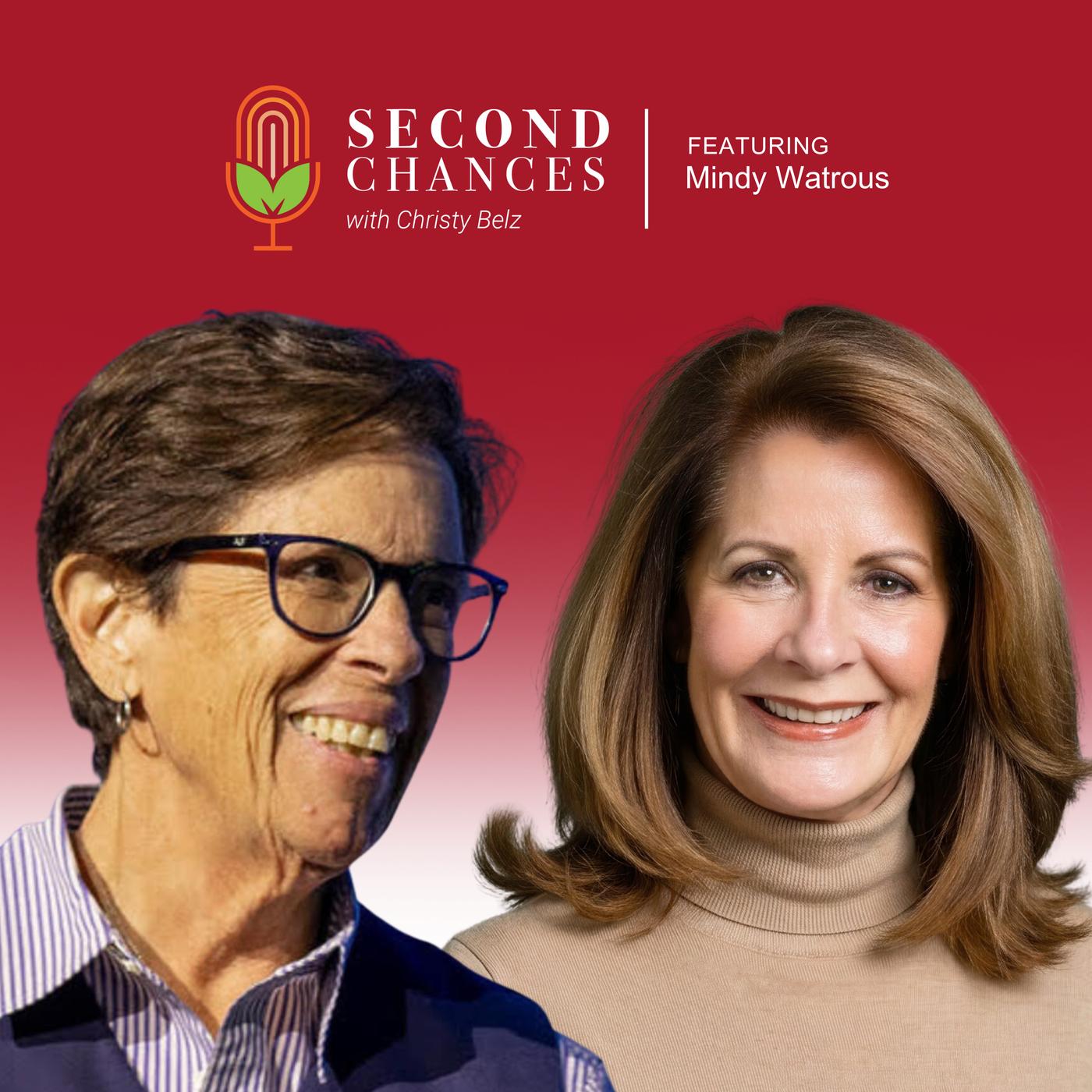
speaker-1: And welcome to Second Chances with Christy Bells Podcast. I'm your host, Christy Bells. Enjoy our array of talented, open-hearted guests and their thoughtfully curated stories of second chances, life-changing choices, and new perspectives. We are here to empower you on second chances in your life. Today's guest, Mindy Watch, serves as the president and CEO of the Tennyson Center for Children, a Denver-based nonprofit dedicated to helping children and families impacted by trauma build brighter futures. The organization has been serving Colorado children for more than a century and provides trauma-informed mental health services, foster care, and adoption support, family strengthening programs, and residential treatment. Mindy brings two decades of leadership experience in the nonprofit management. Child welfare and community partnership. Her work centers on expanding access to high-quality mental health care and creating systems that help vulnerable children heal, grow, and thrive. Under her leadership, Tennyson Center continues to evolve towards innovative, family-centered, preventative-focused care, ensuring that children experiencing adversity have the resources, stability, and support they need to reach their full potential. Mindy is known for her collaborative leadership style and deep commitment to Colorado children's and families. She regularly works with community partners, policymakers, educators, and mental health professionals to strengthen the systems that serve youth facing complex challenges. Welcome to the show. I'm so happy that you're here with us today. Second chances with Christy Bells. I am delighted to have Mindy Watch with us today. She is the CEO. Of the Tennyson Center for Children, which is an incredible organization, and I'm very excited to ⁓ talk with her about her work and our kids and what she's doing in the world. But before we do anything in my world, we pause. So we're just gonna take a moment here, take a deep breath. We call it permission to pause, just bringing ourselves into this moment. Just taking breath, closing your eyes if you're comfortable. Yeah, it's just a moment, right? Just a moment to pause, to remember, to be present, to be here now. You're ready. Come on back. Mindy, I am delighted that you said yes to this opportunity to have a discussion with me on this podcast. I have known you for a while and I always start the show with how do I know my guest? ⁓ and so you and I have some funny history. but we met through the A dear, dear friend of mine, actually somebody that I went to junior high school with, Stephanie Hearn, who works with Mindy at the Tennyson Center in Development. And she has enrolled me and I've become a huge champion of the work being done at the Tennyson Center. So through that connection, I've met Mindy and had the privilege of getting to know her. And ⁓ we've had a few adventures. We've had one major big adventure that I just have to start with because it's so stinking funny. And every time I think about it, I just crack. ⁓ so ⁓ I had a home down in Florida for a period of time. We've since sold it, but Mindy lives not far from where our home was. And so she was gracious enough to invite us up to spend a day on her boat. And we we went out on her boat and ⁓ we had I think I had three friends with me. Yeah, Stephanie was one of them and a couple other girlfriends. And somehow, some way we got the boat high centered on a sand barge. Yes we did. Yes we did.
speaker-0: And the we is really me got it centered on the sandbar.
speaker-1: But you should have seen you should have seen us trying to get the damn boat off of the sandbar. I still to this day am laughing like us tying ropes and the all women out there pulling the boat, trying to get the boat to come off the sandbar.
speaker-0: I've like the first and last time I've gotten stuck on a sandbar and I had to do it with a bunch of people in the boat.
speaker-1: It was such a classic, beautiful, fun day. And what a great memory. Well, great memories we made on that day. Exactly. We did some laughing and had some great time. So ⁓ yeah, super fun. Right outside Siesta Key, which is a beautiful, beautiful beach down out around Sarasota. And ⁓ yeah, we we finally had some some other boat come and ⁓ rescue us and rescue us. Pulled us off the barge. So nothing like being high centered on a barge. Yeah.
speaker-0: Right.
speaker-1: But ⁓ yeah, so I gosh, I just am just just in awe of the work that you're doing, Mindy. So ⁓ I always start the show after that introduction about you. I wanna know, I mean, this this podcast is about women and second chances and we all have ⁓ and we've all had many of them. And ⁓ I just wanna know ⁓ your story. Tell me your story, like where'd you come from? What what got you to this place? And ⁓ well then we'll talk about some pivotal moments in your world, some second chance moments and yeah, wrap up and have some fun. Yeah. So tell us about you.
speaker-0: Okay. Well, I have ⁓ been in nonprofits for a long time now, although that's not where I started. And ⁓ it came about as a result of being a foster parent at the ripe old age of 23. You know, I wish I knew. I've always ⁓ just loved working with kids and I ended up in ⁓ just inadvertently at a specific agency because I thought I want to learn more about this.
speaker-1: Now, how did that happen?
speaker-0: Well, it turns out it was a therapeutic foster care agency s which I did not understand at the time. And ⁓ worked with kids with extreme trauma, ⁓ mental health, behavioral health issues, those kinds of things. And became a foster parent and started out with ⁓ two little five year old boys.
speaker-1: At twenty three.
speaker-0: At twenty three, like a crazy woman. Looking back, I think, What? Where was I? Yeah. But ⁓ I still have one of those young men in my life. He's not so young anymore, he's my oldest. and he's you know, so a lot of good came out of it.
speaker-1: ⁓ huh, ⁓ huh.
speaker-0: Yeah. So then I went ⁓ I actually had the opportunity to go work go to work, ⁓ training and recruiting foster parents for that very same agency later. And ⁓ my interest ⁓ just grew from there. I ⁓ then became the CEO and I was there after a period of time and and ⁓ stayed there for sixteen years.
speaker-1: Wow. What state was that?
speaker-0: That was in San Diego, California. San Diego covered Southern California. Okay.
speaker-1: Wow. Wow. I know. Isn't it funny that like the one choice that you make that kind of pulls the thread of all of this thing and then it turns into like how did I get here? It's been all that time and now yeah.
speaker-0: Yeah. Exactly. I had actually interviewed with another foster f family agency about the same job. And when they called the first one where I was affiliated for a reference, ⁓ they said, wait a minute, come talk to us. So it's just this crazy opportunity that I didn't expect and it turned into a wonderful sixteen years. So it was great.
speaker-1: Right. Yeah, that's awesome. So when you left that agency, where did you go?
speaker-0: I had the opportunity to come to Denver ⁓ to be the CEO of Special Olympics Colorado.
speaker-1: ⁓ awesome. What a great organization.
speaker-0: Wonderful organization. I have a brother with ⁓ intellectual disabilities. And so it was it was a great opportunity with an organization who has joy in their mission statement, which is very hard to find in the nonprofit world.
speaker-1: Exactly. Yeah. Yeah. So what was your role at that ⁓ Special Olympics?
speaker-0: ⁓ I ran ⁓ the Colorado Special Olympics program. So ⁓ throughout the state as CEO and ⁓ you know, worked with both children and adults with intellectual and developmental disabilities.
speaker-1: Mm. Mm. Yeah. And then what, Mindy? Then what happened?
speaker-0: Well then I got recruited to ⁓ come to Tennyson. I decided to go back and work with kids who had experienced trauma. So I went to a small agency and and worked with them for a while. I was still foster parenting, so I had a brand new baby. So I was working at this little small organization just being a mom and doing that. And ⁓ got recruited by the same ⁓ executive ⁓ recruiter that I'd worked with when I left Special Olympics to help them fill the CEO role at Special Olympics. And she said, You gotta go see these people at Tennyson. And I said, I don't want to.
speaker-1: Nope. Thank you though. No, thanks for thinking of me.
speaker-0: Yeah, that doesn't really work for me. ⁓ you know, I was enjoying this whole organization and ⁓ my new baby that I had just gotten and she kept calling me and emailing me and finally I said, If I go and talk to these people, will you leave me alone? And she said yes. And I came here and I fell in love and I've been here about four and a half years now and it was a great decision to come to a great organization.
speaker-1: Mm-hmm. Mm-hmm. Let's talk about Tennyson. Tell me tell me about the Tennyson Center for Children.
speaker-0: Sure. Tennyson really our mission is around helping ⁓ children and families who've experienced trauma, helping them heal and thrive and move forward with their lives. And so we do that in a in several different ways. ⁓ we have a program called Community Based Services. And actually our clinicians go into the homes and work with the families on a very intensive basis, maybe six hours a week. ⁓ to keep that child from going to what we call a higher level of care or some kind of ⁓ residential programs, things like that. We really want to try to stabilize the family, keep the child with the family because that's ultimately what's best if you can do it. And help the family develop the skills and deal with the ⁓ you know the trauma that's gone on in the family. So ⁓ that's a program for us. We also run an outpatient clinic. ⁓ your kind of therapy. ⁓ And we also have what's called a facility school and day treatment program on our campus. And that's where we serve kids who have also experienced trauma but have experience of mental health challenges, behavioral health challenges. And basically school districts send kids to Tennyson ⁓ when their behavior exceeds the district's capacity. to really help them learn. So kids come to us, ⁓ we meet them where they're at, individualized, ⁓ and help them. Most are three to four years behind academically because they have other challenges they're thinking about, right? And then ⁓ they receive ⁓ therapeutic services at the same time, ⁓ family therapy, individual therapy, groups, ⁓ crisis management, those sorts of things. ⁓ And our goal is really to get that child back to their school district. We're not trying to keep kids graduate, but we're trying to get them to a place where they can be in their community, they could be at their home school, and they can be successful. do that through our school. We also have a residential program and that's for kids that really need twenty-four hour day care. And ⁓ their behaviors and the acuity of their challenges are so high that ⁓
speaker-1: Mm. Sure.
speaker-0: They come here for a period of time where we work to stabilize, heal, ⁓ work with the family or the caretakers ⁓ to really affect change in that child's.
speaker-1: Mm-hmm. Mm-hmm. ⁓ I think you know this. I'm a social worker by degree. I have my undergrad and graduate degrees in social work. So I'm familiar with the systems, family systems and structures and institutions and, you know, the the things ⁓ that we need in our society to do these to support ⁓ individuals and organizations. ⁓ I'm just I would love to talk more candidly about trauma and ⁓ what does that look like? I again my personal story is that I had nieces and nephews that were put in a foster care system and actually had to take one of them and drop her at a foster care home. and it it was incredibly challenging. So I I also know the system firsthand and supported her through that process. But I'm just I I I think it's really important for my audience because we talk to the real, the raw, the relevant on this show. Like, you know, what kind of trauma are you seeing? What are kids facing today? and you know, and really from the small tease, and I know no trauma is small, but you know, we have small tees and then we have extremely large, obviously those kids that are needing your residential program are needing greater level of care. But just talk to me candidly about trauma and what you're seeing in your population.
speaker-0: ⁓ trauma is ⁓ prevalent it you know, through everyone. It doesn't matter your socioeconomic status, your ⁓ education, your what have you, you know, children and families can experience trauma at any point. There's, you know, everything from physical, sexual, emotional, ⁓ abuse, severe neglect, the kind of traumas that I think people are more apt to at least have some knowledge about. You know, there's a lot in terms of ⁓ trafficking of young people. There's a lot also in terms of the ⁓ social media and the kind of information and experiences that kids are having, whether it's bullying, whether it's targeting, whatever those cases may be, ⁓ you know, leading to lots in terms of si s kids who feel hopeless, who ⁓ feel suicidal, who don't think that they have much of a future. ⁓ so we s we've seen in Colorado ⁓ a high percentage of teen suicide ⁓ and suicide attempts. ⁓ we have trauma in terms of our kids with intellectual and developmental disabilities that we work with. They're you know they're four times ⁓ more likely to be abused or severely bullied and a lot of trauma ⁓ from that as well. ⁓ and depending on the child, quite frankly, trauma can take so many different forms as it affects each of us differently. ⁓ But the ramifications ⁓ tend to look a lot alike. You know, we have kids who really ⁓ act out those behaviors as a result of not being able to ⁓ communicate and or understand their triggers and feelings at that point and then kids that completely withdraw.
speaker-1: Yeah. Uh-huh.
speaker-0: and just don't participate in anything. And we see a lot of that on both sides. But ⁓ our kids here have really big feelings, really big triggers ⁓ that you might y not even know. for example, for kids that have been sexually abused, you know, we need to show them what's behind closed doors because it that aren't labeled, because it scares them when they don't know what's back there. So it's very basic things all the way through ⁓ significant ⁓ therapeutic intervention.
speaker-1: Intervention. Yeah. So let's just clarify behind closed doors, you literally mean, right? Set top literally so people understand what that means. If a child has had sexual abuse and they see a closed door, I'll let you describe it just so that's concrete for the audience.
speaker-0: Well, you know, sexual abuse tends to be hidden ⁓ and it tends to happen. ⁓ children are often threatened, they often don't know what to expect. ⁓ people come into their rooms ⁓ you know, at night, they're taken different places by a ⁓ perpetrator. And so, you know, for our kids, for example, ⁓ you know, rooms need to be labeled or ⁓ opened up so kids can actually go in there and see what's in there and understand that they're safe. ⁓ they don't tend to believe that they're gonna be safe and there's something kind of hiding behind every closed door. So it's really important that they that they see and they feel safe and that you know, more than anything, we start by developing a relationship with them so they feel ⁓
speaker-1: Okay.
speaker-0: you know, some trust and part of that is d the physical environment.
speaker-1: Yeah. Yeah. I remember talking with Stephanie. I think it was part of when the the fundraising was going on for the residential aspect of your work that you actually had a ⁓ real estate developer who worked with you in trauma informed development. You wanna talk a little bit about that? I think that was so cool. I thought that was so cool.
speaker-0: Yeah. I think to be trauma informed is incredibly important when working with this population of of young people and understanding all the ways that ⁓ trauma impacts kids. ⁓ in what we do and what we do, you know, we we're here to help, we're here to make things better and inadvertently pardon me, inadvertently we ⁓ can do more damage.
speaker-1: Mm-hmm.
speaker-0: ⁓ when we don't understand ⁓ the ramifications of trauma. So when we worked to ⁓ renovate our ⁓ residential facility, one of the things that we did was work with ⁓ an organization Shopworks, which is actually a art an architectural firm that has worked with has social workers as part of them, and they work to build ⁓ and design spaces where ⁓ kids feel safe. Which hastens their healing and staff feel safe because working with kids who are aggressive and you know go through all kinds of behaviors can be really challenging obviously on our staff. So ⁓ we worked with Shopworks, they're an amazing organization to on everything from colors to textures to furniture to everything to ⁓ create an environment that that kind of Scream safe. You're safe here. it doesn't trigger kids ⁓ in the same ways. ⁓ it's a it's a very interesting science that they've worked really hard to develop, but you know, they've worked with a number of organizations in Denver and it's pretty amazing work.
speaker-1: Mm. Yeah, I th I thought it was spectacular. And, you know, safety is such a critical factor for all of us, anybody, right? We need to know our nutri our nervous system is designed needing to feel some level of safety. And that can be done in all sorts of ways. But literally to create a physical environment where those kids can walk in and just kind of, you know, take a deep breath, whether that's colors or as you said, textures or d you know, ⁓ space. It's just so important and what it Kudos to you. I was so excited to know that. Plus, you know, we need we needed the children's beds here in Colorado because it's an epidemic. And I'd love for you to just share your wisdom. You know, mental health for children is really an epidemic in Colorado. Yeah. So would you just, you know, give us your wisdom on that so my audience, our audience is informed.
speaker-0: Well, it's a you know, children's mental health, youth mental health is a it is a crisis. There are not enough services available, they're hard to come by, they're hard to keep, they're hard to pay for, they're ⁓ you know, they are just not available ⁓ easily to ⁓ typical families, to kids that are involved in the system, that sort of thing. ⁓ with legislation, ⁓ family first legislation. We've lost over a thousand residential beds here in Colorado ⁓ over the past few years because the whole basis of the legislation was that kids belong in homes and in community in their community. And there isn't one provider among us that doesn't believe that's true. But the reality is ⁓ when you look at the acuity of what kids are dealing with, when you look at the behaviors that are happening. And you can't keep ⁓ family safe, have to have, you know, residential treatment. Some kids just need that intensive level of mental health treatment, behavioral support, that kind of thing, just to get to a place where we can step them down to a level of care, where we can help their families and caregivers ⁓ have them home. But that takes that takes a lot of mental health.
speaker-1: Right. Right.
speaker-0: Fortunately, ⁓ it's not funded well. It's not ⁓ it's over, in my estimation, it's overly regulated. And I think a lot of people don't understand ⁓ the nature of what ⁓ mental health providers are dealing with and are challenged with. And so more and more people leave the field because it's incredibly challenging ⁓ to do this work on a day to day basis.
speaker-1: Mm-hmm. Yeah, yeah, I understand. I really do. I never ⁓ I could not I have a lot of bandwidth, but I could not find it in me to work with children just because it just was it was just a place that I just could not touch with my empathy and my Yes. Yeah. It takes a lot of grit to work with kids and to stay present when they are acting out and you know, just being being who they are because that's that's what's their experience is, right? But it is challenging.
speaker-0: It's so challenging. There's so much vicarious trauma. There's so many people that ha come into this ⁓ type of work with their own trauma. Yeah. They want to help other kids. They wanna, you know, people that have been through similar things. And it's very it can be very triggering, very trigger very difficult. ⁓ you know, on a day to day basis. It's kids' behavior isn't personal, but it can become very challenging ⁓ not to feel that way.
speaker-1: Yeah. Yeah. And I think the other thing is is that we kind of get an idea of, you know, based on where our generation is and how we were raised, you know, that there are certain ways that kids should perform or should behave. Right. And when they don't live up to that norm or that expectation, which is always a challenging in any type of situation. But you know, ⁓ yeah, it takes great practice and great discernment to be able to pull that apart, I think, for ⁓ for people who work with kids and And particularly at this level that you do that, it's just amazing to me. ⁓ it's beautiful. So what do you see as the major opportunity for kids and mental health and supporting children right now? What do you see as some opportunities that we can look towards?
speaker-0: I think ⁓ opportunities are ⁓ really looking at some of the the ⁓ treatments and programs and systems that are really working. ⁓ you know, that are evidence based, that that have a proven track record instead of people in mental health and in in treatment ⁓ always having to design their own ⁓ treatment programs and things of this nature. It kind of gives us a leg up. ⁓ I see that this is working. you know, gotta come see what you're doing, learn from you, things of that nature. So I think it's really ⁓ we're in a time and a space where ⁓ mental health treatment can be improved, ⁓ can be more effective. and ⁓ like I said, we're where kids can heal quick more quickly than the past. So I think that's a real opportunity.
speaker-1: Yeah. Yeah. Mm-hmm. Evidence based therapies, different works. What's what do you see? I mean, I've collected modalities throughout my career and have a toolbox full, but what do you feel like are some of the more effective tools and techniques that your staff are using with kids today?
speaker-0: ⁓ I think ⁓ one of the things that we really focused on ⁓ over the last four and a half years is ⁓ reducing the physical management. ⁓ you know, I think in this industry for a long time, ⁓ organizations have kind of used restraint of kids to calm them down. And we really decided that we want it to be hands off all the time.
speaker-1: Yeah.
speaker-0: And so we've invested a lot in things like ⁓ de-escalation techniques. How do we ⁓ notice that something is happening with children before it happens, how do we start to see those signs? how what do we do to ⁓ help the child learn from what's going on so that they don't continue to repeat that pattern? And ⁓ you know, we just implemented something called Ukaroo, for example. which uses kind of almost like ⁓ things like gymnastics pads but not that big so that aggressive kids and assaultive kids ⁓ don't hurt the staff but have the opportunity to kind of work out some of their frustration right and work on de-escalating them while no one gets hurt because obviously you know staff injuries and child injuries we don't want either of those.
speaker-1: Right.
speaker-0: gives us you know, it's a great opportunity to ⁓ you know, kids can pick ⁓ up, they can hit ⁓ they can kick ⁓ they can do whatever they need to do. You know, deal with these feelings that they don't understand. So I think that ⁓
speaker-1: Right, right.
speaker-0: reduction of physical management ⁓ keeps from kids from feeling reab reabused. So we really focus a lot on that and how we a build relationships and how we work to de escalate and recognize triggers and
speaker-1: Reabused, yeah. Mm. Mm-hmm. Are there therapeutic models that your team uses, like ⁓ cognitive behavioral therapy or internal family systems or I mean kids are different. ⁓ you know, my practice is primarily adults, but I'm just curious if there's like therapeutic models that seem to be working well for children in your community.
speaker-0: Yes, and I think ⁓ you know it really depends on the child and and what's needed, but ⁓ D V T, ⁓ dialectical behavioral therapy is effective. ⁓ cognitive behavioral therapy is effective. ⁓ the we use ⁓ and now look at me. Coming right going right out of PCIT, which is for really younger children. ⁓ parent child interactive therapy. Therapy And I I think that's really effective. It's something that our ⁓ therapists in our intensive in-home program have been, some of them have been trained in, ⁓ family systems therapy, different things like that, which really ⁓ seem to to help the kids. ⁓ I like the EMDR in terms of ⁓ you know working with youth and families around ⁓ traumatic memories and history.
speaker-1: Yeah. Yeah. EMDR's been very successful in trauma ⁓ reduction across the spectrum in different ages. Yeah. Awesome.
speaker-0: We also use a lot of sensory things with our kids. ⁓ just to reduce ⁓ reduce all the sensory input that's coming in and give them opportunities to ⁓ kind of work through that in a more productive way. Yeah, my littlest kids that I've adopted are have sensory and executive functioning challenges because of the substance abuse ⁓ in utero and ⁓
speaker-1: Mm-hmm. Uh-huh.
speaker-0: It it's amazing how much that helps.
speaker-1: Mm-hmm. Mm-hmm. Yes. Yes. ⁓ right, now I just have to ask, how many children have you adopted in your life?
speaker-0: Not very many.
speaker-1: Too hard.
speaker-0: Well, I had fostered many, many children ⁓ over the years. I ⁓ consider five of them mine. ⁓ yeah. And they range from six years old to forty years old. So ⁓ I ⁓ yeah.
speaker-1: You just took a six you just brought a six year old into your family not too long ago.
speaker-0: Well I know I had ⁓ my last two ⁓ we ⁓ got as infants ⁓ straight from children's hospital after they ⁓ were born ⁓ positive for substance use during pregnancy. So ⁓ yeah, they're six and ten now and ⁓ we had intended just to do respite care. Seems to be the story of my life. Talk about second channel. And then ⁓ someone in the universe decided that ⁓ we needed to ⁓ adopt and gonna tell you they're the best things that ever happened to us.
speaker-1: Yeah, you have a great partner that supports this journey too. And yeah. It's ⁓ yeah, it's beautiful. And kudos to you. I ⁓ I think you know this. I actually I know you know this because we saw each other at Re Rebecoming Me, which was a documentary film that won the Emmy this year that I supported and ⁓ you know, about emancipated kids that have left the foster care system and their stories and they were success stories in the documentary. really amazing. And not everybody gets that success story coming out of the foster care system. It takes great resolve and yeah.
speaker-0: ⁓ my oldest ⁓ who came to live with me when he was five has struggled his whole life with mental health and issues and things of that nature. And you know, the timelines ⁓ of when kids need to be launched and successful and all of these things just isn't appropriate for kids leaving the foster care system. You know, I I have a biological daughter, for example. She was no more ready to
speaker-1: No.
speaker-0: ⁓ do adulting then ⁓ and then when you put all the trauma and the history and the mental health and all of that on top of it, you know, there's so much that our foster kids need to be supported into adulthood.
speaker-1: Yeah. There's a big event coming up ⁓ in April that I'm a part of. ⁓ Crossroads is doing some supportive services for foster care kids and ⁓ helping kids normalize their their lives by providing activities and things for them to do in the community. It's really, really a cool program. I'll put some show notes in there for guests if they're interested in supporting it longer term. So we talk about leadership in my work. ⁓ We're all leaders in our own way. but when you talk about leadership and stewarding an organization like the Tennyson Center, what do you think are the key important qualities that you as a leader bring to support your staff and these children on their journeys?
speaker-0: I think ⁓ a few things. ⁓ I think authenticity is really important for our team here. ⁓ transparency, the willingness to admit that I don't know or that I made a mistake. ⁓ you know, I learned a lesson about ⁓ mistakes while I was at Special Olympics and how people respond to them and how that that ⁓ encourages people or defeats people and so I'm big on if you're not making mistakes, you're not taking risks. And if you're not taking risks, you're not getting better. So really trying to build an environment that's supportive of intention. And the opportunity for people to really ⁓ share their experience and understanding of what's happening and what we should be doing differently or better. You know, hearing people's voices, I think is really important in terms of leadership. To talk to those people that are, you know, on the senior leadership team or what have you, when really it's the people on the front lines every day.
speaker-1: Yeah.
speaker-0: know what's happening and and what we should be doing.
speaker-1: That yeah, authenticity is it's like a pinnacle in the leadership work, you know, that authenticity is really the ability to ⁓ you know, be yourself, show up wholeheartedly as the whole human being, but also to raise and talk about things that are challenging, right? That that courageous authenticity is about using your voice and being able to talk to your leadership team and are they you about what's happening and how do you get really real about it, right? ⁓ Yeah, it's really a pinnacle leadership skill. And I've witnessed that in you and I've heard much about your leadership, which is extraordinary. Talk let's talk about second chances. So you've talked about a few of them. You've had a few different career shifts in your life. You've had a few, a few opportunities. When you think about second chances, you know, my definition, I'd go back to Victor Frankel, you know, between re between stimulus and response, there's a space, right? And there's a space that you actually are at choice if you can allow yourself to be present in that moment. That's why I love permission to pause, right? Teaching people that you can pause in a moment, even if you're reactive. Right. There's a choice point in there. Not always easy, right? But ⁓ so my my belief is second chances are always the ability to choose again or take that pause and to be reflective in that moment. But ⁓ and then there's those huge ones, you know, the big mistakes I've done or I've been on the floor and it could get back up again took a little while. Those two. Those two.
speaker-0: Right. Totally understand that.
speaker-1: So talk about like the the second chances, ⁓ how you reflect on second chances, stories of hope, those types of things.
speaker-0: Well, I you know, I agree wholeheartedly with you in terms of second chances and you know, that everybody should have the opportunity. ⁓ you know, I learned my biggest lesson in leadership, like I said, with one of my mistakes. ⁓ and really in terms of how people responded to me around that. And ⁓ Yeah, I try to model that, I try to keep that ⁓ going forward. And I think ⁓ second chances are really about ⁓ you know, looking at things in a way that makes sense. We do a lot of of work with our staff here around ⁓ it's like what you said, when you're triggered, when there's a stimulus and what your own response is is like tap out, tap out and take that moment because you're not gonna be your best self when you have a dysregulated child and you're dysregulated. And there's no shame in that. You know, that's the real answer is to take that moment. It's it's like your your ⁓ pause, right? You gotta take that and you gotta make the most of it. You know, second chances in terms of people ha mostly have good intentions. Sometimes bad things just happen and you have to take that moment to really look at it. You know, w we work to debrief incidents so you can learn from what happened, to understand, you know, what you might have missed or what you did really well that we can use with other people. So, you know, we really believe in second chances here. We believe in ⁓ restorative justice with our kids, you know, we believe that that ⁓ Unless you show differently that your intentions are the are good and pure and you know, with our kids too. People make mistakes all the time and we just have to learn and grow from them. You know, we've w we are built on second chances here. And third and fourth often.
speaker-1: But Yeah. Yeah. I say, ⁓ god, a second chances. Here I am again for the twenty five thousandth time. Twenty five thousand. I'm sure there's at least that many in all my all my years on earth here before.
speaker-0: that twenty I know. You think we would get better at some things, but I tell you what, it's hard work.
speaker-1: It is so hard. It is so hard. All right. I wouldn't be me unless I did this and you are absolutely given grace to say no. But I'm curious about your leadership experience ⁓ that was such a challenge for you and if you'd be willing to share a little bit about that with the audience.
speaker-0: Sure. Sure. It was actually a a situation where a staff member who had responsibility for ⁓ legislative action ⁓ left and ⁓ in the course of this transition we missed the deadline ⁓ for the ⁓ it was actually the tax checkoff ⁓ funding ⁓ and
speaker-1: ⁓ key.
speaker-0: You know, it c it cost us quite a bit of money to fall off of that. Plus there was a ⁓ you know, di a difficult process to get back on. And ⁓ so one ⁓ board member responded to me with upset and anger. And my mentoring board member said, Let me tell you about the worst mistake I ever made. And he went through this whole story and told me what happened and said You'll you know, you'll be okay. You're gonna have another chance at this, and I know you're gonna do everything that you can to make it right. And that really changed my leadership ⁓ philosophy and trajectory. I mean, this guy was so good, he's ⁓ CEO of a large ⁓ bank here, ⁓ banking regional bank. His boss asked him to order ⁓ the forms and things that they needed for the bank when he first started, and he said the same order as last time. Well, they had changed their logo, they had changed everything, so they had ordered everything and new from, you know, stationery through invoicing through everything. So a semi truck pulled up. All of this stuff when really was supposed to get, you know, a new box of stationery. So he tells me this story, we laugh about it, and I learned a tremendous amount. And so, ⁓ you know, I think that's where my ⁓ philosophy of ⁓ making mistakes and growing and learning from that became so powerful because he I'm harder on myself than anybody else is and so to have him say, Look what I did. This accomplished ⁓ you know, and it was it was wonderful.
speaker-1: Yeah. I I love that story, Mindy. I think that it's so important. And I'm I have such a passion for particularly women sharing their stories and and and stories like this because they're so important because when people recognize they're not the only ones and when they see a leader like you or the president of MSU or some of the women that I've interviewed on this podcast sh share the mistakes they've made and own them, take responsibility, take the learning and garner that and move forward in such powerful ways. For me, I've chills. Like that is that is why I do what I do. Because women need to know we're not alone out here in this, right? We're doing tough work. We are we are in the trenches doing what we do as women to and and men too. I don't my but you know, my passion's really women's empowerment and supporting women to do what they do. And ⁓ you know, your story's powerful because that it's important that we know we're not alone and the mistakes are part of the growth process. They're part of leadership. As you said earlier, if you're not making mistakes, you're not out there doing it, right? You're not learning. You're not growing. Right. And ⁓ to have the grace of someone like you or your board president to say, wait, I already truckload.
speaker-0: As the semis pulled up.
speaker-1: That was a funny story, just saying. my gosh. All right, we're gonna take a quick break here on second chances with ⁓ Christy Bells and with Mindy Watches. ⁓ we'll be right back. Let me ask you something. Have you ever noticed how the same patterns keep showing up in your life, your work, or even your relationships? That's exactly why I created Uproot. Uproot is a transformational framework that helps you uncover the unconscious patterns running your life. Reconnects you with your authentic self and intentionally creates what comes next. For years I've taught this work in coaching, leadership programs, and workshops. And now, for the first time, Uproot is becoming an evergreen online course you can take anytime. If you're ready for a real shift, not just another inspirational idea, join the wait list now at Christy Bells.com backslash uproot. Your next chapter starts with awareness. Welcome back to Second Chances. Mandy, what a ball to be with you and just to have this candid real conversation. You are really an extraordinary ⁓ individual and leader. And I'm just delighted to be able to share you with the audience here. So we are going to start to wrap up here, but anything else related to second chances, when you think back now, you've had so many amazing adventures in your career with your fostering, with ⁓ Just living the life that you fully stepped into. Like what what is there anything else second chance wise that you'd want to bring to the audience to share in your wisdom?
speaker-0: I think the second chance is really for me around ⁓ passion. You know, I graduated from college and I w intended to work with children and families and ended up in a human resources role instead and became a ⁓ he a recruiter of new talent and was ⁓ for that industry, successful and making good money. And I thought here I am, you know, twenty-one years old and I'm killing it. But missing you know, something was unfulfilling. Something was just not right in that. It wasn't ⁓ wasn't my passion. And here I was, you know, ⁓ doing fairly well financially and I walked into a job ⁓ This will tell you how old I am for seven fifty an hour working in a children's residential treatment center and psychiatric hospital, ⁓ which was a huge pay cut, but giving getting the opportunity and taking that chance that that's where I was meant to be the work that I wanted to do that was that I was passionate about. And ⁓ you know, so passionate about foster care and helping children get connected with families and, you know, really never looked back, even though, you know, it was a a huge change for me and for my ⁓ situation at the time. I just it was an opportunity. And and it you know, really was the beginning of of this career, even though I've made lots of changes in direction and types of organizations. You know, I love to build things. I'm not much of a ma maintainer. So, you know, it gave me the opportunity to to really get out there. And that was a real second chance for me.
speaker-1: Yeah. I love that. ⁓ somebody I was doing an interview ⁓ recently and somebody asked me, What is it that keeps people stuck? Like they have all this success externally and they are but they're not fulfilled, right? And that happens so frequently for us as women. You know, we find the career that pays us well, that we are successful, we get the accolades, we have all of that, right? And then there's a part of us inside that just is not fulfilled. And I love the way you explain that, right? I wasn't doing my passion. Yeah. You know, it's my belief, the father's good pleasure to give you the kingdom. Follow your heart, right? Follow your heart and right. Like, don't be a changed afraid if yeah, to change if it's not working. I've jumped so many times in my life, people think I'm nuts. Like I look I'm just like, I gotta go now. What?
speaker-0: That's exactly right. Don't be afraid to change if it's not working.
speaker-1: I love I'm not the only one. But I think jumping is really, you know, there's this picture I have in in my office above my desk. It says, ⁓ leap like a lunatic over the chasm below. Right. It has this woman like the full balloon splits over a a a ravine of like like, yeah, leap like a like a lunatic. Leap like a lunatic. Yeah. I love that. Follow your heart, follow your passion, do what
speaker-0: Yeah, no, it's so true.
speaker-1: Do what lights you up, right? That's really key. I love that. Thanks for sharing that. All right. I always end with some fire rapid fire questions. Okay. Some fun questions. First thing that comes to your mind. What's one word that would describe your life right now?
speaker-0: ⁓ that's hard. ⁓ I want to say crazy, but that sounds like a terrible thing to say.
speaker-1: Crazy's fair right now. That's fair. Totally fair. Yeah. What ⁓ what pep talk do you give yourself in five words or less?
speaker-0: You can do it.
speaker-1: Who can do it? I love that. Keep trying. Love that too. let's see. Who's taught you the most about second chances in your life?
speaker-0: Mm. Probably my children. Because it's really hard to be a parent. And can't be good all the time.
speaker-1: Yeah. That's right. Do the best we can. I love that. Yeah, my son I think has taught me the most too. He's always teaching me something. All right. What's one book or ⁓ that you would recommend that people read?
speaker-0: ⁓ gosh, hey my memory. I can't remember the name of it. I do love Jim Collins, I have to say that. I'm a huge, ⁓ huge lover of, you know, getting the right people in the right seat on the bus. Old but good stuff. Yeah.
speaker-1: Good to great. ⁓ it's so good. So good. Good to great by ⁓ Jim Collins. Yeah, I love it. Exactly. Yeah. Yeah. Get the right people on the bus and make sure their butts are in the right seat.
speaker-0: Yeah. I mean, you know, it can change everything. It's amazing.
speaker-1: It does really, really. And it takes great discernment as a leader to have that figured out for sure. Yeah. ⁓ my gosh. Thank you so much for being here. Let's tell the guests how they can learn more about you and the Tennyson Center. And certainly we are going to ask if you are in favor of supporting these young kids and Mindy and her work, please, please, please go to the Tennyson Center. And Mindy, I'm going to ask you to tell them how they can find you.
speaker-0: Sure. Mindy dot W at Tennyson Center dot org is me directly. Our website is TennysonCenter.org and that should take you through at least a starting place. ⁓ we love volunteers here. We love to bring people in for tours and see the work that we're doing. And ⁓ you know, we have game game nights where ⁓ volunteers come in, people from the community and spend time with our kids and different activities like that. So we love to have you or your company or whoever are part of what we're doing. And that's a good place to start out is on our website. ⁓ yeah. But before I go any further and forget this, Christy, I just want to thank you. You're such a tireless advocate for kids that have experienced trauma and that means, you know, it helps change the world. So thank you. ⁓ for all that you do.
speaker-1: Well it's my my honor, my privilege. Thank you. Thank you. Thank you. ⁓ you also have a luncheon coming up this year if we have ⁓ in April. Do I have that right? April sixteenth.
speaker-0: April sixteenth, yes. Yes at the for performing arts. Yep. And it's a great opportunity to come get introduced to Tennyson because it is stories of success. It's real people talking about the challenges in their life and how this got better. And I think one of the greatest things about the lunch is it lasts exactly one hour.
speaker-1: Show the word. So Stephanie, I love I love that personally. Like I try to be a stickler. We're a little bit over, so I'm gonna start to wrap us up here. But yes, awesome. ⁓ yeah, so if there are people listening who are passionate about this work of the Tenison Center and you either want to sponsor tables or be a part of that luncheon, ⁓ we'll also put that information in the show notes here. So Again, my deep, deep gratitude, Mindy, for being here. Thank you so much for sharing yourself and your story and the wonderful work that you're doing in the community for our children. ⁓ it just touches my heart. So blessings to you and your team and I will see you soon.
speaker-0: Thanks so much, Christy. Good to see you.
speaker-1: Take care. Bye. It is the joy of my life to showcase the voices of people and the messy details of life's journey. As you have experienced, my guests are thriving with purpose and style, but that does not mean that their life is easy and without challenges. I've dedicated my life to you and your journey. Thank you for listening to Second Chances with Christy Bells. Please subscribe and learn more at Christybells.com backslash second chances.
