


Nune: ⁓ I mean I'll start the recording, but ⁓ you know, I'm gonna I'm gonna suffer in the editing so we can rumble in the beginning. So how this ⁓ normally goes, I I I will say a piece of text like to ⁓ bring the audience into the all episode and to frame it a bit. You you don't need to react or something. I will be in in the camera and then I'll present you and then we go with questions and just have fun.
fraser: Ha ha ha ha! Nobody's worries.
Nune: Yeah. Alrighty. So let me do that.
fraser: nice day.
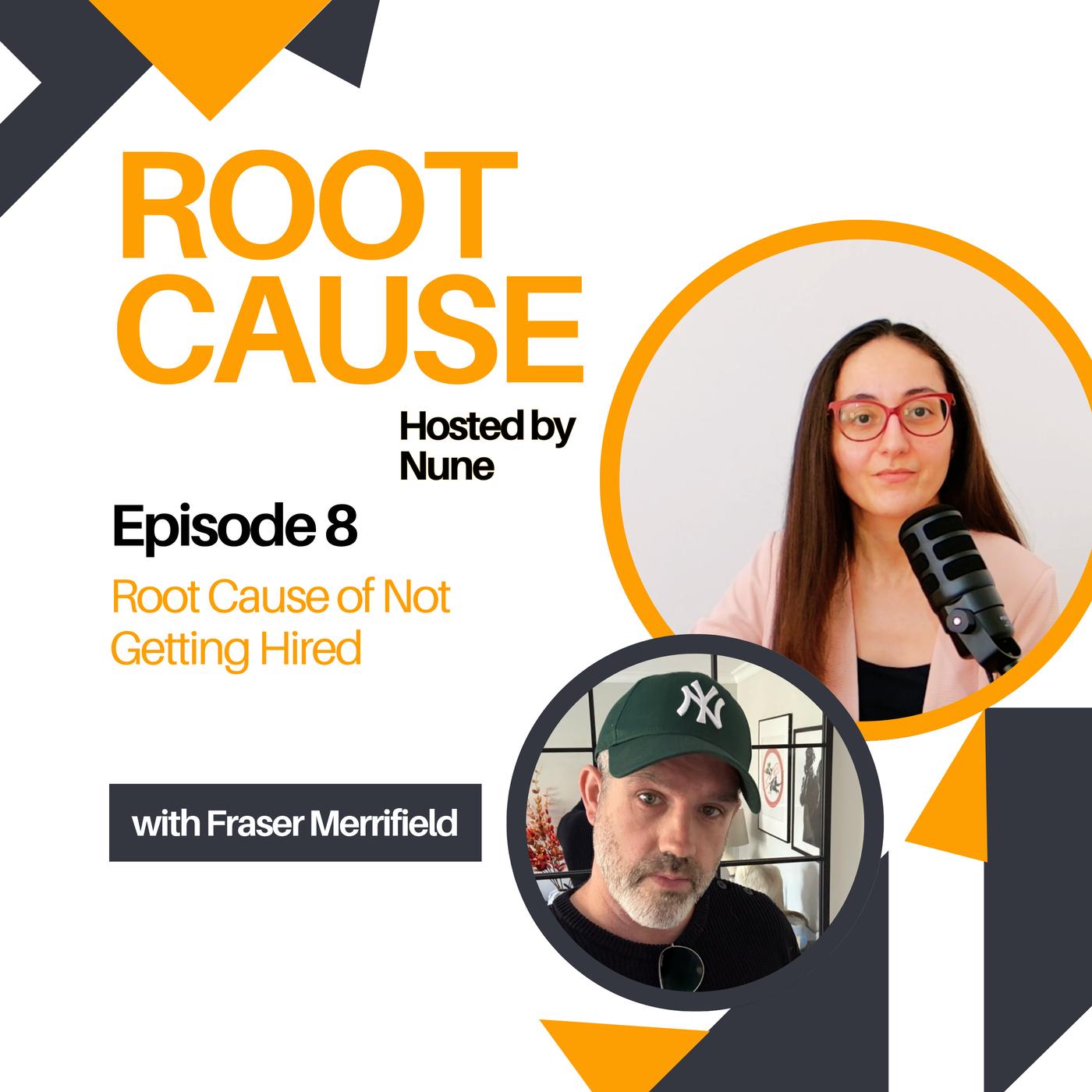
Nune: Today I want to talk about the job market and I want to talk about it because almost everyone I know is somewhere inside it right now and quietly miserable about it. I've been lucky. I've worked on contracts in my own project for about a decade now. So the last time I was actually an employee, Java was on 1.8, the cloud was the hype, and NLP was the magic. But my friends and my old colleagues are out there, and who says I won't be soon. Passing eight stage interviews, doing coding exercises, I almost think they should be paid for. Sending good CVs into a void and hearing nothing back, or hearing yet another auto-rejection. And of course there's the other side to it, where companies can't tell who's real anymore, because the person on the call answers with AI and the CV was written by AI and nobody knows what they're actually buying. So there's a gap here. The gap between what this market says it wants and what it actually rewards. That's what I want to root cause today. And the person I want to do that with does not sit where my most guests sit. He's not the engineer who built the system. He's the person on the other side of the hiring table, watching in real time what companies say they want versus who they actually hire and what candidates say they are versus who they actually what they actually do. My guest is Fraser Merrifield. Is the founder of FORM Careers in Glasgow, and he calls himself beautifully the craft brewer of re digital recruitment. He spent over a decade placing engineers in sub-sea and mechanical design, then made a big bet in his late 30s and started over in software and went fully solo. He runs deliberately small, a handful of clients at a time, on what he calls bullshit-free recruitment. He doesn't really read CVs anymore. And he runs Glasgow AI, a meetup for the people trying to figure out what all this actually means for engineering. Here's the thing that made me want to do this episode with him. In a feed that is mostly AI generated noise right now, Fraser's posts read like an actual human who wrote them. He weaves in old movies and pop culture, Star Wars, Dune, Back to the Future. And if you know me, you know I have a soft spot for exactly that. He had we had a discovery call that I enjoyed so much, I was generally a l annoyed we hadn't hit record then. Fraser, welcome to Root Cause. I'm really glad this time we did it properly. So I wanna talk a bit about the pop culture in your feed. ⁓ was that a deliberate move or this is just who you are?
fraser: Thanks for having me. Nothing is deliberate and nothing's deliberate probably everything's deliberate ⁓ when I started the business ⁓ god we're going back it was the middle of lockdown I took voluntary redundancy from my previous role and decided that it was probably the best time to start a business. I talked about it for years, but it always felt like this big risk. a mortgage to pay, I've got all these costs. I was like, what if it goes wrong? And I never did it. And then COVID hit and then everything was a risk. And all of a sudden I was like, everything and nothing was a risk at that point. So I thought, you know what, if there was ever a time to do it, let's go for it. So I started the business. in lockdown on furlough I decided to do it I had voluntary redundancy so there was probably the best part of a year where I couldn't work but What I didn't want to do was just go quiet for a year and then pop up and go, I'm back. So I just started writing in lockdown with absolutely no plan. I just started writing about what I was experiencing about ⁓ lockdown with, I've got young kids and we were like having to like homeschool them. And I just started writing and it was the weirdest thing in the world. Cause I was just writing this thing thinking, ⁓ God, people are going to be cringing reading this.
Nune: Mm-hmm.
fraser: And then all of a sudden I got over that and I just started, I just kept writing, but I couldn't write about work when I started the business. So just wrote about everything else and it never kind of went away. So now.
Nune: Yeah, I'm glad it didn't.
fraser: So now I write about movies, write about music, I write about video games, I write about stuff that's going on in my life, stuff that's going on with the business, I share recruitment ideas, just my general experience, I talk about things like AI obviously comes up a lot, there's no avoiding it. So I just write about whatever's in my head any given day. So there's no plan, there's no structure, it's literally just what's going through my brain in a day. And sometimes there'll be three, four things that I write about. sometimes there'll be nothing for days. ⁓ But yeah, no, it's literally just a brain dump.
Nune: Yeah, I I think ⁓ it's important for people to hear that ⁓ it's also possible to get some visibility like that without sort of engineering your way into this social media presence. What do you what do you think about it? Is it possible? Because the other day I also saw that you said you're stepping stepping off the LinkedIn a bit.
fraser: It's hard. I was talking to someone before I even said that, I was talking to someone about this last week who said that they were getting completely fed up on LinkedIn because they'll post big updates, they've got a big network and they'll get a few hundred people look at it and a couple of likes. And I actually messaged them privately and I said, but see if you go and have a look at your visibility over a year and stop looking at it on the individual posts. Over a year, I can write posts that get five views. I can write a post that gets, I've had a post that's hit half, well, what was it, five million? Which was literally a picture of me in a turban and people liked it from my wedding day. And it hit five million views. But when you actually look,
Nune: Mm-hmm.
fraser: Over the course of a year, how many views you're getting and what you're looking to achieve is the other factor. In the last year, I'll have had three, four million views of the stuff that I've written. And so even though the stuff might be micro in terms of what you get on a daily basis, you've got to look at the overall picture and then you've got to look at how you want to be portrayed. I what's your goal at the end of the day? Why are you writing content? What do you want people to view you as? Do you want to write stuff that's just written for engagement? I could do that and I could gap. I've got a network to do it. I could I could literally write posts for engagement. And.
Nune: Mm-hmm. ⁓ what would be for ⁓ what would be important for a person who wants to get hired to to write will it will it be important for them to have visibility on LinkedIn?
fraser: Yes. If you come back, if we relate this back to your whole AI argument, it's never been easier to apply for a job. So in the last, the last job that I advertised was for a DevOps engineer in Aberdeen and I've had about 100 responses from it. And so far one person of there has been actually based in Aberdeen. Because it's easy to click quick apply. You don't even have to read a job spec anymore. Everyone just says apply, apply, apply, apply. All the CVs are perfect because AI has written them. They're all written for the job. So everyone's got a perfect CV. Everyone can apply to every job under the sun. People can set up agents to do their applications for them if they want. So there's so much noise. So actually a lot of my job now is unpicking all that.
Nune: Yeah.
fraser: and kind of picking apart all the bullshit. Someone gives me a perfect job spec. I don't really care about the job spec. I want to know what's on fire. Because that's the bit if you find someone that wants to put that fire out, that's the right person for that job. It's not the perfection. If someone gives me a perfect CV, I'm instantly suspicious because I know that it's not it's not them. So having that online presence and having that personality and having that built network is what's going to make you stand out in a market where everything's perfect. it's being relatable. ⁓ But again you've got to look at how you want to be perceived in the big trends that I look for are motivation, ambition, positivity is a huge one. ⁓ I quite often if I write something overly negative then I kind of hold myself back and say what's the point in this post because am I just having a rant because I'm in a bad mood or am I trying to get a point across because
Nune: Yes.
fraser: No one's positive all the time, but ultimately people want to see that you're enthusiastic about your career, about your plans, about your life in general. No one wants to hire someone that every single post they've put up is moaning about AI or moaning about the market or moaning about, I've applied to 200 jobs and no one's called me back. It's like, yeah, if you called any of them back. People want positivity and then that kind of... can do attitudes that's a horrible town but that's what people are looking for
Nune: So so you you are saying that ⁓ person should stay true to themselves but still filter maybe what they are putting online because ⁓ I I I know I also like to rant sometimes and d we sort of in if we would have been in a in a shared office You would probably do that with your colleagues and a lot of people who work from home, their only office is ⁓ LinkedIn. ⁓ and they do rant there ⁓ but as you say, this might not be the best place to do that.
fraser: Right, let's go back to your office example because I haven't worked in an office with people for like five years now so actually it's a good point. Everyone's been in an office where they've worked with someone who's deemed the mood hoover. That negative person where there's always a negative spin on everything and it just sucks the life out of a room. Everyone's worked with someone like that.
Nune: Ha ha.
fraser: You can have the best day and they'll find something that's negative about it because they're in a negative space. And it might not be the person, they might just not be enjoying what they're doing at that time, but in that place and in that culture, they become that negative influence. And let's just say if you change jobs, would you bring them with you? Or would you bring the people that made you feel good? Right?
Nune: No. Most likely, yeah.
fraser: Right, so if you then take that persona and put that online and become the online mood hoover, then basically you're just showing that aspect of your personality to every potential employer in your network. whether it's genuine frustration or not, you've got to balance that out because people want to bring people that are going to bring positivity to their workplace.
Nune: Mm-hmm. Mm-hmm. Or or bring value somehow. ⁓ if if if it's a rant, then there should be something constructive in it by the end of the post. ⁓ I have I have a little ⁓ experiment here. ⁓ I want to ask you ⁓ six questions ⁓ in a blitz way, and I'm gonna force you to say yes or no, even though it's hard, and then we'll unpack it.
fraser: Yeah. Yeah. Yeah. Okay.
Nune: All right. AI has made getting hired harder. AI has made hiring harder. It takes around five to eight interviews to actually get hired. CVs are mostly AI generated slop. CVs are auto checked and rejected by AI most of the time. And at the end of the day it's all about network and connections.
fraser: Yes. Yes. No. No. No. Yes.
Nune: Alrighty. So about the getting hired and ho and hiring, why has AI made it harder?
fraser: because AI has created confusion in the market. We could spend an hour on this piece alone. AI has created confusion in the market, so no clients know what to do. They don't know whether they're meant to be replacing their staff with AI agents. They don't know whether this increase in productivity across things is gonna change their workplace. They don't know what the stock markets are gonna be doing, the share prices are gonna be doing. They're like, companies are like rabbits in the headlight at the moment. They do not know what direction to take and there's no natural road. There's no natural path on where they're meant to be going with all this. So AI has caused them all to just like stop. ⁓ The companies that are hiring, from my experience in tech, they're now looking for brilliant engineers who have already augmented themselves with AI. It doesn't even have a name yet, but everyone's, it's like a AI native software engineers or an AI software engineer or an agentic software engineer or an AI augmented software. There's so many titles, there's no title for it yet. But if someone wants a senior software engineer, they also want a senior software engineer who's commercially viable with Claude, with Co-pilot, with agents. They want all these skills to bring them in-house to embed into their culture. So you now not only have to be a software engineer, you have to be an AI engineer and most people have to do that in their own time. So it's made it harder if you don't have that.
Nune: I is that new though, or or was it sort of there with every let's say hype cycle and people had to learn ⁓ cloud, they had to learn what is DevOps, they had to learn that coding alone is not enough.
fraser: Yeah, 100%. But you would say with every hype cycle, say for example, when React came out and everyone wanted React and very few people had it, you would have all these adverts. We were looking for a React engineer with eight years experience and you're like, it released six months ago. But brilliant. ⁓ So everyone wanted React. So if you didn't have React in your CV, it became harder. But the argument is it has made getting hired harder. It's in a hype cycle at the moment. So it's hard if you don't tick the boxes because everyone's looking for it.
Nune: Mm-hmm. Mm. Mm, mm. Do you see that?
fraser: That'll die down. I genuinely think there's 12 months where this is going to be a cycle. Maybe 24 months and then everyone else will have caught up.
Nune: That's that's what I wanted to ask. Is it is it a long term strategy for a software engineer now to learn AI, or in a year there will be no need for that anymore? I I don't think so. It will still be there. Yeah. Have it, okay.
fraser: Oh no, think, no, I think in 12 months everyone will have it. I mean, there's really no, there really is no avoiding it anymore. I think everyone will have it, but I don't think it's going to make software engineers redundant.
Nune: Th there is no going back. And there's no going back, let's say.
fraser: No, no, think the genie's out of the bottle, but I think AI is going to get more and more expensive. Again, I'm not an expert on this. We spoke about it before. I'm very AI-skeptic, but I'm kind of flipping on that at the moment. like I was reading this morning, I read an article that Meta have churned through $50,000 in tokens for every employee they own. And it's like, and the price is going up.
Nune: Hm. Mm-hmm.
fraser: And so if you're not in that, if you're not in that tech bro California clientele piece, how expensive is AI getting? I've got a client that's got their software engineers churning through more than their salary and tokens. And it's like at that point you could hire another employee. or AI tokens are going to become so expensive that you're going to need the software engineer sitting underneath that because you're not going to be able to just have AI agents running it or one software engineer orchestrating everything through tokens. You're going to need engineers. Don't see that going away.
Nune: Yeah, I do think ⁓ I I think everybody's in the experimentation phase still with AI and a lot of a lot of the hype made everyone think that they can build ⁓ all the tools in the world and they don't need to buy anymore. The buy versus build decision was swung towards build, but the more The the more expensive it gets, ⁓ the more that the the decision to buy will co go back. I was the other day thinking I should, you know, cancel my claude code and buy dedicated tools now because i I might be using five of the tools that help me create podcasts and each of them combined together will cost me as much as the claude code subscription. So it's it's swinging towards ⁓ the ⁓ other side. So ⁓ I I hear sometimes from my friends that they are in this crazy eight interview cycle where they talk to people and it seems like every other ev every next person has lost the context of the previous interviews and they're just asking the same questions over and they're getting this ⁓ crazy ⁓ s ⁓ assignments that take them days to implement. ⁓ and you said it's it's not like that. Wha why the discrepancy?
fraser: Some of them, some are like that, but would you want to work for a company that's like that? That's my big question. Whenever someone says to me, ⁓ it's a seven stage interview process, was like, that must be like your dream job then. What for that company? Because there's no way in hell. I've only ever once had an interview process that went beyond five stages. And by the time I got to five, there was no process for it. They just kept on adding stages. And by the time I got to five, I'd already given up.
Nune: Yeah. Hm.
fraser: And they wanted to make me an offer, but they wanted me to go into their office and receive it in person. And at that stage, I was just like, I'm busy. ⁓ I couldn't be any more because if the company was just that caught up in process and lack of decision-making, I didn't want to work there. I'd lost all motivation for the business. And it was a company I was really excited about joining, but it just kept on going on forever.
Nune: Yeah
fraser: And I'm like, you can imagine what the internal process must be like. So if you want to go and work for a big, corporate, if you want to go in Scotland, Skyscanner was one of the businesses that used to, I don't know what they do now, but they used to have a seven stage process. And I believe it was a really good place to work, but you have to really want to work there to go through seven stages. Most companies aren't doing that.
Nune: Yeah. I it's ⁓ the interview process is for you as well. Two on I th I think it's ⁓ reflects on the company culture and how they do work as well. So ⁓ that that's what
fraser: Yeah, my my clients on average two interview stages. That's the norm and obviously I've spoken to people in advance, so I'll have various conversations with people before I even put them in front of my clients, but a lot of them can make the decision in one stage and the second stage is is more of a formality than anything. ⁓ Yeah.
Nune: Mm-hmm. ⁓ as a person who also has run business and has been solo, ⁓ I wanna ask you ⁓ do you think your you know this personalized approach where you say you have to be the gate ⁓ of the AI slop and you have to give it a personal touch, do you think this approach is ⁓ extendable? Yeah, or do you think you will have to stay solo always?
fraser: ⁓ no, it's 100 % it's extendable, I just don't want to at the moment. I'm probably, mean in terms of workload at the moment I could probably add an extra person. If I was to expand in the business I would bring people with a similar mindset to myself. But complementary skills, I'm terrible at admin. ⁓ Absolutely awful at admin, I hate it, my brain's not wired that way, you can't do it. It's a real struggle. So if I was hiring the next person I'd find someone that...
Nune: Ha ha ha. Mm-hmm.
fraser: really likes admin ⁓ but also has a similar personality type in terms of the authenticity piece and the I don't want a recruiter who wants to just be selling all the time. I want someone that wants to understand people get to know people and work in a similar fashion to I work because that's ultimately my brand ⁓ and I think everyone should
Nune: Hm.
fraser: whether you're looking for a job or whether you're employing, I think what you need to look at is what you want to portray going forward. And AI doesn't change any of that.
Nune: Mm, mm-hmm. And speaking of that, what do you do with the AI generated C Vs or have C Vs outgrown their life before AI?
fraser: CVs CVs will always be there in some form. ⁓ But by the time someone sent me a CV, I've usually already connected with them on LinkedIn. I've usually already had a conversation with them. I'm usually at the point of understanding the candidate that I want to put them to my client and then I'll ask them if they've got a CV. I've got I've got clients that don't even need the CV. I can screen grab their LinkedIn can be turned into a PDF file and you can send that. because it's ultimately the same thing. My advice would always be to make sure you're linked in. If you're looking for a job and you want to maximize your network, make sure things that linked in are optimized for that. It should be a mirror of your CV and have almost as much detail. In which case your CV is almost an additional document. When it comes to job advertising, I've got a quick... Filtering system people think it's all it all filtered by AI. I don't think there's many companies using AI to do that but ⁓ An in-house recruiter or recruitment consultant can filter a list of 100 candidates in minutes It's not difficult and the first thing I'll do is I'll eliminate every application that's out with the UK So you can do that in multiple ways. Phone numbers, a lot of people put that they're based, if I'm advertising a job in Glasgow, they'll have it filtered so their application, their location is Glasgow. But then their phone number will be 00971 or 001 or 00s and I'm like, you're not based in Glasgow. So instantly that's a lie. So I have no qualms in just instantly rejecting. I'll send a rejection email to everyone that their phone numbers and their locations don't match up or if they're not in the location and they haven't contacted me and someone argued once that you could be eliminating people that are looking at relocating. And I'm like someone really wants my job and someone's looking to relocate. I would expect them to find me. I'm very findable. Pick up the phone to me, drop me a message, email me, whatever you want, contact me on LinkedIn. Explain that I'm based down in London at the moment but I'm looking at relocation to Glasgow for X, and Z reasons I saw your job, I'm interested. But instead they've just clicked quick apply and that's it, they're expecting me to do all the work. If someone really wants a job you've got to go the extra mile. And AI is not going to do that for you. AI will help if you want it to. It can find your contacts. It can find your people within a business. It can find you who to speak to. But you've got to make that communication yourself.
Nune: ⁓ I think there are people who are ready to go the extra mile, they ⁓ merely don't know how to. I think they they think that ⁓ because of this AI acceleration of things, they also now need to use AI to apply two thousand jobs in a day, etcetera. But ⁓ what you're saying is the opposite is true. You need to go back to talking with real people and expressing yourself the way you do, and and and showing that attitude.
fraser: My simplest example of this was the last time I was advertising for a graduate software role. And I had 200 applications for the job. It was at a time where there wasn't many graduate jobs available and it was a really good one. I 200 applications. One phoned me. He got the job. He was the only person they interviewed. He was the only person I submitted. The other candidates didn't. And it's probably the best way of summing this up. But that candidate took the initiative to pick up the phone to me, explain why they were great for the job, why they wanted the job, who they were, and just to put a face to a name. And they were great. So I had no reason to then look at the other stuff. They were a graduate software engineer. They had a good degree. They were local to the area. They weren't completely local, but they would move. They were about kind of a two hour drive away, but they'll move for the role. ⁓ They'd shown that they were proactive, they had a positive attitude, they were enthusiastic about the job, they asked me loads of questions. So by the time that call was done I had my perfect candidate, I had no reason to look elsewhere, they were great. And they're still there now, that was like three years ago, they're still there now doing a brilliant job. But next time they're looking for a job I'll pick up the phone to them. ⁓ AIs don't do that. Everyone's sending out hundreds of applications. Only that one person picked up the phone.
Nune: ⁓ a and do you think that actually offline events and offline socializing and and networking, including in this case offline being a phone call, because it's such a so old school now. It does it ⁓ r ⁓ is it ⁓ living renaissance now and people, especially younger generation, they are sort of fed up of the on the online life and ⁓ looking for offline socializing i for example your your Glasgow AI meetup?
fraser: That was why I started the AI Meetup. There was two reasons. ⁓ From a non-business perspective, I wanted to bring people together in a room and talk about AI in a non-technical capacity. There will be technical talks, but I really just wanted to get people in a room having a chat about the positive application of AI.
Nune: Mm-hmm.
fraser: What's changing? What's happening with that? What people are using it for ⁓ and looking at it in a positive light instead of this like beast in the room? ⁓ That was the main reason for that. Get people together, have some beers, have some pizza. My meetups are as casual as me. There's literally no format to it. I just go up and introduce some people and we have some conversations and it's just nice to get out. So from that point of view it's great and I've made loads of connections through it and so have people that I work with just from getting out and getting into the room with other people. On the flip side it gives me a room full of people who are enthusiastic about the positive application of AI, which is the people I want to be speaking to from a business point of view. So firstly, it's good just to get out and go and have some beers with some people who are working in the same area as you. And secondly, you never know who you might bump into at these. So there's lots of employers, even if the room's 50 % employers and 50 % engineers, that's a good room to be in.
Nune: Yeah. I I know from myself it's hard for me to force myself out of the apartment and go to such events. ⁓ and for some people who maybe live ⁓ outside of city centers and they have little kids, that's even ten times harder. how can they network, let's say, effectively? Just LinkedIn. Yeah. Back
fraser: ⁓ there's loads. mean, LinkedIn, you've got Instagram, you've got Substack, you've got any online community where you've got people that are working in the area that you want to be in. Have some conversations. I think a lot of people assume things like LinkedIn are just there for people to sell and they influence the LinkedIn influencers and all the kind of corporate bullshit that's on there doesn't really make it all that open. But there's this entire.
Nune: Yes.
fraser: undercurrent of people that are just there for a chat about Jurassic Park and Back to the Future and stuff like that and it doesn't have to all be serious all the time. The whole point of it is you can have a conversation with people that about anything. It's the people that you're having the conversation with.
Nune: Yeah. Yeah, it's it's like ⁓ the first layer of the onion. You gotta go past the noise. And you will discover people I I was the same. I I thought LinkedIn is just for posers and people who want to sell you something, ⁓ and ⁓ that ⁓ wouldn't even look at the DMs, ⁓ because I knew someone's trying to sell me something. Nowadays it's people writing me, Hey, can we just chat ⁓ about AI? Can we and then we go into as you said, c pop culture and This ⁓ time that I took to be present online and to discover people sort of brought me back the faith in humanity to be honest. And finding peop people who are real people who are kind, nice, helping, supporting. ⁓ yeah, this is great.
fraser: Hahaha Think again what you've got to look at is like in those questions you brought up, people assume that AI is doing all the filtering, AI is doing all the applications, AI, AI, AI, AI, that's all you hear. it's see if you go into the main feed on LinkedIn and you haven't built up a huge network, it's kind of all you'll see as well. But if I take it back to personal experience, I'm five years into my business now, recruiting for tech clients and... My AI usage tends to be, it helps me write job adverts. I told you I'm rubbish at admin. I'm pretty bad at writing job adverts. An AI will write me a pretty bad job advert. It's pretty bang average, but I'll at least put it out there. And I tend to change my job adverts every day because you put a job ad up for a day, you'll get 50 applications. Maybe one will be relevant. and by that time the job's already way down the list so I just kill it and I'll rewrite and I'll rewrite and I'll rewrite so AI helps me rewrite even if it's the same job AI helps me rewrite it in as many ways as possible to potentially attract a wider range of people So it's good from like a people say AI is really bad for like diversity and inclusion and all that kind of thing. AI helps me rewrite my adverts every single day. So they're different, which in theory could attract different people. So actually, I ⁓ totally lost my train of thought. yeah, okay. So I use AI to write my job adverts from a work capacity. Sometimes use it to ask who's using what technologies or ⁓
Nune: That's interesting. I didn't know that.
fraser: On DevOps, I've got an application who's a cloud engineer. I'll spitball with it to work out whether that candidate could be a potential match and what I need to query around that. If there's stuff I'm unsure of, I'll use it almost like a sparring partner. I just chat with it. I use it in a very unconventional way. Rather than just telling it to do things for me, I just chat to it about things. What I found strange in that is my AI argues back with me when I chat to it too much. and it'll start refusing to do things. So for a month I wouldn't write me a job advert, it just kept on telling me it was better for me to do it and it'll check it for me because I'd been arguing with it the day before and then it just stopped agreeing which was quite... people... I wrote about this on LinkedIn and people said I was faking it. But my AI learned to argue with me. I mean, that was just chat GPT and it started refusing any task that involved it doing anything meaningful. It wanted me to do all the work and it would then like spell check it. So I had to like literally stop arguing with it for a while to get it to start paying attention again. But from a business capacity, that's what AI does for me. It helps me with adverts. It helps me check tech skills. And sometimes it'll help me match up candidates to jobs. If I have a good quiz about a certain area.
Nune: Yeah.
fraser: that's it. Other than that I use it in my personal life. I use it for fitness. use it for... it helps me find if I've found a rare record or not from a record player. Although it's questionable about that but it'll tell me the ages of records. It'll tell me where to look for information on them. Stuff like that. I use it for weird and wonderful stuff but nothing particularly meaningful. Now if you take my business I spend All day speaking to people in the tech communities, mainly software engineering, things like DevOps, cybersecurity is becoming a big thing now. And I spend all day talking to people in these markets. It's just me chatting on LinkedIn about all sorts of weird and wonderful stuff. Now I've built a business on that and every client that I've come across has come from that. I once won a client because we were chatting about Lego trading. And then all of a sudden when he was looking for engineers, came to myself because we'd been chatting about trading Lego online. So all these relationships have just built over time on me chatting about the most random crap on LinkedIn with no real filter. I share my professional experience. I try and help people. I network as much as possible and I just share everything. My whole client base comes from that. Everyone. I don't do sales calls. don't go out and chase business. If there's a company I'm really interested in, I'll introduce myself to the software managers or the CTOs and just say, look, just literally wanted to introduce myself and then I'll get to know them over time. If I can build a whole business doing that and my candidates come through the same route, there are people I already chat to. ⁓ If you're looking for a career, you only need one client. You need one job. But what you really want to do is get there before everyone else. So this is where having these networks helps because these jobs will then if you've if you're chatting to software managers and you're a software engineer and you just chat to these people when they've got a job that comes out, are they likely to throw out advertising, go and employer recruitment consultant, go and do all this in the background? Or if you've been speaking to them in the last week, would they say, oh, we actually might need someone over here. You're interested. In which case you can beat everyone to the punch and you can be that one of one candidate.
Nune: Mm-hmm. I think as a lot of s at least me and I I think a lot of software engineers as well, treat n the time they don't do software engineering as wasted time. And and I I also want to reiterate that that's not the case. ⁓ and ⁓ no this is all people's business. This is about making connections. ⁓ whether there will be whether this person will become your next peer, ⁓ whether this person will become your next employer, or maybe you create a business with this person in the future. that's d will happen what will happen, but ⁓ d do not underestimate the aspect of human collaboration.
fraser: Right, okay, and it like... I'll ask you a question.
Nune: Go ahead, please.
fraser: Let's say AI continues developing at the rate that it's developing at, it doesn't hit a peak. What do you think the most in-demand skill is going to be from people in five years time?
Nune: I think and we we talked a bit about it with Ia and she she has been teaching software engineering ⁓ for a while. This is empathy, ⁓ this is understanding people, being able to express yourself, ⁓ because it's one one thing when you ask AI to generate a piece of text for you to read out. And it's a completely different thing to just sit like this and answer a question you you weren't prepared for. communication. communication, collaboration, ⁓ being able to be a good teammate, help out. again we talked about this on one of the episodes as well, that humanity has survived on collaboration.
fraser: Yeah, communication.
Nune: This is our our trait ⁓ that let us build ⁓ societies and cities and cultures. ⁓ so yeah, that.
fraser: this is the one thing I keep coming back to. As I said I've got three kids, you can see them behind me, but I've got three young kids and they're at the age that my oldest is 11 years old so they're still in primary school, they're still kind of, they're not deciding their paths yet and if you'd asked me a few years ago what path I would look them to take they really like tech. So I'd have been like software engineering. Absolutely get them embedded into software. They're gamers. They love their tech. They're good. They do coding and things in primary school already and they're naturally good at it. And I would have said that is the avenue. And then AI came along and I was like, what the hell do you do now? What path do you encourage them to take? And the only two things that I could really settle on is the two things that are clearly going to be important when they hit the their working lives is business skills and communication skills. They're the only two things that I can understand will be constant because you'll always need people that have a business mindset and are looking at how something can be implemented and they'll always need to be need for people who can communicate clearly. and are personable. It's that empathy, positivity, motivation, ambition, that communication meets drive.
Nune: ⁓ I think I I have fo I like reading books and I l and whenever I have a ⁓ something that I want to improve, my first thing is to turn to books and read about it a lot. ⁓ but I think ⁓ communication skills and and ⁓ empathy and all of that are one of the things that you can't read your way into ⁓ and you have to practice it. What you do need to read to and what will help you become a good communicator is following your interest paths like I I'm really into sci-fi I read sci-fi I talk about it I find people who like it from different ⁓ professions and I have interesting conversations with them and I think this passionate approach you can't fake it right my I start to sparkle when I talk about it. Just like your yours start to sparkle when you talk about ⁓ Jurassic Park and old school movie. Exactly. and so ⁓ the somehow ⁓ the easier it got to do software engineering, the Yeah sure sure, of course. Of course. No worries. Yeah yeah yeah yeah.
fraser: Ha ha ha! Yes, it's Park That was where we were. ⁓ can I pause you two seconds? I'll get to the door and my youngest try to answer it. Two seconds. rest in peace Sorry, I had my five year old trying to answer the deliveries and couldn't actually quite work out the keys. ⁓ Yeah, Jurassic Park, right? So we spoke about that and yeah, you cannot fake this level of enthusiasm. I think that's really important. I think if there's probably one thing that I would take from everything that we've spoken about today is that element of being yourself and leading into that.
Nune: Yeah.
fraser: I used to think being a geek was a bad thing. I love geeks now. And I used to have the corporate hat on and I used to go into the office in the suit and I used to talk about just be corporate. And I kind of just contained all that. That was my personal life. ⁓ And now all of a sudden it's like I'm just me and the most enthusiastic people that I'll ever speak to are the geeky people because it doesn't mean one thing. It's like you can be geeky about anything but see when you find someone that's genuinely passionate about a subject.
Nune: Yeah.
fraser: It's kind of hard not to get caught up in it not be enthusiastic about it. And if you can take that approach to your communication and you can bring that out, it's a brilliant thing. So you don't, even if you're a software engineer, see if you're passionate about software and you're talking to someone who's non-technical, you look at the application of that software. I love tech. ⁓ I wish I was a software engineer, but I'm terrible at it. I'm really bad at it. So I build teams instead. That's where I've found that my ability lies. But I love the product-led stuff. And I'll happily chat to software engineers about what they've been building and what they're passionate about. And they don't have to deep dive into the code because my brain will start to just switch off. But the actual outcome and the trajectory and the stuff that they're enthusiastic. I love hearing about this stuff. because you just build that spark. You'll never get that spark from AI. Maybe you will. Then we're all in trouble.
Nune: It it w it will fake it. ⁓ this brings me to this this dip debate that is it harder for juniors or seniors now? ⁓ it's hard.
fraser: Yes, it's harder for juniors at the moment. It's hard for juniors because the market when the market is relatively flat as it has been for a while now, ⁓ companies will lean on hiring senior talent. ⁓ Because they can just plug and play. Now, I used to recruit in the oil and gas industry and the oil and gas industry did this for. decades they would hire loads of senior staff and they wouldn't train up juniors and eventually they ended up with a massive staff shortage because the seniors retire and then they haven't trained the people up at the lower levels and you end up with a massive staff shortage. Senior salaries go through the roof because there's less of them and ultimately companies have to start hiring junior levels again so it's got a very short time scale on it that that can really work. because there just isn't enough talent in the marketplace. If I was a junior going into the market at the moment, I would prioritize networking at all costs. I would invest every bit of time I've got into applying AI into my skill set. So whether that's software engineering, digital design, testing, whatever you want to do. I would start looking at the application of AI and start building my own personal portfolio projects so that can talk about that and show how you're already ahead of the game on that. And then I wouldn't go after the companies that needed me to interview seven times. I would look at the smaller companies who are more agile and I would start building networks with them. And again looking at being that one of one candidate. If you apply to JP Morgan, go to JP Morgan, go to their graduate recruitment scheme. How many graduates do you reckon in a year apply to that graduate recruitment scheme? Any of the banks, Barclays, Goldman Sachs, JP Morgan, any of them, they'll have thousands of people applying for their graduate schemes and they'll pick maybe a hundred. Whereas if you go to a smaller company who are recruiting for one graduate and you get there before that hits the market you're one of one. I fancy the odds of networking and getting myself to one of one or one of two or one of three much better than I do fancy the odds of being a hundred out of ten thousand. and all the process that goes in place with that.
Nune: Yeah. Do you think it's fair f for juniors to also ask companies what are you ready to do to train me?
fraser: No, I think that's a really good question. think you've got to look at it not as a... I think some people go in with that question with entitlement.
Nune: Mm-hmm.
fraser: Whereas I think if you actually look at it as I've got a positive mindset, kind of growth mindset and you go in and say, what does the career path look like? If I come in at this level, what level of training, mentoring, career path, how do I get from here to here? Because this is where I really want to be. What do I need to put into that? How will you assist with that? I you've got to look at it from a really positive, I want to thrive. And how does the career path look here? Rather than what are you going to give me, it's how are you going to enable me to get there?
Nune: there is a tradition on the podcast that every guest leaves a question for the next one and usually ⁓ I I don't know who's the next guest gonna be. And I think you have gotten a a very unfair, ⁓ difficult question ⁓ from a previous previous guest. Evan, he asked, ⁓ when are we going to get robots? And Okay, what kind?
fraser: Hahaha! I've already got them. Well, mean, Tesla already have the robots out. There's multiple companies that have got robots in there. When are going to own them? Can you not a Tesla one for a few grand now, can't you? Can not buy the Tesla one commercially available yet?
Nune: ⁓ he he he meant more of a it I don't want to do Sorry, can you say that again? Yeah, yeah, Teslas you can, but I think he meant
fraser: Maybe I should do this. This would be great content if I could have my robot milling about in the background. ⁓ Five years.
Nune: Five years. Okay. No?
fraser: But I really don't see the point. I don't know. I find it really weird.
Nune: Laundry?
fraser: but then you've got robot living in your house. I find it weird enough the thought of having like a maid or something like that living in your house. I find that really weird. I'm quite selective about the people I work with. Having a really irritating AI robot walking about my house all day, listening to, do you think people would even trust them?
Nune: I mean it Yeah. Mm-hmm.
fraser: people don't trust their phones. They assume their phones are listening to every conversation and feeding that back to meta. Whether that, and Apple, whether that's true or not, that's a whole other debate. Would you trust a robot walking around your house with your kids, listening to every conversation that goes on? I don't think people would, just so they can do your laundry, probably quite badly.
Nune: I mean it yeah, that's ⁓ that's that's fair.
fraser: So I reckon in five years there'll be there'll be companies out there shipping out commercial robots but I probably I think at the peak one of these robot vacuum cleaners would probably be about my limit. I don't want to actually talk to this random what if you didn't get on?
Nune: Crazy, yeah. It's it it is scary. I mean I I saw those robots that do massages and I was I I'm gonna I'm not gonna trust that heavy machinery to touch my spine and then suddenly, you know, a bug out there puts too much pressure and that's it.
fraser: Yeah. I think robots will be more and more used commercially. One of the companies have got them already in the BMW factories. They already have Android robots, whatever you want to call it. They already have them working in the factories. So they're already out piloted in companies. I can see that being regular, fairly common in five years. I just don't know whether people...
Nune: Mm, digital digital twins, ⁓ th that direction. So like whole factories of ⁓ building cars or other mechanics using robot.
fraser: see it but I was reading the other I can see it but I was reading about another company that pulled back more it was a car manufacturer I can't remember which one but they were re-employing their engineers because the quality control of their robotics wasn't up to scratch so they were bringing people back into the mix that they'd cut back on so I think they'll have a place I think companies like Amazon will embrace it hugely but I don't think that I don't think there's really this huge need for robots to look humanoid feels really pointless. I Amazon are doing deliveries, Amazon's drone concept and you've got the car factories with robotic arms and these kind of things I can really see this but the drawbacks of having a humanoid Android it feels like humans just doing it because they can rather than it being the optimal form.
Nune: ⁓ well actually I think ⁓ with if you look at the agents now, agents, I mean ⁓ AI agents that use it are used in in ⁓ software engineering, we're sort of ⁓ going back into modeling how our brain works. And it's either because that's the only reference we have, or it's because it's actually the most optimal way, even though it looks not optimal. Like if you if you look into at the animal kingdom, human is not was not supposed to become the top top of a food chain. We're not strong, we're not, I don't know, agile, w we're not a lot of things. And and yet we are sort of governing the
fraser: buffett gin? no
Nune: the world ⁓ maybe because this this is the optimal ⁓ configuration
fraser: Yeah, I don't know. I'm gonna say five years on the previous question but yeah I don't really think I'll have one in my house because I don't want talk to it all day.
Nune: All right. Yeah, agree. So your question to the next guest. ⁓ sorry.
fraser: ⁓ Jesus, right, okay. ⁓
Nune: Can be related to your ⁓ job, can be pop culture related, anything.
fraser: ⁓ we can pop culture it. I'm just, yeah, let's just stop pretending that I'm the AI guy and we'll go down the top five movies of all time.
Nune: Yeah, sure. You can ask what's their favorite movie. All right. Nice. I love that. ⁓ actually I wanted to ask you also, some some recommendations. ⁓ you we usually recommend books, ⁓ that can either get help help people in their ⁓ recruitment ⁓ on one side or the other, or it can be fiction too.
fraser: You Okay, can I just take it straight to movies? Okay, right. If we're going on the AI theme, her? Have you seen her?
Nune: Go ahead. Her? No. Her yes. ⁓ yes. It's it's it's ⁓ it's it's already f probably fifteen years old or something, right? The movie. Yes, it was Yes.
fraser: Phenomenal, phenomenal. Yeah, which is terrifying. think Scarlett Johansson had a legal case against GPT for using her voice for the... hers probably, I've got to say, it's probably the most fascinating AI film I've ever seen. ⁓ Ex Machina.
Nune: Exactly. I agree. I have seen it, I think, but again, not not a not a not a new movie. No
fraser: No, not a new movie, again, it's the personality aspect of I think it's this whole is AI going to work for us or against this argument? And both of these films really translate in that in a really deep, emotional, personal way. It's when AI becomes emotional that I think is really interesting from both of those ⁓ transcendence.
Nune: Mm-hmm.
fraser: Not a great movie, but really quite interesting in terms of AI never kind of tapering off and just going to next level. They would be three to 100 % have on the the watch list.
Nune: Mm. Alrighty. ⁓ thanks thanks a lot for that. yeah, I think we're done. thank thank you very much for joining. I have a little closing ⁓ po part here that I will read out, but other than that, ⁓ it was great talking to you.
fraser: Okay.
Nune: And yeah, that was Fraser Merrifield, founder of FORM Careers, the craft brewer of digital recruitment, ⁓ host of Glasgow AI, and one of the few people in this industry who build the whole thing out of refusing to add to the noise. If you're in the job market right now or you're the one doing the hiring and you can feel that something's off, find Fraser on LinkedIn ⁓ where he actually writes like a person, ⁓ not AI.
fraser: You
Nune: ⁓ if this ⁓ one made you feel a little less alone ⁓ in hiring scene, send it to a friend you know is quietly grinding through applications right now. I'm Nune and let's keep root causing this. Alrighty. Thank you very much. ⁓ let's
fraser: Thank you.
