


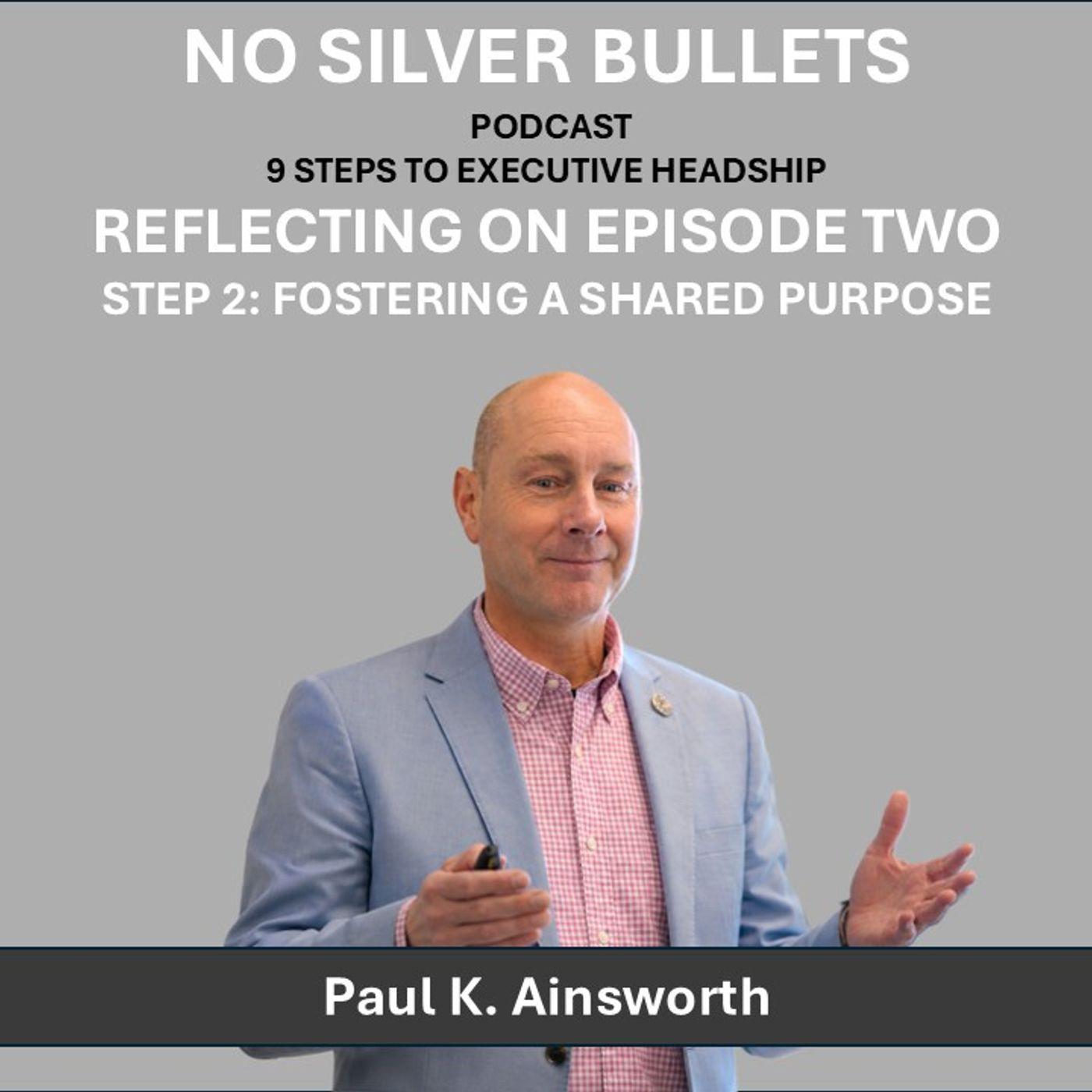
Paul Ainsworth: I'm Paul Ainsworth and welcome back to the No Silver Bullets podcast. Today's episode is a reflective one, a chance to pause, look back at the conversation with Dr. Coolvon Atwell and draw out some of the key learning from step two of the nine steps to executive headship, fostering a shared purpose. This is the kind of episode you can listen to on a walk or on the drive home, a space to think about leadership, values and the work we do across our communities. Speaking with Kulwan is always a privilege. He leads with such clarity, humility and humanity. And that came through in every part of our conversation. One of the lines that really stayed with me was when he said, If your values are aligned and you have a shared understanding of your purpose, consistency will follow. It's such a simple idea, but it cuts through so much of the noise in school leadership. We often chase consistency through systems, templates and monitoring, but Kullvarn reminds us that consistency is a consequence of shared purpose, not a substitute for it. Another moment that struck me was his reflection on modelling values. It's no good saying one thing, your actions have to reflect your values.
Kulvarn: and they were talking about how do you ensure consistency and were talking about monitoring and checking the children's books and I said that I'm more interested in consistency of values.
Paul Ainsworth: That distinction between espoused and theories in action is at the heart of step two. You can't tell a community what its purpose is, you have to live it. And finally is honesty about the emotional landscape of executive leadership. That line is a gift to every leader who feels the pressure to deliver instant transformation. It's a reminder ⁓ that fostering shared purpose is slow ⁓ relational work. The step two chapter in book expands on these ideas ⁓ and offers a framework for leaders ⁓ working multiple schools. A few themes that out. Shared purpose is felt not written. ⁓ Just like culture, shared purpose isn't a document, it's an atmosphere. As the chapter puts it, culture is the emotional climate of an organisation, the atmosphere people step into each morning. Shared purpose works the same way. You know when it's there, you know when it isn't. The chapter deliberately uses the word fostering because this is nurturing work. It's about building, tending and sustaining. You can't impose shared purpose, you can only grow it. The federation is only as strong as its weakest school. This is a really powerful moral anchor. There is no point in one school thriving and another is struggling. Shared purpose means shared responsibility. The chapter explores the anxieties that arise when schools come together. Fear of being done to. Worries about losing traditions.
Kulvarn: values. So it's no good saying one thing, difference between your ⁓ theories your theories in action. You might say, we are a really inclusive school and every child matters, but your actions might not reflect that.
Paul Ainsworth: Concerns about fairness and visibility, the sense of being the poor relation perhaps. Koolvaal's own experience at Upall illustrates this vividly. He said, You don't want Upall's staff feeling they're being told what to do. And you don't want Highland's staff thinking they're losing their head teacher. ⁓ These tensions are normal and they can be overcome through listening, visibility and relentless clarity of purpose. If you're enjoying the podcast series, I think you'll find step two, one of the most practical and reassuring chapters in the book. And as we move towards publication later this year, I'll keep sharing these insights with you. Next week, we move into step three, unleashing the capacity of your team. And I'm delighted to be joined by Donna Winters. Donna brings deep experience in developing a team of people across three small schools. In such situations, drawing on the capacity of your team is vital. Donna and her team managed this so successfully that they took a double RI school to outstanding in all areas. It's a brilliant conversation full of practical strategies and real world examples. So do look out for that episode dropping next week.
Kulvarn: You don't want up all staff feeling, oh, they're coming over and telling us what to do. And you don't want the Highlands thinking, oh, oh, you know, our headteachers not here. We're not getting the support we need because our pulls so low. The other thing is ⁓ you're not to turn the tank around. overnight and I think that's a mistake and that goes again to Steve Mumby. This idea that became prevalent in the 2000s, hero heads coming in turning
Kulvarn: and they were talking about how do you ensure consistency and were talking about monitoring and checking the children's books and I said that I'm more interested in consistency of values.
Paul Ainsworth: That distinction between espoused and theories in action is at the heart of step two. You can't tell a community what its purpose is, you have to live it. And finally is honesty about the emotional landscape of executive leadership. That line is a gift to every leader who feels the pressure to deliver instant transformation. It's a reminder ⁓ that fostering shared purpose is slow ⁓ relational work. The step two chapter in book expands on these ideas ⁓ and offers a framework for leaders ⁓ working multiple schools. A few themes that out. Shared purpose is felt not written. ⁓ Just like culture, shared purpose isn't a document, it's an atmosphere. As the chapter puts it, culture is the emotional climate of an organisation, the atmosphere people step into each morning. Shared purpose works the same way. You know when it's there, you know when it isn't. The chapter deliberately uses the word fostering because this is nurturing work. It's about building, tending and sustaining. You can't impose shared purpose, you can only grow it. The federation is only as strong as its weakest school. This is a really powerful moral anchor. There is no point in one school thriving and another is struggling. Shared purpose means shared responsibility. The chapter explores the anxieties that arise when schools come together. Fear of being done to. Worries about losing traditions.
Kulvarn: values. So it's no good saying one thing, difference between your ⁓ theories your theories in action. You might say, we are a really inclusive school and every child matters, but your actions might not reflect that.
Paul Ainsworth: Concerns about fairness and visibility, the sense of being the poor relation perhaps. Koolvaal's own experience at Upall illustrates this vividly. He said, You don't want Upall's staff feeling they're being told what to do. And you don't want Highland's staff thinking they're losing their head teacher. ⁓ These tensions are normal and they can be overcome through listening, visibility and relentless clarity of purpose. If you're enjoying the podcast series, I think you'll find step two, one of the most practical and reassuring chapters in the book. And as we move towards publication later this year, I'll keep sharing these insights with you. Next week, we move into step three, unleashing the capacity of your team. And I'm delighted to be joined by Donna Winters. Donna brings deep experience in developing a team of people across three small schools. In such situations, drawing on the capacity of your team is vital. Donna and her team managed this so successfully that they took a double RI school to outstanding in all areas. It's a brilliant conversation full of practical strategies and real world examples. So do look out for that episode dropping next week.
Kulvarn: You don't want up all staff feeling, oh, they're coming over and telling us what to do. And you don't want the Highlands thinking, oh, oh, you know, our headteachers not here. We're not getting the support we need because our pulls so low. The other thing is ⁓ you're not to turn the tank around. overnight and I think that's a mistake and that goes again to Steve Mumby. This idea that became prevalent in the 2000s, hero heads coming in turning
