

Stephanie Owens: Riverside is for the audio, correct?
MrBenBurns: Thanks. Yeah, yeah, we'll use both, but... All right, let's see.
Stephanie Owens: me know when to press record on
MrBenBurns: Yeah, let's go ahead and do that.
Stephanie Owens: ⁓ they're up. Okay.
MrBenBurns: There we go. Okay, I'm recording on my end.
Stephanie Owens: I'm recording on my end. Uh-oh.
MrBenBurns: So does it make more sense for me to like look at you over here?
Stephanie Owens: Yes, but you're out of focus now. And I would be looking at you this way.
MrBenBurns: ⁓ there we go.
Stephanie Owens: You're in focus now. And then I look at you this way. But you're over here.
MrBenBurns: Over there. I'm over here.
Stephanie Owens: So I look this is weird. Maybe we need zoom up too, just so we can see each other. I'm actually looking at myself. So I'm just gonna be really vain for the next hour and talk to myself. ⁓
MrBenBurns: You See, I can look at your face over here, but this is like the opposite. You know, from where I do the coaching calls and webinars and stuff, because I'm normally looking over here and then that's the that's the monitor that I ignore. So.
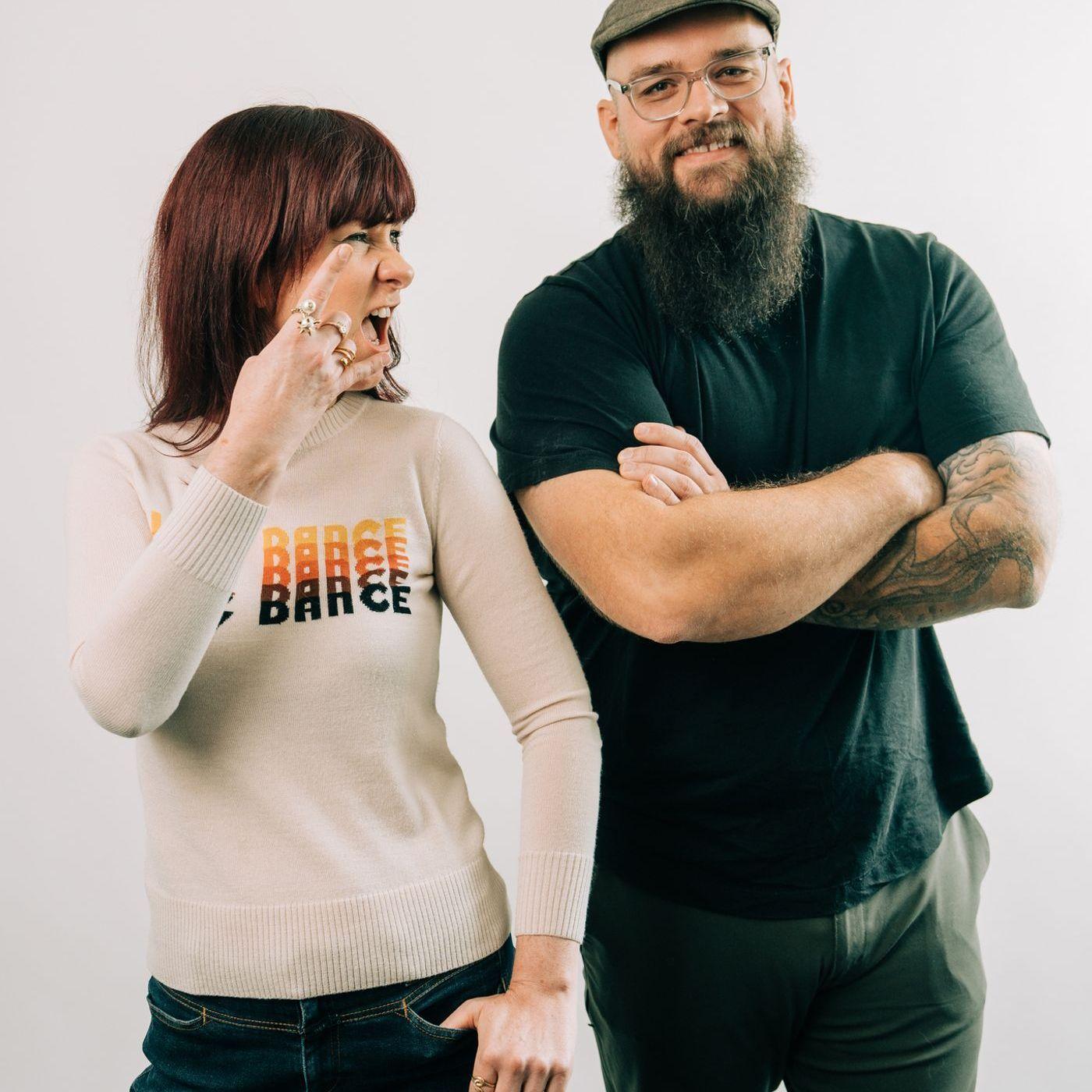
Stephanie Owens: Okay, so if I look at if I move if I move this over here, no. We're ready. We're ready. I always do this. I don't know if you've noticed that. But I always do Elvis fingers. As soon as I moved to Vegas, it just it just came to me. I was like Elvis fingers.
MrBenBurns: What should I do with my hands? You You
Stephanie Owens: The thing.
MrBenBurns: ⁓ my God. All right. We're talking about not being ready and then doing it anyway, which is kind of an appropriate. It's an appropriate topic. It's not inappropriate. is an appropriate topic ⁓ because we're starting this podcast. Not ready.
Stephanie Owens: Yeah. Yeah. We decided to start it what? Friday? Thursday of last week and it's Tuesday? Something like that.
MrBenBurns: Friday. Yep. Yep. Yeah. And, you know, the content, we've wanted to create content for a long time. We've known we needed to create content for a long time.
Stephanie Owens: I was gonna say, I think we knew we needed to. I don't know if we wanted to.
MrBenBurns: And we knew that like when you put the two of us in a room, like we say valuable stuff, ⁓ but it's just been, you know, kind of elusive and difficult to get started. And I think that like, that's something that we've seen our members struggle with. So what better place to start than talking about starting before you're ready.
Stephanie Owens: Yeah, I think part of it is we gravitate towards what we know and not so much the unfamiliar territory or things we have done in the past that have not gone as well as we had liked or we had bad experiences. So we always associate those bad experiences to the task of moving forward with it again in a new way, but it's it's sort of like if if you've worked with a particular client before that was really rough and they're in a certain industry and you're like, ⁓ I don't want to work in that industry again because I'm bringing the baggage from that last client into this new possible project, that's what it is. For me a lot of the times with things I've I've done them before, I've had bad experiences with them, so I have the baggage from those bad experiences that get brought into the new opportunity, or it's something that I've never done before and I'm afraid I'm gonna mess it up. So I never so I never get started with it.
MrBenBurns: Mm-hmm. Yeah. Yeah, okay. And content is just like the perfect example for both of us, right?
Stephanie Owens: I think when you're when you're running a business, you have strengths. And you and I have similar strengths. I think there are certain aspects of running a business that you shine at more than me, spreadsheets. Spreadsheets. ⁓ But you and I have never been content people. We've been working together for five years and It's never been something that we have prioritized or sometimes been expected to do. So now we know we need to, and we have tried to find every excuse not to do it, not to do the thing that we know we need to do. And for us, that's and for us that's content. For for a lot of our members, it's going to networking events or
MrBenBurns: 100%.
Stephanie Owens: sending that email or getting your portfolio in a place where it's ready for other people to see. But we know we need to do it. But we don't.
MrBenBurns: Yep. Yeah, absolutely. So guys, we're going to dig deep into starting before you're ready. welcome to the journey. Steph, how about we introduce each other? That way we don't like sit here and talk about ourselves. Like that would be kind of a cool way to do this. So.
Stephanie Owens: Okay. Well what do I say about Ben? That's not art.
MrBenBurns: the lady sitting next to me. One of my dear, dear friends and a business partner, Stephanie Owens is a lettering artist. She is a rock star, both metaphorically and literally, as you can see by the guitars hanging behind her. And she's been not only working in client space, providing creative services for years and years, but she's also been alongside me helping creatives build businesses that they love in maker division. now for... how we been working on this thing for three years? four years?
Stephanie Owens: I think it's going on four
MrBenBurns: Yeah, this is our fourth year. So ⁓ I've grown to know and love Steph both in and out of our professional environment. And ⁓ you won't find a more enthusiastic and ⁓ incredibly talented lettering artist than Stephanie.
Stephanie Owens: Thank you. ⁓ now it's my turn. Ben. Father of the year, 10 years in a row. Let's start there. We start with the important stuff. Ben is I've been working with Ben for, like I said, five years now. And he is an incredibly talented designer. I'm sure we'll have a podcast episode where he talks about how he thinks he's not, but he is. ⁓ And I will I will say, you know, and I don't say this in a in a bad way, kind of a generalist designer. He any kind of design the man can do and he puts everything into it. It's i his attention to detail and his attention to craft, both as a designer but also as a woodworker, as a content creator, everything that Ben puts himself into is with the utmost care and detail. ⁓ Like like I already said, amazing dad. ⁓ he often is on calls with me, ⁓ with children in tow. And I don't know how he and his wife do that. ⁓ but I also ⁓ background in client services like myself and has been working ⁓ for like maybe a decade or more, Ben, helping other creatives. with their businesses alongside the client work. Something that I've always respected about Ben and wanted to emulate myself is even though he has shifted from client services into helping other creatives, he still keeps the studio running. He still keeps the creativity going and the client services so he understands what it's like out there for everyone else and and does it have a detached viewpoint of what it's like to run a creative business. And it has been a wild journey working on this maker division project that started five years ago when you came to me and you were like, I have this idea. And then it took a while for it took a while for us to get started, guys. And that's what we're gonna be talking about today. There's a pattern. We do things really well. It just takes us a while to get things going.
MrBenBurns: It did. There's a pattern here. There's a reason. Yes. Yeah. And I think that that speaks to creatives in a very, very deep way, because as creatives, like we're out there, we're making stuff, hopefully we're finishing what we make and then we show people. And that's a kind of a scary cycle to embrace. And we want to make sure that the things that we make and we put out there and into the world are as good as we can make it. And so I think on my side, starting before you're ready means starting before it's perfect. And I can't wait to dig in. But Steph. talk to us about this whole carrying baggage in and starting despite still having, you know, either baggage around content specifically or just navigating. Areas where you're just uncertain that you can do things well or you know with the polish that you're looking for
Stephanie Owens: Yeah. With content, I have never been the one searching for the perfect polish on the content. I am definitely a that's good, let's get that content out. ⁓ because that's not my primary craft. The craft that I'm making the content about for my own studio is the lettering art.
MrBenBurns: Hmm.
Stephanie Owens: And that's what I want to be perfect, but the actual videos and things of it, I'm not, I'm not too concerned. Where I have difficulty is a role, like we're doing right now, which is the the the face to camera stuff. And I think there's there's a few things that that I struggle with. I had a video podcast around 2018, 2019. And it it didn't go so well. for for various reasons, ⁓ difficult times with the business partner. I obvio I obviously do not care about how it looked because if you go back, if you could find some of that footage, it was rough. But it was the relationships of running something with someone else. And I think that's where if you're gonna do something like this, like what we're doing right now, you need to really trust the person that you're That you're doing this with, and I don't think that ever that was what got ⁓ in the way of you and I creating this podcast because we'd already been through so much. I think for this, it was more so the last time my face was on YouTube, I got comments like, You're ugly, ⁓ where are the other people on the channel? And For someone who at the time was recently diagnosed with an autoimmune disease, my face was changing, I'm aging. It was just not something that like my brain needed to hear. And so that was the baggage that I've for f that gosh, when was that? That was like two two it was like it was like two and a half, three years ago. Yeah, it was three years ago when that happened. And I have been letting
MrBenBurns: Mm. It's like four years ago maybe.
Stephanie Owens: That get in the way of me starting something new. Even though I know now, like this is our show, you'd be mean to me in the comments, and you're gonna get some Steph sass in the comments right back. But I've been letting that get in the way. And and you know I don't like talking head videos, I don't like A Roll, and it's a lot of it is because of the pressure ⁓ for women to
MrBenBurns: and
Stephanie Owens: Always be perfectly polished looking. And it might be different for you in terms of like the the actual videos need to be perfectly polished, but for me it's the the jabs that my personal appearance. I've had people tell me I have an annoying voice before several times. I've had people tell me I have vocal fry and I'm like, mm, that's just kind of like part of the disease that I have. So people don't always think and people are trolls, but I've let that
MrBenBurns: Hmm.
Stephanie Owens: Get in the way of creating content. Now, when it comes to my own personal creative work, sometimes I care so much about a project that I'll never even start it because what if it fails? What if I what if it's like I have this project that as soon as we're off here, I'm going to post the first video for the project.
MrBenBurns: Mmm.
Stephanie Owens: And it's a project that I've told you about five years ago that I've been wanting to to work on. And I think it's because I put so much pressure on myself and so much hype around it that it it could be a really cool project that could change the trajectory of my business, or it could just be something cool that I work on. And so because I care so much about the idea, I let it sit forever.
MrBenBurns: Mm-hmm.
Stephanie Owens: And then I let life get in the way. And then I worked on little things. But there was a moment at our retreat last year here in Vegas where I was going through income streams with our group, helping them decide what their next income stream should be. And I picked for myself a one that was safe in front of everybody.
MrBenBurns: Mm-hmm.
Stephanie Owens: Because the one that I really wanted to do was too scary and you over to the side, you were like, It should be the cocktail project, Steph. Like you called me out in front of everybody and I felt it. I was like, it really should be. If I'm looking for the next meaningful income stream with a project a product that I own personally. I if the IP is mine, then yeah, it it should be this cocktail project. So I've been working on it. as much as I can with juggling a million different things. And it should be out very soon in into the world, which now that I've s have a video ready to go, it's exciting. I think I just needed to I just needed to get started. But I would I would say for you though, Ben, you don't have a hard time getting started as much as you have a hard time finishing things.
MrBenBurns: Mm-hmm. Yeah. Mm hmm. Yeah, it depends on where the starting line is. And so, like for this for this podcast, for example, ⁓ recording it and putting it out is like the scariest thing for me. That's like the act of releasing something into the wild, even though it's the start of the podcast, it's still like this episode is finished now. And so hitting public hitting publish on something that's finished but not perfect yet is the scary thing. And so like, I'll start so many projects, like I could pull up Figma right now. There are so many different ideas and designs and, you know, just first thoughts of entire companies that I, you know, would love to explore further. But like, it's safe because it's secret. You know, there's no, there's no like risk of judgment for something that's never done and something that doesn't get published. And for that, that is, is, is scary to me.
Stephanie Owens: Why is it scary?
MrBenBurns: I don't know. You know, this goes back all the way to childhood. It's like, if I wasn't going to be the best at something, I wouldn't do it. Like, I wouldn't even try. Like, I wouldn't even go there. ⁓ I was the first born, three kids, you know, and so was like my job to shine. And so I would gravitate towards the areas of life that I could shine without much effort or that I was really confident in. ⁓ And I think that that just kind of carried. It stayed with me into adulthood. ⁓
Stephanie Owens: Did you ever have any moments when you were a kid where the signals you were getting from others that you really cared about were being perfect will get you noticed? 'Cause I know I did.
MrBenBurns: Yeah, yeah, or being perfect. I think for my childhood, it was more like being perfect meant I was safe. Right. I was like, OK, because I did so well in school or in music or in art, that kind of thing, ⁓ then I was doing well. I was performing OK. And that was more of like a safety thing for me. But I'm curious, finding attention that's really specific. you say more about that?
Stephanie Owens: Yeah. I have a I have a very specific example. In in fifth grade. So sometimes some of this stuff cuts deep and it goes way back. So fifth grade, we're talking nineteen ninety one. I won student of the year, didn't see it coming, never really considered myself overly academic, just kind of went to school and did my work. And my dad was in the back, and I just remember him fist bumping in the back. And it was the first time that I ever received any kind of positive reinforcement from my dad. And so for me, from then on, it was like I need to be perfect. everything I do needs to make my dad proud of me. And
MrBenBurns: Mm.
Stephanie Owens: I've been working on it, like even when later when I won a pretty prestigious teaching award back when I was a teacher, I got in the newspaper and my dad was just, look at my look at my daughter in the in the in the newspaper and I was like, There he goes again. So I know I know I'm at a healthier place with it now, but for a very long time, and I'm sure there's still some something going on in the back of my brain, it's like if I can't do this To the point where my dad, even though my dad is is past, but like if I can't do this to a certain level of perfection, what's the point? And it gets in the way of of me even sometimes picking up my guitar to learn a new song. Because I'm like, I'm just gonna sit and play the same songs that I always play because I know how to play these ones really well. But even like po
MrBenBurns: Yes. Yes.
Stephanie Owens: on my Usition app and learning that new Metallica song. Even though I know I'm gonna suck. Sometimes it's hard, especially when you've had days like we've had lately where it's like full full of it just there's part of the balance of running a creative business where some some days and some weeks just
MrBenBurns: Yeah. Full of strife and mental combat. Yeah.
Stephanie Owens: tax you on the business side so hard that the last thing I want to do is end my day struggling through creative. I want the creative to be safe. I want it to be happy. I want it to be some something I can be proud of. And so sometimes you're going through things and you're having these calls and there's all these fires on the business side of things.
MrBenBurns: Mm-hmm.
Stephanie Owens: Where I'm like, why would I wanna struggle playing my even something that's not business related, like my guitar? It's like no, I just wanna have I just wanna play that one killer song that I know really, really well and call it and call it a day.
MrBenBurns: Yeah, okay, so for you, it's kind of like an energy thing, right? It's like you want to connect and kind of like relax with it. ⁓ Do you ever feel that same pressure with time? Where it's like, if I don't have two, three, four, five hours or a whole day, it's not worth picking up right now where I only have 15 minutes or 30 minutes to do. You ever feel like that?
Stephanie Owens: Mm. What do you mean? Not so much because I I feel like even I'm definitely in the camp of like fifteen minutes of creativity, fifteen minutes of skill building a day is is a is a good use of time. and I I actually should get back into this. There there was time when at the very beginning of my day I would just go down into the studio, cup of tea, put on a record, and I would sketch
MrBenBurns: Mm.
Stephanie Owens: To the first to the A side of the record. And it was just, that's my morning routine. Get rid but but lately I've been like getting up and getting into Notion and writing emails and marketing, marketing, marketing. Meetings, meetings, meetings. So I like the quiet 15 minute, 20 minute, 30 minute, even that 30 minutes is luxurious some days. ⁓ bit of creativity, but I'm I'm sensing that it's
MrBenBurns: Mmm. Yeah.
Stephanie Owens: It's not the case for you. You you want to dig in. You want deep work. And if you can't do deep work, what's the point?
MrBenBurns: Yeah, yeah. So last year I started restoring a piano that was like a hundred years old. And I did this with no knowledge, right? I know wood. I'm a woodworker. It's one of my many hobbies. But restoring the piano is like, man, I got this thing on Facebook marketplace for free. We muscled it into the, into the house. We broke like six hammers getting it in. It was totally out of tune. The key bed was this old, ⁓ it was the same material that they made film out of. So it was like hyper flammable. Everything needed to be replaced on the key tops. ⁓ I had no idea how to do any of this. Just like when I renovated my first house in Savannah, I had no idea how to do any of that. And so I looked it up step by step. And so when I had 15 minutes, I would spend 15 minutes on the piano. That project took three months because I was working in between things and that night when I was like watching TV with the kids. But it got done and it's nowhere near perfect. Like it still falls out of tune every once in a while and I'm still like tinkering with like the key leveling. But it got to a point where now everybody in the house can play piano. And I have so many examples of me going, hey, let me just try and work. let me just try something out for the first time and finishing stuff. And so for me, expertise is almost a curse. Like having the knowledge of how hard something is or how long something's going to take or how much effort or work it is, it almost builds up to the point where if I don't have four hours to do something or if I don't have eight hours to invest some really deep thinking into something or into a design of a website or whatever, there's some resistance there that wants to stop me from going to that place when in reality, and if I had 15 minutes and I rehabbed an entire piano, like other things could get done too. And so it's almost a level of perfectionism that comes with the process and how much time it takes for me that as I know more about a craft, the worse that gets.
Stephanie Owens: So for you, the baggage is knowledge. The baggage is the knowledge that it could be so much better than this. So where that's where for video for me, I'm like, it's only gonna get better every single time I do it because I'm coming in with such a low level of video production, and you have such a high level of video production. But things like lettering for me, I'm like, this is gonna take some time.
MrBenBurns: Mm-hmm.
Stephanie Owens: And it's gonna be perfect before I get it out because I've been trained by the best to be the best in lettering. And that's so interesting. I think there's another point there though, Ben. It's the piano had zero business pressure, zero performative pressure, zero.
MrBenBurns: Mm-hmm. Mm-hmm. True.
Stephanie Owens: judgment from others looking at what you did because the only people who are ever gonna see that are people that you trust to go to your house and spend time with your family.
MrBenBurns: Yeah, very true.
Stephanie Owens: And we just live in such a it everything right now is so fast-paced, social media driven, performative that I like to think that I'm moving into my slow craft era. It's like the exact opposite of everything. I'm like, no more 30-day challenges to do 30 lettering pieces, because those things are gonna fucking suck. Can bleep you can bleep that part. But they are, they're just like I'm like, okay, if you can get 30 lettering pieces done amazing it to the point where they are just amazing every single day for 30 days, good for you. You don't have my thyroid and you don't have my business. So it's like it's it's great for you. Love that for you. But I can't put I used to think like every time 36 days of type rolled around or or some sort of lettering challenge, I or Inktober, things like that. It Those are designed to feed the algorithm what it wants, but they're not designed to really sit back and th create something with care and tune out the world and have the the moments of just creating f for the fun of it. One of our members though, I do want to call him out because I feel like he's doing exactly what I'm saying, but like also
MrBenBurns: Yeah.
Stephanie Owens: He's doing a hundred-day challenge with his lettering. His name is John Defoe. And he is, I don't think he's putting much time into it every day. I know he has a business that he's running. He's got three children of his own. And he is just practicing his craft one sketch a day and putting it out into the world. And I'm like, I could never do that. Cause I feel like there's just There it it's like Stephanie is known for a certain type of lettering, but to be a beginner is and I would say he's hardly a beginner at this point, it's such a blessing, like you said, to go into something totally unjust unaware of what you're getting yourself into. But if you had attempted to do this piano and make a piece of content about your d about how you're doing this piano, even though It would have been baller content and it probably would have gotten a lot of views. You would have never finished the piano.
MrBenBurns: I know, I know. something you just said there was really key. And I think it's like people know your lettering style and just you couldn't ever do that. That's how I've felt about content creation. Because it's almost like with the piano thing, just thinking about it. I didn't want to do any content for that, but just thinking about the piece of content that could be the piano. Like I feel very minor resistance about the actual piano part of it. It's the video part that I feel more resistance to because I feel like one of the most, one of the proudest moments in my career was producing a series called building a brand. We did this on the futures channel. It is one of the most, it's one of the parts of my career. that I'm like, out of everything that I've done, that thing is the coolest, the most well done, the closest to perfect that I've ever experienced. And the thing is, is that like, I didn't create that content. You know, we had a team of people that were shooting and editing and directing and, you know, all that kind of stuff behind the scenes. Like Matthew and Stuart deserve all the credit in the world. Matthew and Sina and Stuart Schuster deserve all the credit in the world for that series. But that's the bar that I hold myself to. And so it's like, unless a piece of content that I create can meet or exceed that, why bother? But that's poison, right? Something that you said to me the other day stuck with me. And it was, you know, folks, my mission in life is to help creatives succeed. And, you know, we were talking about content and you asked me like, hey, is helping creatives succeed still your mission? Because not creating content won't help you on that mission. And it was like a punch to the gut. However, it's exactly correct. You know, because putting out a piece of content that maybe doesn't have the level of polish or production quality or narrative or tone that's just talking head. This video right here might help unlock somebody out there in the world to go. do something that they've been holding back from because they felt like they're not ready. And that's everything. That's the reason why we do this. That's the reason why I do this. So I think that, yeah, you can become known for a certain style or a certain piece or a certain level of quality. But this is me giving advice to me. Shut the fuck up, doesn't matter. Put it out anyway.
Stephanie Owens: Ha ha ha And I think that I you know, I'm I'm guilty of that too with there was there was a s I'm not gonna say I don't care about the the quality of video. And I think that's part of what's making this cocktail project so intimidating for me, is I know the lettering's gonna be great. But this is the first time that the video is an integral part of the lettering. And it needs to stand up next to the lettering. But I made a teaser video for the entire project, and my husband said something to me yesterday and he was like, Well, you know, now that you're teasing it, you know you actually have to do it right. You have to do like you have to finish the whole project. And I was like, Yeah, I know. And I've I've had a hard time throughout my life. with the comparing of not necessarily my craft to other lettering artists, but where is my craft going to be on the shelf next to something else? And for the longest time that was next to my husband's illustrations. And that right there was it has to be at a certain level or it can't go next to his illustrations because his illustrations are so good. And I started
MrBenBurns: They're stunning. Yeah.
Stephanie Owens: I started lettering well after he had already had years and years and years of illustration background. So I had to get there there is there is a s there is something to say to yes, we need to get our craft to a certain point. I definitely think that we need to put more chops in before we start serving clients. I'm not saying start. Having a studio as a graphic designer when you've never been a graphic designer before and take people's money. That is not what this is. That is unethical. But I do think that once we're at a certain level, get it out into the world. Because it's not helping, it's not helping your business. Or in the case of us with content, it's not helping us. meet the mission of Maker Division.
MrBenBurns: Mm-hmm. Yep, exactly. And... We see this so often with our members and you know in our weekly coaching calls getting started, putting things out there, finishing things, getting the work done before you're ready is a very constant theme to the point where you you and I know exactly the small tiny phrases that people say the situations where they're approaching, where they're struggling with either perfectionism or ⁓ not feeling ready to begin. And so I think it'd be kind of cool to go through some of the really common scenarios that we see members struggle with, ⁓ whether that's in the curriculum or just scaling their creative studios. ⁓ And I can go first. I'll tee this up. In the division, We ask people to create a capabilities deck, which is the first piece of marketing material for their studios. And it's a monster of a thing, right? Many people struggle with this assignment. And I think it's a combination of stuff, right? Writing case studies about the work that you did is difficult. Making sure that the work is the best that you possibly have is also challenging. But one of the things that I see over and over again is that people are scared to finish the cap deck because then they know they're going to have to send it to people. And sometimes people are worried that they're going to get so many leads that they're going to be too busy.
Stephanie Owens: I love the confidence there.
MrBenBurns: Right? And hey, that's amazing. And we've had it happen to where like they follow the program and boom, they, know, the first 30 emails that they send out or whatever, they're pulling in leads and they, and many people have found clients, but it's so funny that they're concerned about that, that they're worried about, you know, being overwhelmed by business because doesn't typically work like that, you know, it's a it's a bit of a grind afterwards. And so it's like, even in the best case, where you feel like you're not ready to start, sometimes the reason can be absolutely silly. And in the coaching calls, a lot of times we'll just rip the sheet off the ghost, see what's really underneath and go like, see, this is what's holding you back. Is it logically true? Is it, you know, that kind of thing. So sometimes it can help to kind of expose those limiting beliefs around what will happen if you do start this or if you do finish this.
Stephanie Owens: But I think the flip side of that is what I see a lot of times. People don't want to finish the capabilities deck because they know the next step is sending it out to people and they're afraid to show people their work. They're not afraid that they're going to get a lot of work. Some people are. Some people are afraid that they're going to get nasty emails back.
MrBenBurns: Hmm.
Stephanie Owens: That no one is going to respond to their emails. Or I think that's or the fact, or that they even have to sit hit sent. We've had members like hyperventilate over sending the work out. But this is how I see it. And I don't mean to sound callous, but this isn't high school and it's not a promptal and it's not asking someone to marry you. It's just showing your work to people. And the more we do that.
MrBenBurns: Mm-hmm.
Stephanie Owens: The more we are exposing ourselves to ridicule, the more we are exposing ourselves to people not responding. But that's just sort of part of this. It's a numbers game. We need as many people to see the work as possible. And worst case scenario, someone tells you to stop sending emails, which it happens, and I'm sorry, but those people are probably just having a bad day. Cause the way we teach how send emails to people is very polite, very relationship driven. So if anyone is responding to these emails in a negative way, that's kind of a reflection upon them and not a reflection upon the the the nice email that you sent someone saying, Hey, I'd love to work with you. Because if I get an email that's well written that says, Hey, I'd love to work with you, I'm gonna read it and I'm gonna be nice to the person, even if I don't need their services right away. But I think that's just part of
MrBenBurns: Mm-hmm.
Stephanie Owens: Of and it's the same with me in these damn YouTube videos. It's just part of the job. And if we have a creative business but we're afraid to show our work to people, we need to start slowly getting more and more used to showing our work to people. And I do think that that is where the show your work channel inside of the division helps a lot of people because it's a really safe space for people to, you know.
MrBenBurns: Mm-hmm.
Stephanie Owens: to share their work and I think it's probably the most used space inside of the community, not just to get feedback, but we encourage everyone to to show work, to you know, in the beginning, show it to show it to people that that care about you, that aren't going to ridicule you. Just get used to baby steps showing your work to people. And and then it's just gonna be practice
MrBenBurns: Yeah.
Stephanie Owens: more and more and more and the more people who see your work, the more feedback you're gonna get on, you know, whether or not you're sending the emails to the right people or or offering some people ⁓ people something that they are looking to to buy. It's just all good feedback is how I see showing your work to people. And I think that's the that's the mindset. You've got to just get into the habit of showing your work to people to get feedback.
MrBenBurns: It's funny because like
Stephanie Owens: It's all feedback.
MrBenBurns: Yep. A lot of folks, actually anybody who's intimidated to start that process is either afraid of a successful outcome or they're afraid of a failure. And so some people are scared of both. And it's like, you don't realize how kind of silly that is until you have somebody external to you go like, Hey, Is this what you're afraid of? then like showing it to you, you know, and go like, are you sure? ⁓ And that that person can be your best friend. can be a coach in a program like ours. It can be, ⁓ you know, your mom. So talking through that perfectionism or that feeling of not ready, being not ready with somebody who's completely on the outside, but also cares about you can really help overcome that and point out what's actually underneath the sheet.
Stephanie Owens: And you know what's interesting about this type of creative? The one who's afraid to show their work are typically the best ones. They're typically the ones who really care about craft, who really I say typically, I don't want to, you know, just over-generalize. But I I remember one of our members in the beginning, he was so scared to show his his photos to anyone and he
MrBenBurns: Yeah.
Stephanie Owens: He DM'd them to me and I was like, what is this gorgeousness you just sent me? And you need to start sending this out to people immediately because you are going to get work. Like this is so good. Please go put it in the show your workspace immediately. And he did and everyone was like, wait, wait, what is like he he was one of our ⁓ showcase winners a couple of years ago. Just gorgeous work.
MrBenBurns: you Mm-hmm. Yeah, yeah. Stunning.
Stephanie Owens: Gorgeous work. But he was so scared to and then he was like, I'm gonna share it here in a DM if that's okay. I want just your honest opinion. And I was like, my honest opinion is you're being silly. And this is gorgeous. But he could not see the beauty of his own work.
MrBenBurns: Get it out, like show somebody. Mm hmm. Yep. Sometimes it takes that external voice to help getting, you know, get you unstuck and moving. And like I said, you can find that in many places. What's another area where folks are just like they're stuck, they don't feel like they're ready to venture out?
Stephanie Owens: ⁓ I think they think that their website has to be perfect before they generate any leads. So that's why in our in our curriculum, the website doesn't even come until module seven. And it it's definitely a sticking point for a lot of our members where they s they think that even though
MrBenBurns: Mmm. Mm-hmm.
Stephanie Owens: Papa Burns and Mama Owens have told them Trust the process. You don't need to do your website for a while. That they have to have a website in order to get clients. And so they stop working on their portfolio.
MrBenBurns: I'm gonna hit it. Mm-hmm.
Stephanie Owens: Like I've seen people with websites and no body of work.
MrBenBurns: Right.
Stephanie Owens: I've seen people with websites and a body of work, but no pipeline or no framework on how to generate leads. But there's something about the website, and I do think a website is important, but there's something about having a website that makes them if they don't have it, they can't have any business. And and it's interesting because if you think back to
MrBenBurns: Mm-hmm.
Stephanie Owens: You Herb Lou Ballin didn't have a website. Pretty sure he got some clients. Paul Rand didn't have a website. And I think that the most powerful forms of lead generation are built upon relationships. And those relationships and what we call the Power One Fifty inside of our community, it's just like your power network. These are the people that are going to refer you. These are the people that are going to ⁓
MrBenBurns: Yeah. ⁓ yeah.
Stephanie Owens: That are gonna hire you, recommend you to other people. That group of people doesn't need to see a website. Do you have the work? Are you capable of doing that? And there's so many different ways of showcasing that. We have the cap deck. That's the number one thing. It's just a PDF of your work with some case studies. ⁓ for those of you who are illustrators, photographers, lettering artists, like a lookbook can get you so far and it's something that you can set up.
MrBenBurns: Mm-hmm.
Stephanie Owens: a lookbook especially in a day, Cap Deck, if we're not being perfectionists about it a week. And then you can just start using that as a tool to to get clients sans website.
MrBenBurns: Sure. I mean, I remember sitting down with clients with a physical copy of a lookbook or portfolio or having it up on slides, you know, walking people through the work. You're right. The website's a huge hangup. And then it starts getting into, ⁓ well, I'm have a website, I'm gonna put my work on it, but I need to have an about page and I need to have ⁓ several inbound funnels and...
Stephanie Owens: ⁓ and my inst and my inst my Instagram needs to be up to date and my LinkedIn
MrBenBurns: Yeah, because if it's not up to date, it's just like it trickles into everything. It's crazy.
Stephanie Owens: I think what a lot of creatives think, and it's a spiral in their mind, and I don't think that they actually think this, but this leads to the conclusion that clients, once they find out who you are, are gonna look for you everywhere. ⁓ I found this person here. I was referred to this person. Let me look at their website, let me look at their LinkedIn, let me look at their Instagram, let me look at their capdeck, let me look at every and I'm gonna go to every single page of their website. Where I know our I know creatives aren't thinking
MrBenBurns: Mm.
Stephanie Owens: that but that's what that thinking would lead to. The train of thought is if we have to have all of these pieces in place
MrBenBurns: Mm-hmm. Yeah.
Stephanie Owens: Then clients must be looking at at us in all those places. And I know when when the Marvel and DC licensee reached out to us, they I I think they found it on the website, but it could have been anywhere. They didn't go to the website and then the Instagram and then all LinkedIn and all the places. Like people are gonna find you in one spot, but they're not then going to investigate the full the Full funnel of everywhere you are in the world. They're gonna find the work, they're gonna get the referral, they're gonna call, they're gonna email you, they're gonna call you up, however they can contact you. And for anyone other than a website designer, websites are a big lift. I'm gonna say even for some of the website designers, they're a big lift. It's it's it's I'm not a website designer.
MrBenBurns: Yeah, I would say even for web designers, it's a lot of work. Yeah.
Stephanie Owens: But it is a huge lift to expect to have your website in order before you can get clients, especially if you're not a website designer. Now I do think if you're a website designer, it would be to your benefit to to use but use your website as a portfolio piece because that is your craft. But I've never been one to have a fancy website because I'm not selling websites.
MrBenBurns: Mm-hmm. Yeah, you kind of need a website. Yeah, but I wanna speak to that web that you talked about because I think that like the website that trickles into all of the supporting pages, that trickles into an inbound funnel, that trickles into an initial offer, that trickles into social media content, all that kind of stuff. when I was in the army. The drill sergeants, basic training, used to talk about this thing called the good idea fairy. The good idea fairy would sometime visit us.
Stephanie Owens: I'm picturing this in my mind, drill sergeant saying, There's this thing called Good Idea D Good Idea Fairy, guys.
MrBenBurns: All private, like all private to get visited by the good idea fairy because I think this is a great one and then we would do push-ups for hours, right and so like you know the the good idea fairy visits us all and and We're really used to dealing with this with our clients because sometimes the good idea fairy comes in and they'll sprinkle all the goodness into the scope of the project and then it inflates
Stephanie Owens: Ha ha
MrBenBurns: But we also struggle with that as creatives when we talk about things like our personal website or our businesses or social media and the content. It's like for me, especially the good idea fairy comes over and then it's like, Hey, you can do a podcast. Well, that's really cool. What if it was a multi cam podcast experience where you guys look like you are in the same room. All you need 18 cameras.
Stephanie Owens: ⁓ this is this is true story. True story. This is exactly what he pitched me last week. I was like, that sounds really good. How about this first one we just do this shit at our desks? We can at least make it look like we're talking to each other.
MrBenBurns: You And so like, right? So it's just like the when the good idea fairy comes around and sprinkles in all the all the stuff into the scope, then the project becomes overwhelming and it becomes too much and it becomes something that can't be finished in a week or a month or even a year sometimes. And that's how really good projects. die in the personal projects inbox.
Stephanie Owens: Call it the abyss of ideas. I have one in my Asana. It and that's where I put my good ideas. And let me tell you, I've got some good ideas. But I'm like, they're gonna go in the abyss of ideas and I'm gonna work on my cocktail project. And only my cocktail project. That's it.
MrBenBurns: I'm sorry. Yeah. Yeah. So we see it all the time. We're like, yo, your personal project doesn't have to be this huge. Branding people are the worst at this. It's like they're looking at, they want to do a logo, then they're going to do marketing materials, then they're going to do apparel design, then they're going to make the website for this, for this personal project that they're going to do. Then they're going to incorporate some motion design and animation. And if it's not real, it's not real. So they're going to you know, find a printer to do this. And then it balloons into this thing that then they're like, I don't even know where to begin.
Stephanie Owens: Or if it's not real, it's not real, I have to find a real client to do this with because that's something else. The whole idea of personal work isn't as valuable as client work and if I wasn't getting paid to do it, what's the point?
MrBenBurns: Mmm. Yeah, yep. Yep, that's a doozy. That's a doozy. What matters is the work exists. That's like step one. That's what really, really matters.
Stephanie Owens: Mm-hmm. Yeah, it b I'm just gonna say it it blows my mind when I see websites from creative service providers who don't have a lick of actual work on their website. I'm like, friends, friends. Get get get some projects done. That might be your lead gen problem. You don't have no you have no proof. But then sometimes there there it goes deeper than that. It's
MrBenBurns: I get the workout. Yeah. Gotta get the workout.
Stephanie Owens: It's like the the website is the cover for the fact that I'm too afraid to show my work. I have the work, but putting it on the website is too scary.
MrBenBurns: Mm-hmm. Yeah. I'll tell you another place that I see perfectionism creep in and stop people from moving forward with building their creative practice is around sales. I think that this is ⁓ what we... John Acuff wrote a book called Finish that I absolutely love. And in there he talks about this concept called noble obstacles. And it's something that's like, it's true. It's right.
Stephanie Owens: Mm.
MrBenBurns: However, it's standing in your way. And I think sales is a noble obstacle for a lot of creatives, right? They're either really intimidated by having conversations with clients. And so they hide in direct messages or over emails or on forms that they throw up on their very extravagant websites. Or ⁓ they seek to learn sales and master sales. before they start trying to grow their business. And the reality is...
Stephanie Owens: Never split the differences on their bookshelf.
MrBenBurns: Right. Exactly. And the reality is it's like, Hey, having a conversation and, ⁓ you know, talking about a project with a client and figuring out scope and figuring out a budget that works for everybody involved is the essence of sales. Most people can just do it with zero training, with zero rehearsals, with zero energy or effort. And yet it holds a lot of people back. Right? Sure.
Stephanie Owens: Ha ha
MrBenBurns: we can, you know, we can get better at this and this is something that can be improved and practiced and all this kind of stuff, but it's not a requirement to grow a business. You can be one of the worst sales persons ever. And if your work is amazing and your work is being seen by the right people, you can still grow your creative practice. And so I see a lot of folks get hung up on that. It's like, they're either going to want to learn it. Or they try to avoid it entirely.
Stephanie Owens: I c I can speak to this because I am coming at this from the point of view of a of a creative studio that is not large. We don't take on six figure projects or, you know, very large engagements that do require sales conversations that are he more heavy in the negotiations. People come to me for a logo. They want a hand lettered logo. And I and they've seen my body of work and nine times out of ten they've decided they want to work with me before that we they even get on the call because they either have talked with me before because I'm big on relationship building before the but like lead generation through relationship building, or they've just seen the body of work or both and they just they know they want to work with me. It's just a matter of what do you need? Am I the best fit? What budget are we working with? What timeline are we working with? Are we ready to rock and roll or not? And I think that for the majority of creatives who are starting their business or who are in that kind of area of they've been they've been working on their business for quite some time, but it's just not quite to the point where it's sustainable. The a the emphasis on sales really doesn't need to be that heavy. I think the emphasis is more on the body of work and the relationships with other people and just knowing how to have a conversation with people about their project. And yes, I will say that there are instances when we need to we need to get into some Chris Foss never split the difference type type stuff. And I know Ben, you have more experience than that. But I also I I see and have seen what the majority of our members for the past you know now over four years, like go going on four years, the types of engagements that they're working with, it's not that deep with the sales. And we are there we're putting too much pressure on ourselves when we're afraid that if we send the email, that if we meet people in networking.
MrBenBurns: Mm-hmm. Yep. the
Stephanie Owens: We're gonna be in th these negotiations with people and it's really just more like a hey, you like me, I like you. Can can we work together? Is this gonna mutually work? Do our budgets align? Does the scope align? Does the timeline align? That's pretty much it.
MrBenBurns: Pretty simple. And that's why I think it's a noble obstacle. It it holds so many people back from trying lead gen, from putting their work out there, from really putting focus on growing and bringing in clients. And I think that it's, it stops people in their tracks when they realize that, ⁓ they might have to have conversations about things that feel like sales, whether they're afraid of coming off as a used car salesman or ⁓ they're feel like they have to become a used car salesman in order to convince someone to sign up. I just see it as ⁓ one of those things that just is not as of a deal as a lot of folks make it. And there's usually something bigger. That's usually a tip of the iceberg where when we talk to somebody on a coaching call, the issue is below the surface and it's they're afraid of success, they're afraid of failure, they're afraid of putting themselves out there. There's a core fear beneath that like need to avoid or need to master sales. And we've seen it so many times where it's like, wow, why are you putting so much pressure on yourself? You know, like why are you so hard on yourself? And what are you really afraid of? Those conversations are some of my favorites in the coaching.
Stephanie Owens: They often spiral into I'm afraid that I'm gonna lose my house and everyone is going to stop loving me. I'm like
MrBenBurns: It's like, really? You wouldn't stop it before then? Has that happened to you before? Right? And look, I know there's parts of the globe where it is a natural inclination to haggle. We've heard from many of our members that are like, ⁓ no, people around me, they haggle over price. It's like a pastime. It's a hobby.
Stephanie Owens: It's not it's not that deep. And then they
MrBenBurns: You know, that's totally fine. I totally understand that. But for the majority of us, you're not going into some intense hostage negotiation. It's typically just like, let's make sure we're in alignment and let's get this work going. Let's do this thing. So if you're scared of sales, please don't be.
Stephanie Owens: No B.
MrBenBurns: All right, so let's leave some actionable tips for those folks who don't feel ready for something. ⁓
Stephanie Owens: Hold on, Ben. You're out of focus. There you go. Yeah. Actionable tips. Let's start with actionable t yeah. All right, you went out of focus right when we did ⁓ actionable tips.
MrBenBurns: I am. ⁓ there we go. It's every time I look down. Yeah, stay in focus. All right. Let's recommend some actionable tips for the folks listening. ⁓ Things that we do or things that we recommend our members do to kind of move past that feeling of not being ready to start or finish something, put something out. You got anything?
Stephanie Owens: Yeah, I think like I already suggested, starting if if it's showing your work, just start with someone who is comforta you're comfortable with, not your dog, because like your dog can actually give you feedback. Like I love my dogs and I would love it if I could just be like, look at my work, dogs, and they would like look at me like, of course, mom, I love you. Of course it's great. But like someone that you that can communicate back to you. And outside of that I think that having an accountability partner of some kind also is really helpful. Mine is Ben, and Ben's is me, and we call each other out on our shit. So I would say that it it would be need to be someone who's going to lovingly lovingly call you out on your shit. Who can tell you
MrBenBurns: Mm-hmm.
Stephanie Owens: You know the sales call isn't gonna be that deep, right? You know that you're freaking out over no reason. Or you know your work is really dope, right? And you should probably just show it to the world. That would be mine. That that is
MrBenBurns: Or you have people like... You have people like my brother, who's like, hey, when you fuck all of this up, we can go out for drinks. It's like, ⁓ okay, so that's what you... Yeah, alright.
Stephanie Owens: But I think that has helped That's helped me. That's helped me, especially with a lot of this video stuff. Like, think of it this way like, for me, the A role is hard for me. So you telling me like stuff, we're gonna do a podcast. I'm like, okay, if it wasn't for you, I wouldn't be doing this. I'd be like, absolutely not. And if it wasn't for me, you would probably want to s to wait until we had our sofa set up. And it looked like we were in the same room together. So
MrBenBurns: ⁓ yeah. ⁓ yeah, we'd have like tracks on the ceiling where cameras would like go around. Yeah, yeah, it would be.
Stephanie Owens: He there's a whole plan that I'm like, okay, no. So I think like, yeah.
MrBenBurns: All right, my tip. I have two, I have two tips. First, really define what minimum viable perfect is. I'm quite sure that that's from a book somewhere. It might be John Acuff's, but like look for the actual MVP, minimum viable perfect, and tell the good idea fairy to kick rocks because it's probably not what you have in mind. It's the scope of what you're going to do. If it feels overwhelming, see if you can chop it down to the bare minimum and see if that's more feasible. Because the beauty of this is like you can always go again. You can always put out another piece of content. You can always do another project. You can always create another website. I mean, even with printed goods, you can always print stuff again and resend it to people or give it away. So it's like there's power in improving over time. The thing is like, make sure that the scope that you have in mind isn't feeling overwhelming before you start. And then the next thing is, ⁓ go ahead.
Stephanie Owens: I love that idea. I was just gonna say I love that idea because like if we look back to like Mary Shelley, how many times did she write Frankenstein? After it was already published the first time. One of my favorite bands, Crumbin, they put out their first album now eleven years ago, but last year, for the tenth anniversary, they re-recorded it. So n and these are like masters. Like the first version was great. Let's like put less less pressure on that first version because no one is paying that much attention and like Alfred Hitchcock remade The Man Who Knew Too Much. The first one wasn't that great. The second one was great. So permission to just put out the work and make it better later.
MrBenBurns: And then the second thing, this is something that I've both incorporated in my life, but also recommended to a lot of our members who are struggling with this kind of stuff is like, just commit to 15 minutes. Number one, everybody has 15 minutes. Like everyone can find 15 minutes in their day. And so just work on it for 15 minutes. And the first couple of times, maybe like the first couple of days that you're working on a project that feels particularly high resistance, Do 15 minutes and then literally stop. Don't do any more. Force yourself to stop. And then after those first few days, do the 15 minutes and at the end of those minutes, go like, hey, am I invested in the work? Am I approaching flow state? And then allow yourself to continue for as long as it takes or as long as you have.
Stephanie Owens: Didn't you used to tell members set aside at fifteen minutes and it's either fifteen minutes of th that, whatever the task may be, or nothing at all. You can't do anything other than that, but you can also choose to do nothing.
MrBenBurns: Yep. Yep. It's something incredibly beautiful I picked up from ⁓ Neil Gaiman's masterclass. And he used to talk about how writing, he's the author of Coraline and Sandman and so many other ⁓ incredible pieces of work.
Stephanie Owens: My favourite Lucifer.
MrBenBurns: Yeah, yep. He used talk about how writing sometimes was full of resistance for him. So he would go down to his gazebo and he would sit with his pen and his notebook and he could do anything at all as long as it was writing or nothing.
Stephanie Owens: Love that show.
MrBenBurns: And I thought that that was so beautiful, that it's just like, hey, 15 minutes, you either sit and do nothing or you do the thing that, you know, you feel resistance towards and see what happens.
Stephanie Owens: Now go do some things. Go make some things. Go send some emails. Go do it.
MrBenBurns: All right. Go do it. Make stuff, show people, share the journey. That's the motto. All right, folks, I hope you enjoyed our first inaugural podcast. We'll be back next week.
Stephanie Owens: Should people Our imperfect podcast that was not in a studio with perfect lighting and sofa and my makeup and hair weren't done and et cetera.
MrBenBurns: That's right. We did it! We did it. How about that? ⁓
Stephanie Owens: We did it. High five? ⁓ he left me hanging, guys. Look at that.
MrBenBurns: Alright. think that's it. I think we just cold end there.
Stephanie Owens: Yeah. Cool.
MrBenBurns: How was it? I think it was good.
Stephanie Owens: Good. We do this all the time anyway. Yeah.
MrBenBurns: It's just like a typical conversation. Okay, we gotta stop recording. there. And.
