

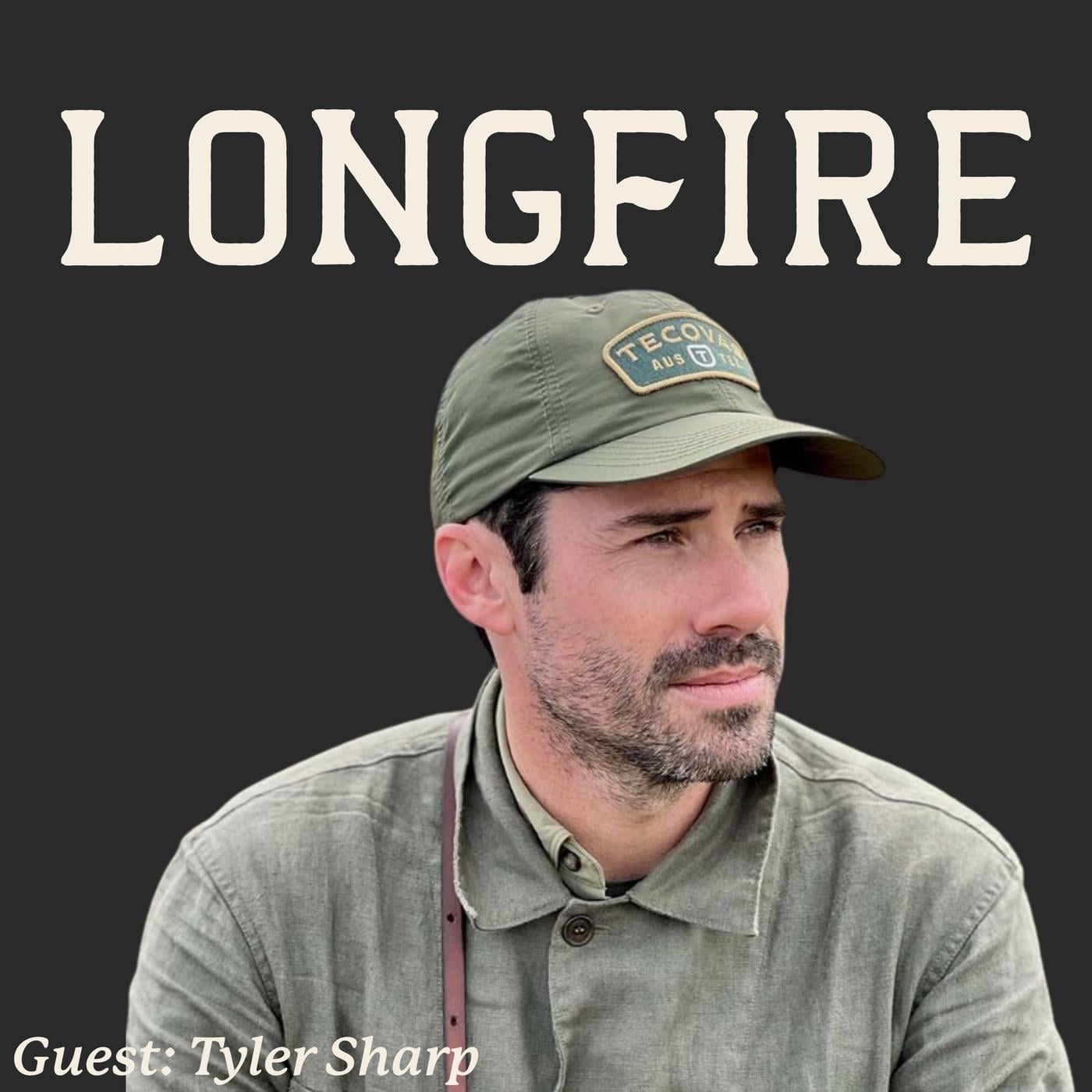
Steve Seger: Tyler, appreciate you doing this. Welcome to Longfire.
Tyler Sharp: Thanks. Yeah, thanks for having I appreciate it.
Steve Seger: Yeah, this is gonna be a fun one. I got a loose route for us, but I'm gonna open things up with a quick rapid fire round just to get the blood pumping a little bit and hit some fun ones. So are you ready to jump on in here?
Tyler Sharp: Sounds good.
Steve Seger: What is your favorite Star Wars film?
Tyler Sharp: That's a good one. yeah, it's gotta be Empire Strikes Back for sure. I think. And that's that's might sound like a a cop out to a lot of people, but yeah, I think that one, as a kid for sure when I that was always my favorite. And also now, like flicking at it, the color color palette and the tonality and yeah, it's just a great film. So dep definitely Empire Strikes Back.
Steve Seger: Mm-hmm. I'm a Revenge of the Sith guy, but Empire is good. What color lightsaber would you have?
Tyler Sharp: I have multiple green ones. so there you go. I I also randomly I built one years ago. they have that little workshop in in Disney World and and so you can actually change the crystal color out. So there's actually a cool white crystal color which is which is nice. But I if I gotta go with one that's
Steve Seger: Cool.
Tyler Sharp: green.
Steve Seger: Yeah, I gotta get down there. I know they they do like the whole Kyver Crystal thing and that that looks fun. I have not made it yet. favorite
Tyler Sharp: It's pretty cool.
Steve Seger: Lord of the Rings book or movie?
Tyler Sharp: Hmm. Yeah, I mean I I guess I'd have to say Return of the King. It's it's between that and two towers. and I I have multiple Elvish and Lord of the Rings tattoos, so it's it's hard to pick, but I think that obviously that's the crescendo, right? And Aragorn has always been a I I don't want to say role model because I don't know if you fictitious character can be a role model, but that was always somebody I I always sort of modeled some of my virtues after and and obviously that's the arc of his story. So I'd I'd say Return of the King for sure.
Steve Seger: What's your spirit, animal?
Tyler Sharp: well I've told that story before in a in a less traditional sense. I'd have to say Lion because of some of the experiences I had and this one kept following me around and I felt I couldn't really come up with any other explanation other than I was supposed to learn something from that animal. So not necessarily based on symbolism or any sort of traditional decision making in terms of spiritual animals, but more so about actual experience with one.
Steve Seger: Yes. I want to dig in on that in a second. three guests at a dinner table, alive or dead, who are you inviting?
Tyler Sharp: Question. yeah, I would say Ernest Hemingway would be one. Maybe Jim Morrison would be another one. and a third. Good question. I feel like I gotta pick a female. Let's see. I've been reading a lot about Edith Wharton lately, so may maybe may no, that's not true. I would pick Beryl Markham. She's an author who wrote a my favorite book ever called West with the Night. and her and Hemingway knew each other, so I think that would be an interesting conversation. And Jim Morrison would probably provide the entertainment.
Steve Seger: Yeah. I've been to the Hemingway house. It's so cool down in Key West.
Tyler Sharp: Mm-hmm.
Steve Seger: The cats are cute too.
Tyler Sharp: Yep, yep, there's a couple of We were we were just in there's a I don't even know how many, there's a handful, but we were recently in Craig, Montana and they have a they have a house there as well we were fishing close to, so
Steve Seger: Cool. This is the last one, and this is a bit that I've kind of borrowed from Family Guys, so I to give them credit. could you beat Liam Neeson in a fist fight?
Tyler Sharp: It's hard to say because he's obviously trained for a lot of movies, right? but I don't know how much he's kept up with his training.
Steve Seger: Mm-hmm.
Tyler Sharp: I am a 20-year martial arts practitioner. so I would say that I would have I might have the edge
Steve Seger: Yeah.
Tyler Sharp: on age and quickness. so I'm gonna go with yes.
Steve Seger: Mm-hmm. Yeah, I figure if I ask that question enough in my rapid fire rounds eventually he has to come onto the show and answer for himself.
Tyler Sharp: Yeah, I'd I'd be I'd be willing to get in a in a sparring ring. You know, I probably don't want to do bare knuckle. But
Steve Seger: Yeah.
Tyler Sharp: yeah, I'd I'd go a couple of rounds.
Steve Seger: Mm-hmm. Well, let's jump on into the the meat of the interview here. You did mention that lion that was following you around, and I think that is a great place to start. I listened to you tell that story on Ed Roberson's podcast, and I I am gonna ask you to repeat it just because I thought it was so cool. Would you mind sharing that?
Tyler Sharp: Sure. Yeah, I was in Tanzania in an era an area called the Kilumbero, which is basically a floodplain and There's almost no trees and we were there hunting Cape Buffalo and and it's very difficult because there's twelve foot, fifteen foot grass, you can't really see much, you actually hunt by boat. and there is a a rare situation there where there are swimming lions, and that's because they just they that's the only way to get around. and it was insanely hot. And these tents that you sleep in are canvas tents and there's a semi semi-permanent camp. And the zipper on the mesh was broken. So like if you close the canvas tent, it's way too hot. You actually it's you're sweating all night. And the zipper was broken on the mesh part. And I made a comment to, you know, one of the guides, hey, we should get this fixed, you know, there's lions around and he's like, don't don't be a baby, it's fine, you know, you
Steve Seger: Yeah.
Tyler Sharp: don't need to worry about it or whatever. and so that that goes on and I decided it w it was so hot that we decided to I was gonna shave my head, but I was first I was like, all right, well, just for fun, let's let's shave a mohawk, right? So we did that, and then like that night, and and this was the the last and final time I ever took malaria medication. Because there's certain types of it that can cause what I can describe as murderous nightmares. and I woke up in this grip of panic that was clearly from a reaction to the medication, was you know, sweating, was breathing heavy, kind of freaking out, and then I sort of realized that it was the medication. So I calmed down. but right as I did, I heard a lion call right behind the tent, and it's deep like whew.
Steve Seger: Yeah.
Tyler Sharp: And the tent's wide open because the zipper had not been fixed. So I'm thinking, all right, do I have time to jump up and run out there and untie both flaps and jump back in and zip it shut? And by the time I even think about doing that, he calls next to my head outside the window. So he was he was walking around the tent. And at that point it it was too late, right? because he's probably four feet from the front of the tent, and then all he's gonna do is step in front. So I
Steve Seger: Yeah.
Tyler Sharp: just sat there and he calls again, steps out in front of the tent, and it's a full moon. And I I wrote this story, it's been published in a previous issue of Modern Huntsman, and Badamwezi in Swahili means means full moon. And so it was a full moon. And incr insanely bright, and this lion was massive. I mean, it looked like a centaur. And it actually had a mohawk mane, right? So it was missing mostly probably from swimming and and its hair being pulled out by reeds and and whatever. So it literally had a mohawk mane the day I shaved this mohawk into my head. And it steps out in front of the tent, and I mean it's the biggest line I've ever seen. And my the the guide is asleep. There there's like you know twin beds in this tent, and he's asleep over there, like snoring. and I try to like you know poke him because he's got a gun under his bed. I don't have a gun, I just had cameras. He doesn't wake up so I th I my thinking was all right, well, I'm gonna lean down and grab the bed frame. So if this lion charges, I'm gonna try to flip the bed over and and stop him. And as I leaned down and grab the bed, it was like straight out of a horror movie. The bed creaks and the lion the lion
Steve Seger: Yeah.
Tyler Sharp: just goes woo and turns around and just stares me right in the eyes, probably six yards away, five
Steve Seger: my god.
Tyler Sharp: yards away. And you know, felt like an eternity. And I was holding my breath, sitting there holding the bed, like watching this lion. And I could, it was so quiet. Cause when when a lion shows up, everything else goes quiet. The birds stop, the the bugs, the insects, like everything, it goes silent. And
Steve Seger: Mm-hmm.
Tyler Sharp: it was so quiet. I could hear the sand as he like crouched and dug his paws in. And his tail was doing that thing that cats
Steve Seger: yeah.
Tyler Sharp: do when they're potentially gonna pounce. And I just remember thinking, all right, well, this is this is how it goes, I guess. And but he didn't pounce. he turned around and and walked over and there was like a reed fence on the side of the river. He like rubbed his face on the fence and jumped in the river and swam across and and kept roaring. And and so I woke up, you know, my friend Georgie Ferreira. If you're out there listening, you know, wish you would have been awake. But anyways, we you know get
Steve Seger: Yeah.
Tyler Sharp: up and we check these tracks, and I mean, and they're they're huge. Huge tracks. And he had been all through camp. He had gone to the skinning shed where they keep meat and had like checked a bunch of he had like scared some other guys up into, you know, some other on top of the little structures they had built. And so he had he had done a full patrol of camp. and anyways, tried to go back to sleep, didn't didn't really sleep well. And then the next full moon, exactly one month later, same camp, same tent, same lion comes back to the tent. But this time, the door is closed. And he lays on the like leans into the tent. So his body is like sagging the tent wall in. And he was laying there like breathing and moving the tent wall. And I'm sitting there just hanging out with this lion. I had shit I had gotten rid of my mohawk at that point. but he came back again and
Steve Seger: Mm-hmm.
Tyler Sharp: And then I ended up, you know, he stayed there, I don't know, probably an hour and then eventually decided, you know, he was gonna go do whatever he was gonna do. And then I saw him one more time. I
Steve Seger: Mm-hmm.
Tyler Sharp: think a month later. He didn't come back to my tent. But yeah, it w it was one of those things where when you're s when you when you look an animal that closely in the eyes and they d it doesn't kill you and then it comes back to hang out, I don't know, that that's sort of how I justified that maybe I can call that a spirit animal. So I actually have a tattoo on my arm that is it's it's it's a Swahili phrase that Imara Kama Simba, like brave like a lion, strong like a lion. It's it's something that they say in Swahili. and someone told me one time when I was trying to climb Kilimanjaro and almost passed out from altitude sickness. and so that's that's always a reminder. and so maybe that's that's part of what that experience was supposed to imbue.
Steve Seger: Yeah. Well you got a way better spirit animal story than most people. So
Tyler Sharp: Yeah.
Steve Seger: yeah, that that's pretty gnarly. I'm thinking like lions are scary, but what freaks me out is leopards. Did you ever run into any leopards while you were over
Tyler Sharp: yeah. Yeah.
Steve Seger: there?
Tyler Sharp: I've been charged by multiple leopards. Yeah. they're they I agree. I think they're scarier. you know, a lion is gonna charge one person and it's gonna cr crush their skull. A leopard is gonna probably maul all seven people, and depending on where it bites you, you may not die, but you're not gonna be having a good time. And there there was there was one time I was in Zambia and we were driving around. We were on hunting safari, but we weren't hunting leopards. We were just driving around and we saw one in the middle of the day. It was like noon and this wart this leopard was digging trying to dig a warthog out of its hole. And we were like 20 yards away and we stopped. The driver turned broadside. And you know, this land cruiser we were driving in has no doors, no roof, and it has like raised benches behind the driver's seat, which is where the hunters and a lot of times the trackers sit. So you can just you have a better vantage point. So I and I stand up, so I'm like filming this leopard digging and then it sees me and it stops and it kinda hides behind a log and the footage wasn't very good so I'm like, all right, well I'm gonna take two more pictures and then and then we can go. But I take the first picture And then as I click the shutter on the second picture, this thing just runs right at me. And so it's funny because the picture ends up being this like blur of grass because I, you know, recoiled and I had like a zoom lens on. So at that point, my reaction is just like, okay, I'm just gonna try to hit this leopard with the camera lens. He's gonna get you. It's just a matter of how bad. And you know, that was a pretty hefty zoom lens I had. So I was like, maybe I can just hit it in the head and it'll leave me alone or whatever. And
Steve Seger: Yeah.
Tyler Sharp: this thing closed twenty yards in two seconds. And I mean I barely even had time to react. And then it it like veered off right before it got to me and went into the brush. And I look down at the the PH, which stands for professional hunter. They're basically the guide in charge. His name is Lance Lance. And
Steve Seger: Not
Tyler Sharp: Lance was laughing. And he didn't reach for the gun. He didn't reach for the keys. And he just turns to me and he goes, Did you shit your pants, mate? You know? It's like
Steve Seger: Hehehehe
Tyler Sharp: Thanks. Thanks, Lance. I appreciate the the support. So it it took a little while for my heart rate to calm down.
Steve Seger: Yeah.
Tyler Sharp: because yeah, they they're just lightning fast and the sound they make is it's a it's a hell cat noise. It's it sounds like it's straight from hell. So
Steve Seger: Yeah. How long were you over there? And I guess for the audience's sake here, why did you go over there in the first place?
Tyler Sharp: Yeah. So I went to USC film school. So I studied film and photography and and all of that in Los Angeles. and just really call it destiny, call it chance, whatever you want to call it, I just w was like stumbled upon an opportunity. with with a someone who owned a safari company in Tanzania and they did hunting safaris, fishing safaris, they organized Kilimanjaro stuff, you know, they had a farm, they did all these things, and they were looking for someone to come film clients v with all these different activ safari activities, right? And
Steve Seger: Mm-hmm.
Tyler Sharp: Anyways, I just kinda got lucky that you know, I was introduced to this person and they were like, Yeah, sounds good. So I've I finished college in Los Angeles. I moved back to the Dallas Fort Worth area where I'm from. And then went to the bush and the middle of nowhere in Tanzania. This was 2006. So it was before iPhones, you know, there was not any any sort of communication other than like a satellite phone that costs I think back then it was like four or five dollars a minute to use
Steve Seger: Thank you.
Tyler Sharp: one of these iridium cell phones. So I was in the middle of nowhere and It changed my life. I mean, I I I I I had some hunting experience growing up in Texas. You're kind of it's kind of inevitable growing up in that state. You're you're around it some one way or another, but I wasn't really part of that world. And so I learned I got thrown into the deep end and learned how to track from what I view to be mystical you know, animal shamans. These guys, they just have this spiritual connection with wildlife that you can't really teach. I learned how to pattern animals and and track and and you can kind of understand how things work, but
Steve Seger: Mm-hmm.
Tyler Sharp: it it's it was otherworldly what these guys were capable of. And so, you know, that's what we ate. You know, there was no grocery store, so we were eating wild game. They had a shamba, they had a farm where they grew some vegetables in a village like two hours away that we would drive into every once in a while. I learned how to tell what time of day it was within five minutes by looking at the sun. And yeah, just
Steve Seger: How does that work?
Tyler Sharp: yeah, it's just you you can just you your your body you just start to become in sync with natural rhythms, right? And the veil between, you know, so many people view these places as somewhere you go to like experience, but if you're when you're there for that long, and for a lot of these guys who live in these villages or in that area, you're part of the natural order. You're not separate from it. And it is something you have to take into account. And so that's a very rare and special experience, but you know, the flip side is that is when you come back into society. I had a little bit of a breakdown. I kind of freaked out and had sort of like an identity crisis and I got I was like
Steve Seger: Yeah.
Tyler Sharp: I would I would like get in verbal arguments with people at the bar because they were complaining about getting a flat tire or whatever, you know, and and I was like you, you know, you have no idea.
Steve Seger: Big problems.
Tyler Sharp: Yeah, your priorities aren't straight and all that kind of stuff. And my friends had to be like, hey, dude, take it easy, right? So obviously
Steve Seger: Yeah, yeah.
Tyler Sharp: over time I learned how to balance that. But I, you know, that initial trip I was there for almost six months and then started working for a essentially like a an outdoor booking agent company that organized trips all over the world for the same things, right? Fishing, hunting, adventure. Whatever, conservation projects, things like that. And I went to almost 40 countries in four years. mostly filming, but I was shooting photos on my own and then obviously writing stories, and always always sort of gravitated towards the food and the culture and and you know. any sort of tribe or tribal, you know, culture, things like that. I just I've always f was always been fascinated by that. And so yeah, I mean I I lived in Africa off and on for probably four years and then I you know I haven't been back In two years. I say it every year, hopefully I'll be back this year, but it's just work and stuff is very demanding and and so I have to usually find a an assignment or something to go over there. But I think about it every day. yeah, it's something that is hugely influential and is a big part of of who I feel like I am and and how I got to be where I am today. So
Steve Seger: Yeah. Was at that point were you when you were doing that travel, was that when you were with Larry Nolton?
Tyler Sharp: yeah, some some of it w it was so his His son had a company that was a booking agent. And then that sort of evolved into a couple of TV shows for the outdoor channel. and then over time it got to the point where Larry I guess enjoyed my company. And so
Steve Seger: Yeah.
Tyler Sharp: I kind of was a essentially like a full time cameraman for for him and his friends and family and sometimes employees, and and some of that was like filming cutting horses. And birthday parties and things like that. So it wasn't always adventure, but I I jokingly always called him my bush dad because we spent so much time together in the bush. and one of the most generous men I've ever met, and just incredibly kind, hardworking, you know, grew up dirt poor and sold coffins door to door and then built his way up into starting his own oil company and all that kind of stuff. And so yeah, I mean, I I wouldn't have gone anywhere. near the number of places I went if I hadn't met him and and sort of gone gone on those adventures. And and I still to this day people ask me like hey what's what's the best piece of advice you ever got and I have to give Larry credit. He told me once he said hey Tyler if if if you can't laugh at yourself you're gonna miss out on the world's biggest joke. So always good to remain humble and not take yourself too seriously.
Steve Seger: That's well said. I heard you say on another show that those that four year period, roughly I think is what you said when you were over there, your early twenties, you would love to go back and maybe do that again. I'm I I don't know if I heard you follow up on it, but what would you do differently if you could go back and do it over again?
Tyler Sharp: You know, it's hard to say and it's also a sad reality that you almost couldn't go back and do that same stuff because some of those places don't exist anymore, right?
Steve Seger: Mm-hmm.
Tyler Sharp: with population expansion, mining, road building, deforestation, cattle overgrazing. Yes, a l that that world that I lived in and and and you know the time I was in d doesn't exist. If we could go back to a point when we all didn't have, you know, smartphones and three email addresses and like a million notifications from all these apps, that would be amazing.
Steve Seger: Yeah, it would rock.
Tyler Sharp: yeah, I don't know. I I I don't I wouldn't say I have any regrets because I heavily documented that time. Right. I have
Steve Seger: Mm-hmm.
Tyler Sharp: boxes of journals. yeah, I don't know. I I would say I I said may maybe I would have been more insistent, potentially even more aggressive, trying to get the people I care about, some of my friends or family to go experience that. Right. because you know, everybody feels like Africa's this far away, hard to get to place. And and it does require some travel, but it's not as hard. Every with most of the people I know, their responses, yeah, yeah, yeah, I'll do it someday. And I get kind of mad. I'm like, why not now? Right? Why? And so yeah, I think that more than anything. You know, I I I'm a nostalgic person, but there's a downside to that, right? There's there's a dark side to nostalgia. but I think at the at the heart of it, it represented a time when I feel like I was most free. And it's difficult to even if I went back to those places to spend that amount of time disconnected from the modern world, purely just focused on, you know. Enjoying being where you are, right?
Steve Seger: Mm-hmm.
Tyler Sharp: and so I think that it's never faded. I still I'll I'll hear the sound, right? Or I will smell there's this particular wood smoke smell that anyone who's been to Africa will know. And it takes me it takes you right back, right? and so there's a little bit of, I don't want to say melancholy, but there's a little bit of What I don't know how I don't know how you say that correctly, right? But there's a there's a there's a t a tinge of sadness of and and I would say that most people who've been and have seen wild places, and and don't get me wrong, there are still wild places, right? And there are still things you can do and places you can go. but they're they're shrinking, right? And they're disappearing. And so I hope that trend reverses, but given the priorities of humanity in today's world I don't I don't see that happening. So AI
Steve Seger: Mm-hmm. If you were doing
Tyler Sharp: AI is not helping, that's for sure.
Steve Seger: No, if you were doing a a trip today, going for a week or two, like you said earlier, what what exactly would you do and where would you go? Would it be Tanzania again or would it be somewhere else?
Tyler Sharp: Yeah. Yeah, I was actually so the area that I was in is no longer a game reserve. It was called Usangu Game Reserve and it's it it has now been like absolved into Ruaha National Park, which is kind of like south central Tanzania. and I would love to go back there and attempt to find some of these places that I spent five months in. Right. And and the difference is, right, it when you're a lot of times when you're in national parks, there's a lot more restrictions, right? You stay in the vehicle, there's closed doors, it's photographic safaris versus in some of these hunting areas, you go wherever the hell you want. And there's no one else there for the most part. And so the the version of those places I saw is very unique because there would would just be our vehicle in two million acres of wilderness versus you go to Serengeti or the Masai Mara or something like that and there's hundreds of safari vehicles and they're you know they see animals and then you like, you know, they kind of drive and huddle around a lion on a kill and and it's
Steve Seger: Mm-hmm.
Tyler Sharp: still great for people to see that. But there there's there's pros and cons to each and So I would I would love to go back to that or that place in in Ruhaha and and try and see if we could find some of my old stomping grounds.
Steve Seger: Yeah. Well, I could probably sit here and ask you questions about Africa all day, but I wanna transition a little bit now back when you're in the States, you're getting in fights at bars with people with flat tires.
Tyler Sharp: Yeah.
Steve Seger: Take me up to the point when Modern Huntsman becomes I guess is in its inception and coming up to today.
Tyler Sharp: Sure. Yeah, so I think it it's it started when I was still at USC in Los Angeles and I found out that I was gonna go to Africa when I found out I got this job. And I was excited, right? I'm like, whoa, I've always wanted to go to Africa. This feels like some sort of cool national geographic thing, but even more freedom. And what I didn't anticipate was the emotional reactions that that some of them had. Right. So some of my friends got upset, they got angry, they turned on me because their opinion of what hunting was was based on what they had seen in social media or news or you know, and and and it was skewed and and in some cases completely misdirected. and someone said, I can't believe you're going to Africa to film rich white people killing endangered species. And I was like, mm-hmm that That's poaching. That's not hunting. Right. But I still hadn't been yet. So I didn't really know how to talk about it or how it worked. So I went into that world with very open eyes, right? attempting to understand for myself, okay, okay, if I'm gonna talk to people in Los Angeles or New York or Chicago about this, I kind of need to know how it works. And so That was a big part of my journey experiencing hunting all over the world. And and then the flip side of that is that a lot of hunters and hunting organizations are not very good at communicating to people who don't hunt about the role it plays in conservation or the cultural impact or you know, any of those types of things. And I would come back from these places super inspired, and I would want to tell a story about this place or that place or like this person or like this. Amazing, you know, traditional cooking method or whatever. And no one was into that because for whatever reason, you know, it just wasn't desirable. Brands weren't into it, publications weren't into it, the outfitters themselves weren't into it. And so over time, I just got super frustrated with the lack of an outlet for what I saw to be. the cultural, inspirational, educational side of of hunting and in in particular, right, Africa hunting in Africa has such a special place in my heart. That's a hot topic. Right, or it's a contentious topic to a lot of people. And that's where I had the most experience. So it was almost like I did the hard part, which was understand how it all works, right? And and just like just like anything, right? There's there's people who don't follow the rules, there's people who don't have ethics, and they give you know, the rest the rest of the operation a bad name. But that was kind of the idea and And yeah, and and there was, you know, some other people originally involved in the beginning. but yeah, we launched a Kickstarter in in 2017 and very quickly raised a hundred thousand dollars. and the response was very encouraging that not only was something like that needed, but that there was a lot of people who wanted to to support that. and and so yeah, now we are on number 17. So we do two a year. And it's been a a wild ride but a challenging ride because you know, we're kind of the people who say the stuff that People don't the hunting industry doesn't want to hear. We we don't really take sides. We're about the greater good and in conservation principles and ethics, but but also trying to speak to a I'd say a larger, more mainstream audience, right? We want the work we're producing to be of interest to to you know, a larger percentage of let's say maybe the 75%, 80% of the global population that doesn't hunt, right? And a lot of times that's through food, through cooking. We do educational stuff with workshops and you know immersive experiences in Montana and Colorado and Texas and you know, hunting, fishing, skinning, foraging, cooking, bird watching, naturalism, all of that kind of stuff.
Steve Seger: Mm-hmm.
Tyler Sharp: and so it's yeah, we we definitely have a an educational component to everything we do. But we don't want it to come across as like slapping anyone's wrist or pointing fingers or or blaming anybody. It's it's more about like how do you inspire someone to take personal responsibility for their impact, you know, on a world where the human population is exploding, right? And taking up more space and using more water and using more resources and everyone needs, you know, to live and everyone's got the right to do that, but Doing that at the expense of losing what is wild and what is good is that's the challenge. so
Steve Seger: Mm-hmm.
Tyler Sharp: yeah, I know that was a long-winded answer, but that's that's more or less the path we've been on. And you know, we we have a creative studio, so we do a lot of filmmaking and design work and storytelling for other brands who are maybe not not as practiced at, let's call it threading the needle or or speaking to different audiences and and things like that. and there's even been sort of a diplomatic charge in some cases where we've been involved in, you know, other countries wanting to figure out how they can more effectively reach non-hunting audiences and not in any sort of like propaganda way but more of just like how do we talk about this right in a way that doesn't upset people and that ideally i in a way that inspires them to become interested or excited or at the very least just learn So that n they now know how it works and they're not gonna speak out against it, even if they're not gonna go hunt themselves or fish, you know, and and catch whatever, you know. I mean, it it's just more about education and understanding.
Steve Seger: Mm-hmm. It's cool listening to how it's evolved. And I guess you're coming up on a decade now. And I I
Tyler Sharp: Mm-hmm.
Steve Seger: I think I I remember when I was prepping for this listening to you talk about how naturally you are a creative and being kind of the operator of the business can be hard at times. And you're sort of it sounded like wanting to work your way more towards creative work with time. Are you still trying to do that? Is that Is that are you getting closer to that point or is that still a little ways away?
Tyler Sharp: I don't know. I mean I I I certainly try. but you know,
Steve Seger: Mm-hmm.
Tyler Sharp: it it's it's not an easy business. it's a unique business. Right. There isn't there aren't very many people doing what we're doing. And so, and obviously I have my hands in a lot of aspects, but we're we're trying to create more definition and and structure on that to allow me to do that. now this issue in particular, I have I am like doing more creative contribution that than I normally do. we're gonna be announcing some stuff tomorrow. as well as next week about the cover about some collaborative projects that we have about some of the people involved in the issue. and yeah I I think that it's become clear that I have to be the person on a call like this, right? I've got to pe the be the person in a room talking to maybe a non-hunting organization or or things like that. Right. And so I've I will be the first one to admit, you know, I'm trying probably trying to do too many things. And so we're trying to understand how we can scale some of that back or simplify it. I would love to get to a point where I understand for the most part what my year looks like, what I'm gonna shoot, what I'm gonna write, what I'm gonna direct or you know, participate in a speaking panel or host a dinner or whatever it is. Cause for the last few years it's it's been a pretty hectic sprint to just handle the things coming coming at us. And so I've had to get a lot better at saying no. but yeah, I think that you know your question earlier about those years of time when I was when I was traveling, that would be the dream, right? Travel, write, photograph. speak, inspire, whatever you want to do, you know, whatever we want to call that. because yeah it's difficult to it's difficult to find that space and to find that mental space and actually I wrote a story recently and it's the first story I've written for someone other than Modern Huntsman in I don't know, six years, seven years. And it was actually for the Hemingway family. There's Ernest Hemingway Limited. I've I've become friends with some of the family members, and they asked me to write a piece about my journey so far. So I I'll share that with you if if you're interested in reading it. But it kind of goes through that that journey of like going from You know, freelance creative to business owner to wishing I was this or wishing I was that, but still having to do a lot of things I don't want to do. and you know, that's not unique. Any business owner or any entrepreneur is gonna have to do a lot of stuff that you don't want to do. But the difference is if you can try to define a path and understand where you wanna go and and try to make, you know, intentional decisions to to work towards that as much as possible. great, but there's a lot of stuff that happens out of your control that you know prevents you from doing that, right?
Steve Seger: Yeah.
Tyler Sharp: you know there's a lot of administrative shit shoveling that's gotta happen. And I wish I could hand the shovel
Steve Seger: Yeah.
Tyler Sharp: to more people, but you know, we're a pretty small team and and so we're working on that part for sure.
Steve Seger: I would love to read it and if it's available widely, I could put it in the show notes here too, so others could. How did you
Tyler Sharp: Mm-hmm. Yeah, it is. Yep.
Steve Seger: bump into the Hemingway family? That's gotta be interesting.
Tyler Sharp: so Patrick Hemingway Adams is around my age and We met in Charleston a few years ago at a an event called Seaweeds, a Southeastern Wildlife Expo. So this
Steve Seger: Mm-hmm.
Tyler Sharp: la this year was my 20th year going to hunting shows. And I just started to become a little jaded and felt like I was having the same conversations and still like asking for support and and trying to get, you know, some momentum in certain areas and felt like I was pushing a rock up the hill. and then when I was in Charleston, the that organization and that that event they put on is is very different and it was a a younger, more forward thinking, I I I would just say a crowd that's more interested in in literature and food. style, conservation, things like that. some of the things that we focus on in love. And so yeah, we just we just sort of hit it off. We have a lot of mutual friends and you know, I and part of what I wrote about in that story is the the Hemingway thread through my life when I first got that job in Tanzania, my professor gave me a a copy of Green Hills of Africa and it just blew my mind open that you could live this life of adventure as a writer, you know. and respectfully fictionalize your experiences, right?
Steve Seger: Yeah, yeah.
Tyler Sharp: and and yeah and so that's kind of what the story's gone into. And and so we we were able to join their family not that long ago earlier this year for a big fundraiser in New York City. And it was it was pretty surreal to be sitting there in a tuxedo, with a Negroni with the Hemingway family and the Fitzgerald family, and meeting, you know, people from top people from the publishing world. And the maybe the second best compliment I got was Patrick introduced me to I think it was w one of the head of Scribner's publishing and I I can't remember exactly who it was. And they said, this is Tyler. He runs a really cool outdoor focused publication. And she goes, Well, what's it called? And I said, Modern huntsman. And she goes, that's so Hemingway. And I was secretly just like, Yes.
Steve Seger: ho ho ho chills. Yeah.
Tyler Sharp: Yeah. So yeah, and and obviously they're they're doing some really cool things. they're they're sort of re I don't want to say like rebranded the company, but it's you know, it's essentially his heirs and and the Hemingway estate. So they're in charge of all the IP and the different assets and licensing and things like that. And so you know, the described remit they gave me was that they're trying to bring the legacy of a a twenty f a twentieth century twenty-first century man into the modern age. Right.
Steve Seger: Mm-hmm.
Tyler Sharp: and that could mean a lot of things. And so, you know, they were in our last issue and and we're working to define some collaborative opportunities, right, where we can kind of dive into the archives or the the family perspectives and different letters and and things like that. but TBD, more more to come on that. So for now we sort of kicked it off with me writing this story about you know, trying to the the struggles of trying to be a writer when you know your slack notifications won't shut up
Steve Seger: Yeah. Well I guess that's all the more reason for the listener here to go find modern huntsman. Where else can my community here find you?
Tyler Sharp: Yeah, so I I w am not as active as I should be on my personal Instagram, but it's just it's Tyler Sharp photo. my fiance jokes and she's like, nah, you should change that to Tyler Sharp spreadsheet. but I refuse to do that. I'm gonna be releasing some more of the the stuff I've shot in the last few months recently. So yeah, mo but almost everything I do is is poured into Modern Huntsman and and trying to grow this. You know, we're We're a small team, we're independent publishers, you know, we don't do traditional advertising. and I mean we all grew up reading National Geographic, and at a certain point the first few pages of the book became like erectile dysfunction ads. And, you know, you're like, what the hell does this have to do with anthropology? So we go to great lengths to not Yeah, yeah.
Steve Seger: You're you're like a nine year old reading it too.
Tyler Sharp: You know, so you're like dad, you're like, Hey dad, what does this mean? And they're like, Yeah, you know. Don't don't ask me about that. so yeah, I mean, obviously there's a lot of publications that have folded, there's a lot of publications that have been bought up and you know, conglomerated and all of that. And you know, we're we're a very strong, independent voice. And you know, we we need support, right? Obviously we're we're growing, but we need to we we've got a very real and active goal this year of trying to grow our subscribership in a significant way that just it just gives us more autonomy and I'd rather not have to work with as many brands because we need to, right? I'd rather work with them because we want to and we align with them. because that's a challenge, right? You still gotta keep you gotta keep some funding coming in and and things like that. but because we have a a non-traditional model, And you know, we're like the the weirdo artists of the hunting world, right? So but hey, that that's brought that's brought out the best writers, the best photographers, the best designers,
Steve Seger: Mm-hmm.
Tyler Sharp: and and the chefs. And I can, you know, confidently say that in in our space, right, it it let's call it the the extended outdoor space, you know, the the book that we're putting out, the stories that we're doing are, you know, at the forefront. We're Our team is very, very, very talented at what they do and we just continue to attract top talent. So somehow we keep making a better book every time. And this one will be qualifies as that as well. So I'm I'm excited for more people to see it.
Steve Seger: Well, Tyler, this was a lot of fun. Thank you for coming on here. And I'll put a ton of links in the show notes too, so everyone here can go check out the page and pick up a copy too of
Tyler Sharp: Sure. I appreciate it. Yeah, the it's the pre-orders are gonna open up in the next week or so, for the next issue. And you know, I I don't know when this is gonna release, but well I won't
Steve Seger: Next Friday.
Tyler Sharp: next Friday. Okay, well by by the time this releases, people will be able to see that it is the cover is Mark Maggiore, who's a very, very famous Western artist. whose trademark is is these crazy clouds and and western landscapes, but he's been moving more into wildlife. So I spent a lot of time in the last few months with him. we've got a very extensive feature story. and the issue is gonna premiere at his solo show in Jackson in September. and so I'm very, very excited to share the the cover image next week. And yeah, I think there's a couple other surprises that I can't talk about yet. But if you subscribe, then you'll know what I'm talking about because we're a lot of what we're doing is only going to be available to two subscribers. and his work is hard to collect. None I doubt and many of us can afford the original paintings, but the prints that he does are hard to get. And so we're working on a couple of things with him for our subscribers. So that's that's all I'll say for now.
Steve Seger: Perfect. Thank you again, Tyler, for your time here. Really appreciate it.
Tyler Sharp: Yeah, thank you. Appreciate it.
Tyler Sharp: Thanks. Yeah, thanks for having I appreciate it.
Steve Seger: Yeah, this is gonna be a fun one. I got a loose route for us, but I'm gonna open things up with a quick rapid fire round just to get the blood pumping a little bit and hit some fun ones. So are you ready to jump on in here?
Tyler Sharp: Sounds good.
Steve Seger: What is your favorite Star Wars film?
Tyler Sharp: That's a good one. yeah, it's gotta be Empire Strikes Back for sure. I think. And that's that's might sound like a a cop out to a lot of people, but yeah, I think that one, as a kid for sure when I that was always my favorite. And also now, like flicking at it, the color color palette and the tonality and yeah, it's just a great film. So dep definitely Empire Strikes Back.
Steve Seger: Mm-hmm. I'm a Revenge of the Sith guy, but Empire is good. What color lightsaber would you have?
Tyler Sharp: I have multiple green ones. so there you go. I I also randomly I built one years ago. they have that little workshop in in Disney World and and so you can actually change the crystal color out. So there's actually a cool white crystal color which is which is nice. But I if I gotta go with one that's
Steve Seger: Cool.
Tyler Sharp: green.
Steve Seger: Yeah, I gotta get down there. I know they they do like the whole Kyver Crystal thing and that that looks fun. I have not made it yet. favorite
Tyler Sharp: It's pretty cool.
Steve Seger: Lord of the Rings book or movie?
Tyler Sharp: Hmm. Yeah, I mean I I guess I'd have to say Return of the King. It's it's between that and two towers. and I I have multiple Elvish and Lord of the Rings tattoos, so it's it's hard to pick, but I think that obviously that's the crescendo, right? And Aragorn has always been a I I don't want to say role model because I don't know if you fictitious character can be a role model, but that was always somebody I I always sort of modeled some of my virtues after and and obviously that's the arc of his story. So I'd I'd say Return of the King for sure.
Steve Seger: What's your spirit, animal?
Tyler Sharp: well I've told that story before in a in a less traditional sense. I'd have to say Lion because of some of the experiences I had and this one kept following me around and I felt I couldn't really come up with any other explanation other than I was supposed to learn something from that animal. So not necessarily based on symbolism or any sort of traditional decision making in terms of spiritual animals, but more so about actual experience with one.
Steve Seger: Yes. I want to dig in on that in a second. three guests at a dinner table, alive or dead, who are you inviting?
Tyler Sharp: Question. yeah, I would say Ernest Hemingway would be one. Maybe Jim Morrison would be another one. and a third. Good question. I feel like I gotta pick a female. Let's see. I've been reading a lot about Edith Wharton lately, so may maybe may no, that's not true. I would pick Beryl Markham. She's an author who wrote a my favorite book ever called West with the Night. and her and Hemingway knew each other, so I think that would be an interesting conversation. And Jim Morrison would probably provide the entertainment.
Steve Seger: Yeah. I've been to the Hemingway house. It's so cool down in Key West.
Tyler Sharp: Mm-hmm.
Steve Seger: The cats are cute too.
Tyler Sharp: Yep, yep, there's a couple of We were we were just in there's a I don't even know how many, there's a handful, but we were recently in Craig, Montana and they have a they have a house there as well we were fishing close to, so
Steve Seger: Cool. This is the last one, and this is a bit that I've kind of borrowed from Family Guys, so I to give them credit. could you beat Liam Neeson in a fist fight?
Tyler Sharp: It's hard to say because he's obviously trained for a lot of movies, right? but I don't know how much he's kept up with his training.
Steve Seger: Mm-hmm.
Tyler Sharp: I am a 20-year martial arts practitioner. so I would say that I would have I might have the edge
Steve Seger: Yeah.
Tyler Sharp: on age and quickness. so I'm gonna go with yes.
Steve Seger: Mm-hmm. Yeah, I figure if I ask that question enough in my rapid fire rounds eventually he has to come onto the show and answer for himself.
Tyler Sharp: Yeah, I'd I'd be I'd be willing to get in a in a sparring ring. You know, I probably don't want to do bare knuckle. But
Steve Seger: Yeah.
Tyler Sharp: yeah, I'd I'd go a couple of rounds.
Steve Seger: Mm-hmm. Well, let's jump on into the the meat of the interview here. You did mention that lion that was following you around, and I think that is a great place to start. I listened to you tell that story on Ed Roberson's podcast, and I I am gonna ask you to repeat it just because I thought it was so cool. Would you mind sharing that?
Tyler Sharp: Sure. Yeah, I was in Tanzania in an era an area called the Kilumbero, which is basically a floodplain and There's almost no trees and we were there hunting Cape Buffalo and and it's very difficult because there's twelve foot, fifteen foot grass, you can't really see much, you actually hunt by boat. and there is a a rare situation there where there are swimming lions, and that's because they just they that's the only way to get around. and it was insanely hot. And these tents that you sleep in are canvas tents and there's a semi semi-permanent camp. And the zipper on the mesh was broken. So like if you close the canvas tent, it's way too hot. You actually it's you're sweating all night. And the zipper was broken on the mesh part. And I made a comment to, you know, one of the guides, hey, we should get this fixed, you know, there's lions around and he's like, don't don't be a baby, it's fine, you know, you
Steve Seger: Yeah.
Tyler Sharp: don't need to worry about it or whatever. and so that that goes on and I decided it w it was so hot that we decided to I was gonna shave my head, but I was first I was like, all right, well, just for fun, let's let's shave a mohawk, right? So we did that, and then like that night, and and this was the the last and final time I ever took malaria medication. Because there's certain types of it that can cause what I can describe as murderous nightmares. and I woke up in this grip of panic that was clearly from a reaction to the medication, was you know, sweating, was breathing heavy, kind of freaking out, and then I sort of realized that it was the medication. So I calmed down. but right as I did, I heard a lion call right behind the tent, and it's deep like whew.
Steve Seger: Yeah.
Tyler Sharp: And the tent's wide open because the zipper had not been fixed. So I'm thinking, all right, do I have time to jump up and run out there and untie both flaps and jump back in and zip it shut? And by the time I even think about doing that, he calls next to my head outside the window. So he was he was walking around the tent. And at that point it it was too late, right? because he's probably four feet from the front of the tent, and then all he's gonna do is step in front. So I
Steve Seger: Yeah.
Tyler Sharp: just sat there and he calls again, steps out in front of the tent, and it's a full moon. And I I wrote this story, it's been published in a previous issue of Modern Huntsman, and Badamwezi in Swahili means means full moon. And so it was a full moon. And incr insanely bright, and this lion was massive. I mean, it looked like a centaur. And it actually had a mohawk mane, right? So it was missing mostly probably from swimming and and its hair being pulled out by reeds and and whatever. So it literally had a mohawk mane the day I shaved this mohawk into my head. And it steps out in front of the tent, and I mean it's the biggest line I've ever seen. And my the the guide is asleep. There there's like you know twin beds in this tent, and he's asleep over there, like snoring. and I try to like you know poke him because he's got a gun under his bed. I don't have a gun, I just had cameras. He doesn't wake up so I th I my thinking was all right, well, I'm gonna lean down and grab the bed frame. So if this lion charges, I'm gonna try to flip the bed over and and stop him. And as I leaned down and grab the bed, it was like straight out of a horror movie. The bed creaks and the lion the lion
Steve Seger: Yeah.
Tyler Sharp: just goes woo and turns around and just stares me right in the eyes, probably six yards away, five
Steve Seger: my god.
Tyler Sharp: yards away. And you know, felt like an eternity. And I was holding my breath, sitting there holding the bed, like watching this lion. And I could, it was so quiet. Cause when when a lion shows up, everything else goes quiet. The birds stop, the the bugs, the insects, like everything, it goes silent. And
Steve Seger: Mm-hmm.
Tyler Sharp: it was so quiet. I could hear the sand as he like crouched and dug his paws in. And his tail was doing that thing that cats
Steve Seger: yeah.
Tyler Sharp: do when they're potentially gonna pounce. And I just remember thinking, all right, well, this is this is how it goes, I guess. And but he didn't pounce. he turned around and and walked over and there was like a reed fence on the side of the river. He like rubbed his face on the fence and jumped in the river and swam across and and kept roaring. And and so I woke up, you know, my friend Georgie Ferreira. If you're out there listening, you know, wish you would have been awake. But anyways, we you know get
Steve Seger: Yeah.
Tyler Sharp: up and we check these tracks, and I mean, and they're they're huge. Huge tracks. And he had been all through camp. He had gone to the skinning shed where they keep meat and had like checked a bunch of he had like scared some other guys up into, you know, some other on top of the little structures they had built. And so he had he had done a full patrol of camp. and anyways, tried to go back to sleep, didn't didn't really sleep well. And then the next full moon, exactly one month later, same camp, same tent, same lion comes back to the tent. But this time, the door is closed. And he lays on the like leans into the tent. So his body is like sagging the tent wall in. And he was laying there like breathing and moving the tent wall. And I'm sitting there just hanging out with this lion. I had shit I had gotten rid of my mohawk at that point. but he came back again and
Steve Seger: Mm-hmm.
Tyler Sharp: And then I ended up, you know, he stayed there, I don't know, probably an hour and then eventually decided, you know, he was gonna go do whatever he was gonna do. And then I saw him one more time. I
Steve Seger: Mm-hmm.
Tyler Sharp: think a month later. He didn't come back to my tent. But yeah, it w it was one of those things where when you're s when you when you look an animal that closely in the eyes and they d it doesn't kill you and then it comes back to hang out, I don't know, that that's sort of how I justified that maybe I can call that a spirit animal. So I actually have a tattoo on my arm that is it's it's it's a Swahili phrase that Imara Kama Simba, like brave like a lion, strong like a lion. It's it's something that they say in Swahili. and someone told me one time when I was trying to climb Kilimanjaro and almost passed out from altitude sickness. and so that's that's always a reminder. and so maybe that's that's part of what that experience was supposed to imbue.
Steve Seger: Yeah. Well you got a way better spirit animal story than most people. So
Tyler Sharp: Yeah.
Steve Seger: yeah, that that's pretty gnarly. I'm thinking like lions are scary, but what freaks me out is leopards. Did you ever run into any leopards while you were over
Tyler Sharp: yeah. Yeah.
Steve Seger: there?
Tyler Sharp: I've been charged by multiple leopards. Yeah. they're they I agree. I think they're scarier. you know, a lion is gonna charge one person and it's gonna cr crush their skull. A leopard is gonna probably maul all seven people, and depending on where it bites you, you may not die, but you're not gonna be having a good time. And there there was there was one time I was in Zambia and we were driving around. We were on hunting safari, but we weren't hunting leopards. We were just driving around and we saw one in the middle of the day. It was like noon and this wart this leopard was digging trying to dig a warthog out of its hole. And we were like 20 yards away and we stopped. The driver turned broadside. And you know, this land cruiser we were driving in has no doors, no roof, and it has like raised benches behind the driver's seat, which is where the hunters and a lot of times the trackers sit. So you can just you have a better vantage point. So I and I stand up, so I'm like filming this leopard digging and then it sees me and it stops and it kinda hides behind a log and the footage wasn't very good so I'm like, all right, well I'm gonna take two more pictures and then and then we can go. But I take the first picture And then as I click the shutter on the second picture, this thing just runs right at me. And so it's funny because the picture ends up being this like blur of grass because I, you know, recoiled and I had like a zoom lens on. So at that point, my reaction is just like, okay, I'm just gonna try to hit this leopard with the camera lens. He's gonna get you. It's just a matter of how bad. And you know, that was a pretty hefty zoom lens I had. So I was like, maybe I can just hit it in the head and it'll leave me alone or whatever. And
Steve Seger: Yeah.
Tyler Sharp: this thing closed twenty yards in two seconds. And I mean I barely even had time to react. And then it it like veered off right before it got to me and went into the brush. And I look down at the the PH, which stands for professional hunter. They're basically the guide in charge. His name is Lance Lance. And
Steve Seger: Not
Tyler Sharp: Lance was laughing. And he didn't reach for the gun. He didn't reach for the keys. And he just turns to me and he goes, Did you shit your pants, mate? You know? It's like
Steve Seger: Hehehehe
Tyler Sharp: Thanks. Thanks, Lance. I appreciate the the support. So it it took a little while for my heart rate to calm down.
Steve Seger: Yeah.
Tyler Sharp: because yeah, they they're just lightning fast and the sound they make is it's a it's a hell cat noise. It's it sounds like it's straight from hell. So
Steve Seger: Yeah. How long were you over there? And I guess for the audience's sake here, why did you go over there in the first place?
Tyler Sharp: Yeah. So I went to USC film school. So I studied film and photography and and all of that in Los Angeles. and just really call it destiny, call it chance, whatever you want to call it, I just w was like stumbled upon an opportunity. with with a someone who owned a safari company in Tanzania and they did hunting safaris, fishing safaris, they organized Kilimanjaro stuff, you know, they had a farm, they did all these things, and they were looking for someone to come film clients v with all these different activ safari activities, right? And
Steve Seger: Mm-hmm.
Tyler Sharp: Anyways, I just kinda got lucky that you know, I was introduced to this person and they were like, Yeah, sounds good. So I've I finished college in Los Angeles. I moved back to the Dallas Fort Worth area where I'm from. And then went to the bush and the middle of nowhere in Tanzania. This was 2006. So it was before iPhones, you know, there was not any any sort of communication other than like a satellite phone that costs I think back then it was like four or five dollars a minute to use
Steve Seger: Thank you.
Tyler Sharp: one of these iridium cell phones. So I was in the middle of nowhere and It changed my life. I mean, I I I I I had some hunting experience growing up in Texas. You're kind of it's kind of inevitable growing up in that state. You're you're around it some one way or another, but I wasn't really part of that world. And so I learned I got thrown into the deep end and learned how to track from what I view to be mystical you know, animal shamans. These guys, they just have this spiritual connection with wildlife that you can't really teach. I learned how to pattern animals and and track and and you can kind of understand how things work, but
Steve Seger: Mm-hmm.
Tyler Sharp: it it's it was otherworldly what these guys were capable of. And so, you know, that's what we ate. You know, there was no grocery store, so we were eating wild game. They had a shamba, they had a farm where they grew some vegetables in a village like two hours away that we would drive into every once in a while. I learned how to tell what time of day it was within five minutes by looking at the sun. And yeah, just
Steve Seger: How does that work?
Tyler Sharp: yeah, it's just you you can just you your your body you just start to become in sync with natural rhythms, right? And the veil between, you know, so many people view these places as somewhere you go to like experience, but if you're when you're there for that long, and for a lot of these guys who live in these villages or in that area, you're part of the natural order. You're not separate from it. And it is something you have to take into account. And so that's a very rare and special experience, but you know, the flip side is that is when you come back into society. I had a little bit of a breakdown. I kind of freaked out and had sort of like an identity crisis and I got I was like
Steve Seger: Yeah.
Tyler Sharp: I would I would like get in verbal arguments with people at the bar because they were complaining about getting a flat tire or whatever, you know, and and I was like you, you know, you have no idea.
Steve Seger: Big problems.
Tyler Sharp: Yeah, your priorities aren't straight and all that kind of stuff. And my friends had to be like, hey, dude, take it easy, right? So obviously
Steve Seger: Yeah, yeah.
Tyler Sharp: over time I learned how to balance that. But I, you know, that initial trip I was there for almost six months and then started working for a essentially like a an outdoor booking agent company that organized trips all over the world for the same things, right? Fishing, hunting, adventure. Whatever, conservation projects, things like that. And I went to almost 40 countries in four years. mostly filming, but I was shooting photos on my own and then obviously writing stories, and always always sort of gravitated towards the food and the culture and and you know. any sort of tribe or tribal, you know, culture, things like that. I just I've always f was always been fascinated by that. And so yeah, I mean I I lived in Africa off and on for probably four years and then I you know I haven't been back In two years. I say it every year, hopefully I'll be back this year, but it's just work and stuff is very demanding and and so I have to usually find a an assignment or something to go over there. But I think about it every day. yeah, it's something that is hugely influential and is a big part of of who I feel like I am and and how I got to be where I am today. So
Steve Seger: Yeah. Was at that point were you when you were doing that travel, was that when you were with Larry Nolton?
Tyler Sharp: yeah, some some of it w it was so his His son had a company that was a booking agent. And then that sort of evolved into a couple of TV shows for the outdoor channel. and then over time it got to the point where Larry I guess enjoyed my company. And so
Steve Seger: Yeah.
Tyler Sharp: I kind of was a essentially like a full time cameraman for for him and his friends and family and sometimes employees, and and some of that was like filming cutting horses. And birthday parties and things like that. So it wasn't always adventure, but I I jokingly always called him my bush dad because we spent so much time together in the bush. and one of the most generous men I've ever met, and just incredibly kind, hardworking, you know, grew up dirt poor and sold coffins door to door and then built his way up into starting his own oil company and all that kind of stuff. And so yeah, I mean, I I wouldn't have gone anywhere. near the number of places I went if I hadn't met him and and sort of gone gone on those adventures. And and I still to this day people ask me like hey what's what's the best piece of advice you ever got and I have to give Larry credit. He told me once he said hey Tyler if if if you can't laugh at yourself you're gonna miss out on the world's biggest joke. So always good to remain humble and not take yourself too seriously.
Steve Seger: That's well said. I heard you say on another show that those that four year period, roughly I think is what you said when you were over there, your early twenties, you would love to go back and maybe do that again. I'm I I don't know if I heard you follow up on it, but what would you do differently if you could go back and do it over again?
Tyler Sharp: You know, it's hard to say and it's also a sad reality that you almost couldn't go back and do that same stuff because some of those places don't exist anymore, right?
Steve Seger: Mm-hmm.
Tyler Sharp: with population expansion, mining, road building, deforestation, cattle overgrazing. Yes, a l that that world that I lived in and and and you know the time I was in d doesn't exist. If we could go back to a point when we all didn't have, you know, smartphones and three email addresses and like a million notifications from all these apps, that would be amazing.
Steve Seger: Yeah, it would rock.
Tyler Sharp: yeah, I don't know. I I I don't I wouldn't say I have any regrets because I heavily documented that time. Right. I have
Steve Seger: Mm-hmm.
Tyler Sharp: boxes of journals. yeah, I don't know. I I would say I I said may maybe I would have been more insistent, potentially even more aggressive, trying to get the people I care about, some of my friends or family to go experience that. Right. because you know, everybody feels like Africa's this far away, hard to get to place. And and it does require some travel, but it's not as hard. Every with most of the people I know, their responses, yeah, yeah, yeah, I'll do it someday. And I get kind of mad. I'm like, why not now? Right? Why? And so yeah, I think that more than anything. You know, I I I'm a nostalgic person, but there's a downside to that, right? There's there's a dark side to nostalgia. but I think at the at the heart of it, it represented a time when I feel like I was most free. And it's difficult to even if I went back to those places to spend that amount of time disconnected from the modern world, purely just focused on, you know. Enjoying being where you are, right?
Steve Seger: Mm-hmm.
Tyler Sharp: and so I think that it's never faded. I still I'll I'll hear the sound, right? Or I will smell there's this particular wood smoke smell that anyone who's been to Africa will know. And it takes me it takes you right back, right? and so there's a little bit of, I don't want to say melancholy, but there's a little bit of What I don't know how I don't know how you say that correctly, right? But there's a there's a there's a t a tinge of sadness of and and I would say that most people who've been and have seen wild places, and and don't get me wrong, there are still wild places, right? And there are still things you can do and places you can go. but they're they're shrinking, right? And they're disappearing. And so I hope that trend reverses, but given the priorities of humanity in today's world I don't I don't see that happening. So AI
Steve Seger: Mm-hmm. If you were doing
Tyler Sharp: AI is not helping, that's for sure.
Steve Seger: No, if you were doing a a trip today, going for a week or two, like you said earlier, what what exactly would you do and where would you go? Would it be Tanzania again or would it be somewhere else?
Tyler Sharp: Yeah. Yeah, I was actually so the area that I was in is no longer a game reserve. It was called Usangu Game Reserve and it's it it has now been like absolved into Ruaha National Park, which is kind of like south central Tanzania. and I would love to go back there and attempt to find some of these places that I spent five months in. Right. And and the difference is, right, it when you're a lot of times when you're in national parks, there's a lot more restrictions, right? You stay in the vehicle, there's closed doors, it's photographic safaris versus in some of these hunting areas, you go wherever the hell you want. And there's no one else there for the most part. And so the the version of those places I saw is very unique because there would would just be our vehicle in two million acres of wilderness versus you go to Serengeti or the Masai Mara or something like that and there's hundreds of safari vehicles and they're you know they see animals and then you like, you know, they kind of drive and huddle around a lion on a kill and and it's
Steve Seger: Mm-hmm.
Tyler Sharp: still great for people to see that. But there there's there's pros and cons to each and So I would I would love to go back to that or that place in in Ruhaha and and try and see if we could find some of my old stomping grounds.
Steve Seger: Yeah. Well, I could probably sit here and ask you questions about Africa all day, but I wanna transition a little bit now back when you're in the States, you're getting in fights at bars with people with flat tires.
Tyler Sharp: Yeah.
Steve Seger: Take me up to the point when Modern Huntsman becomes I guess is in its inception and coming up to today.
Tyler Sharp: Sure. Yeah, so I think it it's it started when I was still at USC in Los Angeles and I found out that I was gonna go to Africa when I found out I got this job. And I was excited, right? I'm like, whoa, I've always wanted to go to Africa. This feels like some sort of cool national geographic thing, but even more freedom. And what I didn't anticipate was the emotional reactions that that some of them had. Right. So some of my friends got upset, they got angry, they turned on me because their opinion of what hunting was was based on what they had seen in social media or news or you know, and and and it was skewed and and in some cases completely misdirected. and someone said, I can't believe you're going to Africa to film rich white people killing endangered species. And I was like, mm-hmm that That's poaching. That's not hunting. Right. But I still hadn't been yet. So I didn't really know how to talk about it or how it worked. So I went into that world with very open eyes, right? attempting to understand for myself, okay, okay, if I'm gonna talk to people in Los Angeles or New York or Chicago about this, I kind of need to know how it works. And so That was a big part of my journey experiencing hunting all over the world. And and then the flip side of that is that a lot of hunters and hunting organizations are not very good at communicating to people who don't hunt about the role it plays in conservation or the cultural impact or you know, any of those types of things. And I would come back from these places super inspired, and I would want to tell a story about this place or that place or like this person or like this. Amazing, you know, traditional cooking method or whatever. And no one was into that because for whatever reason, you know, it just wasn't desirable. Brands weren't into it, publications weren't into it, the outfitters themselves weren't into it. And so over time, I just got super frustrated with the lack of an outlet for what I saw to be. the cultural, inspirational, educational side of of hunting and in in particular, right, Africa hunting in Africa has such a special place in my heart. That's a hot topic. Right, or it's a contentious topic to a lot of people. And that's where I had the most experience. So it was almost like I did the hard part, which was understand how it all works, right? And and just like just like anything, right? There's there's people who don't follow the rules, there's people who don't have ethics, and they give you know, the rest the rest of the operation a bad name. But that was kind of the idea and And yeah, and and there was, you know, some other people originally involved in the beginning. but yeah, we launched a Kickstarter in in 2017 and very quickly raised a hundred thousand dollars. and the response was very encouraging that not only was something like that needed, but that there was a lot of people who wanted to to support that. and and so yeah, now we are on number 17. So we do two a year. And it's been a a wild ride but a challenging ride because you know, we're kind of the people who say the stuff that People don't the hunting industry doesn't want to hear. We we don't really take sides. We're about the greater good and in conservation principles and ethics, but but also trying to speak to a I'd say a larger, more mainstream audience, right? We want the work we're producing to be of interest to to you know, a larger percentage of let's say maybe the 75%, 80% of the global population that doesn't hunt, right? And a lot of times that's through food, through cooking. We do educational stuff with workshops and you know immersive experiences in Montana and Colorado and Texas and you know, hunting, fishing, skinning, foraging, cooking, bird watching, naturalism, all of that kind of stuff.
Steve Seger: Mm-hmm.
Tyler Sharp: and so it's yeah, we we definitely have a an educational component to everything we do. But we don't want it to come across as like slapping anyone's wrist or pointing fingers or or blaming anybody. It's it's more about like how do you inspire someone to take personal responsibility for their impact, you know, on a world where the human population is exploding, right? And taking up more space and using more water and using more resources and everyone needs, you know, to live and everyone's got the right to do that, but Doing that at the expense of losing what is wild and what is good is that's the challenge. so
Steve Seger: Mm-hmm.
Tyler Sharp: yeah, I know that was a long-winded answer, but that's that's more or less the path we've been on. And you know, we we have a creative studio, so we do a lot of filmmaking and design work and storytelling for other brands who are maybe not not as practiced at, let's call it threading the needle or or speaking to different audiences and and things like that. and there's even been sort of a diplomatic charge in some cases where we've been involved in, you know, other countries wanting to figure out how they can more effectively reach non-hunting audiences and not in any sort of like propaganda way but more of just like how do we talk about this right in a way that doesn't upset people and that ideally i in a way that inspires them to become interested or excited or at the very least just learn So that n they now know how it works and they're not gonna speak out against it, even if they're not gonna go hunt themselves or fish, you know, and and catch whatever, you know. I mean, it it's just more about education and understanding.
Steve Seger: Mm-hmm. It's cool listening to how it's evolved. And I guess you're coming up on a decade now. And I I
Tyler Sharp: Mm-hmm.
Steve Seger: I think I I remember when I was prepping for this listening to you talk about how naturally you are a creative and being kind of the operator of the business can be hard at times. And you're sort of it sounded like wanting to work your way more towards creative work with time. Are you still trying to do that? Is that Is that are you getting closer to that point or is that still a little ways away?
Tyler Sharp: I don't know. I mean I I I certainly try. but you know,
Steve Seger: Mm-hmm.
Tyler Sharp: it it's it's not an easy business. it's a unique business. Right. There isn't there aren't very many people doing what we're doing. And so, and obviously I have my hands in a lot of aspects, but we're we're trying to create more definition and and structure on that to allow me to do that. now this issue in particular, I have I am like doing more creative contribution that than I normally do. we're gonna be announcing some stuff tomorrow. as well as next week about the cover about some collaborative projects that we have about some of the people involved in the issue. and yeah I I think that it's become clear that I have to be the person on a call like this, right? I've got to pe the be the person in a room talking to maybe a non-hunting organization or or things like that. Right. And so I've I will be the first one to admit, you know, I'm trying probably trying to do too many things. And so we're trying to understand how we can scale some of that back or simplify it. I would love to get to a point where I understand for the most part what my year looks like, what I'm gonna shoot, what I'm gonna write, what I'm gonna direct or you know, participate in a speaking panel or host a dinner or whatever it is. Cause for the last few years it's it's been a pretty hectic sprint to just handle the things coming coming at us. And so I've had to get a lot better at saying no. but yeah, I think that you know your question earlier about those years of time when I was when I was traveling, that would be the dream, right? Travel, write, photograph. speak, inspire, whatever you want to do, you know, whatever we want to call that. because yeah it's difficult to it's difficult to find that space and to find that mental space and actually I wrote a story recently and it's the first story I've written for someone other than Modern Huntsman in I don't know, six years, seven years. And it was actually for the Hemingway family. There's Ernest Hemingway Limited. I've I've become friends with some of the family members, and they asked me to write a piece about my journey so far. So I I'll share that with you if if you're interested in reading it. But it kind of goes through that that journey of like going from You know, freelance creative to business owner to wishing I was this or wishing I was that, but still having to do a lot of things I don't want to do. and you know, that's not unique. Any business owner or any entrepreneur is gonna have to do a lot of stuff that you don't want to do. But the difference is if you can try to define a path and understand where you wanna go and and try to make, you know, intentional decisions to to work towards that as much as possible. great, but there's a lot of stuff that happens out of your control that you know prevents you from doing that, right?
Steve Seger: Yeah.
Tyler Sharp: you know there's a lot of administrative shit shoveling that's gotta happen. And I wish I could hand the shovel
Steve Seger: Yeah.
Tyler Sharp: to more people, but you know, we're a pretty small team and and so we're working on that part for sure.
Steve Seger: I would love to read it and if it's available widely, I could put it in the show notes here too, so others could. How did you
Tyler Sharp: Mm-hmm. Yeah, it is. Yep.
Steve Seger: bump into the Hemingway family? That's gotta be interesting.
Tyler Sharp: so Patrick Hemingway Adams is around my age and We met in Charleston a few years ago at a an event called Seaweeds, a Southeastern Wildlife Expo. So this
Steve Seger: Mm-hmm.
Tyler Sharp: la this year was my 20th year going to hunting shows. And I just started to become a little jaded and felt like I was having the same conversations and still like asking for support and and trying to get, you know, some momentum in certain areas and felt like I was pushing a rock up the hill. and then when I was in Charleston, the that organization and that that event they put on is is very different and it was a a younger, more forward thinking, I I I would just say a crowd that's more interested in in literature and food. style, conservation, things like that. some of the things that we focus on in love. And so yeah, we just we just sort of hit it off. We have a lot of mutual friends and you know, I and part of what I wrote about in that story is the the Hemingway thread through my life when I first got that job in Tanzania, my professor gave me a a copy of Green Hills of Africa and it just blew my mind open that you could live this life of adventure as a writer, you know. and respectfully fictionalize your experiences, right?
Steve Seger: Yeah, yeah.
Tyler Sharp: and and yeah and so that's kind of what the story's gone into. And and so we we were able to join their family not that long ago earlier this year for a big fundraiser in New York City. And it was it was pretty surreal to be sitting there in a tuxedo, with a Negroni with the Hemingway family and the Fitzgerald family, and meeting, you know, people from top people from the publishing world. And the maybe the second best compliment I got was Patrick introduced me to I think it was w one of the head of Scribner's publishing and I I can't remember exactly who it was. And they said, this is Tyler. He runs a really cool outdoor focused publication. And she goes, Well, what's it called? And I said, Modern huntsman. And she goes, that's so Hemingway. And I was secretly just like, Yes.
Steve Seger: ho ho ho chills. Yeah.
Tyler Sharp: Yeah. So yeah, and and obviously they're they're doing some really cool things. they're they're sort of re I don't want to say like rebranded the company, but it's you know, it's essentially his heirs and and the Hemingway estate. So they're in charge of all the IP and the different assets and licensing and things like that. And so you know, the described remit they gave me was that they're trying to bring the legacy of a a twenty f a twentieth century twenty-first century man into the modern age. Right.
Steve Seger: Mm-hmm.
Tyler Sharp: and that could mean a lot of things. And so, you know, they were in our last issue and and we're working to define some collaborative opportunities, right, where we can kind of dive into the archives or the the family perspectives and different letters and and things like that. but TBD, more more to come on that. So for now we sort of kicked it off with me writing this story about you know, trying to the the struggles of trying to be a writer when you know your slack notifications won't shut up
Steve Seger: Yeah. Well I guess that's all the more reason for the listener here to go find modern huntsman. Where else can my community here find you?
Tyler Sharp: Yeah, so I I w am not as active as I should be on my personal Instagram, but it's just it's Tyler Sharp photo. my fiance jokes and she's like, nah, you should change that to Tyler Sharp spreadsheet. but I refuse to do that. I'm gonna be releasing some more of the the stuff I've shot in the last few months recently. So yeah, mo but almost everything I do is is poured into Modern Huntsman and and trying to grow this. You know, we're We're a small team, we're independent publishers, you know, we don't do traditional advertising. and I mean we all grew up reading National Geographic, and at a certain point the first few pages of the book became like erectile dysfunction ads. And, you know, you're like, what the hell does this have to do with anthropology? So we go to great lengths to not Yeah, yeah.
Steve Seger: You're you're like a nine year old reading it too.
Tyler Sharp: You know, so you're like dad, you're like, Hey dad, what does this mean? And they're like, Yeah, you know. Don't don't ask me about that. so yeah, I mean, obviously there's a lot of publications that have folded, there's a lot of publications that have been bought up and you know, conglomerated and all of that. And you know, we're we're a very strong, independent voice. And you know, we we need support, right? Obviously we're we're growing, but we need to we we've got a very real and active goal this year of trying to grow our subscribership in a significant way that just it just gives us more autonomy and I'd rather not have to work with as many brands because we need to, right? I'd rather work with them because we want to and we align with them. because that's a challenge, right? You still gotta keep you gotta keep some funding coming in and and things like that. but because we have a a non-traditional model, And you know, we're like the the weirdo artists of the hunting world, right? So but hey, that that's brought that's brought out the best writers, the best photographers, the best designers,
Steve Seger: Mm-hmm.
Tyler Sharp: and and the chefs. And I can, you know, confidently say that in in our space, right, it it let's call it the the extended outdoor space, you know, the the book that we're putting out, the stories that we're doing are, you know, at the forefront. We're Our team is very, very, very talented at what they do and we just continue to attract top talent. So somehow we keep making a better book every time. And this one will be qualifies as that as well. So I'm I'm excited for more people to see it.
Steve Seger: Well, Tyler, this was a lot of fun. Thank you for coming on here. And I'll put a ton of links in the show notes too, so everyone here can go check out the page and pick up a copy too of
Tyler Sharp: Sure. I appreciate it. Yeah, the it's the pre-orders are gonna open up in the next week or so, for the next issue. And you know, I I don't know when this is gonna release, but well I won't
Steve Seger: Next Friday.
Tyler Sharp: next Friday. Okay, well by by the time this releases, people will be able to see that it is the cover is Mark Maggiore, who's a very, very famous Western artist. whose trademark is is these crazy clouds and and western landscapes, but he's been moving more into wildlife. So I spent a lot of time in the last few months with him. we've got a very extensive feature story. and the issue is gonna premiere at his solo show in Jackson in September. and so I'm very, very excited to share the the cover image next week. And yeah, I think there's a couple other surprises that I can't talk about yet. But if you subscribe, then you'll know what I'm talking about because we're a lot of what we're doing is only going to be available to two subscribers. and his work is hard to collect. None I doubt and many of us can afford the original paintings, but the prints that he does are hard to get. And so we're working on a couple of things with him for our subscribers. So that's that's all I'll say for now.
Steve Seger: Perfect. Thank you again, Tyler, for your time here. Really appreciate it.
Tyler Sharp: Yeah, thank you. Appreciate it.
