


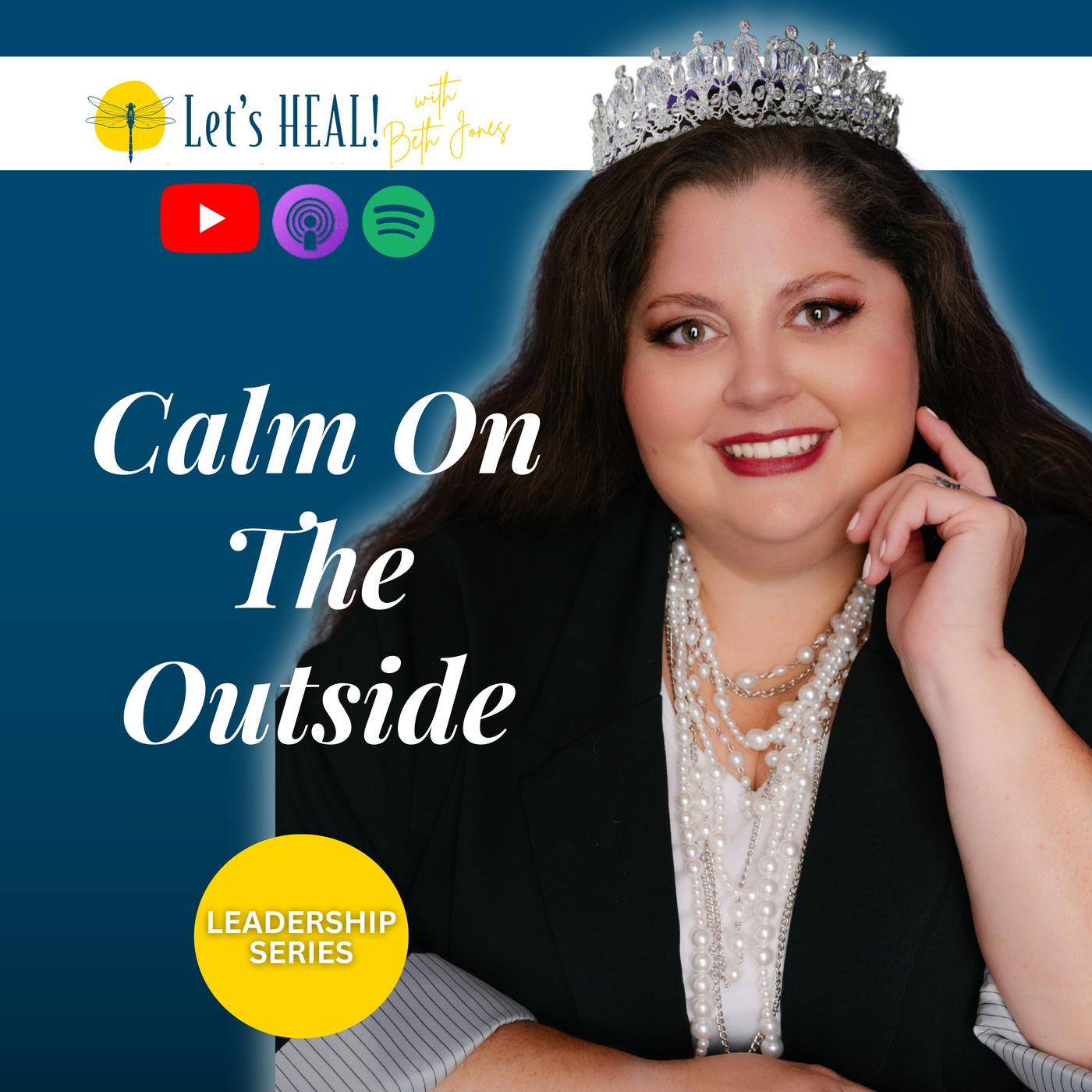
speaker-0: People have said, you're so calm, like you just navigate that like so well. But internally my little heart is fluttering away like little legs, like underneath underneath the pond. Like just you just see this glide across, but internally it's a whole Yeah. So there is that piece of things that happens for me.
speaker-1: Welcome to Let's Heal. I'm Beth Jones, your leadership performance strategist and the healing mentor. 50 episodes taught us what healing looks like for survivors. Now we're bringing that wisdom into the business world. Conversations at the intersection of leadership performance and healing the survival patterns that keep us from achieving real success. This is long overdue, so let's get to it. Hello everyone and welcome to this episode of the leadership series Let's Heal. My guest today is Jessica Hammock, a returning friend of the show, and someone who sits in the seat very few people occupy. She is the director of behavioral and mental health for one of the largest charter school systems in Texas.
speaker-0: Of
speaker-1: responsible for crisis response and mental health training across 100 campuses and 25,000 students. Jessica was with us back in early August 2025 where she shared an extraordinary personal story, her husband's traumatic brain injury that erased his memory, including of her, and a decade-long journey through infertility and the identity work that came out of both. Today we're going to connect that story to something we haven't talked about yet. What it actually looks like to lead at scale when your own survival patterns are still running underneath you. Jessica, my friend, welcome back to the show.
speaker-0: I'm so excited to be here and continue this conversation.
speaker-1: For you to be here too, and thank you for joining us. So, give the audience an insight into who you are today.
speaker-0: Yeah, absolutely. So, ⁓ like you said, I'm the director of behavioral and mental health. That just happened. It was this evolution over time. I started out as a school teacher actually and realized very quickly that students needed somebody that could help them with their mental health and their the crisis that they were going through. I I learned this lesson of it didn't matter how good I was at teaching math and learning all the methods, it was the trauma and the mental health piece that was in the way of them learning. But when I originally started, the school the system that I'm at didn't have anybody officially in place for mental and behavioral health. So it became this advocacy for something that I didn't really realize. Like had I had a fast forward 'cause I've been in the role now ten years, had I had a fast forward of what it was gonna look like today, I probably would have said, No thanks, I'm good But like I I really believe God sometimes doesn't allow us to see the full vision because we might get a little too scared to do that. But at the time it was like I just wanted to do counseling and I just kept advocating, just let me try to counsel a couple kids, maybe at this campus or one of the other campuses, like let me just get started. ⁓ and the passion is what drove me to start. And I think that's really important sometimes in leadership is having that passion to get started because vision is important and and we need vision to continue to move through. As leaders, but passion is really important so you can kind of keep focused on that energy. I know, like, even when we had people come to our campus, I'd be like, Who do you know that can give me a job? Who do you know that can hire me to do counseling? And even to the maintenance man who's Look, lady, I'm just here to fix the toilets. Like, I don't I'm pretty sure though he talked to somebody because like he's like, Give this woman a job. So when I started out, yeah, it was like, Don't just leave me alone. I just need to fix the toilets and be done. I very much appreciate it. Anyways, I I the first year was just me. It was about sixty campuses all spread out across the state of Texas. So if you're familiar with Texas at all, we're very spread out. So it's like twelve, fourteen hours to go from Texas Arcana to El Paso. And we had campuses on both sides, Amarillo, Del Rio, Rio Gran Valley, Houston, Austin, San Antonio, and in between. So it was not just this little and I think people don't realize that from like a geographical standpoint. Most school districts are in a very confined area. We're very spread out. So there's a lot goes into that. And Texas Schools, whether public schools or charter, are not required to have nurses or counselors. They're it's they're not a required position for any ISD or any public school system. So these positions in a lot of places don't get the same funding to actually fulfill them. So that being said, today ⁓ I'm actually meeting with my team next week for our training. We have 12 counselors that serve underneath me to support the load. So not just managing and the crisis for the schools that we have. We've expanded We have a hundred campuses now. But having 12 ⁓ counselors underneath me was definitely like a part of the vision I never would have saw. And in that journey over the last 10 years, I also opened a a private practice of sorts where I it's called Vibrant Voice. And after I spent a long time counseling kids and teens, I was like, okay, let me get them in their early twenties too. Like fix their life before they get on the real path, you know? And those I did some great work. I love young women who are in that phase and it was really cool to see their transformation. And also they just don't have the funds to pay for things a lot of times. So I'm like, this is not gonna be a sustainable business this way. And then I started coming across more and more women who were thirties, forties, fifties, who were high high powered women in leadership positions themselves, entrepreneurs, serial like business owners on the pathway to change the world also who had trauma that was disrupting them. And the thing is is about when you when you know about trauma, especially from a clinical standpoint, which is where mine comes from, there's a lot of trauma-informed coaches out there. They're not the same, let me just say that. What I do is very clinically structured and understood. You see it everywhere. It's hard to unsee it.
speaker-1: It is.
speaker-0: It's hard to unsee it. But for me it was like, okay, how can I help these women actually live their best life like they are attempting to do but have nervous system regulation and feel good about themselves doing it? Yeah. Where they're not disguising all these symptoms and pretending they're not happening and just pushing through to the next thing. Like how can I help them be fully alive while they're doing the thing? And that's become something that has really taken on a passion that I help them connect with their own identity. And sometimes it's in therapeutic. coaching, sometimes it's in true counseling sessions, and then sometimes it's consultation for them and their team and how their trauma or their team's trauma is impacting their goals and moving forward and connecting with the vision of their their business organization or whatever they're at. So that's kind of where things are today.
speaker-1: Yeah, it's the similar mission that I have just from my own experience is I come at it a different way than you do, but ultimately that's what I know to be true as well. That so many people who are not really performing at their peak, whether they know it or not
speaker-0: Yeah.
speaker-1: probably tied back to some sort of trauma that hasn't been dealt with. And I think a a lot of that is because people misunderstand what trauma actually is. Right? They have the you know, the big stee big T stuff in their head, which that's definitely part of it, but they don't think about the daily interactions with people that just pile on and pile on and pile on and can crush you as was
speaker-0: And generationally how how it shows up different in different generations. Yeah. And that's one thing that I've be really said like, hey look, like this is the this is what trauma looks like in boomers and here's what it looks like in Gen Xers and Millennials and Gen Zers. And when I say that they're like, Yeah, maybe we should talk further.
speaker-1: Right. Yeah, exactly. 'Cause you start to recognize yourself.
speaker-0: Yes, yes, yes.
speaker-1: Right. So that's what I love about your work and your passion is really trying to help people become the absolute best versions of themselves. Yeah. But it it's hard. That path is hard for most of us who are on that on that path and on that journey. But I and I love Vibrant Voice, just the name of that. And you and I hope people who are watching this will take the opportunity to spend some time getting to know you because you'll see great photos out there of her with this beautiful crown on her head. Head and just it's amazing. So you just have that very vivacious energetic personality, which I think helps people to move through the pain and the process. So yeah, you're in a good place. You are now we can see the passion in you too. So which is wonderful. Yeah. So let's talk about I'm gonna I want to keep going on on the the leadership aspect of what you were saying because you know we're in the leadership series of this show, and I do want to talk about s through the conversation, ⁓ you know, trauma showing up in us as individuals and the way that we show up and lead and you personally have had that experience. So ⁓ I touched a little bit on some things that you've been through in your life, which you've done a lot of work to do some healing work on that. What I want to ask you right now is on the day in your current position when you get a call and there's a crisis at one of the campuses, and first of all, can I just say I'm struck by the fact that it's fantastic you have twelve
speaker-0: Yeah.
speaker-1: Counselors that work underneath you, but I did say you have twenty five thousand students. So there's a little bit of a disconnect for me there, but it was a big load. So tell me what happens to Jessica when you get that call and there's a crisis at one of the campuses?
speaker-0: It's still big load, yes. Yeah, there is when the call or the text message comes through, I switch into this go mode. As it's it's very much like a first responder of sorts in assessing my first question is usually the the the highest volume of calls, let me say that the highest volume of of crisis that we typically get are a death loss. Whether that is a death by suicide or the second leading cause of death in ⁓ individuals ages ten to thirty four is suicide. But the first one is actually car accidents. And so we Whether you know whether it is one of those two, because that's what we have actually seen practically play out. My first question is to the principal that's calling me and how are you doing? Because I need to get a lot of information from them on triaging the situation and dispatching appropriate personnel. And if they're not in a place to actually get me what I need, the next portions of the conversation are sort of need to shift gears. So I try to assess like who am I working with here? Do they actually have the capacity to communicate? With me. And in that go mode, I become sort of like this duck on the pond effect where outside people have said, You're so calm, like you just navigate that like so well. But internally, my little heart is fluttering away like little legs, like underneath underneath the pond. Like just you just see this glide across, but internally it's a whole Yeah. So there is that piece of things that happens for me, and then I want to assess like A lot of information and then make decisions on disbursement for the right triage. There's a lot of pieces that go into responding to crisis. It's like who do we need to dispatch immediately? How close are they to the closest support team of counselors and resources? How long has the student been with us? Not that we apply any different aspects, but we just sort of think about the impact of the death loss to the community itself. Because just by nature of the relationship, if the student's only been with us a couple weeks, they don't Have necessarily the same depth of relationship that somebody who's been with us four years, six years, ten years, that kind of thing. It's just by the nature of the situation. So we still show up in the same way, but I have to think about how big is the impact going to be to pull in the appropriate amount of personnel. And then we contact the families to see how we can support them. So I have somebody contacting families, I have somebody contacting our upper chain of command. Our C level team is just notified of all of that for support reasons. We have a safety and security team that's notified of things just to see what supports they can provide. And we have a communications team that prepares communications for the student body and the families and stuff like that. So I become like this, you do this, you do this, you do this. And then for me is checking in with my own supervisor too. Partly because I really I feel responsible for my team. And and and as they execute these services, there's still a version of me that is from 10 years ago. There's like I have to To go, I have to do the thing. And I want them to feel supported from a leadership standpoint instead of just saying, You got this. And and so my boss is like, You have to pull back. You're at a level where we're leading differently, so we have to pull back. And so balancing that when am I pulling back? When am I pushing in? And so I'm always concerned about like, how are they doing? How are they handling this information? Did they have a more personal relationship with this student? Because they're maybe doing sessions at that campus. And and how is this? Impacting them? How is the loss affecting them? Sometimes the decisions aren't as easy. We had a situation at a campus this year, and my first thought was like, Okay, like I'm ready to go, let's go. Like they're there, but I'm gonna go too. I knew it was significant for this particular campus because they've already experienced several different crises and tragedies, so I want to be like in there with them. And my boss is like, Absolutely not. You just got back from going all the way to El Paso for a week long of training. You literally landed at 10 o'clock last night. This was at seven o'clock. The next morning, she's You are not getting in the car to go. And I'm like, but she's like, Jessica, this is why you have the team. And I think that's the leadership part of me that's still trusting. I know that I have good team members and I know they can do the work, but the heart part of me still wants to support and take care of them too, from right there, when it's not in my best interest, it's not in their best interest for a lot of reasons. I she's like, take the weekend. This was this happened to be on a Friday morning. She's like, let them go today. take the weekend, recover, and then you reassess Monday, do you need to actually go? And I did end up going down later on that next week because of some of the other things that came out in the play. ⁓ just different pieces, but I had time to recoup and recover, so I wasn't running in. And we use this metaphor a lot about like take care of yourself. You can't pour for an empty cup, blah blah blah. You know, and that's all fine and well to say that, but executing that you have to be really intentional as a leader.
speaker-1: Yeah.
speaker-0: And a lot of people have probably flown on an airplane and they've heard that you gotta put your own oxygen mask on first. Mm-hmm. And that's good too. That's a good saying too. But I think what we don't realize about that is ⁓ and this was the lesson for me. My daughter who's four, when she was six months old, we flew for the first time. And she I when they gave that instruction, I'm like, You're stupid, of course I'm putting hers on first. She's little and helpless, she can't do it. And then it's like, Jessica, but like what if she resists? What if she's not ready to receive the help? You are offering her. What if it's a fight? Then you and her both become incapacitated, and that's not gonna work either. And I think in that moment it hit me about all the different layers of leadership, of mental health supports. You can't pour from an empty cup, is a fine saying. But the reality is, is when you're providing support in any industry from a leadership to the team players you have, there are times they are resistant to receiving the support, the guidance, the feedback, the correction. And if you do not have your own Oxygen mask on, whatever that looks like, your own therapist, your own mentor, coach, your own way to manage your trauma responses or healings, it can become more than you anticipated very quickly. And if that resistance is there, you will not be able to sustain leadership from that standpoint. And that's why it's so important to recognize do I need to pull in my own supports, which is why I called my boss and she's like, No, you're not going.
speaker-1: Yeah. Which I I everything you've said there is is beautiful and I think really some great messages that you're putting out there and it's the truth. And what strikes me about what you've just shared is that the level of awareness that you need to have as a leader is sort of it's almost like a hub and spoke, right? You're in the middle of it, and so you're looking inside, what is that hub got? But then you're looking at everything around you, and that's you know, you can think about it the people above you, the people below you, and having that level of self awareness. awareness to be able to really focus on who has the right support, including me, and who needs support, but also to be able to make the decision, and you're dealing with crisis, who can actually help move us forward in this situation? Like who actually has the capacity on board, the energy capacity in all different forms to help us move forward. The level of awareness for one individual to have is I mean yours is
speaker-0: Yeah. Yeah.
speaker-1: at a very high level, but I think for all of us as leaders, yeah it's a lesson to take on board is you know sort of a l ⁓ you know awareness being at the core of all
speaker-0: I I think a lot of leaders, especially if they're in small businesses or entrepreneurs, and it's not to say that it's not in corporations, because I see this too. Yes. A lot of leaders don't recognize the significance of an individual on the team having a trauma, how much it impacts the the workflow, the relationship capacity and connections, moving forward towards the business. It's not just one person dealing with everything. The whole piece of things has completely hit a disruption. And needs addressed. But if you as the leader are stressed out about finances or accomplishing these projects or meeting with these clients or moving this forward or XIZ in these new deals, you are gonna miss how to recalibrate what's happening so that it can be effective in acknowledging that there's a disruption. But how do we recalibrate so we can all move forward the way we need to?
speaker-1: Yeah, and I think that the challenge that we still have is that in a lot of organizations, whether it's sort of stated or not, there is still a culture of you leave the person at the door when you walk in, and that's just not realistic. And to your point, if you're dealing with a personal disruption, you can't separate that. And in fact, it's probably gonna show up in your performance, which is a problem for the team and for the organization. Yeah. And until we get to a place where everybody feels safe bringing them their whole whole selves and and and you know doing what you did and having a conversation with your boss where your boss has enough awareness about you and who you are and what you're doing to be able to say just take a pause right but that means that you have actually have to engage with people and people have to be allowed to show up fully as who they are and we're just not there the way that we need to be
speaker-0: Yeah. Yeah. Yeah. It's definitely something and I tell the teaching staff all the time when I go to campuses, this idea of like leave your problems at your door is a lie. It's actually impossible. So let's like not pretend that we're gonna do that. But what we can do instead is first of all acknowledge that we're at a hard place and recalibrate the story that's in front of us to say what is the best capacity I can do in this moment? Mm-hmm. Wha how can how can I show up and and effectively do this? What does this look like? First of all Giving myself some grace because if I actually say I'm gonna pretend this doesn't exist and I'm just gonna go through the motions, it's actually worse for me and I have less productivity than to say, This is really hard, this is a difficult morning, a difficult day, a difficult season, I'm gonna do the best that I can to show up. We actually allow our nervous system to relax just a bit, and we take the pressure off ourselves, and then we can actually become essentially more productive.
speaker-1: Yeah. And I think even in some ways we we make the trauma, whatever we're experiencing, worse because we're denying our own need for something that is very real in the moment. Which is, you know, not it's not good to do that to ourselves. When you when you go into that go mode
speaker-0: So what
speaker-1: I was just wondering when you were talking about that earlier, was there ever a time in your life ⁓ in the past when you would have described that as sort of compartmentalization? Like this is what I'm so focused on right now that I can set aside and not focus on other things, perhaps maybe during those years that were so difficult after your husband's brain injury and then the years with the infertility battle and all of that. Is that
speaker-0: Never happened. There's definitely been a switch in how I process information, especially very early on when I had switched into doing this version of the career and and dealing with the crisis now as they come, like as the sole person before I build a team, it's this navigating in and it's like what had to shift was my mindset perspective about my responsibility in those crises. Because the thought was you're the this is what I would hear a lot, you're the expert, what do we do? And while that there was a level Of truth to that, I was not responsible for the full outcome of everyone in that situation. And I had to s shift that because very early on a crisis would happen and I'd be like, I've got to solve this whole problem and make everybody feel amazing about it. And owning the weight of everybody else's choices and outcomes was not mine to own. I actually got really physically sick very early on. ⁓ had a lot of like body congestions, sicknesses, illnesses, had to take more time off work, became like really s just. sludgy in every part of my life. I love Physically. Yeah. ⁓
speaker-1: Yeah.
speaker-0: And I I had some real leaders of faith have some conversations with me. Faith is really important to me and for me the reframe was like, if nothing else, ⁓ you get the opportunity to take these people to the feet of Jesus and say like I'm intervening on their behalf that that you would intervene, that you would be the final outcome, whatever that looks like, that y that I just get to bring them to you and surrender this outcome. And it's not my responsibility to fix this for everyone, but I get to be a place And whether somebody has faith in their life or not, that shift in mindset helped me to realize I get to be a player in this. I have a level of expertise that can provide support, but I'm still dealing with all these other humans who also have choices, and I cannot own their choice as my responsibility. And when I had that shift and I was willing to at the I started a practice at the end of every day, especially on those heavy days, of just sitting and saying, Okay, God, for me it was God. But yeah, I know some people are not there. So I want you to not lose me in this piece of the conversation. Whatever it is for you, God, source, universe, whatever, just higher power, something just to say I've shown up the best way I can today. I did the best version of what I know to do. Guide me in whatever steps are neck next and help me to not own a false sense of responsibility in other people's outcomes that is not mine to fix. Because I would I would be very distraught, like, what if I never have another session? With the student? What if I never see the outcomes of the support I've given? What if they choose differently? Like, how do did I say the right thing at the right time? Did I give enough support? Did I not give enough support? Like a lot of those questions that people, especially sometimes I think in leadership, play through these roles in their head. That stopped waking me up at two or three o'clock in the morning, having all these thoughts of me being right or doing it right or fixing it a certain way or having the outcome have a happy ending to it. And when I was willing to say I showed up the best way I could with the best resources I could help me to learn and grow to be better the next time around or show me what I can do differently. But surrendering the outcome of responsibility completely shifted the game. And it's how I tell every person that I hire and I work with this is not your responsibility.
speaker-1: Mm. It's just strikes me when you were talking about that that there's there are a lot of elements of people pleasing and imposter syndrome and inner critic that are all tangled up in that sense of responsibility that we have for the outcome of other people. And I I think you're I something I've had to learn as well. That we're just we're just not and we're not we're not I mean not only are we not we were never intended to be in that place, right? You know, it is I mean, I believe what you do. I mean there's a higher power orchestrating lives and everybody makes their own decisions. Yeah.
speaker-0: It's like that concept we use. We use this language of like you can lead a horse to water but you can't make it drink, right? Yes. But this is what leaders do. They lead it to water and they're like it doesn't want to drink. Maybe it doesn't like the color the color of the water bin. Maybe it doesn't like what the what the water's you know, there's flavor in the water. It needs more minors, or it needs this type of or let me take it to a natural source, or let me maybe it's got too many burdens on its back. Maybe there's too much sensory stimulation. We used to go down this path of trying to fix the water. Yes. Instead of recognizing the dang horse just doesn't want to drink.
speaker-1: Yes, or I brought the horse to the wrong water hole. Right. Or I I did, I did, I did, I did, right? Right. The horse didn't want to drink. That's exactly right. They don't want to make the choice for themselves.
speaker-0: And and being okay with like okay, I've done everything I can. I provided all the I provided like twenty thousand different opportunities and ways to drink the right kind of water and the right water all the details and the horse still chooses not to drink. And you know what? The horse will drink when it's good and ready to drink. And if I say this is a failure because the horse didn't drink, the horse has its own free will to decide when it wants to drink.
speaker-1: Yeah, that is exactly
speaker-0: And that's where we get to recalibrate. Takes take that inner critic and say, Did I make the best choices? Did I look look for cues that the horse might have given me? Like it's you know, turned away or did this or just you know? Or am I willing to say I did the best that I could in this situation, provided all that we have access to and they chose not to?
speaker-1: Yeah, I I I love the way that you explain that. What does that analogy really mean? Yeah. Lead a horse to water, but you can't make it drink. Let me tell you what it really means. That's it's fantastic. I So today, ⁓ would you say that
speaker-0: Yeah.
speaker-1: you're operating from a place where everything that you've been through, your own pain, your own healing journey, it's sort of resourcing you as opposed to giving you an armor that protects you in your work.
speaker-0: I have recognized where what my weaknesses are because of some of the traumas I've been through. And so operationally in our our school district, I'm part of an operations division that includes like safety security, child nutrition, records retention, quality assurances, some other operational standard practices. So I have a really strong like peer support team. And we've kind of had this joke, but like if I'm have if I know my weakness is when my past passion really lights up and I get really like passionate about making something happen it'll leak out my eyes. So if there is I cry. If for those that didn't get the joke, I cry. My passion leaks out my eyes, okay? So from a really unhealed place of not using language that actually communicated what I need about the passion. So for me, right now what I realize is instead of like shutting down when I feel that intensity increase or when I ⁓ want to just cry and be really unveiled in an unhealthy way, ⁓ especially in places where my voice is needed for advocacy, I have found ways to say sit down ahead of time and kind of self-process like what's here. How what is the message I want to communicate? What is the thought that needs to be carried forward? What do I want to convey? What's what is this pain that's leaking out of my eyes? Where is that coming from? Is that about me? Is that about some message I feel like passionate about because somebody else's pain? And then I run it by my supervisor. and I will go in and say, look, I'm just gonna let the passion leak for a minute. I don't need you to fix anything. I just need to vocally process this, and at the end I'll ask you if you have any thoughts. And that, and she's fine with that. We've actually set that up sort of as my process. But having that person or or team, peer, coach, mentor, whoever it for you as a leader is really important that you have that person that can let you be in those vulnerable places just for a minute. And I'm not saying it shouldn't be your spouse, but a lot of times spouses don't understand the industry you're in. So I would really encourage any leaders who are using this tool, male or female, that you have somebody that understands your industry. Because your industry has its own unique specifics that somebody from an outside industry is not gonna understand the same way. I don't necessarily understand the irrigation industry. So me having you know, I can provide leadership supports and mentorships and stuff, but if you are in the area irrigation industry and you come to me venting about this particular situation, all about this irrigation stuff, I am gonna have no context to actually be able to empathize with you about this process and understand how to even support you in the vision to carry you forward. Now, as the training that I have, I have some questions I could lead and guide, right? But the reality is is you want to find somebody that has an industry similar enough to yours, they understand the nuances of it. And that for me was really powerful that I wasn't just putting up armor. I wasn't just shutting down. But also not dismissing that there's still emotions that I feel about some topics, which is part of the passion. And and not ignoring them, but finding the right sounding boards and the right supports. Whether that's you start with yourself first and get all that stuff out first, journal it out, write it out, talk it out, whiteboard it out, whatever process works for you, go on a walk, you know, whatever that looks like for you, go, you know, punch a punching bag, go work at a gym, whatever it is first, but start with you. And if you haven't kind of worked it out where you feel a little clarity around it, then pull in a a support in your industry, peer coach, mentor, a supervisor, whatever works for you, that you can have that level of like vulnerability for a minute to just be like, I need to process this in a way that brings me to clarity are the two things that have l helped me the most significantly. And now we kind of have a running joke like, I did that whole thing and I didn't cry once.
speaker-1: Which which which by the way in case anybody's confused, you're talking about just being angry.
speaker-0: Yeah, yeah.
speaker-1: Yes. And I I I think, you know, the point you're making here, which I think is a very valuable lesson for all of us, is that no matter how much healing or how much self-awareness you've done, you are still a human being who is going to be you're going to emote over situations that you find yourself in. And sometimes those are hard, heavy, fear-based, caustic, reactive type emotions that don't need to be out in the environment you're working in.
speaker-0: And and and what I typically see, though this is not true for everybody, but what I typically see is that women will cry and men will get depressed. Yeah. And so i if you're dealing with those things, the weight and heaviness, men tend to they ⁓ everybody has the explosive factor that they can have at any given time with the anger and passion. But women tend to have an emotional release in the term of crying, whether it's from the overwhelm or anger, whatever, but men tend to have more of a depressive factor. And so So that's really important that anger is depression is a form of anger turned inward on ourselves that we're imploding in it and recognizing that that anger is this the what they call the secondary emotion, it's actually higher level emotion energetically. When you think of a scale, what's underneath it? So we think of like anger is the iceberg part that we can see, but there's a bunch of stuff holding it in place, and so knowing what those are like fear, guilt, shame, you know, grief, sadness, if you can identify what's below it. vulnerability, some of those things, if you can identify what's below it in that self-assessment, it helps you move past the anger in a different sort of way to still take action on what you're passionate about or what's guiding these things, but not in a way that unveils sort of like all of your rawness and your healing about it. And and that's really powerful.
speaker-1: Yeah, I think you also have to go back and actually do the root cause work on those underlying emotions to really be leading to a place where you're healthier. Yeah. Overall. Yeah. Yeah. Yeah. So tell me what your own healing work taught you about leadership that you couldn't see before you started your healing journey.
speaker-0: Yeah. Well, I think the first thing was from very early on in life I felt like I had to perform a certain way ⁓ for love and acceptance and and chosenness, that it had to be performance based. And what I've realized through the healing work is I am who I I have an identity that stands outside of the performance of any function that I can do. But that I identity carries with it a giftedness about certain execution of certain things. Things, the way I think about things, the way I approach things. And that giftedness nobody can take away from me. And I think that the more healing I do and the more confident in saying, like, yes, this is my giftedness, and recognizing, like, no, this is not. What are my frustration points that I just don't have? This level of this is just not, this is an area of frustration for me because it's not my giftedness, and being willing to say, you are really gifted in this, can you do this for me? And I and I will do this, or I will be responsible for these things, doesn't mean I don't want learn and grow in those, but when I force myself to spend time in frustration points, it reincites those old like performance patterns, like you have to do this to to get love and acceptance or to get approval or to you know
speaker-1: Yes.
speaker-0: And so the healing component is recognizing what the giftedness is. The giftedness is is I actually have the ability to emotionally feel what other people are thinking and feeling in the room without anybody saying a word. I can read the room emotionally and recognize who's off, whether they say anything or not. Doesn't matter how good of a poker face you have. But the other part of that is I know that I have the giftedness in communication. And so using that, you know, several friends we joke, I'm their F A F O friend. And what I mean by that is they in order to avoid circumstances where they get themselves in trouble for people who have entered that zone, you know. ⁓ they'll call me and they'll be like, what is the right thing to say here? How do I get out of the situation? How do I communicate back without getting fired?
speaker-1: Yeah, being a little bit out of that. So that's so funny.
speaker-0: So there's a level there's a lot of people that I've met, they're like, I just don't have the words, I don't have the language, like that's just not who I am. But give me this task or give me this thing to do, and I'm amazing at it, right? So recognizing what is this zone of genius that I have is I'm very strong in idea creation, I'm very strong in communication, and knowing how to tweak my roles and responsibilities even within my leadership to say these are not the strengths that I have easily. ⁓ like spreadsheets are just not my thing. Like it's a big frustration. frustration, it takes a lot of energy out. But I have a team member who's amazing at it. And so I will call them and be like here's what I need and here's what it needs to look like and they're like done in like less than thirty minutes. I'm like, I do not have that giftness. But they'll be like, I need to reply to this letter and I need it to include some of these pieces. I need to say this and I'm like, okay, here's what you do and split it out and we're done. Yeah. So instead unhealed version of me would be like, I've got to figure this out so that I don't get fired. I've got to figure this out so that I can continue to perform job functions. I've got to figure this out so that my colleagues think, you know, that I'm competent here. I've got to figure this problem out. Instead of out recognizing where my giftedness is and that and that that's a really cool piece of that's how I'm designed to be, but also outsourcing those things to where I'm not.
speaker-1: Yeah, and I I think ⁓ what you're saying there, what I love about this is that it's the diversity of a team that gives you what I, Jessica on her own, thought that she had to do, right? And that's the reality of putting together a really good team is recognizing everybody's weaknesses and playing to their strengths, including ourselves, right?
speaker-0: Yeah. And sometimes, you know, if you're a sole entrepreneur, you don't have the ability to do that. So if you're a sole entrepreneur, like you might need to outsource that to somebody else that can you pay to do that job function. It may not be you
speaker-1: Yeah, yeah, yeah, exactly. Which is part of what I'm doing now. Yeah.
speaker-0: Yeah. Yeah, I mean and then there's nothing th I think that's the biggest thing for entrepreneurs to understand and hear is that you are there is this concept in the entrepreneurial world that sometimes you have to be the solopreneur and and and I get that concept. But I think it's it's weighing where are the areas of life that I can outsource. If if right now I have to create all my social media posts because I haven't generated enough income into my business, okay, that's fine. I get that. And also there's really inexpensive ways to do it or things to trade services for, right? But at the same time, maybe you can pay somebody to come like do the laundry for you or f yes, you know, or cook dinner for you, or you know, get meals delivered, or s a house person to come and do the laundry or the dishes or that so that you're not trying to split time doing those things and you can take that extra time and create a social media post.
speaker-1: Thank you.
speaker-0: Yeah. But there's lots of creative ways to do that and I mean if you need an idea, I have it, right? Like that's a good idea.
speaker-1: Yes.
speaker-0: There's colleges college kids learning how to do some of this marketing and branding stuff, you know? See if you could give the provide a service for them and they in exchange. Like there's a lot of ways to sort of outsource is is but I think giving yourself that permission to do it instead of feeling like I've gotta do this by myself instead and op instead of saying, I'm open to receiving the support that I need to move this forward, whatever that looks like, and recognizing that you as a human are not at a failure place because you're doing that.
speaker-1: Yeah, yeah. It's a great, great eye great advice. I'm listening to you, by the way. So I'm I'm gonna ask you one more question. So if you're sitting across from Jessica in your mid-twenties, knowing what you know now, and that person you can tell believes that performing, being very composed, is the way to show up. It's the only option, what would you say to that person?
speaker-0: Sure. Wow, man. That's a good question. I have a lot of compassion for her. She's come through a a really a lot of stuff. I think what I would say to her is there is a version of you that you may not be able to see right now, but who that version of you is inside of there that maybe you're protecting or you're hiding is is here for the right purpose and the right reason. And no matter what you don't know that's in front of you, I want you to continue to choose to seek to align with that version. Instead of letting all of these other people dictate things, continue to search for that version of you. Then when you've shown up to things that you feel shining. You feel that's sort of how this vibrant voice came about was connecting with that version of myself instead of punishing her. And trying to make her be neutral and fit all the boxes and check all the things and do all the projects and keep keep coming back to her and just keep realigning with her at each step, each decision, each relationship because ultimately she's the guest
speaker-1: Yes, she I love that. She is the gift. And you are a gift and you almost made my eyes leak. They almost wanted to leak. They did. That's beautiful. Yeah, yeah. It's great advice. And I hope everybody listening to this or watching this takes that advice to heart. You've you've had some great nuggets today, so thank you. Thank you very much. So tell everybody where they can where they can find you. ⁓
speaker-0: I know, right? Absolutely, my website is ⁓ w dot vibrantvoice.life. ⁓ you can find me on Facebook and Instagram, Jessica Vibrant Hammock, ⁓ all sorts of stuff there. And so either one of those ways you can reach out to me and contact me.
speaker-1: Yeah, and we'll connect all that into the show notes too so people can find it. Thank you so much for being here today. It's really good to see you again and have this conversation. I I do think there are more to come because I still have a lot of questions for you. So you're just you're just a wealth of experience that's really come together in a beautiful way to advise people, to give I mean you've been there, done it, right? And the way that you look at things is just amazing. It's beautiful. So thank you very much.
speaker-0: Thing. You're welcome. Thank you.
speaker-1: Yeah, and thanks to all of you for being with us today. That is exactly why we're here to have these conversations about the survival patterns that are holding you back from being an amazing leader. And we're talking about what it is that you can do to move yourself forward. Thanks for being here. That's what we're here for. Honest conversations about the survival patterns driving your leadership behavior and what it takes to change them. If today's conversation stirred something in you, if you recognized yourself in what we discussed, or simply have the feeling that something isn't working the way that it should, I want to hear from you. Email me at Beth Empowered Survivors dot com. That comes straight to my inbox. No gatekeeping. Just an honest conversation about where you are and how I can help you. And if you want to learn more about how I work with leaders and organizations, whether that's speaking, coaching, or bringing this conversation into your workplace, visit me at EmpoweredSurvivors.com. Everything you need to know about how I serve people is right there.
speaker-1: Welcome to Let's Heal. I'm Beth Jones, your leadership performance strategist and the healing mentor. 50 episodes taught us what healing looks like for survivors. Now we're bringing that wisdom into the business world. Conversations at the intersection of leadership performance and healing the survival patterns that keep us from achieving real success. This is long overdue, so let's get to it. Hello everyone and welcome to this episode of the leadership series Let's Heal. My guest today is Jessica Hammock, a returning friend of the show, and someone who sits in the seat very few people occupy. She is the director of behavioral and mental health for one of the largest charter school systems in Texas.
speaker-0: Of
speaker-1: responsible for crisis response and mental health training across 100 campuses and 25,000 students. Jessica was with us back in early August 2025 where she shared an extraordinary personal story, her husband's traumatic brain injury that erased his memory, including of her, and a decade-long journey through infertility and the identity work that came out of both. Today we're going to connect that story to something we haven't talked about yet. What it actually looks like to lead at scale when your own survival patterns are still running underneath you. Jessica, my friend, welcome back to the show.
speaker-0: I'm so excited to be here and continue this conversation.
speaker-1: For you to be here too, and thank you for joining us. So, give the audience an insight into who you are today.
speaker-0: Yeah, absolutely. So, ⁓ like you said, I'm the director of behavioral and mental health. That just happened. It was this evolution over time. I started out as a school teacher actually and realized very quickly that students needed somebody that could help them with their mental health and their the crisis that they were going through. I I learned this lesson of it didn't matter how good I was at teaching math and learning all the methods, it was the trauma and the mental health piece that was in the way of them learning. But when I originally started, the school the system that I'm at didn't have anybody officially in place for mental and behavioral health. So it became this advocacy for something that I didn't really realize. Like had I had a fast forward 'cause I've been in the role now ten years, had I had a fast forward of what it was gonna look like today, I probably would have said, No thanks, I'm good But like I I really believe God sometimes doesn't allow us to see the full vision because we might get a little too scared to do that. But at the time it was like I just wanted to do counseling and I just kept advocating, just let me try to counsel a couple kids, maybe at this campus or one of the other campuses, like let me just get started. ⁓ and the passion is what drove me to start. And I think that's really important sometimes in leadership is having that passion to get started because vision is important and and we need vision to continue to move through. As leaders, but passion is really important so you can kind of keep focused on that energy. I know, like, even when we had people come to our campus, I'd be like, Who do you know that can give me a job? Who do you know that can hire me to do counseling? And even to the maintenance man who's Look, lady, I'm just here to fix the toilets. Like, I don't I'm pretty sure though he talked to somebody because like he's like, Give this woman a job. So when I started out, yeah, it was like, Don't just leave me alone. I just need to fix the toilets and be done. I very much appreciate it. Anyways, I I the first year was just me. It was about sixty campuses all spread out across the state of Texas. So if you're familiar with Texas at all, we're very spread out. So it's like twelve, fourteen hours to go from Texas Arcana to El Paso. And we had campuses on both sides, Amarillo, Del Rio, Rio Gran Valley, Houston, Austin, San Antonio, and in between. So it was not just this little and I think people don't realize that from like a geographical standpoint. Most school districts are in a very confined area. We're very spread out. So there's a lot goes into that. And Texas Schools, whether public schools or charter, are not required to have nurses or counselors. They're it's they're not a required position for any ISD or any public school system. So these positions in a lot of places don't get the same funding to actually fulfill them. So that being said, today ⁓ I'm actually meeting with my team next week for our training. We have 12 counselors that serve underneath me to support the load. So not just managing and the crisis for the schools that we have. We've expanded We have a hundred campuses now. But having 12 ⁓ counselors underneath me was definitely like a part of the vision I never would have saw. And in that journey over the last 10 years, I also opened a a private practice of sorts where I it's called Vibrant Voice. And after I spent a long time counseling kids and teens, I was like, okay, let me get them in their early twenties too. Like fix their life before they get on the real path, you know? And those I did some great work. I love young women who are in that phase and it was really cool to see their transformation. And also they just don't have the funds to pay for things a lot of times. So I'm like, this is not gonna be a sustainable business this way. And then I started coming across more and more women who were thirties, forties, fifties, who were high high powered women in leadership positions themselves, entrepreneurs, serial like business owners on the pathway to change the world also who had trauma that was disrupting them. And the thing is is about when you when you know about trauma, especially from a clinical standpoint, which is where mine comes from, there's a lot of trauma-informed coaches out there. They're not the same, let me just say that. What I do is very clinically structured and understood. You see it everywhere. It's hard to unsee it.
speaker-1: It is.
speaker-0: It's hard to unsee it. But for me it was like, okay, how can I help these women actually live their best life like they are attempting to do but have nervous system regulation and feel good about themselves doing it? Yeah. Where they're not disguising all these symptoms and pretending they're not happening and just pushing through to the next thing. Like how can I help them be fully alive while they're doing the thing? And that's become something that has really taken on a passion that I help them connect with their own identity. And sometimes it's in therapeutic. coaching, sometimes it's in true counseling sessions, and then sometimes it's consultation for them and their team and how their trauma or their team's trauma is impacting their goals and moving forward and connecting with the vision of their their business organization or whatever they're at. So that's kind of where things are today.
speaker-1: Yeah, it's the similar mission that I have just from my own experience is I come at it a different way than you do, but ultimately that's what I know to be true as well. That so many people who are not really performing at their peak, whether they know it or not
speaker-0: Yeah.
speaker-1: probably tied back to some sort of trauma that hasn't been dealt with. And I think a a lot of that is because people misunderstand what trauma actually is. Right? They have the you know, the big stee big T stuff in their head, which that's definitely part of it, but they don't think about the daily interactions with people that just pile on and pile on and pile on and can crush you as was
speaker-0: And generationally how how it shows up different in different generations. Yeah. And that's one thing that I've be really said like, hey look, like this is the this is what trauma looks like in boomers and here's what it looks like in Gen Xers and Millennials and Gen Zers. And when I say that they're like, Yeah, maybe we should talk further.
speaker-1: Right. Yeah, exactly. 'Cause you start to recognize yourself.
speaker-0: Yes, yes, yes.
speaker-1: Right. So that's what I love about your work and your passion is really trying to help people become the absolute best versions of themselves. Yeah. But it it's hard. That path is hard for most of us who are on that on that path and on that journey. But I and I love Vibrant Voice, just the name of that. And you and I hope people who are watching this will take the opportunity to spend some time getting to know you because you'll see great photos out there of her with this beautiful crown on her head. Head and just it's amazing. So you just have that very vivacious energetic personality, which I think helps people to move through the pain and the process. So yeah, you're in a good place. You are now we can see the passion in you too. So which is wonderful. Yeah. So let's talk about I'm gonna I want to keep going on on the the leadership aspect of what you were saying because you know we're in the leadership series of this show, and I do want to talk about s through the conversation, ⁓ you know, trauma showing up in us as individuals and the way that we show up and lead and you personally have had that experience. So ⁓ I touched a little bit on some things that you've been through in your life, which you've done a lot of work to do some healing work on that. What I want to ask you right now is on the day in your current position when you get a call and there's a crisis at one of the campuses, and first of all, can I just say I'm struck by the fact that it's fantastic you have twelve
speaker-0: Yeah.
speaker-1: Counselors that work underneath you, but I did say you have twenty five thousand students. So there's a little bit of a disconnect for me there, but it was a big load. So tell me what happens to Jessica when you get that call and there's a crisis at one of the campuses?
speaker-0: It's still big load, yes. Yeah, there is when the call or the text message comes through, I switch into this go mode. As it's it's very much like a first responder of sorts in assessing my first question is usually the the the highest volume of calls, let me say that the highest volume of of crisis that we typically get are a death loss. Whether that is a death by suicide or the second leading cause of death in ⁓ individuals ages ten to thirty four is suicide. But the first one is actually car accidents. And so we Whether you know whether it is one of those two, because that's what we have actually seen practically play out. My first question is to the principal that's calling me and how are you doing? Because I need to get a lot of information from them on triaging the situation and dispatching appropriate personnel. And if they're not in a place to actually get me what I need, the next portions of the conversation are sort of need to shift gears. So I try to assess like who am I working with here? Do they actually have the capacity to communicate? With me. And in that go mode, I become sort of like this duck on the pond effect where outside people have said, You're so calm, like you just navigate that like so well. But internally, my little heart is fluttering away like little legs, like underneath underneath the pond. Like just you just see this glide across, but internally it's a whole Yeah. So there is that piece of things that happens for me, and then I want to assess like A lot of information and then make decisions on disbursement for the right triage. There's a lot of pieces that go into responding to crisis. It's like who do we need to dispatch immediately? How close are they to the closest support team of counselors and resources? How long has the student been with us? Not that we apply any different aspects, but we just sort of think about the impact of the death loss to the community itself. Because just by nature of the relationship, if the student's only been with us a couple weeks, they don't Have necessarily the same depth of relationship that somebody who's been with us four years, six years, ten years, that kind of thing. It's just by the nature of the situation. So we still show up in the same way, but I have to think about how big is the impact going to be to pull in the appropriate amount of personnel. And then we contact the families to see how we can support them. So I have somebody contacting families, I have somebody contacting our upper chain of command. Our C level team is just notified of all of that for support reasons. We have a safety and security team that's notified of things just to see what supports they can provide. And we have a communications team that prepares communications for the student body and the families and stuff like that. So I become like this, you do this, you do this, you do this. And then for me is checking in with my own supervisor too. Partly because I really I feel responsible for my team. And and and as they execute these services, there's still a version of me that is from 10 years ago. There's like I have to To go, I have to do the thing. And I want them to feel supported from a leadership standpoint instead of just saying, You got this. And and so my boss is like, You have to pull back. You're at a level where we're leading differently, so we have to pull back. And so balancing that when am I pulling back? When am I pushing in? And so I'm always concerned about like, how are they doing? How are they handling this information? Did they have a more personal relationship with this student? Because they're maybe doing sessions at that campus. And and how is this? Impacting them? How is the loss affecting them? Sometimes the decisions aren't as easy. We had a situation at a campus this year, and my first thought was like, Okay, like I'm ready to go, let's go. Like they're there, but I'm gonna go too. I knew it was significant for this particular campus because they've already experienced several different crises and tragedies, so I want to be like in there with them. And my boss is like, Absolutely not. You just got back from going all the way to El Paso for a week long of training. You literally landed at 10 o'clock last night. This was at seven o'clock. The next morning, she's You are not getting in the car to go. And I'm like, but she's like, Jessica, this is why you have the team. And I think that's the leadership part of me that's still trusting. I know that I have good team members and I know they can do the work, but the heart part of me still wants to support and take care of them too, from right there, when it's not in my best interest, it's not in their best interest for a lot of reasons. I she's like, take the weekend. This was this happened to be on a Friday morning. She's like, let them go today. take the weekend, recover, and then you reassess Monday, do you need to actually go? And I did end up going down later on that next week because of some of the other things that came out in the play. ⁓ just different pieces, but I had time to recoup and recover, so I wasn't running in. And we use this metaphor a lot about like take care of yourself. You can't pour for an empty cup, blah blah blah. You know, and that's all fine and well to say that, but executing that you have to be really intentional as a leader.
speaker-1: Yeah.
speaker-0: And a lot of people have probably flown on an airplane and they've heard that you gotta put your own oxygen mask on first. Mm-hmm. And that's good too. That's a good saying too. But I think what we don't realize about that is ⁓ and this was the lesson for me. My daughter who's four, when she was six months old, we flew for the first time. And she I when they gave that instruction, I'm like, You're stupid, of course I'm putting hers on first. She's little and helpless, she can't do it. And then it's like, Jessica, but like what if she resists? What if she's not ready to receive the help? You are offering her. What if it's a fight? Then you and her both become incapacitated, and that's not gonna work either. And I think in that moment it hit me about all the different layers of leadership, of mental health supports. You can't pour from an empty cup, is a fine saying. But the reality is, is when you're providing support in any industry from a leadership to the team players you have, there are times they are resistant to receiving the support, the guidance, the feedback, the correction. And if you do not have your own Oxygen mask on, whatever that looks like, your own therapist, your own mentor, coach, your own way to manage your trauma responses or healings, it can become more than you anticipated very quickly. And if that resistance is there, you will not be able to sustain leadership from that standpoint. And that's why it's so important to recognize do I need to pull in my own supports, which is why I called my boss and she's like, No, you're not going.
speaker-1: Yeah. Which I I everything you've said there is is beautiful and I think really some great messages that you're putting out there and it's the truth. And what strikes me about what you've just shared is that the level of awareness that you need to have as a leader is sort of it's almost like a hub and spoke, right? You're in the middle of it, and so you're looking inside, what is that hub got? But then you're looking at everything around you, and that's you know, you can think about it the people above you, the people below you, and having that level of self awareness. awareness to be able to really focus on who has the right support, including me, and who needs support, but also to be able to make the decision, and you're dealing with crisis, who can actually help move us forward in this situation? Like who actually has the capacity on board, the energy capacity in all different forms to help us move forward. The level of awareness for one individual to have is I mean yours is
speaker-0: Yeah. Yeah.
speaker-1: at a very high level, but I think for all of us as leaders, yeah it's a lesson to take on board is you know sort of a l ⁓ you know awareness being at the core of all
speaker-0: I I think a lot of leaders, especially if they're in small businesses or entrepreneurs, and it's not to say that it's not in corporations, because I see this too. Yes. A lot of leaders don't recognize the significance of an individual on the team having a trauma, how much it impacts the the workflow, the relationship capacity and connections, moving forward towards the business. It's not just one person dealing with everything. The whole piece of things has completely hit a disruption. And needs addressed. But if you as the leader are stressed out about finances or accomplishing these projects or meeting with these clients or moving this forward or XIZ in these new deals, you are gonna miss how to recalibrate what's happening so that it can be effective in acknowledging that there's a disruption. But how do we recalibrate so we can all move forward the way we need to?
speaker-1: Yeah, and I think that the challenge that we still have is that in a lot of organizations, whether it's sort of stated or not, there is still a culture of you leave the person at the door when you walk in, and that's just not realistic. And to your point, if you're dealing with a personal disruption, you can't separate that. And in fact, it's probably gonna show up in your performance, which is a problem for the team and for the organization. Yeah. And until we get to a place where everybody feels safe bringing them their whole whole selves and and and you know doing what you did and having a conversation with your boss where your boss has enough awareness about you and who you are and what you're doing to be able to say just take a pause right but that means that you have actually have to engage with people and people have to be allowed to show up fully as who they are and we're just not there the way that we need to be
speaker-0: Yeah. Yeah. Yeah. It's definitely something and I tell the teaching staff all the time when I go to campuses, this idea of like leave your problems at your door is a lie. It's actually impossible. So let's like not pretend that we're gonna do that. But what we can do instead is first of all acknowledge that we're at a hard place and recalibrate the story that's in front of us to say what is the best capacity I can do in this moment? Mm-hmm. Wha how can how can I show up and and effectively do this? What does this look like? First of all Giving myself some grace because if I actually say I'm gonna pretend this doesn't exist and I'm just gonna go through the motions, it's actually worse for me and I have less productivity than to say, This is really hard, this is a difficult morning, a difficult day, a difficult season, I'm gonna do the best that I can to show up. We actually allow our nervous system to relax just a bit, and we take the pressure off ourselves, and then we can actually become essentially more productive.
speaker-1: Yeah. And I think even in some ways we we make the trauma, whatever we're experiencing, worse because we're denying our own need for something that is very real in the moment. Which is, you know, not it's not good to do that to ourselves. When you when you go into that go mode
speaker-0: So what
speaker-1: I was just wondering when you were talking about that earlier, was there ever a time in your life ⁓ in the past when you would have described that as sort of compartmentalization? Like this is what I'm so focused on right now that I can set aside and not focus on other things, perhaps maybe during those years that were so difficult after your husband's brain injury and then the years with the infertility battle and all of that. Is that
speaker-0: Never happened. There's definitely been a switch in how I process information, especially very early on when I had switched into doing this version of the career and and dealing with the crisis now as they come, like as the sole person before I build a team, it's this navigating in and it's like what had to shift was my mindset perspective about my responsibility in those crises. Because the thought was you're the this is what I would hear a lot, you're the expert, what do we do? And while that there was a level Of truth to that, I was not responsible for the full outcome of everyone in that situation. And I had to s shift that because very early on a crisis would happen and I'd be like, I've got to solve this whole problem and make everybody feel amazing about it. And owning the weight of everybody else's choices and outcomes was not mine to own. I actually got really physically sick very early on. ⁓ had a lot of like body congestions, sicknesses, illnesses, had to take more time off work, became like really s just. sludgy in every part of my life. I love Physically. Yeah. ⁓
speaker-1: Yeah.
speaker-0: And I I had some real leaders of faith have some conversations with me. Faith is really important to me and for me the reframe was like, if nothing else, ⁓ you get the opportunity to take these people to the feet of Jesus and say like I'm intervening on their behalf that that you would intervene, that you would be the final outcome, whatever that looks like, that y that I just get to bring them to you and surrender this outcome. And it's not my responsibility to fix this for everyone, but I get to be a place And whether somebody has faith in their life or not, that shift in mindset helped me to realize I get to be a player in this. I have a level of expertise that can provide support, but I'm still dealing with all these other humans who also have choices, and I cannot own their choice as my responsibility. And when I had that shift and I was willing to at the I started a practice at the end of every day, especially on those heavy days, of just sitting and saying, Okay, God, for me it was God. But yeah, I know some people are not there. So I want you to not lose me in this piece of the conversation. Whatever it is for you, God, source, universe, whatever, just higher power, something just to say I've shown up the best way I can today. I did the best version of what I know to do. Guide me in whatever steps are neck next and help me to not own a false sense of responsibility in other people's outcomes that is not mine to fix. Because I would I would be very distraught, like, what if I never have another session? With the student? What if I never see the outcomes of the support I've given? What if they choose differently? Like, how do did I say the right thing at the right time? Did I give enough support? Did I not give enough support? Like a lot of those questions that people, especially sometimes I think in leadership, play through these roles in their head. That stopped waking me up at two or three o'clock in the morning, having all these thoughts of me being right or doing it right or fixing it a certain way or having the outcome have a happy ending to it. And when I was willing to say I showed up the best way I could with the best resources I could help me to learn and grow to be better the next time around or show me what I can do differently. But surrendering the outcome of responsibility completely shifted the game. And it's how I tell every person that I hire and I work with this is not your responsibility.
speaker-1: Mm. It's just strikes me when you were talking about that that there's there are a lot of elements of people pleasing and imposter syndrome and inner critic that are all tangled up in that sense of responsibility that we have for the outcome of other people. And I I think you're I something I've had to learn as well. That we're just we're just not and we're not we're not I mean not only are we not we were never intended to be in that place, right? You know, it is I mean, I believe what you do. I mean there's a higher power orchestrating lives and everybody makes their own decisions. Yeah.
speaker-0: It's like that concept we use. We use this language of like you can lead a horse to water but you can't make it drink, right? Yes. But this is what leaders do. They lead it to water and they're like it doesn't want to drink. Maybe it doesn't like the color the color of the water bin. Maybe it doesn't like what the what the water's you know, there's flavor in the water. It needs more minors, or it needs this type of or let me take it to a natural source, or let me maybe it's got too many burdens on its back. Maybe there's too much sensory stimulation. We used to go down this path of trying to fix the water. Yes. Instead of recognizing the dang horse just doesn't want to drink.
speaker-1: Yes, or I brought the horse to the wrong water hole. Right. Or I I did, I did, I did, I did, right? Right. The horse didn't want to drink. That's exactly right. They don't want to make the choice for themselves.
speaker-0: And and being okay with like okay, I've done everything I can. I provided all the I provided like twenty thousand different opportunities and ways to drink the right kind of water and the right water all the details and the horse still chooses not to drink. And you know what? The horse will drink when it's good and ready to drink. And if I say this is a failure because the horse didn't drink, the horse has its own free will to decide when it wants to drink.
speaker-1: Yeah, that is exactly
speaker-0: And that's where we get to recalibrate. Takes take that inner critic and say, Did I make the best choices? Did I look look for cues that the horse might have given me? Like it's you know, turned away or did this or just you know? Or am I willing to say I did the best that I could in this situation, provided all that we have access to and they chose not to?
speaker-1: Yeah, I I I love the way that you explain that. What does that analogy really mean? Yeah. Lead a horse to water, but you can't make it drink. Let me tell you what it really means. That's it's fantastic. I So today, ⁓ would you say that
speaker-0: Yeah.
speaker-1: you're operating from a place where everything that you've been through, your own pain, your own healing journey, it's sort of resourcing you as opposed to giving you an armor that protects you in your work.
speaker-0: I have recognized where what my weaknesses are because of some of the traumas I've been through. And so operationally in our our school district, I'm part of an operations division that includes like safety security, child nutrition, records retention, quality assurances, some other operational standard practices. So I have a really strong like peer support team. And we've kind of had this joke, but like if I'm have if I know my weakness is when my past passion really lights up and I get really like passionate about making something happen it'll leak out my eyes. So if there is I cry. If for those that didn't get the joke, I cry. My passion leaks out my eyes, okay? So from a really unhealed place of not using language that actually communicated what I need about the passion. So for me, right now what I realize is instead of like shutting down when I feel that intensity increase or when I ⁓ want to just cry and be really unveiled in an unhealthy way, ⁓ especially in places where my voice is needed for advocacy, I have found ways to say sit down ahead of time and kind of self-process like what's here. How what is the message I want to communicate? What is the thought that needs to be carried forward? What do I want to convey? What's what is this pain that's leaking out of my eyes? Where is that coming from? Is that about me? Is that about some message I feel like passionate about because somebody else's pain? And then I run it by my supervisor. and I will go in and say, look, I'm just gonna let the passion leak for a minute. I don't need you to fix anything. I just need to vocally process this, and at the end I'll ask you if you have any thoughts. And that, and she's fine with that. We've actually set that up sort of as my process. But having that person or or team, peer, coach, mentor, whoever it for you as a leader is really important that you have that person that can let you be in those vulnerable places just for a minute. And I'm not saying it shouldn't be your spouse, but a lot of times spouses don't understand the industry you're in. So I would really encourage any leaders who are using this tool, male or female, that you have somebody that understands your industry. Because your industry has its own unique specifics that somebody from an outside industry is not gonna understand the same way. I don't necessarily understand the irrigation industry. So me having you know, I can provide leadership supports and mentorships and stuff, but if you are in the area irrigation industry and you come to me venting about this particular situation, all about this irrigation stuff, I am gonna have no context to actually be able to empathize with you about this process and understand how to even support you in the vision to carry you forward. Now, as the training that I have, I have some questions I could lead and guide, right? But the reality is is you want to find somebody that has an industry similar enough to yours, they understand the nuances of it. And that for me was really powerful that I wasn't just putting up armor. I wasn't just shutting down. But also not dismissing that there's still emotions that I feel about some topics, which is part of the passion. And and not ignoring them, but finding the right sounding boards and the right supports. Whether that's you start with yourself first and get all that stuff out first, journal it out, write it out, talk it out, whiteboard it out, whatever process works for you, go on a walk, you know, whatever that looks like for you, go, you know, punch a punching bag, go work at a gym, whatever it is first, but start with you. And if you haven't kind of worked it out where you feel a little clarity around it, then pull in a a support in your industry, peer coach, mentor, a supervisor, whatever works for you, that you can have that level of like vulnerability for a minute to just be like, I need to process this in a way that brings me to clarity are the two things that have l helped me the most significantly. And now we kind of have a running joke like, I did that whole thing and I didn't cry once.
speaker-1: Which which which by the way in case anybody's confused, you're talking about just being angry.
speaker-0: Yeah, yeah.
speaker-1: Yes. And I I I think, you know, the point you're making here, which I think is a very valuable lesson for all of us, is that no matter how much healing or how much self-awareness you've done, you are still a human being who is going to be you're going to emote over situations that you find yourself in. And sometimes those are hard, heavy, fear-based, caustic, reactive type emotions that don't need to be out in the environment you're working in.
speaker-0: And and and what I typically see, though this is not true for everybody, but what I typically see is that women will cry and men will get depressed. Yeah. And so i if you're dealing with those things, the weight and heaviness, men tend to they ⁓ everybody has the explosive factor that they can have at any given time with the anger and passion. But women tend to have an emotional release in the term of crying, whether it's from the overwhelm or anger, whatever, but men tend to have more of a depressive factor. And so So that's really important that anger is depression is a form of anger turned inward on ourselves that we're imploding in it and recognizing that that anger is this the what they call the secondary emotion, it's actually higher level emotion energetically. When you think of a scale, what's underneath it? So we think of like anger is the iceberg part that we can see, but there's a bunch of stuff holding it in place, and so knowing what those are like fear, guilt, shame, you know, grief, sadness, if you can identify what's below it. vulnerability, some of those things, if you can identify what's below it in that self-assessment, it helps you move past the anger in a different sort of way to still take action on what you're passionate about or what's guiding these things, but not in a way that unveils sort of like all of your rawness and your healing about it. And and that's really powerful.
speaker-1: Yeah, I think you also have to go back and actually do the root cause work on those underlying emotions to really be leading to a place where you're healthier. Yeah. Overall. Yeah. Yeah. Yeah. So tell me what your own healing work taught you about leadership that you couldn't see before you started your healing journey.
speaker-0: Yeah. Well, I think the first thing was from very early on in life I felt like I had to perform a certain way ⁓ for love and acceptance and and chosenness, that it had to be performance based. And what I've realized through the healing work is I am who I I have an identity that stands outside of the performance of any function that I can do. But that I identity carries with it a giftedness about certain execution of certain things. Things, the way I think about things, the way I approach things. And that giftedness nobody can take away from me. And I think that the more healing I do and the more confident in saying, like, yes, this is my giftedness, and recognizing, like, no, this is not. What are my frustration points that I just don't have? This level of this is just not, this is an area of frustration for me because it's not my giftedness, and being willing to say, you are really gifted in this, can you do this for me? And I and I will do this, or I will be responsible for these things, doesn't mean I don't want learn and grow in those, but when I force myself to spend time in frustration points, it reincites those old like performance patterns, like you have to do this to to get love and acceptance or to get approval or to you know
speaker-1: Yes.
speaker-0: And so the healing component is recognizing what the giftedness is. The giftedness is is I actually have the ability to emotionally feel what other people are thinking and feeling in the room without anybody saying a word. I can read the room emotionally and recognize who's off, whether they say anything or not. Doesn't matter how good of a poker face you have. But the other part of that is I know that I have the giftedness in communication. And so using that, you know, several friends we joke, I'm their F A F O friend. And what I mean by that is they in order to avoid circumstances where they get themselves in trouble for people who have entered that zone, you know. ⁓ they'll call me and they'll be like, what is the right thing to say here? How do I get out of the situation? How do I communicate back without getting fired?
speaker-1: Yeah, being a little bit out of that. So that's so funny.
speaker-0: So there's a level there's a lot of people that I've met, they're like, I just don't have the words, I don't have the language, like that's just not who I am. But give me this task or give me this thing to do, and I'm amazing at it, right? So recognizing what is this zone of genius that I have is I'm very strong in idea creation, I'm very strong in communication, and knowing how to tweak my roles and responsibilities even within my leadership to say these are not the strengths that I have easily. ⁓ like spreadsheets are just not my thing. Like it's a big frustration. frustration, it takes a lot of energy out. But I have a team member who's amazing at it. And so I will call them and be like here's what I need and here's what it needs to look like and they're like done in like less than thirty minutes. I'm like, I do not have that giftness. But they'll be like, I need to reply to this letter and I need it to include some of these pieces. I need to say this and I'm like, okay, here's what you do and split it out and we're done. Yeah. So instead unhealed version of me would be like, I've got to figure this out so that I don't get fired. I've got to figure this out so that I can continue to perform job functions. I've got to figure this out so that my colleagues think, you know, that I'm competent here. I've got to figure this problem out. Instead of out recognizing where my giftedness is and that and that that's a really cool piece of that's how I'm designed to be, but also outsourcing those things to where I'm not.
speaker-1: Yeah, and I I think ⁓ what you're saying there, what I love about this is that it's the diversity of a team that gives you what I, Jessica on her own, thought that she had to do, right? And that's the reality of putting together a really good team is recognizing everybody's weaknesses and playing to their strengths, including ourselves, right?
speaker-0: Yeah. And sometimes, you know, if you're a sole entrepreneur, you don't have the ability to do that. So if you're a sole entrepreneur, like you might need to outsource that to somebody else that can you pay to do that job function. It may not be you
speaker-1: Yeah, yeah, yeah, exactly. Which is part of what I'm doing now. Yeah.
speaker-0: Yeah. Yeah, I mean and then there's nothing th I think that's the biggest thing for entrepreneurs to understand and hear is that you are there is this concept in the entrepreneurial world that sometimes you have to be the solopreneur and and and I get that concept. But I think it's it's weighing where are the areas of life that I can outsource. If if right now I have to create all my social media posts because I haven't generated enough income into my business, okay, that's fine. I get that. And also there's really inexpensive ways to do it or things to trade services for, right? But at the same time, maybe you can pay somebody to come like do the laundry for you or f yes, you know, or cook dinner for you, or you know, get meals delivered, or s a house person to come and do the laundry or the dishes or that so that you're not trying to split time doing those things and you can take that extra time and create a social media post.
speaker-1: Thank you.
speaker-0: Yeah. But there's lots of creative ways to do that and I mean if you need an idea, I have it, right? Like that's a good idea.
speaker-1: Yes.
speaker-0: There's colleges college kids learning how to do some of this marketing and branding stuff, you know? See if you could give the provide a service for them and they in exchange. Like there's a lot of ways to sort of outsource is is but I think giving yourself that permission to do it instead of feeling like I've gotta do this by myself instead and op instead of saying, I'm open to receiving the support that I need to move this forward, whatever that looks like, and recognizing that you as a human are not at a failure place because you're doing that.
speaker-1: Yeah, yeah. It's a great, great eye great advice. I'm listening to you, by the way. So I'm I'm gonna ask you one more question. So if you're sitting across from Jessica in your mid-twenties, knowing what you know now, and that person you can tell believes that performing, being very composed, is the way to show up. It's the only option, what would you say to that person?
speaker-0: Sure. Wow, man. That's a good question. I have a lot of compassion for her. She's come through a a really a lot of stuff. I think what I would say to her is there is a version of you that you may not be able to see right now, but who that version of you is inside of there that maybe you're protecting or you're hiding is is here for the right purpose and the right reason. And no matter what you don't know that's in front of you, I want you to continue to choose to seek to align with that version. Instead of letting all of these other people dictate things, continue to search for that version of you. Then when you've shown up to things that you feel shining. You feel that's sort of how this vibrant voice came about was connecting with that version of myself instead of punishing her. And trying to make her be neutral and fit all the boxes and check all the things and do all the projects and keep keep coming back to her and just keep realigning with her at each step, each decision, each relationship because ultimately she's the guest
speaker-1: Yes, she I love that. She is the gift. And you are a gift and you almost made my eyes leak. They almost wanted to leak. They did. That's beautiful. Yeah, yeah. It's great advice. And I hope everybody listening to this or watching this takes that advice to heart. You've you've had some great nuggets today, so thank you. Thank you very much. So tell everybody where they can where they can find you. ⁓
speaker-0: I know, right? Absolutely, my website is ⁓ w dot vibrantvoice.life. ⁓ you can find me on Facebook and Instagram, Jessica Vibrant Hammock, ⁓ all sorts of stuff there. And so either one of those ways you can reach out to me and contact me.
speaker-1: Yeah, and we'll connect all that into the show notes too so people can find it. Thank you so much for being here today. It's really good to see you again and have this conversation. I I do think there are more to come because I still have a lot of questions for you. So you're just you're just a wealth of experience that's really come together in a beautiful way to advise people, to give I mean you've been there, done it, right? And the way that you look at things is just amazing. It's beautiful. So thank you very much.
speaker-0: Thing. You're welcome. Thank you.
speaker-1: Yeah, and thanks to all of you for being with us today. That is exactly why we're here to have these conversations about the survival patterns that are holding you back from being an amazing leader. And we're talking about what it is that you can do to move yourself forward. Thanks for being here. That's what we're here for. Honest conversations about the survival patterns driving your leadership behavior and what it takes to change them. If today's conversation stirred something in you, if you recognized yourself in what we discussed, or simply have the feeling that something isn't working the way that it should, I want to hear from you. Email me at Beth Empowered Survivors dot com. That comes straight to my inbox. No gatekeeping. Just an honest conversation about where you are and how I can help you. And if you want to learn more about how I work with leaders and organizations, whether that's speaking, coaching, or bringing this conversation into your workplace, visit me at EmpoweredSurvivors.com. Everything you need to know about how I serve people is right there.
