


Shakeel Aslam: Michael Phelps is an American swimmer with twenty-three Olympic gold medals. who actually helped make Michael Phelps who he was. That's behind the trophy, that's behind the success. There's a number of key influences in their life that you don't see. Mum would come to get me out of bed. It would still be dark out. She would turn on a soft light in my room, a little night night, and say, Good morning, Michael. It's time for morning workout. I would grump and groan. Mum would go down the steps. A few minutes later she would come back and say, Pop-tarts are coming out of the toaster now. I'll be in the car waiting for you. Pick them up on your way out of the door, because Bob's expecting you at work out. My mum would go out to the car and sit, waiting for me. That is an expert from the book Michael Phillips No Limits, The Will to Succeed. We've already covered this book in another episode. So I want you to sit with what I've just said for a second. So it's dark out, it's before dawn, and is the the greatest Olympian ever is a teenager and he's lying in bed, he's grumpy groaning, and his mom's waiting for him outside to take him to his morning workout. And she would do this every single morning as a teenager. Now think back to your early years, or if maybe if you are a teenager, imagine this now: going out in the cold, into the cold pool every single morning. It's incredible. So that's what we're speaking about today. Because here's the thing: episode one was about the direct connection, the direct correlation between what you put in it and what you get out. All of it done alone in the pool. Whereas this episode is about who actually helped make Fa Michael Phelps who he was. Because he didn't just build himself, he had a number of key influences in his life. His mum, for example, taking him to training in the morning, his coach, who basically became a second father to Michael. And then his sister as well, who is also a s a a swimmer and a really good swimmer too. And she paid a price before Michael ever did. So as always, ⁓ as I have done in the previous episodes, I'm gonna give you three words that I want you to carry through the episode. It's carried, chosen, and indebted. So I wanna start with Michael's mom, Debbie Phillips. So she was a teacher as well, and she had two other daughters and and then she was blessed with a son, Michael, who couldn't sit still. He had an ADHD and ⁓ he was constantly being ⁓ spoken about at school. the teachers were always having conversations with his mum and they were saying that he he he wasn't gifted, that he couldn't focus. And his mum would basically saying that maybe he's just bored. And here's what she does different to how you think. She doesn't she didn't push him. No. She does something way harder. She let him choose for himself but just navigated him his his way there. For example, at one point he was doing his homework and he scribbled Is writing so small that you can't even read it. So this is what she does. So many times it seemed, I would do my homework and bring it to her for review. And she'd say, Michael, your handwriting is so small, I can't read this. She'd rip it up then and there, Mom, you can't read this, Michael. You need to go back and do this again. It has to be legible. So she rips it up. How harsh is that? It's pretty brutal when you think about it. So when the big decisions come, she doesn't decide his life. She she helps him make the right decisions. She basically asks him questions, try and make him think for himself. And there's one example in the book where he's wanting to play football with some of his mates and and this is what happens. My freshman year in high school, I wanted to fit in with my football playing friends. Let's talk about this, Michael, my mum said. How many hours of practice a week would you have to commit in order to play football? Are any of them likely to be good enough to get a Division I scholarship playing the pros? I doubt any of them are going to play in the NFL. Okay, she said, now what can you do with swimming? I did not play football. Mum calls what she did Planting seeds. So planting seeds. So she doesn't tell him what to do. She literally guides him to the right answer. She t explains to him that football is one of the sacrifices that you need to make to become great. Because if you're doing both things, you probably won't. And then she questions him about his friends as well. So then again, there's this there's this whole thing about you are a product of your environment and that's what she's making him question. Not that to say that her his mates were bad people or negative influences, but she's she's talking about the influence of NFL of American football. In his life, and if he can carry both of them. So that is the first word, carried. Carried is the first word, and most of it comes from his mum. So now let's move on to his coach Bob Bowman, the guy I spoke in last episode, who would basically cause deliberate suffering to Michael Phelps. Should he'd make him train incredibly hard, swimming 85,000 meters weekly. And there's another side of Bob that I didn't explore in the last episode that I want to mention now. There was another side to him. So and and Michael Phelps makes sure to put it on the record in his book. And one of the things is Bob taught him how to tie a tie. He taught him how to drive a stick shift in the car. And there were some little things and some big things. And this is what he says. When I was younger, he had taught me how to tie a tie. When I was a teenager, he taught me how to drive. His car was a stick shift, and that's how I learned. I remember getting out of a workout and going to the prom. Regular black tucks, stretch white hummer limo. And Bob was there to watch me head off. All of the little things like that, Bob has always been there for me. So there's a time when Michael's twelve, he's throwing a tantrum now and he refuses to finish the set. So he's he's basically disobeying Bob's, you know, orders and and and his and his training. So what does Bob do? He calls a meeting and he calls it at 5:30 a.m. the next morning and he makes sure this Ked that is Michael Phelps understands exactly who is in his corner. Bob had set up a table and four chairs. Four. Mum and I sat down on two of the chairs, Bob grabbed a third, and in came my father, a Maryland state trooper in full uniform. My eyes got wide. For him to show up like that at that hour of the morning meant this was no doubt about it serious. Bob said, Michael, there's a triangle here. There's your dad, your mum, me. Guess who's in the middle? Me, I said very softly. That's right, he said. So there's a triangle as mum His dad is coach and he was in the middle. And that is the whole idea of this episode. This is what was surrounding him as a champion. He didn't, you know, build himself. He was built, you know, once piece by piece at a time, different influences in his life, trying to guide him to what's best for him. And here's what you have to understand: this isn't just a swimming thing, it's like a greatness thing. All great athletes are almost never self-made. Like, for example, another episode that I've done. Take the tennis court in Mallorca, Rafael Nadal. He had a coach who was his uncle, Tony Nadal. And Rafa ended up with 14 French Omer titles, one of the greatest ever to pick up a racket. And this is what Tony says. I'm not saying this to take credit, but Rafael plays tennis because of me. And does Rafa push back? He says this himself. He's been looking out for me since I was little and helped me with everything. I owe being a tennis player to him. Without him, it Would have never have happened. So that's the same debt that Michael Phelps owes to Bob Bowman. And the method behind it is the same. The same as what Tony Nadal did. Tony would hand Rafa worn-out tennis balls in practice on purpose, just to test his resolve, just so he could adapt and learn and learn not to complain. And, you know, Bowman would do the same. You know what he would do? He he would step put on his goggles and crush them and then have Michael. swim with those broken goggles or without goggles at all in the pool. And that's where his as I mentioned in the last episode, where his his ability to count his strokes, he knew exactly how many strokes it would take from to get from one side of a length to the other. So there's this common theme of influences. There's some great coaches out there. We've covered, you know, a number already, but there's one more to add to the the the the books is is definitely Bob Bowman and what he did for Michael Phelps. So now I want to speak to you about someone you've probably never heard of, and that's Michael Phelps' sister, Whitney Phelps. ⁓ she was his big sister, and for a while she was actually the one everybody was watching because she was on her way to becoming a superstar. Whitney turned out to be a very, very good swimmer. From 1990 to 1993, she was named Maryland's Outstanding Swimmer. The next year, when she was just 13, she finished second in the 200 fly at the Spring Nationals. That earned her a spot on her first world championship team. So those gold medals were supposed to be hers, the 1996 Olympics, hers, and then her body just broke down. She was injured quite severely. She had two herinated discs in her back, a Belgian disc in her neck. And the thing is, she had this will that maybe runs in the jeans because Michael had it too. It just she wouldn't stop. She was incapable. At 13, her back would hurt her each time she'd do a flip turn. Her arms and legs would tingle. She was swimming in an elite group. And the unspoken rule was, you don't get out. Whitney is not the sort to show her emotions. She would swim through many a practice crying during the sets. No one knew because, after all, she was in a pool. It's actually really sad. She's crying through the sets underwater, nobody could obviously see her because, you know, she was in the pool. So, long story short, she didn't make the nineteen ninety-six Olympics team. The dream that was supposed to be hers was gone. And then four years later, at the exact same pool where she fell short. She comes back, but not to swim, but to watch her little brother try. And that was Michael Phelps. Those 2000 trials were back in Indianapolis at the same pool where Whitney favoured to make the team just four years before had not. It took extraordinary courage for Whitney to shop there again. After I had made the Sydney team, she made her way down to the pool deck and threw her arms around me. I knew I had made the 2000 team in no small part because of Whitney. She had shown me what kind of dedication and commitment it took. So before Michael ever paid that. Price himself. He'd already watched someone he loved payton fill and she came up short anyway. And so he knew what the cost was, like what it would actually take to pull him great. And he saw what almost broke his sister and he carried that unfinished dream that she had into the water with him. And that helped drive him forward. And there's a lot of things that I've not mentioned that's quite sad in the book. For example, she had, you know, an eating disorder. She thought that the lighter she'd be, the faster she would go. and you know, she went through a lot of heartbreak. ⁓ and that just shows like the the level these athletes go to and it it is har it's really hard to work through any injuries and that's why guys like you know Rafael Nadal, for example, who have just read about all the injuries that he had, he just kept coming back. Obviously with Whitney's case, it was wasn't possible. So you know, so there are some cases, there are some cases in history where some of the athletes who could have become the greatest don't because you know. Injuries ruined their career, and that's the sad part about you know sports and and and there are lessons to be learned in that. So there's one more kind of debt here that I want to speak to about, and it's one the previous episode barely touched, and it was about the people who Mike Phillips didn't actually meet. They weren't in his house, some of them he never met, but he studied them, and he started with a coach handing him a videotape. One of my early training tools consisted of a videotape that Bob had picked up. It was of Ian overtaking Grant Hackett, another Australian, to win that 400 free at the nineteen ninety-eight Worlds. I started trying to make my kick more like his, to make it as powerful as I could. The videotape, a grainy VHS thing, veered from the race to a possible interview that Ian conducted immediately afterward. I also studied the way Ian talked, the way he held his hands, where he looked. So he's not just copying a stroke, he's copying a guy's i identity, his mannerisms, and he's basically measuring himself against. Everything that he does. There was a lot I could learn from Ian Thorpe, the least of which had to do with swimming. I have always looked up to Michael Jordan, the way he changed his sport, just the way I want to help change swimming. Ian in Australia was like Michael Jordan, the man. So now I want you to think about another athlete who studied the exact same footage like Michael Jordan. He was of the exact same type of grainy videotape, except he started in the living room in Italy sitting next to his dad, and that was Kobe Bryant. His dad, Joe, was himself a f ⁓ a good NBA player and he sat and studied NBA games with Kobe and so he would basically point out Kobe what the the the footwork, the the spacing detail and Kobe, you know, he was he was obsessed with it. Kobe had a closet at home filled with critical research. It held all these VHS tapes of Michael's games. He'd pull them out and study them and do the moves. Look at what I added and then Bryant when Bryant would do the move. So there's a boy next to his dad learning the greats Frame by frame, and then a whole lifetime of basically doing it alone. And then Michael Phelps was exact same with Ian Thorpe. Kobe was the exact same with Michael Jordan. So neither of these guys arrived from nowhere. They weren't just born being great. They were built partly by people they never met and just people they studied and learned from. So here's the question: What does Michael Phelps do at the greatest moment of his life at that point so far? It was in Athens, 2004. He's just finished the 400 IM. It was his first Olympic gold. And it's a race that he's been dreaming about since he was a little kid. And before he even looks at the clock, before he even confirms if he's won or not, he he's looking for somebody. I popped up and looked for Mum in the stands. Even before I looked at the scoreboard, I looked for Mum. And there she was, standing next to Whitney and Hillary. All of them cheating and just going crazy. I think that speaks a lot. Because you know, he just he just Had the race of his life. You could potentially have won his first Olympic gold medal, but he's looking at those who helped build him, those who those people who influenced his his life and his his his life decisions and his swimming. And it was his mom, his mom who who took him to training every morning. And his sisters who had went through so much and super swimmers themselves. And I think that's the whole episode of one picture. The work, you know, was his. The the glory. wasn't just his, it was for him and for those who helped build him. So episode one was all about, you know, this this law of what you get in, the direct connection of what you put in is what you get out. And it's true, but here's the thing in Michael's case, you can't put anything in until somebody actually gets you to put to the pool. And that's exactly what is that's exactly what it took Michael Phelps to do the work. It was his mum Who took him to training in the mornings. It was his dad who showed up in full uniform when Michael needed it. And it was Bob Bowman who acted like his second dad who taught him how to tie-tie, who taught him how to drive a car. And there's this common theme with athletes as well. There's a number of key influences in their life that you don't see that's behind the trophy, that's behind the success, that you'll never really notice. And Phelps knew it himself, and there's a good example of this. For all the solo gold medals that he won. Here's how he talks about when he's huddled in a group just before he's about to race in the four times hundred meter freestyle relay in Beijing. In the hallway outside the ready room, the four of us got together in a football huddle. The talk immediately turned raw and emotional. Jason said he had been on losing relays before. I'm not, he said, going to let it happen again. This, he said, is not a four times hundred relay. Four guys each swimming, a hundred. There's nothing here about swimming a leg individually. This is a 400 relay. We're all together. We're all going to be one. Out on the deck, in introductions, nobody said a word. Nobody had to. We drew next to each other and raised our hands up in unison. A team together. So swimming, if you think about it, has to be one of the loneliest sports out there because you're in the water. I don't even know if they can hear the crowd. It's just you and your thoughts putting the grind in. And even here though, for Michael, he's talking about You know, one of the moments that spent most with him, and it's with the four guys, you know, not just by himself, but it's with the four guys in a relay race. And it's the same sort of shape everywhere you look. Like Nadal had his uncle Tony Nadal. Kobe Bryant had his dad's lessons and you know, lessons from the greats as well, through, you know, his videotapes. And they all made something Of themselves with helps of others. And you know, nobody builds a machine alone. Nobody the machine that is these greatest athletes, they're all fine-tuned by certain influences in their life. So just to touch on the three words again, carried was his mum carrying him, ⁓ driving him to the pool in the dark before he even wanted to, before he could even choose to himself. And then there's the word chosen, which was basically Bob Bowman who saw what he was capable of when he was 12 and then bit everything on it. And then there's the word indebted. So that was to a sister, Whitney, who couldn't fulfill the dream that she had, and Michael fulfilled it for her, and to every single person who got him to the water. So it's clear that Michael, you know, all these athletes, they definitely put in the work. They are the hard workers. They go through the pain. Nobody's taking that from them. But next time you see a self-made champion, the question that I have, and I think the question that you have is Who is behind him? Like who got him there? And those people themselves are very interesting too. Like I plan on reading a lot of books about some of the greatest coaches ever to live, like you know, Bill Walsh, ⁓ Sir Alex Ferguson, Pep Guardiola, you know, Customato. There are so many out there who played such a pivotal role in making their athletes, their teams great. And that's what I want to explore. So I wanna just want to end on one last paragraph. Years on, here's how Phelps describes what Bob Bowman became to him. The dynamic of our relationship over the years has been this Bob pushed, I pushed right back. Bob can be gruff, he can be demanding. Sometimes he yells at me. As I've gotten older, I've shouted right back. The venting we do at each other just shows that I'm not scared of him, and he is for sure not scared of me. And the vast majority of the time, as in any partnership that works, and ours works totally, we get along great. Because bottom line, Bob is not only coach and mentor, But so much more. And I think you can say that about every single name in this episode. His mum, his sister, and even the teacher who who said to him that, you know, he wasn't gifted and he couldn't really focus. And, you know, i it's amazing that this guy, this boy who had ADHD and couldn't focus, was transformed into one of the greatest, the greatest Olympian athlete of all time. It's an amazing story. And I think You know, it's always a credit to to to it's always a credit that we need to give to those people around the athletes, not just the athletes themselves, and it's something that I'm really interested in, like I said. So that was this episode. ⁓ I hope you enjoyed it. ⁓ it's a shorter episode. And ⁓ yeah, read the book again, get it off Amazon, ⁓ Michael Phelps, No Limits, the Will to Succeed. ⁓ so that's one legend down, the work continues.
درباره این اپیزود
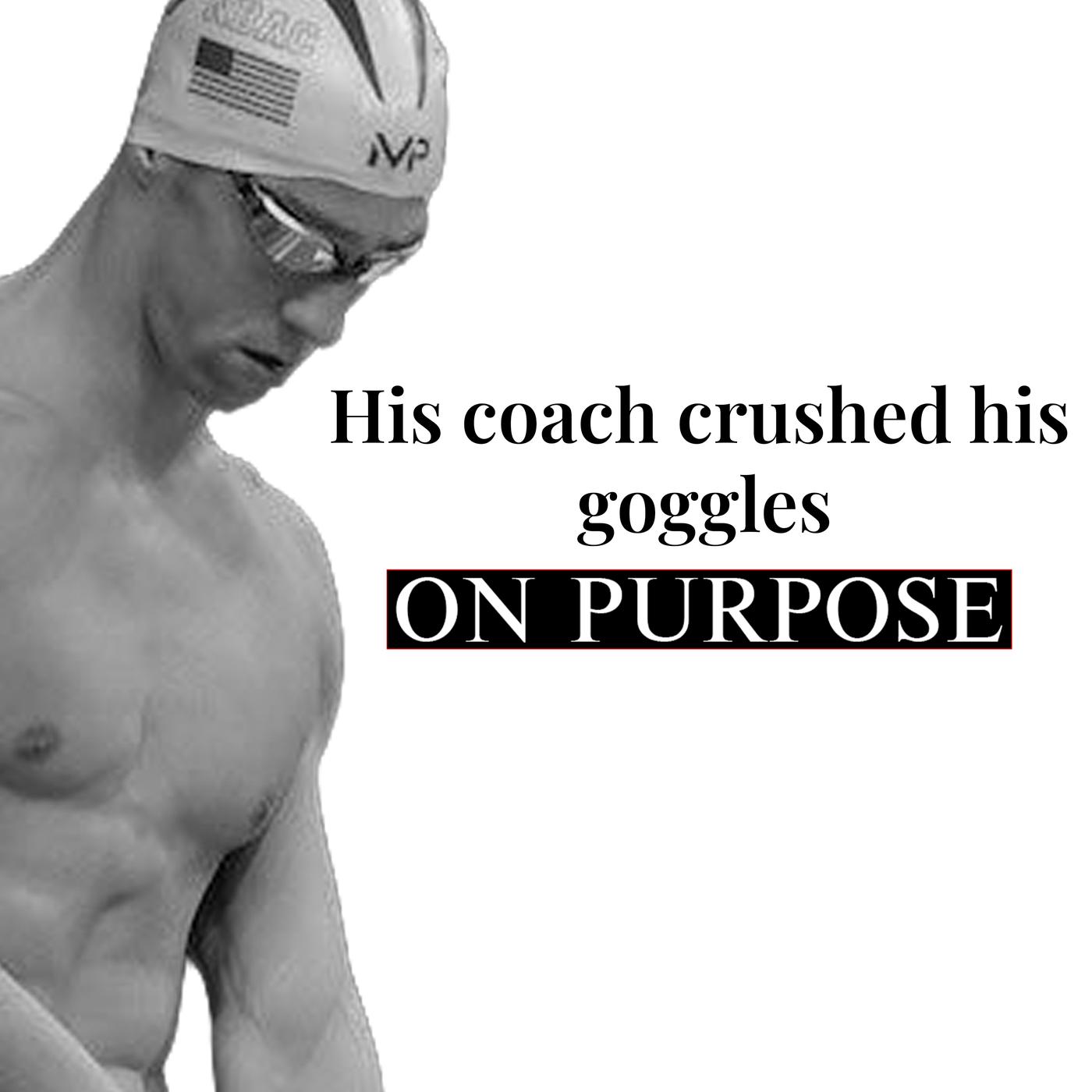
Episode one was about the work Michael Phelps put in alone. This one is about everyone who got him to the water in the first place.
It runs through his mum Debbie, who drove him to the pool in the dark and steered him without ever pushing.
Through Bob Bowman, the coach who caused deliberate suffering and also taught him to tie a tie. And through Whitney, the sister who was the star first and paid a price Michael never forgot.
The same pattern turns up in Nadal, in Kobe, in the athletes Phelps studied and never met.
Three words carry it all. Carried, chosen, indebted.
This is the story of how a self-made champion was actually built by the people around him.
انگلیسی
ایالات متحده آمریکا
رونوشت 🔗
جستجوی اپیزودهای گذشته
اپیزودهای قبلی Legends Podcast را جستجو کن.
سلب مسئولیت: پادکست و آثار هنری تعبیه شده در این صفحه متعلق به Shakeel Aslam است که متعلق به صاحب آن است و به Listen Notes، Inc وابسته یا تایید نشده است.
ویرایش
از کمک شما برای بروز نگهداشتن پایگاهدادههای پادکست سپاسگزاریم
