


Shakeel Aslam: Effortless is a myth. I mean it. People would say my play was effortless. I had to work very hard to make it look easy. It used to frustrate me when they would say he barely broke a sweat. I was a terrible loser. Effortless is a myth. I mean it. I say that as someone who has heard that word a lot. Effortless. People would say my play was effortless. Most of the time they meant it as a compliment. But it used to frustrate me when they would say he barely broke a sweat. Effortless is a myth. I mean it. I say that as someone who has heard that word a lot. Effortless. People would say my play was effortless. Most of the time they meant it as a compliment. But it used to frustrate me when they would say he barely broke a sweat. Or is he even trying? The truth is, I had to work very hard to make it look easy. I spent years whining, swearing, throwing my racket before I learned to keep my cool. So that's Roger Federer, and he's speaking in the spring of 2004 ⁓ at university called Dartmouth. He's basically distilled everything into three lessons, and that's what this whole episode is about. It's little bit different to what we normally do, which is just go through a book. But we'll be relying on The biography by Christopher Carey. ⁓ we've covered that in a previous episode four, episode three. ⁓ give that a watch ⁓ if you like. And so the what I wanna do with this episode is I wanna dispel the singles biggest myth about Federer's game, which is that he was just simply talented. And behind that talent there was actually a lot of hard work, and that's where we're gonna look through this today and ⁓ As I did with the previous episodes, I wanna distill this episode down into three words that I took away, and that's work release balance. So I want to start with point number one, which is effortless is a myth. And how we start is with Roger Frederick's body and his training. So everyone saw him gliding, timing the ball really well, making it look super easy and all the rallies that he played in. But there's a man who spent two decades building that body, and his name was Pierre Paganini, and that was his fitness trainer. And he heard it called natural so often that you can feel it was actually annoying him. He says this I think we underestimate all the work Roger does, and it's a beautiful problem he has. We underestimate it because when we see Roger play, we see the artist who expresses himself. We forget almost that he has to work to get there. Like watching a ballet dancer. You see the beauty, but you forget the work behind it. You have to work very, very hard to be that beautiful a dancer. And then Pete Sampras played with this same kind of efficiency as well, and he spent his whole career being told he wasn't really trying. Just because it looks easy doesn't mean it's not hard. It might look like Roger and I are not trying or we're not that into it, we're just very efficient. Our movement and our games and our strokes, it's like one swing of the racket, one forehand, one serve, and boom, it's done. Well most other players are grinding, grinding, grinding. And Federer heard it from both sides his whole career. When he won, it looked easy. And when he lost, people decided that he wasn't really trying. And he knew both reactions came from the same misunderstanding. When I'm winning, everything seems so easy. And when I'm losing, it seems like, ⁓ this guy's not trying. But I'm always trying. And I gave everything I had these last two weeks. And the cost of this was real. Even when he hid it, after Switzerland finally won the Davis Cup, ⁓ the title. That hadn't been wanted by the country for more than a hundred years, he this is how tired he was. He put so much effort into that week. This is something people forget a lot. He always looks so smooth, so relaxed, but he knows how to suffer, to go through the pain and not show it. And so that's the myth, I guess, that we spoke about on the physical side. The deeper version has nothing to do with the strokes, but the calm that everyone had come to admire of him. And it started, this is how it started out. As a boy, Federer was the opposite of Serene. I was a terrible loser. I really was. And there's multiple examples in the book where he smashes rackets, he screams at himself, and he's he sometimes sits under the umpire's chair and he's crying. And that's long after all the other children have gone home. And then one of the early coaches saw exactly where it could end, and and this is what he said to Roger's face. Roger, listen, you can hold up the biggest trophies in the world, but try not to be your own enemy, because then it will be more complicated. And so turning that boy into a calm, controlled man that Everyone now remembers in history as one of the best tennis players ever. It took years and in the end the decision to change had to come from him. I started to feel uncomfortable after a while when you're on TV like this. It's just a bad look. When you see yourself throw the racket in the corner and you're like, ⁓ my God, and you're looking around and you're so frustrated and disappointed. And I just said, This just looks stupid and silly. Let's get your act together a little bit. It took me a long time, you know. It was interesting. It took me a long time. So it's not that the fire Ever went out. It's just that he learned how to control it instead of letting it control him. And when he stood in front of, you know, thousand graduates and tried to name what had actually carried him, he reached for the plainest words possible. I didn't get where I got on pure talent alone. I got there by trying to outwork my opponents. I believed in myself, but belief in yourself has to be earned. So then he went a little bit further and he gave the word talent a meaning which almost nobody uses. Yes, talent matters. I'm not going to stand here and tell you it doesn't, but talent has a broad definition. Most of the time it's not about having a gift, it's about having grit. In tennis, a great forehand with sick racket head speed can be called a talent. But in tennis, like in life life, discipline is also a talent. And so is patience. Trusting yourself is a talent. Embracing the process, loving the process is a talent. Managing your life, managing yourself. These can be talents too. So Federer wasn't the only one who built his game on that idea. Rafael Nadal, his rival, all time rival, in almost every way in the court was raised on the exact same principle by his coach and uncle Tony. And he drilled this into him from a very young age as he was a boy. And he says this When it comes down to it, surpassing others is not always possible, but surpassing yourself, that's the great challenge. So that's the first lesson and it turns everything that ever looked easy into something that he actually had to earn. He had to put in the work. He had to learn to control himself to keep himself calm and he had to go from a volatile young boy to a mature, strong, calm adult. And the second lesson is about what you do with all the moments when the work still isn't enough. So the second lesson is that it's only a point. And let me dig deeper into that. So it arrived in In the 1526 singles matches I played in my career, I won almost eighty percent of those matches. Now I have a question for you. What percentage of points do you think I won in those matches? Only fifty-four percent. In other words, even top ranked tennis players win barely more than half of the points they play. When you lose every second point on average, you learn not to dwell on every shot. You teach yourself to think, okay, I double faulted, it's only a point. Okay, I came to the net and I got passed again. It's only a point. Even a great shot, an overhead backhand smash that ends up on ESPN's top ten playlist, that too is just a point. So let's sit with that number for a moment because the whole philosophy is hidden inside this this quote. When you lose that many times for the things that you compete for, no single one of them can be allowed to define you and and dictate your match going forward. And so it got me thinking that the rarest thing the rare skill in sport Is the one that lets you drop the point that you just lost and then start the next one clean because if you dwell on a loss, that's all you're gonna be thinking about it. And you're gonna be you're gonna let that dictate how you d do going forward. And you don't want that to consume you, you don't want that to be clouding your mind and your judgment. You wanna put it to bed and you wanna move forward onto the next point. And this is what he says. When you're playing a point, it has to be the most important thing in the world, and it is. But when it's behind you, it's behind you. And his coaches spent years watching him do exactly that better than anyone had ever been around. He bounces back really fast. Yes, he gets dejected, but by the end of the night or the next morning, he's bouncing back. I've never met anyone who does a better job of finding the balance between appreciating things when they win, but still being able to move on when bad stuff happens. And then he described it the same way himself, and notice how he treats a win and a loss almost as the same thing, and something that happens to you and then just passes. I've won a lot of titles and I've lost a lot. And I just really feel that that stuff balances out. I can give you some instances where I have won titles where I shouldn't have. And I can give you some instances where I lost some at big moments. More times than not, I'm not going to win these. But what drives me is just understanding what that it happens and that it does balance out. So then one coach who just watched him take one of the worst beatings of his career, put his finger on the rarest thing of all. The ability to shake off a loss like that and not carry it with you for a while is pretty impressive. I think it's something he's done consistently throughout his career. And then so that same refusal to do well showed up in Nadal again as well, in a phrase that he leaned on for years to wave away any what if about how a match or career may have gone differently. And there was a reporter who actually asked him a question about how I think a fellow tennis player's career would have gone if XYZ happened. And then Nadal responded with this: if if if doesn't exist. And I found that so powerful because it was a very simple statement, but the words mean a lot. Is that you can't dwell on ⁓ what could have happened, what might have happened, what should have happened. You can only dwell on what you can only think about what happened and then how what you can do moving forward. And so letting the point go is what Federer what kept him sane after all these years inside a inside every single match. And I want to tell you about the third lesson, which is about what kept him whole across twenty years of his career. So point number three is that life is bigger than the court. A tennis court is a small space. Two thousand one hundred and six square feet to be exact. That's for singles matches. Not much bigger than a dorm room. Okay, make that three or four dorm rooms in mass row. I worked a lot, learned a lot, and ran a lot of miles in that small space, but the world is a whole lot bigger than that. Even when I was just starting out, I knew that tennis could show me the world, but tennis could never be the world. It shows you exactly how he engineered the rest of his life around this tennis and he was blunt about why why he had to. There is also something else in life, the private side with my girlfriend and my family. I want to keep that intact as well, because I can only play good tennis when I'm happy. So then his rule for staying fresh was almost stubbornly simple. I truly believe this is a secret for a lot of the players and for the young guys is to be able, when you leave the site, to say, Okay, I'm going to leave it behind. I still know I'm a professional tennis player, but I'm relaxing. I'm doing it my way. Whatever helps me decompress. So he once made the point without words at all, and he closed his hand into a fist to show what happens to player who never lets go. Because if you're constantly like this. That's when you burn out. So he took that and he built the opposite into his career on purpose. His friends and family were constantly on the road with him, his his four children. And they were he had whole days away from the court that other players would have spent, you know, grinding. And he could do that because he's already put the work in for so long early in his career. And, you know, as you grow older with a lot of, you know, athletes. Their priorities do change. You know, they have family, they have kids, and so it shifts. So they have to manage that in the best way that they can. And then so there was a coach who had once worried that all of, you know, the socializing would drain him. ⁓ and and this is what happened. They had dinners and they spent some days together and they would hang out and chat and go for walks and do things couples do together. And that separation for Roger was fuel for him to keep doing tennis at a high level. And that's really interesting to me because And that's one of the things that things that makes Roger unique as well, because he got energy. He was energized by all of his social interactions, but as a lot of athletes would need to decompress and spend some time alone and and you know, he had so many commitments, so many media commitments, sponsors, where there's ⁓ the same thing on the tour. Like I don't know how he managed it all, but it's like the only thing that worked the only thing that makes sense is that this really energized him and made him bo be stronger and Push forward and the fact that his family were on the road, it gave him a new sense of motivation, which was really impressive. And this is what Stan Warinka said about that was the single most valuable thing that Federer ever taught him, and it had nothing to do with a tennis technique, about a forehand, backhand, or anything like that. It was this the importance of living in the moment. For 20 years, he's had to deal with the daily demands of the press, the fans, the travel, the tournaments, and training. His days are ultra-ful, and yet he remains amazingly calm. Even when he has to do something that he enjoys less, he does it to the max better than anyone. Over the years, I've also tried to get closer to that. So that same refusal to the outside world set the terms, showed up in Feder's Greatest Rival as well, which is Rafael Nadal again. So for his all of the trophies, Nadal flatly rejected the idea that the records were the point of any of it. He felt like it was more than that. I have said it so many times. Obsession is bad for everything. If I'm obsessed to win more titles to be better than somebody else, I think you can finish frustrated. The reality is that I'm not going to try to create obligations for myself that lead me to being less happy. That's really interesting. So Nadal's saying obsession is bad, but I think there's a there's a different obsession that he's speaking about. He's saying it obsession is bad when you're chasing trophies. But he had his own type of obsession, which I'll cover in another episode too. His obsession was becoming better and better and being an improved player day by day. So you know, I think. He's in obsession is bad about titles, but at the same time, it is needed if you want to be the greatest athlete in the world. And you see that across all the greatest athletes with Tiger Woods, Kobe Bryant, everyone, all the legends. And it's one thing that they share that they have in common. They may have slightly different ⁓ goals and targets, but the principle is the same that they want to be the best that they can be. And for some of them it comes in titles, some of them it comes in just their own personal satisfaction. And for Nadal, it was definitely his personal satisfaction. For Federer, it was enjoying the game. He really enjoyed the game and he wanted to improve as well. There's so many instances in the book where he's improving, changes to a bigger racket as he gets older. He he changes his coaching all the time. And then it just reminds me of ⁓ Novak's quote, and it it's the one one of my most favorite quotes, it's that stagnation is regression. And if you're not constantly improving, then you're falling behind. If you're even staying the same level as you were yesterday, you're falling behind because you don't know how the competition is moving. You don't know how much they're improving. And so that's the third point wrapped up. So that kind of summarizes what was hiding behind the most beautiful game tennis has ever produced. And everyone saw that it was really easy, but behind it was a lot of work, a lot of nitty-gritty work and grind. And No one sees that because you know only ev everyone watches him play on the court. No one actually sees him train and practice. And you know, he he he he had composure, he had, you know, the discipline that to lose a point, a match, even a final, and walk away clean. And he had the story actually where ⁓ and he loses the final, ⁓ he speaks about in the book, he loses the final and he goes home and the coach is thinking, ⁓ no, Roger Federer's gonna be terrible mood, like I don't know what to say to him, and he Puts his kit down against as he gets home and he goes to his children and he's playing with them, he's rolling down the floor, and then the coach is shocked. He's like, I don't understand how he's just moved on that quick. And that's another quality that Federer has, it's compartmentalization. And a lot of the greats have this too. So he could move on if if he if he w wanted to, if he wanted to get over a point, if he wanted to get over match, he had the ability to not dwell on it and move on. And that goes to his point about it's just a point. And the longevity that I mentioned, that comes from balance. So a life where his tennis can breathe inside and he can still maintain his relationships with his family. And so he stood at Dartmouth and told a thousand graduates that none of it was the gift that they assumed it was. And then he told them what greatness actually rests on, and we'll end with this. The truth is, whatever game you play in life, sometimes you're going to lose a point, a match, a season, a job. It's a roller coaster with many ups and downs. And it's natural when you're down to doubt yourself and to feel sorry for yourself. And by the way, your opponents have self-doubt too. Don't ever forget that. But negative energy is wasted energy. You want to become a master at overcoming hard moments. That is, to me, the sign of a champion. The best in the world are not the best because they win every point, it's because they know they lose again and again. And have learned how to deal with it. And so the world called him effortless for 20 years. It was just an illusion of all the hard work that he did. And because that that ease that he showed on the court, that composure and that calmness and that elegance, almost like balletic movements, it was actually the most expensive thing in the world for him because he put in thousands of hours of making it look that easy. And that is the whole essence of this episode. It's a shorter one than usual. It's a little bit different. Hope you enjoyed it. ⁓ thanks for listening. ⁓ tune in for the next one. Really enjoyed this. ⁓ I'll be releasing episodes on Rafael Nadal, Andre Agassi, all the tennis legends, and many other greats. So stay tuned. So that's one legend down. The work continues.
درباره این اپیزود
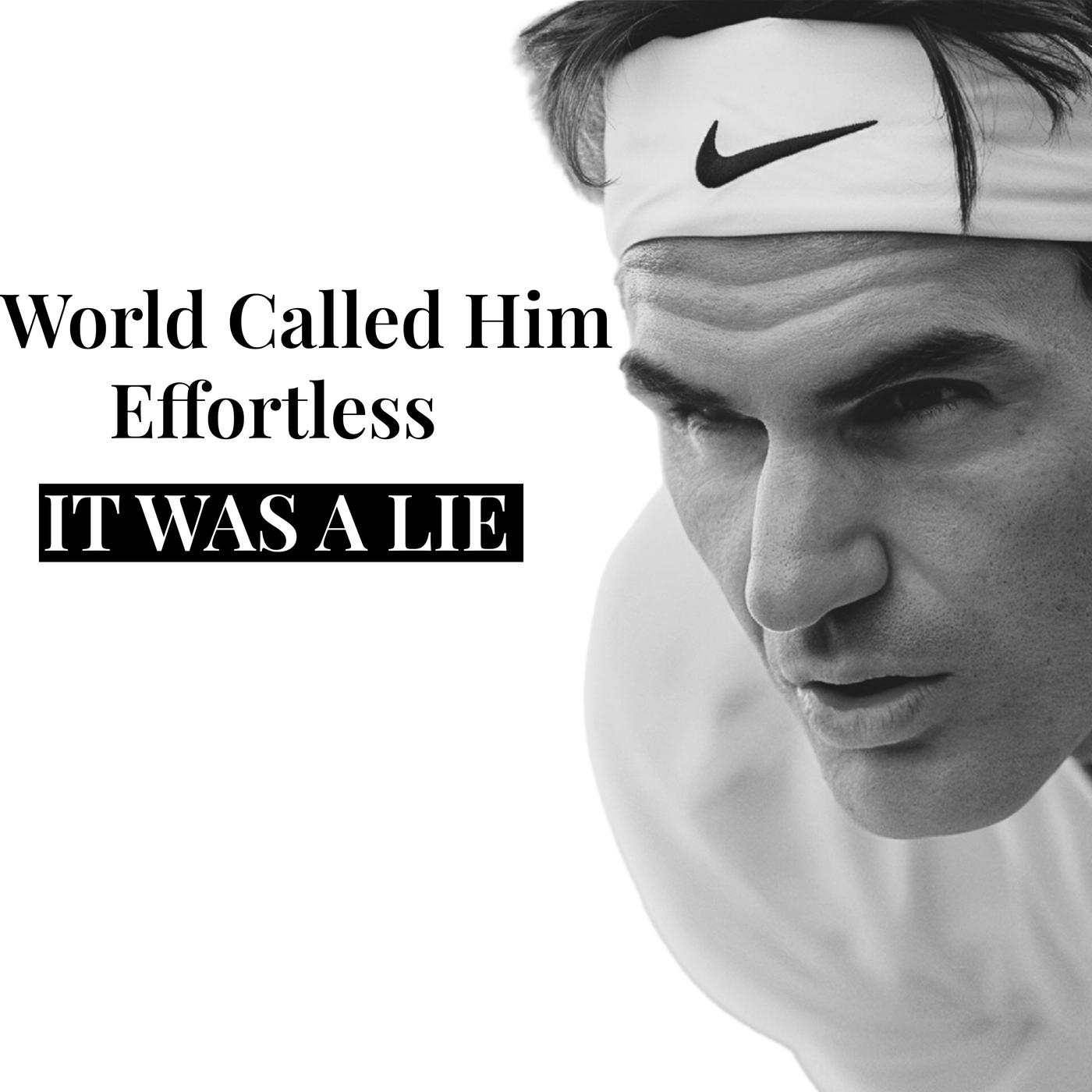
For twenty years the world called Roger Federer effortless. The ease everyone admired was not a gift. It was the most expensive thing he ever built.
This episode follows three lessons drawn from his own words.
Effortless is a myth, and behind the calm was a boy who smashed rackets and screamed at himself before he learned control.
Inside one number, 54% of points won across a career of nearly 80% match wins, sits the discipline of letting every point go.
And underneath it all is the balance he protected on purpose, the reason he never burned out.
The story keeps crossing into Nadal, raised on the same principle by his uncle Toni, and into the contrast between obsession and a long career lived well.
This is a study of how the most beautiful game in tennis was made by hand, hour by hour, where nobody was watching.
انگلیسی
ایالات متحده آمریکا
در این اپیزود
رونوشت 🔗
جستجوی اپیزودهای گذشته
اپیزودهای قبلی Legends Podcast را جستجو کن.
سلب مسئولیت: پادکست و آثار هنری تعبیه شده در این صفحه متعلق به Shakeel Aslam است که متعلق به صاحب آن است و به Listen Notes، Inc وابسته یا تایید نشده است.
ویرایش
از کمک شما برای بروز نگهداشتن پایگاهدادههای پادکست سپاسگزاریم
