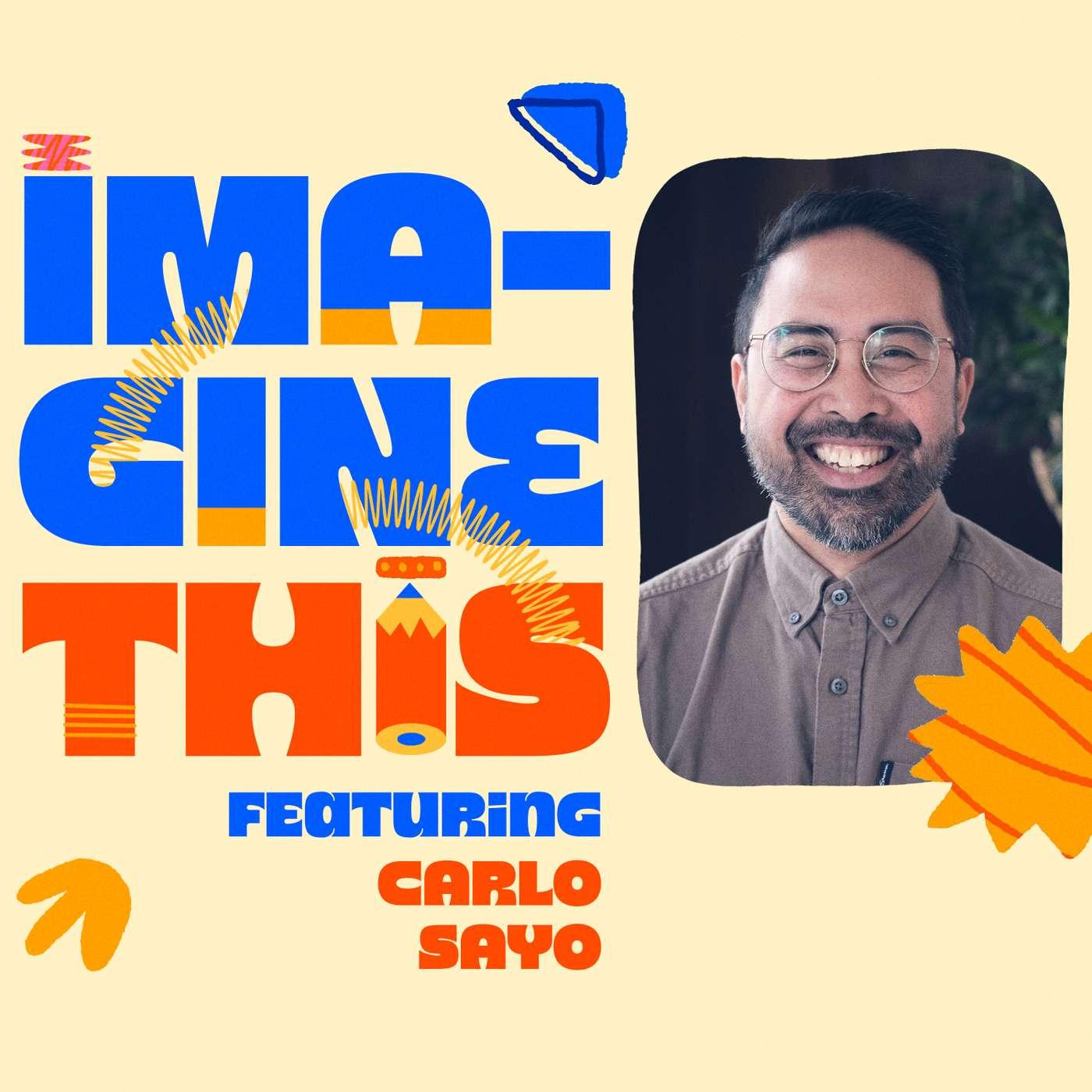
Carlo Sayo: [
00:00:01] So not all learning needs to use technology, but learning needs to be documented with the help of technology. Right. And so those are two very different things because you could do a lot of learning, but then like, what are you doing with all that? And who are you showing it to? And how are you demonstrating that you're learning? And so capturing it, documenting it, and then sharing it with an audience, whether that's parents or another class or whoever. That's where we know that a student has given thought to something and is able to voice it themselves.
Dylan Ismail: [
00:00:36] Welcome to Imagine This, a podcast about what's possible in classrooms. I'm Dylan Ismail and I'm an edtech coach at Classmate, a team that helps people in schools succeed with technology. One of the ways that we help people succeed is by creating a consistent technology experience, from classroom to classroom and from grade to grade. We even ensure that this consistency happens between all of our partner schools, from school to school. We do this because we know that having dependable infrastructure makes engaging learning experiences possible. Our work almost removes the variables of having to move from place to place throughout a school. No network issues, no unexpected cables or missing passwords when a teacher walks into a classroom. So there's something a little funny about this episode because it's specifically about how learning changes depending on where you are. It's about place. How the land we stand on tells a story of who has lived there in the past, who uses it now, and what the future might hold for the future inhabitants of that land. My friend, colleague, and fellow EdTech coach Carlo Sayo has a master's in arts education, and he's thought a lot about place based education.
[
00:01:42] There's a few core principles of place based education. It's locally rooted, meaning it starts with the learner's specific community, that being their school or the neighborhood just around their school. It's also experiential. Learners are hands on and directly observing in the field, instead of just reading about something in a textbook. It's cross-curricular and it integrates skills across different content areas in the curriculum and its service oriented. Learners are encouraged to solve problems and improve their local communities. Helping learners feel this connection to their local community is something that Carlo cares deeply about. And in this episode, we get into how Carlo thinks about place based education, how his personal experiences have shaped his own sense of place, and how it shows up in his work. He walks me through two classroom experiences. One he felt really fortunate enough to observe and one he helped design. And we'll also get to the part where technology and place based education merge. How intentional use of tech can actually help students slow down, reflect and document their learning in ways that might not otherwise be possible. Carlo, why don't you tell us a little bit about what place means to you.
Carlo Sayo: [
00:02:58] What place means to me. So I think about this quite a bit, and I think a lot of it maybe is just being the child of immigrants, and from a young age, understanding what my parents wanted me to understand, which was that they moved to Canada, that they raised us here and they wanted to have a better life. And so I think I've always understood that they left the Philippines for certain economic reasons, and they found a place and they made a place for themselves here in Canada. And so I think that was something that they really wanted me to understand I think from a young age. And I think that kind of idea stuck with me quite a bit. But I think more recently, the idea of learning from place or place based education really came out when I went back to school, and one of my classes that I was taking was around the idea of place based learning. And one of the texts that we had to read was a book called Seven Minutes from Home, written by Lauren Richardson. And the idea around the book, which is kind of semi-autobiographical, but the idea is that all the learning that can happen just within seven minutes from where you live. So this radius that you live around, and if you walk seven minutes in any direction, like there's so much learning that can happen in these mundane, everyday experiences.
Carlo Sayo: [
00:04:20] And so it's like going to the grocery store or going to the ice cream shop where there's regulars, or there's curiosity in the way that paths get formed through a field, a desired path. Right. And like how that and like, and people have studied like desired paths, right? And so that becomes like a field of study. And so it's this idea of like, what are the things that we relate to or shape us or we learn from in the locations that are close to where we live. And oftentimes those can be overlooked, but if we're really just observing the everyday things that are around us. And we can actually learn a lot about ourselves and about our local communities and about how our communities are shaped, how they inform us, and how we, in turn, can help shape and inform our communities. So that's really kind of where I was very interested in that, I think because of, again, linking it back to being a child of immigrants and this idea of place making as settlers, especially around more nuanced conversations of First Nations land or Indigenous land and here we are as settlers and what that means to understand our place here. So I think a lot of that kind of thing is something that is always bubbling up for me.
Dylan Ismail: [
00:05:39] Before you continue, what did you go back to school for?
Carlo Sayo: [
00:05:42] I went back to school for a master's of education in art education.
Dylan Ismail: [
00:05:46] Great. Yeah. So this was one of the classes in your master's program?
Carlo Sayo: [
00:05:49] Yes. Yeah. So I was very interested in arts based practices as forms of research. It's really kind of what I was interested in. And my advisor had in the program that I was in was teaching a couple of classes. So I took some of his classes and this one on place and then another related one, which I might talk about later, but this particular class on place, he had us visit one place, like anywhere that we wanted, that we could choose and just sit there for like a minimum of two hours or more and just like, don't do anything and just observe. Right. And like, try not to be on your devices and like, be distracted by things that are, but just observe what's around you and what meaning you can make out of that place. So I had a few in mind, but one of the places that I went to is an area called the Filipino Plaza. It's just west of Nanaimo Skytrain station. It is an area that was actually built in 1986 when the Expo line was originally created.
Carlo Sayo: [
00:06:52] So it sits underneath one of the Skytrain tracks, and there is a wooden archway that is meant to represent the Philippines. And it has this rooster and a fish, which is kind of the symbol of more indigenous Filipino culture. So I just sat there and the neat thing like that, I kind of found myself, and this was kind of by design, I think in the course it is like, you can go to a place and not know anything about it. The idea is that you make meaning of that place based off of your past experience, based off of any biases you're bringing to it. So I sat there as somebody who has Filipino heritage, but not necessarily knowing about that place until I actually started researching it afterward, but sitting there and understanding it as like, this is a place that could be used as a public gathering space, but it's very transient. Like nobody stops there. It's not a destination.
Dylan Ismail: [
00:07:47] Like it's under a thing that's moving people.
Carlo Sayo: [
00:07:49] Yeah, it's under a Skytrain line. There's a bike path and a walking path, and people just kind of tend to walk by there. And there are traces of people who. And again, this is years ago at the time that I visited, and I kind of go back every so often, but the few times that I visited, either for this class or afterward, you could see traces of people who stayed behind through things like garbage and trash, take out containers. One time there was like an old computer monitor, just like hanging out there.
Dylan Ismail: [
00:08:16] Waiting for its ride.
Carlo Sayo: [
00:08:17] Waiting for its ride. And yeah. And so it's interesting. And so the bias and the understanding that I brought to that is this kind of metaphor of a settler community taking place, like taking place on unceded land, but also being a place that's completely invisible. And so that to me was like this metaphor of the invisibility of migrant communities, particularly the Filipino community, where it's like a place that people walk by. It's not well kept. It's literally under the shadow of the progress of a train. But that was like my understanding of that place. That's how I made meaning of that place. I know that somebody who might be going there, who has no experience in the Filipino community might not have that at all. Right. And so I found that very interesting in terms of how we make meaning of a place and what we can learn of ourselves, but then in questioning, like, what do I really know about this place? And what can I learn more of? And so it invites you to learn more about a place.
Dylan Ismail: [
00:09:20] So you take this idea of place, and I'm sure it's something that you bring into your practice of supporting teachers. What are some things that you've observed about classrooms or the spaces that, you know, inside of schools that you've brought your own ideas to or visions to, biases to?
Carlo Sayo: [
00:09:42] Yes, absolutely. There is this idea of the third teacher, which is like your place or your environment being a teacher in itself, the first one being like kids learning from adults and kids learning from other kids, so like learning from other people around you. And the third teacher is this idea of learning from your space and how your space or place can inform you and educate you. So the idea of the classroom being kind of the third teacher I always found very interesting because there was a kindergarten teacher that we used to work with, and she was one of the first teachers that I had realized didn't have a lot of colorful artwork on the walls, or inspirational posters or student work hanging from the ceilings that you might see in many classrooms. And I had made a comment about it, and she said that for her and the type of environment that she wants to teach in, she didn't want to have too many things that were distracting for her kids because she knew her class and she knew that they get often very distracted by colorful things and so she wanted to create a very specific type of learning environment and a culture that came with that in her classroom where they had to minimize the distractions.
Carlo Sayo: [
00:11:01] And so I always thought that was kind of an interesting thing. And when you think about what a school classroom stereotypically could look like, or even the hallway of a classroom, there's a big difference from a school that has a lot of student artwork in the hallways versus some schools that don't have any student artwork in the hallways. And each of those things creates a type of culture that you're building in your school. And so whether or not it's intentional, there's environmental influences on how we learn. I always thought it was kind of funny, like when I look back at UBC and the education building looks like a high school, like you walk in there and there's like lockers and it feels like a high school. And then you go to maybe like the next school over, which is the business school, and it feels a little bit like you're walking into an office. And so I don't, again, like those could have been very intentional choices.
Dylan Ismail: [
00:11:56] I think the library at UBC is also shaped like a book.
Carlo Sayo: [
00:12:01] So it's like these things that are like, there's intentional design in architecture and in the way that we experience a place and a school and a classroom is really no different whether or not we actively do it. Right. And so when you think about walking from your classroom to the gym, there's certain behaviors that we expect students to exhibit, right? You walk in a single file, you walk quietly past the office because they're working. And so there's things that we're teaching kids in terms of how to behave when you're walking through a space. And that doesn't end up on an assessment, but those are things that we're teaching them and they're learning to behave a certain way and adopting a certain practice that is all kind of in the service of making them to be a part of the community and how we behave in a community. So I always find that those are very interesting spaces of learning, kind of like informal places of learning.
Dylan Ismail: [
00:12:59] It's interesting that you're talking about the shape of a school too, because there's a lot of brands of schools, there's some schools that have had the same layout for half a century. And other schools like our team visited a school in Kelowna called Canyon Falls, which was purpose built for project based learning or more collaborative learning. And it was built into the walls. They had garage doors that opened out of the classroom, that opened into like communal spaces. And what you're talking about is like this, like you said, the third teacher, which teaches a certain type of behavior, a certain type of like action to the students just by being there and the biases that you're talking about that everyone brings into that space sometimes can be like they can be encouraged by the space, or they can be like discouraged by the space. And I think the hallway that you're talking about is definitely discouraging a type of a type of behavior. Yeah. And I mean, in an elementary school, like a lot of the time, it's sort of like getting kids to exist in a space where there's like a lot of other things happening.
Carlo Sayo: [
00:14:13] Yeah.
Dylan Ismail: [
00:14:13] Right. And so that type of behavior is, is being quiet or moving through the hallways quietly.
Carlo Sayo: [
00:14:20] There's a certain, like when you're moving through transition spaces, like decorum, I guess, and you want to move through a space that's shared, and so you want to be respectful, but it's also not necessarily about compliance. Like I need a kid to be this way because we're moving through space. But it's also like teaching them that that's a space that's outside of your classroom that other people are using and how to be respectful of that space. And that's a nice lesson to be able to draw from simply walking from one place to another.
Dylan Ismail: [
00:14:56] I think that's maybe where I get a little stuck. Is that like, there is this element of teaching for compliance, but what you're talking about is this idea for teaching a way of being within a community that is beneficial to everyone. And like the way that you move through this hallway would be more beneficial if you weren't bouncing off the walls and throwing things and yelling, right? Because there's classrooms that are not doing that, that might need a little bit more of a quiet space.
Carlo Sayo: [
00:15:24] And we see a lot of places where maybe a student is doing an audio recording, and they have to do it in the hallway because their classroom is too noisy, or I love it when the admins in the office come out and go, hey, we're working, we're trying to be on the phone. Can you guys be a little bit more quiet? And they give a reason for the students to like, you have to be quiet because people are working. And it's not just like you need to be quiet because I just.
Dylan Ismail: [
00:15:46] I told you.
Carlo Sayo: [
00:15:47] I told you. Yeah. So yeah. So there's always learning that can happen in so many different places and spaces, whether it's an intentional space or a transitional space.
Dylan Ismail: [
00:15:58] Yeah. Okay. So speaking of transitional spaces or spaces outside of the classroom, you were able to sort of help with and tag along on a couple of field trips that happened at or happened with a couple of different schools. And I'd love for you to kind of share your insight, because both of these field trips took place along the Fraser River, and they definitely had a different audience, but also like they were told by different people in these spaces along the river. So can you kind of tell us about what those experiences were like?
Carlo Sayo: [
00:16:31] I'll start with a visit to Fort Langley. So we went to this class and we visited a new building called Solution Place by the river. And this is actually the new home of the Langley Museum. So it's outside of the historical fort. It's kind of across the street from the historical fort. And they were not yet open to the public at the time that we went. But what was neat about it was that they had school programs already set up, and the school program that they had for the grade four level was to learn about the history of the Fraser River and in particular, the history of colonization along the Fraser River in the Fraser Valley. So the way that it was done, it was, I thought, really just very smartly designed. Like they had a classroom space and they had a facilitator. And then they had docents who were like their volunteers to work with small groups. They divided the class into small groups, and each group had a table that they were able to write on because it was made of whiteboard material. So they all had whiteboard markers and they were given a map of a real location along the Fraser River. And they had to do their best to recreate the map. It didn't have to be accurate or anything, but they had to represent where wetlands are, where the forest is, where the river goes through.
Dylan Ismail: [
00:17:58] They're drawing this right onto the whiteboard.
Carlo Sayo: [
00:18:00] They draw this directly on the whiteboard like table. Yeah. So each group was drawing on the tables and then they were given little toys, I guess, or little figurines of deer and of fish and of trees and plant life and little popsicle stick villages. And they had to place them where they thought they would be appropriate. So fish in the river next to the river, they might put some of the little village homes and then identify where the hunting grounds might be for the deer, and so on. So each group had to kind of do that based on the map that they were given. And then as the facilitator talked about the history of colonization along the Fraser when they started mentioning things like first contact with Europeans and how that affected the First Nations community. So then he would mention things like, during this time in Canadian history, half the population of the First Nations communities along the Fraser were decimated, and so they'd have to erase half their map. They basically draw a circle around the part of their map, and anything that didn't fit in that circle had to be erased. So they would lose part of their wetlands, they would lose a part of their hunting grounds.
Carlo Sayo: [
00:19:10] And then as they went on through history with the introduction of things like the Indian Act and then residential schools, that circle kept getting smaller and smaller, and the students had to decide, okay, what are we keeping? Which part of the land are we drawing a circle on and which part are we keeping? And as it got smaller and smaller, like you could see the students kind of got worried about what they'd be losing and decisions that they had to make. Are we keeping more of our fishing area or do we keep more of our hunting area, or is there a part in our land that can accommodate both? How many villages are we losing as we draw smaller and smaller circles? What are we forced to try to fit and what are we forced to like, get rid of? So I think it was such a smart way, other than, you could do that in a slideshow. You could do that through a video. But I think having them draw something, take ownership of something, and then have to erase it and lose part of it was such a neat way for them to kind of embody what it meant to lose land, but also lose part of your culture.
Carlo Sayo: [
00:20:14] So when they would erase a part of their map, they would always have conversations about why they made those decisions. So it was really nice to be able to have the students talk about, well, we had to keep this part because this is our village. We had to keep this part because this is where our food comes from. So they're coming up with the reasons behind it. And then throughout all of that, and then at the end, we talked about reconciliation and what that means. And then when that all wrapped up, the class walked out of the museum and then walked down to the river. So you can actually take the lessons that you've learned and then walk through the town, which you could see there's Fort Langley and here's like a very colonial looking place. But then there's the river that we were talking about and hopefully making that connection a little bit more grounded for, for those students. So whatever they take from it, hopefully it's something that, it's a memory that they can kind of bring into learning that happens later in, in maybe later grades. But I think it was such a very strong representation of that history.
Dylan Ismail: [
00:21:17] I wanted to connect some of this to what you had said before. So the salation place by the river was designed to be next to the river because it's telling the story of this place. Like this is kind of what you were describing before. It's like there's a place here that needs someone to tell its story, and that's what this building is basically doing. I love that you talked about the whiteboards on the tables because, I mean, we have this book, the third Teacher sitting right in front of us now, and they've basically designed the space to help do that teaching. Yes. So the boards in front of them are doing what you're explaining. Like it wouldn't have been as powerful if it was just a video doing this on its own, it wouldn't have been as powerful, even if it was like a slideshow that they were creating, like the fact that they had to physically erase and remove pieces from this map in front of them. I can imagine it's a pretty visceral experience to be like, these are no longer here. And the ownership from them is like a huge connection to just like having perspective or like having some sort of empathy, right? Like they're owning this experience that's happening and they're making the decisions and they can feel the worry or the like distress about losing a place that they don't have access to anymore. So it feels like everything that you were talking about before was encompassed in this experience that you got to witness.
Carlo Sayo: [
00:22:43] You know, it was really like you learn about the impact that people have on a land and on other people. And then you kind of draw the relationships to it, right? And it doesn't sit in history. It sits in our current teachings. So I think that was really quite wonderful.
Dylan Ismail: [
00:22:59] So if other educators wanted to do this, this is available to them, right?
Carlo Sayo: [
00:23:04] Yeah. So if you go to the Salation place by the River website and they have a section under learn, which is all about their school programs. And the one that I was able to go on to was titled The Colonization of the Fraser Valley.
Dylan Ismail: [
00:23:18] Okay. So we've done this one experience at one end of the Fraser, and then you then worked with another teacher to design a field trip to another part of the Fraser River in Steveston
Carlo Sayo: [
00:23:30] Right. Yeah. So if you follow the Fraser down to the Delta that meets the ocean, we end up in Steveston. Yeah.
Dylan Ismail: [
00:23:36] What was that like?
Carlo Sayo: [
00:23:37] That was a really joyful experience. And I'll explain why.
Dylan Ismail: [
00:23:42] Listeners can probably hear you smiling through the microphone right now.
Carlo Sayo: [
00:23:45] It was in two parts. First, we started out at the Britannia shipyards and they have a great facilitated program. So if anybody wants to go and like on the Britannia Shipyards website, they have a really good interpretive program that they take kids on stage for different levels.
Dylan Ismail: [
00:24:00] This class that you were working with was which grade?
Carlo Sayo: [
00:24:02] This was a grade one class.
Dylan Ismail: [
00:24:03] Grade one class.
Carlo Sayo: [
00:24:04] So in the grade one curriculum where we start learning all about our local communities and how we impact our communities and how our communities shape us. The main idea that we were trying to do with this grade one class is just have the students understand what makes up their local community. So the morning portion of the trip, starting out at Britannia Shipyards, was all about the history of that area of Steveston Village. But then really that part of the fishing and tannery area of the Fraser. They started by learning about a wonderful outdoor museum. And so the kids could walk through and look at these staged areas where they had bunkhouses for all the Chinese workers that came and participated in the fishing industry, as well as a Japanese home and a European men's house, they called it, where the European fishermen would be housed. And so they had walked through these different areas and learned different things about who migrated and the conditions that they lived in. And then they were able to compare some of the living conditions and learn about how those communities helped shape what Richmond is and Steveston is today. So they had a really neat guided experience there. And then after lunch, our part of the field trip was something that we organized with their teacher. And so again, just to go back, our big idea that we wanted to do was have the students be familiar with their local communities and understand what makes a community. So whether that's like a physical place or a place where people live who have something in common. And we wanted to design a way for the students to walk through Steveston village and understand what's around it or what's in it and what they could find.
Carlo Sayo: [
00:26:04] So a big part of it was bringing iPads as their way of documenting what they found. So just go around and the kids at this point, because this is in late May, so they've already had a full year of understanding how to properly hold an iPad with two hands and not run with it, and how to take a photo. So they were broken up into small groups, and we gave them basically a scavenger hunt of things to find, but we didn't want to be too specific with it. We wanted to give them ways to look at, to find and make their own meaning of what we gave them. So an example of this would have been to find a place where you can get a book. So some groups would go to a used bookstore and take a picture outside of the used bookstore. They knew that the library was under renovations and had torn it down because they're building a new one, so the students had to find somewhere else. So if it wasn't a used bookstore, maybe it was a toy store that had books in it and they would take a picture of that. So another one was like a place where you can buy bread. So some kids took a picture of a bakery. Some kids took a picture of a coffee shop. So it was up to their interpretation of what they found again, to be able to make their own meaning of what that place is. So find something historic. And there's some very obvious historical things that are like museums.
Dylan Ismail: [
00:27:17] But historic to someone in grade one. Yeah. It might mean something different.
Carlo Sayo: [
00:27:21] Yeah. And if you walk through Steveston, the entire place is historic. Yeah. Right. So some of them just took pictures of an old building because that's like, here's an old brick building that looks old. And so it's neat to see them interpret that and to take photos and have it documented through their eyes. So we were able to do this with the help of some parent volunteers who walked around with the students. We made it clear that the student should be the one posing or taking the pictures, and they're allowed to take pictures of each other. We gave them permission to do that. And so it was just nice to have them walk around a city or a small area and take pictures, document what their understanding of the questions that we gave them and have them kind of, again, make meaning of a place that maybe they are frequent, but don't really stop to kind of like look around and what you have.
Dylan Ismail: [
00:28:14] What did you experience watching them do this? Did you hear conversations between the students? What did you hear?
Carlo Sayo: [
00:28:22] Yeah. Kids debating.
Dylan Ismail: [
00:28:23] Like definitions.
Carlo Sayo: [
00:28:26] Yeah. So they stopped by a bookstore. The group that I was with would stop by a bookstore. They took pictures of some of those old books. We stopped by a coffee shop that had the word bakery in front of it. And so some kids were like, we should take a picture of this one. Like there's nothing in there because they didn't see the sign because it was like just from where they were looking, they didn't see the word bakery. And so just like having them debate and figure it out in the group at the grade one level of like, we should do this and take a picture. And then we could do the next thing. And some kids just want to move on, right? And some kids wanting to stop and like, actually take that photo. Posing is always fun. They love posing in front of the camera for each other. But then also like kind of, it was interesting watching them because they've been kind of trained at this point. Again, like what I said earlier of how to hold the iPad and not run with it, that they were the ones kind of exhibiting that behavior for the parents too, of like, I know how to do this. Like, give me the iPad and I'll take it. So that was kind of neat to be able to see them just show their learning of, I can be responsible with this thing, right? And, and they knew how lucky they were to be able to take these outside of their school and walk around with it.
Dylan Ismail: [
00:29:39] Like, let me show you that I've earned this trust, basically.
Carlo Sayo: [
00:29:42] So that was really neat. And then we kind of went into separate groups and walked around for a little over an hour. And everybody was kind of independent and just had to figure it out on your own, what you were finding.
Dylan Ismail: [
00:29:54] And they had like a list of prompts that they had to kind of get through. So it was, it was like a scavenger hunt, but they weren't looking for specifics. They were looking for answers to the prompts, I guess.
Carlo Sayo: [
00:30:04] Yeah. Like where can you mail a letter? Yeah. Where can you get a book? Where can you get bread? Right.
Dylan Ismail: [
00:30:08] And were some of these, some of these locations were like created locations from like the Steveston shipyards or was that separate?
Carlo Sayo: [
00:30:18] That was completely separate. Okay. Yeah. So the scavenger hunt was something that was talked about with myself and their grade one teacher, so I had made a trip out to Steveston just to look at historical places and things that might be of interest. And then the grade one teacher had her list of things that she thought that would be good for them to find based on conversations they've had in the class. So it was a bit of a yeah, the whole walking experience was a kind of a collaborative effort between the two of us. And she was very worried at first. She didn't think it could happen. This was the first time that she had tried anything like this, and she just didn't know how it was going to work . Were we even allowed to take the iPads outside of the school and walk around the street with iPads? And so it didn't take much convincing. So we didn't have to convince the principal, really. It wasn't that he thought it was a neat idea. As long as we can keep them safe.
Carlo Sayo: [
00:31:13] Yeah. And again, you do that at the end of the year where the students know the protocols of using these devices, and they've been using them throughout the year, and they know how to be respectful with them. And we just reiterate about how lucky they are to have that experience. So yeah, again, the teacher didn't know if it was actually going to be possible. And then the relief on her face after, like it had worked, we were back in the classroom and I showed her where all the recordings were, and we grouped everything together. And she was very thankful that we were able to set up the iPads for that experience, but also just that we were around, that we were able to help out and that she felt like there was a sense of like, I could tell that she felt that we had achieved something together. Yeah. Like, oh man, we actually survived this experience. And like, we got something out of it. And like the students were able to like, actually produce something.
Dylan Ismail: [
00:32:07] So what was the next step after? Was there like a back in the classroom part?
Carlo Sayo: [
00:32:12] Yes. So back in the classroom, I helped her compile all of the videos into a Google drive so that she could then post them onto the students' Seesaw journals and then have the students do a statement of what they remembered. So when I walked around Steveson, I found a post office, or this is the bakery where you can get bread. So it was again, them recalling what they did, but then formulating a statement out of it. So there's your kind of ELA assessment there of how they can recall and then form their statements. That's something that we learned from a kindergarten teacher who was on episode two, of our Katerina.
Dylan Ismail: [
00:32:50] This sounds familiar with what Katerina did in her kindergarten class.
Carlo Sayo: [
00:32:53] It's such an amazing little nugget that could completely transform an experience because then you have a purpose. Then you're like going, okay, we did all this stuff, okay, but how does it tie into other things that we're learning? And ELA at that age is like one of the foundational things. So it's really easy just to say, tell me what you did, but formulate it in a two part statement or a three part statement. Right? And then you have it's very purposeful. It's intentional. So you're exploring that place, but then you're asking the kids to talk about it. And it doesn't have to be this deep reflection. It's just like, here's what I recall, here's what I remember, and I can communicate it, right? So that was the next step is then taking that and putting it into their Seesaw journal so that they can communicate what they experienced.
Dylan Ismail: [
00:33:39] That's really amazing. I really like this flow that we've kind of identified in a couple of projects where they go and they do something, and then you bring back the project to the classroom and you continue that thought process. This is also kind of similar to what Jen had done with the aquarium field trips where like the project doesn't end when you come back to the school after the field trip, it's kind of like that's just the middle part. And there's still stuff that you're going to do when you get back to, to class. I love that in grade one, it looks totally different. They're not creating something big and a documentary or something like that. And there's no pressure on them to Create using the iPad. The iPad is strictly a documentation tool that then carries their thoughts back to the school so that they can use them to inform, like you said, the statements that they're coming up with and. And the ideas that they're recalling from their experience there.
Carlo Sayo: [
00:34:38] Yeah. There's this idea that I've been toying with for the last few months of the idea that not all learning needs to use technology, but learning needs to be documented with the help of technology. Right? And so those are two very different things because like, you could do a lot of learning, but then like, what are you doing with all that? And who are you showing it to? And how are you demonstrating that you're learning? And so capturing it, documenting it, and then sharing it with an audience, whether that's parents or another class or whoever. That's where we know that a student has given thought to something and is able to voice it themselves.
Dylan Ismail: [
00:35:20] I think that's like the power of like, why we're using a platform like Seesaw and Seesaw is not perfect. It has like a bunch of stuff that we're not necessarily using. But one thing that it is really good at is getting younger students and smaller hands, giving them the skills to document whether it's with pictures or if it's with audio or video, and then giving teachers like the ability to customize that documentation and turn it into a reflection or turn it into ELA statements or something like that. It's really like, I love how that little bow kind of gets tied on top of like the experience happened, but here's like the documentation of it and it's sort of proving the worth of what, what the field trip was for. Right? Yeah.
Carlo Sayo: [
00:36:04] Yes. Yeah. So there's the idea of field trips as like the end of a unit or the reward of something after you've learned something. I like thinking of field trips as like a launching point to learn something more. And again, it comes back to the idea of like, what do we learn from this place that we've just visited, and how can we make meaning of that? That's beyond what is on a plaque or whatever. And then you can have field trips that are in the middle of an experience you've just learned, starting to learn about a unit. You go visit some place that gives you more information, and then you come back and you do something with all of that information that you've just acquired. So there's so many different things, I think field trips are always fun. They're fun for students because you get outside of the classroom, but they're also very purposeful in that way. I should say I completely forgot one of the biggest things of this field trip. So we walked around Steveston and then we ended by eating ice cream. And that was like one of the big things that you go around, you do your scavenger hunt when you're done, like work your way back to, we went to Sally's ice Cream, which is like a local family owned place that makes their own small batches of ice cream. And that ended like the field trips. That was like, again, part of this joyful experience of going on this field trip.
Dylan Ismail: [
00:37:19] So when you smiled at the beginning, that's what you were remembering was the ice cream at the end.
Carlo Sayo: [
00:37:23] I'm sure if you asked any of the students, what was the best thing about your field trip? I was like, oh, the ice cream that happened in the last like 20 minutes of the experience. But the whole thing was quite a very full day. So at the end of the field trip, when I was talking with Renee, their teacher back at the school, I think we both realized that like doing Britannia Shipyards and our Steveston scavenger hunt all in one day was probably too much. And they should just be two separate experiences because then you could really reflect on one or the other. And the students aren't as tired, of course, but so that's one learning that we took away from it. So even if you just had this neighborhood walk and this experience, and you ended on this like joyful note, but you're asking them to go around and discover things about their neighborhood that maybe they weren't familiar with. There's so much that they're going to give you. And I really believe that, like you ask a kid a question about something or to find something, they're going to find their own interpretation to your question. And they'd be, yeah, and you're going to get different answers from different kids and different groups. And you can have these neat conversations about their own interpretations of something. And there's so much that there's the cognitive process of them just like making sense of something and then talking about it, I think is really valuable. And that doesn't always end up like a worksheet that doesn't always end up on a test to show kind of what you've shown. But if you're having those conversations, you can get an idea of how they've experienced the place and some kids might not say anything. And that's where they're at when some kids might say a lot and that's where they're at. So you can use those experiences to kind of figure out how we might see a student's understanding of something differently.
Dylan Ismail: [
00:39:13] I would love to see what it would look like if students got an opportunity to practice these sorts of observation skills over and over again across maybe different locations. Yeah, I think especially hearing you talk about your experience with the seven minutes from home and sitting in a place for like a long period of time. Yeah, maybe we're not getting grade one students to sit in a place for two hours, but it would be really interesting. Maybe with older students to like, practice sitting in a place for ten minutes and observing what that place is like. It could be something that's close to their school. It could be something that's like even on the grounds of their school, and they're just sort of trying to better understand their place in their community by observing the location that they're in. It's an interesting thing to, I don't know, extrapolate across like all the grades. Especially in social studies, because there's so many connections to this, like understanding yourself and understanding your community and how you fit in your community.
Carlo Sayo: [
00:40:12] I mean, I don't know how many kids walk to school. But for me, walking to school was like a big thing. Like we had to, there was no, my parents weren't going to drive us. So but and then you just learn about landmarks and you learn about what's close to your home, what's close to school. And you kind of just do your own little wayfinding. And that's just like you do it for survival, I guess, because you don't want to get lost. And so there's like a lot, again, there's a lot of learning there that might not necessarily be like within the hours of what we think of as academic learning, right? But I think all we're trying to do is help kids become independent and like, be part of the world. So just having them kind of like walk and see and like, observe what's around them and like, understand that like what uses there are of the different places around how a playground is designed. Yeah, I don't know.
Dylan Ismail: [
00:41:05] This feels like something that we could noodle on for a long time. The field trips that you went on, we have written about in the Classroom Chronicles. So we'll leave links to both of those articles in the show notes, and that's where you can go and see some more pictures about what it looked like and how those experiences actually rolled out. The ones about the place by the river, I really found like the pictures of the drawings to be quite important. They look amazing and have them all done by hand. And yeah, you should check them out. Our listeners should check those out.
Carlo Sayo: [
41:41] I think it was such a great experience for those kids, but I also felt like it was a very transformational experience for me. I think as educators, sometimes we forget like we're learning too. I learned so much about how they facilitated, but then also the, the activities they did and the content. Of course, it was a very positive experience for me to be able to experience that as a learner. Yeah, it was great.
Dylan Ismail: [
42:05] Yeah. Well, I definitely appreciate you explaining your expertise in place and the studies that you've done. I feel like I want to just jump into this book called The Third Teacher that's sitting in front of me, 79 Ways You Can Use Design to Transform Teaching and Learning. We'll probably have to do a book club on that at some point.
Carlo Sayo: [
42:22] Yeah, it might be very neat to explore for sure.
Dylan Ismail: [
42:25] Thanks for being on the podcast, Carlo.
Carlo Sayo: [
42:26] Thank you for hosting the podcast, Dylan.
Dylan Ismail: [
42:31] You can find Imagine This on Apple Podcasts, Spotify, or your favorite Podcatcher. Don't forget to follow the show so you'll get new episodes delivered right to you every second Tuesday. If you like the show, let us know by leaving a rating on Apple Podcasts or on Spotify. Your choice. You can also check out our show notes for links to the projects that we've discussed here, and you can also subscribe to our newsletter, the Classroom Chronicles for deep dives into classroom projects that are happening right now in schools in BC. I also have a challenge for you. First of all, go to Instagram @classmate.team and send us a screenshot of you sharing our podcast to one of your teacher friends. That could be a text message. Maybe you're sending our Instagram to their DMs. If you send us proof of that, I'll send you some limited edition Imagine This stickers. What better way to impress your colleagues than a beautiful sticker on the top of your laptop? Great. Thanks for listening to the show and we will see you in the next episode. Bye.