

درباره این اپیزود
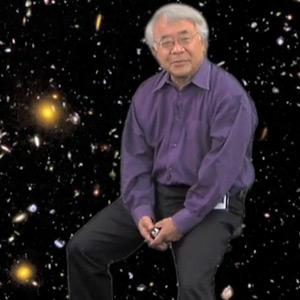
Dr. Torsten Wiesel tells us the story of the Nobel Prize-winning discovery of how the brain processes information through the visual cortex.
https://www.ibiology.org/ibiomagazine/exploring-visual-brain.html
Talk Overview:
Dr. Torsten Wiesel tells us the story of the Nobel Prize-winning discovery of how the brain processes information through the visual cortex. Together with David Hubel, Wiesel used micro-electrodes to monitor changes to a single neuron’s action potential with visual stimuli. With this simple, but innovative experiment, they were able to map each visual stimulus to a specific region of the brain, providing insight on how the brain generates an image from visual inputs.
Speaker Biography:
Wiesel received his medical degree from the Karolinska Institute in Sweden and continued his training in ophthalmology at Johns Hopkins University Medical School. There he began a collaboration with Dr. David Hubel, which led to a major breakthrough in the understanding of the visual cortex and ultimately resulted in them be awarded the Nobel Prize in Medicine or Physiology in 1981. Wiesel moved to Harvard University in 1959 and in 1983 he moved to Rockefeller University where he was president from 1991 until 1998.
Wiesel was elected as a Foreign Member of Royal Society in 1982, and received the National Medal of Sciences in 2005.
https://www.ibiology.org/ibiomagazine/exploring-visual-brain.html
Talk Overview:
Dr. Torsten Wiesel tells us the story of the Nobel Prize-winning discovery of how the brain processes information through the visual cortex. Together with David Hubel, Wiesel used micro-electrodes to monitor changes to a single neuron’s action potential with visual stimuli. With this simple, but innovative experiment, they were able to map each visual stimulus to a specific region of the brain, providing insight on how the brain generates an image from visual inputs.
Speaker Biography:
Wiesel received his medical degree from the Karolinska Institute in Sweden and continued his training in ophthalmology at Johns Hopkins University Medical School. There he began a collaboration with Dr. David Hubel, which led to a major breakthrough in the understanding of the visual cortex and ultimately resulted in them be awarded the Nobel Prize in Medicine or Physiology in 1981. Wiesel moved to Harvard University in 1959 and in 1983 he moved to Rockefeller University where he was president from 1991 until 1998.
Wiesel was elected as a Foreign Member of Royal Society in 1982, and received the National Medal of Sciences in 2005.
انگلیسی
ایالات متحده آمریکا
رونوشت 🔗
Are you the producer of this podcast?
Add a podcast transcript
Need Audio-to-Text?
Transcribe with Listen411 in Just 60 Seconds
جستجوی اپیزودهای گذشته
اپیزودهای قبلی iBiology Science Stories را جستجو کن.
قسمت های دیگر در این پادکست
Gibbons describes how he first isolated dynein and demonstrated microtubule sliding in flagella.
https://www.ibiology.org/ibiomagazine/the-discovery-of-dynein.html
Talk Overview:
In an interview with Ron Vale, Ian Gibbons describes how his initial EM characterization of the internal structure of …
Michael Hall describes the discovery of TOR (Target of Rapamycin) protein, the key controller of the size of both individual cells and entire organisms.
https://www.ibiology.org/ibiomagazine/target-of-rapamycin.html
Talk Overview:
TOR, the Target of Rapamycin, is now known to be a central contr…
Dr. Ian Baldwin provides his perspective on the best scientific writing practices and gives some tips on how to improve one’s scientific writing skills.
https://www.ibiology.org/ibiomagazine/making-scientific-writing-painless.html
Talk Overview:
Scientific writing is a crucial skill that scientis…
In this discovery talk, Dr. Ruslan Medzhitov provides a historical perspective that frames his involvement in the discovery of Toll-Like Receptors.
https://www.ibiology.org/immunology/toll-like-receptors/
Talk Overview:
When he was a graduate student, Dr. Ruslan Medzhitov read a theory written by…
https://www.ibiology.org/profiles/encouraging-scientific-exploration/
Daniel Colón-Ramos began his life in science by being fascinated as a young boy by the unique environment of his native Puerto Rico. But in formal schooling, he found the excitement of discovery too often absent. Now a respected…
سلب مسئولیت: پادکست و آثار هنری تعبیه شده در این صفحه متعلق به https://www.ibiology.org است که متعلق به صاحب آن است و به Listen Notes، Inc وابسته یا تایید نشده است.
ویرایش
از کمک شما برای بروز نگهداشتن پایگاهدادههای پادکست سپاسگزاریم
