

Florence Ann: There may have been a season in your life when doing everything yourself wasn't a personality choice. It was survival. Is that same survival skill still protecting you? Or is it protecting you from the very people who want to love you? Sometimes independence is not freedom. The promise that you've kept to yourself to keep you safe, maybe it's just keeping you lonely now. Sometimes Courage really just sounds like I need you. I need you. Three words that terrify us, and yet have the power to change our entire life. I'm Florence Romano, and welcome to I Need You. Each week, we'll uncover the walls we've built, the loneliness we've hidden, and the courage it takes to finally let the right people in. Because the bravest thing you'll ever say. Will become the beginning of everything you've been missing. Welcome to I Need You. There may have been a season in your life when doing everything yourself wasn't a personality choice. It was survival. Maybe you learned early that asking for help led to disappointment or even damage. Maybe no one came. Maybe they came, but they came with conditions. Maybe being independent wasn't something you admired. It was just something you had. Something you had to become. And if that's your story, I want you to hear me before we go any further. You did exactly what you needed to do. It protected you. At that time in your life, it protected you. But here's the question I want to wrestle with today. Is that same survival skill still protecting you? Or is it protecting you from the very people who want to love you? I have wrestled to use that word again with telling this story. I'm going to just give you the tip of the iceberg right now about my relationship with my father, but it's not going to be pleasant when I start unpacking that luggage. it's hard to know where to begin because. a majority of my life with my father, who I am now estranged from. majority of my relationship with him has been very damaging. And when I think about survival skills, the first thing that comes to mind is my dad, because in a lot of ways I survived him. And the estrangement with my dad is new. It's only less than two years old. I will tell you more as time goes on, but you have to allow me some grace here because I do not publicly talk about my relationship with my father. And I kept trying to come up with different stories. tell to illustrate this point of survival and I kept coming back to this and so that's my sign that I need to share it. So Please treat all of this as I know you will with a lot of reverence because it is hard for me to go here. So my father has his own demons and As a child, when you watch a parent wrestle with so much emotionally and mentally and otherwise It made me believe that I was the problem. And I think a lot of kids who grow up in an environment like I did, I think believe that to be the case. And the problem is it didn't just happen when I was a child, all of my experiences with my father, but it went on into adulthood. And I know the mind can go very wild as I start discussing these things. So I want to make it very clear that I'm not discussing any sort of sexual abuse. Okay. But because my dad is who he is, growing up in the house with him was always like walking on eggshells because you didn't know the version of him you were gonna get. And not every day was bad, of course not. I mean, I had a beautiful childhood. I had all the love in the world. But there was this darkness there because of my dad's issues. And I'm the oldest child, and oftentimes the oldest has the red dot on their forehead, the laser is on their forehead, and that's what it was for me. And because my father's moods were dependably unpredictable, I had to learn how to manage that as a child. And I felt like if I could manage his mood. If I could make him happy, if if I could just fix it, then he would be a happy dad. He would be nice to me. And I couldn't control it. And it took me a very, very, very, very, very, very, very, very long time to realize that. I may even still be realizing it now. But because I had to manage or I thought I had to manage so much of him. It turned me into a child and then a young adult and then adult who repeated that pattern with healthy relationships in her life. And that wasn't healthy. So reliving it doesn't feel great. but I think this is a beautiful place to be able to share this because maybe it will help you tell your own story. And I grew up in a house where you learned to read the room because of my dad, to anticipate his moods and become emotionally self-sufficient. Because it felt safer. It felt safer than expecting consistency because that's one thing I knew I was never gonna get. So If that's a story you've ever shared, I hope you know that it fits very naturally here in ICU. But for years I thought that this independence was simply who I was. And I wore it like many things in my life, like a badge of honor. And I didn't realize, though, that it was actually armor. And that's a powerful distinction. Wearing something as a badge of honor. But it actually showing up as armor. So here's the truth: we applaud women who never need anyone. The one who has it always figured out, the one who carries it all, the one who keeps going, the one who smiles anyway, we call her strong. But strength and protection aren't always the same thing. Sometimes what looks like strength is actually fear, wearing a very Polished outfit. How do I know this? Because I love to wear that polished outfit. One of the reasons I kicked and screamed about starting this podcast was because I knew I was going to have to show up without my polished outfit on. ⁓ That people feel like it sounds so natural, Florence Anne. It's not. It's not. I am working really hard at bringing this to you because it is not an instinctual side of me. But back to the back to the topic at hand. Sometimes independence is not freedom. It's a promise that you made yourself years and years ago. If I don't need anyone, then no one can hurt me. And I spent so many years of my life trying to figure out how to not let anyone hurt me the way my dad did. You can ask my therapist that I still talk about this to this day. I still struggle to this day, trying to avoid hurt. And I can't do that, and neither can you. You cannot avoid the hurt. When people say to me, Well, what if someone does hurt you again? What if someone betrays you again? What do you do? Well, the truth is you only have two options. Either you're gonna completely shut down and have no one in your life, or you're gonna try again. It's as simple as that. I believe in needing people, so I'm never gonna do the former. I'm always gonna do the latter. I'm always going to choose to try again. Maybe I'll try again with more discernment. More caution, there's nothing wrong with that, but I'm always gonna try again. So the promise that you've kept to yourself to keep you safe. Maybe it's just keeping you lonely now. So here's the quiet part out loud. I think one of the hardest things women have ever had to figure out is how to outgrow a version of themselves that worked but isn't working anymore. Because what was working was necessary for a while. It got you here. It protected you. It helped you build the career you have. It helped you raise the children that you have. It helps you pay the bills. It maybe helped you leave unhealthy relationships. It kept you moving. So it deserves gratitude and we're going to honor it. But it doesn't deserve permanent control. Because what I've learned is if you keep responding to today's people in your life with yesterday's survival skills, you are never going to be able to give safe people the opportunity to be different from the people that hurt you. You're never going to be able to give safe people the opportunity to be different from the people that hurt you. I'm saying that twice for a reason. You aren't betraying the woman who survived. You're actually honoring her because you fought like hell for her. You fought like hell so that one day you wouldn't have to anymore. So here's the shift. The goal is not to become dependent on everyone. Because if you're doing that, you're doing it wrong. You're gonna hear me say this so, so often. The accepting villager that this whole podcast is built around is your ride or die person, the person you're gonna tell secrets to, the first person you can confide in. So you have to be picky about that, and that's okay. You have to have discernment about that. So the goal is not to do this with everyone, the goal is. Discernment, because not everyone is safe, but someone is. Let me say that again. Not everyone is safe, but someone is. And healing that really begins when we stop asking the question, can I trust anyone? It really starts when you say, Who's earned that trust? I got a text from One of my college besties the other day, and she had listened to the podcast, and she said to me, You earned that trust. And healing begins when you stop asking, Can I trust anyone? And you're really gonna shift that to asking, Who has earned my trust? And this actually makes me think of one of my college besties. She sent me a text the other day. And I'm actually, you know what? I'm actually gonna read this to you because it it illustrates exactly what we're talking about. She is someone in my life that I have trusted from the jump. We have been friends 20 plus years. We have gone through a lot together. and she listened to one of my podcast episodes and texted me after. And she said, I just want you to know how grateful I am for our friendship. So grateful that we found each other in this life. And you need to know that you deserved the full access to me from day one because our souls connected instantly and we just knew. Gets me all teared up. I am so lucky to have her. ⁓ and I hope other people have a friend like that in their life. And if you don't, it's out there. Like I just said to you, not everyone is safe, but someone is, and she has been a safe place for me for so many years. But I tell you that because that trust was not earned over a significant amount of time. It happened in this kind of cataclysmic, cosmic way. And we didn't question it. And sometimes you don't need to. Sometimes those things just happen, that connection, that chemistry just happens. But the fact that she told me that I had earned her trust right from the beginning, I don't know what's a higher compliment than that. And it's absolutely reciprocal. She had the same for me. She's one of the very first people in my life that taught me it was okay to say I need you, by the way. So ask, as we always go back to in these episodes, the the formula that we're following, it doesn't need you. This formula does not need you to trust everyone. It's asking you to choose wisely. I'm asking you to ask the right person. I'm telling you to say what you need. I'm asking you to know how they can help. And that's not naive. That's that's called wisdom. So your gut checks right now. Take out your phone, write this down, wherever you want to put it, but these are your gut checks. What part of your life still operates as though you're surviving instead of living? And what promise are you still keeping that's old? Who in your life consistently has shown you that they're safe? Yet you're still keeping them at arm's length. And if someone offered to carry part of your burdens, would you actually know how to let them? Or would you instinctively say, no, no, no, no, thanks, I got it. So this week's challenge isn't it's not to become a different person. It's to loosen your grip. I like to white knuckle. I am a white knuckler through life, through my road rage when I'm driving. I do. I have road rage. Ask anyone in my family. It's not an attractive side of me, but I like to white knuckle it, okay? This week we are gonna try to loosen our grip. We're gonna find a moment this week where your instinct is to do it all yourself, but you're not gonna do that. So before you automatically say, I'm fine, I want you to ask yourself, is this wisdom? Or is this an old survival skill still talking? Then I want you to choose one small act of connection. And maybe that's asking for help, maybe it's accepting it, maybe it's telling someone, some telling someone the truth instead of just saying everything's fine. Maybe it's just one admission. Healing doesn't happen all at once, and I'm not expecting you to do that. God knows I'm still healing from a lot of things. I'm still very much actively in therapy and will be for quite a long time. But healing does happen as you continue to make brave decisions. So I want to leave you with this. There was a version of you that did exactly what you needed to do to survive. And I want you to honor that. I want you to honor yourself. I want you to thank yourself. That gets me a little choked up. Just to think about doing that for myself, like the little girl in me that needs to thank her. ⁓ man, that's hard. Okay. Ooh, that's hard to do. I'm asking you to do something really hard. To ⁓ thank that version of yourself that didn't know better maybe or just was again surviving, but Don't ask, don't ask that version of you to keep leading life the way you have been forever when it's no longer working. Because the survival did get you here, but connection, connection is gonna be what will take you where you're meant to go. And the strongest women that I have met are not the ones that don't need anyone. They're the ones that have learned over and over again the difference between. Protection and isolation. People oftentimes ask me why I wrote a book about friendship. And yes, Build Your Village is about friendship, but more importantly, it's about connection. But I wrote a book like that because friendship is very important to me. It always has been. It has been a place I have run to in my life, especially during the darkness with my dad. They continue to be a place I run to. They are one of the first places that I learned to need. And it took me a long time to be okay with that. It took me a long time to not be embarrassed by that. But that's truly why I wrote the book. Because I've lived it. I'm I'm truly a living, breathing example of someone who has experienced every single thing I have described in this episode and on this podcast in general. Sometimes courage really just sounds like I need you. You're gonna hear me say that every single episode. But maybe, just maybe, the woman that once had to survive, maybe it's finally safe enough to let someone help her live. Maybe it's safe enough to finally help her live. Until next time. Say the quiet part out loud.
درباره این اپیزود
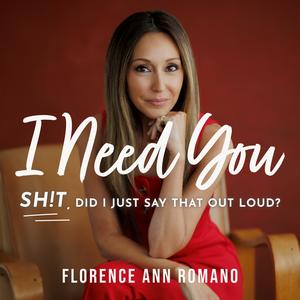
In this episode of I Need You, Florence Ann Romano talks about the survival skills people develop when relying on others has not always felt safe. She opens with the idea that doing everything alone may not have started as a personality trait, but as protection.
Florence shares a personal reflection about her relationship with her father and how emotional unpredictability shaped her. Growing up, she learned to read the room, anticipate moods, and become emotionally self sufficient. What once helped her survive eventually followed her into
adulthood and affected healthy relationships.
A major focus of the episode is the difference between strength and protection. Florence explains that independence can look powerful, but sometimes it is fear dressed up as strength.
She challenges the idea that never needing anyone should always be celebrated, especially when it keeps safe people at a distance.
Florence also talks about trust and discernment. The goal is not to trust everyone or become dependent on everyone. The goal is to recognize who has earned trust and allow those safe people to help carry part of the burden.
Later, Florence challenges listeners to notice where they are still operating as though they are surviving instead of living. She encourages them to loosen their grip, ask for help, accept help, or tell the truth instead of automatically saying everything is fine.
In this episode:
● Why independence can begin as survival
● How childhood wounds shape adult relationships
● Why emotional self sufficiency can become armor
● Why safe people deserve a real chance
● How to ask who has earned your trust
● Why healing requires brave decisions
● Why saying “I need you” can be courage
This episode is a reminder that the version of you who survived deserves gratitude, but not permanent control. Florence invites listeners to honor who they had to become, while making room for connection, trust, and the possibility of letting someone help them live.
انگلیسی
ایالات متحده آمریکا
محتوای صریح
رونوشت 🔗
جستجوی اپیزودهای گذشته
اپیزودهای قبلی I Need You را جستجو کن.
سلب مسئولیت: پادکست و آثار هنری تعبیه شده در این صفحه متعلق به Florence Ann Romano است که متعلق به صاحب آن است و به Listen Notes، Inc وابسته یا تایید نشده است.
ویرایش
از کمک شما برای بروز نگهداشتن پایگاهدادههای پادکست سپاسگزاریم
