

Episode 9: Coda-History & Memory
Transcript
Word Count: 6,982 words
Steve Sisson: Welcome to the Conclusion of the History and Memory podcast, Tejanos in American Wars. Alex, how are you doing today?
Alex Mendoza: Good. Good. A little melancholic that this is our concluding episode.
Steve Sisson: Yes, it is. We've been having fun, and as we've stated before, Alex and I are good friends, and so we've spent more time together over the last month or two than we've been able to spend with each other for a long time, since we roomed together back at UT. But today we're going to try to sum up all of this content that we've been tracing, and we're going to follow a couple of two basic themes, well maybe three basic themes. The first is the theme of our relationship and just how this project got started in leaning back into our days at UT and what was going on from a memorial perspective there, and then taking that into generally a bigger picture about memorials as a monument, memorials being monumental for memory, right? Like it's a, the calcification, the actual the material form of a memory in the memorial, And then more generally, sort of opening up to the idea of memory in general and how that plays out from historical perspective, and thinking a little bit about how historians think about history and memory, but through memorial element, also through just an element of what memory is.
And, the entire project of what history is, can be, should be, is basically about this idea of memory, though it's not usually framed in this way, so I think it's just a unique framing that I wanted to draw attention to. And thinking about memory, again, is us walking down memory lane, or our years in the late '80s, early '90s at the University of Texas where we were both student athletes. I like to say you were a student athlete, I was an athlete student, although I did get my I somehow pulled off getting a BA in history at UT. But my educational career went no further, although I autodidact reading of history has continued. But let's go back to what we talked about in episode one, just our personal experiences around how history breaks in through monuments, and then how that plays out through history.
So, I'll let you start here, just sort of recapping that experience of your time at Texas, but also the relevance of how that pulls us into these bigger pictures about tracing the Tejanos experience in these ways.
Alex Mendoza: I do want to jump in and point out something else, and that is that I think we were both athlete students at UT Austin in the 1980s and the early 1990s. And let me just kind of refresh your memory a little bit with another one of our teammates, Paul Stoneham. And that is the University of Texas at Austin has wonderful libraries. And the main library is something known as the PCL Library, six stories tall. The Basement Floor, newspapers galore, and then you have your history section right around the 4th Floor.
But I think three of us would not even be there. What we did is we went to the 5th or 6th Floor of the PCL to look at old Track and Field News magazines. They had them hardbound. And it was fascinating to read about old Olympic races. This is, again, obviously before the Internet, before any sort of information and data is available, but we were all history junkies when it came down to cross country and track.
And I'm not going to mention specific names, but somebody tore a Track and Field News illustration from the magazine there to post it up in his bedroom for a long time. It was a photo of Lasse Viren basically winning the 5,000 meters in the 1972 Olympics. And I remember reading about the university digitizing all of its old periodicals and everything else for that matter. And I just fondly remember thinking that, well, there's going to be one page missing from an old 1970s Track and Field News.
Steve Sisson: And also thinking back about that this is really important for American distance running history because that particular race is one that created a very big disagreement between our friend Paul and I, because I was an apologist and really felt connected to Steve Prefontaine, who is iconic. In fact, I think he's one of the very few archetypes that there exists in distance running at this point in time. Every young high school track and field athlete, male or female, knows who Steve Prefontaine is. This aspect of memory comes out. And I think about that race, and it reminds me of this aspect of what is this one race where, for all intents and purposes, it's true, Paul's argument is he didn't medal at the Olympics, which we know is the most important thing that can happen. He got fourth, but he made the race, which was my argument, that the race is much more exciting and it's more representative of what we think racing should be, and he and Alex and I mean, sorry, Paul and I argued about that throughout our career. In fact, we're not very close now, but I bet if we got together and had a beer, this is one of the things we would argue about.
Alex Mendoza: I would agree. I would agree.
Steve Sisson: He also valued it immensely, Lasse but to me it's so I guess I just tipped my hat as to who it is that tore the picture out of the magazine. So, let's take this back to what was going on in the main up around the tower at UT and the monuments that were being adjusted and just your experience of that around this historical element.
Alex Mendoza: I think that was my very first exposure to the concept of historical memory. And I could tie it back to you, which you probably forgot, because it was your home that gave me refuge in 2007 while I conducted a week's worth of research at the University of Texas. And where it stemmed from was the spring rush for those fraternities. And I just happened to live at that time before you and I roomed together in 1990, I happened to live close to some of those fraternities. And I was taken aback by the news stories that impacted our entire track team and the athletic department which was predominantly African American on the football team and track team.
Steve Sisson: It galvanized all of us. We were all made aware of this painful part of what it means to be in Texas and what it means to be American. Sure.
Alex Mendoza: And during the spring rush, what these fraternities did is they had plantation days, and they had other celebrations had themes to their Greek rush hours rush service. And what they did is they had explicit words written on junk cars. They had Sambo characters on T-shirts that they handed out to all the prospective students. And this drew a blowback from the University of Texas newspaper, The Daily Texan. And students on campus, the Black students on campus, the Black student organizations on campus were appalled.
This is still happening in 1990. So, when they began to congregate around the main campus, the focal point of all this were the statues around the six-pack and around the main building the big courtyard of the iconic tower. And what they gravitated towards and what led to repulsive condemnations was the Jefferson Davis statue in particular that was right at the head of the main campus. And as you kind of moved a little bit further south, you had Robert E. Lee, Albert Sidney Johnston.
And this was something that, for the first time, as I'm just kind of watching events, trying to understand what is going on, that the idea of historical memory popped in. How do statues create such a divisive element into our student body? And the further I dug into this, it made me want to take a Civil War class, which I did the following year. And I sat next to one of our other former teammates, Greg Fuller, for an entire semester. And I tried to learn about what the Lost Cause was, what the Civil War meant, and I learned a little bit.
But it wasn't until 2007 when I was conducting research into a chapter article that I remained very proud of. It was also cut into, like, a journal article as well. This idea of one wealthy benefactor who wanted to impose his idea, a Civil War veteran, George Washington Littlefield, who wanted to impose onto the university his idea of Southern history and Southern memory to keep the university, who at the time was financially needy, beholden to the concept of the South, the old South. And that's where the origin of those statues were and that's the origins of how one wealthy leader tried to impose this idea of history. And I know who would want to tear down history?
You know, aren't monuments just, like, people celebrating their heritage? But what was good in 1910, 1920 is no longer applicable post-civil rights movement by the 1990s. And that's where things began. And I never realized University of Texas at Austin, our alma mater, had the most confederate statues of the former confederacy, like, on a campus, on a public campus. I mean, other schools had bits and pieces here and there.
But, George Washington Littlefield was made certain that Robert E. Lee was there and that Jefferson Davis was there. And Jefferson Davis passed through Texas while he was secretary of war, when he was bound for the war with Mexico, but they really had no ties to the university itself, the university proper, which was not opened until the 1880s.
Steve Sisson: The importance around all of this is two pieces, I think. Number one, the recognition of the Lost Cause, which I think is something that The United States just needs to constantly and consistently continue to check itself around what it is that we are going to value as a country. And you were going through a more conservative milieu at this per junction. Right? But these things shift and change.
But what's really cool is that these monuments are meant to this Lost Cause was monumentalized by putting up these particular statues and these memorials, but they are designed to be public statements of shared values. And in 1990, the university says these are not our values. That on top of the acting out of young men in their typically southern racist and really, I mean, how many of those young men were entirely racist and how many of those men were just acting out of drunkenness and just continuing the same silly stories that have been going on for forever and ever, we can never unpack, you know? But I find that a lot, you think that someone is absolutely racist. I'm not sure at the age of 18 to 20 that someone can be deep in the bones racist.
They're probably just culturally got borrowed truths that are racist, and they may be disabused of them later on in one way form or another, but what we did as a university, as a student body, and then as the alumni, and the staff, and people making decisions all the way up from the president all the way down, these statues were not memorializing our shared values anymore. We recognize that that Lost Cause is not how we want to be. We want the University of Texas to be represented anymore. And even though I wasn't active in that process, I feel a sense of pride because I don't know why it is why people feel so much pride about their alma mater, but we do. I know why I do in my case because I bled and sweated and tears for sure for the university in certain ways.
But I think that it's like a point of pride for me that my university did reckon at some level with something that wasn't a shared value. And I think that what your project here throughout this entire podcast and then also in your book, and overall your project as a university professor, is to continue to make us aware of the ways that we are memorializing the past and the ways that we remember because you're asking us to reconnect this material and decide now, are these representative of our shared values? And when you ask people these questions, many of them will say, No, we want more monuments of this sort. We want to recognize the width and the depth of the Texas experience, the Tejano experience, the Anglo American experience of being a Texan, the African American experience of being a Texan, and now all these new diverse cultures that are coming in. I think about it in my neighborhood.
I have El Salvadorans, I have Hondurans, I have Mexicans, I have a wide variety of people in my neighborhood, and I can't trace them by just calling them Hispanic. That's not representative of who they are. So I think in a lot of ways, I'm just unpacking this idea that what you're doing is a larger project that you've been carrying forward since you sat in that classroom in Civil War at UT trying to figure out what this was all about?
Alex Mendoza: You know, it's funny you mentioned that because in 2007, the university erected a statue to Cesar Chavez, and we spoke about this earlier in this podcast. And I checked on it just a day or two ago, and they're still unresolved what they're going to do with it. Because, obviously, Cesar Chavez, there's other cities that have already begun to walk back their celebrations or street names in terms of the allegations and accusations already made in terms of what he stood for, sexual assault and whatnot. But the university still hasn't made a decision. But it goes to your point about shared values and shared memories.
Like, at this point, should a gentleman have a statue on a public university campus that no longer symbolizes what many people thought he did at one point. And to my knowledge Chavez, a Californian like those Confederate statues, also did not have, like, a broader relevance to the university proper. And this is something that school officials, the student body are going to have to reconcile sooner rather than later.
Steve Sisson: Yeah. I would take his statue down and put up Gloria Anzaldua personally. That's who I would choose. But, anyway so let's go through these memorials because you've highlighted this for us, I think this will be a really good review of what memorials there are relative to the conversations we've been having. And then a little bit deeper, we go a little bit deeper into the various memorials that are around Texas generally for Tejanos.
But let's go through a few of these and sort of unpack what is the memory that we're I know one of the things you're going to say is, Is it your job to actually tell us what it is that this is supposed to be? Like, to explicate or implicate one particular point of view over another? But these monuments are meant to represent something. Let's go through some of those A few of those monuments, and then what you think they're representing, and what you think the important piece of what memory we should be holding relative to that.
Alex Mendoza: Certainly. And, I really focus on three big monuments that kind of tilt towards specifically Tejanos. I mean, I think every city, as we've kind of peppered throughout our various episodes already on this podcast, they all have veterans memorials, veterans parks, veterans streets. Obviously, we are on the eve of Memorial Day, so certainly we're going to get a lot more attention being paid to veterans and this idea of remembering war. But when we look forward to Memorial Day, this holiday that's coming up, this is just a recent phenomenon.
This is, like, 1970s when it was federalized. I mean, it's been around since the post-Civil War period, and local cities and states have all had a haphazard approach to kind of think about these ideas of at first, Civil War veterans and then eventually all veterans, particularly around the Second and First World War. But what monuments used to be, and if you ever visit a Civil War battlefield in your native state of Pennsylvania, for example, there used to be like pyramids and religious symbols and obelisks. And the three cities that I focus in on is El Paso, Laredo, and McAllen, which are strongly populated by Latinos, by Hispanics, by Mexican Americans. And these three cities, and Laredo started it first in 2004, El Paso followed four years later in 2008, and McAllen rounded it up, like, right around 2013.
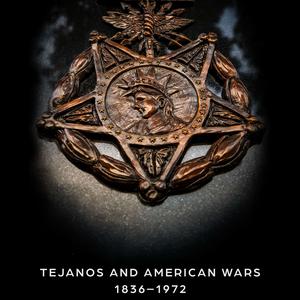
But what they all demonstrate, what they all have is an homage, a monument to the past, a way to sort of chronicle. And this is a form of cultural and political place for this community. And what they want, I believe, is to reconcile how Mexican Americans, how these Tejanos that were ostracized and pushed aside in regard to second class citizens, they have a stake in citizenship going forward. And one way to demonstrate this is through the idea of military service. So these monuments, El Paso's Monument to Company E, the lone Mexican American unit during World War II, Laredo's monument to only Hispanic Congressional Medal of Honor recipients with the statue of David Barkley Cantu, who hid his ethnicity from his superiors during the First World War, and McAllen's War Memorial Plaza, which has big granite placards pointing out the benefits of Tejano veterans and the various conflicts of The United States, what they all share in common.
It's a way to demonstrate in the early part of the twenty first century this idea there is a contribution to citizenship, that if enough people sit around and discuss the memories of the same event, they might find a common ground. And this is what I think these monuments serve as vehicles for. What they do, the more people get involved in the discussion, the more collective the memory becomes. And then the society with common ideas about the past is able to kind of forge and endure through the frameworks created past the civil rights movement, movement, past the Juan Crow laws of the early twentieth century. And this is how collective memory and the debates sort of look like, that you have communities' kind of gathering together.
And it's no coincidence El Paso's demographics are 80% plus Hispanic. McAllen's demographics are 80% plus Hispanic. Laredo's demographics are 90% plus Hispanic. So certainly, that's what they want to create in terms of a framework. I mean, this is their common idea about the past, to remind people that they have a stake in citizenship, and military service was one of the vehicles as to how this was pronounced.
Steve Sisson: And this has also, as we traced last week in our episode on the Chicano movement and its coming into and out of the Vietnam War, it also then highlights a much larger story about representing Tejano experience in Texas generally, more broadly in general, from the use of murals that are all over everywhere, especially in a lot of these communities which have elements that have military aspects to them but are also generally about privileging, or not necessarily privileging, but at least recognizing the Campesino movement, the idea of being agrarian, and a variety of values that are held important to the Mexican American communities in a way that's represented by the Mexican American community. But there's another statue on the Capitol. There's a statue probably the statue most seen by most people because so many people, both Texans and around the world, come to Austin, Texas, walk onto the beautifully taken care of space that is the Capitol Building, is really, really nice. And there's a monument there. Tell us a little bit about that monument and sort of how you recognize that from a historical perspective.
Alex Mendoza: Well, the Tejano Monument was a long time in coming. And again, it's only the last twenty years that they finally reckoned with putting up a monument to Tejanos. And there was an old joke about the Capitol Grounds that you could hardly walk more than a few steps without bumping into, like, some sort of monument to some Texas Ranger to some Civil War hero to some Civil War unit. But the Tejano Monument that is on the Capital Grounds, those perfectly manicured grounds that you spoke about, what it represents is more of a nostalgic look at the past. And it has a Tejanos' agrarian background, rancher. It has, like, that imprint of who the first Vaquero.
Steve Sisson: Which is really cool. Yes. Yeah. It is because Texas is all about cowboys. Everybody thinks of us as cowboys, and the cowboy comes from the Mexican American tradition.
Alex Mendoza: And certainly, that's the hats, the men on horseback the small animals. What is it? A goat, as you mentioned? Yep. You know, all of that just resonates.
And yes, it does fall into the line and the general reasoning of what outsiders think of Texans. But this is the homage state capital imposed a large bronze statue to a Tejano in a very sort of peaceful, idyllic way. And what I think is curious about it is that it's a modern day established monument that kind of spoke on something a little bit more benign. I mean, the other monuments and statues that are there, the memorials that are on the Capitol Grounds are more martial or the martial spirit, but yet this one is benign.
Steve Sisson: Some of them are overtly racist.
Alex Mendoza: Well, that too. That too.
Steve Sisson: Yes, it was an interesting process when I wandered through the Capitol Grounds looking at the various monuments and recognizing how, as people, Texans have changed. But I do think your book has been about, I mean, subtitle is Tejanos in American Wars. Is there a representative figure here that we might want to be thinking about from your perspective about how this challenge that you've traced in your book around becoming American, going from being Spanish to Mexican to Texan to American all in a context of basically I think we tracked that somewhere in the vicinity of like forty year, thirty or forty or fifty years, right? Someone who lived in that place in Texas could have been under those flags, as we talk about Six Flags or Seven Flags of Texas. There's a challenge for our veterans that we're tracking in terms of who they are and what they are.
How does war frame that? How does war change that? Why is war a good vehicle for us to track this experience of becoming American?
Alex Mendoza: I think it's a great experience in the sense that it unfolds the entire community, especially in the twentieth century. I mean, there's not a segment that is World War One, World War Two, the wars against communism in the fifties and sixties, you can't really separate the soldier from the community. And everyone's has to mobilize. Everyone's got to throw support. Everyone's got to think about the idea of supporting the war, supporting the federal government or the authorities in Austin for that matter.
And what military service has done to serve as a good platform to try to understand all this is it really resonates with why people join the ranks. And I think that it's something that really highlights the complexity of human nature. For example, every dedication that I've read about in recent years, whether it's the statute to Hispanic Congressional Medal of Honor recipients in Laredo, or even more recently in 2024, Laredo changed the name. They pushed a bill to rename one of the local post offices to war veterans, Lance Corporal David Espinosa, Sergeant Roberto Arizola, and oh, no, there was a third one and Lance Corporal Juan Rodriguez. So it took a long name to the post office.
But all the dignitaries spoke about patriotism, love of democracy, the love of one's country. But I suggest that it's a little bit more complex than that. When you look at World War I soldiers, World War II soldiers, the idea of adventure is still there. The idea of economic survival is evident. And one of the things that always made me just sit back and reread a letter or a testimonial was just how difficult life was for many of these men who enlisted.
I mean, they were overjoyed to get three hot meals and a cool place to sleep in the barracks. Others noted that their days as laborer on the farms suited them for basic training. Carrying a twenty, thirty pound pack was nothing to them. So it really resonates that military service did provide this gateway, this entryway for many Mexican Americans to truly just come into themselves and learn about the world outside of their town or their county or their region in the state of Texas. And one individual that kind of resonates with all this is someone who wanted just simply to obtain citizenship. I went through this, now fifteen years ago, and he has since passed away. He was a Korean war veteran by the name of Raul Chavarria. He joined during the Korean conflict as a young 18 year old, I believe. And all he wanted was citizenship. And I entitled that particular chapter: "Yo Queria ser Americano" or I wanted to be an American. And that's what prompted his rationale to join. It wasn't love of country. I mean, he was from Nuevo Laredo, but he crossed over and just joined the ranks hoping to obtain an easier path towards citizenship. And when I went to visit him in the 2010s to get an oral history interview, he was a Korean War veteran.
He proudly wore his navy blue cap with a Korean War veteran symbol at the helm. On the bill of the cap had the gold clovers, like all veterans do. He would often go to downtown Laredo to kind of visit with other veterans and just kind of sit back and drink beer and the local bars back in that era. But what I found curious when I went to visit him, it was the summer, and it was hot. And I remember that as I came to his home, there were two flags outside, a flag for The United States and a weather beaten flag of Mexico.
And I thought it was very unique that a veteran, a man who still kept his uniform, a uniform that he bestowed to his grandson, and I took photos of it, too. And he still had his paperwork, discharge work, and everything. You know, why fly two flags? Why do you find the need to basically demonstrate that you're loyal to two countries? I thought you'd adopted American citizenship in the 1950s. He got married. He had a family. But it was very curious that he still straddled both sides. You know, culturally, he still regarded himself as Mexican. And, yes, he was loyal to the United States, but he lived on the border.
And it resonated with me to think about, like, that gray area and that complexity of, like, why people join the ranks of the military because it served as a vehicle for him to escape poverty, to obtain citizenship. He'd lived and worked in the States and the import export business well up until his retirement in the early two thousands. And I thought it was, like, very, very special to kind of think of him as he told me that whenever Mexico played The United States in soccer, he would cheer on for Mexico El Tri, as he called it. So I thought it was very, very unique, and it was only obtainable through his service and the US Army, but this was achievable.
Steve Sisson: I do think this is one of the most unique aspects about what it is in the Tejanos veteran experience, of this avenue for the ability to move up the great American dream of being able to go from zero to a 100 or to go, anyone can be a president or anybody can be rich or, which is a false everyone at this juncture I'm pretty sure understands that that's just a story that's been told for a long time. But there were really significant avenues of approach for that, for these veterans. Things didn't change very much when they come back, unfortunately, and maybe that didn't hold the experience that they thought, but they were more, they were less likely to be destitute, and poverty ridden. They had more opportunities. But they also have this bi, this binational aspect that's pretty unique for the Mexican American communities.
It's strong on all of the Southwest border states, and all the way from California, all the way into, it's strong, If you look in New York, Puerto Rico is not a border place, but Puerto Rico Puerto Ricans in New Mexico, there's this obvious strong affiliation for them. Cubans have a very similar affiliation. There's a sense of deep connection to original roots that is very strong in the Latino experience that complicates this for Anglos who don't resonate necessarily with their German roots or their English roots or their Northern European roots or wherever it is they come from. Although it is interesting, the Italians do more than that, the Greeks do. You know, there's this aspect of America that sort of seems to say everyone must be assimilated and step into the red, white and blue, but the red, white and blue, this is a nation of immigrants.
Everyone here outside of a very small handful of indigenous peoples are at some level immigrants. And so this push pull that happens has been happening in the border regions, but across America around why the red, white, and blue should mean some monolithic thing rather than the variety of experiences that each individual smaller community has based on their racial background, their economic background. There's a lot of other pieces here that get whitewashed in so much of history that you're not whitewashing and you're tracking through this experience of these veterans and how they're responding to the struggles and troubles they have, but also this deep your deep sense of confusion initially, but then much more honoring Raul's sense of this is what I am. Like, I am more I contain multitudes in the great words of the great Walt Whitman.
Alex Mendoza: It's funny you mentioned that because I just got a smile on my face thinking about all the other various testimonials that I got while researching my book. And some of the ones that were more pronounced, I mean you had Tejanos being placed in jail and given an option like, hey. You sign up for the military or you go to jail. Reminds me of movies that I've watched. Like, in the movie Training Day, you want to go to jail, you want to go home.
I remember this one other character who got engaged, then he broke off the engagement, and it became tense in his neighborhood. So, he chose to just join the military and get out, and that was his way out. Join the military. Join the war effort. Because of things in his neighborhood after he broke up with his girlfriend from the same neighborhood, it was just too problematic.
So it's the human element of history. It's a perfect vehicle, I think, for understanding just, like, how complex our stories are. Everyone's stories are unique and special, and some are lost to history if they don't leave a written record, an oral history, and that's the sad part of it, that sometimes things fall through the cracks. We may not know every single story, but the ones that that we do know just leave an imprint.
Steve Sisson: I think they I'm going to add just my anecdotal piece here, but I do think that they do pass forward, if not in stories, at least at an epigenetic level. You know? We're more and more aware these days of how trauma has played out through generation after generation after generation. And so I think these stories are told in our blood and our bones in a longer term. There, And this question about what America will be, and then what our memory of who we've been will be.
And these are open questions. We're still working with them. I mean, over the last ten years, the border has become, has been contentious for a very long time, but the kind of political contention is so far beyond anything we've ever seen in our history that it's just showing how politics are shifting the viewpoint of what it means to be American, what it means to have a race, what it means to be from a place and what different places have, and then what a border is and how it operates, and how you can delineate and separate those things. There are many unanswered questions that we'll be figuring out over the coming twenty five, fifty, one hundred years as we continue to play with what it is to be American. But I just want to honor the gift of your book, which is giving an example, a concrete historical example of this human element, of the difficulty and challenges of tracing the inequities and human rights violations that have been going on across the board, but through a narrow window that is really focused on one particular group of people, but yet is highlighting many of those challenges that come from how violent, how racist, how sexist our worlds have been, but how we're going to reconcile with that and how we're going to deal with that.
So I just want to say thank you for your work, because though it's framed through just sort of basically male experience of wars, because you stop before there's a full assimilation of the military with more women, which now there are many Hispanic women who are in the military, but your books just stopped in the window of time that you had. You covered a wide swath, but you do a really good job of honoring the memory of these men, but also showing the difficulty and the challenges related to it. As we wrap up this episode and wrap up the whole project here, are there any major threads that you feel like we Any specific stories you want to highlight or any major thread or the way you want to wrap this up for our listeners. I think, again, I just want to say I think it's really worth reading and considering. Again, design of a historical document is generally meant to be pretty tight and you cover such a wide range of years but you have to keep it in a tighter venue.
You're not writing about the history of America, right, or history of the border. But given those constraints and challenges, are there anything that we needed to cover that we haven't covered? Anything, any stories that you want to highlight?
Alex Mendoza: Actually, yes, I do. And one of them is we may get tunnel vision, thinking that the only ways to Tejano veterans would be, like, with a statue or a plaque. And, like, the story of Alfredo Gonzalez from Edinburg kind of resonates that sometimes there's different things to memorialize a Tejanos veteran. And, again, we spoke about General Cavazos just recently on this podcast and how Fort Hood became Fort Cavazos, and then it's back to Fort Hood. But Alfredo Gonzalez was a hero in the Vietnam War. He earned his in Hue City, he rescued fellow soldiers. He refused treatment after he was wounded. And he is remembered, I mean, in a variety of different ways that don't really have a monument yet stand tantamount to just how important this hero was, Alfredo Gonzalez. He had an elementary school named after him. He has street names after him in the Rio Grande Valley.
And more significantly, the very first ship, the USS Alfredo Gonzales destroyer class is the very first ship named for a Hispanic veteran of war. And this is this is immense because for the Tejano community in the Rio Grande Valley, it's another demonstration. Like, are worthy that they are being recognized by state officials, by the authorities in Washington, DC, that their martial spirit is not one to be taken lightly. So, yes, David Barkley Cantu, he's even recognized in San Antonio. You have Company E obviously being recognized in El Paso with monuments and school names, but it's also important to note that the naming of a post office, that the naming of a border patrol checkpoint, as in the case of Macario Garcia, naming of a USS warship all resonate just as much as a statue.
And there are other ways that you can kind of promote this idea of collective memory. And it goes beyond just a plaque or a statue and a museum or a memorial. There are reasons for this to demonstrate that they are part of this fabric of The United States, citizenry. You know, this is community identity, so to speak. And this is important to kind of note that there's other platforms, not just those statues that are found in in the town downtown squares or the alleys of South El Paso, but there's other spots that you can have to commemorate and recognize Tejanos veterans.
Steve Sisson: Well, your book is another way, and your work as a researcher, and highlighting the research of others. As we close-up, you've got another project you're working on now. Tell us a little bit about that.
Alex Mendoza: As I mentioned earlier in this podcast, when I did my work on this book on Tejanos and American wars, I got bogged down by World War Two. I mean, the initial rough draft was at 80-pages and was there no way I could have an 80-page chapter. So it had to be whittled down to, like, half that size. And one of the things that came as a consequence to that was just eliminating a lot of those human element stories, not only in terms of what is being demonstrated by the soldiers themselves, but the home front. As a former runner, you might recognize the name the Border Olympics. During the World War II years, the Border Olympics didn't stop in Laredo. They continued as a track meet, but they incorporated the military. They had the army there to have demonstrations, and they had, like, a rifle assembly relay race.
It was just crazy, but it was part of the homefront. And Laredo should demonstrate their loyalty and their support for the country. I mean, they believe that they shouldn't stop. The real Olympics stopped, but not the Border Olympics.
So, I left a lot out there, and I want to go back and give a full analysis of World War II on the Tejanos community from the 1930s and where it began to 1945, and maybe even go with an afterward to the Felix Longoria affair. But World War II will be my next book. And this summer I get to work on it, get to expand.
Steve Sisson: That's awesome. That's awesome. Well, thank you so much for your work and for this podcast. This gets to, not necessarily more people, but a different demographic, a different has a different sway, and then the conversational format that we chose to highlight for this, I think, hopefully will make the content more amenable for folks. I've had a few people who know me and my other podcast work that I do listen to the episodes and have enjoyed them.
So, I thank you again for your hard work and your continuation to bring these questions forward for us, how we wrestle with history and how we wrestle with memory. And I am also just thankful for your personal friendship and for the relationship that we have to be able to do something like this. So, thank you so much.
Alex Mendoza: Likewise, and I'd like to throw out a shout out to you for bringing all this to our attention. And I wonder what our professors at the University of Texas would think if they saw, like, two of their former students actually conducting and continuing work that, well, they should have been taken far more seriously back in the 1980s and the early 1990s.
Steve Sisson: Yeah, I agree. Well, thank you very much, and thanks to all of you for listening. Maybe there'll be a second version of this podcast later when Alex finishes his book. We'll see. But thank you for listening, and thank you for going on this historical journey with us.
We appreciate it.
Alex Mendoza: Thank you.
2
