

Title: The nocebo effect: Jonathan Engler on malevolent psycho-social engineering
(0:00) I actually thought that was completely
(0:01) insane and then started looking into it
(0:04) more and more um and sort of discovered
(0:08) that really there was a huge amount of
(0:11) faulty assumptions and junk science out
(0:14) there and that um there was a hysterical
(0:17) element to the whole thing. Panda's
(0:19) position was uh as expounded in the
(0:22) position statement that I wrote actually
(0:24) for them now coming up probably for
(0:26) three years ago there was no pandemic.
(0:28) So, uh, to have the word pandemic in
(0:31) there was was wrong. But they just
(0:32) thought actually pan data sounds okay
(0:34) because it's like everything all pan
(0:37) everything data. There was a vaccine
(0:38) mandate. There was a vaccine mandate for
(0:40) care home workers and then there was
(0:43) going to be a vaccine mandate for all
(0:45) the doctors and nurses and other
(0:46) healthcare workers in the NHS. Uh, but
(0:50) it um they canled it a matter of a few
(0:54) weeks before it was due to take effect.
(0:55) And I think we were a substantial part
(0:57) of part of that movement that stopped
(0:59) that happening. Um I think there has
(1:01) been dare I say it deliberately driven
(1:05) wedge to make people take a a choice
(1:09) about whether viruses exist or don't
(1:11) exist. Whereas I think the actually the
(1:13) more nuanced take on it is does the
(1:17) virus model have any explanatory power
(1:20) for what we see out there.
(1:29) >> [music]
(1:33) [music]
(1:39) [music]
(1:44) [music]
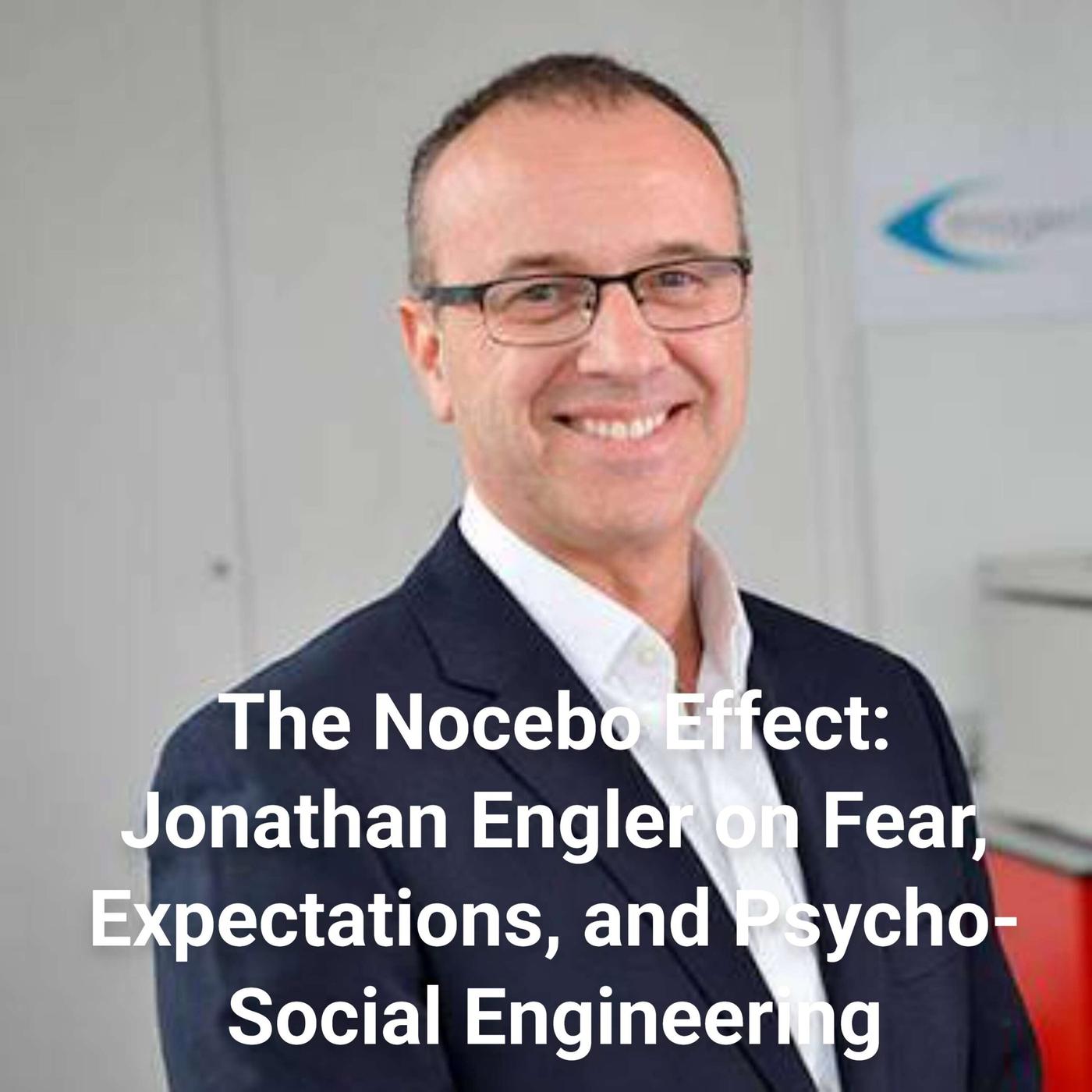
(1:49) >> Hi, I'm Dr. Randy Bakamar today to have
(1:51) with us Jonathan Angler. He is a legally
(1:54) medically uh competent human. He is an
(1:57) entrepreneur and has so many degrees
(2:00) after his name I uh if I spit it out I'd
(2:03) sound like Alice in Wonderland uh you
(2:05) know or maybe somebody uh you know in
(2:08) Jonathan Swift's um Lilipuchian world
(2:11) and whatnot. Um but uh Jonathan uh I
(2:14) came to know during the uh era of our
(2:17) discontent uh the pandemic phase. Uh he
(2:20) was on the board of Pandata um uh was I
(2:25) forget what the original full name is
(2:27) but basically uh people organizing in
(2:30) resistance and trying to cogitate uh
(2:33) relitigate uh the COVID 19 lockdowns and
(2:36) fiasco. Um, and he's uh kind of
(2:39) allaround competent guy. He substacks at
(2:42) he's going to tell us and he's going to
(2:44) tell us where to find him on next. Um,
(2:46) but uh I I find his his um readings and
(2:49) writings uh fascinating and so should
(2:51) you. So Jonathan, thank you for coming
(2:53) on our show.
(2:54) >> Thank you for having me. Thank you.
(2:57) So, um,
(2:59) you I've had you on once before with
(3:01) Jessica Hawk. Um, but I also see you
(3:04) write with, um, Martin Neil and Norman
(3:06) Fenton. Um, and I have had Norman on my
(3:10) show a number of times. I'm huge
(3:11) admirer. Uh, from the accent probably
(3:13) people can, uh, intuit it that you are
(3:16) UK based
(3:17) >> London area
(3:19) >> and I believe I know Norman as I believe
(3:21) Martin is as well. um
(3:24) what what sort of motivated your uh push
(3:27) back and sensibilities when CO came
(3:29) about as a phenomenon.
(3:31) >> Actually, before going into that, uh
(3:33) worth pointing out that Martin would be
(3:35) very upset with you because he's of
(3:37) course Scottish. Um I'm and I'm from the
(3:41) north of England.
(3:41) >> I was just talking about where people
(3:42) live.
(3:43) >> I'm from the north of England.
(3:45) >> I understand to you Americans it's all
(3:47) one place, but uh we're we're we're
(3:49) quite proud of our regional differences
(3:50) in the UK. So, I'm actually from the
(3:52) north of England, although I do live in
(3:53) London at the moment. Uh, but uh but
(3:56) Martin's a very proud Scotsman. So,
(3:58) anyway, sorry, go back to the uh the
(4:00) question. What was the question was
(4:03) >> what?
(4:04) >> Well, how how did you get motivated to
(4:06) um
(4:07) >> Well, it was really it's a long time ago
(4:09) now, obviously, uh but uh it's six years
(4:12) ago. It's hard to believe, but um I I
(4:16) just um initially bought into the whole
(4:19) thing and was um saying, you know, we
(4:22) would say to our kids, actually, we
(4:24) don't want to meet because we heard
(4:24) about this virus uh coming coming over
(4:27) and this was like in the early part of
(4:30) 2020. Um and for a few months I did sort
(4:33) of buy into the thing and uh it just I
(4:36) then started to
(4:38) uh as I saw what these lockdowns were
(4:41) doing to people. Um I started to think
(4:45) this is a bit weird. Uh is this really
(4:48) necessary? Is this really what we should
(4:51) be doing? Has anybody ever thought what
(4:53) these are doing to society? Um and then
(4:57) kind of when the UK government said in
(5:00) where actually Matt Hanok stood up in
(5:02) the House of Commons and said we are
(5:06) going for a full suppression strategy
(5:09) until a vaccine is available. Um, I
(5:12) actually thought that was completely
(5:14) insane and then started looking into it
(5:16) more and more. Um, and sort of
(5:20) discovered that really there was a huge
(5:22) amount of faulty assumptions and junk
(5:25) science out there and that um, there was
(5:29) a hysterical element to the whole thing
(5:31) and uh, pretty quickly
(5:35) uh, turned against the whole narrative.
(5:38) And actually you didn't mention oh by
(5:40) the way just to say pand panda is
(5:42) pandemic data and analytics that's what
(5:44) it stands for although more recently
(5:47) they decided to just drop that because
(5:49) of course panda's position was uh as
(5:52) expounded in the position statement that
(5:55) I wrote actually for them now coming up
(5:57) probably for three years ago there was
(5:59) no pandemic so uh to have the word
(6:02) pandemic in there was was wrong but they
(6:04) just thought well actually pan data
(6:06) sounds okay because it's like everything
(6:08) or pan everything data. So they just
(6:10) left it as panda. But I should also add
(6:12) that towards the end of 2020
(6:14) um I uh was asked to co-chair uh the UK
(6:20) based heart group uh which I did um for
(6:23) you know four four or five years or so
(6:25) with CLA Craig who I don't know if you
(6:27) had on but you probably are aware of
(6:28) CLA. Uh and uh so we the the heart group
(6:32) was a group of
(6:34) um can't remember how many but at least
(6:37) 50 sort of multi-disciplinary
(6:40) team u mainly medics some psychologists
(6:44) education specialists economists and so
(6:46) on and um we were pretty active actually
(6:50) we had a lot of material we had weekly
(6:52) newsletter which was taken up by uh I
(6:56) would say tens of thousands of people
(6:58) and it was used We found out that what
(7:00) we were publishing was used by other
(7:03) activist groups to their view to just to
(7:07) s make sense of what was going on. And
(7:10) um we subsequently
(7:13) found out we were on various government
(7:15) watch list. There was a a part of the UK
(7:18) army. The 77th Brigade was spying on us.
(7:20) there was a a data leak uh that was put
(7:23) into an article uh published by can't
(7:27) remember who it was with Guardian or
(7:28) Sunday Times or something and we we were
(7:30) obviously a target so which obviously
(7:32) makes us sort of annoyed but pleased
(7:34) because we obviously knew we were o over
(7:36) the right target but but and I'm quite
(7:39) proud of what we did in those times
(7:41) because um terrible though it seemed to
(7:45) be in every country in the world at the
(7:47) time if you were a citizen in that
(7:48) country and the same in the UK was was
(7:50) true. Also, we didn't quite go as sort
(7:54) of fascistic as much of the rest of
(7:57) Europe. There were no fines for uh not
(8:01) wearing a face mask or for uh uh
(8:04) venturing out.
(8:07) You know, there were some fines,
(8:09) breaking some rules, but it wasn't quite
(8:10) as bad as in other places in in Europe.
(8:13) You could just say, "The face mask makes
(8:15) me anxious." And you didn't have to wear
(8:16) it. And and of course, there was no
(8:18) vaccine mandate. Um there was nearly a
(8:21) vaccine mandate um for um for healthare
(8:26) workers. Actually, did I tell a lie?
(8:27) There was a vaccine mandate. There was a
(8:29) vaccine mandate for care home workers
(8:32) and then there was going to be a vaccine
(8:33) mandate for all the doctors and nurses
(8:36) and other healthcare workers in the NHS.
(8:38) Uh but it um they canled it a matter of
(8:43) a few weeks before it was due to take
(8:45) effect. And I think we were a
(8:46) substantial part of part of that
(8:48) movement that stopped that happening.
(8:50) And we also we we didn't go into the
(8:52) lower age groups. I think 11 was the
(8:55) youngest age group where the there was a
(8:57) formal recommendation for the vaccine. I
(8:59) think it was 11. And I think we probably
(9:01) paid a part played a part in resisting
(9:04) that. And so we can I'm proud to say we
(9:07) probably saved the hearts of thousands
(9:09) of children. Uh
(9:13) >> that's an irony when the [clears throat]
(9:14) when the group your group was H the
(9:17) heart group but it could have easily
(9:18) been H
(9:19) >> it was healthare it was healthc care and
(9:22) recovery team. Um of course when we were
(9:25) naive enough to think that there was
(9:27) been a pandemic and we needed to recover
(9:29) from it. Of course now my position is
(9:32) that there was never anything that
(9:33) needed any form of response whatsoever.
(9:35) Uh so uh you know I find that slightly
(9:38) embarrassing. In fact, I do find quite a
(9:40) lot of what we said embarrassing.
(9:42) [snorts] But
(9:43) >> yeah, so your your your theory is that
(9:46) there was I mean you you you you
(9:49) stipulate there are viruses and do you
(9:51) stipulate there was a corona virus
(9:53) extent.
(9:54) >> So do I
(9:56) got to unpack these I suppose take them
(9:58) as as um one by one. You said you just
(10:02) said do I did you ask me if I stipulate
(10:04) if there are viruses or did you make
(10:06) that as an assertion?
(10:07) >> Yeah. No, I mean there are people who
(10:08) people who who don't believe kind of
(10:10) that they're viruses, they don't like
(10:13) >> So I the way I see this is I I I I think
(10:17) it's a is a much more nuanced question.
(10:20) Um, first of all, to say that something
(10:22) doesn't exist is is obviously a logical
(10:24) fallacy as as as you'll be aware as a as
(10:26) a science trained person. To say
(10:28) something doesn't exist is is ridiculous
(10:30) because you can't say but do I think
(10:32) that and I think that there has been a
(10:34) in terms of the viruses um I think there
(10:37) has been dare I say it deliberately
(10:40) driven wedge to make people take a a
(10:45) choice about whether viruses exist or
(10:47) don't exist. Whereas I think the
(10:49) actually the more nuanced take on it is
(10:54) is the virus model does the virus model
(10:57) have any explanatory power for what we
(11:00) see out there? Uh so just just to to
(11:03) drill in into that a little bit more uh
(11:05) if take an analogy um do
(11:09) uh you don't do for example
(11:12) psychological phenomena that we don't
(11:14) understand paranormal phenomena we don't
(11:17) understand do they exist or not? I think
(11:19) most people would say um we don't we're
(11:23) not quite sure. There are some weird
(11:24) things happen. Uh I I don't know. I I
(11:27) don't know. Maybe they do. Some people
(11:29) do seem to have six senses and so on. Uh
(11:31) and there does seem to be uh you know a
(11:34) belief system out there that they might
(11:36) exist. But then if if you believe in
(11:38) that does that mean you have to believe
(11:40) in ghosts? The full the fullyfledged
(11:42) full fat ghost story of you know white
(11:47) apparitions uh etc. The answer is no. So
(11:51) the same thing with I think with the
(11:53) kind of virus model is we've got a a
(11:56) very complex model here of something
(11:58) that replicates that you creates
(11:59) antibodies and you can create a vaccine
(12:01) to it and etc etc. It's a single
(12:03) discrete entity
(12:06) um that that causes a discrete disease
(12:10) and that's a quite a I find that the
(12:13) foundational science that underpins most
(12:16) of that explanation is pretty lacking
(12:19) actually. uh I mean so viruses might
(12:24) exist in the sense that they are in some
(12:26) way um they are associated with illness
(12:30) there is something that we measure
(12:33) uh in some of these tests that lights
(12:35) positive that is associated with some
(12:37) illness but that doesn't mean to say
(12:39) that there are single discrete pathogens
(12:42) passed from person to person in waves
(12:44) that cause these illnesses and the
(12:47) reason I say that is um that uh for the
(12:53) model as sold to us to be true. I would
(12:57) not have expected the
(13:00) um decades of experiments of trying to
(13:04) deliberately infect people from
(13:06) secretions of ill people to be a
(13:09) complete litany of failure which it is.
(13:12) So if you go back and look at all the
(13:14) work done right from 19 uh from you know
(13:19) Spanish flu years uh done uh you know by
(13:23) Milton Rosenau uh the US army surgeon
(13:27) you go all the way through to the common
(13:28) cold unit experiments in Salsbury in the
(13:31) UK in the 50s and 60s etc right through
(13:34) to the corona virus experiments there's
(13:37) basically it is incredibly unreliable to
(13:41) take secretions from an ill person and
(13:45) uh make somebody else make a healthy
(13:48) person ill from that. And you wouldn't
(13:51) expect that that to me is a fundamental
(13:54) hole a fundamental
(13:57) uh uh you know paradox which is
(13:59) unexplained by the model and therefore I
(14:01) think the model is some is is lacking in
(14:05) a major way.
(14:07) So um you got to remember that taking
(14:09) secretions from somebody ill and putting
(14:13) them up the nose. I mean they even did
(14:14) it with blood actually injecting people
(14:16) with blood from these people but putting
(14:17) it up the nose and uh deliberately
(14:20) making people live together. uh people
(14:22) with colds and flu symptoms and it's the
(14:26) fact is that it is it is not
(14:27) transmissible to other people in in what
(14:30) you would term optimized conditions
(14:33) based on the model for which those uh
(14:37) pathogens are said to transmit
(14:38) >> not not every counter leads
(14:40) transmission. And I I do think that, you
(14:42) know, you you've had kids grow up. Me,
(14:44) too. And I I'm I'm a physician. I had
(14:46) my, you know, primary care medical
(14:48) practice 30 years. [snorts] And uh you
(14:51) know, in the classroom, there's waves of
(14:54) kids with conjunctivitis.
(14:55) >> Yeah.
(14:56) >> Um there's waves of kids with sore
(14:58) throats. Uh I I you know, made hay and,
(15:02) you know, some coin during flu season.
(15:05) People came in rapidly over and over
(15:07) again with the same thing. I had an
(15:09) antigen test for influenza. Um, barely
(15:13) reliably tracked with symptoms. Um, you
(15:16) know, I've seen cases, not so much
(15:18) lately, but I've seen cases of measles
(15:19) measles. I've seen chickenpox. I've seen
(15:22) herpes zoster. Uh, I think those are
(15:25) viruses. You know, people
(15:27) >> Well, those are those are diseases that
(15:29) appear to occur in people simultaneously
(15:33) in waves. I quite agree, but to say they
(15:35) are Yeah. I mean, but there are
(15:38) fundamental holes in the story. I mean,
(15:40) maybe the holes are bigger and bigger
(15:44) with what we term respiratory viruses
(15:46) than they are with some of those those
(15:49) illnesses that you talked about there.
(15:50) >> So, leaving aside leaving aside the
(15:52) paranormal, um, you know, what what's
(15:54) the explanation for this kind of serial
(15:57) uh occurrence of you say, you know,
(15:59) conjunctivis across the board. boom boom
(16:01) boom all bunch of kids uh getting
(16:03) expressed and you know people or or what
(16:05) we term influenza season whatever that
(16:08) happens to be influenza itself is a
(16:09) non-escriptive word it's just Italian
(16:11) for flowing through um you know like you
(16:14) influence something so you know you
(16:16) could have a paranormal influence and in
(16:18) Italian they call it influenza
(16:20) paranormal
(16:21) whatever
(16:22) >> well I the answer is
(16:25) >> all get sick simultaneously it seems and
(16:27) particularly in in places that are
(16:29) closed in with the
(16:31) Um, you know, actually they, you know,
(16:33) malaria, uh, the term is another Italian
(16:36) word. It's malaria, you know, the bad
(16:38) air around you. They they for mosquitoes
(16:42) and and, um, what is, you know, malaria,
(16:46) protozone or something like that. Um
(16:48) anyway,
(16:48) >> well I mean by the same but but Randy by
(16:50) the same token um there were stories in
(16:53) the unexplained stories in 2020 of I
(16:57) think Argentinian
(16:59) trollers that where they've been away at
(17:02) sea for months and months and months and
(17:04) they all got COVID whatever COVID was.
(17:08) Um, Hope Simpson in the 1970s wrote
(17:11) about isolated Scottish islands where
(17:14) the um uh the the ferry services were
(17:18) not running for months on end and they
(17:21) had these illnesses at the same time as
(17:23) the mainland had them. And going back
(17:25) right in time, there are there are I I'm
(17:29) just saying that there is a that we are
(17:31) sold a very
(17:34) um uh you know almost a Hollywood story
(17:37) of emergence and spread and
(17:42) which does which appears to have holes
(17:44) in it. That's all I'm saying. uh you
(17:46) know I and I don't think it is not when
(17:49) you have a hypothesis for something it
(17:52) is not necess you know science advances
(17:55) by by testing hypothesis uh against you
(18:00) know questions and if it's found to be
(18:01) lacking that hypothesis is taken down
(18:04) you need a new explanation for something
(18:05) you don't need you don't need an
(18:07) alternative explanation for those
(18:09) phenomena it's not up to the people who
(18:11) who oppose established hypothesis to
(18:14) come up with alternative hyp hypothesis.
(18:17) I mean, we're into an epist epistemic um
(18:21) discussion here, which is probably
(18:22) beyond the scope of this discussion, but
(18:24) >> yeah, epistemic is like the the the
(18:27) essence of what knowledge is. Yeah.
(18:28) Epistemic about epidemiology.
(18:31) Um
(18:33) well, I I would still kind of uh be
(18:35) curious about if you think any of those
(18:38) things actually happen if if
(18:39) conjunctivitis say spreads through a
(18:42) classroom. you know, I follow I mean
(18:44) conjunctivitis could easily be I mean
(18:46) obviously we don't need to go through
(18:47) all the diseases you've observed spread
(18:49) through because it's going to be boring
(18:50) for people but um I would say that that
(18:55) you know a a lot of what we observe um
(18:57) is observable because we see bacterial
(19:01) involvement in disease.
(19:05) >> So you're going to stipulate bacteria
(19:06) but not viruses per se. Well, well,
(19:09) whether they are the result of whatever
(19:11) they're the result of, it does seem that
(19:13) for example, when people get ill from
(19:16) in association with respiratory viruses,
(19:18) it is bacterial pneumonia. It is
(19:21) bacterial involvement which in the end
(19:23) causes
(19:25) illness or
(19:27) if
(19:27) >> so yeah
(19:29) >> I would I would push back on that
(19:30) slightly. I mean you know f first of all
(19:32) there's a lot of you know a lot of
(19:34) layers there. Now part of the problem
(19:35) with coronairus is that extant prior to
(19:38) you know SARS um one in 2003 you know
(19:42) people don't realize that corona viruses
(19:44) were a long labeled um constituent of um
(19:49) of common cold. was the second most
(19:51) commonly
(19:52) >> one in five
(19:53) >> main cause of common cold
(19:55) >> and a lot of them are unnamed and
(19:56) there's some you know various other ones
(19:58) adn no virus and rhino virus and
(20:01) influenza you know parinfluenza
(20:03) influenza B all that kind of stuff so
(20:05) there's a lot of you know things going
(20:07) around um and coronairus has always been
(20:09) one so whenever you see somebody on some
(20:11) island who happens to get you know
(20:12) tested for coronairus or even after
(20:15) covid came around um in 2020 people
(20:18) showed positive but there was probably
(20:20) coincidental that they were showing
(20:22) positive for the you know the normal
(20:24) common cold coronirus
(20:26) >> and in fact and in fact I've written uh
(20:29) and particularly with Martin Neil I've
(20:31) written substantially uh about the uh
(20:36) poor testing and validation of a lot of
(20:38) these tests that are said to be specific
(20:40) for SARS COV 2 which again the
(20:43) foundational science underlying that is
(20:46) particularly poor.
(20:47) >> Right. Right. But but it's kind of like
(20:49) you can't um you actually can have your
(20:51) cake and eat it, but you can't
(20:52) necessarily eat your cake and have it,
(20:54) you know, that we're testing this thing.
(20:55) It's showing in in people who are ill,
(20:57) it probably shows more people who are
(20:58) ill versus not. And even if it's, you
(21:00) know, come some secondary common cold,
(21:02) those are still viruses. And the the
(21:04) kind of the method of transmission um
(21:07) you know, I think points to I I'm I'm
(21:09) kind of on board with the viral theory
(21:11) and germ theory in general and whatnot.
(21:14) um you know there a lot of cases of
(21:15) pneumonia that don't really grow
(21:17) something out bacteria some I think are
(21:19) sort of a secondary phenomenon a lot of
(21:22) pneumonia people get sick originally
(21:24) with the flu or something cold whatever
(21:26) they have a consolidation of moisture
(21:28) mucus whatnot the bacteria find that
(21:30) propitious moment in which to grow
(21:33) >> I agree with I agree very strongly with
(21:36) that and uh I think the um
(21:41) there there are so any inconsistencies
(21:44) in the story about uh SARS COV 2 that
(21:46) were told it's um you know it's it's
(21:50) criminal actually what was done
(21:53) >> in terms of ignoring you
(21:56) >> right if your parents lie to you about
(21:57) the tooth fairy and they lie to you
(21:59) about Santa Claus and they lie to you it
(22:01) turns out you know about I don't know
(22:03) the reason you have to go to school the
(22:05) reason you have to go to the dentist
(22:06) doesn't mean they lie to you about
(22:07) everything it's not dispositive you know
(22:09) there there are some aspects that you
(22:11) know the you know I I I don't think it's
(22:13) the right example. You know, I don't I
(22:15) don't think we should have been treated
(22:16) like kids and and withheld information.
(22:19) And I think there was, you know, a fair
(22:20) amount of misinformation, not from
(22:22) populist, but from the leaders and
(22:24) whatnot. But it doesn't mean everything
(22:26) was wrong. You know, I I I was in a
(22:28) debate with Steve Kersh. Um
(22:31) I wasn't I wasn't really in a debate
(22:32) with him. I he he was looking for
(22:34) volunteers from his MIT auditorium
(22:36) audience a couple two three years ago.
(22:39) And you know, he's been looking for
(22:41) people to take on bets um with him who
(22:44) would defend the the COVID [snorts]
(22:46) vaccine. And [clears throat]
(22:48) you know, I I didn't defend the this
(22:50) COVID vaccine per se. He he thinks it it
(22:52) had provided no benefit at all. and he
(22:55) was looking for takers and I got up and
(22:56) he kind of um you know he he didn't let
(22:59) me kind of fully put out my ex Jesus
(23:01) which is that um this was probably a
(23:05) reasonable vaccine for a given small
(23:09) subset of humanity people who are naive
(23:12) to the SARS cove 2 and who were sick
(23:15) enough or at risk enough to deserve it.
(23:18) So they had the proper risk um you know
(23:20) proper benefit ratio versus their
(23:23) potential higher risk. Um but then when
(23:25) it was kind of slathered on to everybody
(23:28) it lost its value and it lost its kind
(23:30) of efficacy quotient. Um you know I'm
(23:35) trying to think of a good example but
(23:36) you know I don't take a yellow fever
(23:38) vaccine because I'm not anywhere near
(23:39) yellow fever. If you gave the yellow
(23:40) fever vaccine to everybody in earth,
(23:42) [snorts] you'd get very little benefit
(23:44) because very few people except you know
(23:45) up the river Niger and maybe the Amazon
(23:48) and you know Meong Delta whatever are
(23:51) nobody that maybe they could get some
(23:53) benefit from having universal yellow
(23:54) fever vaccine but nobody else is because
(23:56) we're not getting yellow fever. Um and
(23:59) so because you know most people have
(24:01) already had some kind of corona virus
(24:02) and most people are healthy enough not
(24:04) to have had this SARS cove 2 impact on
(24:06) their lives. um really just kind of a
(24:08) nursing home or very you know
(24:10) >> yeah well I mean I don't it's probably a
(24:15) bit boring for listeners to to to go
(24:17) into in detail but I don't I don't
(24:18) obviously since I don't agree there was
(24:19) a novel virus I don't believe there's
(24:21) anything that could be that could
(24:22) benefit it and in fact I don't even
(24:24) believe the I don't believe
(24:26) >> I don't believe the flu I mean you got
(24:29) to remember that you're in a situation
(24:30) where Fouchy himself
(24:33) published an article in 2023 or whenever
(24:37) it was who's saying how uh intramuscular
(24:41) injections of vaccines that stimulate
(24:45) systemic immune system can't be expected
(24:47) to particularly be beneficial for
(24:50) respiratory illnesses anyway because of
(24:52) course the immune immunity immunity
(24:55) against these things resides in the in
(24:57) the mucosa of the respiratory system
(24:59) that's what that's what does the heavy
(25:00) lifting so one would never have expected
(25:03) injected substances to be and in fact
(25:05) the flu the flu vaccine study
(25:06) themselves, if you drill into the um
(25:10) claims of efficacy, they're really
(25:13) really poor. They're mostly case
(25:14) negative test control studies which have
(25:17) their own statistical issues. Uh and uh
(25:20) the whole thing is a fraud in my view.
(25:22) The whole respiratory virus vaccine
(25:24) thing is is a complete fraud.
(25:27) >> Well, again, there many many layers to
(25:29) that. It's like a cake. Um I would have
(25:32) to peel back some of them to to see
(25:33) which is the icing, which is the fruit,
(25:35) and which is the cake here. But um you
(25:38) you you say that you didn't see it as a
(25:40) novel virus. So you're kind of
(25:41) stipulating the word virus there. So you
(25:43) see it as a virus. Um I think
(25:46) >> I'd say whatever viruses are there was
(25:49) no the only change to the environment
(25:53) was driven by testing. That's that's
(25:55) that's that's what my position. So and
(25:58) and and the reason the the two principal
(26:03) observational sort of data points to
(26:05) that are that um by the same tests used
(26:09) to detect its presence when they started
(26:12) testing everywhere they found it in
(26:14) humongous quantities uh like in New York
(26:17) like 30% of something tests were
(26:19) positive or 30% of people had positive
(26:22) cerology whatever that means to it. So
(26:24) by the same tests used to track this
(26:26) so-called pandemic
(26:28) um they found when they started testing
(26:31) it that it was present in large
(26:33) quantities and yet there has was not
(26:34) there is not one signal
(26:37) of excess death or either excess death
(26:40) or even excess attendance for
(26:42) respiratory illness prior to the onset
(26:45) of mass testing.
(26:47) >> Uh
(26:48) >> right so I I wrote an article that
(26:50) didn't get much play it nobody picked it
(26:51) up except the American thinker. I wrote
(26:53) it in, you know, spring 2020 and um it
(26:57) was about B theorem. It was before I met
(26:59) Norman Fenton, an expert on B theorem. B
(27:01) theorem is kind of a counterintuitive
(27:03) thing for most of the populace involves
(27:05) that hairy word statistics, but
(27:07) basically when you start testing
(27:08) something for a population that's low at
(27:10) risk for something, you'll get a lot of
(27:12) false positives. So an example kind of
(27:14) top of mind I use, let's say you are
(27:16) looking for green living plants and you
(27:20) um are in the middle of Miami. you know,
(27:22) everything you see that's kind of green
(27:24) and is wide, you're AI, say, and you see
(27:26) these things with broad green surfaces,
(27:29) they're all kind of they have stems,
(27:30) they're connected to a central branch or
(27:32) they're sitting in a pot or whatever,
(27:34) those are living plants. And so, every
(27:36) time you identify one in Miami, you're
(27:38) going to be correct. They're all going
(27:39) to be true positives. But if you are,
(27:41) say, walking around the hallways of an
(27:43) office building in New York City um in
(27:46) the winter and you see these very same
(27:48) things, they look exactly identical. uh
(27:51) they're green, they got flat surfaces,
(27:52) blah blah blah, you know, they have that
(27:54) same visual image of plant, you're going
(27:56) to be incorrect far more often because a
(27:58) lot of them are fake plants. They're not
(28:00) real plants. And so when you hunt for
(28:02) something, and again, another example
(28:04) would be bomb detectors or the TSA. If
(28:07) you're the TSA in Iraq during the war,
(28:10) um you know, you're going to find a lot
(28:11) of people with bombs, you know, walking
(28:13) around. So your bomb detectors are going
(28:14) to have a lot of business every and if
(28:16) it's a positive test, you know, for
(28:18) whatever that thing is they find on
(28:19) bombs is like you pull the guy over, oh
(28:21) my god, he's got a bomb like 60% of the
(28:23) time. And if you do it in Calamazoo,
(28:25) Michigan, and you're testing, you know,
(28:26) blue-haired uh ladies, whatever, you
(28:28) know, you're going to find some people
(28:30) positive because maybe the perfume or
(28:31) the clothing or whatever, it's going to
(28:33) be so but you're not going to find them
(28:34) any bombs. So the the the test might be
(28:36) the equal same test that used in Iraq
(28:39) during you know 200 whatever three or
(28:41) something like that or 2005 or something
(28:43) and you find a lot of bombs and using it
(28:45) you know 2025 the same exact test in the
(28:47) middle of Omaha whatever and you're not
(28:49) going to find any bombs. It's it has to
(28:51) do with the background population. So
(28:53) with coronairus there's the the the dual
(28:56) effect that if you're looking for this
(28:58) thing um when people are not sick you're
(29:00) going to find a lot of false positive.
(29:02) Moreover, there's this bleed between
(29:04) SARS cove 2 which is a coronirus and the
(29:06) extant you know common cold which is you
(29:09) know axiomatically common and and
(29:12) everywhere and so forth especially you
(29:14) know around human beings and frankly
(29:16) other animals. So you know I think this
(29:18) was
(29:20) >> you're you're ascribing using uh the
(29:22) results of a test uh and a set of
(29:25) technologies that didn't exist before to
(29:27) ascribe novelty to something. I I I I I
(29:30) it you know and of course we've been
(29:32) using these these technologies have only
(29:34) been available for a quarter of a
(29:36) century roughly since the turn of the
(29:37) millennia before I just don't believe
(29:40) that these sudden these sudden
(29:42) explosions of MS SARS bird flu SARS coov
(29:46) 2 etc these are constructs of testing uh
(29:50) and um the before the before before
(29:54) Tedros stood up and said test test there
(29:57) was no excess death anywhere
(29:59) And there were no there wasn't even any
(30:01) excess attendances for respiratory
(30:03) diseases. He the state of pandemicity
(30:07) was entered into on the command of
(30:09) Tedros. Test test test caused it.
(30:12) >> So is the state of pandemicity is that
(30:14) in South America someplace next to
(30:16) Paraguay? Um
(30:18) >> I mean if you go to Africa, if you go
(30:20) subsahara in Africa and you say how did
(30:22) you um how do you get on during the
(30:25) pandemic? They go, "Oh, you mean that
(30:27) white man's disease thing? We didn't
(30:29) have it. We couldn't we couldn't afford
(30:31) the testing." And in fact,
(30:33) >> good point. In fact, I think one of the
(30:36) good examples of that is actually is
(30:38) actually the island of um Hispanola,
(30:40) which as you all know uh half of it is
(30:43) roughly is the quite wellto-do holiday
(30:46) destination of Dominican Republic where
(30:48) they had quite a bad pandemic and the
(30:50) other half is Haiti where um they the
(30:54) villagers said don't go to hospital
(30:56) that's where people die and they had no
(30:57) excess death.
(30:59) >> Yeah. Um
(31:00) >> so there's a lot there's a lot
(31:02) >> same island from which to
(31:03) >> same island and of course we have this
(31:04) we have this phenomenon across the whole
(31:06) world which is that you have you know
(31:08) there was a terrible pandemic in um
(31:11) Burgamo region Lombardi region in
(31:13) northern Italy uh but yet in southern
(31:16) Italy they didn't have one at all um
(31:18) there the um in Canada they had no
(31:21) pandemic in 2020 but across the just
(31:24) across the border in the American cities
(31:25) they had huge waves of excess deaths. I
(31:28) mean this is not how viruses if they are
(31:30) viruses. This is not how pathogens
(31:32) spreading personto person in waves
(31:33) behave. It's completely ludicrous the
(31:36) whole story. [snorts]
(31:37) >> Yeah. No I I there's some elements that
(31:39) that are are reasonable from what you
(31:42) say. I think there was an exaggeration.
(31:43) I think there was what we will maybe
(31:46) come to speak about the noibo effect
(31:48) where people are presuming the worst and
(31:50) they get the worst. Um I I I think there
(31:52) are a lot of other confounding
(31:53) variables. I agree with you about the
(31:55) part about poverty. You know, I I have a
(31:57) book u coming out hopefully soon um on
(32:00) uh kind of the way people falsely
(32:03) attribute guilt and personal behavior to
(32:05) cancer. Um they they think they're at
(32:08) fault for what is often times just a
(32:09) stochastic process. Um but you know
(32:11) there's not that much cancer death in
(32:14) say subsaharan Africa, north of South
(32:17) Africa, you know kind of the mid swath
(32:19) of Africa, the poverty belt of Africa.
(32:22) Um and it's not you know it's not
(32:25) necessarily from testing it's because
(32:26) not you know a lot of the life
(32:28) expectancy is not high enough to to get
(32:29) cancer. So there's you know there there
(32:32) are some things going to be measured
(32:33) differently. I remember also in medical
(32:34) school we were talking about back pain
(32:36) at one point and um the lecturer I
(32:39) didn't fact check this long before the
(32:41) internet and whatnot um but he said
(32:43) really they don't have that kind of term
(32:45) of art of sciatica and lombago and back
(32:48) pain in Uganda or something he's talking
(32:49) about. This is like you know early
(32:51) 1980s. Um because nobody gets paid for
(32:54) that. There's no you know there's no
(32:56) real
(32:57) >> there is another
(32:59) >> there's another potential actually I
(33:01) read an interesting article some years
(33:02) ago about that. There's another
(33:04) potential confounder in that um is that
(33:08) backs bad backs started when they
(33:10) started paving.
(33:12) So people started walking on pavements.
(33:15) >> Yeah. which I think is an interesting
(33:16) one because of course you then have a
(33:18) you then have a you can imagine the the
(33:19) walking motion
(33:21) >> uh that that we have through most of our
(33:24) life
(33:25) as a runner whenever I could
(33:27) >> constant constant avoided
(33:29) >> I avoided pavement um and I I I played
(33:32) tennis pretty much year round now I was
(33:35) more of a squash player before that's
(33:37) always on hard courts and that became
(33:39) hard on my body but I have clay courts
(33:41) in the summer and those are much easier
(33:43) you know I can kind of yeah
(33:44) >> get get ready and feel better to play.
(33:46) And so when I was a runner before that,
(33:48) you know, kind of distance and whatnot,
(33:49) I tried to stay on the the, you know,
(33:51) the grassier side of things. So, but but
(33:54) his point was that because there's no
(33:55) reimbursement, there's no channel. It's
(33:57) kind of distinct.
(33:58) >> I think there's a lot there is a lot in
(34:00) that and and in fact on my Substack, I
(34:02) have I have written a lot uh tried to
(34:05) cover quite a few topics outside of the
(34:08) dreaded pandemic. uh you know looking at
(34:12) for example uh psychiatry SSRI
(34:15) inhibitors the GLP1 agonists and so on
(34:17) and um the the way in which um industry
(34:22) uh the industry tactic is basically to
(34:25) uh find something that is likely to be a
(34:28) chronic long life condition and
(34:29) gradually change the definition of that
(34:31) of treatment definition of that to pull
(34:33) in and encompass a much larger and
(34:35) larger amount of the population the
(34:37) classic examples but
(34:37) >> yeah I think there's yeah I I've worked
(34:40) on something similar. It's, you know,
(34:41) med, excuse me, medicalization.
(34:44) >> Yeah, medicalization is a good is a good
(34:45) term. I mean, they've done it with blood
(34:47) pressure. They've done it with what I
(34:49) would call normal anxiety, uh,
(34:51) situational anxiety. That's becomes
(34:54) treatable depression. Uh, they've done
(34:55) it with cholesterol. Uh, they've done it
(34:57) with ADHD.
(34:59) Uh, they're now looking to do it with
(35:00) weight. I don't know if you noticed that
(35:02) this there's this I actually wrote an
(35:04) article um just last week on this new
(35:07) Lancet. There's an Atlancet review about
(35:10) the definition of obesity and if it was
(35:13) implemented which many people the WH
(35:16) said it should be 75% of Americans would
(35:18) be obese. Now imagine what that does to
(35:21) the share prices of Eli Liy and
(35:24) >> no I actually think fair people are kind
(35:26) of
(35:27) >> I don't know if you have the expression
(35:29) in the UK fathead. um know it's kind of
(35:32) you're thick you're you're you know
(35:33) fatthead and you're not thinking well
(35:35) you know I think people maybe could use
(35:37) a little GLP uh you know for their
(35:38) intellect but um I'm not sure we're
(35:41) going to see that right off the bat. Um,
(35:43) I also was thinking, you know, a lot of
(35:44) people get these facelifts, um, what I
(35:46) was thinking of getting a brain lift,
(35:48) you know, see if I could tighten things
(35:49) up somewhat. Um, but you don't see that.
(35:51) You don't see that happening uh, much as
(35:53) well. Um, but you know, so where where
(35:58) does this all lead us? Um, so what what
(36:01) type of say prophylactics uh,
(36:04) prophylactic or preventive measures
(36:06) would you institute on a kind of
(36:08) personal or family basis for your kids?
(36:10) I mean, when when there's this thing
(36:12) that people are calling the flu going
(36:13) around, um, did your kids get sniffles?
(36:17) Did your kids get sick? Have you had the
(36:18) flu as it were? You get do you get sick
(36:21) more often in the I mean here we tend to
(36:25) get these things we're calling flu in
(36:28) the winter. You know, people are in
(36:29) closed spaces, not sneezing. I think
(36:30) part of the explanation, by the way,
(36:31) side note, for like African and whatnot,
(36:34) not not getting as sick in warm places
(36:36) because the windows were open. I was in
(36:37) a hotel in Costa Rica. There were no
(36:39) doors in the whole lobby. You know,
(36:40) everything is kind of flowing through.
(36:42) The birds pass by and you're not, you
(36:44) know, in this closed off space where
(36:47) people are kind of sneezing at each
(36:48) other and the aerosol kind of hangs in
(36:49) the air. I I I
(36:51) >> I ascribe to that stuff, but on a
(36:53) personal basis, you know, where did you
(36:55) come upon say your advanced skepticism
(36:58) and how did it play out on a kind of
(36:59) personal family basis and or medically
(37:02) if you treated people?
(37:04) >> Wow, there's a there's a lot a lot in
(37:06) there. So until
(37:09) um 5 years ago, I
(37:13) well I was actually never a flu shot
(37:14) person. I've only ever had like two of
(37:16) them in my life. Um and I don't even
(37:19) know why I had why I had those. There
(37:21) always was obviously some inbuilt
(37:23) skepticism that that story was a little
(37:25) bit sort of trumped up. And we are um we
(37:30) are a little I think we are a bit more
(37:32) stoical about these things in in the UK
(37:35) than you are in America. I know there's
(37:37) I I mean we find it quite hard to
(37:38) believe that there are flu shot mandates
(37:41) in medical schools for example and
(37:42) hospitals in the US.
(37:44) >> We don't have that. We don't have that
(37:46) in the UK. Um but to to to your question
(37:49) um so you know I just having seen it's
(37:53) just been like layers of the onion and
(37:55) seeing how uh completely corrupt uh the
(38:00) uh industry was over the co vaccines. Uh
(38:04) then started to look at some of the
(38:05) other ones and looking at the efficacy
(38:07) data supporting the influenza uh
(38:11) vaccines. uh you can see how how poor it
(38:13) is and you see these headline figures of
(38:16) 75% effective 85% effective uh it's if
(38:20) you actually look into the trials which
(38:22) they've done to come up with those
(38:24) numbers it's completely ludicrous. Most
(38:26) of them are test negative uh control
(38:28) studies there's no placeboc controlled
(38:31) studies that show that that group who
(38:33) received that actually does better on an
(38:34) allcaused basis than that than that than
(38:37) that group that received placebo. And of
(38:40) course now they say we can't do these
(38:42) studies against proper placebo because
(38:44) it would be unethical. It's like and and
(38:45) I read a great great a great phrase for
(38:48) this is the is the um safety ponzi
(38:52) scheme which I thought was was a good
(38:55) phrase. I read that I can't remember who
(38:56) I read it but somebody wrote it and I
(38:58) really liked that phrase that idea that
(39:01) uh you're building you're justifying one
(39:03) thing on something else and it's just
(39:05) going on like four or five multi-layered
(39:08) uh whereas actually you go right back to
(39:10) the beginning and there is no
(39:10) foundational science supporting it. I
(39:12) mean just to be clear this this the the
(39:16) test negative case control study uh
(39:20) where they well you know what they do
(39:22) they they measure the the rate of that
(39:25) in somebody who tests the vaccination
(39:27) rate in people who test positive against
(39:29) vac uh negative it is the the ultimate
(39:34) surrogate end point because you are
(39:36) literally measuring just the thing
(39:38) you're looking at so in case of a flu
(39:41) shot you'reing measuring the propensity
(39:43) to
(39:45) test uh positive with these symptoms. Uh
(39:49) and you're only measuring that. So you
(39:51) and you're making a foundational
(39:52) assumption in any study which is not all
(39:54) cause is that your product is not
(39:57) causing something else to increase.
(40:00) >> You with me? So, so and this and this is
(40:04) this is actually the way that drugs are
(40:07) developed and licensed nowadays is
(40:10) largely through very narrow narrow
(40:13) surrogate endpoints. So, for example,
(40:14) lower blood pressure and it is shown as
(40:17) long as you lower blood pressure your
(40:19) drug is automatically assumed to be net
(40:21) beneficial. As long as you lower
(40:22) cholesterol, your drug is automatically
(40:24) assumed to be beneficial. And of course,
(40:26) there's very little all cause analysis
(40:28) going on anymore in the development of
(40:30) drugs. So you and and that the an
(40:33) assumption the only way you can that
(40:35) assumption would be valid was be if we
(40:37) had perfect understanding of the
(40:38) complexity of human biology which of
(40:40) course we don't have because biology is
(40:42) a complex system and if you interfere
(40:45) with one thing it is highly likely to
(40:48) cause unpredictable
(40:50) uh second or third order adverse effects
(40:53) that you that you then are not
(40:54) measuring. And and this is one of my
(40:57) issues with modern medicine is it it
(40:59) does assume much less interconnectedness
(41:02) between uh physiological systems uh than
(41:06) that than would appear to be the case. I
(41:08) mean to give you a good example um did
(41:12) you know that uh for example the GLP1
(41:16) agonists they cause a fairly significant
(41:19) uh rise in cholesterol levels.
(41:22) Um so they will then of course these
(41:24) people will then end up with being on
(41:26) statins and statins of course cause
(41:29) although they
(41:31) you know do what they do in terms of
(41:33) lowering the headline level of
(41:36) cholesterol um the actual evidence that
(41:38) they are net beneficial in people who
(41:40) haven't got wildly high cholesterol i.e
(41:43) a familial hyper cholesterolmia is
(41:45) pretty limited. Um, so you know, I think
(41:49) we've wandered
(41:52) >> around the point there, but
(41:53) >> yeah.
(41:54) >> Yeah. Know, it's it's it's a tricky
(41:56) thing. That's why, you know, they've had
(41:58) these massive studies, uh, Framingham
(42:00) Heart Study and this and that. Um, I
(42:02) think those things probably will get
(42:04) parsed out somewhat better over time as
(42:07) we have larger
(42:09) capabilities of looking at larger data
(42:12) sets amongst larger groups of people. Um
(42:15) but it's it's a difficult thing to parse
(42:17) and a lot you know so many so so much of
(42:19) what people complain about is subjective
(42:21) you know some people can have you know
(42:23) you know I ask people when when they
(42:25) come in you're supposed to grade the
(42:26) pain you know it's seven out of 10 or
(42:27) whatever but you have you know some
(42:29) people are more sensitive or
(42:30) hypochondrial or whatever or looking for
(42:32) attention or some other medication
(42:34) they've got a lot of things going on
(42:35) their life so they're not necessarily
(42:36) giving you the honest answer you know I
(42:38) treated narcotic de addiction and
(42:41) getting people off narcotics and you
(42:44) know their their propensity for having
(42:46) pain. Uh we don't know. I mean, it's
(42:48) hard to grade it out, but clearly when
(42:50) they're on the hunt for drugs, um you
(42:53) know, they'd come in, I saw them not not
(42:55) for drug detox, but you know, when they
(42:58) were drug seeking, you know, they
(42:59) complained of pain everywhere. Now, were
(43:01) they right or wrong? Who knows? Was how
(43:02) much was it layered on? How much of it
(43:04) just be kind of their assumption, the
(43:05) way of living? And then there with drug
(43:07) withdrawal pain, you know, so things can
(43:09) cycle. It's not always the reality of
(43:11) the reality. you know, if somebody's
(43:13) having complaining of back pain, you
(43:14) know, the the you know, I'm sure you've
(43:17) read examples, you know, people getting
(43:19) off the battlefield, carrying somebody
(43:21) else off, and it turns out they they saw
(43:22) they've been shot in the arm themselves.
(43:24) They didn't even know that. You know,
(43:25) there's different thresholds for caring
(43:27) about these things. And we are
(43:29) >> well, we understand we understand very
(43:31) little about the interaction between
(43:33) human psychology and sematic symptoms
(43:36) actually, but it is obviously much more
(43:38) profound than we understand. And in fact
(43:41) placebo effects are much more profound
(43:43) than we understand. I so which is
(43:48) obviously a good as we move towards the
(43:51) final part of this is we notice I've
(43:54) segueed us towards noibo effects which
(43:57) is what you wanted to talk about in the
(43:58) in the first place. just say a little
(44:00) bit about placebo. Um it's very
(44:03) interesting that um uh the some of the
(44:07) placebo effects uh that are around are
(44:11) pretty profound. So you've got a whole
(44:13) series of uh for example knee operations
(44:16) which are done where sham procedure knee
(44:18) operations where you know where they
(44:20) they purport to go in and clean up your
(44:23) uh minis you know miniscy um and that
(44:27) people say oh that's had a marvelous
(44:29) effect on that and there's a whole
(44:30) series of operations they've done where
(44:31) people where they put them to sleep they
(44:33) just make the incision and don't go into
(44:34) the knee at all tell the person they've
(44:36) gone into the knee and they have the
(44:38) same amount of improvement. Um the the
(44:41) um other great examples of placebo of
(44:46) very very strong placebo effects were in
(44:48) uh uh I've actually written about it. Uh
(44:50) it's one of my Substack articles. Uh is
(44:53) there's a study of um chemotherapy in
(44:58) gastric cancer. This is probably from
(45:00) the 80s um where they gave um they had
(45:05) surgery and it was uh the half the half
(45:09) it might have been 2/3 one third but
(45:10) anyway one one group received um
(45:13) chemotherapy after surgery and one group
(45:16) received um placebo infusions of placebo
(45:20) and the rates of nausea was were
(45:24) incredibly high in the placebo group.
(45:26) like a third of the people got nausea uh
(45:28) because they were expecting to and but
(45:31) also surprisingly I think something like
(45:33) 20% had alopecia.
(45:37) Now that is in that is interesting isn't
(45:39) it that so they were expecting to lose
(45:41) their hair because they were had
(45:42) chemotherapy and they did lose their
(45:43) hair. So which of course I sympathize
(45:46) with enormously uh but uh uh the you
(45:50) know so these these effects are are are
(45:52) quite profound. In fact, there's also
(45:55) one of the most elegant um experiments
(45:58) that I have ever read about placebo
(46:02) effect um actually is um on the SSRI
(46:05) inhibitors where they gave um they
(46:09) actually uh told half the patients they
(46:13) they purported to randomize them and
(46:16) they gave they said they told half the
(46:19) patients that they'd been randomized to
(46:22) um the placebo group and half the
(46:26) patients that they had the uh the active
(46:29) product, but they actually gave the
(46:31) active product to all patients.
(46:34) The drug didn't work in the people that
(46:36) were told they had placebo.
(46:39) So this is this is what they term an
(46:41) enhanced placebo effect. So the people
(46:43) who knew that they were on the active
(46:45) drug actually had uh enhanced response.
(46:50) The the interesting thing about that is
(46:52) that that the difference between those
(46:53) groups was far greater than the
(46:55) difference between the groups in the
(46:57) real act uh placebo active studies of
(47:00) SSRI inhibitors and the so leading to a
(47:04) conclusion that if patients were having
(47:06) just if only a small proportion of
(47:08) patients realized they were on active
(47:10) drug because of maybe uh dry mouth or
(47:12) something like or some side effect of
(47:14) the SSRI inhibitors then that they could
(47:16) have that enhanced placebo effect that
(47:19) they have from knowing that they were on
(47:21) the active drug could actually explain
(47:23) all the differences between SSRI and
(47:26) placebo in those trials. [snorts]
(47:30) >> Yeah, that's amazing.
(47:31) >> Uh but anyway to go on to placebo noibo
(47:34) which you were asking me about um you
(47:37) want to talk a little bit about nobo
(47:38) effects.
(47:39) >> Yeah. So okay so um placebo effect is
(47:43) well known it's well talked about is
(47:45) where basically um people are given some
(47:48) treatment with the expectation that it
(47:50) will make them better or relieve their
(47:52) symptoms and that's exactly what happens
(47:55) simply because they have the expectation
(47:58) and these effects as as I said are quite
(48:00) powerful and
(48:02) um in a sense it's kind of linked to I
(48:06) think it is linked to the traditional
(48:09) healing
(48:10) power of just going to see uh a wise
(48:14) experienced doctor. I think that is who
(48:17) reassures you, does something to you and
(48:21) that I think there is a very substantial
(48:23) healing you know beneficial element that
(48:25) just comes from that interaction and
(48:27) which unfortunately I think is being
(48:29) devalued by a protocol-driven tickbox
(48:32) approach to medicine that that is being
(48:34) lost in the patient doctor patient
(48:36) relationship. um uh at so that SIBO
(48:40) effect expectation that you'll get
(48:42) better. No SIBO effect is the opposite
(48:44) and it's not talked about very much and
(48:45) that's basically where um something done
(48:48) to you um
(48:51) an expectation that you will become ill
(48:53) or your symptoms will become worse
(48:56) um will cause you to have uh symptoms of
(49:00) an illness or develop an illness where
(49:02) you didn't have one before. And these
(49:05) are wellnown. I mean it's a study uh
(49:09) it's been studied for several decades
(49:11) been it's a wellescribed phenomenon and
(49:13) yet it uh it was not mentioned at all
(49:16) during the what was the phrase you used
(49:19) to describe the era of you managed to
(49:22) use it without using the word COVID and
(49:23) without using the word pandemic. You you
(49:26) had a phrase I can't remember what it
(49:27) was.
(49:28) >> The well the winter of our discontent.
(49:31) Let's call it do it during the era of
(49:33) our discontent. Let's call it.
(49:35) >> Yes, that's what I did say.
(49:36) >> I think that was your phrase. Anyway, so
(49:38) um so despite the fact that people were
(49:41) told that um if they interact with
(49:45) anybody and develop any mild symptoms of
(49:48) apparently anything, um it could be a
(49:50) deadly illness. And if they if they if
(49:53) they do this test which involves of
(49:54) course shoving something up and
(49:56) disrupting their mucous membranes and
(49:58) goodness knows what that could be uh and
(50:02) that lights up positive that they they
(50:04) have a substantial chance of dying. And
(50:06) you got to remember also that certainly
(50:07) the studies uh the survey showed that
(50:10) people's uh people thought that if they
(50:14) had COVID I will have to use quote marks
(50:18) because I don't believe it was a real
(50:19) phenomenon but if they had COVID uh that
(50:21) they had you know studies showed that
(50:24) people in America um thought that they
(50:27) had like a I don't know one in 10 one in
(50:29) 20 chance of dying or something. I mean
(50:31) these were insane expectation, insane
(50:35) fear. Um so in by by the way
(50:39) interestingly there was they did some
(50:40) studies on differences between uh voting
(50:43) intention. It was there was Republican
(50:45) versus Democrat on on that that metric
(50:48) was quite interesting. Anyway, go back
(50:50) to noibo. So you've got this situation
(50:52) where people are told that if they're
(50:53) testing positive for this thing and of
(50:56) course they're normally doing the test
(50:57) because they've got some symptom of
(50:58) something so they've probably got a cold
(51:01) um and but they're testing positive
(51:03) because the whole thing crossreacts with
(51:04) whatever illnesses they've got. They
(51:06) seem seem to be a test of being ill. Um
(51:09) and they're told that they they could
(51:12) die from this illness or they're going
(51:13) to get incredibly breathless from this.
(51:15) And of course they do. And regardless of
(51:19) whether it's a complete explanation for
(51:21) what we saw, it's not even discussed as
(51:24) a partial explanation. But it surely is
(51:26) a partial explanation. Um because we do
(51:29) know that uh for example, most that one
(51:32) of the most common um predictors of
(51:35) whether people would end up going to
(51:36) hospital was whether or not they had a
(51:38) history of anxiety um
(51:41) disorder. Uh and so that you know the
(51:44) these people are obviously much more
(51:45) susceptible to this. noibo effect. Um,
(51:48) and the noibo effect is pops up in the
(51:52) historical literature in a number of
(51:54) quite interesting case studies. Uh, and
(51:57) I'm going to tell you about two of these
(51:58) case studies now because they are quite
(51:59) interesting. They do illustrate specific
(52:01) points. So the first one um is uh there
(52:06) was a guy who uh was on a clinical trial
(52:09) and he took he took as an overdose. He
(52:12) took a whole bottle of clinical trial
(52:14) medication as a deliberate overdose and
(52:17) his blood pressure fell through the
(52:19) floor and he became uh kind of only semi
(52:22) semic-conscious and unresponsive. Was
(52:25) taken to hospital and he was sort of
(52:27) semi-conscious. Um uh and they tried to
(52:31) they gave him uh a drip and they
(52:34) couldn't get his blood pressure up to
(52:35) normal and mean meanwhile they were
(52:38) trying to um find out what medication
(52:40) he'd been on because it was clinical
(52:42) trial medication uh and they didn't know
(52:44) if he was taking what what what it was
(52:46) etc etc. news came back from um the
(52:50) pharma company that he'd actually was on
(52:52) placebo and he was told he was on
(52:55) placebo and he virtually immediately
(52:59) recovered and was and left hospital with
(53:01) a normal blood pressure kind of an hour
(53:03) later.
(53:05) So the that tells you the illustrates
(53:07) the power of the effect but it also
(53:09) illustrates the fact that these aren't
(53:11) purely they don't manifest as purely
(53:13) psychological phenomenon. These are
(53:15) measurable physiological responses that
(53:17) are being induced psych by by something
(53:19) that's going on psychologically. So that
(53:21) that's my kind of first example. The
(53:24) other example which I think is in is is
(53:26) also interesting and actually you can
(53:28) read about this in um the book uh how to
(53:32) catch a cold um oh sorry can you catch a
(53:36) cold it's called by Daniel Royitas which
(53:38) is a fascinating read. I would re highly
(53:40) recommend it. uh it goes through the
(53:42) whole history of the transmission
(53:45) studies and so on. And this tells the
(53:47) story of um uh an incident that happened
(53:50) in the uh common cold unit in the UK
(53:55) which I don't know if you're familiar
(53:57) have you heard of excuse me have you
(54:00) heard of the common cold unit?
(54:03) >> No I don't know.
(54:04) >> Okay. There was a there was actually it
(54:05) was actually a US army base uh in in the
(54:08) second world war and after the end of
(54:10) the war the um US army either leased it
(54:14) or gifted it to the UK to use and it had
(54:16) barracks uh as army bases do have and
(54:19) the UK government designated it. It's
(54:22) near Salsbury in the UK. UK governed it
(54:26) to be a common cold research unit where
(54:28) they would and for decades they tried to
(54:31) cure the common cold until they
(54:32) discovered it was sort of rag of
(54:34) explanations for different illnesses and
(54:36) so on. But anyway, one of the
(54:37) experiments they did which was
(54:39) interesting was uh as I said before they
(54:41) trying to take secretions from ill
(54:43) people and make healthy people develop
(54:46) the same symptoms. And um so one of the
(54:50) experiments was um they took the
(54:53) secretions from an ill person uh and uh
(54:56) they would give either that or give a
(55:00) sterile broth as they called it and put
(55:02) it up the nose of a healthy person. And
(55:05) in one case they
(55:08) one of the attendants um accidentally
(55:12) let slip to one of the participants that
(55:15) they'd had the broth containing from the
(55:18) ill person and this person developed a
(55:21) cold uh overnight and with all the
(55:24) symptoms of a cold. The next day, um,
(55:28) the attendant was told that this person
(55:31) had actually not had the secretions from
(55:36) the, uh, ill person, but had actually
(55:38) had the sterile, uh, secretions, and
(55:42) went to the person and said, um, oh, if
(55:46) I accidentally let slip last night that
(55:48) you'd had the, uh, secretions from the
(55:51) ill person, I was actually wrong. you
(55:53) had the one the sterile one and the cold
(55:56) immediately cleared up. All the symptoms
(55:57) went away.
(56:00) I just thought that was very
(56:01) interesting. Uh that's quite just quite
(56:03) an interesting experiment. The point
(56:05) being that these noibo effects are
(56:07) really quite profound. You got to also
(56:10) bear in mind that that we're in an era
(56:13) during the um
(56:16) winter era of our discontent, the
(56:18) semi-deade of our discontent. We're in
(56:21) an era where um the the underlying
(56:25) elements that contribute towards the
(56:28) noibo effect i.e. fear based uh you know
(56:34) uh fear-based messaging spread across
(56:36) the internet and the social media. These
(56:38) are very very powerful
(56:41) uh effects and uh they were able to
(56:44) spread not only were they able to spread
(56:46) between people because through through
(56:49) the internet these message this
(56:50) messaging but any counterveailing
(56:53) arguments uh this isn't as serious as we
(56:57) as we thought it might be were obviously
(56:59) completely suppressed by um social media
(57:02) algorithms and human intervention as
(57:04) well. So you and social and social
(57:06) pressures as well. So but all the um
(57:09) ingredients for the spread of fear-based
(57:12) messaging and hysteria etc were were
(57:14) present at the time uh to in to result
(57:18) in in some of these some of these
(57:20) symptoms
(57:21) that that's that's really
(57:24) you know probably all do you want to ask
(57:26) me anything more about no SIBO effects
(57:27) because it is a fascinating
(57:29) >> No
(57:30) that is amazing we're going to be
(57:32) rounding out our hour and I want to give
(57:33) you adequate time for people to uh find
(57:36) you and and and follow you and and learn
(57:38) and so forth. And I'm curious whether
(57:40) you have a book on this topic or
(57:41) anything else coming out. And how
(57:43) whether you've made, you know, kind of a
(57:45) living, an honest living from this or
(57:47) from your other works, per se. I mean,
(57:49) where where does this all go?
(57:51) >> Um, so no, I mean, I I make no living
(57:55) whatsoever from this. Um, I my
(58:00) Substack is I've never charged anybody
(58:03) for anything on Substack. They're all
(58:04) completely free. I've written several
(58:05) hundred articles. I've also written
(58:07) several hundred articles um not several
(58:10) hundred but many dozens of articles with
(58:13) Martin Neil and Norman Fenton and also
(58:16) with Jessica Hockett of course. Um you
(58:18) know we've we've co-authored authored
(58:20) many many articles. Um, and it's
(58:24) would be remiss of me to not to mention
(58:27) that I do think there are as well as
(58:31) these elements that that we've talked
(58:33) about. I think there are there is a
(58:35) there are elements as we came on to your
(58:37) show before and talked about it. There
(58:38) are elements of data fraud within the
(58:41) narratives as well, particularly in
(58:42) relation to New York. what went on in
(58:44) New York and what went on in Northern
(58:46) Italy um is that there is we think there
(58:48) is uh you know data fraud gone on there
(58:52) and that in order to do that that would
(58:55) have had to have been a coordinated
(58:57) planned process to do that uh and we
(59:00) haven't got time to drill into that at
(59:02) the moment but I just wanted to make it
(59:04) clear that I think that
(59:06) >> yeah I'll refer people to that video
(59:07) I'll try to find a link for it and put
(59:09) it up when we post this and then so
(59:11) what's the name of your Um uh Substack.
(59:14) >> So Substack is uh sanityun
(59:17) unleashed.substack.com
(59:21) one word sanity unleashed. Uh that's
(59:23) where I write my articles. Tried to get
(59:26) out you know maybe one a week uh on a
(59:29) topic a topic of my interest. I've moved
(59:31) way beyond the kind of sort of the co
(59:34) stuff because I think there's so much to
(59:36) be said about modern medicine. Uh, so
(59:39) there's that. And uh on on uh X, I'm
(59:44) Jangler UK, one word. Um, but my I have
(59:48) to say my ex account is pretty heavily
(59:50) suppressed uh algorithmically. Um, I
(59:54) hardly get any impressions anymore
(59:57) despite uh, you know, having third I
(59:59) have I actually have 33.3,000
(60:02) followers on X and it never goes up or
(60:05) down, which is which is weird.
(60:08) Um no similar thing when when Elon was
(60:11) actually running the place briefly for
(60:13) that, you know, six or nine month
(60:15) interdom my numbers went up. I hadn't
(60:17) been on uh Twitter. I'd been pulled down
(60:21) because I interviewed Red Sevy from
(60:22) Facebook, LinkedIn. I was kind of like
(60:24) wiped YouTube, the whole thing. my my
(60:27) slate was wiped clean by the powers that
(60:30) be as it were because I posted something
(60:33) very rational by a guy who's now on the
(60:34) ACIP red levy that he says kids
(60:37) shouldn't be getting
(60:38) >> this vaccine at all and I agree with
(60:41) them and then the WHO came out and
(60:43) agreed with him like two months later
(60:44) but I was already ablated from all those
(60:46) sites and so my numbers went up I I
(60:49) started to get into Twitter when Elon
(60:51) Musk came along then was X my numbers
(60:54) went up and when Yakarino came in they
(60:55) just stabilized I kind of hit like
(60:57) 7,000. It's been steady ever since. I'm
(60:59) at eight now, but it's been like a
(61:00) couple years of that. It's just I I
(61:02) don't know if I'm completely suppressed
(61:04) or not, but you know, I try to write for
(61:05) other venues, but even so, you know,
(61:07) sometimes getting to those other venues
(61:09) is hard as well. We can talk about
(61:10) another day for another topic. Thank you
(61:13) so much for the show.
(61:14) >> So, well, it's an absolute pleasure and
(61:16) um happy to continue the conversation
(61:18) another time.
(61:20) >> Yeah. Yeah. Maybe we'll cross stack some
(61:23) things. I want to show you some things.
(61:24) I'll look over your stuff. But I I write
(61:26) on a variety of different topics. And I
(61:27) recommend people um since it's my show,
(61:30) I might as well tell people they should
(61:31) go follow me on Substack. Um I have a
(61:33) lot of free I mean everything's open and
(61:35) available, but if you can support the
(61:36) work, that's even better. Um so there
(61:39) are, you know, paid subscriptions, but
(61:40) it's voluntary and it's at rand
(61:44) um Substack, I believe. And I write on
(61:48) all different topics. People should
(61:49) really check out my autism article,
(61:51) which is I think the what Dr. Malone
(61:53) called the you know basically the most
(61:54) thorough treatise on the topic um if you
(61:57) really want to know get up to speed with
(61:58) the numbers there and I think there's a
(62:00) lot of you know conflation and inflation
(62:03) um and and you know different different
(62:06) terms of what the diagnosis is of autism
(62:09) per se and we've seen a lot of uh you
(62:11) know flux on those things so sometimes
(62:13) it's hard to pin down and I agree with
(62:15) you about some of the you know I came up
(62:16) with the five A's um uh of of things
(62:19) that have been medicalized and I
(62:21) actually have an article another article
(62:23) on mental health parody which people
(62:24) should pick up. Um again too lengthy to
(62:27) explain here but basically when when
(62:29) insurance has had to cover for mental
(62:31) health problems to the same extent they
(62:33) covered for physical ones. So they, you
(62:34) know, an ankle sprain and then, you
(62:37) know, kind of a a nervousness in your
(62:38) brain would get the same kind of
(62:40) coverage. The the the naturally the
(62:42) number of treatments and and and
(62:44) providers went up astronomically. And so
(62:46) we have the A's, uh, anxiety, ADHD, um,
(62:49) autism, addiction, and then the last one
(62:51) I just kind of popped in is
(62:52) autogonophilia, you know, covering the
(62:54) various broad swath of gender dysphoria
(62:56) and whatnot just because it starts with
(62:58) the letter A.
(62:58) >> Anyway, we're going to call it a day
(63:00) here. Um, that that has an A right in
(63:02) the middle of it. Um, so thank you so
(63:04) much Jonathan for being with us and I
(63:05) wish you best of luck and people uh
(63:07) should follow you as best we can.
(63:09) >> Thank you.
