


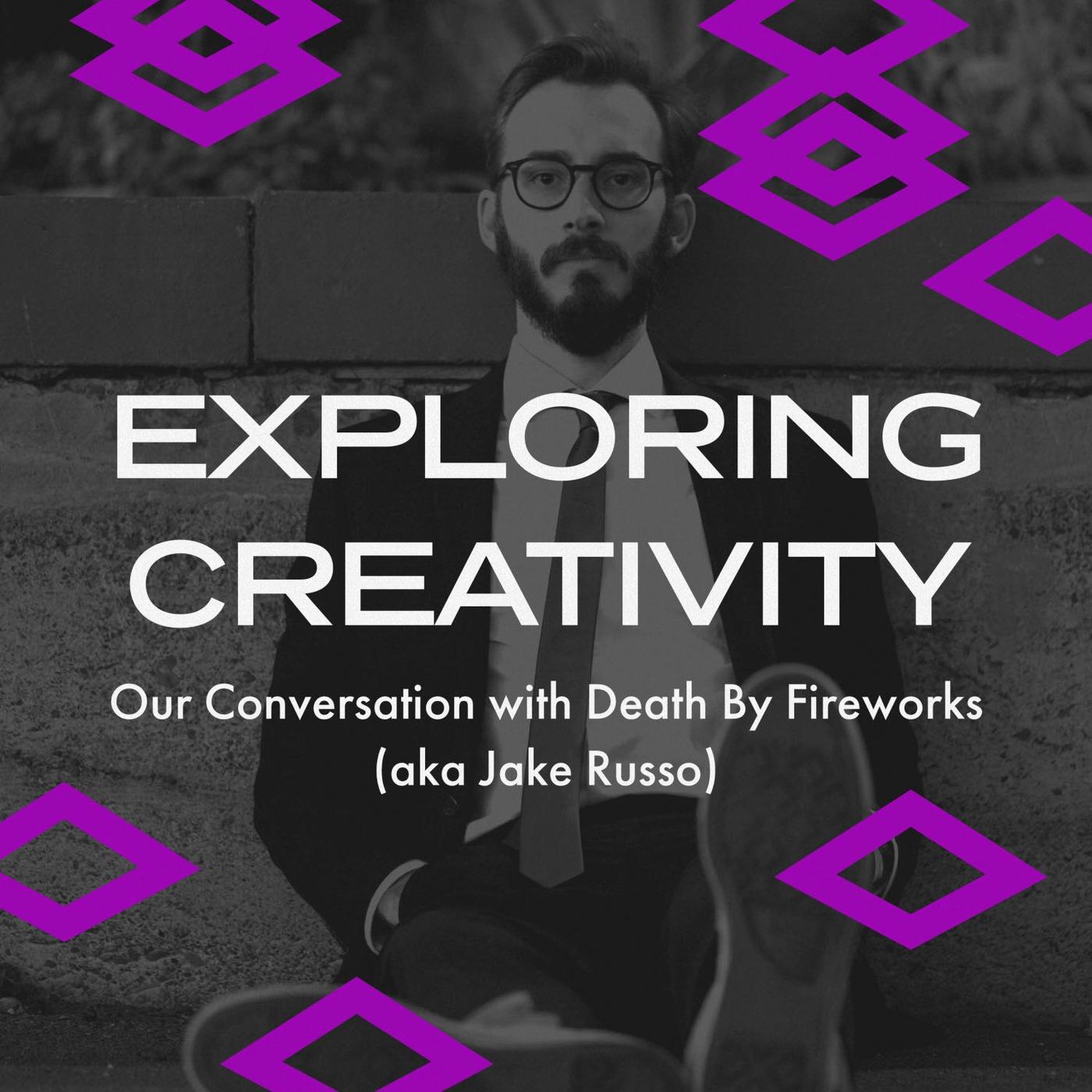
Michael: This is Michael Morgan and welcome to Exploring Creativity. I've been hosting these conversations for over a year. And the goal has been to help other people create the best work of their entire life.
I really want people listening to feel seen and heard and find tools to improve their creative workflow and their creative philosophy. these conversations for me, I've changed how I create and how I teach. And I hope they'll do the same for you. we are trying something new this week. this is outside of the normal process and habits that we have developed over the last year.
and it's because I recently heard today's guests, new VP. I was inspired to interview him. my buddy, Evan, shout out to Evan. He, sent over a few demos of our guests to me when I was traveling across country and I loved them and I was like, I need to meet this person. We have similar style and kind of looks similar.
Michael: Like I just need to know what's up with him. And then, they dropped an EAP and I heard it and was like, I want to interview them right now about it. I want to talk about the record, talk about the process, talk about their creative process. And the process that we had developed with Exploring Creativity meant that it would take almost an entire year to cue him up into the interview pipeline and then we'd edit and then they might not come out for a year from now.
And at that point he might've released 10 records. So I, didn't want to add, so much dependency into the process and slow us down. I wanted to make something that felt more like how I live my life, where there's creative conversations I'm having, and those conversations become episodes. And those episodes are released more,quicker, and are more relevant.
So what's happening in this moment. So we're trying something new and it might be. Weird and confusing, and that is his life and creativity. I do hope you enjoy this change. today I'm speaking with Jake Russo, AKA death by fireworks. He's a singer songwriter, musician producer, and he's also the guitarist of another band called dream without sleep.
he recently released a three song EAP called 3, 3, 3, which I heard. And I mentioned before, and it was the reason why I wanted to speak with him today, other than us looking similar and trying to find out if I had another sibling. Hey Jake, welcome to Exploring Creativity.
Jake: Thank you, Michael. It's great to be here.
Great to be talking with you.
Michael: So right off the bat, I have to ask like death by fireworks three words, a dream without sleep, three words. The called 3 33. I need to know what's up with the number three.
I, you're familiar with like angel numbers, right? Like reoccurring numbers that come through your life.
Jake: No. So I don't, I'm not an incredibly like religious person or an incredibly spiritual person, but I do, I know that there's a higher power out there that dictates what's going on with our lives. And, I think one of the ways that's come through is, just repeating cycles throughout my life and repeating cycles I've seen in other people's lives.
And one of the smaller examples of that is, angel numbers being like a repetition of a single number. 3 33, like I'll be at work. And I look at the clock and it's 3 33 in the afternoon. I go to the gas station to get a bottle of water and a snack or something. And the total comes out to $3 and 33 cents.
and that's, that's a number that's reoccurred in my life, like through the past couple years. And, when I was writing these, when I was writing the songs for the 3 33 EAP, I wrote all three of the songs over the course of three days. there, they all came out to be about three minutes long and, it just felt I don't know, it felt like the strange mixture of coincidence and opportunity and,I don't know how that connects to the band name, being three words or dream without sleep, being three words. But. maybe that's for another episode or another
Michael: time we got to dig into that a little deeper. I also asked you, you were saying this I'm like, my address is 3, 3, 3. yeah. I was like, wait a minute, maybe that's why we're speaking.
Jake: That's probably it then.
Michael: I'm curious. what does it provide to you knowing that you're seeing these recurring numbers?
I think at first it was definitely just a, I don't know, a weird coincidence. Like I, I perceived it that way. definitely didn't think anything out of it. but after a while, like it happened so much, it would happen every day.
Jake: Like at this point, our mutual friend, Evan, he and I will just text each other at 3 33 in the afternoon. 3 33 and sometimes I'll miss it. Like I'll type 3 33, and it's sent at 3 34 and I'm pissed at myself. But, no, but, I don't know. I think now it's become just a marker if, and when I see it just to check in on myself and see how I'm doing, just because I'm aware of the number appearing and because it's this, this cyclical thing, like I've seen over and over again, I perceive it now is just, a moment to check in just, with my breathing, maybe, do a micro meditation, so that's what it's become now, but, but yeah, it's still inexplicably hard to
Michael: describe yeah, much like the creative process. but, and some things I find are better. Somewhat of a mystery, like you said, somewhere between coincidence and opportunity. There's some like gray area of what this is and why this is right.
But it almost feels yeah, I'm on the right track or, someone's looking out. absolutely. So 3, 3, 3 EAP, not related to Jay-Z's 4 44, 4 being my lucky number. so I was very upset when he took that album title from me. but, I'm curious about the creative process on this EAP. A lot of people that have listened written in, about the show have asked me about creative process, and how to improve their process or how to think about their process.
And so I'm curious to you, like what was unique about this creative process for the CP or what was not unique about it or both. I think one unique kind of aspect of it was how quickly the songs came out, how quickly they came to be. keep in mind, like when I'm writing, when I'm writing a song, it's just me, in my bedroom with, with a keyboard or acoustic guitar and a notebook, like there's, I'm not starting off with a lot.
it's really bare bones and very raw. And, but those moments that I get, like the spark of inspiration or just a call to, to create something, I feel like as a creative person, it's almost like a responsibility to take that opportunity, take that, answer that call. ' cause, in the next moment it could very well, vantage, that idea that you get in your head that, that line, that melody, could disappear.
the mind is a fickle thing. one moment we have an entire idea of a song like written out in our heads, but then we get distracted by something. And so it, it falls away or,it alters itself. And for this EAP, I, yeah, I was just answering a call like over the course of three days, back in, what was it?
Jake: November of 2019 was when I was writing these songs. and yeah, just need in my bedroom with an acoustic guitar and garage band. After that, once I got like the raw structure of the song down. Just, pulling up synthesizer sounds, mini drum tracks, just to be like, okay, what would go with this?
what would sound cool? And, and yeah, just allowing the song to grow naturally, not forcing anything. there's the there's any types of sounds that I would have a predisposition towards, like trying to keep with the death by fireworks aesthetic.
but with these three, they felt like something special just because of how quickly they came to be. And so I just wanted to let them breathe naturally, just let them grow into what they're supposed to be rather than, what would fit into the death by fireworks brand for lack of a better word.
Michael: so you mentioned. Because of the simplicity of your process, you were able to hop into writing these songs and getting them at least in the first pass, more realized. So you could evaluate or listen and think about what to do next. but you also mentioned this organic nature of the project where you not only got to where you could evaluate, but it seems like at that moment you said I'm not going to force anything.
Which like, to me is something I definitely struggle with that. Like that moment is like, how do you know when something's completed? But also like, how do you know how much more of the idea to pursue. how did you know, like when the songs were done, but also like, how did you know that, like you needed to keep working on it once you got to that first, like keyboard, guitar output?
man. it's definitely a tricky kind of subject to tackle because us being both, creative people, you and I both know that it's hard to track or hard set come up with a formula on how to finish something. there's any number of methods we can use to,to finish something, nothing inspires creativity sometimes more than a deadline. And, but with these three songs,for, let's take, there's a song on the EAP called. I love you still. I always will. For instance, When I was writing that song, when I came up with the lyrical idea for it the, that line, when that line came into my mind, I love you still.
Jake: I always will. the idea of unconditional love appeared by itself as a theme to explore within the song. And I thought about how that related to me. And so I use it through the lens of, my family, my friends, and then through, a romantic relationship that had, that it failed. and I thought that now I have these three kind of facets of the topic I can explore.
How would I flush these out? And, when I was done, when I was quote, unquote done writing the lyrics, I. I have the initial instinct to just be like, okay, this is acoustic guitar. I wrote it on this. The subject of the song is soft and,a little sad at times, but endearing at the end of the day.
And, maybe I should just keep it like just me and acoustic guitar, bone dry, just me in a room, pure the bowl, no needs,add crazy production or anything, but with a topic like unconditional love to be, explored in a song, I felt it deserved more than just, dry, acoustic guitar and my voice.
not to say that there's anything wrong with that because that aesthetic can fit in a number of different with a number of different topics, for different artists, but it needed something more. And so I just started. I just started experimenting, I'm a guitar pedal nerd. And, I just started messing around with sounds on the pedals for an electric guitar.
Jake: Just isn't it, a company thing. And I created all these layers with my loopers and, chopped them up, put them into garage band. Cause I already recorded a demo of just me and my acoustic. So just laying them in day or kind of piece by piece, seeing what fit at certain moments. and after that, it the arrangement kind of built itself.
I was like, okay, it needs like an electric guitar playing like really gently. It needs strings eventually. Cause it's too good of an opportunity not to use them. it needs, keys, it needs some synthesizers, it needs something else. And it was all just through the process of experimenting, seeing what works and what doesn't, real, just trial and
Michael: error.
There's so many things I want to cover here. So you, very quickly describe this song as soft, sometimes sad and endearing. And I feel like you described what I took away from the project and what I really identified with. because I think my music has very similar parallels and it's one of the things that really attracted me to your music and wanting to speak with you today, even.
I think that describes it for those of you that haven't heard the EPA yet. if you're looking for that kind of vibe that this is where to find it, or, but I think that those three descriptors, then you talked about the, you mentioned the word of facets that you were lyrically discovering all of those feel like limitations in a positive way, in a constructive way.
Michael: Like I'm going for this. I want things to exist in that world. lyrically, here's some buckets to pour ideas into. and then you talked about this like layering process. I think that's another huge area of the EAP where I definitely decoded all of that. Like I was like, wow, this layer, there's so much layering.
It feels like really a well-constructed world, within the soft, sad endearing musical space. I would love to hear a little bit more selfishly here a little bit more about the layering, just the thought process behind all of that. was it, it actually, yeah, I just wanna hear from you, what was that process like?
it was, it was a new experience for me. a lot of the, most of the music that I had written up until that point fit into one of two categories. so anybody who. has heard of who is watching that's her death by fireworks knows that most of my music is either like heavy guitar driven, like kind of pop punk mixed with indie rock.
so there's that, and then there's a folky side and, I've always had this difficulty of mixing the two because that's been my that's my end goal, the goal that I want to achieve. my goal at the end of the day is just mixing all of my favorite bands and my favorite artists, like death cab for cutie bony fare, Sufi on Steven's bright eyes.
but then like just pop punk, like from when I was in high school, like mixing all that together, is my end goal and. When I was working on the songs for the 3 33 EPA, it felt like they all blended into, all those influences blended into each other in different ways on each of the songs, like nothing left to say the first song in the EAP is really hard and driving and propulsive what it's like acoustic guitar led and, in my bed, the second truck on the album is mostly synthesizers and it's pretty ambient and, and weird compared to the rest of my music.
Jake: But, at the end of it, it's, it gets louder. There's a crescendo, like another favorite type of music for me is like post rock and shoe gaze. And I've always loved how shoegaze and post rock bands are able to create kind of the. These waves of sound that just get bigger and bigger, and I've wanted to do that as well in my own music.
And, I was able to do that on in my bed. and, yeah, I think it's, it was a matter of just finding pieces that could connect to one another, finding Sonic elements that meld nicely together and finding interesting ways to, mix things that either I wouldn't thought of, I wouldn't have thought of in the first place or just for the sake of trying something new, or letting the songs evolve naturally, through just listening to over and over again and be like, what would a, what would like a vocoder on my voice sound like right here that might be.
And, what if we put like an arpeggiator onto my vocoder? So you get these like weird sounds after that, what would it sound like if, like this layer of synthesizers was matched with these really crushed up like heavy drums? What would, I can say that for any number of things on the EAP.
but that was really at the end of the day, that was the process for, finishing the demos, at least before I took them into the studio to finish
Michael: up. Okay. So more things I'm excited to talk about. So I just wrapped up, a semester long two courses, that were a semester long and one was a design course and something we talked about, often was how designers describe.
Both before and after they do the work. there's the act of designing, there's the act of making music, there's the act of painting, but then there's like setting intentions, which is really just describing things, finding words for things, inspiration for things. And after there's the reflection of the work, I think both are really important to that process.
And now we're in this phase where you're describing the work that you've done. and I'm hearing a lot of descriptive terms and I feel like the way you're describing these songs, like I'm like, yeah, that's exactly how I perceived it now. and that's not a compliment to myself. That's actually a compliment completely to you is it feels like you encoded that in before you made it, that you wanted that to happen or during the making of it, that you wanted these things to happen and it came through.
And so I'm wondering. How intentional are you with setting intentions for the work that you're making? yeah.
I try to be as intentional as I can, to,two of my favorite song writers are, the Jolay from the airborne toxic event and, Maddie Healey from the 1975, Miquel, Sholay has this way of telling a story in such like devastating detail that you have to, like the listener has to accept it as a reality.
Jake: And Maddie Haley, when I've noticed, when he writes lyrics,he, his main focus is like telling the truth in a song. Even if it makes him seem like a bad person, like just plain and simple telling the truth, no matter what. Make them look like, and, I kinda took it upon myself when I started writing like more fleshed out songs when death by fireworks became a project I was working on, I wanted to make it a point to tell stories, and tell them as honestly as possible.
And so whenever I'm writing, especially when I'm writing the lyrics to a song, I try to spared no expense when it comes to the, whatever metaphors I might use or, whatever, illusions I'm creating to something that's happened personally to me, it's most important to me to tell that story with as much detail as I can, because that's the.
Clearest way. I know how to tell the truth is through detail. And so in a song like in my bed, like that's a straight up like story song that is like my life that was like, or that was a piece of my life over the course of a couple of days, when I sat down and ended up writing the song. and yeah, it's always been crucial to me to just tell the truth, be as intentional as possible.
because at the end of the day, these songs are like my therapy or my counseling, Like I'm working through something that is important to me. It could be, a positive thing. it could be a negative thing. It could be a mixture of the two, but, I'm working through these emotions, these periods of my life and I'm going through and.
Jake: Yeah. to be completely honest, if I were to try to doll it up, try to make myself look better or, spare some crucial detail from it. I know that, maybe someone who's listening to the song wouldn't catch on to that, but I would know it. And so I don't know how I could,reconciled that with myself, like trying to be a, like a true like songwriter.
So yeah, intention has always been a big part of me or a big part of my writing process, trying to be as, as real and as open as I possibly can.
Michael: I'm curious, now you have another band, you play guitar and, and you have this project. What is the difference between that? For you, not like sonically even, but who are you in both of those groups.
And is it the same you, or is it different expressions of you?
Jake: that's a good question. I,for, for death by fireworks, it's,it's me. I'm the kind of the sole force behind it. I write the songs, I write the arrangements and,the songs are more or less my children, for dream without sleep.
I am a guitar player. I, I'm a kind of a backing person to the band. I don't say that with any like negativity, like that's really more my role because. The songs are written by our vocalist, Burton, Norcross, and, and most of the production for turns out sleep is handled by our, our bassist and keys player, Alex Kelson.
he's the force behind the band that creates a lot of the arrangements for the songs, 99% of them. now I do contribute to, production and, arranging songs. but I think my role for dream without sleep has been more as like a supporting force behind, Alex at Bert, another ear in the room, another idea machine, another person to suggest, things to, add on to songs.
Jake: And, and it's interesting, You're going between these two projects, because death by fireworks is like my baby. And, I'm creating these arrangements for these songs. And, I'm the kind of the final say when it comes to it. if I'm in the studio, like I appreciate, input from whoever I'm working with.
And, and I'll accept it, but, it's, I don't want to make myself sound too harsh, but, it's,if, if I'm not digging something, that we're trying out, it's not really going to get past me, but with drew without sleep, it's much more of a collective between the three of us.
Michael: yeah, that's cool. Like you're able to experience both modes of working more of this. Like top-down like, this is what I want. And I'm driving towards a very clear vision, even though it's not clear for you, it becomes clear as you do it. Whereas your there's another mode of collaboration where you're, you said an idea machine, which I like that's so true.
It's you're there to generate ideas and throw them out there, but you're not like precious with those ideas, whether they're accepted or not. is there like interaction between the two groups? is there learnings that are shared between?
absolutely. Oh my God. I will, I've learned an incredible amount of knowledge just about music from, from both Bert and Alex, the other two members of drinks out sleep.
Jake: Bert is an incredible song writer. he's my favorite songwriter and people that I know he's the most talented songwriter I know. And Alex is a complete genius on creating arrangements for stuff. It's some of the stuff that he's created is next level it's out of this world. We're, we're putting out a record this year and,it's some of the most insane production I've ever heard in my life.
and, it's absolutely fantastic. And I've heard, I've learned a lot from him. and I think the biggest way I've taken the knowledge I've gained from working with Burt and Alex, in regards to how I apply it to death by fireworks, is just, accepting that. Experimentation can be your biggest ally, trying out weird things, trying different things, going off the book, doing something that's like against the rules.
because at the end of the day, it might not work out, this idea that, I might have, be like, I'm going to sit down, I'm going to try this out and it might not work. But now I know, in the back of my mind, for this kind of song that I'm working with, I shouldn't do this or, but then again, it might work again, that's really the thing.
Jake: Like I can't like nail it down, but experimentation has been my biggest ally. and yeah, that's how I would say I've taken knowledge from June without sleep and put it in. To
Michael: death by fireworks. Great. Yeah. As soon as you said that, I wrote it down, like experimentation can be your biggest ally. I think that's another thing, being an educator, I've thought so much more about like the people I know that are creating regularly, the people whose work I admire, I appreciate even more because education is, I'm taking all of this information and then I'm finding the patterns and I'm sharing that with other people to encourage that in themselves.
And experimentation is one of these things that I like can't fully, it, I'm curious about your journey with it because I see young people's journeys with it. I'm wondering what your young person journey was with experimentation because it's, I don't think people go to it right away. Oh,
Jake: no. Yeah. They don't.
it's a shame because, especially with our. our, our media diets, here in the 21st century, we're experiencing everything and anything all at once. we can listen to any kind of music we want. We can consume any kind of content we want. It's at the push of a button and it's all there for us to gain knowledge from.
when I was first starting out writing for death by fireworks, I was 17 and, I'm 26 now. So it's been a while. But, when I was first starting, I was pulling influence from what I knew,pop punk and indie rock and, indie folk music. Death cab for cutie has been my favorite band of all time.
as far back as I can remember, since I first heard
Michael: them. That's why I liked you so much,
Jake: dude, transit their record transatlantic CISM is, I don't know if it's my favorite record of all time, but it's, if it's on, if any, one of the songs on the record is on like in a car, wherever, I'll never be upset.
I can listen to that thing literally anytime. but that's what I started with. it was death cab for cutie and, God, it was, it was boning there and iron and wine and yeah, Sufi on Steven's bright eyes and,like post rock bands, like Godspeed, you black emperor, this'll destroy you cigarettes.
and that's kinda the stuff that I knew and. Just through writing like lyrics, for these songs, like just when I was starting out, I, I figured, okay. I'd been in bands before,in high school and in college and, or the beginning of college, right around that time. And, I was like, I know that these things work together, these kinds of guitars and these drums and this kind of vocal delivery, this all works.
Jake: Cause I'd done it before as a, just a guitarist for, my first band that I was in, in high school. So this all worked, I had this blueprint. And so working off with that, I was able to create something that I was familiar with. this sounds a number of bands that I've taken influence from, or that I've been listening to for a long time.
And I was perfectly content with it. because it was a kind of a reflection of what I was consuming. And as time went on, I just continue listening to music. I try to listen to as much new music as I can, but for the most part, it's really just me listening to the same, like five records over and over again.
as I got a little older, you meet new people, you beat people with different outlooks on things, different musical tastes and,and, new music comes your way. And sometimes it's great. Sometimes you don't dig it so much, but, I remember the first album that wasn't like an indie rock or pop punk or indie folk album that really spoke to me.
the first two really, was, Kanye west, my beautiful dark twisted fantasy. And a scissors control. Those two albums, spoke volumes to me. Tonya was more from the production side and, and from like a, the arrangements around her songs, but also the vulnerability in her voice and in her storytelling and her songs.
and, yeah, it really broke me down to my core. I'm going to say like when I first heard citizen's album control, and, I don't know, it was somewhere around there where I realized that all of this music that I'm consuming, maybe at the end of the day, I can create a song that sounds like, Bayside or the Menzingers, some band that I've listened to in high school.
Jake: And I'll be totally okay with that. But,the full potential that I can achieve is through taking pieces of all this stuff I've been listening to and blending it together, finding the connecting threads between, post rock and R and B and country and rock, there's all these possibilities that I can achieve through this, whatever song I'm working on.
And, yeah. Yeah. it's always been, not always been, but for a long time now, I've just been, trying to find connecting threads between different music that I listened to.
Yeah. That integration of influences as means of experimentation. Like it there's, again, we're talking about limits to some degrees.
Michael: Like these are the things I'm drawn to, and I like new things enter that. But then, it gets a little bit bigger, but then in there, like drawing those threads of like, how do I, and you said this a few times, this like active questioning of how might I do this? Or how might I do that? how might this verse sound more like this?
Or how might I experiment with my vocals at this part? You had mentioned that earlier on, that there's the experimentation at the micro level and then the experimentation at the macro level of like genre experimentation. So yeah, I started by saying, this is something I try to teach students and encourage within students.
I'm wondering for you, was that right off the bat, you were doing that or is that something you learned over time and was it learned through other people? it was
Jake: definitely over time. Yeah, it was definitely over time that I learned, how much I could gain from. Trying new and weird things.
Michael: do you remember like what it was like? maybe one of the early experiments where I think,
one of the first ones was, this is, it seems silly like thinking about it now, but the level of,the number of like open doors that came from it, this one thing, we're just too big to like recall.
Jake: And there was literally getting a drum machine. I swear to God getting a, just a little Roland, like this wasn't a great drum machine, but it was like this big, it just nine pads on it. And I would just plug it into, one of my amps, I would set up a loop with my electric guitar or set up a loop with the drum machine and just try out guitar stuff over it.
And,it was a new, it was a new sound that I hadn't played around with, I, with the band or the bands I'd been in, like around high school, it was all, loud guitar, bass, drums, a piano, acoustic guitar, but it wasn't much like electronic stuff going on.
not to say that it was like something I was like purposely trying to be away from, but it just wasn't, an avenue that I had gone down and, yeah, a friend of mine had lent me theirs, just once and I got hooked and so I had to buy my own. hop over the guitar center, a hundred bucks, just and head home and just, just plug it in and see what it could do.
Jake: And, it's it reminded me of what I was hearing in the hip hop records that I was listening to at the time. It was mostly just excuse me. It was mostly just Kanye west. And,I think around the end of high school, I think it was right before I graduated high school. Good kid, mad city had come out.
And so I started listening to Kendrick Lamar, kid Cuddy,a handful of others, but those were like the big three,hip hop artists that I was listening to at the time. and it was around there that I realized, at least personally, like I don't have to limit myself to, the pop punk pallet of instrumentation.
And, yeah, I just tried to experiment as much as I could. what would it sound like if I played an acoustic guitar over a drum machine, what would it sound like if I had this loud, aggressive. Playing with all these electronic layers, what could those possibilities lead to? yeah,
the pop punk pallet of instrumentation is, a great title of a book, but I totally get what you mean.
you start in a genre, you learn that you develop that you build your own bubble and forget that you're in a bubble because it's seems so dimensional inside that bubble. And then you're like, all right, now I have the pop punk palette, but like all the music is just of that. And then you see this new bubble, the hip hop bubble, like what are they doing?
Michael: They're like, and realizing that like genres have a purpose. There's a way of like creating that bubble and developing something within like a limited ecosystem in a way. But there's so much to be gained from crossing, different genres and integrating different genres in the work. So yeah, that, that resonates.
And I love that story of a drum machine and that just that simple thing, encouraging experimentation. because it doesn't always take like that much. Like sometimes it's a simple question that can encourage lines of inquiry that you wouldn't have had before. And maybe it's something new. but especially with music and I guess the lesson here is more so depending on the medium you're in, I'm sure there's more like easier, applicable, modes of inspiration.
if you're in music, having a new guitar is going to be very inspiring, getting a new piece of art might not, but it might, I want to talk about other people, so like different relationships creatively. peers, family, colleagues, I have to start with Evan because Evan is the reason we're here today.
Michael: So shout out again. what should we plug for about Evan? what's his handle on Chino at Y X Chino follow that? the pure listen to them. Yeah. yeah. but, I wanna, I want to know about your collaboration with Evan. What was that like on this EAP? previous EPS, I don't know what it's like to work with him.
I only know him as a friend and I can imagine what it's like, but I'd love to hear, You're the truth behind Evan?
I would S well, I would definitely say,it's been incredibly rewarding working with him. Evan has a, this is in the best way possible. He has a very brutal kind of, response to questions, when it comes to like ideas and creating songs, he is not afraid to tell you when something isn't working.
but with the inverse of that, he will sing your praises when something is clicking in. when we were working on the EAP, there was the stage where I was in my bedroom, creating the demos for these songs. So I was by myself and I created these kind of rough drafts, just in garage.
Jake: And then Evan and I had known each other for a couple of years. At that point, we had worked a little bit together, through death, by fireworks. And, he had, he was an incredibly crucial role of me releasing, an album that I put out last year, drive safe, stay alive.
Michael: do the artwork on
Jake: that? He did.
Yeah. Yeah. the cover is a picture that I took, just on my phone. and, but he helps me edit it. He's incredible graphic designer and he helped me with that and he helped me create the promotional well helped. He created the promotional artwork. I just had the idea and be like, yeah, I think like this would look cool.
And he's okay, so here's what we're gonna do. so he was absolutely instrumental in, the album coming. for this CP though, I finished the songs to the best of my ability, not ready to release them. They're very rough and raw. but I showed them to him and, he was incredibly gracious of, allowing me to come into, we did some work at his home studio, recording vocals and, doing synths layers.
And, as much as we can before we'd have to go into a studio, like a professional studio. And,we recorded the EAP at the studio. He works at Panda studios in Fremont. and, yeah, that was the time that was when we were going to do, acoustic guitar, electric guitar, drums, bass, anything that we're adding on top of these songs, that hasn't been recorded to the best of its ability.
And When the time comes when the time came to, to record that, it was really about melding. Like I'm on one end, with all these ideas, like what I'm thinking, the song is going to sound like. And so I should do this, I should use this guitar that these pedals, or, just as simple as like me recording the acoustic for, I love you still.
I always will. It's just okay. Yeah. I'm just going to sit in the live room, acoustic guitar, a Mike and a D I plugged in, super straightforward. but Evan is like me in a way that he has that same kind of experimental or that same perspective on experimentation. I would say, if something isn't working, like I said, he'll sit, he'll speak his mind, which is great.
but kill. He'll suggest a way, like we're trying, we were trying a bunch of different things on, in my bed because the song was already pretty experimental for, at least, in perspective with my other music. And we were working on the track in the studio, just messing around with the facts, seeing what sounded cool what's, what effects would emphasize certain lyrics.
and,in what ways we can make it more interesting. Interesting, but also add to the story that the song is telling. so yeah, at the end of the day, Evan is his most, the most important thing to Evan while working on music is the song. there's no ego, there's no,there's no personalities to be, appreciate it.
it's just the song. It's just the music. That's the most important thing, while working with him. And, I've been incredibly lucky to work with him, especially in that regard because, sometimes I let my ego get in the way, I'm working on these songs for the most part by myself, and it's just me and my ideas.
and so I'll get set into my ways. it's gonna sound like this. Like I already know it's gonna have these drums and these guitars and all this stuff, but having someone to who, having someone who's, caring first and foremost about the music itself. Having someone who's not afraid to say we should be doing this, or you should try this instead, and we work back and forth on that and that's been incredibly,I've been incredibly grateful for
Michael: that.
What would you say if you can choose one thing that you've learned from him, what would it be? He paid me to ask that by the way,
Jake: this, this, this livestream is sponsored by Evan Machino. not, the biggest thing I've learned from him. God, it's hard to say I've learned a lot. I think the most important thing I've learned from him is letting, leaving my ego at the door when I'm working on music, at least with other people.
because. Like I said, the most important thing at the end of the day is the song. And sometimes that comes incredibly naturally. Like it's, it's guitar, bass, drums, and vocals, and that's it, sometimes that's what the song needs. but sometimes it needs a little bit more. Sometimes it needs less.
Jake: It's just a matter of,letting things grow naturally and, keeping a positive attitude, we're working on it because we have this opportunity to be working on music. why shouldn't we be stoked to be doing that and maybe nothing comes of it. maybe it's just, we're just hanging out and there's some keyboards and guitars in the room and we try out some stuff and, nothing really comes to be that's.
Okay. because at the end of the day, we were still in the process of creating whether or not that creation will see the light of day, I don't know, but, as. To creative people. three creative people,our duty is to the music that we create, so
the last round of interviews, I did, we had a list of topics.
Michael: There was probably 35 topics and the way we did it was, I would choose five to 10 topics per guest. And I would read them off at the start of the interview and be like, I want you to explore. And that's where the name really came from. Exploring Creativity is we're exploring these different components and you start wherever.
and I sent you that list and you selected a bunch. but one that stood out was a topic you selected discovering your true self. And this is something I added to the list later into the season where I felt like this was something I was hearing a lot from other creative industry. And something you selected.
Michael: So I'd love to hear you explore that a little bit. Why did you select that? What has been your,growth or experience with that topic?
I don't know. It's tough to say. I, when I started working on the songs that came to be death by fireworks, it was more just a process of me explaining what I was going through at the time.
and I had no kind of perspective on, discovering my true self at that moment in time, because what was more important to me was just, telling these stories, telling people how I felt at this particular time. And, I didn't really have a, yeah, I didn't really have, discovering my true self as.
as a goal, while writing the first songs that came to be, the first record that I put out, but, as time went on, and as life went on, I, I came to hear what people were saying about my music. they were, there were people listening to it and they told me what they perceive through it, how it's, how it affected them in different ways, positively or negatively.
Jake: And, I think over time, I realized that, through songwriting and through creating music, I was more or less, creating these kind of mini personal. Self-addressed therapy sessions. Like I had, I have this topic that I want to write on, or I'm going through this, this tough time or whatever, I'm out of a relationship or, something is going on in, a friend of mine's life that I feel led to, to write about.
And, it's been really about just processing what I'm feeling, what I'm feeling at that moment. and trying to create through that. And so how I can relate that to discovering my true self, I'm not sure, but it's definitely shed light on certain aspects, of my personality, how I perceive the world and, Yeah, I think I'm still in the process.
I see. I think I'm still in the process of figuring that out.
Michael: So I worded it this way because ultimately it's this elusive thing, like the true self is not a fixed thing. It's always changing. And so we're always like rediscovering in a way. but so maybe it was a trick question or, but no, I think, this idea of creating art and that art being reflection of us.
Like I was talking to my very close friend, best friend Ross, this weekend about how, like what you design is how you live and how you live is what you buy and what you do. Like they're all so interconnected. And so the expression of self is at least a snapshot of you in that moment.
And it's this like feedback mechanism, you can look at it and learn from it. so no, I think that answer is great. And I think your music, unlike other styles of music or types of music is deeply personal, and descriptive. So there's a lot of like information, learn about yourself through it.
I wanted to ask about the last question I have here, which is if we'd spoken to you as a young artist, and you said you started around 17.
definitely fireworks came to be when I was 17. I've been playing in bands since I was like 12 years old, but yeah, the time of my life that I started taking music real, like truly seriously.
but yeah, around like 17.
Michael: So let's say we let's look at 17 year old, you and,they had a view of the world view of creativity, of view of the arts, expression. I'm curious, like what's different between that Jake and this Jake,
definitely less bitterness towards like negative things that have happened to me in my life.
a lot more peace with the situation, or peace fifth, whatever I'm experiencing, less axed, but I think that's a universal thing with, high schoolers versus, 20 somethings. It's just a little bit more acceptance in the world and, their sphere around them, what's happened to them in their lives, not to say that there's.
Jake: Not to say that's a universal thing, but,
I
Jake: would definitely say the Jake Russo that started death by fireworks was, it definitely, an angry or person,had a lot of questions and a lot of, unresolved tension in his life. and now I'm a lot more at peace with where I am.
truthfully, like I even through the songs that I write, I noticed that I'm a lot more content with the world around me and what I'm experiencing. And, yeah, I write. Much in much less about failed relationships that I did when I was 17. and I think that's, that's more or less for the best because I've, I've come to such a, such an amazing place, personally, that I still have a lot of those questions.
Jake: And, some of those questions that I had when I was 17, are still unanswered, but I have a significantly greater amount of peace with just respecting the process and waiting for things to play out. if I can't control something, I don't, I try not to. I still struggle with that.
if there's a situation that I'm facing, that I can't control, my. My fixing the part of my brain that wants to fix things instantly goes into overdrive. And I'm like, okay, what can I do to prevent something bad from happening and all this stuff. And it takes me, I'm taking a breath, taking a back and just chilling and recognizing that when I can't control something, things will play out.
Jake: And, knowing that I will always do what I can to the best of my ability for, for the best of myself or, my fiance or my family or my friends, other musicians that I'm working with, it's just about, working on you're working on myself and recognizing that I have these tendencies towards these, more or less negative aspects of myself, and putting in the work just to try to, move beyond them.
No,
Michael: If you were writing a book to that version of you, the creative, a book about creativity for your younger self, what are the main points you wanted to put in that book? you covered many of them from a personality point of view. Are there any things that you'd say, Hey, make sure to keep this, Hey, make sure to get rid of this or work on this?
Yeah.
I would definitely, superficially, one of the things I would say is do vocal warmups every day. that's still something I don't do, but that's just my older self saying Hey, you stupid kid warm up your voice. I got the amount of times I lost my voice after shows is too great to count button.
I think one of the things I would, one of the points that I would address is,
Jake: It would be open to anything and everything, experiences, music, arts, creative methods,experiment as much as you can, try as many weird and wild things as you can because it might not work out, but you've learned something through it and it can only add to, the possibilities for you.
I think that's a great place to close that's. That's inspiring and a hopeful way of ending our discussion about all things, death by fireworks, all things, Jake Rousseau. thank you so much for joining, for speaking with me today for sharing a lot about yourself and. The work that you do and the people you work with, for those of you that haven't heard the 3, 3, 3 EPA yet definitely look that up on apple music or Spotify or a title or, Amazon music, other yeah.
Michael: Wherever you want YouTube. definitely check it out. I think you'll be surprised and impressed and really enjoy it as much as I did. for those of you that have been listening to the show since our first episode. Thank you. If you're new, welcome. I hope you'll continue to watch, continue to listen.
I hope you learned something today. I hope you learned a lot of things today and that you can use them to help your creative process. I love to speak with anyone that listens, so feel free to DM me on Instagram. share this subscribe on podcasts platform. And, I think that's about it. again, I'm Michael Morgan.
This is Exploring Creativity. Thank you for listening.
I really want people listening to feel seen and heard and find tools to improve their creative workflow and their creative philosophy. these conversations for me, I've changed how I create and how I teach. And I hope they'll do the same for you. we are trying something new this week. this is outside of the normal process and habits that we have developed over the last year.
and it's because I recently heard today's guests, new VP. I was inspired to interview him. my buddy, Evan, shout out to Evan. He, sent over a few demos of our guests to me when I was traveling across country and I loved them and I was like, I need to meet this person. We have similar style and kind of looks similar.
Michael: Like I just need to know what's up with him. And then, they dropped an EAP and I heard it and was like, I want to interview them right now about it. I want to talk about the record, talk about the process, talk about their creative process. And the process that we had developed with Exploring Creativity meant that it would take almost an entire year to cue him up into the interview pipeline and then we'd edit and then they might not come out for a year from now.
And at that point he might've released 10 records. So I, didn't want to add, so much dependency into the process and slow us down. I wanted to make something that felt more like how I live my life, where there's creative conversations I'm having, and those conversations become episodes. And those episodes are released more,quicker, and are more relevant.
So what's happening in this moment. So we're trying something new and it might be. Weird and confusing, and that is his life and creativity. I do hope you enjoy this change. today I'm speaking with Jake Russo, AKA death by fireworks. He's a singer songwriter, musician producer, and he's also the guitarist of another band called dream without sleep.
he recently released a three song EAP called 3, 3, 3, which I heard. And I mentioned before, and it was the reason why I wanted to speak with him today, other than us looking similar and trying to find out if I had another sibling. Hey Jake, welcome to Exploring Creativity.
Jake: Thank you, Michael. It's great to be here.
Great to be talking with you.
Michael: So right off the bat, I have to ask like death by fireworks three words, a dream without sleep, three words. The called 3 33. I need to know what's up with the number three.
I, you're familiar with like angel numbers, right? Like reoccurring numbers that come through your life.
Jake: No. So I don't, I'm not an incredibly like religious person or an incredibly spiritual person, but I do, I know that there's a higher power out there that dictates what's going on with our lives. And, I think one of the ways that's come through is, just repeating cycles throughout my life and repeating cycles I've seen in other people's lives.
And one of the smaller examples of that is, angel numbers being like a repetition of a single number. 3 33, like I'll be at work. And I look at the clock and it's 3 33 in the afternoon. I go to the gas station to get a bottle of water and a snack or something. And the total comes out to $3 and 33 cents.
and that's, that's a number that's reoccurred in my life, like through the past couple years. And, when I was writing these, when I was writing the songs for the 3 33 EAP, I wrote all three of the songs over the course of three days. there, they all came out to be about three minutes long and, it just felt I don't know, it felt like the strange mixture of coincidence and opportunity and,I don't know how that connects to the band name, being three words or dream without sleep, being three words. But. maybe that's for another episode or another
Michael: time we got to dig into that a little deeper. I also asked you, you were saying this I'm like, my address is 3, 3, 3. yeah. I was like, wait a minute, maybe that's why we're speaking.
Jake: That's probably it then.
Michael: I'm curious. what does it provide to you knowing that you're seeing these recurring numbers?
I think at first it was definitely just a, I don't know, a weird coincidence. Like I, I perceived it that way. definitely didn't think anything out of it. but after a while, like it happened so much, it would happen every day.
Jake: Like at this point, our mutual friend, Evan, he and I will just text each other at 3 33 in the afternoon. 3 33 and sometimes I'll miss it. Like I'll type 3 33, and it's sent at 3 34 and I'm pissed at myself. But, no, but, I don't know. I think now it's become just a marker if, and when I see it just to check in on myself and see how I'm doing, just because I'm aware of the number appearing and because it's this, this cyclical thing, like I've seen over and over again, I perceive it now is just, a moment to check in just, with my breathing, maybe, do a micro meditation, so that's what it's become now, but, but yeah, it's still inexplicably hard to
Michael: describe yeah, much like the creative process. but, and some things I find are better. Somewhat of a mystery, like you said, somewhere between coincidence and opportunity. There's some like gray area of what this is and why this is right.
But it almost feels yeah, I'm on the right track or, someone's looking out. absolutely. So 3, 3, 3 EAP, not related to Jay-Z's 4 44, 4 being my lucky number. so I was very upset when he took that album title from me. but, I'm curious about the creative process on this EAP. A lot of people that have listened written in, about the show have asked me about creative process, and how to improve their process or how to think about their process.
And so I'm curious to you, like what was unique about this creative process for the CP or what was not unique about it or both. I think one unique kind of aspect of it was how quickly the songs came out, how quickly they came to be. keep in mind, like when I'm writing, when I'm writing a song, it's just me, in my bedroom with, with a keyboard or acoustic guitar and a notebook, like there's, I'm not starting off with a lot.
it's really bare bones and very raw. And, but those moments that I get, like the spark of inspiration or just a call to, to create something, I feel like as a creative person, it's almost like a responsibility to take that opportunity, take that, answer that call. ' cause, in the next moment it could very well, vantage, that idea that you get in your head that, that line, that melody, could disappear.
the mind is a fickle thing. one moment we have an entire idea of a song like written out in our heads, but then we get distracted by something. And so it, it falls away or,it alters itself. And for this EAP, I, yeah, I was just answering a call like over the course of three days, back in, what was it?
Jake: November of 2019 was when I was writing these songs. and yeah, just need in my bedroom with an acoustic guitar and garage band. After that, once I got like the raw structure of the song down. Just, pulling up synthesizer sounds, mini drum tracks, just to be like, okay, what would go with this?
what would sound cool? And, and yeah, just allowing the song to grow naturally, not forcing anything. there's the there's any types of sounds that I would have a predisposition towards, like trying to keep with the death by fireworks aesthetic.
but with these three, they felt like something special just because of how quickly they came to be. And so I just wanted to let them breathe naturally, just let them grow into what they're supposed to be rather than, what would fit into the death by fireworks brand for lack of a better word.
Michael: so you mentioned. Because of the simplicity of your process, you were able to hop into writing these songs and getting them at least in the first pass, more realized. So you could evaluate or listen and think about what to do next. but you also mentioned this organic nature of the project where you not only got to where you could evaluate, but it seems like at that moment you said I'm not going to force anything.
Which like, to me is something I definitely struggle with that. Like that moment is like, how do you know when something's completed? But also like, how do you know how much more of the idea to pursue. how did you know, like when the songs were done, but also like, how did you know that, like you needed to keep working on it once you got to that first, like keyboard, guitar output?
man. it's definitely a tricky kind of subject to tackle because us being both, creative people, you and I both know that it's hard to track or hard set come up with a formula on how to finish something. there's any number of methods we can use to,to finish something, nothing inspires creativity sometimes more than a deadline. And, but with these three songs,for, let's take, there's a song on the EAP called. I love you still. I always will. For instance, When I was writing that song, when I came up with the lyrical idea for it the, that line, when that line came into my mind, I love you still.
Jake: I always will. the idea of unconditional love appeared by itself as a theme to explore within the song. And I thought about how that related to me. And so I use it through the lens of, my family, my friends, and then through, a romantic relationship that had, that it failed. and I thought that now I have these three kind of facets of the topic I can explore.
How would I flush these out? And, when I was done, when I was quote, unquote done writing the lyrics, I. I have the initial instinct to just be like, okay, this is acoustic guitar. I wrote it on this. The subject of the song is soft and,a little sad at times, but endearing at the end of the day.
And, maybe I should just keep it like just me and acoustic guitar, bone dry, just me in a room, pure the bowl, no needs,add crazy production or anything, but with a topic like unconditional love to be, explored in a song, I felt it deserved more than just, dry, acoustic guitar and my voice.
not to say that there's anything wrong with that because that aesthetic can fit in a number of different with a number of different topics, for different artists, but it needed something more. And so I just started. I just started experimenting, I'm a guitar pedal nerd. And, I just started messing around with sounds on the pedals for an electric guitar.
Jake: Just isn't it, a company thing. And I created all these layers with my loopers and, chopped them up, put them into garage band. Cause I already recorded a demo of just me and my acoustic. So just laying them in day or kind of piece by piece, seeing what fit at certain moments. and after that, it the arrangement kind of built itself.
I was like, okay, it needs like an electric guitar playing like really gently. It needs strings eventually. Cause it's too good of an opportunity not to use them. it needs, keys, it needs some synthesizers, it needs something else. And it was all just through the process of experimenting, seeing what works and what doesn't, real, just trial and
Michael: error.
There's so many things I want to cover here. So you, very quickly describe this song as soft, sometimes sad and endearing. And I feel like you described what I took away from the project and what I really identified with. because I think my music has very similar parallels and it's one of the things that really attracted me to your music and wanting to speak with you today, even.
I think that describes it for those of you that haven't heard the EPA yet. if you're looking for that kind of vibe that this is where to find it, or, but I think that those three descriptors, then you talked about the, you mentioned the word of facets that you were lyrically discovering all of those feel like limitations in a positive way, in a constructive way.
Michael: Like I'm going for this. I want things to exist in that world. lyrically, here's some buckets to pour ideas into. and then you talked about this like layering process. I think that's another huge area of the EAP where I definitely decoded all of that. Like I was like, wow, this layer, there's so much layering.
It feels like really a well-constructed world, within the soft, sad endearing musical space. I would love to hear a little bit more selfishly here a little bit more about the layering, just the thought process behind all of that. was it, it actually, yeah, I just wanna hear from you, what was that process like?
it was, it was a new experience for me. a lot of the, most of the music that I had written up until that point fit into one of two categories. so anybody who. has heard of who is watching that's her death by fireworks knows that most of my music is either like heavy guitar driven, like kind of pop punk mixed with indie rock.
so there's that, and then there's a folky side and, I've always had this difficulty of mixing the two because that's been my that's my end goal, the goal that I want to achieve. my goal at the end of the day is just mixing all of my favorite bands and my favorite artists, like death cab for cutie bony fare, Sufi on Steven's bright eyes.
but then like just pop punk, like from when I was in high school, like mixing all that together, is my end goal and. When I was working on the songs for the 3 33 EPA, it felt like they all blended into, all those influences blended into each other in different ways on each of the songs, like nothing left to say the first song in the EAP is really hard and driving and propulsive what it's like acoustic guitar led and, in my bed, the second truck on the album is mostly synthesizers and it's pretty ambient and, and weird compared to the rest of my music.
Jake: But, at the end of it, it's, it gets louder. There's a crescendo, like another favorite type of music for me is like post rock and shoe gaze. And I've always loved how shoegaze and post rock bands are able to create kind of the. These waves of sound that just get bigger and bigger, and I've wanted to do that as well in my own music.
And, I was able to do that on in my bed. and, yeah, I think it's, it was a matter of just finding pieces that could connect to one another, finding Sonic elements that meld nicely together and finding interesting ways to, mix things that either I wouldn't thought of, I wouldn't have thought of in the first place or just for the sake of trying something new, or letting the songs evolve naturally, through just listening to over and over again and be like, what would a, what would like a vocoder on my voice sound like right here that might be.
And, what if we put like an arpeggiator onto my vocoder? So you get these like weird sounds after that, what would it sound like if, like this layer of synthesizers was matched with these really crushed up like heavy drums? What would, I can say that for any number of things on the EAP.
but that was really at the end of the day, that was the process for, finishing the demos, at least before I took them into the studio to finish
Michael: up. Okay. So more things I'm excited to talk about. So I just wrapped up, a semester long two courses, that were a semester long and one was a design course and something we talked about, often was how designers describe.
Both before and after they do the work. there's the act of designing, there's the act of making music, there's the act of painting, but then there's like setting intentions, which is really just describing things, finding words for things, inspiration for things. And after there's the reflection of the work, I think both are really important to that process.
And now we're in this phase where you're describing the work that you've done. and I'm hearing a lot of descriptive terms and I feel like the way you're describing these songs, like I'm like, yeah, that's exactly how I perceived it now. and that's not a compliment to myself. That's actually a compliment completely to you is it feels like you encoded that in before you made it, that you wanted that to happen or during the making of it, that you wanted these things to happen and it came through.
And so I'm wondering. How intentional are you with setting intentions for the work that you're making? yeah.
I try to be as intentional as I can, to,two of my favorite song writers are, the Jolay from the airborne toxic event and, Maddie Healey from the 1975, Miquel, Sholay has this way of telling a story in such like devastating detail that you have to, like the listener has to accept it as a reality.
Jake: And Maddie Haley, when I've noticed, when he writes lyrics,he, his main focus is like telling the truth in a song. Even if it makes him seem like a bad person, like just plain and simple telling the truth, no matter what. Make them look like, and, I kinda took it upon myself when I started writing like more fleshed out songs when death by fireworks became a project I was working on, I wanted to make it a point to tell stories, and tell them as honestly as possible.
And so whenever I'm writing, especially when I'm writing the lyrics to a song, I try to spared no expense when it comes to the, whatever metaphors I might use or, whatever, illusions I'm creating to something that's happened personally to me, it's most important to me to tell that story with as much detail as I can, because that's the.
Clearest way. I know how to tell the truth is through detail. And so in a song like in my bed, like that's a straight up like story song that is like my life that was like, or that was a piece of my life over the course of a couple of days, when I sat down and ended up writing the song. and yeah, it's always been crucial to me to just tell the truth, be as intentional as possible.
because at the end of the day, these songs are like my therapy or my counseling, Like I'm working through something that is important to me. It could be, a positive thing. it could be a negative thing. It could be a mixture of the two, but, I'm working through these emotions, these periods of my life and I'm going through and.
Jake: Yeah. to be completely honest, if I were to try to doll it up, try to make myself look better or, spare some crucial detail from it. I know that, maybe someone who's listening to the song wouldn't catch on to that, but I would know it. And so I don't know how I could,reconciled that with myself, like trying to be a, like a true like songwriter.
So yeah, intention has always been a big part of me or a big part of my writing process, trying to be as, as real and as open as I possibly can.
Michael: I'm curious, now you have another band, you play guitar and, and you have this project. What is the difference between that? For you, not like sonically even, but who are you in both of those groups.
And is it the same you, or is it different expressions of you?
Jake: that's a good question. I,for, for death by fireworks, it's,it's me. I'm the kind of the sole force behind it. I write the songs, I write the arrangements and,the songs are more or less my children, for dream without sleep.
I am a guitar player. I, I'm a kind of a backing person to the band. I don't say that with any like negativity, like that's really more my role because. The songs are written by our vocalist, Burton, Norcross, and, and most of the production for turns out sleep is handled by our, our bassist and keys player, Alex Kelson.
he's the force behind the band that creates a lot of the arrangements for the songs, 99% of them. now I do contribute to, production and, arranging songs. but I think my role for dream without sleep has been more as like a supporting force behind, Alex at Bert, another ear in the room, another idea machine, another person to suggest, things to, add on to songs.
Jake: And, and it's interesting, You're going between these two projects, because death by fireworks is like my baby. And, I'm creating these arrangements for these songs. And, I'm the kind of the final say when it comes to it. if I'm in the studio, like I appreciate, input from whoever I'm working with.
And, and I'll accept it, but, it's, I don't want to make myself sound too harsh, but, it's,if, if I'm not digging something, that we're trying out, it's not really going to get past me, but with drew without sleep, it's much more of a collective between the three of us.
Michael: yeah, that's cool. Like you're able to experience both modes of working more of this. Like top-down like, this is what I want. And I'm driving towards a very clear vision, even though it's not clear for you, it becomes clear as you do it. Whereas your there's another mode of collaboration where you're, you said an idea machine, which I like that's so true.
It's you're there to generate ideas and throw them out there, but you're not like precious with those ideas, whether they're accepted or not. is there like interaction between the two groups? is there learnings that are shared between?
absolutely. Oh my God. I will, I've learned an incredible amount of knowledge just about music from, from both Bert and Alex, the other two members of drinks out sleep.
Jake: Bert is an incredible song writer. he's my favorite songwriter and people that I know he's the most talented songwriter I know. And Alex is a complete genius on creating arrangements for stuff. It's some of the stuff that he's created is next level it's out of this world. We're, we're putting out a record this year and,it's some of the most insane production I've ever heard in my life.
and, it's absolutely fantastic. And I've heard, I've learned a lot from him. and I think the biggest way I've taken the knowledge I've gained from working with Burt and Alex, in regards to how I apply it to death by fireworks, is just, accepting that. Experimentation can be your biggest ally, trying out weird things, trying different things, going off the book, doing something that's like against the rules.
because at the end of the day, it might not work out, this idea that, I might have, be like, I'm going to sit down, I'm going to try this out and it might not work. But now I know, in the back of my mind, for this kind of song that I'm working with, I shouldn't do this or, but then again, it might work again, that's really the thing.
Jake: Like I can't like nail it down, but experimentation has been my biggest ally. and yeah, that's how I would say I've taken knowledge from June without sleep and put it in. To
Michael: death by fireworks. Great. Yeah. As soon as you said that, I wrote it down, like experimentation can be your biggest ally. I think that's another thing, being an educator, I've thought so much more about like the people I know that are creating regularly, the people whose work I admire, I appreciate even more because education is, I'm taking all of this information and then I'm finding the patterns and I'm sharing that with other people to encourage that in themselves.
And experimentation is one of these things that I like can't fully, it, I'm curious about your journey with it because I see young people's journeys with it. I'm wondering what your young person journey was with experimentation because it's, I don't think people go to it right away. Oh,
Jake: no. Yeah. They don't.
it's a shame because, especially with our. our, our media diets, here in the 21st century, we're experiencing everything and anything all at once. we can listen to any kind of music we want. We can consume any kind of content we want. It's at the push of a button and it's all there for us to gain knowledge from.
when I was first starting out writing for death by fireworks, I was 17 and, I'm 26 now. So it's been a while. But, when I was first starting, I was pulling influence from what I knew,pop punk and indie rock and, indie folk music. Death cab for cutie has been my favorite band of all time.
as far back as I can remember, since I first heard
Michael: them. That's why I liked you so much,
Jake: dude, transit their record transatlantic CISM is, I don't know if it's my favorite record of all time, but it's, if it's on, if any, one of the songs on the record is on like in a car, wherever, I'll never be upset.
I can listen to that thing literally anytime. but that's what I started with. it was death cab for cutie and, God, it was, it was boning there and iron and wine and yeah, Sufi on Steven's bright eyes and,like post rock bands, like Godspeed, you black emperor, this'll destroy you cigarettes.
and that's kinda the stuff that I knew and. Just through writing like lyrics, for these songs, like just when I was starting out, I, I figured, okay. I'd been in bands before,in high school and in college and, or the beginning of college, right around that time. And, I was like, I know that these things work together, these kinds of guitars and these drums and this kind of vocal delivery, this all works.
Jake: Cause I'd done it before as a, just a guitarist for, my first band that I was in, in high school. So this all worked, I had this blueprint. And so working off with that, I was able to create something that I was familiar with. this sounds a number of bands that I've taken influence from, or that I've been listening to for a long time.
And I was perfectly content with it. because it was a kind of a reflection of what I was consuming. And as time went on, I just continue listening to music. I try to listen to as much new music as I can, but for the most part, it's really just me listening to the same, like five records over and over again.
as I got a little older, you meet new people, you beat people with different outlooks on things, different musical tastes and,and, new music comes your way. And sometimes it's great. Sometimes you don't dig it so much, but, I remember the first album that wasn't like an indie rock or pop punk or indie folk album that really spoke to me.
the first two really, was, Kanye west, my beautiful dark twisted fantasy. And a scissors control. Those two albums, spoke volumes to me. Tonya was more from the production side and, and from like a, the arrangements around her songs, but also the vulnerability in her voice and in her storytelling and her songs.
and, yeah, it really broke me down to my core. I'm going to say like when I first heard citizen's album control, and, I don't know, it was somewhere around there where I realized that all of this music that I'm consuming, maybe at the end of the day, I can create a song that sounds like, Bayside or the Menzingers, some band that I've listened to in high school.
Jake: And I'll be totally okay with that. But,the full potential that I can achieve is through taking pieces of all this stuff I've been listening to and blending it together, finding the connecting threads between, post rock and R and B and country and rock, there's all these possibilities that I can achieve through this, whatever song I'm working on.
And, yeah. Yeah. it's always been, not always been, but for a long time now, I've just been, trying to find connecting threads between different music that I listened to.
Yeah. That integration of influences as means of experimentation. Like it there's, again, we're talking about limits to some degrees.
Michael: Like these are the things I'm drawn to, and I like new things enter that. But then, it gets a little bit bigger, but then in there, like drawing those threads of like, how do I, and you said this a few times, this like active questioning of how might I do this? Or how might I do that? how might this verse sound more like this?
Or how might I experiment with my vocals at this part? You had mentioned that earlier on, that there's the experimentation at the micro level and then the experimentation at the macro level of like genre experimentation. So yeah, I started by saying, this is something I try to teach students and encourage within students.
I'm wondering for you, was that right off the bat, you were doing that or is that something you learned over time and was it learned through other people? it was
Jake: definitely over time. Yeah, it was definitely over time that I learned, how much I could gain from. Trying new and weird things.
Michael: do you remember like what it was like? maybe one of the early experiments where I think,
one of the first ones was, this is, it seems silly like thinking about it now, but the level of,the number of like open doors that came from it, this one thing, we're just too big to like recall.
Jake: And there was literally getting a drum machine. I swear to God getting a, just a little Roland, like this wasn't a great drum machine, but it was like this big, it just nine pads on it. And I would just plug it into, one of my amps, I would set up a loop with my electric guitar or set up a loop with the drum machine and just try out guitar stuff over it.
And,it was a new, it was a new sound that I hadn't played around with, I, with the band or the bands I'd been in, like around high school, it was all, loud guitar, bass, drums, a piano, acoustic guitar, but it wasn't much like electronic stuff going on.
not to say that it was like something I was like purposely trying to be away from, but it just wasn't, an avenue that I had gone down and, yeah, a friend of mine had lent me theirs, just once and I got hooked and so I had to buy my own. hop over the guitar center, a hundred bucks, just and head home and just, just plug it in and see what it could do.
Jake: And, it's it reminded me of what I was hearing in the hip hop records that I was listening to at the time. It was mostly just excuse me. It was mostly just Kanye west. And,I think around the end of high school, I think it was right before I graduated high school. Good kid, mad city had come out.
And so I started listening to Kendrick Lamar, kid Cuddy,a handful of others, but those were like the big three,hip hop artists that I was listening to at the time. and it was around there that I realized, at least personally, like I don't have to limit myself to, the pop punk pallet of instrumentation.
And, yeah, I just tried to experiment as much as I could. what would it sound like if I played an acoustic guitar over a drum machine, what would it sound like if I had this loud, aggressive. Playing with all these electronic layers, what could those possibilities lead to? yeah,
the pop punk pallet of instrumentation is, a great title of a book, but I totally get what you mean.
you start in a genre, you learn that you develop that you build your own bubble and forget that you're in a bubble because it's seems so dimensional inside that bubble. And then you're like, all right, now I have the pop punk palette, but like all the music is just of that. And then you see this new bubble, the hip hop bubble, like what are they doing?
Michael: They're like, and realizing that like genres have a purpose. There's a way of like creating that bubble and developing something within like a limited ecosystem in a way. But there's so much to be gained from crossing, different genres and integrating different genres in the work. So yeah, that, that resonates.
And I love that story of a drum machine and that just that simple thing, encouraging experimentation. because it doesn't always take like that much. Like sometimes it's a simple question that can encourage lines of inquiry that you wouldn't have had before. And maybe it's something new. but especially with music and I guess the lesson here is more so depending on the medium you're in, I'm sure there's more like easier, applicable, modes of inspiration.
if you're in music, having a new guitar is going to be very inspiring, getting a new piece of art might not, but it might, I want to talk about other people, so like different relationships creatively. peers, family, colleagues, I have to start with Evan because Evan is the reason we're here today.
Michael: So shout out again. what should we plug for about Evan? what's his handle on Chino at Y X Chino follow that? the pure listen to them. Yeah. yeah. but, I wanna, I want to know about your collaboration with Evan. What was that like on this EAP? previous EPS, I don't know what it's like to work with him.
I only know him as a friend and I can imagine what it's like, but I'd love to hear, You're the truth behind Evan?
I would S well, I would definitely say,it's been incredibly rewarding working with him. Evan has a, this is in the best way possible. He has a very brutal kind of, response to questions, when it comes to like ideas and creating songs, he is not afraid to tell you when something isn't working.
but with the inverse of that, he will sing your praises when something is clicking in. when we were working on the EAP, there was the stage where I was in my bedroom, creating the demos for these songs. So I was by myself and I created these kind of rough drafts, just in garage.
Jake: And then Evan and I had known each other for a couple of years. At that point, we had worked a little bit together, through death, by fireworks. And, he had, he was an incredibly crucial role of me releasing, an album that I put out last year, drive safe, stay alive.
Michael: do the artwork on
Jake: that? He did.
Yeah. Yeah. the cover is a picture that I took, just on my phone. and, but he helps me edit it. He's incredible graphic designer and he helped me with that and he helped me create the promotional well helped. He created the promotional artwork. I just had the idea and be like, yeah, I think like this would look cool.
And he's okay, so here's what we're gonna do. so he was absolutely instrumental in, the album coming. for this CP though, I finished the songs to the best of my ability, not ready to release them. They're very rough and raw. but I showed them to him and, he was incredibly gracious of, allowing me to come into, we did some work at his home studio, recording vocals and, doing synths layers.
And, as much as we can before we'd have to go into a studio, like a professional studio. And,we recorded the EAP at the studio. He works at Panda studios in Fremont. and, yeah, that was the time that was when we were going to do, acoustic guitar, electric guitar, drums, bass, anything that we're adding on top of these songs, that hasn't been recorded to the best of its ability.
And When the time comes when the time came to, to record that, it was really about melding. Like I'm on one end, with all these ideas, like what I'm thinking, the song is going to sound like. And so I should do this, I should use this guitar that these pedals, or, just as simple as like me recording the acoustic for, I love you still.
I always will. It's just okay. Yeah. I'm just going to sit in the live room, acoustic guitar, a Mike and a D I plugged in, super straightforward. but Evan is like me in a way that he has that same kind of experimental or that same perspective on experimentation. I would say, if something isn't working, like I said, he'll sit, he'll speak his mind, which is great.
but kill. He'll suggest a way, like we're trying, we were trying a bunch of different things on, in my bed because the song was already pretty experimental for, at least, in perspective with my other music. And we were working on the track in the studio, just messing around with the facts, seeing what sounded cool what's, what effects would emphasize certain lyrics.
and,in what ways we can make it more interesting. Interesting, but also add to the story that the song is telling. so yeah, at the end of the day, Evan is his most, the most important thing to Evan while working on music is the song. there's no ego, there's no,there's no personalities to be, appreciate it.
it's just the song. It's just the music. That's the most important thing, while working with him. And, I've been incredibly lucky to work with him, especially in that regard because, sometimes I let my ego get in the way, I'm working on these songs for the most part by myself, and it's just me and my ideas.
and so I'll get set into my ways. it's gonna sound like this. Like I already know it's gonna have these drums and these guitars and all this stuff, but having someone to who, having someone who's, caring first and foremost about the music itself. Having someone who's not afraid to say we should be doing this, or you should try this instead, and we work back and forth on that and that's been incredibly,I've been incredibly grateful for
Michael: that.
What would you say if you can choose one thing that you've learned from him, what would it be? He paid me to ask that by the way,
Jake: this, this, this livestream is sponsored by Evan Machino. not, the biggest thing I've learned from him. God, it's hard to say I've learned a lot. I think the most important thing I've learned from him is letting, leaving my ego at the door when I'm working on music, at least with other people.
because. Like I said, the most important thing at the end of the day is the song. And sometimes that comes incredibly naturally. Like it's, it's guitar, bass, drums, and vocals, and that's it, sometimes that's what the song needs. but sometimes it needs a little bit more. Sometimes it needs less.
Jake: It's just a matter of,letting things grow naturally and, keeping a positive attitude, we're working on it because we have this opportunity to be working on music. why shouldn't we be stoked to be doing that and maybe nothing comes of it. maybe it's just, we're just hanging out and there's some keyboards and guitars in the room and we try out some stuff and, nothing really comes to be that's.
Okay. because at the end of the day, we were still in the process of creating whether or not that creation will see the light of day, I don't know, but, as. To creative people. three creative people,our duty is to the music that we create, so
the last round of interviews, I did, we had a list of topics.
Michael: There was probably 35 topics and the way we did it was, I would choose five to 10 topics per guest. And I would read them off at the start of the interview and be like, I want you to explore. And that's where the name really came from. Exploring Creativity is we're exploring these different components and you start wherever.
and I sent you that list and you selected a bunch. but one that stood out was a topic you selected discovering your true self. And this is something I added to the list later into the season where I felt like this was something I was hearing a lot from other creative industry. And something you selected.
Michael: So I'd love to hear you explore that a little bit. Why did you select that? What has been your,growth or experience with that topic?
I don't know. It's tough to say. I, when I started working on the songs that came to be death by fireworks, it was more just a process of me explaining what I was going through at the time.
and I had no kind of perspective on, discovering my true self at that moment in time, because what was more important to me was just, telling these stories, telling people how I felt at this particular time. And, I didn't really have a, yeah, I didn't really have, discovering my true self as.
as a goal, while writing the first songs that came to be, the first record that I put out, but, as time went on, and as life went on, I, I came to hear what people were saying about my music. they were, there were people listening to it and they told me what they perceive through it, how it's, how it affected them in different ways, positively or negatively.
Jake: And, I think over time, I realized that, through songwriting and through creating music, I was more or less, creating these kind of mini personal. Self-addressed therapy sessions. Like I had, I have this topic that I want to write on, or I'm going through this, this tough time or whatever, I'm out of a relationship or, something is going on in, a friend of mine's life that I feel led to, to write about.
And, it's been really about just processing what I'm feeling, what I'm feeling at that moment. and trying to create through that. And so how I can relate that to discovering my true self, I'm not sure, but it's definitely shed light on certain aspects, of my personality, how I perceive the world and, Yeah, I think I'm still in the process.
I see. I think I'm still in the process of figuring that out.
Michael: So I worded it this way because ultimately it's this elusive thing, like the true self is not a fixed thing. It's always changing. And so we're always like rediscovering in a way. but so maybe it was a trick question or, but no, I think, this idea of creating art and that art being reflection of us.
Like I was talking to my very close friend, best friend Ross, this weekend about how, like what you design is how you live and how you live is what you buy and what you do. Like they're all so interconnected. And so the expression of self is at least a snapshot of you in that moment.
And it's this like feedback mechanism, you can look at it and learn from it. so no, I think that answer is great. And I think your music, unlike other styles of music or types of music is deeply personal, and descriptive. So there's a lot of like information, learn about yourself through it.
I wanted to ask about the last question I have here, which is if we'd spoken to you as a young artist, and you said you started around 17.
definitely fireworks came to be when I was 17. I've been playing in bands since I was like 12 years old, but yeah, the time of my life that I started taking music real, like truly seriously.
but yeah, around like 17.
Michael: So let's say we let's look at 17 year old, you and,they had a view of the world view of creativity, of view of the arts, expression. I'm curious, like what's different between that Jake and this Jake,
definitely less bitterness towards like negative things that have happened to me in my life.
a lot more peace with the situation, or peace fifth, whatever I'm experiencing, less axed, but I think that's a universal thing with, high schoolers versus, 20 somethings. It's just a little bit more acceptance in the world and, their sphere around them, what's happened to them in their lives, not to say that there's.
Jake: Not to say that's a universal thing, but,
I
Jake: would definitely say the Jake Russo that started death by fireworks was, it definitely, an angry or person,had a lot of questions and a lot of, unresolved tension in his life. and now I'm a lot more at peace with where I am.
truthfully, like I even through the songs that I write, I noticed that I'm a lot more content with the world around me and what I'm experiencing. And, yeah, I write. Much in much less about failed relationships that I did when I was 17. and I think that's, that's more or less for the best because I've, I've come to such a, such an amazing place, personally, that I still have a lot of those questions.
Jake: And, some of those questions that I had when I was 17, are still unanswered, but I have a significantly greater amount of peace with just respecting the process and waiting for things to play out. if I can't control something, I don't, I try not to. I still struggle with that.
if there's a situation that I'm facing, that I can't control, my. My fixing the part of my brain that wants to fix things instantly goes into overdrive. And I'm like, okay, what can I do to prevent something bad from happening and all this stuff. And it takes me, I'm taking a breath, taking a back and just chilling and recognizing that when I can't control something, things will play out.
Jake: And, knowing that I will always do what I can to the best of my ability for, for the best of myself or, my fiance or my family or my friends, other musicians that I'm working with, it's just about, working on you're working on myself and recognizing that I have these tendencies towards these, more or less negative aspects of myself, and putting in the work just to try to, move beyond them.
No,
Michael: If you were writing a book to that version of you, the creative, a book about creativity for your younger self, what are the main points you wanted to put in that book? you covered many of them from a personality point of view. Are there any things that you'd say, Hey, make sure to keep this, Hey, make sure to get rid of this or work on this?
Yeah.
I would definitely, superficially, one of the things I would say is do vocal warmups every day. that's still something I don't do, but that's just my older self saying Hey, you stupid kid warm up your voice. I got the amount of times I lost my voice after shows is too great to count button.
I think one of the things I would, one of the points that I would address is,
Jake: It would be open to anything and everything, experiences, music, arts, creative methods,experiment as much as you can, try as many weird and wild things as you can because it might not work out, but you've learned something through it and it can only add to, the possibilities for you.
I think that's a great place to close that's. That's inspiring and a hopeful way of ending our discussion about all things, death by fireworks, all things, Jake Rousseau. thank you so much for joining, for speaking with me today for sharing a lot about yourself and. The work that you do and the people you work with, for those of you that haven't heard the 3, 3, 3 EPA yet definitely look that up on apple music or Spotify or a title or, Amazon music, other yeah.
Michael: Wherever you want YouTube. definitely check it out. I think you'll be surprised and impressed and really enjoy it as much as I did. for those of you that have been listening to the show since our first episode. Thank you. If you're new, welcome. I hope you'll continue to watch, continue to listen.
I hope you learned something today. I hope you learned a lot of things today and that you can use them to help your creative process. I love to speak with anyone that listens, so feel free to DM me on Instagram. share this subscribe on podcasts platform. And, I think that's about it. again, I'm Michael Morgan.
This is Exploring Creativity. Thank you for listening.
