WEBVTT
00:01:15.780 -->
00:01:17.940Hey everyone, welcome to the show.
00:01:18.180 -->
00:01:22.340This week I had an interview lined up and it kind of fell through.
00:01:22.500 -->
00:01:36.100So I am recording this strategy episode for you to honor my word from last week and stay consistent or stay more consistent with the podcast and try to continue to release these weekly episodes.
00:01:36.180 -->
00:01:52.980So what I've done is I've put together some of my favorite questions that I've had recently from a tennis tribe members and then B a clinic I did a couple of weeks ago with a USTA team that is headed to nationals.
00:01:53.219 -->
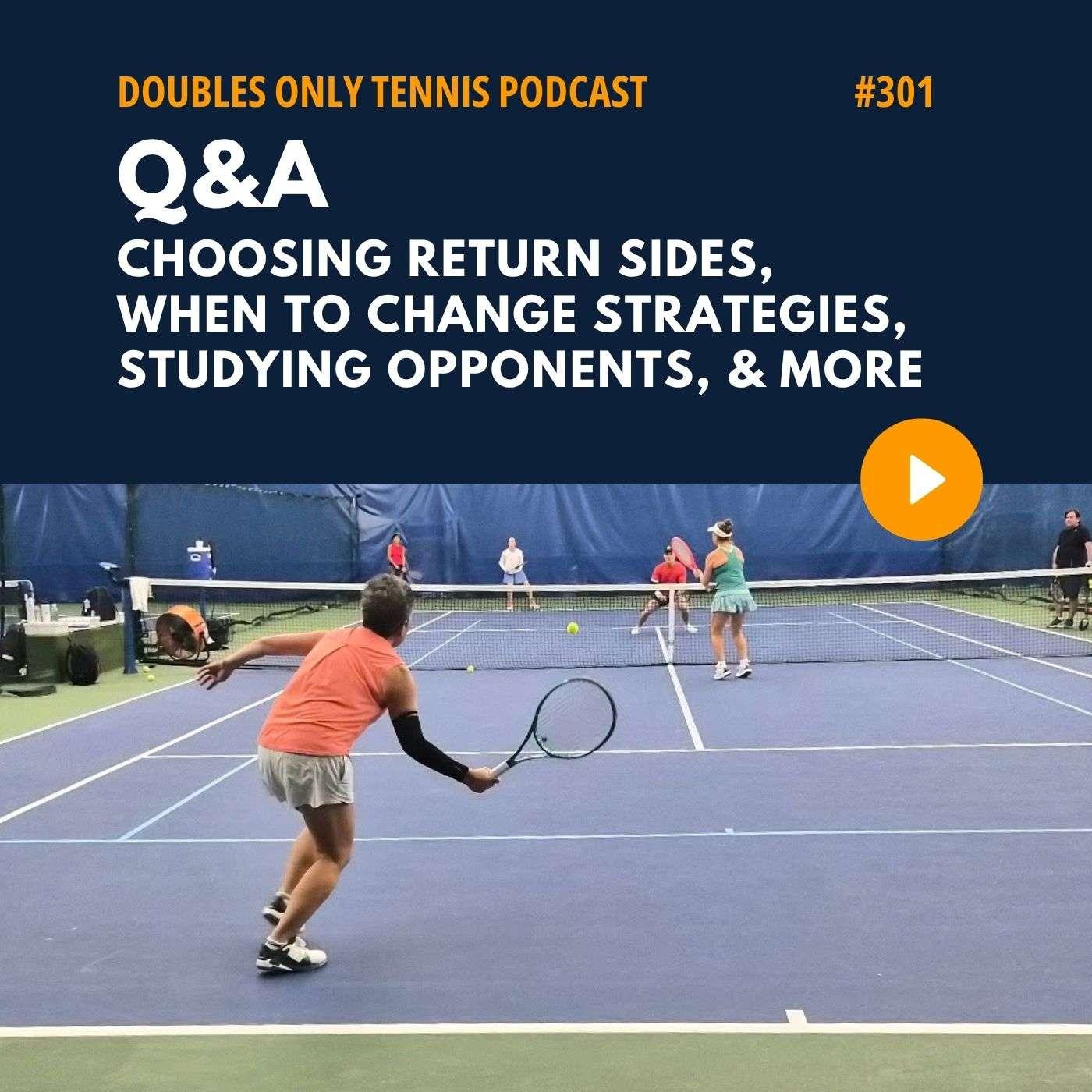
00:01:56.180So we're going to talk about four different topics.
00:01:56.340 -->
00:01:59.620Number one is how to choose return sides.
00:01:59.780 -->
00:02:08.819Number two is how do you avoid hitting your partner in the back of the head when you are the server or during a rally?
00:02:08.980 -->
00:02:11.300And then three and four are my two favorites.
00:02:11.620 -->
00:02:20.259During a match, how do you focus on your opponents when you're so worried about your own game and watching the ball?
00:02:20.580 -->
00:02:27.620And then number four is when is it time to change strategies on the doubles court during a match?
00:02:27.860 -->
00:02:30.660So these are going to be really fun topics.
00:02:30.900 -->
00:02:33.220I think you're going to learn a lot from this episode.
00:02:33.699 -->
00:02:38.340And like I said, I wanted to uh get this out to you before the weekend.
00:02:38.580 -->
00:02:46.580So before I get to topic number one, which is return sides, uh, quick announcements and updates on the doubles camps and rally trips.
00:02:46.819 -->
00:02:54.819So the Dallas Fort Worth Doubles camp, October 24th and 25th, it only has eight spots available, and only three of those are left.
00:02:54.980 -->
00:02:56.980So this is a very personalized camp.
00:02:57.139 -->
00:02:59.939You're going to spend eight hours on the court with me.
00:03:00.100 -->
00:03:02.500We're going to do a strategy presentation.
00:03:02.900 -->
00:03:03.939Lunch is included.
00:03:04.020 -->
00:03:07.220There's some really cool player gifts that you're going to get as well.
00:03:07.460 -->
00:03:08.980And it's very personalized.
00:03:09.060 -->
00:03:12.900So I'm going to be filming your play on the court.
00:03:12.980 -->
00:03:15.379We're going to be analyzing some of your strokes.
00:03:15.699 -->
00:03:24.019And by the end of it, I'm going to be able to share with you some of the best tactics and strategies you can use once you go back home and start playing in your league again.
00:03:24.180 -->
00:03:30.180And then also drills you can use when you go back home to continue to improve your game.
00:03:30.340 -->
00:03:36.900So this is going to be very different than any clinic or camp that you've done before.
00:03:37.220 -->
00:03:41.860Also, I have a camp coming up in Miami, November 14th and 15th.
00:03:42.100 -->
00:03:43.540I've talked about that as well.
00:03:43.699 -->
00:03:47.139We've got a morning group with only two spots remaining.
00:03:47.220 -->
00:03:49.540And then the afternoon group is a little more open.
00:03:49.620 -->
00:03:52.660We've had, I think, four or five people sign up so far.
00:03:52.740 -->
00:03:56.500So we've got maybe 10 to 12 spots left.
00:03:57.220 -->
00:04:08.019I will link to all of this in the show notes, which includes a detailed agenda of each camp and then also recommended hotels if you are traveling from out of town.
00:04:08.259 -->
00:04:10.019And then the rally trips.
00:04:10.340 -->
00:04:16.180We've partnered with the Dallas Open actually to create four different options for you.
00:04:16.259 -->
00:04:24.420So three of those options are one night, two-day trips, and then there is a weekend option that is three days and three nights.
00:04:24.579 -->
00:04:27.459And you're going to do some tennis drills with me.
00:04:27.620 -->
00:04:31.139I'll do a strategy presentation, and then we go to the Dallas Open.
00:04:31.220 -->
00:04:37.139And this is different than anything we've done before because we've partnered with the tournament itself.
00:04:37.459 -->
00:04:46.740We're going to be sitting in a VIP suite that is all-inclusive, food and beverage, including alcohol, on center court.
00:04:46.819 -->
00:04:48.819So this is going to be a really cool trip.
00:04:48.980 -->
00:04:52.180And the hotel is walking distance from the tournament.
00:04:52.420 -->
00:04:59.139And it's a fun area with uh restaurants and shopping and all that sort of stuff, um, all within walking distance.
00:04:59.300 -->
00:05:01.939So I'm going to link to that in the show notes as well.
00:05:02.100 -->
00:05:06.819If you want to do a shorter two-day, one-night stay, that's great.
00:05:06.900 -->
00:05:10.500If you want the more extended rally trip, that is an option as well.
00:05:10.660 -->
00:05:12.819So I'm going to link to all that in the show notes.
00:05:12.980 -->
00:05:15.699I hope that some of you can join me.
00:05:15.780 -->
00:05:21.300Um, these in-person events have become, like I've said in the past, a big part of what Tennis Tribe does.
00:05:21.459 -->
00:05:26.019And honestly, I get a ton of joy out of them because I love spending time.
00:05:26.259 -->
00:05:45.460Um, I love spending time behind the microphone talking to all of you, but I also love meeting you in person and interacting uh in person and um getting to work with you kind of hands-on so that we can um continue to improve your doubles game and have fun watching the best doubles teams and tennis players in the world.
00:05:45.700 -->
00:05:46.740So let's dive in.
00:05:46.900 -->
00:05:47.860Return sides.
00:05:47.939 -->
00:05:49.060This is a really big topic.
00:05:49.140 -->
00:05:57.060It's something I've covered in the past, but um, you know, with all of my lessons, I'm constantly kind of tweaking my language and changing my mind on stuff.
00:05:57.300 -->
00:06:02.100So um it's been a while since I've covered this and I wanted to talk about it again.
00:06:02.340 -->
00:06:06.980So recently I was working with a USTA team that is headed to nationals.
00:06:07.300 -->
00:06:12.180Some of the teams were asking me, you know, we're not sure which side we should return on.
00:06:12.500 -->
00:06:18.100So sometimes the return side you choose doesn't make a huge difference.
00:06:18.260 -->
00:06:31.220If both of you are solid from both sides, you don't have any glaring weaknesses in terms of forehands and backhands, uh, whether that's at the net or ground strokes, then it may not matter a whole lot which side you return from.
00:06:31.300 -->
00:06:34.900But that's typically not the case in club level doubles.
00:06:35.140 -->
00:06:42.580So one of the things that I think is underrated or underconsidered perhaps is the volley.
00:06:42.819 -->
00:06:47.300So we're talking about return sides, and you wouldn't think, okay, why does the volley matter?
00:06:47.379 -->
00:06:49.140We're talking about returns, right?
00:06:49.379 -->
00:07:00.340The reason the volley matters is during the point, if you are at the net and you have your weak volley in the middle of the court, your partner has to win the point by themselves.
00:07:00.580 -->
00:07:16.819So if you're the returner's partner and you're not getting involved in the point on a consistent basis, then you need to change something and you need to uh probably switch return sides to get your stronger volley in the middle of the court.
00:07:16.980 -->
00:07:18.420So, what does that look like?
00:07:18.580 -->
00:07:25.620For these teams, I try to divide them up into a baseline player with a net player.
00:07:25.780 -->
00:07:31.700Um, one of the best WA teams to study who does this really well is Paulini and Arani.
00:07:31.780 -->
00:07:33.860Sarah, Arani, Jasmine, Paulini.
00:07:33.939 -->
00:07:38.660Um, Paulini hasn't been playing as much doubles recently, but I've done a lot of lessons on them.
00:07:38.900 -->
00:07:43.460And Arani is the role of the net player for this team.
00:07:43.540 -->
00:07:47.140And then Paulini is the role of the baseline player for their team.
00:07:47.300 -->
00:08:10.819And they do a really good job of using different formations and setting up through their just return sides to get into their ideal positions, which is Arani at the net in the ad court with her forehand volley in the middle, and Paulini at the baseline in the deuce court rallying with her forehand to set up Arani.
00:08:11.140 -->
00:08:15.620So that is how I try to set up a lot of my club level doubles teams.
00:08:15.780 -->
00:08:18.340I figure out, okay, who's my baseline player?
00:08:18.420 -->
00:08:21.540I'm gonna put you on the deuce side, and then who's my net player?
00:08:21.620 -->
00:08:30.420I'm gonna put you on the ad side so that you have your forehand volley in the middle, and you can clean up any weak balls from the opposing baseline player.
00:08:31.140 -->
00:08:33.460Now, there's exceptions to this, right?
00:08:33.539 -->
00:08:35.059What if you have a lefty on the court?
00:08:35.220 -->
00:08:37.939What if you like your backhand volley more than your forehand volley?
00:08:38.019 -->
00:08:40.419In that case, you want to maybe play the deuce side.
00:08:40.659 -->
00:08:45.059So the key with this is to just consider what volley you have in the middle.
00:08:45.139 -->
00:08:51.139If one of you has a volley that you absolutely hate, I would try to make sure that that's not in the middle.
00:08:51.379 -->
00:08:56.500Now, having said all that, prioritize making returns, right?
00:08:56.580 -->
00:09:05.700If you are trying to get your stronger volley in the middle, so you're going to play the ad side, but you just can't make a return from the ad side, then it doesn't help, right?
00:09:05.860 -->
00:09:07.620Because you're losing all your return points.
00:09:07.779 -->
00:09:21.059So we are still going to prioritize making returns, but at the club level, I find most of us, unless you're getting to a higher and higher level, probably four or five plus, most of us can return from both sides.
00:09:21.299 -->
00:09:24.580If you hate your backhand return, you can still return from the add side.
00:09:24.659 -->
00:09:28.580Just shift it a little bit to your left and hit more forehands, right?
00:09:28.899 -->
00:09:33.379If you want to hit more backhands, you can hit return from the due side by shifting to your right.
00:09:33.539 -->
00:09:37.700So adjusting your court position will allow you to hit more of your favorite shot.
00:09:37.860 -->
00:09:44.580But again, I want to consider that volley because I want you winning these return points as a team.
00:09:44.819 -->
00:09:48.019The baseline player shouldn't be winning these points on their own.
00:09:48.179 -->
00:09:50.339That's not a very good double strategy.
00:09:50.500 -->
00:09:52.339We want to win these points as a team.
00:09:52.500 -->
00:09:55.139And that net player needs to be involved.
00:09:55.379 -->
00:10:03.219So think about that when you're talking about um or trying to figure out return sides uh with your next doubles partner.
00:10:04.419 -->
00:10:16.019So, next question: when the server's partner is moving more towards the center of the court while at the net, how do you avoid hitting him in the back of the head or his back on serve?
00:10:16.339 -->
00:10:20.019So this is uh a little bit of a different question.
00:10:20.259 -->
00:10:31.219Um, it sounds like the server is having trouble um getting the ball past their uh partner at the net, right?
00:10:31.539 -->
00:10:36.980So this doesn't seem like a movement thing, it seems more like a positioning thing to me.
00:10:37.219 -->
00:10:45.459Um the server's partner should not start moving towards the middle before the ball crosses the net, right?
00:10:45.860 -->
00:10:51.620Um so if you think about it, I toss the ball, I hit my serve, the ball crosses the net.
00:10:51.779 -->
00:11:01.059When the ball crosses the net, then the server's partner will start their movement either towards the middle or towards the double sally, um, depending on which play was called.
00:11:01.139 -->
00:11:03.860Hopefully you're moving towards the middle a bit more.
00:11:04.579 -->
00:11:08.819But what about if their position is closer to the middle of the court?
00:11:08.899 -->
00:11:12.659This actually happened a couple weeks ago with that same USTA team.
00:11:12.740 -->
00:11:18.019One of the players was worried about getting hit, so she stood way over by the double sally.
00:11:18.740 -->
00:11:20.819And there's two things I would say.
00:11:20.980 -->
00:11:23.539Number one is duck.
00:11:23.860 -->
00:11:25.219Um, pretty simple.
00:11:25.379 -->
00:11:35.939But if you need to get down on a knee or in a crouched position or kind of into a squat to duck and avoid your partner uh hitting you in the back of the head, do that.
00:11:36.019 -->
00:11:38.659You'll see the pros do it when they use eye formation, right?
00:11:38.740 -->
00:11:40.500They try to stay really low.
00:11:40.659 -->
00:11:44.579Um, the second thing is sometimes you just get hit in the back.
00:11:44.740 -->
00:11:48.179And how important is this match to you?
00:11:48.419 -->
00:11:52.579Is it more important that you don't get hit in the back of the head or is it more important that you win the match?
00:11:52.740 -->
00:11:56.099And that's something I asked um this lady that was headed to nationals.
00:11:56.179 -->
00:12:01.139I said, is it more important that you win nationals or that you avoid getting hit in the back?
00:12:01.299 -->
00:12:02.500And it's an honest question.
00:12:02.579 -->
00:12:13.779If she just doesn't want to get hit in the back and it's not worth it, then continue that tactic of staying closer to the sideline, and you're going to be less likely to win nationals, right?
00:12:13.860 -->
00:12:19.219You're going to be less likely to win that match because you're positioning yourself out of the play.
00:12:19.379 -->
00:12:26.579To poach from there, you have to move so early that you're going to leave the line open and not disguise your poach, which I've talked about in the past.
00:12:27.779 -->
00:12:31.219So the other thing you have to think about is timing with this, right?
00:12:31.459 -->
00:12:36.579So the timing of the movement of the net player is the crucial thing here.
00:12:36.819 -->
00:12:41.779So they've got to time it with the opponent's swing, not with anything else, right?
00:12:41.860 -->
00:12:44.659With the opponent's movement, body language, and swing.
00:12:44.740 -->
00:12:46.819That's how you're timing your poach.
00:12:47.139 -->
00:12:51.699So based on their swing, you shouldn't be moving before your partner hits.
00:12:51.860 -->
00:12:57.459And if you are moving towards the middle and the ball's behind you, again, you need a duck.
00:12:57.779 -->
00:12:59.299So a little bit of a different question.
00:12:59.459 -->
00:13:01.379Hopefully that answers the question.
00:13:01.539 -->
00:13:06.099Um, for uh, this was from a tennis tribe member, I believe.
00:13:06.179 -->
00:13:09.699Um, but if you have more questions about that, definitely reach out to me.
00:13:09.939 -->
00:13:13.219So, next, these are the last two, and I I love these questions.
00:13:13.379 -->
00:13:23.860Um, the first one, during a match, I find it hard to think about how my opponents are playing as I'm focusing on my own game and watching the ball.
00:13:23.939 -->
00:13:25.699Do you have any tips for this?
00:13:26.099 -->
00:13:35.539Okay, so the first thing you can do is start to study doubles teams from the sidelines.
00:13:36.019 -->
00:13:42.339So if you show up to your match early and you're stretching on the side and getting warmed up, watch one of the doubles matches.
00:13:42.419 -->
00:13:50.099Even if it's people you don't know, it doesn't matter who it is, watch one of the doubles matches and study one of the teams and ask yourself, how would I beat them?
00:13:50.259 -->
00:13:51.860How would I serve that player?
00:13:52.019 -->
00:13:55.379How would I try to return to avoid that net player?
00:13:55.539 -->
00:13:56.980Um, what are they doing well?
00:13:57.139 -->
00:13:58.659What are their weaknesses?
00:13:58.899 -->
00:14:09.779And as you start to work that muscle from the sidelines, because it is a lot easier to do this from the sideline or from behind the fence, then you'll be able to implement it on the court a bit easier.
00:14:09.939 -->
00:14:11.539So I would start there.
00:14:12.179 -->
00:14:22.099And then once you're on the court, one of the things that that you asked or you mentioned is I'm focusing on my game and watching the ball.
00:14:22.419 -->
00:14:28.259So too many of us, and we talked about this last week, too many of us watch the ball too much.
00:14:28.579 -->
00:14:34.179When you're off the ball, and that is when your partner is hitting, you should not be watching the ball.
00:14:34.339 -->
00:14:36.579You should be watching the opponents, right?
00:14:36.659 -->
00:14:39.539So this is one of the big things about playing at the net.
00:14:39.620 -->
00:14:43.939But even if you're at the baseline and your partner is hitting, you shouldn't be watching the ball.
00:14:44.179 -->
00:14:45.379Your partner's got it.
00:14:45.539 -->
00:14:55.539Watch the opponents, and that is going to give you a lot of information as to where they like to move based on what's going on during the point, right?
00:14:55.860 -->
00:15:02.099And that'll give you everything you need to know about your movement and your shot selection and what you should be doing.
00:15:02.179 -->
00:15:04.259And you can communicate that with your partner.
00:15:04.740 -->
00:15:06.899So don't watch the ball too often.
00:15:07.059 -->
00:15:09.299You're only watching it when it's coming at you.
00:15:09.459 -->
00:15:14.419Okay, when it comes off the opponent's rackets and it's your ball, it's coming at you.
00:15:14.659 -->
00:15:21.779And then the last thing I would say, again, when we're out on the doubles court, we are so focused on ourselves.
00:15:22.019 -->
00:15:25.860We really want to play well, we don't want to let our partner down, we want to win the match.
00:15:26.019 -->
00:15:31.219And ironically, having that mentality makes you less likely to win.
00:15:31.539 -->
00:15:41.539Because if you're going to be a good doubles player, if you're going to be a successful doubles player strategically, you have to realize that you're the fourth most important player on the court.
00:15:41.779 -->
00:15:44.500The two most important players are the opponents.
00:15:44.659 -->
00:15:48.500You've got to focus on them and getting them to play bad.
00:15:48.740 -->
00:15:57.139And then focus on your partner and help them play good, get them in the right positions, get them on the right return side, like we talked about earlier.
00:15:57.299 -->
00:16:03.459And then if you do that, do those things right, you'll probably play a little better, anyways, and you'll probably win the match.
00:16:03.620 -->
00:16:08.659And even if you don't, you'll still probably win the match because you got three out of the four things right.
00:16:08.980 -->
00:16:13.379So our top priority by far is to get our opponents to play bad.
00:16:13.539 -->
00:16:15.779So we've got to quit focusing on our own game.
00:16:15.860 -->
00:16:27.459We've got to quit watching the ball when we're not uh the ones that that are hitting or when the ball's not coming at us, and we've got to have our eyes on the opponents and focus on them and analyze their game throughout the match.
00:16:27.699 -->
00:16:33.699You know your own game, you know your capabilities, you're not gonna learn anything new during this match, right?
00:16:34.579 -->
00:16:37.939So you're the fourth most important player on the court.
00:16:38.259 -->
00:16:39.860We have to remember that.
00:16:40.419 -->
00:16:45.139Last thing, when, last question here, when is it time to change strategies?
00:16:45.299 -->
00:16:54.500It's nice to have a game plan going into a match, but when the match is not going well as you'd hoped, when is a good time to change to another strategy?
00:16:54.819 -->
00:17:06.579Um, this is a really good question, and it's something that I have changed my mind progressively on over the years, and the answer is earlier than you think.
00:17:06.900 -->
00:17:11.779Um, I think people wait way too long to change a strategy.
00:17:11.940 -->
00:17:26.339So, what I like to do is experiment very early in the match and test out their forehand return, their backhand return, um, test out different types of returns for myself, um, test out, you know, can they make this shot down the line?
00:17:26.500 -->
00:17:28.180Can they make it cross-court?
00:17:28.339 -->
00:17:33.140Um, how do they, what type of height and spin and pace do they hit with their forehand and backhand return?
00:17:33.380 -->
00:17:35.779And that will dictate my strategy.
00:17:35.940 -->
00:17:48.099But if we get into the match, and let's say we lose the first set 6'3 or 6'4 or even 7'5, a lot of teams will say, we're fine, we just need to play better.
00:17:48.259 -->
00:17:49.779Now that's not a strategy.
00:17:49.940 -->
00:17:52.099We just need to play better is not a strategy.
00:17:52.259 -->
00:17:54.019How are you going to play better?
00:17:54.339 -->
00:17:58.339Like if you say you're gonna raise your energy, okay, well, how are you gonna do that?
00:17:58.500 -->
00:18:00.579Are you gonna jump around between every point?
00:18:00.660 -->
00:18:03.059Are you gonna give your partner a high five between every point?
00:18:03.220 -->
00:18:11.700There are intangibles to this, it's not all about strategy, but you have to have a plan to actually play better.
00:18:11.860 -->
00:18:23.379Um, I think most players or most teams don't make any adjustments after they lose a set 6-3 and 6-4, and they think they just need to play better and they end up losing 6-3, 7-5, right?
00:18:23.859 -->
00:18:29.139So I would consider which part of your game do you need to play better?
00:18:29.379 -->
00:18:31.139So is it your serves or returns?
00:18:31.619 -->
00:18:35.299And then whose serves specifically, whose return specifically?
00:18:35.619 -->
00:18:38.259And if it's your returns, you can change return sides.
00:18:38.579 -->
00:18:41.940If it's your serves, figure out okay, do we need to be poaching more?
00:18:42.180 -->
00:18:45.059Do we need to play two back on a second serve?
00:18:45.299 -->
00:18:47.779Do we need to use different serve formations?
00:18:48.099 -->
00:18:50.420What is it about the serve?
00:18:50.740 -->
00:18:51.940Is it to the deuce court?
00:18:52.019 -->
00:18:52.980Is it to the ad court?
00:18:53.220 -->
00:19:01.220You want to get really specific with this and make adjustments to the specific games and specific types of points that you're losing.
00:19:01.379 -->
00:19:06.180And again, you should make these adjustments a lot earlier than you think you should.
00:19:06.740 -->
00:19:08.980All right, so that's it for this episode.
00:19:09.139 -->
00:19:10.180Hopefully, this was helpful.
00:19:10.259 -->
00:19:14.420Um, I'm gonna try to do more of these kind of short uh QA episodes.
00:19:14.500 -->
00:19:21.299I've, you know, most of you give me pretty good feedback on the strategy episodes, and they are the most downloaded generally.
00:19:21.379 -->
00:19:25.779Um, so I want to, you know, give y'all more of what you want to listen to.
00:19:25.940 -->
00:19:27.379Um so hopefully this was helpful.
00:19:27.539 -->
00:19:29.539Reach out if you have any questions or any feedback.
00:19:29.700 -->
00:19:38.740And I haven't in a while asked for this, but if you do enjoy the podcast, if you could leave a review on Apple Podcast or wherever you listen.
00:19:38.819 -->
00:19:39.859So thank you for listening.
00:19:40.019 -->
00:19:41.379I will talk to you all soon.