WEBVTT
00:01:15.700 -->
00:01:17.300Hey everybody, welcome to the show.
00:01:17.460 -->
00:01:23.860It has been several weeks since I've released an episode, uh, the last one being with Katarina Siniakova.
00:01:24.020 -->
00:01:33.460Um, I actually had several episodes planned in New York during the US Open, but I lost my uh recording equipment.
00:01:33.620 -->
00:01:42.420I lost a cord that attaches my microphone to my computer, and ultimately could not do those uh with the equipment that I had.
00:01:42.500 -->
00:01:44.180So I apologize for that.
00:01:44.340 -->
00:01:47.540Um I'm done traveling for a little bit.
00:01:47.700 -->
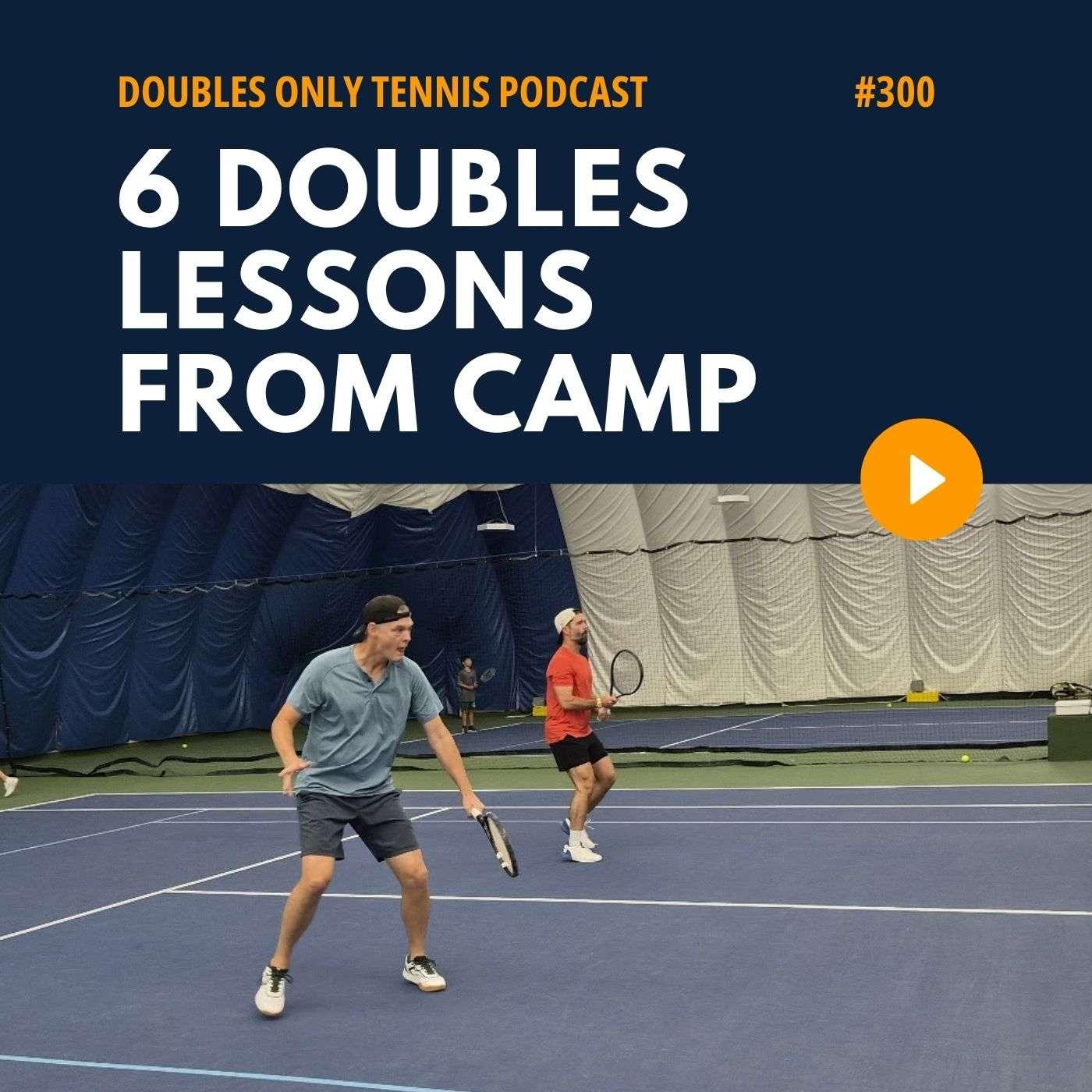
00:01:59.300Uh I did the camp in New York, I did the rally trip in New York, and then I last week had a doubles camp with a high school team down outside of San Antonio, Texas.
00:01:59.460 -->
00:02:09.620Um I'm back kind of reset, still catching up a bit, but hoping to be a bit more regular with the podcast going forward, uh, starting with today.
00:02:09.699 -->
00:02:18.819Um, we're gonna go through six different lessons that I continue to teach over and over again at my doubles camps.
00:02:18.980 -->
00:02:27.460Um, these lessons are things that always come up when I'm watching club level matches, when I'm working with players during a camp.
00:02:27.699 -->
00:02:34.100And I wanted to share them with all of you so that even if you can't attend one of my camps, you can work on them at home.
00:02:34.259 -->
00:02:39.620Um, speaking of camps, a couple of quick announcements with uh trips coming up.
00:02:39.780 -->
00:02:43.780So I do have a camp in the Dallas Fort Worth area.
00:02:43.939 -->
00:02:48.100It's gonna be held at TCU, which is a really beautiful facility.
00:02:48.180 -->
00:02:50.980I'm gonna start working out of there a little bit more.
00:02:51.060 -->
00:02:56.100Um, it's gonna be October 24th and 25th, and it's only gonna be with eight people.
00:02:56.180 -->
00:03:00.900So it is gonna be very uh hands-on, very personalized.
00:03:01.060 -->
00:03:05.620I've already got three people signed up, so there's right now five spots left.
00:03:05.699 -->
00:03:09.699Um, the early bird pricing ends this Sunday.
00:03:09.780 -->
00:03:14.660Um, so if you are listening to this and want to check it out, I will link to that in the show notes.
00:03:14.740 -->
00:03:16.900Um, it's easy to fly in and out of DFW.
00:03:16.980 -->
00:03:22.180I've got some hotels listed, uh recommended hotels listed on the sales page as well.
00:03:22.580 -->
00:03:25.540I have a camp coming up in Miami in November.
00:03:25.620 -->
00:03:27.860I'll link to that in the show notes as well.
00:03:28.019 -->
00:03:36.100Um, that's with me, uh Adam Maddock, who is the head tennis pro at the West End Racket Club where it's gonna be held.
00:03:36.180 -->
00:03:41.139Uh, it's gonna be on Green Clay, and David Sammel is gonna join us as well.
00:03:41.379 -->
00:03:48.100He is an expert in mental performance and has worked with several um top doubles players in the world as well.
00:03:48.180 -->
00:03:50.819So it's gonna be a lot more than just double strategy.
00:03:50.980 -->
00:03:56.019So I think uh if you're in the Miami area, you would really enjoy that one.
00:03:56.100 -->
00:04:01.220Or if you want to fly in and make a vacation of it, uh that would be a lot of fun too.
00:04:01.459 -->
00:04:02.740And then rally trips.
00:04:02.819 -->
00:04:16.900The rally trips are kind of all-inclusive tennis experiences where you get your hotel included, you get to play tennis with me in the mornings, and then you get to go and watch some of the best tennis players in the world.
00:04:17.060 -->
00:04:20.100Uh, we are planning a lot for 2027.
00:04:20.180 -->
00:04:31.939These trips um are in high demand, they continue to sell out, and we've got our Indian Wells trip uh coming up in 2027, um, March 2nd through 5th.
00:04:32.100 -->
00:04:36.180That actually did just sell out last night as I'm recording this.
00:04:36.259 -->
00:04:38.180Um, but there is a wait list.
00:04:38.340 -->
00:04:39.939Sometimes people drop.
00:04:40.180 -->
00:04:42.740So if you want to get on that wait list, let me know.
00:04:42.819 -->
00:04:45.139I'll link to it in the show notes as well.
00:04:45.300 -->
00:04:50.740Um, we are gonna plan something around the Dallas Open as well, which is just in my backyard.
00:04:50.819 -->
00:04:52.980That's an ATP 500 event.
00:04:53.139 -->
00:04:59.379Uh, we're gonna do that over the weekend, the finals or semifinals weekend of the Dallas Open.
00:04:59.459 -->
00:05:01.459So if you're interested in that, let me know.
00:05:01.620 -->
00:05:09.220Um, we've not started taking sales, but I'm sure uh if you want to sign up early, we can give you a good rate.
00:05:09.379 -->
00:05:13.139Um, and then we'll have potentially another Indian Wells trope.
00:05:13.220 -->
00:05:18.100Keep an eye out for that uh and a lot more coming up in 2027.
00:05:18.660 -->
00:05:22.180So let's dive into these six lessons.
00:05:22.259 -->
00:05:26.819Um, the first one I mentioned in my newsletter last night.
00:05:27.060 -->
00:05:34.020Uh the biggest mistakes this is the biggest mistake I see with club players, and I see it over and over again.
00:05:34.100 -->
00:05:39.060And even people who come to my camps who follow all my content still make this mistake.
00:05:39.140 -->
00:05:41.379And it is your net positioning.
00:05:42.100 -->
00:05:49.300The way I articulated it in the newsletter is this, and I liked the way this actually came out as I started typing it.
00:05:49.540 -->
00:05:53.460So let's assume you your partner has a first serve.
00:05:53.540 -->
00:05:55.300I want you to imagine with me for a second.
00:05:55.379 -->
00:05:58.260It's the first point of the match, you decide you're gonna poach.
00:05:58.500 -->
00:06:02.900So, where most people start is the left center of the service box, right?
00:06:03.140 -->
00:06:06.500Slightly closer to the singles line than the center service line.
00:06:06.819 -->
00:06:09.939So, with that, one of two things are gonna happen.
00:06:10.260 -->
00:06:18.340You're either going to time your poach with their backswing, which is generally what you should be doing, although you can mix up your timing.
00:06:18.580 -->
00:06:46.420And when you do that, you're gonna get to the center where most of the returns cross around that net strap area, and you're gonna be a little bit late, and you're gonna end up stretched for your volley, and you won't hit it clean, and the opponent, uh opposing net player will have an easy ball to hit behind you for a winner, or you'll miss the volley, or you just won't get there in time at all, and you'll totally uh not even make contact with the return.
00:06:46.580 -->
00:06:48.580So that's one thing that can happen.
00:06:48.740 -->
00:06:52.420That is if you time the poach with the backswing, right?
00:06:53.060 -->
00:07:01.460The other thing that can happen is, you know, when that happens, the scenario I just described, you probably tell yourself, oh, I need to leave earlier, right?
00:07:01.540 -->
00:07:05.540So then you go back, and maybe two points later you decide I'm gonna poach again.
00:07:05.700 -->
00:07:08.500So on that one, you do leave earlier.
00:07:08.580 -->
00:07:15.460You leave as the ball's landing, as the serve is landing, or maybe just after it lands, before the opponent starts their backswing.
00:07:15.860 -->
00:07:26.020And in this case, you leave early, you get there in time, but you left so early that the returner had plenty of time to see you move, right?
00:07:26.580 -->
00:07:38.260So in that scenario, they have lots of time to see you move, decide, okay, they're crossing, I'm gonna change your direction and go down the line, and then they can beat you down the line.
00:07:38.500 -->
00:07:41.060So in that scenario, you left too early.
00:07:41.220 -->
00:07:43.620In the other scenario, you left too late.
00:07:43.780 -->
00:07:44.900So, what's the fix?
00:07:45.060 -->
00:07:49.620The fix is actually not leaving earlier or leaving later, it's your position.
00:07:49.860 -->
00:07:53.140You started too far over towards the doubles alley.
00:07:53.540 -->
00:08:08.260So when you start more in the center of the service box, or something I'm teaching a lot of players, is to actually on your partner's first serve, start even closer to that center service line, like you see uh Rajiv Ram do in some of the Instagram lessons I've done in the past.
00:08:09.220 -->
00:08:15.700When you start in the center of the service box or closer to that center service line, you don't have to leave as early.
00:08:15.780 -->
00:08:17.939So you can disguise your poach better.
00:08:18.180 -->
00:08:20.180You don't have as far to go.
00:08:20.500 -->
00:08:25.540So you can leave with their backswing and still get there in plenty of time.
00:08:25.700 -->
00:08:28.100And then the question is, okay, well, what about the alley?
00:08:28.180 -->
00:08:29.540What if I need to cover the alley?
00:08:29.700 -->
00:08:32.019Well, you can also shift to your left.
00:08:32.259 -->
00:08:40.419So as the serve is landing, you start to move forward, and then you can go to your right if you're gonna pinch or poach, or you can go to your left.
00:08:40.580 -->
00:08:43.299Again, we're talking about the deuce court first point of the match.
00:08:43.460 -->
00:08:48.580You can go to your left if you want to cover the alley, if you feel like they're hitting their backhand down the line.
00:08:48.740 -->
00:08:56.740So you can cover both from that spot, but you're never gonna really just move forward and stay where you are, or rarely are you gonna do that.
00:08:56.899 -->
00:09:02.500There's always gonna be some lateral movement to your left or right, but it all starts with your positioning at the net.
00:09:02.819 -->
00:09:14.419So that's the biggest mistake that I've seen over the last several weeks teaching uh the camp in New York, teaching the camp with these high school players who are all around 3-0, 3-5 level.
00:09:14.500 -->
00:09:19.779Um, and then also teaching at the rally trips and watching some of the point play there.
00:09:20.259 -->
00:09:22.580So let's move on to number two.
00:09:22.740 -->
00:09:25.939Um, also, a lot of these have to do with the net, right?
00:09:26.019 -->
00:09:36.659That's the area I focus on a lot because it's an area that I see the most room for improvement, and it's also the area that I see the biggest kind of ROI, the biggest bang for your buck.
00:09:36.740 -->
00:09:47.059Um, it's easy to make some of these fixes at the net, whereas, you know, chain making changes from the baseline or on your serve or return are usually technical and they're they're a little bit more difficult.
00:09:47.299 -->
00:09:51.459So um number two is keeping your eyes forward at the net.
00:09:51.620 -->
00:09:56.259I continue to see the returner watch their partner hit the return.
00:09:56.339 -->
00:09:57.139That's a mistake.
00:09:57.219 -->
00:10:00.579You want to watch that ball land and then you want to look up at the opposing net player.
00:10:00.740 -->
00:10:07.219And then during the rally, I continue to see the net player looking back to watch their partner hit.
00:10:07.779 -->
00:10:15.219You've got to keep your eyes forward because eventually the ball is going to come from one of the opponent's rackets.
00:10:16.259 -->
00:10:18.579And that's when you'll start tracking the ball.
00:10:18.819 -->
00:10:28.099But before that, you don't track the ball, you track the opponents because your position should be dictated by the position and movement of your opponents.
00:10:28.259 -->
00:10:32.980If you see the opposing net player poaching, you have to back up and defend.
00:10:33.059 -->
00:10:38.819But if you're watching your partner hit and are turned around, you're never gonna see that net player poaching.
00:10:38.980 -->
00:10:47.059And then you're gonna get your head turned around and they're already gonna be right at the net strap, and you'll have not known that they were there and they're gonna hit you, right?
00:10:47.620 -->
00:11:00.899Or if the opposing net player is shifting over towards the double zolly, then you can get forward, and then that ball gets back to that baseline player and you see them off balance and you can poach.
00:11:01.059 -->
00:11:04.500But if you were watching your partner hit, you wouldn't have been able to get there in time.
00:11:04.740 -->
00:11:06.899So you've got to keep your eyes forward at the net.
00:11:06.980 -->
00:11:15.459The only exception to this, really, um, for me, is if you get lobbed, you can take a quick glance back at your partner, but that's the only exception.
00:11:15.620 -->
00:11:27.139And honestly, if you're to always look backwards at your partner or never look backwards at your partner, I'd rather you never look backwards, even when you do get lobbed.
00:11:27.299 -->
00:11:29.139If you're not sure, just keep your eyes forward.
00:11:29.299 -->
00:11:33.779You're not gonna get that much helpful information by looking back at your partner.
00:11:34.259 -->
00:11:43.459It's gonna be a lot more useful to just keep your eyes forward because, again, your movement and position should be dictated by the movement and position of the opponents, not the ball.
00:11:43.699 -->
00:11:52.899You poach based on the opponent's body language, you don't poach on based on the ball that's coming because if you wait for the right ball, you'll be too late.
00:11:53.620 -->
00:11:56.899So let's move to mistake number three.
00:11:57.139 -->
00:11:59.699Um, also a net play mistake.
00:11:59.860 -->
00:12:06.899This one has to do with technique a little bit more, um, but this is a lesson that I teach over and over again at my camps.
00:12:07.059 -->
00:12:11.059I taught it in New York, I taught it in San Antonio, uh, with private lessons.
00:12:11.139 -->
00:12:11.860I teach it.
00:12:12.099 -->
00:12:16.500Everybody has a tendency on their volleys to miss in a certain part of their frame.
00:12:16.659 -->
00:12:23.139So this has to do with where you hit your volleys, literally on your racket, where the ball makes contact with the racket.
00:12:23.779 -->
00:12:33.699So a lot of players that I taught at the camp would tend to miss maybe on the top part of their frame on the forehand volley, right?
00:12:33.779 -->
00:12:34.819It would hit the top.
00:12:34.899 -->
00:12:37.379So the racket was almost going under the ball.
00:12:37.699 -->
00:12:44.740So they kept trying to hit volleys, and I noticed two, three, four times in a row, they would hit the top part of their frame and miss the volley.
00:12:44.899 -->
00:12:47.299So I would tell them to overcorrect.
00:12:47.459 -->
00:12:50.899I would say try to hit the ball with the bottom part of your frame.
00:12:51.059 -->
00:12:58.339Because right now you think you've got the ball lined up in the sweet spot, and then what's happening is it's hitting the top part of your frame.
00:12:58.500 -->
00:13:04.099So if you think you've got the ball lined up on the bottom part of your frame, it's going to end up hitting your sweet spot.
00:13:04.339 -->
00:13:06.500So you've got to make that overcorrection.
00:13:06.659 -->
00:13:14.179A lot of people, it's on overheads, they'll swing and hit off the throat of their racket each time, which means they're swinging too late.
00:13:14.419 -->
00:13:16.099That ball is dropping too much.
00:13:16.179 -->
00:13:20.259So if you swing a little earlier, that ball won't drop as much, and then you'll hit the sweet spot.
00:13:20.500 -->
00:13:25.299Or again, you can just try to hit it off the top of your frame, off the tip of your racket.
00:13:25.779 -->
00:13:27.939So those are a few ways to correct that.
00:13:28.019 -->
00:13:32.899But the first step to that is noticing where on your frame you tend to miss.
00:13:33.139 -->
00:13:37.299So on my forehand volley, I tend to miss on the bottom left part of my frame.
00:13:37.459 -->
00:13:45.459So I have to try to hit it on the top right part of my frame, and then I end up hitting the sweet spot over and over, and then I'm able to make that correction.
00:13:45.860 -->
00:13:50.579Another great way to fix this is to use the functional tennis saber.
00:13:50.659 -->
00:13:56.579If you're a tennis tribe member, um check out the member discounts and you do get a discount on that product.
00:13:56.819 -->
00:13:59.939But it is one of my favorite products for volleys.
00:14:00.099 -->
00:14:02.740You can use it on serves and returns and ground strokes as well.
00:14:02.899 -->
00:14:07.219You can play an entire match with it, but it is a tiny racket head.
00:14:07.379 -->
00:14:10.899Um, it is a real tennis racket, but with a tiny head size.
00:14:11.139 -->
00:14:16.659So you cannot get away with hitting um with without hitting the sweet spot.
00:14:16.819 -->
00:14:17.939You have to hit the sweet spot.
00:14:18.019 -->
00:14:20.579So it forces you to make those corrections.
00:14:20.819 -->
00:14:28.740So a lot of players I will have used that when they're volleying to simply fix that sweet spot issue.
00:14:28.899 -->
00:14:30.899Um, so those are two ways to handle that.
00:14:30.980 -->
00:14:36.179But again, it's something that comes up over and over again in uh in my doubles camps.
00:14:37.299 -->
00:14:39.379So next is uh another favorite.
00:14:39.539 -->
00:14:42.179Um, this one, again, it comes up over and over.
00:14:42.339 -->
00:14:44.579Uh this is about the opponents.
00:14:44.740 -->
00:14:48.899So this is about overheads and serve tendencies.
00:14:49.139 -->
00:14:55.699So I run this overhead drill where two players are up, they get an overhead, two players are back, kind of defending.
00:14:55.860 -->
00:15:12.019And what ultimately happens every single time at camp is the players at the net hitting the overheads, if they're both right-handed, one of them tends to like to hit kind of a slice overhead that goes to their left to uh the opponent's right.
00:15:12.179 -->
00:15:18.500And that player ends up beating the opponents to the opponent's right three, four times in a row.
00:15:18.659 -->
00:15:20.819And the opponents don't make any adjustments.
00:15:20.980 -->
00:15:25.139And I walk over to them and I say, Okay, where have they beaten you each time?
00:15:25.219 -->
00:15:26.899And they'll tell me, Oh, over there.
00:15:27.139 -->
00:15:29.620So do you think we should shift over there?
00:15:29.860 -->
00:15:41.379So, in between points in your matches, if you notice that they're tending to beat you in a certain area, and it doesn't have to be an overhead, but this for this drill, this is where it tends to come up the most.
00:15:42.339 -->
00:15:48.980I would walk up to my partner and say, Hey, every time he hits an overhead, he keeps beating us to the right.
00:15:49.059 -->
00:15:53.299So next time I'm going to shift to my right, why don't you shift to your right and cover middle?
00:15:53.379 -->
00:15:56.259And let's see if he can hit the overhead the other way.
00:15:56.500 -->
00:15:59.219And you can do the same thing on the serve.
00:15:59.379 -->
00:16:03.299A lot of right-handed players love their slice serve out wide in the deuce court.
00:16:03.459 -->
00:16:10.179So if you're beaten there several times and the opponent never hits a T serve, just stand to your right in the doubles alley.
00:16:10.419 -->
00:16:12.659Same for the lefty in the ad court, right?
00:16:12.740 -->
00:16:15.860A lot of lefties love the slice serve out wide in the ad court.
00:16:16.019 -->
00:16:18.740Just shift to your left, stand over in the doubles alley.
00:16:18.819 -->
00:16:29.539And what happens a lot of the time is they see you shift and they try to go down their T with their first serve and they miss the first serve, and then you get a second serve look.
00:16:30.099 -->
00:16:39.699So picking up on the opponent's tendencies on serves, overheads, even returns, ground strokes, volleys, all of your strokes.
00:16:39.860 -->
00:16:41.219Where are you getting beaten?
00:16:41.379 -->
00:16:43.939And then adjust your position accordingly.
00:16:44.179 -->
00:16:50.179It's something for whatever reason we don't really pay attention to because we're so focused on ourselves on the court.
00:16:50.259 -->
00:16:55.620So I want you to think about starting to pay attention to where your opponent likes to hit their overhead.
00:16:55.779 -->
00:16:57.379Where do they like to hit their back end?
00:16:57.459 -->
00:16:58.819Where does it cross the net?
00:16:59.059 -->
00:17:04.740How can I get in position to get in the way of that ball and cover that shot?
00:17:05.220 -->
00:17:10.099All right, number five, uh practice how you play.
00:17:10.500 -->
00:17:19.700So this is a topic that comes up with not everyone, but a handful of people at camp every single time.
00:17:20.019 -->
00:17:24.420And I'll ask them, do you take private lessons or do you hit on the ball machine?
00:17:24.579 -->
00:17:29.460And then I'll ask them, okay, what type of ball are you hitting on the ball machine or in your private lessons?
00:17:29.620 -->
00:17:31.940What type of ball is your coach feeding you?
00:17:32.339 -->
00:17:38.180And they'll show me, and it's an easy ball right in their strike zone.
00:17:38.339 -->
00:17:40.740And then I go out and watch them play at camp.
00:17:40.900 -->
00:17:43.460Sometimes we play uh tiebreakers or games.
00:17:43.620 -->
00:17:50.819I'll watch them play and then I'll walk up to them after and ask them, how many balls did you hit that were in your strike zone?
00:17:51.059 -->
00:17:52.900And it's not very many, right?
00:17:53.059 -->
00:18:02.259What's actually happening at the 3-0 to 4-0 level is we're hitting a lot of balls that are junk balls, that are lobs, that are short balls.
00:18:02.579 -->
00:18:05.220We're hitting a lot of weak second serves.
00:18:05.539 -->
00:18:12.099All of these shots are very different than the type of ball you would typically see somebody hitting on a ball machine, right?
00:18:12.180 -->
00:18:27.379Where they're right at the baseline, the ball's feeding maybe three, four, five feet over the net, it's landing around the service line, it comes back to us, and we're hitting it around hip height, maybe chest height, you know, right in our strike zone.
00:18:27.700 -->
00:18:31.299So the key here is to practice how you play.
00:18:31.460 -->
00:18:35.299You shouldn't be practicing like that if that's not what's happening in your matches.
00:18:35.779 -->
00:18:42.659So what I tell them is to set up the ball machine and have it feed a bunch of lobs and practice hitting lobs from the baseline.
00:18:42.899 -->
00:18:53.059Practice hitting overheads, have it feed a bunch of weak second serves, a bunch of short balls or approach shots, and practice coming in and taking that ball from your shoulder or higher.
00:18:53.220 -->
00:18:55.460Or if you need to let it drop, that's okay too.
00:18:55.619 -->
00:18:57.379But figure out what works best for you.
00:18:57.539 -->
00:19:03.619But this all starts with studying what's happening in your matches and then go and practice it on the practice court.
00:19:03.859 -->
00:19:12.740Don't hit a bunch of balls with your coach who played Division I college tennis and can give you the exact same ball every time, and then you walk off the court feeling good.
00:19:12.819 -->
00:19:17.859And the next day in your 3-5 match, they're not giving you that ball ever, right?
00:19:18.339 -->
00:19:19.700It just makes no sense.
00:19:19.779 -->
00:19:27.220You're not gonna get any better at winning matches if you just get good at hitting balls in your strike zone the whole time.
00:19:27.460 -->
00:19:29.940So again, practice how you play.
00:19:30.099 -->
00:19:33.619Figure out what's happening in your matches, bring it over the practice court.
00:19:34.019 -->
00:19:36.180All right, last one here, number six.
00:19:36.339 -->
00:19:44.980Uh again, this is one that doesn't come up with most people, but there's at least one person in each camp that tells me or that I observe in their game.
00:19:45.059 -->
00:19:47.139Um, and they say, I don't lob.
00:19:47.299 -->
00:19:48.339I hate lobbying.
00:19:48.579 -->
00:19:50.019Lobbying's not real tennis.
00:19:50.180 -->
00:19:51.539Something like this, right?
00:19:52.019 -->
00:19:56.019If you don't lob, you're gonna lose matches that you should be winning.
00:19:56.180 -->
00:20:07.299Um, the more club level doubles I coach, and even pro doubles, when I work with pro teams and provide strategy analysis, I often am recommending lob returns.
00:20:07.379 -->
00:20:13.859I'm often recommending serve plus one lobs off of uh if if you have a second serve, right?
00:20:14.339 -->
00:20:19.700So if you don't lob, you're gonna be losing more points, more matches than you should be.
00:20:20.099 -->
00:20:26.899So the at the end of the match, you're going to end up with more errors than winners from the baseline.
00:20:26.980 -->
00:20:28.099It's just a fact.
00:20:28.420 -->
00:20:32.099Nobody hits more winners from the baseline than they do make errors.
00:20:32.420 -->
00:20:36.819So we've got to commit to reducing our errors from the baseline.
00:20:36.899 -->
00:20:41.460And the lob is a great way to reduce errors, right?
00:20:41.539 -->
00:20:50.019You're gonna be on defense sometimes at the baseline, and you've got to commit to hitting a defensive shot, which is of course a lob.
00:20:50.420 -->
00:20:52.339So at the baseline, you've got two jobs.
00:20:52.500 -->
00:20:55.139One is don't miss, which the lob helps with.
00:20:55.299 -->
00:21:01.460And number two is to set up your partner at the net, which the lob also helps with if you have a good lob.
00:21:02.500 -->
00:21:07.619So there was a high school match that I was coaching uh earlier this year.
00:21:07.859 -->
00:21:11.859I may have mentioned this on the podcast, but I'll uh mention it again here.
00:21:12.099 -->
00:21:14.019They were playing an eight-game pro set.
00:21:14.099 -->
00:21:21.059So this was a practice match against another high school, and our team was down zero seven in this eight-game pro set.
00:21:21.220 -->
00:21:23.220And I walked up to over to them.
00:21:23.299 -->
00:21:28.579Uh, we've got like five matches going on at once, so it's hard for me to spend a ton of time on one court.
00:21:28.740 -->
00:21:31.220And I'd just gotten to this court, they're down zero seven.
00:21:31.379 -->
00:21:36.099I'd watched like the previous two games, we're only allowed to coach on changeovers generally.
00:21:36.339 -->
00:21:41.619Um, so I walked over there at 0-7 and I said, Okay, here's what I want you to do.
00:21:41.779 -->
00:21:53.299From the baseline, I want you to lob every single ball to the ad court, and then I want to get our net player up to the ad court with their forehand volley in the middle.
00:21:53.539 -->
00:21:54.740That's all I want you to do.
00:21:54.819 -->
00:21:56.019That's all I told them.
00:21:56.180 -->
00:22:00.500And they came back and actually won that in a tiebreaker 9-8.
00:22:01.059 -->
00:22:02.899So they got it to seven all.
00:22:03.059 -->
00:22:08.980I think they were down eight, seven, they won the next game, and then won the match in a tiebreaker or the pro set in a tiebreaker.
00:22:09.220 -->
00:22:17.220So just that simple strategy, and these are probably 3-0, 3-5 level players, just that simple strategy can go a long way.
00:22:17.779 -->
00:22:21.299Okay, and it all starts with just hitting a good lob to the ad chord.
00:22:21.379 -->
00:22:24.899If you're ever in trouble from the baseline, hit a good lob to the ad court.
00:22:25.539 -->
00:22:27.700All right, that is it for this episode.
00:22:27.779 -->
00:22:31.619Uh, hopefully these six lessons helped you think a little bit.
00:22:31.779 -->
00:22:46.899Um, hopefully, you'll make a few changes to your practices, to your matches, and hopefully you can come to uh one of my doubles camps and we can work on these lessons and a lot more because I love uh I've really enjoyed the camps recently.
00:22:46.980 -->
00:23:01.379Um, it's been a lot of fun to be on court with everyone and uh analyze people's game personally and give them personal feedback based on what they like and what they don't like and their specific tendencies that sometimes I pick on that they don't even know they have.
00:23:01.539 -->
00:23:04.819Um, so if you are interested, check out the show notes.
00:23:04.980 -->
00:23:08.259Hopefully, this episode helped you, and I will talk to you all soon.