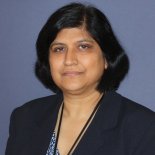

Dr Aninta Bhola: Thank you so much. Thank you for hosting me.
Carl Maronich (Host): Absolutely. And maybe we could start by having you give us an overview of just what sleep apnea is and maybe some of its common symptoms.
Dr Aninta Bhola: So, when we talk about sleep apnea, we're primarily talking about obstructive sleep apnea, although there is another type of apnea. So obstructive sleep apnea, it's a condition where the muscles And the. Back of the throat, mainly the tongue And the soft palate. They relax and they can temporarily close the airway.
Or rather, it's sort of like pinching a straw. So when you're sleeping and these muscles, cave in, it basically cuts off your. Air supply transiently, and that's what contains oxygen. So the oxygen level in the body will transiently drop. And basically this triggers your brain to wake you up and take a breath, And the cycle keeps repeating itself, you know, several times during the course of the night.
So not only are you exposed to these. Multiple episodes of drop in the oxygen level because your airway got blocked, but also does multiple awakenings can actually fragment your sleep and prevent you from getting good quality sleep. So there's daytime sleepiness can be associated with this. Now, in, terms of the symptoms, the commonest symptom is really snoring.
the bed partner often hears. breathing pauses. These are called witnessed apnea, but cause they're typically witnessed by a bed partner. patients will often report frequent awakenings for no rhyme or reason. they wake up feeling fatigued or sleepy and basically they could have daytime sleepiness in all kinds of situations.
some of them are like sedentary, but some of them are also, when you're driving, And that can be a. problematic situation because we see a number of drowsy driving related accidents. patients can wake up with headaches. they could be irritable in the morning 'cause they haven't really gotten a good night's sleep and memory can decline over time.
So Those are the common symptoms that we see with obstructive sleep apnea, which is untreated.
Carl Maronich (Host): Yeah, and it sounds like along with being kind of an annoying thing of your daytime drowsiness and such, it really can have a impact on your overall health.
Dr Aninta Bhola: Yes, untreated. Sleep apnea puts you at a higher risk for a number of serious health conditions. The chronic conditions that we all know about, such as high blood pressure. Diabetes type two diabetes, heart arrhythmias, uh, specifically atrial fibrillation. the incidence of strokes goes up. untreated sleep apnea has been associated with a number of, conditions, including this, some association with, Alzheimer's that they're now talking about.
Carl Maronich (Host): Wow. Some serious stuff. So. Today we're gonna be talking about treatment for sleep apnea and, specifically the inspire therapy. Maybe we could talk a little bit about that and how it differs from other, sleep apnea treatments.
Dr Aninta Bhola: as you know, a CPAP has been the first-line therapy for sleep apnea, and it's, The one treatment modality that we know the most about because it's been around for years, and it really actually works great, for patients who experience these symptoms. However, it the compliance rate is not super great.
it could be anything like, 50% or sometimes even less. although, with patient education and, uh. when you're being treated more like by a sleep physician, the compliance rate can be higher and it's very often you're wearing a mask that could be discomfort to the mask, or they could be pressure issues, dry mouth, and a number of times patients will just stop using a CPAP, which is, really a shame.
So, as far as, inspire, I mean, inspire is really meant for patients. Who, number one, need to have moderate to severe sleep apnea. so that's one of the criteria you cannot implant inspiring somebody who has mild sleep apnea. So they need to have moderate to severe sleep apnea. It has to be on a study That is recent.
so if you had a study done several years ago, you may need to repeat the diagnostic study either in the lab or at home, to document that you got moderate to severe sleep apnea, And also see, what else is going on, on your sleep study. So, having, done that, the, inspire is, an upper airway stimulator.
And, it's really for benefit of patients who are a CPAP intolerance. So you really need to be either a CPAP intolerant or, you are unable to derive benefit from a CPAP. So somebody who's CPAP is tolerating it, but are really not benefiting from the a CPAP or they return their a CPAP machine.
Those are the ones that are candidates for inspire therapy. So, it actually works pretty well. it's a surgical procedure. And the good thing is that patients not wearing a mask. There's no hose, there's no machine. you don't have to Liu this thing around wherever you go. all you need is really surgical procedure And then a remote.
Carl Maronich (Host): So doctor, maybe you could talk a little bit about the procedure. Is it an in-office procedure?
Dr Aninta Bhola: it's an outpatient procedure and it's a very simple and safe procedure. so the course of events is that the patient first presents for a sleep evaluation to a sleep physician's office, And then the sleep physician will basically go through a checklist of some ABCDs to determine whether this patient is even a candidate to be.
referred for evaluation, for Inspire, inspire It's implanted by an ENT physician who's received special training, in, Implanting these devices. It's been around since 2014. It is a simple procedure. When the patient does go to the ENT doctor, they will first do what's called a drug induced endoscopy, which is a 20 minute procedure typically done in the hospital.
And if the patient qualifies, then the patient comes back for the actual procedure, which is really done as an outpatient, and it takes no more than one hour. And the patient goes back the same-day.
Carl Maronich (Host): Yeah, that first night with the Inspire device, what can patients expect?
Dr Aninta Bhola: maybe some soreness because, you know, there is an incision, one or two incisions that are made, so there could be some soreness. the device has not been turned on yet, so you really shouldn't be experiencing anything in the tongue. But it's like any, surgical incision, so there could be soreness and maybe some, discomfort at the surgical site.
Carl Maronich (Host): Yeah. And when is that Then turned on?
Dr Aninta Bhola: once the implant, has been placed by the surgeon, the patient goes back to the surgeon one week later to make sure there's no infection, et cetera. And typically the patient then returns back to the sleep physician's office for what's called activation. And This is typically four to six weeks after the patient has been implanted.
So that's when they come back to get their device activated.
Carl Maronich (Host): I see. So maybe Doctor, you could talk a little bit about how the Inspire therapy, Works compared and how effective it is compared to other treatments like a CPAP.
Dr Aninta Bhola: a CPAP is actually the first-line of therapy for moderate to severe sleep apnea. I mean, you can't go to inspired directly without having tried and failed a CPAP. but it, the patient's not able to tolerate a CPAP. Well then This is a fantastic, option for a CPAP intolerant patients.
And how it works is basically it's a small pacemaker like device. It's a little neurostimulator. It looks exactly like a pacemaker. It's placed under the collar bones, surgically by a small incision made, and there is a lead or a wire That is tunneled under the skin to. The nerve that supplies the tongue, it's called the hypoglossal nerve.
So the cuff is laced around it, And the way it works is that, when the device is activated in the doctor's office, we turn the device on And the patient is then given a remote. so, the neurostimulator is programmed to certain settings. The patient is given a remote, literally looks like a TV remote, and they're educated on how to use the remote.
and basically they're sent home with instructions on how to step up the therapy, on a weekly basis. So that's really how it works. It works by sending a, stimulus or, an impulse to. The base of the tongue, which then, moves out of the way and thereby opens up the airway.
Carl Maronich (Host): Yeah. Are there any side effects with the Inspire therapy doctor?
Dr Aninta Bhola: I mean, it is a relatively safe procedure, but, infection is a possibility. Very rare though. Extremely rare. And we've done this several inspire, evaluations and activations now in my office, and I hardly do see that. sometimes it takes a while to step up. The, process and, patients may continue snoring for a little while, but that usually goes away.
90% of patients And the bed partners will say there's no snoring anymore. So, It is a safe procedure. there's very little side effects other than, your usuals surgery related side effects. sometimes the implant. May not work And the patient may need to be sent back to the surgeon for a revision of the implant.
Carl Maronich (Host): Doctor, how do you fully assess besides the sleep partner? if the patient is responding well to the inspire?
Dr Aninta Bhola: So number one, the patient will report, Significant improvement in their daytime sleepiness, which is a very al feature of, obstructive sleep apnea. their memory might improve, but the snoring goes away pretty quickly. And so the bed partner would, report that snoring has sort of gone away. And patients overall just report feeling more alert during the day.
And they have a better quality of life. They're more productive. it's like that brain fog seems to have listed once you start using the aspire on a regular basis. and there's also significant improvement in the medical conditions. Like the blood pressure would be under better control. The diabetes is under better control.
otherwise we see patients, keep needing higher and higher doses of medications if the sleep apnea is untreated.
Carl Maronich (Host): Yeah. Interesting. Are there follow-up appointments related to the, inspire and is that an important component of the treatment?
Dr Aninta Bhola: Yes, it is absolutely an Im important component of the treatment. In fact, There are steps to the care of, inspire, You know, starting off with, usually patients will find a sleep physician on the website, and, they will call, make an appointment. the sleep physician typically will be trained and inspire.
they have knowledge and inspire Then after the patient is activated, they are brought back for a couple of follow ups, which are a month later followed by what's called an Inspire fine tune study. So they repeat the sleep study in the lab now that the Inspire has been placed and their inspire is turned on during the sleep study.
And at that point, if the patient needs a higher setting or a lower setting. the settings are adjusted by the technicians, so that's another follow up. And the patient will then return back to the doctor's office. so there are multiple visits to the LEA physician's office. I would say probably about three or four.
And once we reach the satisfactory, setting. Basically the patient then comes back, after six months we do a home test just to confirm that the settings are still okay. And thereafter it's once a year. So I have a number of patients now who are at that point. They need to come once a year.
Carl Maronich (Host): Yeah. Well, based on, you know, the, the things you've said with the, the impact that, that sleep apnea can have, I'm sure for many patients it's almost a life-changing experience.
Dr Aninta Bhola: It absolutely is. Yes.
Carl Maronich (Host): That's wonderful. you have sleep centers in Cornwall and Fishkill, New York also. Maybe you could talk a little bit about those centers And the overall impact they're having on the, treatment of sleep apnea.
Dr Aninta Bhola: Sure. So, we have a four bed, sleep lab, in the Cornwall campus, that performs overnight studies as well as some daytime studies. It's been around since I would say 2009. It's accredited by the American Academy of Sleep Medicine, so we really have used the highest standards, out there. you have a board-certified sleep physician, such as myself as the medical director and, the Fishkill lab.
also is part of Montefiore St. Luke's, Cornwall. It's because our demand for sleep studies was so high that, the second, center was open and Fishkill, it sort of targets a slightly different. area and, patient population. And that's also a four bed, sleep lab. so they're both part of, Montefiore St. Luke's, Cornwall.
And Having these two sleep labs as well as having, a center where the patients can be seen, in the office. for not just sleep apnea, but for a variety of, sleep disorders such as insomnia and restless leg syndrome. It's a huge help, to the community, because, we not only see patients from the new Windsor Newburg area, but from pretty wide catch area.
Carl Maronich (Host): Yeah. Well that's great that you know those services are available.
Dr Aninta Bhola: Services available, And then we also give community talks on this, at libraries, et cetera.
Carl Maronich (Host): one thing we hadn't talked about doctor, is a gender difference, and if there is, when it comes to sleep apnea, for some reason I think of it as a, male thing, but it's really affects men and women both.
Dr Aninta Bhola: It does affect males and women both. however, the incidence in women is lower before menopause, however, after menopause, a it could be because women do tend to gain a little weight, or secondly, it could be because the muscle tone, decreases. With the withdrawal of the estrogen progesterone. So we do actually see that the incidence of obstructive sleep apnea then almost equals that, in men.
So initially it's more prevalent in men, but later on after menopause, men and women are both prone to obstructive sleep apnea. the unfortunate part is that women are not typically diagnosed, as commonly as men are. 'cause you know, men, Are often brought into the sleep lab by their spouses who are concerned, that something bad's happening.
and women they can present slightly differently. They don't necessarily have to snore or, have these apnea or daytime sleepiness. They may actually present with insomnia. So understanding these subtle differences in how men and women present, is also important.
Carl Maronich (Host): Yeah, so good advice is for men. Listen, to your, sleep partner. Is she snoring over there? and make, sure she gets the attention She needs maybe you could talk a little bit about your involvement with awake, that organization and just what That is and how that helps sleep apnea patients.
Dr Aninta Bhola: so Awake it's a network organization that has basically, presence in several different communities. I'm not part of it right now, but at one point when, we were actively involved in awake, we would actually have these monthly talks where we would invite. patients who've been diagnosed with sleep apnea, they could be my patients or patients of other doctors.
We would call them one evening and, have a, specialist come and give a talk on obstructive sleep apnea or A DME provider come and give, talks on the different types of masks and equipment out there. so it's really, spreading the knowledge of, obstructive sleep apnea, which is what awake does.
Carl Maronich (Host): Yeah, an important thing, as we talked about all the possible health, implications of sleep apnea, really something people need to be aware of and make sure they're taken care of, including the inspire therapy, which we talked about today. Dr. Anita Bola. A lot of great information, a lot of helpful information, And we appreciate that.
Dr Aninta Bhola: Thank you.
Carl Maronich (Host): For more information, go to montefiore slc.org. If you enjoyed this podcast, please share it on your social channels and check out the entire podcast library of topics of interest to you. I'm Carl Maronich, and This is Doc Talk presented by Montefiore St. Luke's Cornwall. Thanks for listening.