WEBVTT
00:00:00.560 -->
00:00:08.400Welcome to Digitally Curious, a podcast to help you navigate the future of AI and beyond.
00:00:08.640 -->
00:00:14.880Your host is world-renowned futurist and author of Digitally Curious, Andrew Grill.
00:00:15.279 -->
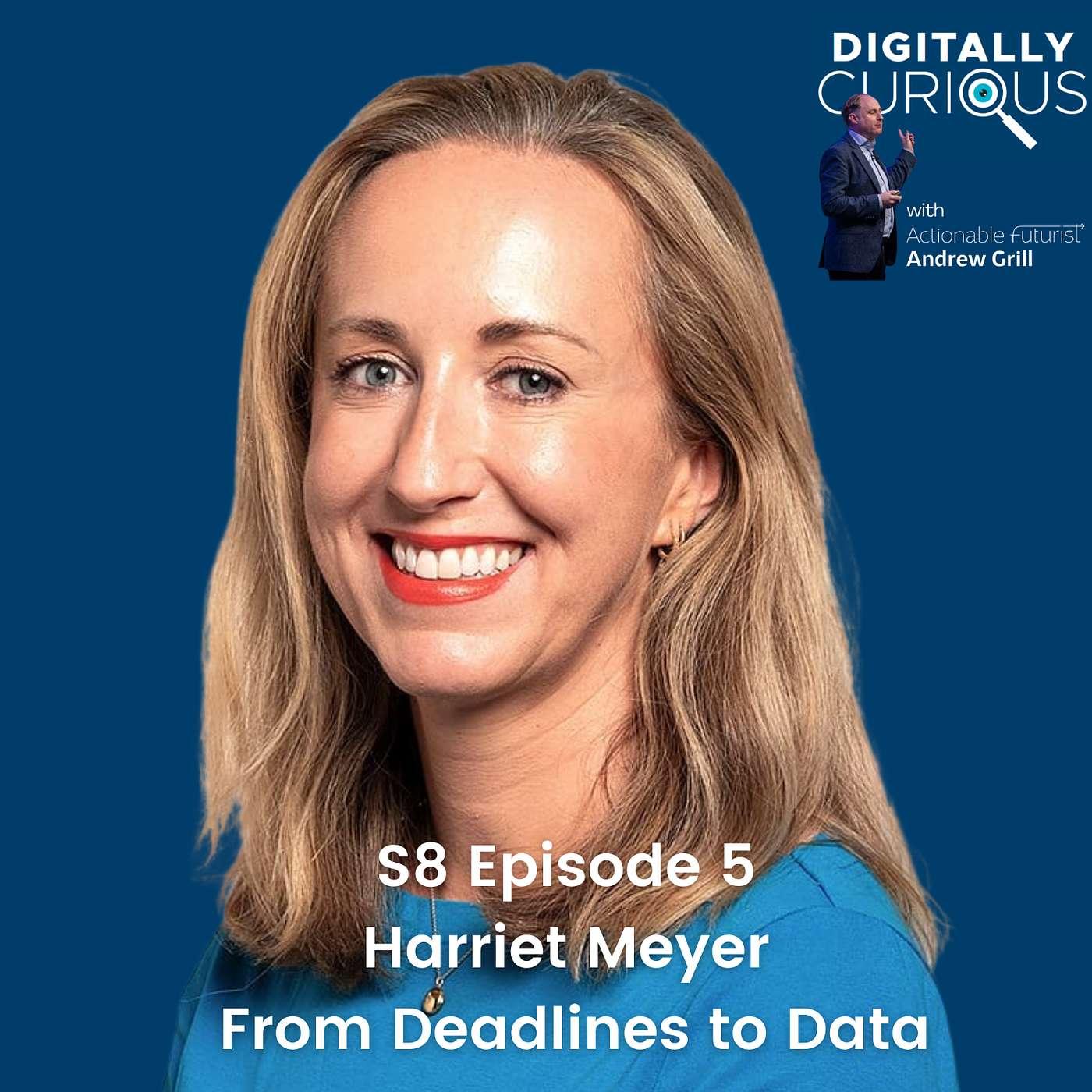
00:00:28.800Today my guest is Harriet Meyer, an award-winning journalist turned AI trainer, who's written for titles including The Guardian, The Sunday Times, and The Telegraph, and now helps media and communication professionals use AI without losing their judgment or their minds.
00:00:29.039 -->
00:00:40.719Today we're moving from deadlines to data, from the world of late-night filing and red pen edits to a new reality where AI sits in the newsroom alongside reporters, editors, and com teams.
00:00:40.960 -->
00:00:47.359Harriet and I first met at Newsrewide, a conference for journalists, where she picked up a copy of my book, Digitally Curious.
00:00:47.520 -->
00:00:51.200And it struck me that her story perfectly captures what this show is all about.
00:00:51.520 -->
00:00:56.079Curious, practical people trying to make sense of powerful new tools.
00:00:56.240 -->
00:00:57.039Welcome Harriet.
00:00:57.280 -->
00:00:58.960Hi Andrew, it's lovely to see you again.
00:00:59.119 -->
00:01:00.159I'm really happy to be here.
00:01:00.240 -->
00:01:01.200I'm looking forward to this.
00:01:01.600 -->
00:01:03.679A journalist turned AI expert.
00:01:03.840 -->
00:01:09.599When you look back at your early days filing copy on tight deadlines, what feels most distant from where you are now?
00:01:09.760 -->
00:01:12.079Were you running AI training for media and comms teams?
00:01:12.319 -->
00:01:18.319Back then, when I started, it was the early 2000s, so the rhythm of the work was completely different.
00:01:18.560 -->
00:01:26.400The newspaper was very much the centre of gravity, and that has fundamentally changed through the online digital revolution.
00:01:26.560 -->
00:01:35.599And I was working at the Daily Telegraph, writing a few features a week, being able to really get into stories on the phone all the time, interviewing people.
00:01:35.920 -->
00:01:47.359It was all about the phone and going out and seeing people, and now you know I'm trying to keep up with this technology which is changing at such an incredible breakneck speed.
00:01:47.680 -->
00:01:59.040Journalism has changed dramatically over the last two decades, and I've seen that change, but also I would say what stayed with me throughout that, and what I'm forever grateful for is the editorial instinct.
00:01:59.200 -->
00:02:12.800So it is the cutting through the jargon, translating kind of complex words and systems into plain English, uh, and just that's very close to what I I do now with AI.
00:02:13.120 -->
00:02:18.879So do you remember a particular story or newsroom moment when you thought, okay, AI is going to change how we do this?
00:02:18.960 -->
00:02:21.039And maybe what happened to change your mind?
00:02:21.520 -->
00:02:33.759Over the last few decades, one thing that's cropped up regularly is the UK budget and having to report on that every year, and it was always always sort of a slightly dreaded day for financial journalists.
00:02:34.080 -->
00:02:45.360And the pace at which you have to unpick these huge government documents and all the news and report it is so fast, and the pressure is immense.
00:02:45.439 -->
00:03:08.639And I think what changed for me was realizing that AI could, you know, I could find the information that I needed in these huge documents extremely fast, and just do that research in a way that I hadn't been able to do before, that would I would have seen me flicking through dozens of tabs on my desktop and trying to pick up the phone and find somebody who could decipher something for me.
00:03:08.879 -->
00:03:15.599And so that that was really what changed was the budget where I thought, wow, okay, this is really going to change how we all work.
00:03:16.000 -->
00:03:19.759You've got a copy of my book, and you know that I turned the book into an AI model.
00:03:19.840 -->
00:03:21.120Basically, it learnt that.
00:03:21.360 -->
00:03:28.800I'm wondering in the future if governments are going to be smart enough to say, here are the budget papers, but here's a link to an AI that will allow you to interrogate it.
00:03:29.039 -->
00:03:30.800Would that change how journalists do their job?
00:03:31.120 -->
00:03:37.439That's a very intelligent use of AI as well, and I feel like we're just at the foothills of it at the moment.
00:03:37.599 -->
00:03:41.199This is how how it needs to change to be able to help us do our jobs better.
00:03:41.520 -->
00:03:49.039So, how did the classic skills of a journalist under a deadline, you know, pressure, scepticism, speed and judgment prepare you for working in a world of AI?
00:03:49.360 -->
00:04:03.759I think they've been invaluable really in terms of particularly sort of scepticism and the critical mindset, which is ingrained in you as a journalist, or if it's not at first, it definitely becomes so.
00:04:04.080 -->
00:04:13.520It's really shaped how I work with AI and enabled me to stop and sit back and unpick and ask questions at the right time.
00:04:13.919 -->
00:04:19.600When I'm training teams, when I'm training journalists and PRs, it's really brings that critical mindset to it.
00:04:19.680 -->
00:04:26.160And I'm so grateful now for my backgrounds now that AI is here because I think it's really helped.
00:04:26.399 -->
00:04:35.600Now I'm still surprised that sort of three years after ChatGPT launched onto the stage, that I still am asked to go into organisations and explain why they should be doing AI.
00:04:35.839 -->
00:04:37.600Where has the scepticism changed?
00:04:37.680 -->
00:04:44.639And in 2026, are you seeing an uptip where journalists, newsrooms, and editors are going, okay, this is changing the landscape.
00:04:44.720 -->
00:04:47.360We need to know more, and thus you're getting busier and busier.
00:04:47.680 -->
00:05:08.079I've seen a real shift in the past year, I would say, in terms of initial burying heads in the sand, skeptics like this is this, you know, just have to make a basic policy that doesn't cover the half of it, really, and journalists fundamentally shunning AI, to be completely honest, and and there's a lot of fear around it.
00:05:08.160 -->
00:05:26.879And then I would say the last year there's been a huge shift, and still the fear and skepsism there, which I think is healthy and a natural part of be, you know, being in the media, but also a willingness to embrace it and find out curiosity, as which is what drew me to your book.
00:05:27.040 -->
00:05:31.279Um, you know, it is curiosity at the heart of it, and like how can this actually help us?
00:05:31.360 -->
00:05:38.560And and case studies of case studies coming out of how it's really fundamentally helping journalism in ways that maybe journalists didn't realise.
00:05:39.040 -->
00:05:47.519What's probably the most groundbreaking revelation that you've seen in a case study that an editor or a journalist has done where you've gone, I need to let everyone else know about that.
00:05:47.600 -->
00:05:49.600This is going to revolutionise how you get your job done.
00:05:49.920 -->
00:05:52.399There's lots of inspirational, bigger stories.
00:05:52.560 -->
00:06:00.800For example, I mean, there's quite a number, the New York Times digging into the manosphere and into and investigating that in a way it couldn't before.
00:06:00.959 -->
00:06:02.399Again, it's all about data.
00:06:02.639 -->
00:06:15.279There was a case actually I really loved, which is a lot smaller, but it really hit home in that a couple of Swedish journalists who are digging into a 40-year-old coal case of a prime minister who was assassinated.
00:06:15.439 -->
00:06:27.360You know, the case has never been solved, and they're using AI to go through decades of data, and they're doing a podcast of their and tracking their journey with this data to to uncover this coal case.
00:06:27.439 -->
00:06:31.839And I love that because that's just a couple of journalists doing something different with AI.
00:06:32.000 -->
00:06:35.279And then you've got bigger examples like obviously the Epstein files.
00:06:35.360 -->
00:06:38.160It's been fundamental in how AI is being used for that.
00:06:38.399 -->
00:06:51.920There's so many different ways, though, that AI can be used, and I and I love trying to inspire journalists to actually just take control of this technology a bit and use it to our advantage and get back to the heart of real journalism.
00:06:52.319 -->
00:06:56.639Is there a trait that journalists, and you talk about the skepticism, where are the barriers?
00:06:56.720 -->
00:06:57.680Where do they go?
00:06:57.920 -->
00:07:01.600This is my red line, and I'm not crossing it, and you help them cross that line.
00:07:02.000 -->
00:07:04.720I think it's writing, obviously.
00:07:04.800 -->
00:07:14.079Uh, in terms of most journalists think, oh, AI, it's threatening our jobs because it it can essentially spit out coherent text.
00:07:14.720 -->
00:07:23.120But where I try to help them cross the line is from seeing it as a threat to an opportunity to do the mechanical parts of their job.
00:07:23.360 -->
00:07:27.360So it can really take away the grind.
00:07:27.519 -->
00:07:53.920I mean, and there's a lot of grind in journalism and the the speed and the pressure and release some of that so you can get back to the real reporting and the heart of what journalists love to do, which is you know, ask the right questions, think about the right questions, find the right people, get actually out and about and and in the real world and actually dig into stories that way, which is what you know, when I started, that's what we were doing.
00:07:54.079 -->
00:08:02.480I was getting stories over lunch with a contact, and that has fundamentally changed journalists tied to their desks, they're trying to churn out so much copy.
00:08:02.639 -->
00:08:12.319So it's really trying to see, trying to encourage that, yes, some of the basic, just generic um reporting is now being done in some places by AI.
00:08:12.399 -->
00:08:18.800But let's think about the more interesting stories, the human stories, the investigative stories, the contextual data analysis.
00:08:19.040 -->
00:08:21.600That is where journalists can now lean into that.
00:08:21.759 -->
00:08:23.839So that's I try to show them that.
00:08:24.160 -->
00:08:24.720It's interesting.
00:08:24.800 -->
00:08:33.519I met with Andrew Hill, who's one of the um financial journalists, and he was writing about business books, and he was led to my book, and we talked about the fact that I've got AI in the book.
00:08:33.759 -->
00:08:36.879And as he was writing, I noticed he was writing in shorthand.
00:08:37.039 -->
00:08:41.759In fact, he's written a book about shorthand, so he's a real proponent of that, and I love that.
00:08:42.000 -->
00:08:51.120But I wonder whether journalists are now going, well, transcription tools, and I use Otter, where you not only have a perfect transcript of what is said from both sides.
00:08:51.200 -->
00:08:54.960And and I suppose if you're writing notes, you're getting almost all of the nuance.
00:08:55.039 -->
00:09:05.840But because you have every syllable and transcript and you can interrogate that syllable, a journalist moving over to say, Yeah, shorthand's great, but this actually gives me another level of detail around the interview.
00:09:06.159 -->
00:09:11.600There's so many transcription tools there, and you've re you've mentioned Otta, which is one that journalists often mention to me.
00:09:11.759 -->
00:09:14.000You can dig into mountains of transcripts.
00:09:14.159 -->
00:09:25.440I remember another example of the New York Times, you know, 500 hours of leaked uh interview election interference calls and transcripts and digging into that kind of thing to find story angles.
00:09:25.600 -->
00:09:28.639That took weeks, in which would have taken years before AI.
00:09:28.799 -->
00:09:29.759So there's things like that.
00:09:30.000 -->
00:09:39.279Making sure you use the right tool, because I have noticed that you have to be careful with the transcription tools that they are accurate, and that is an issue when you're working at speed, I think.
00:09:39.600 -->
00:09:41.440What's your go-to tool for transcription?
00:09:41.679 -->
00:09:43.360I think Otter is pretty good.
00:09:43.679 -->
00:09:45.679Granola is one I like as well.
00:09:46.000 -->
00:09:49.519Grain is is very good and accurate.
00:09:49.759 -->
00:09:58.000There are so many, but yeah, there's Trint as well, which is a specific journalist-focused one, which I've recommended uh quite a bit.
00:09:58.320 -->
00:10:01.840I get asked all the time on stage why do I use perplexity and why do you use Otter?
00:10:02.000 -->
00:10:03.200I'm kind of beholden to them.
00:10:03.279 -->
00:10:07.440As you know, the book has 60 podcast interviews, and all those interviews are transcribed.
00:10:07.600 -->
00:10:14.879So I have hundreds, if not thousands, maybe tenths of thousands of hours of transcription in that one tool, which means I can go through everything.
00:10:14.960 -->
00:10:18.639And I'm kind of beholden to that, and perplexity is the same, my workflows are in there.
00:10:18.879 -->
00:10:22.240That's a risk, I suppose, of relying on one particular tool.
00:10:22.480 -->
00:10:29.200How do you advise journalists and PR firms about what tools they should use, or is it down to what they're allowed to use?
00:10:29.519 -->
00:10:32.000I would always recommend start with a couple of things.
00:10:32.080 -->
00:10:35.200One is start with your goal, like really define your goal.
00:10:35.279 -->
00:10:39.360Don't start with a tool, start with a goal and work backwards as to what you're trying to achieve.
00:10:39.519 -->
00:10:40.799Then think about the model.
00:10:40.960 -->
00:10:42.159They are very variable.
00:10:42.320 -->
00:10:46.320They all essentially do lots of the similar things but differently.
00:10:46.480 -->
00:10:53.919And the other thing from to your point just there about organizing your work around AI is a real problem, I think, at the moment.
00:10:54.159 -->
00:11:00.960And I always advise journalists and PRs to set up, I mean, it's a really basic sister, but like say set up folders.
00:11:01.200 -->
00:11:10.559Make sure everything is actually saved somewhere, don't chuck it into an AI tool and then save it in a lot, you know, a chat GPT project and then don't store your transcripts somewhere else.
00:11:10.720 -->
00:11:12.000That's dangerous territory.
00:11:12.320 -->
00:11:15.360So we talked about journalists, you obviously help PRs as well.
00:11:15.600 -->
00:11:18.639Where is the PR industry moving with AI?
00:11:19.039 -->
00:11:22.240Again, I would imagine they're also feeling a bit threatened by what the tools can do.
00:11:22.559 -->
00:11:26.320We're at the stage now where lots of different firms are at so many different stages.
00:11:26.399 -->
00:11:32.159And I see the other day I was with a PR firm who wanted to design a bespoke tool.
00:11:32.320 -->
00:11:55.679So I talk through very much the process of what tool might be really good for them, whether it's you know, sort of case study, like how they can help journalists as well using AI to better find, you know, credible experts and reliable case studies, um, the angles that they might want to pitch for their clients, um, and also just different ways of presenting data to their clients as well.
00:11:55.759 -->
00:12:06.320Uh so there's they're moving towards more sort of bespoke tools for their firms, but also some are still at the starting stages and some are um naturally very skeptical.
00:12:06.399 -->
00:12:10.000Again, there's a lot of skepticism in PR around around AI as well.
00:12:10.080 -->
00:12:23.600Uh, but yeah, there's all different types of use cases, and but it is a way, like you've just like you said, about organizing all these mountains of different forms of data into different client workflows and being able to produce assets.
00:12:23.679 -->
00:12:39.440Um so you know, you might have been able to produce some kind of static, you know, document for your clients of uh your clock coverage update, but now you can produce interactive dashboards and and spit out five different versions of content uh from one piece.
00:12:39.759 -->
00:12:41.279Now part of the issue is being found.
00:12:41.360 -->
00:12:45.279So if you're a company with a PR firm, you want a journalist to find the content.
00:12:45.360 -->
00:12:48.720I don't think you can just rely on the press release going to a journalist these days.
00:12:48.879 -->
00:12:55.759What I found in my own business is that more and more people are now finding me through AI tools, you know, find me the best AI speaker in London.
00:12:55.919 -->
00:12:58.399So what I did is I use AI to reverse engineer that.
00:12:58.480 -->
00:13:00.399I thought, well, how can I be found?
00:13:00.639 -->
00:13:07.440What I've worked out, and this is massively oversimplifying, and I'd love your view on this, is that AI tools love answers to questions.
00:13:07.600 -->
00:13:14.799So I've now structured a lot of my speaking website in terms of FAQs, deliberately having, for example, my bio rather than a whole lot of text.
00:13:14.960 -->
00:13:16.879There are sort of 15 drop-downs.
00:13:17.120 -->
00:13:19.840So you click on that, you know, uh tell me more about Andrew.
00:13:19.919 -->
00:13:20.559It does two things.
00:13:20.720 -->
00:13:23.519Makes it easy for the user to find what they want rather than reading everything.
00:13:23.600 -->
00:13:27.200But secondly, the underlying schema that is there is AI friendly.
00:13:27.360 -->
00:13:29.759So I did something quite cheeky, and the AI suggested this.
00:13:29.840 -->
00:13:35.039It said uh one of the questions you should have an answer for is who's the best AI speaker in the UK and Europe?
00:13:35.440 -->
00:13:36.159That's a question.
00:13:36.399 -->
00:13:39.600The answer is there are many great speakers in the UK and Europe.
00:13:39.759 -->
00:13:41.759Andrew Grill is known for blah blah blah.
00:13:41.919 -->
00:13:46.480So I just wonder whether AI will pick that up because it's the answer to the question is who's the best speaker?
00:13:46.639 -->
00:13:48.000And the answer is Andrew Grill.
00:13:48.399 -->
00:13:49.279Blah blah blah.
00:13:49.440 -->
00:13:53.600W what what's your view on being found with AI tools and whether that's a good strategy or not?
00:13:53.840 -->
00:13:55.519I think that's a very good strategy.
00:13:55.600 -->
00:14:04.159And as you say, like it's not, I think the way to think about it is to sometimes people ask me, like, what can I, how do I structure, how do I write for AI?
00:14:04.240 -->
00:14:06.559How do I structure it so I'm found in AI answers?
00:14:06.720 -->
00:14:15.840And it is, as you say, like actually test AI, like pressure test AI to see what it's already surfacing in its answers and work backwards.
00:14:16.000 -->
00:14:19.759That is one of the best ways to work with AI to actually get your goal.
00:14:19.919 -->
00:14:21.759So yeah, QA's and being clear.
00:14:21.919 -->
00:14:25.039I mean, a lot of the good SEO practices still apply to AI.
00:14:25.120 -->
00:14:37.360And I think because the the ways these models work uh are being tweaked all the time and their their training is being changed, it it there's no one clear answer, but that sounds like a pretty sensible approach.
00:14:37.679 -->
00:14:46.240So are you finding that journalists are now going to AI to find experts or people for stories alongside the old way of picking up the phone or talking to sources?
00:14:46.320 -->
00:14:51.440Is that becoming another thing that companies and PRs need to be aware of?
00:14:51.759 -->
00:15:01.840Definitely, and actually that's part of my journalist training is is how you can create a system within AI, whatever model you're using, to track a story.
00:15:01.919 -->
00:15:06.080Um, and that and include it in that is finding new experts.
00:15:06.399 -->
00:15:14.240There is a risk with that, and this is something that I think is still emerging and still being solved, is fake experts.
00:15:14.399 -->
00:15:30.559There's been tons in the media around fake experts is a real problem, and journalists are very wary now unless they can speak to somebody, look at that, like really check that they are a real person, because it that there have been quite a few slip-ups with that, as I'm sure you're aware, isn't it?
00:15:30.720 -->
00:15:32.399Yeah, it's quite terrifying, really.
00:15:32.559 -->
00:15:33.679But yes, definitely.
00:15:33.759 -->
00:15:40.799I I mean I think it's a brilliant source of interrogating material and finding new angles and experts and sources.
00:15:41.200 -->
00:15:46.879So you developed a structured way of teaching AI to journalists and communicators, frameworks rather than tips and tricks.
00:15:47.039 -->
00:15:51.759What's missing in the way AI was being introduced that pushed you to formalise your own approach?
00:15:52.159 -->
00:16:03.759It was basically people chucking prompts into whatever model they were using and ending up with a complete mess of different chats around and not being able to then find what they're looking for and not really knowing what they were doing either.
00:16:03.919 -->
00:16:07.919So I th, you know, and that's how I started, you know, you start by experimenting.
00:16:08.080 -->
00:16:14.480Um, and I experimented a lot and soon realized that I needed a systematic approach.
00:16:14.639 -->
00:16:31.120And that's where I also saw the gap between, you know, how media teams were working and this new technology, and that actually it is about redefining workflows and working out where AI slots into the process from research, pitch, you know, drafting, editing, publication, and beyond.
00:16:31.440 -->
00:16:40.159Literally mapping out, like taking it back to basics and working out how you can structure because there is no one way of necessarily using AI in the right way.
00:16:40.240 -->
00:16:46.799And I always say this in my sessions everybody's using it slightly differently, but there are systematic approaches you can take.
00:16:46.879 -->
00:16:52.000And again, starting with your goal and working backwards, not trying to just scatter gun your approach.
00:16:52.240 -->
00:16:56.399I play this video from John Rose, who's the Dell CTO and chief AI officer.
00:16:56.480 -->
00:17:03.360I was in the front row of a talk he gave nearly two years ago, and I'm still playing that video because in that he says something that's so crystal clear.
00:17:03.600 -->
00:17:06.400First thing he says is, What problem are you solving?
00:17:06.640 -->
00:17:08.720So maybe I don't need to use AI.
00:17:08.799 -->
00:17:15.200And the second thing he says, and and and and companies that you're training should also think about this: what makes me or what makes us special?
00:17:15.440 -->
00:17:16.799Why would someone care about this?
00:17:16.880 -->
00:17:17.440Is it news?
00:17:17.519 -->
00:17:18.160Is it information?
00:17:18.319 -->
00:17:20.240Is it a genuinely interesting story?
00:17:20.400 -->
00:17:24.160And when you can ask those two questions, then you can say, Well, should I use AI?
00:17:24.240 -->
00:17:25.519And then how do I use AI?
00:17:25.680 -->
00:17:31.279So those two questions for both sides, the the journalist and the comms professional, how important do you think they are?
00:17:31.599 -->
00:17:40.559I think it's extremely important to, and more important than ever, actually, to really get into your client or your reader's shoes.
00:17:40.720 -->
00:17:51.599Um, because fundamentally, you know, we're talking about super sophisticated machines here, and actually this is we've got to lean into our value as the humans actually in this world now.
00:17:51.680 -->
00:17:52.880And what is that value?
00:17:53.119 -->
00:17:54.960This crash has kept me up at night, you know.
00:17:55.279 -->
00:17:56.960Like, what's it mean to be human now?
00:17:57.119 -->
00:17:59.279Like, what what what do we bring to the table?
00:17:59.440 -->
00:18:00.880What makes us valuable?
00:18:01.200 -->
00:18:04.160Well, I get asked all the time, you know, Andrew, will AI take my job?
00:18:04.240 -->
00:18:06.799And I've worked out a narrative to to push back on that.
00:18:07.039 -->
00:18:18.240Look at the job you do, look at the job I do, think listeners, think of the job you do, and slice it into a series of tasks, the things that you do every day, and then look at the tasks that you can automate and the things you don't like doing.
00:18:18.400 -->
00:18:21.440And I actually said this to a group of hairdressers from Weller in January.
00:18:21.519 -->
00:18:24.559I said, focus on what you love and automate the rest.
00:18:24.720 -->
00:18:31.440And what you love is what makes you human, what gives you that empathy, what really makes you chase that story or be the storyteller.
00:18:31.599 -->
00:18:32.720The rest can be automated.
00:18:32.880 -->
00:18:40.000So, to your point, what do you think on both sides of journalists and comms professional, what's the stuff that they should keep because they love doing it?
00:18:40.240 -->
00:19:00.000And I do think it comes back to relationships, and and that's what when I started in journalism, it was all about developing these relationships, PR and journalist relationships, which you kind of lost over the years because of technology, the I, you know, because of the emails and the and the ways that we communicate now on social media or LinkedIn or whatever it is.
00:19:00.160 -->
00:19:09.680And I I think it's that intuition, empathy, uh, it's that ability to sit across a table from somebody and notice a shift in their tone or their body language.
00:19:09.920 -->
00:19:18.240Often I've just felt like something's off, or actually there's a there's a I've had an idea, I've been out and about talking, it's often in conversation with somebody.
00:19:18.400 -->
00:19:21.200And that is a specific, it's human conversation.
00:19:21.279 -->
00:19:34.319It is not a conversation with an AI that necess that will spark the best ideas and investigations and campaigns as well, because it's really putting yourself in the reader's shoes and thinking, is this interesting?
00:19:34.480 -->
00:19:35.759What would I want to know?
00:19:35.920 -->
00:19:36.960What did they want to know?
00:19:37.119 -->
00:19:38.319What's going to resonate?
00:19:38.480 -->
00:19:40.400And I just don't think an AI can do that.
00:19:40.640 -->
00:19:43.119And there's those relationships, go back to Andrew Hill.
00:19:43.200 -->
00:19:45.759Uh he was referred to me by my editor actually.
00:19:45.839 -->
00:19:50.319They were met at a book fair, and he said, Any examples of business books that are do something different?
00:19:50.480 -->
00:19:53.519And uh my my editor said, Yeah, you should talk to Andrew Grill.
00:19:54.160 -->
00:20:02.559And actually, uh Andrew and I were gonna uh have a video call, and I worked out I was at a conference that was literally one street away from the FT offices.
00:20:02.640 -->
00:20:03.440So let's meet.
00:20:03.599 -->
00:20:07.599We spent 50 minutes together, and I'm not sure how many people get to spend 50 minutes with the FT.
00:20:07.680 -->
00:20:08.720We had a great discussion.
00:20:08.880 -->
00:20:12.480I talked about his book, I talked about what I was doing, he asked me a bunch of questions.
00:20:12.640 -->
00:20:18.000I think we built a relationship, and he also knew about me because he was sent my book years ago when it came out.
00:20:18.079 -->
00:20:23.440So I think that's so important investing the time because you can't replicate that with AI.
00:20:23.599 -->
00:20:32.480Um, and I hit one other thing he said, uh, which I anyone, anyone who is an author or an aspiring author, he said, your book is the heaviest business card you'll ever have.
00:20:32.640 -->
00:20:33.759And he was so right.
00:20:33.839 -->
00:20:36.799Um, the book that I gave you, I'm sure you've spoken to people about it.
00:20:36.880 -->
00:20:39.200You thankfully left a review on Amazon.
00:20:39.279 -->
00:20:43.279Um, that is a calling card that that is a relationship that you can't replace.
00:20:43.519 -->
00:20:46.400And the more I experiment with AI, the more I crave books.
00:20:46.640 -->
00:20:49.519I think it's really I've craved that printed page.
00:20:49.759 -->
00:20:53.359I've been reading more than ever, and yeah, your book's just behind me now.
00:20:53.440 -->
00:20:55.599Uh on my my shelf of AI books.
00:20:55.920 -->
00:20:59.359So, how has your own view of what's uniquely human in journalism evolved?
00:20:59.519 -->
00:21:03.759Is there anything you now happily outsourced to AI you once considered a core human skill?
00:21:04.079 -->
00:21:11.920This is going to sound probably a bit odd to some people, but I use an AI tool called Whisperflow and I voice dictate a lot.
00:21:12.000 -->
00:21:21.440And I used to think that that messy first draft as a journalist was where all my, you know, the the blank page was where all my thinking took place.
00:21:21.599 -->
00:21:33.200But now I do work very differently in that I will brain dump my ideas from my head onto a blank sheet of paper using Whisperflow, just dictating.
00:21:33.359 -->
00:21:39.279And then often I will go away, do something else, cut and then come back to it and sort it out from there.
00:21:39.440 -->
00:21:43.599Because and then I find that AI can really help me structure my thinking.
00:21:43.759 -->
00:21:47.200My brain is the type of brain that shoots off in a million directions at the same time.
00:21:47.440 -->
00:21:52.799And I have lots and lots of different ideas, and I often can't get them out all at once and coherently.
00:21:52.880 -->
00:21:55.920So I feel like it's been really helpful for that.
00:21:56.079 -->
00:21:59.680And I know other writers would say differently, they would say, you know, I can't, I couldn't possibly.
00:22:00.160 -->
00:22:00.799Work without that.
00:22:00.960 -->
00:22:09.359The bat the wrestling with the blank page and the writing is the thinking, which I agree that writing is thinking, but you can do that at different stages.
00:22:09.519 -->
00:22:16.160So that's how uh yeah, I never thought I would be saying, Oh, I use an AI dictation tool to structure my thinking.
00:22:16.559 -->
00:22:17.519You would have read in the book.
00:22:17.599 -->
00:22:19.839I started my book Journey back in 2009.
00:22:19.920 -->
00:22:21.440I wrote a book called Twitter for Business.
00:22:21.519 -->
00:22:24.319And I push back for years and years because I had a problem with that blank canvas.
00:22:24.559 -->
00:22:25.839I didn't know how to start.
00:22:26.000 -->
00:22:30.160And my agent Michael Levy about seven years ago said, Why don't you start a podcast?
00:22:30.319 -->
00:22:33.359And then maybe the guests on the podcast can actually make it into the book.
00:22:33.519 -->
00:22:39.920But what I did with those 60 interviews, I had about half a million words to play with that were all transcribed.
00:22:40.079 -->
00:22:43.279So my thing was I didn't have a blank page, I had a very messy page.
00:22:43.359 -->
00:22:48.240And then what I could do was structure that to say, here's why I think I should be curious about this.
00:22:48.400 -->
00:22:51.759Here's an expert, here's some commentary, and here's what I think as well.
00:22:52.000 -->
00:23:00.160And actually that helped me get the book out really quickly, but I had to use AI because having 60 hours of podcasts, there's no way I could have gone through all that.
00:23:00.240 -->
00:23:10.400So in a way, we're quite similar, but I needed the words on the page to then move them around, like a jigsaw puzzle you throw on the ground, wear all the blue sky, and then move it all around to you have the blue sky there.
00:23:10.640 -->
00:23:12.640And it's quite a fun way of working, I find.
00:23:12.799 -->
00:23:15.440Like I and I I like to just let it settle as well.
00:23:15.599 -->
00:23:23.359I'll come back to it and come back to it, but AI really helps me get all my thoughts out there and my ideas out there in a way that I think I couldn't before.
00:23:23.680 -->
00:23:30.880So you talked about the problem with fake experts, and I'm seeing more and more of that, and and hopefully you can weed them out and journalists can allow to weed them out.
00:23:30.960 -->
00:23:33.599But do you think audiences still care whether a piece was touched by AI?
00:23:33.759 -->
00:23:37.119Or is the new standard simply, can I trust this and is it genuinely useful?
00:23:37.359 -->
00:23:38.720Well, they would like to know how it's been used.
00:23:38.799 -->
00:23:42.559So research, you know, digging into data, telling better stories, that's all great.
00:23:42.720 -->
00:23:44.720I think they just want transparency.
00:23:44.960 -->
00:23:53.279So it is just a transparency issue, and where I do see problems arising is more AI images in journalism.
00:23:53.359 -->
00:23:55.680So you want to be very careful about use of that.
00:23:55.839 -->
00:23:59.759They want to know that they're reading genuine, you know, human analysis and thoughts.
00:23:59.920 -->
00:24:02.480The New York Times actually got rid of one of its freelancers.
00:24:02.559 -->
00:24:12.319Um, you might have seen the story, which um lifted a re book review from The Guardian, had used AI essentially, didn't realise that AI was spitting out essentially the same review.
00:24:12.480 -->
00:24:14.720They want to know they're reading authentic work.
00:24:15.039 -->
00:24:18.000So let's look at lessons for curious professionals beyond journalism.
00:24:18.160 -->
00:24:27.440For someone listening who was not a journalist but works under pressure, a lawyer, consultant, or executive, what can they borrow from your journey that would help them go from deadlines to data in their own world?
00:24:27.680 -->
00:24:35.440So where I see the power with AI, whatever profession you're in, is the combination of AI and human expertise.
00:24:35.599 -->
00:24:37.680So not to lose sight of that.
00:24:37.920 -->
00:24:57.680And whatever your skill set is, to lean more heavily into that and then apply AI to the process and really to have your brain engaged at all stages is tempting because AI is obviously so fast now that to offload your thinking, and that is a really really dangerous territory.
00:24:58.079 -->
00:25:04.640So if you were editing a front page splash about your own journey into AI, what would the headline and standfirst say today?
00:25:04.720 -->
00:25:07.279And what do you hope they will say in five years from now?
00:25:07.680 -->
00:25:14.160I'm gonna go with the silly, a silly headline um for something like a tabloid, maybe like hack to the future, something like that.
00:25:14.559 -->
00:25:15.839Oh, I see what you did there.
00:25:15.920 -->
00:25:17.200Oh, that was obvious.
00:25:18.000 -->
00:25:19.680Or prompt and circumstance.
00:25:19.839 -->
00:25:20.400I don't know.
00:25:20.480 -->
00:25:21.759Um, from print to prompt.
00:25:21.920 -->
00:25:28.319I'm not naive to the fact that there are so many issues around AI, but I'm I also think there's so much potential.
00:25:29.359 -->
00:25:32.480You know, the and that's where we but we need to lean into the potential.
00:25:32.799 -->
00:25:36.000So I couldn't leave without asking you about the next generation of journalists.
00:25:36.079 -->
00:25:44.000So I see this all the time, and maybe journalists is a little bit more immune to it at the moment, but someone coming to the workforce fresh, they've now got all these tools in front of them.
00:25:44.079 -->
00:25:50.160What I'm finding is either the jobs are not available for early entry people, or they're saying we need to do more with that.
00:25:50.400 -->
00:26:00.799The podcast I did a couple of weeks ago with Tim Cook, episode two of the current series, he is actually an elementary school teacher, and I'd recommend people listen to this after they've listened to this episode.
00:26:00.960 -->
00:26:06.079And he sees kids actually, the difference between them leaning on AI tools versus not.
00:26:06.240 -->
00:26:18.319And he pointed to some research in psychology today that said, if you're 45 or older and you lean on AI, it's actually okay because you've done it before, back to the journalism skills, you know how to hunt out a story.
00:26:18.480 -->
00:26:25.839But if you're under 25, you're really at risk because if you're leaning on AI tools for doing your job and we turn off the AI, can you still do that?
00:26:26.000 -->
00:26:27.119Have you learned how to do that?
00:26:27.279 -->
00:26:29.039Have you engaged your critical thinking?
00:26:29.200 -->
00:26:34.640What would be your message to young professionals coming into the industry and how do they gain the skills?
00:26:34.720 -->
00:26:37.599And how do we ensure that there are still places for young journalists?
00:26:38.000 -->
00:26:47.200Is something actually that really concerns me at the moment, and actually, one of my next newsletters or an AI for media newsletter on LinkedIn, I'm going to write about that very topic.
00:26:47.359 -->
00:26:56.319But I've been thinking about this, and my advice would be flip your AI use if you can to asking AI to interrogate you.
00:26:56.480 -->
00:26:58.079Like get it to ask the questions.
00:26:58.160 -->
00:27:01.680Like you said, like AI is very good at asking, it likes questions.
00:27:01.920 -->
00:27:03.839So get it to ask you questions.
00:27:04.000 -->
00:27:21.599Start with like what your outline story is and say, like, right, now question me so we can get to the heart of what and and then you can help your expand your ideas, maybe what your angle is, maybe what the story actually is, who you should speak to, all these things.
00:27:21.759 -->
00:27:32.480Rather than letting, I just think don't let AI do the thinking for you, make it refine and act as a thought catalyst to be able to actually spark that process.
00:27:32.799 -->
00:27:42.319I use it as a decision partner, and I was recently submitting a proposal to a client, and the AI asked me, Would you like me to show you how this proposal will land emotionally?
00:27:42.480 -->
00:27:45.440Because it knew that the client was also a friend of 15 years.
00:27:45.599 -->
00:27:46.720And I hadn't thought about that.
00:27:46.880 -->
00:27:50.559It then explained that and I looked at that and I thought, well, oh, that will land well, that will land well.
00:27:50.640 -->
00:27:54.799But I hadn't even thought about that treatment in all of my years in consulting.
00:27:54.960 -->
00:28:01.200I never thought about the emotional impact of what you're delivering, especially when someone that is the client knows you very well.
00:28:01.519 -->
00:28:10.799And I think this is where AI and where I see its power, particularly having worked as a freelance journalist for the nationals for a long time in my career.
00:28:10.960 -->
00:28:30.799I it's like, you know, I found like I had this, I had this, as you say, this thought partner, like somebody I could spar with, somebody, uh, an AI I could actually have this back and forth with that would unpick and help me uncover more of my own thinking in and I love that, that you can actually expand what you're capable of.
00:28:31.039 -->
00:28:40.640And because I put all of my work predominantly in one AI, it's got a memory there, whether it be in a client space or with in the threads that I use, it picks up things.
00:28:40.720 -->
00:28:48.559It says, because you're the actual futurist, it is if I have this long-term 2IC that knows everything about me and it just surprises me every single day.
00:28:48.799 -->
00:28:53.119Yeah, it's the memory thing is quite when that arrived, I think that's changed everything.
00:28:53.200 -->
00:28:59.920And and it is uncomfortable, but also, yeah, the power of it to be able to push you into corners you might not have gone to.
00:29:00.240 -->
00:29:05.039So we're almost out of time and we're up to my favourite part of the show, the quick fire round where we learn more about our guests.
00:29:05.200 -->
00:29:05.920Window or aisle?
00:29:06.160 -->
00:29:06.480Window.
00:29:06.640 -->
00:29:08.240Like to look out the window, then go to sleep.
00:29:08.480 -->
00:29:09.359iPhone or Android?
00:29:09.599 -->
00:29:10.559iPhone, always.
00:29:10.880 -->
00:29:12.559Your biggest hope for this year and next?
00:29:12.799 -->
00:29:17.519That people lean into their human skills and uncover their own unique value.
00:29:17.759 -->
00:29:21.839I wish that AI could do all of my cleaning, cooking, everything around the house.
00:29:22.160 -->
00:29:23.920The first thing I asked ChatGPT.
00:29:24.160 -->
00:29:29.519I asked it for i consumer finance angles for a pension campaign I was working on.
00:29:29.759 -->
00:29:32.319Is generative AI evolution or revolution?
00:29:32.640 -->
00:29:34.079Day by day it's an evolution.
00:29:34.160 -->
00:29:35.680Ultimately, it's going to be a revolution.
00:29:36.000 -->
00:29:37.279The app you use most on your phone.
00:29:37.519 -->
00:29:37.920WhatsApp.
00:29:38.240 -->
00:29:40.319How do you stay digitally curious?
00:29:40.640 -->
00:29:44.880Constant experimentation and being optimistic.
00:29:45.119 -->
00:29:46.960What's the best piece of advice you've ever received?
00:29:47.119 -->
00:29:55.920My mum actually wrote The Only Time We Have Is Now and stuck it on a piece of paper on the fridge and she died two weeks later, which is was devastating, but also I've never forgotten that.
00:29:56.000 -->
00:29:57.519And it's great life advice.
00:29:57.839 -->
00:29:59.039What are you reading at the moment?
00:29:59.279 -->
00:30:04.960I am reading uh The Infinity Machine, Demis Sabis Deep Mind and the Quest for Super Intelligence.
00:30:05.119 -->
00:30:09.839I bought it the other day, it's quite similar to super intelligence, but it's absolutely brilliant.
00:30:09.920 -->
00:30:10.720I really recommend it.
00:30:10.880 -->
00:30:12.160Really well written, super interesting.
00:30:12.400 -->
00:30:14.160Who should I invite next onto the podcast?
00:30:14.480 -->
00:30:15.519Nick Newman.
00:30:15.839 -->
00:30:16.720He's super interesting.
00:30:16.799 -->
00:30:25.839He's a senior research associate at Reuters Institute for the Study of Journalism, and he's got some really interesting views of how AI is changing news consumption.
00:30:25.920 -->
00:30:28.960And so how what we're going to take in in this new world.
00:30:29.200 -->
00:30:30.400How do you want to be remembered?
00:30:30.640 -->
00:30:35.119As someone who helps people be brave enough to embrace change and take risks.
00:30:35.440 -->
00:30:41.680Harriet, what three actionable things should our audience do today to better understand how we can use AI for media and corporates?
00:30:42.000 -->
00:30:45.440First, um, go deep and narrow rather than wide and shallow.
00:30:45.519 -->
00:30:56.480So choose something specific and really whether that's research and analysis, um preparing interview questions, whatever it is, and really going deep on how AI can help with that process and refining it.
00:30:56.640 -->
00:31:06.240Second, learn the boundaries, so test where it fails, ask it for sources, check quotes, put it under pressure, find the gaps so you really understand it.
00:31:06.319 -->
00:31:10.480And third, I'd say build the habit of human review into your process.
00:31:10.640 -->
00:31:20.720So use AI as a thought partner, research partner, thinking partner, but keep a human in charge, your editorial judgment in charge at all parts of the process.
00:31:21.039 -->
00:31:25.519Harriet, I knew when we met at News Rewide, you're a fascinating person with great insight.
00:31:25.839 -->
00:31:29.359Even more delighted to have you on the podcast and unpack some of those things.
00:31:29.519 -->
00:31:31.599But how can we find out more about you and your work?
00:31:31.839 -->
00:31:33.519Search for me on LinkedIn, Harriet Mayer.
00:31:33.680 -->
00:31:40.079I write an AI for media newsletter and I do lots of speaking and training and all sorts of things.
00:31:40.319 -->
00:31:41.279Harriet, a pleasure.
00:31:41.359 -->
00:31:42.559Thank you so much for your time today.
00:31:42.720 -->
00:31:43.359Thank you very much.
00:31:43.519 -->
00:31:44.640I really enjoyed that.
00:31:44.880 -->
00:31:47.599Thank you for listening to Digitally Curious.
00:31:47.759 -->
00:31:52.240You can find all of our previous shows at digitallycurious.ai.
00:31:52.799 -->
00:31:57.279Until next time, we invite you to stay digitally curious.