

Stephanie Drury: Hello and welcome to The Construction Workers with Stephanie Furry. Today I have my friend Rachel Lichtman on to talk about growing up in Reformed Judaism. Normally we talk about, we talk with people who grew up either evangelical or Catholic. And this is the first person we're going to talk to that has a different tradition. So welcome, Rachel. Thank you. Thank you. Thank you so much for coming on. This is so fantastic to talk to you like this. we just cause this is what we you and I kinda always end up talking about all the time. And in some way or another. So it's just it's nice to maybe get into ⁓ what was what's really under all this for you. I agree. I just feel like ⁓ with you in particular, ⁓ it's ⁓ you're just You're very philosophical and it comes through in all the all the work you do. Rachel's ⁓ director, graphic designer. How many videos have you directed? I I was trying to like look it up because I didn't want to be one of these people who reads a wiki page before they have something on, but ⁓ just tell the people about your projects a little bit. ⁓ well, I have definitely directed a lot of music videos. I don't know how many, maybe twenty-five. But then some of them are embedded in the larger projects that I create, which is ⁓ for now it's called program for and it's basically a television station. So I embed a lot of music videos sort of organically into that larger project as part of the programming ⁓ and your broadcast day, which is really great because it's really nice to have a context for visual work for bands. to put it somewhere where it it's beautiful all around. It's not a link, it's not a pop up buggy page. you know, it's like presented in this way that kind of gives it an evergreen quality. So ⁓ so I really enjoy doing that. ⁓ but yeah, so that's kind of what I do. I'm a writer and ⁓ designer and editor and director. Yeah. So all kinds of stuff. Jane of all trades. I haven't heard that one. ⁓ Jane of Baltrace, that's good. ⁓ so I'm thinking about ⁓ program four that's coming up. You are touring with it currently, and I got to see your Portland show, and you'll be here in Seattle next week. ⁓ I just wanted to give a heads up about that. You know, I'm wanting to release this beforehand. So if anyone is within driving distance or flying distance to Seattle, I really highly recommend. That you attend this immersive experience that Rachel has created. It's this insane, relaxing world. If you were born in the 70s, you will remember it. ⁓ and it's it's extremely, extremely healing is the word I would use. That's a really good way to put it. Thank you. ⁓ I just I I hate one all your shows the sell out. I I just think that it's what the world needs. So ⁓ thank you. But again, like it comes from your, like I said, your your philosophy just kind of touches everything. And I can just tell that there's so much behind everything you do. ⁓ and so during the pandemic when you and I were talking more on the phone, we just had more time and we're like, what's going on? And we just ended up having long conversations. You were talking to me a little bit about ⁓ growing up Your family is Jewish and you always went to Hebrew camp, I believe. and you I would always ask you when we'd hang up where it was Friday, I'd like, will you please give me ⁓ a blessing in Hebrew? And you would like to say, Well, let me see what I can remember. But I growing up in the Christian trad tradition, I have a very, you know, kind of obviously Christianity is founded on, you know, a lot of J Judeo Christian principles. all the Christian holidays coincide with Jewish Peace Days. it's it's just they're so intertwined and obviously split off at some point for whatever million reasons. But ⁓ I just I just would love to talk to you a little bit about what you were taught. Like like what kind of belief system were you raised with and ⁓ what are your memories around that? Well it's It's so vast. I mean, it's it's more than just memories. It was something that I participated in from very, very young, ⁓ pretty much the age of two or three, and then from there kind of continued on. The Reformed Judaism sect, if it you know, call it that, ⁓ is very relaxed. It's it's very folky. It's very, your rabbi looks like James Taylor and he's got an acoustic guitar and he's got sandals on. Everybody went to Israel in those days and and did some time on a kibbutz and ⁓ they brought back this sort of s you know, very kind of new approach to worship, which had more to do with Song and community, which always sort of existed ⁓ at temples and ⁓ and in the Jewish faith. But definitely like the Reformed Judaism movement of going into the seventies and eighties, ⁓ was basically packed with boomers who were probably hippies at some point or at least some, you know, subscribed to that kind of idea of peace and love and ⁓ And fellowship, okay. ⁓ and Sedaka, which is a term that means sort of giving of yourself, giving ⁓ anonymously. not charity so much as like helping others. And so those were really, really strongly introduced and indoctrinated. I was indoctrinated into that world, okay. And I did go to A summer camp, I learned Hebrew, the language, very early on, and was really entranced by the whole world. I was in a small Jewish community in Michigan City, Indiana. It was very tightly knit. It was multi-generational. ⁓ there were only really a handful of other Jewish kids my age, ⁓ and all the ages kind of had like a group of of kids that, you know, we all kind of stuck together. And bonded over that in this small town, you know. And then we had like the older generations who helped to build this temple ⁓ as one of many sort of post war mid century modern temple synagogues, my future coffee table book, by the way. ⁓ of like these beautiful temples started by basically like intellectuals and communists and and and these ⁓ post war sort of families in the nineteen fifties. And so they were still living and still around when ⁓ when we started going to Sinai Temple in Michigan City. And so anyway, it was just it's it was a world unto itself. ⁓ as I grew older and participated more in the summer camp that I went to, which was one of many Reformed Jewish summer camps that you know, kids went to ⁓ mine was in Economoac, Wisconsin, birthplace of Jane Wheedland, by the way, which I just realized the other day. Anyway, Economak had a place called Olin Sang Ruby Union Institute, which does not sound like a very fun place, but it was. It was magical. It was absolutely magical. It was run by this guy, Jerry Kay, who ⁓ you know, in those days it was super, super hippie. Everyone had leather sandals and everybody, you know, all the counselors or whatever, who were probably no more than like seventeen or eighteen, but in my view, they were like adults, you know, and ⁓ I started doing that when I was twelve and then continued on until I was eventually in a program where you only spoke Hebrew. and they had like you could live in tents, they were like army issue tents, ⁓ big tents, you know, and ki thick canvas tents. Or you could live in cabins, which nobody did because that was for babies. But anyway, in this ⁓ at this camp, I really started to understand ⁓ what it was to connect with ⁓ community and also through song, because all of the music and prayers and songs that we would sing, I so looked forward to it because it was all this like really beautiful minor chord kind of gorgeous Fulky songs and that movement was this is a sidebar, but like there are performers like ⁓ Debbie Friedman and then Jeff Clepper, who was a cantor and s basically ⁓ created these new versions of these sort of old songs, these old ⁓ prayers. It was a really magical place to be. My rabbi in at Sinai Temple. ⁓ when I was really little was again like kind of an ex hippie and he was very philosophical and did not try to indoctrinate us with any belief system at all. In fact, the only thing he usually what we did was we would go to like services or something ⁓ at Sunday school and he would make us scream hello God we would all say it at the same time. We'd say Hello God Yeah in English. And I I could hear it in my head, but and he had this like puppet that he had called Shlomo the Wookiee and he was really funny. And like and then I remember once like ⁓ Raiders of the Last Ark came out, which has like a ton of you know, Judeo Christian sort of lore. And I remember we had this whole sermon about it, and he actually told us like he wasn't even sure if he believes in God. Like you know, that loose. Dude. But I it was very loose. Okay. But it was also Yeah. Yeah, yeah. Because it's so expanding and respectful. Having said that. Go on. I may be coming to you from sort of the other side of the like religious you know, the religious left or whatever and waving to you like, ⁓ look at how good isn't this great, you know? And but the thing about it is that I want to really talk about is the fact that we're still We're still at the mercy of a generation or two that is not had not processed any of their trauma at all. So even though they are like in this environment where everything's super like cool, like all my parents had a friend group, it was like the big chill, you know, or it was like it was more along the lines of the ice storm with slightly more arm hair, if I may. So the but it was very swingy. Like it was really weird. Really? It was not comfortable. I think it was a little put it this way. Everyone in my parents' friend group, besides them, was divorced by nineteen eighty. I mean, everyone. And there was a lot of like cocaine and pot and alcohol for sure. Like it was the eighties it was the late seventies, eighties. Everyone had kind of like money and ⁓ and everyone was playing adult. Like no one knew how to be an adult. Everyone knew that they you know they were they were having children way too young. ⁓ my parents had us when they were babies themselves. Right. And they did not know who they were as people at all. And why should they? They were so young. But also there's this idea, I think, in especially in that generation, of like Well, I can drink scotch now, so therefore I'm an adult, or I pay bills now, I'm an adult. You're gonna spackle over, you know, years of trauma and sort of not deal with it at all. Plus the fact that the boomer generation, just in general, is very narcissistic. Like all roads kind of like lead to them in a lot of ways. And so everything they did was considered fine, and we were sort of left. to kind of like take care of ourselves and the house. Like I was twelve years old being like left alone with my younger sister and brother while my parents went out. And you know, we had a lot of like family parties that got really weird and uncomfortable as the adults got more and more inebriated. And it was really it was so I guess what I'm saying is no matter what the package of the in you know the environment, this particular package, having this idea of like, we're you know, we're all left wing and we're all like loose and I almost feel like there's nothing worse than someone who thinks they're laid back but is extremely uptight. Like give me a bert any day who's like buttoned down, like I know what I'm dealing with, but like people who have present as like l open minded or all this stuff But actually are super shut down and haven't done anything about, you know, any work on themselves. ⁓ it comes as almost more of a shock because you're like, well, why aren't you like that with me? You know, why is everyone else's kids like you're nice to them and then when the doors are shut, you know, like I'm in trouble. So and like in dumb trouble. Like I it was always this thing of like, you know, we were reflections of them. We were satellites. So if and that's just how it was, you know. So yeah, I think about being raised by boomers and us being reflected like I just feel that that is kind of yeah, across the board. ⁓ that's how it looked. That ⁓ you know, definitely looked that way in my, you know, growing up in evangelical Christian culture by traumatized parented by people who I feel found each other in this You know, they the Jesus movement of the late sixties, you know, both my parents got saved and you know, n had no trauma skills. No, you know, this is like and be immediately got sucked into, ⁓ I have a new family, but nothing's processed. So everything you're describing completely tracks for me. Well, what you're just what you're describing about being saved, it also extends to a dynamic that has to do with like being ⁓ you know, first of all, almost partners in crime. Yeah, ⁓ on whatever level, including like we're just trying to get out of our shitty parents' house. which was when my parents met, that was my mom's thing, was like she was just lucky that my dad was such a great guy, because she was ready to get on whatever train was coming by to just like get out of her situation, which was which was terrible. Okay. And so there was this rescue ⁓ damsel in distress. kind of dynamic that continued with my parents ⁓ until the end really, like where he was the big hero and she was the one who needed to be rescued and cared for. So that was their whole thing. And I think that there's a lot to be said for the way that that you know is analogous really to anyone who's like sort of teaming up against something else or for something else. And ⁓ I think those things loomed large. You know, whether you're being saved or whether you're saving each other from something. ⁓ that generation had a lot of trauma and this is how they went about it. They they it was normalized to have children very young, it was normalized to get married young. ⁓ this is what people did. And so I don't think they were even sort of as conscientious of that at the time as maybe your parents were with intention to sort of like we're we're both in this together. we've both seen this light or whatever. but again like being saved is just as much of a spackle over trauma as of as deciding that like you you're you you know you can transcend it or you are better that you've outrun it in some way. Which is for I in either case it's it's not true in either case. ⁓ you're still stuck with yourself. But of course you've got a partner in crime now who can sort of help to validate all of your shitty attitudes and choices, ⁓ or at least be on your side. When you're a child of that, ⁓ I found that no one was on my side. ⁓ it was always me against them. Or me being sort of a lawyer ⁓ from my sister and brother representing them with evidence, etc., because I'm the oldest. So then I would sort of like present cases and argue. ⁓ and it was always a big shitty confrontation that caused a lot of damage. that I wouldn't even work out until much later, you know, being an idiot myself. So you know, relate to that as I'm also the oldest sister with a younger Brother and sister, oldest daughter. So that's very specific ⁓ dynamic, I really think, especially growing up in a household where God is regularly invoked. I I felt that the God card was ⁓ kind of central to them saying, We're right, you're wrong, you ha you must obey your parent. I n is that something that that you experienced as well growing up? Well, I think that God as I said, yeah, the the God card, I mean, that's a powerful card. Yeah. The God card any better than that kind of the it's kind of the number one card. And and it's an easy fix-all for all kinds of bullshit. It's like I'm gonna play the God card and now you literally it's like paper covers rock. You there's nothing you can say to the God card. And scissors. No, exactly. When you're dealing with narcissism, it's almost the same sort of idea. Except in this case, God is them. Like it's the it's the That's it. But the power better within me is your parents who will honor me. Yeah. Yeah, exactly. Or just like we're not I don't think that any any parent from that generation had any concept that one of their children would have their own inner world. That just didn't occur to them. And so when they came up against a child speaking to them or pushing back, and I sound like something that his father said to him I'm triggering him every time I open my mouth. Okay. So which I we ⁓ we addressed this much later. I said, I'm not your father. He goes, Well and I was like, Well, I'm not. Like, this is a separate situation ⁓ around the idea of like his father making him feel like he wasn't good enough or couldn't do, couldn't achieve things or whatever. Every single pushback was a challenge to that specific thing where it shouldn't have been. So although I was in this environment of of Reformed Judaism and sort of ⁓ a more liberal upbringing in terms of indoctrination, which we were not, like it was not this like weird. We we we embraced it. I still do. And all of my Jewish friends now who grew up that same way, ⁓ maybe in households that were a little less contentious than mine, it really shows in them like their level of confidence and ⁓ kind of ⁓ laughter, which a was a really big thing. ⁓ that's a good thing to connect it. Laughter. So the one thing that we did have in our house and in the Jewish religion writ large is laughs. And so when All else failed, we did have like an in case of emergency break glass laugh thing where everyone was funny. Yeah. And that was a way that we could communicate. And everything was funny. The going to summer camp was funny. But being in temple was funny. we had everything was funny. And so our ⁓ sort of cultivating like a sense of humor that young. ⁓ my parents were huge. comedy fans, we had every comedy album. You know, my first movie was Blazing Saddles, you know what I mean? ⁓ people. ⁓ Yeah, but like that was a way that ⁓ that we coped. So I want to say that for me, if we're gonna like connect it to, you know, present day, I find ver I find a lot of healing in laughter and sort of turning a frown upside down. And so much of what I do is really based in in the kind of it's it's designed to be healing for me. I mean, I was it was the pandemic when I was creating most of what I'm presenting now. and have been creating it over the past really the past decade, you know, but during the pandemic it definitely took a different turn and it became something that was so restorative and healing for me to be in this world and to make things funny and to take some like beefs that I had with the world and sort of transform them into something that was funny. And that's all I know how to do because that's the way that's the way I've always done it. so that helped a lot. And so what I'm left with now that I'm presenting is something that not only ⁓ is really funny I think, but then like allows for quiet and contemplative moments and meditative moments and sort of beauty and art, but also music and other things. It's like a whole kind of it's a broadcast day, but with a lot of different elements in it that sort of address the vulnerability that we all feel and have felt for quite some time in a way that I don't think anybody is out there really doing. Like I don't I think that because we're also connected to the internet, that is not a place where you sink into anything. That is a place where you so true. Skim the surface of everything. Skimming you're a rock being skipped just across the surface. And it's exhausting. It is exhausting. And so without the ability to sort of sit with something or address it or even acknowledge it, like what are we doing? And so when we're Constantly like being barraged with like sort of traumatic elements, which is basically every time you open your phone, that's what it is. It's just like this constant bad news. And it's not an accident, like it's by design. And so my goal here is to create an untouchable environment where a number of things can occur. Number one, you're not on your phone. That's the first thing where you walk into the doors and there's no need for that phone. It's like when you you know I'm sure that there are people out there who have like either microdosed or like got, you know, like whatever where you're like, I don't want to look at this this black hole. Yeah. I didn't feel the desire to reach for my phone once the whole time. Right. It's good. At your show. It was like being in a sensory deprivation chamber. ⁓ comfortable rec room, like wall panel, you know, like shag carpeting, paneling, like it just felt so good. Yeah. ⁓ good. Well, because the first the first order of business is to ⁓ leave the outside world behind. The second and most important order of business is to ⁓ encourage people to be present with what's going on. Why instead of sitting in a you know, even a movie theater chair or something like that or being at a venue and like looking at your phone because you have like awkward downtime or whatever. ⁓ there's stuff happening that you can participate in. If somebody's like playing the Rhodes piano and everyone's like in basically watching a performance as soon as you walk through the door and everyone's having fun already, before the main event even starts, you know? And then I think the the other part of this is to take the analog quality. Of course it looks analog. Like, I mean, that's just my style. Like I'm not trying to do something like, like this is just the way I like design. I mean, this is like I just wish design still looked like this. And so my feeling about it is like, what if we just never stopped, you know, making television that looked like this. with this typeface and this sort of style. So it's ⁓ very crisp and fresh looking. But the analog thing that is really cool is the idea that the audience is not a participant in the programming. They have to sit there like my hostage and sit through stuff that may be going on like maybe it's going on a little uncomfortably long for them, ⁓ or whatever. And I and and they have to wait. for the next thing to come. It's a lot of short form bursts of entertainment and ⁓ like like I said, like comedy music, like little sketches, or even just like bumpers, television eye dents and commercials and these types of things that go by really quickly. And ⁓ and then there's stuff that goes on a little longer. And I'm encouraging people to get uncomfortable with that silence. ⁓ Because the tendency I feel is for people to want to like fill that silence. And those of us that have found meditation to be a really important like spoke on the wheel of of the grand healing in one's hashtag journey. ⁓ it it's really difficult to tune things out. So my whole thing is like tune out and turn on or whatever. Like, you know, you have to just sit and people find it to be my feedback has been like it's a relief to just know and trust that this is all gonna be great and to maybe not know when it's gonna end and to just sit with it and to let it wash over you. And it's a lot because it's a lot it's very dense, I I think you would agree. It's the, you know, product of many, many years of work and design and late nights and, you know, editing. I mean, all that comes through. It it feels very storied. And ⁓ when you said that growing up the way you did was its own world, that it just translates into your projects. You know, you've created your own little world and you have people regularly come up to you and say, I want to live in your brain. What was the guy from the A A B Club? What was his quote? I want to live in your world. Yeah. I love that. See, it's like this is something that's coming through really clearly to people. It's really beautiful and thank you. Just cathartic. I just I just ⁓ been reading this book ⁓ called Waking Up to the Dark, written by this guy. ⁓ he lives in Woodstock and ⁓ he was on his way to becoming a Buddhist monk. Went all the way through the training and at the very end, he couldn't say his final vows. And ⁓ at that point he experienced kind of a fundamentalist backlash that he was not expecting. He's like, the the higher-ups, the Buddhist higher-ups were so cruel to me because I couldn't, with full integrity, make my final vows that the way they treated me reminded me of. of a fundamentalist approach. You know, you know, like there wasn't any like, ⁓ this is your hashtag journey and kind of thing. But he he's the point of the book is how he's always felt he's always woken up naturally in the middle of the night. And when he was younger, he would just go on walks. I mean it's safer for a male probably to do that, you know, than the female. And he's like, I I acknowledge my privilege in being able to do that. But but he said he was he's doing research now and apparently A lot of people wake up for two hours in the middle of the night. And that's ⁓ there's a theory that that is when you can be most your soul is most connected to the great beyond. And it's kind of like we're we are designed that way, but no one wants to wake up because our worries are are so intense at that point. And it's as if we ⁓ kind of our human nature won't just allow things to be, just sit and be. So circling back to what you were saying about inviting people to just t tune out and turn on, I I feel like we've lost those rhythms. We have, but also because if I may say, I think again the internet is to blame. Because what happens is that instead of approaching the world and saying like, I was I was brought up this way, you were brought up this way, and yet so much of what we've experienced is so common and so connected and so the same. It it has to do with it has to do with trauma, really. However, the whatever the the packaging that you got, okay, that's just part of it. ⁓ that's the way things manifested. That's the way it came through. but I do feel that because we are we have been encouraged ⁓ into this like sort of individualism realm where instead of saying my journey, my struggles, my trauma, I need everyone to see me, you sort of connect so deeply to the continuum and say, We have all done. We are all in this. These things are more common than not across every kind of differentiation and across every kind of like identity. ⁓ whether that means you're evangelical or ⁓ a cis white male or you know a woman or a trans woman. You know, we are all in this experiencing this reality together as a collective. We all have ⁓ pain that is important to acknowledge and to say like I I feel that and I see that and to not it's I sometimes I feel like there's this contest to see like who had it worse. Yeah. And I think that that's a bad way to think. Even though I know that there are identities and groups who did have it worse legitimately. Okay. That's real. That is very real. ⁓ however, I think that in terms of how we approach our healing, it is super important to acknowledge that everyone's got their stuff. And if you make people feel like they don't like their inner world is not as important, then you're just re you're just triggering the whole thing. Everyone's walking around like super angry and hostile right now. I don't think that that's an accident. I think that when you pit people against each other using even broad strokes but also nuance to sort of differentiate them in this micro way, micro differentiation is something that I think is causing us harm because we are a collective of spirits. We are all together on this plane. We are all supposed to be healing one another and helping one another. We are all supposed to form communities that elevate everything about the community on every level. We're supposed to be taking care of children. We're supposed to be taking care of animals and plants. All of these ideas, which I find to be like this is why the matriarchy needs to rise up because this is the stuff that like when you drop your ego and There's a lot of ego ⁓ in the in the self actualization world. And even the idea of coming to trying to us you know change gears and be and you know, I'm gonna be a Buddhist monk or whatever it is, like that hierarchy still exists, you know, where even the environment that you're in is is designed to sort of make you feel like you ⁓ Or doing something wrong. And that is where I think we're like missing the boat. So when you so let me just bring all this back to like program four or whatever, which is the fact that like as the more I was in touch with my own healing, the more I was in touch with my own bullshit and my own ego and my own issues, etcetera, the more authentic I could be in the work I was doing. And the and the funnier I could be about it because I could see it really clearly. And so that became like And you weren't threatened by it. You were like, no, I can see that. So ⁓ haha. And then you can laugh about it rather than trying to furiously keep those ping pong balls underwater. Well yeah, because you have to sort of like raise the beast to slay the beast or whatever. Like and if so if you're just kind of like like I said sinking in, you know, I didn't really do any major healing in my life until I was well into my forties. Nice. Forties. That's how hopeful. But like I I agree that myself. Yeah. You have this idea just like our parents did that like life is linear and like A plus B equals C or whatever. And like I'm gonna do this so that this happened. And then you start to realize that life isn't linear. It's a series of ebb and flow and give and take and you know, spiral failure failure and success. And failure is the best thing that can ever happen to anybody. And we also, that's another part of it, is like until you have failed multiple, multiple, multiple times in life, even just embarrassing yourself or whatever, like you're not gonna learn the value of, you know, doing work for the sake of it versus like having some agenda and Trying to get on top and I think that the algorithm rewards the other thing. And that's unfortunate because it's really warping the way that we should be evolving, in my view. But you know, what do I know? But my prom the whole reason I'm doing this is like, well that's not Do that anymore. That's what it basically was down to. It's like, I'm sick of it. I'm sick of it. It's fucking ugly. It's stupid. I gotta hit like I there's like a million pop-ups every time I try and want to like read an article, like I'm over it. And it's it's one of those things where like, you know how like a lot of people don't really heal until they hit a rock bottom. Well, guess what? The internet is hitting rock bottom, and this is where we actually have an opportunity to like get off of this. And because if they were just if they would have just let it be. what it was, there we might have just stuck with it like this would have been normalized for the forever for till the end of time. Like we would have just stayed tweeting and doing all the you whatever. And it was super fun while it lasted, right? But like because now there's a lack of they've pushed it too far, everything's really gross and then, you know, we've got AI everywhere and it's scraping your information and nothing is trustworthy. What's left is that all you can trust at this point is Another person, a human being, and something you can see with your own two eyes in a room. And by the way, not for nothing, but when I started booking these shows, I was extremely mindful of what would keep me from going to something. And all of the I made it my business to basically arr like fix any kind of weird problem that was like there should be parking, it should start early, it should be comfortable, there should be, you know. plenty of like food and beverage around and you know this type of thing. ⁓ And the environment should be really chill and relaxed. And ⁓ like what would I like to do? What kind of environment do would I like to be in? You know? and so I get to do that with this project. And that has been extremely fun and great and gratifying. And people really like it. Because I'm not the only, you know, old person who wants quiet or mellow. Like I don't want like autotune music blaring ⁓ god in a bar while I'm waiting for some I want to yeah. So Yes. I know I love the venue you picked in Portland and then the one triple triple door ⁓ is gonna be here in Seattle. It's just it's masterful every step that you've been doing. These have all been independent independent outlets as well. All the venues are are independent, independently owned and operated and ⁓ That's a really great thing 'cause we're all sort of like elevating each other, like, hey, here's this independent lady doing an independent thing that she did she made it completely independently. And this is the kind of programming we want to do. And you know what? No one has really known what it was. And I mean, bless them, they have all been really pleasantly surprised by like the reaction and the turnout. And every single venue has been amazing. ⁓ And so supportive in in cr helping me to create this world. It's the kind of fun thing that they're like really into doing. So I I'm so glad that you're being met with the support. I just I want you to get funded. You know, like on a major level, like PBS level. 'Cause this is a type it's like PBS. Like what you're doing is like a public service that ⁓ I think crosses all sort you know, brings everyone together. It's like very unifying. And the people that we talk to after your Portland show, like I want to be with them all the time. I'm like, why didn't I get their information? You know, I wanna Yeah. It was just so lovely. It brings a lot of people together. It brings a lot of like artists and musician friends that I have known for a million years and who have all known each other for a million years. And so every one of these shows has like an amazing singer songwriter, an incredible author. or radio host and a lot of them are like local to the place that I'm in. So at the region theater in Arlington Mass, ⁓ it was, you know, the great Josh Cantor on, you know, the keyboards. And then Juliana Hatfield was the sort of comp well, she wasn't the compare. She actually she was the guest host of the Jib Calhoun Show, which is like a seventies style talk show. after the screening where we do sort of a QA, but we have a cute like, you know, umbrella for it. And ⁓ and people don't know what it is, but they're like, well Juliana Hatfield's there and I like her, so how bad could it be? Yeah. And there's a lot of people like that. But like in Portland, you know, you were the G Jib Calhoun show host. And then we had like, you know, the Jenny Conley who's amazing. And then Scott McCoy did a a number with her. And it was really fun. And Mike Mills has come up and done a number. in Athens with Jay Gonzalez, like everything's very like local feeling to the venue where I am. And the the ones that I'm booking, hopefully, ⁓ into the future ⁓ will continue that 'cause it's super fun. And I just did one in Chicagoland that was a much bigger show, a pre show that seems like a sales presentation by the Browner Company. And it was so many friends. I mean it was that backstage was like maybe one of the best times I've had in a long time. You know. ⁓ a lot of really great people involved. Like a summer camp feeling is what it felt like. Like Well here we are. And and here we are. Like what we've done. Exactly. And you're creating this and you're yeah, you know, on your own dime. You're just like going city to city and If this My Jewish summer camp fun to Can we play this Yeah wet hot American Summer, this whole entire trauma thing that we're we've been saddled with that our boomer parents didn't process, so now it's on us. So let's, you know, bless their hearts. They didn't have the tools, but we do. ⁓ and like you're saying, community is is what's healing. Like this is the connection. Like When I was really dealing with anxiety, like having panic attacks that sent me to the ER, it's it's been years, thank God. But ⁓ I had a therapist say, Well, you know that what is underneath your anxiety is lack of connection. So if you can isolate where you feel disconnected and alone, then you can figure out how to get people around you and the you know, the right people around you. Very important factor. I agree. No, I think that that's really key to All of it and also it's a Gen X approach to sort of like our friends are our family in a lot of ways. because we all leaned on each other and we were all like super hyper independent, etc. And so I I feel like all those kind of fun chickens are coming home to roost now, where I'm fifty two and I've lived in most major American cities. And I know a lot of people from a lot of different corners and everyone is like really excited to participate. I'm so fortunate for that. And it's a lot of goodwill, which creates a a lot of good vibes. And people really can sense that too, where it's like I'm walking into a situation where everything is cool. And and the the thing I wanna ⁓ illustrate about the community aspect is that program for is extremely first of all it's extremely accessible to everyone. Everyone has a memory that this brings up for them. ⁓ one guy literally said to me, I love easy AM sixty six. It reminds me of being in the back of my my grandma's car. And I said, that's literally what was going through my head when I was writing that that show. ⁓ being in the back of my grandfather's Lincoln Continental and watching palm trees go by as he picked me up at the airport on the Jewish side of Florida. But anyway, people are locking onto it, right? So it's like there's this like audience of people who are from all different walks of life and all different age groups. And even though there's a lot of inside baseball in program four, I mean in a lot of inside baseball, but having said that, it's extremely welcoming and accessible. So there's like Yeah. If there's references people miss that are that would go over other i I don't think it would be a problem because you you know, they're just feel like they're watching something that you came up with, you know. I it whatever the inside baseball part of it is, is no deal breaker at all. Like anyone can't. Well, it's like watching T V when when I was growing up, I watched a lot of television that I did not understand. There were jokes happening all the time on the Tonight Show or otherwise, like where I didn't get it, or Rocky and Bullwinkle or something, there was like a like an inside joke, that was really for adults. And so having like a couple of different levels happening at the same time is super fun. And the people who do get it when it lands, they really get it. And then ⁓ if somebody doesn't, it just kind of you're on to the next thing so fast that it's like but it doesn't feel very it doesn't feel like like there's no like like sniff, like you know, ⁓ I guess you're just not like one of the cultural elite like the rest of us over here. Exactly. Like I feel like it's very anti pretensions, which is so refrigerating. Because I I feel like I'm so sensitive to any with a pretense. It's like, nope, fuck off. We're not Well if I may say if I may say something really fast, it's bec not for nothing, but like as a as a woman who was raised ⁓ in a world where I it it would be unthinkable for me to assume that ⁓ that I belong in some room. Like I have to work extra hard and and be perfect to even be considered unequal. That's just the way it is. That's the way of the world. That's it. You know, I'm aware of that. I trans transform that into comedy. Okay. Yeah. And there's a lot of like seventies looking ⁓ sort of There's a lot of seventies looking humor about feminism or Which one? The bank. ⁓ Annex Bank. Yeah. Like, you know, giving this woman a credit card and how are we gonna control her spending? And then you sort of say, like, well, that has that literally has not changed at all. Like that's like, ⁓ shit, that's funny to us, but this is real. Yeah. Yeah. It's so good. So I subversive is how how you do it. Yeah. Yes, but it's also it also points to the accessi accessibility to everyone because I know how I feel when I'm left out of conversations that every record dude and every band dude is having. Like I mean, I'm just not even considered like some guy asked me recently, like ⁓ just like a he asked me if I knew of a band and I was like And it was I'm not even gonna say what 'cause I don't want to like call them out or whatever. But it was okay. It was what I'll tell you off I'll tell you off the air. But it was one of those things like, yeah, you know, like ⁓ no. Because I grew up not assuming that like I I didn't have that privilege. I had to do things differently, you know? So because I because I don't assume that, like my work reflects that inclusivity because I don't I don't like the way that feels at all. Like I don't really I don't love that. You know. Well, there's so much hypersensitive sensitivity for people who ⁓ may have been in a more privileged group learning about their privilege, they are like, This is new for them. And ⁓ I think that you said it so well. We were talking a few weeks ago. You said, Well, if you go into a fr you know, you're in France and you're American and you try to you know, try to get the people to speak English back at you, you're not even making an effort to meet them where they are. Whereas if you are attempting intercongenial, they will give you so much more back. ⁓ yeah. I thought that was really beautiful and sounds kind of like what you're saying right now. ⁓ being left out of conversations. But, you know, having that perspective, I I just love ha the way you put that. Well it also goes back to what we were saying before about like, you know, we all may have our individual beefs and traumas, but ultimately when you can translate that into a feeling that you want to ⁓ acknowledge and therefore work against, you know, ⁓ that's how you spin, that's how you spin straw into gold. It's about like, how did that make me feel? And how do I want to how do I want to change that? How do I want to be a force of change where people can actually acknowledge and see like how these behaviors actually do manifest and how people do feel. And Sometimes they don't realize they're doing it. But you're absolutely right. I mean the w I think that and all of my male friends are amazing. And they're all trying to speak French in the French restaurant, you know? Exactly. And even if they're not quite understanding it, they're they wanna understand it. And I I'm always very happy to sort of have that conversation. Because they're acknowledging that like, yeah, something's off here, like, what is it? Can you explain it to me? ⁓ from your perspective and they want to listen. But there's a lot of people out there who are hurting, who have a victim mentality, who wanna blame people around them and and ⁓ and or not wanna change their behaviors because their whole idea of life is like, How do I get mine? you know, or how do I you know, steamroll over. They're not very sentient is what I'm trying to say. But this world is not designed to allow that that kind of time. And sometimes it may never happen for certain people. But we also should start to be built we should be building more environments where this type of culture is possible and it has a different sort of metric than the algorithm has and is measured by that metric and is invested in by that metric. My whole show, the Browner presentation, has a has that's the idea behind it. There's a sh there's a song in it called Cost Benefit Analysis. And it's more of like a beat a beat poet or whatever, like a poem. And it's like a jazzy thing and it goes back and forth. But it's all about how like we don't wanna we don't wanna measure the value of program for by cost benefit analysis. Yeah. You know, we have other we want laughs and art and fun where fellowship is number one is like one of the ones. Yeah. Yeah. It's like we want somebody to like, you know not monetize it, not like parse it to death and try to turn it into a commodity. Yes, exactly. Or content or what the sending up, yeah, content. ⁓ have we talked about Have I discussed couples therapy with you, the the show couples therapy on Paramount? ⁓ I can't remember I can't keep track of who I've talked about it with because it is my favorite show in the world. ⁓ Dr. Orna, she's Israeli, so and her philosophy comes through in how beautifully she she creates space for people who have no co come in there with no way of being able to hear each other. And she's like, You are not operating as a team. Can you imagine what this person is saying? And can you say it back to them? And she, you know, it's it's very unifying. And when you were speaking about how we need to create more spaces where this is possible, I thought of that. I'm like, that is giving people actual concrete tools in order to be like, ⁓ this the world's bigger than just my perspective. What else can I? You know, my life becomes richer when I think about other people's experience and and they think about mine. So, ⁓ That's I'm trying to make your compliment is what I'm trying to do. It's like what this reminds me of. Well that's that's important and all I mean, well, here's the thing too. Like no matter what, like there have been a number of you know there's there's so much art and culture and music and film and television out there that has been able to Trojan horse certain kinds of ways of thinking and different ideas and some of those are ⁓ really well executed and and and land ⁓ on an emotional level. Like six feet under is something I could name. Like what like that show was so deep. You know what mean? It does feel very authentic and ⁓ and there I could name a million more. ⁓ So the more I think in this world of AI and internet metrics and algorithms, like the best way that we can differentiate who we are as humans is to be human and to sort of continue to if whatever that means in this moment, if it means being present in a theater with other humans in a way that feels super fun and then I can sort of like Trojan Horus a bunch of like, you know, fun and ⁓ yeah, you know, in that in that packaging, sort of be able to like have an environment that is surprising and people feel very deeply because if I sold it like that, no one would want to come. It would be too heavy. And so I really let people sort of Enjoy a bunch of jokes before things kind of take a turn. ⁓ Yeah. No, it's so important changes up. So wrap the medicine in the dog treat is what Yes, I'm wrapping the medicine in the dog tree. It's exactly what it is. It's like peanut butter and then totally. No, it's very Mel Brooks, you know, like Blazing Saddles was this cultural commentary, but no one would come out saying that at the time. Yeah. No, and of course he had the ability and the and the skills and the know how to like make that land through laughter. And so that's that's what we do. We just keep on keeping it on and do the best we can. And in this case, I'm having a lot of fun doing it this way. Like more fun. This is your calling. This is what you were built to do. Is how was my perspective. You're either meant to do this or be a rabbi. And I don't know be around. Something's a while ahead of me. Yeah. I know it takes like a really long time. No, this is ⁓ this is what I've got. This is what I came, this is how I healed myself ⁓ through the pandemic, and now I have this thing that I'm trying to continue to build out and make it even more expansive and and fun with a lot of like bells and whistles and analog treats and stuff like that, where it feels very exclusive and unique. ⁓ so I'm just gonna continue doing that and for my own enjoyment, I am also trying to be ⁓ present everywhere that I am with with the people who I love, old friends and and new friends and people I've only known from the internet or collaborated with from a distance, and then all of us getting together, it's been it's it's been incredibly enjoyable. You know, so so that's what I'm gonna keep doing and everyone's on the same wavelength. I've always thought of program four as being like, you know, a TV station broadcasting to a certain vibration, you know. ⁓ so it's local programming for for a vibration, like that's where we're at, instead of actually a town. and so hopefully it reaches people in that way. I don't know, but it's really a lot of fun. So You should all come down to the triple door on June 18th, 730 Doors with Sean Woolcott and his Starlight Ensemble playing an incredible set. That guy's an incredible ⁓ Yeah, no, he's a legend around. ⁓ my god, he's so good. No, he's incredible. ⁓ yeah. I love it. And so we have a piece in program four that we collaborated on that is a an industrial film for solar energy, which is beautiful and one of my favorite things I've ever done. So I'm super excited. We've never met in person. And he's gonna do a set like before the show. And my old old friend Scott Jampino, ⁓ who is ⁓ at the triple door will also be a person I'm excited to see. And then of course you and David and everyone else in Seattle that I haven't seen in a million years. It's gonna be super, super fun. So come down and be a part of it. Yay. ⁓ I cannot wait to see you. This is the greatest. I'm just so glad you're out there. I'm so glad we connected however long ago we did. And ⁓ I just I'm just learning things from you and I love you to bits. I love you too, honey. Thank you so much for having me on. I hope it was I hope it was on brand enough. Yeah. Okay. Yeah, no, I feel like we could talk about this forever. ⁓ I agree. If anyone comes down yeah, if anyone shows up because they heard this, please please say hi. I would just it because Like like Rachel is saying, she creates a frequency that ⁓ brings people who are in tune in a certain way. And that was my the highlight of my year was seeing program for in Portland last month. So ⁓ I'm glad you get to see it again. And yes, please say hi. Come whomever's listening right now, please come say hello. I would ⁓ very much like to meet you and I would love to see you. So thank you. I love you, Rachel. You're the breast. Love you too.
درباره این اپیزود
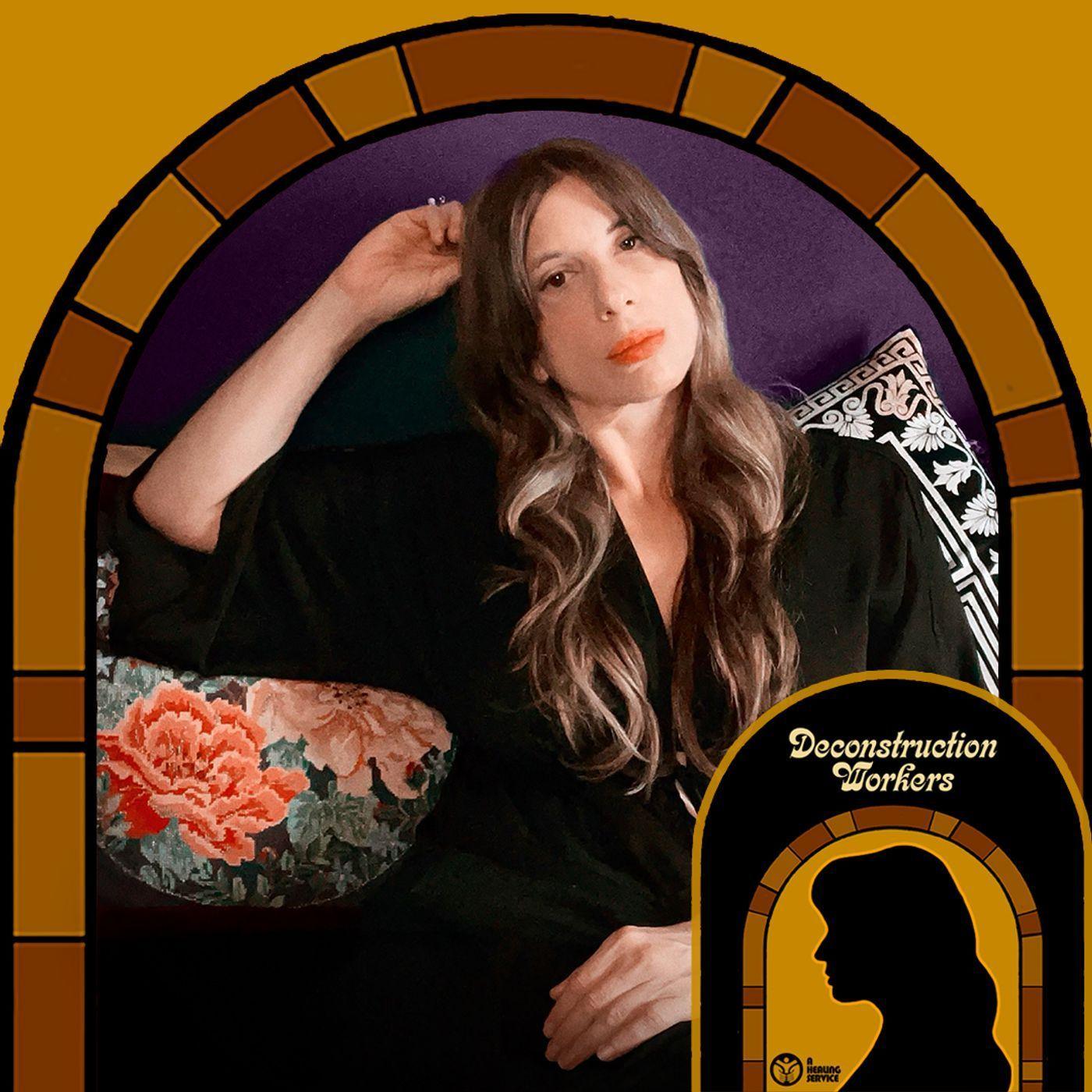
Rachel Lichtman is a video director, graphic designer, and DJ who has created a cozy 1970s AM radio underworld called Programme 4. The editor of the AV Club said they want to live in this world, and they also had this to say about it. [https://www.avclub.com/programme-4-the-william-joel-show-the-napa-boys] I asked Rachel about her Reformed Jewish upbringing and how it informed where she is now.
انگلیسی
ایالات متحده آمریکا
محتوای صریح
رونوشت 🔗
جستجوی اپیزودهای گذشته
اپیزودهای قبلی Deconstruction Workers را جستجو کن.
سلب مسئولیت: پادکست و آثار هنری تعبیه شده در این صفحه متعلق به Stephanie Drury است که متعلق به صاحب آن است و به Listen Notes، Inc وابسته یا تایید نشده است.
ویرایش
از کمک شما برای بروز نگهداشتن پایگاهدادههای پادکست سپاسگزاریم
