

Cuba Analysis: So welcome to Cuba analysis podcast. We are delighted to be joined by Abby Martin today. Abby Martin doesn't need an introduction for probably most of our audience, but for those who don't know her, she is known for her radical journalism, which exposes and challenges US imperialism through many shows and documentaries. Her shows have included Breaking the Set on Russia Today and The Empire Files on Telesur. and her documentaries have focused on media censorship, the Occupy movement and Palestine. And she currently has two films screening in cinemas. The first one is Earth's Greatest Enemy, which exposes the environmental devastation caused by the United States military, which is exempt from international climate agreements. And the second is Cuba After Castro, which is based on an interview. with Cuban president Miguel Diaz-Canal and we'll ask a little bit more about that later. But first of all, just to sort of introduce yourself to our audience, ⁓ you have many followers, but tell us a bit about your journey and what challenges you faced and whether your views have developed along the way in the face of those challenges and in what way. Yeah, I mean, I think primarily just always working outside of the confines and dictates of mainstream media being brow-beaten into the notion of objectivity, I feel like that's always been so impossible to attain. And so as an independent journalist, I've always been an advocacy journalist where I just really lay my bias clear and advocate for causes that are rooted in movement politics. ⁓ So I think the Iraq war radicalized me, but of course, it's been such an incredibly long political journey to unpack why this is happening and get answers and really kind of solidify my political ideology. Because at first I was just a confused anarchist and then I thought that I was libertarian. I mean, you're just so inundated with capitalist propaganda that for so long I was like, well, I'm not that, you know, I hate the war, the government's doing this, but like, I'm not like socialist. And then you realize, wait. I'm just a victim of capitalist propaganda in the Imperial core. So over, you know, the course of several years, I finally understood, came to understand that capitalism was really the driving force of all of these problems and issues and the central driver of US imperialism. So that's what my journalism has focused on for quite some time now. Yeah. So was effectively as well, de-learning there as well of what the mainstream was teaching you to learn. Yeah. Abbie, your activism has been mainly focused on US military and imperialism and in support of Palestine, Bolivia and revolutionary Cuba. So what in your opinion links these three struggles? I mean, let me go back to why why Fidel Castro and Hugo Chavez even started Telesur, which was a counterweight to that corporate media propaganda that was dictated in propagandizing the world about the global South about Latin America, about their respective countries. They wanted to put forward a new kind of media platform that was telling their own struggles ⁓ and explaining the situation in their countries. And that's why I felt like I could work for Telesaur because it really fell in line with where I was at politically. But of course I asserted my editorial freedom on Telesaur and was able to assert, ⁓ which is why we can get to later, which is why think they trusted me with the interview. ⁓ I think all of these struggles, Cuba is kind of the silent, like not silent because of course we're looking at over a thousand babies that have been killed from the blockade just since 2019. That's not silent or invisible. are tangible losses of murder is the policy of this blockade. But of course, when you look at Gaza, we're watching a genocide in 4K. I mean, it's really, really hard, the rapidity, the scale and scope of atrocities there. It's hard to really understand how on the flip side, what's happening in Cuba and Venezuela is exactly the same. It's just the other side of US imperialism, right? The cost of sanctions, the asphyxiation of the global economy, ⁓ putting a barrel of a gun to the head of these countries and saying, bow down to global capitalism or we will terrorize you, kill you, kidnap your leader and bomb your countries. So I think this is... This is what I think Gaza has changed the world in so many ways, but what it's done most dramatically is synthesize all of these things, these seemingly disparate issues that seemed so far away and externalized, especially for Westerners, and really kind of laid them bare and showed us that we are the same as the Palestinian child living in the rubble. We are the same as the child in Cuba who is waiting for surgery. We are the victims of this system. And every bomb that goes off abroad is a bomb that explodes here in our communities and robs our children's futures. So could you tell us about your first visit to Cuba? Why, you know, why did you visit? What was your opinion? And what were, what were the realities that were different, you know, in compared to the, what was been shown on mainstream media? This is something that, you know, I've always kind of prided myself on not you know, innately just trusting the corporate media narratives. But of course, we are all victims of propaganda. And so there's some things that really are embedded. ⁓ And the notion that I couldn't freely walk around, that I'd have to have a guide, you know, people would be scared to talk. I mean, I still thought, you know, how much of that is going to be true? You know, it's just so cartoonishly false. I mean, that's what you realize when you go to these places like like Venezuela, for example. I mean, I did believe some of the propaganda. ⁓ Venezuela going there, was just, was offended at my own naivete. Like how, how could I possibly fall in prey to any of these lies? And so going to Cuba, it was of course a very optimistic time. was during the height of normalization process during Obama. wanted to go there as the grand finale of breaking the set and really be rooted in the country during such an optimistic moment. and just speak candidly with people about what they were thinking, what they were feeling. And I was so blown away by so many things. mean, first of all, just the liberty and freedom that you have to just do whatever you want, talk to whoever you want. The political consciousness was so strong and deeply rooted ⁓ that really, you know, made me feel like Americans are so ignorant compared to Cubans. I mean, they know more about our system than even we do. But just the deep political consciousness and understanding of the block. paid the root of their problems. And they were freely able to criticize their own system as well as well as the president. It's like, you see people like Nick Shirley, this federal asset that's being weaponized to go around the world and foment these narratives of regime change. And you saw him sent to Cuba and he's just lying. He was almost kidnapped. He was followed around by guards. It's like, what the hell are you talking about? There's a reason why they don't want us to go. You know what I mean? Just go and see for yourself. Why is the global empire preventing us from going to this beautiful island, peaceful island, our neighbor? So that was the most incredible thing. And of course, going and talking to farmers and really understanding the co-op system and the healthcare and the gains and how Americans go to learn to be doctors. I could talk all day about what I... learned that first time and how mind-blowing it was and just the possibilities were endless of what Cuba was able to achieve under such stifling conditions. you notice the impact of the blockade at all when you were there? Yes, I mean, of course you see, you know, going to the school where they do train Westerners, people from all over the world, of course, the, you know, the textbooks are antiquated, the equipment. isn't up to date and you do realize that all of these things are consequences of this blockade. mean, you know, people don't really understand how far reaching it is. They're like, why do you have to trade with the US? Why do you have to get this from the US? The US controls everything. You know, all the high tech, the biotech sector, all of these things that Cuba's been able to achieve so much astronomical gains of healthcare, but under this system where they're denied. really basic amenities and up-to-date things. So yeah, was really hard to see. And of course, even back then, the lines around the gas stations were long, the ration system, mean, all these things were still in effect and still obviously consequences of this decades-long criminal policy. Yeah, I mean, there's this sort of false narrative about it's an embargo, it's just between Cuba and the United States. But one piece of the hundreds of bits of legislation that constitute the US blockade is that if a piece of equipment, any kind of good anywhere has 10 % or more of its components that are manufactured by a US company or by a subsidiary of a US company, it cannot be imported to Cuba without a license and it's on a policy of denial. I mean, as you say, this affects every sector in Cuba and, you know, out of date technology. went to when we were filming about Cuba's response to climate change and just meeting the people who are running this sort of national defense system, civil defense system, which is, you know, world leading. It's been praised internationally, but they can't get the most up to date early warning equipment. And that's the same whether it's in, you know, the health care sector. education as you're saying so. Yeah, it's really tough. But let's move on to talk about your new film, which is now screening across the United States. So it's based on this interview and filmed with the Cuban president Miguel Villascanal. And it was the first interview that he'd given to a US journalist. The timing is really important. I mean, I've watched it. I loved it. It just really struck me as incredible. that at this point when the Trump and Rubio administration are working so hard, you know, with the whole apparatus of the state and the media to demonize and dehumanize the Cuban government and to manufacture consent for a genocidal blockade with the oil siege and so on, we'll talk about later, and for regime change. And then there's your film, Cuba. Cuba after Castro, which totally undermines these efforts by presenting the perspective of revolutionary Cuba spoken through the words of its current president. So tell us about the experience of interviewing the Cuban president. Obviously, would like to our audience would like to know whether any restrictions, controls or attempts to influence the direction of the interview from the Cuban side. Yeah. We'd love to hear. Yeah, you know, it was was too loose. He was too generous. I was like, can you imagine any Western politician sitting down for three hours without having a list of the questions without, you know, basically interrogating you on on what you were going to do, what piece you going to put out? It's just incredible. I mean, to be living in a society where we are infantilized, where our reality is curated by these tech overlords, where We are told you can't hear from Putin. can't hear from these. You know, we don't see interviews with our so-called adversaries. All we hear are soundbites or, you know, narratives that are basically dictated to us by policy makers, funded by war contractors and, you know, corporate media. So to have the opportunity to have, you know, one of these so-called adversaries, someone that we've been told to hate and taught to hate for our whole lives for no reason. other than a Cold War grudge to actually give him the opportunity to sit down for three hours and explain these concepts in the perspective of revolutionary Cuba, know, concepts of democracy, the freedom of press. mean, the thing is, I asked him very hard questions that any Western journalist would. I tried to confront these pillars of propaganda that are used to uphold this sadistic blockade because I wanted to see his explanation at length. for him to explain it. And it was just so fascinating to have these concepts kind of turned on their head. What do these mean? You how are they practiced? How hypocritical are they when they are imposed or, you know, by this global military empire? So there was so many incredible moments, but no, there were no restrictions. It was completely open. And another thing that struck me about Miguel Diaz-Canel is just the fact that, you know, it wasn't just with me. I mean, you see him going out similarly to Fidel. No bulletproof vest. He's not surrounded by like bulletproof glass cages like Elon Musk or Trump. I mean, he's going out. I mean, truly a man of the people. Can you imagine any Western politicians standing out in the middle of these mass mobilizations, unarmed without, you know, not being surrounded by security detail, just going out? Just representative of the country, truly. I mean, if this were a police state or a military dictatorship, you would simply not see these things. And so, you know, there's so many things that just really expose the hypocrisy and the lies in the propaganda by Western media about this country. So really important question. How can people outside the United States see the film? Because I'm sure that, you know, after our discussion, everyone who's watching this or listening to this podcast will want to. catch the Cuba after Castro? Yes, so it will be up on Breakthrough News any day. We're going to put it out for free. ⁓ Even though it took several years to do archival material that was very costly, we feel like this is really, really paramount to understand why Cuba is the way it is, its extensive, incredible revolutionary history, and what it's been suffering. under this blockade. And so it's really crucial for us to all sit down and really give ourselves the time to understand and, you know, really understand why international solidarity with our Cuban brothers and sisters is so essential. So highly recommended from the Cuba analysis podcast team. Don't miss the film as as you can. So, I mean, I mentioned the Trump Rubio administration going on hyperdrive to achieve regime change by the end of the year, essentially. So since the start of the year, Trump has issued two executive orders which have labeled Cuba as an extraordinary threat to the national security and foreign policy of the United States. So the first was on the 21st of January and the second was on the 1st of May. This has been followed by new sanctions extending massively. the reach of the US blockade to any foreign parties, individuals, companies, entities that are engaging with Cuba and by claims that Cuba has acquired 300 drones, which it might use to attack the United States or Guantanamo Naval Base and the indictment of Cuba's former president, 95 year old Raul Castro. over the 1996 shoot down of two planes 30 years ago, planes operated by right wing exile group brother to the rescue, which had violated Cuban airspace 25 times and even dropped leaflets over Havana. So I know I have strong views on this, but how do you rate the claim that Cuba is a threat to the United States? I mean, it's clown country. This is a cartoon dictatorial policy that is just so detached from reality. would be laughable if it wasn't killing and murdering people every single day. You know, just to wield and weaponize the word terrorism, the word threats from the global military empire, from its neighboring country that has a boot on its throat, that has a gun to its head, for 60 years of a Cold War grudge, Cuba does not even have oil. That is what's so sadistic and depraved about this. It is literally just to punish, punish these people on the island. And I mean, it's it's ludicrous. It's ludicrous. This is the most peaceful country that has done everything that they can to maintain international solidarity, to deploy doctors, to help Americans in need. know, during Hurricane Katrina, all of these global disasters, you see Cuban contingents on the front lines risking their lives during the COVID pandemic. mean, you know, and, and, you know, beyond that, I mean, just the fact that the blockade works both ways. The fact that one of the other things that was extraordinary to learn is all the cancer vaccines. I mean, I tried to get the lung cancer vaccine when I was there and they were like, it's not preventative, Abby. It's only if it's terminal. I was like, please, just in case. They're like, okay, no. But ⁓ it goes both ways. Americans tend to be very selfish if they just knew what they were being impeded from accessing in terms of medical achievements. ⁓ It's absolutely tragic, to say the least, but it's just so offensive to our sensibility. It is so infantilizing to be told from Donald Trump, a con artist, warmongering psychopath, that Cuba Cuba is the biggest threat. Meanwhile, genocides the status quo, the most heinous atrocities are being committed daily in our names. How dare they? And you know what? No one's buying this shit. Not one person buys it. Even the most generic liberals who are completely unplugged from politics are like, what? Why are we? Why are we enemies with Cuba again? I mean, it just makes no sense. So if it weren't killing people daily, I would say it's good that it's exposing how insane and bankrupt and hollowed out the empire is and all of the so-called opposition party. But it's not funny and it's not a laughing matter because people are dying every day and this policy needs to stop. Yeah, I mean, I would just add to that. You're the expert, obviously, for your documentary on the US military. But, you know, this is a ⁓ military nuclear superpower. with military bases in what, around 80 countries around the world. Cuba, incidentally, currently has medics even during its severe economic crisis in over 50 countries, providing healthcare to underserved, vulnerable populations. But among those bases is, of course, the US Naval Base at Guantanamo Bay, which is land illegally occupied in Cuba under the sort of the threat of an occupation with the Platt Amendment and so on. And not to mention the US history of invading and occupying countries over Sankova interference, domestic affairs. But you know, we're supposed to believe that it's Cuba that is the risk to national security and foreign policy. Yeah, we're running a torture gulag on Cuba. I mean, you we tend to forget about Gitmo because it's so far off the radar from the daily whores of the Trump administration. But they're running a torture gulag. Like, there's still prisoners like on Tonimo Bay. Like, I mean, how do you wrap your mind around that? I went there and it was just so dystopian. There's like a strip mall and a torture gulag that has just perpetually occupying this beautiful island. ⁓ It's sick. It's honestly sick. You said a strip mall? Yeah, there's McDonald's, there's a gift shop, there's a bowling alley. I mean, it's really hideous that all of these service members can just go serve, two year stints and just learn, you know, become certified scuba divers off the coast of Guantanamo Bay. And then, you know, they can torture people on their downtime. I've been there, but to the other side, to the Cuban side, the town that is closest to Guantanamo, Caimaneira. And, you know, it's a town that's been impoverished by the fact that it's so close to the naval base and has been subject to decades of attacks and aggressive actions. And so that limits the amount of industry or, you know, other occupations they've been able to have. Yeah. And even like As you know, mean, just that land between that city and the base, there's so many landmines and unexploded ordnances you can't even... I mean, it's already so devastated from legacy contamination. And it's really shocking, actually, to be standing on Cuban territory and looking out over that land and seeing the Star-Spangled Banner. I found it shocking and I'm not Cuban, so... You can imagine what an insult it is to their deep sort of sense of, ⁓ you know, sovereignty and self-determination. Of course. And I think that's why the US loves that it's there. It's just a permanent boot in the country that, you know, totally ridicules the law, the rule of law. It's just a completely barbaric institution. And so the US just loves the fact that it's just been able to have a stronghold there. Yeah. But going back to the executive orders, Trump's executive orders and the oil siege and the extension of ⁓ sanctions to unprecedented levels, what do you think about the global response to these executive orders? I mean, we've seen the UN voting year after year against the US and Israel. mean, just the shrinking support for this blockade to just basically land on the US empire and its colonial ⁓ military partner, it really just exposes the policy. mean, you have the world's largest purveyor of terrorism and violence, the US and Israel are the only states that are upholding this. So the response has been overwhelming consensus to oppose this, to want Cuba to live freely, to uphold its own sovereignty and independence, but it's because of the imposition of the US empire, this ⁓ veto power at the UN Security Council. mean, there's, it's not It's not, it's, I mean, it's just, it's absolutely insane, but what's really inspiring going back to how Gaza has kind of changed all of this is that I've seen Cuba on the forefront of people's minds much more where before the Gaza genocide, I didn't really see a lot of discussion about Cuba. was kind of siloed off into the kind of the periphery or like small Cuba solidarity movements that have just been, you know, acting for decades on this issue. But Trump, because he's been so extreme, it's really catapulted Cuba to the forefront of our political consciousness and forced it, forced people to understand how it relates directly to Gaza, how it relates to ice, how it relates to our economy, how it relates to everything and pushing that issue of international solidarity to be paramount. So I've been very inspired. mean, for example, I was just on this, this panel at the European parliament and Cuba was such a huge part of it because people understand the relation. They understand how Cuba is a victim of US imperialism and why it is being victimized and terrorized because of this. So I'm very inspired and motivated by the huge fundraising efforts by the flotilla, the Nuestra America flotilla, by all of the solidarity that I'm seeing around the world to decry this policy and to stand up for our brothers and sisters in Cuba and to say that we resist this and we will continue to fight this until the blockade is lifted. Cuba has been subject to US economic warfare since 1960, even before the US embargo or blockade was formally introduced in 1962. From 2017, Trump's first administration pursued a maximum pressure strategy against Cuba with new sanctions and coercive measures blocking access to international finance system, scaring off investors and trade partners. And of course, Biden left most of these in place. Trump's second administration from 2025 has set out to achieve regime change by the end of the year at whatever human cost. So how can you explain the recent intensification of the US aggression against Cuba? Well, this is, as you just mentioned, I mean, this is a 60 year policy. So this has been a bipartisan consensus from Kennedy beyond. I Obama was the first kind of anomalous speed bump to that bipartisan consensus of strangulating Cuba and forcing it to concede to the concessions of global capital. ⁓ So I would say Biden, know, what surprised me the most is I thought Sullivan and Blinken were instrumental in the Cuba normalization process, but of course they apparently nothing, you know, nothing. worked because Biden just continued on with the exact same policies. was so disgraceful and disgusting to not lift that designation until he was out the door, knowing that Trump would reinstate it a couple of weeks later and it would have no tangible effect. What a monstrous criminal. But I think what ⁓ we can attribute to the ramp up, the intensification is the exact same reason that we're seeing the revival of the Monroe doctrine. The exact same reason that we're seeing Israel exert all of its political capital to expand the greater Israel project with US support and backing. It's the same reason that we're seeing all of these conflicts escalate around the world, because the US knows it has a very unique moment. Trump is the chaos president. He has a complete empty vessel for the most extremist elements in US society. And so those powerful elements, the Zionist lobby as well as the Miami lobby, ⁓ fronted by, know, sadistic maniac, Marco Rubio, who's tweeting Bible verses between snuff videos of Gaddafi being lynched. mean, this man is sadistic and insane, but he is seeing Trump as the opportunity to get this done. And so what's most disgusting is, you know, what we know needs to happen in order to actually enact regime change. Right. We know that you can't erase revolution in Cuba. is built into the blood. the fiber of every human being living there, 10 million people. mean, this is something that can't be erased. This isn't something that you can kidnap Miguel Diaz-Canel with a barrel of a gun, put him in a prison, and just put someone new in. Look at what happened in Venezuela. That didn't change the ⁓ fabric of the Bolivarian Revolution. That is still intact. That is still happening and being practiced every single day. ⁓ across the entire country with the communes, with all of the international solidarity and practices there. So that is going to happen in Cuba. mean, you can't erase this unless you have bloodletting on a mass scale, unless you somehow usher in some sort of Pinochet figure to impose an actual military dictatorship that we've been, you know, pretending that this is. So that's what I think is happening. I think that they are just going for knowing the world is against it, knowing that everyone disagrees, but no one's stopping them. So why wouldn't they? We saw what Trump said. He said, Hey, I'm going to do it again. Nobody can stop us. Nobody can stop us. And until someone does, why wouldn't they try? Yeah. I mean, some of the, the rhetoric that's come out of Trump and also Rubio. about Cuba, but particularly Trump is just grotesque. mean, the notion that he's going to take Cuba and that he can do whatever he wants with it. If you look at the depictions of Cuba in the US media, the popular media at the end of the 19th century, early 20th century, where Cuba is depicted as a sort of sexualized, racialized, you know, well, a woman and the US is the uncle Sam, this white man who's sort of protecting and violating at the same time. It's just so reminiscent of that for us historians of Cuba. But just going back to Rubio, mean, Rubio, as you say, he's aprovechando, as they say, he's taking advantage of this moment, this Trump chaos, as you call it. Rubio has built his career on a hard line against Cuba. He's had massive sponsorship and funding from the Cuban American lobby and now he is the Secretary of State and the National Security Advisor as well as another half a dozen roles, I believe, including being in charge of USAID. So how do you explain the power of the Cuban American lobby in US politics in general? And then I've got another couple of questions more specific. Yeah, no, I really think it really goes back to the kind of failure of the way that our electoral system is set up at all. mean, just the electoral college itself, the undue influence that is given to Florida, ⁓ a state that is just completely batshit crazy. ⁓ And, you know, the fact that this, this really, it's like the elections come down to like four states and Florida is one of them. And so we've given so much weight to this. relatively small contingent of the Cuban diaspora. And of course they've, they've wielded extreme power and subsidies, right? And financial support from all of the rich people who, know, Marco Rubio's family, like all of these people, you know, the lore is so hilarious too about Cuba. These are people who've never stepped foot in Cuba, but of course Che Guevara personally executed their family and you know, they, they personally robbed their grandparents and they were It's like, it's just so, so silly. ⁓ but I really do blame just the absurd, ⁓ electoral college system. And I think that if we didn't have that, if we actually had representational democracy, that this wouldn't be nearly as big an issue. ⁓ but unfortunately that's not what we have. So we have, we have Florida basically, you know, being able to dictate all this stuff and you have the Cuban American lobby having ridiculous influence in Congress. It's so absurd. And now we're in a situation where we have the worst possible person leading our foreign policy. Thanks, Bernie Sanders for the vote. And he's not going to stop. What do you think? mean, I am curious. I've always wanted to know this. you do you agree? Yeah, I mean, I, you know, I always premise anything I say about US domestic politics by saying I'm not an expert, but My understanding is that the Cuban American National Foundation, which is the mainstream lobby, modeled itself on the Zionist lobbies and worked very hard. I think you're right about the electoral system and how it does that. And it's created the platform. they have achieved this, making US policy towards Cuba a domestic issue rather than a foreign policy issue. And I think also that, in terms of the United States international relations, Cuba is not very important. It's a small Caribbean island, right, in the scheme of things. And for Cuba, of course, the U.S. is the most important foreign relationship that it has. But what this means is that the president has always been ready to outsource their Cuba policy to the Cuban-American lobby. because it's not so important that they have to micromanage it. And I think that helps us to understand the perpetuation of this, you know, entrenched interest. And that's the other thing, there's so much money sloshing about, I'm going to talk about that in a minute, but you know, it's created so many vested interests, people whose careers, whose livelihoods come from this apparatus of aggression and war on Cuba, and it's in their interests, you know, and, And that's threatened by rapprochement of the type introduced by Obama. There's a whole industry out there like everything. I mean, I don't know, like drilling down a little bit more into the administration. Do you think that some people are arguing or it's possible to argue that Trump and Rubio have slightly different agendas for those reasons that we're talking about that, you know, Trump would be happy with a deal, particularly now he's tied up in Iran. ⁓ being demonstrated the fact that ⁓ military superiority doesn't mean a quick and easy victory. Would he settle for something that he can call a deal? as we were saying, Rubio is, you know, part of that Cuban-American right-wing vengeful lobby that just wants to see complete regime change. Do you think there's different agendas? And how might that... impact what happens. That is a very good point because we saw Trump clearly not wanting full regime change in Venezuela, just the cursory attempt at the symbolic gesture of replacing Maduro was enough for him and then cementing this control and colonial subjugation with the oil trade with Delci Rodriguez. ⁓ I don't think Rubio is going to let that, I mean, who knows, but you're right that they They have similar, but not completely identical. Like it's congruent, but it's not identical. Similarly to Netanyahu and the Israeli regime to the U S it's like the U S isn't as invested in the greater Israel project, but they're using Israel to attain their objectives in the middle East and tamped down on anti-colonial movements. Marco Rubio, I think would not just be satisfied with just taking out Miguel Diaz Canel. He wants to completely destroy this country. He wants to see blood. Like he wants to punish these people. ⁓ This is a country that, like I said, I mean, there's no natural resources to pillage and plunder. It is literally just a symbol of defiance, which makes it even more grotesque that this is just to destroy a symbol, ⁓ against the empire. But Marco Rubio is a sadist, man. I mean, I, I'm, I worry about what is possible because I think that if it were just up to Trump, yeah, he might just want to claim, ⁓ I made a deal in Cuba. Yep. We got these businesses in and. Kind of similar to Obama's normalization process. Like I could see that happening. But with Marco Rubio at the helm, it's a scary future. I mean, he tends to believe it, what he says. And it's just based on complete farcical lies. But he says it like, you know, he believes it, which is so scary. Well, I remember when the Parkland kids were doing a town hall with Marco Rubio. on CNN and they were just like, would you stop taking money from the NRA? And he was just like, they buy into my agenda. I'm not paid to lie. He's like, I believe these things and the NRA subsidizes me. And I always think that when we talk about these issues that these people are true believers. They are true believers and that's what makes it scarier. So going back to Marco Rubio, I mean, he's making a big thing now. about this claim that the United States would give Cuba a hundred million in humanitarian aid for the Cuban people and you know claiming that the Cuban government's blocking it, the Cuban government first said that it hadn't received this offer, that it would receive it, would go through the church, that was fine by them but the goods haven't, they haven't come up with the goods. But you know, just to put it in perspective, last year alone the United States blockade cost Cuba 7.5 billion dollars. And every year, the US Congress approves an overt budget for what they call democracy promotion programs and the Cubans called regime change programs of around 20 million. That often goes up. It's often and as I said, this is just over program. So I mean, what do we make of this? It's a drop in the bucket and it's used to weaponize our our beliefs that the US is actually helping Cuba, that it's not trying to punish Cuba and suffocate Cuba and kill Cubans. And so that you saw the same thing with the vaccine program. was like the US claimed that they were offering Cuba vaccine. ⁓ And of course they weren't. I mean, if you were to apply COVAX, I think it was the program. If you were to apply that, would have only like, it wouldn't even have made a dent. And so they are forced to make their own vaccines. They're forced to try to... rectify this horrific situation, but of course it's, it sanitizes the role of the U S and Western media. gives, it gives these pundits the opportunity to be like, well, Cuba rejected the aid, you know, typical Cuba doesn't want help. It's like, dude, it's crazy. I mean, they don't ever talk about, know, you'll always see the obfuscation of never talking about sanctions, never talking about why things are the way they are, what role the U S has in, you know, in basically providing all of the conditions. for the situation. So it's a travesty and the amount of money that's being thrown around to your point, this is an industry. This is an industry. mean, USAID, the amount of regime change programs just within that couple of years, I remember the Zun Zunio fake Twitter, the agitation with the underground hip hop community and the fake HIV program within Cuban society, all designed to foment regime change against the government. It's like, This is what's really happening with that money. It's disgusting. Yeah. And that goes along with all the influencers that get paid. I mean, that has such, you know, all that social media, which is now getting even the algorithms we find when we go to Cuba, those algorithms are like being pumped there. So you don't have electricity, which means you don't have maybe radio or television. So now even more than ever, you're getting that U.S. algorithms and fake social media or paid influencers, they can talk rubbish and get paid for it. And this is going out to the Cuban population. Yeah. mean, one thing that has changed significantly in the last couple of years is just the advent of social media being able to do the job of the CIA without having to go through programs like USAID. You just amplify the views of capitalists living in Florida and you algorithmically cater those toward Cubans and you show them this is the promise and spoils of cat just just this is what you're missing out on and it works in droves all over the world. I mean we see how globalized US culture is the imposition of all the horrific aspects of US colonization of our minds of our cultures. It's it's really sad how homogenized it's made everything but unfortunately it really does work and it preys on people's worst instincts and pathologies. Yeah, well, it increases the psychological damage. You you're seeing all this, what I could have, what could be better. Oh, it's my it's their fault. It's, know, it doesn't allow you. Yeah. I mean, it's just it's horrific. It's horrific. I'm just going to move on a little bit from there. So during Israel's genocidal attack on Gaza since October 20, 23, and until the phony ceasefire two years later, hundreds and thousands of people in the United States. United States and around the world protested against Israel's actions, which of course were only possible with US support. We've not seen like comparable protests in response to the US war on Iran or the threat of war on Cuba. Can you think why this is? One thing that's really egregious to me is this kind of shift within the right-wing narratives and this over-amplification of right wing dissent against Israel. So I think that, you know, not only do I think this is overstated, but I think that this unfortunately takes away from, ⁓ you know, It basically shows us that the right wing, even if they do care about what's going on in Israel, they're still anti-communist. They still like at the end of the day, where is Tucker Carlson on Venezuela? He was in the Oval Office, like with the oil barons after the oil was robbed. So it's like, what the hell is going on here? I think what's really disastrous is the lack of outrage and largely the silence from the same figures who are at the forefront of decrying the genocide in Gaza about Cuba, about Venezuela, about solidarity in Latin America. And I think it just has to do with the pervasive ideology of anti-capitalism and anti-socialism. This is really, really devastating. ⁓ So that's the first problem. But I think because Gaza is so horrific and it's taken up so much space, Israel has managed to basically flatten the moral threshold of how we even react. and respond to these crises. So when the war in Lebanon and Iran started to rage on and similarly to the genocide, how do we respond to these things? And especially when we were out protesting a genocide for two years under a democratic administration with no political movement or response, people think, well, what's the point? Now it's a fascist. So how are we supposed to protest this? So I think people are trying to figure out That's why we saw the flotilla effort. That's why we're seeing a lot of fundraising and different kind of organizing, taking a step back from just mass mobilizations to figure out how can we respond to this moment? How can we, you know, design international solidarity with these new dangers of technological repression, of the political control that we're seeing? It's not working the way it was. And so we have to be creative and we have to figure out what will work. But there's so many problems. mean, the fact that Cuba's not on the forefront, the fact that we're not linking it enough as we should, I mean, that is a huge problem, but I think it's definitely changing. And I think people are completely outraged and the more Trump threatens, belligerently threatens this beautiful island, people are becoming more and more enraged. They just don't know what to do to stop it because the world isn't stopping it. So how do we, how do we, mean, go to Cuba, spend money. Talk to your friends and family, put out films like, you know, like do educational screenings of Cuba after Castro, try to get people in the same room to unpack why this is so crucial, why you can't throw the global south under the bus, why we have to incorporate anti-imperialist politics if we want to call ourselves progressives or environmentalists, how all of this is connected. It's changing, but it's not changing quickly enough because every day I wake up with a pit in my stomach, ⁓ God, what has he done? ⁓ God, what is going to happen to Cuba? And every day we're just waiting for the worst news of what they're going to do. It's very alarming. I mean, I think Nina's probably been to Cuba most recently from the three of us here, because she was there with the flotilla in March. I was there in January. But it's very difficult there. there is, you know, I've just been recently into a UN Cuba section meeting. which was thought to explain the concrete impact of the latest measures by Trump in every different sector. And on the one hand, it's devastating. You first of all hear from the pediatricians talking about the impact on children's health and then cancer patients and then education, the religious sector. I mean, all different sectors were speaking, but what really struck me was that every single speaker, despite, you know, some of them breaking down in tears talking about the impact, every single one of them asserted that Cuba would not surrender. And it was just so powerful. And they won't. And that's the thing. They will never surrender. It's never worked. It's the one country in the world that defies all odds. It's been beaten, terrorized, subjugated to the worst insane policies from its military nuclear armed neighbor. And yet somehow it survived. Somehow the resiliency there has born and bred incredible innovations, solidarity that's unimaginable. ⁓ it's, really is something to behold. Yeah. What surprised me? Well, not what surprised me, but what motivated me, what turned the light was from that, that latest convoy that went to Cuba. ⁓ majority were young. There were many, many females, many, many young Americans. ⁓ there was a group of I'm Irish. So, and there was a group of probably 22 Irish. Most them had never been before. Again, most of them young, much younger than me. And there was something really powerful about that as well. And again, it shone the light on what are governments doing? Why is it young people? Why are we coming back to this? Why is it seems there is a silence? So, you know, that highlights it even more. And the fact that they're trying to You know, the threats of subpoenas and sanctions of the participants of the flotilla is just, again, just the extreme rank hypocrisy and revelation of what the goal really is, what the intentions really are of US empire. There's no pretense at all. And so it's a very opportune moment for us to seize and reclaim these narratives and push solidarity with Cuba really at the forefront here because of just how exposed these maniacs are. Just to go back to Trump. So during his election campaign, Trump committed to an isolationist policy like America first. However, since February, 2025, the U.S. military has attacked seven countries, Somalia, Yemen, Iran, Venezuela, Iraq, Nigeria and Syria, and killed over 200 people whose boats were bombed in the Pacific and the Caribbean Sea. So U.S. military militarism and imperialism is on overdrive. So I've got three questions on this. ⁓ What factors are driving this? And how is the US population reacting to billions of being spent on military attacks while the cost of living is rising in the US and millions of people are increasingly struggling to get by? the, well, I think I'll... If you answer that, then I'll ask the Yeah, don't ask me a third one. It's too much in my brain. no, no, there's enough in that. I mean, what is going on in the Caribbean? These extrajudicial assassinations of fishermen with no evidence whatsoever. And it's just been normalized. We're conditioned into accepting that this kind of barbarism, the law of the jungle where the US has the ordained right to just assassinate people on boats. Why? When it is pardoning drunk, drug criminals, like narco terrorists. mean, it is, it's beyond horrifying. And it, I mean, these people need to be tried for, for these crimes and atrocities. But I think again, this, this revival of the Don Roe doctrine, right? Latin America is our backyard. The pink tide, all of the burgeoning leftist movements in Latin America that are reclaiming their sovereignty, that are trying to form these independent blocks. to as a counterweight to US power, that's what they want to stave off. That's what they want to tamp down on. And so they're funding reactionary movements enormously. They're trying to interfere in the electoral processes everywhere from Columbia to Bolivia. I mean, it's really alarming how much the US is really focusing on Latin America to control it because they see the power. They see the power of Latin America forming their own independent sovereign block away from US power. And so that's why you've seen this horrific, this horrific kind of ⁓ new policy being wielded simultaneously while we are engaged in genocide. And like you said, all of these drone campaigns across the world, that's what's so crazy. How is he even doing this? Like they're not even waiting to wrap up the around war before they want to go and invade Cuba. Again, it's the chaos moment and the chaos presidency. They don't even know how much longer Trump's going to be alive. Like they are trying to ram it through now, everything, everywhere, do every regime change, every coup, every last remaining independent sovereign state, they're trying to crush them right now, damn the consequences, damn everything. And so that's what I think that that's the only thing that can explain this. And that's why we see the $500 billion more for the military. That's why we're seeing the unrolling of data centers across the U S when we haven't even had high speed speed rail yet. Within six months, we could have a data center plopped down. ⁓ and all of these city council, you know, municipalities be bought off. It's because it's Trump. It's because all of these people are doing everything that they can to ram through the most radical things undemocratically because they know they might never never have a chance like this again. They might never have a chance to destroy Cuba again. ⁓ And they're seeing the complete complicity of the international order. Everyone laying down like doormats, allowing this to happen, providing diplomatic cover for this horrific moment. And so they're doing everything they can. The reaction in the States is tremendous. I'm speaking not just anecdotally, I see it in polling, not just support waning tremendously for Zionism, making it potentially untenable in the near future to be a Zionist, but that is also part and parcel with being an imperialist, with our foreign policy toward Cuba, toward all of these countries. So I'd say there's a tremendous shift and we're about to see seismic changes in the US electorate. We already are. mean, the Platner victory, the Mamdani victory, all of these things, when rank choice voting is available, when people are given the opportunity to vote for an actual populist, they do, overwhelmingly. That is representative of the American zeitgeist. And also polls have been done that showed the vast majority of Americans disagree with our Cuba policy. The vast majority of Americans disagree with military, a military maneuver in Cuba. There's never been a bigger detachment and schism between the ruling class and the American people. And this $1.5 trillion military budget just solidifies all of that. That this is all for the coffers of a very, very tiny group of elitists, elite billionaire technocrats, and we are going to suffer. And every bomb that goes off is robbing us, robbing us of our future, robbing us of our solidarity, our cooperation, our collaboration, which is what we need in this moment. But Americans are waking up in a way that I have never seen in my life. I'm 41 and I have been rooted in movement politics for at least 20 years. And I've been around every single major city with this film, Earth's Greatest Enemy, and now Cube After Castro. I mean, sold out theaters. People never would even have thought about Cuba before. And they know, they want to learn. They're starved for the information. They're starved to be oriented into movement politics and solidarity struggles with Cuba. And now is the moment that everything's connecting. And I do have revolutionary optimism at this moment. And Cuba is our beacon. Cuba is the symbol of not only defiance, but possibility for what we can have and what we need to fight for. Well, I don't know how I could beat those words. And you kind of answered the last question actually, because it was about domestic political situations. So beautifully rounded. But is there anything else you'd like to add? I mean, just going to Cuba recently for this interview and again, to wrap up and just be filming people in Cuba and see the effects of intensified blockade and the sanctions. ⁓ But the people have never faltered. And I guess that's what, how dare we not fight? If Cubans are surviving this, if Palestinians are having children in the rubble because they believe in the future and they're going to fight like hell, how dare we not in the Imperial Corps do everything that we can? We have the duty We have the privilege and we have the power and we better sure use it before it's too late. So Viva Cuba, solidarity with our Cuban brothers and sisters and thank you so much for this incredible podcast. This is such an important instructive tool for all of us and all of our movements to gain a better understanding of Cuba. Thank you guys so much for having me. Abby, it's been an absolute pleasure to have you. We've wanted to have you on for a while, so I'm sure we'll invite you back and... And congratulations on the two films that you have screening in cinemas. Everyone should go and watch them. Earth's Greatest Enemy and Cuba After Castro. Really important tools for the battles ahead, which you've just been talking about. You know, it's something that I always say, we can't afford to lose Cuba because if we lose Cuba, you know, we lose the example of a country that within one generation could raise the standard of living to be comparable with the rich capitalist countries that has more doctors per person than anywhere in the world, more art instructors than anywhere in the world, that donates something like 6 % of its GDP equivalent to overseas development aid, compared to like 0.17 % from the United States, and that has You know, despite being ⁓ a small Caribbean island underdeveloped by colonialism and imperialism for hundreds of years, has world leading products in biotechnology, is world leading in sustainable development. We all have so much to learn from Cuba, which means we all have so much to lose if the trumps and rubios of this world get their way. So we'll do. what we can and you're doing so much too. So thank you so much for that. Thank you so much, you guys. We will win. Viva Cuba.
درباره این اپیزود
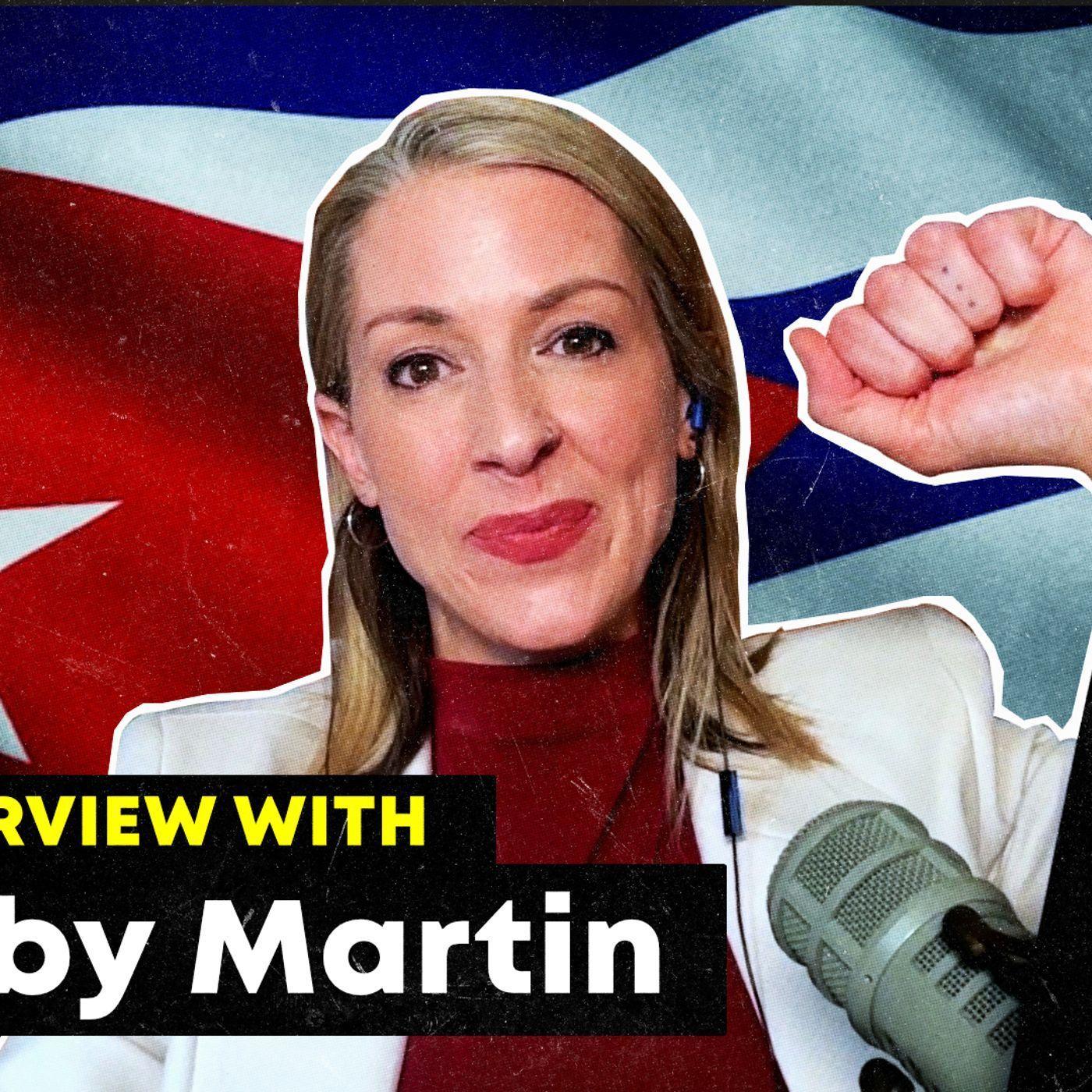
In this episode of the Cuba Analysis Podcast, Helen Yaffe and Nina Blodau speak to radical journalist and filmmaker Abby Martin from The Empire Files about the intensifying US war on Cuba, the human cost of the decades-long blockade, political consciousness and how Cuba has resisted US imperialism. Abby tells us about her first experience of visiting Cuba and, more recently, of interviewing Cuban President Miguel Diaz Canel for the new documentary Cuba After Castro, which undermines US propaganda aimed at manufacturing consent for an attack. Abby draws the connections between Cuba, Palestine, and Venezuela, and underscores the importance of solidarity for all those struggling against US imperialism, including domestically.
Follow @CubaAnalysis on Instagram, Facebook, Telegram, and YouTube for more episodes and analysis.
🇨🇺 #CubaAnalysis #CubaPodcast #CubaSolidarity #Cuba #CubaHistory #CubaStudies #AbbyMartin #TheEmpireFiles @EmpireFiles
انگلیسی
ایالات متحده آمریکا
رونوشت 🔗
جستجوی اپیزودهای گذشته
اپیزودهای قبلی Cuba Analysis را جستجو کن.
سلب مسئولیت: پادکست و آثار هنری تعبیه شده در این صفحه متعلق به Cuba Analysis است که متعلق به صاحب آن است و به Listen Notes، Inc وابسته یا تایید نشده است.
ویرایش
از کمک شما برای بروز نگهداشتن پایگاهدادههای پادکست سپاسگزاریم
