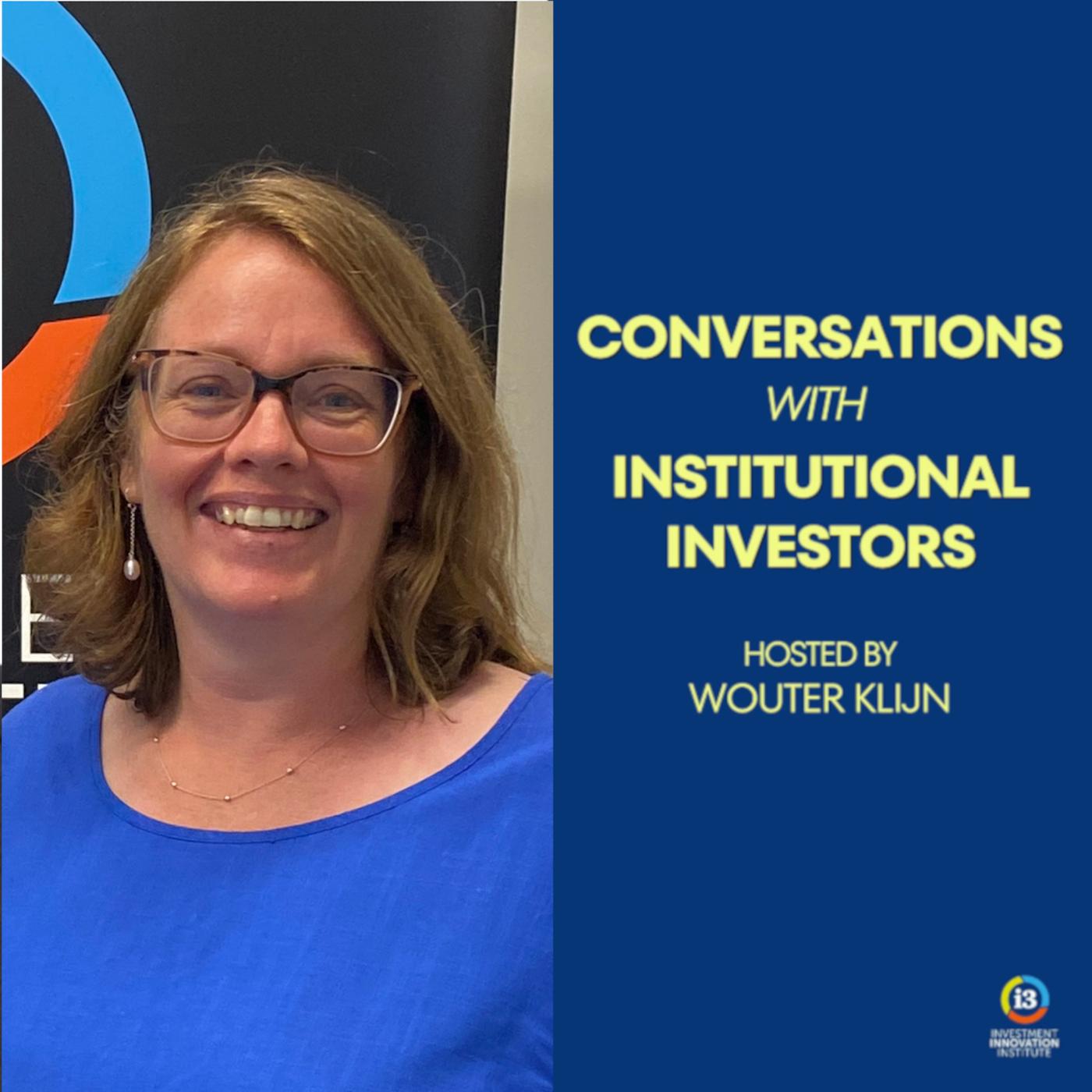
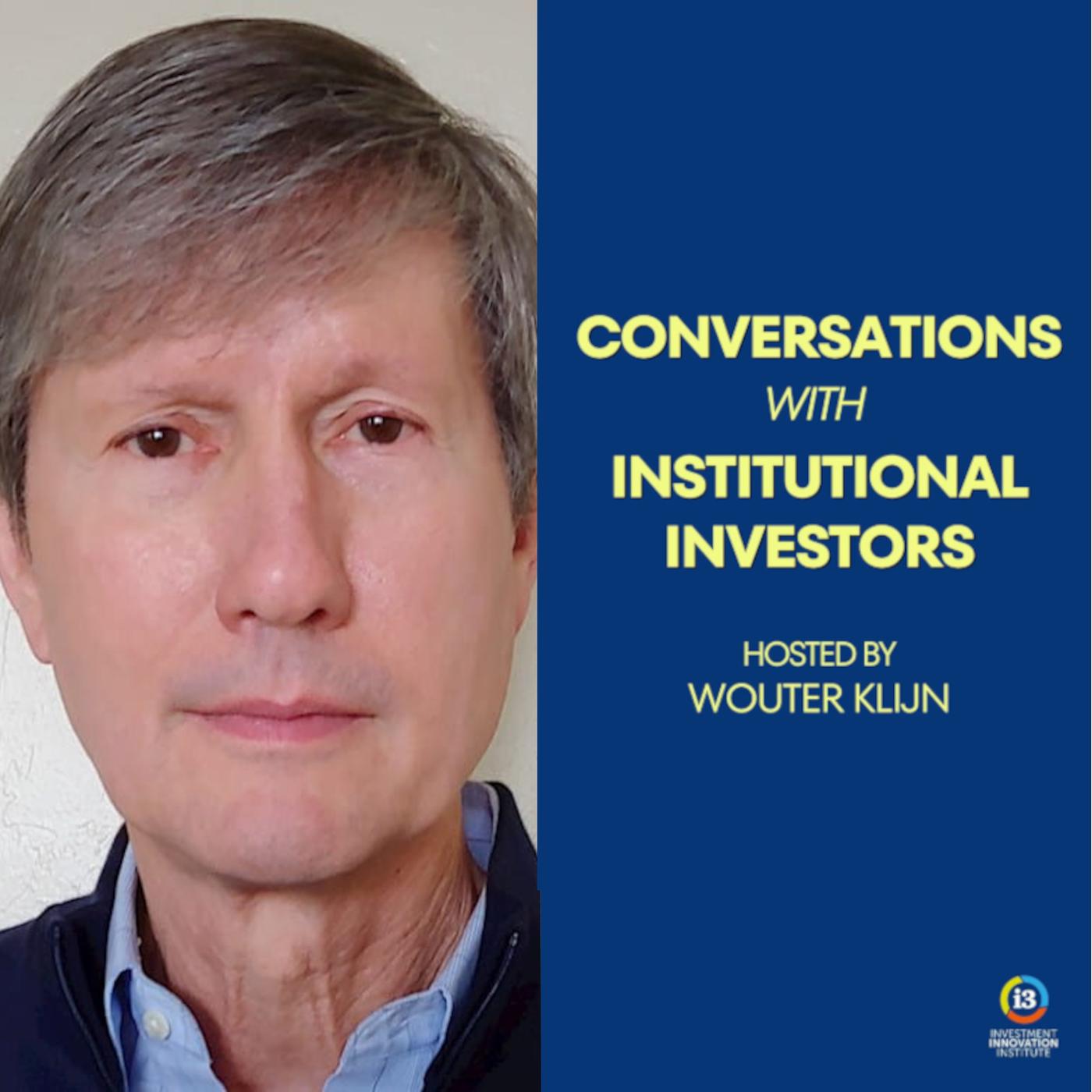
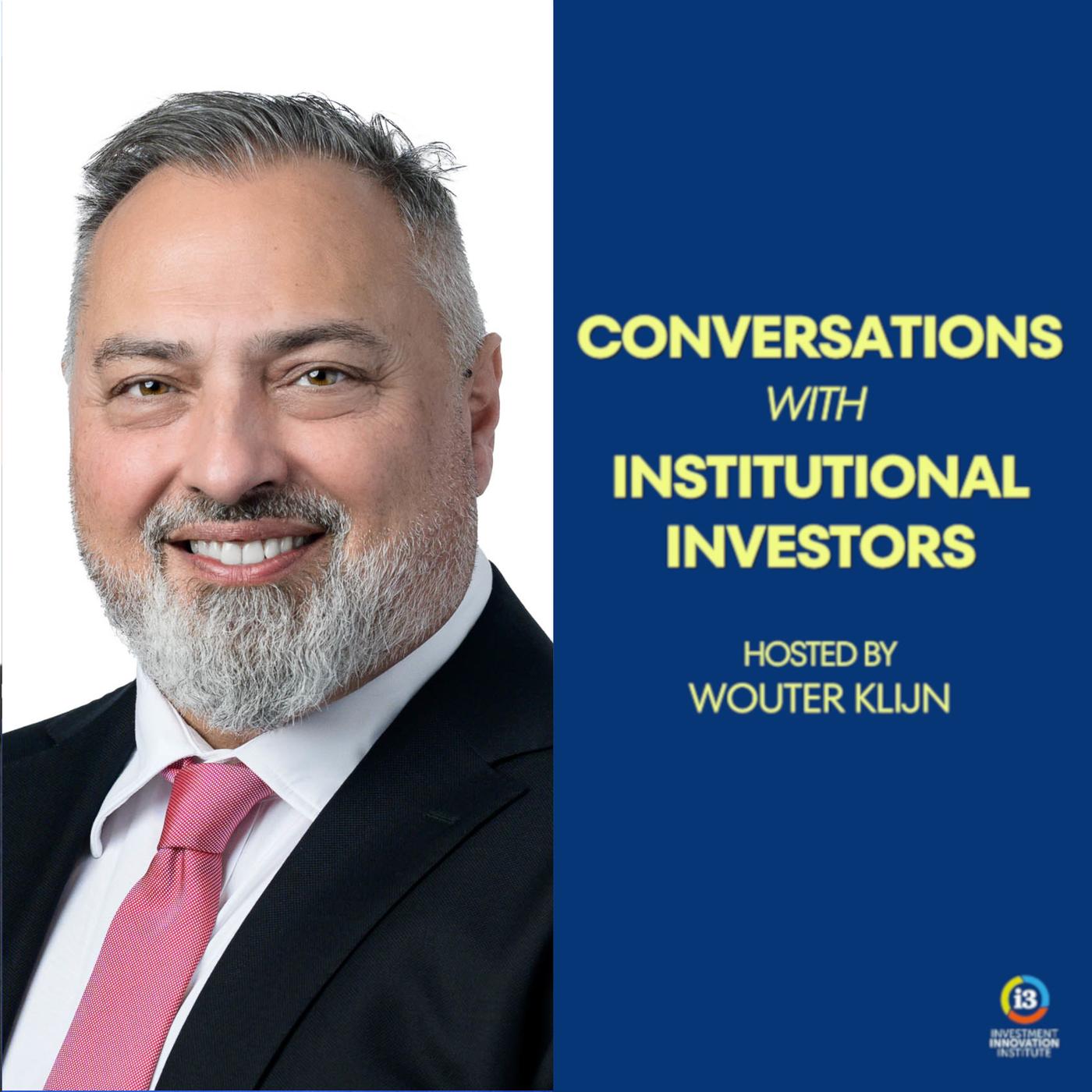
درباره این اپیزود

Welcome to the i3 podcast. Today, we're revisiting a conversation from 2021 with John Pearce, Chief Investment Officer at UniSuper. From the humble beginnings at the back office of Westpac, John went on to become one of the most influential CIOs of Australia, leadings one of the biggest in-house investment programs, built on what he calls "logical incrementalism." We talked about his best and worst trades, why he doesn't believe in tidy asset class buckets, and his early doubts about China. We also cover the APRA performance test and UniSuper's decision to open up to the public. Here's my conversation with John Pearce.__________
Follow the Investment Innovation Institute [i3] on Linkedin Subscribe to our Newsletter Explore our library of insights from leading institutional investors at [i3] Insights
__________
Overview of Podcast with John Pearce, Chief Investment Officer of UniSuper1:00 Starting in the back office of Westpac Investment Management 3:00 There is no way you can believe in market efficiency when looking at emotions take over in the dealing room 4:30 You need board support if you are going to run assets in-house 5:30 We didn't really have a vision going into in-house management. Visions can be scary things. 6:00 Michael Chaney's 'Logical incrementalism' 8:00 Moving to in-house is a business transition, not a project. It can't be done in a day. 10:00 Pearce' best and worst trades 12:00 We had a $9.6 billion option position on during COVID, which gave us the confidence to buy more risky assets at the bottom of the market. 12:30 But our position in China is not looking good at all. 14:00 We should have loaded up on green tech two years ago when we decided carbon neutrality was going to play a big factor 14:30 If you had to put a label on UniSuper's investment style, then it would be Quality at a reasonable price 15:30 Has in-house management changed the way you structure external mandates? 16:30 Yes, the questions are better and there is some bluff-calling 20:00 If there is a good investment, then we will find a home for it. Hybrides are a good example. 22:00 On China: "More than the average person, I know what I don't know." 22:30 The last three months has really been testing our conviction [in China] and it is not Evergrande 25:30 If China invades Taiwan then all bets are off. You can't structure a portfolio based on that. 27:30 How do you solve the asset allocation problem of low yielding bonds? 28:00 We are looking at gradually increasing our unlisted assets 30:30 Views on the APRA performance test: "When you get results like that, you know there is something fundamentally wrong with the test." 36:00 Since becoming a public offer fund, UniSuper has raised $6 million just through word of mouth. 36:30 Yes, we would be open to a merger, but it has to make sense for our members. 39:00 You don't build real culture over virtual meetings, so we decided as a team to come back to the office the same three days a week. 41:00 But there are also benefits of virtual meetings: our whole team gets to sit in our investment committee meetings
Full Transcription of Episode 145
Wouter Klijn 00:11
John, welcome to the show.
John Pearce 01:27
Pleasure.
Wouter Klijn 01:28
So you're pretty well known in Australia, but can you take us a little bit back to where it all started? How did you get interested in investing?
John Pearce 01:35
Well, I started off in the back office of Westpac Investment management, which, and staying in the back office, I would recommend that to any investment professional. I think it's a really good grounding. You learn the nuts and bolts of the business, and I think you also start. You know, you learn a bit of humility as well. So, and look, I spent pretty much the first two decades of my career, then moving on into a dealing room environment. So, which was a pretty exciting place to be for a young guy.
Wouter Klijn 02:08
Yeah, I can imagine so. So, already from that early days, you were involved in trades and really getting a look into the nuts and bolts of transactions.
John Pearce 02:17
Yeah, and you know, it was obviously a very different environment because we didn't have the benefit of all the electronics, etc. So a lot of stuff was done in you know open outcry and yelling and screaming and you know in the middle of smoke hazes in dealing rooms. But as I said, it was really exciting. And the other thing, you also get a sense of risk, and you get a sense of you know what drives market inefficiencies you know because when you're seeing senior people around you that are being impacted by markets where you know emotions are taking over decision makings you really get ingrained into you at that young age hey there's no way in the world you can believe in market efficiency when we see this behaviour.
Wouter Klijn 03:03
So you saw that what is commonly termed as the animal instincts pretty early on.
John Pearce 03:10
Yeah. Animal spirits are always there, and we will always be, I guess, suffer from the foibles of human nature. We get fearful, we get greedy, and we suffer from all those irrational afflictions.
Wouter Klijn 03:26
Yeah, so I think Unisuper is characterised by doing a lot of things in house and being very active, and also having quite the ability to put trades in fairly quickly. But that wasn't always the case. Can you tell us a little bit about how the board got comfortable with moving to that model where you're more hands-on?
John Pearce 03:50
Well, when I joined what 11 years ago now, and I joined very much with a mandate to bring our funds in house, and now quite often asked. You know, how do you get started? How do you? How did Uni Super manage to do these to get their in-house strategies in place so quickly? And my answer is always, you've got to have strong sponsorship at the board level because without that, you're pretty much you're fighting a battle that you're probably going to lose in the end, because as soon as something goes wrong, you'll have a problem progressing. I was very fortunate. I had a key sponsor in Chris Cuff. Chris and I have got a really long association in you know both in a business context and as friends, so there was a lot of trust there, and Chris was obviously a very influential person on the board. So I was really fortunate to have that sponsor, and then you know I also very fortunate that we had an investment committee that was very experienced. You know they investment backgrounds themselves, so we're clear in terms of what was the board's responsibilities, the investment committee's responsibilities, and the management. Once we stayed within boundaries stipulated by the board investment committee, we were pretty much allowed to get on with it.
Wouter Klijn 05:14
Yeah, was there sort of an example, a model that you followed, maybe from overseas?
John Pearce 05:21
I don't call it not really a model. You know, people ask me what was the vision, and I'm quick to say we didn't actually have one. Visions, you know, are sometimes good, sometimes work against you because visions can be pretty scary things when you're embarking on a path that some would consider really risky. You know, you change your business models. Unisupr was a successful fund, right? So it wasn't a turnaround story. So why go down this path? So a vision was potentially going to be dangerous. So we employed what a phrase that I actually stole from someone else, Michael Cheney, who was the ex-boss of Westfarmers, and he used to use this term called logical incrementalism.
Wouter Klijn 06:03
Right.
John Pearce 06:03
Actually, mentioned to Michael one day. You know, I've stolen this from you. He said, "Don't worry, mate. I stole it from someone else. But anyway, so what's logical incrementalism? That is really we're just doing things in a logical way, right? Step by step. And so, if we do fail at any given point, we're not going to fall too far.
Wouter Klijn 06:23
Yeah,
John Pearce 06:23
and that way you bring the board along with you. You bring the investment committee along with you. So we started off literally by it wasn't a bing bang theory, and we started off literally by implementing a listed property securities portfolio. Was it about what 20 odd 25 stocks, Bloomberg end to end, and we basically said, "Look, this is going to be the first portfolio. Not much downside here. We'll run it pretty much in a passive basis. If things don't blow up, we might try something a little bit more ambitious. And that's pretty much how we got onto the journey. And now, if you think about if from day one I said to the board, within three years' time or five years' time, we're going to do billions of dollars of zero-cost collars on currencies. I really'd have a few people on the board really worried.
Wouter Klijn 07:11
Yeah.
John Pearce 07:12
So, but that's ended up where we got to, right? In a reasonably short order. But there was never really a leap to that when it was time to do something like that. The investment committee said, "Yeah, that makes sense.
Wouter Klijn 07:22
Yeah. So it seems that a lot of funds they start with Australian equities, probably because they're most comfortable in that space. But you started with listed property. Why was that?
John Pearce 07:32
It was really to just to make sure that the processes, the systems, etc. worked in pretty short order. It was probably within three months we had an Aussie equity portfolio up and running too, right?
Wouter Klijn 07:42
Right. So, what are some of the learnings from those early days? Were there any surprises when you set it up?
John Pearce 07:48
Surprises. I think look, the learnings, the logical incrementalism to me is you know the best way to approach these types of you know these are business transitions. It's not just a project, right? You know, with a project, you can get all thing. Everything has to be done on one day. I think you know, being pretty clear what you wanted to achieve in six months or 12 months, but don't put a you know a sort of a line in the sand saying this is where we have to be in three years' time, right? Because things change.
Wouter Klijn 08:19
Yeah,
John Pearce 08:19
and if things if you know the facts change, your opinion has to change. So we embarked on that path. The we had some very clear parameters in terms of what we were going to manage in house and what we were not, you know. And we were not going to manage start taking on things where we were clearly not going to have any competitive edge. Right. So we're very disciplined in terms of the types of strategies. You know, we looked at technology, you know, technology mandates, high yield mandates, Asian mandates, Japanese mandates, Indian mandates. We were never going to be able to get the team to manage those sort of strategies. So it was always going to be a hybrid model. Systems. If you ask every asset management team, they all want their own system. You know, a fixed interest guys will want. You know, let's say a Charles River and equities guys want. You know, IRS or whatever. And we said, look, we don't want to be a tech shop. We're an investment manager. So we're going to get Bloomberg, and it's going to be end-to-end Bloomberg. And that was a terrific decision because you know we've got pretty much almost zero operational errors. Yeah, it's an integrated system. So these are sort of the key learnings.
Wouter Klijn 09:32
Yeah, can you give us a sense of how big the in-house program is at the moment?
John Pearce 09:38
Yeah, it's about 70 per cent So we're over 100 billion. So around 70 per cent of that is in house,
Wouter Klijn 09:44
and so pretty much every asset class.
John Pearce 09:47
Yeah, but once again, it's not those. We're still not involved in, particularly the offshore stuff that requires you know large teams of fundamental analysts, etc. We're not going to get in that, but you know. All the generic asset classes, yes, we're across all of them.
Wouter Klijn 10:04
So we always like to ask people, what is your best and what is your worst trade, and what do you learn from it? Can you give us a sense of that?
John Pearce 10:11
Yeah, look, we've but the ones the I guess from a thematic perspective, we were very on early on to the tech theme, so post GFC when you know I think the bulk of institutions were still a little bit gun shy when it came to taking on risk, we got on really early to the tech theme to the point where we were going to the US and we were looking at pure tech managers and they were, you know, dusting off their flip charts because nobody really wanted to talk to them, and so that was and that's and since then we've only added to that exposure. We've taken some you know minor profits here and there, but then looked to get back in at any corrections. So we've added that and it's paid off really handsomely. In terms of if I had to single out the one, that's a thematic sort of trade, one specific or idiosyncratic trade. The one that probably the cleverest one we've done was a really big portfolio insurance position that we established in 2019. Now this is applied to our defined benefit fund. It was the face value of it was $9.6 billion, right? Which is by far the largest, you know, single trade, well, single position that I've been associated with in derivatives. And you can imagine now, you know, they were way out of the money options that we bought at around 1 per cent during the depths of COVID, you can imagine the mark-to-market on that position.
Wouter Klijn 11:45
Yeah,
John Pearce 11:46
it was you know in the bit in the billions. Now, as it turns out, we're really proud of that, but we didn't make any money. We didn't cash it in, right? And you say, well, you know, why didn't you cash that in? Well, it's easy in hindsight, right? But it's it'd be akin to cashing in your insurance policy when the fire's across the road from your house, right? You wouldn't do it. What it did give us the it gave us the confidence to tell members they can rest easy, right? The defined benefit fund was in surplus, right, and it was protected with this options position, and it actually gave us the confidence to buy more risk assets at the bottom of the market, right? So that was you know probably the cleverest trade we've done since my time at Uni Super. Now there's been a couple of poor ones as well, right? You know, if we look at our Chinese exposure at the moment-that's just not working out well at all, right? We've had a little flutter in UK banks. You know, we got in high, we sold low, and I don't even want to look at it now because I, you know, they probably rallied and they've made a fool of me. So we've got regrets over that, but I must say we haven't done anything enough that's big enough to actually hurt us, which is not bad. But yeah, we've made mistakes along the way. They just haven't been overly painful. The other, I guess, is the opportunities that you haven't taken advantage of. Right, that is always something that you've got regrets, you know. About, I think the biggest one is probably, you know, we as a team, you know, two years ago or you know, two and a half years ago, said decarbonisation is going to be, you know, one the most pervasive theme for the next decade. So we all agreed to that, and we did things around the edges portfolio. We've got a global environmental opportunities portfolio that's absolutely shooting the lights out. But I still think we could have done more. You know, we could have really loaded up on not just tech, but green tech, you know when you know valuations looked expensive, but it turns out they were really cheap. So I think that's probably the biggest opportunity foregone, which gives you there's a regret factor there.
Wouter Klijn 14:14
What do you define as your investment style? Do you tend towards more growth, more value, or is it something completely different?
John Pearce 14:22
I don't like the term, the style, right? I struggle with labels, but if you had to apply a label to Unisuper, it would be quality at a reasonable price, right? If you had to apply a label, and where does that derive from it? It derives from a really basic first principle that we ascribe to, and that is superannuation equals life savings. Right. So we've got some governing principles that we all live by in the investment team, and the first one is superannuation equals life savings. So from that, we want to have a quality bias throughout the portfolio. So, if you're going to stick a label on us, that's the one that I've been, you know, most comfortable with.
Wouter Klijn 15:10
Yeah. Now, in the years that you've built up a portfolio of in-house trades and deals, how has that sort of influenced your thinking about structuring mandate for external managers, does has that changed?
John Pearce 15:25
I think it has changed. So it's I've got to cast my memory back a long time now. But you know, when I initially joined Uni Super and we were pretty much outsourcing everything, you know, I was sitting in on the meetings with external managers, and what was it was very clear that the conversation was all one way. You know, the typical meeting would be the manager would pick their two or three favourite stocks and pretty much talk about them for an hour, and there'd be five minutes for questions, right? And on those stocks, which of course the manager would become all over, all right. So he or she would sound like a real genius, and you'd come away not really fully appreciating whether the managers on top of everything. These days, the conversations are two way. It really is. There's a huge level of mutual respect amongst the managers. You know, they realise that we manage money, that we've got ideas and opinions, etc. The questions are much better. They're far more incisive. You know, there's bluff calling, or there's you know we just know when someone's not on top of things because we're managing money ourselves. And by the way, it's there's a structural point to be made too. We don't separate the external manager process from our in-house. Okay, they all sit in one team. So you've got people managing portfolios that are also questioning the external managers.
Wouter Klijn 16:53
Yeah,
John Pearce 16:53
Really good exchange of information, and we're very honest about that with the external managers as well. A matter of fact, there are a couple of mandates that we haven't given, or we they weren't actually up for it because they weren't comfortable sharing information with us, and we understand that as well.
Wouter Klijn 17:10
Yeah, so you want a higher level of information, and you probably also know better where to look for. But does it also change? Sort of, do you put additional clauses or protection within mandate contracts that you may have not thought about before?
John Pearce 17:28
As of today, clearly, what we have got is a fair bit of leverage over pricing. If you're negotiating with knowing that we do have in-house capability, the pencil's got to be pretty sharp, right? But that's also a function of size too. I guess I imagine most of the big institutional managers would negotiate pretty sharp prices. I just think it we do get a bit of an edge with our own in-house management. But in terms of the nature of you know we've got we've had tailored portfolios. There is there are some portfolios where we'll say look that here's a high yield mandate, for example, but we don't want you going anywhere near the energy sector.
Wouter Klijn 18:05
Yeah.
John Pearce 18:05
Rather than maybe a manager that's not as confident about you know making those sort of decisions and those sort of exclusions, we'll exclude that. If you look at our Chinese, we've got Asian bond portfolio, and fortunately, we said no property developers, and this is before Evergrande, right? So
Wouter Klijn 18:27
That was a good call.
John Pearce 18:28
Yeah. So they're the sort of things that yeah that we have been able to tailor because of our, I guess you know we're closer to the market than some of the other institutions.
Wouter Klijn 18:40
Yeah. So over the years, sometimes fund managers try to be a bit more innovative, come up with new strategies, and I've seen a couple of cases where they sort of bring something out that potentially goes across multiple asset classes, and then usually quite quickly after that, you hear that there's actually only potentially two funds that might be willing to look at these strategies. That is, you at Unisuper and probably Sam Cecilia at House Bust, because I think you've made a choice to not be too rigid with asset class buckets. Can you tell me a little bit about that decision?
John Pearce 19:18
Yeah, I don't know if it's particularly innovative. I think it. I think it's more common sense than innovative. It's probably more, you know, counter innovative in the sense that once again, it starts with the structure of the team. We've got, you know, and this sounds motherhood, and you know, you've got to sort of be in it to believe it, but you know, it's genuinely one tank, right? So on any large deal, it's very common you'd see multiple asset classes being involved. You know, when we you know there'll be someone from the global equity team, the Aussie equity team, the fixed interest team, or the property team. Etc. You know, all in the room together, thrashing things out. So the starting point is that if there's a good investment to be had, we're going to find a home for it.
Wouter Klijn 20:10
Yeah,
John Pearce 20:10
that's the starting point, and obviously has to align with our principles, etc. The best example I think I could give you is hybrids. If you look at, you know, I doubt there'd be any other institutions that own more hybrids than we do. We three of the four major banks when we had the it wasn't the GFC it was the European debt crisis when we had a huge blowout in credit markets etc. You had the major banks issuing a lot of hybrids. Three out of the four we cornerstone allocating over a billion dollars to hybrids. Now, what you find with a lot of other institutions, where do hybrids fit?
Wouter Klijn 20:46
Yeah,
John Pearce 20:47
They're not really equity, and they're not really debt. There's something in between. It didn't matter to us. You know, to us, they were a fantastic deal, fantastic value, and we were going to find a home for them regardless. So that, to me, is the real benefit of not being constrained with the so-called buckets.
Wouter Klijn 21:03
Yeah. Now you mentioned earlier Chinese equities, Asian bonds. Now you were before the head of global asset management for Ping An. It's of course one of the largest Chinese insurance companies, which I think you know gives you probably more of an insight on the Chinese market and the thinking of investors there than anyone else in Australia. And at the moment, we see that especially Chinese bonds are being included in major indices. Chinese equities has been included in emerging market indexes. So we see people thinking more about a dedicated China exposure, whether it's bonds or equities, with sort of your background at Pingen, what is your thinking around including more direct exposure to China?
John Pearce 21:48
Well, you know, I would have answered this question differently maybe a year ago than that I'm answering it today. But firstly, in terms of my background, I wouldn't attach too much importance to that because all it means is that I'm more qualified than the average person to say you know I know what I don't know which is a hell of a lot right so that's the most important thing but look we do still have a dedicated Chinese exposure it's not enough to hurt us either way the last three months they mentioned China are really really testing our conviction, and it's not Evergrande. And as a matter of fact, Evergrande. I think there's a real positive to be taken out of Evergrande. You know, Evergrande is a sign that the Chinese are more inclined to let excesses work themselves out, let the system clear, right? It's you know failure is important for a properly functioning economy, right? It's important that we see overleveraged you know players fail now and again. As long as that you know you don't doesn't develop into a Lehman's type of situation, which you know I don't believe it will China. So it's not evergrande at all. As I said, I think there's a positive to be taken out of evergrande. What's much more concerning is you know what's happening with the education sector, the tech sector, etc. So I think the positive perspective on that is look. This is just the Chinese saying, "Look, where if you're if you are owning assets and those assets are deemed to be social infrastructure, right? We're not going to let you just make you know just be the profit motive is going to rule everything. It's social infrastructure, so we are really going to put you know on a tight leash. And if you know the education sector, I mean that you know I've sort of inferred that to me. You're not going to make any money, right?
Wouter Klijn 23:43
Right.
John Pearce 23:44
Now, if a sector can't make any money, while it might have public utility to an extent, an offshore investor is worth zero.
Wouter Klijn 23:50
Yeah.
John Pearce 23:51
So the question is: Is this reset that we're seeing in China going to be restricted to tech and education, and you know maybe some healthcare, etc. We've got social infrastructure, or is this signalling, you know, a much much broader reset, where, you know, this whole China as a, you know, state-based market economy is actually now being threatened. If that's the case, right? Well, you know, China as an investable proposition becomes a much much bigger gamble, right?
Wouter Klijn 24:24
Yeah.
John Pearce 24:25
So it's fair to say that our conviction has diminished quite a lot.
Wouter Klijn 24:31
So you think there is a real chance that might move away from a more capitalist system?
John Pearce 24:36
That's the signals that are being sent at the moment, right?
Wouter Klijn 24:40
Yep.
John Pearce 24:40
That's you know so I said tread warily and look you know look hopefully in three years' time we're looking back and saying wait what a great buying opportunity that was
Wouter Klijn 24:48
yeah
John Pearce 24:50
you know it just it was just the China's resetting in a couple of sectors but Xi Jinping hasn't come out and made any. Effort to really calm market fears, the way I've seen it.
Wouter Klijn 25:02
No, no. Do you also worry about sort of the geopolitical picture where the trade tensions and then now more tensions around Taiwan are flaring up?
John Pearce 25:13
Look, if China invades Taiwan, all bets are off. Okay, that yeah, there'll be nowhere to hide. So, but let's say that is, you know, I'd like to think that's a highly improbable event. You can't structure a portfolio based on that, you know, on that being a base case or even you know attaching any sort of decent probability to it because you'll have your cash under your mattress, or you know. So, but geopolitical tension. There's always geopolitical tensions, and I think the impact on investments and on portfolios has generally been exaggerated. If you look at you track back geopolitical shocks, and if you exclude the Arab-Israeli war, you know, and the impact on oil price, you know, the oil price shocks, etc. Now that had a fairly long and severe impact. Most other geopolitical crises, if you actually track them back and you look at markets, you know, 12 months on from when the point they started, you've pretty much made money most of the time.
Wouter Klijn 26:19
Yeah. All
John Pearce 26:20
right. So I think they're exaggerated as a major source of risk.
Wouter Klijn 26:25
Yeah. Fair enough. If we talk a little bit about asset allocation, I think one of the key problems that investors are trying to solve today is the low bond yields and the fact that bonds probably have lost some of their defensive qualities at the current interest rates. Now we've seen several ways of dealing with that. I think a lot of funds are looking at sort of bond proxies in real asset properties. What is your solution to this problem?
John Pearce 26:56
Yeah. Well, the first solution is that people you know investors do have to recalibrate what their expected returns are, right? So that's the first thing everyone has to do. You know, so and we've seen that if you look at the target returns of most funds around the country, the growth options, etc. they've gradually reduced target returns across the board. You know, in not totally commensurate with the reduction in bond yields, but they've all been on a downward trajectory and largely driven by falls in the risk-free rate. But if we talk about bonds as a defensive asset and replacing them, we've got to firstly, you know, what you know what are those defensive qualities that we're looking for there? Well, the first thing is you need liquidity in a crisis. All right, so you know undersurves don't help you there. Yeah, you know, so to me, what we're doing is keeping duration pretty short, and you know we're holding a lot higher cash levels than we would have otherwise had because you know you're right with rates so low, the volatility of your bond prices are going to be high, right? Just the mathematics of it all. So we're tending to hold a lot more cash than we did in the past. Yes, if you want to reduce volatility, unlisted assets are away, and we are looking at gradually increasing unlisted assets. But even in the listed space, if you're not overly concerned about short-term volatility, you still buy defensive assets in the listed space, right? So if your focus is more about guarding against a permanent loss of capital, well, you know there are listed companies that you know are going to experience volatility, but you can guard against a permanent loss of capital.
Wouter Klijn 28:45
So, Unisuper still has a large defined benefit division as well. I think it's about a third of the overall fund. Do you deal differently in that section with these type of questions?
John Pearce 28:59
Yeah. Look, find benefit. It's very much an absolute return focus. You know, it's-it's all about meeting the promises. So you-you are more in that liability-driven, you know, framework. Having said that, our bias towards quality assets is still the same. We don't have the same need for liquidity, right? Because if you define benefit, you're in. So we can take a longer term view with our defined benefit portfolio.
Wouter Klijn 29:32
Yeah, we've seen a lot of changes. Well, it seems that the super industry is always changing here in Australia, but more recently there's been a bit more scrutiny on performance versus the asset allocation with the your future your super reforms and now the performance test at EPR. Now I looked up the most recent heat map and Unisuper is looking pretty good on that one. I think on the over the five year. Relative performance versus the simple reference portfolio. I think you guys are number one, so you don't have to worry.
John Pearce 30:07
Just leave it at that, then, right?
Wouter Klijn 30:08
Okay, I will leave it at. Yes. Yeah, but how do you think about these sort of metrics? Because there has been a lot of criticism around the fact that, well, this basically doesn't take into account the risk and return trade-off. It's purely looking at an asset allocation and how close you are to that. What is your view? Does this is this a good test? Is this a bad test? Is it reasonable?
John Pearce 30:36
Look, firstly, everyone agrees that high cost, perennially underperforming funds should be closed down. All right, so that's the starting point, and we all agree with that. You know, the question is whether this is the right way to go about it with these sort of tests. And look, just because we happen to be looking pretty good at the moment doesn't mean that they're the right tests. Right, we should we've got to come back to the principles. There's. There was a good, you know, a really concise paper. I think it was written by Frontier, showing how there are some funds there that have, you know, consistently outperformed their peers that are failing the tests, and vice versa.
Wouter Klijn 31:20
Yes.
John Pearce 31:21
You know, underperforming funds that pass the test. When you are getting results like that, you know there's something fundamentally wrong with the test.
Wouter Klijn 31:28
Yeah,
John Pearce 31:28
without even having to go into the details of the benchmarks, etc. When it's spitting out results like that, you've got to go back and saying, why is it spitting out the results? There's something wrong with the test. Now, personally, I felt that APRO was well and truly on the right track with the heat map, anyway. Right, and you know, just a simple sort of look at that heat map, and you know, you could have come up with some sort of simple rule whereby you know, over a seven eight year period, if you never found yourself in the second quartile over any given year, well, you got a case to answer. You know why should you still be allowed to run this fund? I think something as simple as that would have sufficed, quite quite frankly. And you know, Apple will argue, well, the heat map's still there. You go to the ATO, but before you go to that, you have to write a letter to your members, a self-incriminating letter to your members saying you're in a dud fund. So by the time you get into the ATL website, the horses bolted.
Wouter Klijn 32:28
Yeah.
John Pearce 32:28
So I wouldn't be surprised to see, you know, let's just say a review of these tests in a couple of years. Is you can imagine next year when we've got you know another what 700 different products being benchmarked, etc. There's probably going to be you know there's going to be a lot of letters being sent out. I'd imagine.
Wouter Klijn 32:54
Yeah, and there's also a little thing about past performance not being an indicator of future performance.
John Pearce 32:59
Well, that's right.
Wouter Klijn 33:00
Yeah, which I think was pointed out by Frontier indeed as well that you know you look at Maritime Super, they didn't do so well in the test, but they've made changes and they've now basically a completely different product. Yet they more still likely to need to write a letter to their members based on the last seven years.
John Pearce 33:20
They're really flawed. If you look at the span of investment products, and if you look at say a high growth option with 100 per cent invested in growth assets, I actually see the test as being valid, right? You know, it's all growth, right? And you know, if a member is elected, you know, 100 per cent growth. I think a member's got a right to feel that you're doing better than an index portfolio. I think that's a fairly reasonable thing to expect, right? But you look at the other end of the spectrum. Look at a conservative option, right, where you've got you know 70 per cent in defensive assets, 30 per cent in growth, right? There, a member has actually said, "Look, I want you to rather than it's all about growing my capital. I actually want you to think about capital preservation here. You know, I've got a nice pot of money here, right? And you know, I'm pretty concerned about preserving that. Now, the way we look at that type of strategy, it's benchmark unaware, right? We, you know, you're putting assets there, which are not going to sustain a permanent loss of capital, maybe lower volatility, etc. You don't care what the benchmark's doing.
Wouter Klijn 34:30
Yeah
John Pearce 34:31
And I think that's where the tests are really struggling.
Wouter Klijn 34:34
Yeah, absolutely. So I think part of the philosophy behind the test as well is that there is this push for consolidation in the industry, and there's been sort of a number thrown around that funds should be at least $30 billion in size to you know have the right scale and the right sort of ability to drive cost efficiencies. Now at 100 billion, you don't really have to worry about that. But what is your view on mergers? Is UniSuper in the market?
John Pearce 35:03
Yeah. Look, just in terms of, I don't know where the 30 billion came from, right? I don't know if there's anything magical about that number or any science behind that number. And I'd imagine that there, you know, there are $20 billion funds that you can run more efficiently than some 100 billion dollar funds are run. But let's just accept the premise that, you know, if you've got the right technology in place, scale should lead to costs, you know, to economies. And let's just take that as a given. Is Uni Super interested in growing? Absolutely. So recently we announced that we've we're now open to the public.
Wouter Klijn 35:40
Yeah.
John Pearce 35:40
So we basically, you know, now formally said that we are looking to source growth in AUM outside the tertiary education sector. As an aside, in a couple of months, we've raised over $600 million. Which, given that you know, if you wouldn't have seen a university ad, sorry, Uni Super Ad, because we haven't had any, right? So that's pretty much word of mouth. So you know, it's um, it's really is it's a great story that's never really been told, and just from word of mouth, we've been able to attract that level of inflow. It's been fantastic. So yes, we are looking to grow the fund outside tertiary education sector, yes, if a merger makes sense, we would be absolutely open to it. But the first, second, and third test that it has to pass, it has to make sense for our members.
Wouter Klijn 36:35
Yeah,
John Pearce 36:36
and it's not, and you know, yeah, sure for the members of the fund that we're merging with, of course, and they've got their own trustee board to think about that, but it has to make sense for our members.
Wouter Klijn 36:46
Yeah,
John Pearce 36:47
we got this concept of the sweet spot. You know, what's the sort of sweet spot that we want to strive to get fund flows and scale so that we optimise our investment outcomes and our cost outcomes, and that's a test that we will look to pass so that we can justify an emergency with our members.
Wouter Klijn 37:07
Yeah. So I think it was in July that Unisuper announced that it was open to all members, but I think that structure was in place for some time before that. What was sort of the decision process behind becoming a public offer.
John Pearce 37:24
You know, we there's a few headwinds, right? Firstly, the education sector itself is under a lot of pressure, right? Because of COVID, you've seen borders shut. So when you've got 40 per cent of your foreign students are Chinese, and foreign students constitute a fair bit. You've got, you know, you've got to think about, you know, what where the growth of that sector, the growth, the outlook for the growth of that sector. That's the first thing. But then clearly, the choice and stapling were game changers.
Wouter Klijn 37:55
Yeah,
John Pearce 37:56
they were absolute game changers, and so it was a pretty easy decision in the end.
Wouter Klijn 38:02
Think that's coming into effect on the first of November. The stapling rules. So how is that going to change the sector? You think, and what's sort of the impact on UniSuper?
John Pearce 38:12
Look, well, if we, you know, if we get the story out there, we should do pretty well, right? You know, we've got a pretty compelling story to tell, high performing. We're one of the lowest cost, highest performers in the market. We've got a great story to tell. We've got some unique products, you know, and yeah, global environmental opportunities, for example, in house managed, etc. So we got a really good story to tell. So we should we've got every right to look forward to the challenge.
Wouter Klijn 38:41
Fair enough. If we look a little bit towards the future, what is sort of on your agenda in the coming months?
John Pearce 38:47
First thing is getting everyone back to the office. That's what I'm really looking forward to, first and foremost. And it's a serious thing. We, you know, I'm a firm believer that there's no such thing as a, you know, as a Zoom or a Teams culture. You know, you don't build real culture, collaborative culture over websites and virtual meetings. We what does the new normal look like for us? We agreed as a team that we're going to be everyone's going to be in the office Tuesday, Wednesdays, Thursdays. When we were doing that, just before the latest lockdown, the energy in the office was, you know, palpable.
Wouter Klijn 39:30
Yeah,
John Pearce 39:30
you could just feel the energy. You know, we're all you know pretty tight knit group. There's only sort of you know there's less than 60 of us all sitting on the same floor in Bourke Street in Melbourne, and you know we've got to we want to rebuild the social capital that's been eroded, you know over the last few months. We've hired a few people, senior people. We have to integrate them culturally into the team. So that's a really big big priority for us. The second thing, of course. Public offer and you know that puts there's different demands on the investment team you know when you've gone through your lives not really having to promote yourselves you know it's a different you know it creates its own challenges so you know my team is aware that you know they've got to get out more and tell and help tell the story. So that's going to be another challenge. And then look, the other one is just is really business as usual. It's not you know I think it's very dangerous trying to predict things you know. But it's really important to sense and respond really quickly.
Wouter Klijn 40:42
Yeah. So, do you think that you switch to a model where you do maybe three days in the office and two days from home and get a little bit more flexibility, but still have that ability build to build culture?
John Pearce 40:54
But the important thing is that it's not a case of it's three days any three days. I mean, it's important that we're all in the same three days. Otherwise, you know you've got the worst of both worlds.
Wouter Klijn 41:05
Yeah.
John Pearce 41:05
So we've got to try and get look, and there's been some fantastic, you know, some eye openers for me over the virtual meetings. You know, we've yeah the information sharing. The whole team gets to you know sit in our investment committee meetings.
Wouter Klijn 41:20
Yeah.
John Pearce 41:21
Can't do that physically. Little things like that that have that has changed, and we're going to hold on to the best parts of that. But there's no substitute for everyone being in the office at the same time as well.
Wouter Klijn 41:31
No, for sure. Does it change your view on how you do transactions as well? And I did a interview recently with one of the guys from BlackRock, and he said, when I asked him about the changes in the pandemic, he said, "Well, if you told me 18 months ago that I would buy a company without having visited, and without having had a face-to-face meeting, I would tell you were crazy. But we've just done one, and it doesn't mean that he's going to do a lot of them. But he said, 'Yeah, there are changes, and we can make things slightly different and probably end up with a hybrid model as well. But from sort of that transactional point of view, has it changed things?
John Pearce 42:10
Well, what has changed is that we know that we can do it.
Wouter Klijn 42:13
Yeah.
John Pearce 42:14
Question is, do we want to do it? You know, is that the preferred way of doing it? I would still argue it's not the preferred way of doing it, but we know that we can resort to that in a crisis. We can do it. Having said that, what if the next crisis is a cyber crisis?
Wouter Klijn 42:32
Yeah.
John Pearce 42:32
Guess what? How are we going to deal with that? Everyone's going to have to get into the office,
Wouter Klijn 42:36
and we have to camp out in the office.
John Pearce 42:37
Yeah, that's right.
Wouter Klijn 42:40
Excellent. Well, John, thank you very much for your time. You've been very generous with your time. It was a great conversation. So, thanks for doing this.
John Pearce 42:47
My pleasure.
__________
[i3] Insights is the official educational bulletin of the Investment Innovation Institute [i3]. It covers major trends and innovations in institutional investing, providing independent and thought-provoking content about pension funds, insurance companies and sovereign wealth funds across the globe. The [i3] podcast is available on iTunes, Google Podcast, Spotify, Amazon Music, Stitcher or your favourite podcast platform.