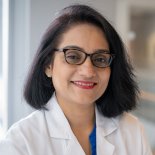
Dr. Manish Shah (host):
Welcome to Weill Cornell Medicine CancerCast, conversations about new developments in medicine, cancer care, and research. I'm your host, Dr. Manish Shah. And today, we'll be talking about a precursor health condition called clonal hematopoiesis. As we age, mutations can develop in our bodies and blood cells. While this is a normal part of aging, some of these mutations have the potential to ultimately cause other health problems or issues, while some do not. Over the past several years, research has been underway to learn more about these various health conditions before they develop.
Dr. Manish Shah (host):
Our guest today is Dr. Pinkal Desai. Dr. Desai is an Associate Professor of Medicine at Weill Cornell Medical College and Attending Physician at New York-Presbyterian Hospital. She cares for patients with leukemia, myelodysplastic syndrome, myeloproliferative neoplasms. And Dr. Desai is also the Clinical Director of the Molecular Aging Institute at the Englander Institute for Precision Medicine. She's involved in research on aging and clonal hematopoiesis, as well as preventative strategies and hematologic malignancies. Finally, and most recently, Dr. Desai is the 2026 recipient of the Janine and Herbert Siegel Faculty Development Award. Congratulations and welcome.
Dr. Pinkal Desai:
Thank you, Manish. It is my pleasure to be here and talk about all the work we are doing at Weill Cornell.
Dr. Manish Shah (host):
It's great to have you. So, let me give a little bit of a background, and then we'll get into the discussion. So over the past several decades, there's really been a revolution in sequencing technology. Sequencing, from a basic standpoint, is a term that we use to explain how we can read the DNA of our cells, the building blocks of what makes each cell what they are. Deep sequencing describes the ability to identify mutations or variations when they are rare, meaning on the order of one in 100 or one in 200, or the other way to think of it is 0.5% to 1% variant allele frequency. We are now in an era of ultra-deep sequencing where we can find specific mutations or alterations that are as rare with a variant allele frequency as rare as 0.01% or 0.1%, or one in 1000 to one in 10,000. So with the ability to find such rare variations, technology is developed to allow us to identify these in a sample of human blood. Various blood tests now exist that can screen for cancer, other health conditions such as heart disease, as well as predict the likelihood or potential for someone developing cancer in the future. That same technology that we're using to find and detect cancer earlier is now being used to identify multiple cancers and also identify risks for cancer. And that leads us to the topic today, which is about clonal hematopoiesis and how we put this all into context.
Dr. Manish Shah (host):
So, Dr. Desai, tell us what is clonal hematopoiesis.
Dr. Pinkal Desai:
Clonal hematopoiesis, the word clonal means there is a molecular fingerprint to it; and hematopoiesis means blood production. As we are aging, our bone marrow cells are dividing trillions of times along the course of a person's lifetime. And just statistically, it is very likely that there are variations and mutations that develop out of a random mistake, so it is not an uncommon process to actually have mutation. If we take these ultra-deep sequencing like you were describing in someone even younger, like 30s and 40s, we will find at a very low level some of these mutations or variations in the genetic structure. It is still not clinically significant at this point. So, what is clonal hematopoiesis? As we are aging, our normal stem cells, which are our mother cells in our bone marrow, we are seeing an attrition or reduction in the quantity of these normal stem cells and these mutated cells. The mutations are actually occurring at the stem cell level; they have a growth advantage. So as people are aging, we are seeing that more and more proportion of hematopoiesis or blood production is being constituted by these mutated cells. And that is the term clonal hematopoiesis. Clinically, what we have discovered is there is a cutoff that might be relevant here—about 1% to 2% in the bloodstream is maybe necessary to have a health consequence later. If you take people who are older than 60, about 10% to 25% can have clonal hematopoiesis, but not everybody develops health consequences from that. So, strictly, clonal hematopoiesis means you have mutations in blood and you have a normal blood count and no hematologic condition. It is an adaptive mechanism for aging. And for some people, it can become maladaptive. And that's where all this research is being conducted to understand why and for which people.
Dr. Manish Shah (host):
The way I'm understanding it is that this is a normal process of aging. Because as our cells divide, we naturally accumulate mutations. Our cells are hardwired to repair the mutations. But not all the mutations are repaired, and some get propagated in subsequent generations of cells, and that's how you get an increase in the frequency of some of these mutations. What is clonal hematopoiesis of indeterminate potential—what is colloquially known as CHIP? Not every mutation is CHIP. There could be some mutations that don't have any significance and some are considered CHIP. Describe that for us.
Dr. Pinkal Desai:
We have come up with many definitions of this process. So, clonal hematopoiesis by definition means you have a mutation with normal blood counts. Clonal hematopoiesis mutations have to be important in blood development. So, you can have mutations that don't have an important role in the process of hematopoiesis or blood production. Only the mutations that occur in specific genes that are important for the development and production of blood are defined in clonal hematopoiesis. And clonal hematopoiesis would mean any variant allele frequency of these mutations. There's no cutoff. It's just that it exists. It could be as low as 1.01% or as high as 30%.
Dr. Manish Shah (host):
So, it's present or absent, essentially.
Dr. Pinkal Desai:
Present or absent, exactly. For CHIP, which is clonal hematopoiesis of indeterminate potential, it is a clinical definition, which right now our hematologic societies describe as having this mutation, but it has to be at a frequency of at least 2% or more. So, the ones that are lower than that are not considered CHIP.
Dr. Manish Shah (host):
So, the genes involved are critical in the development of blood cells or immune cells. And it becomes CHIP when the variant allele frequency becomes 2% or higher.
Dr. Pinkal Desai:
Correct. And the reason there's this distinction is that the original studies that were looking at the health consequences of clonal hematopoiesis found that the clinical significance of health consequences may occur when that frequency reaches that 2% threshold. Below that, they don't cause health consequences because they're just not high enough to do anything.
Dr. Manish Shah (host):
What are some of the health consequences? What you're saying is that people that have CHIP, meaning a variant allele frequency in some of the commonly associated genes with hematopoiesis, when you have a higher frequency, more than 2%, what are you at risk for?
Dr. Pinkal Desai:
So, the first blood consequence that can develop logically is the risk of blood cancers, particularly myelodysplastic syndrome and leukemia, because these are direct consequences of these mutations growing with time and increasing in frequency. There is some increased risk of certain lymphomas as well, but the major risk is more development of myeloid-associated cancers like MDS and leukemia. The second health consequence, which seems pretty odd but is actually quite interesting and real, is the risk of cardiovascular diseases. For years, we have always thought that the heart and the blood are connected somehow. And only recently as we developed these sequencing technologies, we've started to understand why blood and heart are connected to each other. So, why do these mutations cause cardiovascular disorders? And we're talking a variety of cardiovascular disorders, including stroke risk, as well as myocardial infarction. It's because these mutations that develop—DNMT3A, TET2, ASXL1—are inflammatory in nature. So, blood cells that have these mutations not only produce but also attract a lot of inflammatory signaling. And our blood vessels are lined by these cells. So as we are seeing more and more inflammatory cells lining up these blood vessels, it is logical that they can actually form plaques, which is what leads to a narrowing of blood vessels and heart attacks and strokes. The third thing, and I want to put this in a box because there's so many consequences for clonal hematopoiesis, is that while cardiovascular disease and blood cancers are coming directly from the effect of these mutations, there are a variety of health consequences that are happening because of the inflammation that these mutations are producing in our body. So, anything you think that could be worsened by inflammation—autoimmune conditions, inflammatory bowel disease, liver disorders, gout, osteoporosis—all of these are actually seen at a much higher frequency in patients who have clonal hematopoiesis compared to those who don't. So when we think about this as a field and when I'm seeing these patients, we are really looking for a multi-system effect of these mutations and how to protect them from all of these health consequences.
Dr. Manish Shah (host):
So, it's a surrogate for an inflammatory state in the body that is identified by a higher frequency of mutations that are associated with blood hematopoiesis. So then, that begs the question, is there anything that can be done? Let's say that someone has CHIP—can they eat healthier, exercise, and sleep more? How do we manage that?
Dr. Pinkal Desai:
That is the million-dollar question here. It's aging—you can't really stop it. But just like aging research in so many ways, how can you age in a way that is healthy? That is the ultimate question. Naturally, these clones and these mutations are meant to grow. They are constantly growing at an expected speed. And depending on the type of mutation, we actually have sequenced normal, healthy populations for years—this is some of the work we have done in large population studies—and we know the rate of growth per year. So, we are tracking that in our patients. Is this an expected rate of growth that is part of natural aging or is this growing at a rate that is much faster? And that happens more so in people who are destined to develop blood cancers. And that is one part of following and tracking these mutations, because not everybody is going to develop blood cancers and not everybody's going to develop cardiovascular disease. But tracking these will give us an idea of who is going to get there, and we should do something about it.
Dr. Manish Shah (host):
So, this is an aging process. Some people will develop mutations in these genes that are at higher frequency and to the point that they call it CHIP. So, everybody that has CHIP has maybe a higher inflammatory state. Some of those people will also have other consequences that are significant, like other blood cancers or cardiovascular disease. Is that a fair summary?
Dr. Pinkal Desai:
That is exactly correct.
Dr. Manish Shah (host):
What do you suggest that we do if someone identifies CHIP on a blood test?
Dr. Pinkal Desai:
So, I would like to think of this in three different ways, depending on what health consequence we are talking about. So first, let's tackle blood cancer risk. We have many years of research where we've established who will develop these blood disorders. So, there are calculators available where we plug in a patient's specific mutation, the exact quantity in the variant allele frequency, and also some blood parameters—the size of red cells, the hemoglobin, white cell count, platelet count—these are what we call a complete blood count. And it gives us a prediction of whether this patient is at high, intermediate, or low likelihood of developing blood cancer. So, the individuals who have a low risk are pretty much not going to develop these disorders, and we are not really tracking them or following them in clinic. But those who are intermediate or high risk, we are doing serial monitoring at Weill Cornell in our clonal hematopoiesis clinic, where we're now tracking the rate of growth of these clones and saying, "Okay, this person is already at high risk, and this is becoming higher as we are tracking the clones." Now, what are we doing about it? We actually have clinical trials that we are offering. We have two that are open at Weill Cornell with the focus on early intervention. Both are targeting inflammatory pathways because what we know is that if we do cut down some of these inflammatory pathways, we could potentially stabilize these mutations and prevent these blood cancers. So, we do have open clinical trials with luspatercept and canakinumab. They're both targeting hematopoiesis and inflammatory pathways. Otherwise, the standard at the moment is just watching and observing and seeing, so that you detect MDS sooner. But at Weill Cornell, we are trying to take one step further and say, "Can we actually stop these mutations from growing and actually prevent disease?" That's the blood cancer prevention aspect of it.
Dr. Manish Shah (host):
And the second in terms of prevention—as I said, this is a multi-system disorder—is cardiovascular disease. So, everybody who has these mutations above 2%—so CHIP—we recommend seeing our cardio-oncology colleagues, and they are followed by a cardiologist with the aim of preventative cardiology. So, we want these patients to have screening for all cardiovascular disease that may include a stress test or a coronary CT scan to make sure we detect plaques early, and also to make sure that their cardiovascular profile is good. Now, we asked a very interesting question: Do you eat a certain way? Do you exercise a certain way? So, this is where health or lifestyle changes are very important. I don't think lifestyle changes at the moment protect against blood cancers—but cardiovascular disease, yes. There was actually a study that looked at people who have clonal hematopoiesis, and if they followed a healthy diet, for example, they had a much greater reduction in cardiovascular outcomes or risk compared to people who did the same but didn't have clonal hematopoiesis. What it tells me is that if you have a higher risk of developing cardiovascular disorder and do the right thing—exercise and eat a healthy diet—you can actually prevent cardiovascular disease.
Dr. Pinkal Desai:
The third bucket, like I said when we talked before about health consequences, is where a lot of interaction between us as hematologists and primary care comes into play, because the people who have these mutations can develop so many other conditions. And the patients always ask us, "Why is my autoimmune disorder worse? Why do I have such severe osteoporosis?" So, it's a good segue to discuss this even with the other doctors who are taking care of the patient, saying, "Okay, this mutation does increase the risk of gout," so that might be useful information in managing all of these other comorbidities.
Dr. Manish Shah (host):
It's really fascinating. So, it's a process of aging. It is associated with inflammation. There are studies ongoing to see if we can alter the pace of the inflammation. But right now, the standard of care is to look more closely for the consequences in some patients. And you mentioned some founder mutations, but some are commonly seen in cancer like TP53 or JAK2. These are maybe secondary mutations. And that kind of leads to circulating tumor DNA—these are platforms that are looking for mutations in a blood test that are associated with cancer. And the technology for that is also related to the ultra-deep sequencing and the ability to identify very rare alleles. And there is some overlap that leads to this idea that people may be identifying cancer mutations that are CHIP or CHIP mutations that are cancer. Can you speak to that?
Dr. Pinkal Desai:
That is precisely what is happening in a lot of these commercial tests for multi-cancer detection or circulating tumor DNA. These are blood mutations; they are present in all of the blood cells, and we are testing it by doing a simple deep sequencing in our blood cells. Circulating tumor DNA is also taking a blood sample and testing it. So, how are we finding these mutations? First of all, you can't really dissociate your blood cells from tests that are looking for circulating tumor DNA. It's common to get it mixed up. So, I'll talk about technology first and then some of the mutations that sit in both spectra of these testing. When a lot of these circulating tumor or multi-cancer detection tests are happening, and even in whole genome sequencing or whole exome sequencing where people are using blood perhaps as your control, how many of these tests are distinguishing tumor versus not tumor? You are taking blood as a sample for what is not tumor, and then you're testing the tumor cells and saying, "Okay, whatever's detected in the blood is the patient's normal, while what's not is the tumor?" So many tests are personalized fingerprinting and they can use some of these technologies. And invariably, you can find these blood mutations sitting there. On top of it—not to make it overtly confusing—but these are blood cells infiltrating tumors. Tumors are fed by blood vessels. So, you can have these CHIP mutations sitting in the tumor bed that are also being picked up by tumor sequencing. And so, what can happen many times is you see these mutations as part of the tumor sequencing or these multi-cancer detection cells.
Dr. Manish Shah (host):
And those platform reports will often annotate them as likely CHIP mutations, so that physicians can interpret accordingly.
Dr. Pinkal Desai:
Exactly. TET2 and DNMT3A are truly blood mutations, so they're usually being called out, "By the way, we found this mutation and it might represent clonal hematopoiesis." But there are some mutations, like TP53, that are CHIP but also common in solid tumors. So in this case, it becomes sometimes difficult to distinguish—Is this CHIP or is this tumor? That's why you really have to have a discussion, because we many times compare how much TP53 is in the tumor versus how much is in the blood and understand whether this is truly clonal hematopoiesis versus not. Sometimes it is only evident once the tumor goes into remission, because what is left behind is TP53 CHIP and it doesn't go away, and that's how we know. It's very important to find TP53 CHIP even in solid tumors, because there may be prognostic significance in solid tumors, and it's also important to know that someone has TP53 CHIP because we talked about leukemia risk. That is very important in someone going through chemotherapy or radiation. Because if they do have TP53 CHIP—TP53 is a secondary mutation that comes later after founder mutations—and if these are chemo-resistant, these mutations in the blood can actually expand very rapidly post-chemotherapy or radiation. And that can lead to what we call therapy-related leukemia or MDS, which is a consequence of all the therapies in solid tumors. And that is an important entity to establish and detect early, because our outcomes of therapy-related MDS are poor. Understanding what will make these TP53 CHIP expand is important because perhaps we can choose better therapies that do not expand these clones.
Dr. Manish Shah (host):
We don't talk about that too much, but the risk of leukemia and MDS from some of our chemotherapies—in particular etoposide—is present. Think of it as a relatively low risk, less than 1% or 2%. But if we identify TP53 CHIP, that might be an early identifier for the risk of that. That's a really interesting concept. Let me come back to this multi-cancer early detection. So, we talked previously about circulating tumor DNA. One way is to sequence the tumor and then look for those specific mutations, but as you said, there's some overlap, because the tumor is infiltrated by blood as well. So some mutations may actually be coming from the blood and may actually be CHIP. The other way is some platforms use a panel of the most common mutations found in solid tumors—and some of those like TP53 or JAK2 are also seen in CHIP. And so then, that leads to this concern that you might have a mutation—is it truly cancer? Is it truly not cancer? And there was recently a study done by the NHS, England's National Health System, looking at this relatively new test called the Galleri test. And the intent of that test was to reduce the risk of late-stage cancer, stage III and IV, because you're doing this blood test and hopefully identifying cancer earlier. Unfortunately, that was negative, although there was a trend for some cancers. So, this platform is going to be used more often. People are going to get blood tests to look for a variety of different cancers. And as part of that, more and more people will identify mutations that possibly could reflect CHIP and not actually cancer. How do you counsel for that? What should patients do when they identify this kind of thing?
Dr. Pinkal Desai:
That's actually a bulk of some of the work that we are doing with cancer patients at Cornell. First of all, if a mutation is identified like that, the report itself might already call it out saying these mutations are clonal hematopoiesis. Then, what we would do is see them in clinic and calculate those risks that we were talking about for them. And to also remember that if you're finding some of these mutations at an extremely low frequency—0.001%—we don't even detect that in our DNA platforms because we are putting a cutoff to only pick clinically significant mutations. So, we do a dedicated CHIP screening and quantify the risks based on what we find. But this is a feeder test; it may say, "Okay, you might have it." To put a number or risk associated with this mutation, you really need to see a physician who specializes in clonal hematopoiesis risk prediction. It's important not just the presence of the mutation but at what frequency they're present and in what context you're seeing these mutations. Are you seeing a low level 0.5% mutation but the patient is about to get chemotherapy and radiation? That is a different question and requires more thought, because even though it is low, there still might be high risk. That's where the clinical context comes into play. And many times we will do our dedicated test, compare the variant allele frequencies in blood versus tumor, and estimate that this is really clonal hematopoiesis infiltrating the tumor. If we decide it will not impact treatment, the patient proceeds with planned chemotherapy, and it is on us to track it post-therapy so that we can intervene if it grows.
Dr. Manish Shah (host):
It's incredibly complex, and I want to thank you for helping us understand that. So, with our ability to deep sequence and ultra-deep sequence both tumor and blood, we are identifying a spectrum of mutations. Some mutations are pathognomonic for cancer, leading to identifying minimal residual disease in the case of circulating tumor DNA, and early detection in the setting of tests like Galleri. And it may also be an indicator of an inflammatory state in the case of CHIP as we get older. It makes me think that the better our technology is, a positive test may actually lead to more tests.
Dr. Pinkal Desai:
That is truly the case—the more we find, the more we find. But I like to think of this as a way of knowing what happens early in the biology of these mutations. True, it can lead to more testing and CHIP-specific testing, but the good thing is we do know prediction models of clonal hematopoiesis. In the hand of an experienced physician, they'll look at it and say, "You don't have to worry about it." And if there is something of concern, we have an ability to alter the course of disease, which goes a long way in preventing so many health consequences—cardiovascular disease, leukemia. So, while it generates anxiety initially, we can parse the information and give appropriate advice to patients.
Dr. Manish Shah (host):
So, what do you hope to see in the future? Where do you think this can go?
Dr. Pinkal Desai:
I see the field detecting clonal hematopoiesis in two contexts. One is detection in the setting of solid tumors, where we advise on what this means for the solid tumor and future risks. Second is prevention of other comorbidities and dedicated screening, because we know who is at high risk for clonal hematopoiesis mutations. There may be a world where dedicated screening for this is deployed. We are doing it at Weill Cornell as part of a research study, but it's not standard yet. If intervention trials prove we can alter disease course, that would lead to dedicated screening and intervention.
Dr. Manish Shah (host):
With the intent of reducing or stabilizing inflammation, reducing future risk—cardiovascular or cancer-related risk and toxicity—this is an incredible advancement. And with new technology, we learn new things. I appreciate that you are at the forefront of that. Any final thoughts?
Dr. Pinkal Desai:
I'm a leukemia doctor and hematologist, and that's how we got into the field of studying blood. But this calls for a real collaborative effort between subspecialties—cardiovascular, solid tumors—because these mutations also may alter solid tumor outcomes. A multidisciplinary conversation is important to define risks, prescribe treatments, and monitor appropriately.
Dr. Manish Shah (host):
We are at the forefront of this. I think we need to test and then examine. Thank you very much for your time today. This was really insightful and enlightening. You can download, subscribe, rate, and review CancerCast at Apple Podcast, Spotify, YouTube, or online at weillcornell.org. We also encourage you to write to us at CancerCast@med.cornell.edu with questions, comments, and topics you'd like to hear us cover in the future.
Dr. Manish Shah (host):
That's it for CancerCast, conversations about new developments in medicine, cancer care, and research. I'm Dr. Manish Shah. Thanks for listening.
Disclaimer:
All information contained in this podcast is intended for informational and educational purposes. The information is not intended nor suited to be a replacement or substitute for professional medical treatment or for professional medical advice relative to a specific medical question or condition. We urge you to always seek the advice of your physician or medical professional with respect to your medical condition or questions. Weill Cornell Medicine makes no warranty, guarantee, or representation as to the accuracy or sufficiency of the information featured in this podcast, and any reliance on such information is done at your own risk. Participants may have consulting, equity, board membership, or other relationships with pharmaceutical, biotech, or device companies unrelated to their role in this podcast. No payments have been made by any company to endorse any treatments, devices, or procedures. And Weill Cornell Medicine does not endorse, approve, or recommend any product, service, or entity mentioned in this podcast. Opinions expressed in this podcast are those of the speaker and do not represent the perspectives of Weill Cornell Medicine as an institution.