

00:00:00
Speaker 1: The talk station.
00:00:02
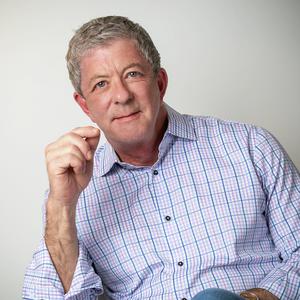
Speaker 2: It's seven thirty here if you have KCD talk station. I'm very happy Friday Eve to you. I'm so happy when it came in the morning, I saw Peter Bronson. He's going to be on the rundown, and he is on the rundown and he's on the phone right now. Peter Bronson, I can call you a friend, and I love that I can do that.
00:00:15
Speaker 1: Peter.
00:00:16
Speaker 2: It's great to have you back on the show. Of course, everybody knows who you are, but he was an award winning columnist, editor of The Inquirer, wonderful authory he and you buy a Peter Bronson book, just go to Amazon or chilidog Press dot com. That's his publishing company. If you want to beat your book published, reach out to Peter Bronson and try to get him to publish your book. He has written fabulous books. I've read every one of them, so you can't go wrong with the Peter Bronson book, including Forbidden Fruit, Sin Cities, Underworld, and The Supper Club Inferno. Welcome back, Peter Bronson. It's always a pleasure talking with you.
00:00:49
Speaker 1: It's always good to be with you. My friend Brian and who knew we had so much in common until we had lunch and found out we both enjoy past cars and powerful guns and yeah, and just a career that's based on informing people and sharing opinions. It's really cool. It was.
00:01:07
Speaker 2: I cannot tell you how much I enjoyed our conversation at lunch. And we can give a shout out to your restaurant because you steer me in the right direction. Over in Milford that's a place called The Governor, and I can strongly recommend that, and maybe listeners who've been listening to me a long time know how I can wax poetic about really good pastrami which you can't find in Cincinnati. Well, Peter said, try the pastrami Rube, and I looked at him and said, dude, I'm the sommolier of pastrami. Man, it's got to be a high bar product for me to like it. And they have a great homemade pastrami. So it props to the Governor and free advertising for them, because I thoroughly enjoyed the meal and it's a quaint little spot. But Peter and I had a wonderful conversation caught up on things, and yeah, we do have a tremendous amount of common Now, you wrote about the Beverly Hill Supper Club and your book Forbidden Fruit, which is about the mob, the crime, and the organized crime that existed in northern Kentucky for so many years, which ultimately led to the Beverly Hills Upper Club burning down. Paint a little picture for my listening audience. Give an idea how we got to the torching of the supper club thirty or forty nine years ago.
00:02:09
Speaker 1: Well, the whole story of the organized crime, the big mob, the Cleveland four mob in northern Kentucky is really surprising to me. And as I've gone out speaking about it for the past five years, many people say they too are shock. You know, they always knew there was something going on there. But you know, my parents always told me to stay away from Newport, and people say things like, you know, I can't believe this really happened, but I know it's true right here in Newport. So that was the big Mob. It was Cleveland four that came down and took over the whole area, Covington and Newport. They built all these Some were cheap dive clubs called bust out joints and others were really swank, and they were called carpet joints. And one of those carpet joints was known as the Beverly Hills Country Club, which was closed down in nineteen sixty and Bobby Kennedy came to Newport as the Attorney General and sent his man to clean up Newport and chase the mob out, and it closed down. It was shuddered like a time capsule until the Shilling family reopened it in nineteen seventy five. Now in seventy seven, on this very date, that would be forty nine years ago, it burned and the fire was horrific. It's still remembered so well by so many in Cincinnati. Oh yeah, it tilled one hundred and sixty five people. One of a fire investigator called this the biggest mass murder cold case in US history.
00:03:39
Speaker 2: How did did the Shilling family get the basically what amounted to this mob murder scene. Why did they quote unquote deserve a hit like that? Why were they targeted? Peter?
00:03:51
Speaker 1: Well? Even in FBI documents that I found from the FBI vault, which is where they keep their formerly classified documents. In those documents they refer the FBI refers to Dick Schilling as a mob connected guy. He was on the fringes probably, but nonetheless he knew people who were definitely mob connected. And he had owned the lookout House before that that burned as well. So you know, you can chalk this up to coincidence if you want. But when you see more than a dozen Cincinnati nightclubs and restaurants burn in the years leading up to this fire, and then this one burns, and it just so happens there one hundred and sixty five people killed in it, and the first thing the governor said was that it had to be an accident. This is just nonsense. You know, people didn't believe that then and they don't believe that today. It's like being told the same old lies about JFK. Oswald acted alone. UFOs are just swamp gas. Epstein just committed suicide. You know, people don't believe these things, and they're right.
00:05:00
Speaker 2: They are indeed right, and we'll pause, will bring them back and we'll talk about you know, it's not just mob. Officials and other criminal activities might lead to things being burned down, But when you have a corrupt police department and corrupt elected official seven thirty nine fifty about KRC the talk station right the time was with Peter Bronson, publisher, author and an all round great guy. Get a copy of Forbidden Fruits in Cities Underworld and the Supper Club Inferno as we talk about the anniversary of the Beverly Hill supper Club fire, a mass murder. As the fire inspector mentioned, speaking of fire inspections there, Peter Bronson, we know there was corruption among elected officials and maybe even fire personal or police personnel. Why because they couldn't even do a proper investigation of the fire because they had it bulldozed the next day. Am I right?
00:05:45
Speaker 1: You're absolutely right. You know, there were about five or six investigations over the years, and they all came to the same conclusion that they could not determine the source of the fire. So the notion that this was solved by that lawsuit Involvingsley and luminum wire, it's just nonsense. But absolutely you're correct. The one of the fire marshals that I interviewed told me that when he arrived on the scene, he implored the governor to please set aside and put up crime tape and treat this as a crime investigation, and the governor basically told him to take a hike, that he was going to put the state police in charge, not the fire marshals, to investigate this fire. And they bulldozed and destroyed the scene of the fire. The Zebra room was where it began, and that was the first target of the clamshell crane to go in and destroy evidence.
00:06:36
Speaker 2: Oh, that was just a fun coincidence, Peter, Yeah, right, but you know, go ahead, Oh, I was just going to say there was a fire investigator in there who did take photographs of this where the fire actually started. It was an HVAC system and you could see the flames of the burn marks flowing out of it. That information was, though hidden. You know, if the defense attorneys in the lawsuit against illuminum wiring folks were able to get ahold of the box of documents that was later found and could see those photographs, they could amounted a wonderful bulletproof defense to Sanchezley's allegation that aluminum wiring caused it.
00:07:15
Speaker 1: Exactly. You know, those pictures were hidden for twenty years, and the state police in Kentucky said that there was no there's no foundation for a freedom of Information Act request to obtain the pictures, which turned out to be totally untrue. When they were finally released as a result of litigation, they were shocking. They showed the massive damage to the air handling system down there. They showed what fire investigators called, quote very strange things in that basement, including wiring that had been plugged in rob stripped wires had been jammed into outlets that were connected to this explosion. What looks like an explosion in the air handling system. So you know this thing was wired. It was. It's extremely suspicious, it's very obviously arson when you begin to look at the evidence.
00:08:09
Speaker 2: So the motive for the then governor to launch this cover up, the motive of the police and to quote unquote investigate it when they were ill equipped to do so since they didn't have the requisite skill sets to conduct a fire investigation. Presumably, and I've seen enough mob movies to know that the mob quite often is in control of elected officials. They see that they get elected, they put money behind their campaigns, that kind of thing. You think maybe there's something to that in this particular case.
00:08:34
Speaker 1: Peter Bronson, Oh, absolutely, you nailed it, Brian. This is all part of the legacy of corruption, which was like a cancer in northern Kentucky that the mob caused. You know, they got people accustomed to having corrupt officials and government officials who were on the take. When the governor appointed his panel to investigate this, all but one of the people were later either coned or disgraced and scandalized in corruption. The state police, the man who is charge of the state Police was later found to be corrupt. The governor himself was caught in various corruption with payoffs and kickbacks. I mean, it was just layer after layer of these corrupt officials, and it really any casual observer would would quickly raise the question of who was on the take, who was being extorted by the mob, and who was actually in place to cover all this up.
00:09:32
Speaker 2: Now, of course, elected officials going to join the fruit enjoy the fruits of the money that flowed in from all these casinos and illicit joints that were running in northern Kentucky. In Newport, generally speaking, do you know anything about what the residents who were living around the neighborhood felt about that, because I know the city of Cincinnati kind of viewed it with a knot in a wink. It's not in our neighborhood, but we get the benefits of the prostitution, of the gambling right across the river. That's their problem. Did the locals have any say, any, any thoughts are feelings collectively about that? Because you know, you can vote people out of office. But I just wonder, you know, was this ignoring constituents to allow this to go or did the people in Newport that live there really like it as well?
00:10:12
Speaker 1: Well, you know that's a great story too. You're absolutely right. So the community of Newport was divided. There was a faction that they called the Liberals, and they were the ones who said that this is the only real economic development tool we have is to be in bed with the mob and run illegal casinos and prostitution and all this crime. And the leader of that faction was Johnny TV Paluso. On the other side was this Committee of five hundred that was formed by residents who were fed up with this, and they drafted George Raderman to be their reform sheriff. And that turned into another huge battle and scandal that made headlines all over the US. So the Committee of five hundred finally did prevail and they managed to get Radaman elected. When he was elected, he had to replace the entire Sheriff's department practically of its officers, because that most of them were on the mob payroll. It was really that some of the stuff that was going on there is pretty astonishing.
00:11:16
Speaker 2: Really, you know, I say this not knowing whether one was made or not. This this could make a wonderful movie. You know, It's not Chicago mobsters, you know, Saint Valentine's Day master type stuff. But man, the corruption, the graph, the murders, this this would make a perfect movie.
00:11:33
Speaker 1: Peter Oh absolutely, just dwelling or drilling into the scandal involving George Radaman when they slipped him knockout drops and put him in bed with a stripper and tried to frame him up when they thought that would destroy his reform sheriff campaign, and instead he showed that he had been given chloral hydrate from blood tests. The whole thing backfired. I mean, we have all these cast of care. We have Redmasters and the hit man from the mob. We have Mo Delitz, the big boss of the Cleveland four sleepout Louis. I mean, it just goes on and on.
00:12:11
Speaker 2: Well, Fuz, we'll bring Peter Vack. He's got a lot more nuggets that you're just gonna certainly encourage you to get his book and read it because it's great. More with Peter Bronson, Don't cole A Jimmy care Fireplace and stuff. Was the less Say talk station seven fifty fifty five KERCD talk station by the time it was Peter Bronson publisher, author, chilidog Press dot com. Find Peter and Maureen gets your book published at Peter Bronson's Chili Dog Press, that is, if it meets his muster Chili. He also wrote, and we're talking about Peter Brownson about the anniversary of the Beverly Hill supper Club. He wrote about this in great detail, along with everything else about the corruption of Newport and mob activity, forbidden Fruits and cities underworld in the supper Club Inferno. The Shilling family, we talked about them early in this this interview. Peter. Why were they? Why was their club burned down? What did they refuse to do?
00:13:00
Speaker 1: Why?
00:13:01
Speaker 2: What didn't they capitulate to that the mob wanted the sale of the building to the mob.
00:13:05
Speaker 1: Is that?
00:13:05
Speaker 2: Is that what it boils down to?
00:13:08
Speaker 1: Yeah, that's what I interviewed some people who are working there that night, including a waitress who said she saw people show up and an issue an ultimatum to Dick Shilling, the owner, basically, here's a check, fill it in with any number you want, and he refused and kicked him out. And then what she came to the conclusion that this was a mob basically offer you cannot refuse. And what was going on then in the late seventies was we were looking at pushes in Congress to offer legalized casino gambling, and in fact, Atlantic City opened the following year, so the big casinos were already on the way, and Dick Shilling wanted to be part of that. He had excavating and construction equipment on the site to expand the Beverly Hills supper Club, and that his at the time was probably to open that as a casino if you could get the authorization. After the fire, he moved to Mississippi eventually and became the godfather of riverboat casinos in Mississippi, where he became fabulously wealthy. So this all follows that pattern, and it also follows the pattern that the mob which had run the Beverly Hills Country Club or previously wanted that back and saw the value of this fantastic nightclub what it could be as a casino.
00:14:34
Speaker 2: Let me ask you this, Peter, why Newport? I mean for the mob to you know, the Chicago mob or the Cleveland mob to just decide that we're going to set up shopping take her for Newport and put all these clubs and these illicit joints. And what I mean, I think to be a reasonable question. Why not, I don't know, pick another city or anyplace else in the in one hundred mile radius.
00:14:55
Speaker 1: Yeah, that's a great question. And it turns out it's the same reason that big corp operations like Kroger and Procter and Gamble are headquartered here, because we have such convenient access to these huge population centers such as Chicago and Pittsburgh and going south in every direction, Cincinnati is ideally located. And this was quickly spotted by George Remas, the national king of bootleggers, who set up in Newport as his distribution center. And the decision for Newport versus Cincinnati because he lived in Cincinnati, is pretty clear that it was an economy of scale for corruption. You just don't have to bribe that many people in little Newport. You can own all of the law enforcement people that judges the politicians for a very reasonable costs compared to trying to do that in Cincinnati Chicago, for example.
00:15:46
Speaker 2: And you answered, because the next thing was going to be well, why not just Cincinnati, where we we far more moral than allow that to happen. It was simply a question of a numbers game. There were just too many people that need to be paid off in Cincinnati.
00:15:58
Speaker 1: Yeah, Remas said that he paid more than a million dollars a year in graft and corruption, and that everybody had their handout, including Cincinnati. He would complain about that. So, yeah, I think it was just too many people to pay off, to keep their mouths shut and to look the other way. In fact, they had a name for it. They called it the Newport eye. The Newport eye was the practice of always looking the other way with the mob wanted to do business, and they did fantastic business.
00:16:27
Speaker 2: Just amazing, And of course, of course the resulting deaths can their tragedies cannot be understated, especially when you know how unbelievably horrific this was, and the fact that it was buried and covered up with a class action lawsuit against a luminium wiring companies by Stan Chesley. And I want to thank you again for writing about him in Magical History Tour. That's another book you need, together with Peter Browns and Magical History Tour, Murder Mystery and Buried History. These really wild stories that happened in the greater Cincinnati area, including I love the way you wrote the story about this, the Beverly Hill supper Club fire litigation, Peter the last story the book.
00:17:01
Speaker 1: Yeah, that was amazing. He was the master of disaster, the King of torts, they called him. He was the class action guy. He claimed that he invented the class action lawsuit as a result of beverll Hills supper Club fire, and he did become fabulously wealthy. His settlement of fifty million was a record time and it became also a textbook case for tort reform because he took so much of the settlement. It was considered a scandal even back then that he had taken so much and left so little for the victims of the fire.
00:17:39
Speaker 2: In My Apologies, you wrote about the fen Fen litigation, but it sprung from the whole idea that he was mister class action. He ended up getting obviously disbarred and should have gone to jail as a consequence of ripping off his own clients in the fen Fen litigation, which he wrote about in the book.
00:17:53
Speaker 1: Yeah, that was a unbelievable case of lawyer greed. It's again, it's just unbelievable. At one point to judge that case that he wanted to put everybody in prison, all of the lawyers, including the lawyers that were defending lawyers. So he was bet up as just as everybody else was who watched that trial, because it was just amazing. The typical, as you know, Brian, the typical settlement in a class action gives a third to the attorneys who bring the suit, and in this case they took two thirds, and they just kept taking it taken.
00:18:31
Speaker 2: It was ridiculous, absolutely ridiculous that you would throw your career away and risk prison like some of them got for doing that. It's just mind boggling. Anyway, I have higher ethics than that. I can say that was a straight faced Peter Bronson. Again, thank you so much for the beautiful ones. We got to do that again, Thank you so much for the brilliant writing. You do again, folks Forbidden Fruit, since that he's underworld in the supper club Inferno, Joe Strucker is going to put a link up to get your books so my listeners can easily grab a copy of it. We'll do that on the blog page fifty five KC dot com.
00:19:00
Speaker 1: It's
