


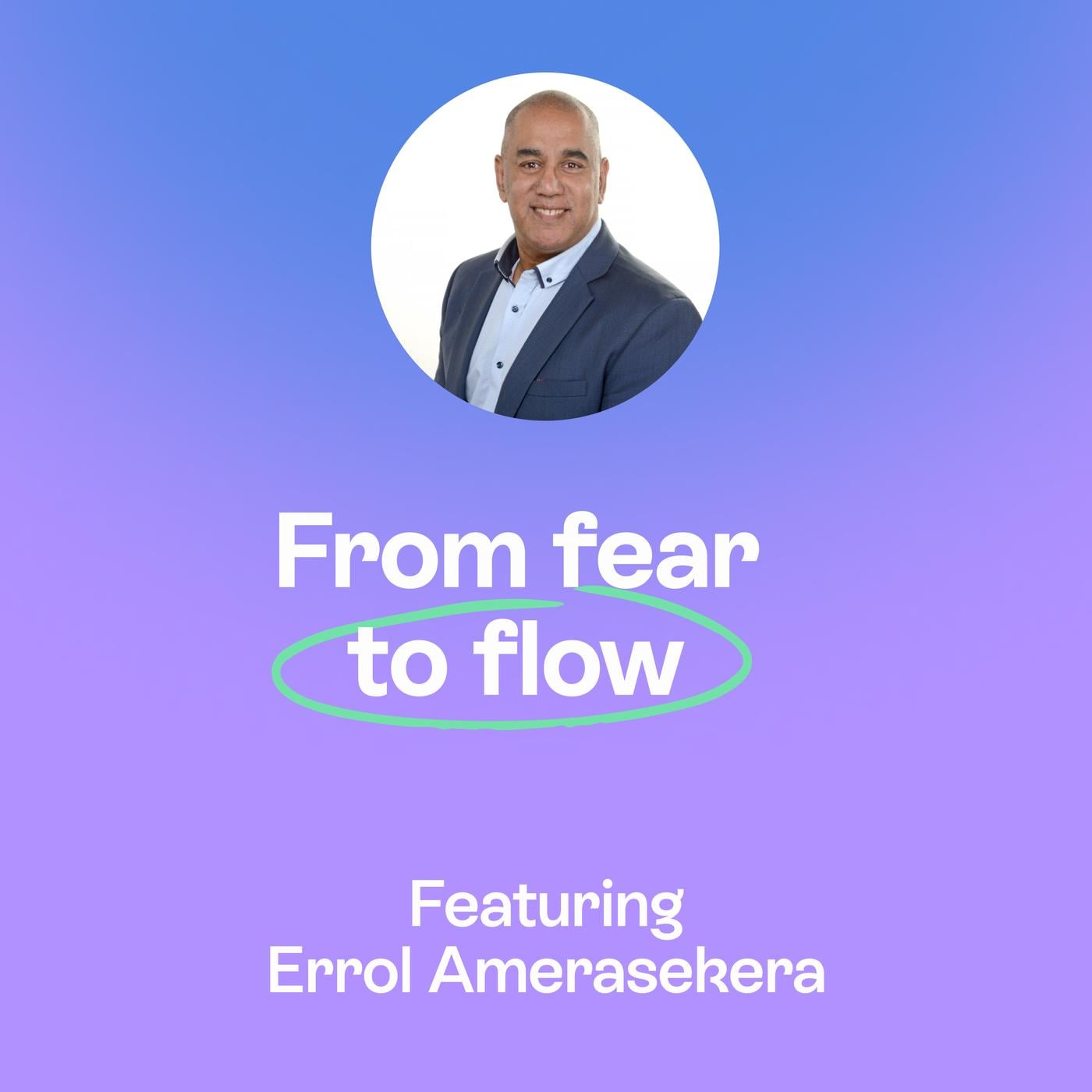
Bee Murray, Bee Formless: Hello and welcome to the Bee Formless Flow and CEO podcast, where we are reshaping life, leadership, and business from the inside out. It's sunny in Melbourne today, beautiful vibes. Spring is in the air. The energy is shifting. So big shout-out to all the listeners out there a big kind of hello to you all. Today we are welcoming to the show close by in Melbourne. So hence why the smile when I talked about the sunshine. Errol Errol
Errol Amerasekera: Mm-hmm.
Bee Murray, Bee Formless: Amaraska Emaraskira. Did I get that right, Errol? my god.
Errol Amerasekera: That's pretty close. I would say Amarosecara, but I'm not precious about it.
Bee Murray, Bee Formless: I tried my best, and that's all that matters, isn't it? Totally.
Errol Amerasekera: Tomato tomato.
Bee Murray, Bee Formless: Welcome to the show, Errol. How are you?
Errol Amerasekera: I'm great, B. Thanks good to be here. Thanks for having me.
Bee Murray, Bee Formless: Are you enjoying the spring vibes? I mean, is is it a tease? I don't know. Like it feels like it's you know, it's it's here to stay, hopefully.
Errol Amerasekera: Well either way it's a nice little like teaser of spring and it's like this as I I walk in this morning was beautiful.
Bee Murray, Bee Formless: Yeah, it does it does change the energy, right? The vibe. I don't know, anywho. I this is I am so excited about this conversation. I I mean I say that with everyone I talk to. However, there's something really great about what we're gonna t going to talk about and we're gonna talk a lot about Flow State today, which is one of my favourite things in the world to talk about. So I want to get right into it straight away. You're an author, a speaker and director of Bluestone Edge, and you help leaders and organizations create inclusive, high performing cultures where people can flourish. Absolutely love that. You had an important inflection point and it emerged through Errol your own experience growing up as one of very few brown skinned children in predominantly white environments. And that feeling made you feel out of place and unsafe and it shaped a lifelong commitment to create creating the kind of environments you needed yourself. Places where people feel welcomed, valued, and able to belong. You're here for that. Today, Errol, you bring psychology leadership and more than two decades of experience into helping organizations navigate complexity and build cultures where humanity and high performance can come. And your latest book, Drumroll, From Fear to Flow Flow, The Adaptive Safety Revolution explores how teams can remain connected, adaptive, and perform under pressure. It's is it backwards to you? Is this have I got it in this?
Errol Amerasekera: No, I can see it in normal orientation.
Bee Murray, Bee Formless: Right, okay. It's it's looking like that a little bit to me, so I just want to make sure. So I'll say that again. The your latest book, From Fear to Flo From Fear to Florida, The Adaptive Safety Revolution, explores how teams can remain connected, adaptive, and perform under pressure. And so at the heart and soul of your work is a belief that leadership is not a fixed identity. By becoming more aware of the context around us, we can let go of who we think we need to be and step into the role that allows us to be of great greater service. And you and I were just talking then even around this epiphany that I've had just recently and you said you were thinking about the same thing this week around this pushing and this almost that's an i identity in itself that we get attached to, right? There's good and bad sides to performance. I'm gonna hand it over to you, Errol. You can start wherever you like because like I said, this is an action packed conversation that I'm I'm looking forward to hearing from you.
Errol Amerasekera: Bee where would you like me to start? There are so many jumping off points in your introduction there. Have you got a thought where we can start off?
Bee Murray, Bee Formless: I think let's start with growing up in terms of when did the realization come to you that you were like I I need to make this my mission in life to create environments where people feel safe b and the ability to belong and the ability to you know, like perform in a way. Like in and I'm not Tradeshing perform, perform, but like in terms of from a culture perspective. Like when did you come to that act
Errol Amerasekera: Yeah.
Bee Murray, Bee Formless: in the
Errol Amerasekera: So the epiphany probably happened like relatively recently, believe it or not, at a fully conscious level. That's I think that's the important part to realise.
Bee Murray, Bee Formless: Yeah.
Errol Amerasekera: So the backstory is my parents are from Sri Lanka. I was born in England and we migrated to Melbourne in the early 1970s, and it was just after they abolished the White Australia policy. So I was the only brown skinned kid in my primary school, one of only a handful of brown skin kids my secondary school. So from the very start I felt I knew what it felt like to feel on the outer, like I wasn't welcome, like I didn't belong. And so that I think has unconsciously shaped my professional direction. I often say that for many of us, what shapes our direction in life is to need to create the kind of world that we ourselves needed as kids.
Bee Murray, Bee Formless: Hmm.
Errol Amerasekera: And for sure, as you know, eight-year-old, ten-year-old, fifteen-year-old, they're all I needed a world where there was more belonging, more inclusion, more tolerance, more ac acception ac accepting of difference. so that's kind of shaped the work I do around culture. And then I linked that with like leadership and culture work and performance, and trying to debunk this thing that. Culturistic soft skill that's a nice to have
Bee Murray, Bee Formless: Yeah.
Errol Amerasekera: whereas actually culture is the main driver of performance. And then
Bee Murray, Bee Formless: Yeah. It's so
Errol Amerasekera: discovering the link between safety and performance.
Bee Murray, Bee Formless: Mm.
Errol Amerasekera: And how so many of the drivers which make performance sustainable have culture as a as a sorry have safety as a precondition.
Bee Murray, Bee Formless: Mm.
Errol Amerasekera: So we talk about things like innovation or giving constructive feedback or collaboration all require some degree of safety to f to full account. And yeah.
Bee Murray, Bee Formless: Yeah, absolutely they do. And familiarity, don't you sorry, yeah. Yeah, yeah, I was gonna say familiarity as well, because safety is f is equals familiarity in a way as well. Like you've you know, you want to feel s within the environment, you wanna be able to connect with people, understand each person, etc. It's like the group flow triggers, isn't it? How then how then did There's so much to unpack here. But how did flow state come into play in terms of when you talk about culture, you talk about environment, you know, you talk about performance. When it when you're unsafe then i i i there is fear. And and when you're in a f in a like a flight or flight mode, it's quite impossible to
Errol Amerasekera: Yes. Yes. I think for me B goes back to working in sport a lot. And
Bee Murray, Bee Formless: Mm.
Errol Amerasekera: those of us who play sport or follow sport know this term like being in the zone. Which is a flow state, right? And for a long time, maybe even still, we think of being in the flow as this magical moment of like luck where something happens and we're in the flow and it's like a moment of grace or luck and we really can't control it. And then we're out of the we're out of the zone again. So my like last 10 years of my life have been studying how do we make being you know in the zone like replicable.
Bee Murray, Bee Formless: Mm.
Errol Amerasekera: What are the ingredients which are which remove the blockers of flow and then allow our natural state of flow to come to the fore.
Bee Murray, Bee Formless: Yeah.
Errol Amerasekera: And what I've learned is the bit in teams especially, the biggest blocker of flow of flow state is a lack of safety.
Bee Murray, Bee Formless: Mm.
Errol Amerasekera: Because in the book I talk about the three pillars of adaptive safety, which is like trust, inclusion, and connection.
Bee Murray, Bee Formless: Yeah.
Errol Amerasekera: You already talked about familiarity and connection. So when you have those three things in a team, there that's the foundation to a natural flow state and and and the levels of safety. So how do we how do we embed those behaviours that increase trust, connection and inclusion and remove the blockers that
Bee Murray, Bee Formless: Well i yeah, it's a really
Errol Amerasekera: detract from trust, connection and inclusion?
Bee Murray, Bee Formless: Yeah. It's interesting, right? Because it it feels like the world in in totality is struggling like that no one feels like they're trusting one another at the moment. And I'm I'm interested in your thoughts on that because inclusion and connection, you need you need all three to come through. Are you seeing like what are you what are you seeing around trust at this point in time? And there's obviously, you know, you've what you I should have caught that out of the start. You you've worked with some very big brands when it comes to in Australia and and well known brands globally when it comes To sport, for example. I I I'm talking about in in general, there just there feels like there's a trust deficit at the moment because everything is up for grabs, there's a lot of unknowns, it's like who do you trust? What do you trust, etc.?
Errol Amerasekera: Yeah.
Bee Murray, Bee Formless: What are you seeing? And and how is that impacting then this three, I guess, three-tiered framework that you're talking about here?
Errol Amerasekera: I feel like B, we're in a paradigm shift around performance.
Bee Murray, Bee Formless: Mm.
Errol Amerasekera: That what's worked probably since the Second World War as the industrial kind of revolution, where it's about precision and predictability. Predictability was power in some ways. And performance up till recently I feel like, you know, and it's it's not sort of a binary thing. I think we're phasing out of the old model and phasing into a new model maybe. I feel like the old way was something more transactional, more extractive in how we extract performance out of people. So
Bee Murray, Bee Formless: Yeah.
Errol Amerasekera: we extract passion, we extract goodwill, we extract intellectual property, we extract commitment, we extract innovation, which creates this kind of burnout. And then behind that is the the constant need to push. to push, to push, to push, to push. And I think that model it's actually worked really well.
Bee Murray, Bee Formless: Well, it's an i it's an addictive model too. I mean I get addicted to it and then I and then I have these moments of pulling out going, Whoa, hang on a second, here I am again. How did I how did I end up here? Doesn't feel good.
Errol Amerasekera: Yeah. And we've and we feel that addiction is a personal thing with like, you know, aerosychology or B psychology, right? Whereas
Bee Murray, Bee Formless: Yeah.
Errol Amerasekera: I think it's partly our own addictive tendencies and our own personal psychology, but more importantly, it's the environment we're in and the things the environment tells us we should value. So we're
Bee Murray, Bee Formless: Yeah.
Errol Amerasekera: constantly brainwashed. you know, it is a strong word, or conditions a less strong word maybe, about what performance looks like and how we're expected to deliver performance. And what I'm and what I'm
Bee Murray, Bee Formless: Mm. Tee? Who's are you?
Errol Amerasekera: n what I'm noticing is that more and more that old model of extractiveness or transactional way of performing is less effective.
Bee Murray, Bee Formless: Yeah.
Errol Amerasekera: Its usefulness is diminishing over time. And the leaders, the team, sort of having a more collaborative, ecological way of driving performance.
Bee Murray, Bee Formless: Can you explain, sorry, can you explain what you mean by ecological way of performance just for everyone out there in the listers and also myself? Yeah, what do you what do you mean by that?
Errol Amerasekera: So when I say ecological, I mean number one, we view the team or the business as a system. And in the system, each if you look back to an ecosystem like in a pond, right? Or a forest, each each bacteria, each bird, each frog has its own unique contribution to the system.
Bee Murray, Bee Formless: Mm.
Errol Amerasekera: So an ecological approach views each role as critical in the system and perhaps more importantly the connectivity between those roles
Bee Murray, Bee Formless: Yeah.
Errol Amerasekera: is critical to the functionality and therefore performance of that system.
Bee Murray, Bee Formless: Hm.
Errol Amerasekera: So nothing happens in isolation.
Bee Murray, Bee Formless: Yeah. And so that is so then when you talk about the paradigm of performance and it's shifting, so is it ultimately shifting from this transactional extractive into exactly what you're talking about, more ecological, more regenerative, more connected. Like trust obviously comes c trust, inclusion and connection they come into play. D and I and I for me is a the adaptive piece because your book focuses a lot a lot on ad adapt adaptive in terms of why adaptive safety matters, core capabilities of adaptive safety, putting it into practice, leadership and paradox.
Errol Amerasekera: Yes.
Bee Murray, Bee Formless: Hmm.
Errol Amerasekera: Yeah, so I think part of that new paradigm is the system is constantly in flux. It's ever changing. And what good teams and good leaders do, part of them is also always tracking how the system, how their team is functioning. Excuse me, and they're tracking What are the behaviors? I call them micro behaviors. The tiny, usually non-verbal, often unconscious interactions and social cues that increase or decrease safety. Right? We've all said in a meeting, where after a one-hour meeting, safety increased or decreased.
Bee Murray, Bee Formless: Yeah.
Errol Amerasekera: So if we're in a meeting and someone and I'm talking and you roll your eyes at me, the whole group feels less safe.
Bee Murray, Bee Formless: Yeah.
Errol Amerasekera: If I'm sharing something I'm nervous about and you go, wait, Arrow, that's a big thing. Say more about your nervousness, safety goes up.
Bee Murray, Bee Formless: Yeah, okay.
Errol Amerasekera: So that thing of safety, I think here's the adaptive part of it. We've tended to think of safety as this thing that's fixed. Once we get it, it's a fixed state. Actually, it changes hour to hour, minute to minute, by the small micro behaviors we exhibit and how we feel about those behaviours. So what good teams are able to do is track the subtle shifts in safety and then work out which behaviors, which micro behaviors increase safety and do more of those, and which micro behaviors decrease safety and do less of those.
Bee Murray, Bee Formless: Yeah. Interesting. Are you seeing this in sporting teams as well? Like I mean in in terms of if it it's I understand it in a like a corporate environment and a leadership environment. I guess
Errol Amerasekera: Yes.
Bee Murray, Bee Formless: it I guess it is happening in sporting organizations as well, right? And and teams. Like are you noticing it in that as well?
Errol Amerasekera: I think I think by there's some there's some overlap between corporate and sport. I think s the sport teams something about sport, it could be just the short performance cycles where you play a game next week.
Bee Murray, Bee Formless: Yeah, yeah.
Errol Amerasekera: It could be the public nature of losing, the pressure to win from a fan base that's very public that drives this. But undoubtedly the the teams I work with that are able to foster genuine relationships and connection are the teams that invariably perform under pressure, can change their game plan mid mid-game or mid-quarter, can give that constructive feedback in the middle of the heat of battle in a in a football game or a cricket game. Because the safety's there, the connection's there, and the adaptability is there.
Bee Murray, Bee Formless: Yeah.
Errol Amerasekera: So we take that and we take it to like the corporate world where most leaders I speak to say the pace of business has never been faster. You know, like they do a three month strategic planning cycle, it's redundant in six six months. I read a research article which said leaders were saying the business has evolved more in the past four years than the past two decades combined.
Bee Murray, Bee Formless: Yeah, it's crazy, isn't it?
Errol Amerasekera: That's crazy and most big like a McKinsey will say that this pace of business going faster is not a permanent it's a permanent shift, not a phase we're going through.
Bee Murray, Bee Formless: No, I agree. And and this is why I love the adapti adaptive, what you're terming as the adaptive revolution in terms of and and the fact that nothing is fixed and and and for me that really resonates with my formlessness in
Errol Amerasekera: Yeah.
Bee Murray, Bee Formless: terms of don't get me wrong, you need structure, you need a system. It's it's the ability to be able to adapt within it and be able to pivot pause at times also to kinda look and take a take stock at hang on a second, what w what do we need to reshape here to get the safety back to where it should be or th or the connection. Do you know what I mean? Or the trust? Yeah. Yeah.
Errol Amerasekera: Yeah. Yeah. I I love what you're say I love what you're saying, B. It it makes total sense. If I put it into
Bee Murray, Bee Formless: Yeah. Yeah.
Errol Amerasekera: like my language, I would say when I coach leaders, the qu one of the key questions is based on the context, that's ever shifting. Based on the context, what's my role required of me in this moment? Right? And that could change our to hour. Because the context will shift, the team dynamic shift. So what your role requires of you shifts. And that requires a very like loose or formless in your language attachment to your own identity. Because
Bee Murray, Bee Formless: Yeah.
Errol Amerasekera: if your identity is more malleable or fluid, you can change how you orient, how you take up your role based on the role demands or the context in the moment.
Bee Murray, Bee Formless: Absolutely. So then what are you seeing as the biggest blockers at the moment or g or opportunities for leaders? I mean, I know you you focus on teams and culture as well. I I read a great article yesterday with regards to Stephen Cotler, I'll forward it to you. He talked yeah, he talked around AI and almost like
Errol Amerasekera: That'd be great.
Bee Murray, Bee Formless: to like stop stop getting so fixated on AI. It's it's a moment in time right now. In three months time back to your business planning and and the planning. What you're so focused on in terms of vibe coding or whatever you're like fixated on when it comes to getting all the AI i i in place it's going to change again
Errol Amerasekera: Yes.
Bee Murray, Bee Formless: in three months. So as a CEO, as a leader, your focus is the focus it always has been as a leader in terms of from you know like from looking after the people, all of that, taking the ship forward, being you know, obviously adapt being adaptive, etcetera. But it was just a really good reminder of hang on a second, stop focusing on the wrong things and getting caught
Errol Amerasekera: Yeah.
Bee Murray, Bee Formless: up in all the signals or all the noise, if you like.
Errol Amerasekera: Yeah. If I answer your question using A AI's little case study, right, I feel like, you know, the AI is here to stay, undoubtedly, right?
Bee Murray, Bee Formless: Yeah.
Errol Amerasekera: And one of the challenges organizations are having is how do we adopt AI, you know, in our frontline teams. And this the old approach is to focus on you know upskilling, retooling, you know, learning skills, these new tools of AI. And people are struggling with that. And I think that's because we aren't focusing on how this new thing called AI creates fear in a team.
Bee Murray, Bee Formless: Mm.
Errol Amerasekera: It creates fear around, gee, I can't learn these new skills fast enough.
Bee Murray, Bee Formless: Yeah.
Errol Amerasekera: It creates skills around, am I gonna be obsolete? Is my role gonna be redundant? Right? So when we go into this fear mode. Right. What we know from a neuroscience point of view is we're going to fright, fright, freeze, or appease. Okay. And that triggers the amygdala, the part of our brain, is that the old part of our brain, which shuts down the prefrontal cortex. And the prefrontal cortex is the part of the brain that has like the cognitive bandwidth, the curiosity, the executive functioning where we can learn. So in a fearful environment where we aren't addressing the fear that AI is causing, we're literally reducing our capacity to learn these new skills and learn these new tools. So yes, we need to upskill and retool and run seminars on the news the new tools of AI. If that's not done in conjunction or in parallel with addressing how AI adoption is fear inducing in a team, we'll stagnate the adoption process.
Bee Murray, Bee Formless: Yeah, I agree. And I think that's quite quite it's happening a lot. Like with the clients that I'm working
Errol Amerasekera: Yeah.
Bee Murray, Bee Formless: with, I'm no I'm seeing it 'cause they're like, my team won't adopt this and it's like, well hang on a second.
Errol Amerasekera: Yeah.
Bee Murray, Bee Formless: Help are we understanding psychologically why either not adopting it?
Errol Amerasekera: Exactly.
Bee Murray, Bee Formless: And what's the fear? Because like you're saying fight, fright, or appease. Like sometimes you appease because you just don't know what you don't know. And and so you're going, yes, you're going along with something for the sake of going along with it.
Errol Amerasekera: Exactly. And they aren't adopting 'cause they don't want to learn, or 'cause they're dumb, or 'cause they're they're being religionally resistant, they're adopt they're not adopting 'cause they're scared.
Bee Murray, Bee Formless: Yeah.
Errol Amerasekera: Right? The blocker is an intelligence thing, it's a fear thing. And until we address the fear, that natural flow start of wanting to learn and get better at things, which people human beings intrinsically have, doesn't get accessed.
Bee Murray, Bee Formless: No. And are you seeing that more than ever? Like in terms of I it's it's a big question and I've got I've got lots so many questions. It's a big question though, like in terms of accessing flow state, you cannot access flow state, which is, you know, consciously where you feel and p perform at your best. You are at your best, right? Like in terms of if you think
Errol Amerasekera: Yes.
Bee Murray, Bee Formless: about the skills challenge balance, is like frame in terms of sitting in, you know, where you're in that flow state versus too, I guess, too stressed out or in apathy and boredom. Are you seeing businesses and leaders accessing less flow than say four years ago? Like you've obviously been in the game for a while. Like are you what are you noticing? Is is there less of access of it at the moment because of everything all the distress?
Errol Amerasekera: I think yeah, I think absolutely AI is just one of many stressors on the business.
Bee Murray, Bee Formless: Yeah.
Errol Amerasekera: But if you put AI under the umbrella of how fast business is moving, just in general. now f moving fast around AI, around di around digital, around regulatory frameworks, around customer expectations, these are all changing rapidly. And so How do we remove the fear that blocks people's natural ability to learn, to grow, to adapt, to flow? And the kind of the irony is as the pressure mounts, people have more of a tendency to want to control. Right? And to want to like anchor old identities, anchor old ways of working. So we're stressed, we're confused. Well, this will work for the last 30 years, let's just keep doing this. This is familiar. They go with the familiar. What worked last year, last month, 10 years ago. And that in itself can be a blocker to like, how do we invite the emergent? How do we invite what's naturally emerging out of our dynamics? But to do that there has to be like safety and openness and curiosity.
Bee Murray, Bee Formless: Yeah. Interesting. Do you act do you you do you leverage the flow triggers, like in terms of the individual and the group flow triggers, or do you think they're evolving as well? I I quite often think about and and for the audience out there probably going, What the hell are flow triggers? But it's everything you're talking around in terms of familiarity, communication communication in terms of feedback loops, shared risk, you know,
Errol Amerasekera: Yeah.
Bee Murray, Bee Formless: safety, obviously, connection. DC is mm.
Errol Amerasekera: I think I think what you're describing as flow triggers I think are really critical outcomes. Right.
Bee Murray, Bee Formless: Yeah. Good good call.
Errol Amerasekera: So constructive feedback or communication loops, right? That's an outcome.
Bee Murray, Bee Formless: Yeah.
Errol Amerasekera: So the way I think about it bees like one of the micro behaviors which strengthen or erode that particular outcome.
Bee Murray, Bee Formless: Yeah, okay.
Errol Amerasekera: And then work on the micro behaviors that then create the flow triggers you're talking about.
Bee Murray, Bee Formless: Yeah, okay. You know that makes sense. Errol, tell me a little bit about chapter five. it really intrigued me and like I said, I I'm I'm yet to read your book and I'm looking forward to reading it very soon. And chapter five is Learning Deep, the power of exploitative learning. It feels like there's you know, w we've been talking a bit about just the the it's information overload at the moment, right? Like everyone's a little bit like whew and you know, Stephen, like I said, talks about this in terms of just well someone said to me today one of my clients said this morning AI psychosis, almost like it's like there's this cognitive
Errol Amerasekera: Yeah.
Bee Murray, Bee Formless: uploading, etc. Sh c can you share a little bit about that? Because learning is something that is so important in terms of from a growth and evolution perspective. What do you
Errol Amerasekera: Yeah.
Bee Murray, Bee Formless: mean by the power of exploitative learning?
Errol Amerasekera: I think we've been conditioned to believe that learning fast is best. So it's like agile sprints, we fail fast, right? We have a quick debrief and move on, right? And that that absolutely has its place. So I'm not against learning fast.
Bee Murray, Bee Formless: Yeah.
Errol Amerasekera: Right. But what we can miss in learning fast is understanding why something happens. So if we aren't converting experience into capability, then we aren't learning deep. So rather than talk about what happened, you know, in last week's project, ask why ten times till we are to get to the root cause of why something happened. Right. But learning deep means slowing something down.
Bee Murray, Bee Formless: Yeah, slowing down to speed it up again.
Errol Amerasekera: slowing down to to ext to extract every morsel of learning out of that success or failure. So even though exploitative has negative connotation, I use it in the context of how do we exploit every scary, every morsel of learning out of this particular situation. So if things go really well, wow, how do we do that so well this week? What what do we do what do we do differently? What worked? What what didn't work? Right? So how's how has that success become replicable? If things went not so well last week, same thing. Keep asking why. Until we get to the root cause. Now that requires safety.
Bee Murray, Bee Formless: Yeah, absolutely.
Errol Amerasekera: To be personally vulnerable, to hold your colleagues account vulnerable to go, yep, I made a mistake, I missed that last week. Okay,
Bee Murray, Bee Formless: Mm-hmm.
Errol Amerasekera: Errol, great. Errol, why did you miss that? Okay.
Bee Murray, Bee Formless: Mm.
Errol Amerasekera: Then we get to the root cause, then mistakes don't don't get repeated and successes can be more replicable.
Bee Murray, Bee Formless: Yeah.
Errol Amerasekera: But that means a big focus on debriefing and slowing down the learning process till the deep learning can emerge naturally.
Bee Murray, Bee Formless: You must get a fair bit of resistance around this though when you're going to business as you know, initially or or working with leaders or maybe not in terms of just this I don't have time. There's this whole you know, w if when we think about like come right back to transactional and performance
Errol Amerasekera: Yeah.
Bee Murray, Bee Formless: in terms of an extractive, it's just like just gotta keep going and you know, like I wanna come to this pushing piece we were just talking about pre show. How do you how do you respond to that? Because everyone's in such a hurry right now and so you talk about pause, you talk about slowing down. It's like what are you talking like are you for real? I've I am under so much pressure as a leader. I don't have time.
Errol Amerasekera: Yep. I think any change process, any transformation process, any growth process has to encounter resistance.
Bee Murray, Bee Formless: Yeah.
Errol Amerasekera: If we aren't encountering resistance, we're probably on the wrong track.
Bee Murray, Bee Formless: Yeah.
Errol Amerasekera: So if you go to the gym and we aren't get getting uncomfortable, we probably aren't changing ourselves. or growing those muscles. If you go for a run and you aren't sweaty and puffed, you probably aren't getting fitter. Right? So I see ri what you're calling resistance as the natural mechanism of I'm on the right track. We're on the right track at the edges of our old capacity. Okay? Where the growth is about to occur, the change is about to happen. And the second thing, probably the more important thing, is to normalize the resistance.
Bee Murray, Bee Formless: Yeah.
Errol Amerasekera: Like pushing against it never works. That's it just pushes back. The system will push back. Right. Exactly.
Bee Murray, Bee Formless: Well you just Well you just stay in fear. You just stay in fear. I do I do have a I've got a great resistance exercise I use with leaders and it's and and I was like, no, it's just and it's like
Errol Amerasekera: Doesn't doesn't work. Doesn't work. So to me it's like how do we normalize the resistance and help people understand where the resistance comes from?
Bee Murray, Bee Formless: Mm.
Errol Amerasekera: So quite often, again back to safety, teams can only learn and grow and r and introspect and debrief to the extent that they feel safe. So if we get to the limits of our learning capacity. And resistance comes resistance comes up. That's usually because we've hit our safety limits. So then our job is to how do we increase safety so that we can then push further in our learning capacity. Right. So it's and that in itself takes a deep learning kind of perspective to understand. what's underneath the resistance by normalizing it and being curious about it.
Bee Murray, Bee Formless: Yeah.
Errol Amerasekera: No? Because nobody's not saying you're resisting. It's like, yeah, they're gonna get defensive and push back. Whereas I'll whereas
Bee Murray, Bee Formless: Hundred percent. Yeah, yeah, of course. Yeah, the minute
Errol Amerasekera: I'll say, of course we're stuck here. Because look at the history, look at the context, look at the moment we're in, look at the challenges we're facing. Of course we're stuck here. If you weren't stuck here, I'd be surprised.
Bee Murray, Bee Formless: Yeah.
Errol Amerasekera: Right. So let's deeply understand based on context and history and roles where that resistance comes from.
Bee Murray, Bee Formless: I love it. I love it. And tell me a little bit about this pushing piece, right? Like I said to you pre-show that I've just recently like I mean, y you're a business owner. And you you're working with all these organizations, all these different leaders in terms of, you know, from fear to flow as as per your book and and the adaptive system revolution that you're you're creating, you're establishing. You must have your
Errol Amerasekera: Yeah.
Bee Murray, Bee Formless: own moments though at times where you have to like catch yourself out. Yeah, I did I did while I was overseas, I was like, I'm not feeling the flow, I'm not feeling the energy, I'm feeling more like I'm doing more and more and more when I I'm actually when it comes to you know, critical outcomes, what am I actually
Errol Amerasekera: Yes.
Bee Murray, Bee Formless: achieving right now?
Errol Amerasekera: That's a deep question, B, because I think it's very fresh for me in my internal
Bee Murray, Bee Formless: Yeah.
Errol Amerasekera: reflections. You know, I I've got a bunch of mates who I've been friends with for like forty years since like first year university, right? And I always think like I'm one of the most ambitious people I know. Right. And I've always been somewhat proud of that. And I still am proud of my ambition and my drive. Now, and it comes it probably comes partly from being the only brown kid, you know,
Bee Murray, Bee Formless: Yeah.
Errol Amerasekera: in and I have to prove myself. It's partly a it's
Bee Murray, Bee Formless: Yeah, hundred percent.
Errol Amerasekera: partly a cultural thing, you know. Sri Lankan culture is very like, status-oriented sometimes. and that ambition has served me really well for the most part. But what I'm noticing in the last little bit is that the harder I push. And the more I override the part of me that doesn't want to push it, the less the results are flowing.
Bee Murray, Bee Formless: Yeah. Because your soul is asking of something something else more of you in terms of like Yeah,
Errol Amerasekera: Yeah, exactly.
Bee Murray, Bee Formless: it's like it comes right back to identity. You've you've had this identity you've been attached to. It's worked really well. It's so it's
Errol Amerasekera: It's worked really well.
Bee Murray, Bee Formless: worked amazingly. Like it's obvious. Look at you. Like incredible. Like go
Errol Amerasekera: Yeah.
Bee Murray, Bee Formless: check out your website and and you it's incredible the the organizations you've worked with, your book, you're so articulate in terms of like you know, there's things around flow state show that I've just made been making notes on. And yet here you are going y well it's it's it's it's your soul. It's your soul saying, Okay, what else? Like let's like like I need to find the fulfilment or the purpose and I'm not asking you to give me the answer today. And I think
Errol Amerasekera: Yes.
Bee Murray, Bee Formless: this is the big thing, Errol, that A lot of us hi a lot of high performers, b you know, you're a high you're absolutely a high performer. I am in terms of you know, you've always i achievement is a big part of who you are, you know, what you do is a big part of who you are. And I think this is another big part of when we when we think about you know, the the paradigm of performance, fear to flow, the ad the adaptive safety matters. It's kind of almost our s it's is there's this safety thing I think at the moment going on b within us at times where it's like it's happened to me for the last few years where it's like I want to relinquish some control because my soul wants me to sorry.
Errol Amerasekera: Yeah. Can you can can you can you say how it shows up for you? If I can we ask you a question on that the same question. How does that push, pull and the pushing things show up for you?
Bee Murray, Bee Formless: Yeah. Yeah, no, I was going on a tangent then, wasn't I? But it was kind of getting to it was because in terms of from a push and pull perspective, it's just i i it for me it's like I go through these it's like a it's like when you're playing elite sport and or it's the dark side of flow in terms of, you know, there is a dark side to flow. I I I'm in flow state and then I almost get this like I'm so in it. I'm gonna just keep going and keep going. And so then I get into then a darker side of flow where it's like, hang on a second, there's no I'm not resting, I'm not pausing, I'm not slowing down. I'm
Errol Amerasekera: Yeah.
Bee Murray, Bee Formless: now I'm pushing. And and so then I have to stop put and then I pull back and then I'm like
Errol Amerasekera: Yes.
Bee Murray, Bee Formless: and I have to listen to what's going on in here, which is which is what what actually is happening in here inside of here for me to
Errol Amerasekera: Yes.
Bee Murray, Bee Formless: come back outside again. And have more equilibrium when it comes to like you talk around in terms of my own ecological system and being connected, if that makes sense. Yeah.
Errol Amerasekera: Can I ask you a coaching question, B? What's the first whiff of the internal signal you get when you go from a flow state to that pushed out of the dark flow state? What's the first thing that you sometimes might override, but the first little s internal signal that happens for you?
Bee Murray, Bee Formless: A really good question. let's I start to become disconnected in terms of I'm not grounded, I'm disconnected. I'm talking a hundred miles an hour. I'm
Errol Amerasekera: Great.
Bee Murray, Bee Formless: got fifty million things on the go. I'm scattered. I'm still performing very well.
Errol Amerasekera: Yeah.
Bee Murray, Bee Formless: However, I'm not I'm not you know, getting to the outcomes I should be getting to because I'm all over the shop, if that makes sense.
Errol Amerasekera: disconnected from yourself, from your environment, from other people or all the above?
Bee Murray, Bee Formless: No all disc more disconnected from myself because I've now understood what it means to connect with oneself in terms of my own formless journey and you know, like that. And so then then yeah, it's it's disconnected from myself. And I come into that I go into then that appeasing mode where I'm saying yes to fifty million things because I'm disconnected from myself. Yeah. Yeah.
Errol Amerasekera: Wow. That's great. And I think like And I won't delve any any more personally, I can I can speak generically about that process I noticed in people I work with. Like as a whole generation of us, I feel like, who had parents who grew up post second world war, right?
Bee Murray, Bee Formless: Mm.
Errol Amerasekera: And post second world war the whole thing was like, just survive, right? And
Bee Murray, Bee Formless: Yeah. Just push great.
Errol Amerasekera: feelings weren't important. There's a whole generation of us, I'll speak for myself as well, who pe whose parents never asked us, Errol, how are you feeling? You know, are you happy about this? Are you sad about? I know you should be sad. Tell me more about that, right? So that ability to connect with ourselves and our own emotional experience, our own soul in your language. wasn't a capability that was fostered in our early in our early years.
Bee Murray, Bee Formless: No
Errol Amerasekera: Right. So some of us are learning it now in our middle ages. Me me yep. Me included,
Bee Murray, Bee Formless: Yeah, I'm forty nine. It's taken me like started this journey a few years ago and I'm like, Ugh like
Errol Amerasekera: right? But that's why for a lot of us that how do we connect with our own self and our own process and our own soul, our own feelings? How do we catch that first whiff off like in your case, disconnection? It's something we haven't been supported to develop in our formative years. So
Bee Murray, Bee Formless: No.
Errol Amerasekera: now we're in our forties, fifties, sixties, that's a psychological muscle. We have to de
Bee Murray, Bee Formless: Well yeah, it's
Errol Amerasekera: we have to develop now. So that's how our own as leaders, our own personal process, our own personal development dovetails with the organization's
Bee Murray, Bee Formless: Passiona.
Errol Amerasekera: developmental process. Where the spot the business gets stuck at is around connection and relationship. And we are working on our own internal relationship simultaneously as leaders, facilitators, consultants, coaches. So I think that's the beauty of our work where our I think really powerful things happen when our own personal development process is the same as. our organization's developmental process, right? That's where like magic happens.
Bee Murray, Bee Formless: Great. Yeah. I agree.
Errol Amerasekera: That our own work, our own internal work, our own personal work is both the organization's work and the organization's work is our personal work. There's no separation between us and the organization, us and our team.
Bee Murray, Bee Formless: No. No. And that's why I say life work flow in terms of it's not life work balance. This doesn't exist. It's like how like it's all it's in it's completely integrated and and you know, it's a big thing. Like you talk around the paradigm of the performance shifting. This is part of the new paradigm, if you ask me. This
Errol Amerasekera: Yes.
Bee Murray, Bee Formless: leadership piece that is not we're not w we're still not focusing n necessarily enough on that aspect and how detrimental that is to the business and the the impact. it has to the business. Do
Errol Amerasekera: Exactly.
Bee Murray, Bee Formless: you know what I mean? And so I I I think it's what a time to be alive. How exciting to be, you know, in the field you're in, the field I'm in, you know, as leaders, if we if we if we're up for this revolution that that you're building, you know, it it it's it's an exciting time. And I think that if we can focus on that versus what could possibly go wrong or what's not working at the moment. That in itself is is fundamentally huge. Yeah.
Errol Amerasekera: I agree. I it's really exciting.
Bee Murray, Bee Formless: my gosh. I I we I sit here with me talking for like thirty or so minutes. Here we are at forty two forty two minutes.
Errol Amerasekera: my god. Where did time go? Okay.
Bee Murray, Bee Formless: Two final questions for you. In terms of you you obviously have tools and diagnostics for adaptive teams. Is there any simple tool right now that you would recommend to access from the book, obviously, when it comes to the fear piece?
Errol Amerasekera: Absolutely. I'm gonna give you the simplest tool ever, right? The tool is just to observe. If you're a leader in your next two team meetings, just observe. Who gets to speak? Who doesn't feel safe to speak? Who gets cut off? Who can share more personally? How does the group or the team handle a dissenting viewpoint? What are the subtle things which increase or decrease safety in your team moment to moment? Just observe those dynamics. Don't diagnose individual people. See the patterns in your team. And spend two or three meetings just observing where humour comes in to deflect vulnerability. You know, where conversations get cut short. Where folks don't almost finish a sentence because it gets too scary. These are all the subtlest micro behaviors of how either fear or safety is working its way through the team in that moment.
Bee Murray, Bee Formless: Mm, mm.
Errol Amerasekera: And by observing those two or three meetings, you'll go, wow, every time someone shares something a bit more vulnerable. Like saying, I'm confused, I'm stuck, I don't know, I'm nervous about this thing, the team makes a joke or changes subject. at every meeting, these five folks dominate the conversation, these two folks hardly speak. Right? Just observing those dynamics, you can form pretty good hypotheses about like how safety and flow works in your team.
Bee Murray, Bee Formless: Yeah, I love it. So good. And then my last question is gonna be like
Errol Amerasekera: And so and so it's just so it's just it's how as leaders do we put as much focus on culture and cultural dynamics as we do on strategy and execution.
Bee Murray, Bee Formless: Yeah, and commercial growth as well. Like I mean it obviously commercial's
Errol Amerasekera: Exactly. Yeah.
Bee Murray, Bee Formless: a huge part of it. I just think it's it's culture and growth. Like it a commercial like they they they're they're hand in hand. It's like it's not one or the other.
Errol Amerasekera: The same thing.
Bee Murray, Bee Formless: It's the same thing. And you can't and the same with systems. You can't have a system without a culture and you can't have a culture without a system. Do
Errol Amerasekera: We right.
Bee Murray, Bee Formless: you know? Last last question, recovery. you know, for me active recovery is so important, coming right back to disconnection and and what the questi the coaching questions you were asking me. When I'm disconnected, the first thing I I know I need to do is step away and y you know, actively recover. What advice are you or what like what's it what advice are you giving leaders when you're noticing the the overload cognitive overload from from a recovery perspective?
Errol Amerasekera: I think if I put on my coach hat for this question, right? I think one of the components of coaching, whether you're an executive coach, a sports coach, a teams coach, you want to push the team or the client you're working with, right? To get the best out of them. But pushing too much can cause injuries, can overload them.
Bee Murray, Bee Formless: I love that, yes.
Errol Amerasekera: So a key skill is saying Yep, B, we're in the gym, maybe your personal trainer, maybe a coach, right? Yep, you're doing your dumbbell curls. Yeah, B, you can give me two more reps. Come on, I've got you, I'll spot you, give me two more reps. Push it out, you can do it. Or it's going, yep, B's done, hit the showers. Right? She's already maxed out. So as a coach, what are the micro behaviors of like, yep, we can do one more rep as a team, we can push a bit further? And when are we done? And hit the showers, we're done. That's it for the day. So that's the first part of your question, I think. So if we just have a like a template we're cut and pasting, we're gonna push too far sometimes and then not push hard enough the next time.
Bee Murray, Bee Formless: Yeah. Yeah.
Errol Amerasekera: Right? So it's it's that constant awareness of our environment and the team dynamics and the person we're coaching to understand when it can be pushed a bit harder and get one more rep. when can we when are they done hit the showers. That's the first part.
Bee Murray, Bee Formless: Yeah. Yeah.
Errol Amerasekera: And then with recovery, I think every individual or team has to find their own recovery mode. If that's like sleep or meditation or infrared or getting a massage or as a team just debriefing, if it's a glass of wine after dinner, if it's you know going for a walk in the green grass after when you get home, walking to the beach, playing with your dog, right? But seeing that cultural workout as a workout, you know, and I think one of the biggest changes in elite sport going back from twenty years is the focus on recovery. Like you watch a you
Bee Murray, Bee Formless: Yeah, absolutely.
Errol Amerasekera: watch a football game twenty years ago, they finished the game, they're cracking a beer, having a ciggy, you know, right. Now they're all in the in the ice baths and the and the infrareds and the rehydration, right?
Bee Murray, Bee Formless: That's like Yeah. A hundred percent. I know. It's a wild Yeah, but yeah. Yeah.
Errol Amerasekera: So excuse me, that's what elite athletes do, as elite leaders. As elite leaders, when we've had a a cultural workout, how do we apply the same recovery principles that athletes do as leaders? And find what works for us?
Bee Murray, Bee Formless: Yeah, so good. I love that. I love that term cultural workout. So good. Yeah.
Errol Amerasekera: Because, you know, if we wanna be elite in our roles as leaders, as business owners, as entrepreneurs, then the same principle applies. And if we if we're always working out and not recovering, we're gonna get burnt out and the flow state flow state's gonna get you know impinged upon.
Bee Murray, Bee Formless: Yeah, absolutely. Errol, what a wonderful conversation. my goodness. Loved Yeah, absolutely loved it. How do we find out more about you? Where do we where do we go to purchase from Fear to Flow? I think every leader out there should be reading this right now. Where do we go? Yeah.
Errol Amerasekera: thanks for the question. Fear to Flow is available on most online retailers. Those on Amazon, for example. And excuse me, again, anything about me you can find me on my website, Errolamarasecara.com.
Bee Murray, Bee Formless: Amazing. Thank you so much, Errol. It's it's been, yeah, like I said, it's been a fantastic conversation. Lots great tips and tools
Errol Amerasekera: Thanks, B. Thanks for a great conversation.
Bee Murray, Bee Formless: and have a enjoy that spring weather today. Yeah, enjoy. Thank you.
Errol Amerasekera: Thanks. Thanks, B
