
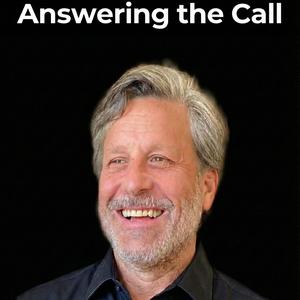

David Z: Hi, this is David, and thanks for listening to Answering the Call. If you're looking to answer your own call in your career, whether that's a desire for stronger performance in your current role, or a promotion to a more senior or lateral position, or just exploring new possibilities, let's talk. That's a wrap and thanks for listening. What's calling you? And if you were the one being interviewed in a year from now, what story would you like to tell? If you'd like to get more out of your career, success, fulfillment, and whatever else comes to you, head over to zenten.io. That's Z-E-N-T-E-N.I-O. Click the link to book time with me and let's talk about what's possible for you. Thanks and have a fantastic day. Do you really need all the degrees and certification to excel in a career? Especially today, the answer is no. What were some of the signals, David, that it was time for you to change or move up in terms of your role? David Sherwin, thank you for joining me today.
David Sherwin: Very happy to be here and thanks for inviting me.
David Z: Awesome. David, can you introduce yourself? Today we're sitting down with David Sherwin, a designer, author, and educator who didn't take the traditional path. He didn't start with a formal design degree. Instead, he built his foundation in the school of hard knocks, starting an editorial, coding before moving into the agency world, and eventually working in-house at companies like LinkedIn. What makes David's story so valuable for anyone listening today is how he managed his growth. He famously sought out roles where he was the least skilled person on the team, just so he could apprentice himself into the best in the business. We're going to talk about
David Sherwin: So often I was so laser focused on trying to do a good job and learn the skills that I needed to say be a graphic designer or a senior UX designer. I was just really focused on trying to do the best job that I could do in that particular role and learning what I needed to learn. ⁓ Often the feedback I'd get when I got to a certain point of confidence and competence with those jobs is people would say like, Sure, my name is David Sherwin and I'm a designer and a writer. I live in the Beaverton, Oregon area, United States.
David Z: David, can you give us a high level overview of your career progression. Every day presents each of us with a potential inflection point in our careers. The opportunity for you and I to discuss your career may be one of them. If this sounds like the right time for you, go ahead to my website, zen10.io, that's Z-E-N-T-E-N.io, and hit the Book Time with David link. Thanks for listening and now back to the show.
David Sherwin: Sure, yeah, I've, I don't know. I think about my career as sort of like a spiral in the sense that at first I was really interested in software design and writing and music. And then from there, it just spiraled out into a lot of different other topics. just since I was a kid, I was just really curious about everything. And so the cool things about writing and design is that you kind of get to explore a lot of different topics and terrain depending on the types of projects that you're working on. So. Okay, cool, now we want to give you responsibility for this, or we want you to go do more business development, or we want you to start managing people, whatever, certain names of things that I hadn't learned how to do yet, or didn't feel fully confident in. And those are signals that, at least within that organization, I needed to consider learning a new level of skills, or I needed to consider if they're going to put me in that role, what I needed to know to be successful.
David Z: The power of being pulled up and why focusing on your craft so intensely can lead to leadership roles finding you rather than you chasing them. The logic of career changes, how David identifies when it's time to move on. It's all about the curiosity bellwether for David and we'll learn more about that later. The creative constraints, why he believes time boxing is the secret to maximizing creative output and overcoming the getting started problem. And the transition to independence, the practical unsugar-coated advice on leaving the corporate paycheck to run your own business with a partner.
David Sherwin: My career really started first working in editorial. I worked in book publishing and I worked in magazine publishing and I was editing magazines and inevitably I had to get into laying out the magazines and people are like, hey, you seem to be pretty good at that. Do you want to do more of that? That led to jumping from working on the editorial side to being in the design department and working in graphic design and inevitably working. And it was like, and I learned that before I was doing it or was I going to be supportive while doing it. And so I kind of got yanked into those higher level of jobs rather than being like, okay, I'm like. Pursuing this. was kind of the opposite. was more like, I'm just trying to do this thing here. Good. I'm trying to do this well. And then getting the feedback of like here, do more. it's like, yeah, but it's more, isn't always better. So being just as analytic about.
David Z: to answer the call.
David Sherwin: In those studios, they'd say, hey, you're really good at the book-related projects, but we need to do these things called websites. And it happened that when I was in college, I learned how to code and learned how to work with HTML. So I actually knew how to make websites, even though I was so focused on making physical things like books and magazines. So I always ended up with the interactive projects, which led to learning about user experience design. And so that led me to spending a whole decade after that. The new stuff is doing the existing stuff was part of that sort of like change journey and also the growth journey. ⁓ I ran into the same challenge when Mary and I were running our company and we were doing educational projects and whoever we working with was be saying, that's great, but can you come and get into product development? Which is not culture work. That's like being in the seat, making products, getting stuff in front of users, shipping with engineering, completely different thing. And having to say like, moving from doing print design to user experience design at a couple of different agencies and then working in-house at different companies like ⁓ Linda and LinkedIn. So ⁓ when that was all going on, people kept giving me the feedback that like, it was great to work on projects together, but I was good at helping people learn how to do the design process through the work itself. And so I ended up starting to teach on the side ⁓ design and why am I being asked to do this thing that is not what we were hired to do and like figuring out from that, like what is really going on and if I'm gonna help in the product zone, what do I need to know to be able to be doing that well because I was hired to do this thing over here. And I think that these types of things happen a lot in companies but staff isn't always supported in making those transitions or they get thrown into it they're like, you'll figure it out. But like there's like collateral risks of. that turned into its own thing where the students are saying, you need to quit your day job and just do this full time. So my ⁓ wife, Mary and I ended up stepping away from our corporate jobs to do that for seven years. And we ended up, we were teaching design and design collaboration skills for seven years working with in-house teams. So it was kind of like rolling up all the things that I'd learned from all the different things I've done over decades to just focusing on like helping teams be successful. And design was just one of the tools that they're using. any staffer being put in that position. And I tried sometimes well, sometimes not so well to kind of like feel it out and figure out what was necessary before it led to outcomes I didn't want in terms of like doing my regular job versus the new extra stuff. And so I guess a lot of people would describe that as culture work, but a lot of it had to do with just creating the right conditions for different teams to come together and figure out how they wanted to work together. And design was just one of the tools that they're using. And so I think that's been like the career arc to today is it went from being more hands-on to managing and leading to then stepping back from that and being more of a coach and advisor. And there was a period of time where
David Z: This is also a great example, which I've heard from other people before, which is to a certain extent in some of your career, you can push yourself up. There's a lot of places where you actually need to be pulled up.
David Sherwin: Yeah, I would agree with that. think that I've done a lot of coaching and sort of like both from a career side, but also like coaching people that are in, you know, design roles at various levels. And I think the mistake a lot of folks make when they're trying to say like, I'm aiming for being VP of whatever, or I'm aiming for being like C level, whatever, is that like, that title really... it moved from coaching and advising to actually being involved in product work, meaning I might be a product manager or head of product working with a startup or a different organization. And that had to then leverage all the other things that I did previously, but also there's a whole huge learning curve of moving from working in a design seat to working in product. So after doing that for a number of years, I stepped back more into coaching and advising. So that's just kind of like a super summary, but I think the through line through all of it has just been a just loved. means different things depending on the size of the company, the maturity of the company, and the types of skills that are necessary based on how that work gets done. sometimes aiming for that job and getting into that job, you discover that there's just a ton of stuff happening there you don't know how to do, like how to ⁓ operate a company versus how to deliver design or how to like manage product in a team. Really different skill set. being able to work in a lot of different spaces with really talented people often in the seat of design, thinking about what to make or designing the thing that we're trying to make to help solve people's problems. And then figuring out from what we learned through that process, what tools or things can be pulled out of that that then other people could utilize. And so with my wife, we've written three books together on that topic. ⁓ And one was about how to be creative on demand. Really different set of conversations, really different types of alignment, really different cycles, high bar and clarity of communication. A lot of those skills don't just happen when you get thrown into the role. They require like practice. that's often, I think that's why you often see now a lot of folks taking the support of coaches. Often people will get thrown into a role where ⁓ they need to learn that stuff super fast and inside the organization, they may not have the support network or the classes or whatever the right. One was how to run a design organization or a design studio. And the third was about how to help turn a group of people into a team in a really inclusive manner. all those writing projects came from all of the hands-on design work, working with teams, teaching, and kind of trying to boil out of that the stuff that we thought that would be true if we were to actually put it between the pages of something and giving to people and say, here, we think this is going to be useful for you. systems are mentorship to be able for them to be able to get what they need right in time and they have to reach outside of the organization. But sometimes that can be a symptom of just skipping too many levels too quickly.
David Z: Very curious, what did you learn about yourself through all of those times when you were pulled up into those roles where you had to figure it out again? So one thing that came through that was ⁓ craft. It's starting with something, people recognizing very good at it, there's an elevation of it, there's a teaching of it, all the way to ⁓ the work that you've done with Mary terms of your company and teaching people. ⁓ Was there something that when you were a kid growing up, ⁓ you could have seen that that was of the type of a path that you would take?
David Sherwin: I think what I learned is that I'm most comfortable and I'm most energized by being hands-on and focused on crafting something. And when I've been in more operational roles, ⁓ the craft might be around a spreadsheet, like a financial projection or some sort of like analysis of workflow and figuring out where we might need headcount or. Yeah, I think that's a really good point. There's kind of a, craft is always something that's been top of mind for me. And I get a little obsessed with it, meaning that if I'm thinking about cooking dinner, I'm not just going to be like, okay, I'm going to throw something together. I'm going be like, okay, like what's, I'll go look at like 10 ways of roasting a butternut squash to figure out what I think is going to be like the best outcome. And then from there, I'm going to try it and experiment and then evolve. I've always kind of done that. collaborating with other executives to run a workshop and there's craft around figuring out how to facilitate the group to what the group wants as a good outcome, like being energized by that kind of craft. But ⁓ if the job was purely like. divorced from that and it didn't have any sort of aspect of that. I was just like, okay, this is telling me that probably my pathway is more hands-on and that's why I've worked in more roles that would be considered like staff or principal type roles rather than like leadership management path or line management jobs. It's just because ⁓ I really enjoy working with people to make things and that's been kind of like the zone. In terms of when I was a kid thinking about like, you know, like I'm going to go read some books. I loved reading and being like, ⁓ why did I like that book over that other book? What was it that the author did that led to me being so excited about what happened in this novel while that other one I just didn't think was as good. And same with music. I was obsessed with music, like in the 80s, New Wave music, Depeche Mode, you know, like synth music and stuff like that. And ⁓ Pink Floyd, Led Zeppelin, really attracted to these artists that not only had incredible craft when it came to how they performed, but also they thought about the whole package around something like Dark Side of the Moon. It's not just that it's an amazing record that's beautifully performed. There's an aesthetic to it. It has an aura in how they thought about the artwork and the way you hold the product in your hands, then actually encountering the art. And so I've just been so curious about all the details that go into a project to bring all of that together. And whether it's music or writing or art or design or cooking or whatever those topics are, that's been kind of the three line through everything. It's just been so curious about what are those decisions people are making and how does that lead to like really good outcomes in terms of what impact they're trying to make. And depending on the medium and depending on their goals, it could just be like really powerful emotional experience. It could be like you're gaining knowledge from reading your great book or it could be something that's actually like changing people's minds or beliefs or it gives them tools to be able to like make their lives better. And so yeah, that's definitely been the through line from the start. I mean, I was going back through some stuff from when I was in elementary school and I found like the sixth grade literary magazine and in it in my little bio that I wrote for myself. It said like, when I grew up, want to be a writer or a software designer in both. And I was like, oh my God, I actually had thought about this when I was a kid. I just hadn't like put it together that the reason why I was attracted to the professions of design and writing is because to do a really good job in those different fields, you have to be curious, you have to employ craft, you have to really think about the impact you're going to have on the person who's the reader or the user of the thing. And it's just been always something that I've been thinking about.
David Z: At what point in time, because it definitely sounds like we're talking about craft exclamation point, at what point in time did it kind of hit you? ⁓ whatever you might've said to yourself, but the equivalent of, I'm a craft person, I really care about the process.
David Sherwin: Yeah. I don't think I really figured it out until I was working in my second design job, meaning I worked in writing jobs. Definitely craft was top of mind because my first job as an editor was ⁓ editing writers for a magazine for writers and professors of writing. So I was editing people who had like PhDs in writing and had written like gazillions of books. And it was my job to like proofread and make sure that like their writing was. grammatically correct and they would correct me back in terms of the level of craft. like even back then when I was focused on writing and editing, like every word mattered, every paragraph mattered, every detail mattered from the point of view of the people that I was working with and I was responsible for like the quality of that. So when I went to working in graphic design, I had to learn that language of working in a studio with other designers, creative directors, art directors, and they would give me feedback. It's like, nope, that's not good enough or nah. when you do that, when you color correct that picture, it needs to look this way, not that way. Here's why, or, you know, when you're designing that logo, it's not as refined as it could be. You should change this and that. And it's really like soaking up all of that input and trying to figure out like what's the principles underneath that as to what means this is better or incrementally better than anything else that's going on. And so I think in the writing field, it got driven into me quickly because of the people I was. working with as an editor, but when I was in design, it just took time for me really to come to a point of view about like, when we're talking about like making a good design solution or making a good design for a project, like figuring out what that looked like was often pretty contextual. And ⁓ it reminds me of that quote from Ira Glass about how at first you have tastes and then it takes all that time to get the skill for the skill to match the taste. I feel like that's definitely been the case in design. It took me over a decade. to be like, wait, I think I have a point of view about why I think this is better than that, but I don't have the skills to be able to make it that yet. And it just takes time in the seat and working with great teams and learning and apprenticing yourself to people who have those skills and are able to help you learn along the way. I had to do all of that. And I just deliberately would choose jobs where I would always be like the least skilled person in the team or at the company. I'd be starting at the bottom of the ladder. to just figure out the job and to learn from everybody around me and then slowly work my way up in terms of like understanding, okay, now I know how to do what they do. Okay, now I think I can be trusted to do that.
David Z: So it sounds like you were very deliberate about the jobs and the locations and the environments you took. Is that how it was for you? At what point did you say, ⁓ this is kind of, you mentioned you wanted to be perhaps the least skilled person in there to grow. Like at what point did you say, okay, I know exactly what I want and I know that this is the path I want.
David Sherwin: realized I was in design, I didn't get a formal design degree. I took those graphic design classes in college, but it wasn't my degree. And so I knew going from ⁓ working ⁓ in an editorial to in a design job, there's just so many things I didn't learn from going through design school that someone that has a four year degree or master's degree, they spend many years working with people who are professionals. ⁓ I was kind of scrapping it together from reading books and talking with people who had a design background to figure out like, what is it that they know? This was before the internet had a ton of that information and online courses and things that could help you learn a lot of this. So I just had to figure out the right path to acquire those skills. And it came to me that the best way to do it is to work with people who are have those skills and ideally in a job where part of the job is them coaching and teaching, mentoring me. to grow. And I think I was lucky that I was coming up working in the design field at a time where that was the way you did it. That mentorship and internship were the primary paths to acquire sort of your first or second layer of design skills. And you would move from being sort of an apprentice to everybody to a master crafts person over time at a different job. And then when you go to another studio, you start all over again, because the people that are there, they might not be at an even higher level of craft. Also, I worked in graphic design, in switching from graphic design into user experience work, there's another massive learning curve because it was pretty early in the field of UX being formulated as a thing. There are people that had been academically trained and worked at companies where there was like really rigorous process and tools. And I didn't know any of that. So I had to sort of, again, piece it all together from scratch and then work with people who had. those skills and see how they did those projects and learn from them. And I feel like that's been the way for the majority of my career until it reached a point where it flipped and I was like, wait a minute, I'm the one that's showing people how to do this? I'm thankful that I had like decades to gather all that information together, but you know, things constantly change based on the tools available to us and the types of projects clients hire us for. So. I always had to be at the of my game even when I was teaching, but I was lucky. I was just like, I'm not even willing to consider teaching until I know enough that I feel confident that what I'm sharing has a really solid ground behind it, especially because I didn't go through a formal educational pathway to get that basis. I had to get it from the school of hard knocks.
David Z: Speaking of the school of hard knocks, so a lot of people want to be great. It's not always easy to take critique. You make it sound like it was easy for you. Is that true?
David Sherwin: I think it, like anything, taking critique is a skill and giving feedback is also a skill. I had gone through, in the writing world, writers' workshops, types of environments where people are giving and receiving feedback on your work on a weekly basis, especially in a raw form. So I was familiar with what that was like in the art world. ⁓ Going into design is different. I think I had to really learn to figure out how to properly frame what we were trying to accomplish with the projects and then situate the feedback within that and then understanding the ways that people that I'm working with would want to give and receive feedback and dialing that in before everybody would be putting up the work and talking about it. Figuring out that formality and I guess the etiquette around it took some time and then it also took some time very early in my career to understand the etiquette of taking client feedback. and how to work with that feedback and process it, make sense of it, what's actionable, what's not actionable. You can see here I'm being somewhat like pragmatic with my terminology, but at the beginning of the design process and being early in your career, you're just like, I did it perfectly and this is the right thing. And then the client's like, you know, can you change this cap? Can you make this bigger? Can you like change the color? This and this and like, you you're getting tons of input. And you have to detach yourself from the thing and talk about the thing. And it just took a lot of work to get to that point. I'll say a couple of years actually to get to the point of being like, okay, I feel like I've emotionally detached myself from the work that now like I'm looking at it and like, okay, like we can talk about this thing. We're going to make this thing great. The input is going to make this thing great. It's not about me. It's about this. And so yeah, it took some time.
David Z: Yeah, do you remember one of the first times you got feedback from a client that was just unexpected and maybe caught you a little off guard?
David Sherwin: Yeah, I remember working at an agency with a banking client and the client was reviewing like a big campaign of work. So this is when I was working as a graphic designer. It was all pinned up on the wall and it was all designed. The company had just gone through a rebrand and so we'd incorporated the style guide and everything that was from it. You know, we read it religiously and made sure like we're representing what they're trying to do with the brand. And I remember the client looking through all of it and saying like, I hate this. We should totally change it. And we're like, what types of feedback would be helpful here is, know, what specifically should be changed? It's like, ⁓ I hate the color purple. And we're like, and we were thinking to ourselves, like the color purple is what's in the brand guide and as part of the new brand that we're representing. But it turns out that that specific client just hated that color. And so they wanted to change it through all of the campaign. So it requires a delicate balancing act of the team stepping back and being like, okay, sure, we can go back to the clients and then the follow-up say, we're following the brand guidelines, but is that gonna be enough to check the box on this feedback or are we gonna need to figure out how to work with these constraints in a different way to get to a good outcome? And we did in the end, we weren't able to incorporate purple in the project, but it required a delicate. dance with the client to walk through sort of the different rooms. The first room is like, let's talk about the new brand. The next room from there is, let's talk about, what then that new brand should be part of the campaign. The next room from there is who's the audience? How many people is this going out to? What's the outcome that we want? If we change this thing, will that influence the outcome we're trying to achieve? And so it required kind of stepping back from that and being like, whoa, we need a strategy for how to go through these types of conversations with clients. We need an etiquette of how we deliver, receive the feedback, take it, and then communicate it back in a way that translates it into something that makes it relevant and useful for the project and everybody wins. And so, yeah, that was a total surprise where we all had to, myself as well as the team had to kind of step back and be like, take the feedback, don't react. Let's process this. And then we're going to come back and have a conversation about next steps. And that was really helpful for me to figure out. the etiquette and also to realize like, wait, we don't have to solve this right now. We also don't need to like negotiate the feedback right now. We need to like take it in. So can it understand it, break it down into like what we can really do with it.
David Z: So it sounds like you came up with a rubric or a system for handling client feedback. You talked about the rooms. Do want us to take us a little deeper into what that process looks like?
David Sherwin: Sure. I would foreground that by saying that I'm the son of a systems engineer and a school teacher. So when you think about how my brain works, I like to kind of structure the way that I'm thinking about what I'm doing to give my brain some order and reduce some of the chaos. But when it comes to working with client projects and working on projects in general, I think it's just a matter of breaking down and working back from the outcomes that you want, what you want to do with the input from a client or what you want to do with where the team is heading with the project. so I think a realization I had early in my career and it ended up getting woven through a number of the books that Mary and I wrote was working back from the outcomes or the things that you want to have happen and then using that as a means to kind of like have the team move through the steps that are necessary to get to something. And this sounds really obvious, but A lot of folks kind of like charge into what needs to happen or they take information in and they're just like, all right, let's run with it. And they don't step back and sort of like figure out like, what are the things we need to do to get there? And so in the case of giving and receiving feedback that ended up becoming a ritual, a team ritual in our third book, where it was about how a team can take client feedback or take feedback from folks about what they're working on. and refine it down. And so the first step there would be like, okay, the first room or the first like environment that the team is in is in like, take all the feedback and put it on sticky notes or like little things in a computer that we can move around on a slide or something like that. And then the second step would be like, everybody read it. So they all understand it they have all the same information in their brains. And then the third step would be organized it into three groups, things we can act on and do. things that we can't act on and we don't fully understand, and then things that we can't act on and we probably wouldn't do. Let's talk about what's in each of these different areas. Okay, and then let's talk about the first area. Like this is part of the, what, should we do it now or should we do it later? So it's basically giving the team structure to make sure like everybody has got the same information in their brains. It's all visible and forms that they can all understand, not just spoken, but written out. So there's multiple forms of getting the information into you. And then having the etiquette really clear about how they're going to work with that information and what they should do with it. And so it's kind of just how my brain works, but I find myself working with a lot of projects and teams where like part of the work to be done is just figuring out where we're trying to get to. then working back from that, the steps that makes sure everybody is like along for the ride and has the same information and we're with the same set of shared assumptions even about what we're trying to do. I think that's generally where I've seen. projects and teams struggle over the years is just everybody has a different picture of where you're trying to get to and a different picture of how to get there. And the best way to get everybody in the same page is to draw on that page the picture of how you're gonna get to the same thing. And sometimes if everybody doesn't agree, you have to make some trade-offs. And the only way to make trade-offs is to make them visually evident.
David Z: So I'm hearing somebody, and yes, I did work with you, very strong on process and rigor, but also good with people, and there's a level of flexibility in there. Did want to ask any part of this that you still struggled with or that didn't come naturally to you? Sure.
David Sherwin: Yeah Even today? Well, I was going to say that I'm a very intuitive ⁓ person when it comes to things like you can see behind me, there's like musical instruments and I'm generally not the kind of person that if I'm going to be creative, I have a plan. The process may not be foregrounded and it might be something where it's just like, I'm just going to noodle writing on the page or playing guitar, like, you I'm going to cook dinner. I might just like grab some ingredients and be like, okay, I think this is where we're going to head in terms of what we're making for dinner. Like, so that's, that might be my, like my primary, ⁓ mode. So a lot of these tools are things that help give me structure so that I know what I'm trying to accomplish for myself and give, and then working with other people, ideally, if they're set up well, they're able to move through the same steps in a way that we're all able to move together. Not every team likes to work with a high volume of process and sometimes a process, it's not always a means to the end, meaning that sometimes the process you need to go through needs to be a little messy or a little ⁓ organic. And I say that because I've professionally worked in, know, design studios and in corporations and startups, but I've also been in ⁓ musical projects and bands and I know when you throw people in a room and you have people just start throwing ideas around, sometimes you have to feel it out and you have to figure out for the culture of that team and what you're trying to get to. Like sometimes you have to abandon process and explore different terrain and see what happens and then step back and be like, what did we just do? And what if that is like actually something we want to carry forward? And so it's always a struggle because ⁓ our brains are wired in certain ways and we want to like, just sort of like be free and explore tons of things. And so part of the challenge is just figuring out what are the constraints you want to put into play. And sometimes it's fun to just pick up the guitar and play and there's no constraints other than the joy of playing and there's no goal other than playing. Sometimes at work, you need that environment and you need that space to do that. And I've always been surprised and delighted that in certain circumstances is how we've broken through on certain projects that we couldn't get to by being very linear and logical about process.
David Z: What is a sign for you that says time to stop being linear or logical?
David Sherwin: Everybody's just totally slowed down and kind of at a choke point in terms of everybody's just like, oh, we're just, it's just fine. What we're doing is fine. Like people aren't excited about the work that is on the table or they're not excited about where they're at. That often is a time to step back and be like, we need a break or we maybe we're like really missing something. Maybe we've gone like too deep. in one area and there's like a whole set of unexplored terrain we haven't even looked at. And I feel like that's when it can sometimes even be as simple as just like everybody just take 30 minutes to just brain dump all sorts of other creative things that could happen with no constraints and then come back to putting the constraints in play. And often that's where there's a couple of little kernels or really interesting little nuggets of ideas. They're not like, and then those end up getting infused into the work, the thing we're trying to create. And I think that applies for art just as much as product and design making.
David Z: On the other side, what are the signs that tell you it's time for structure?
David Sherwin: ⁓ you're running out of time on the project. I mean, you, you do have to work to the creative constraints, but also like the constraints of how much time you have in the project. And I would say I'd be guilty earlier in my career of kind of wallowing in the creative exploratory thinking and spend not enough time in execution and the iteration of those details to get to something to put in front of a client or to like start testing with, ⁓ customers or users. So I. started to get a little more rigorous about timeboxing, the creative elements, making sure there's the appropriate time and space for it. That it was the whole crux of the first book that I wrote was this concept of like timeboxing your creative thinking and really maximizing your creative output to then give you more options when you get into execution. It's like a lot of the writing and thinking around that that I've socialized over the years was to help myself really make sure I didn't leave any stone ⁓ unturned on different projects and then realizing that the tools that were being developed for my own gain could actually be useful for others. Cause it turns out a lot of folks also struggle with the same problems.
David Z: What was the unexpected benefit of writing that book?
David Sherwin: the Creative Workshop book. I would say there's three surprises. The first surprise was it was based off of a methodology I saw used when I was in grad school that was called 80 Works or Instant Thesis. And so people that are in the poetry program where I was going to grad school, they would take this class over the summer as five weeks and they'd bang out 80 poems in five weeks. And they said it was the hardest thing that they ever did and was also the best thing. In terms of like, just like, okay, there's never an excuse for me to ever be like, I'm not ready to like grab a piece of paper, right? There's no, there's, it's a mind game was basically like their conclusion after going through that kind of process. so when I was started working in design studios and I saw sort of like how people were struggling with that sort of getting started problem on design projects. I was like, ⁓ I bet this is just like how it was back then. I wonder if we could do the same thing in design. So I think the first surprise for me was like, I had that hunch and then my wife and I sat on the couch and came up with 80 exercises. Then I started teaching it and it actually helped people. That was the first like surprise because it was just a hypothesis that by the end of people doing 80 projects, they like super fast, they'd be like better, like more creative on demand. That was, that was a hunch. Okay. So when we proved that the second surprise was that it could be in a book formulation because we taught it as a class. As a teacher in the class, I get to see people going through the process of making all the work and be there with them. And we give each other feedback along the way and did critique of the work. like, there's a lot of contact learning that came out of that. Now I was concerned that if I put it into a book form and I started giving it to the people, they wouldn't do the activities. They'd be like, nope, thanks. It's fun to read, but I'm not going to actually do the project. that when we published it, and then I started sharing it with people, they're just like, I just found myself sucked into doing the projects. And was like, yes, because like, that's the problem with any sort of thing where it's just like, if you're not in a class, the class is like a container where you're forced to do the work. I'm standing over the, as the teacher, I'm standing over the people and they're like, uh-oh, I have like 30 minutes, I have to get this done. That's a certain sort of pressure you don't really, you have to put on yourself if you're doing it in a book form. The third surprise was that it was social. This is something I completely did not think about, but in the class, you're in a cohort and everybody's doing the activities together. And then like that was part of the class design. And then the book, it's a solo thing. was like, someone will buy it and then they'll like use it on their own. But then I discovered that people were sharing it with other people or they're doing activities together. They're bringing it into the design teams. There's being used in design schools. And so it kind of blew up in the sense of like, social is that people were socializing it to so many other people that there's this kind of groundswell of people that were doing the projects together and recreating what would have been in the class environment in their own environment. That wasn't even factored into like the book as like a design, which led to Mary and I writing like a teacher's guide, because we realized that people needed a guide of how to use the book as a tool in these like in the classroom and in social learning contexts. And we hadn't even included that in the content of the book itself. So those are like the three huge surprises along the way where we're just like, the only way to know if it was gonna work was to teach it, to make a version of it, to see how people would respond to it. And we were, I think we were lucky that it had all the right ingredients.
David Z: You've made a lot of changes in your career. What are the things that tell you it's time for a change?
David Sherwin: I think the bellwether for me has been the level of curiosity I have in the subject matter is like one thing. I can kind of get excited about anything. If I find myself getting less excited about what's happening in the topic of a project, then ⁓ that can be a signal for me that maybe it's time to focus on a different topic or maybe like. If I want to go deeper, I need to like really examine it more thoroughly to figure out what I'm super excited about learning. So reframing it in terms of like, what can I continue to learn about that particular subject? Right now I've been working on a year long project that's in the culture space. That's endlessly fascinating to me because culture is about people and people are endlessly fascinating. So there's always more to learn and there's always deep, you can always go deeper. So that's kind of endless. I've worked on projects and other topics where I've been like, I think I'm getting to the end. of how excited I am on this particular topic and maybe I should shift focus to a different area. So that's like one thing. The second thing is I'm way more explicit now my values and how they align with the types of things I want to be working on. ⁓ design isn't sort of this neutral thing. It's not a tool that always leads to positive outcomes. And I had to come to that conclusion working on so many different projects to recognize which projects I was like, ⁓ wait, by me doing this, this may not make the world a better place. I think now I'm a lot more meditative when people approach me about doing projects. I'm advising a couple of startups right now. I'm working with a couple of organizations and some projects really thinking through the outcomes that are going to come out of that work and the net benefit for society in advance of even considering engaging is something that I would say earlier in my design career. It was more so about like, I need the skills. to be able to even do the job. And then being able to do the job, I needed to be able to do the job well, and it's a marathon. Okay, I've run a couple of marathons for the next marathon. I wanna be really clear on what the destination is up on the hill I'm running towards. And if I'm working on products that are gonna be used by lots of people, I wanna make sure the ways that they're using it, the outcomes that come out of them are gonna be good. And so that means I'm... turning a lot more down or I'm doing a lot more due diligence to figure out what it is that I really want to be doing.
David Z: Yeah, curious if there's ever projects that get presented to you that are maybe in the middle space. So you think, I'm thinking of the things you've mentioned that really fill your cup, learning, craft, think mastery to a point, you know, until there's no more novelty, novelty, meaning. There are times when projects come and you say, I would work on that if you did a little more like this, or does it typically tend to be a yes, no?
David Sherwin: Uh, often I'm approached where there isn't clarity on the project approach. Or sometimes there's a hunch that there's a problem to be solved or there's, uh, a container that they need to fill. So I've worked recently on some, uh, more research focused exploratory projects and the outcome is say like a white paper or a future of position. That already piques my interest because I have to go interview experts and research a topic thoroughly and work with some experts to project what a future might be like in five to seven or 10 years. That's already a very like creative act. we're going to generate some new knowledge that has its own motivations. But I would want to make sure it's a future of pointing towards a utopian positive to range of dystopia and what can we use to stop dystopia from happening position. That's its own thing. When it comes to working with folks that are ⁓ doing product related work and I'm working on say like software or services, it's just figuring out like, where's the team at? Where are you at? Are you clear in the outcomes you're trying to get to? And am I excited about helping the team get to those outcomes? And if any of those ingredients are figured out, part of the project might be figuring out first, like what are you trying to get to? That might be the only part of the project that I engage with. It's just helping figure out where it had. And that's totally fine because we figured out like, okay, you all have exactly what you need to head there or I'm not excited about now that we figured out where we're headed. I'm not excited about participating in that, but I know other people who are and we'll bring them to you to run with it.
David Z: So you've shared a little bit about what you like to participate in, who you like to participate with, what are the profiles, attributes, characteristics of people you really love working with.
David Sherwin: Hmm? I often use the term open-hearted and I say that because a lot of the work that happens in the design and product fields is complex. It's messy. It requires a lot of feedback and input from the end user, the customer themselves, and they're giving a lot of feedback and input about how they want things to be. There's a lot of cooks in the kitchen. And everybody has good intentions generally about where you're trying to head. And I feel like at this point in the world that we're in, people being comfortable sharing their points of view and also being really open about where they're fearful for going the wrong direction or ⁓ there's areas where they haven't done it before and it needs to be collaborative work rather than individual work. I like working with folks that can be really clear about. those challenges and not have them creep up on you halfway through or at the end of the project where it's a surprise. And it's part of like the norming and forming of the team is people being able to really like shape a space where everyone's just like, you know, we're human beings first. We're here doing this work together. We're going to have some fun doing this, but there will also be challenges we're going to be overcoming together. And the only way to do that is to be able to work together, being really clear about what's happening. in ourselves as much as what's happening in the team. And if we're lucky, there will be some formality with the client, but they'll also be honest and open with us about what's going on too. And that's kind of like the magic when you bring together a really good team and the team is really openhearted about how they work together, transparent to a professional level, but at the same time, the client also being really clear about the context that you're stepping into and not sugarcoating the reality. that you're entering into. And I would say that being clear about reality.
David Z: So we've talked, a little bit about the what and the people. You ever been part of a project ⁓ and looked like maybe was gonna go okay? Things didn't go the way you wanted, couldn't go the way you wanted, and you just said, that's it, shutting it down.
David Sherwin: I've, I can't think of a project where I made the decision in the project itself to shut it down. I have had projects where we got to the conclusion and the client said, thank you, but it's not what we are looking for. But that often is the symptom of the client not giving you the appropriate feedback in the project itself that you weren't on the right track or they didn't include the right stakeholders. like, oh, we did this project, but we forgot to include the CEO. And it turns out the CEO is an important voice in the outcome of this project. So we just wasted X dollars because we did not get their input until we showed them the end. I would call that like the problem of the ta-da. It's like, ta-da, look, we did it. And there was like, wait, did what? I thought we were doing that thing over here. So part of that was just recognizing and shaping projects to like catch all those problems. I would say the only sort of hard decisions I've made in my career Other than ⁓ taking on projects where we're just like, have to do this project because we need to pay the bills. There's that, but there's also, we did this project for our client and we discovered when we got to the end of the project that the conditions have changed and now what they're using isn't going to leave to good outcomes for society, for the people we were designing for. That's where I've had to make the hard decision to say like, thank you. And we'll find someone else for you to work with to continue this. Those have been the hardest conversations because often We've built really good trust with that client. We've delivered outcomes that they're excited about, but we're not excited about the impact as a result of that work and having to step back and be like, actually like now this is misaligned with where we thought we were from the beginning for whatever reason.
David Z: Find that hard or easy.
David Sherwin: extremely hard because when you work in a design studio or you work in a more consultative capacity, the expectation is that you don't bring a moral position to the work. state your ethics and you say like, okay, we're only going to work with clients that are in these fields and have this type of impact of what they're doing. And we're not going to work with people that, I don't know, make guns or whatever the particular thing is that you know is not bad for society. Like a lot of studios will draw these, drop these principles and they'll use that as a way to screen criteria. isn't new news to you as you've worked in the business development and you have a way of scoring a client to figure out if they do or don't fit the criteria. I think what I didn't realize until I'd worked on a couple hundred design projects in the studio space is that things change inside the company. conditions change, the focus of the company changes, their business goals change, you realize their operating principles. ⁓ They make decisions that are better for the business than for the end user. You've seen that a lot with social networking. And if the team doesn't watch for that drift, you can be at the end of the project and they'll be like, great, we're gonna draw up all the next set of work we're gonna do with you and we totally love you. And then this drift occurs and you have to continually like apply your... principles again and say, wait, like for where we're at, is it the same as before? Has it changed? What has changed? And if it has changed, has it changed to point that I would say that it's a deal breaker? A yes, no kind of flip in terms of like, ⁓ we just discovered that now what you're doing, you got acquired by another company that other company has completely different operating principles and goals is one reason why this can happen. Another reason is that you do the work and then ⁓ You discover that what you gave them, they're going to use it in a different context to impact other users in a negative way, which I've also seen happen. Both of those conditions are not great, but the team has to be prepared for just continuing to assess that along the way and not just assuming it's all going to be good in the end.
David Z: note projects you are most proud of when you look back at them either for the output, the process, the people, what comes to mind.
David Sherwin: There are so many top two projects. ⁓
David Z: Top two.
David Sherwin: I, you did talk about the book creative workshop. I'd say that's one of the projects I'm most proud of about, about, because, ⁓ I got to collaborate on it with my wife. It was completely like greenfield at that time. We were just figuring it out. And I feel like it's something where when I got it into people's hands and I saw how they're using it, had a lot of utility and that was. that's my mistest is like, sure, you can get hired to work on projects and you can get paid to deliver them stuff. then often it can just sit on a shelf or not get implemented. And I really want people to use what comes out of design projects and like get some value out of them. So that's like an example where like really, you know, 11 years later, still in print, like that's awesome. And that's great that people are still telling me they get value out of it. There are so many design projects I've worked on that I'd say have delivered ⁓ utility, but probably the one that I've worked on that had the biggest impact was participating and helping to create the first version of LinkedIn Learning, only because it's a platform that has hundreds of millions of users. And even though I was only at LinkedIn for a short period of time, I was part of the team that was acquired ⁓ from Linda, which is what they integrated into the social platform. ⁓ I have been able to see firsthand how people have used that to learn new skills, to be able to advance in their careers. And that's a level of impact as an educator. I didn't anticipate. ⁓ I've generally worked at design schools where you have cohorts of 10 to 30 people. And that's the level of impact I see as an educator. So to go from. 30 people to millions of people and to know that at least like one little bit of what you've done has helped to create the conditions for them to be able to be successful in their careers. That feels pretty awesome.
David Z: David, I'm hearing a lot about impact. I'm gonna guess there were times where you had to choose maybe money over what you might have really wanted to do. How did you manage that during your career?
David Sherwin: I would say the first third of my career, I invested in my skills and money was tight and basically was sweating out gaining the skills that I needed that once I was able to say like, okay, I really know how to do graphic design. I really know how to do user experience work. Okay, now I can start being more explicit about. pursuing roles that have a good balance of the types of work that I want to be doing for the right companies. And it has the compensation that meets, I guess, the expectations of what I need and also to sort of like dig out from that investment in my skills and myself. so, yeah, that second sort of, after that sort of first third of my career, figuring out and learning all of that was able to sort of like double it down. then, ⁓ When I started teaching, obviously when you're teaching as a design professor, you're not doing it for money. You're doing it for helping people learn and for love. And so I had to basically stack that on top of a full-time job to be able to do education as well as to have the impact that I wanted working in-house or in a consulting capacity. So part of leaving all of that to run my own company was to create the conditions where I could actually balance all those factors out and integrate. the teaching with the consulting and helping companies and put it together in a way where it wasn't 150 % of time. And I feel like when you're running your own business, you can construct those conditions for yourself and balance it out in a way where it makes sense. But I think you can only pull that off if you've made that investment in yourself and your skills to the point that you can really be confident in not having to sweat how to do the work when you're selling it. Like I never felt like when we started our own company, the majority of the things that we're doing, yeah, we had to learn a lot and we had to figure out some different ways of working because we were doing work that was more so in developing a curriculum and figuring out how to bring the curriculum into companies around collaboration across different business functions. Once you figure all that out, there's a repeatability to the work and that makes it where it balances out where you're not working 150 % to get the work done and you're your own boss. We are lucky to be able to do that for a number of years.
David Z: How was that for you and Mary to make that decision to say, we're going to separate from the corporate paycheck and we're going to run our own business and all of the uncertainty that goes along with that?
David Sherwin: It was an experiment. We really needed to say, okay, if people keep telling us, like our students just every year kept telling us, like, you need to like quit your day jobs and teach the stuff that you teach in school to companies. Like that was the feedback we were getting. so if for us it was an experiment, we said, okay, let's, it's like any startup, let's give ourselves a budget and a runway. Let's put up a webpage that has what people were saying we were good at that we would be hired to do. And let's tell people that's what we do. And that's a value proposition. And let's see how many people it resonates with and who wants to hire us. And we were busy for many years. So, but we gave ourselves a runway of time where we said like, if this doesn't play out in this number of months, then we know it's not the right thing. And we should consider going back to our careers. ⁓ as they had been stated before and go back to working for other companies.
David Z: What's your advice to people who are desiring right now to go out on their own, navigating that part of their career? What did you learn that would be helpful for other people to know?
David Sherwin: One is that you really need to have ⁓ the safety net in place if things don't go as planned. So you need the right amount of money that's not just for sort of like what you'd be paid as running that company, but also like an emergency fund of money that would be your cushion because when you step out, there's a lot of things you don't know and you're gonna have to have a lot of conversations to figure out like, the match of your services to clients unless if you already have a couple of clients when you start what you're doing, which is an ideal circumstance, but that's not the case for everybody. But I think the mistake I've seen some folks make is that they just took a leap of faith and they didn't have a plan of what would happen if things didn't go well. I think it's great to have a plan of how things will go well, but you're basically positioning yourselves with a set of services or a product. Unless if you've done a lot of work to refine and sharpen your value proposition and services and you've gotten a ton of feedback and you know what you're presenting is resonating and you're getting hired, you have to go through that process and it takes time and it takes iteration. And if you haven't budgeted for that amount of time, then you're going to burn up all of that money that you set aside to then get to the point and be like, great, I figured out how to sell what I do and start selling it, but I ran out of money. Like you don't want to be in that position.
David Z: So David, as you see that and you've chosen to work for other people, work for yourself, and then go ahead and go back and work for other people again, is there a mindset or that you sort of recommend to people as they, let's say even people that are starting their careers or early in their careers, they don't have that cushion, they don't have that runway. What's the smart way for people to make their way through their careers so that if they do wanna go out on their own, they are prepared and they are ready?
David Sherwin: You got to figure out your board of advisors who are the people in your life that you pull them together and are the ones that understand your intentions and give you feedback and help you to fill in some of what might be your blind spots or skill sets that you know need to be developed to be able to be on your own. One of the things that's really hard about running your own company is that like there's being paid for the services or things that you provide and then there's all the other things that you need to do to run the company. If you're good at accounting, bookkeeping, reviewing contracts and intellectual property law, project management, account management, and then whatever else is that you do, then you will have no problem. But most people, including myself, don't know how to do a good number of those things to the level of someone who's a professional. And you have to have your team. You also have to have the people that can network you to the people that will be part of the team that is going to support you. And in starting a venture, ideally you've gone through the due diligence of pulling together those different people and them helping sort of pressure test or shape up the things that will help you get going and then be able to sustain something knowing that if you tried to do everything, you're literally never going to sleep. And I like sleep, like having good meals. I like spending time with friends and I think you have to factor that all into your plan and you have to get real about the overhead that is on top of whatever it is you love to do.
David Z: can you tell us a little bit more about what you're doing right now and what excites you about that?
David Sherwin: Well, I'll be candid in that ⁓ I was one of the many people in America that was impacted by long COVID. And I had to step away from working for a number of years to regain my cognitive skills and regain the energy that I needed to get back to work. And I think going through that process was what I needed to kind of reformulate what I can do professionally. and what excites me professionally versus when I was younger, I would just do everything and burn at 150%. And if I was excited about something, would just always, I was just basically working all the time. And now I think what I do now is I'm advising a couple of startups. I am working hands-on in a couple of design projects. I'm helping a friend's with a bootstrapping company and I'm spending a lot of time making music and art and balancing all those things out in a way that is helping me manage the energy that I have and managing all of these things together in a way that gives me the space to be able to rest, spend time with family and friends, have good meals, get great sleep and... ⁓ I'm lucky to be in a place where I can piece all those things together and balance it out. But to be able to do that required years of relearning a lot of very basic skills and then figuring out how to put those skills to use again in a way that I can meet what it is that I can do to what is out there and put it together. I would also say that a lot of the work that I'm doing while it might intersect what's happening with new technologies like artificial intelligence. the edge that we humans still have on AI is that we are able to pre-visualize and figure out intentions for the things that we want to have made. And AI can be a tool to help us get there, but AI can't envision those things still. Maybe down the road they will, but right now they can't. And so a lot of the projects that I've worked on over the last two years, if AI is a part of that work, it's doing very low order. thinking or tasks as part of those projects. And we humans are doing the higher order thinking and generating newer original ideas and AI is getting used in a much more subtle or lower level way. And my hope is that that's how things continue to trend because that's what's going to folks employed for the midterm. That's my, that's my dream. But for myself, the kinds of projects that I'm working on, I'm just being very deliberate about being like, well, I'm not working. 40 hours a week full time on any one thing. But the things that I'm working on where I'm able to put in my energy, I'm ideally having the impact that is necessary and is adding that edge that ⁓ can't be achieved by using some of these existing AI tools.
David Z: Yeah, as you think of all the times you've sort of answered your own call as you've gone through your career, any last thoughts you want to leave us with?
David Sherwin: I think something that I'm continually coming back to is beliefs. So because over the years, drifted into the of like meditation ⁓ and being fascinated Buddhism, I started to realize that there are sort of like on the world that we have about things. So one of the lenses I had when I was in my thirties was like, you know, design. I think something that I'm continually coming back to is limiting beliefs. So maybe because I, over the years, drifted into the zone of like meditation and being fascinated by Buddhism, I started to realize that there are sort of like lenses on the world that we have about things. So one of the lenses I had when I was in my thirties was like, you know, design. always leads to good things. Design is a tool that is always good for the world. And then I was like, when I took that lens off, I was like, ⁓ wait, design is just a tool and it can be used in a variety of ways for good or for bad. And that kind of completely changed my perception of who I am, what I do, detaching my identity from being a designer. don't, feel like it actually can be sometimes limiting for some folks. can like narrow you down to just thinking about future states and implementation. And rather than thinking about all the different pieces that are necessary. always leads to good things. Design is a tool that is always good for the world. And then I was like, when I took that lens off, I was like, ⁓ wait, design is just a tool and it can be used in a variety of ways for good or for bad. And that kind of completely changed my perception of who I am, what I do, detaching my identity from being a designer. don't, feel like it actually can be sometimes limiting for some folks. can like narrow you down to just thinking about future states and implementation. And rather than thinking about all the different pieces that are necessary. to deliver something valuable and meaningful for people. It's one piece of the puzzle, so to speak, or it helps to shape the puzzle, but it doesn't always put the puzzle together and deliver the puzzle in terms of like what it really is. to deliver something valuable and meaningful for people. It's one piece of the puzzle, so to speak, or it helps to shape the puzzle, but it doesn't always put the puzzle together and deliver the puzzle in terms of like what it really is. So I think it's just a matter of like identifying those limiting beliefs, another limiting belief that I had to really confront in my twenties. And I would say it's a big challenge for somebody who likes to take on big writing projects and big projects in general is like, Sunk cost investment is always a challenge. And I think failure often comes from faulty assumptions and the foundation of a project or what you're working on with the team. You keep stacking things on, just being like, ⁓ don't worry about that. you know, like, that's not the thing that's going to bring the project down, but that can sometimes lead to a low craft bar being that rather than being like, wait, that's the thing that's actually holding us back from building something completely different that actually is to the level of craft that the team wants. And so I feel like the only way to sort of like catch those things is to step back and really reflect on what's going on in a lot of these situations and not rushing from thing to thing or rushing from meeting to meeting, rushing from act to be activity and just stepping back and be like, okay, like I'm to take some time and just like meditate on all that went. And just being like, wait, is there something in here that's like influencing my perception of where we're at and where we're trying to go? And sometimes that really helps to me to be more present in the conversations with other people and also being able to more quickly recognize where there may not be conditions for success early on in working on projects.
David Z: Any good examples that come to mind?
David Sherwin: ⁓ I've had so many. mean, like, I feel like one of my skills is making major mistakes, learning, trying to learn from the mistake as fast as possible and running with it. ⁓ When I was in ⁓ grad school, you have to write a thesis. So I wrote, I wrote a draft of a novel and my thesis advisor read it and said like, okay, so like, you have a good idea for a novel here. What I want you to do is stick it in the drawer. and write it again from the third person and it's just going to be so much better. And I was just like, ⁓ okay. I mean, I can do that, but like I wrote a draft of the novel. Is it good enough to get my, graduate? He's like, no, no, no, no. Like you've still got a semester. Just use the semester to rewrite the whole novel. And I was like, I'm going to move to Seattle with my wife and, ⁓ nurse my wounds. And ⁓ that was a mistake. It was really good feedback. It was accurate feedback. And I had to take that into account so many times working in the design field, but also writing books. ⁓ Sometimes the first draft, the first idea, the first draft was not the correct sort of like thesis of the book was not the correct content for the book. And I had to take that feedback from experts or people who really knew. what was going on or take feedback from clients, take feedback from teammates and step back and be like, sometimes you do have to like step back completely and start over. And I feel like over time, just getting less and less attached to those things has helped me with recognizing where to let go and where to restart or where to like pivot what's going on. And honestly, it's always a challenge. especially having worked on a number of ventures, you can get really attached to a lot of those early ideas. You can really get attached to the product as it's built. And it's just really hard to tear things apart and start over, but often it leads to better outcomes if you have the budget and time to go there, like the will to be able to go there.
David Z: David, this is amazing advice. ⁓ To conclude here, where can people find more about you, the books you've written?
David Sherwin: I have a website, it's davidshirwin.com and that has all of the, a lot, all the essays I've written over the years, ⁓ all the details on all the books and all the presentations I've also given that are related to those books. And then ⁓ asktheshirwin.com has information on the book that I wrote with Mary turning people into teams and the toolkit we created Team Words, which is actually, I should have mentioned, that's one of the products that my wife devised. ⁓ Super proud of it and still being used by thousands of teams that it's also a social product in that when people use it, they bring it to other teams and those teams acquire it and use it with their teams to facilitate figuring out how they wanna work together. So that's been ⁓ something that over the years people keep. Reaching out to us and using it, which is fantastic.
David Z: David, thanks for spending time with me today. Really appreciate it.
David Sherwin: You bet. Thank you so much. It's been a pleasure.
David Sherwin: Very happy to be here and thanks for inviting me.
David Z: Awesome. David, can you introduce yourself? Today we're sitting down with David Sherwin, a designer, author, and educator who didn't take the traditional path. He didn't start with a formal design degree. Instead, he built his foundation in the school of hard knocks, starting an editorial, coding before moving into the agency world, and eventually working in-house at companies like LinkedIn. What makes David's story so valuable for anyone listening today is how he managed his growth. He famously sought out roles where he was the least skilled person on the team, just so he could apprentice himself into the best in the business. We're going to talk about
David Sherwin: So often I was so laser focused on trying to do a good job and learn the skills that I needed to say be a graphic designer or a senior UX designer. I was just really focused on trying to do the best job that I could do in that particular role and learning what I needed to learn. ⁓ Often the feedback I'd get when I got to a certain point of confidence and competence with those jobs is people would say like, Sure, my name is David Sherwin and I'm a designer and a writer. I live in the Beaverton, Oregon area, United States.
David Z: David, can you give us a high level overview of your career progression. Every day presents each of us with a potential inflection point in our careers. The opportunity for you and I to discuss your career may be one of them. If this sounds like the right time for you, go ahead to my website, zen10.io, that's Z-E-N-T-E-N.io, and hit the Book Time with David link. Thanks for listening and now back to the show.
David Sherwin: Sure, yeah, I've, I don't know. I think about my career as sort of like a spiral in the sense that at first I was really interested in software design and writing and music. And then from there, it just spiraled out into a lot of different other topics. just since I was a kid, I was just really curious about everything. And so the cool things about writing and design is that you kind of get to explore a lot of different topics and terrain depending on the types of projects that you're working on. So. Okay, cool, now we want to give you responsibility for this, or we want you to go do more business development, or we want you to start managing people, whatever, certain names of things that I hadn't learned how to do yet, or didn't feel fully confident in. And those are signals that, at least within that organization, I needed to consider learning a new level of skills, or I needed to consider if they're going to put me in that role, what I needed to know to be successful.
David Z: The power of being pulled up and why focusing on your craft so intensely can lead to leadership roles finding you rather than you chasing them. The logic of career changes, how David identifies when it's time to move on. It's all about the curiosity bellwether for David and we'll learn more about that later. The creative constraints, why he believes time boxing is the secret to maximizing creative output and overcoming the getting started problem. And the transition to independence, the practical unsugar-coated advice on leaving the corporate paycheck to run your own business with a partner.
David Sherwin: My career really started first working in editorial. I worked in book publishing and I worked in magazine publishing and I was editing magazines and inevitably I had to get into laying out the magazines and people are like, hey, you seem to be pretty good at that. Do you want to do more of that? That led to jumping from working on the editorial side to being in the design department and working in graphic design and inevitably working. And it was like, and I learned that before I was doing it or was I going to be supportive while doing it. And so I kind of got yanked into those higher level of jobs rather than being like, okay, I'm like. Pursuing this. was kind of the opposite. was more like, I'm just trying to do this thing here. Good. I'm trying to do this well. And then getting the feedback of like here, do more. it's like, yeah, but it's more, isn't always better. So being just as analytic about.
David Z: to answer the call.
David Sherwin: In those studios, they'd say, hey, you're really good at the book-related projects, but we need to do these things called websites. And it happened that when I was in college, I learned how to code and learned how to work with HTML. So I actually knew how to make websites, even though I was so focused on making physical things like books and magazines. So I always ended up with the interactive projects, which led to learning about user experience design. And so that led me to spending a whole decade after that. The new stuff is doing the existing stuff was part of that sort of like change journey and also the growth journey. ⁓ I ran into the same challenge when Mary and I were running our company and we were doing educational projects and whoever we working with was be saying, that's great, but can you come and get into product development? Which is not culture work. That's like being in the seat, making products, getting stuff in front of users, shipping with engineering, completely different thing. And having to say like, moving from doing print design to user experience design at a couple of different agencies and then working in-house at different companies like ⁓ Linda and LinkedIn. So ⁓ when that was all going on, people kept giving me the feedback that like, it was great to work on projects together, but I was good at helping people learn how to do the design process through the work itself. And so I ended up starting to teach on the side ⁓ design and why am I being asked to do this thing that is not what we were hired to do and like figuring out from that, like what is really going on and if I'm gonna help in the product zone, what do I need to know to be able to be doing that well because I was hired to do this thing over here. And I think that these types of things happen a lot in companies but staff isn't always supported in making those transitions or they get thrown into it they're like, you'll figure it out. But like there's like collateral risks of. that turned into its own thing where the students are saying, you need to quit your day job and just do this full time. So my ⁓ wife, Mary and I ended up stepping away from our corporate jobs to do that for seven years. And we ended up, we were teaching design and design collaboration skills for seven years working with in-house teams. So it was kind of like rolling up all the things that I'd learned from all the different things I've done over decades to just focusing on like helping teams be successful. And design was just one of the tools that they're using. any staffer being put in that position. And I tried sometimes well, sometimes not so well to kind of like feel it out and figure out what was necessary before it led to outcomes I didn't want in terms of like doing my regular job versus the new extra stuff. And so I guess a lot of people would describe that as culture work, but a lot of it had to do with just creating the right conditions for different teams to come together and figure out how they wanted to work together. And design was just one of the tools that they're using. And so I think that's been like the career arc to today is it went from being more hands-on to managing and leading to then stepping back from that and being more of a coach and advisor. And there was a period of time where
David Z: This is also a great example, which I've heard from other people before, which is to a certain extent in some of your career, you can push yourself up. There's a lot of places where you actually need to be pulled up.
David Sherwin: Yeah, I would agree with that. think that I've done a lot of coaching and sort of like both from a career side, but also like coaching people that are in, you know, design roles at various levels. And I think the mistake a lot of folks make when they're trying to say like, I'm aiming for being VP of whatever, or I'm aiming for being like C level, whatever, is that like, that title really... it moved from coaching and advising to actually being involved in product work, meaning I might be a product manager or head of product working with a startup or a different organization. And that had to then leverage all the other things that I did previously, but also there's a whole huge learning curve of moving from working in a design seat to working in product. So after doing that for a number of years, I stepped back more into coaching and advising. So that's just kind of like a super summary, but I think the through line through all of it has just been a just loved. means different things depending on the size of the company, the maturity of the company, and the types of skills that are necessary based on how that work gets done. sometimes aiming for that job and getting into that job, you discover that there's just a ton of stuff happening there you don't know how to do, like how to ⁓ operate a company versus how to deliver design or how to like manage product in a team. Really different skill set. being able to work in a lot of different spaces with really talented people often in the seat of design, thinking about what to make or designing the thing that we're trying to make to help solve people's problems. And then figuring out from what we learned through that process, what tools or things can be pulled out of that that then other people could utilize. And so with my wife, we've written three books together on that topic. ⁓ And one was about how to be creative on demand. Really different set of conversations, really different types of alignment, really different cycles, high bar and clarity of communication. A lot of those skills don't just happen when you get thrown into the role. They require like practice. that's often, I think that's why you often see now a lot of folks taking the support of coaches. Often people will get thrown into a role where ⁓ they need to learn that stuff super fast and inside the organization, they may not have the support network or the classes or whatever the right. One was how to run a design organization or a design studio. And the third was about how to help turn a group of people into a team in a really inclusive manner. all those writing projects came from all of the hands-on design work, working with teams, teaching, and kind of trying to boil out of that the stuff that we thought that would be true if we were to actually put it between the pages of something and giving to people and say, here, we think this is going to be useful for you. systems are mentorship to be able for them to be able to get what they need right in time and they have to reach outside of the organization. But sometimes that can be a symptom of just skipping too many levels too quickly.
David Z: Very curious, what did you learn about yourself through all of those times when you were pulled up into those roles where you had to figure it out again? So one thing that came through that was ⁓ craft. It's starting with something, people recognizing very good at it, there's an elevation of it, there's a teaching of it, all the way to ⁓ the work that you've done with Mary terms of your company and teaching people. ⁓ Was there something that when you were a kid growing up, ⁓ you could have seen that that was of the type of a path that you would take?
David Sherwin: I think what I learned is that I'm most comfortable and I'm most energized by being hands-on and focused on crafting something. And when I've been in more operational roles, ⁓ the craft might be around a spreadsheet, like a financial projection or some sort of like analysis of workflow and figuring out where we might need headcount or. Yeah, I think that's a really good point. There's kind of a, craft is always something that's been top of mind for me. And I get a little obsessed with it, meaning that if I'm thinking about cooking dinner, I'm not just going to be like, okay, I'm going to throw something together. I'm going be like, okay, like what's, I'll go look at like 10 ways of roasting a butternut squash to figure out what I think is going to be like the best outcome. And then from there, I'm going to try it and experiment and then evolve. I've always kind of done that. collaborating with other executives to run a workshop and there's craft around figuring out how to facilitate the group to what the group wants as a good outcome, like being energized by that kind of craft. But ⁓ if the job was purely like. divorced from that and it didn't have any sort of aspect of that. I was just like, okay, this is telling me that probably my pathway is more hands-on and that's why I've worked in more roles that would be considered like staff or principal type roles rather than like leadership management path or line management jobs. It's just because ⁓ I really enjoy working with people to make things and that's been kind of like the zone. In terms of when I was a kid thinking about like, you know, like I'm going to go read some books. I loved reading and being like, ⁓ why did I like that book over that other book? What was it that the author did that led to me being so excited about what happened in this novel while that other one I just didn't think was as good. And same with music. I was obsessed with music, like in the 80s, New Wave music, Depeche Mode, you know, like synth music and stuff like that. And ⁓ Pink Floyd, Led Zeppelin, really attracted to these artists that not only had incredible craft when it came to how they performed, but also they thought about the whole package around something like Dark Side of the Moon. It's not just that it's an amazing record that's beautifully performed. There's an aesthetic to it. It has an aura in how they thought about the artwork and the way you hold the product in your hands, then actually encountering the art. And so I've just been so curious about all the details that go into a project to bring all of that together. And whether it's music or writing or art or design or cooking or whatever those topics are, that's been kind of the three line through everything. It's just been so curious about what are those decisions people are making and how does that lead to like really good outcomes in terms of what impact they're trying to make. And depending on the medium and depending on their goals, it could just be like really powerful emotional experience. It could be like you're gaining knowledge from reading your great book or it could be something that's actually like changing people's minds or beliefs or it gives them tools to be able to like make their lives better. And so yeah, that's definitely been the through line from the start. I mean, I was going back through some stuff from when I was in elementary school and I found like the sixth grade literary magazine and in it in my little bio that I wrote for myself. It said like, when I grew up, want to be a writer or a software designer in both. And I was like, oh my God, I actually had thought about this when I was a kid. I just hadn't like put it together that the reason why I was attracted to the professions of design and writing is because to do a really good job in those different fields, you have to be curious, you have to employ craft, you have to really think about the impact you're going to have on the person who's the reader or the user of the thing. And it's just been always something that I've been thinking about.
David Z: At what point in time, because it definitely sounds like we're talking about craft exclamation point, at what point in time did it kind of hit you? ⁓ whatever you might've said to yourself, but the equivalent of, I'm a craft person, I really care about the process.
David Sherwin: Yeah. I don't think I really figured it out until I was working in my second design job, meaning I worked in writing jobs. Definitely craft was top of mind because my first job as an editor was ⁓ editing writers for a magazine for writers and professors of writing. So I was editing people who had like PhDs in writing and had written like gazillions of books. And it was my job to like proofread and make sure that like their writing was. grammatically correct and they would correct me back in terms of the level of craft. like even back then when I was focused on writing and editing, like every word mattered, every paragraph mattered, every detail mattered from the point of view of the people that I was working with and I was responsible for like the quality of that. So when I went to working in graphic design, I had to learn that language of working in a studio with other designers, creative directors, art directors, and they would give me feedback. It's like, nope, that's not good enough or nah. when you do that, when you color correct that picture, it needs to look this way, not that way. Here's why, or, you know, when you're designing that logo, it's not as refined as it could be. You should change this and that. And it's really like soaking up all of that input and trying to figure out like what's the principles underneath that as to what means this is better or incrementally better than anything else that's going on. And so I think in the writing field, it got driven into me quickly because of the people I was. working with as an editor, but when I was in design, it just took time for me really to come to a point of view about like, when we're talking about like making a good design solution or making a good design for a project, like figuring out what that looked like was often pretty contextual. And ⁓ it reminds me of that quote from Ira Glass about how at first you have tastes and then it takes all that time to get the skill for the skill to match the taste. I feel like that's definitely been the case in design. It took me over a decade. to be like, wait, I think I have a point of view about why I think this is better than that, but I don't have the skills to be able to make it that yet. And it just takes time in the seat and working with great teams and learning and apprenticing yourself to people who have those skills and are able to help you learn along the way. I had to do all of that. And I just deliberately would choose jobs where I would always be like the least skilled person in the team or at the company. I'd be starting at the bottom of the ladder. to just figure out the job and to learn from everybody around me and then slowly work my way up in terms of like understanding, okay, now I know how to do what they do. Okay, now I think I can be trusted to do that.
David Z: So it sounds like you were very deliberate about the jobs and the locations and the environments you took. Is that how it was for you? At what point did you say, ⁓ this is kind of, you mentioned you wanted to be perhaps the least skilled person in there to grow. Like at what point did you say, okay, I know exactly what I want and I know that this is the path I want.
David Sherwin: realized I was in design, I didn't get a formal design degree. I took those graphic design classes in college, but it wasn't my degree. And so I knew going from ⁓ working ⁓ in an editorial to in a design job, there's just so many things I didn't learn from going through design school that someone that has a four year degree or master's degree, they spend many years working with people who are professionals. ⁓ I was kind of scrapping it together from reading books and talking with people who had a design background to figure out like, what is it that they know? This was before the internet had a ton of that information and online courses and things that could help you learn a lot of this. So I just had to figure out the right path to acquire those skills. And it came to me that the best way to do it is to work with people who are have those skills and ideally in a job where part of the job is them coaching and teaching, mentoring me. to grow. And I think I was lucky that I was coming up working in the design field at a time where that was the way you did it. That mentorship and internship were the primary paths to acquire sort of your first or second layer of design skills. And you would move from being sort of an apprentice to everybody to a master crafts person over time at a different job. And then when you go to another studio, you start all over again, because the people that are there, they might not be at an even higher level of craft. Also, I worked in graphic design, in switching from graphic design into user experience work, there's another massive learning curve because it was pretty early in the field of UX being formulated as a thing. There are people that had been academically trained and worked at companies where there was like really rigorous process and tools. And I didn't know any of that. So I had to sort of, again, piece it all together from scratch and then work with people who had. those skills and see how they did those projects and learn from them. And I feel like that's been the way for the majority of my career until it reached a point where it flipped and I was like, wait a minute, I'm the one that's showing people how to do this? I'm thankful that I had like decades to gather all that information together, but you know, things constantly change based on the tools available to us and the types of projects clients hire us for. So. I always had to be at the of my game even when I was teaching, but I was lucky. I was just like, I'm not even willing to consider teaching until I know enough that I feel confident that what I'm sharing has a really solid ground behind it, especially because I didn't go through a formal educational pathway to get that basis. I had to get it from the school of hard knocks.
David Z: Speaking of the school of hard knocks, so a lot of people want to be great. It's not always easy to take critique. You make it sound like it was easy for you. Is that true?
David Sherwin: I think it, like anything, taking critique is a skill and giving feedback is also a skill. I had gone through, in the writing world, writers' workshops, types of environments where people are giving and receiving feedback on your work on a weekly basis, especially in a raw form. So I was familiar with what that was like in the art world. ⁓ Going into design is different. I think I had to really learn to figure out how to properly frame what we were trying to accomplish with the projects and then situate the feedback within that and then understanding the ways that people that I'm working with would want to give and receive feedback and dialing that in before everybody would be putting up the work and talking about it. Figuring out that formality and I guess the etiquette around it took some time and then it also took some time very early in my career to understand the etiquette of taking client feedback. and how to work with that feedback and process it, make sense of it, what's actionable, what's not actionable. You can see here I'm being somewhat like pragmatic with my terminology, but at the beginning of the design process and being early in your career, you're just like, I did it perfectly and this is the right thing. And then the client's like, you know, can you change this cap? Can you make this bigger? Can you like change the color? This and this and like, you you're getting tons of input. And you have to detach yourself from the thing and talk about the thing. And it just took a lot of work to get to that point. I'll say a couple of years actually to get to the point of being like, okay, I feel like I've emotionally detached myself from the work that now like I'm looking at it and like, okay, like we can talk about this thing. We're going to make this thing great. The input is going to make this thing great. It's not about me. It's about this. And so yeah, it took some time.
David Z: Yeah, do you remember one of the first times you got feedback from a client that was just unexpected and maybe caught you a little off guard?
David Sherwin: Yeah, I remember working at an agency with a banking client and the client was reviewing like a big campaign of work. So this is when I was working as a graphic designer. It was all pinned up on the wall and it was all designed. The company had just gone through a rebrand and so we'd incorporated the style guide and everything that was from it. You know, we read it religiously and made sure like we're representing what they're trying to do with the brand. And I remember the client looking through all of it and saying like, I hate this. We should totally change it. And we're like, what types of feedback would be helpful here is, know, what specifically should be changed? It's like, ⁓ I hate the color purple. And we're like, and we were thinking to ourselves, like the color purple is what's in the brand guide and as part of the new brand that we're representing. But it turns out that that specific client just hated that color. And so they wanted to change it through all of the campaign. So it requires a delicate balancing act of the team stepping back and being like, okay, sure, we can go back to the clients and then the follow-up say, we're following the brand guidelines, but is that gonna be enough to check the box on this feedback or are we gonna need to figure out how to work with these constraints in a different way to get to a good outcome? And we did in the end, we weren't able to incorporate purple in the project, but it required a delicate. dance with the client to walk through sort of the different rooms. The first room is like, let's talk about the new brand. The next room from there is, let's talk about, what then that new brand should be part of the campaign. The next room from there is who's the audience? How many people is this going out to? What's the outcome that we want? If we change this thing, will that influence the outcome we're trying to achieve? And so it required kind of stepping back from that and being like, whoa, we need a strategy for how to go through these types of conversations with clients. We need an etiquette of how we deliver, receive the feedback, take it, and then communicate it back in a way that translates it into something that makes it relevant and useful for the project and everybody wins. And so, yeah, that was a total surprise where we all had to, myself as well as the team had to kind of step back and be like, take the feedback, don't react. Let's process this. And then we're going to come back and have a conversation about next steps. And that was really helpful for me to figure out. the etiquette and also to realize like, wait, we don't have to solve this right now. We also don't need to like negotiate the feedback right now. We need to like take it in. So can it understand it, break it down into like what we can really do with it.
David Z: So it sounds like you came up with a rubric or a system for handling client feedback. You talked about the rooms. Do want us to take us a little deeper into what that process looks like?
David Sherwin: Sure. I would foreground that by saying that I'm the son of a systems engineer and a school teacher. So when you think about how my brain works, I like to kind of structure the way that I'm thinking about what I'm doing to give my brain some order and reduce some of the chaos. But when it comes to working with client projects and working on projects in general, I think it's just a matter of breaking down and working back from the outcomes that you want, what you want to do with the input from a client or what you want to do with where the team is heading with the project. so I think a realization I had early in my career and it ended up getting woven through a number of the books that Mary and I wrote was working back from the outcomes or the things that you want to have happen and then using that as a means to kind of like have the team move through the steps that are necessary to get to something. And this sounds really obvious, but A lot of folks kind of like charge into what needs to happen or they take information in and they're just like, all right, let's run with it. And they don't step back and sort of like figure out like, what are the things we need to do to get there? And so in the case of giving and receiving feedback that ended up becoming a ritual, a team ritual in our third book, where it was about how a team can take client feedback or take feedback from folks about what they're working on. and refine it down. And so the first step there would be like, okay, the first room or the first like environment that the team is in is in like, take all the feedback and put it on sticky notes or like little things in a computer that we can move around on a slide or something like that. And then the second step would be like, everybody read it. So they all understand it they have all the same information in their brains. And then the third step would be organized it into three groups, things we can act on and do. things that we can't act on and we don't fully understand, and then things that we can't act on and we probably wouldn't do. Let's talk about what's in each of these different areas. Okay, and then let's talk about the first area. Like this is part of the, what, should we do it now or should we do it later? So it's basically giving the team structure to make sure like everybody has got the same information in their brains. It's all visible and forms that they can all understand, not just spoken, but written out. So there's multiple forms of getting the information into you. And then having the etiquette really clear about how they're going to work with that information and what they should do with it. And so it's kind of just how my brain works, but I find myself working with a lot of projects and teams where like part of the work to be done is just figuring out where we're trying to get to. then working back from that, the steps that makes sure everybody is like along for the ride and has the same information and we're with the same set of shared assumptions even about what we're trying to do. I think that's generally where I've seen. projects and teams struggle over the years is just everybody has a different picture of where you're trying to get to and a different picture of how to get there. And the best way to get everybody in the same page is to draw on that page the picture of how you're gonna get to the same thing. And sometimes if everybody doesn't agree, you have to make some trade-offs. And the only way to make trade-offs is to make them visually evident.
David Z: So I'm hearing somebody, and yes, I did work with you, very strong on process and rigor, but also good with people, and there's a level of flexibility in there. Did want to ask any part of this that you still struggled with or that didn't come naturally to you? Sure.
David Sherwin: Yeah Even today? Well, I was going to say that I'm a very intuitive ⁓ person when it comes to things like you can see behind me, there's like musical instruments and I'm generally not the kind of person that if I'm going to be creative, I have a plan. The process may not be foregrounded and it might be something where it's just like, I'm just going to noodle writing on the page or playing guitar, like, you I'm going to cook dinner. I might just like grab some ingredients and be like, okay, I think this is where we're going to head in terms of what we're making for dinner. Like, so that's, that might be my, like my primary, ⁓ mode. So a lot of these tools are things that help give me structure so that I know what I'm trying to accomplish for myself and give, and then working with other people, ideally, if they're set up well, they're able to move through the same steps in a way that we're all able to move together. Not every team likes to work with a high volume of process and sometimes a process, it's not always a means to the end, meaning that sometimes the process you need to go through needs to be a little messy or a little ⁓ organic. And I say that because I've professionally worked in, know, design studios and in corporations and startups, but I've also been in ⁓ musical projects and bands and I know when you throw people in a room and you have people just start throwing ideas around, sometimes you have to feel it out and you have to figure out for the culture of that team and what you're trying to get to. Like sometimes you have to abandon process and explore different terrain and see what happens and then step back and be like, what did we just do? And what if that is like actually something we want to carry forward? And so it's always a struggle because ⁓ our brains are wired in certain ways and we want to like, just sort of like be free and explore tons of things. And so part of the challenge is just figuring out what are the constraints you want to put into play. And sometimes it's fun to just pick up the guitar and play and there's no constraints other than the joy of playing and there's no goal other than playing. Sometimes at work, you need that environment and you need that space to do that. And I've always been surprised and delighted that in certain circumstances is how we've broken through on certain projects that we couldn't get to by being very linear and logical about process.
David Z: What is a sign for you that says time to stop being linear or logical?
David Sherwin: Everybody's just totally slowed down and kind of at a choke point in terms of everybody's just like, oh, we're just, it's just fine. What we're doing is fine. Like people aren't excited about the work that is on the table or they're not excited about where they're at. That often is a time to step back and be like, we need a break or we maybe we're like really missing something. Maybe we've gone like too deep. in one area and there's like a whole set of unexplored terrain we haven't even looked at. And I feel like that's when it can sometimes even be as simple as just like everybody just take 30 minutes to just brain dump all sorts of other creative things that could happen with no constraints and then come back to putting the constraints in play. And often that's where there's a couple of little kernels or really interesting little nuggets of ideas. They're not like, and then those end up getting infused into the work, the thing we're trying to create. And I think that applies for art just as much as product and design making.
David Z: On the other side, what are the signs that tell you it's time for structure?
David Sherwin: ⁓ you're running out of time on the project. I mean, you, you do have to work to the creative constraints, but also like the constraints of how much time you have in the project. And I would say I'd be guilty earlier in my career of kind of wallowing in the creative exploratory thinking and spend not enough time in execution and the iteration of those details to get to something to put in front of a client or to like start testing with, ⁓ customers or users. So I. started to get a little more rigorous about timeboxing, the creative elements, making sure there's the appropriate time and space for it. That it was the whole crux of the first book that I wrote was this concept of like timeboxing your creative thinking and really maximizing your creative output to then give you more options when you get into execution. It's like a lot of the writing and thinking around that that I've socialized over the years was to help myself really make sure I didn't leave any stone ⁓ unturned on different projects and then realizing that the tools that were being developed for my own gain could actually be useful for others. Cause it turns out a lot of folks also struggle with the same problems.
David Z: What was the unexpected benefit of writing that book?
David Sherwin: the Creative Workshop book. I would say there's three surprises. The first surprise was it was based off of a methodology I saw used when I was in grad school that was called 80 Works or Instant Thesis. And so people that are in the poetry program where I was going to grad school, they would take this class over the summer as five weeks and they'd bang out 80 poems in five weeks. And they said it was the hardest thing that they ever did and was also the best thing. In terms of like, just like, okay, there's never an excuse for me to ever be like, I'm not ready to like grab a piece of paper, right? There's no, there's, it's a mind game was basically like their conclusion after going through that kind of process. so when I was started working in design studios and I saw sort of like how people were struggling with that sort of getting started problem on design projects. I was like, ⁓ I bet this is just like how it was back then. I wonder if we could do the same thing in design. So I think the first surprise for me was like, I had that hunch and then my wife and I sat on the couch and came up with 80 exercises. Then I started teaching it and it actually helped people. That was the first like surprise because it was just a hypothesis that by the end of people doing 80 projects, they like super fast, they'd be like better, like more creative on demand. That was, that was a hunch. Okay. So when we proved that the second surprise was that it could be in a book formulation because we taught it as a class. As a teacher in the class, I get to see people going through the process of making all the work and be there with them. And we give each other feedback along the way and did critique of the work. like, there's a lot of contact learning that came out of that. Now I was concerned that if I put it into a book form and I started giving it to the people, they wouldn't do the activities. They'd be like, nope, thanks. It's fun to read, but I'm not going to actually do the project. that when we published it, and then I started sharing it with people, they're just like, I just found myself sucked into doing the projects. And was like, yes, because like, that's the problem with any sort of thing where it's just like, if you're not in a class, the class is like a container where you're forced to do the work. I'm standing over the, as the teacher, I'm standing over the people and they're like, uh-oh, I have like 30 minutes, I have to get this done. That's a certain sort of pressure you don't really, you have to put on yourself if you're doing it in a book form. The third surprise was that it was social. This is something I completely did not think about, but in the class, you're in a cohort and everybody's doing the activities together. And then like that was part of the class design. And then the book, it's a solo thing. was like, someone will buy it and then they'll like use it on their own. But then I discovered that people were sharing it with other people or they're doing activities together. They're bringing it into the design teams. There's being used in design schools. And so it kind of blew up in the sense of like, social is that people were socializing it to so many other people that there's this kind of groundswell of people that were doing the projects together and recreating what would have been in the class environment in their own environment. That wasn't even factored into like the book as like a design, which led to Mary and I writing like a teacher's guide, because we realized that people needed a guide of how to use the book as a tool in these like in the classroom and in social learning contexts. And we hadn't even included that in the content of the book itself. So those are like the three huge surprises along the way where we're just like, the only way to know if it was gonna work was to teach it, to make a version of it, to see how people would respond to it. And we were, I think we were lucky that it had all the right ingredients.
David Z: You've made a lot of changes in your career. What are the things that tell you it's time for a change?
David Sherwin: I think the bellwether for me has been the level of curiosity I have in the subject matter is like one thing. I can kind of get excited about anything. If I find myself getting less excited about what's happening in the topic of a project, then ⁓ that can be a signal for me that maybe it's time to focus on a different topic or maybe like. If I want to go deeper, I need to like really examine it more thoroughly to figure out what I'm super excited about learning. So reframing it in terms of like, what can I continue to learn about that particular subject? Right now I've been working on a year long project that's in the culture space. That's endlessly fascinating to me because culture is about people and people are endlessly fascinating. So there's always more to learn and there's always deep, you can always go deeper. So that's kind of endless. I've worked on projects and other topics where I've been like, I think I'm getting to the end. of how excited I am on this particular topic and maybe I should shift focus to a different area. So that's like one thing. The second thing is I'm way more explicit now my values and how they align with the types of things I want to be working on. ⁓ design isn't sort of this neutral thing. It's not a tool that always leads to positive outcomes. And I had to come to that conclusion working on so many different projects to recognize which projects I was like, ⁓ wait, by me doing this, this may not make the world a better place. I think now I'm a lot more meditative when people approach me about doing projects. I'm advising a couple of startups right now. I'm working with a couple of organizations and some projects really thinking through the outcomes that are going to come out of that work and the net benefit for society in advance of even considering engaging is something that I would say earlier in my design career. It was more so about like, I need the skills. to be able to even do the job. And then being able to do the job, I needed to be able to do the job well, and it's a marathon. Okay, I've run a couple of marathons for the next marathon. I wanna be really clear on what the destination is up on the hill I'm running towards. And if I'm working on products that are gonna be used by lots of people, I wanna make sure the ways that they're using it, the outcomes that come out of them are gonna be good. And so that means I'm... turning a lot more down or I'm doing a lot more due diligence to figure out what it is that I really want to be doing.
David Z: Yeah, curious if there's ever projects that get presented to you that are maybe in the middle space. So you think, I'm thinking of the things you've mentioned that really fill your cup, learning, craft, think mastery to a point, you know, until there's no more novelty, novelty, meaning. There are times when projects come and you say, I would work on that if you did a little more like this, or does it typically tend to be a yes, no?
David Sherwin: Uh, often I'm approached where there isn't clarity on the project approach. Or sometimes there's a hunch that there's a problem to be solved or there's, uh, a container that they need to fill. So I've worked recently on some, uh, more research focused exploratory projects and the outcome is say like a white paper or a future of position. That already piques my interest because I have to go interview experts and research a topic thoroughly and work with some experts to project what a future might be like in five to seven or 10 years. That's already a very like creative act. we're going to generate some new knowledge that has its own motivations. But I would want to make sure it's a future of pointing towards a utopian positive to range of dystopia and what can we use to stop dystopia from happening position. That's its own thing. When it comes to working with folks that are ⁓ doing product related work and I'm working on say like software or services, it's just figuring out like, where's the team at? Where are you at? Are you clear in the outcomes you're trying to get to? And am I excited about helping the team get to those outcomes? And if any of those ingredients are figured out, part of the project might be figuring out first, like what are you trying to get to? That might be the only part of the project that I engage with. It's just helping figure out where it had. And that's totally fine because we figured out like, okay, you all have exactly what you need to head there or I'm not excited about now that we figured out where we're headed. I'm not excited about participating in that, but I know other people who are and we'll bring them to you to run with it.
David Z: So you've shared a little bit about what you like to participate in, who you like to participate with, what are the profiles, attributes, characteristics of people you really love working with.
David Sherwin: Hmm? I often use the term open-hearted and I say that because a lot of the work that happens in the design and product fields is complex. It's messy. It requires a lot of feedback and input from the end user, the customer themselves, and they're giving a lot of feedback and input about how they want things to be. There's a lot of cooks in the kitchen. And everybody has good intentions generally about where you're trying to head. And I feel like at this point in the world that we're in, people being comfortable sharing their points of view and also being really open about where they're fearful for going the wrong direction or ⁓ there's areas where they haven't done it before and it needs to be collaborative work rather than individual work. I like working with folks that can be really clear about. those challenges and not have them creep up on you halfway through or at the end of the project where it's a surprise. And it's part of like the norming and forming of the team is people being able to really like shape a space where everyone's just like, you know, we're human beings first. We're here doing this work together. We're going to have some fun doing this, but there will also be challenges we're going to be overcoming together. And the only way to do that is to be able to work together, being really clear about what's happening. in ourselves as much as what's happening in the team. And if we're lucky, there will be some formality with the client, but they'll also be honest and open with us about what's going on too. And that's kind of like the magic when you bring together a really good team and the team is really openhearted about how they work together, transparent to a professional level, but at the same time, the client also being really clear about the context that you're stepping into and not sugarcoating the reality. that you're entering into. And I would say that being clear about reality.
David Z: So we've talked, a little bit about the what and the people. You ever been part of a project ⁓ and looked like maybe was gonna go okay? Things didn't go the way you wanted, couldn't go the way you wanted, and you just said, that's it, shutting it down.
David Sherwin: I've, I can't think of a project where I made the decision in the project itself to shut it down. I have had projects where we got to the conclusion and the client said, thank you, but it's not what we are looking for. But that often is the symptom of the client not giving you the appropriate feedback in the project itself that you weren't on the right track or they didn't include the right stakeholders. like, oh, we did this project, but we forgot to include the CEO. And it turns out the CEO is an important voice in the outcome of this project. So we just wasted X dollars because we did not get their input until we showed them the end. I would call that like the problem of the ta-da. It's like, ta-da, look, we did it. And there was like, wait, did what? I thought we were doing that thing over here. So part of that was just recognizing and shaping projects to like catch all those problems. I would say the only sort of hard decisions I've made in my career Other than ⁓ taking on projects where we're just like, have to do this project because we need to pay the bills. There's that, but there's also, we did this project for our client and we discovered when we got to the end of the project that the conditions have changed and now what they're using isn't going to leave to good outcomes for society, for the people we were designing for. That's where I've had to make the hard decision to say like, thank you. And we'll find someone else for you to work with to continue this. Those have been the hardest conversations because often We've built really good trust with that client. We've delivered outcomes that they're excited about, but we're not excited about the impact as a result of that work and having to step back and be like, actually like now this is misaligned with where we thought we were from the beginning for whatever reason.
David Z: Find that hard or easy.
David Sherwin: extremely hard because when you work in a design studio or you work in a more consultative capacity, the expectation is that you don't bring a moral position to the work. state your ethics and you say like, okay, we're only going to work with clients that are in these fields and have this type of impact of what they're doing. And we're not going to work with people that, I don't know, make guns or whatever the particular thing is that you know is not bad for society. Like a lot of studios will draw these, drop these principles and they'll use that as a way to screen criteria. isn't new news to you as you've worked in the business development and you have a way of scoring a client to figure out if they do or don't fit the criteria. I think what I didn't realize until I'd worked on a couple hundred design projects in the studio space is that things change inside the company. conditions change, the focus of the company changes, their business goals change, you realize their operating principles. ⁓ They make decisions that are better for the business than for the end user. You've seen that a lot with social networking. And if the team doesn't watch for that drift, you can be at the end of the project and they'll be like, great, we're gonna draw up all the next set of work we're gonna do with you and we totally love you. And then this drift occurs and you have to continually like apply your... principles again and say, wait, like for where we're at, is it the same as before? Has it changed? What has changed? And if it has changed, has it changed to point that I would say that it's a deal breaker? A yes, no kind of flip in terms of like, ⁓ we just discovered that now what you're doing, you got acquired by another company that other company has completely different operating principles and goals is one reason why this can happen. Another reason is that you do the work and then ⁓ You discover that what you gave them, they're going to use it in a different context to impact other users in a negative way, which I've also seen happen. Both of those conditions are not great, but the team has to be prepared for just continuing to assess that along the way and not just assuming it's all going to be good in the end.
David Z: note projects you are most proud of when you look back at them either for the output, the process, the people, what comes to mind.
David Sherwin: There are so many top two projects. ⁓
David Z: Top two.
David Sherwin: I, you did talk about the book creative workshop. I'd say that's one of the projects I'm most proud of about, about, because, ⁓ I got to collaborate on it with my wife. It was completely like greenfield at that time. We were just figuring it out. And I feel like it's something where when I got it into people's hands and I saw how they're using it, had a lot of utility and that was. that's my mistest is like, sure, you can get hired to work on projects and you can get paid to deliver them stuff. then often it can just sit on a shelf or not get implemented. And I really want people to use what comes out of design projects and like get some value out of them. So that's like an example where like really, you know, 11 years later, still in print, like that's awesome. And that's great that people are still telling me they get value out of it. There are so many design projects I've worked on that I'd say have delivered ⁓ utility, but probably the one that I've worked on that had the biggest impact was participating and helping to create the first version of LinkedIn Learning, only because it's a platform that has hundreds of millions of users. And even though I was only at LinkedIn for a short period of time, I was part of the team that was acquired ⁓ from Linda, which is what they integrated into the social platform. ⁓ I have been able to see firsthand how people have used that to learn new skills, to be able to advance in their careers. And that's a level of impact as an educator. I didn't anticipate. ⁓ I've generally worked at design schools where you have cohorts of 10 to 30 people. And that's the level of impact I see as an educator. So to go from. 30 people to millions of people and to know that at least like one little bit of what you've done has helped to create the conditions for them to be able to be successful in their careers. That feels pretty awesome.
David Z: David, I'm hearing a lot about impact. I'm gonna guess there were times where you had to choose maybe money over what you might have really wanted to do. How did you manage that during your career?
David Sherwin: I would say the first third of my career, I invested in my skills and money was tight and basically was sweating out gaining the skills that I needed that once I was able to say like, okay, I really know how to do graphic design. I really know how to do user experience work. Okay, now I can start being more explicit about. pursuing roles that have a good balance of the types of work that I want to be doing for the right companies. And it has the compensation that meets, I guess, the expectations of what I need and also to sort of like dig out from that investment in my skills and myself. so, yeah, that second sort of, after that sort of first third of my career, figuring out and learning all of that was able to sort of like double it down. then, ⁓ When I started teaching, obviously when you're teaching as a design professor, you're not doing it for money. You're doing it for helping people learn and for love. And so I had to basically stack that on top of a full-time job to be able to do education as well as to have the impact that I wanted working in-house or in a consulting capacity. So part of leaving all of that to run my own company was to create the conditions where I could actually balance all those factors out and integrate. the teaching with the consulting and helping companies and put it together in a way where it wasn't 150 % of time. And I feel like when you're running your own business, you can construct those conditions for yourself and balance it out in a way where it makes sense. But I think you can only pull that off if you've made that investment in yourself and your skills to the point that you can really be confident in not having to sweat how to do the work when you're selling it. Like I never felt like when we started our own company, the majority of the things that we're doing, yeah, we had to learn a lot and we had to figure out some different ways of working because we were doing work that was more so in developing a curriculum and figuring out how to bring the curriculum into companies around collaboration across different business functions. Once you figure all that out, there's a repeatability to the work and that makes it where it balances out where you're not working 150 % to get the work done and you're your own boss. We are lucky to be able to do that for a number of years.
David Z: How was that for you and Mary to make that decision to say, we're going to separate from the corporate paycheck and we're going to run our own business and all of the uncertainty that goes along with that?
David Sherwin: It was an experiment. We really needed to say, okay, if people keep telling us, like our students just every year kept telling us, like, you need to like quit your day jobs and teach the stuff that you teach in school to companies. Like that was the feedback we were getting. so if for us it was an experiment, we said, okay, let's, it's like any startup, let's give ourselves a budget and a runway. Let's put up a webpage that has what people were saying we were good at that we would be hired to do. And let's tell people that's what we do. And that's a value proposition. And let's see how many people it resonates with and who wants to hire us. And we were busy for many years. So, but we gave ourselves a runway of time where we said like, if this doesn't play out in this number of months, then we know it's not the right thing. And we should consider going back to our careers. ⁓ as they had been stated before and go back to working for other companies.
David Z: What's your advice to people who are desiring right now to go out on their own, navigating that part of their career? What did you learn that would be helpful for other people to know?
David Sherwin: One is that you really need to have ⁓ the safety net in place if things don't go as planned. So you need the right amount of money that's not just for sort of like what you'd be paid as running that company, but also like an emergency fund of money that would be your cushion because when you step out, there's a lot of things you don't know and you're gonna have to have a lot of conversations to figure out like, the match of your services to clients unless if you already have a couple of clients when you start what you're doing, which is an ideal circumstance, but that's not the case for everybody. But I think the mistake I've seen some folks make is that they just took a leap of faith and they didn't have a plan of what would happen if things didn't go well. I think it's great to have a plan of how things will go well, but you're basically positioning yourselves with a set of services or a product. Unless if you've done a lot of work to refine and sharpen your value proposition and services and you've gotten a ton of feedback and you know what you're presenting is resonating and you're getting hired, you have to go through that process and it takes time and it takes iteration. And if you haven't budgeted for that amount of time, then you're going to burn up all of that money that you set aside to then get to the point and be like, great, I figured out how to sell what I do and start selling it, but I ran out of money. Like you don't want to be in that position.
David Z: So David, as you see that and you've chosen to work for other people, work for yourself, and then go ahead and go back and work for other people again, is there a mindset or that you sort of recommend to people as they, let's say even people that are starting their careers or early in their careers, they don't have that cushion, they don't have that runway. What's the smart way for people to make their way through their careers so that if they do wanna go out on their own, they are prepared and they are ready?
David Sherwin: You got to figure out your board of advisors who are the people in your life that you pull them together and are the ones that understand your intentions and give you feedback and help you to fill in some of what might be your blind spots or skill sets that you know need to be developed to be able to be on your own. One of the things that's really hard about running your own company is that like there's being paid for the services or things that you provide and then there's all the other things that you need to do to run the company. If you're good at accounting, bookkeeping, reviewing contracts and intellectual property law, project management, account management, and then whatever else is that you do, then you will have no problem. But most people, including myself, don't know how to do a good number of those things to the level of someone who's a professional. And you have to have your team. You also have to have the people that can network you to the people that will be part of the team that is going to support you. And in starting a venture, ideally you've gone through the due diligence of pulling together those different people and them helping sort of pressure test or shape up the things that will help you get going and then be able to sustain something knowing that if you tried to do everything, you're literally never going to sleep. And I like sleep, like having good meals. I like spending time with friends and I think you have to factor that all into your plan and you have to get real about the overhead that is on top of whatever it is you love to do.
David Z: can you tell us a little bit more about what you're doing right now and what excites you about that?
David Sherwin: Well, I'll be candid in that ⁓ I was one of the many people in America that was impacted by long COVID. And I had to step away from working for a number of years to regain my cognitive skills and regain the energy that I needed to get back to work. And I think going through that process was what I needed to kind of reformulate what I can do professionally. and what excites me professionally versus when I was younger, I would just do everything and burn at 150%. And if I was excited about something, would just always, I was just basically working all the time. And now I think what I do now is I'm advising a couple of startups. I am working hands-on in a couple of design projects. I'm helping a friend's with a bootstrapping company and I'm spending a lot of time making music and art and balancing all those things out in a way that is helping me manage the energy that I have and managing all of these things together in a way that gives me the space to be able to rest, spend time with family and friends, have good meals, get great sleep and... ⁓ I'm lucky to be in a place where I can piece all those things together and balance it out. But to be able to do that required years of relearning a lot of very basic skills and then figuring out how to put those skills to use again in a way that I can meet what it is that I can do to what is out there and put it together. I would also say that a lot of the work that I'm doing while it might intersect what's happening with new technologies like artificial intelligence. the edge that we humans still have on AI is that we are able to pre-visualize and figure out intentions for the things that we want to have made. And AI can be a tool to help us get there, but AI can't envision those things still. Maybe down the road they will, but right now they can't. And so a lot of the projects that I've worked on over the last two years, if AI is a part of that work, it's doing very low order. thinking or tasks as part of those projects. And we humans are doing the higher order thinking and generating newer original ideas and AI is getting used in a much more subtle or lower level way. And my hope is that that's how things continue to trend because that's what's going to folks employed for the midterm. That's my, that's my dream. But for myself, the kinds of projects that I'm working on, I'm just being very deliberate about being like, well, I'm not working. 40 hours a week full time on any one thing. But the things that I'm working on where I'm able to put in my energy, I'm ideally having the impact that is necessary and is adding that edge that ⁓ can't be achieved by using some of these existing AI tools.
David Z: Yeah, as you think of all the times you've sort of answered your own call as you've gone through your career, any last thoughts you want to leave us with?
David Sherwin: I think something that I'm continually coming back to is beliefs. So because over the years, drifted into the of like meditation ⁓ and being fascinated Buddhism, I started to realize that there are sort of like on the world that we have about things. So one of the lenses I had when I was in my thirties was like, you know, design. I think something that I'm continually coming back to is limiting beliefs. So maybe because I, over the years, drifted into the zone of like meditation and being fascinated by Buddhism, I started to realize that there are sort of like lenses on the world that we have about things. So one of the lenses I had when I was in my thirties was like, you know, design. always leads to good things. Design is a tool that is always good for the world. And then I was like, when I took that lens off, I was like, ⁓ wait, design is just a tool and it can be used in a variety of ways for good or for bad. And that kind of completely changed my perception of who I am, what I do, detaching my identity from being a designer. don't, feel like it actually can be sometimes limiting for some folks. can like narrow you down to just thinking about future states and implementation. And rather than thinking about all the different pieces that are necessary. always leads to good things. Design is a tool that is always good for the world. And then I was like, when I took that lens off, I was like, ⁓ wait, design is just a tool and it can be used in a variety of ways for good or for bad. And that kind of completely changed my perception of who I am, what I do, detaching my identity from being a designer. don't, feel like it actually can be sometimes limiting for some folks. can like narrow you down to just thinking about future states and implementation. And rather than thinking about all the different pieces that are necessary. to deliver something valuable and meaningful for people. It's one piece of the puzzle, so to speak, or it helps to shape the puzzle, but it doesn't always put the puzzle together and deliver the puzzle in terms of like what it really is. to deliver something valuable and meaningful for people. It's one piece of the puzzle, so to speak, or it helps to shape the puzzle, but it doesn't always put the puzzle together and deliver the puzzle in terms of like what it really is. So I think it's just a matter of like identifying those limiting beliefs, another limiting belief that I had to really confront in my twenties. And I would say it's a big challenge for somebody who likes to take on big writing projects and big projects in general is like, Sunk cost investment is always a challenge. And I think failure often comes from faulty assumptions and the foundation of a project or what you're working on with the team. You keep stacking things on, just being like, ⁓ don't worry about that. you know, like, that's not the thing that's going to bring the project down, but that can sometimes lead to a low craft bar being that rather than being like, wait, that's the thing that's actually holding us back from building something completely different that actually is to the level of craft that the team wants. And so I feel like the only way to sort of like catch those things is to step back and really reflect on what's going on in a lot of these situations and not rushing from thing to thing or rushing from meeting to meeting, rushing from act to be activity and just stepping back and be like, okay, like I'm to take some time and just like meditate on all that went. And just being like, wait, is there something in here that's like influencing my perception of where we're at and where we're trying to go? And sometimes that really helps to me to be more present in the conversations with other people and also being able to more quickly recognize where there may not be conditions for success early on in working on projects.
David Z: Any good examples that come to mind?
David Sherwin: ⁓ I've had so many. mean, like, I feel like one of my skills is making major mistakes, learning, trying to learn from the mistake as fast as possible and running with it. ⁓ When I was in ⁓ grad school, you have to write a thesis. So I wrote, I wrote a draft of a novel and my thesis advisor read it and said like, okay, so like, you have a good idea for a novel here. What I want you to do is stick it in the drawer. and write it again from the third person and it's just going to be so much better. And I was just like, ⁓ okay. I mean, I can do that, but like I wrote a draft of the novel. Is it good enough to get my, graduate? He's like, no, no, no, no. Like you've still got a semester. Just use the semester to rewrite the whole novel. And I was like, I'm going to move to Seattle with my wife and, ⁓ nurse my wounds. And ⁓ that was a mistake. It was really good feedback. It was accurate feedback. And I had to take that into account so many times working in the design field, but also writing books. ⁓ Sometimes the first draft, the first idea, the first draft was not the correct sort of like thesis of the book was not the correct content for the book. And I had to take that feedback from experts or people who really knew. what was going on or take feedback from clients, take feedback from teammates and step back and be like, sometimes you do have to like step back completely and start over. And I feel like over time, just getting less and less attached to those things has helped me with recognizing where to let go and where to restart or where to like pivot what's going on. And honestly, it's always a challenge. especially having worked on a number of ventures, you can get really attached to a lot of those early ideas. You can really get attached to the product as it's built. And it's just really hard to tear things apart and start over, but often it leads to better outcomes if you have the budget and time to go there, like the will to be able to go there.
David Z: David, this is amazing advice. ⁓ To conclude here, where can people find more about you, the books you've written?
David Sherwin: I have a website, it's davidshirwin.com and that has all of the, a lot, all the essays I've written over the years, ⁓ all the details on all the books and all the presentations I've also given that are related to those books. And then ⁓ asktheshirwin.com has information on the book that I wrote with Mary turning people into teams and the toolkit we created Team Words, which is actually, I should have mentioned, that's one of the products that my wife devised. ⁓ Super proud of it and still being used by thousands of teams that it's also a social product in that when people use it, they bring it to other teams and those teams acquire it and use it with their teams to facilitate figuring out how they wanna work together. So that's been ⁓ something that over the years people keep. Reaching out to us and using it, which is fantastic.
David Z: David, thanks for spending time with me today. Really appreciate it.
David Sherwin: You bet. Thank you so much. It's been a pleasure.
