

00:00:09
Speaker 1: You're listening to Alive Again, a production of Psychopia Pictures and iHeart Podcasts.
00:00:15
Speaker 2: My name is Zoe Cooper. And the eighth time that I jumped out of an airplane, my parachute did not deploy. It's amazing what your brain will do to protect you in moments of real danger. The intensity with which your brain can zero in on details to survive. It's just survival. We've got these little survival machines in our heads, and it's incredible how easily it can sift out the things that are not necessary for you in those moments and distill your experience down into what is necessary. In our most vulnerable moments, we can be very, very strong, and we don't need to be overcome by fear. And I'm sure it's all circumstantial, but in that moment, for me, I was shocked at the lack of fear. I was conscious of the lack of fear.
00:01:20
Speaker 1: Welcome to Alive Again, a podcast that showcases miraculous accounts of human fragility and resilience from people whose lives were forever altered after having almost died. These are first hand accounts of near death experiences and more broadly brushes with death. Our mission is simple, find, explore, and share these stories to remind us all of our shared human condition. Please keep in mind these stories are true and maybe triggering for some listener, and discretion is advised.
00:02:01
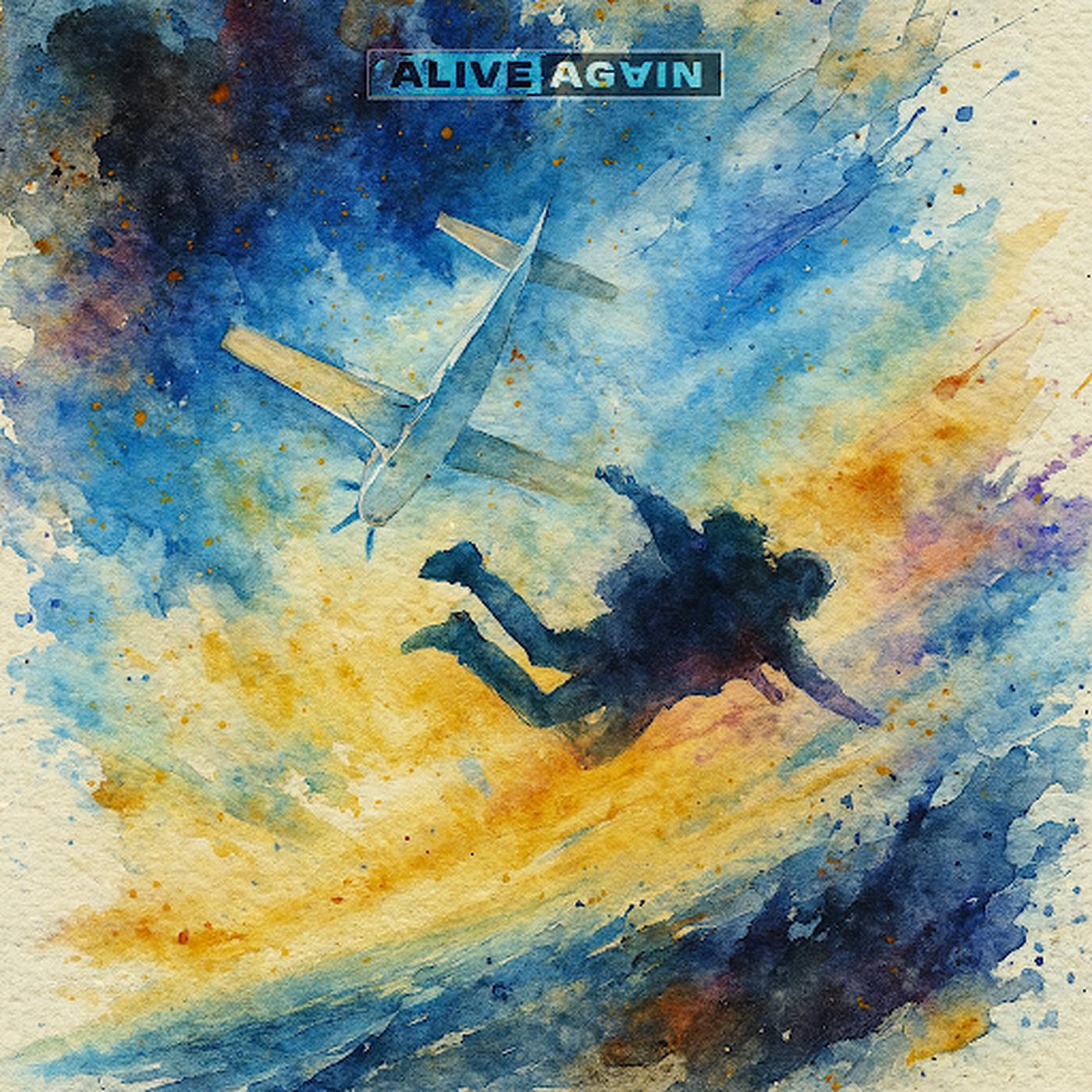
Speaker 2: My parents were both skydivers. They met skydiving. My dad was an instructor for a long time, and I think my mom was just an enthusiast, and they both logged several hundred skydives. My dad made over ten thousand over the course of his life, over ten thousand jumps. So skydiving had always been something that I was brought up with and something that I was told that I was going to do. The first time I ever went skydiving was on my eighteenth birthday, and it was in a little private plane with my dad and his old skydiving buddies, and they just strapped me onto a tandem set and threw me out of a plane. So I very much enjoyed it. But because I had access to friends of the family that had been doing it, I never I never spent the money to go full professional skydiver, you know. I never spent the money to get certified and do everything else. But I did go pretty often and I would go to the drop zone that my parents used to go to because they still had friends there and I could get a discount, or at least they would know who my parents were. So on my birthday, I believe it was my twenty third birthday, I wanted to go again. And I had a friend, a local Atlanta actor friend who had never been skydiving, and he wanted to go too, so he and I. He and I got in the car. We drove out to where the drop zone was. It's about an hour outside of Atlanta, and he had to go through the whole safety procedure and he was super, super excited, and I was excited because this would have been my eighth jump, So I felt like I got to be the veteran who was showing somebody how to have a good time and how this goes, and I got to be the one that was cool and collected while he was very nervous because he was jumping out of a plane for the first time. So Ramsey and I were trying to decide who should go first. What would be more enjoyable for him to watch me jump out of a plane or to jump out first and then be on the ground for me to meet him there, and ultimately we decided that he should go first. And the whole time I remember this so clearly, the whole time we were in the plane and he was just like smiles ears to ears. He was so excited and so was I. And he jumped out. And I was the last one to jump that day because I had done it before, and because the drop zone was a place that was familiar to me. Even though I was going tandem, so I was attached to somebody. The instructor was letting me play so we could do rolls in the sky. I would be the one to pull the rip cord, little things like that that you know, I've done it a few times at this point, so so he was happy to let me do those small things. So we're very cavalier about it. We jump out of the plane. There was no lead up to it. It was a very quick thing. We got to tumble around in the air for a little bit. When it was time, I pulled the rip cord and the parachute it had a hole.
00:05:09
Speaker 3: In it when it deployed.
00:05:14
Speaker 2: The small hole ripped open upon impact or upon it deploying, and ripped really really large so there at this point there's probably like a six or eight foot hole in our parachute. Because of the wind that everything else, the parachute would expand and then it would crumple, and when it would crumple, we would drop, and then it would catch another gust of wind and it would sort of reinflate for a moment, and then it would crumple and we would drop. Clearly, you can't land this way, so we had to cut away to our reserve parachute, which again, this is all somewhat standard, I suppose, I mean, it shouldn't happen very often, but just to note it, of reserve parachute is a life saving device. It is not the same as your regular parachute. It's much smaller, it can't withstand wind the same way, but it does its job to save your life. However, by the time we deployed it, we had to cut away from our main parachute, and then we had to give that time to clear before we could deploy it. You can't deploy a reserve choote immediately because you don't want it to get tangled in your primary shoot that you just deployed. So we had to free fall for a lot longer than you would ever want to, and with the fact that we had been doing roles and turns and things in the air, we had already pulled the parachute, probably at the lowest point that you could pull the parachute. So we're at this point dropping very fast, and we're way lower than you should have been. By the time we've pulled the reserve. We never really got to slow down because our first shoot was deflating, so we were gaining speed the whole time. We were going fast. So the way that the rigs set up is that the person, the professional that you're skydiving with, is in a harness. They attaches you essentially to their chest, but so that you can also see and move around. Okay, I positioned lower than him, so my feet are lower down than his feet are, my head is beneath his head, and I'm more or less strapped to his chest. I did not know this. Instructor. He was super great. He was really goofy. He gave me a lot of shit for for not being certified. He was joking with me about how it's completely unacceptable to have done eight skydives to still be skydiving tandem, and in this case, I'm very glad that I was, but he was wonderful. But when the shoot deployed, that happy, go lucky attitude that he had completely fell away. He got very tense. He went into problem solving mode and just started handling things. He went into, you know, life saving emergency mode. I noticed it, but I didn't and I knew what was happening, but I also felt very helpless to the situation. There was nothing that I could be doing, and I had to trust that he was going to just do it. He explained to me right before we pulled the rip cord that we were going to have to pull the ripcord and cut away, and we were going to drop again. And when we did drop again, we were going to roll because when you jump out of an airplane, usually you spread out with your arms and your legs in sort of an exposition with your belly to the ground so that you're flying. But because the parachute had already deployed, we were sitting upright, which means when we drop it again, we were going to roll in the air because we were not positioned to be belly down to the ground. So he prepared me for that, and we did. We rolled and it was fast and that was pretty scary, and pulling the second shoot, the reserve chute did straighten us back out, but it was a sort of rough experience being straightened back out. And by the time the reserve chute was inflated, we were pretty low down to the ground and the wind was not working in our favor. The wind was pushing us straight down. There was no angle that we were having, and we were falling very fast, and the ground is rushing up at you very very quickly when you do a regular skydive where nothing goes wrong. One of the things that I've tried to explain to people before is that it once you're floating, once your parachute's deployed, you're so high up and you're moving at such a pace that until a certain point, it doesn't really feel like the ground is rushing up at you. You really do kind of feel like you're suspended in air and the ground is sort of abstract. It's not something that your brain can super easily comprehen same as when you're in a plane. You know, but as you're falling, the ground isn't getting any bigger. For a while until you're low enough to where you can really start understanding the speed at which you're falling. With the reserve shoot, the ground was coming up, and it was coming up fast, and it felt like it was coming up impossibly fast. It felt like it was coming up too fast, and that there was no sense of control, where in my previous experiences with a regular shoot that deployed successfully, you feel like you know you're going You're going a little fast, and it's a little scary, but it's not anything that doesn't feel like it's within your control. The reserve shoot felt like the equivalent of I don't know, trying to jump off a speeding train. I remember in those moments as we're approaching the trees feeling calm. I was not feeling panicked. I think that it was a fight or flight instinct that takes over. I was not afraid, but I was trying to problem solve. My instructor, who is behind me, explained again what had happened, and he more or less said, I'm going to do everything I can to get us down on the ground safely. I'm going to need you to stay quiet, and I'm going to need you to do anything I say to do as soon as I say to do it without question. By the way, we're way off course at this point. We're nowhere near the drop zone, and we were dropping into farmland that had lots of trees and forest area, and we were dropping what seemed like directly into a bunch of trees, which was pretty scary because I didn't know what was going to happen there. I didn't know if we were going to get hung up in a tree. For a moment, I thought maybe I could grab on to a branch and use that to soften our fall, because we were coming in so hot, we were coming in so fast that I didn't I wasn't sure what the impact would be like. But I also knew that we were coming in so fast that the idea of grabbing onto a tree branch would likely mean ripping my arms out of their sockets. It was not a safe option to grab anything. I had the distinct feeling like we were not going to die. There was a very very clear feeling that this was something we were going to survive. But in the same moment, I completely and fully accepted the fact that I was going to shatter both of my legs and I would probably never walk again. I was certain of it. There was just no way. With the angle that we were coming in and the speed at which we were coming in, there was no way that I was going to land on the gri especially because again I'm positioned a little lower than my instructor, so my feet hit the ground first, and I have the weight of him on top of me and the velocity of the fall, so I have all these factors, and I was certain that my legs were going to shatter. Normally, when you land on a skydive, a proper skydive, and you're moving slowly, it depends on the angle at which you're coming in. But a lot of times, if you're coming in kind of fast and you don't want to risk the impact on your legs, you'll stick your feet out in front of you and you'll sort of glide in onto your butt. In this case, that also was not an option. We were coming in too fast and going into my butt would have meant shattering my tailbone and potentially damaging my spine. So in this very quick moment, I was forced to accept the safest thing to do is to sacrifice both of my legs to shatter my legs, and at the time, I was working on having an acting career, and I was like, great, I'll never be an actor. That's fine, And none of it really deterred me too much because I was so sure I wasn't going to die. I was willing to lose both of my legs. In that moment, I knew that I was not going to die. I think that that is the only thing I can say about that is that it's an instinct. I do feel like there was some cognizance of the idea that the reserve shoot was doing its job, but it had slowed us down enough that we would survive this fall. But we were going fast enough that it did not feel like there was any option to get out of it unscathed. But all I can say is that that was a feeling. I had no other reason to believe that, because it probably is the equivalent of We're coming in really fast way above the tree line when I was having these thoughts, and if a person were to just jump from that height, they probably wouldn't survive. Timing was a very interesting factor in all of this. I have no concept of time for all of this, and in fact, it felt very, very distinctly like time stopped and completely slowed down. So what may have been I mean, typically speaking, if I'm not mistaken, and again I might be wrong about this, but I think that usually from the time that you deploy your parachute to the time that you land is it's pretty short. You're not floating for very long, a matter of minutes at most a couple of minutes at this stage, from the time that our reserve shoote deployed and were a bit above the tree line, where we had straightened out and the ground was rushing up at us and we're coming down very fast. I do think that if it had deployed for five seconds, we probably would have been in a much worse situation than we ended up being in. But time itself slowed way down. I remember that distinctly because I was able to form very well thought out plans of action and to determine in my brain whether or not they would work. So the whole thought process of maybe I can grab a tree branch. No, we're going pretty fast, I think that would rip my arm sockets out. Well, is that okay? What's better that? Or my legs? The whole reasoning process of what I can and can't do and why I can and can't do. It felt like that was a normal you know. It didn't feel like my mind was racing. It felt like I was thinking all of that out at a pretty reasonable speed, and it must have been faster than that. I'm sure everything was going very fast, but it did not feel fast. It felt like everything slowed way, way, way down. It felt like from the moment that we had deployed the reserve shoot until the moment we hit the ground was ten minutes. And there's just no way. My dad made over ten thousand jumps in his lifetime. He had to cut away to a reserve shoot three times in ten thousand jumps, so it's not very common. The process of cutting away a reserve shoot is not as cool as in the movies. I wish it was actually pulling out a knife and sawing through the chords. But there's a there's a fail safe mechanism in your in your parachute rig that will just basically do it for you. You pull a chord and it just unclips those wires that you're attached to, and then you're free falling again and again. You have to wait for those to go away. You don't have to wait very long, but you do have to wait to be clear of those before you can pull your reserve shoot, which is just a different lever. It's a different handle that you pull, so it's a pretty quick process. The instructor that I was with was amazing. He was doing everything that you're supposed to do. He had never had to pull away to a reserve shoot before, and he had certainly never had to do it while attached to somebody. But I will say that in those moments of fallings, I trusted him, but I also wasn't thinking about him. I wasn't thinking, oh, I'll let this guy save my life. I was thinking about how I was going to save my life. It almost felt like it just did not matter that he was there in that moment. I'm sure it did matter that he was there. He's the person that saved my life. But in those moments where you're dealing with so many factors that are in nobody's control, the wind, to the ground, everything else, there's only so much he could do, and I felt very much like I was going to be responsible for for whatever ended up happening. Of course, there was only so much I could do, I couldn't be the one to pull the reserve shoot. I did not have the training that he had for emergency situations. But I will say that the one thing I did do, which came from years of training at Push Push Theater in Atlanta, was I am. Since high school, Tim Haberger, who runs Push Push, had really really strongly pushed physical stage acting, and we used to do a lot of things like pratfalls, and we would jump off of platforms and learn how to fall safely. Falling safely is something that I had been taught how to do since I was in high school, and I was never grade at it, but I had some training in it. So once we got to a point that felt like the equivalent of jumping off a box or a very tall probably ten feet up, I instinctually went into pratfall mode, and I positioned myself to fall safely, to sort of tumble full. So when you fall, you don't lock up. You stay as loose as you can, You let your knees come up a little bit, and if you can, you fall to the side. You position yourself so you're not going to brace with your arms, so that you don't shatter your wrists, and you just sort of position yourself to the most well equiped parts of your body to absorb impact, and you let yourself collapse. It was harder attached to some, but I do think that that's part of why I came away with no injuries. That coupled with the fact that it did rain the night before. We fell into somebody's farmland and the ground was kind of spongy. No no legs, brains, no leg breaks, nothing at all. My feet hit first, but I very quickly let my feet fold and let my knees sort of come up to my chest and fell to my side. And the ground was still wet from it raining the night before, and I'm sure that helped us. And the guy fell on top of me, and he was a bigger guy, so that that that was like the most dangerous part of it, was having a full grown man fall on top of me. Maybe not the most dangerous part, the most painful part. We both just sort of laid there on the ground in the wet grass, and I think there was a long moment of silence. It's early ish in the day and it smells like cows, it smells like farmland. It smells like farm animals, not in an overwhelming way. There's still a lot of fresh air, but it smells like the country. The air is cool, but the sun is out and you can feel the sun, so there's that direct sun warmth, but with a cool breeze. I'm in the shade so and I'm aware that I'm in the shade from the trees, the shade being a little cooler. He laughs first, and then I laughed. And I think the laughter moment is just that feeling when you are so overcome by emotion. It's not happy laughter or sad laughter or grateful laughter or anything. It's just it's just, I think, a release. It wasn't funny, but we did come out of it completely unscathed, and it felt like a relief laughter. And it wasn't a long laugh. It wasn't like a giggle fit or anything like that. It was just it was just an acknowledgment of the absurdity of the situation that we just survived, and a release of all of the tension of whether or not we were going to survive it. For me, when I think of this experience, the moments that stand out the most are the moment right before going into the tree line, because I didn't know where the ground was because the tree line was pretty dense, so I didn't know how much further I was going to have to fall once I got past the tree line. So the moment right before that was very scary, and that was still when I was questioning whether or not I could grab onto a tree limb. But it's funny. I remember that moment above the tree line and the moment specifically of acceptance that I was going to shatter both of my legs, and I remember thinking specifically that it was funny that I was okay with that, and that I was even a little grateful in that moment because I just knew that I wasn't going to die, and I felt great. It felt like a fair trade to me. I was like, sure, if I'm going to live, I can be in a wheelchair for the rest of my life. That's fine, I'll say again. The second moment, this very visceral, is when I realized that moment of it kicking in that I needed to fall safely. I needed a pratfall like theater training and taught me how to do. Was another clear moment, because then it felt like I had something to do, where before everything was happening to me, that moment felt like I had to execute something and I had to execute it right. So that was a very honed in moment for me, and those are the two moments I think of the most. But I do also very specifically remember the texture of the ground because it had rained before, because the ground was wet still and it was spongy, and we happened to land right on the edge of a farm, so there was trees that we went. We just got past the trees and then there was a big open field and we didn't know where we were. We had no idea how far off course we were, none of that. And after a moment of laying in the sort of spongy, wet ground, I got up. He was very afraid of me getting up, but I got up. I was fine, He was fine. We were both completely unscathed. He gave me a hug. He asked if I was okay, and he said I did a great job. And we chatted a little bit about whether or not that had happened before, and we just we were like, okay, we gotta go, we gotta go find the road, and we gathered up the parachute he found the He we had no idea where the other parachute went. I'm sure they found it eventually, But we gathered up our reserve parachute and we got out out of the road and we started walking, and eventually a pickup truck came and loaded us into the back. They had found us. They'd been out looking the other the drop zone people had been out looking for us because they could see from the ground what had happened. They saw us more or less where we landed. They came and got us. We were something like two and a half or three miles off course, we weren't that far away, and we came and when I got off the truck and was there waiting for me, and he was so scared. He was so so scared, and I mean in the way that any of us would have been if we just saw our friend's parachute malfunction and they dropped going a million miles an hour into the tree line. He was terrified. And he told me that he looked over to his instructor when our shoot disappeared, and he said, is she gonna be okay?
00:26:25
Speaker 3: And his instructor just said, oh, fuck. So Randy thought I was dead. He was so scared and so grateful. I was very grateful.
00:26:40
Speaker 2: A bunch of people apologized to me, but it was nobody's fault. It really probably was such a minor tear that just escalated when the shoot up, and it's nobody's fault, and I wasn't upset about it. In fact, I was super grateful that I was with somebody who handled the whole thing so well. And then it was done, and that was that. We went home and I called my dad and I said, hey, Dad, my parachute didn't deploy, and he said, congratulations. The moment that I knew that I wasn't going to die is something that that moment's the thing that sticks out to me more than anything else, specifically, because I don't know how I knew that. I, like I said before, I did have somebody with me. I did have a second parachute that was deployed, but those things alone weren't necessarily enough to guarantee my survival. And this circumstance because we were so close to the ground when the parachute did deploy, and because the winds and everything were working so far against us, and it wasn't a matter of I felt safe because of those things. I didn't feel protected because of those things. I don't have any other way to say it other than a crystal clear instinct that today wasn't my day. Today wasn't my day. It wasn't. It just felt very clear. Even though all of the physical indicators said today could be your day, my brain went, no, it's not today, and I don't have any reason for that. And it wasn't a decision. It wasn't a will to live. It wasn't a choice that I made. It was a quick analysis. It was a hey, Zoe, you might die, and you're not going to die today. Yeah, you're not going to die today, so let's figure out what is going to happen today. And that was actually the thing that happened. First. It wasn't let's all right, team, let's let's figure out how we're gonna get out of this. It was, Okay, you're not gonna die. You're not gonna die. You can feel that in your heart. You're not gonna die. What is going to happen? And that's when the analysis starts going, Okay, you're gonna break both your legs and then I've got the flash's actual physical like imagery flashes of like you know, being in a hospital bed and then being in a wheelchair for the rest of my life. It did occur to me in those moments, which I think is a it's hilarious looking back that I did have a very brief mourning for my acting career up there and in the sky, which you know I've had. I've since mourned more completely.
00:29:13
Speaker 4: But I went through just the quick list of what is going to happen to you, and then the third thing that happened was, Okay, what's the game plan.
00:29:28
Speaker 2: I think this experience showed me that we're capable of a lot. In moments where it feels like we don't have any control, we are more capable than we think. I think the human body and the human brain are absolutely remarkable because I can get overwhelmed and clouded by emotion when you know a delivery that I've been expecting doesn't show up on you know, there are things that can completely ruin your day and can set things off on a train of nothing's going right and everything just seems awful. And yet in these moments where it really matters and where you may or may not make it, and everything you've known in your consciousness that exists might be blinking out soon. It's amazing how clear everything can become. And I think it's amazing the intensity with which your brain can zero in on details to survive. It's just survival. We've got these little survival machines in our heads, and it's incredible how easily it can sift out the things that are not necessary for you in those moments and distill your experience down into what is necessary. And this is an opinion that I'm about to express, but I believe that because I knew I wasn't going to die, emotions became unnecessary and the things that became necessary or life saving instincts. Whereas I do think that in certain situations where survival might not be an option that would make sense to me, that emotion would then become the defining factor because your brain is going to fledge you with that in that moment, emotion might be the most useful thing if there's not a survival option. Who knows. I don't think that there's Yeah, I don't think there's an explanation, but fear, elation, sadness, you know, nostalgia. Any of those things might be the thing that in real final moments might be the thing that's most useful. The time slowing down thing was very interesting to me, and it makes sense, I suppose, when you think about things like going into the zone in a basketball game or whatever else it might be. But I don't feel like nothing that happened to me felt like it was. Everything was a bit of a surprise. I didn't know how I would react to any of this. If you had told me that I was going to jump out of an airplane and the shoe wasn't in a deploy, I would imagine that I would be panicking. I would imagine that I would be I've always I've had morbid fantasies before about what would you do if you were in a plane when the plane went down, And I remember I used to think that I would try to use my phone to call, or try to get a text out, or write something down so that if they found my phone that could be later discovered by my loved ones that could say, you know, I was thinking of you in my last moments. I know that's a very morbid thing to say, but you think about these things sometimes communication and expressing that I loved you. And I've considered that in a moment of unplanned emergency death, I would want to try to get a message out to my loved ones that I loved them, and that's how I would want to spend my final moments. But in that moment, that was not That was not on the table, and I and I you want that to be on the table because you want to think that, like, oh, that's a really beautifu last thing to happen, But it wasn't. In my experience, it really was just a Hey, we're going to get out of this? How are we going to get out of this? For me, it informs the way I think about death and about how it's amazing what your brain will do to protect you in moments of real danger. And again, I know that every circumstance is going to be different, but I think about it a lot in terms of actual death. I don't believe that at the time of this experience that I had any concept of how I was going to die. I was not raised with any kind of religion. I was both of my parents were atheists, and so I was raised to sort of believe that nothing happens when we die. And I was raised in a way that of course we're all going to fear death, but I was I don't know. But no, I didn't receive or I never knew how I was going to die at the time. I have since had premonitions of how I would die. And it's not in an airplane. It's in a car. And I hope I'm wrong, But there is an interesting thing. And I will say that I did think of this experience when I had that premonition, because the thought that I had of it was a similar acceptance. It wasn't a pleasant thought, and again I hope that it's not true. But when I did have that thought, it was a flash that came into my mind out of nowhere, completely uninvited, and it was images of what that those very final moments would be. And along with it came a distinct feeling of acceptance. And you know I wouldn't. Happiness is not on the table here, neither is sadness. There's no emotion attached to it. It's just a clear It's like stating a fact, same as you know sky's bluegrass is green. This is how you go. And again I hope I'm wrong, because I don't want to go that way. What I would like to happen is to die at one hundred and ten in my sleep, you know, but who knows. But I do think it is interesting that that's the only other time that I've ever had a completely emotionless response to the idea of my own death. At the same time, it's impossible to not think about other people's near death experiences or other people's actual death experiences, and I feel very privileged and very fortunate to be able to say things like I wasn't scared and it's not scary, because I don't want to. I don't want to suggest that it's not scary for everyone. I don't want to suggest that it's not like that in everyone's final moments that they're they're feeling very zen about it. But in my moment, I was feeling very zen about it. And a carry away for me has been that in my actual final moments, I think I will feel that too, and which is further bolstered by the fact that in my pseudo premonition about how I may or may not die, I feel very zen about it. I don't want it, but I feel zen about it. There's one overwhelming thing that I was loved with with this experience that I love and I'm very grateful for. And I had no idea that this would be my takeaway, but I think about it often, which is that in those final moments, or what could have been a final moment, in those uncertain moments for me, in that moment, there was no fear for me. In that moment, there was no fear. It was not and I don't say that to sound like I'm brave. It's that there was too many other things that I had to think about. And granted I didn't have a heart stopping moment, and I did have a reserve shoot and I had somebody with me, so there my near death experience was in many ways more controlled than a lot of others. But it was still uncertain for a while. And in those moments of uncertainty, my life didn't flash before my eyes. I wasn't thinking about my loved ones and what I wish I could have said to them. I wasn't thinking about regrets or anything emotional. I was thinking about how I was going to save my life. But it was done without fear. It was done with complete confidence and I appreciated that, and I've carried that forward into the idea of in our most vulnerable moments, we can be very very strong and we don't need to be overcome by fear. And I'm sure it's all circumstantial, but in that moment, for me, I was shocked at the lack of fear. I was conscious of the lack of fear. And I've taken that and I've held that, and that's been that's been a big thing for me going forward and thinking about other people who I've known who have passed away since, and again, every circumstance is going to be very different. I'm sure there that I'm I'm very lucky in that regard. But the quiet acceptance of things, even the quiet acceptance of I'm going to shatter both of my legs and I'm okay with that, was overwhelming. The the the amount of emotion that was not involved was really really shocking. And that's something that that I've that's stuck with me. Would I do it again, I would absolutely And at the time the day that I the day that this happened, I would have gone again that same day if you would let me. And I think that that same day, I was feeling not invincible, but I was feeling very present, and I was feeling very very open to experience and to doing things. I also was feeling very much like, well, this probably won't happen again, so I should probably get up in a plane and do this again, because what are the odds there would happen twice. But I think that if anything, it has made me, it has made it a little easier to be present and to accept things as they are coming, and for a time, I would say probably made me a bit more adventurous because of that. I don't think, I'm certain that this experience made me more comfortable with the idea of my own death. Of course, I'm still scared of it. Of course I don't want it to happen. But the major takeaway that I had from it that I do believe is that in my final moments, and again I can't speak to anybody else, but I do believe that in my final moments, I'll be okay with it. And that was a takeaway that I got from this experience.
00:40:01
Speaker 5: You can be okay with anything when you're faced with reality, and I believe that for me, in those final moments, I'll be terrified leading up to it.
00:40:13
Speaker 2: I'll be terrified thinking about it. I don't want it to happen. I don't like thinking about it, but I do believe that in those last moments, I'll be okay. And I think that this experience gifted me with that. I have, ever since this experience, felt very strongly that it's our responsibility in life to live it. And because you don't know when you're going to do something that might be your last thing, we are not guaranteed anything, and I know everybody knows that, but it kind of stares you in the face a little bit when you come close. And I have absolutely tried to live my life in a way that's consciously aware of the fact that I'm going to die, and I think it's it's been a way wonderful thing to remember always that you don't know and you can't control, and the best thing you can do to face your own death is to live your life.
00:41:35
Speaker 1: Welcome back, This is Alive again. Joining me for a conversation about today's story. Are my other Alive against story producers Lauren Vogelbaum, Nicholas Dakowski, and Brent Die And I'm your host Dan Bush. Let's talk about Zoe Cooper, the one and only.
00:41:51
Speaker 6: One of my favorite human beings in the right.
00:41:57
Speaker 1: One of the most cool.
00:41:58
Speaker 6: Is really impossible if you the universe Zoe to not just automatically fall completely in love. She's just like such a cool, sweet, funny, smart as hell. One of the best writers I've ever amazing writer, just impressive. Yeah, oh my god, freaking brilliant. She wrote on that show Teacup and she she wrote, uh, mantak caves with you and I, Yeah, that was.
00:42:27
Speaker 1: She wrote on a twelve Ghost, didn't she?
00:42:29
Speaker 6: And she wrote on yep, she wrote on twelve Ghost thirteen Days Twelve Ghosts episode of Thirteen Days of Halloween. If I want my work torn apart and put back together again, I'll send it to Zoe because she is absolutely brilliant on things like story structure and character and does not pull punches, which I appreciate give she gives amazing notes. Yeah. I just can't speak highly enough about this human being.
00:42:56
Speaker 7: And I had no idea that this was part of her.
00:43:00
Speaker 1: Her experience and what happened to her brain in this heightened this moment of heightened awareness as she's got seconds to decide how she's going to you know, maneuver in this situation. That's so fascinating to me. I've got to go find a neurologist to talk to about these things like the the experience of time dilation and how that works in the brain, and the experience of fear and how your brain could shut off your amignala in times of hyper awareness when your life is at risk. Her story, I just you know, when I re listened to it, I was like, oh my god, this is one of our best stories.
00:43:35
Speaker 6: Yeah, it's it's really intense, and you know, it does remind me of another episode that we've done on Derek McManus, who was the you know, Special Forces rescue guy who got shot a bunch of times. The way that their brains worked in those moments seemed so similar.
00:43:56
Speaker 7: To me, so analytical.
00:43:58
Speaker 6: They both just went into problem solving mode and both had this sense of innate optimism about them in these situations that like, I've got to get to the other side of this is going to be totally fine, And that is incredibly impressive to me, and I wonder if I'm capable of doing the same thing. Hopefully I'll never find out hopefully, I, like Zoe said, die in my bed asleep. At one hundred and ten.
00:44:28
Speaker 1: She came out of this whole experience going, Okay, when it's my time, there's a possibility because of what I experienced, and she holds onto this that I will not be afraid. That your mind is this wonderful machine that is built for survival and it's built to protect you. So she took hope in the idea that you know, when it's her time, she might be able to also not have that fear, so it won't be a horrific sort of fear that goes along with that. She said, Now, these conditions are specific to what happened to her, and these circumstances are not all circumstances, but just that she had gone through this and had this experience of fearlessness or not even fearlessness, there just wasn't It wasn't about fear at all. It was about survival mode. Just the way she integrated these experiences into how she sees her future and how it sort of made her even more willing to take some risks, I think, is what she said.
00:45:20
Speaker 8: I thought it was amazing how her theater training is what saved her.
00:45:24
Speaker 7: Saved by theater training.
00:45:26
Speaker 2: Yes, for the first time in history.
00:45:29
Speaker 6: I think half of the people on this call have actually worked with Push Push, the theater that she was talking about. I think if if any theater's training was going to save your life.
00:45:42
Speaker 7: Mm hmm, yeah, learning how to take a pratfall is way up there.
00:45:46
Speaker 6: Oh yeah, no, absolutely.
00:45:47
Speaker 8: We've had a couple of stories like this, I can't think of them off the top of my head, where the thing that that person was really into is a thing that came back in their moment and help them, Like like Dwayne Meadows talking about his knowledge of marine biology when he was stuck in the tsunami in Thailand, you know, like where I know what's coming because I have this thing I've devoted my life to and it's helping me in this last moment. And Les Cochrane her experience as a diver helped her survive the fires in Lina. And a lot of these stories too are you know, there's stories about people on the brink of death. But what I've found is a lot of these stories are really about the thing that that person loved the most, you know. So it was really interesting to see how Zoe about her theater experience and her her love of acting, and you know, and the recognition that she may not be able to act if if she crushes her legs in this fall. You know, I just think it's it's really it's always been interesting to me how much the way the person lived their life comes comes comes out in these final these what could be their final moment.
00:46:58
Speaker 1: Right Like Derek McManus, who was shot for teen times, he's langlare, He's like, well, I might be a gold medallist now because you know, in the Paralympics. And then and then Zoe's like, oh, well, I guess I'm gonna you know, I'll never be an actor again, but okay, I'll make that bargain.
00:47:14
Speaker 6: And now she's a fantastic writer, right.
00:47:17
Speaker 8: Or there's she people like Drew Cybert who are like, I'm going to take this experience of being a paraplegic and I'm going to go on to get my law degree and help veterans who have lost the benefits that have been guaranteed to them because I understand what they're going through. You know, I just think it's really interesting how how in that moment they can they can see their future, you know what I mean, Like not only and Zoe knew she was going to survive that, which is another interesting thing.
00:47:43
Speaker 6: She's like, no, no, I'm going to get through this.
00:47:44
Speaker 8: It's just how am I gonna adapt after.
00:47:47
Speaker 1: All the bargains that she was making on the way down in the split seconds, like it must have been just maybe ten seconds in that last little bit. But timeslod and stretch, which I guess they say is mostly a memory effect, not a real time yeah obviously, but.
00:48:01
Speaker 7: It's it's how your brain is recording everything, not how you're literally experiencing it.
00:48:06
Speaker 1: Right, and you you're recording, you're taking in so much more information in a short period of time that you're clocking all of that. And then so when you play it back, of course, it seems like more than Yeah, when you play back in your mind, it seems like more than you would in a normal experience.
00:48:20
Speaker 7: Feel normally, we're just not recording that part or that fast.
00:48:26
Speaker 6: The brain is so weird in that way. Yeah, it's you know, it's so similar to uh, I when you learn what deja vu really is. Uh It's it's when you're the part of your brain that that makes memories is the one that's like, your lord, you seem to know what this is. Can you explain this better?
00:48:49
Speaker 1: Yeah, you've explained it before. Can you explain it for us again?
00:48:51
Speaker 2: Yeah? Okay.
00:48:52
Speaker 7: So deja vu is this thing where essentially the part of your brain that is telling you what you are currently experiencing gets a little bit miswired and it kind of punts whatever is happening in front of you into the this is a memory part of your brain and then like like like you are like, oh, this has happened before.
00:49:15
Speaker 2: No, it's just your brain miswire.
00:49:18
Speaker 6: Yeah, it's just a processing error. Yeah, which you know, it's cool to know that, but also kind of a bummer to take the manage it away.
00:49:29
Speaker 1: Can you guys imagine making bargains like the way she was making a bark. She's like, Okay, well I guess I'll I'll lose my acting career, but and I'll lose my legs, but I'll live, so okay, And she's like becoming okay, like the things you're willing to shed off, the layers you're willing to drop away as you're approaching the inevitable crash.
00:49:51
Speaker 6: You know.
00:49:51
Speaker 7: I think she went through all the stages of grief in like seven seconds, Ye blasted through them and was like, well, all right, that's fine. Damn right.
00:50:00
Speaker 8: Yeah, I would say there are no atheists in a fox hole, and a lot of that is just people going, Okay, I'm about to die?
00:50:06
Speaker 6: What what?
00:50:07
Speaker 8: What deal am I going to make with whatever force there is? That With Zoe it was herself to make to make myself to get out of this situation. You know, how am I going to adjust my life to whatever reality I'm going to be living in when I come.
00:50:23
Speaker 2: Out of this.
00:50:24
Speaker 1: I love how she described the moment when they realized that they were unscathed and they were in this wet field that was kind of spongy and helped absorb some of the impact. And then she described the laughing, not because it was funny because but just because it was this huge release, yeah, from all of the heightened stuff, Like she couldn't be emotional during the moment to moment, split second decisions that was rapid firing through a brain of taking in information, figuring out how to you know, which choices to make as quickly as possible, and then all of a sudden, when all that was gone, the emotions just flooded in and they came out as laughter, just this release. That was kind of a beautiful moment.
00:51:02
Speaker 8: It's amazing that how long does it take to jump from a plane and land of the ground, Like maybe a minute in twenty seven seconds, and it took her thirty minutes to tell the story, you know, like that much went on in that short period of time. And I think I remember you telling me that you weren't quite sure that this story would fit the format of the show. I'm not quite sure why, because it seems to fit it perfectly. You know, it's like, how are you going to reckon with this moment? But so much of it it wasn't about like how does it transform your life after the moment. It was just like so much went into telling the story of what happened in those in that minute twenty seven seconds or however long it takes to I'm going to look up on Google it takes to jump out.
00:51:45
Speaker 1: I was wrong, No, I think I was just early on. I was just kind of it was my first story and I was like, this is not an actual clinical near death experience where there's an out of bout experience, you know, And I was I was thinking more in terms of, you know, how does somebody undergo massive trauma, bodily traumas and things like that. And I was sort of searching for what the show was. And now I've gotten to a point here at the end of season one where I'm like, oh, I know what the show is. Yeah, it's it's just about all things that have to do with being human when you're pushed up against the edge of life, you know, so it's about being alive again. And this did inform her sense of agency going forward, and still does.
00:52:28
Speaker 8: I just looked it up and it said a skydive usually takes five to six minutes with approximately fifty seconds in free fall, so she would have had four to five minutes of this terror.
00:52:39
Speaker 1: No, she they pulled the shoot after being able to tumble for three or four minutes. So when they pulled the shoot and it started to fail, they only had about a minute left.
00:52:46
Speaker 2: Jeez.
00:52:48
Speaker 7: Yeah, because that four to five is a lot of drifting and yeah.
00:52:54
Speaker 8: And you fall faster when there's no parachute.
00:52:56
Speaker 2: Yeah. Yeah.
00:52:57
Speaker 7: I also was it was interesting to me she talks as many of our interviewees talk about wanting to reach out to family in this scary moment about having about feeling that connection to loved ones and wishing that there was a way that she could reach out, which a reminded me of Aaron's story of getting his arm crushed in the canyon and how he used his you know, not literal but like technological connection to his loved ones through his camera as like a psychological lifeline in those moments. But also it was kind of funny because like Zoe was not alone, she was physically connected to another human person, and in a way that in a lot of our stories people are very alone in those moments. And I don't know, it's just it's so interesting to me because like she talks about both feeling glad, feeling like logically comforted that he's there because he knows what he's doing and he's an experienced dude, but also how she still felt very much personally responsible and kind of on her own, and that she wasn't even really thinking about him, and so like that part of the psychology, I was like, huh, Like even, yeah, like we are all truly alone.
00:54:11
Speaker 2: Kind of one of those moments.
00:54:16
Speaker 1: Next time I'm Alive Again, Australian Star Group officer Derek McManus was shot fourteen times in under five seconds and left bleeding on the ground for nearly three hours while a siege raged around him.
00:54:31
Speaker 9: And I'll always retain this sense of optimism no matter what happens to me. And my body is closing down, He's still firing continuously. Well, it's pounding through the bricks. And then I don't know if you know guys in the Special Forces, but we have a slightly bigger ego than the average person, and that ego kicked in and while I'm lying on the ground my body's closing down, I start thinking to myself, I'm damn good at basketball. If I can add something to what they're already doing, well, we may make the Paralympic finals, may end up with a gold medal.
00:55:03
Speaker 1: Special thanks to Zoe Cooper for sharing your story. Zoe is a film and TV writer and director based in Los Angeles, California. Our story producers are Dan Bush, Kate Sweeney, Brent die Nicholas Dakowski, and Lauren Vogelbau. Music by Ben Lovett, additional music by Alexander Rodriguez. Our executive producers are Matthew Frederick and Trevor Young. Special thanks to Alexander Williams for additional production support. Our studio engineers are Rima L. Kali and Noames Griffin. Our editors are Dan Bush, Gerhartslovitchka, Brent Die and Alexander Rodriguez. Mixing by Ben Lovett and Alexander Rodriguez. I'm your host, Dan Bush. Alive Again is a production of I Art Radio and Psychopia Pictures. If you have a transformative near death experience to share, we'd love to hear your story. Please email us at Alive Again project at gmail dot com. That's a l I ve A g A I N P R O j E C T at gmail dot com.
Speaker 1: You're listening to Alive Again, a production of Psychopia Pictures and iHeart Podcasts.
00:00:15
Speaker 2: My name is Zoe Cooper. And the eighth time that I jumped out of an airplane, my parachute did not deploy. It's amazing what your brain will do to protect you in moments of real danger. The intensity with which your brain can zero in on details to survive. It's just survival. We've got these little survival machines in our heads, and it's incredible how easily it can sift out the things that are not necessary for you in those moments and distill your experience down into what is necessary. In our most vulnerable moments, we can be very, very strong, and we don't need to be overcome by fear. And I'm sure it's all circumstantial, but in that moment, for me, I was shocked at the lack of fear. I was conscious of the lack of fear.
00:01:20
Speaker 1: Welcome to Alive Again, a podcast that showcases miraculous accounts of human fragility and resilience from people whose lives were forever altered after having almost died. These are first hand accounts of near death experiences and more broadly brushes with death. Our mission is simple, find, explore, and share these stories to remind us all of our shared human condition. Please keep in mind these stories are true and maybe triggering for some listener, and discretion is advised.
00:02:01
Speaker 2: My parents were both skydivers. They met skydiving. My dad was an instructor for a long time, and I think my mom was just an enthusiast, and they both logged several hundred skydives. My dad made over ten thousand over the course of his life, over ten thousand jumps. So skydiving had always been something that I was brought up with and something that I was told that I was going to do. The first time I ever went skydiving was on my eighteenth birthday, and it was in a little private plane with my dad and his old skydiving buddies, and they just strapped me onto a tandem set and threw me out of a plane. So I very much enjoyed it. But because I had access to friends of the family that had been doing it, I never I never spent the money to go full professional skydiver, you know. I never spent the money to get certified and do everything else. But I did go pretty often and I would go to the drop zone that my parents used to go to because they still had friends there and I could get a discount, or at least they would know who my parents were. So on my birthday, I believe it was my twenty third birthday, I wanted to go again. And I had a friend, a local Atlanta actor friend who had never been skydiving, and he wanted to go too, so he and I. He and I got in the car. We drove out to where the drop zone was. It's about an hour outside of Atlanta, and he had to go through the whole safety procedure and he was super, super excited, and I was excited because this would have been my eighth jump, So I felt like I got to be the veteran who was showing somebody how to have a good time and how this goes, and I got to be the one that was cool and collected while he was very nervous because he was jumping out of a plane for the first time. So Ramsey and I were trying to decide who should go first. What would be more enjoyable for him to watch me jump out of a plane or to jump out first and then be on the ground for me to meet him there, and ultimately we decided that he should go first. And the whole time I remember this so clearly, the whole time we were in the plane and he was just like smiles ears to ears. He was so excited and so was I. And he jumped out. And I was the last one to jump that day because I had done it before, and because the drop zone was a place that was familiar to me. Even though I was going tandem, so I was attached to somebody. The instructor was letting me play so we could do rolls in the sky. I would be the one to pull the rip cord, little things like that that you know, I've done it a few times at this point, so so he was happy to let me do those small things. So we're very cavalier about it. We jump out of the plane. There was no lead up to it. It was a very quick thing. We got to tumble around in the air for a little bit. When it was time, I pulled the rip cord and the parachute it had a hole.
00:05:09
Speaker 3: In it when it deployed.
00:05:14
Speaker 2: The small hole ripped open upon impact or upon it deploying, and ripped really really large so there at this point there's probably like a six or eight foot hole in our parachute. Because of the wind that everything else, the parachute would expand and then it would crumple, and when it would crumple, we would drop, and then it would catch another gust of wind and it would sort of reinflate for a moment, and then it would crumple and we would drop. Clearly, you can't land this way, so we had to cut away to our reserve parachute, which again, this is all somewhat standard, I suppose, I mean, it shouldn't happen very often, but just to note it, of reserve parachute is a life saving device. It is not the same as your regular parachute. It's much smaller, it can't withstand wind the same way, but it does its job to save your life. However, by the time we deployed it, we had to cut away from our main parachute, and then we had to give that time to clear before we could deploy it. You can't deploy a reserve choote immediately because you don't want it to get tangled in your primary shoot that you just deployed. So we had to free fall for a lot longer than you would ever want to, and with the fact that we had been doing roles and turns and things in the air, we had already pulled the parachute, probably at the lowest point that you could pull the parachute. So we're at this point dropping very fast, and we're way lower than you should have been. By the time we've pulled the reserve. We never really got to slow down because our first shoot was deflating, so we were gaining speed the whole time. We were going fast. So the way that the rigs set up is that the person, the professional that you're skydiving with, is in a harness. They attaches you essentially to their chest, but so that you can also see and move around. Okay, I positioned lower than him, so my feet are lower down than his feet are, my head is beneath his head, and I'm more or less strapped to his chest. I did not know this. Instructor. He was super great. He was really goofy. He gave me a lot of shit for for not being certified. He was joking with me about how it's completely unacceptable to have done eight skydives to still be skydiving tandem, and in this case, I'm very glad that I was, but he was wonderful. But when the shoot deployed, that happy, go lucky attitude that he had completely fell away. He got very tense. He went into problem solving mode and just started handling things. He went into, you know, life saving emergency mode. I noticed it, but I didn't and I knew what was happening, but I also felt very helpless to the situation. There was nothing that I could be doing, and I had to trust that he was going to just do it. He explained to me right before we pulled the rip cord that we were going to have to pull the ripcord and cut away, and we were going to drop again. And when we did drop again, we were going to roll because when you jump out of an airplane, usually you spread out with your arms and your legs in sort of an exposition with your belly to the ground so that you're flying. But because the parachute had already deployed, we were sitting upright, which means when we drop it again, we were going to roll in the air because we were not positioned to be belly down to the ground. So he prepared me for that, and we did. We rolled and it was fast and that was pretty scary, and pulling the second shoot, the reserve chute did straighten us back out, but it was a sort of rough experience being straightened back out. And by the time the reserve chute was inflated, we were pretty low down to the ground and the wind was not working in our favor. The wind was pushing us straight down. There was no angle that we were having, and we were falling very fast, and the ground is rushing up at you very very quickly when you do a regular skydive where nothing goes wrong. One of the things that I've tried to explain to people before is that it once you're floating, once your parachute's deployed, you're so high up and you're moving at such a pace that until a certain point, it doesn't really feel like the ground is rushing up at you. You really do kind of feel like you're suspended in air and the ground is sort of abstract. It's not something that your brain can super easily comprehen same as when you're in a plane. You know, but as you're falling, the ground isn't getting any bigger. For a while until you're low enough to where you can really start understanding the speed at which you're falling. With the reserve shoot, the ground was coming up, and it was coming up fast, and it felt like it was coming up impossibly fast. It felt like it was coming up too fast, and that there was no sense of control, where in my previous experiences with a regular shoot that deployed successfully, you feel like you know you're going You're going a little fast, and it's a little scary, but it's not anything that doesn't feel like it's within your control. The reserve shoot felt like the equivalent of I don't know, trying to jump off a speeding train. I remember in those moments as we're approaching the trees feeling calm. I was not feeling panicked. I think that it was a fight or flight instinct that takes over. I was not afraid, but I was trying to problem solve. My instructor, who is behind me, explained again what had happened, and he more or less said, I'm going to do everything I can to get us down on the ground safely. I'm going to need you to stay quiet, and I'm going to need you to do anything I say to do as soon as I say to do it without question. By the way, we're way off course at this point. We're nowhere near the drop zone, and we were dropping into farmland that had lots of trees and forest area, and we were dropping what seemed like directly into a bunch of trees, which was pretty scary because I didn't know what was going to happen there. I didn't know if we were going to get hung up in a tree. For a moment, I thought maybe I could grab on to a branch and use that to soften our fall, because we were coming in so hot, we were coming in so fast that I didn't I wasn't sure what the impact would be like. But I also knew that we were coming in so fast that the idea of grabbing onto a tree branch would likely mean ripping my arms out of their sockets. It was not a safe option to grab anything. I had the distinct feeling like we were not going to die. There was a very very clear feeling that this was something we were going to survive. But in the same moment, I completely and fully accepted the fact that I was going to shatter both of my legs and I would probably never walk again. I was certain of it. There was just no way. With the angle that we were coming in and the speed at which we were coming in, there was no way that I was going to land on the gri especially because again I'm positioned a little lower than my instructor, so my feet hit the ground first, and I have the weight of him on top of me and the velocity of the fall, so I have all these factors, and I was certain that my legs were going to shatter. Normally, when you land on a skydive, a proper skydive, and you're moving slowly, it depends on the angle at which you're coming in. But a lot of times, if you're coming in kind of fast and you don't want to risk the impact on your legs, you'll stick your feet out in front of you and you'll sort of glide in onto your butt. In this case, that also was not an option. We were coming in too fast and going into my butt would have meant shattering my tailbone and potentially damaging my spine. So in this very quick moment, I was forced to accept the safest thing to do is to sacrifice both of my legs to shatter my legs, and at the time, I was working on having an acting career, and I was like, great, I'll never be an actor. That's fine, And none of it really deterred me too much because I was so sure I wasn't going to die. I was willing to lose both of my legs. In that moment, I knew that I was not going to die. I think that that is the only thing I can say about that is that it's an instinct. I do feel like there was some cognizance of the idea that the reserve shoot was doing its job, but it had slowed us down enough that we would survive this fall. But we were going fast enough that it did not feel like there was any option to get out of it unscathed. But all I can say is that that was a feeling. I had no other reason to believe that, because it probably is the equivalent of We're coming in really fast way above the tree line when I was having these thoughts, and if a person were to just jump from that height, they probably wouldn't survive. Timing was a very interesting factor in all of this. I have no concept of time for all of this, and in fact, it felt very, very distinctly like time stopped and completely slowed down. So what may have been I mean, typically speaking, if I'm not mistaken, and again I might be wrong about this, but I think that usually from the time that you deploy your parachute to the time that you land is it's pretty short. You're not floating for very long, a matter of minutes at most a couple of minutes at this stage, from the time that our reserve shoote deployed and were a bit above the tree line, where we had straightened out and the ground was rushing up at us and we're coming down very fast. I do think that if it had deployed for five seconds, we probably would have been in a much worse situation than we ended up being in. But time itself slowed way down. I remember that distinctly because I was able to form very well thought out plans of action and to determine in my brain whether or not they would work. So the whole thought process of maybe I can grab a tree branch. No, we're going pretty fast, I think that would rip my arm sockets out. Well, is that okay? What's better that? Or my legs? The whole reasoning process of what I can and can't do and why I can and can't do. It felt like that was a normal you know. It didn't feel like my mind was racing. It felt like I was thinking all of that out at a pretty reasonable speed, and it must have been faster than that. I'm sure everything was going very fast, but it did not feel fast. It felt like everything slowed way, way, way down. It felt like from the moment that we had deployed the reserve shoot until the moment we hit the ground was ten minutes. And there's just no way. My dad made over ten thousand jumps in his lifetime. He had to cut away to a reserve shoot three times in ten thousand jumps, so it's not very common. The process of cutting away a reserve shoot is not as cool as in the movies. I wish it was actually pulling out a knife and sawing through the chords. But there's a there's a fail safe mechanism in your in your parachute rig that will just basically do it for you. You pull a chord and it just unclips those wires that you're attached to, and then you're free falling again and again. You have to wait for those to go away. You don't have to wait very long, but you do have to wait to be clear of those before you can pull your reserve shoot, which is just a different lever. It's a different handle that you pull, so it's a pretty quick process. The instructor that I was with was amazing. He was doing everything that you're supposed to do. He had never had to pull away to a reserve shoot before, and he had certainly never had to do it while attached to somebody. But I will say that in those moments of fallings, I trusted him, but I also wasn't thinking about him. I wasn't thinking, oh, I'll let this guy save my life. I was thinking about how I was going to save my life. It almost felt like it just did not matter that he was there in that moment. I'm sure it did matter that he was there. He's the person that saved my life. But in those moments where you're dealing with so many factors that are in nobody's control, the wind, to the ground, everything else, there's only so much he could do, and I felt very much like I was going to be responsible for for whatever ended up happening. Of course, there was only so much I could do, I couldn't be the one to pull the reserve shoot. I did not have the training that he had for emergency situations. But I will say that the one thing I did do, which came from years of training at Push Push Theater in Atlanta, was I am. Since high school, Tim Haberger, who runs Push Push, had really really strongly pushed physical stage acting, and we used to do a lot of things like pratfalls, and we would jump off of platforms and learn how to fall safely. Falling safely is something that I had been taught how to do since I was in high school, and I was never grade at it, but I had some training in it. So once we got to a point that felt like the equivalent of jumping off a box or a very tall probably ten feet up, I instinctually went into pratfall mode, and I positioned myself to fall safely, to sort of tumble full. So when you fall, you don't lock up. You stay as loose as you can, You let your knees come up a little bit, and if you can, you fall to the side. You position yourself so you're not going to brace with your arms, so that you don't shatter your wrists, and you just sort of position yourself to the most well equiped parts of your body to absorb impact, and you let yourself collapse. It was harder attached to some, but I do think that that's part of why I came away with no injuries. That coupled with the fact that it did rain the night before. We fell into somebody's farmland and the ground was kind of spongy. No no legs, brains, no leg breaks, nothing at all. My feet hit first, but I very quickly let my feet fold and let my knees sort of come up to my chest and fell to my side. And the ground was still wet from it raining the night before, and I'm sure that helped us. And the guy fell on top of me, and he was a bigger guy, so that that that was like the most dangerous part of it, was having a full grown man fall on top of me. Maybe not the most dangerous part, the most painful part. We both just sort of laid there on the ground in the wet grass, and I think there was a long moment of silence. It's early ish in the day and it smells like cows, it smells like farmland. It smells like farm animals, not in an overwhelming way. There's still a lot of fresh air, but it smells like the country. The air is cool, but the sun is out and you can feel the sun, so there's that direct sun warmth, but with a cool breeze. I'm in the shade so and I'm aware that I'm in the shade from the trees, the shade being a little cooler. He laughs first, and then I laughed. And I think the laughter moment is just that feeling when you are so overcome by emotion. It's not happy laughter or sad laughter or grateful laughter or anything. It's just it's just, I think, a release. It wasn't funny, but we did come out of it completely unscathed, and it felt like a relief laughter. And it wasn't a long laugh. It wasn't like a giggle fit or anything like that. It was just it was just an acknowledgment of the absurdity of the situation that we just survived, and a release of all of the tension of whether or not we were going to survive it. For me, when I think of this experience, the moments that stand out the most are the moment right before going into the tree line, because I didn't know where the ground was because the tree line was pretty dense, so I didn't know how much further I was going to have to fall once I got past the tree line. So the moment right before that was very scary, and that was still when I was questioning whether or not I could grab onto a tree limb. But it's funny. I remember that moment above the tree line and the moment specifically of acceptance that I was going to shatter both of my legs, and I remember thinking specifically that it was funny that I was okay with that, and that I was even a little grateful in that moment because I just knew that I wasn't going to die, and I felt great. It felt like a fair trade to me. I was like, sure, if I'm going to live, I can be in a wheelchair for the rest of my life. That's fine, I'll say again. The second moment, this very visceral, is when I realized that moment of it kicking in that I needed to fall safely. I needed a pratfall like theater training and taught me how to do. Was another clear moment, because then it felt like I had something to do, where before everything was happening to me, that moment felt like I had to execute something and I had to execute it right. So that was a very honed in moment for me, and those are the two moments I think of the most. But I do also very specifically remember the texture of the ground because it had rained before, because the ground was wet still and it was spongy, and we happened to land right on the edge of a farm, so there was trees that we went. We just got past the trees and then there was a big open field and we didn't know where we were. We had no idea how far off course we were, none of that. And after a moment of laying in the sort of spongy, wet ground, I got up. He was very afraid of me getting up, but I got up. I was fine, He was fine. We were both completely unscathed. He gave me a hug. He asked if I was okay, and he said I did a great job. And we chatted a little bit about whether or not that had happened before, and we just we were like, okay, we gotta go, we gotta go find the road, and we gathered up the parachute he found the He we had no idea where the other parachute went. I'm sure they found it eventually, But we gathered up our reserve parachute and we got out out of the road and we started walking, and eventually a pickup truck came and loaded us into the back. They had found us. They'd been out looking the other the drop zone people had been out looking for us because they could see from the ground what had happened. They saw us more or less where we landed. They came and got us. We were something like two and a half or three miles off course, we weren't that far away, and we came and when I got off the truck and was there waiting for me, and he was so scared. He was so so scared, and I mean in the way that any of us would have been if we just saw our friend's parachute malfunction and they dropped going a million miles an hour into the tree line. He was terrified. And he told me that he looked over to his instructor when our shoot disappeared, and he said, is she gonna be okay?
00:26:25
Speaker 3: And his instructor just said, oh, fuck. So Randy thought I was dead. He was so scared and so grateful. I was very grateful.
00:26:40
Speaker 2: A bunch of people apologized to me, but it was nobody's fault. It really probably was such a minor tear that just escalated when the shoot up, and it's nobody's fault, and I wasn't upset about it. In fact, I was super grateful that I was with somebody who handled the whole thing so well. And then it was done, and that was that. We went home and I called my dad and I said, hey, Dad, my parachute didn't deploy, and he said, congratulations. The moment that I knew that I wasn't going to die is something that that moment's the thing that sticks out to me more than anything else, specifically, because I don't know how I knew that. I, like I said before, I did have somebody with me. I did have a second parachute that was deployed, but those things alone weren't necessarily enough to guarantee my survival. And this circumstance because we were so close to the ground when the parachute did deploy, and because the winds and everything were working so far against us, and it wasn't a matter of I felt safe because of those things. I didn't feel protected because of those things. I don't have any other way to say it other than a crystal clear instinct that today wasn't my day. Today wasn't my day. It wasn't. It just felt very clear. Even though all of the physical indicators said today could be your day, my brain went, no, it's not today, and I don't have any reason for that. And it wasn't a decision. It wasn't a will to live. It wasn't a choice that I made. It was a quick analysis. It was a hey, Zoe, you might die, and you're not going to die today. Yeah, you're not going to die today, so let's figure out what is going to happen today. And that was actually the thing that happened. First. It wasn't let's all right, team, let's let's figure out how we're gonna get out of this. It was, Okay, you're not gonna die. You're not gonna die. You can feel that in your heart. You're not gonna die. What is going to happen? And that's when the analysis starts going, Okay, you're gonna break both your legs and then I've got the flash's actual physical like imagery flashes of like you know, being in a hospital bed and then being in a wheelchair for the rest of my life. It did occur to me in those moments, which I think is a it's hilarious looking back that I did have a very brief mourning for my acting career up there and in the sky, which you know I've had. I've since mourned more completely.
00:29:13
Speaker 4: But I went through just the quick list of what is going to happen to you, and then the third thing that happened was, Okay, what's the game plan.
00:29:28
Speaker 2: I think this experience showed me that we're capable of a lot. In moments where it feels like we don't have any control, we are more capable than we think. I think the human body and the human brain are absolutely remarkable because I can get overwhelmed and clouded by emotion when you know a delivery that I've been expecting doesn't show up on you know, there are things that can completely ruin your day and can set things off on a train of nothing's going right and everything just seems awful. And yet in these moments where it really matters and where you may or may not make it, and everything you've known in your consciousness that exists might be blinking out soon. It's amazing how clear everything can become. And I think it's amazing the intensity with which your brain can zero in on details to survive. It's just survival. We've got these little survival machines in our heads, and it's incredible how easily it can sift out the things that are not necessary for you in those moments and distill your experience down into what is necessary. And this is an opinion that I'm about to express, but I believe that because I knew I wasn't going to die, emotions became unnecessary and the things that became necessary or life saving instincts. Whereas I do think that in certain situations where survival might not be an option that would make sense to me, that emotion would then become the defining factor because your brain is going to fledge you with that in that moment, emotion might be the most useful thing if there's not a survival option. Who knows. I don't think that there's Yeah, I don't think there's an explanation, but fear, elation, sadness, you know, nostalgia. Any of those things might be the thing that in real final moments might be the thing that's most useful. The time slowing down thing was very interesting to me, and it makes sense, I suppose, when you think about things like going into the zone in a basketball game or whatever else it might be. But I don't feel like nothing that happened to me felt like it was. Everything was a bit of a surprise. I didn't know how I would react to any of this. If you had told me that I was going to jump out of an airplane and the shoe wasn't in a deploy, I would imagine that I would be panicking. I would imagine that I would be I've always I've had morbid fantasies before about what would you do if you were in a plane when the plane went down, And I remember I used to think that I would try to use my phone to call, or try to get a text out, or write something down so that if they found my phone that could be later discovered by my loved ones that could say, you know, I was thinking of you in my last moments. I know that's a very morbid thing to say, but you think about these things sometimes communication and expressing that I loved you. And I've considered that in a moment of unplanned emergency death, I would want to try to get a message out to my loved ones that I loved them, and that's how I would want to spend my final moments. But in that moment, that was not That was not on the table, and I and I you want that to be on the table because you want to think that, like, oh, that's a really beautifu last thing to happen, But it wasn't. In my experience, it really was just a Hey, we're going to get out of this? How are we going to get out of this? For me, it informs the way I think about death and about how it's amazing what your brain will do to protect you in moments of real danger. And again, I know that every circumstance is going to be different, but I think about it a lot in terms of actual death. I don't believe that at the time of this experience that I had any concept of how I was going to die. I was not raised with any kind of religion. I was both of my parents were atheists, and so I was raised to sort of believe that nothing happens when we die. And I was raised in a way that of course we're all going to fear death, but I was I don't know. But no, I didn't receive or I never knew how I was going to die at the time. I have since had premonitions of how I would die. And it's not in an airplane. It's in a car. And I hope I'm wrong, But there is an interesting thing. And I will say that I did think of this experience when I had that premonition, because the thought that I had of it was a similar acceptance. It wasn't a pleasant thought, and again I hope that it's not true. But when I did have that thought, it was a flash that came into my mind out of nowhere, completely uninvited, and it was images of what that those very final moments would be. And along with it came a distinct feeling of acceptance. And you know I wouldn't. Happiness is not on the table here, neither is sadness. There's no emotion attached to it. It's just a clear It's like stating a fact, same as you know sky's bluegrass is green. This is how you go. And again I hope I'm wrong, because I don't want to go that way. What I would like to happen is to die at one hundred and ten in my sleep, you know, but who knows. But I do think it is interesting that that's the only other time that I've ever had a completely emotionless response to the idea of my own death. At the same time, it's impossible to not think about other people's near death experiences or other people's actual death experiences, and I feel very privileged and very fortunate to be able to say things like I wasn't scared and it's not scary, because I don't want to. I don't want to suggest that it's not scary for everyone. I don't want to suggest that it's not like that in everyone's final moments that they're they're feeling very zen about it. But in my moment, I was feeling very zen about it. And a carry away for me has been that in my actual final moments, I think I will feel that too, and which is further bolstered by the fact that in my pseudo premonition about how I may or may not die, I feel very zen about it. I don't want it, but I feel zen about it. There's one overwhelming thing that I was loved with with this experience that I love and I'm very grateful for. And I had no idea that this would be my takeaway, but I think about it often, which is that in those final moments, or what could have been a final moment, in those uncertain moments for me, in that moment, there was no fear for me. In that moment, there was no fear. It was not and I don't say that to sound like I'm brave. It's that there was too many other things that I had to think about. And granted I didn't have a heart stopping moment, and I did have a reserve shoot and I had somebody with me, so there my near death experience was in many ways more controlled than a lot of others. But it was still uncertain for a while. And in those moments of uncertainty, my life didn't flash before my eyes. I wasn't thinking about my loved ones and what I wish I could have said to them. I wasn't thinking about regrets or anything emotional. I was thinking about how I was going to save my life. But it was done without fear. It was done with complete confidence and I appreciated that, and I've carried that forward into the idea of in our most vulnerable moments, we can be very very strong and we don't need to be overcome by fear. And I'm sure it's all circumstantial, but in that moment, for me, I was shocked at the lack of fear. I was conscious of the lack of fear. And I've taken that and I've held that, and that's been that's been a big thing for me going forward and thinking about other people who I've known who have passed away since, and again, every circumstance is going to be very different. I'm sure there that I'm I'm very lucky in that regard. But the quiet acceptance of things, even the quiet acceptance of I'm going to shatter both of my legs and I'm okay with that, was overwhelming. The the the amount of emotion that was not involved was really really shocking. And that's something that that I've that's stuck with me. Would I do it again, I would absolutely And at the time the day that I the day that this happened, I would have gone again that same day if you would let me. And I think that that same day, I was feeling not invincible, but I was feeling very present, and I was feeling very very open to experience and to doing things. I also was feeling very much like, well, this probably won't happen again, so I should probably get up in a plane and do this again, because what are the odds there would happen twice. But I think that if anything, it has made me, it has made it a little easier to be present and to accept things as they are coming, and for a time, I would say probably made me a bit more adventurous because of that. I don't think, I'm certain that this experience made me more comfortable with the idea of my own death. Of course, I'm still scared of it. Of course I don't want it to happen. But the major takeaway that I had from it that I do believe is that in my final moments, and again I can't speak to anybody else, but I do believe that in my final moments, I'll be okay with it. And that was a takeaway that I got from this experience.
00:40:01
Speaker 5: You can be okay with anything when you're faced with reality, and I believe that for me, in those final moments, I'll be terrified leading up to it.
00:40:13
Speaker 2: I'll be terrified thinking about it. I don't want it to happen. I don't like thinking about it, but I do believe that in those last moments, I'll be okay. And I think that this experience gifted me with that. I have, ever since this experience, felt very strongly that it's our responsibility in life to live it. And because you don't know when you're going to do something that might be your last thing, we are not guaranteed anything, and I know everybody knows that, but it kind of stares you in the face a little bit when you come close. And I have absolutely tried to live my life in a way that's consciously aware of the fact that I'm going to die, and I think it's it's been a way wonderful thing to remember always that you don't know and you can't control, and the best thing you can do to face your own death is to live your life.
00:41:35
Speaker 1: Welcome back, This is Alive again. Joining me for a conversation about today's story. Are my other Alive against story producers Lauren Vogelbaum, Nicholas Dakowski, and Brent Die And I'm your host Dan Bush. Let's talk about Zoe Cooper, the one and only.
00:41:51
Speaker 6: One of my favorite human beings in the right.
00:41:57
Speaker 1: One of the most cool.
00:41:58
Speaker 6: Is really impossible if you the universe Zoe to not just automatically fall completely in love. She's just like such a cool, sweet, funny, smart as hell. One of the best writers I've ever amazing writer, just impressive. Yeah, oh my god, freaking brilliant. She wrote on that show Teacup and she she wrote, uh, mantak caves with you and I, Yeah, that was.
00:42:27
Speaker 1: She wrote on a twelve Ghost, didn't she?
00:42:29
Speaker 6: And she wrote on yep, she wrote on twelve Ghost thirteen Days Twelve Ghosts episode of Thirteen Days of Halloween. If I want my work torn apart and put back together again, I'll send it to Zoe because she is absolutely brilliant on things like story structure and character and does not pull punches, which I appreciate give she gives amazing notes. Yeah. I just can't speak highly enough about this human being.
00:42:56
Speaker 7: And I had no idea that this was part of her.
00:43:00
Speaker 1: Her experience and what happened to her brain in this heightened this moment of heightened awareness as she's got seconds to decide how she's going to you know, maneuver in this situation. That's so fascinating to me. I've got to go find a neurologist to talk to about these things like the the experience of time dilation and how that works in the brain, and the experience of fear and how your brain could shut off your amignala in times of hyper awareness when your life is at risk. Her story, I just you know, when I re listened to it, I was like, oh my god, this is one of our best stories.
00:43:35
Speaker 6: Yeah, it's it's really intense, and you know, it does remind me of another episode that we've done on Derek McManus, who was the you know, Special Forces rescue guy who got shot a bunch of times. The way that their brains worked in those moments seemed so similar.
00:43:56
Speaker 7: To me, so analytical.
00:43:58
Speaker 6: They both just went into problem solving mode and both had this sense of innate optimism about them in these situations that like, I've got to get to the other side of this is going to be totally fine, And that is incredibly impressive to me, and I wonder if I'm capable of doing the same thing. Hopefully I'll never find out hopefully, I, like Zoe said, die in my bed asleep. At one hundred and ten.
00:44:28
Speaker 1: She came out of this whole experience going, Okay, when it's my time, there's a possibility because of what I experienced, and she holds onto this that I will not be afraid. That your mind is this wonderful machine that is built for survival and it's built to protect you. So she took hope in the idea that you know, when it's her time, she might be able to also not have that fear, so it won't be a horrific sort of fear that goes along with that. She said, Now, these conditions are specific to what happened to her, and these circumstances are not all circumstances, but just that she had gone through this and had this experience of fearlessness or not even fearlessness, there just wasn't It wasn't about fear at all. It was about survival mode. Just the way she integrated these experiences into how she sees her future and how it sort of made her even more willing to take some risks, I think, is what she said.
00:45:20
Speaker 8: I thought it was amazing how her theater training is what saved her.
00:45:24
Speaker 7: Saved by theater training.
00:45:26
Speaker 2: Yes, for the first time in history.
00:45:29
Speaker 6: I think half of the people on this call have actually worked with Push Push, the theater that she was talking about. I think if if any theater's training was going to save your life.
00:45:42
Speaker 7: Mm hmm, yeah, learning how to take a pratfall is way up there.
00:45:46
Speaker 6: Oh yeah, no, absolutely.
00:45:47
Speaker 8: We've had a couple of stories like this, I can't think of them off the top of my head, where the thing that that person was really into is a thing that came back in their moment and help them, Like like Dwayne Meadows talking about his knowledge of marine biology when he was stuck in the tsunami in Thailand, you know, like where I know what's coming because I have this thing I've devoted my life to and it's helping me in this last moment. And Les Cochrane her experience as a diver helped her survive the fires in Lina. And a lot of these stories too are you know, there's stories about people on the brink of death. But what I've found is a lot of these stories are really about the thing that that person loved the most, you know. So it was really interesting to see how Zoe about her theater experience and her her love of acting, and you know, and the recognition that she may not be able to act if if she crushes her legs in this fall. You know, I just think it's it's really it's always been interesting to me how much the way the person lived their life comes comes comes out in these final these what could be their final moment.
00:46:58
Speaker 1: Right Like Derek McManus, who was shot for teen times, he's langlare, He's like, well, I might be a gold medallist now because you know, in the Paralympics. And then and then Zoe's like, oh, well, I guess I'm gonna you know, I'll never be an actor again, but okay, I'll make that bargain.
00:47:14
Speaker 6: And now she's a fantastic writer, right.
00:47:17
Speaker 8: Or there's she people like Drew Cybert who are like, I'm going to take this experience of being a paraplegic and I'm going to go on to get my law degree and help veterans who have lost the benefits that have been guaranteed to them because I understand what they're going through. You know, I just think it's really interesting how how in that moment they can they can see their future, you know what I mean, Like not only and Zoe knew she was going to survive that, which is another interesting thing.
00:47:43
Speaker 6: She's like, no, no, I'm going to get through this.
00:47:44
Speaker 8: It's just how am I gonna adapt after.
00:47:47
Speaker 1: All the bargains that she was making on the way down in the split seconds, like it must have been just maybe ten seconds in that last little bit. But timeslod and stretch, which I guess they say is mostly a memory effect, not a real time yeah obviously, but.
00:48:01
Speaker 7: It's it's how your brain is recording everything, not how you're literally experiencing it.
00:48:06
Speaker 1: Right, and you you're recording, you're taking in so much more information in a short period of time that you're clocking all of that. And then so when you play it back, of course, it seems like more than Yeah, when you play back in your mind, it seems like more than you would in a normal experience.
00:48:20
Speaker 7: Feel normally, we're just not recording that part or that fast.
00:48:26
Speaker 6: The brain is so weird in that way. Yeah, it's you know, it's so similar to uh, I when you learn what deja vu really is. Uh It's it's when you're the part of your brain that that makes memories is the one that's like, your lord, you seem to know what this is. Can you explain this better?
00:48:49
Speaker 1: Yeah, you've explained it before. Can you explain it for us again?
00:48:51
Speaker 2: Yeah? Okay.
00:48:52
Speaker 7: So deja vu is this thing where essentially the part of your brain that is telling you what you are currently experiencing gets a little bit miswired and it kind of punts whatever is happening in front of you into the this is a memory part of your brain and then like like like you are like, oh, this has happened before.
00:49:15
Speaker 2: No, it's just your brain miswire.
00:49:18
Speaker 6: Yeah, it's just a processing error. Yeah, which you know, it's cool to know that, but also kind of a bummer to take the manage it away.
00:49:29
Speaker 1: Can you guys imagine making bargains like the way she was making a bark. She's like, Okay, well I guess I'll I'll lose my acting career, but and I'll lose my legs, but I'll live, so okay, And she's like becoming okay, like the things you're willing to shed off, the layers you're willing to drop away as you're approaching the inevitable crash.
00:49:51
Speaker 6: You know.
00:49:51
Speaker 7: I think she went through all the stages of grief in like seven seconds, Ye blasted through them and was like, well, all right, that's fine. Damn right.
00:50:00
Speaker 8: Yeah, I would say there are no atheists in a fox hole, and a lot of that is just people going, Okay, I'm about to die?
00:50:06
Speaker 6: What what?
00:50:07
Speaker 8: What deal am I going to make with whatever force there is? That With Zoe it was herself to make to make myself to get out of this situation. You know, how am I going to adjust my life to whatever reality I'm going to be living in when I come.
00:50:23
Speaker 2: Out of this.
00:50:24
Speaker 1: I love how she described the moment when they realized that they were unscathed and they were in this wet field that was kind of spongy and helped absorb some of the impact. And then she described the laughing, not because it was funny because but just because it was this huge release, yeah, from all of the heightened stuff, Like she couldn't be emotional during the moment to moment, split second decisions that was rapid firing through a brain of taking in information, figuring out how to you know, which choices to make as quickly as possible, and then all of a sudden, when all that was gone, the emotions just flooded in and they came out as laughter, just this release. That was kind of a beautiful moment.
00:51:02
Speaker 8: It's amazing that how long does it take to jump from a plane and land of the ground, Like maybe a minute in twenty seven seconds, and it took her thirty minutes to tell the story, you know, like that much went on in that short period of time. And I think I remember you telling me that you weren't quite sure that this story would fit the format of the show. I'm not quite sure why, because it seems to fit it perfectly. You know, it's like, how are you going to reckon with this moment? But so much of it it wasn't about like how does it transform your life after the moment. It was just like so much went into telling the story of what happened in those in that minute twenty seven seconds or however long it takes to I'm going to look up on Google it takes to jump out.
00:51:45
Speaker 1: I was wrong, No, I think I was just early on. I was just kind of it was my first story and I was like, this is not an actual clinical near death experience where there's an out of bout experience, you know, And I was I was thinking more in terms of, you know, how does somebody undergo massive trauma, bodily traumas and things like that. And I was sort of searching for what the show was. And now I've gotten to a point here at the end of season one where I'm like, oh, I know what the show is. Yeah, it's it's just about all things that have to do with being human when you're pushed up against the edge of life, you know, so it's about being alive again. And this did inform her sense of agency going forward, and still does.
00:52:28
Speaker 8: I just looked it up and it said a skydive usually takes five to six minutes with approximately fifty seconds in free fall, so she would have had four to five minutes of this terror.
00:52:39
Speaker 1: No, she they pulled the shoot after being able to tumble for three or four minutes. So when they pulled the shoot and it started to fail, they only had about a minute left.
00:52:46
Speaker 2: Jeez.
00:52:48
Speaker 7: Yeah, because that four to five is a lot of drifting and yeah.
00:52:54
Speaker 8: And you fall faster when there's no parachute.
00:52:56
Speaker 2: Yeah. Yeah.
00:52:57
Speaker 7: I also was it was interesting to me she talks as many of our interviewees talk about wanting to reach out to family in this scary moment about having about feeling that connection to loved ones and wishing that there was a way that she could reach out, which a reminded me of Aaron's story of getting his arm crushed in the canyon and how he used his you know, not literal but like technological connection to his loved ones through his camera as like a psychological lifeline in those moments. But also it was kind of funny because like Zoe was not alone, she was physically connected to another human person, and in a way that in a lot of our stories people are very alone in those moments. And I don't know, it's just it's so interesting to me because like she talks about both feeling glad, feeling like logically comforted that he's there because he knows what he's doing and he's an experienced dude, but also how she still felt very much personally responsible and kind of on her own, and that she wasn't even really thinking about him, and so like that part of the psychology, I was like, huh, Like even, yeah, like we are all truly alone.
00:54:11
Speaker 2: Kind of one of those moments.
00:54:16
Speaker 1: Next time I'm Alive Again, Australian Star Group officer Derek McManus was shot fourteen times in under five seconds and left bleeding on the ground for nearly three hours while a siege raged around him.
00:54:31
Speaker 9: And I'll always retain this sense of optimism no matter what happens to me. And my body is closing down, He's still firing continuously. Well, it's pounding through the bricks. And then I don't know if you know guys in the Special Forces, but we have a slightly bigger ego than the average person, and that ego kicked in and while I'm lying on the ground my body's closing down, I start thinking to myself, I'm damn good at basketball. If I can add something to what they're already doing, well, we may make the Paralympic finals, may end up with a gold medal.
00:55:03
Speaker 1: Special thanks to Zoe Cooper for sharing your story. Zoe is a film and TV writer and director based in Los Angeles, California. Our story producers are Dan Bush, Kate Sweeney, Brent die Nicholas Dakowski, and Lauren Vogelbau. Music by Ben Lovett, additional music by Alexander Rodriguez. Our executive producers are Matthew Frederick and Trevor Young. Special thanks to Alexander Williams for additional production support. Our studio engineers are Rima L. Kali and Noames Griffin. Our editors are Dan Bush, Gerhartslovitchka, Brent Die and Alexander Rodriguez. Mixing by Ben Lovett and Alexander Rodriguez. I'm your host, Dan Bush. Alive Again is a production of I Art Radio and Psychopia Pictures. If you have a transformative near death experience to share, we'd love to hear your story. Please email us at Alive Again project at gmail dot com. That's a l I ve A g A I N P R O j E C T at gmail dot com.
