WEBVTT
00:00:00.239 -->
00:00:05.360And now it's time for a tiny bite of knowledge.
00:00:14.480 -->
00:00:19.760A teaspoon of healthy soil contains more living organisms than there are people on Earth.
00:00:19.920 -->
00:00:23.679Soil organic matter is essentially the record of all that life.
00:00:23.920 -->
00:00:29.120What lived, what died, what decomposed, and what got left behind.
00:00:29.280 -->
00:00:31.359And what took a crap.
00:00:31.600 -->
00:00:37.439When we measure organic matter, we're measuring the biological legacy of that field.
00:00:37.679 -->
00:00:44.960If you remember back to the tiny bites episode a long time ago, we talked about what soils are actually comprised of.
00:00:45.119 -->
00:00:51.039And soils are made up of 20 to 30% air, 20 to 30% water.
00:00:51.119 -->
00:00:55.119You know, that'll shift based on the soil moisture content of the soil.
00:00:55.280 -->
00:01:00.640And then it's also 45% mineral, and there's 5% organic matter.
00:01:00.880 -->
00:01:07.280So today we're going to talk about that 5% and what is exactly that organic matter is.
00:01:07.439 -->
00:01:11.120So, Jody, what is soil organic matter?
00:01:11.439 -->
00:01:19.439Yeah, so soil organic matter, and it's not that different of what we talked about at the top of the episode, talking about the biological legacy of our field.
00:01:19.599 -->
00:01:38.640But it contains a lot of organic or carbon-based substances, such as living organisms, the remains of dead plant material and other dead organisms, animal waste, as Sarah mentioned, remains of plants and animals, microorganisms that are continually being broken down and synthesized into other substances.
00:01:38.879 -->
00:01:51.920So as microbes eat them, they turn into something else, which another microbe will eat them and then turn it into something else, and then eventually turns into something like hummus or the dark stable end product of decomposition.
00:01:52.079 -->
00:01:56.239And when we think about hummus, that's typically the black color in the soil.
00:01:56.400 -->
00:02:00.480And what this is, again, it's a stable form of quote-unquote organic matter.
00:02:00.560 -->
00:02:04.319And this has usually been decomposing for many, many years.
00:02:04.640 -->
00:02:05.439Many, many years.
00:02:05.519 -->
00:02:09.280The hummus is the really old organic matter in the soil.
00:02:09.520 -->
00:02:12.400Sorry, I'm the hummus and I think chickpeas.
00:02:13.840 -->
00:02:15.039Hmm, hummus.
00:02:17.599 -->
00:02:24.639The amount of organic matter in a soil can vary from 1% up to 6% approximately.
00:02:24.800 -->
00:02:32.719I know at the top of this we always talked about approximately 5% being organic matter, but that can vary in the in soils often.
00:02:33.360 -->
00:02:51.039And if there's any of you listen like listening in northern Minnesota, and we're not going to touch on the specifics, but there can be things like peat soils that have over 20% organic matter and some other fun situations where that m number is much, much higher than you know your quote unquote average of 5%.
00:02:52.240 -->
00:02:52.719Right.
00:02:53.599 -->
00:03:00.719So soil organic matter has very many important functions in our soil.
00:03:01.360 -->
00:03:02.960It does all kinds of things.
00:03:03.120 -->
00:03:11.039So as Jody mentioned, that hummus tends to give a lot of soil color to our our soils.
00:03:11.120 -->
00:03:16.240Um it gives it that dark brown or black color that we think about.
00:03:16.479 -->
00:03:21.120And that hummus itself leads to aggregate stability.
00:03:21.199 -->
00:03:23.439It kind of and encourages granulation.
00:03:23.599 -->
00:03:33.599What it does is it encourages the actual individual soil particles to stick together so that you can get it'll form into aggregates, which is really important.
00:03:33.840 -->
00:03:41.759Um, and through that process, then it it also helps with water retention and it could help the soil improve its water holding capacity.
00:03:42.240 -->
00:03:52.319So just like we talked about soils having a negative charge in previous episodes, a part of where soil's negative charge comes from is actually the soil organic matter.
00:03:52.560 -->
00:04:02.800Oftentimes these soil organic matter particles will have a negative charge, meaning that they can increase the soil's ability to hold on to important nutrients.
00:04:03.199 -->
00:04:19.600And additionally, as soil organic matter breaks down, it releases substances like organic acids, bullic acids, which can help chelate certain metals like iron, copper, and zinc, which, if they're not chelated, they're not available for plants.
00:04:19.680 -->
00:04:27.439So it helps to keep some of these nutrients not only there in the soil, but also in a form that plants can actually take up.
00:04:27.839 -->
00:04:44.079Further, as when we're talking about organic matter breakdown, and this is always something you think a lot more about in terms of soil organic matter breakdown, is when it breaks down into our big fertilizers or our big nutrients like sulfur, phosphorus, and nitrogen.
00:04:44.720 -->
00:04:45.759Absolutely.
00:04:46.079 -->
00:04:55.519And as uh Joni was talking about the soil organic matter having a big influence on soil chemistry, it does influence the negatively charged cations.
00:04:55.839 -->
00:05:03.279And actually, it has about 50 to 90 percent of the cation absorbing power on the mineral surface.
00:05:03.519 -->
00:05:06.079So it's really an important thing.
00:05:06.560 -->
00:05:10.959Soil organic matter also is important for our microbial habitat.
00:05:11.120 -->
00:05:18.800There's a whole world under our feet that's living in the in the soil, and it's our little soil microbes.
00:05:19.040 -->
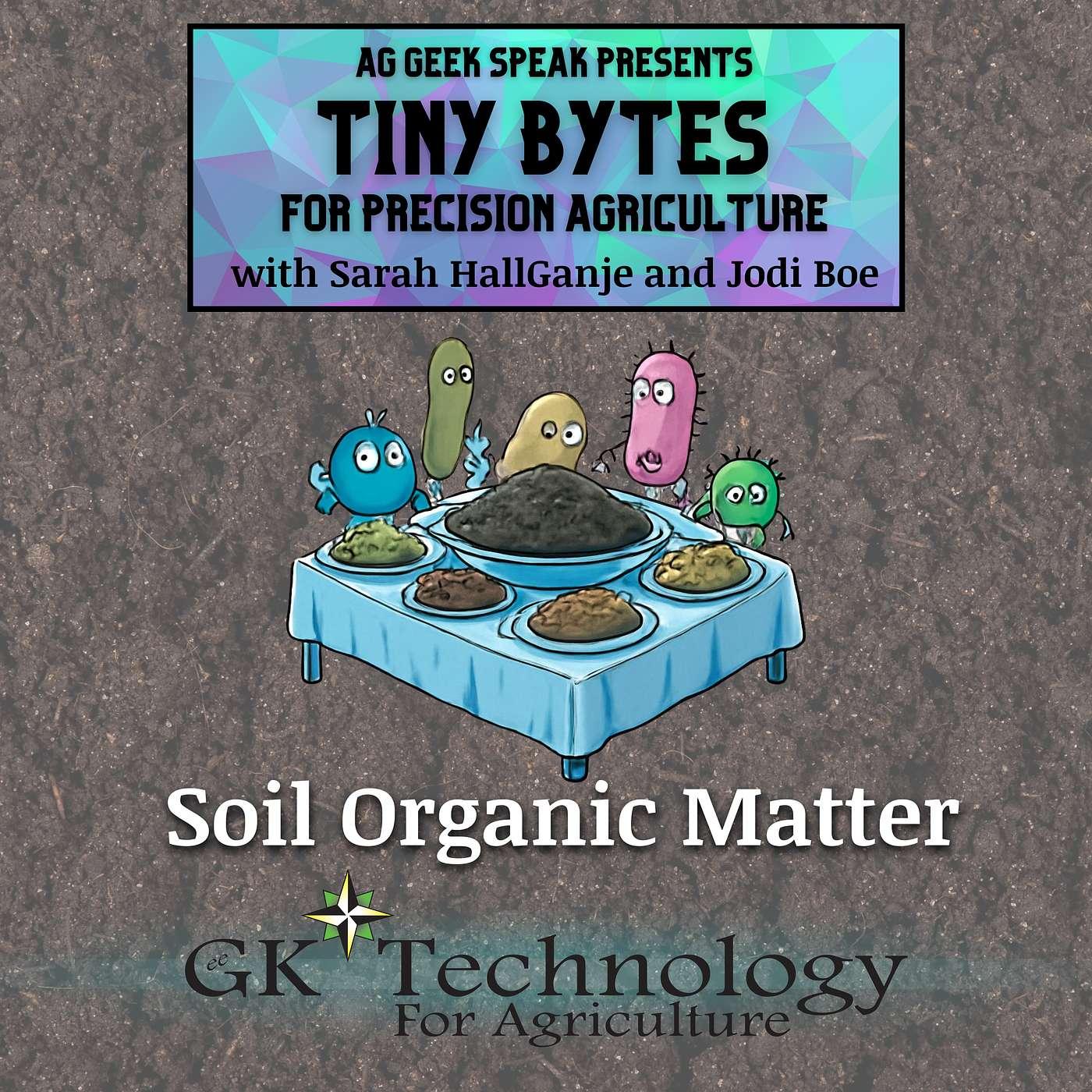
00:05:29.040Um, and they need food, and our soil organic matter actually helps provide a buffet of food options for those different organisms.
00:05:29.279 -->
00:05:31.199Who doesn't love a buffet?
00:05:32.160 -->
00:05:40.639All you can get soil organic matter is like the Las Vegas for soil nutrients or soil micro nutrients, soil microorganisms.
00:05:40.959 -->
00:05:43.040But is the entertainment as good?
00:05:43.839 -->
00:05:45.279Oh, that's debatable.
00:05:45.519 -->
00:05:46.560That's debatable.
00:05:47.279 -->
00:05:50.480So, how can we improve our soil organic matter?
00:05:50.800 -->
00:05:52.879Yeah, so that's that's the question, right?
00:05:53.120 -->
00:05:59.040All of us want more soil organic matter, but it's it's gonna take it's gonna take some work to improve it.
00:05:59.199 -->
00:06:24.959And so some really common ways to add soil organic matter is by, you know, on a smaller scale, adding compost, or if you think about it on a crop scale, if you can grow a really good crop, so you've got more biomass and then leave that residue on the surface, more of that residue is gonna be on the field itself and will one day turn into organic matter if it's left there.
00:06:25.279 -->
00:06:31.839The addition of manure can be a fantastic source to increase soil organic matter.
00:06:31.920 -->
00:06:36.160Um, same thing with placing cover crops in the fall.
00:06:36.319 -->
00:06:43.680Again, you're just adding the amount of biomass that's there and providing more of that buffet and possibly entertainment for those microorganisms.
00:06:43.839 -->
00:06:45.680And then finally reducing tillage.
00:06:45.839 -->
00:07:06.879If we can reduce the amount of um times that we disturb that microhabitat for um and reduce the amount of times that aggregates are disturbed in the soil, there's a whole lot of things that go into it, but really reducing tillage does encourage the accumulation of soil organic matter.
00:07:07.199 -->
00:07:14.639You know, when we think about soil health, often, you know, we're trying to take a look at many different factors for soil health.
00:07:14.800 -->
00:07:23.839And one of the most important or major indicators of overall soil health is having good um soil organic matter levels in the soil.
00:07:24.160 -->
00:07:32.399So soil organic matter, super important to a healthy soil, super important to nutrient cycling.
00:07:32.560 -->
00:07:45.360It helps manage, it helps our water holding capacity, um, and nutrient holding capacity, and has huge influence on our and our soil chemistry.
00:07:45.439 -->
00:07:49.120So, long story short, soil organic batter is super important.
00:07:49.519 -->
00:07:52.720We love our soil organic batter, it is good.
00:07:53.120 -->
00:08:01.920Tune in next time for a tiny bite of knowledge from GK Technology, where we have a map and an app for that.