


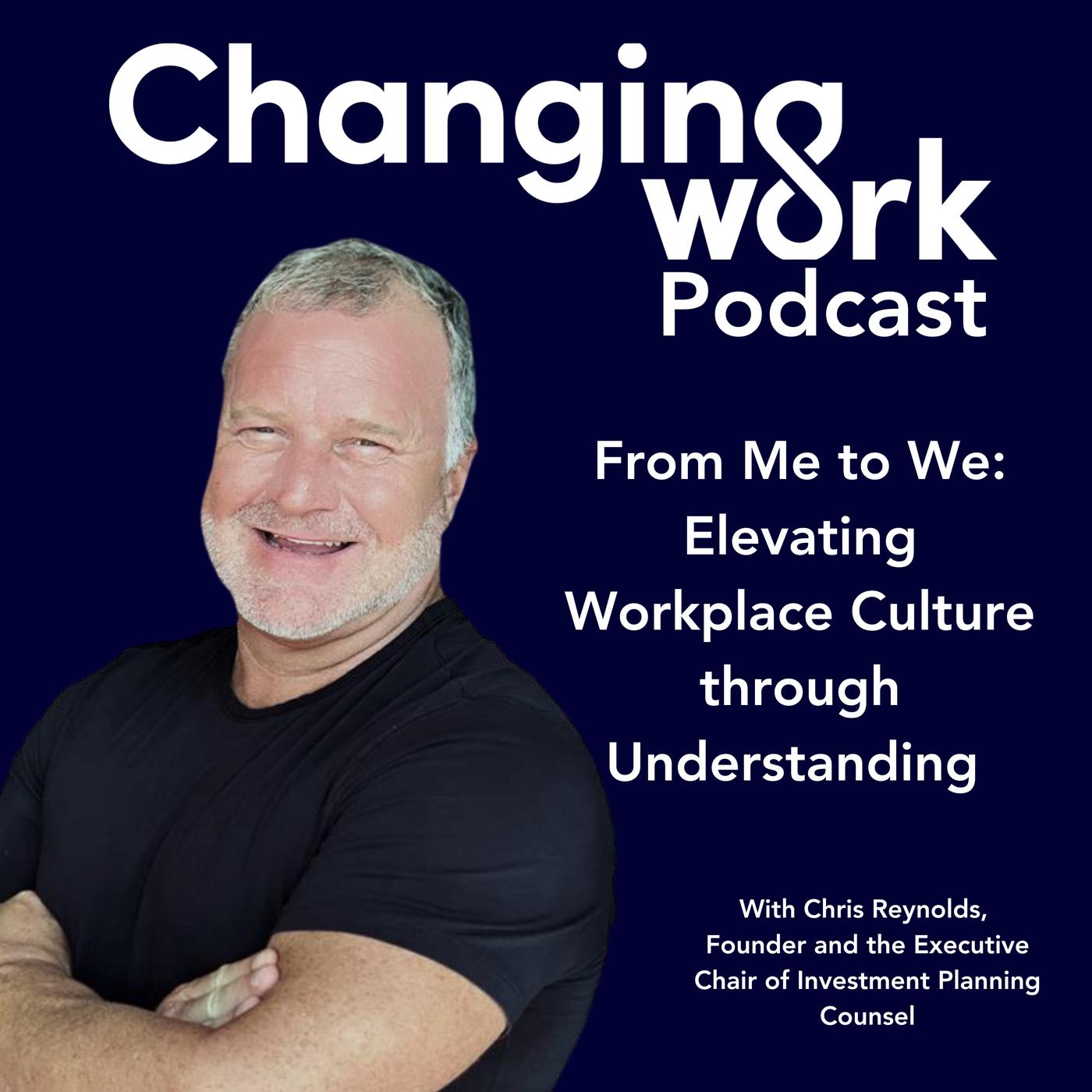
Speaker A
00:00:00
I hear this a lot about this concept of time.
Speaker A
00:00:03
And time is a construct.
Speaker A
00:00:05
It's what you feel is important.
Speaker A
00:00:07
So, yeah, getting a project done is important, and coming in on budget is important, and answering client phone calls is important.
Speaker A
00:00:14
But just as important is to make sure that the people that you have working for, why they're doing what they're doing is.
Speaker A
00:00:23
And again, they feel heard, because being heard, they can say, once again, why am I doing this?
Speaker A
00:00:27
You know, it's the same concept as people don't stop to sharpen their sword, to battle with a dull sword.
Speaker A
00:00:33
And we all know that the consequences of that.
Speaker A
00:00:36
And it's the same if people are not constantly upgrading their skills and reading more.
Speaker A
00:00:41
And as I said, once you hit anything, that plateaus is doomed because you're either growing or you're shrinking.
Speaker A
00:00:49
But there's no real plateauing in life or in business or in anything.
Speaker A
00:00:54
So my advice is there's no such thing as no time.
Speaker A
00:00:57
Just make time.
Speaker B
00:00:59
Hey, friends, welcome to the Changing Work podcast.
Speaker B
00:01:02
We are so glad you're here.
Speaker B
00:01:04
My name is Nick.
Speaker B
00:01:05
And I'm Scott.
Speaker B
00:01:06
And this is the podcast where we talk about changing work from the inside out.
Speaker B
00:01:10
So if you're into making the workplace and the world a better experience via conscious business practices, stick around.
Speaker B
00:01:17
This is for you.
Speaker B
00:01:20
Hi, friends, it's Scott with Changing Work.
Speaker B
00:01:22
Glad to be here with you today.
Speaker B
00:01:24
I'm with Chris Reynolds today.
Speaker B
00:01:25
Hi, Chris.
Speaker A
00:01:26
Hey, how are you, Scott?
Speaker B
00:01:28
We're doing very well.
Speaker B
00:01:28
Thanks for joining us.
Speaker B
00:01:30
A little bit of information on Chris and then we're going to dive deep into friendship and Chris and his new book and all the good things.
Speaker B
00:01:38
But Chris co founded Investment Planning Council for and with the wealth management industry.
Speaker B
00:01:44
And 30 years later, his fundamental interest in people and problem solving remains as strong as ever.
Speaker B
00:01:49
He explores opportunities in building businesses better through his Turning the Page podcast and his new book which is coming out, the six Circle Strategy, the Entrepreneur's Journey to Wealth and Freedom, which will be released fall of 2025.
Speaker B
00:02:05
Sounds good.
Speaker B
00:02:05
Did I get it right?
Speaker A
00:02:06
You got them all right.
Speaker A
00:02:07
I'm very impressed.
Speaker A
00:02:09
We'll skip through that, but yeah, no, excellent.
Speaker B
00:02:12
Well, here's a maybe I like this question better.
Speaker B
00:02:16
What do you want your final bio to say?
Speaker B
00:02:19
Meaning, you know, your tombstone or your epitaph or whatever?
Speaker B
00:02:22
Like what?
Speaker B
00:02:23
What do you want people to say about Chris Reynolds after you're gone?
Speaker A
00:02:27
Well, you know, it's.
Speaker A
00:02:28
It's an interesting.
Speaker A
00:02:29
And I know that there are a lot of people who don't necessarily think about that.
Speaker A
00:02:32
But it is actually something I do think about.
Speaker A
00:02:35
And even within our organization, our.
Speaker A
00:02:39
Our founding principle was to help advisors build a better business.
Speaker A
00:02:45
And so in my epitaph, I would like, I helped people be better than they were.
Speaker A
00:02:49
And if I had one mission in, in my life, it's always around helping people be better, whether it's helping businesses be better.
Speaker A
00:02:58
I also have a very strong sort of mentoring thing that I do with the team and the staff.
Speaker A
00:03:04
And I've played a big part in junior achievement and even I would say my circle of friends and family.
Speaker A
00:03:12
My thing is, and sometimes it can be annoying is being on people to be better, being on people to, what are you reading next?
Speaker A
00:03:22
What are you doing next?
Speaker A
00:03:23
Where are you going next?
Speaker A
00:03:24
Next?
Speaker A
00:03:25
You know that that tends to be my, my.
Speaker A
00:03:28
Where I go down the path of all of our conversation is.
Speaker A
00:03:31
And, and I generally try to end every interaction with somebody was what can I do to help you?
Speaker A
00:03:40
And that's been a habit that I've developed over my career.
Speaker A
00:03:43
And, and I don't even do it consciously anymore.
Speaker A
00:03:45
I just find myself doing it at the end of every interaction.
Speaker A
00:03:50
But because I generally get joy out of seeing people do better.
Speaker A
00:03:55
And if I had even a little bit part of that, you know, I can take a little bit of solace in that.
Speaker B
00:04:01
I love it.
Speaker B
00:04:03
Well, Chris is with us partly today because he agreed to write the foreword of our upcoming book.
Speaker B
00:04:09
It's our third book in our anthology series.
Speaker B
00:04:11
This one's on relationships.
Speaker B
00:04:13
It's called Are We Friends or Co Workers?
Speaker A
00:04:17
I loved it too.
Speaker A
00:04:18
Yeah.
Speaker B
00:04:21
I love it.
Speaker B
00:04:21
I love it.
Speaker B
00:04:22
You know, exploring relationships at work.
Speaker B
00:04:24
And maybe before we dive into some of that, could you tell us, who is Chris Reynolds?
Speaker B
00:04:29
A little bit of your story.
Speaker B
00:04:30
Where did you come from?
Speaker B
00:04:31
What are you doing?
Speaker A
00:04:32
Well, if you.
Speaker A
00:04:34
Way back, I grew up.
Speaker A
00:04:35
We were chatting before we went on air.
Speaker A
00:04:37
I grew up on a farm.
Speaker A
00:04:39
My dad actually trained racehorses.
Speaker A
00:04:41
So I grew up around Woodbine Racetrack in Toronto.
Speaker A
00:04:45
We had a farm just north of Toronto in an area called King City.
Speaker A
00:04:49
And that was.
Speaker A
00:04:52
But my dad figured that we.
Speaker A
00:04:54
He had children that were free labor.
Speaker A
00:04:57
That was his theory.
Speaker A
00:05:00
So we had to get up at like 4:30 in the morning and help with the horses.
Speaker A
00:05:05
And then we got home from school, we had to do more work.
Speaker A
00:05:08
And I knew the one thing that I didn't want to do in my life, and that's work on a farm.
Speaker A
00:05:14
So he sort of killed that spirit.
Speaker A
00:05:16
I would never work on a farm.
Speaker A
00:05:20
And there used to be this guy that worked that Owned racehorses that would come into the barn.
Speaker A
00:05:26
And this guy never seemed to work.
Speaker A
00:05:28
He, you know, show up at all hours of the day.
Speaker A
00:05:31
You know, he had his, his.
Speaker A
00:05:32
His convertible Mercedes.
Speaker A
00:05:33
He had one of those big, you know, Zach Morris phones before anyone had a phone, way back then.
Speaker A
00:05:39
The big thing where you could, you know, use it as defense weapon just in case.
Speaker A
00:05:45
And one day I'm like, I wonder what this guy does.
Speaker A
00:05:47
So I actually worked up the nerve to ask him.
Speaker A
00:05:50
I'm like, what do you do for a living?
Speaker A
00:05:53
And he's like, I'm a financial advisor.
Speaker A
00:05:55
And I said, I don't know what a financial advisor is, but that's what I'm going to be.
Speaker A
00:06:00
I want to do what this guy does.
Speaker A
00:06:02
And sure enough, as I got out of school, I saw a little ad in the paper that they were looking for a financial planning assistant.
Speaker A
00:06:11
And I remember that guy.
Speaker A
00:06:12
And I was like, oh, I remember that guy.
Speaker A
00:06:14
I'm going to go apply for this job now.
Speaker A
00:06:17
In hindsight, it was more or less a glorified telemarketing job, but at the time, I didn't care.
Speaker A
00:06:24
I wasn't on a farm.
Speaker A
00:06:25
So I was pretty happy about the whole thing and eventually got all my designations and my licenses and everything in the financial business.
Speaker A
00:06:34
And I loved it.
Speaker A
00:06:35
I loved everything about it.
Speaker A
00:06:37
And the main thing that I loved was the people aspect.
Speaker A
00:06:41
Like, really, I got paid.
Speaker A
00:06:43
And I.
Speaker A
00:06:43
And I will say this even to this day, I got paid outrageously to talk to people all day.
Speaker A
00:06:48
I was like, this is the greatest gig I have ever heard of.
Speaker A
00:06:51
I don't have to dig a ditch.
Speaker A
00:06:52
I don't have to have a horse.
Speaker A
00:06:54
I don't have to get kicked in the shin.
Speaker B
00:06:56
This is a different perspective when you grow up on a farm of what looks like, absolutely.
Speaker A
00:07:01
I mean, this is the greatest thing ever.
Speaker A
00:07:02
And you get to genuinely help people.
Speaker A
00:07:05
And this is where it's sort of that the spark of that sort of life's mission came from is you would actually see that, you know, the, The.
Speaker A
00:07:14
The benefits that they derived from, you know, organizing their finances, investing in the right way, making sure that they had their state covered.
Speaker A
00:07:22
All of the things that I think a lot of people take for granted.
Speaker A
00:07:26
And yet if something really bad happens, you're glad that you're there.
Speaker A
00:07:30
And so this.
Speaker A
00:07:32
And as you probably know, if you love something, you'll do well at it.
Speaker A
00:07:36
And so I ended up doing pretty well at it, to the point where I'm like, I work for another company.
Speaker A
00:07:41
I'm like, how Hard could it be I'll just start my own company.
Speaker A
00:07:44
There's a longer story to that, but I'll get to the chase and started my own firm and soon started to find other people who are sort of dissatisfied with what they were doing and ended up starting to buy their companies and folding them all into one company and say we can all do this better together.
Speaker A
00:08:04
Let's all form a partnership.
Speaker A
00:08:07
And eventually bought 26 different companies over my career to eventually selling it.
Speaker A
00:08:13
Well, actually there's another longer story.
Speaker A
00:08:15
I've sold it three or four times, but the last time that I sold it was currently to Candle Life and we would now represent one of the largest, if not the largest wealth management firm, non bank firm in, in Canada.
Speaker A
00:08:33
So it was, it's a pretty, pretty good ride.
Speaker B
00:08:36
It sounds like in the world of work you won.
Speaker A
00:08:39
Well, I never considered what I did work like.
Speaker A
00:08:41
I can't believe, I still can't believe people pay to talk to me.
Speaker A
00:08:45
And some people don't have any choice, but they still.
Speaker A
00:08:48
I get paid to talk to people, sure.
Speaker B
00:08:51
So growing up on the farm, I also grew up on a farm, very similar story, except we had pigs.
Speaker B
00:08:56
And I learned early on I did not want to be working with pigs the rest of my life.
Speaker B
00:09:00
But that's for another time.
Speaker B
00:09:02
What did growing up on a farm teach you about relationships and human nature?
Speaker A
00:09:10
Well, the, the main thing I think that growing up in a farm teaches you above all is responsibility.
Speaker A
00:09:17
You know, they're animals, so I guess your relationship with them is you can't let them down.
Speaker A
00:09:23
They count on you for living if you're not there to feed them, if you're not there to clean them, if you're not there to do anything.
Speaker A
00:09:31
So I think every person that I know that comes from a farm has a very keen sense of sort of responsibility built into their charact.
Speaker A
00:09:40
And that's more than likely where it came from because you had these creatures that dependent on you for, again, for life and that sort of then led you to that same responsibility with other people.
Speaker A
00:09:55
So you know, when you have a relationship, you see, you sort of maybe assume that you have a responsibility to help them out.
Speaker A
00:10:03
And that sort of became some of the basis of a lot of the relationships and, and business relationships, personal relationships, family relationships.
Speaker A
00:10:11
I think it extended right across the board.
Speaker B
00:10:15
You have this seems to be this deep need or desire to help people, you know, to, to help things be better.
Speaker B
00:10:26
Where did that come from?
Speaker B
00:10:27
Are you just wired that way?
Speaker B
00:10:29
Is there somebody in your life who.
Speaker A
00:10:30
Modeled that behavior it is funny.
Speaker A
00:10:35
Maybe my ADHD might have something to do with it.
Speaker A
00:10:38
Once you obsess on one thing, it sort of becomes a lifetime obsess.
Speaker A
00:10:43
Um, and it might become.
Speaker A
00:10:46
My father was not what you call a, a soft man.
Speaker A
00:10:53
And he could be very hard on you, but when you asked him, and sometimes he was hard on certain people, but not so hard on other people.
Speaker A
00:11:00
And one time I called him out on that, I'm like, why do you pick on so and so all the time?
Speaker A
00:11:06
He's like, I pick on so and so all the time because I know he can be better.
Speaker A
00:11:10
The other guy, on the other hand, I don't have any hope for him.
Speaker A
00:11:13
So I've given up.
Speaker A
00:11:16
So, you know, maybe there's something to do with, if you see potential in people, you want to maximize that potential.
Speaker A
00:11:24
But I don't know if I've ever really analyzed it to any extent of what I can pinpoint is that obsession.
Speaker B
00:11:30
Yeah, that's interesting that you're talking about my, my dad, the farmer, he was third generation, my brother is fourth.
Speaker B
00:11:37
One of my other brother's son is fifth generation farmers.
Speaker B
00:11:40
But the kind of the most cutting thing that he could say, you'd be doing something and he'd look at you, look at the work, he's like, is that the best you can do?
Speaker A
00:11:49
Exactly.
Speaker A
00:11:51
See, I think it's a whole farmer thing.
Speaker A
00:11:53
Yeah, yeah, yeah.
Speaker B
00:11:56
Okay.
Speaker B
00:11:56
Talking about relationships and your business, the wealth management business is all about relationships.
Speaker B
00:12:03
Whether it's your clients, whether it's your team members, whether it's your entire network of people.
Speaker B
00:12:11
What have you learned in all these years about relationships at work and why does it matter?
Speaker A
00:12:17
Well, I think the main thing about relationships is, I think it's an inborn need of people to be understood, to be heard, to be listened to.
Speaker A
00:12:29
And if you find somebody who genuinely hears you, genuinely cares about what you have to say and, and in the same token is there to help you, that's far, far more impactful for you as a person than somebody who can offer you better returns or a lower cost investment or you know, in the workstation place.
Speaker A
00:12:55
If you have a relationship with somebody and you really care about them and you really listen to them and you, they'll work harder, they'll be more loyal, they don't feel that it's this, you know, this me, us versus them type of mentality.
Speaker A
00:13:11
It comes about we.
Speaker A
00:13:13
And the more that you have a relationship around understanding, the more you have that we attitude.
Speaker A
00:13:19
And as I said, going back to my earlier story, One of the main reasons I started my own company was it was an us, them relationship between the advisors and management to the point where there's probably a fist fight at one of the board meetings.
Speaker A
00:13:33
And it was just, it was, it was, it was unhealthy.
Speaker A
00:13:37
It was, you wouldn't be progressive, you wouldn't be innovative.
Speaker A
00:13:43
So I saw what you shouldn't do.
Speaker A
00:13:45
And so therefore, as I moved on and you know, was building the company, you know, the number one priority of mine was culture is make people make sure they feel heard, make sure they feel important, make sure that they're understood, make sure they understand the mission, make sure they, they under clearly understand why they're doing what they're doing.
Speaker A
00:14:05
And with clients, it's the same thing.
Speaker A
00:14:08
You know, my advice to advisors always was, if there's an hour meeting, it should be 15 minutes of you talking and 45 minutes of you listening.
Speaker A
00:14:16
And if that's reversed, you'll probably have a problem long term.
Speaker B
00:14:22
You dropped some good nuggets in there.
Speaker B
00:14:23
I'm wondering if you've codified this whole culture thing.
Speaker B
00:14:26
You know, somebody shows up, works for you or works with you, and you're kind of in a mentoring capacity.
Speaker B
00:14:35
Two or three tidbits of, like here, do these two or three things and your career will be much better here.
Speaker A
00:14:41
Well, the first thing that I would do, and this is the early days, once it gets to a certain size, it becomes very, very difficult.
Speaker A
00:14:48
But it used to be my policy that all new staff, we had to have a lunch lunch.
Speaker A
00:14:54
And the purpose of that lunch was to understand them, their background and stuff.
Speaker A
00:14:58
And then that I could say, okay, you know, based on that and based on what we want to accomplish, you know, always go back to.
Speaker A
00:15:07
And if anything of my nuggets of information on that is, is always try to go back to why you're doing what you're doing.
Speaker A
00:15:18
Like, so people get so caught up in the, what are they doing?
Speaker A
00:15:22
What you should be is why?
Speaker A
00:15:24
Why am I.
Speaker A
00:15:25
What is the result?
Speaker A
00:15:26
Why?
Speaker A
00:15:26
Why?
Speaker A
00:15:28
So question everything.
Speaker A
00:15:30
And I think that always works because, you know, people do the same.
Speaker A
00:15:36
There's, there's the saying, always been done this way syndrome that occurs in all organizations, mine included, is when you ask people, why do you do that?
Speaker A
00:15:44
They're like, I don't know.
Speaker A
00:15:45
It was like that when I got here.
Speaker A
00:15:47
So my tidbit was always question that.
Speaker A
00:15:50
And then my other tidbit to all new people was, get to know the people around you.
Speaker A
00:15:56
Those are your strongest allies.
Speaker A
00:15:57
So, you know, take the time to know not just your little area, but you know, everybody that you could or couldn't interact to.
Speaker A
00:16:07
And again, within the organization, we used to try to do all these, like we did volleyball and dodgeball and we tried to get a lot of social events so that people could learn about each other in sort of a non work environment.
Speaker A
00:16:21
And it seemed to sort of build that culture.
Speaker B
00:16:24
Beautiful dodgeball.
Speaker B
00:16:26
Do you find dodgeball to be a good team building event?
Speaker A
00:16:29
Yes.
Speaker A
00:16:29
Especially when you have manager versus that.
Speaker A
00:16:32
Oh no, I'm old, I almost died.
Speaker A
00:16:34
We did one of those trampoline dodgeballs.
Speaker B
00:16:38
Oh yeah, yeah.
Speaker A
00:16:39
Where to go?
Speaker A
00:16:39
I almost had a heart attack.
Speaker A
00:16:40
And we have all these young people and they were just killing me.
Speaker A
00:16:43
They thought it was the funniest thing ever to throw dodgeballs at me.
Speaker B
00:16:48
Oh, that's great.
Speaker B
00:16:51
What are some warning signs?
Speaker B
00:16:53
So you're at work in the culture with clients.
Speaker B
00:16:57
What are some warning signs?
Speaker B
00:16:58
That the culture is not the way you intended it to be or the relationship is not the way you intended it to be?
Speaker A
00:17:04
I think that there's a few things and the most easiest sign, I guess is withdrawal.
Speaker A
00:17:11
Somebody who used to be participating, who used to speak up all of a sudden is not speaking up anymore.
Speaker A
00:17:19
And that is usually a sign that they don't feel that they're being heard and so they've given up.
Speaker A
00:17:27
And when someone doesn't feel they're being heard and when somebody gives up, it's just only a matter of time before they seek employment elsewhere.
Speaker A
00:17:36
That's usually sign number one is they just don't bother anymore.
Speaker A
00:17:40
And especially when you have really your champion people, when your champion people stop challenging everything and stop talking, you're in real trouble.
Speaker A
00:17:51
It's only a matter of time because it's stat after status, 20% of the employees do 80% of the productivity.
Speaker A
00:17:58
You lose half of those 20%, you're pretty much done.
Speaker A
00:18:03
And so I think the number one sign that leaders should look for is withdrawal is people who just don't engage anymore, especially those who used to engage on a regular basis.
Speaker B
00:18:14
Sure.
Speaker B
00:18:15
You know, there are definitely work environments where it's busy, you're running as fast as you can to make the next thing happen, whether it's a project deadline or whatever.
Speaker B
00:18:25
And a lot of times what you're talking about, this deep curiosity, this building relationship, this finding out, kind of goes by the wayside.
Speaker B
00:18:34
What advice do you have for those managers who feel like they just don't have time for this?
Speaker A
00:18:39
Well, you know, I hear this a lot about this concept of Time and time.
Speaker A
00:18:46
Time is a construct.
Speaker A
00:18:48
It's what you feel is important.
Speaker A
00:18:50
So, yeah, getting a project is, Is done.
Speaker A
00:18:53
Done is, is important.
Speaker A
00:18:55
And coming in on budget is important and answering client phone calls is important.
Speaker A
00:18:59
But just as important is to make sure that the people that you have working for you know why they're doing what they're doing is.
Speaker A
00:19:09
And again, they feel heard.
Speaker A
00:19:10
Because being heard, they could say, once again, why am I doing this?
Speaker A
00:19:14
We should do this, this.
Speaker A
00:19:15
And there's probably a dozen ways that we could be doing it better.
Speaker A
00:19:19
You know, it's the same concept as people don't stop to sharpen their sword, go into battle with a dull sword.
Speaker A
00:19:26
And we all know that the consequences of that.
Speaker A
00:19:29
And it's the same if people are not constantly upgrading their skills and reading more.
Speaker A
00:19:34
And as I said, once you.
Speaker A
00:19:37
Anything that plateaus is doomed because you're either growing or you're shrinking.
Speaker A
00:19:42
But there's no, there's no real plateauing in life or in business or really in anything.
Speaker A
00:19:50
So my advice is there's no such thing as no time.
Speaker A
00:19:53
Just make time.
Speaker A
00:19:54
Like, just say, I'm going to carve out an hour a week, which is not a big thing, to meet with my top three people.
Speaker A
00:20:01
Just ask them how things are going and what we, what they think we should be doing.
Speaker A
00:20:04
Like, I don't ever go with the excuses.
Speaker A
00:20:07
No time.
Speaker A
00:20:07
There's always time.
Speaker B
00:20:08
I agree.
Speaker B
00:20:10
You talk about this concept of people want to be seen and heard, which I agree with.
Speaker B
00:20:17
But why do you think it's so powerful for each one of us to be seen and heard by the people we work with or in our lives?
Speaker A
00:20:23
Well, I think everyone has their own thoughts and their own ideas.
Speaker A
00:20:26
And certainly in a work environment, they're probably the closest too.
Speaker A
00:20:33
How many people they.
Speaker A
00:20:35
And I've heard them say this.
Speaker A
00:20:36
I just wish somebody would have asked me whether this is a good idea or not.
Speaker A
00:20:40
I just wish before we spent all of this time and energy and money and resources, somebody would have just asked me if they think this would work.
Speaker A
00:20:49
But no, these.
Speaker A
00:20:50
They're all up here making all these decisions.
Speaker A
00:20:52
And, you know, I've had that, that almost talk with.
Speaker A
00:20:56
This is ridiculous.
Speaker A
00:20:57
I didn't know what to do.
Speaker A
00:20:59
So I think that, that it's important to people to feel validated that they have.
Speaker A
00:21:05
That their ideas are good or at least their ideas are heard.
Speaker A
00:21:09
Maybe they're not all good ideas and I have bad ideas constantly, but at least I feel better when somebody hears me out and then tells me all the reasons Why I was dumb.
Speaker A
00:21:20
That's my wife's job.
Speaker A
00:21:21
But.
Speaker B
00:21:24
It'S a very valuable role.
Speaker A
00:21:26
Very valuable role.
Speaker A
00:21:27
Tell me why I'm wrong on everything.
Speaker A
00:21:29
But, but I think that's.
Speaker A
00:21:32
That's mainly is that validation feeling that you feel important, at least important in that world.
Speaker A
00:21:39
And if you're not important, then you're just a.
Speaker A
00:21:43
Just another spoke.
Speaker B
00:21:44
Sure.
Speaker B
00:21:46
Well, part of the skill set you're describing, it seems to me, is, oh, I may have lost him.
Speaker B
00:21:59
Chris, it seems one of the things that you're talking about for behaviors of a good teammate or good manager is curiosity.
Speaker B
00:22:07
And you display a lot of curiosity about the world, about other people.
Speaker B
00:22:12
So do you think curiosity can be taught or do you just surround yourself or hire people who are naturally curious?
Speaker A
00:22:22
A good question.
Speaker A
00:22:24
As someone who's naturally curious, I just assume everybody like me, but then I find out that it's not.
Speaker A
00:22:30
But I do think you can discipline yourself to, To.
Speaker A
00:22:35
To be curious, at least within the realms of being a manager.
Speaker A
00:22:40
That is a taught skill.
Speaker B
00:22:44
Chris, it seems to me what you're talking about, what you're describing in a good leader, a good teammate, is curiosity.
Speaker B
00:22:51
And you seem really curious about the world.
Speaker B
00:22:53
You seem curious about other people.
Speaker B
00:22:55
My question is, do you think curiosity can be taught or have you just surrounded yourself or hired people who are naturally curious?
Speaker A
00:23:04
I think that's a really good question, and it's a hard one to answer as somebody who is naturally curious.
Speaker A
00:23:11
And I would just assume that most people are curious, but I've been proven wrong in that many times.
Speaker A
00:23:17
But I do think as it relates to managerial and leadership, curiosity can be a learned skill.
Speaker A
00:23:23
It doesn't have to be something that you have naturally.
Speaker A
00:23:26
You just have to really, I guess, more or less force yourself to ask questions rather than give answers.
Speaker A
00:23:35
And that probably is something that takes time, takes, you know, energy, takes focus.
Speaker A
00:23:41
But I assume, just like in sales, when people first get into sales, they think their job is to talk about the features and benefits of whatever they're selling at that time.
Speaker A
00:23:52
After you've at it for a while, you realize that it has nothing to do.
Speaker A
00:23:56
That has nothing to do with sales.
Speaker A
00:23:57
Everything has to do with sales is asking a lot of questions.
Speaker A
00:23:59
You find the right need for the client and then provide the right solution.
Speaker A
00:24:03
And that probably takes five years of hitting your head on the wall before you realize that I've been doing it all wrong this time.
Speaker A
00:24:11
And so I would imagine that same skill set that, that you will either learn and.
Speaker A
00:24:17
Or can be taught can come to managers and leaders as well.
Speaker B
00:24:22
As you were talking, I realized the problem I had in my teens and twenties.
Speaker B
00:24:27
You kind of talked about a little bit before moving from me to we.
Speaker B
00:24:30
Right.
Speaker B
00:24:31
In.
Speaker B
00:24:31
In every relationship, I think when we're, well, I don't know about everybody, I'll speak for me.
Speaker B
00:24:35
When we're younger, we're just thinking about our own needs.
Speaker A
00:24:38
Right.
Speaker B
00:24:38
How can, how can I be happy?
Speaker A
00:24:40
Right.
Speaker A
00:24:41
Yeah.
Speaker A
00:24:42
And it's true.
Speaker B
00:24:43
And it's not until we get beat up a little bit or things don't go the way you realize, oh, my job is if I can make the other person happy or solve for the we instead of the me, this is going to go better.
Speaker A
00:24:56
Right.
Speaker A
00:24:58
I think you just nailed it.
Speaker A
00:24:59
That's exactly the maturity level that you get to.
Speaker A
00:25:01
And as I say that you see it in leaders, you see it in managers, you see it in salespeople.
Speaker A
00:25:06
You know, as to your point, when you first start, it's all about how can I make the sale?
Speaker A
00:25:12
And after a while it's how can I help this person?
Speaker A
00:25:15
And if I can't, I'm be the first one to tell them.
Speaker B
00:25:17
Yep.
Speaker B
00:25:18
All right.
Speaker B
00:25:19
So as I mentioned, Chris wrote the forward to our our anthology.
Speaker B
00:25:23
Are we friends or co workers?
Speaker B
00:25:25
I'm curious if you have any insight or wisdom on what is the boundary at work of our relationships?
Speaker B
00:25:34
You know, can we be full on friends?
Speaker B
00:25:38
Can we be.
Speaker B
00:25:39
Do we need to keep some distance?
Speaker B
00:25:40
Like how do you think about that?
Speaker B
00:25:42
How have you experienced that in your own career?
Speaker A
00:25:45
I'm probably the worst person to ask that question is because I have no boundaries whatsoever and I probably got chastised for it on more than a few occasions, especially in say, my younger days where it was nothing to take everybody out drinking until 2 in the morning.
Speaker A
00:26:06
And then the leaders are like, no, that's a bad idea.
Speaker A
00:26:09
Now nobody's showing up for work and.
Speaker A
00:26:15
But I think so, as I said, I don't think I'm the best qualified person to.
Speaker B
00:26:19
So you air on the side of let's just be friends.
Speaker A
00:26:23
Right.
Speaker A
00:26:23
And if you were to ask it to the staff, you know, that's what we have a hugging culture.
Speaker A
00:26:27
You know, we don't shake hands.
Speaker A
00:26:29
We hug at the firm, as I said.
Speaker A
00:26:31
I know.
Speaker A
00:26:32
And most of the senior people know, like everybody, they know their kids, they know the spouses, we have family days, you know, all that sort of stuff.
Speaker A
00:26:40
So I'm probably too far on the other side because I'm sure that that can cause some people to be uncomfortable.
Speaker A
00:26:49
I'm going to Say a little over friendly, you know, the people that don't like hugging and they stiffen up and especially in this sort of, I'm going to call it modern work age where there's a whole lot of things where that you could be considered crossing a line.
Speaker A
00:27:05
But, but I would rather, in my own philosophy I would rather cross that line and become too friendly because we're all in it together.
Speaker A
00:27:12
We're all, we should be friends, we should be like, like I'm the sort of anti bureaucracy guy and so as a result I try to break down those barriers with humor and you know, and getting to know people and like oh, business boring, let's talk about that later.
Speaker A
00:27:30
Let's find out what everyone did on the weekend.
Speaker A
00:27:33
But I'm not sure that style would work for everybody.
Speaker A
00:27:35
So as I said, I don't know if I'm the best person to ask advice on that.
Speaker B
00:27:40
I guess it's just knowing that every style has its drawbacks and being aware of ourselves, our own tendencies and what that that's going to get us.
Speaker A
00:27:48
Right.
Speaker A
00:27:49
Right.
Speaker A
00:27:49
You have to know some of the consequences to those actions.
Speaker B
00:27:52
Right.
Speaker B
00:27:53
Awesome.
Speaker B
00:27:54
Chris, you have a book coming out this fall called the six Circle Strategy.
Speaker B
00:27:58
The Entrepreneur's Journey to Wealth and Freedom.
Speaker B
00:28:01
What is this book about?
Speaker B
00:28:02
Why did you write it?
Speaker A
00:28:04
Well, going back to again my life's mission is to help people and especially I love entrepreneurs.
Speaker A
00:28:11
Like that's my thing is helping people in their business and all sorts of businesses.
Speaker A
00:28:15
But primarily being my.
Speaker A
00:28:17
I grew up in the wealth management business entrepr entrepreneurs in the wealth management business and I wrote it more or less as a guide.
Speaker A
00:28:23
And why is the six circles is because everyone A thinks it's easy and everyone thinks it's a straight line.
Speaker A
00:28:29
Like I start here and I do this and I go here and yet the reality is nothing is a straight line.
Speaker A
00:28:36
It's a circle at best.
Speaker A
00:28:38
Right.
Speaker A
00:28:38
You have to continue to evolve in very, you have to evolve your mission, you have to evolve your relationships, you have to revolve your market, you have to evolve your processes and systems.
Speaker A
00:28:50
You have to evolve.
Speaker A
00:28:53
You know, every aspect of business is, is a never ending circle.
Speaker A
00:28:58
It is never a straight line.
Speaker A
00:28:59
There's never getting there.
Speaker A
00:29:02
There's getting to the next stage but there's never getting there.
Speaker A
00:29:05
It's always a, A a rotating moving target and there's you know all the different aspects of running a business because being an entrepreneur, as I start out saying isn't starting a business.
Speaker A
00:29:20
Being an entrepreneur is run and you have to be Very, very passionate.
Speaker A
00:29:26
And you know, this wasn't me.
Speaker A
00:29:28
I stole this from Steve Jobs of Apple.
Speaker A
00:29:31
Like, you're not so passionate about what you do.
Speaker A
00:29:36
Your first obstacle will have you come to a grinding stop.
Speaker A
00:29:41
And if you think that one's going to have the grinding stop, the 10 more obstacles that are behind that will probably have an adverse effect.
Speaker A
00:29:49
In fact, going back, you know, when I, when I started my business on my own, went to my dad, I'm like, oh, you know, I started a business.
Speaker A
00:29:57
He's like, oh, you're going to be an entrepreneur?
Speaker A
00:29:59
I'm like, yes, I am.
Speaker A
00:30:00
He's like, great.
Speaker A
00:30:01
You get to work half days, you just have to pick which 12 hours they're going to be.
Speaker B
00:30:06
Right.
Speaker A
00:30:08
So that's why I wrote the book.
Speaker A
00:30:09
Is.
Speaker A
00:30:10
Is that sort of.
Speaker A
00:30:10
It's a.
Speaker A
00:30:11
And so even within the title, it's a journey.
Speaker B
00:30:14
Yeah.
Speaker A
00:30:14
Right.
Speaker A
00:30:15
So it's not a straight line, but it is a journey that you have to go on.
Speaker A
00:30:19
And if this can give some tidb of each of the steps of that journey to make it a little bit easier, then I think I've sort of fulfilled my mission in the writing of the book.
Speaker B
00:30:28
Beautiful.
Speaker B
00:30:29
Well, it seems like it follows your own kind of personal ethos of continuous development, of curiosity, of always next, plus one factor of always getting better.
Speaker B
00:30:39
Yeah, any, any.
Speaker B
00:30:42
Anything you haven't already shared.
Speaker B
00:30:43
Any favorite pieces of advice from the book?
Speaker A
00:30:48
Well, I think it going back to what's the most important thing.
Speaker A
00:30:52
And the most important thing is development of relationships.
Speaker A
00:30:57
And development of relationships also comes from trust of doing what you say you're going to do, showing up on time, being somebody who is reliable, which in a world that is unreliable, it makes you stand out.
Speaker A
00:31:10
But by focusing on the relationship, that also makes you stand out.
Speaker A
00:31:14
And I illustrate that both in the book and just recently, actually on LinkedIn, I wrote an article on the same thing.
Speaker A
00:31:21
My, My mother was actually down here staying with us in Miami, and she was raving about her financial advisor.
Speaker A
00:31:29
I love my advisor.
Speaker A
00:31:30
He's so great.
Speaker A
00:31:32
And talking about you and.
Speaker A
00:31:34
No, that's the thing is, I knew she wasn't talking about me, she was talking about her advisor, who I had referred her to.
Speaker A
00:31:42
And he's.
Speaker A
00:31:42
He's with IPCS with the company.
Speaker B
00:31:44
Okay, okay.
Speaker A
00:31:45
And at some point I'm like, mom, what.
Speaker A
00:31:48
What is it that you love so much about?
Speaker A
00:31:51
So and so?
Speaker A
00:31:52
She's like, oh, he is so nice.
Speaker A
00:31:54
He calls me just to ask how I'm doing and doesn't talk any business.
Speaker A
00:31:59
He just Sits and listens to how I'm doing and ask where my next travel is, blah, blah, blah.
Speaker A
00:32:04
I'm like, that's great.
Speaker A
00:32:05
That's.
Speaker A
00:32:05
That's what he should be doing.
Speaker A
00:32:07
I'm like, do you know what the rate of return on your investments was last year?
Speaker A
00:32:11
Nope.
Speaker B
00:32:12
No idea.
Speaker A
00:32:13
I'm like, do you know how much you pay him to manage your account?
Speaker A
00:32:18
Nope.
Speaker A
00:32:19
I'm like, can you name three investments in your portfolio right now?
Speaker A
00:32:24
Nope.
Speaker A
00:32:25
But he is so nice.
Speaker A
00:32:27
And it goes to the point being, and I'll use the wealth business, we are so obsessed with the product and performance and price and, you know, how we're doing better than this and doing better than that.
Speaker A
00:32:40
When and if you were to ask the client what they really want is somebody who.
Speaker A
00:32:46
Who cares about them, who will listen to them and has and has their back, is someone they can trust to look after their affairs.
Speaker A
00:32:53
And yet we put very little emphasis on the former and all the emphasis on the previous.
Speaker B
00:33:00
Oh, my God, you just nailed it.
Speaker B
00:33:02
This is why we talk about relationships at work, because this is what everybody wants.
Speaker B
00:33:08
We want to surround ourselves with people we enjoy.
Speaker B
00:33:11
We want to be seen and heard and cared for and loved and hugged or handshaked or know which one we like.
Speaker B
00:33:18
We want to be around people who have honor and trust and shared values and all the things.
Speaker B
00:33:23
So thank you for making the case.
Speaker A
00:33:26
No, my pleasure is that we see the world the same way.
Speaker B
00:33:29
Yeah.
Speaker B
00:33:30
Chris, this has been an honor to have you and thank you for writing the forward to our book.
Speaker B
00:33:34
Book once again.
Speaker B
00:33:35
Chris's new book, the Six Circle Strategy, comes out in the fall of 2025.
Speaker B
00:33:40
If people want to find you, if they want to know more, what is the best place for them to reach out or find you?
Speaker A
00:33:46
Well, the best place is on our company website, which is IPCC ca.
Speaker A
00:33:54
And you go there, and you can also go right to Apple, Spotify, all the other ones, and turning the page, the podcast, and you go in the show Notes.
Speaker A
00:34:04
And you know, the other thing I do is I do mentorship.
Speaker A
00:34:07
People can go to the show Notes.
Speaker A
00:34:09
They can click on a little button there, and you can have coffee with Chris.
Speaker A
00:34:13
I love to hear other people's stories.
Speaker A
00:34:14
I love to hear what they're doing, and sometimes they just need a little of advice from somebody who's already done it.
Speaker A
00:34:20
And I'm always happy to lend a half hour to have a virtual coffee.
Speaker B
00:34:24
Fantastic.
Speaker B
00:34:25
Well, Chris, thank you for shining your light so brightly.
Speaker B
00:34:27
Thank you for being one of the good guys in this world.
Speaker B
00:34:31
So appreciate you.
Speaker A
00:34:33
Thank you, Scott.
Speaker A
00:34:34
This has been a pleasure.
Speaker B
00:34:35
Thanks.
Speaker B
00:34:36
Everybody, this is Scott from Changing Work.
Speaker B
00:34:38
Check out our new book coming out.
Speaker B
00:34:39
Are we friends or co Workers?
Speaker B
00:34:42
It should be good.
Speaker B
00:34:43
We'll see you soon.
Speaker B
00:34:44
Take care.
Speaker B
00:34:44
Oh, and you can find us@changingwork.org come join the movement.
Speaker B
00:34:49
We'll see you soon.
00:00:00
I hear this a lot about this concept of time.
Speaker A
00:00:03
And time is a construct.
Speaker A
00:00:05
It's what you feel is important.
Speaker A
00:00:07
So, yeah, getting a project done is important, and coming in on budget is important, and answering client phone calls is important.
Speaker A
00:00:14
But just as important is to make sure that the people that you have working for, why they're doing what they're doing is.
Speaker A
00:00:23
And again, they feel heard, because being heard, they can say, once again, why am I doing this?
Speaker A
00:00:27
You know, it's the same concept as people don't stop to sharpen their sword, to battle with a dull sword.
Speaker A
00:00:33
And we all know that the consequences of that.
Speaker A
00:00:36
And it's the same if people are not constantly upgrading their skills and reading more.
Speaker A
00:00:41
And as I said, once you hit anything, that plateaus is doomed because you're either growing or you're shrinking.
Speaker A
00:00:49
But there's no real plateauing in life or in business or in anything.
Speaker A
00:00:54
So my advice is there's no such thing as no time.
Speaker A
00:00:57
Just make time.
Speaker B
00:00:59
Hey, friends, welcome to the Changing Work podcast.
Speaker B
00:01:02
We are so glad you're here.
Speaker B
00:01:04
My name is Nick.
Speaker B
00:01:05
And I'm Scott.
Speaker B
00:01:06
And this is the podcast where we talk about changing work from the inside out.
Speaker B
00:01:10
So if you're into making the workplace and the world a better experience via conscious business practices, stick around.
Speaker B
00:01:17
This is for you.
Speaker B
00:01:20
Hi, friends, it's Scott with Changing Work.
Speaker B
00:01:22
Glad to be here with you today.
Speaker B
00:01:24
I'm with Chris Reynolds today.
Speaker B
00:01:25
Hi, Chris.
Speaker A
00:01:26
Hey, how are you, Scott?
Speaker B
00:01:28
We're doing very well.
Speaker B
00:01:28
Thanks for joining us.
Speaker B
00:01:30
A little bit of information on Chris and then we're going to dive deep into friendship and Chris and his new book and all the good things.
Speaker B
00:01:38
But Chris co founded Investment Planning Council for and with the wealth management industry.
Speaker B
00:01:44
And 30 years later, his fundamental interest in people and problem solving remains as strong as ever.
Speaker B
00:01:49
He explores opportunities in building businesses better through his Turning the Page podcast and his new book which is coming out, the six Circle Strategy, the Entrepreneur's Journey to Wealth and Freedom, which will be released fall of 2025.
Speaker B
00:02:05
Sounds good.
Speaker B
00:02:05
Did I get it right?
Speaker A
00:02:06
You got them all right.
Speaker A
00:02:07
I'm very impressed.
Speaker A
00:02:09
We'll skip through that, but yeah, no, excellent.
Speaker B
00:02:12
Well, here's a maybe I like this question better.
Speaker B
00:02:16
What do you want your final bio to say?
Speaker B
00:02:19
Meaning, you know, your tombstone or your epitaph or whatever?
Speaker B
00:02:22
Like what?
Speaker B
00:02:23
What do you want people to say about Chris Reynolds after you're gone?
Speaker A
00:02:27
Well, you know, it's.
Speaker A
00:02:28
It's an interesting.
Speaker A
00:02:29
And I know that there are a lot of people who don't necessarily think about that.
Speaker A
00:02:32
But it is actually something I do think about.
Speaker A
00:02:35
And even within our organization, our.
Speaker A
00:02:39
Our founding principle was to help advisors build a better business.
Speaker A
00:02:45
And so in my epitaph, I would like, I helped people be better than they were.
Speaker A
00:02:49
And if I had one mission in, in my life, it's always around helping people be better, whether it's helping businesses be better.
Speaker A
00:02:58
I also have a very strong sort of mentoring thing that I do with the team and the staff.
Speaker A
00:03:04
And I've played a big part in junior achievement and even I would say my circle of friends and family.
Speaker A
00:03:12
My thing is, and sometimes it can be annoying is being on people to be better, being on people to, what are you reading next?
Speaker A
00:03:22
What are you doing next?
Speaker A
00:03:23
Where are you going next?
Speaker A
00:03:24
Next?
Speaker A
00:03:25
You know that that tends to be my, my.
Speaker A
00:03:28
Where I go down the path of all of our conversation is.
Speaker A
00:03:31
And, and I generally try to end every interaction with somebody was what can I do to help you?
Speaker A
00:03:40
And that's been a habit that I've developed over my career.
Speaker A
00:03:43
And, and I don't even do it consciously anymore.
Speaker A
00:03:45
I just find myself doing it at the end of every interaction.
Speaker A
00:03:50
But because I generally get joy out of seeing people do better.
Speaker A
00:03:55
And if I had even a little bit part of that, you know, I can take a little bit of solace in that.
Speaker B
00:04:01
I love it.
Speaker B
00:04:03
Well, Chris is with us partly today because he agreed to write the foreword of our upcoming book.
Speaker B
00:04:09
It's our third book in our anthology series.
Speaker B
00:04:11
This one's on relationships.
Speaker B
00:04:13
It's called Are We Friends or Co Workers?
Speaker A
00:04:17
I loved it too.
Speaker A
00:04:18
Yeah.
Speaker B
00:04:21
I love it.
Speaker B
00:04:21
I love it.
Speaker B
00:04:22
You know, exploring relationships at work.
Speaker B
00:04:24
And maybe before we dive into some of that, could you tell us, who is Chris Reynolds?
Speaker B
00:04:29
A little bit of your story.
Speaker B
00:04:30
Where did you come from?
Speaker B
00:04:31
What are you doing?
Speaker A
00:04:32
Well, if you.
Speaker A
00:04:34
Way back, I grew up.
Speaker A
00:04:35
We were chatting before we went on air.
Speaker A
00:04:37
I grew up on a farm.
Speaker A
00:04:39
My dad actually trained racehorses.
Speaker A
00:04:41
So I grew up around Woodbine Racetrack in Toronto.
Speaker A
00:04:45
We had a farm just north of Toronto in an area called King City.
Speaker A
00:04:49
And that was.
Speaker A
00:04:52
But my dad figured that we.
Speaker A
00:04:54
He had children that were free labor.
Speaker A
00:04:57
That was his theory.
Speaker A
00:05:00
So we had to get up at like 4:30 in the morning and help with the horses.
Speaker A
00:05:05
And then we got home from school, we had to do more work.
Speaker A
00:05:08
And I knew the one thing that I didn't want to do in my life, and that's work on a farm.
Speaker A
00:05:14
So he sort of killed that spirit.
Speaker A
00:05:16
I would never work on a farm.
Speaker A
00:05:20
And there used to be this guy that worked that Owned racehorses that would come into the barn.
Speaker A
00:05:26
And this guy never seemed to work.
Speaker A
00:05:28
He, you know, show up at all hours of the day.
Speaker A
00:05:31
You know, he had his, his.
Speaker A
00:05:32
His convertible Mercedes.
Speaker A
00:05:33
He had one of those big, you know, Zach Morris phones before anyone had a phone, way back then.
Speaker A
00:05:39
The big thing where you could, you know, use it as defense weapon just in case.
Speaker A
00:05:45
And one day I'm like, I wonder what this guy does.
Speaker A
00:05:47
So I actually worked up the nerve to ask him.
Speaker A
00:05:50
I'm like, what do you do for a living?
Speaker A
00:05:53
And he's like, I'm a financial advisor.
Speaker A
00:05:55
And I said, I don't know what a financial advisor is, but that's what I'm going to be.
Speaker A
00:06:00
I want to do what this guy does.
Speaker A
00:06:02
And sure enough, as I got out of school, I saw a little ad in the paper that they were looking for a financial planning assistant.
Speaker A
00:06:11
And I remember that guy.
Speaker A
00:06:12
And I was like, oh, I remember that guy.
Speaker A
00:06:14
I'm going to go apply for this job now.
Speaker A
00:06:17
In hindsight, it was more or less a glorified telemarketing job, but at the time, I didn't care.
Speaker A
00:06:24
I wasn't on a farm.
Speaker A
00:06:25
So I was pretty happy about the whole thing and eventually got all my designations and my licenses and everything in the financial business.
Speaker A
00:06:34
And I loved it.
Speaker A
00:06:35
I loved everything about it.
Speaker A
00:06:37
And the main thing that I loved was the people aspect.
Speaker A
00:06:41
Like, really, I got paid.
Speaker A
00:06:43
And I.
Speaker A
00:06:43
And I will say this even to this day, I got paid outrageously to talk to people all day.
Speaker A
00:06:48
I was like, this is the greatest gig I have ever heard of.
Speaker A
00:06:51
I don't have to dig a ditch.
Speaker A
00:06:52
I don't have to have a horse.
Speaker A
00:06:54
I don't have to get kicked in the shin.
Speaker B
00:06:56
This is a different perspective when you grow up on a farm of what looks like, absolutely.
Speaker A
00:07:01
I mean, this is the greatest thing ever.
Speaker A
00:07:02
And you get to genuinely help people.
Speaker A
00:07:05
And this is where it's sort of that the spark of that sort of life's mission came from is you would actually see that, you know, the, The.
Speaker A
00:07:14
The benefits that they derived from, you know, organizing their finances, investing in the right way, making sure that they had their state covered.
Speaker A
00:07:22
All of the things that I think a lot of people take for granted.
Speaker A
00:07:26
And yet if something really bad happens, you're glad that you're there.
Speaker A
00:07:30
And so this.
Speaker A
00:07:32
And as you probably know, if you love something, you'll do well at it.
Speaker A
00:07:36
And so I ended up doing pretty well at it, to the point where I'm like, I work for another company.
Speaker A
00:07:41
I'm like, how Hard could it be I'll just start my own company.
Speaker A
00:07:44
There's a longer story to that, but I'll get to the chase and started my own firm and soon started to find other people who are sort of dissatisfied with what they were doing and ended up starting to buy their companies and folding them all into one company and say we can all do this better together.
Speaker A
00:08:04
Let's all form a partnership.
Speaker A
00:08:07
And eventually bought 26 different companies over my career to eventually selling it.
Speaker A
00:08:13
Well, actually there's another longer story.
Speaker A
00:08:15
I've sold it three or four times, but the last time that I sold it was currently to Candle Life and we would now represent one of the largest, if not the largest wealth management firm, non bank firm in, in Canada.
Speaker A
00:08:33
So it was, it's a pretty, pretty good ride.
Speaker B
00:08:36
It sounds like in the world of work you won.
Speaker A
00:08:39
Well, I never considered what I did work like.
Speaker A
00:08:41
I can't believe, I still can't believe people pay to talk to me.
Speaker A
00:08:45
And some people don't have any choice, but they still.
Speaker A
00:08:48
I get paid to talk to people, sure.
Speaker B
00:08:51
So growing up on the farm, I also grew up on a farm, very similar story, except we had pigs.
Speaker B
00:08:56
And I learned early on I did not want to be working with pigs the rest of my life.
Speaker B
00:09:00
But that's for another time.
Speaker B
00:09:02
What did growing up on a farm teach you about relationships and human nature?
Speaker A
00:09:10
Well, the, the main thing I think that growing up in a farm teaches you above all is responsibility.
Speaker A
00:09:17
You know, they're animals, so I guess your relationship with them is you can't let them down.
Speaker A
00:09:23
They count on you for living if you're not there to feed them, if you're not there to clean them, if you're not there to do anything.
Speaker A
00:09:31
So I think every person that I know that comes from a farm has a very keen sense of sort of responsibility built into their charact.
Speaker A
00:09:40
And that's more than likely where it came from because you had these creatures that dependent on you for, again, for life and that sort of then led you to that same responsibility with other people.
Speaker A
00:09:55
So you know, when you have a relationship, you see, you sort of maybe assume that you have a responsibility to help them out.
Speaker A
00:10:03
And that sort of became some of the basis of a lot of the relationships and, and business relationships, personal relationships, family relationships.
Speaker A
00:10:11
I think it extended right across the board.
Speaker B
00:10:15
You have this seems to be this deep need or desire to help people, you know, to, to help things be better.
Speaker B
00:10:26
Where did that come from?
Speaker B
00:10:27
Are you just wired that way?
Speaker B
00:10:29
Is there somebody in your life who.
Speaker A
00:10:30
Modeled that behavior it is funny.
Speaker A
00:10:35
Maybe my ADHD might have something to do with it.
Speaker A
00:10:38
Once you obsess on one thing, it sort of becomes a lifetime obsess.
Speaker A
00:10:43
Um, and it might become.
Speaker A
00:10:46
My father was not what you call a, a soft man.
Speaker A
00:10:53
And he could be very hard on you, but when you asked him, and sometimes he was hard on certain people, but not so hard on other people.
Speaker A
00:11:00
And one time I called him out on that, I'm like, why do you pick on so and so all the time?
Speaker A
00:11:06
He's like, I pick on so and so all the time because I know he can be better.
Speaker A
00:11:10
The other guy, on the other hand, I don't have any hope for him.
Speaker A
00:11:13
So I've given up.
Speaker A
00:11:16
So, you know, maybe there's something to do with, if you see potential in people, you want to maximize that potential.
Speaker A
00:11:24
But I don't know if I've ever really analyzed it to any extent of what I can pinpoint is that obsession.
Speaker B
00:11:30
Yeah, that's interesting that you're talking about my, my dad, the farmer, he was third generation, my brother is fourth.
Speaker B
00:11:37
One of my other brother's son is fifth generation farmers.
Speaker B
00:11:40
But the kind of the most cutting thing that he could say, you'd be doing something and he'd look at you, look at the work, he's like, is that the best you can do?
Speaker A
00:11:49
Exactly.
Speaker A
00:11:51
See, I think it's a whole farmer thing.
Speaker A
00:11:53
Yeah, yeah, yeah.
Speaker B
00:11:56
Okay.
Speaker B
00:11:56
Talking about relationships and your business, the wealth management business is all about relationships.
Speaker B
00:12:03
Whether it's your clients, whether it's your team members, whether it's your entire network of people.
Speaker B
00:12:11
What have you learned in all these years about relationships at work and why does it matter?
Speaker A
00:12:17
Well, I think the main thing about relationships is, I think it's an inborn need of people to be understood, to be heard, to be listened to.
Speaker A
00:12:29
And if you find somebody who genuinely hears you, genuinely cares about what you have to say and, and in the same token is there to help you, that's far, far more impactful for you as a person than somebody who can offer you better returns or a lower cost investment or you know, in the workstation place.
Speaker A
00:12:55
If you have a relationship with somebody and you really care about them and you really listen to them and you, they'll work harder, they'll be more loyal, they don't feel that it's this, you know, this me, us versus them type of mentality.
Speaker A
00:13:11
It comes about we.
Speaker A
00:13:13
And the more that you have a relationship around understanding, the more you have that we attitude.
Speaker A
00:13:19
And as I said, going back to my earlier story, One of the main reasons I started my own company was it was an us, them relationship between the advisors and management to the point where there's probably a fist fight at one of the board meetings.
Speaker A
00:13:33
And it was just, it was, it was, it was unhealthy.
Speaker A
00:13:37
It was, you wouldn't be progressive, you wouldn't be innovative.
Speaker A
00:13:43
So I saw what you shouldn't do.
Speaker A
00:13:45
And so therefore, as I moved on and you know, was building the company, you know, the number one priority of mine was culture is make people make sure they feel heard, make sure they feel important, make sure that they're understood, make sure they understand the mission, make sure they, they under clearly understand why they're doing what they're doing.
Speaker A
00:14:05
And with clients, it's the same thing.
Speaker A
00:14:08
You know, my advice to advisors always was, if there's an hour meeting, it should be 15 minutes of you talking and 45 minutes of you listening.
Speaker A
00:14:16
And if that's reversed, you'll probably have a problem long term.
Speaker B
00:14:22
You dropped some good nuggets in there.
Speaker B
00:14:23
I'm wondering if you've codified this whole culture thing.
Speaker B
00:14:26
You know, somebody shows up, works for you or works with you, and you're kind of in a mentoring capacity.
Speaker B
00:14:35
Two or three tidbits of, like here, do these two or three things and your career will be much better here.
Speaker A
00:14:41
Well, the first thing that I would do, and this is the early days, once it gets to a certain size, it becomes very, very difficult.
Speaker A
00:14:48
But it used to be my policy that all new staff, we had to have a lunch lunch.
Speaker A
00:14:54
And the purpose of that lunch was to understand them, their background and stuff.
Speaker A
00:14:58
And then that I could say, okay, you know, based on that and based on what we want to accomplish, you know, always go back to.
Speaker A
00:15:07
And if anything of my nuggets of information on that is, is always try to go back to why you're doing what you're doing.
Speaker A
00:15:18
Like, so people get so caught up in the, what are they doing?
Speaker A
00:15:22
What you should be is why?
Speaker A
00:15:24
Why am I.
Speaker A
00:15:25
What is the result?
Speaker A
00:15:26
Why?
Speaker A
00:15:26
Why?
Speaker A
00:15:28
So question everything.
Speaker A
00:15:30
And I think that always works because, you know, people do the same.
Speaker A
00:15:36
There's, there's the saying, always been done this way syndrome that occurs in all organizations, mine included, is when you ask people, why do you do that?
Speaker A
00:15:44
They're like, I don't know.
Speaker A
00:15:45
It was like that when I got here.
Speaker A
00:15:47
So my tidbit was always question that.
Speaker A
00:15:50
And then my other tidbit to all new people was, get to know the people around you.
Speaker A
00:15:56
Those are your strongest allies.
Speaker A
00:15:57
So, you know, take the time to know not just your little area, but you know, everybody that you could or couldn't interact to.
Speaker A
00:16:07
And again, within the organization, we used to try to do all these, like we did volleyball and dodgeball and we tried to get a lot of social events so that people could learn about each other in sort of a non work environment.
Speaker A
00:16:21
And it seemed to sort of build that culture.
Speaker B
00:16:24
Beautiful dodgeball.
Speaker B
00:16:26
Do you find dodgeball to be a good team building event?
Speaker A
00:16:29
Yes.
Speaker A
00:16:29
Especially when you have manager versus that.
Speaker A
00:16:32
Oh no, I'm old, I almost died.
Speaker A
00:16:34
We did one of those trampoline dodgeballs.
Speaker B
00:16:38
Oh yeah, yeah.
Speaker A
00:16:39
Where to go?
Speaker A
00:16:39
I almost had a heart attack.
Speaker A
00:16:40
And we have all these young people and they were just killing me.
Speaker A
00:16:43
They thought it was the funniest thing ever to throw dodgeballs at me.
Speaker B
00:16:48
Oh, that's great.
Speaker B
00:16:51
What are some warning signs?
Speaker B
00:16:53
So you're at work in the culture with clients.
Speaker B
00:16:57
What are some warning signs?
Speaker B
00:16:58
That the culture is not the way you intended it to be or the relationship is not the way you intended it to be?
Speaker A
00:17:04
I think that there's a few things and the most easiest sign, I guess is withdrawal.
Speaker A
00:17:11
Somebody who used to be participating, who used to speak up all of a sudden is not speaking up anymore.
Speaker A
00:17:19
And that is usually a sign that they don't feel that they're being heard and so they've given up.
Speaker A
00:17:27
And when someone doesn't feel they're being heard and when somebody gives up, it's just only a matter of time before they seek employment elsewhere.
Speaker A
00:17:36
That's usually sign number one is they just don't bother anymore.
Speaker A
00:17:40
And especially when you have really your champion people, when your champion people stop challenging everything and stop talking, you're in real trouble.
Speaker A
00:17:51
It's only a matter of time because it's stat after status, 20% of the employees do 80% of the productivity.
Speaker A
00:17:58
You lose half of those 20%, you're pretty much done.
Speaker A
00:18:03
And so I think the number one sign that leaders should look for is withdrawal is people who just don't engage anymore, especially those who used to engage on a regular basis.
Speaker B
00:18:14
Sure.
Speaker B
00:18:15
You know, there are definitely work environments where it's busy, you're running as fast as you can to make the next thing happen, whether it's a project deadline or whatever.
Speaker B
00:18:25
And a lot of times what you're talking about, this deep curiosity, this building relationship, this finding out, kind of goes by the wayside.
Speaker B
00:18:34
What advice do you have for those managers who feel like they just don't have time for this?
Speaker A
00:18:39
Well, you know, I hear this a lot about this concept of Time and time.
Speaker A
00:18:46
Time is a construct.
Speaker A
00:18:48
It's what you feel is important.
Speaker A
00:18:50
So, yeah, getting a project is, Is done.
Speaker A
00:18:53
Done is, is important.
Speaker A
00:18:55
And coming in on budget is important and answering client phone calls is important.
Speaker A
00:18:59
But just as important is to make sure that the people that you have working for you know why they're doing what they're doing is.
Speaker A
00:19:09
And again, they feel heard.
Speaker A
00:19:10
Because being heard, they could say, once again, why am I doing this?
Speaker A
00:19:14
We should do this, this.
Speaker A
00:19:15
And there's probably a dozen ways that we could be doing it better.
Speaker A
00:19:19
You know, it's the same concept as people don't stop to sharpen their sword, go into battle with a dull sword.
Speaker A
00:19:26
And we all know that the consequences of that.
Speaker A
00:19:29
And it's the same if people are not constantly upgrading their skills and reading more.
Speaker A
00:19:34
And as I said, once you.
Speaker A
00:19:37
Anything that plateaus is doomed because you're either growing or you're shrinking.
Speaker A
00:19:42
But there's no, there's no real plateauing in life or in business or really in anything.
Speaker A
00:19:50
So my advice is there's no such thing as no time.
Speaker A
00:19:53
Just make time.
Speaker A
00:19:54
Like, just say, I'm going to carve out an hour a week, which is not a big thing, to meet with my top three people.
Speaker A
00:20:01
Just ask them how things are going and what we, what they think we should be doing.
Speaker A
00:20:04
Like, I don't ever go with the excuses.
Speaker A
00:20:07
No time.
Speaker A
00:20:07
There's always time.
Speaker B
00:20:08
I agree.
Speaker B
00:20:10
You talk about this concept of people want to be seen and heard, which I agree with.
Speaker B
00:20:17
But why do you think it's so powerful for each one of us to be seen and heard by the people we work with or in our lives?
Speaker A
00:20:23
Well, I think everyone has their own thoughts and their own ideas.
Speaker A
00:20:26
And certainly in a work environment, they're probably the closest too.
Speaker A
00:20:33
How many people they.
Speaker A
00:20:35
And I've heard them say this.
Speaker A
00:20:36
I just wish somebody would have asked me whether this is a good idea or not.
Speaker A
00:20:40
I just wish before we spent all of this time and energy and money and resources, somebody would have just asked me if they think this would work.
Speaker A
00:20:49
But no, these.
Speaker A
00:20:50
They're all up here making all these decisions.
Speaker A
00:20:52
And, you know, I've had that, that almost talk with.
Speaker A
00:20:56
This is ridiculous.
Speaker A
00:20:57
I didn't know what to do.
Speaker A
00:20:59
So I think that, that it's important to people to feel validated that they have.
Speaker A
00:21:05
That their ideas are good or at least their ideas are heard.
Speaker A
00:21:09
Maybe they're not all good ideas and I have bad ideas constantly, but at least I feel better when somebody hears me out and then tells me all the reasons Why I was dumb.
Speaker A
00:21:20
That's my wife's job.
Speaker A
00:21:21
But.
Speaker B
00:21:24
It'S a very valuable role.
Speaker A
00:21:26
Very valuable role.
Speaker A
00:21:27
Tell me why I'm wrong on everything.
Speaker A
00:21:29
But, but I think that's.
Speaker A
00:21:32
That's mainly is that validation feeling that you feel important, at least important in that world.
Speaker A
00:21:39
And if you're not important, then you're just a.
Speaker A
00:21:43
Just another spoke.
Speaker B
00:21:44
Sure.
Speaker B
00:21:46
Well, part of the skill set you're describing, it seems to me, is, oh, I may have lost him.
Speaker B
00:21:59
Chris, it seems one of the things that you're talking about for behaviors of a good teammate or good manager is curiosity.
Speaker B
00:22:07
And you display a lot of curiosity about the world, about other people.
Speaker B
00:22:12
So do you think curiosity can be taught or do you just surround yourself or hire people who are naturally curious?
Speaker A
00:22:22
A good question.
Speaker A
00:22:24
As someone who's naturally curious, I just assume everybody like me, but then I find out that it's not.
Speaker A
00:22:30
But I do think you can discipline yourself to, To.
Speaker A
00:22:35
To be curious, at least within the realms of being a manager.
Speaker A
00:22:40
That is a taught skill.
Speaker B
00:22:44
Chris, it seems to me what you're talking about, what you're describing in a good leader, a good teammate, is curiosity.
Speaker B
00:22:51
And you seem really curious about the world.
Speaker B
00:22:53
You seem curious about other people.
Speaker B
00:22:55
My question is, do you think curiosity can be taught or have you just surrounded yourself or hired people who are naturally curious?
Speaker A
00:23:04
I think that's a really good question, and it's a hard one to answer as somebody who is naturally curious.
Speaker A
00:23:11
And I would just assume that most people are curious, but I've been proven wrong in that many times.
Speaker A
00:23:17
But I do think as it relates to managerial and leadership, curiosity can be a learned skill.
Speaker A
00:23:23
It doesn't have to be something that you have naturally.
Speaker A
00:23:26
You just have to really, I guess, more or less force yourself to ask questions rather than give answers.
Speaker A
00:23:35
And that probably is something that takes time, takes, you know, energy, takes focus.
Speaker A
00:23:41
But I assume, just like in sales, when people first get into sales, they think their job is to talk about the features and benefits of whatever they're selling at that time.
Speaker A
00:23:52
After you've at it for a while, you realize that it has nothing to do.
Speaker A
00:23:56
That has nothing to do with sales.
Speaker A
00:23:57
Everything has to do with sales is asking a lot of questions.
Speaker A
00:23:59
You find the right need for the client and then provide the right solution.
Speaker A
00:24:03
And that probably takes five years of hitting your head on the wall before you realize that I've been doing it all wrong this time.
Speaker A
00:24:11
And so I would imagine that same skill set that, that you will either learn and.
Speaker A
00:24:17
Or can be taught can come to managers and leaders as well.
Speaker B
00:24:22
As you were talking, I realized the problem I had in my teens and twenties.
Speaker B
00:24:27
You kind of talked about a little bit before moving from me to we.
Speaker B
00:24:30
Right.
Speaker B
00:24:31
In.
Speaker B
00:24:31
In every relationship, I think when we're, well, I don't know about everybody, I'll speak for me.
Speaker B
00:24:35
When we're younger, we're just thinking about our own needs.
Speaker A
00:24:38
Right.
Speaker B
00:24:38
How can, how can I be happy?
Speaker A
00:24:40
Right.
Speaker A
00:24:41
Yeah.
Speaker A
00:24:42
And it's true.
Speaker B
00:24:43
And it's not until we get beat up a little bit or things don't go the way you realize, oh, my job is if I can make the other person happy or solve for the we instead of the me, this is going to go better.
Speaker A
00:24:56
Right.
Speaker A
00:24:58
I think you just nailed it.
Speaker A
00:24:59
That's exactly the maturity level that you get to.
Speaker A
00:25:01
And as I say that you see it in leaders, you see it in managers, you see it in salespeople.
Speaker A
00:25:06
You know, as to your point, when you first start, it's all about how can I make the sale?
Speaker A
00:25:12
And after a while it's how can I help this person?
Speaker A
00:25:15
And if I can't, I'm be the first one to tell them.
Speaker B
00:25:17
Yep.
Speaker B
00:25:18
All right.
Speaker B
00:25:19
So as I mentioned, Chris wrote the forward to our our anthology.
Speaker B
00:25:23
Are we friends or co workers?
Speaker B
00:25:25
I'm curious if you have any insight or wisdom on what is the boundary at work of our relationships?
Speaker B
00:25:34
You know, can we be full on friends?
Speaker B
00:25:38
Can we be.
Speaker B
00:25:39
Do we need to keep some distance?
Speaker B
00:25:40
Like how do you think about that?
Speaker B
00:25:42
How have you experienced that in your own career?
Speaker A
00:25:45
I'm probably the worst person to ask that question is because I have no boundaries whatsoever and I probably got chastised for it on more than a few occasions, especially in say, my younger days where it was nothing to take everybody out drinking until 2 in the morning.
Speaker A
00:26:06
And then the leaders are like, no, that's a bad idea.
Speaker A
00:26:09
Now nobody's showing up for work and.
Speaker A
00:26:15
But I think so, as I said, I don't think I'm the best qualified person to.
Speaker B
00:26:19
So you air on the side of let's just be friends.
Speaker A
00:26:23
Right.
Speaker A
00:26:23
And if you were to ask it to the staff, you know, that's what we have a hugging culture.
Speaker A
00:26:27
You know, we don't shake hands.
Speaker A
00:26:29
We hug at the firm, as I said.
Speaker A
00:26:31
I know.
Speaker A
00:26:32
And most of the senior people know, like everybody, they know their kids, they know the spouses, we have family days, you know, all that sort of stuff.
Speaker A
00:26:40
So I'm probably too far on the other side because I'm sure that that can cause some people to be uncomfortable.
Speaker A
00:26:49
I'm going to Say a little over friendly, you know, the people that don't like hugging and they stiffen up and especially in this sort of, I'm going to call it modern work age where there's a whole lot of things where that you could be considered crossing a line.
Speaker A
00:27:05
But, but I would rather, in my own philosophy I would rather cross that line and become too friendly because we're all in it together.
Speaker A
00:27:12
We're all, we should be friends, we should be like, like I'm the sort of anti bureaucracy guy and so as a result I try to break down those barriers with humor and you know, and getting to know people and like oh, business boring, let's talk about that later.
Speaker A
00:27:30
Let's find out what everyone did on the weekend.
Speaker A
00:27:33
But I'm not sure that style would work for everybody.
Speaker A
00:27:35
So as I said, I don't know if I'm the best person to ask advice on that.
Speaker B
00:27:40
I guess it's just knowing that every style has its drawbacks and being aware of ourselves, our own tendencies and what that that's going to get us.
Speaker A
00:27:48
Right.
Speaker A
00:27:49
Right.
Speaker A
00:27:49
You have to know some of the consequences to those actions.
Speaker B
00:27:52
Right.
Speaker B
00:27:53
Awesome.
Speaker B
00:27:54
Chris, you have a book coming out this fall called the six Circle Strategy.
Speaker B
00:27:58
The Entrepreneur's Journey to Wealth and Freedom.
Speaker B
00:28:01
What is this book about?
Speaker B
00:28:02
Why did you write it?
Speaker A
00:28:04
Well, going back to again my life's mission is to help people and especially I love entrepreneurs.
Speaker A
00:28:11
Like that's my thing is helping people in their business and all sorts of businesses.
Speaker A
00:28:15
But primarily being my.
Speaker A
00:28:17
I grew up in the wealth management business entrepr entrepreneurs in the wealth management business and I wrote it more or less as a guide.
Speaker A
00:28:23
And why is the six circles is because everyone A thinks it's easy and everyone thinks it's a straight line.
Speaker A
00:28:29
Like I start here and I do this and I go here and yet the reality is nothing is a straight line.
Speaker A
00:28:36
It's a circle at best.
Speaker A
00:28:38
Right.
Speaker A
00:28:38
You have to continue to evolve in very, you have to evolve your mission, you have to evolve your relationships, you have to revolve your market, you have to evolve your processes and systems.
Speaker A
00:28:50
You have to evolve.
Speaker A
00:28:53
You know, every aspect of business is, is a never ending circle.
Speaker A
00:28:58
It is never a straight line.
Speaker A
00:28:59
There's never getting there.
Speaker A
00:29:02
There's getting to the next stage but there's never getting there.
Speaker A
00:29:05
It's always a, A a rotating moving target and there's you know all the different aspects of running a business because being an entrepreneur, as I start out saying isn't starting a business.
Speaker A
00:29:20
Being an entrepreneur is run and you have to be Very, very passionate.
Speaker A
00:29:26
And you know, this wasn't me.
Speaker A
00:29:28
I stole this from Steve Jobs of Apple.
Speaker A
00:29:31
Like, you're not so passionate about what you do.
Speaker A
00:29:36
Your first obstacle will have you come to a grinding stop.
Speaker A
00:29:41
And if you think that one's going to have the grinding stop, the 10 more obstacles that are behind that will probably have an adverse effect.
Speaker A
00:29:49
In fact, going back, you know, when I, when I started my business on my own, went to my dad, I'm like, oh, you know, I started a business.
Speaker A
00:29:57
He's like, oh, you're going to be an entrepreneur?
Speaker A
00:29:59
I'm like, yes, I am.
Speaker A
00:30:00
He's like, great.
Speaker A
00:30:01
You get to work half days, you just have to pick which 12 hours they're going to be.
Speaker B
00:30:06
Right.
Speaker A
00:30:08
So that's why I wrote the book.
Speaker A
00:30:09
Is.
Speaker A
00:30:10
Is that sort of.
Speaker A
00:30:10
It's a.
Speaker A
00:30:11
And so even within the title, it's a journey.
Speaker B
00:30:14
Yeah.
Speaker A
00:30:14
Right.
Speaker A
00:30:15
So it's not a straight line, but it is a journey that you have to go on.
Speaker A
00:30:19
And if this can give some tidb of each of the steps of that journey to make it a little bit easier, then I think I've sort of fulfilled my mission in the writing of the book.
Speaker B
00:30:28
Beautiful.
Speaker B
00:30:29
Well, it seems like it follows your own kind of personal ethos of continuous development, of curiosity, of always next, plus one factor of always getting better.
Speaker B
00:30:39
Yeah, any, any.
Speaker B
00:30:42
Anything you haven't already shared.
Speaker B
00:30:43
Any favorite pieces of advice from the book?
Speaker A
00:30:48
Well, I think it going back to what's the most important thing.
Speaker A
00:30:52
And the most important thing is development of relationships.
Speaker A
00:30:57
And development of relationships also comes from trust of doing what you say you're going to do, showing up on time, being somebody who is reliable, which in a world that is unreliable, it makes you stand out.
Speaker A
00:31:10
But by focusing on the relationship, that also makes you stand out.
Speaker A
00:31:14
And I illustrate that both in the book and just recently, actually on LinkedIn, I wrote an article on the same thing.
Speaker A
00:31:21
My, My mother was actually down here staying with us in Miami, and she was raving about her financial advisor.
Speaker A
00:31:29
I love my advisor.
Speaker A
00:31:30
He's so great.
Speaker A
00:31:32
And talking about you and.
Speaker A
00:31:34
No, that's the thing is, I knew she wasn't talking about me, she was talking about her advisor, who I had referred her to.
Speaker A
00:31:42
And he's.
Speaker A
00:31:42
He's with IPCS with the company.
Speaker B
00:31:44
Okay, okay.
Speaker A
00:31:45
And at some point I'm like, mom, what.
Speaker A
00:31:48
What is it that you love so much about?
Speaker A
00:31:51
So and so?
Speaker A
00:31:52
She's like, oh, he is so nice.
Speaker A
00:31:54
He calls me just to ask how I'm doing and doesn't talk any business.
Speaker A
00:31:59
He just Sits and listens to how I'm doing and ask where my next travel is, blah, blah, blah.
Speaker A
00:32:04
I'm like, that's great.
Speaker A
00:32:05
That's.
Speaker A
00:32:05
That's what he should be doing.
Speaker A
00:32:07
I'm like, do you know what the rate of return on your investments was last year?
Speaker A
00:32:11
Nope.
Speaker B
00:32:12
No idea.
Speaker A
00:32:13
I'm like, do you know how much you pay him to manage your account?
Speaker A
00:32:18
Nope.
Speaker A
00:32:19
I'm like, can you name three investments in your portfolio right now?
Speaker A
00:32:24
Nope.
Speaker A
00:32:25
But he is so nice.
Speaker A
00:32:27
And it goes to the point being, and I'll use the wealth business, we are so obsessed with the product and performance and price and, you know, how we're doing better than this and doing better than that.
Speaker A
00:32:40
When and if you were to ask the client what they really want is somebody who.
Speaker A
00:32:46
Who cares about them, who will listen to them and has and has their back, is someone they can trust to look after their affairs.
Speaker A
00:32:53
And yet we put very little emphasis on the former and all the emphasis on the previous.
Speaker B
00:33:00
Oh, my God, you just nailed it.
Speaker B
00:33:02
This is why we talk about relationships at work, because this is what everybody wants.
Speaker B
00:33:08
We want to surround ourselves with people we enjoy.
Speaker B
00:33:11
We want to be seen and heard and cared for and loved and hugged or handshaked or know which one we like.
Speaker B
00:33:18
We want to be around people who have honor and trust and shared values and all the things.
Speaker B
00:33:23
So thank you for making the case.
Speaker A
00:33:26
No, my pleasure is that we see the world the same way.
Speaker B
00:33:29
Yeah.
Speaker B
00:33:30
Chris, this has been an honor to have you and thank you for writing the forward to our book.
Speaker B
00:33:34
Book once again.
Speaker B
00:33:35
Chris's new book, the Six Circle Strategy, comes out in the fall of 2025.
Speaker B
00:33:40
If people want to find you, if they want to know more, what is the best place for them to reach out or find you?
Speaker A
00:33:46
Well, the best place is on our company website, which is IPCC ca.
Speaker A
00:33:54
And you go there, and you can also go right to Apple, Spotify, all the other ones, and turning the page, the podcast, and you go in the show Notes.
Speaker A
00:34:04
And you know, the other thing I do is I do mentorship.
Speaker A
00:34:07
People can go to the show Notes.
Speaker A
00:34:09
They can click on a little button there, and you can have coffee with Chris.
Speaker A
00:34:13
I love to hear other people's stories.
Speaker A
00:34:14
I love to hear what they're doing, and sometimes they just need a little of advice from somebody who's already done it.
Speaker A
00:34:20
And I'm always happy to lend a half hour to have a virtual coffee.
Speaker B
00:34:24
Fantastic.
Speaker B
00:34:25
Well, Chris, thank you for shining your light so brightly.
Speaker B
00:34:27
Thank you for being one of the good guys in this world.
Speaker B
00:34:31
So appreciate you.
Speaker A
00:34:33
Thank you, Scott.
Speaker A
00:34:34
This has been a pleasure.
Speaker B
00:34:35
Thanks.
Speaker B
00:34:36
Everybody, this is Scott from Changing Work.
Speaker B
00:34:38
Check out our new book coming out.
Speaker B
00:34:39
Are we friends or co Workers?
Speaker B
00:34:42
It should be good.
Speaker B
00:34:43
We'll see you soon.
Speaker B
00:34:44
Take care.
Speaker B
00:34:44
Oh, and you can find us@changingwork.org come join the movement.
Speaker B
00:34:49
We'll see you soon.
