


SELLEST OSAST
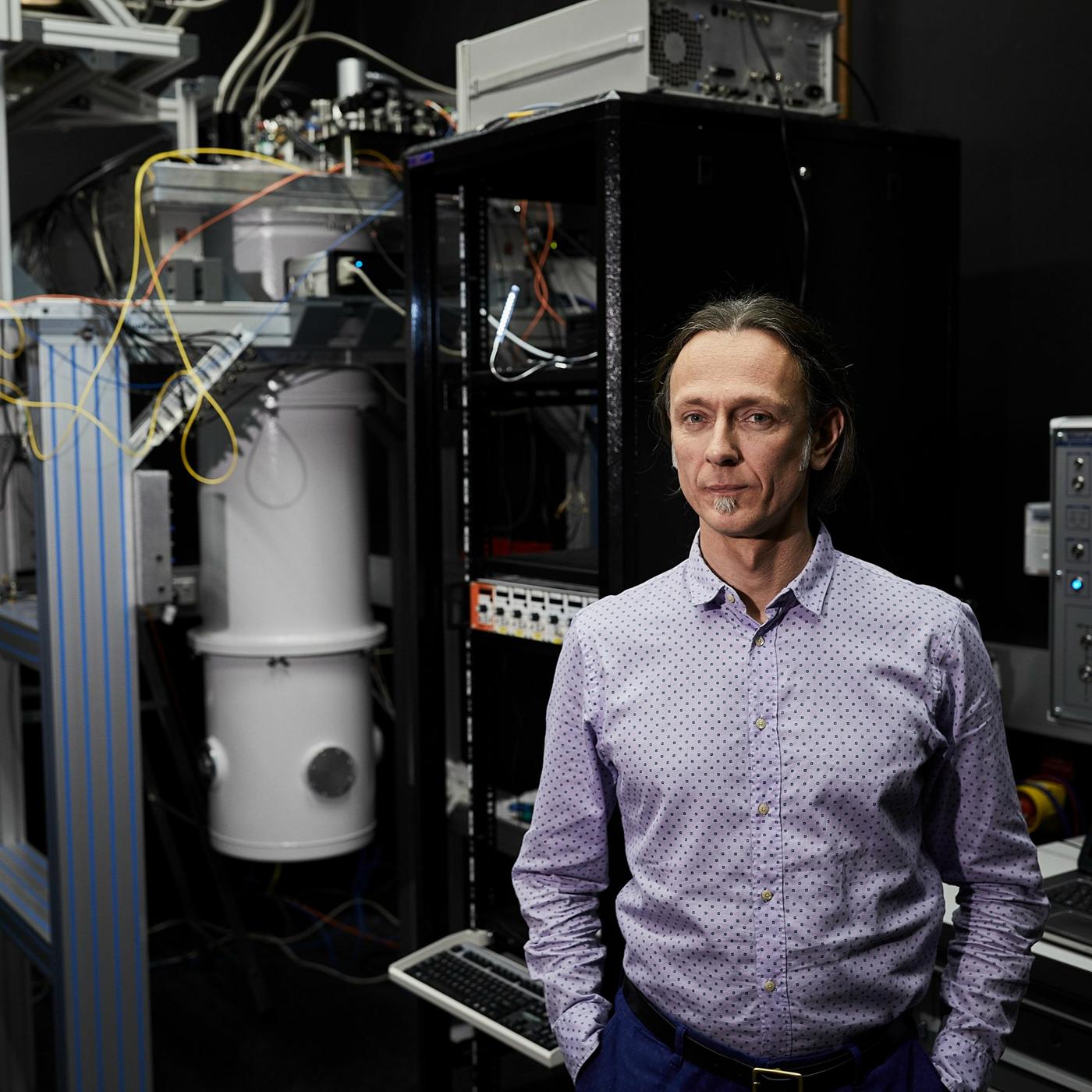
Quantum computers store data and perform computations by utilizing properties of quantum physics. Quantum computations are performed by these machines by utilizing quantum state features such as superposition and entanglement. Traditional computers store data in binary “bits,” which can be either 0s or 1s. A quantum bit, or qubit, is the fundamental memory unit in a quantum computer. Quantum states such as the spin of an electron or the direction of a photon, are used to create qubits. This could be very useful for specific problems where quantum computers could considerably outperform even the most powerful supercomputers. In this episode of Bridging the Gaps I speak with professor Andrea Morello and we discuss fascinating science & engineering of conceptualizing and building quantum computers. Professor Andrea Morello helps us to unpack and tackle questions such as what a quantum computer is and how we build a quantum computer.
Andrea Morello is the professor of Quantum Engineering in the School of Electrical Engineering and Telecommunications at the University of New South Wales Sydney, Australia.
I begin our conversation by asking professor Morello what a quantum computer is, and how it differs from classical and conventional computers. The no-cloning theorem's implications in the field of quantum computers are next discussed. The no-cloning theorem states that it is impossible to create an independent and identical copy of an unknown quantum state. Professor Morello's team uses single-spin in silicon to construct quantum computers, and we go over their approach in depth. The true value of quantum computers can only be realised if we develop creative algorithms that make effective use of quantum computers' exponentially huge information space and processing capability. We discuss this in detail. We also touch upon the concept of quantum chaos and discuss research in this area. This has been a fascinating discussion.
Complement this discussion by listening to “2062: The World That AI Made” with Professor Toby Walsh available at: https://www.bridgingthegaps.ie/2019/04/2062-the-world-that-ai-made-with-professor-toby-walsh/
And then listen to “Artificial Intelligence: Fascinating Opportunities and Emerging Challenges” with Professor Bart Selman available at: https://www.bridgingthegaps.ie/2020/08/artificial-intelligence-with-bart-selman/
Inglise
Ameerika Ühendriigid
TRANSKRIBEERI 🔗
Are you the producer of this podcast?
Add a podcast transcript
Need Audio-to-Text?
Transcribe with Listen411 in Just 60 Seconds
OTSI VARASEMAID OSASID
Otsi kanali Bridging the Gaps: A Portal for Curious Minds viimaseid osasid.
MUUD EPISOOD SELLES PODCASTIS

As artificial intelligence takes on a growing role in decisions about education, jobs, housing, loans, healthcare, and criminal justice, concerns about fairness have become urgent. Because AI systems are trained on data that reflect historical inequalities, they often reproduce or even amplify thos…
The idea that evolutionary theory applies far beyond biology is not new. Yet one major obstacle to the broader acceptance of a generalised evolutionary theory is our tendency to begin with biology and extend outward from it. This approach obscures an important historical fact. Long before scientist…
At the heart of the intellectual and cultural awakening that swept across the globe during the first millennium BCE—an era that witnessed the emergence of philosophy, mathematics, science, and nearly all of the world’s major religions—lies a transformative conviction: the human mind is capable of c…
Our ability to live for many decades is often viewed as a modern luxury made possible by clean water, improved living conditions, and advances in medicine. Yet, human longevity is actually part of our deep evolutionary history. The long-standing belief that life in the past was “nasty, brutish, and…
The metaverse is no longer a distant concept. It is unfolding now, driven by advances in artificial intelligence, big data, and immersive digital technologies. As it reshapes how we work, interact, and create value, it presents significant opportunities alongside growing competitive pressures. In t…
Vastutamatussäte: Sellele lehele manustatud taskuhäälingusaade ja kunstiteosed pärinevad Dr Waseem Akhtar-lt, mis on selle omaniku omand ja ei ole seotud ettevõttega Listen Notes, Inc.
MUUDA
Aitäh, et aitad hoida podcastide andmebaasi ajakohasena.
