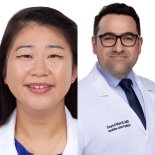
Amanda Wilde (Host): Welcome to Wise and Well presented by Community Memorial Healthcare. I'm your host, Amanda Wilde. On this episode an in-depth look at Community Memorial Healthcare Psychiatry program with associate program director of psychiatry at Community Memorial Healthcare, Dr. NAI Navid and Chief Resident, Dr. Janet Lee Coombs, welcome to you both and thank you for being here to discuss Community Memorial Healthcare Psychiatry program And what makes this residency experience unique,
Dr Janet Lee-Coomes: For having us.
Dr Nassi Navid: Thank you so much for having us.
Amanda Wilde (Host): Dr. Naveed, I'm going to start with you. as associate program director of Psychiatry, can you describe the philosophy of your residency program And what sets it apart from other programs across the country?
Dr Nassi Navid: So, I might be in a very unique position because I am among the. inaugural class of the residency, who graduated in 2024, and I went to uc, San Diego, did one-year of fellowship and came back to the same institution that trained me as a psychiatrist. Initially in 2020 when, the program got their initial accreditation from A-C-G-M-E, the philosophy was that we should train, very well-rounded psychiatrists who are very familiar with the, county And the community, of Ventura and Ventura County, and.
because of their familiarity with the system and living here for three, four years during the residency, they want to stay in the county. One of the issues with suburban areas in United States, is that due to the shortage of psychiatrists nationwide, what happens is that, uh. People after residencies, they usually take some time off going do loc e's job and very part-time, gigs basically to have exposure to, the workforce.
But at the same time, they don't stay there. What happens is that they take it as shift work and when they're done with their shifts, they go back, for example, wherever they were living, in a bigger city. So what happens, the philosophy is that, uh, the best way to retain psychiatrists is actually trained psychiatrists And the same county.
So. Basically, the system get to know them. They are familiar with, their mental health issues, very closely during their four years of residency. And if the, psychiatry residency is like a family, people will come back to their family. This is exactly what happened to me. I was very lucky to be among the first, class, of residents in 2020.
It was at the pandemic time. this program was new. Everything was, very ambiguous. we started the residency. it was interesting at that time that, because of a little bit of experience practicing as a physician before, I started. Most of the, rotations in the, psychiatry residency and program was very welcoming and very open to feedback.
So I did most of the rotations and came back and gave the program director and associate program directors at the time my feedback of that rotation And what needs to be, corrected as from the resident. Perspective, and This is how the program started taking its shape. And over the years, the program has found its identity as a very robust community.
Psychiatry residency with rigorous training, with, uh, a lot of clinical experiences in different, aspect of psychiatry. And we are very strong in addiction, psychiatry, forensic psychiatry, child adolescent, geriatric, consultation, liaison, psychiatry, basically all areas of, different aspects and or arenas of psychiatry that a well rounded PS might.
Amanda Wilde (Host): so in the short time, really since the program has existed, you have seen some evolution. You mentioned community involvement. What is the role of the community in your residency program?
Dr Nassi Navid: Our residents. Are doing a fantastic job just by the presence in different clinics across Ventura County. They are in service of the underserved areas of people who really need to get connected to mental health. But due to the same issues that, I was, mentioning. Earlier, there were no continuity of care.
So even the patient's were getting frustrated by changing doctors, and they didn't get to know their doctors. the doctors didn't get to know them, and they were bounced back between, hospital systems and, different, electronic, health records. And so they all fell into the cracks of, the mental health. or behavioral health system here.
but right now, for example, during my residency for the whole third year of residency, I was in outpatient clinic, Ventura County Behavioral Health. And I carried my patient's at least for one-year. And then upon graduating from that year, one by one, I sign out my patient's to the next residence who was rising to that position.
And basically what happens is. our patient's, we inherit our patient's load, And then we exactly get to know what patient's needs are And what progress they have been made so far with, the prior residents, And then we can take it from there. and because of the different clinics across kind of Ventura County, we do have, for example, child psychiatry in Oxnard.
We do have child psychiatry in Ventura. We have geriatric psychiatry, in East County. We have geriatric psychiatry in West County, we have in Ojai. And then, at some point even do one of the rotations being at the state hospital in Atascadero, which Dr. Combs is actually, spearheaded, this year.
she was the first president this year to go up there. We do have a very robust forensic rotation, in Atascadero as well. So, initially, we were a little bit decentralized as well. For example, our. consult, liaison service. we didn't have it initially in our hospital, so our residents, including me, we had to go to the cottage hospital in Santa Barbara.
But now that, me, as the first graduate came back, started to consult liaison service at our mother hospital, which is Community Memorial Health, system. now the residents, they don't need to go to Santa Barbara, stay for a week and come back so they can, do their core rotation, at consult liaison service here at our hospital, in their, second year of residency.
And also, starting this service here at our hospital has led, uh, family medicine residents, internal medicine residents, and medical students, sub-in interns, and even neurology. Residents from Los Robles can come and rotate with us.
Amanda Wilde (Host): You've described how the program has been evolving and. As it evolves, you've incorporated more partnerships, more community more direct community contact. how have you been able to expand your collaborations with other medical institutions in the area?
Dr Nassi Navid: from the beginning, the foundation of our residency was a collaboration between Community Memorial Hospital and Ventura County Medical Center. And the reason being. That the mother hospital, we don't have, inpatient psychiatric unit. And Ventura County was a great help for providing that core rotations for our residents. So, most of our internal medicine, neurology and, third year outpatient clinics and some other rotations are done at the Community Memorial Hospital and, the inpatient psychiatric unit.
one of the neurology rotations, that half of the third year clinics, are done at Ventura County Behavioral Health. So even in Ventura County, our hospital is collaborating with Ventura County Medical Center. And we do have a rotation at Atascadero, And also, I should say we do have a, college student health at, CSU Channel Islands that our residents get to rotate there as well in their third year.
so this program, basically started with collaborations of multiple institutions and will continue to have more, Collaboration with other institute. The strongest one Being Ventura County Medical Center and Vent County Behavioral Health.
Amanda Wilde (Host): Dr. Lee Coombs. With that in mind, as chief residents, how does your program address the unique challenges of mental health care in the Ventura community?
Dr Janet Lee-Coomes: it's. Complex issue to address. And I think our program, that's one of our strengths is addressing all these unique challenges that a small community like this, experiences, at the ground level. And so as residents, as Dr. David was saying, we get the benefit of. Rotating through all these different sites within our community and getting exposed to all the different challenges And what we can do to kind of bridge those gaps.
and like Dr. DEET said, when this program first started, there was a lot of disconnect and, not quite confusion, but It was just hard to get to the next step And the next part of your care And that. But now with Residents Board And this program, we've been able make.
Refer patient's to where they need to go, or even follow our own patient's that we've seen in the hospital. If we saw them on the consult floor, now we're able to follow them into their outpatient. Or if we saw them in our inpatient psych hospital, we're able to connect back with them with Ventura County Behavioral Health, in the outpatient setting to help continue their transition back to a functional life.
Growing all these different opportunities and these different rotations is really helping, not only the community but us to help build all of those necessary skills to handle anything that could come at us from the community. It's, not quite rural medicine, but I sometimes liken it to that because, oftentimes we are really the patient's main.
Point of contact. We are oftentimes their primary, provider. Sometimes they can't even get to their general practitioner And we are their, main person. So we learn to be super well-rounded in both, those important primary medical conditions as well as mental health things and how to use the resources we do have available in the community.
Amanda Wilde (Host): What advice would you give to medical students who are interested in applying for your program?
Dr Janet Lee-Coomes: when, we do work with medical students because one of the benefits of our program is that we do help teach and train medical students from, various medical schools, and they often ask me this question as well. my best piece of advice especially if they're thinking about psychiatry, is to just get as much exposure in it as they can because it is very diverse.
Depending on the medical training, sometimes you'll only be exposed to, outpatient clinics and appointments or an inpatient hospital setting for maybe a few weeks at a time. But there's so, so much more in terms of subspecialties and, unique opportunities that. You could even create for yourself if you were truly passionate or interesting, you wanted to go explore that kind of subject in psychiatry, you could make it happen in this field.
so like Dr. DEET was saying, there's forensic psychiatry, there's consult, liaison, psychiatry, which is, when people are hospitalized in the medical hospital, they can call a psychiatrist as a consult expert And that. Internal medicine, family medicine component as well. So if you have someone who's both very interested in, primary medical care and psychiatry, it's a great mix for them in that field.
there's child and adolescent psychiatry. If you're really interested in peds and psychiatry, you can explore that subspecialty. And then there's just so much nuance even within. outpatient and inpatient psychiatry by itself, like general psychiatry, like each case is very unique, very different. even though someone carries the same diagnosis, that person's story is totally different from the other person's.
And, I feel like you don't get enough of that experience in your introduction in medical school. So if they're really interested, really. Explore these areas, see what calls to you.
Amanda Wilde (Host): So residents in your program really have a chance to explore and look at many, many options and angles the way psychiatry, uh, addresses mental health issues.
Dr Janet Lee-Coomes: Yeah, exactly. I think especially because as a community program. That's just inherently part of it. We do need to know and see all of these things to be as well-rounded as we can.
Amanda Wilde (Host): How does the program address work-life balance for residents?
Dr Janet Lee-Coomes: it, it's interesting because as a psychiatrist And the psychiatry program, inherently we promote good mental health wellbeing. But it also depends because the work is very involved And we do get very passionate about it. And so sometimes it's hard. So we have to remind ourselves not to bring that home because we do encounter a lot of tough and heavy things.
so we always encourage, what we tell our patient's as well is to. Take care of yourself. Be gentle with yourself, seek care where you need it. therapy, individual therapy Group therapy, always highly encouraged. our program actually, has our own group therapy, program where all the residents within our program, come together once a week to both learn how to conduct group therapy.
Which is an incredible skill, And also how to grow and bond and process tough things together as residents. so that I think is a very unique, and it's been a very powerful, tool in maintaining our own wellness and, work-life, mental health balance. I think each resident. Is very good about knowing what fills their cup and recharges their battery.
and they, find that time when they're off duty, they focus on these things that really, prepare them, get them ready again to go back into the field.
Amanda Wilde (Host): So leading by example. it's really great to hear how you promote mental health for residents and provide the space and support for that. Let me end by asking you both. I'll start with you. Dr. Lee Coombs, what are you looking forward to as the program grows? We've already noted several evolutions of the program already, so very curious what you're thinking as you're looking toward the future.
Dr Janet Lee-Coomes: that's an exciting question to think about because like Dr. Naveed, I've seen it, grow very quickly from where we began. 'cause I am only the third, class of this program and, we've expanded to include so many new services that really directly. I benefit the community. And people have noticed, and people have told us that since our arrival and since our, incorporation into the community, it's made a big noticeable difference.
And so I'm excited to see how that will, like the coordination, the streamlining of care, the continuity of care will continue to grow and really bond the community and just kind of take away any of those. Challenges or obstacles that have been there in the past, so This is, yeah, a very exciting time.
Amanda Wilde (Host): Yeah. And building on the strengths that you so obviously have, Dr. Naveed, what are you looking forward to in your role as associate program director of psychiatry? What are you looking forward to as the program grows?
Dr Nassi Navid: Well, actually a lot. I'm very excited. I'm very passionate. one of the reasons I came back to this residency because I saw there were a lot of things I could help to, during my residency I saw a lot of gaps in patient care. So I'm very excited to come back and help, build services.
for example, when I was second year resident. I volunteered to go with our backpack medicine team to homeless Encamps which was run by Ventura County Medical Center. And during that, rotation, basically, which was an elective, I asked our program director at the time, he let me do that, And then I figured out a lot of.
homeless patient's that are unhoused in their, homeless encampments. And what happens is that, the squeaky wheel gets the oil. They're not making enough trouble to put on hold and brought by police to, for example, Ventura County Medical Center. So a lot of our patient's that are connected is the reason being they were at some point hospitalized.
now the reason that they're connected because they get connected after they're discharged from our unit. But There are a lot of patient's, homeless populations that they are not on the radar. because. It may be just maybe they go to their primary care or the backpack medicine or the point of contact.
So, what I'm looking forward to is DEET develop a kind of consultation team, of PSS to our backpack medicine team, both at, our own, program here. street Medicine, community Memorial Health, And also the Backpack Medicine, adventure County Medical Center they do have services. They both have services that they go to, homeless encampments, both of them.
They do have their own, homeless clinics, which, are usually run by addiction medicine doctors. so. we want to be an adjunct to that. I'm very, very passionate about this coming program because as a community psychiatry, residency, what shapes us, what is our marginal benefit over the academia is that we should have very robust, more community involvement even reaching out to our homeless population.
That's one of my future. And that. I'm very much looking forward to. the other one is that, it was I think two, three months after I started the inpatient consults and a service here that one of our nurses from cardiac rehab reached out to me and said, we do have a lot of patient's who have cardiac issues post mi.
We do have like five patient's who have heart transplant. Done at UCLA, but they live in Ventura. They have some mental health issues, but because of the, nuances of their cardiac issue and mental health, sometimes we just, started antidepressant And then we don't know if, if we should increase it, switch it, what should we do or what are the, some of the things.
So basically this brought up the idea that, starting next year we might have. Um, half a day, for each specialty. A kind of a, crossroads of, mental health And for example, cardiology, mental health and diabetes, mental health and, post stroke depression, for example. so I'm very passionate about bootstrapping all those clinics, one by one.
And I think our internal medicine, family medicine, programs are very much interested into having mental health part of our patient's who are struggling with some kind of medical issues. And then mental health is as important because there's a bidirectional. link between mental health and physical health. So, these two are my major, things that I'm looking forward to, as well as, associate program director studying our morning reports, uh, conducting more, journal clubs, case presentation, and increasing the number and quality of our didactics are things that I'm looking forward to.
Amanda Wilde (Host): It will be exciting to see the potential of the program realized and to watch the program as it unfolds and you build on the partnerships you've created. Thank you both so very much for sharing your experience and insights into Community Memorial Healthcare's psychiatry program.
Dr Janet Lee-Coomes: Thank you so much. Appreciate your time.
Dr Nassi Navid: Thank you so much for having us. Thank you.
Amanda Wilde (Host): Dr. Navid is Associate Program Director of Psychiatry at Community Memorial Healthcare and Dr. Lee Coombs is Chief Resident. For more information, visit my cmh.org/psychiatry. If you found this podcast helpful, please share it on your social channels and check out the entire podcast library for topics of interest to you.
Thanks for listening to Wise and Well presented by Community Memorial Healthcare.