

NIL Gameplan: Thanks for listening to the NIL Spotlight podcast. Be sure to rate, review, and subscribe wherever you get your podcasts. And don't forget to visit nilgameplan.com to get started on your NIL journey for free. We'll see you next week.
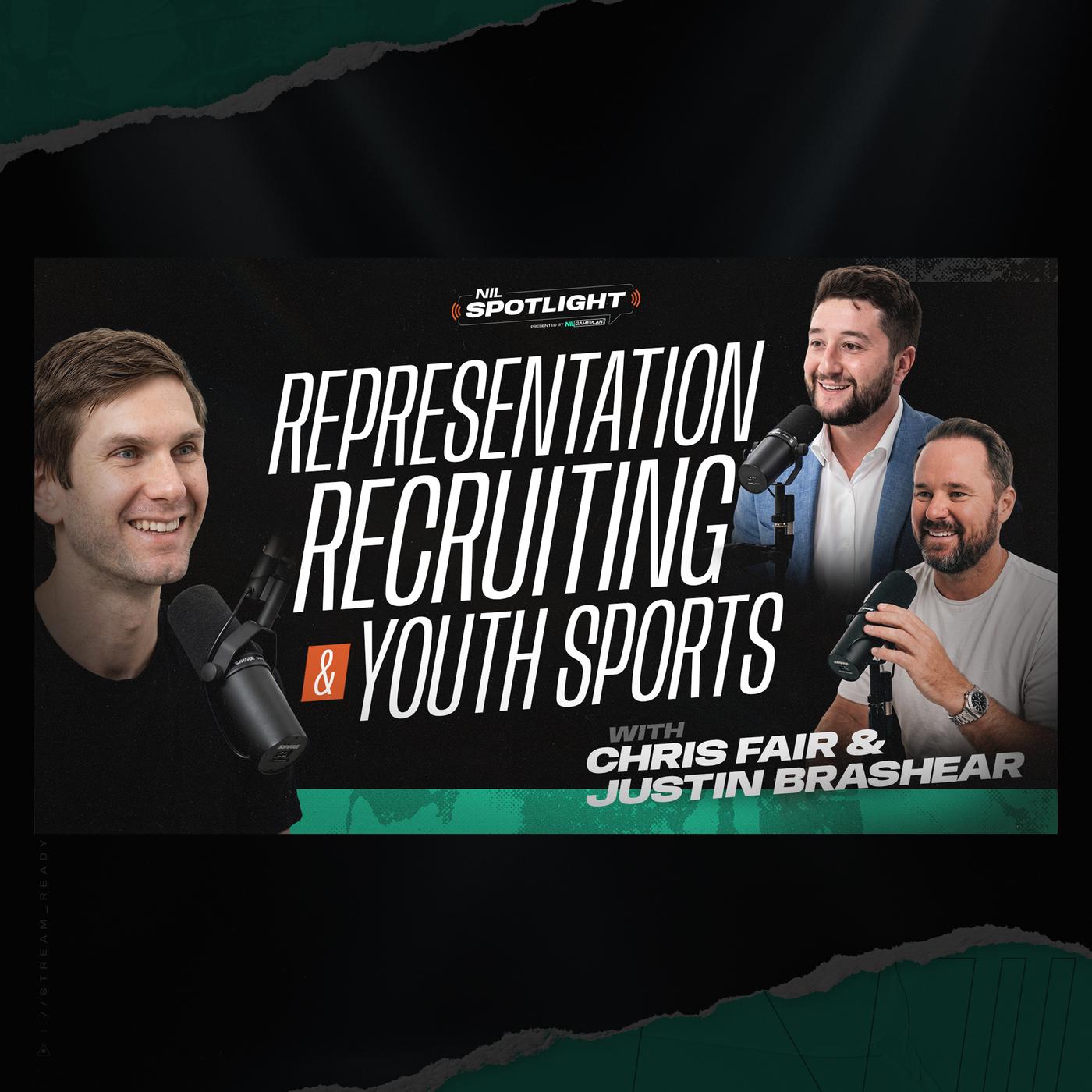
Brian Davidson: Today we're joined by Chris Fair and Justin Brashear, the of Trajectory Sports, agency leaders working with athletes from high school through the pros. Both are focused on identifying talent early and helping student athletes navigate NIL, recruiting, and long-term career strategy as this becomes a real business for top players. Guys, great to have you on.
Christopher Fair: Hey, Brian, thanks for having us on. really appreciate it.
Justin Brashear: Yeah, thanks, Brian.
Brian Davidson: Awesome. Well, let's start with your backgrounds. I'd love to hear the story about how both of you got into this crazy agency world in the first place.
Christopher Fair: Yeah, absolutely. JB, if you don't mind, I'll just jump in first and then you can hop in right after me. Yeah. So, uh, I've been in the NFL space now for a couple of years. Um, always was my intent to become an NFL certified agent, uh, out of, uh, my undergrad. went to Bentley university in Massachusetts and I did my fifth year to get my MBA. And with that to kind of get the business background. And on top of that, you know, right after that, I went to law school and I went to pace law school.
Justin Brashear: Absolutely. Go ahead,
Ashley Stiffler: episode is brought to you by NIL Game Plan and Athlete Guard. If you're a student athlete or a sports parent, NIL Game Plan is built for you and protection is part of that game plan. Student athletes give everything they've got from practices to tournaments day in and day out. Athlete Guard gives NIL Game Plan families added injury protection and more importantly, peace of mind when the unexpected happens. Included with your NIL Game Plan membership,
Christopher Fair: And as soon as I passed the New York state bar, said, I did not really my path to go practice law. Let me go do something a little more fun. And I went to go pursue my dreams of becoming an NFL certified agent as that time kind of came, you know, the NIL space kind of exploded almost simultaneously. So as I saw that opportunity kind of arise, not only for agents to get into the space, but for athletes to start making money at a very young age, you know, it was very important to me that these athletes had protections and there's
Ashley Stiffler: Athlete Guard provides up to $10,000 per injury for eligible accident medical expenses, covering care following sports-related injuries, including rehab and covered surgeries, with no accident medical deductible. Athlete Guard is underwritten by Mutual of Omaha Insurance Company and administered by Hub International. For more information and to see full coverage details, please visit nilgameplan.com today.
Christopher Fair: A lot of things that I'm sure we'll get in on this podcast as to what those protections look like and why they're so necessary. But, ⁓ you know, as, that space kind of opened up and we saw the actors on the school sides, the agent sides and, the families needed a little extra juice, I think from a protection and representation standpoint, seemed like the perfect fit to start helping athletes, especially as someone with a credential to do so and bring them hopefully all the way to the NFL.
Brian Davidson: So perfect timing joining this brave new world. Awesome. And JB?
Christopher Fair: Absolutely, absolutely.
Justin Brashear: Yeah, man. Thank you. So I have a background. I was a player. I played collegiately and professionally in baseball, actually. And then after my playing career was over, I went back to school, went to Southern University Law School where I got my degree. I actually kind of got away from sports altogether and just really focused on being a lawyer. Right. So like I've tried cases, I've done a bunch of transactional work and really never, never found anything that really resonated with me. Never really lit me up and sort of rekindled that fire that I had for athletics from my time growing up. And then 2020 came through, I started my own firm. And then 2021, obviously NIL became legal, but more importantly, I had a son in November of 21 and his nanny used to play softball. And so we start talking one night about NIL and next thing you know, we have an NIL deal on the table. And so I kind of got exposed to it. as a brand, essentially first, from that side. And then I got to see firsthand what it helped the young ladies go through and experience, sort of how they grew in themselves personally and how they made impacts in the community. And then, as things were, ended up helping the young ladies I worked with through the transfer portal. And one thing led to another, I kind of realized, hey, I'm pretty good at this. I understand sports and the legal background, understanding the contracts and how to negotiate things. was very helpful. And so, you one thing led to another and I ended up taking the NFL exam and passing it. And that's where I met Chris. you know, we've been off to the races representing the NFL players, know, players from high school all the way up to the NFL since then. So it's been awesome. It's been a fun ride. And I'm really excited to talk about NIL because I think it's something that can change people's lives. And so I see a lot of value in what we can do there.
Brian Davidson: Awesome. Well, Justin, you just brought up high school and age is always a huge question during the recruiting process. And I used to tell kids when I worked in recruiting, as soon as you're sure that you want to play in college, you should start the recruiting process. But the whole NIL process, when should that conversation begin? When should students have to start thinking about rev share, start thinking about NIL? When should they consider start thinking about representation?
Christopher Fair: Yeah, it's a great question. And I think the most prevalent one right now, especially as it seems to start trickling down, you know, used to hear about the beginning of the NIL was kind of the top guys as you know, things started off and then soon after the entire roster is getting paid and now they're trying to figure out ways to get guys aren't even on the roster yet, you know, into the building. So you start seeing those high school kids start making, you know, money or having offers their way that is, know, life changing amounts of money. So it's, happening earlier and earlier. Right now I've been dealing with a couple of class of 2027s who I've had signed under the agency for over six months now. you know, that sophomore year going into junior year starts to become, you know, a really that transition point. And, you know, in your junior year, you know, your rising junior year on that June 15th, teams are able to start talking to you, right. And those conversations are no longer just, we really like you and we want you to play with us, right. It's, here's everything that we do, here's the players that we've had, here's the, you know, maybe the amounts of money, you know, that we've allocated to our roster or to these positions in the past and the things that we can do for you to kind of recruit you, not only from a football standpoint, from a compensation standpoint. So it's happening much earlier. That June 15th deadline, it comes quick. And I'm talking to class of 2028 kids, you know, as early as today, because you want to kind of get ahead of those conversations to make sure that, you know,
Justin Brashear: Mm-hmm.
Christopher Fair: kid is protected, but he also understands and has as much information as possible to make that decision over the next year and a half. So I would say as early as 11th grade, if not even sooner, because it's just happening so much quicker and those conversations are just starting to trickle down more and more every day. And JB, I don't know if you have extra. Yeah.
Brian Davidson: Justin.
Justin Brashear: Yeah, I'll add to that. Actually, I think it's a great point. know, I think that, know, Brian, you said something earlier about, you know, when you when the player thinks like, I think that I want to go play at the next level. That's one part of it. But I think that the the triggering question to when you should seek, you know, working with a professional is more like, hey, when does the game tell you that you can play? When do you start getting recruited? When do you really start seeing opportunities open up at that point? I think that, you know, a lot of a lot of parents, at least the ones that I've dealt with and even going back to my time. as an athlete, going through that recruiting process myself, there's a lot of information that floods in at a certain point. And when you as a parent or you as a player can't process or have some questions, I think that's a good time to seek out some representation. think that's a good time to look for people that are trusted, that know what they're doing, that are licensed and that have an understanding of what is available to you from the standpoint that Chris was talking about. what all encompasses the offer. And a lot of times it's not just a financial piece. A lot of these schools have, ⁓ they have large budgets around the academic side of things. You we work with players who have made decisions on where to go to college based on the majors that are offered. You know, and so when you start to have those questions and you start to realize as a family, just how important the opportunity that's presented to your child in the form of an athletic scholarship and an athletic opportunity at the division one level particularly. That's a good time to start looking for some trusted people in the industry that know what's going on. They can kind of help guide and really steward that decision-making process and help you sort of understand the pathway and what's out there for you.
Brian Davidson: Justin, just brought up Epic academics and it feels like in this new era of NIL rev share transfer portal, we can often forget that it is college sports and academics are a huge piece of the puzzle. How do you guys counsel athletes on how to weigh those different aspects of making a choice that can affect the next 40 years of their lives?
Justin Brashear: Mm-hmm.
Christopher Fair: Yeah, absolutely. And I think that's the biggest thing that we try to figure out, especially for high school athletes. I know that the transfer portal is like this hot topic, right? It's the trendy thing that everyone's talking about. And you see, you know, 10,000 players in the portal last year. And, you know, those are, that's a, that's a big number. And you know, what we try to do, especially with the high school kids is, know, why I think it's early to get representation early is because you can start that process of gaining all the information about what's important to you. Right. I speak with clients and Some of them, it's regional, right? They don't even want to leave the state. They want to stay where they are. They want to be able to go to all the home games freely. They want to have that community. They want to be close to home, right? Some don't care and they'll go elsewhere. But like Justin said, it might be about the academics or it might be about the scheme fit or the development and all those things that come with being an athlete as well as a student. But I think it's super important for these athletes to understand that you don't want to make this decision. You want to make this decision once, right? You don't want to have to go to a program. and then transfer. You want to make sure everything was set in stone perfectly when you got there. And of course, things change and coaches get fired and not everything that was promised to you might be there. And as representation, we try to make sure that that's never the case. But things do happen, right? And those things will happen. someone takes your spot on the roster and there's just nothing you can really do about it. And you have to end up transferring. But I think the most important thing, especially for high school kids, is to understand that you really do want to make this decision once. When you commit to a school, you don't want to be the guy that flips commitments. Every decision maker at the higher level is looking at you and your breadth of work and your decision making ability and who you are not only as an athlete but as a person, right? And making sure that you're taking all those steps to develop as a person. So yes, the transfer portal I think could be super helpful and beneficial, but at the end of the day, you don't want to go through five or six years of college and not walk away, walk away without a degree. And I think that's one of the more important things is figuring out exactly what makes sense and what makes sense for each client is a little different, but making sure you make that decision right, hopefully the first time, if not the time after that.
Justin Brashear: I couldn't agree more. think that the thing Chris said there at the very end about getting the degree, that's one of the things, especially when we sit down with the family and start looking at really what the plan for the future is. Having experience as a player, so like I got drafted out of college in my junior season. So I left school, assigned and played professionally. I had to come back to school, right? I had to go back and finish my undergraduate degree, go back to law school and do all those things. And it was very difficult. not saying that I wouldn't do it again, but it was extremely difficult. And when you start realizing like, I'm married, I'm in class with 18 year old kids with X's on their hands, it's a strange feeling. But when you realize now, especially when you have the insight of professionals like Chris and I, when you make the commitment to the school, we'll get with the academics people and figure out if there are any sort of credits that you can take that you can transfer in with. Right? Like let's start you academically as a sophomore maybe while you're athletically a freshman. Let's find ways to where we add some classes in the summertime or when your schedule permits and get you ahead academically because here's the deal. We like to work with players who have aspirations and the ability to play in the NFL. You know what most of those families care about more than playing in NFL is the ability to graduate from college and provide for their families for the rest of their lives. Step one of that is to graduate from college. And so we want to help our players, the guys that we're fortunate to work with. We want to help them set that plan up to where they can go in and they get the degree early. Whether that means, hey, we're going to jump to the NFL or we're going to grad transfer and we're going to go try something new somewhere else. At least you still have the degree. At least if it all doesn't work out, you're way ahead of the rest of the world because you've gone and you've taken advantage of the opportunity that's been presented to you. And so it's not, you for us, it's Chris's point, you know, money is always going to be part of the conversation. Everyone, especially in in the world of revenue sharing and the transfer portal, it's all out there. But the reality is it's not just money for us. It's value for us. Where can we add value to you as a player and as a family to help you understand the things that are out there and available to you? We want to open doors. We want to help educate you. want to, encourage you to ask questions. and be part of it. It's really a partnership about the future. And part of that, a main part of that is getting the degree and preparing yourself for life off the field.
Brian Davidson: Perfect jumping off point talking about value. What sort of value and where are you guys actually doing with our high school athlete? Are you driving the recruiting process, actually negotiating rev share deals throughout the process? Are you helping them get more scholarship offers? Where's the line end between the student athlete and family's responsibility and the agent taking over?
Justin Brashear: You I'd start by saying all the above. yeah, I mean, you, know, it's such a, let's strip away for just a second, Brian. Let's strip away the revenue share piece. Let's strip away the athletic side of this. This is an 18 year old young person making a massive decision about the rest of their life. The network that they're going to build, the community that they're going to surround themselves with. This is a very important life-changing decision no matter what. Then you dump on top of that,
Brian Davidson: Okay.
Christopher Fair: Hahaha.
Brian Davidson: Yeah.
Justin Brashear: the monetary side of things and the expectations of what a college athlete looks like, it can be overwhelming. And so, you know, we have to temper expectations, first of all, with what's out there and what to expect. But then, you know, it gets crazy when the coaches start calling after, know, when the phones open, they open. And it can be very complex. you know, part of our job is to, you Chris said earlier, we help to slow things down a little bit and get the information that you need to help make the decision. That's where we really can do things. And in order for us to do our jobs, we kind of have to have a part in every phase of the process.
Christopher Fair: Yeah, absolutely. And just to kind of piggyback off that, you know, I think one of the big things that you'll see is, you know, there's recruiting services and then there's agencies, right? And I think there are, sometimes you'll see them to mesh. And I know for my clients, know, fortunate enough, just from the nature of doing business and, you know, dealing with these guys on a daily basis, whether it's from other clients or just being in the same room, you know, many times throughout the year, you know, it's great to have those connections to be able to reach out to programs, right? There might be, you know, quote unquote dream schools for a client. that they're attainable, but they're in a different state that this school is not really, you know, they don't really want to recruit there yet because they don't want to deal. You know, if I'm a Texas school, do I really want to go into Florida? And if I'm a Florida school, do I really want to go into Texas? So you start seeing things like that. And, know, you can kind of bridge the gap a little bit, even before kind of that June 15th period, because even though an athlete can't talk to, you know, a school, you know, I can, right. And I can have a conversation about anything with anyone for the most part. So having those conversations and kind of saying, hey, what do you think about, you know, player A? and seeing what that kind of looks like. And yeah, you can start doing those recruiting practices a little bit. You try not to get too much into that recruiting mode, but you'll do as much as you can for your client because of course, they're your client. You got to do everything you can to put them in the best position to succeed on and off the field. So I think you see a little bit of everything, especially early in the process. You don't really know where the player might pan out, but you do know that it's a good player that... just needs to maybe some opportunities or to stay in front of some people. So yeah, we of course do the contractual side of things. We have all those conversations, the negotiations, the leverage plays, the classic agent things that I think you normally see. also when it starts coming to the college and high school kids, you want to make sure that you're also touching all bases for the most part and getting in front of as many people as you can that you have good relationships with to help that player get whatever they're looking for and hopefully more.
Brian Davidson: Pivoting a little bit, insurance and forming LLCs are topics that come up a lot for us when we're talking to families. Do you guys have a point of view on athletes formalizing legal entities early on?
Christopher Fair: Yeah, I think they're great. Yeah, I think they definitely should. I think that's one of the great advantages that they can take care of. And I keep talking about high school because I think it's one of the areas now where you could really start taking advantage of things like that. And I know that I've talked to a few people in the space about the advantages of an LLC, especially for high school students. And you can start taking trips to schools. I'm not, I don't care, I will never give tax advice. I am not even close to a tax attorney or anything like that.
Justin Brashear: Yes.
Christopher Fair: But from my understanding of it is you can start writing things off, ⁓ you know, earlier than, you know, then maybe you get paid. And that year that, you know, you're taking game day visits in the fall and all these things to see all these schools. And then you sign that NIL deal. You know, hopefully those things that you've done get either offset or credited or whatever it looks like for the athlete's point of view. And so that they get some advantageous tax breaks that they can take advantage of. Again, I'm not an expert in the field, but I am all for any time a player can ⁓ help themselves a little bit financially.
Justin Brashear: Yeah, and to add to that, mean, to Chris's point, you one of the things that we do as an agency is we find that, you know, we seek out those resources, the CPAs, the financial advisors and whatnot. And so we'll vet the, you know, we'll vet the professionals. We'll, we'll, curate the conversations between professionals and our clients and, and help them to navigate that relationship. But I'll say this, you know, having the, again, going back to experience, you know, like I run my own business. You know, we're entrepreneurial by nature. And so if we can teach an 18 year old young person to understand how to leverage the tax system and to invest in themselves and to, you know, to, make their money work for them, not only now, but into the future. Look, I'll be honest. I mean, I look at agency and I know that they're not every agency does, but I feel like I have a fiduciary responsibility to the client. feel like I owe the client the access to that information and that knowledge and to, to again, to open doors for them. And so, you know, when we tell them these things and we show them these things, like, Hey man, I do them myself. Right. Like I, the things that I do as, as a business owner, you can do as an, as an athlete in a lot of ways, because you are, you know, you're an independent contract. It's not a pay for play contract. It's a, it's a licensing agreement. Right. So you're your own person, you're your own entity. And so we strongly encourage, um, taking advantage of those opportunities. And I say, that may be a bad word, taking advantage, but maximizing the ability to, to earn. now because you have to realize like, hey, again, I played, I did something that less than 1 % of people that play the game get to do and that's get paid to play, right? ⁓ But even then the best careers you're done and retired by 30. That's a long time between 30 and the rest of your life to figure out what you're gonna do. So we know that there's opportunity between 18 and 30 for these young people to make as much money as they possibly can. I think it's part of Chris and I's job as career stewards to help them preserve that money for the next 35 or 50 years or whatever it is their life on down the way. So we do look at it, we do take that approach and we do strongly encourage our athletes to be business people themselves and to understand what it is. Because again, man, you're going to work for someone. If you play in the NFL, you're going to work for a team and they're going to tell you what to do from, you know, nine to five or whatever it is. But when you have the ability to make some things work out better for you, I encourage you to do it.
Brian Davidson: Well, speaking of earnings and protections, Chris, I understand you just went through the insurance process with a specific athlete. Can you tell us a little bit about that process and anything unique to it?
Christopher Fair: Yeah. Yeah, for sure. ⁓ So one of my high school clients actually was quoted for an insurance policy out of the Lloyds of London. And that policy was to protect him pretty much for all injuries that he could possibly incur for the most part, whether it was on the field or off the field. ⁓ And my client is someone that is a prop projected to be a high earner for coming in as a freshman. ⁓ in for college football and hopefully for the next four or five years that he's there. ⁓ So it was important to him and his family that we kind of started that process and protected, you know, that potential earnings and made sure that he was going to be able to earn and whether it was something that happened on the field or off the field, we want to make sure that he was protected. And, those protections and I keep saying the word protected and protections because I think it's the most important thing that we do right now. And it goes further than just what's on the paper. It's super important to have favorable. contract terms and have someone that knows what they're doing when it comes to those terms. But protection goes so much further than that, And Justin talked about it earlier, protecting them as a man and helping them develop that way and also protecting them when it comes to these things that happen in the real world. It could be something as unfortunate as... you know, a car accident or falling off your bike or something like that. So being able to protect the earnings potential of someone that is at such a young age that could make that life changing money was super important, not only, of course, to the athlete, but to his family. You know, having that conversation was super important to all of us. So it was a great process to go through and to receive that ⁓ insurance and make sure that, you know, I think it kind of set the precedent right of what's possible out there for these athletes and making sure that they know, you know, this isn't just about.
Justin Brashear: you
Christopher Fair: football, right? This is about you. This is about everything. There's so much more going on in the background that you can take advantage of. And maybe that's not the best way to put it, Justin, but it kind of is right to make sure that these athletes do know that there's things that they can do out there that isn't just playing football ⁓ or isn't just the contract terms. It's so many more things and, you know, being able to have the relief as a family and as an athlete and even as an agent, right? to me, my players are part of my family. And if you see our Instagram, it says, hey, welcome to our family, because that's really what it is. And knowing that he has that relief and peace of mind that he can go out and be himself and still be an 18 year old is really nice. So it was a great process to go through and I can't wait to keep going through it for our clients.
Brian Davidson: Justin, how do you see that market evolving? I know we're working on some really specific products at NIL Gameplan to protect athletes, what we call athlete guard, but I imagine you see this being a dynamic market and really growing over time.
Justin Brashear: Absolutely. Yeah, we've seen it, you know, to Chris's point, we've seen it some of the, at the college level, we've kind of seen it there, but to set the precedent at the high school level is really something that we're very proud of doing. Um, part, know, on top of the, on top of the disability things, especially in the college world, you know, if you're, if you're paid under revenue sharing, there are NIL booster policies so they can add a potential value to the player with some certain performance, you know, bonuses at that point. So we've done some of those things. We've added in contractual things as well. ⁓ know, performance, not performance based bonuses, but hey, if the team wins, you're to get X amount of dollars. If, you know, if there's a, if there's a teammate that does, you know, that if you get a thousand yard rusher, let's say you're going to get a bonus, you know, we can do some things like that, that we've done. Another thing, you know, to Chris's point about giving the athlete and their family some, some rest. You know, we represent a family, a young man, his father is a football coach. And so he, you know, they play a game, a random Thursday night game, whatever. Well, he's got practice, you know, they're playing the next day and he's trying to make it up to the game and, you know, he gets there, but he's got to run up the, he's got to run up the road and park. And then it comes in and got to get his ticket and all. He missed the first quarter of his son's game. And so we go through that and we realized that. I said, that's not going to happen again. And so this year through the portal process and everything else, like We negotiated for the school to provide parking passes and dedicated tickets for our clients so that the player doesn't have to worry about the pass list. He's not looking to make sure mom's okay. Mom's got the tickets already. Dad's got the parking pass. And the player can go and play football. He can go to class. He can get his grades together. He can get his recovery in. He can get his film work done. All the things he needs to do to be successful. And we take care of those little things off the side. I also think that players from the marketplace standpoint, you know, we're seeing some things happening. Again, the schools have to be somewhat creative in how they navigate their cap space. And so we've been successful in getting some of these things done. think that, you know, our main goal is to Chris's point, yes, to protect, but we also want to make that process as beneficial and as enjoyable as possible because man, college sports are so fun. And getting a chance to do it, it's really the thrill of a lifetime. So we encourage people to enjoy that. But we also do the things like we've talked about that sort of help them to enjoy that.
Brian Davidson: Well, you just brought up family and family can always be a tricky situation. On one side, these athletes are in many cases still minors, but in many instances, the parents might not either have the education level or fully understand the full picture. There's a lot of family members that make me think they should actually be an agent. Why should athletes avoid that route? And what does a healthy structure look like between the parent, the athlete, and of course the agent?
Justin Brashear: I'll take this one, man. is a point of passion for me. Again, having experienced it as a player, right? Like I'm very thankful for the relationship that my parents had with people that are around me. And I learned a lot from that. I think from the very beginning, agents can rub people the wrong way by trying to exclude people out of the decision-making process, right? Mom and dad were the ones that brought the son to football practice.
Christopher Fair: You got it. Yeah.
Justin Brashear: They're the ones that changed the diapers and got him to school and we're at the First Communion and so on and so forth. They're always gonna be a part of the process. They're always gonna be a part of it. And I think it's dumb, frankly, to exclude them from that conversation. And so we want to add them in. Again, I'm fortunate my wife was with me through my career. I think it's important if there's a significant girlfriend or fiance or something like. not that she needs to make the ultimate say so, but she needs to be part of the conversation because it's her life as well that's going to be mixed up in these things. so family is very important. You know, and I say that because to Chris's point earlier, we like to, we truly like to ingrain ourselves in people's lives. This is a relationship for us, man. This is not, this is not a transactional thing where we're going to try to go, you know, sell the players services as many times as we can and make as much money as we can. That's not what this is about. This is about helping young men grow into successful pillars in their community to maximize the opportunities they have in front of them. And yes, it's important to have people like Chris and I that know what know what that world looks like. But I think it's just as important to have mom and dad that have no clue that are going to support their son no matter what happens. That's that's vital for the success of the player and the person.
Christopher Fair: Yeah, and just to kind of piggyback off that a little bit, know, everything that we do, as Justin said, is additive, right? And we don't ever want to replace someone in the process, but we do want to be an addition. And I think one of the biggest ways that representation, at least how I see it and how trajectory believes in it, is that we want to be there because we can take you to the NFL legally, right? Mom and dad, unfortunately, unless they're a certified agent, can't take you to the NFL, right?
Justin Brashear: You
Christopher Fair: We want to, and my biggest point about saying that is no one gets to the NFL by accident, right? No one gets the NBA by accident, right? Everything that they've done in their life is intentional. yes, people before agents, you know, we're able to get to the NFL and there's going to be people that get there, you know, without an agent today. Right. But the larger part of that is that you're not only getting representation, you're getting a network of people, right? We have trusted trainers in our, in our circles, right? We have. other schools that if the player's looking to transfer, we can start having those conversations early with a wink and a nod, not something we'd ever do, but we do things that we can do, right? And we can start making sure that he's always going to be in the best situation. And mom and dad, of course, they want that same goal, which is why I say everything's additive, but we're able to actually execute on it, right? Mom and dad, let mom and dad be mom and dad. And I think that's one of the more important things. Let mom and dad be mom and dad. There's a lot of things in this world, ⁓ this NIL world, that is very different from the outside world. And not having all the information, not knowing what the allocation is of an offensive line for that school versus another school. And mom and dad have to, they think this deal's good, but it's actually half the market price. And they're working full-time jobs, they're raising kids. Let them do those things and let us do what we do, which is make sure that
Justin Brashear: Absolutely. Amen, brother. Yeah.
Christopher Fair: We know all the numbers, right? We know what protections look like. We'll be the agents and we will work with them every step of the way, but making sure that their kid is in that best place to succeed is something they want to. And I try to tell parents that we want the same goal here. It's just, unfortunately, we're the ones that are probably better equipped to do it because it's a full-time job to do that. And they're already working two full-time jobs being a parent, whatever their day job actually is.
Justin Brashear: you And I'll add one other thing to that real quick if I can. Besides the fact that they're already working multiple jobs and they're wearing a lot of hats, moms and dads are gonna be emotional about the value of their son, good, bad or indifferent, right? And I respect it, I've got kids of my own and I feel the same way. What we can do and again, that's where the lawyer hat comes in. I've negotiated.
Brian Davidson: Chris.
Christopher Fair: Great point.
Justin Brashear: billions of dollars in situations between my clients and companies. And I love the clients that I work with. And I've been very fortunate in my career to work with fantastic people. But professionally, if you can separate some of that emotional aspect, you're going to put yourself in a situation to get more information and to make a better informed decision about whether to take the offer to school or to go somewhere else. And so I think that that layer of separation is helpful and is healthy for most families.
Christopher Fair: Great point.
Brian Davidson: Speaking of that separation, what are some mistakes that you guys see being made very often in the space that an agent can help you avoid?
Christopher Fair: Yeah, I think the first one is kind of something I started to touch on a little bit, which is that maybe a family or an athlete that's, you know, being sold, you know, the bells and whistles on all these visits and what have you, the contract, right? And I think when that contract comes in, there's a lot of terms in there that differs from school to school. But that dollar amount, and I don't mean to harp on the money, but it's important because the money acts as a layer of protection on the death chart and making sure that you're paid properly as everything's a business now.
Justin Brashear: you
Christopher Fair: is super important because if there's a player that's ahead of you on that depth chart that's being paid double, well, he's probably going to get double the reps, right? And making sure that we don't fall into that mistake of the number might look good as a collective, you know, you big number, right? It might look like a big number and it probably is, but making sure that that number relative to everyone else on the team, everyone in that position room, every the other schools, you're making sure that that number makes sense, right? If they're telling you that you're a starter. You need to know what a starter number looks like in the SEC or looks like in the ACC because it might not match what they're saying. And they might sell you a dream to get you there and then not pay you with what they said that they were going to because you just don't know. And that's fine. But it's something that I think representation could be super helpful with avoiding. think that's one of the biggest pitfalls I see is that everything looks really good until you realize that it's not.
Justin Brashear: And look, and I'll add to that too, you know, it's not so much about the number on the paper. It's how the number is allocated. So I've seen some deals that were done by, you know, quote unquote agents that were big numbers and they should have been great, but they didn't realize that the pay structure was such that the player lost a lot of leverage if the player chose to get into the transfer pool. You know, they didn't look at, they didn't look at some of that language because they were looking at the big number as well. worried about what their commission looked like on that number, not what the details were. That's major red flag. And I think part of that happens when the person representing the athlete is not licensed and certified by the NFL PA for instance, in football specifically, baseball, obviously the major league MLB PA, whatever it is, but the NFL, ⁓ we have to think about the development of the player on field in terms of how the money's paid. If you're losing snaps and it's time for you to transfer somewhere, but you have 80 % of your money tied up on the last two checks, it's going to be hard for you to leave. And then you're going to lose leverage in the negotiation process. And it's difficult. That happens with an agent that's short-sighted and only cares about what that number is on paper, because that matches what they need on their bottom line. To what we talk about is we look at this as a multi-step process. even at the high end of NIL, is not life changing money. It's life learning money. You can learn how to be a professional on this money and you can set yourself up for success, but you have to learn and you have to set that foundation correctly. And I think that if you go into it, to Chris's point, if you go into it just focused on the number, you're gonna lose sight of the other things that truly matter and truly actually probably set you up for success more than what the number is on the page.
Brian Davidson: Social media can be a hot button issue. There's an aspect of building a brand and creating a following and setting yourself up for NIL deals. Of course, there's a flip side. You could post the wrong thing. You could tweet something in anger. You could like something inadvertently and cause a firestorm around your quote unquote brand at a very early age. Do you have any advice to student athletes on how they should be approaching social?
Christopher Fair: Yeah, I think staying conscious that what you're doing right now is is very important, right? Making sure that you know, like you called it, Brian, a brand, right? Everything you're doing right now is, unfortunately or fortunately, however you want to look at it, a brand, right? Especially when it comes to athletes. And it's it's hard to kind of separate yourself because everyone's going to want their private life and everyone really enjoys, you know, being private, especially when you become super public. But understanding that Even when you're 16, 17, if you have any aspirations to go play football, basketball, you know, whatever sport it is at any level after college or college is you got to make sure that what you're posting is something that you want to be representative of you. And I think it's super important to understand that. think even when you start talking about getting brand deals, you want to start thinking about doing brand deals with things that align with you as a person. Right. It's I'm going to use a big example, but Say Coca-Cola, right? If a kid gets a Coca-Cola deal, that's great and that's awesome. But if he doesn't drink soda, why are you aligning yourself up with Coca-Cola, right? And you could use Coca-Cola and replace it with anything, right? It doesn't even have to be a brand deal. But things that aren't representative of what you want the world to see of you should not be on your social media. You shouldn't be posting it, you shouldn't be liking it, you shouldn't be associating with it. People shouldn't be sending you it. unfortunately, everyone's looking at everything now. Decision makers are looking at those things. If it's you versus someone else and everything's neck and neck, but your social media is out of whack, who knows what the decision maker is going to choose, right? And it's probably going to be the one that has a very squeaky clean social media or someone that's being trying to build themselves on social media. So I think you can make yourself a lot of money on social media and you can make more money than you probably can playing the game of football at times, right? You see athletes like Livy Dunn and you see what she's able to transform into. And yes, she was a great college athlete, but she was even a better marketer and she'll go down. probably being remembered as the queen of NIL for what she did and what she started because she really did transform everything. So understanding that you can make a lot of money off your social media and you can make a very big brand for yourself and you can do that while you're doing everything on the field, but making sure that you're not doing anything to take away from that because the second it becomes negative is the second that it starts messing with everything else in your life and that's the last thing you need as an
Justin Brashear: No doubt. I agree completely. Yeah. I think you got to keep the main thing, the main thing, right? If you're a football player, man, you're, should learn how to post your videos around your workouts, around your recovery process, or on field, in the weight room, do the day in the life, understand what people in the marketplace, to Chris's point, they're looking for it. They want that type of content, good, bad, or indifferent.
Brian Davidson: Justin any dad?
Justin Brashear: Show them the good parts, right? Show them the work that you're willing to put in. Show them how you're becoming a better version of yourself on the field in the classroom. You know, I think if you do that and you stay focused on what your goal is, I think it's going to be helpful. You know, to Chris's point about Libby Dunn, she used the platform initially as an athlete to get there and then all of a sudden it became, I'm going to do these deals. I'm going to get out there. And she did the work to make it that, but that's when her focus sort of shifted, it seems, you know? You gotta keep the main thing the main thing. At worst case, man, show the work you're doing.
Brian Davidson: But then with this, what's the biggest piece of advice you could give parents and student athletes that are beginning this process today? Set a different way. What would you do if your own son was a four star recruit today?
Christopher Fair: Yeah, the first thing I'd do is I'd join NIL Gameplan and I would make sure that they're going through all the modules and all the classes that are on there because the network of people on there is vast, right? And I'd start educating myself as much as I can. And I kind of spoke about it earlier, but you don't want to be the agent for your son, but you do want to be super educated to help him make a good decision on what agent he's going to choose or what...
Justin Brashear: ⁓ yeah. you
Christopher Fair: people he's going to put in his corner, right? And you want to be able to talk to those things as much as possible, right? So it doesn't have to be your third or second job, but it should be something that you are educating yourselves with. So if it was me, I would educate myself as much as possible, and I would go get representation. I think that would be, if I had a four-star athlete and he's going into his junior year, today, right? I would go get representation today. And I think that starting that process today is super important. I'd look for someone that was certified in the sport. that my kid plays, right? I would make sure that they're NFL certified and NBPA certified, WNBPA certified. I would make sure that all of those things are in line because I want my agent to take my kid from today all the way to the league or at least have the possibility to do so and not have someone that's in my life temporarily for four or five years without the ability to do that. And I would just make sure I was super educated and had the right people around me. And I would make sure that I knew what my son wanted. ⁓ out of where Orb Daughter wanted, out of wherever they were gonna go and make sure that we're having those conversations. They might be hard conversations to have, but you might not know right away, but I would make sure that we would try to seek out all the information possible to make it possible for them to succeed in anywhere they go and maximize their.
Justin Brashear: About the eye that's very well said about the only thing I could add and it's not maybe even additive But be curious and be humble so You know, you don't know what you don't know and I think both of those both of those mentalities can help you figure that out I think it's vitally important that you find Trusted licensed verified people there are way too many charlatans out there That's one of my favorite words to say so I had to find a way to slip it in appreciate you. Let me do it
Christopher Fair: you
Justin Brashear: ⁓ there are way too many charlatans out there that, you know, can, can lead you astray. And the reality is again, like I said before, strip away the, athletic side of this strip away the revenue sharing piece of this. You're making a decision as an 18 to 22 year old person that's going to shape the rest of your life. Right. You should be very curious about what those things look like. You should be curious about who's involved in your circle and the decision-making process. And Hey, what are you looking for? Right, you gotta kinda do some of that. I think that's probably, ⁓ if my son was in that situation today, I would start with asking a lot of questions.
Brian Davidson: Awesome. Chris, Justin, it's been great having you on the podcast. Where can people find you on the internet and learn about trajectory?
Christopher Fair: Yeah, absolutely. You can follow me at Chris Fair Agent on all platforms. You can go to our website. It's kind of under construction right now. So actually, this might have to be cut at some point. we do. Yeah, so Chris Fair Agent on all platforms. You can find me, reach me, DM. I'm always around and I'll always answer.
Justin Brashear: Hey, we're in the middle of the way. got a draft coming up. We got an NFL draft coming up. We're little busy. Yeah, same. I'm on Instagram at JS Brashear. I'm on LinkedIn. I've got, you know, same thing. You can find us anywhere. I'm sure you can probably find my cell phone number out there if you looked hard enough. So it's always on and we're always going to answer it.
Christopher Fair: Hahaha
Brian Davidson: Guys, thanks again for coming on the pod. Have a great one.
Christopher Fair: Thank you, Brian, you too.
Justin Brashear: Thanks, Brian.
Brian Davidson: Today we've talked a lot about football. And of course football is the 8,000 pound gorilla in college sports, ⁓ even high school But there's a lot of other opportunity out there for other non-revenue sports and NIL deals ⁓ for those sports. can you talk a little bit about the opportunity outside of just football?
Justin Brashear: Absolutely, man. You know, it's funny, I got my start in NIL through softball. So you remember back when I was kind of telling the story a little bit, but when I was on my own, I did a brand deal with a softball player and learned a lot about what NIL could be. And, you know, we did, we had a lot of fun building her personal brand in the community. We've done some things to give back. It was great. I learned, I spoke recently to a saw, excuse me.
Brian Davidson: Awesome.
Justin Brashear: I spoke recently to a volleyball players family and learned a little bit about their process with the recruiting. It's really wild. And I think they would be someone that certainly could use some guidance and assistance, especially at the high end of that volleyball market. But let me tell you, man, I think that women's sports, in non-revenue sports, particularly women's sports, they have the opportunity, I think a much better opportunity for the local brand deals. for the, you know, I've seen it here in our town where we live, you know, the edible arrangements or the local foot shop. You we try to tell our clients that it's not just about money a lot of times. These are like many internships. You know, if you're going to go to a coffee shop anyway, to go study, it may make sense for you to go talk to the owner of the coffee shop and do some trade-offs and do some posting and stuff like that. Learn how you can add value to their business and understand how their business works. In NIL, a lot of people don't realize this, the athletes that come into companies often have much more opportunity than the people that are already there. And I say that because coming out of law school and getting hired by a firm, I'm not going to be in the meetings with the partners. I'm not going to be in the meetings about marketing or anything else. But if I came into that same law firm as a... ⁓ softball player and I'm doing things like there may be an opportunity for me to go into the marketing meeting and understand how the business actually operates. So there's a lot of opportunity. ⁓ Everybody likes to talk about the big, you know, revenue share pieces and the NIL packages. The reality is that's like a very, very small percentage of what actually happens in the marketplace. And so there's a lot of opportunity for non-revenue sports, particularly women's sports to do that. And I'll say this, having talked to and worked with several brands and been around a lot of them. A lot of brands actually like working with female athletes because female athletes do a really good job of storytelling through their, especially in social media, they do a great job of storytelling. They always are gonna deliver a really clean product. And you can trust, there's a lot of trust that's built in between brands and female athletes, especially having looked at what Libby Dunn's done in the past and you see. You know, the Juju Watkins deals and see some of these deals happen in basketball, but it's starting to trickle down now. There's a, you know, there's a softball player at Texas Tech. You know, there's, I see it all the time. So there's a lot of opportunity outside of just football, but you know, football is going to sell. It's going to get the headline. So, um, you know, I think that in situations where you're, again, you're curious about these things, working with a trusted partner could help you understand what some of the opportunities are.
Brian Davidson: You've talked a lot about building a business and becoming your own business and becoming an entrepreneur and learning how to do business. Chris, you've spent a lot of time working with our team, helping to develop what we call our business builder game plan that are walking student athletes and families through the beginning of that process. Can you talk about creating that with our team?
Christopher Fair: Yeah, absolutely. I mean, it's one of the highlights of being in this business is being able to work with like-minded people who have the same goal, which is helping athletes maximize their opportunities. And that's not just on the field, right? And I think NIL Gameplan does a job better than anyone. don't even think it's, I don't see a second in the industry. If there is an industry outside of NIL Gameplan, I don't see it out there. And I don't see anyone being able to deliver the information. whether it's building your own business, social media, personal development, player development, representation, and just the network of people and resources that NIL Gameplan provides athletes is incredible. It's been an honor to kind of be a part of that, especially coming from the representation perspective and being able to not only work with athletes, but also see their needs and kind of retrofit that into what NIL Gameplan's doing and kind of build around that. And they've ⁓ knocked it out of the park and more. NIL game plan, everything that's on there right now is fitted perfectly for young athletes and especially I think high school athletes that are trying to figure those things out, but not even the athlete ⁓ individually, but their family, right? And understanding that there's so much more for the family to understand and learn and grow with their son or daughter to, when the time comes to decide on that college or while they're in college, all these things that they can do that is off the field or off the court. It's super important that they're able to do that and NIL Gameplan is the best resource for all those things. So it's been great to work with them on those fronts.
Brian Davidson: Amazing.
