


1
00:00:00,340 --> 00:00:04,409
This is SpaceTime series 29,
episode 79, for broadcast on the
2
00:00:04,409 --> 00:00:09,979
3rd of July 2026. Coming up on
SpaceTime, how Neutron Stars
3
00:00:09,979 --> 00:00:13,529
make heavy elements, the
Aleutian Subduction Zone looks
4
00:00:13,529 --> 00:00:16,899
like it's older than we thought,
and the wobbling peanut
5
00:00:16,899 --> 00:00:21,180
asteroid. All that and more
coming up on space-time.
6
00:00:22,280 --> 00:00:25,629
Welcome to space time with
Stuart Garry.
7
00:00:41,459 --> 00:00:44,110
Physicists have achieved a
significant breakthrough in
8
00:00:44,110 --> 00:00:47,349
understanding how Neutron Stars
forge heavy elements. The
9
00:00:47,349 --> 00:00:50,389
findings reported in the
Astrophysical Journal show that
10
00:00:50,389 --> 00:00:53,590
a perceived roadblock preventing
the formation of high mass
11
00:00:53,590 --> 00:00:56,290
elements is far weaker than
previously thought.
12
00:00:56,790 --> 00:01:00,389
Stars shine by fusing hydrogen
into helium in their cores
13
00:01:00,389 --> 00:01:03,869
through a process called nuclear
synthesis. When they run out of
14
00:01:03,869 --> 00:01:07,230
core hydrogen, they begin fusing
helium into oxygen and carbon.
15
00:01:07,699 --> 00:01:10,419
Now for low mass stars like our
Sun, that's pretty well where
16
00:01:10,419 --> 00:01:13,819
the process ends, and the
stellar remains then turn into a
17
00:01:13,819 --> 00:01:17,220
stellar corpse called a white
dwarf, surrounded by an ever
18
00:01:17,220 --> 00:01:19,129
expanding planetary nebula.
19
00:01:19,569 --> 00:01:23,260
But for higher mass stars, this
nuclear synthesis can continue
20
00:01:23,260 --> 00:01:26,059
producing increasingly heavier
and heavier elements until
21
00:01:26,059 --> 00:01:29,739
ultimately iron is produced in
the stellar core. Now, no matter
22
00:01:29,739 --> 00:01:33,419
how big a Star is, how much mass
it has, no Star is large enough
23
00:01:33,419 --> 00:01:35,500
to fuse iron into heavier
elements.
24
00:01:35,980 --> 00:01:40,349
And so the process ends, and
gravity takes over, crushing the
25
00:01:40,349 --> 00:01:43,769
entire mass of the Star down
into its core, which then
26
00:01:43,769 --> 00:01:47,269
rebounds, exploding outwards in
what's called a core collapse
27
00:01:47,269 --> 00:01:50,830
supernova. This blast produces
many of the elements heavier
28
00:01:50,830 --> 00:01:54,269
than iron on the periodic table,
and it leaves behind a stellar
29
00:01:54,269 --> 00:01:56,379
core called a neutron Star.
30
00:01:56,900 --> 00:02:00,190
These are the densest objects in
the universe other than black
31
00:02:00,190 --> 00:02:03,870
holes. In fact, just 1 teaspoon
of neutron Star material would
32
00:02:03,870 --> 00:02:08,100
weigh billions of tons. So, an
object with more than 8 times
33
00:02:08,100 --> 00:02:11,380
the mass of the Sun can be
crammed down into a ball just 12
34
00:02:11,380 --> 00:02:12,720
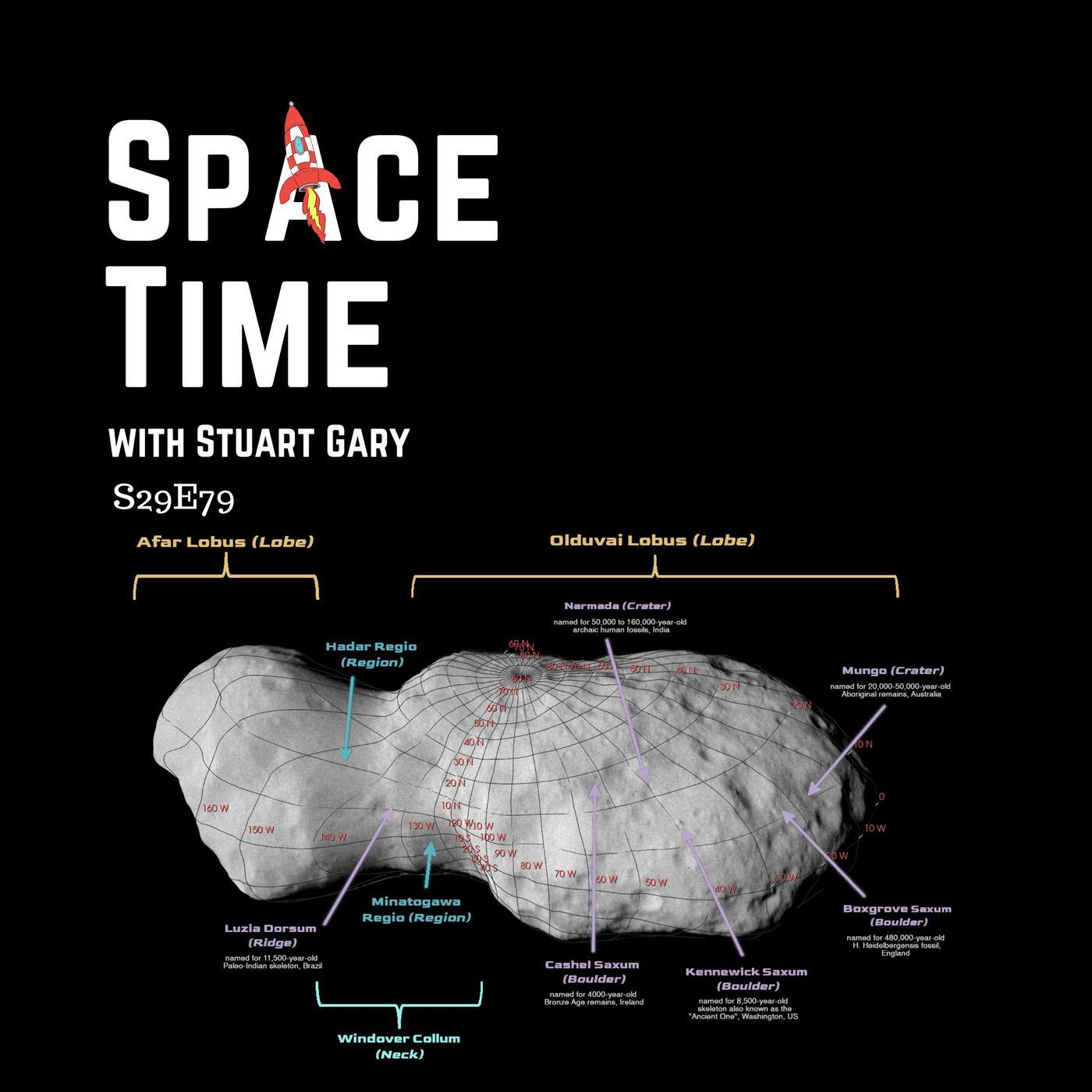
or so kilometers wide.
35
00:02:13,940 --> 00:02:15,529
But the story doesn't end there.
36
00:02:16,320 --> 00:02:18,910
The heaviest elements in the
universe are generated when two
37
00:02:18,910 --> 00:02:22,190
Neutron Stars in a binary system
merge in what's called a
38
00:02:22,190 --> 00:02:25,750
killernova explosion. This
violent event triggers a rapid
39
00:02:25,750 --> 00:02:28,710
neutron capture process which
creates elements like gold,
40
00:02:28,789 --> 00:02:31,699
platinum, silver, uranium,
thorium, and iodine.
41
00:02:32,070 --> 00:02:35,389
But it doesn't have to be two
Neutron Stars. In some binary
42
00:02:35,389 --> 00:02:38,550
systems, Neutron Stars pull
material off conventional stars,
43
00:02:38,789 --> 00:02:41,550
creating extreme temperatures
and pressures which trigger
44
00:02:41,550 --> 00:02:43,070
powerful bursts of X-rays.
45
00:02:44,039 --> 00:02:46,830
Recreating these sorts of
processes in the lab would help
46
00:02:46,830 --> 00:02:49,880
explain many unanswered
questions about the universe and
47
00:02:49,880 --> 00:02:53,839
how it works. The study's lead
author, Jaspreet Raduar from
48
00:02:53,839 --> 00:02:57,229
Mississippi State University,
says by identifying how stellar
49
00:02:57,229 --> 00:02:59,960
explosions build heavier
elements, scientists can gain a
50
00:02:59,960 --> 00:03:02,960
clearer picture of how the
elements that form planets and
51
00:03:02,960 --> 00:03:05,440
support life are distributed
through the cosmos.
52
00:03:06,089 --> 00:03:08,589
Redoar and colleagues wanted to
know whether nature had a
53
00:03:08,589 --> 00:03:11,660
built-in roadblock that stopped
heavier elements from forming
54
00:03:11,660 --> 00:03:14,410
during X-ray bursts on neutron
Star surfaces.
55
00:03:14,820 --> 00:03:17,940
But the authors showed that this
roadblock is much weaker than
56
00:03:17,940 --> 00:03:21,220
expected, meaning the processes
that build heavier elements can
57
00:03:21,220 --> 00:03:24,500
continue. Scientists long
suspected that the processes
58
00:03:24,500 --> 00:03:27,740
forming heavier elements in
these bursts could stall at the
59
00:03:27,740 --> 00:03:31,490
element copper 59, a short-lived
isotope that decays in less than
60
00:03:31,490 --> 00:03:32,080
2 minutes.
61
00:03:32,990 --> 00:03:35,960
Redawais says that brief window
has made it difficult for
62
00:03:35,960 --> 00:03:38,440
researchers to study the
reaction in the laboratory, and
63
00:03:38,440 --> 00:03:41,800
that's posed a major challenge
for direct measurements. In this
64
00:03:41,800 --> 00:03:45,240
new study, Rado and colleagues
produced a beam of copper 59,
65
00:03:45,320 --> 00:03:47,979
accelerated it, and then
directed it onto a frozen
66
00:03:47,979 --> 00:03:50,389
hydrogen target before it
decayed.
67
00:03:50,800 --> 00:03:53,440
The experiment at Canada's
National Laboratory For Nuclear
68
00:03:53,440 --> 00:03:56,160
And Particle Physics was the
first direct laboratory
69
00:03:56,160 --> 00:03:59,600
measurements for this key
reaction, and it helped solidify
70
00:03:59,600 --> 00:04:03,169
our understanding of how the
universe works. This is
71
00:04:03,169 --> 00:04:07,529
SpaceTime. Still to come, the
Aleutian seduction zone found to
72
00:04:07,529 --> 00:04:10,759
be much older than previously
thought, and the wobbling peanut
73
00:04:10,759 --> 00:04:14,970
asteroid Donald Johansson. All
that and more still to come on
74
00:04:14,970 --> 00:04:15,750
SpaceTime.
75
00:04:30,399 --> 00:04:33,010
A new study has found that the
subduction zone between the
76
00:04:33,010 --> 00:04:36,010
Pacific and North American
tectonic plates is far older
77
00:04:36,010 --> 00:04:39,290
than previously thought. The
findings reported in the journal
78
00:04:39,290 --> 00:04:42,369
Nature Communications are based
on rock samples collected from
79
00:04:42,369 --> 00:04:44,709
key parts of the Aleutian Arc
Island chain.
80
00:04:45,760 --> 00:04:48,640
The authors determined the age
of the rocks using two
81
00:04:48,640 --> 00:04:52,070
independent dating methods,
uranium-lead dating from zircon
82
00:04:52,070 --> 00:04:56,149
crystals and argon-argon dating
of volcanic rocks and minerals.
83
00:04:56,600 --> 00:05:00,079
They found the oldest traces of
subduction are at least 56
84
00:05:00,079 --> 00:05:03,279
million years old, showing that
the process began much earlier
85
00:05:03,279 --> 00:05:05,399
than many previous models had
suggested.
86
00:05:06,410 --> 00:05:09,720
This earlier age is important
because it places the birth of
87
00:05:09,720 --> 00:05:12,980
the Aleutian Subduction Zone at
the start of a major chain of
88
00:05:12,980 --> 00:05:16,010
tectonic events and a
reorganization of plate motions
89
00:05:16,010 --> 00:05:19,239
right across the Pacific. During
this interval, several
90
00:05:19,239 --> 00:05:22,040
subduction zones and volcanic
arcs around the Pacific were
91
00:05:22,040 --> 00:05:25,420
formed. A spreading center
mid-ocean ridge was subducted,
92
00:05:25,519 --> 00:05:28,700
and a large igneous province
collided with the North American
93
00:05:28,700 --> 00:05:29,470
margin.
94
00:05:29,880 --> 00:05:33,059
The Aleutian arc therefore,
appears to represent one piece
95
00:05:33,059 --> 00:05:38,040
of a much larger tectonic
puzzle. This is SpaceTime. Still
96
00:05:38,040 --> 00:05:42,079
to come, the wobbling peanut
asteroid and planet Earth at its
97
00:05:42,079 --> 00:05:45,079
greatest distance from the Sun,
the constellations Regulus and
98
00:05:45,079 --> 00:05:47,790
Leo, and one of the biggest
known stars in the universe,
99
00:05:47,880 --> 00:05:51,559
Antares, are among the
highlights of July's night skies
100
00:05:51,559 --> 00:05:52,579
on Skywatch.
101
00:05:55,640 --> 00:05:58,529
Ok, let's take a break from our
show for a word from our sponsor
102
00:05:58,529 --> 00:06:01,850
Incogni. If you're anything like
me, you're probably concerned
103
00:06:01,850 --> 00:06:05,570
about your privacy online. And
for good reason. Did you know
104
00:06:05,570 --> 00:06:08,220
there are hundreds of data
brokers out there quietly
105
00:06:08,220 --> 00:06:11,209
collecting, buying and selling
your personal information.
106
00:06:11,410 --> 00:06:14,089
Now I'm talking about your phone
number, your home address, your
107
00:06:14,089 --> 00:06:17,250
browsing habits, even your
location history. And that's
108
00:06:17,250 --> 00:06:20,359
where Incogni comes in. Incogni
is a service that acts on your
109
00:06:20,359 --> 00:06:23,730
behalf, requesting the removal
of your personal data from these
110
00:06:23,730 --> 00:06:27,250
shady data brokers. And they
don't just send a one-off email,
111
00:06:27,369 --> 00:06:30,760
they follow up, track responses
and ensure That your data
112
00:06:30,760 --> 00:06:32,179
actually does get deleted.
113
00:06:32,459 --> 00:06:35,260
Think of it as having a digital
privacy agency constantly
114
00:06:35,260 --> 00:06:38,660
working for you behind the
scenes. And the best part, it's
115
00:06:38,660 --> 00:06:41,980
all incredibly easy. You just
sign up, give them the go ahead,
116
00:06:42,059 --> 00:06:45,299
and Incogni take care of all the
rest. And within just a few
117
00:06:45,299 --> 00:06:47,019
weeks, you'll start seeing the
results.
118
00:06:47,220 --> 00:06:51,019
There'll be fewer spam calls,
less targeted advertising, and a
119
00:06:51,019 --> 00:06:54,220
genuine sense of relief knowing
that your private data is no
120
00:06:54,220 --> 00:06:57,760
longer being traded like a
commodity. Now as a SpaceTime
121
00:06:57,760 --> 00:07:00,500
listener, we're offering you a
special discount deal. Just go
122
00:07:00,500 --> 00:07:05,760
to Incogni.Com/Stewart Garry.
That's Incogni.Com/Stewart
123
00:07:05,760 --> 00:07:08,000
Garry. And if you're not
completely satisfied, no
124
00:07:08,000 --> 00:07:08,559
worries.
125
00:07:08,679 --> 00:07:11,839
Incogni offers a 30 day money
back guarantee, so you can try
126
00:07:11,839 --> 00:07:15,554
it out risk-free. You know,
protecting your private. Really
127
00:07:15,554 --> 00:07:19,234
shouldn't be optional in this
digital age. So let Incogni help
128
00:07:19,234 --> 00:07:22,255
you by keeping your personal
information where it belongs
129
00:07:22,355 --> 00:07:26,195
with you. That's
Incogni.Com/Stewart Garry to
130
00:07:26,195 --> 00:07:30,174
access this exclusive discount
offer and learn more. Stay safe,
131
00:07:30,674 --> 00:07:32,654
stay private with Incogni.
132
00:07:41,679 --> 00:07:44,890
Astronomers studying the inner
main asteroid Donald Johansson
133
00:07:44,890 --> 00:07:48,450
have found that its rotation
wobbles. Rather than rolling
134
00:07:48,450 --> 00:07:51,480
through space in a steady
pattern, Donald Johansson turns
135
00:07:51,480 --> 00:07:55,250
on two separate axes, rotating
end over end once every 10.5
136
00:07:55,250 --> 00:07:59,160
Earth days, or wobbling around
its horizontal axis every 26.5
137
00:07:59,160 --> 00:07:59,929
Earth days.
138
00:08:00,399 --> 00:08:03,029
The study's lead author, Simone
Marchi from the South West
139
00:08:03,029 --> 00:08:06,010
Research Institute says it's
just one of the many surprising
140
00:08:06,010 --> 00:08:09,609
things learned by NASA's Lucy
spacecraft as it flew by Donald
141
00:08:09,609 --> 00:08:14,209
Johansson back on April 20th,
2025. Mary, who's deputy
142
00:08:14,209 --> 00:08:17,529
principal investigator on the
Lucy mission, says Lucy's images
143
00:08:17,529 --> 00:08:20,209
confirm the asteroid's elongated
shape, which was initially
144
00:08:20,209 --> 00:08:22,829
suggested through Earth-based
Telescope observations.
145
00:08:23,299 --> 00:08:26,429
The Lucy flyby revealed that
this small kilometer sized
146
00:08:26,429 --> 00:08:29,850
asteroid really does resemble a
peanut, with a two-lobed
147
00:08:29,850 --> 00:08:33,099
structure connected by a
narrower neck. Lucy also
148
00:08:33,099 --> 00:08:36,900
detected rich iron clay minerals
formed long ago in the presence
149
00:08:36,900 --> 00:08:38,049
of liquid water.
150
00:08:38,500 --> 00:08:40,900
Now these findings could
indicate the asteroid formed
151
00:08:40,900 --> 00:08:43,859
from fragments of a larger
carbon and water rich asteroid,
152
00:08:43,940 --> 00:08:47,250
which would have broken apart
some 155 million years ago,
153
00:08:47,260 --> 00:08:49,280
following a collision with
another object in the main
154
00:08:49,280 --> 00:08:52,039
asteroid belt, the region
between Mars and Jupiter.
155
00:08:52,510 --> 00:08:55,349
Lucy's encounter with Donald
Johansson was considered a test
156
00:08:55,349 --> 00:08:58,150
run for its primary mission to
explore the Trojan asteroids,
157
00:08:58,390 --> 00:09:02,109
two swarms of ancient objects
that lead and trail Jupiter as
158
00:09:02,109 --> 00:09:06,349
the Jovian giant orbits around
the Sun. Astronomers think these
159
00:09:06,349 --> 00:09:09,869
two populations of space rocks
have been preserved since they
160
00:09:09,869 --> 00:09:12,090
formed in the early history of
our solar system.
161
00:09:12,770 --> 00:09:15,289
Marchi says once we start
learning more about the Trojans,
162
00:09:15,450 --> 00:09:17,809
a completely different
population of space rocks with
163
00:09:17,809 --> 00:09:20,530
very different histories,
science's understanding of our
164
00:09:20,530 --> 00:09:23,989
solar system's formation is
likely to be changed forever.
165
00:09:24,950 --> 00:09:27,390
By the way, the asteroid Donald
Johansson, well, it's named
166
00:09:27,390 --> 00:09:30,380
after the paleontologist Donald
Johansson, who discovered the
167
00:09:30,380 --> 00:09:33,869
famous Lucy fossil, an early
Australopithecus hominid found
168
00:09:33,869 --> 00:09:38,549
in Ethiopia back in 1974. Lucy
was one of the oldest human
169
00:09:38,549 --> 00:09:42,610
ancestors ever found and was the
inspiration for the Lucy mission
170
00:09:42,610 --> 00:09:44,869
's name. This is SpaceTime.
171
00:10:00,270 --> 00:10:03,729
And time now to turn our eyes to
the skies and check out the
172
00:10:03,729 --> 00:10:09,090
celestial sphere for July on Sky
watch. July is the 7th month of
173
00:10:09,090 --> 00:10:12,809
the year in both the Julian and
Gregorian calendars, and he's
174
00:10:12,809 --> 00:10:15,809
named after the Roman Emperor
Julius Caesar, who was born
175
00:10:15,809 --> 00:10:19,239
during the month. Before being
called July, the month was
176
00:10:19,239 --> 00:10:22,150
called Quintillus, which is
Latin for 5th.
177
00:10:22,609 --> 00:10:25,450
The addition of the months
January and February brought an
178
00:10:25,450 --> 00:10:29,330
end to that. On average, July is
the coldest month in the year in
179
00:10:29,330 --> 00:10:32,690
the southern hemisphere, which
is experiencing winter and also
180
00:10:32,690 --> 00:10:36,320
marks the time when Earth is at
a phion, its furthest orbital
181
00:10:36,320 --> 00:10:37,770
position from the Sun.
182
00:10:38,270 --> 00:10:41,530
Of course temperatures or more
accurately seasons on Earth,
183
00:10:41,750 --> 00:10:44,969
aren't dictated by the distance
from the Sun, but rather the
184
00:10:44,969 --> 00:10:48,349
length of the day, and hence the
amount of sunlight a given part
185
00:10:48,349 --> 00:10:51,190
of the Earth receives, which is
governed by the tilt of Earth's
186
00:10:51,190 --> 00:10:55,510
axis. Consequently, that's why
July is on average the warmest
187
00:10:55,510 --> 00:10:57,630
month in the northern
hemisphere, which is currently
188
00:10:57,630 --> 00:10:58,830
experiencing summer.
189
00:10:59,690 --> 00:11:02,919
Aelion will happen at 3:30 in
the morning of July 7th,
190
00:11:03,190 --> 00:11:05,890
Australian Eastern Standard
Time, that's 1:30 in the
191
00:11:05,890 --> 00:11:09,609
afternoon of July 6th, US
Eastern Daylight Time, and 17:30
192
00:11:09,609 --> 00:11:12,710
in the afternoon, Greenwich Mean
Time. During this year's
193
00:11:12,710 --> 00:11:18,809
Ophelian, Earth will be
152,87,775 kilometers away from
194
00:11:18,809 --> 00:11:19,469
the Sun.
195
00:11:20,309 --> 00:11:23,150
That's about 5 million
kilometers further away than
196
00:11:23,150 --> 00:11:25,489
during Perihelium back in
January.
197
00:11:26,650 --> 00:11:31,210
Over cosmic time, these dates
change. That's due to variations
198
00:11:31,210 --> 00:11:34,570
in Earth's orbits such as
eccentricity, as well as axial
199
00:11:34,570 --> 00:11:38,369
tilt and precession, which all
follow regular cyclic patterns
200
00:11:38,369 --> 00:11:40,119
known as Millenkovicz cycles.
201
00:11:40,549 --> 00:11:44,250
Eccentricity involves changes in
how elliptical Earth's orbit is
202
00:11:44,250 --> 00:11:47,690
around the Sun. None of the
planets actually orbit the Sun
203
00:11:47,690 --> 00:11:50,770
in perfect circles, although
Venus and Neptune are the
204
00:11:50,770 --> 00:11:55,250
closest. Instead, they all have
elongated orbits which vary over
205
00:11:55,250 --> 00:11:55,549
time.
206
00:11:56,239 --> 00:11:58,809
As well as that, Earth spins on
an axis which is currently
207
00:11:58,809 --> 00:12:02,890
tilted at 23.4 degrees compared
to the ecliptic, Earth's orbital
208
00:12:02,890 --> 00:12:07,010
plane around the Sun. But this
angle of tilt also changes over
209
00:12:07,010 --> 00:12:10,440
time, influenced by, among other
things, the distribution of the
210
00:12:10,440 --> 00:12:11,650
Earth's mass.
211
00:12:12,090 --> 00:12:15,849
And just like a spinning top,
the rotational axis of the Earth
212
00:12:15,849 --> 00:12:18,900
also changes its orientation
through a process called
213
00:12:18,900 --> 00:12:22,090
precession, changing its
position in relation to fixed
214
00:12:22,090 --> 00:12:26,280
background stars over a 26,000
year cycle. Now all these
215
00:12:26,280 --> 00:12:29,130
effects impact the amount of
solar radiation reaching the
216
00:12:29,130 --> 00:12:32,400
Earth, what time it reaches the
Earth, and consequently the
217
00:12:32,400 --> 00:12:34,960
planet's seasonal and climatic
patterns.
218
00:12:36,489 --> 00:12:39,729
Right now, the Southern Cross is
at its highest point in the
219
00:12:39,729 --> 00:12:43,010
southern Sky and is pointing
directly towards the southern
220
00:12:43,010 --> 00:12:46,450
celestial pole. The Southern
Cross falls within the
221
00:12:46,450 --> 00:12:50,010
constellation Centaurus the
Centaur, the half human, half
222
00:12:50,010 --> 00:12:53,929
horse of Greek mythology, and
the creature is holding a bow
223
00:12:53,929 --> 00:12:55,280
loaded with an arrow.
224
00:12:55,690 --> 00:12:58,849
The Centaur's front legs are
marked by the two pointer stars,
225
00:12:58,969 --> 00:13:03,739
Alpha and Beta Centaurus. At 4.3
light years, Alpha Centauri is
226
00:13:03,739 --> 00:13:06,429
the second of the two pointer
stars from the Southern Cross
227
00:13:06,429 --> 00:13:09,169
and is also the nearest Star
system to the Sun.
228
00:13:10,200 --> 00:13:14,150
The Centaur's back arches over
the Southern Cross, and just
229
00:13:14,150 --> 00:13:18,750
above this is Omega Centauri, a
spectacular globular cluster
230
00:13:18,750 --> 00:13:21,809
visible with the unaided eye
from dark locations.
231
00:13:22,489 --> 00:13:25,210
Globular clusters are tightly
packed spheres containing
232
00:13:25,210 --> 00:13:29,010
thousands to millions of stars.
They're thought to have all
233
00:13:29,010 --> 00:13:32,250
originally been born at the same
time from the same molecular gas
234
00:13:32,250 --> 00:13:35,530
and dust cloud, or they're the
cause of small galaxies which
235
00:13:35,530 --> 00:13:38,330
have been consumed by bigger
galaxies through galactic
236
00:13:38,330 --> 00:13:43,049
cannibalism. Omega Centauri is
about 16,000 light years away.
237
00:13:44,119 --> 00:13:47,130
A light year is about 10
trillion kilometers. The
238
00:13:47,130 --> 00:13:50,890
distance a photon can travel in
a year at 300,000 kilometers per
239
00:13:50,890 --> 00:13:54,210
second, the speed of light in a
vacuum, and the ultimate speed
240
00:13:54,210 --> 00:13:55,190
limit of the universe.
241
00:13:56,239 --> 00:14:00,440
Omega Centauri is one of the
largest and brightest of the 150
242
00:14:00,440 --> 00:14:03,799
or so globular clusters known to
orbit around Our Milky Way
243
00:14:03,799 --> 00:14:08,760
galaxy. Centaurus was one of the
48 constellations listed by the
244
00:14:08,760 --> 00:14:11,919
2nd century astronomer
Ptolemais, and it remains one of
245
00:14:11,919 --> 00:14:14,380
the 88 modern day
constellations.
246
00:14:15,330 --> 00:14:19,130
Turning to the right or west and
you'll see the constellation Leo
247
00:14:19,130 --> 00:14:23,690
The Lion, just above the western
horizon. Its brightest Star is
248
00:14:23,690 --> 00:14:27,609
Regulus or the Little King,
located about 79 light years
249
00:14:27,609 --> 00:14:27,869
away.
250
00:14:28,590 --> 00:14:32,200
Regulus, designated Alpha
Leonis, is actually a 5 Star
251
00:14:32,200 --> 00:14:36,469
system, organized into two
pairs. Regulus A is a
252
00:14:36,469 --> 00:14:40,669
spectroscopic binary, comprising
a spectral type B blue-white
253
00:14:40,669 --> 00:14:44,750
main sequence Star, some 4 times
the mass and 288 times the
254
00:14:44,750 --> 00:14:48,825
luminosity of the Sun. And a
faint companion Star thought to
255
00:14:48,825 --> 00:14:52,695
be a white dwarf, the stellar
corpse of a Sun-like Star.
256
00:14:53,215 --> 00:14:56,385
Spectroscopic binaries are stars
that can't be resolved by
257
00:14:56,385 --> 00:14:59,905
optical telescopes into two
separate objects and can only be
258
00:14:59,905 --> 00:15:03,104
separated by observing their
individual spectroscopic Doppler
259
00:15:03,104 --> 00:15:07,145
shifts as they orbit each other.
Astronomers describe stars in
260
00:15:07,145 --> 00:15:10,625
terms of spectral types, a
classification system based on
261
00:15:10,625 --> 00:15:12,265
temperature and characteristics.
262
00:15:12,750 --> 00:15:16,359
The hottest, most massive, and
most luminous stars are known as
263
00:15:16,359 --> 00:15:20,000
spectral type O blue stars.
They're followed by spectral
264
00:15:20,000 --> 00:15:23,909
type B blue-white stars, then
spectral type A white stars,
265
00:15:24,239 --> 00:15:28,359
spectral type F whitish yellow
stars, spectral type G yellow
266
00:15:28,359 --> 00:15:30,429
stars. That's where our Sun fits
in.
267
00:15:30,679 --> 00:15:34,559
Spectraltype K orange stars, and
the coolest and least massive
268
00:15:34,559 --> 00:15:39,070
known stars are spectral type M
red dwarf stars. Each spectral
269
00:15:39,070 --> 00:15:42,469
classification is also
subdivided using a numeric digit
270
00:15:42,469 --> 00:15:45,950
to represent temperature, with 0
being the hottest and 9 the
271
00:15:45,950 --> 00:15:50,469
coolest, and a Roman numeral to
represent luminosity. So put all
272
00:15:50,469 --> 00:15:55,849
that together and our Sun is a
spectratype G2V or G25 yellow
273
00:15:55,849 --> 00:15:56,729
dwarf Star.
274
00:15:57,380 --> 00:16:00,580
Also included in the stellar
classification system are
275
00:16:00,580 --> 00:16:04,500
spectral types LT and Y, which
were assigned to failed stars
276
00:16:04,500 --> 00:16:07,940
known as brown dwarfs, some of
which were actually born as
277
00:16:07,940 --> 00:16:11,700
spectral type M red dwarf stars
but became brown dwarfs after
278
00:16:11,700 --> 00:16:12,940
losing some of their mass.
279
00:16:13,580 --> 00:16:17,159
Brown dwarfs fit into a category
between the largest planets,
280
00:16:17,179 --> 00:16:20,299
which can be about 13 times the
mass of Jupiter, and the
281
00:16:20,299 --> 00:16:24,659
smallest spectroty M red dwarf
stars, which can be 75 to 80
282
00:16:24,659 --> 00:16:29,780
times the mass of Jupiter or
0.08 solar masses. Located
283
00:16:29,780 --> 00:16:33,940
further away are Regulus B, C,
and D, which are dim main
284
00:16:33,940 --> 00:16:35,250
sequence stars.
285
00:16:35,500 --> 00:16:38,380
At the opposite end of the
constellation from Regulus is
286
00:16:38,380 --> 00:16:43,039
the Star Beta Leonis or
Denibola, the horse's tail. It's
287
00:16:43,039 --> 00:16:46,799
also a luminous blue-white Star,
about half as bright as Regulus,
288
00:16:46,809 --> 00:16:50,419
and the third brightest Star in
the constellation Leo. Beta
289
00:16:50,419 --> 00:16:54,849
Leonis has about 1.8 times the
Sun's mass and about 15 times
290
00:16:54,849 --> 00:16:56,280
the Sun's luminosity.
291
00:16:56,729 --> 00:17:00,130
It's suspected of being a dwarf
Cepheid or Delta Scuti type
292
00:17:00,130 --> 00:17:03,609
variable Star, meaning its
luminosity varies slightly over
293
00:17:03,609 --> 00:17:07,189
a period of several hours due to
pulsations on its surface.
294
00:17:07,828 --> 00:17:11,869
Algeba or Gamma Leonis is a
binary system with a visible
295
00:17:11,869 --> 00:17:16,109
third component. The two primary
stars are located about 126
296
00:17:16,109 --> 00:17:19,188
light years away and can be
resolved in small backyard
297
00:17:19,188 --> 00:17:20,149
telescopes.
298
00:17:20,668 --> 00:17:25,098
Both are yellow giants orbiting
each other every 600 Earth days.
299
00:17:25,588 --> 00:17:29,109
The unrelated tertiary Star
named 40 Leonis is a yellow
300
00:17:29,109 --> 00:17:32,329
tinge Star that can be seen
through binoculars. The Star's
301
00:17:32,329 --> 00:17:36,810
traditional name Algeba means
forehead. Delta Leonis or Zosma
302
00:17:36,810 --> 00:17:39,920
is a blue-white Star 58 light
years from Earth.
303
00:17:40,400 --> 00:17:44,560
Epsilon Leonis is a yellow giant
some 251 light years from Earth,
304
00:17:44,930 --> 00:17:48,810
and Zeta Leonis is an optical
triple Star. The brightest
305
00:17:48,810 --> 00:17:52,319
component is a white giant about
260 light years from Earth,
306
00:17:52,530 --> 00:17:56,069
while the second brightest Star,
39 Leonis, is widely spaced and
307
00:17:56,069 --> 00:17:59,709
located to the south of the
primary. The third and faintest
308
00:17:59,709 --> 00:18:02,650
Star in the system, 35 Leonis,
is to the north.
309
00:18:03,479 --> 00:18:07,589
Loto Leonis is a binary Star
system visible in medium sized
310
00:18:07,589 --> 00:18:12,189
backyard telescopes. Located
some 79 light years away, Loto
311
00:18:12,189 --> 00:18:15,750
Leonis appears to be a yellow
tin Star with two components
312
00:18:15,750 --> 00:18:18,780
orbiting each other every 183
Earth years.
313
00:18:19,270 --> 00:18:23,189
Finally, in Leo, let's look at
Tau Leonis, visible as a double
314
00:18:23,189 --> 00:18:26,045
Star through binoculars, it
includes It's a yellow giant
315
00:18:26,045 --> 00:18:30,625
located some 621 light years
from Earth, and a binary
316
00:18:30,625 --> 00:18:34,984
secondary Star 54 Leonis, which
is actually a pair of blue-white
317
00:18:34,984 --> 00:18:39,094
stars, they're visible in small
telescopes and located some 289
318
00:18:39,094 --> 00:18:40,045
light years away.
319
00:18:41,140 --> 00:18:44,339
The constellation Leo also
contains many galaxies,
320
00:18:44,430 --> 00:18:48,109
including the spiral galaxy
Messier 66, as well as Messier
321
00:18:48,109 --> 00:18:54,430
65 and NGC 3628, which are known
as the Leo triplet. Located some
322
00:18:54,430 --> 00:18:58,300
37 million light years away, the
Leo triplet is a somewhat
323
00:18:58,300 --> 00:19:01,069
distorted shape due to
gravitational interactions
324
00:19:01,069 --> 00:19:04,229
between Messier 66 and the other
two galaxies, which are
325
00:19:04,229 --> 00:19:07,069
cannibalizing stars from Messier
66.
326
00:19:07,569 --> 00:19:11,209
Eventually the outermost stars
may well form a dwarf galaxy
327
00:19:11,209 --> 00:19:17,329
orbiting M66. Both M65 and M66
are visible in large binoculars
328
00:19:17,329 --> 00:19:20,770
or small backyard telescopes,
but their concentrated nuclei
329
00:19:20,770 --> 00:19:24,969
and elongation are only visible
in larger instruments. Other
330
00:19:24,969 --> 00:19:28,650
bright, well-known deep Sky
galaxies in Leo include Messier
331
00:19:28,650 --> 00:19:33,290
95, Messier 96, and Messier 105.
332
00:19:33,660 --> 00:19:38,619
Messier 95 and Messier 96 are
both spiral galaxies, each about
333
00:19:38,619 --> 00:19:42,540
20 million light years from
Earth. Both look like fuzzy
334
00:19:42,540 --> 00:19:45,979
objects in small telescopes, but
display their spectacular
335
00:19:45,979 --> 00:19:49,780
structures in larger
instruments. M95 is a barred
336
00:19:49,780 --> 00:19:54,660
spiral. Another barred spiral,
NGC 2903, is thought to be
337
00:19:54,660 --> 00:19:58,150
similar in size and structure to
our own Milky Way Galaxy.
338
00:19:58,520 --> 00:20:03,599
It was discovered by William
Herschel in 1784. Close to the
339
00:20:03,599 --> 00:20:09,160
M95M96 pair is the elliptical
galaxy M105, which is also about
340
00:20:09,160 --> 00:20:13,119
20 million light years away. The
constellation also contains the
341
00:20:13,119 --> 00:20:17,479
Leo ring, a cloud of hydrogen
and helium gas orbiting two of
342
00:20:17,479 --> 00:20:20,699
the galaxies in the
constellation. A gravitationally
343
00:20:20,699 --> 00:20:24,079
lensed object known as the
cosmic Horseshoe is also found
344
00:20:24,079 --> 00:20:24,859
in Leo.
345
00:20:25,890 --> 00:20:29,739
Above Leo, you'll find the
constellation Virgo, the Greek
346
00:20:29,739 --> 00:20:32,319
and Roman goddess of wheat and
agriculture.
347
00:20:33,040 --> 00:20:36,699
Virgo's brightest Star, Spica,
is visible above the western
348
00:20:36,699 --> 00:20:37,359
horizon.
349
00:20:38,020 --> 00:20:43,140
It's located some 250 light
years away. Spica is Latin for
350
00:20:43,140 --> 00:20:45,920
ear of wheat, which Virgo is
holding in her hand.
351
00:20:46,640 --> 00:20:50,760
Spica or Alpha Virginus is the
16th brightest Star in the night
352
00:20:50,760 --> 00:20:55,459
Sky and is both a spectroscopic
binary and a rotating epsiloidal
353
00:20:55,459 --> 00:20:59,439
variable, a close binary system
whose stars are not eclipsing
354
00:20:59,439 --> 00:21:02,449
but cause apparent fluctuations
in brightness because of changes
355
00:21:02,449 --> 00:21:06,260
in the amount of light emitting
area visible to the observer.
356
00:21:06,739 --> 00:21:10,739
Spiker's two main stars orbit
each other once every 4 Earth
357
00:21:10,739 --> 00:21:14,640
days and are so close they're
egg-shaped rather than spherical
358
00:21:14,640 --> 00:21:18,459
and can only be separated by
their spectra. The primary is
359
00:21:18,459 --> 00:21:22,819
the blue giant variable Beta
Cepheid Star. It undergoes small
360
00:21:22,819 --> 00:21:25,170
rapid variations in brightness.
361
00:21:25,579 --> 00:21:28,939
These are caused by pulsations
of the Star's surface, thought
362
00:21:28,939 --> 00:21:31,619
to be caused by the unusual
properties of iron at
363
00:21:31,619 --> 00:21:35,900
temperatures of 200,000 degrees
in the stellar interior. It has
364
00:21:35,900 --> 00:21:40,410
about 10 times the Sun's mass
and about 7 times its diameter.
365
00:21:40,819 --> 00:21:44,470
The secondary Star in Spiker is
smaller than the primary, but it
366
00:21:44,470 --> 00:21:47,380
's still some 7 times more
massive than the Sun, and it's
367
00:21:47,380 --> 00:21:49,780
3.6 times the Sun's diameter.
368
00:21:50,760 --> 00:21:53,890
Turning to the north now, and
the constellation Boats, the
369
00:21:53,890 --> 00:21:57,729
herdsman or plowman, there
you'll see the bright orange red
370
00:21:57,729 --> 00:22:02,130
Star Arcturus or Alpha Boats
just above the northern horizon.
371
00:22:02,640 --> 00:22:06,890
It's a red giant located just 36
light years away, a bloated,
372
00:22:06,979 --> 00:22:11,290
aging Star, some 7.1 billion
years old, nearing the end of
373
00:22:11,290 --> 00:22:12,189
its life.
374
00:22:12,719 --> 00:22:15,770
Although not much more massive
than the Sun, it's now expanded
375
00:22:15,770 --> 00:22:19,890
out to some 25 times the Sun's
diameter and will soon puff off
376
00:22:19,890 --> 00:22:23,930
its outer gaseous envelope as a
planetary nebula, revealing its
377
00:22:23,930 --> 00:22:28,050
white hot stellar core, a white
dwarf, which will then slowly
378
00:22:28,050 --> 00:22:30,010
cool over the eons of time.
379
00:22:30,920 --> 00:22:34,199
Another bright reddish looking
Star this time in the east is
380
00:22:34,199 --> 00:22:38,819
the red supergiant Antares,
meaning the rival of Mars,
381
00:22:38,880 --> 00:22:41,719
because of its appearance and
location in the Sky, which
382
00:22:41,719 --> 00:22:45,599
appears to be opposite of Mars
in the Sky. Antares is one of
383
00:22:45,599 --> 00:22:49,599
the biggest known stars in the
universe. It's enormous, 18
384
00:22:49,599 --> 00:22:54,479
times the Sun's mass, 10,000
times its luminosity, and 883
385
00:22:54,479 --> 00:22:56,020
times the Sun's radius.
386
00:22:56,520 --> 00:22:59,400
As we mentioned in last month's
Skywatch, were it placed at the
387
00:22:59,400 --> 00:23:02,520
center of our solar system, its
surface would extend out close
388
00:23:02,520 --> 00:23:07,060
to the orbit of Jupiter. Despite
being some 550 light years away,
389
00:23:07,280 --> 00:23:11,189
Antares is still the 15th
brightest Star in the night Sky.
390
00:23:11,640 --> 00:23:15,680
Unlike the Sun or Arcturus, the
death of Antares will be far
391
00:23:15,680 --> 00:23:20,079
more spectacular. Antares is
destined to explode as a core
392
00:23:20,079 --> 00:23:22,239
collapse or type 2 supernova.
393
00:23:22,680 --> 00:23:26,660
When it does so, sometime in the
next few 100,000 years, it'll
394
00:23:26,660 --> 00:23:29,880
appear as bright in the Earth's
Sky as the full moon and be
395
00:23:29,880 --> 00:23:34,199
quite visible even in daytime.
Antares has a companion Star
396
00:23:34,199 --> 00:23:38,079
Antares B, a spectral type
blue-white main sequence Star
397
00:23:38,079 --> 00:23:41,979
more than 7 times the Sun's mass
and 5 times its diameter.
398
00:23:42,400 --> 00:23:45,800
Antares is the heart of the
Scorpion in the constellation
399
00:23:45,800 --> 00:23:46,619
Scorpius.
400
00:23:47,150 --> 00:23:50,300
Below Scorpius is the
constellation Sagittarius, the
401
00:23:50,300 --> 00:23:53,150
Archer, which points the way to
the center of the Milky Way
402
00:23:53,150 --> 00:23:57,869
Galaxy. Sagittarius is commonly
represented as a winged Centaur.
403
00:23:58,310 --> 00:24:01,270
The center of the Milky Way
Galaxy and its supermassive
404
00:24:01,270 --> 00:24:05,270
black hole, Sagittarius A Star
lie at the westernmost part of
405
00:24:05,270 --> 00:24:10,849
Sagittarius. Sagittarius A Star
is about 27,000 light years away
406
00:24:10,849 --> 00:24:14,709
and has some 4.3 million times
the mass of our Sun.
407
00:24:15,619 --> 00:24:19,859
It was in July back in 2016 that
the solar system's Barry Center
408
00:24:19,859 --> 00:24:24,959
moved outside the Sun, where it
will remain until 2027. A Barry
409
00:24:24,959 --> 00:24:28,020
Center is the gravitational
center of mass of a celestial
410
00:24:28,020 --> 00:24:31,660
system. For example, in our
Earth-Moon system, the Earth and
411
00:24:31,660 --> 00:24:34,420
moon actually orbit each other
around a common center of
412
00:24:34,420 --> 00:24:36,319
gravity, a Barry Center.
413
00:24:36,800 --> 00:24:39,540
Now because the Earth is so much
more massive than the moon, the
414
00:24:39,540 --> 00:24:43,959
Barry Center is always inside
the Earth's radius. If it were
415
00:24:43,959 --> 00:24:46,599
outside the Earth's radius, the
Earth and moon would instead
416
00:24:46,599 --> 00:24:50,560
have been classified as a binary
planetary system like Pluto and
417
00:24:50,560 --> 00:24:51,109
Charon.
418
00:24:51,550 --> 00:24:54,550
The solar system's center of
gravity or Barry Center is
419
00:24:54,550 --> 00:24:58,119
usually located inside the Sun's
radius. After all, the Sun
420
00:24:58,119 --> 00:25:02,319
contains over 99% of all the
solar system's mass. But
421
00:25:02,319 --> 00:25:05,800
actually, the mass of the solar
system is orbiting around the
422
00:25:05,800 --> 00:25:09,520
solar system's Barry Center,
which means the Sun also has a
423
00:25:09,520 --> 00:25:12,400
very slight spiraling
twelve-year orbit around the
424
00:25:12,400 --> 00:25:13,199
Barry Center.
425
00:25:13,719 --> 00:25:16,880
And every now and then when the
planet's orbital positions are
426
00:25:16,880 --> 00:25:19,959
just right, especially when
Jupiter and Saturn are nearest
427
00:25:19,959 --> 00:25:23,199
to each other, their combined
gravitational interactions move
428
00:25:23,199 --> 00:25:27,260
the solar system's Barry Cent
ever so slightly outside the Sun
429
00:25:27,260 --> 00:25:27,979
's radius.
430
00:25:28,579 --> 00:25:31,619
And because Jupiter and Saturn
reach this alignment every 11
431
00:25:31,619 --> 00:25:34,619
years, some scientists have
speculated whether this could
432
00:25:34,619 --> 00:25:39,099
trigger the Sun's 11-year solar
cycle. And before you ask, the
433
00:25:39,099 --> 00:25:42,689
Barry Center isn't named after
some guy in a beige safari suit
434
00:25:42,689 --> 00:25:46,459
called Barry, but rather it's
the ancient Greek word for heavy
435
00:25:46,459 --> 00:25:47,819
or center of mass.
436
00:25:48,750 --> 00:25:52,930
We also have 2 meteor showers,
both of which peak in late July.
437
00:25:53,890 --> 00:25:56,650
There's the southern delta
aquarids which are visible from
438
00:25:56,650 --> 00:26:00,410
mid-July to mid-August each
year, with peak activity on July
439
00:26:00,410 --> 00:26:04,569
28th and 29th. The shower
originated either from the
440
00:26:04,569 --> 00:26:07,770
break-up of what are now the
Marsden and Crack Sun grazing
441
00:26:07,770 --> 00:26:11,589
comets, or from the parent comet
P96 Malkoltz.
442
00:26:12,180 --> 00:26:15,229
The Delta Acharids get their
name because they're radiant pi
443
00:26:15,229 --> 00:26:18,060
to lie in the constellation
Aquarius, near one of the
444
00:26:18,060 --> 00:26:21,579
constellation's brightest stars,
Delta Aquarie. There are two
445
00:26:21,579 --> 00:26:25,180
branches to the Delta Acrids
meteor shower, the southern and
446
00:26:25,180 --> 00:26:25,770
northern.
447
00:26:26,180 --> 00:26:29,290
The southern Delta Acrids are
considered a strong shower, with
448
00:26:29,290 --> 00:26:32,819
an average of between 15 and 20
meteors an hour between midnight
449
00:26:32,819 --> 00:26:35,939
and dawn. Listeners in the
southern hemisphere usually get
450
00:26:35,939 --> 00:26:38,459
the better show because the
radiant is higher in the
451
00:26:38,459 --> 00:26:39,540
southern Sky.
452
00:26:40,020 --> 00:26:42,500
Since the radiant is above the
southern horizon for northern
453
00:26:42,500 --> 00:26:45,900
hemisphere listeners, meteors
will be seen to fan out in all
454
00:26:45,900 --> 00:26:48,910
directions, east, north and
west, with few meteors heading
455
00:26:48,910 --> 00:26:52,500
southwards unless they're really
short and near the radiant. The
456
00:26:52,500 --> 00:26:55,810
northern delta curds are the
weakest shower, peaking later in
457
00:26:55,810 --> 00:26:59,369
mid-August, with an average peak
rate of about 10 meteors per
458
00:26:59,369 --> 00:26:59,880
hour.
459
00:27:00,900 --> 00:27:04,729
Meanwhile, the nearby slow and
bright Alpha Cap Recordeds
460
00:27:04,729 --> 00:27:09,339
meteor shower will take place
from as early as July 15th and
461
00:27:09,339 --> 00:27:12,979
continue until around August
10th. The meteor shower has
462
00:27:12,979 --> 00:27:16,780
infrequent but relatively bright
meteors and even some fireballs.
463
00:27:17,180 --> 00:27:20,459
It's generated as the Earth
passes through a debris trail
464
00:27:20,459 --> 00:27:24,619
left by the comet 169P NET,
which was originally identified
465
00:27:24,619 --> 00:27:27,880
as the asteroid 2002 EX12.
466
00:27:28,319 --> 00:27:31,719
However, it was shown to be
weakly active during perihelion
467
00:27:31,719 --> 00:27:35,319
and was then reclassified as a
comet. The meteor shower was
468
00:27:35,319 --> 00:27:39,719
created about 3500 to 5000 years
ago when about half of the
469
00:27:39,719 --> 00:27:42,670
parent body disintegrated and
fell into dust.
470
00:27:43,109 --> 00:27:46,040
The cloud eventually evolved
into Earth's orbit, causing a
471
00:27:46,040 --> 00:27:49,359
shower with peak rates of about
5 meteors an hour and some
472
00:27:49,359 --> 00:27:52,800
outbursts of bright flaring
comets radiating out from the
473
00:27:52,800 --> 00:27:56,650
constellation Capricorn towards
the south. The bulk of the comet
474
00:27:56,650 --> 00:27:59,829
's debris won't be in Earth's
path until the 24th century, by
475
00:27:59,829 --> 00:28:02,750
which time the Alpha Capricorns
are expected to become a major
476
00:28:02,750 --> 00:28:06,890
annual meteor storm, stronger
than any current annual shower.
477
00:28:07,880 --> 00:28:10,290
And joining us now for the rest
of our tour of the July night
478
00:28:10,290 --> 00:28:13,770
skies is senior science writer
and Sky And Telescope magazine
479
00:28:13,770 --> 00:28:15,849
contributor Jonathan Nally.
G'Day, Stuart.
480
00:28:15,930 --> 00:28:17,969
Yeah, well, it's July, and
amateur astronomers actually
481
00:28:17,969 --> 00:28:20,250
love this time of year for
stargazing because those who
482
00:28:20,250 --> 00:28:22,770
live in the northern half of the
planet have the advantage of it
483
00:28:22,770 --> 00:28:25,209
being summer at the moment, so
the weather's usually pretty
484
00:28:25,209 --> 00:28:26,969
nice and warm and quite
pleasant.
485
00:28:27,089 --> 00:28:28,969
Although it does mean, of
course, the summertime means you
486
00:28:28,969 --> 00:28:31,890
have fewer hours of darkness
because the daytime's longer,
487
00:28:31,930 --> 00:28:34,209
but you know, your nighttime
weather is generally a bit nicer
488
00:28:34,209 --> 00:28:36,530
for going out and stargazing. So
that's pretty good. And those of
489
00:28:36,530 --> 00:28:37,806
us Live in the southern
hemisphere.
490
00:28:37,845 --> 00:28:40,215
We love to lie as well, even
though it's colder, but the
491
00:28:40,215 --> 00:28:43,015
nights are longer, and
particularly down here we have
492
00:28:43,015 --> 00:28:46,296
an advantage of the fact that
the center of Our Milky Way, our
493
00:28:46,296 --> 00:28:48,776
galaxy, the Milky Way is our
galaxy from the inside. And when
494
00:28:48,776 --> 00:28:50,656
we look in a particular
direction, we're looking into
495
00:28:50,656 --> 00:28:53,570
the center, the core of Our
Milky Way, and that means there
496
00:28:53,570 --> 00:28:54,696
's lots of things to see there.
497
00:28:54,855 --> 00:28:57,855
And that region is the region in
and around Sagittarius, the
498
00:28:57,855 --> 00:29:00,255
constellation of Sagittarius,
and also the neighboring
499
00:29:00,255 --> 00:29:02,735
constellation Scorpius. Scorpius
is not directly in line with the
500
00:29:02,735 --> 00:29:04,776
center of the galaxy, but there
's still a lot of great stuff to
501
00:29:04,776 --> 00:29:05,696
see there. This area.
502
00:29:05,781 --> 00:29:08,962
In the skies full of amazing
astronomical objects, all the
503
00:29:08,962 --> 00:29:11,102
usual things that amateur
astronomers like to see are Star
504
00:29:11,102 --> 00:29:14,182
clusters of both kinds. You've
got globular Star clusters and
505
00:29:14,182 --> 00:29:17,342
open Star clusters, and there
are Nebulae, both bright ones
506
00:29:17,342 --> 00:29:19,781
and dark ones. There are lots
and lots of interesting Star
507
00:29:19,781 --> 00:29:20,261
patterns.
508
00:29:20,381 --> 00:29:22,421
Nebulae, for instance,
Sagittarius has the famous
509
00:29:22,421 --> 00:29:25,222
Lagoon Nebula, which is really,
really pretty, and there's the
510
00:29:25,222 --> 00:29:27,901
equally famous Crifford Nebula.
People might have seen pictures
511
00:29:27,901 --> 00:29:30,371
of the Trifford Nebula. It's a
reasonably hard one to spot. The
512
00:29:30,371 --> 00:29:33,442
really hard one to spot in the
night Sky is in Orion, which
513
00:29:33,442 --> 00:29:34,661
can't be seen at the moment, and
it's called.
514
00:29:34,787 --> 00:29:37,067
Horsehead Nebula, and when you
look at pictures of it, you
515
00:29:37,067 --> 00:29:39,267
think it's really fabulous and
looks really big and everything,
516
00:29:39,417 --> 00:29:42,108
but it's actually tiny in the
Sky and it's very, very hard to
517
00:29:42,108 --> 00:29:44,657
spot. But the Triffor Nebula,
Lagoon Nebula up in Sagittarius,
518
00:29:44,667 --> 00:29:46,868
really, really good. Down in the
southern part of the Sky, at
519
00:29:46,868 --> 00:29:48,907
least for us here in the
southern hemisphere, we've got
520
00:29:48,907 --> 00:29:49,578
the Southern Cross.
521
00:29:49,618 --> 00:29:52,708
It's up nice and high, standing
almost upright with a pair of
522
00:29:52,708 --> 00:29:55,108
bright stars nearby. We talk
about these a lot on the
523
00:29:55,108 --> 00:29:56,907
program. They're called the
Pointers because if you draw a
524
00:29:56,907 --> 00:29:59,708
line between the pointers and
keep the line going, it heads
525
00:29:59,708 --> 00:30:01,108
basically straight towards the
Southern Cross.
526
00:30:01,147 --> 00:30:03,547
So it's an easy way to find the
Southern Cross. One of those
527
00:30:03,547 --> 00:30:06,420
points. The stars is the Star
system called Alpha Centauri. It
528
00:30:06,420 --> 00:30:09,583
's the closest system to ours,
which has two bright stars that
529
00:30:09,583 --> 00:30:11,994
are quite like our Sun, and
they're fairly close together,
530
00:30:12,034 --> 00:30:14,973
and there's a third very, very
dim Star that's further away.
531
00:30:15,053 --> 00:30:18,073
That one is actually the closest
Star to our solar system. It's
532
00:30:18,073 --> 00:30:19,874
very hard to see that one unless
you know exactly what you're
533
00:30:19,874 --> 00:30:22,514
looking for and you've got a big
Telescope. So to the unaided
534
00:30:22,514 --> 00:30:25,053
eye, Alpha Centauri, the Alpha
Centauri system looks like just
535
00:30:25,053 --> 00:30:27,953
a single Star, but even a small
Telescope, you can just get a
536
00:30:27,953 --> 00:30:30,713
small refractor, a small
Telescope, a cheap one, that'll
537
00:30:30,713 --> 00:30:31,904
split those two main stars.
538
00:30:31,953 --> 00:30:34,479
You'll see them as separate. So
that's pretty neat. You look up
539
00:30:34,479 --> 00:30:36,400
and you think, oh, that's one
Star. I mean you have to take a
540
00:30:36,400 --> 00:30:38,880
closer look, it's two stars, and
there are plenty of examples of
541
00:30:38,880 --> 00:30:39,949
those up in the night Sky.
542
00:30:40,160 --> 00:30:43,400
So over to the right of the
Southern Cross, also within the
543
00:30:43,400 --> 00:30:46,589
Milky Way is a fantastic area to
see. Right next to the Cross,
544
00:30:46,760 --> 00:30:50,839
for example, there's a large
dark patch in the Milky Way. Now
545
00:30:50,839 --> 00:30:55,380
this is pretty hard to see under
city skies because you've got
546
00:30:55,380 --> 00:30:57,630
not much hope of seeing the
Milky Way at all, I'm afraid,
547
00:30:57,640 --> 00:30:58,359
under city skies.
548
00:30:58,439 --> 00:31:01,239
But if you do get an opportunity
to get out somewhere dark away
549
00:31:01,239 --> 00:31:04,086
from light. And you can, if you
let your eyes get dark adapted
550
00:31:04,086 --> 00:31:06,836
and you can see the Milky Way,
we'll have a look just to the,
551
00:31:06,885 --> 00:31:09,666
the side of the Southern Cross,
and you'll see this dark patch,
552
00:31:09,765 --> 00:31:12,365
and it's called a coal sack for
obvious reasons, because it's
553
00:31:12,365 --> 00:31:15,286
black, and it's just a big cloud
of interstellar gas and dust
554
00:31:15,286 --> 00:31:17,046
that is out there in our galaxy.
555
00:31:17,166 --> 00:31:20,206
It's interesting, you go back
to, you know, not too long ago
556
00:31:20,206 --> 00:31:23,765
really in, in terms of history,
you know, 150 years or so, or
557
00:31:23,765 --> 00:31:26,965
maybe a bit less. People really
didn't know whether that was a
558
00:31:26,965 --> 00:31:29,786
big hole in our galaxy and we
were looking straight through
559
00:31:29,786 --> 00:31:30,686
out to the other side.
560
00:31:31,041 --> 00:31:35,491
Or could it be, yes, a big dark
cloud or something? And yeah, so
561
00:31:35,491 --> 00:31:38,531
it's turned out to be a big dark
cloud because even to the naked
562
00:31:38,531 --> 00:31:41,251
eye you can see a few stars in
there. So when you get
563
00:31:41,251 --> 00:31:43,612
telescopes under it, you can see
there are stars in front of it
564
00:31:43,612 --> 00:31:44,582
and behind it and everything.
565
00:31:44,661 --> 00:31:48,202
So it's this big cloud of dark
gas and dust. Now the northern
566
00:31:48,202 --> 00:31:50,732
half of the Sky for this time of
year, at least for where I'm
567
00:31:50,732 --> 00:31:52,891
where I am when I'm looking to
the north, looks pretty bare,
568
00:31:53,011 --> 00:31:55,011
but there are a couple of bright
stars. We've got one called
569
00:31:55,011 --> 00:31:57,552
Spiker, which is the brightest
Star in the constellation Virgo.
570
00:31:57,692 --> 00:32:00,128
There's another one called
Arccurus, which is the Brightest
571
00:32:00,128 --> 00:32:02,177
Star in the constellation
Boates, and that's not a
572
00:32:02,177 --> 00:32:05,297
constellation most people are
familiar with. It's spelled B 00
573
00:32:05,297 --> 00:32:08,687
T E S and it means the herdsman
or the plowman.
574
00:32:08,848 --> 00:32:11,797
Arcturus is actually the 4th
brightest Star in the night Sky,
575
00:32:11,897 --> 00:32:15,738
and Spiker is the 16th brightest
Star, so they're pretty bright
576
00:32:15,738 --> 00:32:18,057
as stars go and spanning all
across the northern half of the
577
00:32:18,057 --> 00:32:20,978
Sky as seen from down here in
the south, we've got the zodiac
578
00:32:20,978 --> 00:32:24,017
region, the zodiacal region. So
Virgo is one of those zodiacal
579
00:32:24,017 --> 00:32:24,527
constellations.
580
00:32:24,578 --> 00:32:27,758
It's a very large Star pattern,
Virgo, and it seems quite bare
581
00:32:27,758 --> 00:32:30,303
to the naked eye, but Amateur
astronomers, they love it
582
00:32:30,303 --> 00:32:32,504
because once you get a Telescope
in there and start looking
583
00:32:32,504 --> 00:32:34,683
around that region, there are
stacks of stacks of stacks of
584
00:32:34,683 --> 00:32:38,463
galaxies, including that big 1,
M87, that's the one that has the
585
00:32:38,463 --> 00:32:40,504
big black hole in the middle of
it, and they made that famous
586
00:32:40,504 --> 00:32:42,234
picture a few years ago of the
black hole.
587
00:32:42,343 --> 00:32:44,904
The first ever direct
observation of a black hole.
588
00:32:45,423 --> 00:32:47,264
I think it was called the Event
Horizon Telescope or like a
589
00:32:47,264 --> 00:32:49,854
combination of telescopes, yeah,
and they, they made people,
590
00:32:50,604 --> 00:32:53,144
people will say, what happens
you see a black hole if no light
591
00:32:53,144 --> 00:32:55,083
is getting out of it? Well,
really you're seeing what's
592
00:32:55,423 --> 00:32:57,989
around the black hole and there
's a gap in the middle. So that
593
00:32:57,989 --> 00:32:59,790
was, that was the black hole, so
that was pretty amazing.
594
00:32:59,989 --> 00:33:03,300
There's another really fantastic
galaxy in Virgo 2. Now this one
595
00:33:03,300 --> 00:33:05,979
also is really small. You see
pictures of it and you think,
596
00:33:06,040 --> 00:33:08,280
well, it's a galaxy, it's got to
be big, but when you go hunting
597
00:33:08,280 --> 00:33:10,349
for it with a Telescope, it's
really small. It's called the
598
00:33:10,349 --> 00:33:14,709
Sombrero Galaxy because it's
this, almost side-on spiral
599
00:33:14,709 --> 00:33:16,709
galaxy with a dust lane running
through its middle.
600
00:33:17,040 --> 00:33:17,890
Beautiful looking galaxy.
601
00:33:17,989 --> 00:33:20,599
Oh, it's a wonderful galaxy, it
's really superb, and it looks
602
00:33:20,599 --> 00:33:22,930
like a sombrero, it looks like a
hat slightly tilted towards us.
603
00:33:23,189 --> 00:33:27,595
You can see, and, and areas of
stars. It is stunning.
604
00:33:27,715 --> 00:33:30,745
It's a fantastic thing, but as I
say, the pictures taken with big
605
00:33:30,745 --> 00:33:33,536
telescopes look really
impressive, but through a
606
00:33:33,536 --> 00:33:35,995
backyard Telescope, it's
actually quite small, very small
607
00:33:35,995 --> 00:33:39,095
in fact, and you need to take a
good long look to get any detail
608
00:33:39,095 --> 00:33:42,786
at all because these things are
small and b they're dim, and our
609
00:33:42,786 --> 00:33:45,875
eyes are not good at nighttime
compared to daytime, which is
610
00:33:45,875 --> 00:33:48,395
why things look so much better
in pictures when you're taking
611
00:33:48,395 --> 00:33:50,556
pictures of the night Sky,
because cameras can do a lot
612
00:33:50,556 --> 00:33:51,715
better than our eyes do.
613
00:33:51,865 --> 00:33:53,676
Anyhow, that's what's happening
with all the constellations and
614
00:33:53,676 --> 00:33:56,469
things. Let's look at the
planets now, so. There's quite a
615
00:33:56,469 --> 00:33:59,119
bit going on above the
northwestern horizon at the
616
00:33:59,119 --> 00:34:02,680
moment as July opens. We've got
Mercury, Jupiter, and Venus in
617
00:34:02,680 --> 00:34:05,640
that order going upwards from
the horizon, and they can all be
618
00:34:05,640 --> 00:34:06,520
seen quite easily.
619
00:34:06,750 --> 00:34:10,439
Mercury is very low, I have to
say, and looking at, it looks a
620
00:34:10,439 --> 00:34:14,320
bit like a small intense dot of
light. Jupiter and Venus above
621
00:34:14,320 --> 00:34:17,750
it are much bigger and much
brighter. Mercury, though, is
622
00:34:17,750 --> 00:34:21,520
soon to disappear. By about the
8th or 9th of the month, it will
623
00:34:21,520 --> 00:34:23,489
have dropped below the horizon.
It's getting lower each night.
624
00:34:24,406 --> 00:34:26,927
It's going to fade into the
sunset below and then be below
625
00:34:26,927 --> 00:34:29,767
the horizon. Jupiter 2 is doing
the same thing. It's getting
626
00:34:29,767 --> 00:34:32,336
lower and lower down on the
horizon as each night goes past
627
00:34:32,336 --> 00:34:34,896
it this month, and by about the
middle of the month, 16th, 17th
628
00:34:34,896 --> 00:34:36,846
or so, it'll be down below the
horizon.
629
00:34:37,096 --> 00:34:40,047
Venus, on the other hand, is
climbing higher and higher each
630
00:34:40,047 --> 00:34:42,806
day during July, so you'll have
plenty of opportunities to see
631
00:34:42,806 --> 00:34:45,247
it. You, you can't miss it. Big
and bright. It's the biggest,
632
00:34:45,326 --> 00:34:47,846
brightest thing around in that
part of the Sky apart from when
633
00:34:47,846 --> 00:34:51,207
the moon is nearby. So, if you
want to have a look at Venus,
634
00:34:51,406 --> 00:34:52,477
get out and out this month and
do it.
635
00:34:52,527 --> 00:34:54,384
It's a Really good time because
it's going to be up nice and
636
00:34:54,384 --> 00:34:56,654
high. You'll be around for, you
know, several hours after
637
00:34:56,654 --> 00:34:59,204
sunset, so that's a pretty good
time to see it. The other two
638
00:34:59,204 --> 00:35:02,214
bright planets that we can
normally see are Saturn and
639
00:35:02,214 --> 00:35:04,414
Mars. These are a bit later in
the night.
640
00:35:04,614 --> 00:35:07,124
Saturn will pop its head over
the eastern horizon just after
641
00:35:07,124 --> 00:35:10,414
midnight at the beginning of the
month, but earlier by the end of
642
00:35:10,414 --> 00:35:14,174
July, about 10:30 p.m., so it's
getting higher and higher, that
643
00:35:14,174 --> 00:35:18,214
means as the days pass and about
4 hours behind Saturn, only
644
00:35:18,214 --> 00:35:22,371
probably 1.5, 2 hours before
dawn, I suppose. Mars, that'll
645
00:35:22,371 --> 00:35:24,581
follow up over the eastern
horizon as well, a bit more to
646
00:35:24,581 --> 00:35:27,210
the northeast. Saturn's pretty
much directly east.
647
00:35:27,581 --> 00:35:30,180
Mars will be a bit more to the
northeast, and it's much smaller
648
00:35:30,180 --> 00:35:33,460
than than Saturn. Saturn looks
big and bright and maybe with a
649
00:35:33,460 --> 00:35:37,020
slightly yellowish or orangeish
sort of tinge or yellowish
650
00:35:37,020 --> 00:35:41,801
tinge. Mars is smaller and has a
definite orangey red sort of
651
00:35:41,940 --> 00:35:44,460
color, and that's one of the
ways you can often tell Mars
652
00:35:44,460 --> 00:35:46,900
because there aren't that many
bright stars up there that are
653
00:35:46,900 --> 00:35:49,500
that kind of color, so Mars is
pretty easy to spot.
654
00:35:49,738 --> 00:35:52,347
And if you are up early to take
a look at Mars at the beginning
655
00:35:52,347 --> 00:35:54,788
of the month, like in the first
few days of the month, you're in
656
00:35:54,788 --> 00:35:57,468
for an added treat, in fact,
because only about 5 degrees
657
00:35:57,468 --> 00:36:00,548
away will be the famous Star
cluster known as the Pleiades or
658
00:36:00,548 --> 00:36:01,268
the Seven Sisters.
659
00:36:01,308 --> 00:36:04,897
This is this fantastic little
clutch of stars. Most people can
660
00:36:04,897 --> 00:36:08,468
see 6, maybe, maybe 7, but
usually 6 of these little stars.
661
00:36:08,548 --> 00:36:10,337
There are hundreds and hundreds
and hundreds of stars in this
662
00:36:10,337 --> 00:36:13,387
cluster, but they're too dim to
the unaided eye. So yeah, Mars
663
00:36:13,387 --> 00:36:14,627
will be about 5 degrees away.
664
00:36:14,738 --> 00:36:18,264
5 degrees is about 10 widths of
the moon. The moon's about Half
665
00:36:18,264 --> 00:36:20,995
a degree wide. So that's pretty
close. You certainly should get
666
00:36:20,995 --> 00:36:23,104
a good view of that. But as I
say, you've got to be up pretty
667
00:36:23,104 --> 00:36:26,554
early, a couple of hours before
dawn, or if you're a night owl,
668
00:36:27,004 --> 00:36:29,254
if you know anyone like that,
Stuart, who stays up all night
669
00:36:29,254 --> 00:36:30,385
and nice.
670
00:36:31,334 --> 00:36:35,034
Yeah. Yeah, yeah, well, we want
to report next month. We want to
671
00:36:35,034 --> 00:36:37,235
report on how Mars looked with
the Pleiades right next.
672
00:36:37,554 --> 00:36:40,675
I'm still getting over last
month's spectacular conjunction
673
00:36:40,675 --> 00:36:41,995
between Jupiter and Venus.
674
00:36:42,084 --> 00:36:43,655
I was going to ask you about
that. How did you go?
675
00:36:43,804 --> 00:36:46,395
Oh, it was beautiful, absolutely
stunning. And speaking of the
676
00:36:46,441 --> 00:36:48,642
Pleiades, which you were a
moment ago, the latest
677
00:36:48,642 --> 00:36:52,162
speculation is that a supernova
in the Pleiades may have been
678
00:36:52,162 --> 00:36:54,802
what caused the birth of our own
Sun, at least that's the latest
679
00:36:54,802 --> 00:36:55,352
speculation.
680
00:36:55,521 --> 00:36:59,122
They were made by compressing
gas and getting a chain reaction
681
00:36:59,122 --> 00:37:01,582
going to big cloud of gas
collapsing.
682
00:37:01,582 --> 00:37:03,201
Very young stars in the
Pleiades.
683
00:37:03,521 --> 00:37:05,882
I wish I was a young Star again,
but now I'm collapsing like our
684
00:37:05,882 --> 00:37:07,261
Sun, and that Stuart.
685
00:37:09,162 --> 00:37:11,882
That's senior science writer and
Sky And Telescope magazine
686
00:37:11,882 --> 00:37:14,761
contributor Jonathan Alley, and
this is Space Time.
687
00:37:30,149 --> 00:37:33,879
And that's the show for now.
SpaceT is available every
688
00:37:33,879 --> 00:37:37,800
Monday, Wednesday and Friday
through Bytes.Com, SoundCloud,
689
00:37:38,030 --> 00:37:41,620
YouTube, your favorite podcast
download provider, and from
690
00:37:41,620 --> 00:37:45,879
SpaceTime with Stuart Garry.Com.
SpaceTime's also broadcast
691
00:37:45,879 --> 00:37:48,979
through the National Science
Foundation on Science Zone Radio
692
00:37:49,080 --> 00:37:52,100
and on both IHeartRadio and
TuneIn Radio.
693
00:37:52,479 --> 00:37:55,610
And you can help to support our
show by visiting the SpaceTime
694
00:37:55,610 --> 00:37:59,290
store for a range of promotional
merchandizing goodies, or by
695
00:37:59,290 --> 00:38:02,770
becoming a SpaceTime patron,
which gives you access to triple
696
00:38:02,770 --> 00:38:05,689
episode commercial free versions
of the show, as well as lots of
697
00:38:05,689 --> 00:38:08,969
bonus audio content which
doesn't go to air, access to our
698
00:38:08,969 --> 00:38:12,840
exclusive Facebook group, and
other rewards. Just go to
699
00:38:12,840 --> 00:38:16,090
SpaceTime with Stuart Garry.Com
for full details.
700
00:38:16,689 --> 00:38:19,320
You've been listening to
SpaceTime with Stuart Garry.
701
00:38:19,810 --> 00:38:22,709
This has been another quality
podcast production from
702
00:38:22,709 --> 00:38:23,709
Bytes.Com.
00:00:00,340 --> 00:00:04,409
This is SpaceTime series 29,
episode 79, for broadcast on the
2
00:00:04,409 --> 00:00:09,979
3rd of July 2026. Coming up on
SpaceTime, how Neutron Stars
3
00:00:09,979 --> 00:00:13,529
make heavy elements, the
Aleutian Subduction Zone looks
4
00:00:13,529 --> 00:00:16,899
like it's older than we thought,
and the wobbling peanut
5
00:00:16,899 --> 00:00:21,180
asteroid. All that and more
coming up on space-time.
6
00:00:22,280 --> 00:00:25,629
Welcome to space time with
Stuart Garry.
7
00:00:41,459 --> 00:00:44,110
Physicists have achieved a
significant breakthrough in
8
00:00:44,110 --> 00:00:47,349
understanding how Neutron Stars
forge heavy elements. The
9
00:00:47,349 --> 00:00:50,389
findings reported in the
Astrophysical Journal show that
10
00:00:50,389 --> 00:00:53,590
a perceived roadblock preventing
the formation of high mass
11
00:00:53,590 --> 00:00:56,290
elements is far weaker than
previously thought.
12
00:00:56,790 --> 00:01:00,389
Stars shine by fusing hydrogen
into helium in their cores
13
00:01:00,389 --> 00:01:03,869
through a process called nuclear
synthesis. When they run out of
14
00:01:03,869 --> 00:01:07,230
core hydrogen, they begin fusing
helium into oxygen and carbon.
15
00:01:07,699 --> 00:01:10,419
Now for low mass stars like our
Sun, that's pretty well where
16
00:01:10,419 --> 00:01:13,819
the process ends, and the
stellar remains then turn into a
17
00:01:13,819 --> 00:01:17,220
stellar corpse called a white
dwarf, surrounded by an ever
18
00:01:17,220 --> 00:01:19,129
expanding planetary nebula.
19
00:01:19,569 --> 00:01:23,260
But for higher mass stars, this
nuclear synthesis can continue
20
00:01:23,260 --> 00:01:26,059
producing increasingly heavier
and heavier elements until
21
00:01:26,059 --> 00:01:29,739
ultimately iron is produced in
the stellar core. Now, no matter
22
00:01:29,739 --> 00:01:33,419
how big a Star is, how much mass
it has, no Star is large enough
23
00:01:33,419 --> 00:01:35,500
to fuse iron into heavier
elements.
24
00:01:35,980 --> 00:01:40,349
And so the process ends, and
gravity takes over, crushing the
25
00:01:40,349 --> 00:01:43,769
entire mass of the Star down
into its core, which then
26
00:01:43,769 --> 00:01:47,269
rebounds, exploding outwards in
what's called a core collapse
27
00:01:47,269 --> 00:01:50,830
supernova. This blast produces
many of the elements heavier
28
00:01:50,830 --> 00:01:54,269
than iron on the periodic table,
and it leaves behind a stellar
29
00:01:54,269 --> 00:01:56,379
core called a neutron Star.
30
00:01:56,900 --> 00:02:00,190
These are the densest objects in
the universe other than black
31
00:02:00,190 --> 00:02:03,870
holes. In fact, just 1 teaspoon
of neutron Star material would
32
00:02:03,870 --> 00:02:08,100
weigh billions of tons. So, an
object with more than 8 times
33
00:02:08,100 --> 00:02:11,380
the mass of the Sun can be
crammed down into a ball just 12
34
00:02:11,380 --> 00:02:12,720
or so kilometers wide.
35
00:02:13,940 --> 00:02:15,529
But the story doesn't end there.
36
00:02:16,320 --> 00:02:18,910
The heaviest elements in the
universe are generated when two
37
00:02:18,910 --> 00:02:22,190
Neutron Stars in a binary system
merge in what's called a
38
00:02:22,190 --> 00:02:25,750
killernova explosion. This
violent event triggers a rapid
39
00:02:25,750 --> 00:02:28,710
neutron capture process which
creates elements like gold,
40
00:02:28,789 --> 00:02:31,699
platinum, silver, uranium,
thorium, and iodine.
41
00:02:32,070 --> 00:02:35,389
But it doesn't have to be two
Neutron Stars. In some binary
42
00:02:35,389 --> 00:02:38,550
systems, Neutron Stars pull
material off conventional stars,
43
00:02:38,789 --> 00:02:41,550
creating extreme temperatures
and pressures which trigger
44
00:02:41,550 --> 00:02:43,070
powerful bursts of X-rays.
45
00:02:44,039 --> 00:02:46,830
Recreating these sorts of
processes in the lab would help
46
00:02:46,830 --> 00:02:49,880
explain many unanswered
questions about the universe and
47
00:02:49,880 --> 00:02:53,839
how it works. The study's lead
author, Jaspreet Raduar from
48
00:02:53,839 --> 00:02:57,229
Mississippi State University,
says by identifying how stellar
49
00:02:57,229 --> 00:02:59,960
explosions build heavier
elements, scientists can gain a
50
00:02:59,960 --> 00:03:02,960
clearer picture of how the
elements that form planets and
51
00:03:02,960 --> 00:03:05,440
support life are distributed
through the cosmos.
52
00:03:06,089 --> 00:03:08,589
Redoar and colleagues wanted to
know whether nature had a
53
00:03:08,589 --> 00:03:11,660
built-in roadblock that stopped
heavier elements from forming
54
00:03:11,660 --> 00:03:14,410
during X-ray bursts on neutron
Star surfaces.
55
00:03:14,820 --> 00:03:17,940
But the authors showed that this
roadblock is much weaker than
56
00:03:17,940 --> 00:03:21,220
expected, meaning the processes
that build heavier elements can
57
00:03:21,220 --> 00:03:24,500
continue. Scientists long
suspected that the processes
58
00:03:24,500 --> 00:03:27,740
forming heavier elements in
these bursts could stall at the
59
00:03:27,740 --> 00:03:31,490
element copper 59, a short-lived
isotope that decays in less than
60
00:03:31,490 --> 00:03:32,080
2 minutes.
61
00:03:32,990 --> 00:03:35,960
Redawais says that brief window
has made it difficult for
62
00:03:35,960 --> 00:03:38,440
researchers to study the
reaction in the laboratory, and
63
00:03:38,440 --> 00:03:41,800
that's posed a major challenge
for direct measurements. In this
64
00:03:41,800 --> 00:03:45,240
new study, Rado and colleagues
produced a beam of copper 59,
65
00:03:45,320 --> 00:03:47,979
accelerated it, and then
directed it onto a frozen
66
00:03:47,979 --> 00:03:50,389
hydrogen target before it
decayed.
67
00:03:50,800 --> 00:03:53,440
The experiment at Canada's
National Laboratory For Nuclear
68
00:03:53,440 --> 00:03:56,160
And Particle Physics was the
first direct laboratory
69
00:03:56,160 --> 00:03:59,600
measurements for this key
reaction, and it helped solidify
70
00:03:59,600 --> 00:04:03,169
our understanding of how the
universe works. This is
71
00:04:03,169 --> 00:04:07,529
SpaceTime. Still to come, the
Aleutian seduction zone found to
72
00:04:07,529 --> 00:04:10,759
be much older than previously
thought, and the wobbling peanut
73
00:04:10,759 --> 00:04:14,970
asteroid Donald Johansson. All
that and more still to come on
74
00:04:14,970 --> 00:04:15,750
SpaceTime.
75
00:04:30,399 --> 00:04:33,010
A new study has found that the
subduction zone between the
76
00:04:33,010 --> 00:04:36,010
Pacific and North American
tectonic plates is far older
77
00:04:36,010 --> 00:04:39,290
than previously thought. The
findings reported in the journal
78
00:04:39,290 --> 00:04:42,369
Nature Communications are based
on rock samples collected from
79
00:04:42,369 --> 00:04:44,709
key parts of the Aleutian Arc
Island chain.
80
00:04:45,760 --> 00:04:48,640
The authors determined the age
of the rocks using two
81
00:04:48,640 --> 00:04:52,070
independent dating methods,
uranium-lead dating from zircon
82
00:04:52,070 --> 00:04:56,149
crystals and argon-argon dating
of volcanic rocks and minerals.
83
00:04:56,600 --> 00:05:00,079
They found the oldest traces of
subduction are at least 56
84
00:05:00,079 --> 00:05:03,279
million years old, showing that
the process began much earlier
85
00:05:03,279 --> 00:05:05,399
than many previous models had
suggested.
86
00:05:06,410 --> 00:05:09,720
This earlier age is important
because it places the birth of
87
00:05:09,720 --> 00:05:12,980
the Aleutian Subduction Zone at
the start of a major chain of
88
00:05:12,980 --> 00:05:16,010
tectonic events and a
reorganization of plate motions
89
00:05:16,010 --> 00:05:19,239
right across the Pacific. During
this interval, several
90
00:05:19,239 --> 00:05:22,040
subduction zones and volcanic
arcs around the Pacific were
91
00:05:22,040 --> 00:05:25,420
formed. A spreading center
mid-ocean ridge was subducted,
92
00:05:25,519 --> 00:05:28,700
and a large igneous province
collided with the North American
93
00:05:28,700 --> 00:05:29,470
margin.
94
00:05:29,880 --> 00:05:33,059
The Aleutian arc therefore,
appears to represent one piece
95
00:05:33,059 --> 00:05:38,040
of a much larger tectonic
puzzle. This is SpaceTime. Still
96
00:05:38,040 --> 00:05:42,079
to come, the wobbling peanut
asteroid and planet Earth at its
97
00:05:42,079 --> 00:05:45,079
greatest distance from the Sun,
the constellations Regulus and
98
00:05:45,079 --> 00:05:47,790
Leo, and one of the biggest
known stars in the universe,
99
00:05:47,880 --> 00:05:51,559
Antares, are among the
highlights of July's night skies
100
00:05:51,559 --> 00:05:52,579
on Skywatch.
101
00:05:55,640 --> 00:05:58,529
Ok, let's take a break from our
show for a word from our sponsor
102
00:05:58,529 --> 00:06:01,850
Incogni. If you're anything like
me, you're probably concerned
103
00:06:01,850 --> 00:06:05,570
about your privacy online. And
for good reason. Did you know
104
00:06:05,570 --> 00:06:08,220
there are hundreds of data
brokers out there quietly
105
00:06:08,220 --> 00:06:11,209
collecting, buying and selling
your personal information.
106
00:06:11,410 --> 00:06:14,089
Now I'm talking about your phone
number, your home address, your
107
00:06:14,089 --> 00:06:17,250
browsing habits, even your
location history. And that's
108
00:06:17,250 --> 00:06:20,359
where Incogni comes in. Incogni
is a service that acts on your
109
00:06:20,359 --> 00:06:23,730
behalf, requesting the removal
of your personal data from these
110
00:06:23,730 --> 00:06:27,250
shady data brokers. And they
don't just send a one-off email,
111
00:06:27,369 --> 00:06:30,760
they follow up, track responses
and ensure That your data
112
00:06:30,760 --> 00:06:32,179
actually does get deleted.
113
00:06:32,459 --> 00:06:35,260
Think of it as having a digital
privacy agency constantly
114
00:06:35,260 --> 00:06:38,660
working for you behind the
scenes. And the best part, it's
115
00:06:38,660 --> 00:06:41,980
all incredibly easy. You just
sign up, give them the go ahead,
116
00:06:42,059 --> 00:06:45,299
and Incogni take care of all the
rest. And within just a few
117
00:06:45,299 --> 00:06:47,019
weeks, you'll start seeing the
results.
118
00:06:47,220 --> 00:06:51,019
There'll be fewer spam calls,
less targeted advertising, and a
119
00:06:51,019 --> 00:06:54,220
genuine sense of relief knowing
that your private data is no
120
00:06:54,220 --> 00:06:57,760
longer being traded like a
commodity. Now as a SpaceTime
121
00:06:57,760 --> 00:07:00,500
listener, we're offering you a
special discount deal. Just go
122
00:07:00,500 --> 00:07:05,760
to Incogni.Com/Stewart Garry.
That's Incogni.Com/Stewart
123
00:07:05,760 --> 00:07:08,000
Garry. And if you're not
completely satisfied, no
124
00:07:08,000 --> 00:07:08,559
worries.
125
00:07:08,679 --> 00:07:11,839
Incogni offers a 30 day money
back guarantee, so you can try
126
00:07:11,839 --> 00:07:15,554
it out risk-free. You know,
protecting your private. Really
127
00:07:15,554 --> 00:07:19,234
shouldn't be optional in this
digital age. So let Incogni help
128
00:07:19,234 --> 00:07:22,255
you by keeping your personal
information where it belongs
129
00:07:22,355 --> 00:07:26,195
with you. That's
Incogni.Com/Stewart Garry to
130
00:07:26,195 --> 00:07:30,174
access this exclusive discount
offer and learn more. Stay safe,
131
00:07:30,674 --> 00:07:32,654
stay private with Incogni.
132
00:07:41,679 --> 00:07:44,890
Astronomers studying the inner
main asteroid Donald Johansson
133
00:07:44,890 --> 00:07:48,450
have found that its rotation
wobbles. Rather than rolling
134
00:07:48,450 --> 00:07:51,480
through space in a steady
pattern, Donald Johansson turns
135
00:07:51,480 --> 00:07:55,250
on two separate axes, rotating
end over end once every 10.5
136
00:07:55,250 --> 00:07:59,160
Earth days, or wobbling around
its horizontal axis every 26.5
137
00:07:59,160 --> 00:07:59,929
Earth days.
138
00:08:00,399 --> 00:08:03,029
The study's lead author, Simone
Marchi from the South West
139
00:08:03,029 --> 00:08:06,010
Research Institute says it's
just one of the many surprising
140
00:08:06,010 --> 00:08:09,609
things learned by NASA's Lucy
spacecraft as it flew by Donald
141
00:08:09,609 --> 00:08:14,209
Johansson back on April 20th,
2025. Mary, who's deputy
142
00:08:14,209 --> 00:08:17,529
principal investigator on the
Lucy mission, says Lucy's images
143
00:08:17,529 --> 00:08:20,209
confirm the asteroid's elongated
shape, which was initially
144
00:08:20,209 --> 00:08:22,829
suggested through Earth-based
Telescope observations.
145
00:08:23,299 --> 00:08:26,429
The Lucy flyby revealed that
this small kilometer sized
146
00:08:26,429 --> 00:08:29,850
asteroid really does resemble a
peanut, with a two-lobed
147
00:08:29,850 --> 00:08:33,099
structure connected by a
narrower neck. Lucy also
148
00:08:33,099 --> 00:08:36,900
detected rich iron clay minerals
formed long ago in the presence
149
00:08:36,900 --> 00:08:38,049
of liquid water.
150
00:08:38,500 --> 00:08:40,900
Now these findings could
indicate the asteroid formed
151
00:08:40,900 --> 00:08:43,859
from fragments of a larger
carbon and water rich asteroid,
152
00:08:43,940 --> 00:08:47,250
which would have broken apart
some 155 million years ago,
153
00:08:47,260 --> 00:08:49,280
following a collision with
another object in the main
154
00:08:49,280 --> 00:08:52,039
asteroid belt, the region
between Mars and Jupiter.
155
00:08:52,510 --> 00:08:55,349
Lucy's encounter with Donald
Johansson was considered a test
156
00:08:55,349 --> 00:08:58,150
run for its primary mission to
explore the Trojan asteroids,
157
00:08:58,390 --> 00:09:02,109
two swarms of ancient objects
that lead and trail Jupiter as
158
00:09:02,109 --> 00:09:06,349
the Jovian giant orbits around
the Sun. Astronomers think these
159
00:09:06,349 --> 00:09:09,869
two populations of space rocks
have been preserved since they
160
00:09:09,869 --> 00:09:12,090
formed in the early history of
our solar system.
161
00:09:12,770 --> 00:09:15,289
Marchi says once we start
learning more about the Trojans,
162
00:09:15,450 --> 00:09:17,809
a completely different
population of space rocks with
163
00:09:17,809 --> 00:09:20,530
very different histories,
science's understanding of our
164
00:09:20,530 --> 00:09:23,989
solar system's formation is
likely to be changed forever.
165
00:09:24,950 --> 00:09:27,390
By the way, the asteroid Donald
Johansson, well, it's named
166
00:09:27,390 --> 00:09:30,380
after the paleontologist Donald
Johansson, who discovered the
167
00:09:30,380 --> 00:09:33,869
famous Lucy fossil, an early
Australopithecus hominid found
168
00:09:33,869 --> 00:09:38,549
in Ethiopia back in 1974. Lucy
was one of the oldest human
169
00:09:38,549 --> 00:09:42,610
ancestors ever found and was the
inspiration for the Lucy mission
170
00:09:42,610 --> 00:09:44,869
's name. This is SpaceTime.
171
00:10:00,270 --> 00:10:03,729
And time now to turn our eyes to
the skies and check out the
172
00:10:03,729 --> 00:10:09,090
celestial sphere for July on Sky
watch. July is the 7th month of
173
00:10:09,090 --> 00:10:12,809
the year in both the Julian and
Gregorian calendars, and he's
174
00:10:12,809 --> 00:10:15,809
named after the Roman Emperor
Julius Caesar, who was born
175
00:10:15,809 --> 00:10:19,239
during the month. Before being
called July, the month was
176
00:10:19,239 --> 00:10:22,150
called Quintillus, which is
Latin for 5th.
177
00:10:22,609 --> 00:10:25,450
The addition of the months
January and February brought an
178
00:10:25,450 --> 00:10:29,330
end to that. On average, July is
the coldest month in the year in
179
00:10:29,330 --> 00:10:32,690
the southern hemisphere, which
is experiencing winter and also
180
00:10:32,690 --> 00:10:36,320
marks the time when Earth is at
a phion, its furthest orbital
181
00:10:36,320 --> 00:10:37,770
position from the Sun.
182
00:10:38,270 --> 00:10:41,530
Of course temperatures or more
accurately seasons on Earth,
183
00:10:41,750 --> 00:10:44,969
aren't dictated by the distance
from the Sun, but rather the
184
00:10:44,969 --> 00:10:48,349
length of the day, and hence the
amount of sunlight a given part
185
00:10:48,349 --> 00:10:51,190
of the Earth receives, which is
governed by the tilt of Earth's
186
00:10:51,190 --> 00:10:55,510
axis. Consequently, that's why
July is on average the warmest
187
00:10:55,510 --> 00:10:57,630
month in the northern
hemisphere, which is currently
188
00:10:57,630 --> 00:10:58,830
experiencing summer.
189
00:10:59,690 --> 00:11:02,919
Aelion will happen at 3:30 in
the morning of July 7th,
190
00:11:03,190 --> 00:11:05,890
Australian Eastern Standard
Time, that's 1:30 in the
191
00:11:05,890 --> 00:11:09,609
afternoon of July 6th, US
Eastern Daylight Time, and 17:30
192
00:11:09,609 --> 00:11:12,710
in the afternoon, Greenwich Mean
Time. During this year's
193
00:11:12,710 --> 00:11:18,809
Ophelian, Earth will be
152,87,775 kilometers away from
194
00:11:18,809 --> 00:11:19,469
the Sun.
195
00:11:20,309 --> 00:11:23,150
That's about 5 million
kilometers further away than
196
00:11:23,150 --> 00:11:25,489
during Perihelium back in
January.
197
00:11:26,650 --> 00:11:31,210
Over cosmic time, these dates
change. That's due to variations
198
00:11:31,210 --> 00:11:34,570
in Earth's orbits such as
eccentricity, as well as axial
199
00:11:34,570 --> 00:11:38,369
tilt and precession, which all
follow regular cyclic patterns
200
00:11:38,369 --> 00:11:40,119
known as Millenkovicz cycles.
201
00:11:40,549 --> 00:11:44,250
Eccentricity involves changes in
how elliptical Earth's orbit is
202
00:11:44,250 --> 00:11:47,690
around the Sun. None of the
planets actually orbit the Sun
203
00:11:47,690 --> 00:11:50,770
in perfect circles, although
Venus and Neptune are the
204
00:11:50,770 --> 00:11:55,250
closest. Instead, they all have
elongated orbits which vary over
205
00:11:55,250 --> 00:11:55,549
time.
206
00:11:56,239 --> 00:11:58,809
As well as that, Earth spins on
an axis which is currently
207
00:11:58,809 --> 00:12:02,890
tilted at 23.4 degrees compared
to the ecliptic, Earth's orbital
208
00:12:02,890 --> 00:12:07,010
plane around the Sun. But this
angle of tilt also changes over
209
00:12:07,010 --> 00:12:10,440
time, influenced by, among other
things, the distribution of the
210
00:12:10,440 --> 00:12:11,650
Earth's mass.
211
00:12:12,090 --> 00:12:15,849
And just like a spinning top,
the rotational axis of the Earth
212
00:12:15,849 --> 00:12:18,900
also changes its orientation
through a process called
213
00:12:18,900 --> 00:12:22,090
precession, changing its
position in relation to fixed
214
00:12:22,090 --> 00:12:26,280
background stars over a 26,000
year cycle. Now all these
215
00:12:26,280 --> 00:12:29,130
effects impact the amount of
solar radiation reaching the
216
00:12:29,130 --> 00:12:32,400
Earth, what time it reaches the
Earth, and consequently the
217
00:12:32,400 --> 00:12:34,960
planet's seasonal and climatic
patterns.
218
00:12:36,489 --> 00:12:39,729
Right now, the Southern Cross is
at its highest point in the
219
00:12:39,729 --> 00:12:43,010
southern Sky and is pointing
directly towards the southern
220
00:12:43,010 --> 00:12:46,450
celestial pole. The Southern
Cross falls within the
221
00:12:46,450 --> 00:12:50,010
constellation Centaurus the
Centaur, the half human, half
222
00:12:50,010 --> 00:12:53,929
horse of Greek mythology, and
the creature is holding a bow
223
00:12:53,929 --> 00:12:55,280
loaded with an arrow.
224
00:12:55,690 --> 00:12:58,849
The Centaur's front legs are
marked by the two pointer stars,
225
00:12:58,969 --> 00:13:03,739
Alpha and Beta Centaurus. At 4.3
light years, Alpha Centauri is
226
00:13:03,739 --> 00:13:06,429
the second of the two pointer
stars from the Southern Cross
227
00:13:06,429 --> 00:13:09,169
and is also the nearest Star
system to the Sun.
228
00:13:10,200 --> 00:13:14,150
The Centaur's back arches over
the Southern Cross, and just
229
00:13:14,150 --> 00:13:18,750
above this is Omega Centauri, a
spectacular globular cluster
230
00:13:18,750 --> 00:13:21,809
visible with the unaided eye
from dark locations.
231
00:13:22,489 --> 00:13:25,210
Globular clusters are tightly
packed spheres containing
232
00:13:25,210 --> 00:13:29,010
thousands to millions of stars.
They're thought to have all
233
00:13:29,010 --> 00:13:32,250
originally been born at the same
time from the same molecular gas
234
00:13:32,250 --> 00:13:35,530
and dust cloud, or they're the
cause of small galaxies which
235
00:13:35,530 --> 00:13:38,330
have been consumed by bigger
galaxies through galactic
236
00:13:38,330 --> 00:13:43,049
cannibalism. Omega Centauri is
about 16,000 light years away.
237
00:13:44,119 --> 00:13:47,130
A light year is about 10
trillion kilometers. The
238
00:13:47,130 --> 00:13:50,890
distance a photon can travel in
a year at 300,000 kilometers per
239
00:13:50,890 --> 00:13:54,210
second, the speed of light in a
vacuum, and the ultimate speed
240
00:13:54,210 --> 00:13:55,190
limit of the universe.
241
00:13:56,239 --> 00:14:00,440
Omega Centauri is one of the
largest and brightest of the 150
242
00:14:00,440 --> 00:14:03,799
or so globular clusters known to
orbit around Our Milky Way
243
00:14:03,799 --> 00:14:08,760
galaxy. Centaurus was one of the
48 constellations listed by the
244
00:14:08,760 --> 00:14:11,919
2nd century astronomer
Ptolemais, and it remains one of
245
00:14:11,919 --> 00:14:14,380
the 88 modern day
constellations.
246
00:14:15,330 --> 00:14:19,130
Turning to the right or west and
you'll see the constellation Leo
247
00:14:19,130 --> 00:14:23,690
The Lion, just above the western
horizon. Its brightest Star is
248
00:14:23,690 --> 00:14:27,609
Regulus or the Little King,
located about 79 light years
249
00:14:27,609 --> 00:14:27,869
away.
250
00:14:28,590 --> 00:14:32,200
Regulus, designated Alpha
Leonis, is actually a 5 Star
251
00:14:32,200 --> 00:14:36,469
system, organized into two
pairs. Regulus A is a
252
00:14:36,469 --> 00:14:40,669
spectroscopic binary, comprising
a spectral type B blue-white
253
00:14:40,669 --> 00:14:44,750
main sequence Star, some 4 times
the mass and 288 times the
254
00:14:44,750 --> 00:14:48,825
luminosity of the Sun. And a
faint companion Star thought to
255
00:14:48,825 --> 00:14:52,695
be a white dwarf, the stellar
corpse of a Sun-like Star.
256
00:14:53,215 --> 00:14:56,385
Spectroscopic binaries are stars
that can't be resolved by
257
00:14:56,385 --> 00:14:59,905
optical telescopes into two
separate objects and can only be
258
00:14:59,905 --> 00:15:03,104
separated by observing their
individual spectroscopic Doppler
259
00:15:03,104 --> 00:15:07,145
shifts as they orbit each other.
Astronomers describe stars in
260
00:15:07,145 --> 00:15:10,625
terms of spectral types, a
classification system based on
261
00:15:10,625 --> 00:15:12,265
temperature and characteristics.
262
00:15:12,750 --> 00:15:16,359
The hottest, most massive, and
most luminous stars are known as
263
00:15:16,359 --> 00:15:20,000
spectral type O blue stars.
They're followed by spectral
264
00:15:20,000 --> 00:15:23,909
type B blue-white stars, then
spectral type A white stars,
265
00:15:24,239 --> 00:15:28,359
spectral type F whitish yellow
stars, spectral type G yellow
266
00:15:28,359 --> 00:15:30,429
stars. That's where our Sun fits
in.
267
00:15:30,679 --> 00:15:34,559
Spectraltype K orange stars, and
the coolest and least massive
268
00:15:34,559 --> 00:15:39,070
known stars are spectral type M
red dwarf stars. Each spectral
269
00:15:39,070 --> 00:15:42,469
classification is also
subdivided using a numeric digit
270
00:15:42,469 --> 00:15:45,950
to represent temperature, with 0
being the hottest and 9 the
271
00:15:45,950 --> 00:15:50,469
coolest, and a Roman numeral to
represent luminosity. So put all
272
00:15:50,469 --> 00:15:55,849
that together and our Sun is a
spectratype G2V or G25 yellow
273
00:15:55,849 --> 00:15:56,729
dwarf Star.
274
00:15:57,380 --> 00:16:00,580
Also included in the stellar
classification system are
275
00:16:00,580 --> 00:16:04,500
spectral types LT and Y, which
were assigned to failed stars
276
00:16:04,500 --> 00:16:07,940
known as brown dwarfs, some of
which were actually born as
277
00:16:07,940 --> 00:16:11,700
spectral type M red dwarf stars
but became brown dwarfs after
278
00:16:11,700 --> 00:16:12,940
losing some of their mass.
279
00:16:13,580 --> 00:16:17,159
Brown dwarfs fit into a category
between the largest planets,
280
00:16:17,179 --> 00:16:20,299
which can be about 13 times the
mass of Jupiter, and the
281
00:16:20,299 --> 00:16:24,659
smallest spectroty M red dwarf
stars, which can be 75 to 80
282
00:16:24,659 --> 00:16:29,780
times the mass of Jupiter or
0.08 solar masses. Located
283
00:16:29,780 --> 00:16:33,940
further away are Regulus B, C,
and D, which are dim main
284
00:16:33,940 --> 00:16:35,250
sequence stars.
285
00:16:35,500 --> 00:16:38,380
At the opposite end of the
constellation from Regulus is
286
00:16:38,380 --> 00:16:43,039
the Star Beta Leonis or
Denibola, the horse's tail. It's
287
00:16:43,039 --> 00:16:46,799
also a luminous blue-white Star,
about half as bright as Regulus,
288
00:16:46,809 --> 00:16:50,419
and the third brightest Star in
the constellation Leo. Beta
289
00:16:50,419 --> 00:16:54,849
Leonis has about 1.8 times the
Sun's mass and about 15 times
290
00:16:54,849 --> 00:16:56,280
the Sun's luminosity.
291
00:16:56,729 --> 00:17:00,130
It's suspected of being a dwarf
Cepheid or Delta Scuti type
292
00:17:00,130 --> 00:17:03,609
variable Star, meaning its
luminosity varies slightly over
293
00:17:03,609 --> 00:17:07,189
a period of several hours due to
pulsations on its surface.
294
00:17:07,828 --> 00:17:11,869
Algeba or Gamma Leonis is a
binary system with a visible
295
00:17:11,869 --> 00:17:16,109
third component. The two primary
stars are located about 126
296
00:17:16,109 --> 00:17:19,188
light years away and can be
resolved in small backyard
297
00:17:19,188 --> 00:17:20,149
telescopes.
298
00:17:20,668 --> 00:17:25,098
Both are yellow giants orbiting
each other every 600 Earth days.
299
00:17:25,588 --> 00:17:29,109
The unrelated tertiary Star
named 40 Leonis is a yellow
300
00:17:29,109 --> 00:17:32,329
tinge Star that can be seen
through binoculars. The Star's
301
00:17:32,329 --> 00:17:36,810
traditional name Algeba means
forehead. Delta Leonis or Zosma
302
00:17:36,810 --> 00:17:39,920
is a blue-white Star 58 light
years from Earth.
303
00:17:40,400 --> 00:17:44,560
Epsilon Leonis is a yellow giant
some 251 light years from Earth,
304
00:17:44,930 --> 00:17:48,810
and Zeta Leonis is an optical
triple Star. The brightest
305
00:17:48,810 --> 00:17:52,319
component is a white giant about
260 light years from Earth,
306
00:17:52,530 --> 00:17:56,069
while the second brightest Star,
39 Leonis, is widely spaced and
307
00:17:56,069 --> 00:17:59,709
located to the south of the
primary. The third and faintest
308
00:17:59,709 --> 00:18:02,650
Star in the system, 35 Leonis,
is to the north.
309
00:18:03,479 --> 00:18:07,589
Loto Leonis is a binary Star
system visible in medium sized
310
00:18:07,589 --> 00:18:12,189
backyard telescopes. Located
some 79 light years away, Loto
311
00:18:12,189 --> 00:18:15,750
Leonis appears to be a yellow
tin Star with two components
312
00:18:15,750 --> 00:18:18,780
orbiting each other every 183
Earth years.
313
00:18:19,270 --> 00:18:23,189
Finally, in Leo, let's look at
Tau Leonis, visible as a double
314
00:18:23,189 --> 00:18:26,045
Star through binoculars, it
includes It's a yellow giant
315
00:18:26,045 --> 00:18:30,625
located some 621 light years
from Earth, and a binary
316
00:18:30,625 --> 00:18:34,984
secondary Star 54 Leonis, which
is actually a pair of blue-white
317
00:18:34,984 --> 00:18:39,094
stars, they're visible in small
telescopes and located some 289
318
00:18:39,094 --> 00:18:40,045
light years away.
319
00:18:41,140 --> 00:18:44,339
The constellation Leo also
contains many galaxies,
320
00:18:44,430 --> 00:18:48,109
including the spiral galaxy
Messier 66, as well as Messier
321
00:18:48,109 --> 00:18:54,430
65 and NGC 3628, which are known
as the Leo triplet. Located some
322
00:18:54,430 --> 00:18:58,300
37 million light years away, the
Leo triplet is a somewhat
323
00:18:58,300 --> 00:19:01,069
distorted shape due to
gravitational interactions
324
00:19:01,069 --> 00:19:04,229
between Messier 66 and the other
two galaxies, which are
325
00:19:04,229 --> 00:19:07,069
cannibalizing stars from Messier
66.
326
00:19:07,569 --> 00:19:11,209
Eventually the outermost stars
may well form a dwarf galaxy
327
00:19:11,209 --> 00:19:17,329
orbiting M66. Both M65 and M66
are visible in large binoculars
328
00:19:17,329 --> 00:19:20,770
or small backyard telescopes,
but their concentrated nuclei
329
00:19:20,770 --> 00:19:24,969
and elongation are only visible
in larger instruments. Other
330
00:19:24,969 --> 00:19:28,650
bright, well-known deep Sky
galaxies in Leo include Messier
331
00:19:28,650 --> 00:19:33,290
95, Messier 96, and Messier 105.
332
00:19:33,660 --> 00:19:38,619
Messier 95 and Messier 96 are
both spiral galaxies, each about
333
00:19:38,619 --> 00:19:42,540
20 million light years from
Earth. Both look like fuzzy
334
00:19:42,540 --> 00:19:45,979
objects in small telescopes, but
display their spectacular
335
00:19:45,979 --> 00:19:49,780
structures in larger
instruments. M95 is a barred
336
00:19:49,780 --> 00:19:54,660
spiral. Another barred spiral,
NGC 2903, is thought to be
337
00:19:54,660 --> 00:19:58,150
similar in size and structure to
our own Milky Way Galaxy.
338
00:19:58,520 --> 00:20:03,599
It was discovered by William
Herschel in 1784. Close to the
339
00:20:03,599 --> 00:20:09,160
M95M96 pair is the elliptical
galaxy M105, which is also about
340
00:20:09,160 --> 00:20:13,119
20 million light years away. The
constellation also contains the
341
00:20:13,119 --> 00:20:17,479
Leo ring, a cloud of hydrogen
and helium gas orbiting two of
342
00:20:17,479 --> 00:20:20,699
the galaxies in the
constellation. A gravitationally
343
00:20:20,699 --> 00:20:24,079
lensed object known as the
cosmic Horseshoe is also found
344
00:20:24,079 --> 00:20:24,859
in Leo.
345
00:20:25,890 --> 00:20:29,739
Above Leo, you'll find the
constellation Virgo, the Greek
346
00:20:29,739 --> 00:20:32,319
and Roman goddess of wheat and
agriculture.
347
00:20:33,040 --> 00:20:36,699
Virgo's brightest Star, Spica,
is visible above the western
348
00:20:36,699 --> 00:20:37,359
horizon.
349
00:20:38,020 --> 00:20:43,140
It's located some 250 light
years away. Spica is Latin for
350
00:20:43,140 --> 00:20:45,920
ear of wheat, which Virgo is
holding in her hand.
351
00:20:46,640 --> 00:20:50,760
Spica or Alpha Virginus is the
16th brightest Star in the night
352
00:20:50,760 --> 00:20:55,459
Sky and is both a spectroscopic
binary and a rotating epsiloidal
353
00:20:55,459 --> 00:20:59,439
variable, a close binary system
whose stars are not eclipsing
354
00:20:59,439 --> 00:21:02,449
but cause apparent fluctuations
in brightness because of changes
355
00:21:02,449 --> 00:21:06,260
in the amount of light emitting
area visible to the observer.
356
00:21:06,739 --> 00:21:10,739
Spiker's two main stars orbit
each other once every 4 Earth
357
00:21:10,739 --> 00:21:14,640
days and are so close they're
egg-shaped rather than spherical
358
00:21:14,640 --> 00:21:18,459
and can only be separated by
their spectra. The primary is
359
00:21:18,459 --> 00:21:22,819
the blue giant variable Beta
Cepheid Star. It undergoes small
360
00:21:22,819 --> 00:21:25,170
rapid variations in brightness.
361
00:21:25,579 --> 00:21:28,939
These are caused by pulsations
of the Star's surface, thought
362
00:21:28,939 --> 00:21:31,619
to be caused by the unusual
properties of iron at
363
00:21:31,619 --> 00:21:35,900
temperatures of 200,000 degrees
in the stellar interior. It has
364
00:21:35,900 --> 00:21:40,410
about 10 times the Sun's mass
and about 7 times its diameter.
365
00:21:40,819 --> 00:21:44,470
The secondary Star in Spiker is
smaller than the primary, but it
366
00:21:44,470 --> 00:21:47,380
's still some 7 times more
massive than the Sun, and it's
367
00:21:47,380 --> 00:21:49,780
3.6 times the Sun's diameter.
368
00:21:50,760 --> 00:21:53,890
Turning to the north now, and
the constellation Boats, the
369
00:21:53,890 --> 00:21:57,729
herdsman or plowman, there
you'll see the bright orange red
370
00:21:57,729 --> 00:22:02,130
Star Arcturus or Alpha Boats
just above the northern horizon.
371
00:22:02,640 --> 00:22:06,890
It's a red giant located just 36
light years away, a bloated,
372
00:22:06,979 --> 00:22:11,290
aging Star, some 7.1 billion
years old, nearing the end of
373
00:22:11,290 --> 00:22:12,189
its life.
374
00:22:12,719 --> 00:22:15,770
Although not much more massive
than the Sun, it's now expanded
375
00:22:15,770 --> 00:22:19,890
out to some 25 times the Sun's
diameter and will soon puff off
376
00:22:19,890 --> 00:22:23,930
its outer gaseous envelope as a
planetary nebula, revealing its
377
00:22:23,930 --> 00:22:28,050
white hot stellar core, a white
dwarf, which will then slowly
378
00:22:28,050 --> 00:22:30,010
cool over the eons of time.
379
00:22:30,920 --> 00:22:34,199
Another bright reddish looking
Star this time in the east is
380
00:22:34,199 --> 00:22:38,819
the red supergiant Antares,
meaning the rival of Mars,
381
00:22:38,880 --> 00:22:41,719
because of its appearance and
location in the Sky, which
382
00:22:41,719 --> 00:22:45,599
appears to be opposite of Mars
in the Sky. Antares is one of
383
00:22:45,599 --> 00:22:49,599
the biggest known stars in the
universe. It's enormous, 18
384
00:22:49,599 --> 00:22:54,479
times the Sun's mass, 10,000
times its luminosity, and 883
385
00:22:54,479 --> 00:22:56,020
times the Sun's radius.
386
00:22:56,520 --> 00:22:59,400
As we mentioned in last month's
Skywatch, were it placed at the
387
00:22:59,400 --> 00:23:02,520
center of our solar system, its
surface would extend out close
388
00:23:02,520 --> 00:23:07,060
to the orbit of Jupiter. Despite
being some 550 light years away,
389
00:23:07,280 --> 00:23:11,189
Antares is still the 15th
brightest Star in the night Sky.
390
00:23:11,640 --> 00:23:15,680
Unlike the Sun or Arcturus, the
death of Antares will be far
391
00:23:15,680 --> 00:23:20,079
more spectacular. Antares is
destined to explode as a core
392
00:23:20,079 --> 00:23:22,239
collapse or type 2 supernova.
393
00:23:22,680 --> 00:23:26,660
When it does so, sometime in the
next few 100,000 years, it'll
394
00:23:26,660 --> 00:23:29,880
appear as bright in the Earth's
Sky as the full moon and be
395
00:23:29,880 --> 00:23:34,199
quite visible even in daytime.
Antares has a companion Star
396
00:23:34,199 --> 00:23:38,079
Antares B, a spectral type
blue-white main sequence Star
397
00:23:38,079 --> 00:23:41,979
more than 7 times the Sun's mass
and 5 times its diameter.
398
00:23:42,400 --> 00:23:45,800
Antares is the heart of the
Scorpion in the constellation
399
00:23:45,800 --> 00:23:46,619
Scorpius.
400
00:23:47,150 --> 00:23:50,300
Below Scorpius is the
constellation Sagittarius, the
401
00:23:50,300 --> 00:23:53,150
Archer, which points the way to
the center of the Milky Way
402
00:23:53,150 --> 00:23:57,869
Galaxy. Sagittarius is commonly
represented as a winged Centaur.
403
00:23:58,310 --> 00:24:01,270
The center of the Milky Way
Galaxy and its supermassive
404
00:24:01,270 --> 00:24:05,270
black hole, Sagittarius A Star
lie at the westernmost part of
405
00:24:05,270 --> 00:24:10,849
Sagittarius. Sagittarius A Star
is about 27,000 light years away
406
00:24:10,849 --> 00:24:14,709
and has some 4.3 million times
the mass of our Sun.
407
00:24:15,619 --> 00:24:19,859
It was in July back in 2016 that
the solar system's Barry Center
408
00:24:19,859 --> 00:24:24,959
moved outside the Sun, where it
will remain until 2027. A Barry
409
00:24:24,959 --> 00:24:28,020
Center is the gravitational
center of mass of a celestial
410
00:24:28,020 --> 00:24:31,660
system. For example, in our
Earth-Moon system, the Earth and
411
00:24:31,660 --> 00:24:34,420
moon actually orbit each other
around a common center of
412
00:24:34,420 --> 00:24:36,319
gravity, a Barry Center.
413
00:24:36,800 --> 00:24:39,540
Now because the Earth is so much
more massive than the moon, the
414
00:24:39,540 --> 00:24:43,959
Barry Center is always inside
the Earth's radius. If it were
415
00:24:43,959 --> 00:24:46,599
outside the Earth's radius, the
Earth and moon would instead
416
00:24:46,599 --> 00:24:50,560
have been classified as a binary
planetary system like Pluto and
417
00:24:50,560 --> 00:24:51,109
Charon.
418
00:24:51,550 --> 00:24:54,550
The solar system's center of
gravity or Barry Center is
419
00:24:54,550 --> 00:24:58,119
usually located inside the Sun's
radius. After all, the Sun
420
00:24:58,119 --> 00:25:02,319
contains over 99% of all the
solar system's mass. But
421
00:25:02,319 --> 00:25:05,800
actually, the mass of the solar
system is orbiting around the
422
00:25:05,800 --> 00:25:09,520
solar system's Barry Center,
which means the Sun also has a
423
00:25:09,520 --> 00:25:12,400
very slight spiraling
twelve-year orbit around the
424
00:25:12,400 --> 00:25:13,199
Barry Center.
425
00:25:13,719 --> 00:25:16,880
And every now and then when the
planet's orbital positions are
426
00:25:16,880 --> 00:25:19,959
just right, especially when
Jupiter and Saturn are nearest
427
00:25:19,959 --> 00:25:23,199
to each other, their combined
gravitational interactions move
428
00:25:23,199 --> 00:25:27,260
the solar system's Barry Cent
ever so slightly outside the Sun
429
00:25:27,260 --> 00:25:27,979
's radius.
430
00:25:28,579 --> 00:25:31,619
And because Jupiter and Saturn
reach this alignment every 11
431
00:25:31,619 --> 00:25:34,619
years, some scientists have
speculated whether this could
432
00:25:34,619 --> 00:25:39,099
trigger the Sun's 11-year solar
cycle. And before you ask, the
433
00:25:39,099 --> 00:25:42,689
Barry Center isn't named after
some guy in a beige safari suit
434
00:25:42,689 --> 00:25:46,459
called Barry, but rather it's
the ancient Greek word for heavy
435
00:25:46,459 --> 00:25:47,819
or center of mass.
436
00:25:48,750 --> 00:25:52,930
We also have 2 meteor showers,
both of which peak in late July.
437
00:25:53,890 --> 00:25:56,650
There's the southern delta
aquarids which are visible from
438
00:25:56,650 --> 00:26:00,410
mid-July to mid-August each
year, with peak activity on July
439
00:26:00,410 --> 00:26:04,569
28th and 29th. The shower
originated either from the
440
00:26:04,569 --> 00:26:07,770
break-up of what are now the
Marsden and Crack Sun grazing
441
00:26:07,770 --> 00:26:11,589
comets, or from the parent comet
P96 Malkoltz.
442
00:26:12,180 --> 00:26:15,229
The Delta Acharids get their
name because they're radiant pi
443
00:26:15,229 --> 00:26:18,060
to lie in the constellation
Aquarius, near one of the
444
00:26:18,060 --> 00:26:21,579
constellation's brightest stars,
Delta Aquarie. There are two
445
00:26:21,579 --> 00:26:25,180
branches to the Delta Acrids
meteor shower, the southern and
446
00:26:25,180 --> 00:26:25,770
northern.
447
00:26:26,180 --> 00:26:29,290
The southern Delta Acrids are
considered a strong shower, with
448
00:26:29,290 --> 00:26:32,819
an average of between 15 and 20
meteors an hour between midnight
449
00:26:32,819 --> 00:26:35,939
and dawn. Listeners in the
southern hemisphere usually get
450
00:26:35,939 --> 00:26:38,459
the better show because the
radiant is higher in the
451
00:26:38,459 --> 00:26:39,540
southern Sky.
452
00:26:40,020 --> 00:26:42,500
Since the radiant is above the
southern horizon for northern
453
00:26:42,500 --> 00:26:45,900
hemisphere listeners, meteors
will be seen to fan out in all
454
00:26:45,900 --> 00:26:48,910
directions, east, north and
west, with few meteors heading
455
00:26:48,910 --> 00:26:52,500
southwards unless they're really
short and near the radiant. The
456
00:26:52,500 --> 00:26:55,810
northern delta curds are the
weakest shower, peaking later in
457
00:26:55,810 --> 00:26:59,369
mid-August, with an average peak
rate of about 10 meteors per
458
00:26:59,369 --> 00:26:59,880
hour.
459
00:27:00,900 --> 00:27:04,729
Meanwhile, the nearby slow and
bright Alpha Cap Recordeds
460
00:27:04,729 --> 00:27:09,339
meteor shower will take place
from as early as July 15th and
461
00:27:09,339 --> 00:27:12,979
continue until around August
10th. The meteor shower has
462
00:27:12,979 --> 00:27:16,780
infrequent but relatively bright
meteors and even some fireballs.
463
00:27:17,180 --> 00:27:20,459
It's generated as the Earth
passes through a debris trail
464
00:27:20,459 --> 00:27:24,619
left by the comet 169P NET,
which was originally identified
465
00:27:24,619 --> 00:27:27,880
as the asteroid 2002 EX12.
466
00:27:28,319 --> 00:27:31,719
However, it was shown to be
weakly active during perihelion
467
00:27:31,719 --> 00:27:35,319
and was then reclassified as a
comet. The meteor shower was
468
00:27:35,319 --> 00:27:39,719
created about 3500 to 5000 years
ago when about half of the
469
00:27:39,719 --> 00:27:42,670
parent body disintegrated and
fell into dust.
470
00:27:43,109 --> 00:27:46,040
The cloud eventually evolved
into Earth's orbit, causing a
471
00:27:46,040 --> 00:27:49,359
shower with peak rates of about
5 meteors an hour and some
472
00:27:49,359 --> 00:27:52,800
outbursts of bright flaring
comets radiating out from the
473
00:27:52,800 --> 00:27:56,650
constellation Capricorn towards
the south. The bulk of the comet
474
00:27:56,650 --> 00:27:59,829
's debris won't be in Earth's
path until the 24th century, by
475
00:27:59,829 --> 00:28:02,750
which time the Alpha Capricorns
are expected to become a major
476
00:28:02,750 --> 00:28:06,890
annual meteor storm, stronger
than any current annual shower.
477
00:28:07,880 --> 00:28:10,290
And joining us now for the rest
of our tour of the July night
478
00:28:10,290 --> 00:28:13,770
skies is senior science writer
and Sky And Telescope magazine
479
00:28:13,770 --> 00:28:15,849
contributor Jonathan Nally.
G'Day, Stuart.
480
00:28:15,930 --> 00:28:17,969
Yeah, well, it's July, and
amateur astronomers actually
481
00:28:17,969 --> 00:28:20,250
love this time of year for
stargazing because those who
482
00:28:20,250 --> 00:28:22,770
live in the northern half of the
planet have the advantage of it
483
00:28:22,770 --> 00:28:25,209
being summer at the moment, so
the weather's usually pretty
484
00:28:25,209 --> 00:28:26,969
nice and warm and quite
pleasant.
485
00:28:27,089 --> 00:28:28,969
Although it does mean, of
course, the summertime means you
486
00:28:28,969 --> 00:28:31,890
have fewer hours of darkness
because the daytime's longer,
487
00:28:31,930 --> 00:28:34,209
but you know, your nighttime
weather is generally a bit nicer
488
00:28:34,209 --> 00:28:36,530
for going out and stargazing. So
that's pretty good. And those of
489
00:28:36,530 --> 00:28:37,806
us Live in the southern
hemisphere.
490
00:28:37,845 --> 00:28:40,215
We love to lie as well, even
though it's colder, but the
491
00:28:40,215 --> 00:28:43,015
nights are longer, and
particularly down here we have
492
00:28:43,015 --> 00:28:46,296
an advantage of the fact that
the center of Our Milky Way, our
493
00:28:46,296 --> 00:28:48,776
galaxy, the Milky Way is our
galaxy from the inside. And when
494
00:28:48,776 --> 00:28:50,656
we look in a particular
direction, we're looking into
495
00:28:50,656 --> 00:28:53,570
the center, the core of Our
Milky Way, and that means there
496
00:28:53,570 --> 00:28:54,696
's lots of things to see there.
497
00:28:54,855 --> 00:28:57,855
And that region is the region in
and around Sagittarius, the
498
00:28:57,855 --> 00:29:00,255
constellation of Sagittarius,
and also the neighboring
499
00:29:00,255 --> 00:29:02,735
constellation Scorpius. Scorpius
is not directly in line with the
500
00:29:02,735 --> 00:29:04,776
center of the galaxy, but there
's still a lot of great stuff to
501
00:29:04,776 --> 00:29:05,696
see there. This area.
502
00:29:05,781 --> 00:29:08,962
In the skies full of amazing
astronomical objects, all the
503
00:29:08,962 --> 00:29:11,102
usual things that amateur
astronomers like to see are Star
504
00:29:11,102 --> 00:29:14,182
clusters of both kinds. You've
got globular Star clusters and
505
00:29:14,182 --> 00:29:17,342
open Star clusters, and there
are Nebulae, both bright ones
506
00:29:17,342 --> 00:29:19,781
and dark ones. There are lots
and lots of interesting Star
507
00:29:19,781 --> 00:29:20,261
patterns.
508
00:29:20,381 --> 00:29:22,421
Nebulae, for instance,
Sagittarius has the famous
509
00:29:22,421 --> 00:29:25,222
Lagoon Nebula, which is really,
really pretty, and there's the
510
00:29:25,222 --> 00:29:27,901
equally famous Crifford Nebula.
People might have seen pictures
511
00:29:27,901 --> 00:29:30,371
of the Trifford Nebula. It's a
reasonably hard one to spot. The
512
00:29:30,371 --> 00:29:33,442
really hard one to spot in the
night Sky is in Orion, which
513
00:29:33,442 --> 00:29:34,661
can't be seen at the moment, and
it's called.
514
00:29:34,787 --> 00:29:37,067
Horsehead Nebula, and when you
look at pictures of it, you
515
00:29:37,067 --> 00:29:39,267
think it's really fabulous and
looks really big and everything,
516
00:29:39,417 --> 00:29:42,108
but it's actually tiny in the
Sky and it's very, very hard to
517
00:29:42,108 --> 00:29:44,657
spot. But the Triffor Nebula,
Lagoon Nebula up in Sagittarius,
518
00:29:44,667 --> 00:29:46,868
really, really good. Down in the
southern part of the Sky, at
519
00:29:46,868 --> 00:29:48,907
least for us here in the
southern hemisphere, we've got
520
00:29:48,907 --> 00:29:49,578
the Southern Cross.
521
00:29:49,618 --> 00:29:52,708
It's up nice and high, standing
almost upright with a pair of
522
00:29:52,708 --> 00:29:55,108
bright stars nearby. We talk
about these a lot on the
523
00:29:55,108 --> 00:29:56,907
program. They're called the
Pointers because if you draw a
524
00:29:56,907 --> 00:29:59,708
line between the pointers and
keep the line going, it heads
525
00:29:59,708 --> 00:30:01,108
basically straight towards the
Southern Cross.
526
00:30:01,147 --> 00:30:03,547
So it's an easy way to find the
Southern Cross. One of those
527
00:30:03,547 --> 00:30:06,420
points. The stars is the Star
system called Alpha Centauri. It
528
00:30:06,420 --> 00:30:09,583
's the closest system to ours,
which has two bright stars that
529
00:30:09,583 --> 00:30:11,994
are quite like our Sun, and
they're fairly close together,
530
00:30:12,034 --> 00:30:14,973
and there's a third very, very
dim Star that's further away.
531
00:30:15,053 --> 00:30:18,073
That one is actually the closest
Star to our solar system. It's
532
00:30:18,073 --> 00:30:19,874
very hard to see that one unless
you know exactly what you're
533
00:30:19,874 --> 00:30:22,514
looking for and you've got a big
Telescope. So to the unaided
534
00:30:22,514 --> 00:30:25,053
eye, Alpha Centauri, the Alpha
Centauri system looks like just
535
00:30:25,053 --> 00:30:27,953
a single Star, but even a small
Telescope, you can just get a
536
00:30:27,953 --> 00:30:30,713
small refractor, a small
Telescope, a cheap one, that'll
537
00:30:30,713 --> 00:30:31,904
split those two main stars.
538
00:30:31,953 --> 00:30:34,479
You'll see them as separate. So
that's pretty neat. You look up
539
00:30:34,479 --> 00:30:36,400
and you think, oh, that's one
Star. I mean you have to take a
540
00:30:36,400 --> 00:30:38,880
closer look, it's two stars, and
there are plenty of examples of
541
00:30:38,880 --> 00:30:39,949
those up in the night Sky.
542
00:30:40,160 --> 00:30:43,400
So over to the right of the
Southern Cross, also within the
543
00:30:43,400 --> 00:30:46,589
Milky Way is a fantastic area to
see. Right next to the Cross,
544
00:30:46,760 --> 00:30:50,839
for example, there's a large
dark patch in the Milky Way. Now
545
00:30:50,839 --> 00:30:55,380
this is pretty hard to see under
city skies because you've got
546
00:30:55,380 --> 00:30:57,630
not much hope of seeing the
Milky Way at all, I'm afraid,
547
00:30:57,640 --> 00:30:58,359
under city skies.
548
00:30:58,439 --> 00:31:01,239
But if you do get an opportunity
to get out somewhere dark away
549
00:31:01,239 --> 00:31:04,086
from light. And you can, if you
let your eyes get dark adapted
550
00:31:04,086 --> 00:31:06,836
and you can see the Milky Way,
we'll have a look just to the,
551
00:31:06,885 --> 00:31:09,666
the side of the Southern Cross,
and you'll see this dark patch,
552
00:31:09,765 --> 00:31:12,365
and it's called a coal sack for
obvious reasons, because it's
553
00:31:12,365 --> 00:31:15,286
black, and it's just a big cloud
of interstellar gas and dust
554
00:31:15,286 --> 00:31:17,046
that is out there in our galaxy.
555
00:31:17,166 --> 00:31:20,206
It's interesting, you go back
to, you know, not too long ago
556
00:31:20,206 --> 00:31:23,765
really in, in terms of history,
you know, 150 years or so, or
557
00:31:23,765 --> 00:31:26,965
maybe a bit less. People really
didn't know whether that was a
558
00:31:26,965 --> 00:31:29,786
big hole in our galaxy and we
were looking straight through
559
00:31:29,786 --> 00:31:30,686
out to the other side.
560
00:31:31,041 --> 00:31:35,491
Or could it be, yes, a big dark
cloud or something? And yeah, so
561
00:31:35,491 --> 00:31:38,531
it's turned out to be a big dark
cloud because even to the naked
562
00:31:38,531 --> 00:31:41,251
eye you can see a few stars in
there. So when you get
563
00:31:41,251 --> 00:31:43,612
telescopes under it, you can see
there are stars in front of it
564
00:31:43,612 --> 00:31:44,582
and behind it and everything.
565
00:31:44,661 --> 00:31:48,202
So it's this big cloud of dark
gas and dust. Now the northern
566
00:31:48,202 --> 00:31:50,732
half of the Sky for this time of
year, at least for where I'm
567
00:31:50,732 --> 00:31:52,891
where I am when I'm looking to
the north, looks pretty bare,
568
00:31:53,011 --> 00:31:55,011
but there are a couple of bright
stars. We've got one called
569
00:31:55,011 --> 00:31:57,552
Spiker, which is the brightest
Star in the constellation Virgo.
570
00:31:57,692 --> 00:32:00,128
There's another one called
Arccurus, which is the Brightest
571
00:32:00,128 --> 00:32:02,177
Star in the constellation
Boates, and that's not a
572
00:32:02,177 --> 00:32:05,297
constellation most people are
familiar with. It's spelled B 00
573
00:32:05,297 --> 00:32:08,687
T E S and it means the herdsman
or the plowman.
574
00:32:08,848 --> 00:32:11,797
Arcturus is actually the 4th
brightest Star in the night Sky,
575
00:32:11,897 --> 00:32:15,738
and Spiker is the 16th brightest
Star, so they're pretty bright
576
00:32:15,738 --> 00:32:18,057
as stars go and spanning all
across the northern half of the
577
00:32:18,057 --> 00:32:20,978
Sky as seen from down here in
the south, we've got the zodiac
578
00:32:20,978 --> 00:32:24,017
region, the zodiacal region. So
Virgo is one of those zodiacal
579
00:32:24,017 --> 00:32:24,527
constellations.
580
00:32:24,578 --> 00:32:27,758
It's a very large Star pattern,
Virgo, and it seems quite bare
581
00:32:27,758 --> 00:32:30,303
to the naked eye, but Amateur
astronomers, they love it
582
00:32:30,303 --> 00:32:32,504
because once you get a Telescope
in there and start looking
583
00:32:32,504 --> 00:32:34,683
around that region, there are
stacks of stacks of stacks of
584
00:32:34,683 --> 00:32:38,463
galaxies, including that big 1,
M87, that's the one that has the
585
00:32:38,463 --> 00:32:40,504
big black hole in the middle of
it, and they made that famous
586
00:32:40,504 --> 00:32:42,234
picture a few years ago of the
black hole.
587
00:32:42,343 --> 00:32:44,904
The first ever direct
observation of a black hole.
588
00:32:45,423 --> 00:32:47,264
I think it was called the Event
Horizon Telescope or like a
589
00:32:47,264 --> 00:32:49,854
combination of telescopes, yeah,
and they, they made people,
590
00:32:50,604 --> 00:32:53,144
people will say, what happens
you see a black hole if no light
591
00:32:53,144 --> 00:32:55,083
is getting out of it? Well,
really you're seeing what's
592
00:32:55,423 --> 00:32:57,989
around the black hole and there
's a gap in the middle. So that
593
00:32:57,989 --> 00:32:59,790
was, that was the black hole, so
that was pretty amazing.
594
00:32:59,989 --> 00:33:03,300
There's another really fantastic
galaxy in Virgo 2. Now this one
595
00:33:03,300 --> 00:33:05,979
also is really small. You see
pictures of it and you think,
596
00:33:06,040 --> 00:33:08,280
well, it's a galaxy, it's got to
be big, but when you go hunting
597
00:33:08,280 --> 00:33:10,349
for it with a Telescope, it's
really small. It's called the
598
00:33:10,349 --> 00:33:14,709
Sombrero Galaxy because it's
this, almost side-on spiral
599
00:33:14,709 --> 00:33:16,709
galaxy with a dust lane running
through its middle.
600
00:33:17,040 --> 00:33:17,890
Beautiful looking galaxy.
601
00:33:17,989 --> 00:33:20,599
Oh, it's a wonderful galaxy, it
's really superb, and it looks
602
00:33:20,599 --> 00:33:22,930
like a sombrero, it looks like a
hat slightly tilted towards us.
603
00:33:23,189 --> 00:33:27,595
You can see, and, and areas of
stars. It is stunning.
604
00:33:27,715 --> 00:33:30,745
It's a fantastic thing, but as I
say, the pictures taken with big
605
00:33:30,745 --> 00:33:33,536
telescopes look really
impressive, but through a
606
00:33:33,536 --> 00:33:35,995
backyard Telescope, it's
actually quite small, very small
607
00:33:35,995 --> 00:33:39,095
in fact, and you need to take a
good long look to get any detail
608
00:33:39,095 --> 00:33:42,786
at all because these things are
small and b they're dim, and our
609
00:33:42,786 --> 00:33:45,875
eyes are not good at nighttime
compared to daytime, which is
610
00:33:45,875 --> 00:33:48,395
why things look so much better
in pictures when you're taking
611
00:33:48,395 --> 00:33:50,556
pictures of the night Sky,
because cameras can do a lot
612
00:33:50,556 --> 00:33:51,715
better than our eyes do.
613
00:33:51,865 --> 00:33:53,676
Anyhow, that's what's happening
with all the constellations and
614
00:33:53,676 --> 00:33:56,469
things. Let's look at the
planets now, so. There's quite a
615
00:33:56,469 --> 00:33:59,119
bit going on above the
northwestern horizon at the
616
00:33:59,119 --> 00:34:02,680
moment as July opens. We've got
Mercury, Jupiter, and Venus in
617
00:34:02,680 --> 00:34:05,640
that order going upwards from
the horizon, and they can all be
618
00:34:05,640 --> 00:34:06,520
seen quite easily.
619
00:34:06,750 --> 00:34:10,439
Mercury is very low, I have to
say, and looking at, it looks a
620
00:34:10,439 --> 00:34:14,320
bit like a small intense dot of
light. Jupiter and Venus above
621
00:34:14,320 --> 00:34:17,750
it are much bigger and much
brighter. Mercury, though, is
622
00:34:17,750 --> 00:34:21,520
soon to disappear. By about the
8th or 9th of the month, it will
623
00:34:21,520 --> 00:34:23,489
have dropped below the horizon.
It's getting lower each night.
624
00:34:24,406 --> 00:34:26,927
It's going to fade into the
sunset below and then be below
625
00:34:26,927 --> 00:34:29,767
the horizon. Jupiter 2 is doing
the same thing. It's getting
626
00:34:29,767 --> 00:34:32,336
lower and lower down on the
horizon as each night goes past
627
00:34:32,336 --> 00:34:34,896
it this month, and by about the
middle of the month, 16th, 17th
628
00:34:34,896 --> 00:34:36,846
or so, it'll be down below the
horizon.
629
00:34:37,096 --> 00:34:40,047
Venus, on the other hand, is
climbing higher and higher each
630
00:34:40,047 --> 00:34:42,806
day during July, so you'll have
plenty of opportunities to see
631
00:34:42,806 --> 00:34:45,247
it. You, you can't miss it. Big
and bright. It's the biggest,
632
00:34:45,326 --> 00:34:47,846
brightest thing around in that
part of the Sky apart from when
633
00:34:47,846 --> 00:34:51,207
the moon is nearby. So, if you
want to have a look at Venus,
634
00:34:51,406 --> 00:34:52,477
get out and out this month and
do it.
635
00:34:52,527 --> 00:34:54,384
It's a Really good time because
it's going to be up nice and
636
00:34:54,384 --> 00:34:56,654
high. You'll be around for, you
know, several hours after
637
00:34:56,654 --> 00:34:59,204
sunset, so that's a pretty good
time to see it. The other two
638
00:34:59,204 --> 00:35:02,214
bright planets that we can
normally see are Saturn and
639
00:35:02,214 --> 00:35:04,414
Mars. These are a bit later in
the night.
640
00:35:04,614 --> 00:35:07,124
Saturn will pop its head over
the eastern horizon just after
641
00:35:07,124 --> 00:35:10,414
midnight at the beginning of the
month, but earlier by the end of
642
00:35:10,414 --> 00:35:14,174
July, about 10:30 p.m., so it's
getting higher and higher, that
643
00:35:14,174 --> 00:35:18,214
means as the days pass and about
4 hours behind Saturn, only
644
00:35:18,214 --> 00:35:22,371
probably 1.5, 2 hours before
dawn, I suppose. Mars, that'll
645
00:35:22,371 --> 00:35:24,581
follow up over the eastern
horizon as well, a bit more to
646
00:35:24,581 --> 00:35:27,210
the northeast. Saturn's pretty
much directly east.
647
00:35:27,581 --> 00:35:30,180
Mars will be a bit more to the
northeast, and it's much smaller
648
00:35:30,180 --> 00:35:33,460
than than Saturn. Saturn looks
big and bright and maybe with a
649
00:35:33,460 --> 00:35:37,020
slightly yellowish or orangeish
sort of tinge or yellowish
650
00:35:37,020 --> 00:35:41,801
tinge. Mars is smaller and has a
definite orangey red sort of
651
00:35:41,940 --> 00:35:44,460
color, and that's one of the
ways you can often tell Mars
652
00:35:44,460 --> 00:35:46,900
because there aren't that many
bright stars up there that are
653
00:35:46,900 --> 00:35:49,500
that kind of color, so Mars is
pretty easy to spot.
654
00:35:49,738 --> 00:35:52,347
And if you are up early to take
a look at Mars at the beginning
655
00:35:52,347 --> 00:35:54,788
of the month, like in the first
few days of the month, you're in
656
00:35:54,788 --> 00:35:57,468
for an added treat, in fact,
because only about 5 degrees
657
00:35:57,468 --> 00:36:00,548
away will be the famous Star
cluster known as the Pleiades or
658
00:36:00,548 --> 00:36:01,268
the Seven Sisters.
659
00:36:01,308 --> 00:36:04,897
This is this fantastic little
clutch of stars. Most people can
660
00:36:04,897 --> 00:36:08,468
see 6, maybe, maybe 7, but
usually 6 of these little stars.
661
00:36:08,548 --> 00:36:10,337
There are hundreds and hundreds
and hundreds of stars in this
662
00:36:10,337 --> 00:36:13,387
cluster, but they're too dim to
the unaided eye. So yeah, Mars
663
00:36:13,387 --> 00:36:14,627
will be about 5 degrees away.
664
00:36:14,738 --> 00:36:18,264
5 degrees is about 10 widths of
the moon. The moon's about Half
665
00:36:18,264 --> 00:36:20,995
a degree wide. So that's pretty
close. You certainly should get
666
00:36:20,995 --> 00:36:23,104
a good view of that. But as I
say, you've got to be up pretty
667
00:36:23,104 --> 00:36:26,554
early, a couple of hours before
dawn, or if you're a night owl,
668
00:36:27,004 --> 00:36:29,254
if you know anyone like that,
Stuart, who stays up all night
669
00:36:29,254 --> 00:36:30,385
and nice.
670
00:36:31,334 --> 00:36:35,034
Yeah. Yeah, yeah, well, we want
to report next month. We want to
671
00:36:35,034 --> 00:36:37,235
report on how Mars looked with
the Pleiades right next.
672
00:36:37,554 --> 00:36:40,675
I'm still getting over last
month's spectacular conjunction
673
00:36:40,675 --> 00:36:41,995
between Jupiter and Venus.
674
00:36:42,084 --> 00:36:43,655
I was going to ask you about
that. How did you go?
675
00:36:43,804 --> 00:36:46,395
Oh, it was beautiful, absolutely
stunning. And speaking of the
676
00:36:46,441 --> 00:36:48,642
Pleiades, which you were a
moment ago, the latest
677
00:36:48,642 --> 00:36:52,162
speculation is that a supernova
in the Pleiades may have been
678
00:36:52,162 --> 00:36:54,802
what caused the birth of our own
Sun, at least that's the latest
679
00:36:54,802 --> 00:36:55,352
speculation.
680
00:36:55,521 --> 00:36:59,122
They were made by compressing
gas and getting a chain reaction
681
00:36:59,122 --> 00:37:01,582
going to big cloud of gas
collapsing.
682
00:37:01,582 --> 00:37:03,201
Very young stars in the
Pleiades.
683
00:37:03,521 --> 00:37:05,882
I wish I was a young Star again,
but now I'm collapsing like our
684
00:37:05,882 --> 00:37:07,261
Sun, and that Stuart.
685
00:37:09,162 --> 00:37:11,882
That's senior science writer and
Sky And Telescope magazine
686
00:37:11,882 --> 00:37:14,761
contributor Jonathan Alley, and
this is Space Time.
687
00:37:30,149 --> 00:37:33,879
And that's the show for now.
SpaceT is available every
688
00:37:33,879 --> 00:37:37,800
Monday, Wednesday and Friday
through Bytes.Com, SoundCloud,
689
00:37:38,030 --> 00:37:41,620
YouTube, your favorite podcast
download provider, and from
690
00:37:41,620 --> 00:37:45,879
SpaceTime with Stuart Garry.Com.
SpaceTime's also broadcast
691
00:37:45,879 --> 00:37:48,979
through the National Science
Foundation on Science Zone Radio
692
00:37:49,080 --> 00:37:52,100
and on both IHeartRadio and
TuneIn Radio.
693
00:37:52,479 --> 00:37:55,610
And you can help to support our
show by visiting the SpaceTime
694
00:37:55,610 --> 00:37:59,290
store for a range of promotional
merchandizing goodies, or by
695
00:37:59,290 --> 00:38:02,770
becoming a SpaceTime patron,
which gives you access to triple
696
00:38:02,770 --> 00:38:05,689
episode commercial free versions
of the show, as well as lots of
697
00:38:05,689 --> 00:38:08,969
bonus audio content which
doesn't go to air, access to our
698
00:38:08,969 --> 00:38:12,840
exclusive Facebook group, and
other rewards. Just go to
699
00:38:12,840 --> 00:38:16,090
SpaceTime with Stuart Garry.Com
for full details.
700
00:38:16,689 --> 00:38:19,320
You've been listening to
SpaceTime with Stuart Garry.
701
00:38:19,810 --> 00:38:22,709
This has been another quality
podcast production from
702
00:38:22,709 --> 00:38:23,709
Bytes.Com.
