

ÜBER DIESE EPISODE
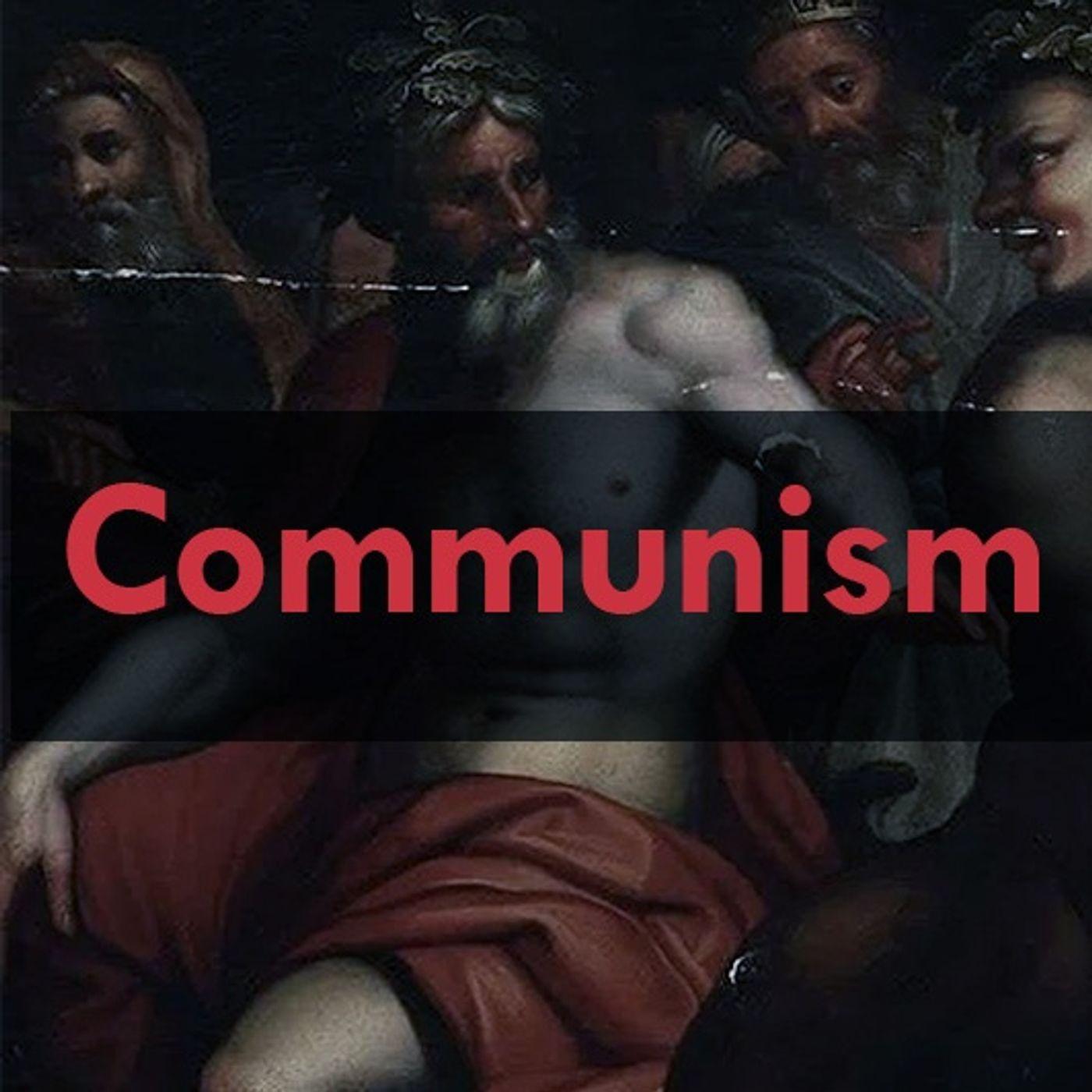
Minor Compositions Podcast Season 2 Episode 3 Communism Actually
In this episode of the Minor Compositions, we discuss Communist Ontologies with its authors Richard Gilman-Opalsky and Bruno Gulli, exploring their proposal that communism be understood not only as a political program but as a form of life. The conversation ranges across questions of political economy, ontology, and revolutionary subjectivity, considering how Marx’s critique of capitalism points toward the recovery of ways of living beyond the reduction of life to labor. Along the way we discuss the historical contingency of revolutionary subjects, drawing on figures such as Rosa Luxemburg and Frantz Fanon, as well as movements like the Zapatista Army of National Liberation, to think through how identities and forms of struggle emerge, transform, and sometimes dissolve. The discussion also reflects on the philosophical tension between being and becoming, the limits imposed by carceral systems, and the possibilities opened by imagining new forms of collective life – finding, in the spirit of W. E. B. Du Bois – that the struggle for freedom often begins in small practices of interdependence, imagination, and other ways of doing beyond the logics of capital.
More on the book.
Bio: Richard Gilman-Opalsky is professor of political theory and philosophy in the School of Politics and International Affairs at the University of Illinois. He is the author of eight books, including Imaginary Power, Real Horizons, The Communism of Love, Specters of Revolt, and Precarious Communism. His work has been translated and published in Greek, Spanish, French, and German.
Bruno Gullì teaches philosophy at Cuny-Kingsborough. He is the author of various articles and four books in the field of political ontology, including Labor of Fire: The Ontology of Labor between Economy and Culture (2005) and Singularities at the Threshold: The Ontology of Unrest (2020).
Intro / outdo music: Wukir Suryadi, playing the Minotaur of Titir
Image: Judgment of Midas, Unknown Flemish artist, imitator of Hendrik van Balen, late 16th century, via Hermitage Museum; King Midas, Andrea Vaccaro, 1670, via Dorotheum
Englisch
Vereinigte Staaten
expliziter Inhalt
IN DIESER FOLGE
TRANSKRIPT 🔗
Are you the producer of this podcast?
Add a podcast transcript
Need Audio-to-Text?
Transcribe with Listen411 in Just 60 Seconds
VERGANGENE FOLGEN SUCHEN
Vorhandene Folgen von Minor Compositions durchsuchen.
WEITERE EPISODEN IN DIESEM PODCAST

Minor Compositions Podcast Season 2 Episode 6 The Institution Negated? In this episode we are joined by John Foot, Susana Caló, and Godofredo Enes Pereira for a wide-ranging conversation on the publication in English of The Negated Institution, and the radical milieus that shaped it, emerging from …
Minor Compositions Podcast Season 2 Episode 5 Defund Culture by Any Means Necessary In this episode owe are joined by Gary Hall and Seth Wheeler for a wide-ranging conversation on cultural funding, radical publishing, and the changing conditions of collective knowledge production.The discussion beg…
Minor Compositions Podcast Season 2 Episode 7 Enduring Otherwise In this episode, we talk with Ferdiansyah Thajib about his book Enduring Otherwise: Muslim Queer and Trans Worldmaking in Indonesia. Drawing on ethnographic research in Aceh, Yogyakarta and Jakarta, Ferdi explores how queer and trans …
Minor Compositions Podcast Season 2 Episode 4 Wages Against Dreamwork In this episode of Minor Compositions, the usual format is playfully overturned as Richard Gilman-Opalsky stages a friendly “revolt,” taking over hosting duties to interview Stevphen Shukaitis about The Wages of Dreamwork, co-wri…
Rechtliche Hinweise: Der auf dieser Seite eingebettete Podcast und das Bildmaterial stammen von firefly frequencies, das Eigentum seines Eigentümers ist und nicht mit Listen Notes, Inc. verbunden ist oder von diesen unterstützt wird.
BEARBEITEN
Vielen Dank, dass Sie uns helfen, die Podcast-Datenbank auf dem neuesten Stand zu halten.
