
ÜBER DIESE EPISODE
Mass Murder
With the death of Nancy Kissinger (New York Times, August 20, 2026) in South Kent, Connecticut, the history of her husband, the former Nixon administration member, Henry Kissinger, came to mind. I wanted to find out more about Henry Kissinger’s history vis-à-vis the war crimes in which he took part and perpetrated.
Here’s an AI view of Kissinger’s war crimes, and I’ve removed the citations because it’s easy to do a search online and find these references through AI:
South Asia (Bangladesh) 1971 Bangladesh Genocide: As the Pakistani military launched a brutal crackdown in East Pakistan (now Bangladesh), killing hundreds of thousands of civilians, Kissinger and Nixon continued to supply arms and diplomatic support to Pakistan’s military regime, ignoring explicit warnings from U.S. diplomats on the ground.
Latin America (Chile, Argentina, and Operation Condor) Chilean Coup (1973): Kissinger played a central role in covert U.S. efforts to destabilize the democratically elected socialist government of Salvador Allende, clearing the path for the military dictatorship of General Augusto Pinochet, which committed widespread human rights abuses.
Operation Condor: Documents show Kissinger was briefed on Operation Condor—a cross-border network of South American military dictatorships that carried out political assassinations—and chose to temper U.S. warnings against the program.
Argentina’s Dirty War: In 1976, he offered tacit approval to Argentina’s military junta as they initiated a campaign of state terror against political dissidents.
East Timor
Indonesian Invasion (1975): Kissinger and President Gerald Ford met with Indonesian dictator Suharto shortly before Indonesia invaded East Timor. Critics argue the U.S. gave a “green light” and continued supplying weapons used in an occupation that resulted in the deaths of over 100,000 East Timorese.
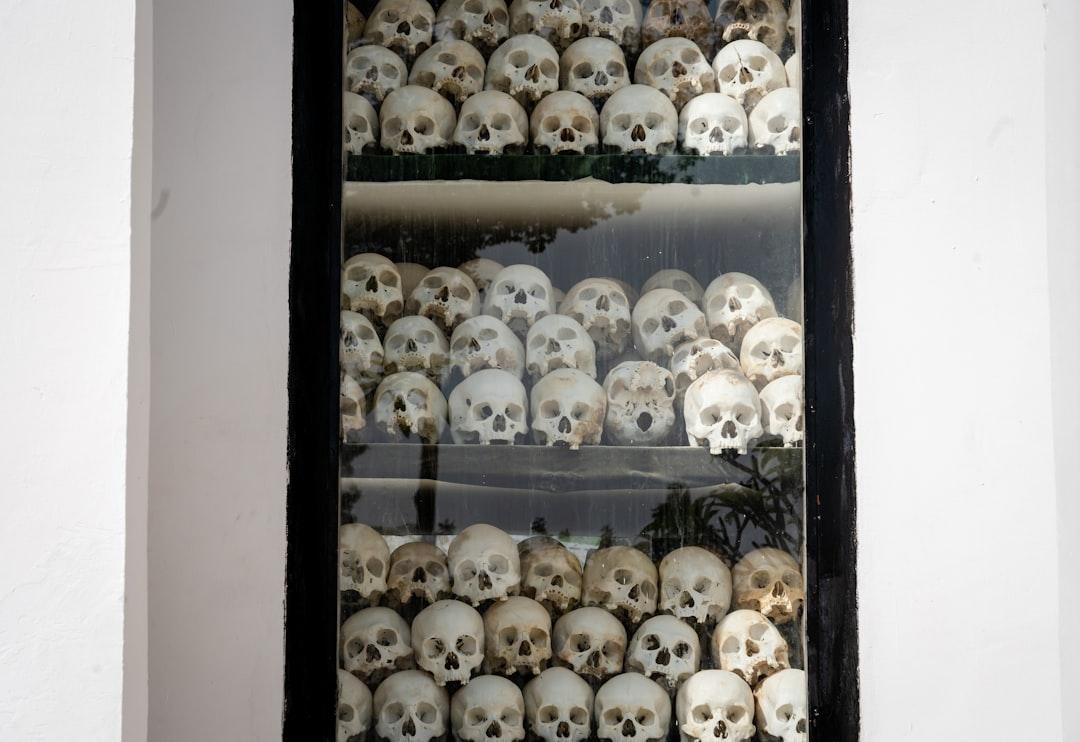
What shocked me in all of this, particularly because I had come into contact with one of Henry Kissinger’s great war crimes, was his part in encouraging Richard Nixon to bomb Cambodia, an action that led in a straight line to the Cambodian genocide.
My contact was the fact that I became a war resister, in part, because of the Cambodian genocide.
When I read the CT Insider’s article about Kissinger’s time in South Kent, and his impact on the community in “In Henry Kissinger’s small CT town residents ‘knew a whole different face of him’” (November 30, 2023), I nearly shit. However, because I knew about Hannah Arendt’s treatise on the “banality of evil,” I was not surprised by the generally favorable discussion in the article about what a positive influence Kissinger had in the town.
Kissinger frequented local parades, supported local organizations, went to and shopped in a local bookstore and other local businesses, and had committed and/or supported some of the worst instances of mass murder in history. Not Joseph Stalin, or Mao Zedong, or Adolph Hitler, well, pretty close since when the death toll climbs exponentially, it doesn’t much matter about the exact count: One is too many and self-defense is hardly a defense at all.
Kissinger was grounded in realpolitik and the anticommunism of the times, and these also don’t factor into any defense of his participation in mass murder.
Thank you for subscribing. Share this episode.