WEBVTT
00:00:10.880 -->
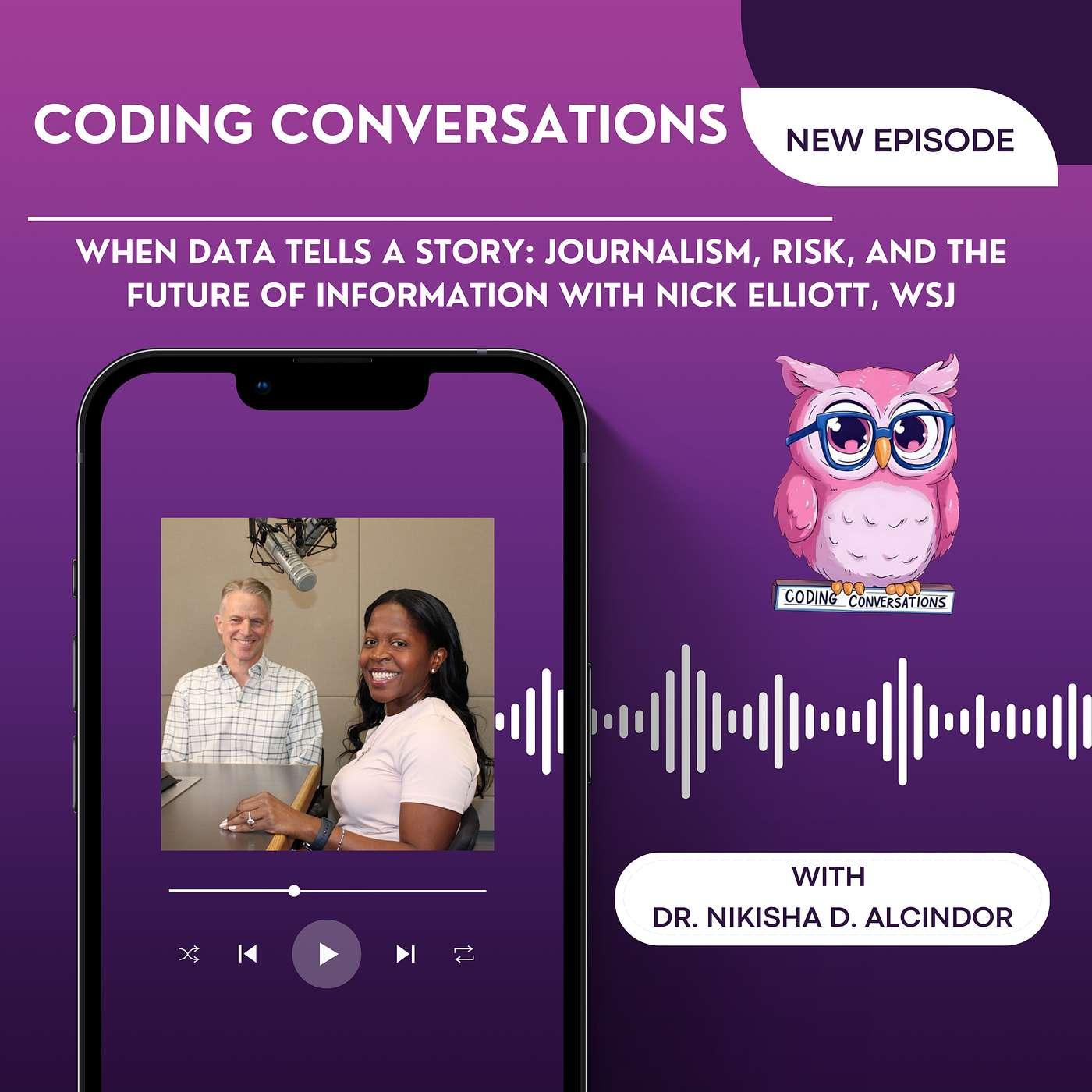
00:00:17.039Welcome to another episode of Coding Conversations, created and produced by the STEM Educational Institute.
00:00:17.039 -->
00:00:28.079I'm Nikisha Alcinder, president and founder of the STEM Educational Institute, where we provide free programming in STEM, financial literacy, and mental health to high school students.
00:00:28.079 -->
00:00:33.600High school students go through one-year program, and at the end they're provided with a college scholarship.
00:00:33.600 -->
00:00:46.079Coding Conversations is our way of bringing to you, the people, information about careers in STEM financial literacy, as well as bringing up very important topics that are facing our community.
00:00:46.079 -->
00:00:51.280Today we have a wonderful conversation about journalism.
00:00:51.280 -->
00:00:57.359Not just about journalism, but also about how do we trust what we see and how do we use data.
00:00:57.359 -->
00:01:00.799And to help us with that conversation is Nick Elliott.
00:01:00.799 -->
00:01:09.200Nick Elliott is vice president and head of communities at Dow Jones Risk and chair of the Wall Street Journal Chief Compliance Officer Council.
00:01:09.200 -->
00:01:18.319In this role, he convenes risk and compliance professionals at events around the world to foster discussions about navigating the business environment.
00:01:18.319 -->
00:01:26.400Throughout his career, he has focused on serving the information needs of professional audience, both in the corporate and financial markets.
00:01:26.400 -->
00:01:39.359Previously, he was the founding editor of the Wall Street Journal Risk and Compliance, which became a must-read in that market and launched events covering risk and compliance, sustainability and cybersecurity.
00:01:39.359 -->
00:01:40.560Welcome, Nick.
00:01:40.560 -->
00:01:42.000Hi, Nakacia.
00:01:42.000 -->
00:01:43.040Thanks for inviting me on.
00:01:43.040 -->
00:01:44.879It's such a pleasure to have you.
00:01:44.879 -->
00:01:50.879I should also mention that Nick holds a degree in economics from the University of York in the UK.
00:01:50.879 -->
00:01:57.519So, Nick, you're here in New York, and I have to I have to ask, how did this all start?
00:01:57.519 -->
00:02:01.840Did you always want to be a journalist or where did it where did this come from?
00:02:02.719 -->
00:02:06.400No, when I was a when I was a kid, I wanted to be a professional cricketer.
00:02:06.879 -->
00:02:07.920Oh, okay.
00:02:08.319 -->
00:02:14.639But I realized pretty quickly, uh had I had the shocking realization that I just I didn't have the enough talent for that.
00:02:14.960 -->
00:02:15.199Okay.
00:02:15.439 -->
00:02:19.599Um but I got interested in journalism when I was at university, at college.
00:02:19.599 -->
00:02:28.240I I discovered I liked writing, and I was also interested in the world around me and business and finance in particular, so it was sort of a natural pairing.
00:02:28.639 -->
00:02:28.960Okay.
00:02:29.199 -->
00:02:31.439And that's been the last 35 years.
00:02:31.439 -->
00:02:39.439Um I think the other the other thing I would mention, this is uh perhaps going a little deeper into the way that my mind works.
00:02:39.439 -->
00:02:54.800I I grew up in a suburb of London, a fairly quiet place, and I always felt like I was on the edge of this great city with a whole lot more going on in the middle of it, and I wanted to get more of a ringside seat.
00:02:54.800 -->
00:02:59.439I wanted to be close to things going on in the world, and journalism has certainly provided that.
00:02:59.439 -->
00:03:03.759I've had that ringside seat over the last 35 years.
00:03:03.759 -->
00:03:08.319I've uh I've covered a whole lot of different markets and businesses.
00:03:08.319 -->
00:03:16.240I've done events around the world, I've talked to a whole lot of interesting, smart, and influential people.
00:03:16.240 -->
00:03:18.560So it's it's been it's been great.
00:03:18.960 -->
00:03:19.840I I love that.
00:03:19.840 -->
00:03:28.800What I love also about kind of wanting to be in the center of what's going on is the fact that you were econ major, right?
00:03:28.960 -->
00:03:29.280Yeah.
00:03:29.520 -->
00:03:41.039And I'm wondering, like with that background coupled with all of this data that's out there, can you talk about how data without context, right?
00:03:41.039 -->
00:03:46.800You're at the center of everything, can be dangerous or kind of helpful.
00:03:47.680 -->
00:03:48.479Yeah, sure.
00:03:48.479 -->
00:03:54.240So I think there are there are three big trends here that will help me in answering the question.
00:03:54.240 -->
00:04:01.439Um one is that the world is more turbulent than it has been in many years.
00:04:01.439 -->
00:04:05.759So if you look if you just look at 2026, we've got the Iran War going on.
00:04:05.759 -->
00:04:10.319We've had the leader of Venezuela seized and now held in a US prison.
00:04:10.319 -->
00:04:19.680We had a diplomatic standoff over Greenland, and we've got all the disruption coming with artificial intelligence and companies grappling with that.
00:04:19.680 -->
00:04:24.560And you really have to you really have to put all that together, I think.
00:04:24.560 -->
00:04:36.240Um I think there's also an irony here in that there's been a lot of discussion about the retreat from globalization or deglobalization, but in a way, world events are more linked together than ever before.
00:04:36.240 -->
00:04:39.040And we feel we feel the tremors of those.
00:04:39.040 -->
00:04:42.879So I think you need to understand the bigger picture and how it all fits together.
00:04:42.879 -->
00:04:47.600So if all you're doing is is looking at the data, that's that's not going to give you that.
00:04:47.600 -->
00:04:49.279So that's that's one thing.
00:04:49.279 -->
00:04:56.639The other thing, the other two things, one is that people's consumption habits have changed so much over time.
00:04:56.639 -->
00:04:58.879We're all bombarded with information.
00:04:58.879 -->
00:05:03.199We tend to consume it more superficially than we have in the past.
00:05:03.199 -->
00:05:08.639And that that in itself can be quite dangerous or misleading.
00:05:08.639 -->
00:05:14.720And and then the third thing is uh the development of deepfakes powered by AI.
00:05:14.720 -->
00:05:19.199So can we even trust the underlying information that's out there in the first place?
00:05:19.199 -->
00:05:29.120So all of this you really increasingly need to have multiple sources to understand what's actually going on and to have a fact base.
00:05:29.680 -->
00:05:30.000Mm-hmm.
00:05:30.000 -->
00:05:31.040I love that.
00:05:31.040 -->
00:05:43.439I was at kind of a press, a broadcast conference years ago, and one of the head of the major of a major studio said, you know, one thing I'm confident about is that people only have two eyes, right?
00:05:43.439 -->
00:05:47.600And with that, that's how I look at how we're gonna beat our competition.
00:05:47.600 -->
00:05:55.120So given that we have two eyes, all of this information is coming out of uh at us, we see charts, we see all these things.
00:05:55.120 -->
00:06:02.879What is the first question someone should ask themselves to kind of then deduce, okay, the the point is proven.
00:06:02.879 -->
00:06:08.720I I get this, and they've proven what they've shown to me based on this information.
00:06:09.680 -->
00:06:15.600Yeah, I think that comes back to establishing some trust in the sources of information that you're using.
00:06:15.600 -->
00:06:23.759So we all consume multiple sources, but which are the ones that you think are reliable, and you can often only judge that over time.
00:06:23.759 -->
00:06:24.959And then why?
00:06:24.959 -->
00:06:28.800You have to come to your own decision about why you think that's a trustworthy source.
00:06:28.800 -->
00:06:40.000And once you have that, then you're in a much better place, I think, to make those sorts of decisions about saying, okay, I I now I understand, I think this is this is factual.
00:06:40.160 -->
00:06:50.079What I think is so interesting when you think about trust and reporting at the news, one of the simplest things that I go back to is the weather, right?
00:06:50.079 -->
00:06:55.120When you think about in New York, when someone says it's gonna snow, right?
00:06:55.120 -->
00:06:57.920Immediately everywhere there's like a huge snowstorm.
00:06:57.920 -->
00:07:00.879You don't even have to hear anything.
00:07:00.879 -->
00:07:04.160Most people, some people believe it, some people don't.
00:07:04.160 -->
00:07:08.160And so when you think about it, it's like, well, who are they trusting?
00:07:08.160 -->
00:07:14.160And at what point do you because you deduce, you're seeing kind of the weather, how is it going?
00:07:14.160 -->
00:07:19.600And then you're like, okay, it's it's going to snow or it's not going to snow.
00:07:19.600 -->
00:07:23.680There are nacks, you see trucks going out, you see people preparing.
00:07:23.680 -->
00:07:35.920And so I'm wondering, in your experience, like when you're you're getting all this information, probably things faster than we get it, how do you then deduce how you're trusting your sources?
00:07:35.920 -->
00:07:40.800Like how how do you come to that internal trust so that you can then push out the news?
00:07:41.279 -->
00:07:47.279Yeah, a lot of it comes down to uh knowing who would actually know.
00:07:47.279 -->
00:07:56.639So when you're in business and financial journalism, a lot a lot of the questions you'll get from editors when you're writing an article are, okay, this person says this, but how do they know it?
00:07:56.639 -->
00:08:00.959Um and and then there's the pattern over time.
00:08:00.959 -->
00:08:10.480Is this a source that seems to have a an orientation to an honest uh attempt to ascertain the facts?
00:08:10.480 -->
00:08:15.839And and then over time that's gonna give you more trust as you as you rely on that source.
00:08:15.839 -->
00:08:20.160So those are the kinds of decisions that I think are actually gonna be increasingly important.
00:08:20.160 -->
00:08:26.959You know, we're gonna have I mean we're already sort of in the early stages of a of a bombardment of deep fake information.
00:08:26.959 -->
00:08:36.559And so people really, I think if if they're interested in discovering the facts, they're gonna need to go a layer deeper to determine that.
00:08:36.720 -->
00:08:47.039Yeah, and it's interesting because like, you know, they say a picture is worth a thousand words, and we know that pictures and things that people see can actually lead to to action.
00:08:47.039 -->
00:08:50.320People can riot, they can protest based on a picture.
00:08:50.320 -->
00:09:00.480What how do you detect deep fakes or what are what are some things that consumers or individuals should think about as they're consuming and looking at information?
00:09:01.200 -->
00:09:06.960Yeah, so um I think you need to look at the pattern of of information over time.
00:09:06.960 -->
00:09:08.159That's that's one thing.
00:09:08.159 -->
00:09:10.080Does it does it fit with the general trend?
00:09:10.080 -->
00:09:12.240Does it does this raise any red flags for me?
00:09:12.240 -->
00:09:13.519Is it an outlier?
00:09:13.519 -->
00:09:21.679Um The source, of course, as we've talked about, where is it coming from and how do they how do they how do they know that information that they're reporting?
00:09:21.679 -->
00:09:28.240Um and um and then and then the judgment that you should really try and develop over time.
00:09:28.240 -->
00:09:43.919You know, I I think um if if people really are interested in in finding out the facts, then they should they should develop their own methods for doing that, and that comes comes down to developing the judgment and and and having a certain amount of skepticism about what they're hearing as well.
00:09:44.000 -->
00:09:52.879Well, it's so interesting because there's a before social media and everything, it was always like breaking news, right?
00:09:52.879 -->
00:09:55.519And you saw the thing go across the screen.
00:09:55.519 -->
00:10:02.320But now it seems like it seems like someone with their cell phone is breaking news and posting it on YouTube.
00:10:02.320 -->
00:10:09.440Like how do you balance making sure something is factual versus reporting it first?
00:10:10.480 -->
00:10:18.720Yeah, well, having been inside the uh newsrooms of Dow Jones and and the Wall Street Journal, there's a lot of attention paid to that.
00:10:18.720 -->
00:10:20.799And speed is important, of course.
00:10:20.799 -->
00:10:33.279You don't you don't want to be behind on something, but it's in some ways even more important to be accurate because if you get it wrong, it's uh there can be real repercussions, not just for you as an organization, but also to the outside world.
00:10:33.279 -->
00:10:42.000So um it comes back to the way that the news organization gathers its information and then checks it.
00:10:42.000 -->
00:10:43.840That's that's really important.
00:10:43.840 -->
00:10:52.320And that's why you you want to rely on sources that have high standards because they have that built into the into their news get news gathering operation.
00:10:52.320 -->
00:11:02.480It's not it's not just um uh uh thoughtlessly put out and and published and and left for people to decide for themselves.
00:11:02.480 -->
00:11:03.679We're acting as a filter.
00:11:03.679 -->
00:11:04.159Sure.
00:11:04.159 -->
00:11:08.399You know, that's why that's why people rely on brands like the ones that we have.
00:11:09.519 -->
00:11:17.279So just so folks know, I want to make sure we talk about all the brands because Dow Jones is not just the Wall Street Journal.
00:11:17.279 -->
00:11:19.360We have to we should we should clarify that.
00:11:19.360 -->
00:11:20.879But I I want you to clarify that.
00:11:20.879 -->
00:11:30.799And I also want you to take us through the process of what does vetting or information look like in your seat, or what has it looked like?
00:11:30.799 -->
00:11:34.399So um can you tell us all of the news outlets that Dow Jones has?
00:11:34.480 -->
00:11:35.360Certainly, yeah.
00:11:35.360 -->
00:11:46.159So Dow Jones is an old company, it goes back to the 1880s, it started out uh providing tear sheets, literal physical tear sheets on stock prices.
00:11:46.159 -->
00:11:48.639That's why it was called the Wall Street Journal.
00:11:48.639 -->
00:11:53.600It was a it was started by um Charles Dow and Edward Jones.
00:11:53.600 -->
00:11:59.759They um they saw an opportunity, and then from that they launched the Wall Street Journal a few years later.
00:11:59.759 -->
00:12:06.639Uh so that's it's really the flagship of the company, but the company has uh does a lot more than that as well.
00:12:06.639 -->
00:12:10.720Um we have um several main businesses.
00:12:10.720 -->
00:12:14.080One is in financial and business information.
00:12:14.080 -->
00:12:20.879So some of the familiar brands there are Dow Jones Newswires, Market Watch, Investors Business Daily, Barron's.
00:12:20.879 -->
00:12:25.360We have and big energy business now, previously called Opus.
00:12:25.360 -->
00:12:30.080This was a business we acquired not that long ago.
00:12:30.080 -->
00:12:36.320It does all kinds of energy information from prices to reporting to analysis.
00:12:36.320 -->
00:12:45.039Um and then there's the risk business, which I work in, which is provides a broad range of risk information.
00:12:45.039 -->
00:12:52.960Uh we have our own journalists, we do a lot of a lot of analysis, but we've broadened out the areas we cover as well.
00:12:52.960 -->
00:13:00.720Um Geopolitics has become so much more important that last year we acquired two geopolitical analysis companies.
00:13:00.720 -->
00:13:05.120Um this matches up with the way that companies are seeing the world.
00:13:05.120 -->
00:13:05.519Yes.
00:13:05.519 -->
00:13:07.679They can't just focus on a handful of risks.
00:13:07.679 -->
00:13:11.200Now they have then they need this broad picture, and that's what we're trying to provide them with.
00:13:11.759 -->
00:13:12.399I love that.
00:13:12.399 -->
00:13:23.759And so as we uh within the when you're looking at, let's say, for example, the asset management sector, different fund managers, and they're trying to assess risk, right?
00:13:23.759 -->
00:13:29.279How do you, as you're you're getting all this data, what does that look like?
00:13:29.279 -->
00:13:37.600You you know, obviously you have people, but how do they ascertain whether or not the data is ready to go, if it is truly a risk?
00:13:37.600 -->
00:13:38.480What does that look like?
00:13:38.639 -->
00:13:45.919Yeah, well for them, it's it's they rely on us and we have to we have to keep high standards in the data that we gather.
00:13:45.919 -->
00:14:00.720And this is especially important in the risk area because companies are making real decisions about whether to do business with other people or organizations, and if they get it wrong, they can suffer a large fine.
00:14:00.720 -->
00:14:01.039Yes.
00:14:01.039 -->
00:14:04.399You know, this this happened over a period of period of years.
00:14:04.399 -->
00:14:12.480So for us, we have a big team of researchers actually looking into all that data.
00:14:12.480 -->
00:14:23.600They have language skills so that they can make sure that somebody who's on a forbidden list is correctly translated and they sh and they match up with another list.
00:14:23.600 -->
00:14:27.600Um that really nothing should fall through the cracks.
00:14:27.600 -->
00:14:31.519Uh but there's but it's also a case of sometimes less is more.
00:14:31.519 -->
00:14:52.000Um we we because we want everything to be high quality, we we limit the data set so that um whatever they're relying on us for, they can count on, and they're not getting what are called false positives, which is entities, companies, or individuals that they don't really need in the data in the first place.
00:14:53.200 -->
00:15:17.840You know, it's so interesting because one of the things I find interesting with just journalism in general is you have kind of two sectors of the population, those uh in New York that read like the Daily News, the New York Post, uh those kind of magazines, and then you have the magazines, sorry, uh newspapers, and then you have Wall Street Journal, New York Times, and those kind of data sources, right?
00:15:17.840 -->
00:15:24.000I'm wondering like when you're and they're two audience, different audiences, right?
00:15:24.000 -->
00:15:33.679You serve a more business economic audience, but what you're reporting is actually extremely important to individuals who aren't in the business world.
00:15:33.679 -->
00:15:42.159How does someone, when they hear an economic data point, um, kind of could kind of translate that for themselves, right?
00:15:42.159 -->
00:16:03.200Um and so I'm like, yeah, how do how how would you recommend someone who who who's not in the business world, but you're reporting, they're hearing things, there's all this misinformation, YouTube is like the biggest, there's so much out there, people are afraid of like all of these things with cybersecurity and AI.
00:16:03.200 -->
00:16:06.720How how should one look at that if they don't have the knowledge?
00:16:06.720 -->
00:16:10.240What's the and you could tell me resources as well that people should use?
00:16:11.200 -->
00:16:16.320Well, actually, it's been a big push at the journal to be more explanatory over a period of time.
00:16:16.320 -->
00:16:20.159And I think you'll find that in some of the other articles that we put out there.
00:16:20.159 -->
00:16:30.000Um, I guess I guess the first thing is to understand that a lot of this will have an impact on you as an individual, even if you're even if you don't work in the business world.
00:16:30.000 -->
00:16:38.240Uh and many things will come back to you and affect you in your in your own budget or in your life generally.
00:16:38.240 -->
00:16:51.759Um But then um I think I think it's really healthy to to build up a knowledge of what's going on in on in the world and how how that can affect you and hence what it means generally.
00:16:51.840 -->
00:17:00.480You know, it's interesting that you say that because in our program we use Market Watch and our students build mock portfolios and they invest.
00:17:00.480 -->
00:17:12.720And for anyone who's out there, you can go to Market Watch, you can create a game, you can play with a game a game, quote unquote, and build a portfolio of stocks and just kind of see how your investments would do.
00:17:12.720 -->
00:17:21.359And we I do that because we want to make sure, to your point, that students are understanding how things are invested.
00:17:21.359 -->
00:17:34.160Um and so one of the things that I find is that in the material that you provide, it is very does have a lot of explanation for students and for individuals.
00:17:34.160 -->
00:17:41.440And I'm wondering, have you guys thought about how do you how do you know if it's working or not?
00:17:41.440 -->
00:17:42.559I'm sure you have numbers.
00:17:42.559 -->
00:17:50.480How do you know if people are understanding what you're putting it, putting out and taking it, making it how you know that it's relevant, that they feel like it's relevant?
00:17:50.640 -->
00:17:59.359Yeah, well the the media industry is i is is in constant revolution, and it has been for years.
00:17:59.359 -->
00:18:17.359Um our organization in particular, I think probably all media organizations pay a lot of attention now to to who's consuming their information, how far into an article they're going, um whether they move from one article to another.
00:18:17.359 -->
00:18:21.359There's a lot of tracking of engagement because it's it's so essential.
00:18:21.359 -->
00:18:27.440Um so I think that's that's where the journal or Dow Jones would look.
00:18:27.440 -->
00:18:33.519That's how they would see whether the information they're putting out is resonating with the audiences they're trying to reach.
00:18:33.599 -->
00:18:37.759And I'm sure that kind of tells you whether or not people are trusting you, right?
00:18:37.759 -->
00:18:43.119If you if people are I mean, I'm just saying that, but tell me if that's true or not, right?
00:18:43.119 -->
00:18:50.880Is that does that help engender trust if you're seeing people are reading more, or how do you determine if people are trusting your resources more?
00:18:50.960 -->
00:18:52.319That's that's one measure.
00:18:52.319 -->
00:18:57.519There's an annual survey that's that's done of the most trusted media sources in North America.
00:18:57.519 -->
00:19:04.240The Wall Street Journal always comes out top, trusted by those who who lean right, trusted by those who lean left.
00:19:04.240 -->
00:19:10.640But um sorry, I lost my train.
00:19:10.640 -->
00:19:11.599Yeah, that's okay.
00:19:11.920 -->
00:19:12.160Yeah.
00:19:12.160 -->
00:19:19.519You know, it's it's interesting because at some point it becomes what do you what do you read?
00:19:19.519 -->
00:19:22.160And there, as you know, there's the above the fold.
00:19:22.160 -->
00:19:28.960And I was I always go back and forth with the Wall Street Journal because there is there's so many, is it the Sunday paper?
00:19:28.960 -->
00:19:33.599You get like all these different inserts, you get like a Oh, this is the physical newspaper.
00:19:34.000 -->
00:19:34.880The physical newspaper, right?
00:19:34.880 -->
00:19:36.160Long since moved to the app.
00:19:36.960 -->
00:19:37.839He's moved to the app.
00:19:37.839 -->
00:19:38.880I'm still in the paper.
00:19:38.880 -->
00:19:39.119Okay.
00:19:39.119 -->
00:19:44.880So but I like the paper because sometimes it just gets me oriented.
00:19:44.880 -->
00:19:49.119Like the app sometimes is kind of um it's it's difficult for me to navigate.
00:19:49.119 -->
00:19:50.079And that's just me.
00:19:50.079 -->
00:20:00.319And so how do you kind of do you use visuals to make things and separate things so that a reader can say this is useful data and this isn't?
00:20:00.319 -->
00:20:03.920Or you know, how do you guys kind of manage that?
00:20:04.559 -->
00:20:11.359Yeah, well, this this this is the other big trend in media generally, including at the journal, is the the effort to tell stories in ways other than text.
00:20:11.359 -->
00:20:17.200So you'll find a lot more graphics data, you'll find a lot more video in their podcasts.
00:20:17.200 -->
00:20:20.240You know, we have we have lots of good podcasts that go out.
00:20:20.240 -->
00:20:26.799Um it's a reflection of the fact that people have become people consume information in different ways.
00:20:26.799 -->
00:20:29.680You know, my my son gets everything via video.
00:20:29.680 -->
00:20:31.519That's the way he likes to consume things.
00:20:31.519 -->
00:20:32.880I'm still very text-based.
00:20:32.880 -->
00:20:37.119It's how I've grown up in my consumption habits.
00:20:37.119 -->
00:20:43.039So you really got you really got to provide it to people in every way that they want to receive it.
00:20:43.599 -->
00:20:56.000Do you think that journalists that are coming up through journalism schools and new journalists are how are they learning how to kind of gather data and use that in their storytelling?
00:20:56.640 -->
00:21:05.599I think they're probably in a great position to do it, you know, because it's it's um it's much more much more important and much more prevalent than it used to be.
00:21:05.599 -->
00:21:10.960Like um, you know, when I started out as a reporter, uh most of what we did was text.
00:21:10.960 -->
00:21:18.640We were we were looking at data and writing articles around the data, but um the data was considered kind of separate in a way.
00:21:18.640 -->
00:21:21.039Now it's much more intrinsic.
00:21:21.039 -->
00:21:30.799And now there's a lot more data, there's a lot more uh many interesting articles to be written based on data or with data to support them.
00:21:30.799 -->
00:21:34.000And the tools are there also to analyze the data.
00:21:35.039 -->
00:21:46.640You know, it's interesting because one of the things that I've I've observed just in life is that sometimes the data, the interpretation of the data isn't correct either.
00:21:46.640 -->
00:21:47.359Right?
00:21:47.680 -->
00:21:47.839Yeah.
00:21:48.160 -->
00:21:48.480Right?
00:21:48.480 -->
00:21:50.319So how do you manage that?
00:21:50.319 -->
00:21:54.640Because you can look at data and be like and come to XYZ conclusion.
00:21:54.640 -->
00:21:58.559Um what does that look like for in your in your seat?
00:21:59.119 -->
00:22:02.079Yeah, well I think I think there's a number of things you can do.
00:22:02.079 -->
00:22:08.079One is, of course, the source and is it is it reliable?
00:22:08.079 -->
00:22:10.559But also what is it really showing you?
00:22:10.559 -->
00:22:14.079Does it actually show what it purports to show?
00:22:14.079 -->
00:22:22.400Bucketing them all together.
00:22:22.720 -->
00:22:22.960Sure.
00:22:28.240 -->
00:22:37.119So it just calls, I think, for for really looking at what's in front of you and does it show what it's supposed to show?
00:22:37.119 -->
00:22:38.720Is there something missing here?
00:22:38.720 -->
00:22:40.640And what's the original source?
00:22:41.680 -->
00:22:49.039And now given that you're working with business leaders, many business leaders take your information and action on it, right?
00:22:49.039 -->
00:22:55.200They they kind of So what does Tell me what that looks like in terms of what does that look like?
00:22:55.200 -->
00:22:57.119How how are you seeing business leaders?
00:22:57.119 -->
00:23:03.759Obviously there's a lot, but just give me an example of how you see the information that you guys are providing being used.
00:23:03.839 -->
00:23:23.200So if you think about the different layers in a company, you have the people at the top, the C-suite, and they're looking for analysis or thought-provoking articles that they can use to understand the world around them, but also probably to have discussions within their own company.
00:23:23.200 -->
00:23:26.240And this is what we strive to provide them with.
00:23:26.240 -->
00:23:38.400So ideally we're doing something for them that they can take back and they can they can bring it up with the CEO or somebody else senior and it and it has some influence on the strategy of the company.
00:23:38.400 -->
00:23:48.240But then we also provide a lot of information for people further down in the company as well who need more practical, they have more practical uses of data.
00:23:48.240 -->
00:23:58.880For example, they might be screening the partners that they have that they're doing business with, because they want to understand the risk that there is in those partners.
00:23:58.880 -->
00:24:02.319It's a big issue in business at the moment, third parties.
00:24:02.319 -->
00:24:08.480So we try and provide information that is useful at all different levels of a company.
00:24:09.440 -->
00:24:19.119And so kind of following on than that, there's there's a in finance at least in many customer, there's there's a requirement for know your client, right?
00:24:19.119 -->
00:24:20.559Um KYC.
00:24:20.559 -->
00:24:25.519How are you are you are businesses using that information in KYC?
00:24:25.519 -->
00:24:29.279Because there are companies that do it, but are you guys in that getting into that field as well?
00:24:29.839 -->
00:24:34.400We are, yeah, we are very much in that field in all the big risk areas that companies face.
00:24:34.400 -->
00:24:39.759So things like money laundering or bribery, we we help companies screen for that and limit their risk.
00:24:40.160 -->
00:24:41.680So tell me how does that work?
00:24:41.680 -->
00:25:10.559Because I know having dealt with other entities that do KYCs, and for the audience members that don't know what that is, so normally if you are an investment bank or a business and you you are in the business of holding clients that are let that are long-term long-term hold, whether you're doing an MA transaction or they're going to be a client of the firm, there's a requirement that is called a KYC, know your client.
00:25:10.559 -->
00:25:19.839Within that, it has a bunch of different buckets that goes into money laundering, a bunch of things, kind of like a very deep background check.
00:25:19.839 -->
00:25:22.960And some companies have different ways of doing it.
00:25:22.960 -->
00:25:29.599And so I'm wondering if you can walk us through what does that look like on your for you guys at the WA.
00:25:30.160 -->
00:25:44.960Yeah, so we are we are fortunate in that we have a huge database of publications, not just our own, but we have we have uh a database that we've curated over about 50 years with 33,000 different publications in it.
00:25:44.960 -->
00:25:53.519They're all it's all licensed information, they're all vetted, so they're all reliable sources, everything from newspapers in Africa to academic journals.
00:25:53.519 -->
00:26:20.079From that, we distill that down to a list of uh companies and individuals, and then we match that up against what governments are putting out where they're saying, here's a list of um, for example, here's a list of might be Chinese companies that we don't think American companies should be doing business with because they're involved in providing weaponry to Russia.
00:26:20.079 -->
00:26:21.759That would be one example.
00:26:21.759 -->
00:26:23.359So we match up the two.
00:26:23.359 -->
00:26:29.839We match those official lists against their own lists, and then it's up to the companies themselves as to how much risk they want to take on.
00:26:29.839 -->
00:26:47.359You know, some will they'll all set their own risk comfort levels, and they'll then match that against our lists, and they'll decide, okay, we have to do business in this particular region, we're gonna be very careful, but we're gonna we're gonna do business with these companies.
00:26:47.359 -->
00:26:57.119Or they might say, okay, this whole we're gonna we're gonna be out of this whole region, and we'll use the Dow Jones list to just block out all of those companies and individuals.
00:26:57.200 -->
00:26:58.960So what does that look like?
00:26:58.960 -->
00:27:02.319Is it a in terms of the product, like what does the end user get?
00:27:02.319 -->
00:27:04.480Is it a data like how does that work?
00:27:04.559 -->
00:27:06.240They can get it in two different ways.
00:27:06.240 -->
00:27:21.759It can be a feed, which they plug into their own interface and then they use our data with their own tools that they've developed, or it can be a um what you'd call a front-end product where it's our own platform and then they use our tools to manipulate the data in there.
00:27:21.839 -->
00:27:31.440So how does one assess whether or not or how do you guys assess whether or not the data that you have is accurate, right?
00:27:31.440 -->
00:27:35.279I'm just w and I'm wondering if you're probably using some AI tools in there now.
00:27:35.440 -->
00:27:41.039I'm just we are we are using AI tools to help organize the data, certainly.
00:27:41.039 -->
00:27:45.920Aaron Ross Powell But we start from that basis of having all these reliable sources.
00:27:46.319 -->
00:27:46.480Okay.
00:27:47.039 -->
00:27:55.519And where companies often get into trouble is uh they will um they will ha they will try and screen, but they'll miss things out.
00:27:55.519 -->
00:28:16.319Often it comes back to language, so that's one of our skills uh where we can if you take an example like of Samu bin Laden, we make sure that his name was correctly translated across multiple languages so that uh if you were a bank that was trying to screen him out, you you wouldn't miss it because it's in different characters in a different language, for example.
00:28:17.440 -->
00:28:24.960Now, do you have a way because there are a lot of videos on YouTube that are with foreign individuals speaking, right?
00:28:24.960 -->
00:28:29.200And then you have like a give like a translator that's over that, right?
00:28:29.200 -->
00:28:33.920How does one how does one know if that's actually what they're saying, right?
00:28:34.799 -->
00:28:40.640Yeah, that's that's not w we're not really in that space at the moment, the video side of things.
00:28:40.640 -->
00:28:43.759But it's uh I'm sure it's gonna be really important as well.
00:28:43.759 -->
00:28:47.279Right now we're we're mostly focused on written documents.
00:28:47.359 -->
00:28:48.559Written documents.
00:28:48.559 -->
00:28:48.799Yeah.
00:28:48.799 -->
00:28:59.839Um because that kind of goes back to the deep fakes, the people are consuming things quicker, you know, a 15-second video to give a point, and especially the headlines, right?
00:28:59.839 -->
00:29:08.400You'll see like a headline that says something, and then you're you have to decide, at least myself as a consumer, I don't know about you, when you get involved with get involved.
00:29:08.400 -->
00:29:17.279I mean, when you start investing time and watching a YouTube, you have to decide like if you're gonna abandon it or keep watching, um, right?
00:29:17.279 -->
00:29:20.319And so it's that trust again that happens there.
00:29:20.319 -->
00:29:26.079Um and so obviously you've spoken to a lot of business leaders.
00:29:26.079 -->
00:29:32.000Um and when you're speaking to business leaders, what are some of the things that are on top of mind for them?
00:29:32.000 -->
00:29:33.839Like what are what are the biggest risks?
00:29:33.839 -->
00:29:35.200What and what keeps you up at night?
00:29:35.200 -->
00:29:37.359I'm sure you have a a lot on your mind.
00:29:37.359 -->
00:29:40.160So but I'll first answer the first one.
00:29:40.160 -->
00:29:42.720For business leaders, what are you hearing?
00:29:42.720 -->
00:29:44.720What are the concerns that you were hearing?
00:29:44.720 -->
00:29:45.119Aaron Ross Powell, Jr.
00:29:45.200 -->
00:29:50.079Yeah, well, the the the big ones I think are geopolitical risk.
00:29:50.079 -->
00:29:52.079And that touches on so many other things.
00:29:52.079 -->
00:29:54.799It touches on supply chains, which are a huge risk.
00:29:54.799 -->
00:30:01.039Uh they we discovered that we had supply chains during the pandemic when we were all running out of toilet paper and so on.
00:30:01.039 -->
00:30:07.599You know, we've taken it for granted over a period of years this complex network of suppliers worldwide.
00:30:07.599 -->
00:30:15.039Now it's become an issue for other reasons because of tariffs and uh changes of government and that kind of thing.
00:30:15.039 -->
00:30:16.559So that would be a big one.
00:30:16.559 -->
00:30:19.279AI would be another one, artificial intelligence.
00:30:19.279 -->
00:30:30.400The biggest risk there for companies, according to what the companies themselves say, is being left behind by their competitors who could get to grips with it faster and then leave them behind.
00:30:30.400 -->
00:30:34.480But there are also a lot of other risks associated with AI.
00:30:34.480 -->
00:30:36.559So those those would be two of the big areas.
00:30:36.559 -->
00:30:38.160But you you brought up deep fakes.
00:30:38.160 -->
00:30:40.400I mean, that's definitely one that's building.
00:30:40.400 -->
00:30:44.960We've seen an explosion of deep fake information.
00:30:44.960 -->
00:30:52.559A lot of it is video-based, increasingly audio-based as well, where voices are being cloned.
00:30:52.559 -->
00:30:58.160But I think there's also going to be a new wave of deep fake documents.
00:30:58.160 -->
00:31:05.599And circling back to our the discussion we just had about know your customer, that's a real issue there.
00:31:05.599 -->
00:31:11.200And actually, I was at a one of our conferences last week where a an attorney with one of the big law firms brought it up.
00:31:11.200 -->
00:31:23.839They're starting to see it now, where there's fake documentary evidence that may mean that somebody comes into your supply chain who's actually banned on one of these government watch lists.
00:31:23.839 -->
00:31:26.640So that's that's going to be a big area as well.
00:31:26.640 -->
00:31:26.880Trevor Burrus, Jr.
00:31:26.960 -->
00:31:27.279Mm-hmm.
00:31:27.279 -->
00:31:32.799And so it sounds like, you know, if it's too good to be true, it probably is, right?
00:31:32.799 -->
00:31:37.519When it's coming to business owners and looking at vendors that are coming into their system.
00:31:37.519 -->
00:31:46.799Um so I'm wondering, how does one prov I guess the KYC would be but it seems like people are going deeper, right?
00:31:46.799 -->
00:31:48.480I think we have to, yeah.
00:31:48.559 -->
00:31:52.160I mean we're gonna have to we're gonna need new forms of authentication.
00:31:52.160 -->
00:31:56.480We've all we've all become accustomed to multi-factor authentication.
00:31:56.480 -->
00:31:57.039Yes.
00:31:57.039 -->
00:32:05.920You know, you sign onto a website, they send you they send you a text with a code, that kind of thing I think is gonna have to happen more widely.
00:32:06.000 -->
00:32:07.519But does that really work?
00:32:07.519 -->
00:32:11.839I feel like it doesn't because I have gotten so many small cards.
00:32:11.839 -->
00:32:17.680Has anyone got those small cards in the mail that say that your your information has been stolen?
00:32:17.680 -->
00:32:22.720Um and it it's from a company that is a derivative of s of like Delta.
00:32:22.720 -->
00:32:28.000I got one for Delta, and it was it's just like, you know, love Delta, you know, I like spell miles.
00:32:28.000 -->
00:32:30.640But like, what is that about?
00:32:30.640 -->
00:32:42.160I mean, I don't know if you've experienced that as a consumer, or if you if that so it's like, is does is it really working, or is it compiling information about it that's being sold on the dark web?
00:32:42.160 -->
00:32:43.440That's kind of what I feel.
00:32:43.440 -->
00:32:46.240Like, is it more authentication?
00:32:46.720 -->
00:32:51.519With cybersecurity, it's it's there's no there's never any grounds for complacency.
00:32:51.519 -->
00:32:57.039And especially with AI tools becoming more readily available, it's sort of what happened with cybersecurity.
00:32:57.039 -->
00:33:01.920You know, it used to be something that was done by fairly sophisticated actors.
00:33:01.920 -->
00:33:12.400So the attacks were relatively few, but now you can go on the dark web and buy a ransomware package and overnight you you don't need any expertise.
00:33:12.400 -->
00:33:19.359Overnight you can become a cyber criminal and you can start attacking organizations and locking down their data and demanding a ransom.
00:33:19.359 -->
00:33:25.200So we saw this explosion in ransomware, but that's gonna be supercharged by artificial intelligence.
00:33:25.200 -->
00:33:27.119It's just much more efficient.
00:33:27.119 -->
00:33:31.359So on the defensive side, companies need to do similar things to keep up.
00:33:31.440 -->
00:33:36.480What are some things that companies need to what are some things they need to be doing?
00:33:37.519 -->
00:33:42.960So the well, there are AI tools, and I think that's gonna become the norm.
00:33:42.960 -->
00:33:45.839They they need the AI tools to defend themselves as well.
00:33:45.839 -->
00:33:54.400AI can consume much larger amounts of information and see patterns much more effectively, so it should be ideal for for cyber defense.
00:33:54.400 -->
00:34:01.200Then there's something that's already taken hold, which is um where you layer your def your defenses.
00:34:01.200 -->
00:34:04.559So it used to be the case with companies that if you got inside, that was it.
00:34:04.559 -->
00:34:11.280You could run Riot, you could get into the human resources data, you could get into the technical data, whatever it was.
00:34:11.280 -->
00:34:19.199Now I think most companies have have layers, they restrict access at different layers, so you kind of protect the crown jewels of the company.
00:34:19.679 -->
00:34:29.440Now, do you find that most companies have the have the human capital that has the knowledge to actually do that?
00:34:29.440 -->
00:34:35.119Because it seems like you guys are coming in and helping them.
00:34:35.119 -->
00:34:44.079I mean, what is your I guess what is have you noticed, like are they ready or are you are you is it like danger when you're talking to some of these CEOs?
00:34:44.639 -->
00:34:47.519I think we're we're all learning at the same time.
00:34:47.519 -->
00:34:48.000Okay.
00:34:48.000 -->
00:34:55.199But what is remarkable with me is how rapidly senior executives have come up to speed on AI.
00:34:55.199 -->
00:35:12.320So even last year, I remember having a a conversation with a senior person about AI agents, which are these autonomous AI it's an autonomous form of AI that can do some of the work without human direction.
00:35:12.320 -->
00:35:26.159Last week I led a discussion with a group of senior executives about what they're doing with AI agents, and it was way more sophisticated, and some of them are very far along with it.
00:35:26.159 -->
00:35:33.440So it it's it's a difficult time, I think, because so much is changing in the world.
00:35:33.440 -->
00:35:37.840But we're also I think we're doing a pretty good job overall of of keeping up with it.
00:35:37.920 -->
00:36:00.800Yeah, and it's interesting because there's an economy that's happening where there's a whole new career of indiv that's gonna be that's being established of individuals who actually know how to manage agents, these agentic agents and being able to to know, be dangerous enough to know when they're going off the rails and bringing them back because they're they're agents.
00:36:00.800 -->
00:36:13.760It's a computer program and making sure that they're actually behaving, acting well within it's really interesting because you can't really guardrail an algorithm, especially if because it gets smarter and smarter.
00:36:13.760 -->
00:36:20.400And so I'm wondering if have you seen any guardrails that are being created for for these agents?
00:36:21.119 -->
00:36:24.159A lot of it comes back to the restrictions on the way the data is used.
00:36:24.159 -->
00:36:30.559So companies will s start off by ring-fencing the data that the agent can have access to.
00:36:30.559 -->
00:36:42.480And then there's the idea of human in the loop, although there's a lot of discussion about what that actually means, and you know, can the agent actually can a can a human effectively supervise AI?
00:36:42.480 -->
00:36:45.840Some companies will have agents watching other agents.
00:36:45.840 -->
00:36:55.599But it it's also interesting that you you mentioned the um the new roles that are being created, because this is also something that came up at our summit last week.
00:36:55.599 -->
00:37:02.400Uh I interviewed the chairman of a of a new law firm that's doing everything with AI.
00:37:02.400 -->
00:37:06.000And they employ legal engineers, you called them.
00:37:06.000 -->
00:37:12.719People who have some legal knowledge, but they can develop an agent that can do a lot of the standard legal work.
00:37:12.719 -->
00:37:14.480So I think that's where we're headed.
00:37:14.559 -->
00:37:15.119Yeah.
00:37:15.119 -->
00:37:24.559And it's interesting, you know, I feel like uh this is a loaded question based on everything we discussed, but for careers, right?
00:37:24.559 -->
00:37:32.400So obviously Dow Jones is a news outlet, but as you've talked, I've in my mind thought of like 10 different careers.
00:37:32.400 -->
00:37:38.000And so let's start with if someone is interested in journalism, let's just start with journalism.
00:37:38.000 -->
00:37:39.599Where should they start?
00:37:39.599 -->
00:37:41.519Because it there's a lot, right?
00:37:41.519 -->
00:37:43.519So if you I'll be specific.
00:37:43.519 -->
00:37:47.360If you want to be a journalist, what what does that look like?
00:37:49.280 -->
00:37:54.159I think you well, I would I think business journalism is a great place to be.
00:37:54.159 -->
00:37:56.960You know, it's um it's been a growth area.
00:37:56.960 -->
00:38:00.159It's whereas a lot of the media has been shrinking over time.
00:38:00.159 -->
00:38:06.239Business journalism, particularly business-to-business journalism, it's been a l on a long tr long-term uptrend.
00:38:06.239 -->
00:38:09.039And that's that's where I've always focused my efforts.
00:38:09.039 -->
00:38:09.519Okay.
00:38:09.519 -->
00:38:11.920So that's what I'd recommend.
00:38:11.920 -->
00:38:16.719I think having um a broad skill set as well is is beneficial.
00:38:16.719 -->
00:38:22.320You know, and increasingly having some AI skills is going to become table stakes, it's gonna be expected.
00:38:22.320 -->
00:38:32.719So um there's also there's a common phrase that's going around um you won't lose your job to AI, but you might lose your job to somebody who's got AI skills.
00:38:32.880 -->
00:38:33.039Yes.
00:38:33.440 -->
00:38:36.639So going into the workforce, you want to have that up front.
00:38:36.639 -->
00:38:45.679And then I think it's something else I always tell people at Dow Jones, people who are new in the company, is try and consume a wide range of business information.
00:38:45.679 -->
00:38:49.840Don't don't get stuck in a lane because you'll find that that will benefit you.
00:38:49.840 -->
00:38:55.679It will give you context that's going to become increasingly important as we try and understand this complex world.
00:38:56.000 -->
00:38:56.320Mm-hmm.
00:38:56.320 -->
00:39:05.920Because as you as you said, a lot of companies that may, when you look at industries, before you could silo industries, now they're kind of all coming together.
00:39:06.159 -->
00:39:06.320Yeah.
00:39:06.559 -->
00:39:06.800Right?
00:39:06.800 -->
00:39:13.360And so you to be a specialist in one industry and not in another, you're probably missing out on something.
00:39:13.360 -->
00:39:22.800Uh and I and I always found find that the marketing, marketing folks were kind of the first, in my opinion, to with this AI artificial intelligence stuff because they they're trying to sell to us, right?
00:39:22.800 -->
00:39:26.159So they've been using AI for a very long time.
00:39:26.159 -->
00:39:30.719Um and so uh but and so okay, so we have the journalism side, business.
00:39:30.719 -->
00:39:37.920Now risk risk journalism and doing what you do, risk and compliance.
00:39:37.920 -->
00:39:40.960What if someone wanted to be on your team, what does that look like?
00:39:40.960 -->
00:39:44.639If someone wants to work in your team, how could they do that?
00:39:46.559 -->
00:39:51.760So typically we hire from people who've done something related previously.
00:39:51.760 -->
00:39:57.599So somebody who's written about the covered the Justice Department maybe, or they've written about trade issues.
00:39:57.599 -->
00:40:06.480And we want we also want people who can try and see their coverage through the eyes of the audience that they're serving.
00:40:06.480 -->
00:40:08.400It's not it's not for all.
00:40:08.400 -->
00:40:12.079It's um it's it's written to be useful information.
00:40:12.079 -->
00:40:14.960So that's that's the slant we would put on it.
00:40:15.360 -->
00:40:15.920Oh, nice.
00:40:15.920 -->
00:40:16.960I like that.
00:40:16.960 -->
00:40:24.400Um and so as we're rounding out our conversation, um what what keeps you doing what you do?
00:40:25.039 -->
00:40:27.280It's it's always changing, it's always interesting.
00:40:27.280 -->
00:40:30.960I can I can learn new things on a daily basis.
00:40:30.960 -->
00:40:34.800I get to mix with a lot of smart, interesting people.
00:40:34.800 -->
00:40:38.719Um and so um, you know, I can't I can't say more than that.
00:40:38.719 -->
00:40:40.079It's a it's a great role to have.
00:40:40.159 -->
00:40:42.159And so it's always it's always changing.
00:40:42.159 -->
00:40:45.760So if you want a role that's always changing, this is a great place to be.
00:40:45.760 -->
00:40:51.039Uh so before you go, we're gonna give you some lightning round, quick hit hit questions.
00:40:51.039 -->
00:40:58.639And every guest tries to say uh neither or adjusts the response.
00:40:58.639 -->
00:41:00.480It's not allowed, folks.
00:41:00.480 -->
00:41:01.119Okay.
00:41:01.119 -->
00:41:05.119So, and I'm not gonna give you a long time to speak to think about it.
00:41:05.119 -->
00:41:06.719So I'm gonna go through this.
00:41:06.719 -->
00:41:09.440I'm gonna give you two choices and you pick one.
00:41:09.440 -->
00:41:12.239Okay, you can't say add a choice, okay?
00:41:12.239 -->
00:41:13.519Those are the ground rules.
00:41:13.519 -->
00:41:14.000Okay.
00:41:14.000 -->
00:41:16.559Breaking news or long form feature.
00:41:18.559 -->
00:41:19.280Breaking news.
00:41:19.599 -->
00:41:20.480Breaking news, okay.
00:41:20.480 -->
00:41:22.159Live TV or written column?
00:41:22.800 -->
00:41:23.840Definitely written column.
00:41:24.159 -->
00:41:24.719Oh, okay.
00:41:24.719 -->
00:41:26.880Anchor desk or sideline reporter?
00:41:27.360 -->
00:41:29.679Sideline reporter, that's where the interesting information is.
00:41:30.480 -->
00:41:30.960It is, yeah.
00:41:30.960 -->
00:41:32.559I feel like, okay.
00:41:32.559 -->
00:41:36.000Um soccer match under the lights or Sunday morning kick-off.
00:41:37.199 -->
00:41:39.920Soccer match, the atmosphere can be incredible.
00:41:40.320 -->
00:41:40.559Okay.
00:41:40.559 -->
00:41:43.280Um Premier League or World Cup?
00:41:43.280 -->
00:41:44.400World Cup.
00:41:44.480 -->
00:41:45.679It's it's a big festival.
00:41:45.679 -->
00:41:46.400It's always fun.
00:41:46.800 -->
00:41:46.960Okay.
00:41:46.960 -->
00:41:50.320Halftime analysis or post-game interview.
00:41:51.199 -->
00:41:52.239Post-game interview.
00:41:52.239 -->
00:41:53.119Probably don't have it.
00:41:53.119 -->
00:41:54.960I don't consume a lot of sports information.
00:41:54.960 -->
00:41:56.639So if I am going to, it would be that.
00:41:56.960 -->
00:41:57.519It would be that.
00:41:57.519 -->
00:41:57.760Okay.
00:41:57.760 -->
00:42:00.239Notebook and pen or phone notes.
00:42:01.039 -->
00:42:04.639Uh I'm mostly digital, but I still take written notes.
00:42:04.639 -->
00:42:05.039Yes.
00:42:05.039 -->
00:42:07.199The problem I have is understanding them afterwards.
00:42:08.159 -->
00:42:08.639I don't know.
00:42:08.639 -->
00:42:10.239There are so many devices.
00:42:10.239 -->
00:42:15.119Like I've tried everything, and you just build up these notebooks, it's like you try to scan it's a mess.
00:42:15.119 -->
00:42:15.599Okay.
00:42:15.599 -->
00:42:17.840Documentary series or nightly news?
00:42:18.000 -->
00:42:19.679Documentary series, definitely.
00:42:19.760 -->
00:42:20.159Okay.
00:42:20.159 -->
00:42:22.239Messi or Mbappe?
00:42:23.840 -->
00:42:37.840Mbappe because I'm still nursing a grievance against Argentina for the 1986 World Cup quarterfinals when not Messi but another player touched the ball and England lost the game.
00:42:37.920 -->
00:42:38.400Okay.
00:42:38.400 -->
00:42:38.960Okay.
00:42:38.960 -->
00:42:41.599All right.
00:42:41.599 -->
00:42:45.199One perfect headline or one perfect on-air sign-off?
00:42:46.079 -->
00:42:49.920So I'm a big fan of UK tabloid headlines.
00:42:49.920 -->
00:42:55.679Some of them are so clever in very few words they convey something.
00:42:55.679 -->
00:42:57.760So the one I the one I'm going to mention is Mexit.
00:42:58.480 -->
00:43:02.960This is when Megan Merkel gave up her official duties.
00:43:02.960 -->
00:43:05.519So it's Megan and Brexit Mexit.
00:43:06.079 -->
00:43:06.800Very clever.
00:43:07.840 -->
00:43:09.280Well, thank you so much, Nick.
00:43:09.280 -->
00:43:10.559It's been a pleasure.
00:43:10.559 -->
00:43:17.199Now, um, where can people find you and what you're doing if they want more information about where should they go?
00:43:17.519 -->
00:43:18.800Uh follow me on LinkedIn.
00:43:18.800 -->
00:43:22.960So uh Nick or Nicholas Elliott, Dow Jones, you should find me that way.
00:43:23.280 -->
00:43:23.679Okay, great.
00:43:23.679 -->
00:43:30.000And for the business leaders that are watching, how can they reach out to you, get some more information on the services that you um offer?
00:43:30.480 -->
00:43:32.400Yeah, again, connect with me on LinkedIn.
00:43:32.400 -->
00:43:33.440I'm on there every day.
00:43:33.440 -->
00:43:36.000So if there's anything you want to know, just message me there.
00:43:36.320 -->
00:43:37.119Okay, great.
00:43:37.119 -->
00:43:38.400And so thank you so much.
00:43:38.400 -->
00:43:39.920This rounds out another episode.
00:43:39.920 -->
00:43:42.159We're so thankful to have you here.
00:43:42.159 -->
00:43:48.239And then go ahead, like and subscribe, and we look forward to seeing you on our next episode.