

OM DENNE EPISODE
It’s no secret that higher education is facing multiple headwinds these days. What isn’t as widely reported, though, is that project-based learning—the active learning approach that’s at the core of WPI’s curriculum—can offer some protection from those headwinds.
Last month WPI convened about 70 college and university faculty and administrators to strategize innovative, yet realistic, ways to harness project-based learning (PBL) to ensure that higher education not only remains relevant for students but also prepares them to succeed in an increasingly unpredictable career landscape.
“The proof, we like to say at WPI, is in the projects,” said WPI President Grace Wang. “We know that a project-based curriculum challenges students the right way, with complex, real-world problems. They work in teams. They ask questions. They test ideas. They adjust when the path is unclear. They learn to lead and to listen. They grow through adversity as well as success. The result is a degree with enduring value—and graduates who enter the workforce ready to contribute with confidence for the full length of their careers.”
The two-day Symposium on Project-Based Learning included panel discussions, workshops, and plenary sessions featuring WPI faculty and alumni as well as faculty from other colleges and universities and staff from national education organizations, including the American Association of Colleges and Universities (AAC&U) and the Lumina Foundation, an independent organization focused on strengthening the effectiveness of higher education. Speakers and participants shared multiple perspectives on how PBL can be leveraged today to prepare students for tomorrow’s jobs in a rapidly changing AI-driven economy.
Presenters also noted that a college degree obtained through project-based learning provides real value. “Knowledge isn’t enough anymore. Students need to show what they know how to do,” said Mara Woody, director of strategic partnerships at Riipen, a company that connects students with experiential learning opportunities.
While moderating a panel about AI, higher education, and PBL, Woody said that when colleges and universities give students hands-on opportunities to think creatively to help solve real-world problems, students gain skills that they will remember—and use—long after the course is over. “We’re preparing students to thrive in their communities and to help their communities thrive.”
Keynote speaker Matt Sigelman, president of the workforce research organization Burning Glass Institute, in a talk titled “The Future of Work and Learning in the Age of AI,” encouraged the audience to learn from the past with an eye toward the future. He pointed out that, in hindsight, many of the seemingly fantastical claims made at the dawn of the internet era underestimated that technology’s impact.
We are already seeing AI’s effect on the economy in ways few considered only a couple years ago, and as the pace of that change accelerates, Sigelman said, everyone in the labor force will need to be adept at learning new skills and reframing their experiences. This means that work-based learning in college settings is more valuable than ever.
Leading in theory and practice
On the heels of the Symposium, WPI’s Center for Project-Based Learning hosted its 12th annual Institute on Project-Based Learning, a hands-on opportunity for higher education faculty and staff to work with WPI coaches to create or advance project-based learning programs at their home institutions.
This year more than 80 people attended the Institute, marking the highest attendance since before COVID-19. Participants came from a wide range of institutions, including public and private; liberal arts and technical; and community colleges, teaching-focused campuses, and research-centric schools, highlighting the many ways that projects can be incorporated into higher education.
“To host these two events back-to-back certainly reaffirmed my sense that project-based learning is being valued more and more by the higher education community,” said Kris Wobbe, director of the Center for Project-Based Learning and interim dean of The Global School. “We are delighted to support the growth of this movement and hope that the two events provided valuable insights and connections to the participants.”
Engelsk
USA
UDSKRIFT 🔗
Are you the producer of this podcast?
Add a podcast transcript
Need Audio-to-Text?
Transcribe with Listen411 in Just 60 Seconds
SØG BLANDT TIDLIGERE EPISODER
Søg efter gamle afsnit af WPI News.
ANDRE EPISODE I DENNE PODCAST

Sharing our research, video games, and expertise in project-based learning.
Brushing up on our athletics skills.
Welcoming new students to campus and the community.
Enjoying lunchtime concerts (and free ice cream!) in the Campus Center.
Coming together to create some irrational aerial art.
An…

Worcester Polytechnic Institute researcher Markus Nemitz is the recipient of a $599,815 CAREER Award from the National Science Foundation to develop an innovative architecture for low-cost custom robots capable of traversing challenging terrains by swimming, crawling, climbing, and diving through h…
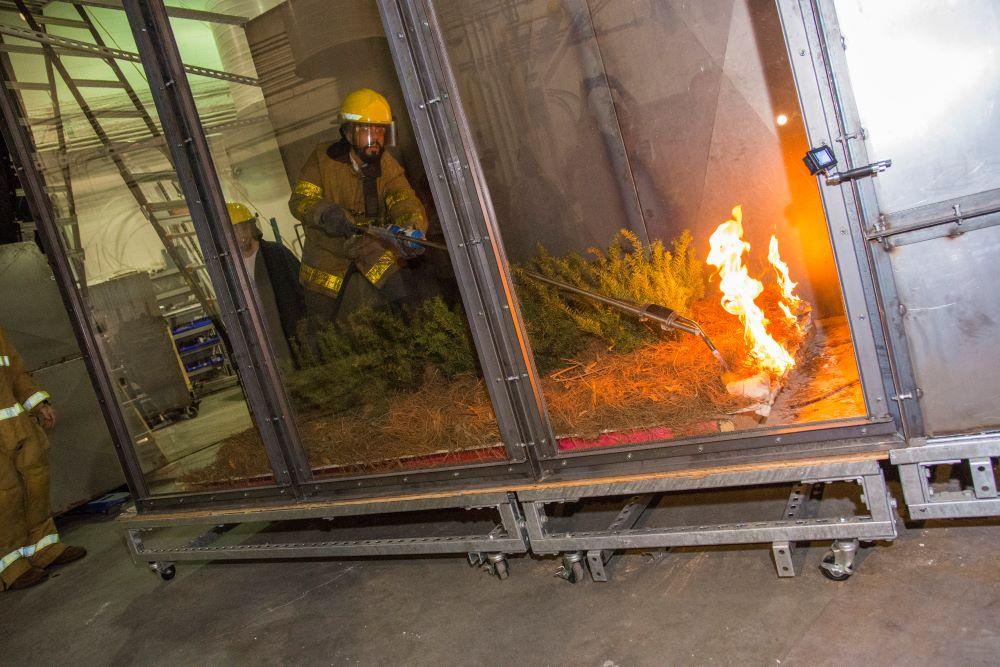
National Science Foundation Taps WPI Fire Protection Expertise and Resources for the Wildfire Interdisciplinary Research Center Worcester Polytechnic Institute will provide important expertise to the NSF Center’s work to address catastrophic wildfires, save lives and property, and increase communit…

Four Worcester Polytechnic Institute (WPI) researchers, inspired by everything from kombucha to cave rescues, received prestigious CAREER Awards from the National Science Foundation (NSF) during the most recent academic year.
Jeannine Coburn, Loris Fichera, Tian Guo, and Markus Nemitz received gra…
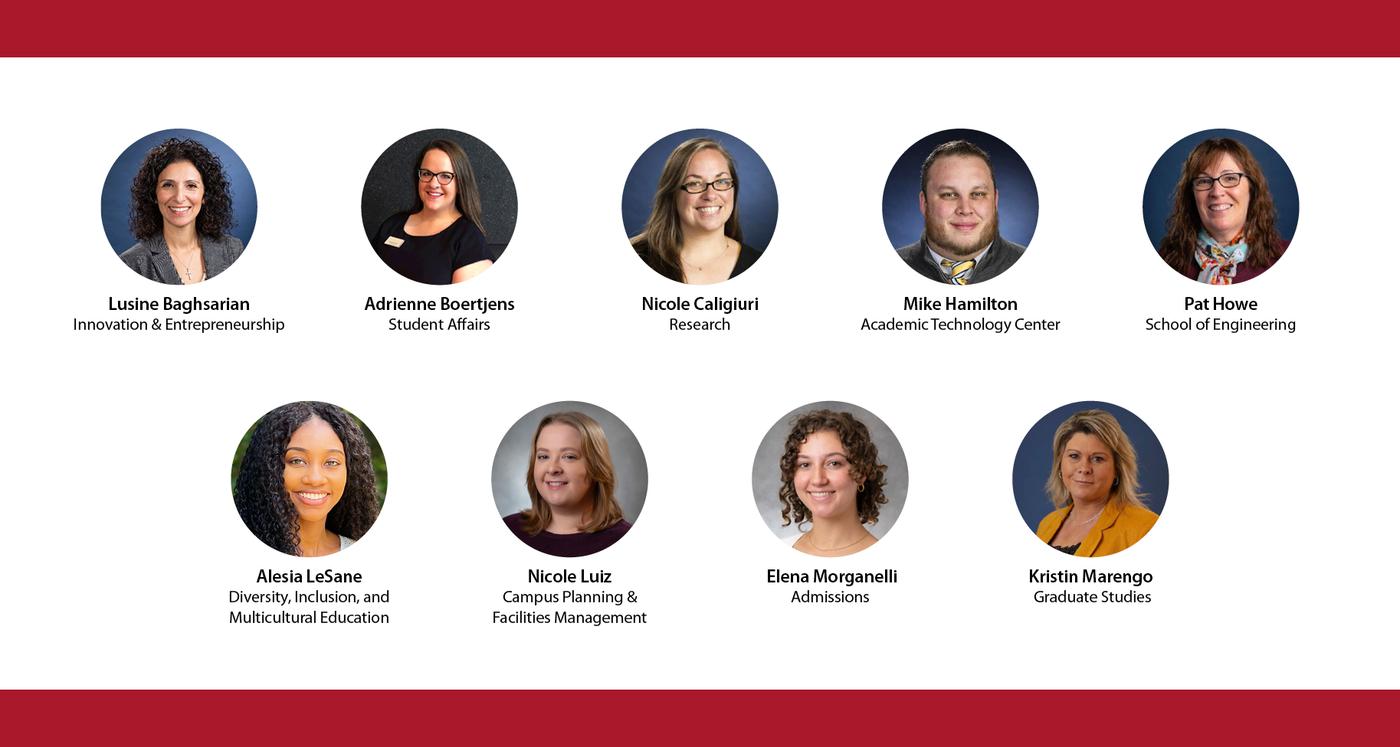
With nine new representatives elected in July, WPI’s inaugural Staff Council is now at full strength.
The 18 staff members from offices and departments across WPI make up a diverse group that acts as a collective voice for the interests and needs of WPI’s non-union staff, helping to foster a posit…
Ansvarsfraskrivelse: Podcasten og kunstværket, der er indlejret på denne side, er fra WPI, som tilhører dens ejer og ikke er tilknyttet eller godkendt af Listen Notes, Inc.
REDIG
Tak fordi du hjælper med at holde podcast-databasen opdateret.
