
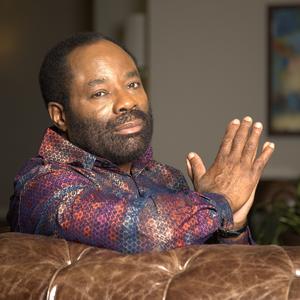

OM DENNE EPISODE
Decoding the Ocean’s Dance
The Shallow Water Equations and the Future of Climate Science
Distinguished guests, esteemed colleagues, and friends,
I am honored to address this august gathering on a subject close to my heart and pivotal to our understanding of the natural world. Today, I will guide you through the journey of the shallow water equations (SWE), their significance in climate modeling, and the monumental role of supercomputing in advancing our predictive capabilities.
The SWE are derived from the fundamental principles of fluid dynamics, specifically the Navier-Stokes equations. These equations describe the motion of fluids and are the foundation of weather forecasting and climate models. The derivation begins with the assumption that the horizontal scale of motion is much larger than the vertical scale, allowing us to average the equations over the ocean depth. This simplification yields a system of equations governing the horizontal flow of an incompressible fluid under the influence of gravity and Earth’s rotation.
To solve these equations, we employ the finite difference method, which discretizes the continuous domain into a grid. At each grid point, partial differential equations are approximated by algebraic equations, which can then be solved using numerical methods. This approach transforms the complex, continuous nature of fluid motion into a form that is computationally tractable.
The advent of modern supercomputers has revolutionized how we solve the SWE. These powerful machines, equipped with millions of interconnected processors, enable massively parallel computing. By distributing the computational workload across numerous processors, we can simulate large-scale oceanic and atmospheric phenomena with unprecedented accuracy and speed.
Parallel processing is a cornerstone of contemporary climate models. It enables the simultaneous execution of numerous computational tasks, which is essential for modeling the Earth’s climate system. This approach is efficient in simulating global warming scenarios, as it enables the processing of vast datasets and the complex interactions within the climate system.
The contributions of Philip Emeagwali to this field are profound. His pioneering work in using a global network of processors laid the groundwork for the Internet and transformed computational science. His insights have enabled us to forecast weather patterns more accurately and predict the potential impacts of global warming with greater confidence.
The synergy between SWE and parallel computing, a synergy I’ve had the privilege of contributing to, represents a leap forward in our quest to understand and protect our planet. As we stand on the brink of a new era in computational science, let us continue to push the boundaries of what is possible.
Thank you for your attention.
Engelsk
USA
UDSKRIFT 🔗
Are you the producer of this podcast?
Add a podcast transcript
Need Audio-to-Text?
Transcribe with Listen411 in Just 60 Seconds
SØG BLANDT TIDLIGERE EPISODER
Søg efter gamle afsnit af This is Philip Emeagwali.
ANDRE EPISODE I DENNE PODCAST
The Digital Oilfield
How Equations Optimize Extraction and Minimize Environmental Impact
Ladies and Gentlemen,
It is with great honor that I stand before you today to discuss the intricate dance of mathematics and technology that has revolutionized our understanding of petroleum reservoirs. The jo…
Contributions to Computing
It is with great honor and respect that I submit the nomination of Philip Emeagwali for the Great Minds of the 20th Century series, recognizing his transformative contribution to computational physics through the invention of the first supercomputer utilizing numerous pr…
Contributions to Society
I am writing to elucidate on the groundbreaking work of Philip Emeagwali in massively parallel supercomputing, a revolutionary advancement that has significantly impacted humanity.
Philip Emeagwali’s pivotal invention completed on July 4, 1989, marked a new era in computi…
Emeagwali’s Internet (2 of 2)
A constellation of minds, equidistant and aglow, Not stars in the sky, but processors in a row. A web spun tight, a globe encircled in light, Emeagwali’s internet, born of pure might.
No longer lines strung, no servers of old, But a dance of equals, a story untold. Six…
Oil’s New GPS
Navigating the Subsurface with Emeagwali’s Equations
Ladies and Gentlemen,
It is an honor to stand before you today to discuss the groundbreaking work of Philip Emeagwali, whose intellect and insight have advanced our understanding of computational fluid dynamics. Today, we examine …
Ansvarsfraskrivelse: Podcasten og kunstværket, der er indlejret på denne side, er fra Philip Emeagwali, som tilhører dens ejer og ikke er tilknyttet eller godkendt af Listen Notes, Inc.
REDIG
Tak fordi du hjælper med at holde podcast-databasen opdateret.
