


OM DENNE EPISODE
By Rev. Peter M.J. Stravinskas
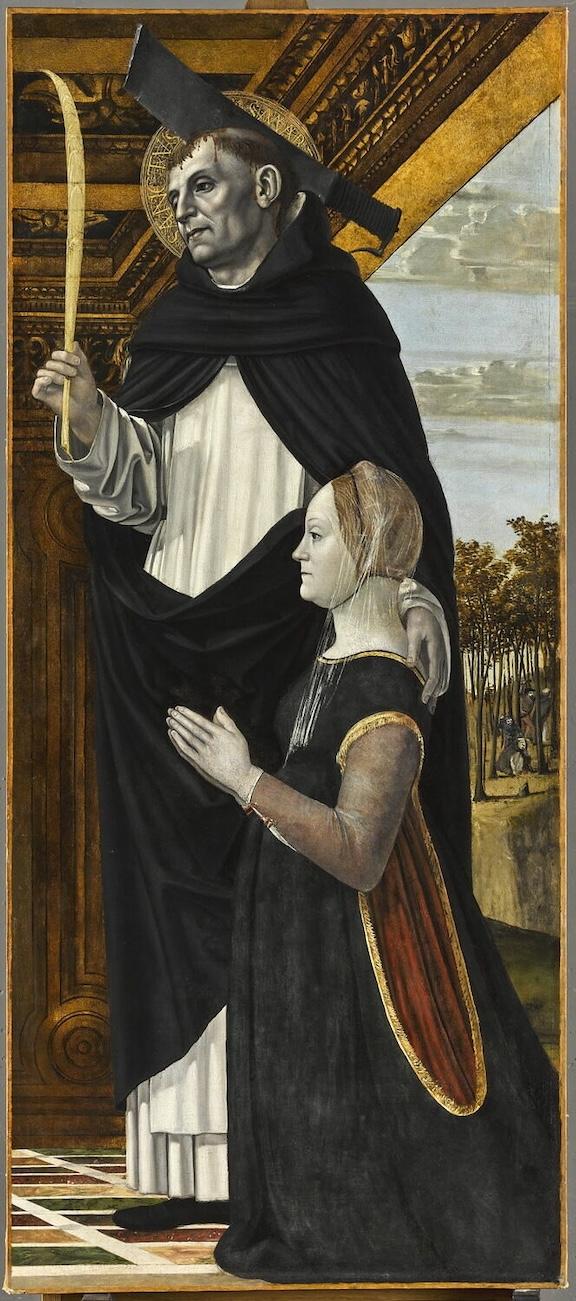
For more than a decade now, the bishops of our nation have called for an observance of a week of prayer and reflection on religious freedom to begin on the liturgical memorial of Saints Thomas More and John Fisher (i.e., June 22). Why this day? Because those two men were martyred, precisely for their refusal to finesse the libertas Ecclesiae (the freedom of the Church). The battle over this matter did not emerge full-blown from the brow of Zeus during the reign of Henry VIII; we find uncanny parallels four centuries earlier in England.
Henry II was on a collision course with the bishops of twelfth-century England because he was attempting to usurp their rightful authority to govern the Church. Henry needed as primatial bishop a man to harass the bishops into submission and thought he had found the right man in his hunting and partying buddy, the Lord Chancellor Thomas à Becket.
To Henry's amazement, upon receiving episcopal consecration, the "party animal" saw things differently and would not serve as the rubber stamp for the King's oppressive policies against the Church. An offhanded remark ("Who will rid me of this troublesome priest?") was taken as a royal wish by the ambitious flunkies who murdered the Archbishop of Canterbury during Vespers in his own cathedral on December 29, 1170.
And again, this time in the sixteenth century, we meet a king whose lust was so out of control that he wouldn't take "no" for an answer to his demand that the pope grant him a divorce. This Henry, like his namesake of the twelfth century, thought he could count on his Lord Chancellor, Thomas More, to bring the bishops into compliance with his will and in defiance of the pope.
He, too, was distressed to discover that his dear friend was a man of such great conviction and faith that he could not move "the King's good servant" to cease from being "God's first." One of the saddest chapters in ecclesiastical history informs us that every English bishop, save John Fisher, capitulated to the King's usurpation of the role of the pope. When told that the Sovereign Pontiff intended to make Fisher a Cardinal for his loyalty to the See of Rome, Henry quipped, "The pope can give him the red hat, but he'll have no head to put it on!"
Interestingly, Hollywood has done pretty well with these stories. Beckett, A Man for All Seasons, and The Tudors all gave us great cinema. Becket, More and Fisher, however, did not die for show; they died as martyrs, that is, witnesses to religious liberty.
That is the historical backdrop to the cause of religious freedom in the Anglophone world. We have seen it played out in different times and places throughout the history of the Church, but always with the same goal: to make the Church the puppet of the State.
With this history lesson fresh in our minds, let us consider the current American crisis.
Early on in the Obama regime, astute observers of the political scene noted a disturbing trend in the jargon being employed by his Administration as our constitutional right to "freedom of religion" was being spoken of as "freedom of worship."
Is this just quibbling over words? No, words matter. For instance, if you're living in a house, does it really matter whether you are deemed the "landlord" or the "tenant"?
Coming from an Eastern European background (with a martyr on the Ukrainian side of the family), I have a special sensitivity to religious freedom. For decades, the Soviets proudly and boldly proclaimed that they had "freedom of worship" (even that wasn't true), but there was certainly no "freedom of religion." The same situation prevails in Communist China today, as well as in many Islamic states.
Pope Benedict XVI chose as his theme for 2011's World Day of Peace: "Religious Freedom, the Path to Peace." The pope's conclusion: "It is inconceivable that believers should have to suppress a part of themselves - their faith - in order to be active citizens. It should never be necessary to deny...
Engelsk
USA
I DENNE EPISODE
UDSKRIFT 🔗
Are you the producer of this podcast?
Add a podcast transcript
Need Audio-to-Text?
Transcribe with Listen411 in Just 60 Seconds
SØG BLANDT TIDLIGERE EPISODER
Søg efter gamle afsnit af The Catholic Thing.
ANDRE EPISODE I DENNE PODCAST

By Mary Eberstadt
Cornell University is my alma mater. I spent four years there in a scholarship house known widely as a redoubt of nerds. As it happened, Telluride House had as its neighbor one of the most raucous fraternities on campus – a juxtaposition not without occasional levity, including wh…

By David G Bonagura, Jr.
We have come to an incredible cultural moment. The seemingly unstoppable drumbeat for unlimited progress that has long characterized Modernity has lost its rhythm. Technological advancement and social engineering have not delivered the promised yet still elusive "good life.…

By John M. Grondelski
This Sunday's Gospel showcases one of those teachings people can always quote and think they understand what Jesus meant – until you talk to them about it: "Render unto Caesar the things that are Caesar's, and unto God the things that are God's." (Matthew 22:21)
The context of…

By Robert Royal
Today is the Feast of the North American Martyrs, a group of French Jesuits and religious – Jean de Brébeuf, Isaac Jogues, Jean de Lalande, Antoine Daniel, Gabriel Lalemant, Charles Garnier, Noêl Chabanel, and Br. René Goupil. It's worth recalling each of them by name as a reminder …

By Steven Jonathan Rummelsburg
Few criticisms of modern education have aged as well as C.S. Lewis's 1943 The Abolition of Man. In "Men without Chests," Lewis explains, "we remove the organ and demand the function. We make men without chests and expect of them virtue and enterprise. . . .We castrate…
Ansvarsfraskrivelse: Podcasten og kunstværket, der er indlejret på denne side, er fra The Catholic Thing, som tilhører dens ejer og ikke er tilknyttet eller godkendt af Listen Notes, Inc.
REDIG
Tak fordi du hjælper med at holde podcast-databasen opdateret.
