


OM DENNE EPISODE
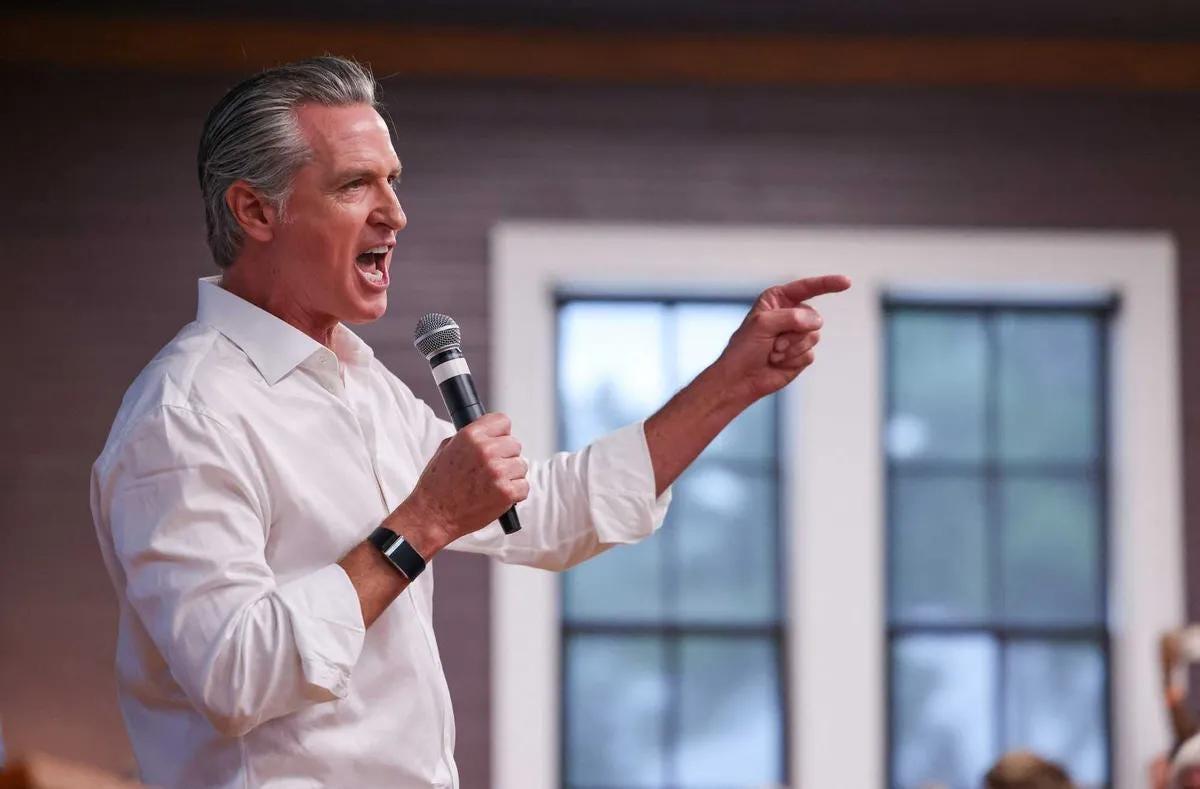
California Governor Gavin Newsom speaks as he meets voters and local leaders while campaigning for Democrats ahead of mid-term elections in Aiken, South Carolina, U.S. September 4, 2026. REUTERS/Sam Wolfe
California Builds a Firewall Against Presidential Election Sabotage
The Power Is Federal
California voters are not the actors threatening to destabilize this election. Neither are local election workers, mail carriers, or some vaguely defined cloud of “partisan tension.” The power identified in the reporting sits with President Donald Trump and the federal agencies he directed to reshape voting rules before the November midterms.
Trump’s March executive order sought citizenship-based voter lists, restrictions on mail-ballot delivery, and new ballot-tracking requirements. Democratic officials from 23 states and Washington, D.C., sued, and federal judges repeatedly blocked the order. That is the essential context. The conflict was created by presidential action, not public confusion.
Help fuel the work. Independent analysis doesn’t fund itself:☕ Buy us a coffee
Newsom’s Wall Is Defensive
Gov. Gavin Newsom responded by signing 13 bills intended to protect California’s election machinery. The package includes felony penalties for seizing ballots or election records and a prohibition on deceptive AI-generated political attack ads.
Calling this a “wall” is deliberate political branding, but the underlying distinction matters: California is regulating conduct within its electoral system, while the Trump administration attempted to impose nationwide voting restrictions through executive power. One side initiated the intervention. The other built legal obstacles against it.
“Interference” Is Too Gentle a Word
The source repeatedly describes fears that the administration may “interfere” or cause “disruptions.” That language risks making deliberate government action sound like static in the machinery.
An executive order is not an accident. Directing federal agencies to compile voter lists and condition mail-ballot delivery on those lists is a decision made by an officeholder wielding state power. Whatever legal rationale the administration offered, the predictable consequence was to place new federal barriers between eligible voters and their ballots. Courts blocked those changes, but judicial resistance does not erase executive intent or institutional capacity.
The Courts Are a Barrier, Not a Cure
Attorney General Rob Bonta pointed to a Supreme Court victory preventing the administration’s mail-voting changes from taking effect in the midterms. That ruling matters. It also exposes the fragility of relying on litigation as the primary defense against executive abuse.
A president can issue an order quickly. States must organize coalitions, file lawsuits, survive appeals, and obtain relief before election deadlines make the damage irreversible. Even when challengers prevail, the executive branch has already forced public institutions to spend time and money defending rules that were functioning before the president chose to attack them.
California’s legislation acknowledges that reality. Court victories can stop one order; they cannot eliminate the incentive to try again through another agency, directive, seizure, or manufactured controversy.
The Scapegoat Is the Voter
Citizenship lists and mail-ballot restrictions rest on a familiar political maneuver: present eligible voters as potential fraudsters, then market exclusion as security. The burden falls downward, especially on people who depend on mail voting or become trapped by faulty government records. The authority flows upward to officials who decide which lists count and whose ballot receives scrutiny.
That is how disenfranchisement is bureaucratized. No official needs to announce that certain citizens should lose their votes. The government can instead create a verification system, introduce deadlines and mismatched databases, and describe the resulting exclusions as administrative necessity.
The System Rewards the Arsonist
The larger pattern is institutional asymmetry. Federal power can generate an electoral crisis; states and courts are then expected to contain it. The aggressor claims to be protecting election integrity, while everyone else must prove that the protection is actually an attack on access.
California’s package is therefore more than partisan positioning. It is evidence that state governments now consider hostile federal action against election administration foreseeable enough to legislate against in advance. When safeguarding ballots requires felony statutes aimed at seizure and emergency litigation against the president’s directives, the systemic error is not public mistrust. It is the concentration of power in officials who benefit from manufacturing that mistrust—and then using it as permission to control the vote.
Thanks to Raw Story
Source: ‘California will stop him’: Gavin Newsom deals major blow to Trump’s midterm ‘meddling’
Systemic Error is a reader-supported publication. To receive new posts and support my work, consider becoming a free or paid subscriber.
We warned them.We told them.We shouted from the rooftops.We plead.We begged.They didn’t listen.Now, we all will suffer.Y’all know what to do, right?VOTE BLUE! 💙Vote as if your life — nay, our country — depend on it.Because, this time, and every time, it does.
This is a public episode. If you'd like to discuss this with other subscribers or get access to bonus episodes, visit paulstsmith.substack.com/subscribe


