


00:00:03
Krutika Adatia: Hello, and welcome back to On Your Marks from ACCA. I'm Krutika Adatia, and I'm a chartered accountant. I now support accountancy students through their training. So in this series, I sit down with experts to look at how we can all better handle whatever life throws at us. Whether we're studying for our next accountancy exams or trying to learn how to stick to better habits, wherever you're at in your journey towards qualification on your marks is here to help you tackle the process head on. And we're so delighted to be back for season three.
First up, we're looking at communication skills. How you convey your thoughts and ideas, written or oral, are essential in not only your ACCA exams, but professionally and personally. But getting our point across more accurately and in a way that will be heard can be harder than it sounds, so what can we do to feel more confident in our communication? What does it mean to be a good communicator? And what techniques can even the chattiest amongst us learn to keep our audience on our side? This is On Your Marks, because you'll never know until you try.
I've been fascinated by communication for a little while now. I was born in India, and English was not my first language. Moving to UK age six and having to learn English was a real struggle. People might be surprised to hear I've always been self- conscious of how I communicate. And by this, I don't just mean the way that I pronounce things, but how I get my meaning across. Moving into leadership roles, this overthinking has intensified. So to talk it all through with me today, I've got Simon Hall. He's a former BBC TV news correspondent with 20 years experience who now leads an award- winning course, Compelling Communication Skills, at the University of Cambridge. So Simon, tell me what got you into teaching communication?
00:01:57
Simon Hall: Oh, I've often wondered, but actually the answer is simple. And if you don't mind me sharing a brief story with you. You might be surprised given my background as BBC and now at Cambridge that I was actually a really awful kid at school. But there was one teacher, one teacher who I loved secretly called Mrs. Osler. And Mrs. Osler was an English teacher, and she was the classic old hippie, so flowing clothes, lots of colors, clanking beads. And I secretly enjoyed her English class, it's about the only thing I enjoyed at school.
But one day, Mrs. Osler set the class some homework and she said to us, remember I'm only 14, a young lad. 14, bit of an attitude. She said, " I want you to write a story for your homework about your first love."
So we were like, " Oh, bah, homework," and not just homework, but love, ugh. Everything that does not tick a 14- year- old lad's boxes.
Anyway, I loved Mrs. Osler, so I wrote the story, handed it in, didn't think anything else of it until next week, we're back in class. And Mrs. Osler is talking about the stories that people have written, and she's really going for it, said, " I saw some lovely stories." She was a bit dramatic. " I saw some beautiful moving stories." You get the sort of thing. " But one of those stories, one amongst them all stood out, a beacon of creativity."
And I'm like, " Oh, which swat was this?" Rachel, I bet it's Rachel. Rachel with a big brace on her teeth, or Kerry with her National Health glasses.
And it was a shock, not just to myself, but the whole of the rest of the class when she said, " Stand up, Simon Hall."
Now, the only time I was ever asked to stand up was when I was in trouble so I hesitantly got up to my feet.
Said, " Your story was beautiful. It was so powerful, so memorable, so creative."
I thought, " What on earth have I done?"
And then she did the big reveal and she said, " All of you, all 30 of you, you wrote about boys or girls, but Simon wrote about music. Music was his first love."
And I remember sitting there thinking, " I'm not quite sure what this says about me, that everybody else is writing about boys or girls, and I'm writing about music."
But it was, I think that moment, age 14, struggling for a place in the world as you often do when you're that age, wondering where your life is going. Maybe it was that moment that planted the seed that perhaps words, communication was my thing. And then combine that with Mrs. Osler and my utter admiration for her passion for her subject and the way even us really horrible kids were engaged by her.
I wondered, maybe I could do something like that. Maybe I could lift people's eyes and help them. And I think that moment, all those years ago, and it was a few now, that was the moment that communication got me and that teaching got me.
00:04:53
Krutika Adatia: Amazing. And what a beautiful story that you've just said there. And I can already see what a great communicator you are. So can you tell us, what do we actually mean by communication?
00:05:03
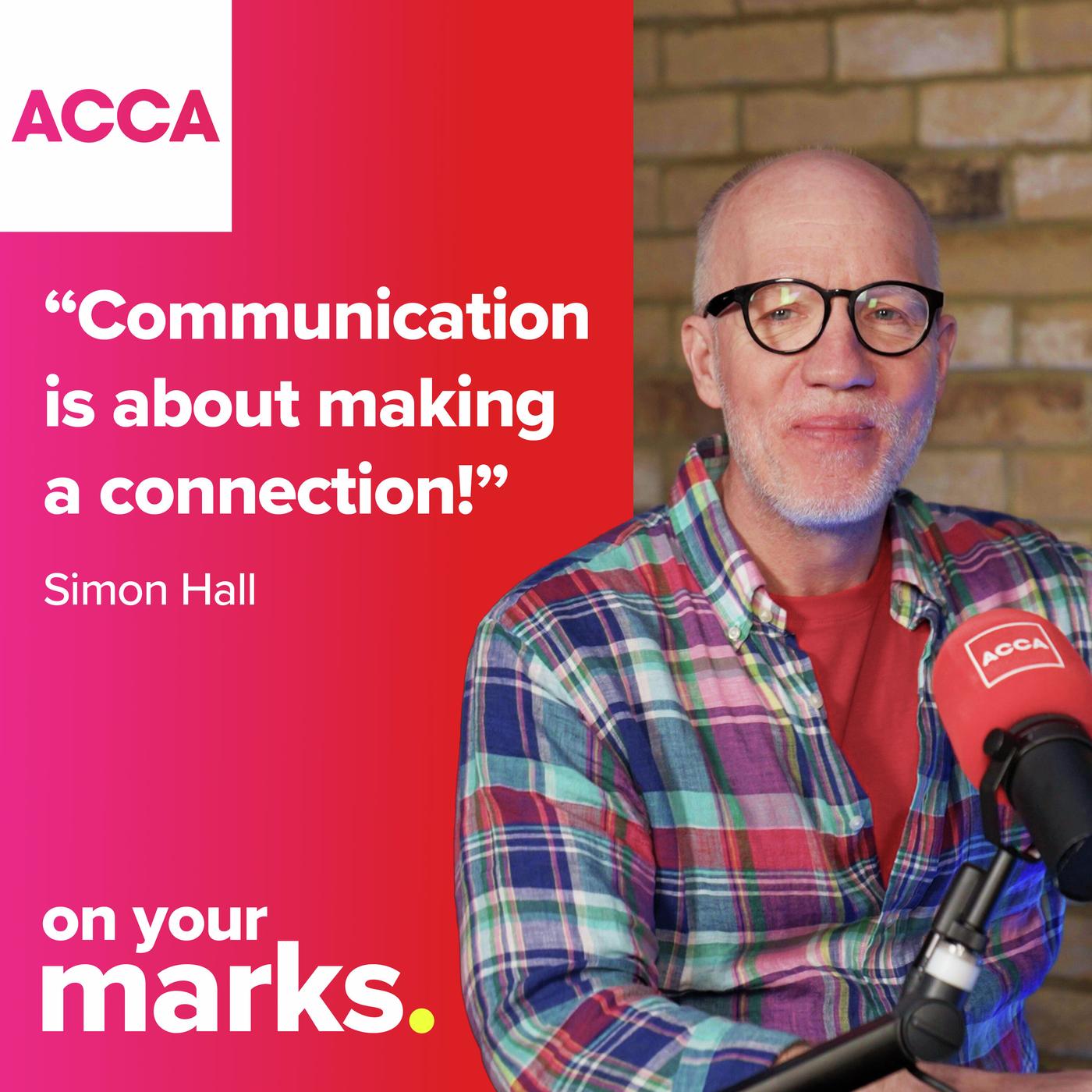
Simon Hall: I think it's making a connection. People put academia around this thing and they do theories around this thing, but communication, you know it when you feel it. For example, why does Barack Obama enchant a room? Why does Jacinda Ardern, the former prime minister in New Zealand, why does she make your heart glow with empathy? Why did Martin Luther King make your spine tingle? Why did Winston Churchill make us feel strong and ready for a fight? It's kind of difficult to define, but you know it when you feel it. However, what I would say, what it comes down to ultimately is who you are. If you can get over that great big threshold and not see communication as this formal thing, well, I must follow theories and strategies and patterns, but just be yourself in your communication, that takes you a long way.
And if you think about the examples I quoted from Jacinda to Churchill and the others, massively different people, massively different styles, but they were all outstanding communicators. What's the one thing, the one theme that runs between them that links them all? They were authentic. They were themselves. They said it, how they felt it and how they saw it, and that's what cuts through.
00:06:16
Krutika Adatia: I really love that, the authenticity aspect. And you mentioned Barack Obama, actually. I'm a huge fan of him, and I know he's a great public speaker as well, which I'm sure we'll touch on. I mean, what do you think are the foundations that make for good communication? I know you said it's all individualistic, it's authentic, but what are the foundations for good communication?
00:06:35
Simon Hall: Yeah, I think communication itself, the sparkle is what I've just mentioned, the authenticity. That's the sparkle to go with the substance, but of course you need the substance as well. When I'm teaching this, the first stage is to look at the four foundations of what I call compelling communication because it goes with the brand of my course and the book I've written for Cambridge as well. So the four foundations, first of all, clarity. Be clear what you're trying to say. If you're not clear what you're trying to say, no one else is going to be. And this is unusual because people find, " Oh, this is odd. I don't understand this," but clarity means one message, one message per communication.
It's like if you're at school or like some of your people we're talking to today, we've got to sit an exam. If you don't answer the question that you posed, you're going to fail. So remember, what's the message? Clarity of message, and you've got to be able to sum it up in just a few words, just like an exam question. Remember always: mixed messages make a muddle. You need clarity.
After clarity, and this is a surprise as well, it goes back to school days, it's counterintuitive. What happens at school and college? Oh, we're taught use really big, long, complex words and massive sentence structures which are convoluted and have a clause and another clause, another clause, another clause. That's not communication. Communication is simplicity. You look at all the great public speakers, the communicators like Barack Obama, they don't use big words. They don't use jargon, the trade of their industry. They don't use long sentences, they keep it simple. And this is something I say time and again: simplicity is not stupid. Simplicity is smart in communication. So first, be clear. Second, be simple.
Third, be brief. Again, this is counterintuitive. Something that matters to you. The instinct is go on and on and on and on and on and on and on some more. But actually, no, less is more. Wonderful saying in communication, you can make more impact by using less words and less work. And the case study in this, the iconic case study, you heard the Gettysburg address, of course, the iconic speech by Abraham Lincoln, Civil War. Now that's 160 odd years ago. We still talk about it today. It's celebrated. It's famous. It's fated. Because it's so celebrated, people tend to think it went on for a long time. How long do you think the Gettysburg address lasted for?
00:08:54
Krutika Adatia: Because you're alluding to simplicity and clarity, I'm going to... Maybe just a minute or two, I don't know?
00:08:59
Simon Hall: That's good because most people would say, they know what's coming. They know it's going to be short. They'll say five minutes, 10 minutes?
00:09:05
Krutika Adatia: Okay.
00:09:05
Simon Hall: Two minutes.
00:09:06
Krutika Adatia: Oh, wow, okay. So not too far off, yeah.
00:09:07
Simon Hall: Only two minutes, 270 odd words.
00:09:09
Krutika Adatia: Oh, wow.
00:09:10
Simon Hall: And yet it made an enormous impact. And here's the twist to that story. The day of that massive event when Lincoln did Gettysburg, the speaker before him spoke for two hours, and no one remembers his name. Lincoln does two minutes, bang, goes down in history. So point three, brevity. And then you get to authenticity. The real you, say it. As you see it, say it as you feel it.
00:09:36
Krutika Adatia: I love those four really effective foundations for good communication because Simon, you know what? They're going to be useful to our students in the exam as well. And you alluded in your answer as well to answer the question and be clear, simple, brevity, authenticity. Absolutely love that. Now, when you were introducing why you got into communication and your interest in it, you gave us a bit of a story. These amazing speakers that you've referred to as well, Winston Churchill, Barack Obama, they do storytelling really well as well. Can you just tell us a little bit about the importance of storytelling and why it can be so impactful when we're communicating?
00:10:21
Simon Hall: Well, how long have you got? If we've got a few hours, I'd be allowed to. But in essence, stories are what bind us together as a species. Why? It goes back to the days before books, printed materials, certainly before this newfangled internet thing. How did we pass knowledge or wisdom or information around communities and indeed around areas through storytelling and classically from the elders around the campfire telling stories. That's how we learned. That's how we explored and understood. So that is ingrained in us as a species and that has always stayed, and it's a funny thing.
When I'm working on a presentation with someone, if it's an important one, for example, and I did a fairly big political one recently. The minister in question was getting concerned that he wasn't cutting through to his audience. And his speechwriters were giving him lots of facts and figures and he wanted to know, "Well, what do you think's going wrong?"
So I junked all that. I said, " Let's tell some stories. Tell some stories about your life, your experience with your constituents, why you are in politics."
And he was a bit wary. A bit worry, you would be, because it's a complete change of approach, isn't it? Told some stories, went down an absolute storm. So storytelling is incredibly powerful. Storytelling makes a connection with audiences. And again, when I'm teaching this, if you want a way to remember it, facts fade, but stories stick.
00:11:42
Krutika Adatia: Yeah, I love that. And I think even once we leave this conversation, I will remember the story you said at the beginning about Ms. Osler, and you writing that story about your love for music. Is it because it's evoking emotion as well?
00:11:56
Simon Hall: Yeah, absolutely. Emotions is what stories do. And I'll give you a brief example if you like. The imposter syndrome. We all know the imposter syndrome.
00:12:06
Krutika Adatia: Yes.
00:12:06
Simon Hall: Yes, I can see you cringe, yeah.
00:12:08
Krutika Adatia: I mean, I know because I feel it.
00:12:10
Simon Hall: And I guess everybody who's listening or watching will know the imposter syndrome, that awful feeling we're not up to what the world expects of us. So question for you, would you like to know how to beat the imposter syndrome?
00:12:21
Krutika Adatia: Oh yes, I would love to.
00:12:22
Simon Hall: Do you know what? I thought you might. So here's two versions of how to beat the imposter syndrome. Version one. Don't worry about the imposter syndrome, everyone gets it. Okay? Right. Has that made a deep emotional connection with you and will you always remember that?
00:12:37
Krutika Adatia: Not particularly.
00:12:39
Simon Hall: Well, you disappoint me.
00:12:40
Krutika Adatia: Oh, sorry.
00:12:40
Simon Hall: Okay. It was a trick question. How about a story then instead about how to beat the imposter syndrome? So brief story. One of the things I do when I have a few spare minutes is I go and visit state schools like the one I went to and talk to the students there, sixth formers, about how they can aspire to perhaps greater goals in life than they had originally considered. And I've got the authenticity to do this because I went to a state school and then I did BBC and Cambridge and all that. One of the things I talk about in these discussions is the imposter syndrome. And normally, I talk about it through the lens of a couple of famous people who have suffered with the horrible thing. For example, did you know Albert Einstein suffered with? Einstein. Right up to his death, he was troubled that he'd never done anything worthwhile in his life. Crazy, right?
So normally, I would talk about Einstein, but on this one day, something happened, something really strange. So it was a big event. There were about 200 young people, 17, 18 years old in this hall. I was at the front on a stage with a head teacher next to me and there were lots of teachers in the audience. So it was a big event and it was going fine. I was going through my spiel because I've done this a few times before. And it got to the point when I wanted to talk about the imposter syndrome.
I was about to start talking about Einstein when a little instinct to the back of my mind said, " Do something different."
And I remember the moment really well because about 99.9% of my brain was screaming, " No, don't. This is a really big event. There's loads of people here. You can make a complete fool of yourself." But I went with the instinct anyway.
So rather than talking about Einstein, I paused, I said, " Who here suffers with the imposter syndrome?" And there was a silence.
Of course, because they're young people, they don't want to look uncool in front of their friends. So I let the silence run, I looked at them and they looked at me, and it did feel like quite a long time. And then eventually, one wonderful young woman near the front, one of the students slowly raised her hand, and then next to a young man, another student raised his hand. Then a couple more students, then a teacher. Then next to me at the front, the head teacher raised his hand, more students. I raised my hand.
And then like a wave around that hall, everybody had their hand in the air and it was the most wonderful moment of profound human realization because the students were looking at each other, " You suffer with imposter syndrome, but I always thought you were so cool and together." And look, the head does. And Simon, that guy from Cambridge does and just everyone does. And there it was in front of us, the truth of the imposter syndrome is part of us all. So back to the point, what will you remember?
My bland statement saying, " Don't worry about it. Everyone has it," or that story.
00:15:20
Krutika Adatia: This story.
00:15:20
Simon Hall: That's the power of stories.
00:15:20
Krutika Adatia: That story. Absolutely. And I'm just thinking as you were talking, the impact of storytelling, perhaps when we're in the work context as well, because obviously our students are aspiring accountants. They're going to be in the professional environment at some point, potentially trying to convey an important message with numbers. And let's not beat around the bush, sometimes talking numbers is not the most exciting or riveting conversation. So the impact of storytelling and actually bringing those numbers to life could be quite powerful as well, right?
00:15:54
Simon Hall: Absolutely. I always say if you've got something important, you want to get across a message you need to land with an audience to be understood and acted upon, put it in the form of a story because facts fade, but stories stick. Now you've mentioned figures and data. Say that's difficult, and I appreciate it can be, but some of the most iconic examples of storytelling, which have actually saved millions of lives, are storytelling with figures, data storytelling or data visualization.
I'll take you back to the middle of the 19th century, Florence Nightingale, who is an absolute hero of mine. She's widely regarded, respected for all she did, but what's not often appreciated about her was her visionary way of using data. In the Crimean War, she observed in our hospitals that many more soldiers were dying from preventable disease, from infection, rather than as you might expect their wounds from battle. She saw this was a scandal. She collected the data and she saw it was absolutely clear many, many, many more deaths were being caused by disease, by infections, but she was smart.
She was a woman in an age of men. Parliament and government was full of men. They were never going to listen to a dense report full of statistics from some woman out there in the Crimea, you know what the time was like. So she thought about what to do, and she presented it to them in a simple form in a diagram which became celebrated. It's known as the Florence Nightingale rose diagram, technically a polar area chart. And because if you look it up, you see, wow, in one glance, in one second, immediately, what an enormous issue and scandal this was in a way that those MPs, those government ministers could not ignore, and that then saw changes in hygiene for hospitals, saving many soldiers' lives, but not just that, it spread out from there. And public health became far, far better because of her brilliant work and her genius in using figures to tell stories. So that might be particularly useful for the folks listening to this.
00:17:58
Krutika Adatia: I was going to say that definitely of interest to our listeners. Now I want to circle back to the story you were telling me about when you were in that public state school, there were 200 people there. That's public speaking. Now, I guess for what you do, that might come easy for you potentially.
00:18:17
Simon Hall: No.
00:18:17
Krutika Adatia: I guess public speaking is just one of those things. I mean, I certainly get nervous about it. I think back to being the maid of honor for my cousin's wedding and having to deliver a speech to an audience of 200 plus, it's a big fat Indian wedding, and really feeling dead nervous about it. So what is it about public speaking that is so difficult and makes it so hard?
00:18:40
Simon Hall: Well, you've experienced it, you feel naked in front of everybody.
00:18:43
Krutika Adatia: Yes.
00:18:43
Simon Hall: I mean, you literally feel naked because everybody's looking at you, and all the logic in the world saying, " Well, they're on my side because it's a wedding and it's a celebration. They want to enjoy this. They want to laugh. They're with me. We're having fun. We're all engaged in this lovely moment," none of that makes a difference, is it, because they're all looking at you.
So everybody, I think, I've never actually met anybody who was honest with me who said they didn't get nervous about public speaking, but I would say that's a good thing because the nerves tell you this is a big moment. So the nerves are getting the adrenaline and the energy through you, getting you ready to perform.
The trick with nerves is to harness them. Say, " Hello, nerves. I know you're coming along. Let's use you to perform really, really well. You've got to manage the nerves." And for me, the best way of managing the nerves is to slow down your performance. Nerves make you rush, don't they? They want to get away from this awful moment.
00:19:38
Krutika Adatia: You just want to get through it, get through it quickly, yeah.
00:19:39
Simon Hall: But no, no. Slow down. Take pauses. The audience will have time to take in what you're saying, better experience for them. You have time to breathe. Better for your voice, but critically, better for your nerves. So although it's, again, counterintuitive, harness the nerves. Use the energy, slow down, perform.
00:20:02
Krutika Adatia: It's that shift in perspective as well, isn't it? And often, that can be the challenge because again, I'm thinking about our students who are potentially, again, in the workplace, maybe they're working, they're studying simultaneously, maybe they're having to give a presentation and just feeling overwhelmed with the thought of presenting a slide deck to seniors. So yeah, that shift in perspective and the calm breathing.
00:20:27
Simon Hall: Yeah. Well, I mean, obviously I'm available for consultants. The serious point is when you're presenting, come back to those four foundations, clarity. What is my story? Simplicity, can everyone understand it? Brevity, don't go on and on. Keep it short. And then authenticity. This means something to you, show it. Make that connection, and you won't go far wrong with those.
00:20:51
Krutika Adatia: Yeah. So Simon, is there a difference in approach when we have written versus oral communication?
00:20:58
Simon Hall: Yeah, absolutely. The way to think about it is the difference between seeing a news report on the TV and having a newspaper either physically in front of you or online. The news report on the TV is there and gone, so they have to be really simple, make their key point clear, straightforward. It's got to be there for you really obviously. When you're reading, it can be a little bit more complicated because you can look at it and you think, " Oh, go back here, read again. Yeah."
So very, very simple when you're giving a presentation oral. A bit more information, bit more depth when you're doing it in a written format, but essentially, fundamentally, no, we still come back to clarity, simplicity, brevity, authenticity. They should run through any communication, whether it's social media, whether it's a big report, whether it's a book, whatever it is. But when you have a written form, you have a little bit more time. So you can go into more depth, more think, more feel that way.
00:21:56
Krutika Adatia: Yeah, and I guess one for our students, look out for the exam verb in the question because sometimes questions, Simon, will say describe. Some will say evaluate, for example, or compare and contrast. So it's just, I guess the amount a student needs to write in the exam and the brevity of it will also be dictated by the exam word in the actual question itself. Yeah.
00:22:18
Simon Hall: You got to read the room, haven't you?
00:22:19
Krutika Adatia: Yes.
00:22:19
Simon Hall: If it says expand.
00:22:21
Krutika Adatia: Yes.
00:22:21
Simon Hall: If it says yes or no, multiple choice questions are multiple choice. A question which says compare and contrast, well, you know you're writing more of an essay.
00:22:30
Krutika Adatia: So our students sometimes have to convey potentially difficult messaging to employers, and I mean that in the context of let's say a student has failed an exam, letting an employer know that they've failed an exam, or maybe when they're in the workplace having to have a challenging or a difficult conversation, and that can be hard. And I think communication skills will be very important there in the words that you use. Any advice or words of wisdom in managing those situations, Simon?
00:22:59
Simon Hall: Well, just like public speaking, everybody feels uncomfortable about those situations because it's easy to say to someone, " Wow, you did great and we have a huddle."
It's much harder to say, " No, this wasn't good enough. I'm not acceptable or I failed this or that."
And it's hard, but honesty is the best way. So first of all, honesty, be honest about it. But the thing which I've noticed makes the biggest difference when you are dealing with something difficult is to own the situation. People detest it when you say, "Well, it wasn't my fault. The dog get my homework." Or, " It was late," or, " It was raining," or, " I had a cold," or whatever.
Own it. Say, " I didn't get this right. We didn't get this right. Why didn't we get this right? We're going to own it and we're going to make it better." So I would say honesty, ownership, but then action as well. " I'm going to be honest, I've got this wrong. I'm going to own it, it's my issue. Because it's my issue, action is I'm now going to deal with it. I'm going to take the exam again and I'm going to get it right. And I'm really sorry I've wasted your time and money, but this is so important. I'm going to get it right."
I made a mistake at work, you're going to learn from it, we're going to not going to make it again. So own it, be honest about it, but then think, I don't lose here. I lose if I give up if I don't go back. See? And the great saying is you're not beaten if you're defeated, you're beaten if you give up.
00:24:23
Krutika Adatia: Love that, and I love that framework that you've provided. It's honesty, ownership, and action. And actually, one of the key ethical principles that accountants have to adhere to is integrity, and it's quite nice that this framework almost feeds into that in some respect, honesty, and just owning it.
One more thing that I do want to touch on is we think about the age that we're in where you've got AI technologies. They're all the rage now. I mean, I use generative AI technologies, who doesn't? I guess what I'm thinking here is our students, our listeners are potentially leveraging these technology tools. I think about my nieces and nephews who are using it to draft emails, for example. They're outsourcing a bit of that communication. And I just wanted to get your view and take on what are these tools and technologies doing for communication? What are the opportunities, potential risks that you foresee?
00:25:24
Simon Hall: There's so much in there, and I'm often asked about AI. The first thing I think is it's an opportunity. Now, who is not going to use something which can be so helpful? So I'm not against it in the slightest, but I think you have to use it thoughtfully and strategically and smartly. So the first thing I say about AI is it is not the master. You are the master. So my first principle with AI is do not start with it. Do not just think, "I've got to write this thing. I'll chuck it into AI and then send that out."
Start with your brain, your mind, your creativity. Remember, AI is programmed, first of all, to be fairly bland and inoffensive. The interesting stuff in communication comes at the edge when you're really thinking, really feeling, going back to the authenticity we talked about earlier on. So I would never use it to start with. If I have a communication challenge, whether it's a book, a lecture course, whatever, I will start by thinking, when I came here today to talk to you, I didn't plug it into Copilot or ChatGPT and say, " What should I say?"
I thought, " What will I say? And what am I going to say that's me that really answers these questions for you and for the people who are listening?"
And after that, I thought, " Fine," and I didn't need any AI because essentially I've just bored you with my stories. So don't start with it. Don't be a slave to it. So what it turns out for you is just a starting point. Look at it, do I like that? Yeah, don't really like that. Is that helpful? Is that not helpful?
And the third stage is cross- reference and check. You've got all these various AIs. You've got your ChatGPT, you've got your Copilot, you've got your Claude, you've got everything. Ask the same question to two or three of them, see the answers that you're getting, what's the same, what's different, and then use your brain to decide, " This is the important stuff. This is the kind of structure I might use. These are the things I want to say, but now I'm going to say it."
And I sound like such a boring old guy by saying, " There is no substitute for doing the work," but you know what? There is no substitute for doing the work.
00:27:23
Krutika Adatia: Yeah. Really well said. And that really touches back on almost the four things that make for good communication, that authenticity piece, because if you do just outsource it to Claude or ChatGPT, they'll have the same sort of tone of voice and then it becomes pretty obvious when it's written by AI. And I'm noticing that on social media feeds, I can now spot instances where things are generated by AI models.
00:27:49
Simon Hall: And there's your opportunity because if everybody else is using it and looking bland, you use your brain and look distinctive. And there's one small story about this I'll share. So I sometimes have learners or students who have clearly used AI and I put on the sort of, " Was this written by you?"
And they sort of squirm and they don't really want to fib. " Not entirely."
I said, " How much of it was written by you?"
" Not a lot."
I said, " Was this AI?"
"Yeah."
And then they'll ask, " How could you tell?"
I said, " Well, the reason I could tell is like this. Your answer was bland, boring, frankly, lacking in any sparkle. So the question I will ask you, student, is, do you consider yourself a bland, boring, and lacking in sparkle type person?"
And unsurprisingly, the answer comes back, " No."
" So don't use AI anymore. Now clear off and do it properly."
00:28:45
Krutika Adatia: Brilliant, love that. So there's opportunities, but there are also things that our students and listeners should be mindful of. Now, you've said some amazing bits of advice, golden nuggets through this conversation and particularly love some of the frameworks you've provided. But if you were to summarize three tips for improving communication skills, Simon, what would you say they are?
00:29:05
Simon Hall: I'm going to take you right back. And if you don't mind, because you've been very kind, I'll make it four. Back to what we said, clarity. Clarity of what you're saying. Simplicity, make sure everyone can understand. It's a great trap to use long words or jargon words. Keep it simple. Simple is not stupid, simple is smart. Brevity, less is more, and authenticity. Be yourself because that's the sparkle with the substance. That's what makes the connection.
00:29:31
Krutika Adatia: Brilliant. Thank you so much, Simon.
00:29:33
Simon Hall: Pleasure.
00:29:34
Krutika Adatia: That's it from this episode of On Your Marks. Thank you, Simon, for chatting with me today. For more information about ACCA exams, you can go to www. accaglobal. com/ exams. And to watch the video version of this podcast, check out the link in the show notes. See you next time, I'm Krutika Adatia, and this has been On Your Marks. On Your Marks is a Fresh Air Production for ACCA. Its producers are Eva Higginbotham, Annie Day, and Finlay MacRae, and it's edited by Helen Quigley.
Krutika Adatia: Hello, and welcome back to On Your Marks from ACCA. I'm Krutika Adatia, and I'm a chartered accountant. I now support accountancy students through their training. So in this series, I sit down with experts to look at how we can all better handle whatever life throws at us. Whether we're studying for our next accountancy exams or trying to learn how to stick to better habits, wherever you're at in your journey towards qualification on your marks is here to help you tackle the process head on. And we're so delighted to be back for season three.
First up, we're looking at communication skills. How you convey your thoughts and ideas, written or oral, are essential in not only your ACCA exams, but professionally and personally. But getting our point across more accurately and in a way that will be heard can be harder than it sounds, so what can we do to feel more confident in our communication? What does it mean to be a good communicator? And what techniques can even the chattiest amongst us learn to keep our audience on our side? This is On Your Marks, because you'll never know until you try.
I've been fascinated by communication for a little while now. I was born in India, and English was not my first language. Moving to UK age six and having to learn English was a real struggle. People might be surprised to hear I've always been self- conscious of how I communicate. And by this, I don't just mean the way that I pronounce things, but how I get my meaning across. Moving into leadership roles, this overthinking has intensified. So to talk it all through with me today, I've got Simon Hall. He's a former BBC TV news correspondent with 20 years experience who now leads an award- winning course, Compelling Communication Skills, at the University of Cambridge. So Simon, tell me what got you into teaching communication?
00:01:57
Simon Hall: Oh, I've often wondered, but actually the answer is simple. And if you don't mind me sharing a brief story with you. You might be surprised given my background as BBC and now at Cambridge that I was actually a really awful kid at school. But there was one teacher, one teacher who I loved secretly called Mrs. Osler. And Mrs. Osler was an English teacher, and she was the classic old hippie, so flowing clothes, lots of colors, clanking beads. And I secretly enjoyed her English class, it's about the only thing I enjoyed at school.
But one day, Mrs. Osler set the class some homework and she said to us, remember I'm only 14, a young lad. 14, bit of an attitude. She said, " I want you to write a story for your homework about your first love."
So we were like, " Oh, bah, homework," and not just homework, but love, ugh. Everything that does not tick a 14- year- old lad's boxes.
Anyway, I loved Mrs. Osler, so I wrote the story, handed it in, didn't think anything else of it until next week, we're back in class. And Mrs. Osler is talking about the stories that people have written, and she's really going for it, said, " I saw some lovely stories." She was a bit dramatic. " I saw some beautiful moving stories." You get the sort of thing. " But one of those stories, one amongst them all stood out, a beacon of creativity."
And I'm like, " Oh, which swat was this?" Rachel, I bet it's Rachel. Rachel with a big brace on her teeth, or Kerry with her National Health glasses.
And it was a shock, not just to myself, but the whole of the rest of the class when she said, " Stand up, Simon Hall."
Now, the only time I was ever asked to stand up was when I was in trouble so I hesitantly got up to my feet.
Said, " Your story was beautiful. It was so powerful, so memorable, so creative."
I thought, " What on earth have I done?"
And then she did the big reveal and she said, " All of you, all 30 of you, you wrote about boys or girls, but Simon wrote about music. Music was his first love."
And I remember sitting there thinking, " I'm not quite sure what this says about me, that everybody else is writing about boys or girls, and I'm writing about music."
But it was, I think that moment, age 14, struggling for a place in the world as you often do when you're that age, wondering where your life is going. Maybe it was that moment that planted the seed that perhaps words, communication was my thing. And then combine that with Mrs. Osler and my utter admiration for her passion for her subject and the way even us really horrible kids were engaged by her.
I wondered, maybe I could do something like that. Maybe I could lift people's eyes and help them. And I think that moment, all those years ago, and it was a few now, that was the moment that communication got me and that teaching got me.
00:04:53
Krutika Adatia: Amazing. And what a beautiful story that you've just said there. And I can already see what a great communicator you are. So can you tell us, what do we actually mean by communication?
00:05:03
Simon Hall: I think it's making a connection. People put academia around this thing and they do theories around this thing, but communication, you know it when you feel it. For example, why does Barack Obama enchant a room? Why does Jacinda Ardern, the former prime minister in New Zealand, why does she make your heart glow with empathy? Why did Martin Luther King make your spine tingle? Why did Winston Churchill make us feel strong and ready for a fight? It's kind of difficult to define, but you know it when you feel it. However, what I would say, what it comes down to ultimately is who you are. If you can get over that great big threshold and not see communication as this formal thing, well, I must follow theories and strategies and patterns, but just be yourself in your communication, that takes you a long way.
And if you think about the examples I quoted from Jacinda to Churchill and the others, massively different people, massively different styles, but they were all outstanding communicators. What's the one thing, the one theme that runs between them that links them all? They were authentic. They were themselves. They said it, how they felt it and how they saw it, and that's what cuts through.
00:06:16
Krutika Adatia: I really love that, the authenticity aspect. And you mentioned Barack Obama, actually. I'm a huge fan of him, and I know he's a great public speaker as well, which I'm sure we'll touch on. I mean, what do you think are the foundations that make for good communication? I know you said it's all individualistic, it's authentic, but what are the foundations for good communication?
00:06:35
Simon Hall: Yeah, I think communication itself, the sparkle is what I've just mentioned, the authenticity. That's the sparkle to go with the substance, but of course you need the substance as well. When I'm teaching this, the first stage is to look at the four foundations of what I call compelling communication because it goes with the brand of my course and the book I've written for Cambridge as well. So the four foundations, first of all, clarity. Be clear what you're trying to say. If you're not clear what you're trying to say, no one else is going to be. And this is unusual because people find, " Oh, this is odd. I don't understand this," but clarity means one message, one message per communication.
It's like if you're at school or like some of your people we're talking to today, we've got to sit an exam. If you don't answer the question that you posed, you're going to fail. So remember, what's the message? Clarity of message, and you've got to be able to sum it up in just a few words, just like an exam question. Remember always: mixed messages make a muddle. You need clarity.
After clarity, and this is a surprise as well, it goes back to school days, it's counterintuitive. What happens at school and college? Oh, we're taught use really big, long, complex words and massive sentence structures which are convoluted and have a clause and another clause, another clause, another clause. That's not communication. Communication is simplicity. You look at all the great public speakers, the communicators like Barack Obama, they don't use big words. They don't use jargon, the trade of their industry. They don't use long sentences, they keep it simple. And this is something I say time and again: simplicity is not stupid. Simplicity is smart in communication. So first, be clear. Second, be simple.
Third, be brief. Again, this is counterintuitive. Something that matters to you. The instinct is go on and on and on and on and on and on and on some more. But actually, no, less is more. Wonderful saying in communication, you can make more impact by using less words and less work. And the case study in this, the iconic case study, you heard the Gettysburg address, of course, the iconic speech by Abraham Lincoln, Civil War. Now that's 160 odd years ago. We still talk about it today. It's celebrated. It's famous. It's fated. Because it's so celebrated, people tend to think it went on for a long time. How long do you think the Gettysburg address lasted for?
00:08:54
Krutika Adatia: Because you're alluding to simplicity and clarity, I'm going to... Maybe just a minute or two, I don't know?
00:08:59
Simon Hall: That's good because most people would say, they know what's coming. They know it's going to be short. They'll say five minutes, 10 minutes?
00:09:05
Krutika Adatia: Okay.
00:09:05
Simon Hall: Two minutes.
00:09:06
Krutika Adatia: Oh, wow, okay. So not too far off, yeah.
00:09:07
Simon Hall: Only two minutes, 270 odd words.
00:09:09
Krutika Adatia: Oh, wow.
00:09:10
Simon Hall: And yet it made an enormous impact. And here's the twist to that story. The day of that massive event when Lincoln did Gettysburg, the speaker before him spoke for two hours, and no one remembers his name. Lincoln does two minutes, bang, goes down in history. So point three, brevity. And then you get to authenticity. The real you, say it. As you see it, say it as you feel it.
00:09:36
Krutika Adatia: I love those four really effective foundations for good communication because Simon, you know what? They're going to be useful to our students in the exam as well. And you alluded in your answer as well to answer the question and be clear, simple, brevity, authenticity. Absolutely love that. Now, when you were introducing why you got into communication and your interest in it, you gave us a bit of a story. These amazing speakers that you've referred to as well, Winston Churchill, Barack Obama, they do storytelling really well as well. Can you just tell us a little bit about the importance of storytelling and why it can be so impactful when we're communicating?
00:10:21
Simon Hall: Well, how long have you got? If we've got a few hours, I'd be allowed to. But in essence, stories are what bind us together as a species. Why? It goes back to the days before books, printed materials, certainly before this newfangled internet thing. How did we pass knowledge or wisdom or information around communities and indeed around areas through storytelling and classically from the elders around the campfire telling stories. That's how we learned. That's how we explored and understood. So that is ingrained in us as a species and that has always stayed, and it's a funny thing.
When I'm working on a presentation with someone, if it's an important one, for example, and I did a fairly big political one recently. The minister in question was getting concerned that he wasn't cutting through to his audience. And his speechwriters were giving him lots of facts and figures and he wanted to know, "Well, what do you think's going wrong?"
So I junked all that. I said, " Let's tell some stories. Tell some stories about your life, your experience with your constituents, why you are in politics."
And he was a bit wary. A bit worry, you would be, because it's a complete change of approach, isn't it? Told some stories, went down an absolute storm. So storytelling is incredibly powerful. Storytelling makes a connection with audiences. And again, when I'm teaching this, if you want a way to remember it, facts fade, but stories stick.
00:11:42
Krutika Adatia: Yeah, I love that. And I think even once we leave this conversation, I will remember the story you said at the beginning about Ms. Osler, and you writing that story about your love for music. Is it because it's evoking emotion as well?
00:11:56
Simon Hall: Yeah, absolutely. Emotions is what stories do. And I'll give you a brief example if you like. The imposter syndrome. We all know the imposter syndrome.
00:12:06
Krutika Adatia: Yes.
00:12:06
Simon Hall: Yes, I can see you cringe, yeah.
00:12:08
Krutika Adatia: I mean, I know because I feel it.
00:12:10
Simon Hall: And I guess everybody who's listening or watching will know the imposter syndrome, that awful feeling we're not up to what the world expects of us. So question for you, would you like to know how to beat the imposter syndrome?
00:12:21
Krutika Adatia: Oh yes, I would love to.
00:12:22
Simon Hall: Do you know what? I thought you might. So here's two versions of how to beat the imposter syndrome. Version one. Don't worry about the imposter syndrome, everyone gets it. Okay? Right. Has that made a deep emotional connection with you and will you always remember that?
00:12:37
Krutika Adatia: Not particularly.
00:12:39
Simon Hall: Well, you disappoint me.
00:12:40
Krutika Adatia: Oh, sorry.
00:12:40
Simon Hall: Okay. It was a trick question. How about a story then instead about how to beat the imposter syndrome? So brief story. One of the things I do when I have a few spare minutes is I go and visit state schools like the one I went to and talk to the students there, sixth formers, about how they can aspire to perhaps greater goals in life than they had originally considered. And I've got the authenticity to do this because I went to a state school and then I did BBC and Cambridge and all that. One of the things I talk about in these discussions is the imposter syndrome. And normally, I talk about it through the lens of a couple of famous people who have suffered with the horrible thing. For example, did you know Albert Einstein suffered with? Einstein. Right up to his death, he was troubled that he'd never done anything worthwhile in his life. Crazy, right?
So normally, I would talk about Einstein, but on this one day, something happened, something really strange. So it was a big event. There were about 200 young people, 17, 18 years old in this hall. I was at the front on a stage with a head teacher next to me and there were lots of teachers in the audience. So it was a big event and it was going fine. I was going through my spiel because I've done this a few times before. And it got to the point when I wanted to talk about the imposter syndrome.
I was about to start talking about Einstein when a little instinct to the back of my mind said, " Do something different."
And I remember the moment really well because about 99.9% of my brain was screaming, " No, don't. This is a really big event. There's loads of people here. You can make a complete fool of yourself." But I went with the instinct anyway.
So rather than talking about Einstein, I paused, I said, " Who here suffers with the imposter syndrome?" And there was a silence.
Of course, because they're young people, they don't want to look uncool in front of their friends. So I let the silence run, I looked at them and they looked at me, and it did feel like quite a long time. And then eventually, one wonderful young woman near the front, one of the students slowly raised her hand, and then next to a young man, another student raised his hand. Then a couple more students, then a teacher. Then next to me at the front, the head teacher raised his hand, more students. I raised my hand.
And then like a wave around that hall, everybody had their hand in the air and it was the most wonderful moment of profound human realization because the students were looking at each other, " You suffer with imposter syndrome, but I always thought you were so cool and together." And look, the head does. And Simon, that guy from Cambridge does and just everyone does. And there it was in front of us, the truth of the imposter syndrome is part of us all. So back to the point, what will you remember?
My bland statement saying, " Don't worry about it. Everyone has it," or that story.
00:15:20
Krutika Adatia: This story.
00:15:20
Simon Hall: That's the power of stories.
00:15:20
Krutika Adatia: That story. Absolutely. And I'm just thinking as you were talking, the impact of storytelling, perhaps when we're in the work context as well, because obviously our students are aspiring accountants. They're going to be in the professional environment at some point, potentially trying to convey an important message with numbers. And let's not beat around the bush, sometimes talking numbers is not the most exciting or riveting conversation. So the impact of storytelling and actually bringing those numbers to life could be quite powerful as well, right?
00:15:54
Simon Hall: Absolutely. I always say if you've got something important, you want to get across a message you need to land with an audience to be understood and acted upon, put it in the form of a story because facts fade, but stories stick. Now you've mentioned figures and data. Say that's difficult, and I appreciate it can be, but some of the most iconic examples of storytelling, which have actually saved millions of lives, are storytelling with figures, data storytelling or data visualization.
I'll take you back to the middle of the 19th century, Florence Nightingale, who is an absolute hero of mine. She's widely regarded, respected for all she did, but what's not often appreciated about her was her visionary way of using data. In the Crimean War, she observed in our hospitals that many more soldiers were dying from preventable disease, from infection, rather than as you might expect their wounds from battle. She saw this was a scandal. She collected the data and she saw it was absolutely clear many, many, many more deaths were being caused by disease, by infections, but she was smart.
She was a woman in an age of men. Parliament and government was full of men. They were never going to listen to a dense report full of statistics from some woman out there in the Crimea, you know what the time was like. So she thought about what to do, and she presented it to them in a simple form in a diagram which became celebrated. It's known as the Florence Nightingale rose diagram, technically a polar area chart. And because if you look it up, you see, wow, in one glance, in one second, immediately, what an enormous issue and scandal this was in a way that those MPs, those government ministers could not ignore, and that then saw changes in hygiene for hospitals, saving many soldiers' lives, but not just that, it spread out from there. And public health became far, far better because of her brilliant work and her genius in using figures to tell stories. So that might be particularly useful for the folks listening to this.
00:17:58
Krutika Adatia: I was going to say that definitely of interest to our listeners. Now I want to circle back to the story you were telling me about when you were in that public state school, there were 200 people there. That's public speaking. Now, I guess for what you do, that might come easy for you potentially.
00:18:17
Simon Hall: No.
00:18:17
Krutika Adatia: I guess public speaking is just one of those things. I mean, I certainly get nervous about it. I think back to being the maid of honor for my cousin's wedding and having to deliver a speech to an audience of 200 plus, it's a big fat Indian wedding, and really feeling dead nervous about it. So what is it about public speaking that is so difficult and makes it so hard?
00:18:40
Simon Hall: Well, you've experienced it, you feel naked in front of everybody.
00:18:43
Krutika Adatia: Yes.
00:18:43
Simon Hall: I mean, you literally feel naked because everybody's looking at you, and all the logic in the world saying, " Well, they're on my side because it's a wedding and it's a celebration. They want to enjoy this. They want to laugh. They're with me. We're having fun. We're all engaged in this lovely moment," none of that makes a difference, is it, because they're all looking at you.
So everybody, I think, I've never actually met anybody who was honest with me who said they didn't get nervous about public speaking, but I would say that's a good thing because the nerves tell you this is a big moment. So the nerves are getting the adrenaline and the energy through you, getting you ready to perform.
The trick with nerves is to harness them. Say, " Hello, nerves. I know you're coming along. Let's use you to perform really, really well. You've got to manage the nerves." And for me, the best way of managing the nerves is to slow down your performance. Nerves make you rush, don't they? They want to get away from this awful moment.
00:19:38
Krutika Adatia: You just want to get through it, get through it quickly, yeah.
00:19:39
Simon Hall: But no, no. Slow down. Take pauses. The audience will have time to take in what you're saying, better experience for them. You have time to breathe. Better for your voice, but critically, better for your nerves. So although it's, again, counterintuitive, harness the nerves. Use the energy, slow down, perform.
00:20:02
Krutika Adatia: It's that shift in perspective as well, isn't it? And often, that can be the challenge because again, I'm thinking about our students who are potentially, again, in the workplace, maybe they're working, they're studying simultaneously, maybe they're having to give a presentation and just feeling overwhelmed with the thought of presenting a slide deck to seniors. So yeah, that shift in perspective and the calm breathing.
00:20:27
Simon Hall: Yeah. Well, I mean, obviously I'm available for consultants. The serious point is when you're presenting, come back to those four foundations, clarity. What is my story? Simplicity, can everyone understand it? Brevity, don't go on and on. Keep it short. And then authenticity. This means something to you, show it. Make that connection, and you won't go far wrong with those.
00:20:51
Krutika Adatia: Yeah. So Simon, is there a difference in approach when we have written versus oral communication?
00:20:58
Simon Hall: Yeah, absolutely. The way to think about it is the difference between seeing a news report on the TV and having a newspaper either physically in front of you or online. The news report on the TV is there and gone, so they have to be really simple, make their key point clear, straightforward. It's got to be there for you really obviously. When you're reading, it can be a little bit more complicated because you can look at it and you think, " Oh, go back here, read again. Yeah."
So very, very simple when you're giving a presentation oral. A bit more information, bit more depth when you're doing it in a written format, but essentially, fundamentally, no, we still come back to clarity, simplicity, brevity, authenticity. They should run through any communication, whether it's social media, whether it's a big report, whether it's a book, whatever it is. But when you have a written form, you have a little bit more time. So you can go into more depth, more think, more feel that way.
00:21:56
Krutika Adatia: Yeah, and I guess one for our students, look out for the exam verb in the question because sometimes questions, Simon, will say describe. Some will say evaluate, for example, or compare and contrast. So it's just, I guess the amount a student needs to write in the exam and the brevity of it will also be dictated by the exam word in the actual question itself. Yeah.
00:22:18
Simon Hall: You got to read the room, haven't you?
00:22:19
Krutika Adatia: Yes.
00:22:19
Simon Hall: If it says expand.
00:22:21
Krutika Adatia: Yes.
00:22:21
Simon Hall: If it says yes or no, multiple choice questions are multiple choice. A question which says compare and contrast, well, you know you're writing more of an essay.
00:22:30
Krutika Adatia: So our students sometimes have to convey potentially difficult messaging to employers, and I mean that in the context of let's say a student has failed an exam, letting an employer know that they've failed an exam, or maybe when they're in the workplace having to have a challenging or a difficult conversation, and that can be hard. And I think communication skills will be very important there in the words that you use. Any advice or words of wisdom in managing those situations, Simon?
00:22:59
Simon Hall: Well, just like public speaking, everybody feels uncomfortable about those situations because it's easy to say to someone, " Wow, you did great and we have a huddle."
It's much harder to say, " No, this wasn't good enough. I'm not acceptable or I failed this or that."
And it's hard, but honesty is the best way. So first of all, honesty, be honest about it. But the thing which I've noticed makes the biggest difference when you are dealing with something difficult is to own the situation. People detest it when you say, "Well, it wasn't my fault. The dog get my homework." Or, " It was late," or, " It was raining," or, " I had a cold," or whatever.
Own it. Say, " I didn't get this right. We didn't get this right. Why didn't we get this right? We're going to own it and we're going to make it better." So I would say honesty, ownership, but then action as well. " I'm going to be honest, I've got this wrong. I'm going to own it, it's my issue. Because it's my issue, action is I'm now going to deal with it. I'm going to take the exam again and I'm going to get it right. And I'm really sorry I've wasted your time and money, but this is so important. I'm going to get it right."
I made a mistake at work, you're going to learn from it, we're going to not going to make it again. So own it, be honest about it, but then think, I don't lose here. I lose if I give up if I don't go back. See? And the great saying is you're not beaten if you're defeated, you're beaten if you give up.
00:24:23
Krutika Adatia: Love that, and I love that framework that you've provided. It's honesty, ownership, and action. And actually, one of the key ethical principles that accountants have to adhere to is integrity, and it's quite nice that this framework almost feeds into that in some respect, honesty, and just owning it.
One more thing that I do want to touch on is we think about the age that we're in where you've got AI technologies. They're all the rage now. I mean, I use generative AI technologies, who doesn't? I guess what I'm thinking here is our students, our listeners are potentially leveraging these technology tools. I think about my nieces and nephews who are using it to draft emails, for example. They're outsourcing a bit of that communication. And I just wanted to get your view and take on what are these tools and technologies doing for communication? What are the opportunities, potential risks that you foresee?
00:25:24
Simon Hall: There's so much in there, and I'm often asked about AI. The first thing I think is it's an opportunity. Now, who is not going to use something which can be so helpful? So I'm not against it in the slightest, but I think you have to use it thoughtfully and strategically and smartly. So the first thing I say about AI is it is not the master. You are the master. So my first principle with AI is do not start with it. Do not just think, "I've got to write this thing. I'll chuck it into AI and then send that out."
Start with your brain, your mind, your creativity. Remember, AI is programmed, first of all, to be fairly bland and inoffensive. The interesting stuff in communication comes at the edge when you're really thinking, really feeling, going back to the authenticity we talked about earlier on. So I would never use it to start with. If I have a communication challenge, whether it's a book, a lecture course, whatever, I will start by thinking, when I came here today to talk to you, I didn't plug it into Copilot or ChatGPT and say, " What should I say?"
I thought, " What will I say? And what am I going to say that's me that really answers these questions for you and for the people who are listening?"
And after that, I thought, " Fine," and I didn't need any AI because essentially I've just bored you with my stories. So don't start with it. Don't be a slave to it. So what it turns out for you is just a starting point. Look at it, do I like that? Yeah, don't really like that. Is that helpful? Is that not helpful?
And the third stage is cross- reference and check. You've got all these various AIs. You've got your ChatGPT, you've got your Copilot, you've got your Claude, you've got everything. Ask the same question to two or three of them, see the answers that you're getting, what's the same, what's different, and then use your brain to decide, " This is the important stuff. This is the kind of structure I might use. These are the things I want to say, but now I'm going to say it."
And I sound like such a boring old guy by saying, " There is no substitute for doing the work," but you know what? There is no substitute for doing the work.
00:27:23
Krutika Adatia: Yeah. Really well said. And that really touches back on almost the four things that make for good communication, that authenticity piece, because if you do just outsource it to Claude or ChatGPT, they'll have the same sort of tone of voice and then it becomes pretty obvious when it's written by AI. And I'm noticing that on social media feeds, I can now spot instances where things are generated by AI models.
00:27:49
Simon Hall: And there's your opportunity because if everybody else is using it and looking bland, you use your brain and look distinctive. And there's one small story about this I'll share. So I sometimes have learners or students who have clearly used AI and I put on the sort of, " Was this written by you?"
And they sort of squirm and they don't really want to fib. " Not entirely."
I said, " How much of it was written by you?"
" Not a lot."
I said, " Was this AI?"
"Yeah."
And then they'll ask, " How could you tell?"
I said, " Well, the reason I could tell is like this. Your answer was bland, boring, frankly, lacking in any sparkle. So the question I will ask you, student, is, do you consider yourself a bland, boring, and lacking in sparkle type person?"
And unsurprisingly, the answer comes back, " No."
" So don't use AI anymore. Now clear off and do it properly."
00:28:45
Krutika Adatia: Brilliant, love that. So there's opportunities, but there are also things that our students and listeners should be mindful of. Now, you've said some amazing bits of advice, golden nuggets through this conversation and particularly love some of the frameworks you've provided. But if you were to summarize three tips for improving communication skills, Simon, what would you say they are?
00:29:05
Simon Hall: I'm going to take you right back. And if you don't mind, because you've been very kind, I'll make it four. Back to what we said, clarity. Clarity of what you're saying. Simplicity, make sure everyone can understand. It's a great trap to use long words or jargon words. Keep it simple. Simple is not stupid, simple is smart. Brevity, less is more, and authenticity. Be yourself because that's the sparkle with the substance. That's what makes the connection.
00:29:31
Krutika Adatia: Brilliant. Thank you so much, Simon.
00:29:33
Simon Hall: Pleasure.
00:29:34
Krutika Adatia: That's it from this episode of On Your Marks. Thank you, Simon, for chatting with me today. For more information about ACCA exams, you can go to www. accaglobal. com/ exams. And to watch the video version of this podcast, check out the link in the show notes. See you next time, I'm Krutika Adatia, and this has been On Your Marks. On Your Marks is a Fresh Air Production for ACCA. Its producers are Eva Higginbotham, Annie Day, and Finlay MacRae, and it's edited by Helen Quigley.
