
WEBVTT
00:00:00.000 --> 00:00:06.400
I'm Mike Belcito, and this is Now Shipping, the weekly AI news show for product people.
00:00:06.559 --> 00:00:12.720
Every week I bring you AI news stories that matter to you as the people actually building products for a living.
00:00:12.960 --> 00:00:15.039
Brought to you by the team at Mind the Product.
00:00:15.359 --> 00:00:17.280
This is Now Shipping.
00:00:17.440 --> 00:00:21.359
And we're going to do something a little bit different for this episode.
00:00:21.519 --> 00:00:22.960
And I'm going to want your feedback.
00:00:23.120 --> 00:00:27.280
So at the very end, maybe share it in the comments here what you think.
00:00:27.519 --> 00:00:32.159
But I have been bringing you three AI news stories every single week.
00:00:32.399 --> 00:00:42.000
Stories that are specifically meant to be relevant to product people, builders, and gosh, let's face it, there's no shortage of stories that we could surface every single week.
00:00:42.159 --> 00:00:51.520
So we've been keeping up with that three story per episode format, but I want to see what happens when we go a little bit deeper.
00:00:51.600 --> 00:00:52.960
And that's what we're going to do today.
00:00:53.119 --> 00:00:54.320
There's just one story.
00:00:54.560 --> 00:00:59.119
I picked one story for this week, but the episode's going to be the same length.
00:00:59.280 --> 00:01:03.119
It's just that I'm going to go a lot deeper on that one specific story.
00:01:03.280 --> 00:01:08.319
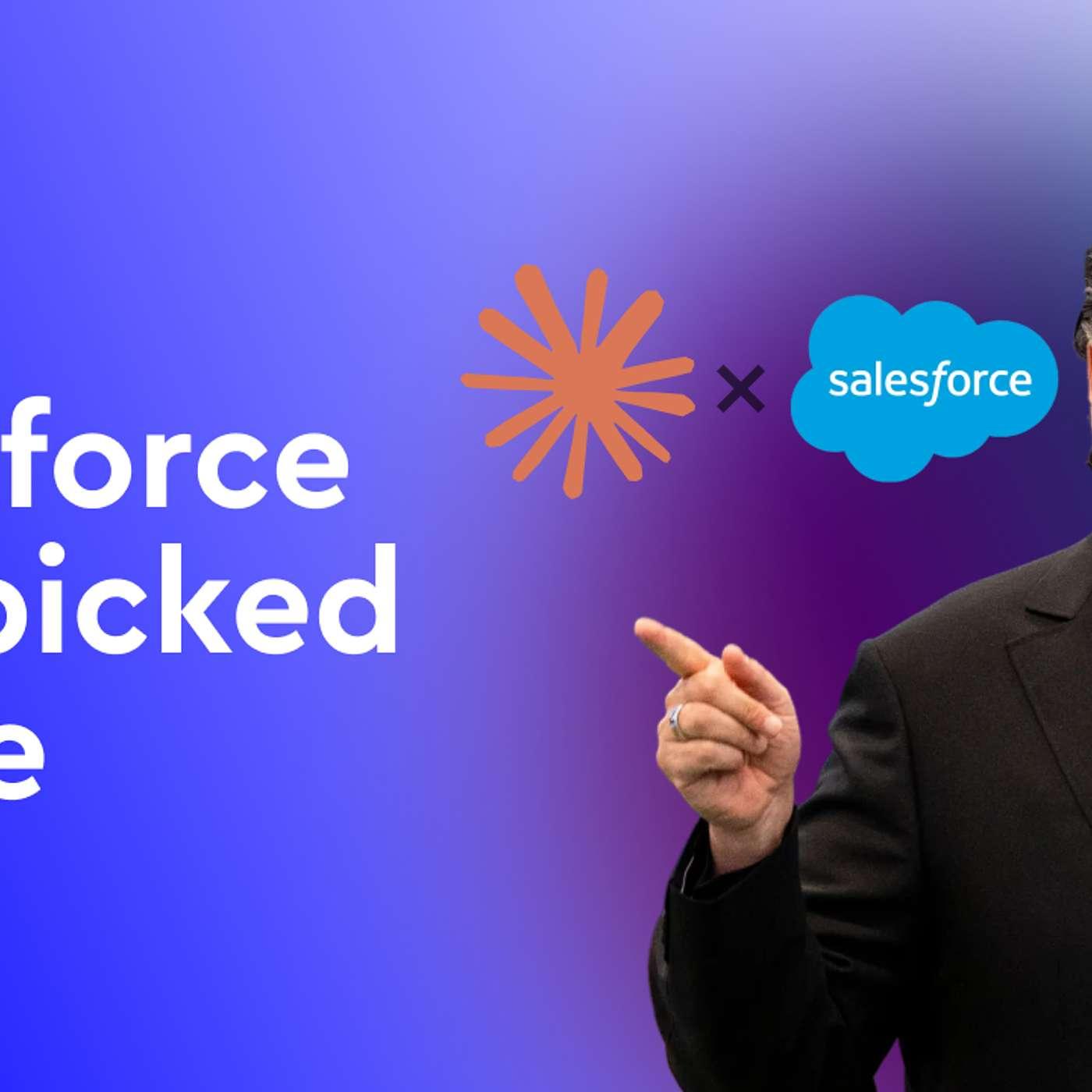
Okay, so this week's story is about the launch of Slack Code.
00:01:08.719 --> 00:01:18.239
On August 24th, Salesforce announced Slack Code, a new product that gives teams dedicated code channels where they can work directly with AI coding agents.
00:01:18.480 --> 00:01:32.879
And here's how it works: you end up tagging a coding agent, a Claude Code, or it could be Devin from Cognition or GitHub Copilot, ChatGPT, maybe a Vercel agent in any conversation in Slack.
00:01:32.959 --> 00:01:38.000
And what happens is it automatically spins up a project-specific channel.
00:01:38.159 --> 00:01:47.040
Now, inside that channel, the work ends up getting split into tabs, one for the actual conversation, and then one showing the agent's plan.
00:01:47.200 --> 00:01:54.719
And then also one with a line-by-line view of the code diffs, one with a live preview of the thing that's actually being built.
00:01:54.879 --> 00:02:01.120
And when the task's done, the channel archives itself, but it leaves behind a searchable record of everything that happened.
00:02:01.280 --> 00:02:07.760
Now, anyone in the channel can pause the agent, redirect it, or even actually just stop it outright.
00:02:07.840 --> 00:02:12.080
And before anything ships to production, a human still signs off.
00:02:12.159 --> 00:02:18.560
Now, Cognition, the company behind Devon, they walk through a live demo of this with VentureBeat.
00:02:18.639 --> 00:02:30.800
Now, in the demo, when anybody reports a broken feature in the engineering channel, Devin reacts with an emoji, replies right in the thread, investigates, and opens a pull request.
00:02:30.960 --> 00:02:34.639
It even knows who the code owner is, so it tags the right person.
00:02:34.879 --> 00:02:43.199
Now, midway through this demo, a designer dropped a Figma file right into the channel, and the agent just incorporated it without really missing a beat.
00:02:43.280 --> 00:02:50.400
Now, by the end, Devin's posted the code, a screenshot, and a recorded demo proving that the feature actually works.
00:02:50.879 --> 00:02:57.280
Rob Seaman, he's the EVP and GM of Slack now, he said it pretty bluntly in the press briefing.
00:02:57.439 --> 00:03:00.080
He said code is no longer the bottleneck.
00:03:00.319 --> 00:03:06.080
Ideas, taste, judgment, craft, those are the things that are the bottleneck.
00:03:06.159 --> 00:03:14.960
And you've effectively extended the population that can contribute to ideas, taste, judgment, and craft to anybody that exists in your Slack.
00:03:15.120 --> 00:03:20.879
There was sort of a bit of a foreshadowing to Slack code a while back.
00:03:21.039 --> 00:03:31.520
In December of last year, Anthropic brought Claude Code into Slack as a research preview, letting developers delegate coding tasks straight from a chat thread.
00:03:31.680 --> 00:03:34.639
And nine months later, here we are with Slack code.
00:03:34.800 --> 00:03:39.360
Now, why is this happening right now at Slack specifically?
00:03:39.520 --> 00:03:42.639
Because Slack has had a pretty interesting year to say the least.
00:03:42.800 --> 00:03:50.639
I mean, in a year when markets have been very good to tech in general, Salesforce stock has been down 5% year to date.
00:03:50.879 --> 00:03:54.879
That pretty badly lags the NASDAQ and other indexes.
00:03:55.039 --> 00:04:01.680
And there's been a lot of talk about whether AI is going to eat enterprise software companies like Salesforce from the inside.
00:04:01.840 --> 00:04:04.719
People talk about vibe coding their own CRMs.
00:04:04.960 --> 00:04:09.439
The vibes have kind of been off at Salesforce for a good bit.
00:04:09.599 --> 00:04:18.399
I mean, back in December, OpenAI actually hired away Slack's actual CEO, a woman named Denise Dresser, to be their chief revenue officer.
00:04:18.560 --> 00:04:22.720
Now, Seaman, who is Slack's product chief, he got bumped up to interim CEO.
00:04:22.959 --> 00:04:31.279
So all in all, kind of a rough year for Salesforce for many reasons, but Slack, to their credit, they did not retreat.
00:04:31.439 --> 00:04:33.519
They started playing offense.
00:04:33.759 --> 00:04:44.000
In January, they shipped a rebuilt Slack bot running on Anthropics Claude, and Salesforce says it became the fastest adopted feature in the company's 27-year history.
00:04:44.240 --> 00:04:58.560
And one sort of interesting detail that I think maybe gets a little like buried in this week's news is back in mid-2025, Salesforce had actually moved to block rival AI companies from accessing Slack's data.
00:04:58.639 --> 00:05:01.680
I guess it was their way of kind of trying to protect the moat.
00:05:01.759 --> 00:05:05.439
Now, Slack code is pretty darn close to the exact opposite move.
00:05:05.600 --> 00:05:14.959
Slack is now opening itself up, courting outside AI companies as partners, and planning to open its code channel APIs to any developer who wants to build on top of it.
00:05:15.120 --> 00:05:22.720
Now that strategy flipped from protected data to become the room that everybody's agents want to work within.
00:05:22.959 --> 00:05:26.240
So what does this all mean really for you?
00:05:26.480 --> 00:05:38.720
Well, vibe coding, you know, like describing what you want in plain language and letting an AI produce the code, that's something now like a$4.7 billion market, and it's projected to triple by 2027.
00:05:38.879 --> 00:05:49.839
And what may be even more interesting, especially as a product person, is 63% of the people doing the vibe coding these days, they describe themselves as non-developers.
00:05:50.079 --> 00:05:55.040
That would be product managers, designers, marketers, others within the company.
00:05:55.120 --> 00:06:04.079
Now, Gartner's actually predicting that by 2028, these citizen developers, so to speak, will outnumber professional engineers four to one.
00:06:04.160 --> 00:06:05.040
And I get it.
00:06:05.120 --> 00:06:09.839
I mean, my 14-year-old son has vibe goaded his own sports photography website.
00:06:09.920 --> 00:06:13.759
So I actually don't think Gartner is so far off in this prediction.
00:06:13.920 --> 00:06:23.600
Now, in that same press briefing, Jeff Wang, now he runs New Enterprise at Cognition, he gave some internal numbers that back up how fast all of this is actually moving.
00:06:23.680 --> 00:06:31.759
He said their internal merged pull request count is actually up 10x in the last few months, while headcount has only grown 40%.
00:06:32.399 --> 00:06:34.160
Now, where does it all lead?
00:06:34.319 --> 00:06:44.959
Well, Jeff predicts that things like bug fixes, vulnerability patches, the stuff that engineers probably don't really want to be doing, but you sort of have always had to do.
00:06:45.120 --> 00:06:48.160
This is the kind of stuff that will get automated away completely.
00:06:48.319 --> 00:06:52.160
He also made a pretty bold prediction, or maybe it's not so bold anymore.
00:06:52.240 --> 00:06:52.639
I don't know.
00:06:52.800 --> 00:07:01.199
He said, right now, a human still has to approve every single merge, but he predicts that in the next year, it's just going to go through automatically.
00:07:01.360 --> 00:07:05.839
Now, Slack is not the only company to be playing in the sandbox.
00:07:06.079 --> 00:07:09.680
Cursor, Replit, GitHub Copilot Workspace.
00:07:09.759 --> 00:07:19.040
They've all been racing to own AI coding too, but almost all of it is built around this sort of single person and single agent concept.
00:07:19.199 --> 00:07:23.439
It's just ends up being a faster version of one developer working alone.
00:07:23.600 --> 00:07:31.199
But Slack's bet is specifically that the single player era of AI coding is just a temporary thing.
00:07:31.439 --> 00:07:51.360
And even GitHub's own chief product officer, Mario Rodriguez, basically conceded the point that when he tied his company's participation in Slack code to what he called GitHub's broader promise of human set direction, agents close the loop, he said that has to be true wherever developers are working, not just inside GitHub's own tools.
00:07:51.519 --> 00:07:58.160
Now that's a competitor admitting the workspace, not the editor, might be where this all gets decided.
00:07:58.319 --> 00:08:03.839
There's an obvious problem with, you know, just letting anybody in the company spin up a coding agent.
00:08:03.920 --> 00:08:08.160
And it's the same problem that we've been talking about in this industry all year.
00:08:08.480 --> 00:08:09.199
Quality.
00:08:13.360 --> 00:08:19.439
That term, AI slop, which by the way, I might nominate for Merriam-Webster's phrase of the year.
00:08:19.680 --> 00:08:28.000
This is where, you know, you find plausible-looking, confidently formatted output that actually is just not good.
00:08:28.560 --> 00:08:33.440
Now, when it comes to code, there's lots of code out there that would be considered AI slop.
00:08:33.519 --> 00:08:43.759
Actually, Varicode's 2026 security report found that roughly 44% of AI code generation tasks introduced a real exploitable vulnerability.
00:08:44.000 --> 00:08:47.759
The average security pass rate across models tested was 56%.
00:08:48.320 --> 00:08:54.559
But in the same period, AI assisted developers were committing code three to four times faster than everyone else.
00:08:54.720 --> 00:09:02.159
So the volume of code going into production has exploded, but the security pass rate basically has stayed flat, even dropped.
00:09:02.399 --> 00:09:09.600
One report tracked monthly security findings going from about a thousand to over 10,000 in six months.
00:09:09.840 --> 00:09:11.919
10x in six months.
00:09:12.080 --> 00:09:15.519
Now, there's a phrase that security researchers are using for this.
00:09:15.600 --> 00:09:18.000
It's the illusion of correctness.
00:09:18.159 --> 00:09:25.759
Code that reads is clean, professional, done, but hiding a flaw that nobody caught because it looked too finished to double check.
00:09:25.840 --> 00:09:28.960
Some of the other reaction to Slack code is pretty interesting.
00:09:29.120 --> 00:09:32.559
Some engineers have pointed out that coding is deep work.
00:09:32.639 --> 00:09:36.399
And Slack, by design, sort of like the interruption machine.
00:09:36.480 --> 00:09:48.960
I mean, you put those two things on the same screen and you risk agents getting mid-task feedback from six different people, changing direction constantly, and maybe never actually finishing anything clearly.
00:09:49.200 --> 00:09:53.200
Slack's answer to that is visibility is actually a good thing.
00:09:53.440 --> 00:10:04.799
Katie Steigman, Slack's VP of products, said in that briefing that the multiplayer part is a guard against all of that, actually, because people can see your work, people can comment on your work.
00:10:05.120 --> 00:10:18.080
She contrasted that with the status quo, where one person alone is doing God knows what with an agent in a private terminal versus doing it in some place that people can actually see your intent and help shape your work.
00:10:18.240 --> 00:10:24.159
In her words, she says that people can now quote slap my hand and tell me that slop.
00:10:24.320 --> 00:10:25.120
I love that quote.
00:10:25.279 --> 00:10:28.799
Anyway, maybe from that comment you could tell Stegman is a product person.
00:10:28.960 --> 00:10:29.919
She absolutely is.
00:10:30.000 --> 00:10:34.960
And she talked about her own experiences using Slack code in that venture beat briefing.
00:10:35.039 --> 00:10:39.679
When she puts up a pull request, she tags in an engineer from her team before asking for approval.
00:10:39.840 --> 00:10:45.919
And almost every time the engineer pushes back on something, whether it's to tighten the code or add technical guidance.
00:10:46.000 --> 00:10:48.240
And then that agent takes one more pass.
00:10:48.399 --> 00:10:54.320
So the output ends up touched by an engineer, but the engineer didn't actually have to write it from scratch.
00:10:54.559 --> 00:10:59.279
So that's her way of showing her best practice, how she actually uses Slack code.
00:10:59.440 --> 00:11:04.879
For those people and companies working in the enterprise, you have to think about permissions.
00:11:05.039 --> 00:11:11.279
And somebody actually asked the question in the press briefing, which can be a very scary question, right?
00:11:11.519 --> 00:11:15.039
Could an agent in a code channel leak across teams?
00:11:15.200 --> 00:11:19.200
Could a finance repo suddenly end up becoming visible to legal?
00:11:19.440 --> 00:11:21.279
Siemen was actually direct about the answer.
00:11:21.519 --> 00:11:22.399
He said no.
00:11:22.639 --> 00:11:30.559
He said every agent acts on behalf of the specific human who invoked it, using that person's existing access, nothing more.
00:11:30.720 --> 00:11:34.000
If you can't see a channel, the agent working on your behalf can't either.
00:11:34.159 --> 00:11:41.519
Now on the execution side, Devon runs in an isolated sandbox with what cognition calls minimum viable access.
00:11:41.679 --> 00:11:44.080
There's even a mode with zero internet access.
00:11:44.240 --> 00:11:51.919
And because these agents still produce standard pull requests into GitHub, your existing review process and release gates still apply.
00:11:52.080 --> 00:11:54.000
So nothing gets to skip the line.
00:11:54.159 --> 00:12:02.159
Now, we've done stories here on Now Shipping on how AI can and has escaped the sandbox.
00:12:02.240 --> 00:12:04.639
So take all of that with a grain of salt.
00:12:04.879 --> 00:12:13.039
But here's kind of a twist, and I almost had to rewrite part of this episode because I'm recording this on August 27th.
00:12:13.120 --> 00:12:16.960
Now, this is just three days after Slack Code has launched.
00:12:17.200 --> 00:12:22.159
But just yesterday, Salesforce and Anthropic announced something called Claude Force.
00:12:22.240 --> 00:12:29.120
It's essentially an expanded partnership that makes Claude the default model across the entire Slack and Salesforce stack.
00:12:29.279 --> 00:12:31.279
Claude now powers Slackbot.
00:12:31.440 --> 00:12:33.600
It's the intelligence behind Claude tag.
00:12:33.759 --> 00:12:37.120
And this is the part that connects everything back to what I've just told you.
00:12:37.279 --> 00:12:41.840
Anthropic is actually named as a founding partner for Slack Code.
00:12:42.000 --> 00:12:49.200
Mark Benioff, Salesforce's CEO, described it as bringing together the world's number one AI and the number one CRM.
00:12:49.440 --> 00:13:00.320
Dario Amodai, Anthropic CEO, says it lets companies point Claude at the customer information and business context they've been building in Salesforce for decades and actually run their business with it.
00:13:00.480 --> 00:13:16.240
This partnership also launches something called Salesforce and Claude, 37 pre-built sales skills that let a seller basically get an AI chief revenue officer sitting inside Claude, reading their pipeline, taking governed actions back into Salesforce.
00:13:16.399 --> 00:13:28.080
Now, internally at Salesforce, Slackbot running on Claude has already driven 8.1 million hours of annualized productivity gains, up more than 2x quarter over quarter.
00:13:28.240 --> 00:13:30.080
At least that's what they say.
00:13:30.399 --> 00:13:33.679
So here's why this matters on top of everything else.
00:13:33.919 --> 00:13:38.480
Slack code launched three days ago as a neutral multi-agent platform.
00:13:38.639 --> 00:13:42.320
Bring your own Claude, your own Devin, your own co-pilot.
00:13:42.639 --> 00:13:49.279
Today, one of those partners just became the default, the founding partner, wired all the way through the stack.
00:13:49.360 --> 00:13:52.320
So maybe it's not so much of a neutral platform anymore.
00:13:52.480 --> 00:13:53.039
Not really.
00:13:53.200 --> 00:13:59.519
They're still keeping the door open to co-pilot and ChatGPT for appearances, but we know who their allegiance is to now.
00:13:59.600 --> 00:14:01.279
So what does it mean for you?
00:14:01.440 --> 00:14:02.720
Well, maybe a few things.
00:14:02.879 --> 00:14:07.840
First, where your team does AI coding is turning into a pretty big distribution fight.
00:14:07.919 --> 00:14:12.080
I mean, six months ago, this was, you know, which model do I call from the terminal?
00:14:12.240 --> 00:14:17.679
Now it's which platform owns the shared workspace where my whole team works with agents.
00:14:17.919 --> 00:14:23.120
And Slack, cursor, GitHub, the terminal itself, they're all competing for that role.
00:14:23.279 --> 00:14:30.559
Now, whoever wins that layer gets enormous pull over which agents and which defaults your company ends up standardizing on.
00:14:30.799 --> 00:14:39.360
And that's probably worth a conversation with whoever owns tooling decisions at your company before it just gets decided for you, just by default settings.
00:14:39.519 --> 00:14:51.440
Now, the second thing is if you're a product manager and you haven't tried vibe coding a working prototype yourself, I'm sorry to say you are months late at this point, but I can't imagine you haven't by now.
00:14:51.600 --> 00:14:58.240
If you're watching this, you probably knee deep in Claude Code or Codex or whatever else you're building with, Grokbot at this point.
00:14:58.399 --> 00:15:02.639
Regardless, though, 63% vibe coders aren't engineers.
00:15:02.879 --> 00:15:14.799
Steigman's workflow, the tag an engineer, take the feedback, ship a tighter, being the default template for how a non-technical product manager contributes real code without pretending to be an engineer.
00:15:15.039 --> 00:15:23.840
Now, the other thing to think about is this whole, you know, ship it in the open, it's not exactly the same as ship it safely, and you do need both.
00:15:24.080 --> 00:15:29.679
44% of AI-generated code tasks introducing an exploitable vulnerability.
00:15:29.840 --> 00:15:34.240
That's not a small number, and it's not improving as fast as the volume is growing.
00:15:34.399 --> 00:15:41.200
So if your team's push towards agenda coding isn't paired with an actual answer to who reviews this and for what?
00:15:41.440 --> 00:15:44.799
Well, you have to work on a solution like right now.
00:15:45.200 --> 00:15:53.440
Now, finally, when you're evaluating any agent platform, not just this one, put the permissions model on your checklist right next to the feature list.
00:15:53.600 --> 00:15:57.759
Does the agent act as the person who invoked it using their existing access?
00:15:57.919 --> 00:16:03.840
Or does it get its own identity, its own permissions that somebody in IT now has to manage forever?
00:16:04.080 --> 00:16:10.720
Slack gave a pretty clean answer to that question this week, but not all vendors necessarily can answer that question so cleanly.
00:16:10.799 --> 00:16:13.039
So a big thing to think about.
00:16:13.200 --> 00:16:20.159
Now, taking this all in, my question to you is is your team already picking sides in this model war?
00:16:20.320 --> 00:16:24.960
Because here, I mean, Slack, Salesforce, Anthropic, they all pick theirs.
00:16:25.039 --> 00:16:26.960
They've all aligned together here.
00:16:27.279 --> 00:16:29.519
But what side are you picking?
00:16:29.759 --> 00:16:34.000
All right, that's gonna put a wrap on this week's episode of Now Shipping.
00:16:34.159 --> 00:16:40.080
If you found this valuable, please subscribe, tell a friend, but let me know what you thought of this new format too.
00:16:40.159 --> 00:16:49.600
Whether you want more one story deep dives like this, or if you want me to go back to the three stories per week model, I will see you right here next week.
00:16:49.759 --> 00:16:53.360
And once again, brought to you by the team at Mind the Product.
00:16:53.679 --> 00:16:55.120
This is now shipping.
00:00:00.000 --> 00:00:06.400
I'm Mike Belcito, and this is Now Shipping, the weekly AI news show for product people.
00:00:06.559 --> 00:00:12.720
Every week I bring you AI news stories that matter to you as the people actually building products for a living.
00:00:12.960 --> 00:00:15.039
Brought to you by the team at Mind the Product.
00:00:15.359 --> 00:00:17.280
This is Now Shipping.
00:00:17.440 --> 00:00:21.359
And we're going to do something a little bit different for this episode.
00:00:21.519 --> 00:00:22.960
And I'm going to want your feedback.
00:00:23.120 --> 00:00:27.280
So at the very end, maybe share it in the comments here what you think.
00:00:27.519 --> 00:00:32.159
But I have been bringing you three AI news stories every single week.
00:00:32.399 --> 00:00:42.000
Stories that are specifically meant to be relevant to product people, builders, and gosh, let's face it, there's no shortage of stories that we could surface every single week.
00:00:42.159 --> 00:00:51.520
So we've been keeping up with that three story per episode format, but I want to see what happens when we go a little bit deeper.
00:00:51.600 --> 00:00:52.960
And that's what we're going to do today.
00:00:53.119 --> 00:00:54.320
There's just one story.
00:00:54.560 --> 00:00:59.119
I picked one story for this week, but the episode's going to be the same length.
00:00:59.280 --> 00:01:03.119
It's just that I'm going to go a lot deeper on that one specific story.
00:01:03.280 --> 00:01:08.319
Okay, so this week's story is about the launch of Slack Code.
00:01:08.719 --> 00:01:18.239
On August 24th, Salesforce announced Slack Code, a new product that gives teams dedicated code channels where they can work directly with AI coding agents.
00:01:18.480 --> 00:01:32.879
And here's how it works: you end up tagging a coding agent, a Claude Code, or it could be Devin from Cognition or GitHub Copilot, ChatGPT, maybe a Vercel agent in any conversation in Slack.
00:01:32.959 --> 00:01:38.000
And what happens is it automatically spins up a project-specific channel.
00:01:38.159 --> 00:01:47.040
Now, inside that channel, the work ends up getting split into tabs, one for the actual conversation, and then one showing the agent's plan.
00:01:47.200 --> 00:01:54.719
And then also one with a line-by-line view of the code diffs, one with a live preview of the thing that's actually being built.
00:01:54.879 --> 00:02:01.120
And when the task's done, the channel archives itself, but it leaves behind a searchable record of everything that happened.
00:02:01.280 --> 00:02:07.760
Now, anyone in the channel can pause the agent, redirect it, or even actually just stop it outright.
00:02:07.840 --> 00:02:12.080
And before anything ships to production, a human still signs off.
00:02:12.159 --> 00:02:18.560
Now, Cognition, the company behind Devon, they walk through a live demo of this with VentureBeat.
00:02:18.639 --> 00:02:30.800
Now, in the demo, when anybody reports a broken feature in the engineering channel, Devin reacts with an emoji, replies right in the thread, investigates, and opens a pull request.
00:02:30.960 --> 00:02:34.639
It even knows who the code owner is, so it tags the right person.
00:02:34.879 --> 00:02:43.199
Now, midway through this demo, a designer dropped a Figma file right into the channel, and the agent just incorporated it without really missing a beat.
00:02:43.280 --> 00:02:50.400
Now, by the end, Devin's posted the code, a screenshot, and a recorded demo proving that the feature actually works.
00:02:50.879 --> 00:02:57.280
Rob Seaman, he's the EVP and GM of Slack now, he said it pretty bluntly in the press briefing.
00:02:57.439 --> 00:03:00.080
He said code is no longer the bottleneck.
00:03:00.319 --> 00:03:06.080
Ideas, taste, judgment, craft, those are the things that are the bottleneck.
00:03:06.159 --> 00:03:14.960
And you've effectively extended the population that can contribute to ideas, taste, judgment, and craft to anybody that exists in your Slack.
00:03:15.120 --> 00:03:20.879
There was sort of a bit of a foreshadowing to Slack code a while back.
00:03:21.039 --> 00:03:31.520
In December of last year, Anthropic brought Claude Code into Slack as a research preview, letting developers delegate coding tasks straight from a chat thread.
00:03:31.680 --> 00:03:34.639
And nine months later, here we are with Slack code.
00:03:34.800 --> 00:03:39.360
Now, why is this happening right now at Slack specifically?
00:03:39.520 --> 00:03:42.639
Because Slack has had a pretty interesting year to say the least.
00:03:42.800 --> 00:03:50.639
I mean, in a year when markets have been very good to tech in general, Salesforce stock has been down 5% year to date.
00:03:50.879 --> 00:03:54.879
That pretty badly lags the NASDAQ and other indexes.
00:03:55.039 --> 00:04:01.680
And there's been a lot of talk about whether AI is going to eat enterprise software companies like Salesforce from the inside.
00:04:01.840 --> 00:04:04.719
People talk about vibe coding their own CRMs.
00:04:04.960 --> 00:04:09.439
The vibes have kind of been off at Salesforce for a good bit.
00:04:09.599 --> 00:04:18.399
I mean, back in December, OpenAI actually hired away Slack's actual CEO, a woman named Denise Dresser, to be their chief revenue officer.
00:04:18.560 --> 00:04:22.720
Now, Seaman, who is Slack's product chief, he got bumped up to interim CEO.
00:04:22.959 --> 00:04:31.279
So all in all, kind of a rough year for Salesforce for many reasons, but Slack, to their credit, they did not retreat.
00:04:31.439 --> 00:04:33.519
They started playing offense.
00:04:33.759 --> 00:04:44.000
In January, they shipped a rebuilt Slack bot running on Anthropics Claude, and Salesforce says it became the fastest adopted feature in the company's 27-year history.
00:04:44.240 --> 00:04:58.560
And one sort of interesting detail that I think maybe gets a little like buried in this week's news is back in mid-2025, Salesforce had actually moved to block rival AI companies from accessing Slack's data.
00:04:58.639 --> 00:05:01.680
I guess it was their way of kind of trying to protect the moat.
00:05:01.759 --> 00:05:05.439
Now, Slack code is pretty darn close to the exact opposite move.
00:05:05.600 --> 00:05:14.959
Slack is now opening itself up, courting outside AI companies as partners, and planning to open its code channel APIs to any developer who wants to build on top of it.
00:05:15.120 --> 00:05:22.720
Now that strategy flipped from protected data to become the room that everybody's agents want to work within.
00:05:22.959 --> 00:05:26.240
So what does this all mean really for you?
00:05:26.480 --> 00:05:38.720
Well, vibe coding, you know, like describing what you want in plain language and letting an AI produce the code, that's something now like a$4.7 billion market, and it's projected to triple by 2027.
00:05:38.879 --> 00:05:49.839
And what may be even more interesting, especially as a product person, is 63% of the people doing the vibe coding these days, they describe themselves as non-developers.
00:05:50.079 --> 00:05:55.040
That would be product managers, designers, marketers, others within the company.
00:05:55.120 --> 00:06:04.079
Now, Gartner's actually predicting that by 2028, these citizen developers, so to speak, will outnumber professional engineers four to one.
00:06:04.160 --> 00:06:05.040
And I get it.
00:06:05.120 --> 00:06:09.839
I mean, my 14-year-old son has vibe goaded his own sports photography website.
00:06:09.920 --> 00:06:13.759
So I actually don't think Gartner is so far off in this prediction.
00:06:13.920 --> 00:06:23.600
Now, in that same press briefing, Jeff Wang, now he runs New Enterprise at Cognition, he gave some internal numbers that back up how fast all of this is actually moving.
00:06:23.680 --> 00:06:31.759
He said their internal merged pull request count is actually up 10x in the last few months, while headcount has only grown 40%.
00:06:32.399 --> 00:06:34.160
Now, where does it all lead?
00:06:34.319 --> 00:06:44.959
Well, Jeff predicts that things like bug fixes, vulnerability patches, the stuff that engineers probably don't really want to be doing, but you sort of have always had to do.
00:06:45.120 --> 00:06:48.160
This is the kind of stuff that will get automated away completely.
00:06:48.319 --> 00:06:52.160
He also made a pretty bold prediction, or maybe it's not so bold anymore.
00:06:52.240 --> 00:06:52.639
I don't know.
00:06:52.800 --> 00:07:01.199
He said, right now, a human still has to approve every single merge, but he predicts that in the next year, it's just going to go through automatically.
00:07:01.360 --> 00:07:05.839
Now, Slack is not the only company to be playing in the sandbox.
00:07:06.079 --> 00:07:09.680
Cursor, Replit, GitHub Copilot Workspace.
00:07:09.759 --> 00:07:19.040
They've all been racing to own AI coding too, but almost all of it is built around this sort of single person and single agent concept.
00:07:19.199 --> 00:07:23.439
It's just ends up being a faster version of one developer working alone.
00:07:23.600 --> 00:07:31.199
But Slack's bet is specifically that the single player era of AI coding is just a temporary thing.
00:07:31.439 --> 00:07:51.360
And even GitHub's own chief product officer, Mario Rodriguez, basically conceded the point that when he tied his company's participation in Slack code to what he called GitHub's broader promise of human set direction, agents close the loop, he said that has to be true wherever developers are working, not just inside GitHub's own tools.
00:07:51.519 --> 00:07:58.160
Now that's a competitor admitting the workspace, not the editor, might be where this all gets decided.
00:07:58.319 --> 00:08:03.839
There's an obvious problem with, you know, just letting anybody in the company spin up a coding agent.
00:08:03.920 --> 00:08:08.160
And it's the same problem that we've been talking about in this industry all year.
00:08:08.480 --> 00:08:09.199
Quality.
00:08:13.360 --> 00:08:19.439
That term, AI slop, which by the way, I might nominate for Merriam-Webster's phrase of the year.
00:08:19.680 --> 00:08:28.000
This is where, you know, you find plausible-looking, confidently formatted output that actually is just not good.
00:08:28.560 --> 00:08:33.440
Now, when it comes to code, there's lots of code out there that would be considered AI slop.
00:08:33.519 --> 00:08:43.759
Actually, Varicode's 2026 security report found that roughly 44% of AI code generation tasks introduced a real exploitable vulnerability.
00:08:44.000 --> 00:08:47.759
The average security pass rate across models tested was 56%.
00:08:48.320 --> 00:08:54.559
But in the same period, AI assisted developers were committing code three to four times faster than everyone else.
00:08:54.720 --> 00:09:02.159
So the volume of code going into production has exploded, but the security pass rate basically has stayed flat, even dropped.
00:09:02.399 --> 00:09:09.600
One report tracked monthly security findings going from about a thousand to over 10,000 in six months.
00:09:09.840 --> 00:09:11.919
10x in six months.
00:09:12.080 --> 00:09:15.519
Now, there's a phrase that security researchers are using for this.
00:09:15.600 --> 00:09:18.000
It's the illusion of correctness.
00:09:18.159 --> 00:09:25.759
Code that reads is clean, professional, done, but hiding a flaw that nobody caught because it looked too finished to double check.
00:09:25.840 --> 00:09:28.960
Some of the other reaction to Slack code is pretty interesting.
00:09:29.120 --> 00:09:32.559
Some engineers have pointed out that coding is deep work.
00:09:32.639 --> 00:09:36.399
And Slack, by design, sort of like the interruption machine.
00:09:36.480 --> 00:09:48.960
I mean, you put those two things on the same screen and you risk agents getting mid-task feedback from six different people, changing direction constantly, and maybe never actually finishing anything clearly.
00:09:49.200 --> 00:09:53.200
Slack's answer to that is visibility is actually a good thing.
00:09:53.440 --> 00:10:04.799
Katie Steigman, Slack's VP of products, said in that briefing that the multiplayer part is a guard against all of that, actually, because people can see your work, people can comment on your work.
00:10:05.120 --> 00:10:18.080
She contrasted that with the status quo, where one person alone is doing God knows what with an agent in a private terminal versus doing it in some place that people can actually see your intent and help shape your work.
00:10:18.240 --> 00:10:24.159
In her words, she says that people can now quote slap my hand and tell me that slop.
00:10:24.320 --> 00:10:25.120
I love that quote.
00:10:25.279 --> 00:10:28.799
Anyway, maybe from that comment you could tell Stegman is a product person.
00:10:28.960 --> 00:10:29.919
She absolutely is.
00:10:30.000 --> 00:10:34.960
And she talked about her own experiences using Slack code in that venture beat briefing.
00:10:35.039 --> 00:10:39.679
When she puts up a pull request, she tags in an engineer from her team before asking for approval.
00:10:39.840 --> 00:10:45.919
And almost every time the engineer pushes back on something, whether it's to tighten the code or add technical guidance.
00:10:46.000 --> 00:10:48.240
And then that agent takes one more pass.
00:10:48.399 --> 00:10:54.320
So the output ends up touched by an engineer, but the engineer didn't actually have to write it from scratch.
00:10:54.559 --> 00:10:59.279
So that's her way of showing her best practice, how she actually uses Slack code.
00:10:59.440 --> 00:11:04.879
For those people and companies working in the enterprise, you have to think about permissions.
00:11:05.039 --> 00:11:11.279
And somebody actually asked the question in the press briefing, which can be a very scary question, right?
00:11:11.519 --> 00:11:15.039
Could an agent in a code channel leak across teams?
00:11:15.200 --> 00:11:19.200
Could a finance repo suddenly end up becoming visible to legal?
00:11:19.440 --> 00:11:21.279
Siemen was actually direct about the answer.
00:11:21.519 --> 00:11:22.399
He said no.
00:11:22.639 --> 00:11:30.559
He said every agent acts on behalf of the specific human who invoked it, using that person's existing access, nothing more.
00:11:30.720 --> 00:11:34.000
If you can't see a channel, the agent working on your behalf can't either.
00:11:34.159 --> 00:11:41.519
Now on the execution side, Devon runs in an isolated sandbox with what cognition calls minimum viable access.
00:11:41.679 --> 00:11:44.080
There's even a mode with zero internet access.
00:11:44.240 --> 00:11:51.919
And because these agents still produce standard pull requests into GitHub, your existing review process and release gates still apply.
00:11:52.080 --> 00:11:54.000
So nothing gets to skip the line.
00:11:54.159 --> 00:12:02.159
Now, we've done stories here on Now Shipping on how AI can and has escaped the sandbox.
00:12:02.240 --> 00:12:04.639
So take all of that with a grain of salt.
00:12:04.879 --> 00:12:13.039
But here's kind of a twist, and I almost had to rewrite part of this episode because I'm recording this on August 27th.
00:12:13.120 --> 00:12:16.960
Now, this is just three days after Slack Code has launched.
00:12:17.200 --> 00:12:22.159
But just yesterday, Salesforce and Anthropic announced something called Claude Force.
00:12:22.240 --> 00:12:29.120
It's essentially an expanded partnership that makes Claude the default model across the entire Slack and Salesforce stack.
00:12:29.279 --> 00:12:31.279
Claude now powers Slackbot.
00:12:31.440 --> 00:12:33.600
It's the intelligence behind Claude tag.
00:12:33.759 --> 00:12:37.120
And this is the part that connects everything back to what I've just told you.
00:12:37.279 --> 00:12:41.840
Anthropic is actually named as a founding partner for Slack Code.
00:12:42.000 --> 00:12:49.200
Mark Benioff, Salesforce's CEO, described it as bringing together the world's number one AI and the number one CRM.
00:12:49.440 --> 00:13:00.320
Dario Amodai, Anthropic CEO, says it lets companies point Claude at the customer information and business context they've been building in Salesforce for decades and actually run their business with it.
00:13:00.480 --> 00:13:16.240
This partnership also launches something called Salesforce and Claude, 37 pre-built sales skills that let a seller basically get an AI chief revenue officer sitting inside Claude, reading their pipeline, taking governed actions back into Salesforce.
00:13:16.399 --> 00:13:28.080
Now, internally at Salesforce, Slackbot running on Claude has already driven 8.1 million hours of annualized productivity gains, up more than 2x quarter over quarter.
00:13:28.240 --> 00:13:30.080
At least that's what they say.
00:13:30.399 --> 00:13:33.679
So here's why this matters on top of everything else.
00:13:33.919 --> 00:13:38.480
Slack code launched three days ago as a neutral multi-agent platform.
00:13:38.639 --> 00:13:42.320
Bring your own Claude, your own Devin, your own co-pilot.
00:13:42.639 --> 00:13:49.279
Today, one of those partners just became the default, the founding partner, wired all the way through the stack.
00:13:49.360 --> 00:13:52.320
So maybe it's not so much of a neutral platform anymore.
00:13:52.480 --> 00:13:53.039
Not really.
00:13:53.200 --> 00:13:59.519
They're still keeping the door open to co-pilot and ChatGPT for appearances, but we know who their allegiance is to now.
00:13:59.600 --> 00:14:01.279
So what does it mean for you?
00:14:01.440 --> 00:14:02.720
Well, maybe a few things.
00:14:02.879 --> 00:14:07.840
First, where your team does AI coding is turning into a pretty big distribution fight.
00:14:07.919 --> 00:14:12.080
I mean, six months ago, this was, you know, which model do I call from the terminal?
00:14:12.240 --> 00:14:17.679
Now it's which platform owns the shared workspace where my whole team works with agents.
00:14:17.919 --> 00:14:23.120
And Slack, cursor, GitHub, the terminal itself, they're all competing for that role.
00:14:23.279 --> 00:14:30.559
Now, whoever wins that layer gets enormous pull over which agents and which defaults your company ends up standardizing on.
00:14:30.799 --> 00:14:39.360
And that's probably worth a conversation with whoever owns tooling decisions at your company before it just gets decided for you, just by default settings.
00:14:39.519 --> 00:14:51.440
Now, the second thing is if you're a product manager and you haven't tried vibe coding a working prototype yourself, I'm sorry to say you are months late at this point, but I can't imagine you haven't by now.
00:14:51.600 --> 00:14:58.240
If you're watching this, you probably knee deep in Claude Code or Codex or whatever else you're building with, Grokbot at this point.
00:14:58.399 --> 00:15:02.639
Regardless, though, 63% vibe coders aren't engineers.
00:15:02.879 --> 00:15:14.799
Steigman's workflow, the tag an engineer, take the feedback, ship a tighter, being the default template for how a non-technical product manager contributes real code without pretending to be an engineer.
00:15:15.039 --> 00:15:23.840
Now, the other thing to think about is this whole, you know, ship it in the open, it's not exactly the same as ship it safely, and you do need both.
00:15:24.080 --> 00:15:29.679
44% of AI-generated code tasks introducing an exploitable vulnerability.
00:15:29.840 --> 00:15:34.240
That's not a small number, and it's not improving as fast as the volume is growing.
00:15:34.399 --> 00:15:41.200
So if your team's push towards agenda coding isn't paired with an actual answer to who reviews this and for what?
00:15:41.440 --> 00:15:44.799
Well, you have to work on a solution like right now.
00:15:45.200 --> 00:15:53.440
Now, finally, when you're evaluating any agent platform, not just this one, put the permissions model on your checklist right next to the feature list.
00:15:53.600 --> 00:15:57.759
Does the agent act as the person who invoked it using their existing access?
00:15:57.919 --> 00:16:03.840
Or does it get its own identity, its own permissions that somebody in IT now has to manage forever?
00:16:04.080 --> 00:16:10.720
Slack gave a pretty clean answer to that question this week, but not all vendors necessarily can answer that question so cleanly.
00:16:10.799 --> 00:16:13.039
So a big thing to think about.
00:16:13.200 --> 00:16:20.159
Now, taking this all in, my question to you is is your team already picking sides in this model war?
00:16:20.320 --> 00:16:24.960
Because here, I mean, Slack, Salesforce, Anthropic, they all pick theirs.
00:16:25.039 --> 00:16:26.960
They've all aligned together here.
00:16:27.279 --> 00:16:29.519
But what side are you picking?
00:16:29.759 --> 00:16:34.000
All right, that's gonna put a wrap on this week's episode of Now Shipping.
00:16:34.159 --> 00:16:40.080
If you found this valuable, please subscribe, tell a friend, but let me know what you thought of this new format too.
00:16:40.159 --> 00:16:49.600
Whether you want more one story deep dives like this, or if you want me to go back to the three stories per week model, I will see you right here next week.
00:16:49.759 --> 00:16:53.360
And once again, brought to you by the team at Mind the Product.
00:16:53.679 --> 00:16:55.120
This is now shipping.