
OM DENNE EPISODE
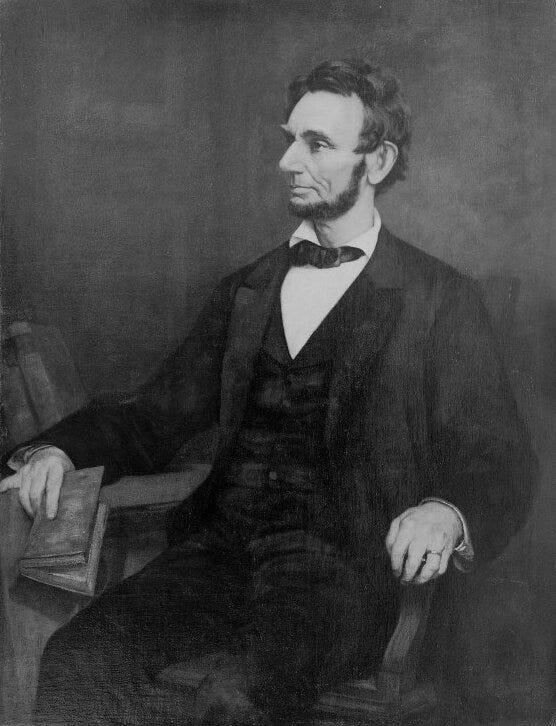
This Day in Legal History: The Preliminary Emancipation Proclamation
On September 22, 1862, following the Union’s costly victory at Antietam, President Abraham Lincoln issued the preliminary Emancipation Proclamation. It gave the Confederate states an ultimatum: return to the Union by January 1, 1863, or the enslaved people in the rebelling states “shall be then, thenceforward, and forever free.” The Confederacy did not yield, and on New Year’s Day 1863, Lincoln issued the final Proclamation, recasting the Civil War as a war against slavery and setting more than three million people on the path to freedom.
For legal history, the Proclamation is a landmark study in the scope—and the limits—of executive power. Lincoln did not act under a statute passed by Congress; he acted as Commander-in-Chief, framing emancipation as a “fit and necessary war measure” to weaken the Confederacy. That’s why the Proclamation, by its own terms, reached only the areas in rebellion—not the border states loyal to the Union, where Lincoln doubted his war powers extended. It was a document acutely aware of its own legal boundaries. Lincoln understood that a wartime executive order might not survive the war’s end, which is precisely why he pushed so hard for the 13th Amendment—to place the abolition of slavery on the permanent, unshakable footing of the Constitution rather than the contested ground of a presidential proclamation.
The significance of September 22, 1862 is that it is one of the most consequential exercises of executive authority in American history—and a permanent lesson in that authority’s nature. It showed both the enormous power a president can wield in a crisis and the reason such power is inherently limited and temporary, requiring the other branches to make it durable. That tension—between decisive executive action and the checks that legitimate and constrain it—runs directly into my column today, which is, at its heart, about exactly that balance.
Paramount has settled with California and eleven other states, clearing one of the biggest remaining hurdles to its roughly $110 billion merger with Warner Bros. Discovery—a deal that would reshape Hollywood. Let me set the stage. Back in July, a coalition of twelve states, led by California Attorney General Rob Bonta, sued to block the merger, arguing in their complaint that combining Paramount and Warner Bros. would “extinguish competition” in the entertainment industry. And you can see why they worried: this deal would unite two of Hollywood’s biggest film studios, two major streaming services, and—critically for the news business—two of the largest cable-news operations, CBS and CNN, under a single owner. This is state antitrust enforcement, and it’s a reminder that state AGs are increasingly aggressive independent players in merger review, not just spectators to the federal agencies. The settlement, which came together over the weekend after four holdout states came around, includes some genuinely interesting concessions. First, an output commitment: Paramount pledges to release 30 films a year for the first two years and 32 a year for the next three, or pay a penalty—a remedy aimed squarely at the fear that the merged giant would slash output and starve theaters. But the most striking term, from a media-law perspective, is this: the states secured a commitment to independent editorial boards for CBS and CNN. Think about what that addresses—the concern that concentrating this much news media under one owner threatens editorial independence, that the danger of media mergers isn’t just higher prices but a narrowing of the free press. The significance is twofold: it clears a major path toward closing one of the largest media mergers in history, and it shows antitrust remedies stretching beyond the usual price-and-output concerns into the territory of safeguarding editorial independence—a novel and telling wrinkle in an age of consolidated media.
Paramount settles with California, other states, clearing major hurdle for Warner Bros | Reuters · Washington Post · NBC News
Now a story that will resonate with anyone who’s ever sat for the bar: the vendor behind California’s disastrous 2025 bar exam has agreed to a class-action settlement. Longtime listeners may recall the debacle—the February 2025 California bar exam was marred by serious technical failures, with test-takers reporting crashing software, login problems, and lost answers on the online platform, in what became a genuine crisis for the people whose careers hung on that test. The company that administered it, ProctorU, doing business as Meazure Learning, has now agreed to settle the examinees’ proposed class action for about $1.35 million. Under the deal—which still needs approval from a federal judge in the Northern District of California—roughly 4,100 examinees would get full refunds of the $153 laptop fee they paid to take the exam. One quick clarification, because you may see a bigger number floating around: the class-action figure is $1.35 million, but separately, the State Bar of California itself sued the vendor and secured a $5.25 million settlement—so the total the vendor is paying across both actions is meaningfully larger than the class-action number alone. The legal framing is a straightforward but important one: this is a consumer/contract and negligence theory—the plaintiffs alleged the company deployed malfunctioning software despite knowing about glitches weeks in advance. That last part, the alleged prior knowledge, is what elevates it from unfortunate technical failure toward actionable misconduct. The significance goes beyond the dollars, which are modest—a $153 refund doesn’t remotely capture the stress and career disruption of a botched bar exam. It’s a cautionary tale about the high-stakes migration of critical, gatekeeping exams onto proprietary software, and about accountability when that technology fails the people who depend on it. As more of the legal profession’s own infrastructure goes digital, the reliability of the vendors behind it becomes a real professional-responsibility concern.
California bar exam software provider to pay $1.35 million in class action over test | Reuters · Bloomberg Law · Law360
And finally, in my column for Bloomberg Tax this week, I take on the messy afterlife of the tariff wars—specifically, what happens when tariffs get unwound. Billions in tariff refunds are now flowing back to U.S. companies after the Supreme Court struck down the IEEPA tariffs earlier this year, and my argument is that the whole refund process reveals a deep design flaw: the government is good at returning cash to the businesses that legally paid it, but it has no way to get that money back to the consumers who actually bore much of the cost. Here’s the core problem. Tariffs legally fall on the importer—the company that writes the check—but economically, that burden gets passed down the supply chain into higher prices for distributors, retailers, and ultimately consumers. So when the tariff is refunded, the money goes back to the importer, not to the people who really paid. And companies do whatever they want with that windfall—pay down debt, reward workers, or lower prices on something totally unrelated. My favorite illustration in the piece: imagine you overpaid for a coffee machine last year because of the tariff, and the company uses its refund to discount patio furniture this year. The patio-furniture buyer gets a subsidy funded by your coffee-machine overpayment. That’s only a “refund” if you treat all consumers as one undifferentiated blob rather than actual individuals. Now here’s the legal heart of my argument, and it draws on the tax code. Section 6416 of the Internal Revenue Code already solves a version of this for federal excise taxes: a business generally can’t get a refund just because it remitted the tax—it has to show it either didn’t pass the tax on to customers, or it repaid them, or they consented. Tariffs have no comparable mechanism. So my proposal is that Congress should require any temporary tariff to contain an unwinding mechanism from the very beginning—specifying who gets refunded, what happens when the burden was shifted downstream, whether claims accrue interest, and how Treasury should account for potential refund liability while the tariff is even in effect. And this ties directly to today’s legal-history theme: the Supreme Court, in striking down those tariffs, essentially treated tariffs as a branch of the taxing power. So maybe, I argue, we should start treating their unwinding with the same seriousness—and the same built-in checks—we give other taxes. Given that this administration already exceeded the tariff authority Congress delegated it, this isn’t a hypothetical worth shrugging at. It’s a design problem Congress should fix before the next tariff, not after.
Tariffs Need a Checks-and-Balances System From the Beginning | Bloomberg Tax
This is a public episode. If you'd like to discuss this with other subscribers or get access to bonus episodes, visit www.minimumcomp.com/subscribe